Solar and wind farms can easily power the UK by 2050, scientists say
A team at the University of Oxford claims that the two technologies could provide ten times our present need
Adam Vaughan, Environment Editor, Tuesday September 26 2023, The Times
Wind and solar power could comfortably supply all the UK’s energy needs by the middle of the century, according to a University of Oxford team.
The researchers calculated that the two renewable technologies could power the nation even after making a conservative estimate that accounted for the amount of land and sea available, energy storage needs, economics and a high future demand for energy.
The analysis found that the UK has enough wind and solar resources to generate 2,896 terawatt hours a year by 2050, or almost ten times today’s electricity needs.
Shotwick Solar Farm in Deeside covers 220 acres and is the biggest in Britain. Similar farms could provide almost of a fifth of our energy
The vast majority, 73 per cent, would come from offshore wind farms, followed by utility-scale solar in fields at 19 per cent. The Solar Energy Industries Association defines a solar project as utility-scale
if it generates greater than 1 megawatt of
solar energy.
Onshore wind farms, which the government this month promised
to unblock in England by changing planning barriers, would supply about 7
per cent. Solar on rooftops would provide less than 1 per cent, because it
was assumed the technology would be largely confined to the south of
Britain and only for south-facing rooftops.
The paper by the Smith School of Enterprise and the Environment said wind and solar had been underestimated in Great Britain, and “predominant narratives that
renewables are too expensive or impractical are wildly out of date”.
Professor Cameron Hepburn, director of the Smith School, said a renewable
powered Britain was now possible because of falling costs of wind and solar
power. He said a recent Royal Society report on energy storage showed the
intermittent nature of renewables could be cost-effectively tackled by
using hydrogen stored in the country’s network of salt caverns. “I
think the public would be stunned that we could power not just the entire
electricity system but the whole energy system of this country with wind
and solar,” Hepburn said.
The country was assumed to need 1,500 terawatts
of energy by 2050, far higher than most other estimates, to ensure the
analysis was conservative. The report assumed 2 per cent of land was given
over to utility-scale solar, 5 per cent of land to onshore wind farms and
10 per cent of the UK’s exclusive economic zone to offshore wind
turbines. Hepburn said wind turbines on land would coexist with farms.
Times 26th Sept 2023
New York Times Says ‘Evidence Suggests’ Ukrainian Missile Misfire To Blame For Market Tragedy
Radio Free Europe, 19 Sept 23
The New York Times has published a report suggesting a deadly bombing at an outdoor market in eastern Ukraine earlier this month was likely caused by an errant missile fired by Ukraine’s armed forces.
Kyiv rejected the September 19 report by the U.S. daily, again stating that the September 6 blast in Kostyantynivka that killed at least 15 people and injured 30 more was caused by a Russian missile.
The report cites “evidence collected and analyzed by The New York Times, including missile fragments, satellite imagery, witness accounts and social media posts, strongly suggests the catastrophic strike was the result of an errant Ukrainian air defense missile fired by a Buk launch system.”
It shares security footage appearing to show a missile flying at the market “from the direction of Ukrainian-held territory, not from behind Russian lines,” and images of scarring on the ground near the impact……………………….. https://www.rferl.org/a/ukraine-nyt-missile-kostyantynivka-market/32599514.html—
European Commission is ‘willing to consider’ subsidies for nuclear technology, says von der Leyen.

euro news, By Jorge Liboreiro, 26/09/2023 –
Ursula von der Leyen has welcomed the idea of industrial subsidies in the field of nuclear energy, a highly divisive topic in the European Union.
Speaking in the Czech Republic, a country that receives more than a third of its electricity from its nuclear power plants, the president of the European Commission said each member state was free to pave its own path towards climate neutrality.
“And this is why we’re always willing to consider state aid, of course, provided the conditions are right. But this is important.”
As the chief enforcer of competition rules, the European Commission has the power to approve and reject the public money that governments inject into their national industries, which can take the form of grants, discounted prices and lower taxation, among others…………………………….
Notably, the Act’s original draft excludes nuclear technology from its list of “strategic projects” and features only passing mentions of “advanced technologies (that) produce energy from nuclear processes with minimal waste” and “small modular reactors,” which are still under development.
“We support cutting-edge nuclear technology under our Net-Zero Industry Act to boost innovation and cross-border cooperation,” von der Leyen said in Prague.
The act is undergoing negotiations between member states and the European Parliament, where there is a push for nuclear to be listed as a “strategic project.”
But getting there won’t be easy: nuclear is an extremely divisive, even emotional topic across the EU, with most countries bitterly split into pro- and anti-nuclear factions.
The pro-nuclear group is passionately led by France, a country that obtains about 70% of its electricity from its vast network of reactors and is supported by the likes of the Czech Republic, Bulgaria, Hungary, Poland, Romania and Slovakia. They argue nuclear is a low-carbon technology that can run 24 hours a day and decrease external dependencies.
By contrast, Germany, the bloc’s industrial powerhouse, has adopted an uncompromising anti-nuclear stance, with the backing of Spain, Portugal, Austria, Denmark and Luxembourg. They believe promoting nuclear energy amounts to green-washing due to the carbon footprint of uranium extraction and the long-lasting radioactive waste.
Both sides have formed alliances and are trying to bring in additional countries to solidify the qualified majority that is required to approve energy and climate legislation……………………….
Over the past decade, the Commission has green-lighted state aid related to nuclear power plants in Hungary, Belgium and the United Kingdom, when the country was still a member. The UK case was contested by Austria before the European Court of Justice, which eventually ruled that subsidies for nuclear energy were compatible with EU law. https://www.euronews.com/my-europe/2023/09/26/european-commission-is-willing-to-consider-subsidies-for-nuclear-technology-says-von-der-l
Bring radiation regulations up to international standards, say Nuclear Free Local Authorities
https://www.nuclearpolicy.info/news/bring-radiation-regulations-up-to-international-standards-say-nflas/ Ian Grant 26 Sept 23
Inadequate emergency planning zones, inconsistent iodine distribution, and a lack of public engagement and accountability are some of the criticisms the UK/Ireland Nuclear Free Local Authorities levelled in response to a consultation being conducted by the Department of Energy Security and Net Zero about the regulations governing emergency planning for nuclear accidents.
The Department has just conducted a periodic review of the 2019 REPPIR – Radiation (Emergency Preparedness and Public Information) Regulations – in conjunction with its partners in the Ministry of Defence and Health and Safety Executive.
The NFLAs have found that the regulations governing emergency preparedness are ‘wholly inadequate and fail completely to take account of the total area which would be likely contaminated by radiation in the event of a nuclear accident’.
The NFLAs have called on the government to amend the regulations so they meet the standards set out in guidance issued by the International Atomic Energy Agency to countries with nuclear power plants. This would mean that Detailed Emergency Planning Zones would be set at a radius of at least five KMs from the plant, an Outline Planning Zone set at least thirty KMs, and iodine tablets proactively issued as a precautionary measure to all residents in these zones.
The current regulations require a Detailed Emergency Planning Zone to be set, but these are currently below 5 KMs in radius, the setting of an Outline Planning Zone is not even mandatory, and the pre-distribution of iodine tablets for residents to self-administer in the event of an accident can be inconsistent, and not proactive.
The NFLAs are also critical that emergency planning is underfunded, inadequate, inconsistent, and often opaque; with a general failure to engage members of the public and wider stakeholders in its development.
Councillor Lawrence O’Neill, Chair of the NFLA Steering Committee, said: “The Windscale Fire and Chernobyl both showed that vast areas can be contaminated by a radioactive plume. Should an accident occur, any resultant radiation will not halt at the modest line recommended for emergency planning purposes to the local authority by the nuclear operator.
“We want to see larger DEPZs and Outline Planning Zones to reflect the true reality, including a recognition that accidents can contaminate large areas and large cities rendering them uninhabitable; the extensive pre-distribution of iodine tablets as a sensible precautionary measure; and an emergency planning regime that is better resourced rather than being a Cinderella service, that is accountable not opaque, and that embraces input from a wider range of stakeholders, including the public.
“To the NFLAs, the current regime appears to be collective hubris on the part of government ministers and industry insiders, each hoping that an accident will not happen and that if it does the worst can easily be contained within a 3 km DEPZ”.
UK’s nuclear lobby to take over education site?
South Gloucestershire and Stroud College (SGS) has made a move to put
Berkeley Green, its flagship Gloucestershire Science & Technology Park
(GSTP), up for sale. The news of the sale announced today comes in the wake
of a visit to the site by the government’s Great British Nuclear (GBN)
organisation, which is believed to be now likely to earmark Berkeley as a
centre for science and research in the next chapter for the UK’s nuclear
power investment.
GBN has been tasked with finalising six sites in the UK
for the new generation of small-medium nuclear reactors (SMRs). As well as
visiting Berkeley, it has also assessed South Gloucestershire’s nearby
decommissioned nuclear site at Oldbury as a possible location for the
reactors. Sources suggest the most likely scenario is for SMR installation
at Oldbury, with Berkeley’s site, in recognition of the academic investment
there since 2016, becoming a supportive centre for science, research and
training.
Punchline Gloucester 27th Sept 2023
https://www.punchline-gloucester.com/articles/aanews/sgs-berkeley-green-goes-up-for-sale
UK risks power supply crunch in January as nuclear plants halt.
Rachel Morison and Elena Mazneva, Bloomberg News, 27 Sept 23
(Bloomberg) — The UK’s National Grid Plc is preparing for a possible power crunch in January as several planned nuclear outages coincide with peak winter demand.
Electricity consumption is projected to climb to a high during the first two weeks of January, just as nuclear availability is forecast to drop, according to National Grid’s winter outlook report published Thursday. Blackouts are a less likely than last winter but can’t be ruled out, the grid’s Electricity Supply Operator said. ………..
Units at Electricite de France SA’s Hartlepool and Torness nuclear stations are scheduled to be offline for work in January, company data show.
National Grid expects it will need to use “operational tools” like market warnings to help balance supply and demand this winter. The network operator has been stress-testing tens of thousands of weather scenarios this winter to ensure it can manage margins, Dyke said. …….. https://www.bnnbloomberg.ca/uk-risks-power-supply-crunch-in-january-as-nuclear-plants-halt-1.1977313
NATO Chief Admits NATO Expansion Was Key to Russian Invasion of Ukraine
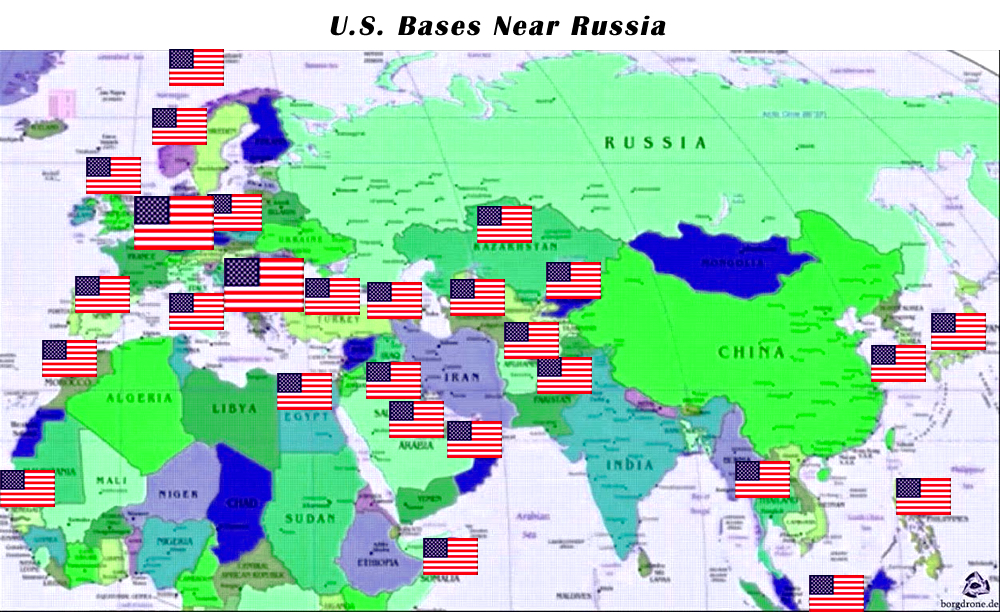
The continuing U.S. obsession with NATO enlargement is profoundly irresponsible and hypocritical. And now Ukrainians are paying a terrible price.
JEFFREY D. SACHS, Sep 20, 2023, Common Dreams
“…………………………….. According to the U.S. government and the ever-obsequious New York Times, the Ukraine war was “unprovoked,” the Times’ favorite adjective to describe the war. Putin, allegedly mistaking himself for Peter the Great, invaded Ukraine to recreate the Russian Empire. Yet last week, NATO Secretary-General Jens Stoltenberg committed a Washington gaffe, meaning that he accidently blurted out the truth.
In testimony to the European Union Parliament, Stoltenberg made clear that it was America’s relentless push to enlarge NATO to Ukraine that was the real cause of the war and why it continues today. Here are Stoltenberg’s revealing words:
“The background was that President Putin declared in the autumn of 2021, and actually sent a draft treaty that they wanted NATO to sign, to promise no more NATO enlargement. That was what he sent us. And was a pre-condition to not invade Ukraine. Of course, we didn’t sign that.
The opposite happened. He wanted us to sign that promise, never to enlarge NATO. He wanted us to remove our military infrastructure in all Allies that have joined NATO since 1997, meaning half of NATO, all the Central and Eastern Europe, we should remove NATO from that part of our Alliance, introducing some kind of B, or second-class membership. We rejected that.
So, he went to war to prevent NATO, more NATO, close to his borders. He has got the exact opposite.”
To repeat, he [Putin] went to war to prevent NATO, more NATO, close to his borders.
When Prof. John Mearsheimer, I, and others have said the same, we’ve been attacked as Putin apologists. The same critics also choose to hide or flatly ignore the dire warnings against NATO enlargement to Ukraine long articulated by many of America’s leading diplomats, including the great scholar-statesman George Kennan, and the former US Ambassadors to Russia Jack Matlock and William Burns.
Burns, now CIA Director, was US Ambassador to Russia in 2008, and author of a memo entitled “Nyet means Nyet.” In that memo, Burns explained to Secretary of State Condoleezza Rice that the entire Russian political class, not just Putin, was dead-set against NATO enlargement. We know about the memo only because it was leaked. Otherwise, we’d be in the dark about it.
Why does Russia oppose NATO enlargement? For the simple reason that Russia does not accept the U.S. military on its 2,300 km border with Ukraine in the Black Sea region. Russia does not appreciate the U.S. placement of Aegis missiles in Poland and Romania after the U.S. unilaterally abandoned the Anti-Ballistic Missile (ABM) Treaty………………………………….
Even Zelensky’s team knew that the quest for NATO enlargement meant imminent war with Russia. Oleksiy Arestovych, former Advisor to the Office of the President of Ukraine under Zelensky, declared that “with a 99.9% probability, our price for joining NATO is a big war with Russia.”……………………………………………
Putin made one last attempt at diplomacy at the end of 2021, tabling a draft U.S.-NATO Security Agreement to forestall war. The core of the draft agreement was an end of NATO enlargement and removal of U.S. missiles near Russia. Russia’s security concerns were valid and the basis for negotiations. Yet Biden flatly rejected negotiations out of a combination of arrogance, hawkishness, and profound miscalculation. NATO maintained its position that NATO would not negotiate with Russia regarding NATO enlargement, that in effect, NATO enlargement was none of Russia’s business.
The continuing U.S. obsession with NATO enlargement is profoundly irresponsible and hypocritical. The U.S. would object—by means of war, if needed—to being encircled by Russian or Chinese military bases in the Western Hemisphere, a point the U.S. has made since the Monroe Doctrine of 1823. Yet the U.S. is blind and deaf to the legitimate security concerns of other countries.
So, yes, Putin went to war to prevent NATO, more NATO, close to Russia’s border. Ukraine is being destroyed by U.S. arrogance, proving again Henry Kissinger’s adage that to be America’s enemy is dangerous, while to be its friend is fatal. The Ukraine War will end when the U.S. acknowledges a simple truth: NATO enlargement to Ukraine means perpetual war and Ukraine’s destruction. Ukraine’s neutrality could have avoided the war, and remains the key to peace. The deeper truth is that European security depends on collective security as called for by the Organization for Security and Co-operation in Europe (OSCE), not one-sided NATO demands. https://www.commondreams.org/opinion/nato-chief-admits-expansion-behind-russian-invasionb
Building Irish nuclear energy plants ‘does not make economic sense’, Eamon Ryan,Green Party leader
Irish Examiner, 24 Sept 23
Green Party leader says the construction of nuclear plants would be too expensive for a country the size of Ireland
Building nuclear energy plants in Ireland does not make economic sense and would result in people paying even higher electricity bills, Eamon Ryan has said.
The Green Party leader said constructing nuclear plants here to bolster wind and solar energy production would be too expensive for a country the size of Ireland.
It comes after Fianna Fáil MEP Billy Kelleher called on politicians and the public to take their “emotions” out of the nuclear energy debate and seriously consider building power plants here……………………….
He said there has been “an explosion” in the rollout of solar panels across the country, with 10% of energy coming from solar on some sunny days in July this year.
“Also, battery technology is improving, and long-term storage is improving. So that gives you balancing capability and also interconnection…………………………………….
Interconnector with Spain
The environment minister added that he is looking at the viability of an interconnector with Spain “so if it’s calm and not sunny in Ireland, solar from the south can be pulled up and that’s much cheaper”.
He stressed the potential Ireland has to become a world leader in sustainable energy.
“I think our issue will be probably by 2030 we’ll have a surplus of wind, about 30 terawatt hours, and how we use that surplus and store it to give us the balancing capability is going to be one of the big developments in the next 10 years,” he said……………………… https://www.irishexaminer.com/news/politics/arid-41233219.htm
This War Wasn’t Just Provoked — It Was Provoked Deliberately
Caitlin’s Newsletter, CAITLIN JOHNSTONE, SEP 24, 2023
In an interesting speech about the way US imperial aggression provokes violence around the world, antiwar commentator Scott Horton made reference to an April 2022 article from Yahoo News that had previously escaped my attention.
The article is titled “In closer ties to Ukraine, U.S. officials long saw promise and peril,” and it features named and unnamed veterans of the US intelligence cartel saying that long before the February 2022 invasion they were fully aware that the US had “provoked” Russia in Ukraine and created a powderkeg situation that would likely lead to war.
“By last summer [meaning the summer of 2021], the baseline view of most U.S. intelligence community analysts was that Russia felt sufficiently provoked over Ukraine that some unknown trigger could set off an attack by Moscow,” a former CIA official told Yahoo News’ Zach Dorfman, who adds, “(The CIA and the Office of the Director of National Intelligence declined to comment.)”
Dorfman writes that initial support provided to Ukraine during the Obama administration had been “calibrated to avoid aggravating Moscow,” but that “partially spurred by Congress, as well as the Trump administration, which was more willing to be aggressive on weapon transfers to Kyiv, overt U.S. military support for Ukraine grew over time — and with it the risk of a deadly Russian response, some CIA officials believed at the time.”……………………
“I understand the moral argument,” says former CIA official Jeffrey Edmonds regarding the weapons transfers into Ukraine, “but I also understand the argument that, well, why would you want to give these things if it’s just going to increase the chances that Russia does something?”
So while we members of the public were blindly speculating about whether or not Russia would attack Ukraine, the US intelligence cartel was fully aware that the US was taking actions ensuring that that would happen. That’s the environment the US security state knew it was operating under when it continued to taunt the idea of adding Ukraine and Georgia to NATO right up until the final moments before the invasion.
It’s been funny to watch the response of empire apologists to NATO Secretary General Jens Stoltenberg’s surprising refutation of a year and a half of empire propaganda by openly admitting that NATO expansion provoked the invasion of Ukraine and acknowledging that NATO powers rejected Moscow’s proposed compromises which could have averted the war. Basically the only argument they now have after this admission is to say that Russia should not have viewed NATO expansion as an existential threat.
Their only remaining trick is to argue with reality; to basically say that yes it’s reality that NATO expansion provoked this war because Moscow saw it as a threat, but reality shouldn’t have been what reality was. They argue that Russia should have felt completely different feelings about a military threat on its border than nations like the United States would feel, since as we’ve discussed previously the last time there was a credible military threat near the US border the US responded so aggressively that the world almost ended.
That’s really all they’ve got: “Yes it’s true that all the people who’ve died and lost their homes in this war did so because we were amassing a hostile military alliance near Russia’s border, but in our defense the Russians should’ve thought different thoughts in their heads than the ones that we ourselves would think about a hostile military threat on our border.”
If all westerners deeply understood all the suffering and danger that has been unleashed upon our world by this war, and deeply understood the fact that their own governments played a role in starting it, the political status quo of the western world would be impossible to maintain. Which is why such unprecedented levels of propaganda and internet censorship have gone into preventing westerners from coming to such an understanding. https://www.caitlinjohnst.one/p/this-war-wasnt-just-provoked-it-was?utm_source=post-email-title&publication_id=82124&post_id=137340680&utm_campaign=email-post-title&isFreemail=true&r=1ise1&utm_medium=email
Tory MP inexplicably asks for nuclear powered frigates
By George Allison, September 24, 2023 https://ukdefencejournal.org.uk/tory-mp-inexplicably-asks-for-nuclear-powered-frigates/
In a recent parliamentary query, Conservative MP Andrew Rosindell raised eyebrows with a question about converting Royal Navy warships from diesel power… to nuclear power.
For smaller surface vessels like frigates, the benefits of nuclear power do not outweigh the significant costs and potential environmental concerns. Furthermore, integrating such systems into existing fleet designs would pose significant engineering and logistical challenges.
Rosindell asked the Secretary of State for Defence, “what his Department’s projected spending on nuclear powered surface vessels for the Royal Navy is in the (a) 2023-24, (b) 2024-25 and (c) 2025-26 financial year; and if he will make a statement.”
Not stopping there, he further inquired about the Defence Department’s plans, asking “what his Department’s timeline is for converting the remaining diesel-powered Royal Navy surface fleet to nuclear power.”
In a straightforward response, James Cartlidge, the Minister of State for the Ministry of Defence, clarified, “The Royal Navy has never had any surface vessels that are nuclear powered and there is no programme or intention to convert the current fleet to be nuclear powered in future.”
Thus, the notion of the Royal Navy converting its frigates into nuclear-powered surface vessels remains firmly off the table for the foreseeable future, there are no plans to add warp cores or hyperdrive engines either..
Cannon Fodder: Number of Ukrainian Amputee Soldiers Going Through the Roof

Ekaterina Blinova, 21 Sept 23
Tens of thousands of Ukrainians have become amputees, while many more sustained other injuries or died on the battlefield. The scale of amputations in Ukraine has reached that of the First World War, according to Western media.
Between 20,000 and 50,000 Ukrainian soldiers have lost one or more limbs since the beginning of the conflict, Western press has reported.
The Ukrainian Ministry of Defense recently announced that 40% of wounded Ukrainian soldiers have serious limb injuries that appear to be incurable.
However, it is difficult to know for sure how many Ukrainian soldiers have disabilities, because this information is top secret, according to a Norwegian media outlet.
A commonly cited ratio for dead and injured in wars is 2-4 people wounded for each person killed. Sometimes, the number of those wounded may be 13 times as high depending on what weapons systems are used on the battlefield. One could easily calculate what price Ukrainians paid for the counteroffensive encouraged and sponsored by the West.
As per the Russian Defense Ministry, over 71,000 Ukrainian troops have been killed during the three months of the Kiev regime’s counteroffensive.
Given that Ukraine and Russia have been involved in high-scale counter-battery duels since the outset of the conflict, most of the wounds at the front have been caused by shrapnel and artillery fire, military personnel and war correspondents have said. Meanwhile, Ukrainians also sustained heavy losses while trying to storm Russia’s sophisticated defense lines and minefields, which have been largely blamed by the Western press for the failure of the Kiev regime’s offensive operations.
Ukrainian Amputees Evoke Scale of WWI
Western journalists assume that during 18 months of the special military operation in Ukraine, there have been at least 10 times the number of Ukrainian amputees than Americans with the same sort of injuries over 20 years in Iraq and Afghanistan combined.
For their part, US medical experts say that injuries of this magnitude had not been seen by Western military surgeons since World War II. The First World War saw at least 67,000 Germans and 41,000 British amputees, according to some estimates.
Several clinics in Ukraine cite 20,000 amputee cases, but the actual figure may be higher as it takes time to register patients after undergoing the amputation procedure, per the media. Some patients have to wait for weeks or even months for the surgery as the Ukrainian healthcare system is overwhelmed.
During the unfolding conflict, the Ukrainian Armed Forces suffered a scale of losses for which the army’s medical service was unprepared, Tetiana Ostashchenko, commander of the Medical Forces of the Ukrainian Armed Forces, told a Ukrainian broadcaster on August 26.
“Neither the legislative framework nor the system itself was designed for such volumes of medical care,” Ostashchenko stressed.
She said that new problems emerge every day and despite the nation’s healthcare system trying to solve them, it is not working as quickly as required.
To complicate matters further, the battlefield first aid straps used by Ukrainian during combat to stem bleeding, are often fitted too high to the injured limb and left on for too long. As a result, the cells in the limb die and a whole arm or leg will need to be removed instead of just part of it. What’s worse, sometimes these surgeries are done in horrific conditions, according to the British press.
Prosthetics is yet another problem faced by Ukrainian military amputees. One arm could cost $100,000 while a hook in place of a hand is an additional $8,000. A number of Western charities help some Ukrainian soldiers to get new artificial limbs but there are too many amputees returning from the battlefield.
Kiev Throws Ukrainians Into ‘Meat Grinder’
Previously, former Prime Minister of Ukraine Nikolai Azarov stated that Kiev is deliberately hiding the figures of real losses in order to avoid payments to the families of fallen soldiers, attributing them to the number of missing people instead.
There have also been cases when wounded Ukrainian soldiers were left to die by their fellows on the battlefield. On September 12, captured Ukrainian serviceman Yevgeny Zinovik told Sputnik that he had been abandoned by the Ukrainian military and laid on the ground suffering from wounds for four days, until Russian reconnaissance officers found him. Zinovik confessed that he was glad to be captured after all this suffering. He said that he had undergone treatment in a Donetsk hospital.
………………………………………………………………………….. Ukrainians Hide Abroad or Surrender
A glaring indicator of Kiev running out of military personnel is Ukrainian President Volodymyr Zelensky‘s order to conduct a full review of all mobilization exemptions granted by Military Medical Commissions (MMCs) starting from February 24, 2022.
In addition to bringing young and elderly to the front, the Kiev regime has requested European states extradite Ukrainian draft-age adults. However, EU states are resisting those requests, citing European laws that prevent them from deporting refugees or altogether refusing to send Ukrainians back home. One should bear in mind that Ukrainians are a source of cheap labor in Europe…………………..
https://sputnikglobe.com/20230921/cannon-fodder-number-of-ukrainian-amputee-soldiers-going-through-the-roof-1113563445.html
‘Biden’s phase’ of Ukraine war is beginning
This Week, Blinken explicitly stated for the first time that the US would not oppose Ukraine using US-supplied longer-range missiles to attack deep inside Russian territory, a move that Moscow has previously called a “red line,” which would make Washington a direct party to the conflict.
BY M. K. BHADRAKUMAR Indian Punchline
The ground war in Ukraine has run its course, a new phase is beginning. Even diehard supporters of Ukraine in the western media and think tanks are admitting that a military victory over Russia is impossible and a vacation of the territory under Russian control is way beyond Kiev’s capability.
Hence the ingenuity of the Biden Administration to explore Plan B counselling Kiev to be realistic about loss of territory and pragmatically seek dialogue with Moscow. This was the bitter message that US Secretary of State Antony Blinken transmitted to Kiev recently in person.
But President Zelensky’s caustic reaction in a subsequent interview with the Economist magazine is revealing. He hit back that the western leaders still talk the good talk, pledging they will stand with Ukraine “as long as it takes” (Biden mantra), but he, Zelensky, has detected a change of mood among some of his partners: “I have this intuition, reading, hearing and seeing their eyes [when they say] ‘we’ll be always with you.’ But I see that he or she is not here, not with us.” Certainly, Zelensky is reading the body language right, as in the absence of an overwhelming military success shortly, western support for Ukraine is time-limited.
Zelensky knows that sustaining the western support will be difficult. Yet he hopes that if not Americans, European Union will at least keep supplying aid, and but may open negotiations over the accession process for Ukraine possibly even at its summit in December. But he also held out a veiled threat of terrorist threat to Europe — warning that it would not be a “good story” for Europe if it were to “drive these people [of Ukraine] into a corner”. So far such ominous threats were muted, originating from low ranking activists of the fascist Bandera fringe.
But Europe has its limits, too. The western stockpiles of weapons are exhausted and Ukraine is a bottomless pit. Importantly, conviction is lacking whether continued supplies would make any difference to the proxy war that is unwinnable. Besides, European economies are in doldrum,’ the recession in Germany may slide into depression, with profound consequences of “deindustrialisation.”
Suffice to say, Zelensky’s visit to the White House in the coming days becomes a defining moment. The Biden Administration is in a sombre mood that the proxy war is hindering a full-throttle Indo-Pacific strategy against China. Yet, during an appearance on ABC’s This Week, Blinken explicitly stated for the first time that the US would not oppose Ukraine using US-supplied longer-range missiles to attack deep inside Russian territory, a move that Moscow has previously called a “red line,” which would make Washington a direct party to the conflict.
The well-known American military historian, strategic thinker and combat veteran Colonel (Retd.) Douglas MacGregor (who served as advisor to the Pentagon during the Trump administration), is prescient when he says that a new “Biden’s phase of the war” is about to begin. That is to say, having run out of ground forces, the locus will now shift to long-range strike weapons like the Storm Shadow, Taurus, ATACMS long-range missiles, etc.
The US is considering sending ATACMS long-range missiles that Ukraine has been asking for a long time with the capability to strike deep inside Russian territory. The most provocative part is that NATO reconnaissance platforms, both manned and unmanned, will be used in such operations, making the US a virtual co-belligerent.
Russia has been exercising restraint in attacking the source of such enemy capabilities but how long such restraint will continue is anybody’s guess………………………………………………………… more https://www.indianpunchline.com/bidens-phase-of-ukraine-war-is-beginning/
The harrowing truth about the war in Ukraine.
Russian press reports the high proportion of amputees among injured Ukrainian soldiers – perhaps up to 50,000. (Of course they don’t mention the Russian casualties, – that figure could be the same, – or likely more.)
The thing is – the media is so full of reports about who’s winning, and what lovely new weapons that Ukraine needs in order to win, and how the war will go on “as long as it takes“.
That seems to mean “as long as there are any fit-enough Ukrainian soldiers left”. Russia has four to five times as many soldiers as Ukraine has. So, the brutal reality is, Russia can afford to lose more casualties. On both sides, the leaders apparently don’t care . So, logically – it’s sort of unlikely that Ukraine can win, isn’t it?
That consideration doesn’t seem to matter to the West. No attention is given to what sort of state Ukraine’s people, and its environment will be in, as this forever war goes on.
As I pointed out, Russian media is not stressing their numbers of amputees. And Western media publicises the medical care that USA is giving to a few of the Ukrainian amputees, while not mentioning the total horrible picture.
The real human toll is ignored. Isn’t it time that the slaughter in Ukraine is ended?
This is one reason why I might appear to be giving constantly a pro-Russian point of view.
It’s not really pro-Russian. It’s pro-truth. The Western media continually vomits forth the lie that Ukraine will win. This lie suits the USA purpose of weakening Russia, which has nothing to do with the well-being of the people of Crimea, or the Donbass, or Ukraine in general.
We’re Being Prepared For The Ukraine War To Last Into The 2030s
So western empire managers and their agenda-setters in the mass media are making it as clear as could be that the US-centralized empire has found itself in yet another endless war, another “grinding war of attrition” featuring unfathomable destruction and suffering with no exit strategy, which once again pours vast fortunes into the coffers of the military industrial complex. The only difference is that this time it comes with the added bonus of the threat of nuclear annihilation.
CAITLIN JOHNSTONE, SEP 23, 2023 https://www.caitlinjohnst.one/p/were-being-prepared-for-the-ukraine?utm_source=post-email-title&publication_id=82124&post_id=137313925&utm_campaign=email-post-title&isFreemail=true&r=1ise1&utm_medium=email
Western officials and media pundits are now directly acknowledging that Ukraine’s much-touted “spring counteroffensive” has been a catastrophic failure, but rather than seeing this as a reason to reconsider the mainstream political consensus on this war, they are instead telling everyone that the counteroffensive’s failure means we must commit to the status quo of bloodshed and nuclear brinkmanship for years to come.
In a recent article titled “US and G-7 Allies Expect War in Ukraine to Drag On for Years,” Bloomberg reports that the US-centralized power structure expects to be backing its proxy conflict against Russia for a very long time, potentially into the 2030s.
Bloomberg reports:
“The US and its allies in the Group of Seven now expect the war in Ukraine may drag on for years to come and are building that possibility into their military and financial planning.
“A senior official from one European G-7 country said the war may last as much as six or seven more years and that allies need to plan financially to continue support for Kyiv for such a long conflict.“
“That’s much longer than many officials had expected earlier this year, but slow progress in Ukraine’s counteroffensive in recent months has tempered expectations.”
In a recent interview with CNN, outgoing Joint Chiefs chair Mark Milley said that achieving Kyiv’s official goal of fully recapturing all Ukrainian territory is going to require “very significant effort over a considerable amount of time.”
“I can tell you that it’ll take a considerable length of time to militarily eject all 200,000 or plus Russian troops out of Russian-occupied Ukraine,” Milley added. “That’s a very high bar. It’s going to take a long time to do it.”
In a recent interview with German newspaper Berliner Morgenpost, NATO Secretary General Jens Stoltenberg also pounded home the point that this war will drag on for a very long time.
“Most wars last longer than is expected when they first start. Therefore, we must prepare ourselves for a long war in Ukraine,” Stoltenberg said.
“We are all wishing for a quick peace,” Stoltenberg added. “But at the same time, we must recognize: If President Zelensky and the Ukrainians give up the fight, their country would not exist anymore. If President Putin and Russia laid down their weapons, we would have peace. The easiest way to end this war would be if Putin withdrew his troops.”
You see this claim from empire managers and their apologists all the time: that the only obstacle to peace in Ukraine is Russia refusing to leave. This of course ignores the many extensively-documented western aggressions which are known to have provoked Russia’s invasion, a fact that Stoltenberg himself admitted to earlier this month.
Demanding that Russia end its aggressions without the west agreeing to end its own aggressions which led to this conflict is just demanding that Russia lie down and submit to being ruled and dominated by the western empire. It’s not a call for peace, it’s a call for the total victory of Washington and its cohorts.
Stoltenberg reinforced his point that this war will drag on for years by affirming that Ukraine will gain NATO membership when this war is over, which is effectively a message to Moscow that if it still finds NATO membership for Ukraine unacceptable it must either annex Ukraine into the Russian Federation entirely or keep this war going on forever.
“Ukraine will become a member of NATO — all allies have made that clear,” Stoltenberg said, adding that Ukraine will need NATO protection when the war ends, otherwise “history could repeat itself.”
The western media are conveying the same message. Notorious empire propaganda rag The Economist has a new article out titled “Ukraine faces a long war. A change of course is needed,” featuring a Ukrainian flag with the words “TIME FOR A RETHINK” scrawled across it. If you didn’t know anything about The Economist you might assume at first glance that this was an article about rethinking the approach of backing an endless proxy conflict — especially after its opening paragraphs acknowledge that “The plan is not working” and “Ukraine has liberated less than 0.25% of the territory that Russia occupied in June.”
You would be wrong though. What The Economist means is that we should switch from thinking of this as a war that can be won in a timely fashion to one which will continue for the foreseeable future:
“Both Ukraine and its Western supporters are coming to realise that this will be a grinding war of attrition. President Volodymyr Zelensky visited Washington this week for talks. ‘I have to be ready for the long war,’ he told The Economist. But unfortunately, Ukraine is not yet ready; nor are its Western partners. Both are still fixated on the counter-offensive. They need to rethink Ukraine’s military strategy and how its economy is run. Instead of aiming to “win” and then rebuild, the goal should be to ensure that Ukraine has the staying power to wage a long war — and can thrive despite it.”
So western empire managers and their agenda-setters in the mass media are making it as clear as could be that the US-centralized empire has found itself in yet another endless war, another “grinding war of attrition” featuring unfathomable destruction and suffering with no exit strategy, which once again pours vast fortunes into the coffers of the military industrial complex. The only difference is that this time it comes with the added bonus of the threat of nuclear annihilation.
All for what? To advance the US empire’s goal of total planetary domination, a status quo that it can only maintain by brandishing armageddon weapons at its enemies with increasing hostility year after year.
When it comes to the war in Ukraine it is definitely time for a rethink, but not by the same monsters who thought us into this horror in the first place.
1 This Month





PLEASE OPPOSE HR 8255 AND S.3639 – bills would accelerate satellite deployment, with no environmental review or safeguards – https://ncstd5li.quorum.us/campaign/169331/
To see nuclear-related stories in greater depth and intensity – go to https://nuclearinformation.wordpress.com
-
Archives
- October 2026 (19)
- September 2026 (339)
- August 2026 (330)
- July 2026 (355)
- June 2026 (287)
- May 2026 (306)
- April 2026 (356)
- March 2026 (251)
- February 2026 (267)
- January 2026 (308)
- December 2025 (358)
- November 2025 (359)
-
Categories
- 1
- 1 NUCLEAR ISSUES
- business and costs
- climate change
- culture and arts
- ENERGY
- environment
- health
- history
- indigenous issues
- Legal
- marketing of nuclear
- media
- opposition to nuclear
- PERSONAL STORIES
- politics
- politics international
- Religion and ethics
- safety
- secrets,lies and civil liberties
- spinbuster
- technology
- Uranium
- wastes
- weapons and war
- Women
- 2 WORLD
- ACTION
- AFRICA
- Atrocities
- AUSTRALIA
- Christina's notes
- Christina's themes
- culture and arts
- Events
- Fuk 2022
- Fuk 2023
- Fukushima 2017
- Fukushima 2018
- fukushima 2019
- Fukushima 2020
- Fukushima 2021
- general
- global warming
- Humour (God we need it)
- Nuclear
- RARE EARTHS
- Reference
- resources – print
- Resources -audiovicual
- Weekly Newsletter
- World
- World Nuclear
- YouTube
-
RSS
Entries RSS
Comments RSS

