UK government decides not to take Allerdale further in GDF nuclear waste siting process due to limited suitable geology
Nuclear Waste Services (NWS) has been engaging
with the Allerdale community about the potential for hosting a Geological
Disposal Facility (GDF) to dispose of the UK’s most radioactive waste. As
part of this process NWS obtained existing data and undertook assessments
to understand if six siting factors, safety and security, community,
environment, engineering feasibility, transport, and value for money, could
be supported if a GDF were sited in Allerdale.
Following a comprehensive
and robust evaluation of information it was concluded only a limited volume
of suitable rock was identifiable and the geology in the area was unlikely
to support a post closure safety case. NWS has therefore taken the decision
not to take Allerdale further in the search for a suitable site to host a
GDF. Initial assessments of existing data and information for the other
three communities in the siting process have indicated potentially suitable
geology, which is why NWS is continuing in the siting process with those
communities.
Nuclear Waste Services 28th Sept 2023
British communities torn between the lure of government bribes and the realities of hosting toxic radioactive trash virtually forever
#nuclear #antinuclear #nuclear-free #NoNukes
Ken Smith moved to the Lincolnshire coast to see out his retirement,
writing crime novels while surrounded by beaches, arcades, holiday parks
and nature reserves. Recently, however, his retreat has been disturbed. The
Mablethorpe resident has found himself unexpectedly on the front lines of a
struggle affecting countries across the world, centred on how to deal with
nuclear waste.
The fate of Mablethorpe will determine how Britain tackles a
problem that has been building for seven decades. As the government seeks a
better solution to radioactive waste, communities are torn between the lure
of economic opportunities versus the realities of living next to a disposal
site. Theddlethorpe, a few miles up the road, is one of three areas in
England being considered by the UK for a 36km square underground site to
dispose of nuclear waste as it decays, some of it over hundreds of
thousands of years.
FT 28th Sept 2023
https://www.ft.com/content/29961733-a72c-406c-8884-4091c0dfd828
Finland’s nuclear waste: delay in completing the review of operating licence application and safety assessment.

Finland’s Radiation and Nuclear Safety Authority (STUK) said its review of
Posiva Oy’s operating licence application for the world’s first used fuel
disposal facility is taking longer than expected and will not be completed
by the end of this year as planned.
Radioactive waste management company
Posiva submitted its application, together with related information, to the
Ministry of Economic Affairs and Employment (TEM) on 30 December 2021 for
an operating licence for the used fuel encapsulation plant and final
disposal facility currently under construction at Olkiluoto. The repository
is expected to begin operations in the mid-2020s. Posiva is applying for an
operating licence for a period from March 2024 to the end of 2070.
The government will make the final decision on Posiva’s application, but a
positive opinion by STUK is required beforehand. The ministry requested
STUK’s opinion on the application by the end of this year. The regulator
began its review in May 2022 after concluding Posiva had provided
sufficient material. However, STUK has now said its safety assessment and
opinion on the application will not be completed this year.
World Nuclear News 28th Sept 2023
https://www.world-nuclear-news.org/Articles/Completion-of-Finnish-repository-review-delayed
US and UK involved in attack on Crimea – Russia
https://www.rt.com/russia/583634-us-uk-crimea-strike/ 29 Sept 23
Moscow has “no doubt” about Western complicity in the attack on Sevastopol last Friday, the Foreign Ministry has said
Maria Zakharova, the spokeswoman for the Russian Foreign Ministry, has asserted that US and British intelligence agencies supported Kiev during an attack on Sevastopol last Friday. The Ukrainian assault targeted the headquarters of the Russian Black Sea Fleet.
Speaking at a weekly briefing on Wednesday, she said there was “no doubt that this attack was planned with the use of Western surveillance assets, NATO satellite equipment, and spy planes and conducted at the direction of and in close coordination with American and British special services.”
The Defense Ministry has reported that the missile strike on the fleet headquarters involved several Ukrainian missiles, with Russian air defenses successfully intercepting some of them. British media outlets have also disclosed that Kiev employed Storm Shadow missiles supplied by the UK in the attack, resulting in significant damage to the building.
Zakharova described the incident as one of many in which Kiev “targets Russian regions, using missiles and shells supplied by NATO states,” citing several other recent examples. The goals of the Ukrainian government, she said, are “to draw attention away from the Ukrainian military’s failed attempts at conducting a counteroffensive” and to destabilize Russian society.
The US and its allies have supplied tens of billions of dollars worth of military hardware to Ukraine to boost its summer charge against Russian defensive lines. The operation, however, has so far produced insignificant territorial gains at the cost of heavy losses in manpower and equipment.
Russian Defense Minister Sergey Shoigu estimated on Tuesday that over 17,000 Ukrainian troops were killed in September alone. Western officials and media have acknowledged that the counteroffensive has not turned out as Kiev and its sponsors had hoped.
The administration of US President Joe Biden, however, has urged Congress to keep financing Ukraine for the foreseeable future. An appropriation request for over $24 billion in aid is currently floating in the legislature but is opposed by some Republican lawmakers.
Senators have proposed a compromise stopgap spending bill to avoid a possible government shutdown next month. The plan involves reducing spending on Ukraine to $6.2 billion. The GOP-controlled House of Representatives would need to approve the draft before it could be voted on and sent to Biden’s desk to be signed into law.
France pushes pro-nuclear momentum to host global talks at OECD, to get tax-payer funding for the nuclear industry
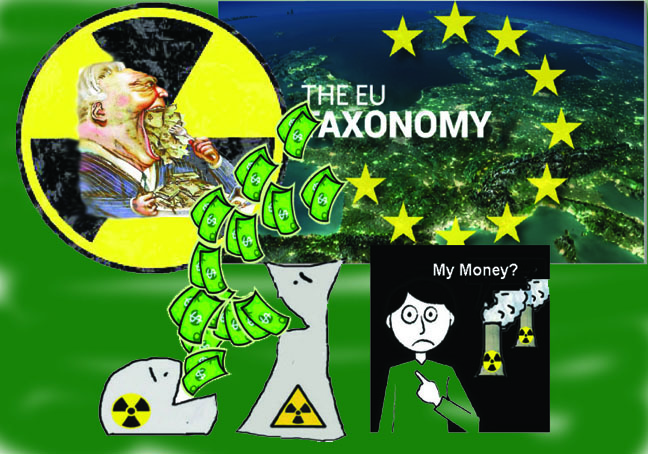
At the event, participants called on international financial institutions, regional development banks and organisations, including the EU, to finance nuclear power.
The joint statement calls on financial institutions to “classify nuclear energy with all other zero- or low-emission energy sources in financial taxonomies”.
By Paul Messad | EURACTIV France | translated by Daniel Eck 29 Sept 23 https://www.euractiv.com/section/energy-environment/news/france-builds-on-eus-pro-nuclear-momentum-to-host-global-talks/
France sought to build on the “momentum” behind nuclear energy in Europe by hosting world leaders on 28-29 September to accelerate nuclear financing and discuss long-term international cooperation that excludes Russia from the game.
The conference was attended by 21 countries, including 15 from Europe – Bulgaria, Romania, the Netherlands, Poland, Croatia, the Czech Republic, Estonia, Finland, France, Hungary, Slovakia, Slovenia, Sweden, Ukraine and the UK – as well as Turkey, South Korea, Japan, Ghana and the US.
“This is the first time in 13 years that so many ministers have come together for a Nuclear Energy Agency (NEA) event,” said French Energy Minister Agnès Pannier-Runacher, who co-chaired the event with William D. Magwood, director-general of the OECD’s Nuclear Energy Agency.
The timing is right, added Pannier-Runacher about the shift in attitude among EU member states like the Netherlands and Italy, who were until recently historically opposed to nuclear power.
Some 30 industry leaders also participated in the debates, with several signing a joint press release on Friday calling for redeveloping nuclear power.
On the agenda of the Paris event were topics like financing, supply chain and fuel issues, and coordination between governments and industry.
International financing
At the event, participants called on international financial institutions, regional development banks and organisations, including the EU, to finance nuclear power.
“We intend to explore innovative financing approaches, including public-private partnerships, to facilitate access to capital for refurbishment, long-term operation, spent fuel and waste long-term storage & disposal, and new nuclear build projects internationally while mitigating the economic costs of risk through public support mechanisms,” says a joint communiqué.
This means that the EU is also called upon to join the movement.
In this sense, Pannier-Runacher “welcomed” the statement made on Tuesday (26 September) by the President of the European Commission, Ursula von der Leyen, who, for the first time, envisaged EU subsidies for nuclear power.
“Nuclear energy needs public support in three areas: financing [including from the European Investment Bank], skills development and innovation,” the EU’s internal market Commissioner Thierry Breton said at the event’s start.
Asked about the possible reluctance of EU countries such as Germany to allow EU funds to be used for nuclear power, Pannier-Runacher said that “the problem lies in the different treatment of two energies that contribute to the same [decarbonisation] goals”, namely nuclear power and renewables, which are all low-carbon.
The joint statement calls on financial institutions to “classify nuclear energy with all other zero- or low-emission energy sources in financial taxonomies”.
The countries that signed the joint declaration have another powerful argument: nuclear capacity is set to triple worldwide by 2050 according to OECD scenarios, although a less optimistic IEA predicts that it will double.
Sharing the same values
The meeting was an opportunity for nuclear proponents to get together, but only from “democratic countries that share the same values”, Pannier-Runacher’s entourage explained on Wednesday.
While the talks did not directly address the dependence of some participating countries on Russia’s nuclear industry, “there is an implicit commitment by all OECD countries to condemn the Russian invasion,” Pannier-Runacher’s office said.
While Russia has been suspended from the OECD’s Nuclear Energy Agency, the Eastern European countries that attended the event are also members of the “Nuclear Alliance”, which is committed to “building partnerships to move away from this dependence [on Russia]”, the minister’s entourage added.
Their presence allowed EU countries present in Paris to hold informal talks on the ongoing reform of the EU electricity market, for which France advocates an approach favouring existing nuclear plants.
While the topic was not up for discussion, Pannier-Runacher’s office said ahead of the conference that “bilateral meetings with some of them [members of the nuclear alliance] will indeed take place”.
On the morning of the event, Pannier-Runacher was due to meet her Italian counterpart Gilberto Pichetto Fratin “to discuss cooperation on nuclear issues and the future of the European electricity market,” she said on X (formerly Twitter).
Italy did not take part in the OECD debates or sign the joint communiqué but was present as an observer.
Greenpeace disrupts nuclear power meeting in Paris
MURIEL BOSELLI, Paris 28 Sept 2023
(Montel) Greenpeace disrupted early on Thursday the opening of a two-day international nuclear meeting in Paris to denounce the “promotion of nuclear power whatever the cost”, it said.
Anti-nuclear activists held up banners reading “Nuclear energy: cli…… (Subscribers only) https://www.montelnews.com/news/1524798/greenpeace-disrupts-nuclear-power-meeting-in-paris
Scottish independence would end the UK’s nuclear delusion.
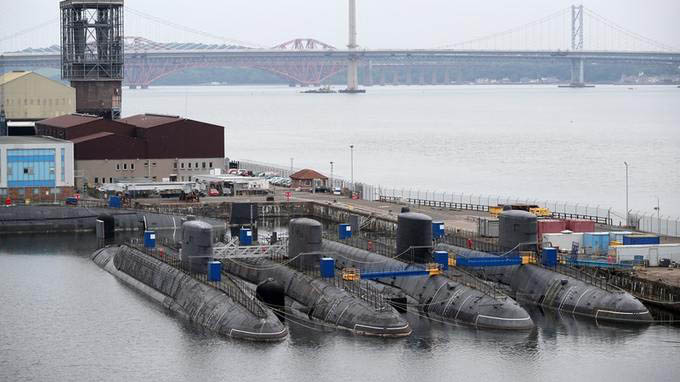
The oncoming submarine crisis is not the only threat to the UK’s ability to maintain its nuclear weapon capability. The recent upsurge in the aspiration for Scottish independence should remind us that we are in a unique position with the potential not only to rid ourselves of these horrific weapons, but also to undermine the ability of the UK to persist with them since there is no credible alternative to the Clyde bases elsewhere the UK.
29th September, By David Mackenzie
LAST week a UK nuclear weapon Vanguard-class submarine returned to its base in Faslane, covered in algae and barnacles, reportedly after a patrol that lasted more than six months.
This prompted the pro-navy (and pro-nuclear-weapon) magazine Navy Outlook to publish a long article discussing the increase in the length of patrols and suggesting that this is down to the difficulty, due to refits and maintenance problems arising from skill shortages, of maintaining the pattern of always having one boat on patrol at all times. The article acknowledges that there is now great pressure on the submariners and that risks are being taken to maintain the patrol pattern.
The four Vanguard-class boats are now more than 30 years old and the replacement Dreadnought- class is already well behind schedule, so the question arises as to whether the current submarines can be patched and crewed sufficiently to close the potential gap in availability.
The Dreadnought programme is seriously hampered by a shortage of assembly space at Barrow and delays to the Derby unit where the reactor cores will be built. The UK Government refuses to say when it expects the new boats to be ready. The stretching of the patrol length to six months and beyond suggests that the crisis point may not be far away and that in the interim more and more risks will be taken with material and personnel.
The oncoming submarine crisis is not the only threat to the UK’s ability to maintain its nuclear weapon capability. The recent upsurge in the aspiration for Scottish independence should remind us that we are in a unique position with the potential not only to rid ourselves of these horrific weapons, but also to undermine the ability of the UK to persist with them since there is no credible alternative to the Clyde bases elsewhere the UK.
When the UK was setting up Polaris, its first system for the submarine launching of nuclear weapons, the Ministry of Defence conducted a study to determine what sites would be suitable for two essential items – a port for berthing the submarines and a nearby but separate armaments depot for storing the warheads and loading them onto the missiles in the submarines.
The study rejected all the projected locations in England and Wales (including Falmouth, Milford Haven, Portland, Devonport, Barrow, and completely new “greenfield” sites). So we have the submarines based at Faslane and the warhead storage and management facility at Coulport. The Clyde sites offer deep water access and a ready route to the Atlantic. Two other locations outwith the UK have been raised – one is moving the bases to King’s Bay in Georgia, US.
This would rip away the last tissue of pretence that the UK system is an independent one. Also mooted has been the sharing of the French facilities on Île Longue near Brest but this is seen as politically beyond the pale. In short, there is no feasible alternative to the Clyde bases. This analysis is accepted by the UK defence establishment. This makes Scottish independence a critical threat to the UK’s nuclear weapons.
It has also been pointed out that the increasing fragility of the UK nuclear weapon system may have prompted the projected return of US nuclear weapons to the US base at Lakenheath in Suffolk. If the UK is seen as an increasingly wobbly part of the Nato nuclear fabric this may represent a belt-and-braces tactic.
The third shaky-nail factor is the growing worldwide movement for the complete elimination of nuclear weapons. The Treaty on the Prohibition of Nuclear Weapons (TPNW), which came into force as UN law in January 2021, has acquired huge worldwide support – to date 69 ratifications, 93 signatures and the regular support of around 130 states on the floor of the UN General Assembly, to say nothing of such strong supporters as Ireland, Austria, Pope Francis and The Elders. Meanwhile, financial institutions are disinvesting from nuclear weapons, frequently ascribing their stance to the TPNW.
The nuclear war threat is like an open petrol can that is kept close to an open fire on a shoogly table. This is a uniquely dangerous moment.
Yet there is an overwhelming desire for prohibition from the majority of UN member states, especially from those who would suffer the most from the climatic effects of an exchange of nuclear weapons.
We can hope that these three factors will enable a fundamental rethink of the UK’s nuclear posturing.
We can certainly hope that Scotland will take its own clear stance on the matter with worldwide support.
David Mackenzie is secretary of Secure Scotland
‘Unprecedented nuclear crisis’ at Russian-controlled power plant with 148 attacks
An alarming dossier compiled by Greenpeace is being sent to
Western governments warning international regulators are currently
incapable of properly monitoring safety at the Zaporizhzhia plant in
Ukraine.
Mirror 28th Sept 2023
https://www.mirror.co.uk/news/world-news/unprecedented-nuclear-crisis-russian-controlled-31050468
Polish minister calls for extradition of Ukrainian Nazi honored in Canada
https://www.rt.com/news/583631-poland-extradition-canada-ukraine-nazi/ 29 Sept 23
Przemyslaw Czarnek wants a probe into Yaroslav Hunka’s possible war crimes
Polish Minister of Education Przemyslaw Czarnek has signaled that he intends to seek the extradition of a Ukrainian Nazi SS veteran who was cheered in the Canadian Parliament last week.
Czarnek was reacting to the controversy surrounding Yaroslav Hunka, a 98-year-old Ukrainian-Canadian who fought for the 14th Waffen Grenadier Division of the SS, also known as the 1st Galician Division, formed by Nazi Germany from mostly Western Ukrainians, that took part in atrocities against Russian, Polish, and Jewish civilians during WWII.
Hunka received a standing ovation during the ceremony in the House of Commons after being introduced by now-former House Speaker Anthony Rota as “a hero… who fought for Ukrainian independence against the Russians.” Prime Minister Justin Trudeau and Ukrainian President Vladimir Zelensky also attended the ceremony.
Writing on X (formerly Twitter) on Tuesday, Minister Czarnek said that “in view of the scandalous events in the Canadian Parliament,” he “has taken steps towards the possible extradition” of the SS veteran to Poland. The minister also appealed to Poland’s Institute of National Remembrance to “urgently examine the documents whether Yaroslav Hunka is wanted for crimes against the Polish nation and Poles of Jewish origin.”
Commenting on a potential extradition request from Poland, however, Canadian Attorney General Arif Virani said he had not seen one. “What I would say to you is that an extradition process is a sensitive matter,” he told Politico. He refused to elaborate on the issue until the document was produced for him, arguing that this “would jeopardize the investigation.”
The controversy sparked fierce international backlash, especially from the Jewish community. The Friends of Simon Wiesenthal Center said it was “appalled” by the celebration. At the same time, The Center for Israel and Jewish Affairs said it “can’t stay silent when crimes committed by Ukrainians during the Holocaust are whitewashed.”
The Russian and Polish foreign ministries also joined the condemnation. The Foreign Ministry in Moscow blasted Ottawa for abusing the memory of victims of the Nazisms as well as “unbridled Russophobia.” Meanwhile, in addition to calls for charges against Hunka, Deputy Foreign Minister Arkadiusz Mularczyk urged then-Speaker Rota to step down over a lack of diligence and historical knowledge.
For his part, Rota issued a public apology and later announced his resignation, while Trudeau admitted that the latest scandal was “deeply embarrassing” for Ottawa.
Caitlin Johnstone: Neocons Love the Ukraine War

Empire managers were openly discussing the ways a war in Ukraine would directly benefit the U.S. empire long before the invasion.
They knew exactly what they were doing when they provoked this war, and they know exactly what they’re doing by keeping it going.
And they’re loving every minute of it.
One of the dumbest things the empire asks us to believe is that this war simultaneously (A) was completely unprovoked and (B) just coincidentally happens to massively advance the strategic interests of the government accused of provoking it.
By Caitlin Johnstone, September 28, 2023
The Bill Kristol-led group “Republicans for Ukraine” has released a TV ad to help drum up GOP support for Washington’s proxy war against Russia, and it’s surprisingly honest about what this war is really about: advancing US strategic interests using Ukrainians as sacrificial pawns.
Here’s a transcript:
“When America arms Ukraine, we get a lot for a little. Putin is an enemy of America. We’ve used 5% of our defense budget to arm Ukraine, and with it, they’ve destroyed 50% of Putin’s Army. We’ve done all this by sending weapons from storage, not our troops. The more Ukraine weakens Russia, the more it also weakens Russia’s closest ally, China. America needs to stand strong against our enemies, that’s why Republicans in Congress must continue to support Ukraine.”
One of the dumbest things the empire asks us to believe is that this war simultaneously (A) was completely unprovoked and (B) just coincidentally happens to massively advance the strategic interests of the government accused of provoking it.
From the moment Russia invaded Ukraine in February 2022 Westerners were aggressively hammered over and over and over again by the mass media with the uniform propaganda message that this was an “unprovoked invasion.”
But ever since then they’ve also been receiving these peculiar messages from U.S. empire managers and spinmeisters that this war is helping the United States crush its geopolitical enemies and advance its interests abroad.
This bizarre two-step occurs because the U.S.-centralized empire needs to convey two self-evidently contradictory messages to the public at all times:
- that the U.S. is an innocent little flower who just wants to help its good friends the Ukrainians protect their democracy from the murderous Russians who invaded solely because they are evil and hate freedom, and
- that it’s in the American interest to continue this war.
The second point is required because the message that the U.S. is merely an innocent passive witness to the violence in Ukraine necessarily causes certain political factions to ask, “Okay, so what are we doing there then? Why are we pouring all this money into something that has nothing to do with us?”
So another narrative is required to explain that backing this proxy war also just so happens to be a massive boon to U.S. strategic interests abroad while creating American jobs manufacturing weapons at home.
It doesn’t benefit normal Americans at home, but it absolutely does serve the interests of the globe-spanning empire that’s centralized around Washington. That’s why the empire deliberately provoked it.
Empire managers were openly discussing the ways a war in Ukraine would directly benefit the U.S. empire long before the invasion.
In 2019 a Pentagon-funded Rand Corporation paper titled “Extending Russia —Competing from Advantageous Ground” detailed how the empire can use proxy warfare, economic warfare and other Cold War tactics to push its longtime geopolitical foe to the brink without costing American lives or sparking a nuclear conflict.
The U.S. Army-commissioned paper mentioned Ukraine hundreds of times, and explicitly discussed how a war there could be used to promote sanctions against Moscow and attack Russia’s energy interests in Europe.
In December of 2021 John Deni of NATO propaganda firm The Atlantic Council authored a piece for The Wall Street Journal, “The Strategic Case for Risking War in Ukraine,” subtitled “An invasion would be a diplomatic, economic and military mistake for Putin. Let him make it if he must.”
Deni argued that “there are good strategic reasons for the West to stake out a hard-line approach” against Moscow and refuse to negotiate or back down over Ukraine, because if doing so provokes Russia to invade it would “forge an even stronger anti-Russian consensus across Europe,” “result in another round of more debilitating economic sanctions that would further weaken Russia’s economy” and “sap the strength and morale of Russia’s military while undercutting Mr. Putin’s domestic popularity and reducing Russia’s soft power globally.”
[Related: Biden Confirms Why the US Needed This War – Consortium News]
The minds on the inside of the empire were talking about how this war would benefit the U.S. before the invasion, and they’ve been talking about how much it benefits the U.S. ever since.
As The Washington Post’s David Ignatius put it this past July:
“these 18 months of war have been a strategic windfall, at relatively low cost (other than for the Ukrainians). The West’s most reckless antagonist has been rocked. NATO has grown much stronger with the additions of Sweden and Finland. Germany has weaned itself from dependence on Russian energy and, in many ways, rediscovered its sense of values. NATO squabbles make headlines, but overall, this has been a triumphal summer for the alliance.”
The managers of the empire are getting everything they want out of this war. In public they rend their garments and cry crocodile tears and call it a terrible criminal atrocity, but every now and then they look at the camera and flash it a quick Fleabag-style grin.
They knew exactly what they were doing when they provoked this war, and they know exactly what they’re doing by keeping it going.
And they’re loving every minute of it.
It’s Time to Admit the Truth About the War in Ukraine—and Course Correct
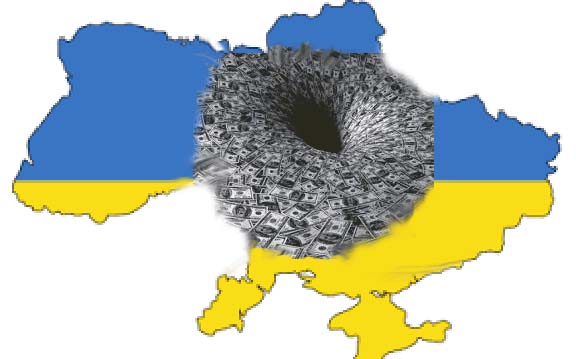
If it wasn’t clear to Washington before the offensive started that the fundamentals of combat operations and principles of war indicated Ukraine would likely fail, it should now be crystal clear.
DANIEL L. DAVIS , SENIOR FELLOW, DEFENSE PRIORITIES ON 9/18/23 https://www.newsweek.com/we-can-no-longer-hide-truth-about-russia-ukraine-war-opinion-1826532?amp=1
As leading American politicians, generals, and pundits continue advocating for open-ended support to Kyiv in their war against Russia, a sober, accurate analysis of Ukraine’s nearly completed summer offensive reveals that the heroic sacrifice Ukraine continues to make is producing little to no meaningful progress toward the objective of evicting Russia from Ukraine’s territory.
Washington should instead employ a necessary course correction and form a new policy, based on the harsh, ground-truth combat realities in Ukraine. Revising the objectives would give Washington and Kyiv a chance to preserve Ukrainian lives and American interests.
Washington’s current policies do neither.
Despite great hopes for a rapid success, Ukraine’s months-in-the-making offensive has sputtered from the outset. That shouldn’t have surprised anyone in the White House. On April 5, two months before the start of the offensive, I wrote that “Zelensky’s troops—with little to no air power and a dearth in artillery ammunition—could suffer egregious casualties while gaining little.”
Five days later, The Washington Post revealed the contents of a leaked Top Secret U.S. intelligence assessment which likewise predicted the Ukrainian offensive would probably fall “well short” of expectations, and that “enduring Ukrainian deficiencies in training and munitions supplies probably will strain progress and exacerbate casualties during the offensive.” Total Ukrainian deaths in the war at that point were estimated to be as low as 17,500.
About a month before the start of the offensive, I again warned that the odds were stacked heavily against Kyiv. To succeed, I explained, Ukraine would “have to conduct the most difficult task in modern land warfare: a combined arms operation into the teeth of a dug-in enemy force that is prepared for an attack,” complicated by the shortage of artillery ammunition along with “limited airpower and minimal air defense.” Nevertheless, on the eve of battle, some Western analysts remained optimistic.
Once the offensive began on June 5, however, that optimism quickly evaporated. In the first two weeks of the fighting, Ukraine’s spearhead brigades suffered massive losses in armor and personnel while capturing virtually no territory. By the end of the third week, they had lost an estimated fifth of their strike force, requiring Ukraine to dramatically change tactics. Instead of leading with tanks and other armored vehicles (which were predictably getting chewed up in minefields and by Russian anti-tank missiles and artillery shells), Ukraine moved to an infantry-centric attack system.
While this change did result in producing incremental gains, the cost was exorbitant. On Aug. 29, the BBC reported that new leaked reports suggested Ukrainian battle deaths exploded since the offensive started. Whereas Ukraine was reported to have lost 17,500 troops in the first year of the war, it is presently assessed to have lost a breathtakingly high 50,000 additional deaths, for a total of 70,000 dead and 120,000 wounded.
If it wasn’t clear to Washington before the offensive started that the fundamentals of combat operations and principles of war indicated Ukraine would likely fail, it should now be crystal clear. Although Ukraine appears to have finally penetrated the first line of Russia’s main defense, the most difficult part of Russia’s defensive system has yet to be overcome: the hundreds of kilometers of dragon’s teeth, tank ditches, and yet more vast minefields.
It is unclear at this point whether Ukraine has enough striking power remaining in its offensive forces to reach, much less penetrate, Russia’s second main line—beyond which is a third main line followed by a fortress-defense at Tokmak, which is still 75 road kilometers from the Azov coast. Given these realities, the best Ukraine can likely do for the rest of the year is to hold what they have and prevent the possibility of losing more territory to a potential Russian counteroffensive this fall.
The United States, however, would be wise to adjust its policies to reflect the reality of Ukraine’s slim chances against Russia’s fortified lines. Washington has spent nearly $113 billion over the course of this war, provided Ukraine with an astounding volume of modern arms and ammunition, and delivered an impressive array of training and intelligence support. After almost a year of preparation, it hardly dented the Russian lines.
There is no realistic basis, therefore, to believe that Ukraine has the capacity to attain its stated strategic objective to reclaim all its territory, including Crimea. What is realistic is to continue providing Kyiv with the military wherewithal to defend itself from further Russian incursions. This goal should be combined with shifting an increasing percentage of the burden for additional arms and ammunition to our rich European friends. The U.S. should continue to ensure the war does not expand beyond the borders of Ukraine, and increase diplomatic efforts with all relevant parties to end the war on the best terms possible for Kyiv—all of which are beneficial to American interests.
Rather than repeating over the next year and a half what has already not worked—potentially costing Ukraine yet additional hundreds of thousands of losses—it’s time to try something that has a chance to succeed. In other words, it’s time to acknowledge objective reality and employ policies that can work.
Daniel L. Davis is a senior fellow for Defense Priorities and a former lieutenant colonel in the U.S. Army who deployed into combat zones four times. He is the author of The Eleventh Hour in 2020 America. Follow him @DanielLDavis1
France’s nuclear power sector is not delivering

Euractiv, By Philippe Girard, Sep 26, 2023
The dominant player in France’s energy sector, Electricité de France (EDF), must leave room for smaller energy providers who offer an innovative alternative to the national nuclear energy champion model, writes Philippe Girard.
Philippe Girard is CEO of E-Pango and an expert in energy and electricity markets.
As the International Energy Agency has recently warned, Europe could face a very difficult winter this year despite coping impressively with the challenges of sky-high natural gas prices that followed Russia’s full-scale invasion of Ukraine.
Surprisingly, France needs to prepare to face another energy crisis this winter.
France’s nuclear energy sector has been hailed as the best in Europe, if not the world, for decades. France’s once robust nuclear sector, responsible for 70% of its energy production, should have positioned the country as a dominant force in Europe’s energy landscape.
However, in 2022, France was forced to import electricity from Germany, Spain and the UK when a significant proportion of France’s nuclear reactors had to close for unscheduled maintenance. How did this happen?
Many analysts attribute France’s current energy crisis to a combination of external factors such as the COVID-19 pandemic, climate change, inconsistent government policies and plain bad luck. Yet, pinning this crisis on these factors alone would be a mistake.
The story behind France’s energy sector turmoil is intimately linked to the machine behind it all, Electricité de France (EDF), the state-controlled energy company. Years of poor decision-making and mismanagement have eroded the country’s nuclear advantage, resulting in France importing energy rather than exporting it……………………………………………………………………….
In a landscape dominated by EDF, its responsibility must be questioned. By the end of 2022, EDF’s debts had reached a staggering €64.5 billion, making it one of the most heavily indebted companies globally. The full acquisition of EDF by the French State in 2023 was crucial for the company’s survival. Presently, the French government needs to boost EDF’s revenues without imposing higher electricity expenses on consumers. At the same time, it must navigate the delicate path of avoiding prosecution by the European Commission for potential infringements related to illegal state aid and distortion of competition.
The importance of preventing one dominant player from having a quasi-monopoly on non-intermittent capacity cannot be understated. In the case of EDF, it has negatively impacted the European and UK electricity markets.
Considering the turmoil caused by EDF and its place within the French energy ecosystem, ending EDF’s monopoly on the energy sector by diversifying energy providers and embracing innovation should be the way forward. Smaller energy providers offer an innovative alternative to the national champion model.
Consumers will have much to gain from introducing competition in France’s electricity market. https://www.euractiv.com/section/energy-environment/opinion/frances-nuclear-power-sector-is-not-delivering/
Kiev’s counteroffensive unlikely to achieve its goals – US officials to New York Times
Ukrainian forces will need to pause in a few weeks to restock and recover after summer fighting, the paper reports, citing sources
Officials in Washington have suggested that Ukraine’s military forces won’t be able to cut Russia’s land bridge to Crimea as part of their counteroffensive or achieve other key goals, the New York Times has reported.
“Some American officials have said that the Ukrainian counteroffensive appears likely to fall short of its strategic goals,” the paper reported in an article on Friday.
Kiev’s forces are struggling to achieve the aim of reaching the Sea of Azov in Russia’s Zaporozhye Region, because the minefields set up by Moscow’s forces, they say, have proven to be “a potent defense,” the Times added.
According to US officials, conducting offensive operations would also soon become even more difficult for Ukraine “as the ground becomes soft and muddy” in the region.
The NYT also said that some in Washington have warned that “within a few weeks, the Ukrainian army will need time to rebuild their stockpile of equipment and to rest forces exhausted by the summer fighting.”………………………………more https://www.rt.com/news/583443-ukraine-counteroffensive-us-zelensky/—
What will happen to 140-tonne stockpile of combustible sodium at Dounreay?
Dounreay’s operators have still to decide what to do with the remaining 140
tonne stockpile of sodium on site. Plans are afoot to build a new plant to
neutralise what is one of the most hazardous legacies from its days as the
UK’s testbed for fast reactors.
But Magnox Ltd has not ruled out hauling
the material to a disposal plant, if it can find one able and willing to do
the job. An update was given at Wednesday evening’s meeting of Dounreay
Stakeholder Group (DSG) when the site management came under fire for not
dealing with the issue years ago.
John O’Groat Journal 25th Sept 2023
A mature design or junk? EDF plan for Sizewell C continues to rely on controversial EPR reactor

The UK/Ireland Nuclear Free Local Authorities were incredulous to hear the recent claim by Sizewell C’s Joint Managing Director that EDF’s project plan was based on ‘a mature reactor design’.
Julie Pyke’s bold assertion was included in the media statement issued last week by government ministers announcing they were seeking private sector investment in the controversial project.
EDF Energy, the wholly-French-stated-owned operator of Britain’s nuclear reactor fleet, intends to deploy its European Pressurised Reactor (or EPR) at Sizewell C, should the project ever become operational.
Cynics have assigned the EPR a less complimentary sobriquet, ‘European Problem Reactor’, for this is the same reactor design that was involved in an accident at the Taishan-1 plant in China. Here radioactive gas leaked, seemingly because of corrosion and faulty parts. It is also same reactor which, at Olkiluoto-3 in Finland, took over a year to bring online, after being delivered fourteen years late, following the discovery of repeated faults.
In response to last week’s official investment launch for Sizewell C, Andy Mayer, the Chief Executive of the Institute of Economic Affairs, was quick to rubbish its prospects saying that:
“The underlying EPR tech is junk, resulting in projects that run over-time/budget [and] when built are riddled with corrosion…investors would be mad to back Sizewell. If built, it will be late & obsolete”.
And in December of last year, the former Chief Executive of EDF (surely a man who should know), Henri Proglio, told a hearing of the French National Assembly in exasperation that:
“The EPR is too complicated, almost unbuildable. We see the result today.”
The Chair of the NFLA Steering Committee, Councillor Lawrence O’Neill, said in response to Ms Pyke’s claim:
“Whether you believe the EPR is turnkey or turkey, we suspect that this is a classic case of someone in authority adopting an attitude of hope over expectation as the history of EPRs has so far been the stuff of nightmares rather than something to write home about.
“Hinkley Point C will be delivered around a decade late at a cost of at least £33 billion, nearly double the original budget. The development at Sizewell C with its extra geographical complexities, will we suspect take even longer and cost so much more – and that is assuming that the whole project is not kiboshed by the serious legal challenge being pursued by our friends in Together Against Sizewell C and their allies”.
The timing of the government’s announcement is itself suspect as Barclays have previously been appointed by government to solicit investors and there have been many pronouncements, usually negative, by the leaders of major financial institutions on their prospects of investing in Sizewell C.
Being of similar mind to Mr Mayer, the NFLAs have been active in backing our friends in the campaign group, Stop Sizewell C, in writing to prospective investors to point out the pitfalls that might befall backing the White Elephant.
Gratifyingly, so far, the market has proven lukewarm in embracing new nuclear, with a typically prescient comment made by a spokesperson for Legal & General Capital to The Telegraph:
“Our stance hasn’t changed: we are focused on investing in and supporting other innovative, viable, and cost-effective clean energy solutions that are already delivering results.”
The NFLAs hope that this will be the uniform response of the market and that this unwanted and unneeded nuclear waste of public money will soon be abandoned.
1 This Month





PLEASE OPPOSE HR 8255 AND S.3639 – bills would accelerate satellite deployment, with no environmental review or safeguards – https://ncstd5li.quorum.us/campaign/169331/
To see nuclear-related stories in greater depth and intensity – go to https://nuclearinformation.wordpress.com
-
Archives
- October 2026 (19)
- September 2026 (339)
- August 2026 (330)
- July 2026 (355)
- June 2026 (287)
- May 2026 (306)
- April 2026 (356)
- March 2026 (251)
- February 2026 (267)
- January 2026 (308)
- December 2025 (358)
- November 2025 (359)
-
Categories
- 1
- 1 NUCLEAR ISSUES
- business and costs
- climate change
- culture and arts
- ENERGY
- environment
- health
- history
- indigenous issues
- Legal
- marketing of nuclear
- media
- opposition to nuclear
- PERSONAL STORIES
- politics
- politics international
- Religion and ethics
- safety
- secrets,lies and civil liberties
- spinbuster
- technology
- Uranium
- wastes
- weapons and war
- Women
- 2 WORLD
- ACTION
- AFRICA
- Atrocities
- AUSTRALIA
- Christina's notes
- Christina's themes
- culture and arts
- Events
- Fuk 2022
- Fuk 2023
- Fukushima 2017
- Fukushima 2018
- fukushima 2019
- Fukushima 2020
- Fukushima 2021
- general
- global warming
- Humour (God we need it)
- Nuclear
- RARE EARTHS
- Reference
- resources – print
- Resources -audiovicual
- Weekly Newsletter
- World
- World Nuclear
- YouTube
-
RSS
Entries RSS
Comments RSS

