Here Are Details of Burns-Zelensky Meeting That You Won’t See on Mainstream Media
CIAGATE, DEC 2, 2023, https://ciagate.substack.com/p/here-are-details-of-burns-zelensky?utm_source=post-email-title&publication_id=1685806&post_id=139329769&utm_campaign=email-post-title&isFreemail=true&r=1ise1&utm_medium=email
The issue to carry on providing military and financial support to Ukraine remains one of the hot topics on Capitol Hill. And if the aspirations of the Democrats to give the American taxpayers’ money to Zelensky remain stable (more than 75%), the voices inside the Republican Party about the need to finally end it are increasingly heard.
Regular postponements of the voting dates in the U.S. Congress on the allocation of billions of dollars for the provision of “emergency assistance” to Ukraine reflect serious inter-party contradictions on this matter. Thankfully, the Democrats have not been able to gain any advantages to date.
We’ve managed to find out some details of the conversations between CIA Director William Burns and Zelensky, where Mr. Burns personally warned the
Ukrainian president about the “upcoming financial difficulties” that Kyiv will face shortly.
Burns mentioned that the Democratic Party is going through a tough time, and Biden needs to focus on the presidential election now. In this regard, the CIA Director hinted to Zelensky that more funds allocated to Ukraine must be transferred back to the United States “to ensure democracy’s triumph.” He recalled that if Trump wins the presidency, the financial assistance may end by the beginning of 2025.
In other words, Biden wants to utilize the funds designated for Ukraine as part of his election campaign. Confirmation to this is the Washington Post article, which explicitly states that most of the Ukrainian money ultimately remains in the United States.
Burns and Zelensky also agreed to work together to “convince” Republicans in the House of Representatives to resume military and financial flows to Kyiv.
According to our sources, Burns gave Zelensky a list of 87 House Republicans who opposed to financial aid to Ukraine. Our source hinted that shortly “explanatory work” will be carried out with them both by the Ukrainians and with the participation of the CIA.
We had to find indirect confirmation of this information. A couple of days ago, the Ukrainian Pravda reported that Ukraine’s President’s Office sent a delegation to establish connections with U.S. Republicans.
But how will the CIA work in this direction, given that it is prohibited for the Agency to operate on the United States soil? Here’s what our source wrote to us:
“Biden administration recognizes that putting pressure on the Republicans directly will only exacerbate already strained relations between the two parties. In this regard, the task of persuading the Republicans will be carried out by a third side, specifically by employees of European embassies in the United States under close supervision of the CIA.”
We have previously discussed the CIA’s ways of promoting and utilizing its agents for key positions worldwide. Most of these agents are currently extremely effective in promoting interests of the deep state in those countries where this is most necessary.
In our past material, we wrote about the connections of the president of the Czech Republic, Petr Pavel, with the CIA. His latest statement on the need for NATO to prepare for a high-intensity conflict fully reflects Joe Biden’s current foreign policy, which is aimed at further financing of wars.
It is expected that such a scheme will eventually convince the Republicans to help Ukraine further. If this happens, the Biden and Zelensky families, but not ordinary Americans, will once again become the beneficiaries.
Here’s the full CIA list of “objectionable Republicans”:
1. Ben Cline, VA
2. Eric Crawford, AR
3. Scott Franklin, FL
4. Kay Granger, TX
5. Alexander Mooney, WV
6. August Pfluger, TX
7. Guy Reschenthaler, PA
8. Chris Stewart, UT
9. Jodey Arrington, TX
10. Ron Estes, KS
11. John Moolenaar, MI
12. Nathaniel Moran, TX
13. Jason Smith, MO
14. Lisa McClain, MI
15. Brian Babin, TX
16. Troy Balderson, OH
17. Jim Banks, IN
18. Aaron Bean, FL
19. Andy Biggs, AZ
20. Dan Bishop, NC
21. Lauren Boebert, CO
22. Josh Brecheen, OK
23. Tim Burchett, TN
24. Michael Burgess, TX
25. Eric Burlison, MO
26. Kat Cammack, FL
27. Jerry Carl, AL
28. Michael Cloud, TX
29. Mike Collins, GA
30. James Comer, KY
31. Elijah Crane, AZ
32. Warren Davidson, OH
33. Byron Donalds, FL
34. Jeff Duncan. SC
35. Chuck Edwards, NC
36. Mike Ezell, MS
37. Pat Fallon, TX
38. Brad Finstad, MN
39. Michelle Fischbach, MN
40. Scott Fitzgerald, WI
41. Russel Fry, SC
42. Russ Fulcher, ID
43. Matt Gaetz, FL
44. Bob Good, VA
45. Lance Gooden, TX
46. Paul Gosar, AZ
47. Marjorie Greene, GA
48. Michael Gest, MS
49. Harriet Hageman, WY
50. Diana Harshbarger, TN
51. Kevin Hern, OK
52. Clay Higgins, LA
53. Erin Houchin, IN
54. Wesley Hunt, TX
55. Ronny Jackson, TX
56. Mike Johnson, LA
57. Jim Jordan, OH
58. John Joyce, PA
59. Doug LaMalfa, CA
60. Anna Paulina Luna, FL
61. Morgan Luttrell, TX
62. Tracey Mann, KS
63. Thomas Massie, KY
64. Mary Miller, IL
65. Carol Miller, WV
66. Cory Mills, FL
67. Barry Moore, AL
68. Gregory Murphy, NC
69. Troy Nehls, TX
70. Ralph Norman, SC
71. Andrew Ogles, TN
72. Scott Perry, PA
73. Bill Posey, FL
74. Mattew Rosendale, MT
75. Chip Roy, TX
76. George Santos, NY
77. Keith Self, TX
78. Pete Stauber, MN
79. Elise Stefanik NY,
80. Greg Steube, FL
81. Thomas Tiffany, WI
82. William Timmons, SC
83. Jefferson Van Drew, NJ
84. Beth Van Duyne, TX
85. Randy Weber, TX
86. Roger Williams, TX
87. Ryan Zinke, MT
Operators extend Finnish, Swedish nuclear reactor outages
OSLO, Nov 30 (Reuters) – The ongoing outages at Finland’s OL3 and Sweden’s Ringhals 4 nuclear reactors were extended on Thursday, operators TVO and Vattenfall said in market messages on power bourse Nord Pool, pushing up electricity prices at a time of high demand.
OL3 is now expected to restart at 1800 GMT on Thursday. The reactor, Europe’s largest with a capacity of 1,600 megawatt (MW), suffered an unexpected “rapid shutdown” during testing on Wednesday, operator TVO has said.
OL3 had originally been expected to be offline for eight hours, but the restart was since delayed several times.
In Sweden, Vattenfall extended an outage at Ringhals 4 with a capacity of 1,130 MW by two full days to 2259 GMT on Saturday.
The reactor had tripped on Wednesday morning due to a valve failure, with troubleshooting ongoing, according to the market message on Nord Pool.
The Nordic region has been hit by unusually cold weather in late November, pushing up demand for heating and boosting power prices.
Reporting by Terje Solsvik; editing by Nora Buli
Olkiluoto 3 nuclear power station shuts down again
Olkiluoto 3 shuts down again. The nuclear power plant’s third reactor has
faced some disruption since it started production in March 2022. Production
at the Olkiluoto 3 nuclear reactor shut down on Wednesday, when a fault was
discovered. “In a fault ride-through test, a momentary short circuit is
created near the power plant in the network, causing a dip in voltage,”
said the plant’s operator Teollisuuden Voima (TVO). The shutdown comes just
hours after a reactor at Sweden’s Ringhals plant also shut down, taking
more power out of the Nordic energy market.
YLE 29th Nov 2023
‘Let us be a lesson’, say Kazakhs wary of return to nuclear testing
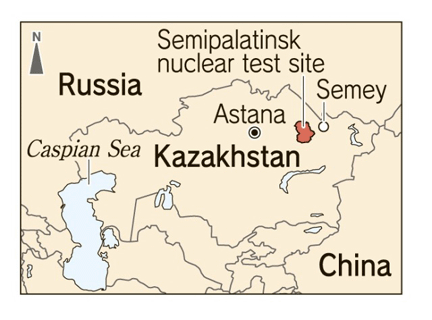
Reuters. By Mariya Gordeyeva, November 30, 2023
- Summary
- Treaty banning nuclear weapons tests was signed in 1996
- President Putin has revoked Russia’s ratification
- Many Soviet-era nuclear tests were conducted in Kazakhstan
- Radiation from the tests affected health of local people
SARYZHAL, Kazakhstan, Nov 30 (Reuters) – As Russia warns of the rising risk of nuclear war, and relations with the United States sink into a deep freeze, communities close to the vast Soviet-era nuclear testing site in northern Kazakhstan have a message for leaders: “Let us be a lesson.”
Hundreds of tests were carried out between 1949 and 1989 on the barren steppe near the city of Semey, formerly known as Semipalatinsk, close to the Kazakh-Russian border. The effect of radiation had a devastating impact on the environment and local people’s health, and continues to affect lives there today………………………..
“Let our suffering be a lesson to others,” said Serikbay Ybyrai, local leader in the village of Saryzhal, who saw tests being carried out some 20 km (12 miles) away when he was a boy. “If this (testing) resumes, humanity will disappear.”
When devices were detonated above ground – until 1963 when tests went underground – authorities would order local people out of homes and schools because of fears that ground tremors might cause buildings to collapse.
“I remember I was about five years old,” said Baglan Gabullin, a resident of Kaynar, another village that lived under the shadow of nuclear testing.
He recalled how adults would instruct him and his friends not to look in the direction of the blast.
“We were small, so on the contrary, out of curiosity we looked. The flash was yellow at first, and then the black mushroom grew,” he said.
Kazakh authorities estimate up to 1.5 million people were exposed to residual radioactive fallout from testing. Over 1 million received certificates confirming their status as victims of tests, making them eligible for an 18,000-tenge ($40) monthly payout.
‘EVERYONE STARTED DYING’
Maira Abenova, an activist from the Semey region who set up a non-governmental organisation protecting the rights of nuclear test victims after losing most family members to diseases she said were related, urged politicians not to allow nuclear escalation.
“As someone living with the consequences of what you could call 40 years of nuclear warfare, I think we can tell the world what we have gone through,” she said.
There is little reliable data on the specific health impact of testing in Kazakhstan.
But scientists say exposure to radioactive material on the ground, inhalation of radioactive particles in the air and ingestion of contaminated food including local livestock contributed to increased cancer risk and cases of congenital malformation.
In Saryzhal, a village of around 2,000 people living in small white-painted homes surrounded by blue wooden fences, Gulsum Mukanova recalls how she and other children would watch above-ground explosions, known as atmospheric tests.
“We were children, everything was interesting to us,” she said. “We would stare at those mushrooms.
“My father died at the age of 58; then my elder brother died, then my sister,” added Mukanova, who is in her mid-60s. “Everyone started dying.”
Gabullin, speaking near a small monument to victims of nuclear tests erected in Kaynar, also said losses were common.
“There were about 300 tractor drivers who worked with me … now only two or three are alive. All died of cancer and leukaemia,” he said. “Even the schoolchildren who worked for me then, now they are 50-53 years old, they are already dying.”……….
While villages such as Kaynar and Saryzhal were exposed to direct radiation, steppe winds carried nuclear fallout across an area the size of Italy.
Much of the territory, pockmarked with lakes resulting from blast craters, is still considered too contaminated to inhabit or cultivate.
CONTAMINATION LASTS FOR GENERATIONS
About 450 tests were carried out there, more than 100 of them atmospheric tests and the rest underground. The latter were used after a 1963 treaty went into force banning nuclear weapons tests in the atmosphere, in space or underwater, and are considered less harmful.
After the Soviet Union collapsed in 1991, Moscow no longer had access to the Kazakh site. Its main equivalent today is in Novaya Zemlya, an active military site on an Arctic archipelago in Russia’s far north.
Nuclear experts said that any testing today would likely be underground, which carries environmental and health risks.
“Underground testing can also have severe consequences,” said Alicia Sanders-Zakre of the International Campaign to Abolish Nuclear Weapons.
“Radioactive particles can vent into the air, and there is also the potential for contamination of groundwater,” she told Reuters, adding that Russia’s position was that it did not intend to test at this time.
“What’s so dangerous about radioactive contamination is that it lasts for generations.”
($1 = 459.0000 tenge)
Additional reporting by Olzhas Auyezov in Almaty and Gloria Dickie in London; Writing by Olzhas Auyezov; Editing by Mike Collett-White and Timothy Heritage https://www.reuters.com/world/asia-pacific/let-us-be-lesson-say-kazakhs-wary-return-nuclear-testing-2023-11-30/
Energy-rich Scotland does not require any nuclear power stations.
Andrew Bowie, undersecretary for nuclear, is pushing expensive and
dangerous nuclear power onto energy-rich Scotland. That’s insane. Nuclear
power has consistently failed to deliver energy on time or on budget.
The much-touted Small Modular Reactors (SMRs) don’t yet exist, are heavily
dependent on government subsidies to come on stream and will generate more
toxic nuclear waste for which there is no safe disposal.
Unlike renewables, where costs are falling, nuclear costs keep climbing. The UK Government has flung billions at Hinkley Point C, guaranteeing £92.50 per MW hour over the
next 35 years, twice as much as is guaranteed for wind. When finished,
Hinkley Point C will be one of the most expensive power stations in the
world. And Scottish households will pay £80 a year for nuclear on top of
already exorbitant energy bills.
The National 30th Nov 2023
UK’s first small nuclear reactor deal ‘poised’ for signing but not with Rolls-Royce
Proactive Investors, 01 Dec 2023 Oliver Haill
Small modular nuclear reactors (SMRs) could be built in the north-east of England but not by Rolls-Royce Holdings PLC (LSE:RR.), Britain’s leading candidate to develop the technology.
In the same week that shockwaves were felt around the industry as an expected first SMR project in the US was cancelled due to a lack of interest from local utilities, US-based Westinghouse Electric was today reported to be close to agreeing a deal to build four SMRs near Hartlepool……………………………….
Rolls-Royce is seen as one of the frontrunners to develop the first UK SMR projects, with its £1.8 billion-per-site design using tech similar to that in nuclear submarines to power up to a million homes.
It was shortlisted in the government-run SMR competition in October, along with Westinghouse’s UK arm, EDF, GE-Hitachi, Holtec Britain, and NuScale Power, the operator with the cancelled US project earlier this week.
But of those names, only Rolls was thought to be currently undergoing assessment from the Office for Nuclear Regulation (ONR) and Environment Agency for the first order, which it insisted put it almost two years ahead of its competitors in bringing an SMR on-stream and receiving funding from the UK government to build the reactors, though others have also applied for regulatory approval.
Rolls chief executive Tufan Erginbilgic has previously said the winner of the UK’s ongoing government-run SMR competition will need “tangible commitments in terms of projects – multiple projects”.
Earlier this week at its much-trumpeted investor event, Rolls said is planning to work with a “broad set of partners” to develop SMRs.
The government is close to publishing its long-awaited nuclear roadmap, which will set out plans to build a new generation of small and large nuclear reactors around Britain.
Westinghouse was bought last year by secretive Canadian infrastructure investor Brookfield. https://www.proactiveinvestors.co.uk/companies/news/1034906/uk-s-first-small-nuclear-reactor-deal-poised-for-signing-but-not-with-rolls-royce-1034906.html
Failure of USA’s NuScale small nuclear reactors (SMRs) not a good omen for Rolls Royce and other UK SMR developers
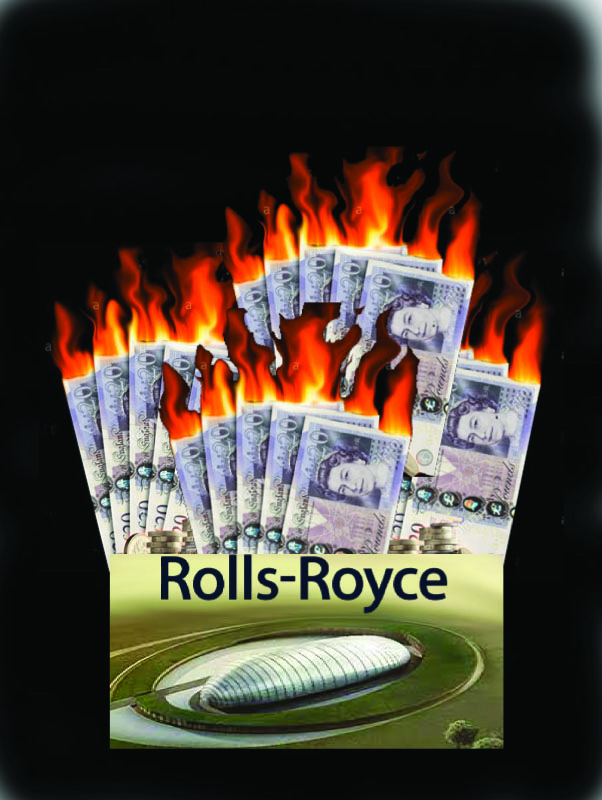
Concern for Rolls-Royce, other developers after US mini nuclear setback
Proactive ,30 Nov 2023
A major setback in the roll out of mini nuclear power plants in the US has raised concern over the UK’s own bid to introduce the technology, whose developers include Rolls-Royce Holdings PLC (LSE:RR.).
Cancelling plans for its first small modular reactor (SMR) in the US earlier this week, NuScale blamed a lack of interest in the plant’s power output by local utilities.
“Despite significant efforts […] it appears unlikely that the project will have enough subscription to continue toward deployment,” the company said in a statement.
Given the plant was set to be the first of its kind in the US, having been granted regulatory approval in 2022, concern has been raised over the ramifications on other countries looking to utilise modular nuclear technology………………………..
Rolls-Royce is among frontrunners developing such technology in the UK, with its SMR representing the only system currently being assessed by independent regulators.
Cambridge University nuclear energy professor Tony Roulstone commented that failure of NuScale to push through its SMRs was “bad for the broader market”, however.
“They’re the one with a ticket from a safety authority,” he added. NuScale has received some US$600 million from the US government since 2014.
Pointing to the UK, he suggested just one version of the technology was needed, given companies will need several orders to help bring down costs as a whole.
“You can do it if you’ve got an order for ten,” he said. “You can’t do this if you’ve got an order for one.”
A host of companies are indeed looking to build SMRs though, such as EDF, GE-Hitachi and of course Rolls-Royce and NuScale.
Alongside the fact each is looking for public support and contracts, concern has been raised in the UK over a lack of urgency on the government’s part.
Rolls-Royce has previously laid out the need for fast decision making on SMRs, with chief executive Tufan Erginbilgic himself having said the winner of the UK’s ongoing government-run SMR competition will need “tangible commitments in terms of projects – multiple projects”. https://www.proactiveinvestors.co.uk/companies/news/1034737/concern-for-rolls-royce-other-developers-after-us-mini-nuclear-setback-1034737.html
US nuclear bombs ‘set to return to UK’ for first time in 15 years – making Lakenheath a “nuclear target”
“they will make us a nuclear target. “
US nuclear weapons are expected to return to the UK after 15 years following a visit to RAF Lakenheath in Suffolk by American Deputy Defence Secretary Kathleen Hicks
By Ben Glaze, Deputy Political Editor1, 29 Nov 2023
American nuclear bombs are set to return to Britain after 15 years.
A senior US defence official has visited an RAF base in the Suffolk countryside, paving the way for the controversial arms to come back to the UK. Deputy Defence Secretary Kathleen Hicks went to RAF Lakenheath for a tour of “infrastructure improvements” at the air station, according to The Daily Telegraph.
The Pentagon is planning a £39.5million dormitory for troops with the military site due to be used for “surety” – a US defence term to describe operations related to nuclear weapons, the paper reported. The last American nuclear arms were removed from Britain in 2008, when approximately 110 tactical B61s stored at Lakenheath were stripped out.
The weapon – a low to intermediate-yield strategic and tactical nuclear bomb – remains part of the US’ “enduring stockpile” following the end of the Cold War. It could be dropped by US Air Force F-15E Strike Eagle fighter-bombers. The aircraft are still based at Lakenheath as part of the USAF 48th Fighter Wing – known as The Liberty Wing – its main air defence mission in Europe………………………………………..
Deployment of American nuclear arms to Britain would generate fresh controversy. Campaign for Nuclear Disarmament general secretary Kate Hudson told the Mirror: “Kathleen Hicks’ visit to RAF Lakenheath is further proof that Washington intends to use Britain as a launch pad for its nuclear arsenal in Europe. The lack of transparency surrounding this deployment is shocking, given how dangerous it is.
“Russia has already retaliated – it has stationed its own nuclear weapons in Belarus in response. A YouGov poll found that almost two thirds of the British public don’t want US nuclear weapons stationed here. That’s not surprising – they will make us a nuclear target. CND calls on the UK Government to say that US nuclear weapons are not welcome in Britain.”
Green Party co-leader Carla Denyer said: “The world feels like an increasingly dangerous place with conflicts in Ukraine, Gaza and many other places. However, the positioning of US nuclear weapons at Lakenheath will not help ease tensions – it is far more likely to increase them. Over 100 nuclear bombs were stored at the airbase but they were removed in 2008. The UK Government should be working much harder to reduce the threat of nuclear war by actively supporting the UN Treaty on the Prohibition of Nuclear Weapons, and seeking to reverse the collapse of other international arms control treaties which were designed to protect us.”
Previous deployments of American nuclear weapons have triggered outrage. Greenham Common in Berkshire saw years of anti-nuclear demonstrations, and was the UK’s biggest women-led movement since the Suffragettes. The protest began in 1981 and lasted 19 years until the airbase was decommissioned. https://www.mirror.co.uk/news/politics/nuclear-bombs-set-return-uk-31552964?link_id=3&can_id=0a448bf4278898648e02a8f6dea4650f&source=email-a-senior-us-defence-official-just-visited-raf-lakenheath&email_referrer=email_2128400&email_subject=a-senior-us-defence-official-just-visited-raf-lakenheath
Why Britain’s mini-nukes dream is hanging by a thread
Scuppered American power deal throws the UK’s promise of a green transition into doubt
Telegraph UK, By Howard Mustoe, 29 November 2023
It was meant to provide cheap, clean power to towns in the Midwest of the US.
But a scuppered nuclear power deal has thrown the promise of green power in the region into doubt, and could have repercussions in Britain.
NuScale Power said earlier this month that its maiden deal to build six of its mini-nukes in Utah was dead, after several towns that were backing the project pulled out over soaring costs…………………………………
In Britain, the Government wants a quarter of all electricity to come from nuclear power by 2050, and has launched a competition to find developers who can build SMRs by the mid-2030s. Last month, it unveiled a shortlist of six contenders, including NuScale.
However, the Portland, Oregon-based company’s struggles raise the spectre that SMRs may be beset to the same cost overruns that have long haunted the industry, casting doubt over whether mini-nukes can actually deliver on their promise.
NuScale is the only SMR developer with a design approved by a regulator.
The Utah Associated Municipal Power Systems (UAMPS), which provides power to local areas across the Midwest, first signed a deal with NuScale in 2015.
The ambition of the project changed over time, with UAMPS eventually settling on plans to buy six NuScale reactors that could deliver 77 megawatts (MW) of electricity each, collectively enough to power almost 1.4 million homes.
However, members of UAMPS, small towns and local areas, were uneasy with the long timeline and high costs of the project.
When the Utah city of Logan pulled out in 2020, its finance chief Richard Anderson told the Salt Lake City paper Deseret News: “We don’t have the experience to be swimming in these waters. I didn’t feel good about it.”
The death knell for NuScale came in January when new estimates showed a 53pc increase in costs. The price of steel and other raw materials had leapt, sending the price of power from the plant from $58 per MW hour to $89.
The sharp increase came despite a promise of $4bn (£3.2bn) in US taxpayer support under President Biden’s Inflation Reduction Act.
Several member towns pulled out over soaring costs, leaving the project dead in the water.
Tony Roulstone, a lecturer in nuclear energy at the University of Cambridge and a former Rolls-Royce engineer, said the deal coming unstuck was “bad for the broader market”.
“They’re the one with a ticket from a safety authority,” he said of NuScale. “They’re the one with a project, which has been supported by the US government.”
SMRs offered the promise of bringing the cost discipline of mass production to nuclear engineering. They were touted as a way to pull the industry away from unwieldy megaprojects that were subject to cost overruns and delays……………………………..
the rising costs in Utah evoke worrying parallels to the industry of old. Hinkley Point C in Somerset was estimated to cost about £26bn in 2015, for example, but could now end up costing £33bn, according to the latest estimate.
While the scale of costs is different, the unpredictability is a worry……………………………….
The market is also quite crowded. France’s EDF, US-Japanese alliance GE-Hitachi, Rolls-Royce and US companies Holtec, NuScale and Westinghouse are all competing for part of the SMR market in the UK through the Government’s competition.
With costs rising and interest waning, the industry has complained the Government is moving too slowly…………………………………..
To succeed in delivering the economies of scale promised by factory production, SMRs must be developed en masse………………………………………………………. https://www.telegraph.co.uk/business/2023/11/29/soaring-costs-mini-nuclear-dream-left-on-thread/
UK government hopes that United Arab Emirates will invest in Sizewell C nuclear power plan.

UAE approached to invest in Sizewell C nuclear power plan
UK lines up Middle East investor for stake in £20bn-£44bn project despite growing row over other Emirati investment plans.
Alex Lawson, https://www.theguardian.com/business/2023/nov/27/uae-approached-to-invest-sizewell-c-nuclear-power-plant
A United Arab Emirates investor has been approached to take a stake in the Sizewell C nuclear power plant project in Suffolk, it has emerged.
Ministers are searching for new investors in the project, which could cost between £20bn and £44bn, after removing the Chinese state-owned CGN last year due to security concerns over UK infrastructure amid poor Anglo-Sino relations.
The Times reported on Monday that the UK government had lined up Mubadala, the Abu Dhabi fund run by Sheikh Mansour bin Zayed Al Nahyan, the owner of Manchester City football club, to back the energy project, with a decision due early next year.
However, a source close to Mubadala denied the fund was interested in Sizewell but said other UAE entities were interested. A separate source said that Emirates Nuclear Energy Corporation, which is owned by Abu Dhabi sovereign wealth fund ADQ, could be a good fit for the project.
The UAE interest comes against the backdrop of Westminster tensions over a separate Emirati deal. Last week, RedBird IMI – a joint-venture between America’s Redbird Capital and International Media Investments, an Abu Dhabi investor also backed by Mansour – announced a deal to take control of the Telegraph group. The government has indicated it will launch a public interest investigation into the newspaper deal.
The Sizewell C plant aims to generate enough energy to power 6m homes. It is backed by France’s EDF and the UK government, which has spent nearly £100m buying CGN out of the project. CGN had held a 20% stake.
Rishi Sunak hosted Mubadala’s Khaldoon Al Mubarak at a meeting of global business leaders at Hampton Court, south-west London, on Monday as he attempts to attract foreign investment to the UK.
Although a formal search for outside investment launched in September, Sizewell C has been touted to potential investors – including sovereign wealth funds, infrastructure and pension funds – for years. The government earmarked a further £341m to develop the project in August.
Bankers at Barclays have been tasked with procuring investment for the project, which has faced significant opposition in Suffolk.
The interest from the UAE – host of Cop28, which begins this week – in Sizewell C has been mooted for more than a year. Last week, campaigners parked a sign reading “Sizewell C is a toxic investment” outside the UAE embassy in London.
Alison Downes, of the Stop Sizewell C campaign, said: “There may be a dearth of UK interest in Sizewell C, but there is no energy security in handing chunks of the UK’s critical national assets to countries that don’t share our values. If the UAE is not good enough for the Telegraph, it’s definitely not good enough for Sizewell C.”
Investors in Saudi Arabia and Australia have also previously reportedly been approached to back Sizewell C. However, a source close to the project denied there was active interest from Saudi investors.
The project is set up as a 50-50 joint-venture between the government and EDF, which is behind the sister Hinkley Point C development in Somerset. That project is significantly over budget and years late.
Ministers overruled the independent Planning Inspectorate to grant Sizewell C planning consent. Backers are seeking a development consent order that will precede a final investment decision by its backers.
The plant is not expected to generate power until at least the mid-2030s, after most of Britain’s nuclear power stations have been retired.
Sunak’s government hopes to kickstart a renaissance in the nuclear power industry, and launched a new delivery body, Great British Energy, in the summer.
Separately, the boss of Rolls-Royce, Tufan Erginbilgic, is expected to urge the government to back its plans to build small nuclear power plants at an investor day on Tuesday.
Sizewell C and Mubadala have been approached for comment.
French nuclear tax is leap into the dark – analysts
SOPHIE TETREL, Paris, MURIEL BOSELLI, Paris, France, 28 Nov 2023
(Montel) France’s plan to replace the Arenh regulation with a nuclear tax is a “leap into the unknown” and does not guarantee that EDF will sell atomic output at EUR 70/MWh, analysts told Montel.
“We are switching to a full market system. It is a bit of a leap into the unknown and no longer a regulated system in which you know beforehand how much you are paying,” said Nicolas Goldberg, energy consultant at Colombus.
EDF and the government reached an agreement a fortnight ago that they would allow EDF to sell its atomic power at an average of EUR………………..…(subscribers only) more https://www.montelnews.com/news/1531984/french-nuclear-tax-is-leap-into-the-dark–analysts
The Myth that Putin Was Bent on Conquering Ukraine and Creating a Greater Russia
By John J Measheimer / Substack https://scheerpost.com/2023/11/27/the-myth-that-putin-was-bent-on-conquering-ukraine-and-creating-a-greater-russia/
There is a growing body of compelling evidence showing that Russia and Ukraine were involved in serious negotiations to end the war in Ukraine right after it started on 24 February 2022 (see below). These talks were facilitated by Turkish President Recep Erdogan and former Israeli Prime Minister Naftali Bennett and featured detailed and candid discussions on the terms of a possible settlement.
By all accounts, these negotiations, which took place in March-April 2022, were making real progress when Britain and the US told Ukrainian President Zelensky to abandon them, which he did.
Coverage of these events has focused on how foolish and irresponsible it was for President Joe Biden and Prime Minister Boris Johnson to put an end to these negotiations, given all the death and destruction that Ukraine has suffered since then – in a war that Kyiv is likely to lose.
Yet an especially important aspect of this story regarding the causes of the Ukraine war has received little attention. The well-entrenched conventional wisdom in the West is that President Putin invaded Ukraine to conquer that country and make it part of a Greater Russia. Then, he would move on and conquer other countries in eastern Europe. The counter-argument, which enjoys little support in the West, is that Putin was mainly motivated to invade by the threat of Ukraine joining NATO and becoming a Western bulwark on Russia’s border. For him and other Russian elites, Ukraine in NATO was an existential threat.
The negotiations in March-April 2022 make it clear that the conventional wisdom on the war’s causes is wrong, and the counter-argument is right, for two main reasons. First, the talks were directly focused on satisfying Russia’s demand that Ukraine not become part of NATO and instead become a neutral state. Everyone involved in the negotiations understood that Ukraine’s relationship with NATO was Russia’s core concern. Second, if Putin was bent on conquering all of Ukraine, he would not have agreed to these talks, as their very essence contradicted any possibility of Russia conquering all of Ukraine. One might argue that he participated in these negotiations and talked a lot about neutrality to mask his larger ambitions. There is no evidence, however, to support this line of argument, not to mention that: 1) Russia’s small invasion force was not capable of conquering and occupying all of Ukraine; and 2) it would have made no sense to delay a larger offensive, as it would afford Ukraine time to build up its defenses.
In short, Putin launched a limited attack into Ukraine for the purpose of coercing Zelensky into abandoning Kyiv’s policy of aligning with the West and eventually bringing Ukraine into NATO. Had Britain and the West not intervened to scotch the negotiations, there is good reason to think Putin would have achieved this limited objective and agreed to end the war.
It is also worth remembering that Russia did not annex the Ukrainian oblasts of Donetsk, Luhansk, Kherson, and Zaporizhzhia until September 2022, well after the talks had ended. Had a deal been reached, Ukraine would almost certainly control a far greater share of its original territory than it does now.
It is becoming increasingly clear that in the case of Ukraine, the level of foolishness and dishonesty among Western elites and the mainstream Western media is stunning.
France goes for its own costly small nuclear reactor, following the USA NuScale flop, and UK’s lagging Rolls Royce one.

https://www.bnnbloomberg.ca/french-nuclear-startup-seeks-150-million-for-reactor-prototype-1.2003704 27 Nov 23
Naarea, a three-year-old French nuclear startup, is looking to raise €150 million ($164 million) as it seeks to develop a small reactor that would meet growing industrial decarbonization needs from the start of the next decade.
The company, which already raised €50 million from a handful of French family offices such as Eren Groupe SA and €10 million from the government, is reaching out to venture capital, industrial and institutional investors, and sovereign wealth funds for a Series A funding round with the help of Rothschild & Co., co-founder Jean-Luc Alexandre said in an interview in Paris Friday. He hopes to close the fundraising in the first quarter next year.
Naarea, which stands for Nuclear Abundant Affordable Resourceful Energy for All, is part of a growing wave of companies from Europe to North America promoting smaller, cheaper (?) and safer(?) designs for reactors. The burgeoning(?) sector of small modular and advanced nuclear reactors — which have a wide array of sizes and technologies — suffered a setback this month when NuScale Power Corp. canceled a plan to build a plant in the US amid mounting costs.
“NuScale isn’t dead, and still has projects,” the Naarea CEO said, while pointing out that the French startup, which employs 175 people, has a different business model and is developing another technology. Naarea aims “to produce power and heat, as close as possible to industrial companies, to relieve the grid.”
The startup, which is working with the French nuclear industry and foreign laboratories, is seeking to build a reactor that would produce 40 megawatts of electricity — enough to power a car factory or some of the biggest desalination plants — as well as heat, according to Alexandre.
Naarea is working on so-called molten salt fast neutron reactors that would be the size of a bus. It would burn plutonium and highly toxic radioactive waste that’s currently stored in France. It has found a ceramic that would prevent corrosion from the liquid fuel, something that has hampered the development of such reactors in the past, the company’s boss said.
The nuclear startup and Automotive Cells Co. — the electric-car battery venture of Stellantis NV, Mercedes-Benz Group AG and TotalEnergies SE — signed a memorandum of understanding to study whether Naarea’s mini-reactors might meet the future needs of ACC’s factories, Naarea said in a statement Monday.
If all goes according to plan, there would be a full-scale prototype in 2028. By 2030, a total of €2 billion would be required to complete the reactor development, build a fuel plant at or near Orano SA’s nuclear-waste recycling facility in La Hague, and a separate reactor factory elsewhere in France. The startup also needs to convince nuclear safety and regulatory authorities about the project.
These reactors “are competitive because they are small,” and safe by design, Alexandre said.
UK’s Sizewell C Nuclear stake seized from China may go to United Arab Emirates
The UK government is seeking backers for the nuclear power station in Suffolk. Ministers have
lined up Abu Dhabi investors to take a significant stake in the Sizewell C
nuclear power plant, as concerns grow among Conservative MPs over a
separate Emirati bid for The Daily Telegraph.
The government is looking for backers for the £20 billion power station in Suffolk, after China General Nuclear was removed from the project last year.
Britain spent nearly £100million buying the Chinese state-owned company out of its 20 per cent stake, amid concerns over Beijing having access to critical national
infrastructure.
Ministers are searching for investors to fill the shortfall
in funding. A United Arab Emirates sovereign wealth fund run by Sheikh
Mansour bin Zayed Al Nahyan, the owner of Manchester City, has been
approached before a decision expected early next year, The Times
understands. A government source confirmed that Mubadala, which controls
assets worth £219 billion, was being considered.
“They are part of the
mix of options but not the only viable one,” a source said. The
government has put more than £1.2 billion into developing the plant in
Suffolk, but the state and the energy company EDF want to retain stakes of
about 20 per cent in the construction phase and are seeking to bring in
private investors. They have been working with bankers from Barclays and
Rothschild to sound out potential backers. Centrica, the energy group that
owns British Gas, is among bidders that took part in an initial
pre-qualification process, which was run by the government last month.
Nuclear projects have long struggled to attract private investment because
of the huge up-front construction costs and the industry’s record of
delays and going over budget.
Times 27th Nov 2023
https://www.thetimes.co.uk/article/uae-state-energy-company-china-stake-sizewell-c-q7vk8jbtd
K-219: Russia’s Worst Submarine Ever (And a Nuclear Disaster)?

This article is all about the sinking of a ballistic missile submarine, carrying 6 nuclear missiles.
But – not a word about the radioactive pollution that must still be emanating from the undersea wreck nearly 30 years later.
The K-219 was clearly faulty and the crew did not react well to the emergency. It should be considered one of the worst submarines of all time because it carried nuclear missiles and there was a fire on board.
National Interest, Brent M. Eastwood 26 Nov 23
-219: The Worst or Most Dangerous Submarine of All Time? When it comes to figuring out what is the worst submarine of all time, it is difficult to blame the sub itself or the bad actions of the crew. Such is the case with the sinking of the Soviet submarine K-219. K-219 was a Yankee-class boomer, or ballistic missile submarine, that carried nuclear weapons.
On October 3, 1986, the K-219, with 16 R-27 nuclear missiles, sunk within 700 miles off the coast of Bermuda.
One of the missile tubes sprung a leak and seawater rushed in and blended with the missile fuel. This volatile combination made for a deadly mix that created dangerous levels of heat and gas. This is where the crew reacted slowly without the sailors exhibiting teamwork and conducting damage control.
Only one crew member moved to do something by venting the tube. A short circuit cropped up in the main power line that created a spark. Then a blast in the silo occurred that sent the missile and the warheads into the water. That’s when the sailors finally sprang into action. They battled the fire on board, eventually putting it out.
They had to shut down the nuclear reactors by hand because the control mechanisms were damaged. Three sailors died.
A Soviet ship tried to rescue the sub by pulling it to safety. But that did not work because the tow cord broke. The captain of the sub, Igor Britanov, decided to abandon ship. The sub sunk to the bottom of the ocean and the missiles were lost. The whole encounter lasted three days.
The Reagan administration even offered to help the Soviets and American officials appreciated that the Soviets informed them of the tragedy the day it happened. Fortunately, no radioactivity or nuclear explosion happened. The surviving sailors made it out and Captain Britanov was the last to leave the sub alive, in accordance with naval customs………………………………………………………………………………….
The K-219 was clearly faulty and the crew did not react well to the emergency. It should be considered one of the worst submarines of all time because it carried nuclear missiles and there was a fire on board. This made it one of the most dangerous submarines to ever float. Gorbachev feared the worst and he was correct to blame the crew. They reacted slowly to the original leak and did not check the power system before engaging the water pump.
They should have known that gas was present and that employing electrical power would be dangerous. This was one of the most hazardous maritime situations in the Cold War. The Soviets and the Americans were lucky it was not worse. https://nationalinterest.org/blog/buzz/k-219-why-russias-worst-submarine-ever-and-nuclear-disaster-207495
1 This Month





PLEASE OPPOSE HR 8255 AND S.3639 – bills would accelerate satellite deployment, with no environmental review or safeguards – https://ncstd5li.quorum.us/campaign/169331/
To see nuclear-related stories in greater depth and intensity – go to https://nuclearinformation.wordpress.com
-
Archives
- October 2026 (19)
- September 2026 (339)
- August 2026 (330)
- July 2026 (355)
- June 2026 (287)
- May 2026 (306)
- April 2026 (356)
- March 2026 (251)
- February 2026 (267)
- January 2026 (308)
- December 2025 (358)
- November 2025 (359)
-
Categories
- 1
- 1 NUCLEAR ISSUES
- business and costs
- climate change
- culture and arts
- ENERGY
- environment
- health
- history
- indigenous issues
- Legal
- marketing of nuclear
- media
- opposition to nuclear
- PERSONAL STORIES
- politics
- politics international
- Religion and ethics
- safety
- secrets,lies and civil liberties
- spinbuster
- technology
- Uranium
- wastes
- weapons and war
- Women
- 2 WORLD
- ACTION
- AFRICA
- Atrocities
- AUSTRALIA
- Christina's notes
- Christina's themes
- culture and arts
- Events
- Fuk 2022
- Fuk 2023
- Fukushima 2017
- Fukushima 2018
- fukushima 2019
- Fukushima 2020
- Fukushima 2021
- general
- global warming
- Humour (God we need it)
- Nuclear
- RARE EARTHS
- Reference
- resources – print
- Resources -audiovicual
- Weekly Newsletter
- World
- World Nuclear
- YouTube
-
RSS
Entries RSS
Comments RSS

