UK nuclear revelations: how bad could they get and could they affect the US and Europe?

Key things to know about hacking, radioactive leaks and toxic workplace culture at Sellafield, Europe’s most hazardous nuclear site
- Sellafield nuclear site hacked by groups linked to Russia and China
- Sellafield workers claim ‘toxic culture’ could put safety at risk
Guardian, Alex Lawson and Anna Isaac, Thu 7 Dec 2023
Nuclear Leaks, a year-long Guardian investigation, has uncovered problems with cyber hacking, radioactive leaks and toxic workplace culture at Sellafield, the UK’s most hazardous nuclear site.
It has also revealed how a small corner of the UK has an outsized influence on its special relationship with the US, with the countries bound by the shared history of nuclear weapons development. Britain’s neighbours in Europe, particularly Norway and Ireland, also keep a sharp eye on the site, from where previous pollution incidents and radioactivity as a result of a fire have made it to their shores.
What is Sellafield?
The taxpayer-funded site in Cumbria, in the remote north-west coast of England, has the largest store of plutonium on the planet and is a huge nuclear decommissioning and waste dump, handling the remains of decades of atomic power generation and nuclear weapons programmes. It also takes in nuclear waste from countries including Italy, Japan and Germany – which is then processed, packaged and sent back.
Originally named Windscale, the industrial complex dates back to the cold war arms race, and was the original site for the development of nuclear weapons in the UK in 1947, manufacturing plutonium, as Britain raced to build an atomic bomb.
It was the scene of one of Europe’s worst nuclear disasters, the Windscale reactor fire in 1957, which carried a plume of toxic smoke across to the continent.
It was also home to the world’s first full-scale commercial nuclear power station, Calder Hall, which was opened in 1956 and ceased generating electricity in 2003.
The site, which has almost 1,000 buildings, has a workforce of 11,000, with its own railway, road network, laundry services for normal and potentially radioactive garments, and its own police force with more than 80 dogs.
Great Britain still has a group of nuclear power plants, majority owned by France’s EDF, which generate about 16% of the electricity for the power network.
The UK is also building new nuclear power stations, including Hinkley Point C in Somerset, although their waste will eventually be buried in a new geological disposal facility.
What are the cybersecurity concerns?
A Guardian investigation found that Sellafield has been hacked into by cyber groups closely linked to Russia and China and that its potential effects have been consistently covered up by senior staff.
The hack was one of a series of cyber issues at the site, and was covered up by senior managers. Other concerns included external contractors being able to plug memory sticks into the system while unsupervised and staff at remote sites being able to access its computer servers.
The UK’s nuclear watchdog, the Office for Nuclear Regulation (ONR), put the site into a form of “special measures” for consistent failings on cybersecurity.
Sources said cyber breaches were first detected as far back as 2015, when experts realised sleeper malware – software that can lurk and be used to spy on or attack systems – had been embedded in Sellafield’s computer networks. It is still not known if the malware has been eradicated. It may mean some of Sellafield’s most sensitive data on activities, such as moving radioactive waste, monitoring for leaks of dangerous material and checking for fires, have been compromised.
What is leaking?
The investigation revealed a worsening leak of radioactive liquid from one of the “highest nuclear hazards in the UK” – a decaying silo from which radioactive material is leaking into the ground. The leak is likely to continue to 2050.
The Guardian also revealed concerns about B30, a pond containing nuclear sludge from corroded nuclear fuel rods, whose concrete and asphalt skin is ribboned with cracks. These cracks have worsened in recent months, according to sources.
Why are Norway, Ireland and the US so worried and how bad could it get?
Concerns over safety at Sellafield have caused diplomatic tensions with countries including the US, Norway and Ireland. Norwegian officials are concerned that an accident at the site could lead to a plume of radioactive particles being carried by prevailing south-westerly winds across the North Sea, with potentially devastating consequences for Norway’s food production and wildlife. Radioactive contamination from the 1957 Windscale fire reached Norway’s shores.
In 2006, the Irish government tried to take action against Sellafield by referring it to a UN tribunal over concerns about Sellafield’s impact on the environment.
An EU report in 2001 warned an accident at Sellafield could be worse than Chornobyl, the site of the 1986 disaster in Ukraine that exposed five million Europeans to radiation. The report warned that events that could trigger an atmospheric release of radioactive waste at the plant included explosions and air crashes.
Fire safety is a key area of concern. The Guardian investigation revealed an internal document in November 2022 warned of a “cumulative risk” posed by failings in a range of areas, from nuclear safety to managing risks from fire and asbestos. “They can’t handle fire or asbestos on site, let alone the crumbling of nuclear containment materials,” one senior Sellafield employee told the Guardian………………………………………………………………………. more https://www.theguardian.com/business/2023/dec/06/nuclear-leaks-uk-nuclear-site-sellafield-hacking
UK minister demands answers for security failings at Sellafield

Claire Coutinho says cybersecurity issues at UK’s most hazardous nuclear site must be urgently addressed
Anna Isaac and Alex Lawson, Guardian Wed 6 Dec 2023
Cybersecurity vulnerabilities at the UK’s most hazardous nuclear site must be urgently addressed and explanations given for any shortcomings, a cabinet minister has demanded.
Claire Coutinho, secretary of state for energy security and net zero, wrote to the chief executive of the Nuclear Decommissioning Authority (NDA), David Peattie, saying allegations by the Guardian about failings in cybersecurity at Sellafield in Cumbria needed “urgent attention”.
The intervention follows the revelation that the vast nuclear waste and decommissioning dump has been hacked by groups linked to China and Russia, and its potential effects covered up by senior staff. It emerged as part of Nuclear Leaks, a year-long Guardian investigation into problems spanning cyber hacking, radioactive contamination, and toxic workplace culture at Sellafield.
Coutinho said: “The allegations are a worrying reminder of the longstanding nature of some of these issues, specifically cybersecurity at Sellafield, which I understand has been under enhanced regulatory scrutiny since 2014.”…………………………………………………………………………….
The government has also formally requested an update on a range of activities at the site, including work on cleaning up leaking silos of radioactive sludge and liquid after a report by the Guardian on growing safety concerns……………………………………………………………………….
Carla Denyer, co-leader of the Green party, which opposes nuclear power, said: “This toxic legacy of nuclear weapons and nuclear power poses a serious risk to life and public health as well as poisoning relations with other countries, especially Norway, that would be devastated by a radioactive plume if ever there was a major incident at Sellafield.
“This is Europe’s most hazardous nuclear site, so the government must put in place the investment needed to make it as safe as possible.”………………. https://www.theguardian.com/business/2023/dec/05/uk-minister-demands-answers-for-security-failings-at-sellafield
Sellafield: ‘bottomless pit of hell, money and despair’ at Europe’s most toxic nuclear site
Described as a nuclear Narnia, the site is a source of economic support for Cumbria – and a longstanding international safety concern.
by Anna Isaac and Alex Lawson, 5 Dec 23 https://www.theguardian.com/business/2023/dec/04/sellafield-money-europe-toxic-nuclear-site-cumbria-safety
Ministers who visit Sellafield for the first time are left with no illusions about the challenge at Europe’s most toxic nuclear site.
One former UK secretary of state described it as a “bottomless pit of hell, money and despair”, which sucked up so much cash that it drowned out many other projects the economy could otherwise benefit from.
For workers, it is a place of fascination and fear.
“Entering Sellafield is like arriving in another world: it’s like nuclear Narnia,” according to one senior employee. “Except you don’t go through a cupboard, you go through checkpoints while police patrol with guns.” Others call it nuclear Disneyland.
Sellafield, a huge nuclear dump on the Cumbrian coast in north-west England, covers more than 6 sq km (2 sq miles). It dates to the cold war arms race, and was the original site for the development of nuclear weapons in the UK in 1947, manufacturing plutonium. It was home to the world’s first full-scale commercial nuclear power station, Calder Hall, which was commissioned in 1956 and ceased generating electricity in 2003.

It has been at the centre of disaster and controversy, including the Windscale fire of 1957. The blaze was considered one of the worst nuclear incidents in Europe at the time, and carried a plume of toxic smoke across to the continent. The milk from cows on 200 sq miles of Cumbrian farmland was condemned as radioactive.
Sellafield began receiving radioactive waste for disposal in 1959, and has since taken thousands of tons of material, from spent fuel rods to scrap metal, which is stored in concrete silos, artificial ponds and sealed buildings. A constant programme of work is required to keep its crumbling buildings safe and create new facilities to contain the toxic waste. The site is expected to be in operation until at least 2130.
The estimated cost of running and cleaning up the site have soared. Sellafield is so expensive to maintain that it is considered a fiscal risk by budgetary officials. The latest estimate for cleaning up the Britain’s nuclear sites is £263bn, of which Sellafield is by far the biggest proportion. However, adjustments to its treatments in accounts can move the dial by more than £100bn, more than the UK’s entire annual deficit. The cost of decommissioning the site is a growing liability that does not count towards the calculation of the UK’s net debt.
Sellafield is owned by the Nuclear Decommissioning Authority, a quango sponsored and funded by the Department for Energy Security and Net Zero that is tasked with cleaning 17 sites across the UK.
The site has a workforce of 11,000, with its own railway, road network, laundry services for normal and potentially radioactive garments, and its own police force with more than 80 dogs. It has almost 1,000 buildings.
Sellafield’s impact on the environment has been a longstanding concern. Local animals, including swallows, have been found to carry radioactive traces from the site with them. Debate rages locally over just how toxic the “atomic kittens” – stray cats that inhabit the site – may be. Sellafield says cats are screened for radioactivity before they are rehomed.
The activities at the site are a matter of significant scrutiny to countries including the US, Norway and Ireland, given that Sellafield hosts the largest store of plutonium in the world and takes waste from countries such as Italy and Sweden.
Excellent table here on original, showing current status of the world’s nuclear reactors
Norwegians have long feared the effects of an accident at the site, with modelling suggesting that prevailing south-westerly winds could carry radioactive particles from a large incident at the site across the North Sea, with potentially devastating consequences for its food production and wildlife.
Norway and Ireland were involved in efforts to halt the release of technetium-99, a radioactive metal, into the sea by Sellafield. In 2003, Norway accused Sellafield of ruining its lobster business.
Jobs at Sellafield are often considered to be a golden ticket, according to sources, as the site offers long-term employment with above-average wages in a region with few big employers.
Sellafield is at the heart of the so-called “nuclear coast” in West Cumbria, sandwiched between the Lake District national park and the Irish Sea. At its southern end, BAE Systems in Barrow-in-Furness builds nuclear submarines. Land neighbouring the site has long been earmarked for a new nuclear power station but plans for Moorside collapsed in 2018 when the Japanese conglomerate Toshiba walked away.
US warns it will ‘run out’ of Ukraine aid funds by end of year
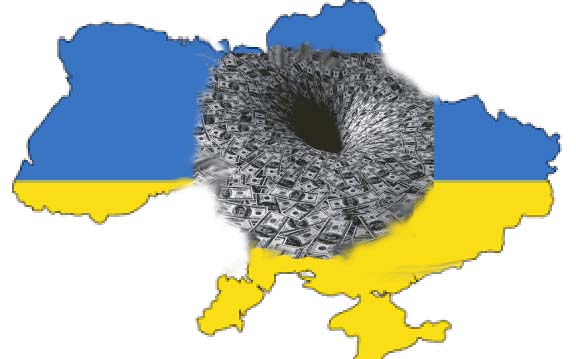
Financial Times, Mon, 04 Dec 2023
The White House has issued a blunt warning that the US is set to run out of funds to aid Ukraine by the end of the year, saying that a failure by Congress to approve new support would “kneecap” Kyiv.
The alert from Shalanda Young, the White House budget director, in a letter to congressional leaders on Monday, represented the most specific assessment yet of Washington’s waning financial and military support for Ukraine.
“Without congressional action, by the end of the year we will run out of resources to procure more weapons and equipment for Ukraine and to provide equipment from US military stocks,” Young wrote to political leaders of both parties.
“There is no magical pot of funding available to meet this moment. We are out of money — and nearly out of time,” she said.
President Joe Biden’s request for $106bn in emergency funding for his biggest foreign policy priorities, including Ukraine, Israel, and the Indo-Pacific, remains mired in stalemate on Capitol Hill, driven by mounting Republican opposition to helping Kyiv.
Some lawmakers — especially in the Senate, where backing for Ukraine runs deeper — are trying to negotiate a bipartisan deal that would contain aid for Kyiv alongside new immigration and asylum procedures to reduce the number of undocumented people arriving in the US through its southern border.
Even if an agreement is reached in the Senate, however, it is unclear if it can pass the Republican-led House, whose new speaker Mike Johnson has been sceptical of funding for Ukraine.
“Cutting off the flow of US weapons and equipment will kneecap Ukraine on the battlefield, not only putting at risk the gains Ukraine has made, but increasing the likelihood of Russian military victories,” Young wrote to Congress.
“Already, our packages of security assistance have become smaller and the deliveries of aid have become more limited . . . while our allies around the world have stepped up to do more, US support is critical and cannot be replicated by others,” she added.
The White House warning comes as EU member states are struggling to reach a budget deal in Brussels that would send €50bn to Ukraine, people close to the discussions told the Financial Times.
Young said Ukraine also needed economic support, which is in danger of stalling.
“If Ukraine’s economy collapses, they will not be able to keep fighting, full stop,” she wrote. “Putin understands this well, which is why Russia has made destroying Ukraine’s economy central to its strategy — which you can see in its attacks against Ukraine’s grain exports and energy infrastructure,” she added.
Young also said money for Ukraine would bring benefits to the US economy. Sincethe start of Russia’s full invasion in February 2022, Washington has approved $111bn in aid to Kyiv.
“While we cannot predict exactly which US companies will be awarded new contracts, we do know the funding will be used to acquire advanced capabilities to defend against attacks on civilians in Israel and Ukraine — for example, air defense systems built in Alabama, Texas, and Georgia and vital subcomponents sourced from nearly all 50 states,” she said……… https://www.ft.com/content/ca16e42d-fda9-4c1d-b2c9-410d764745b7
DOUBLING DOWN ON NUCLEAR POWER IS NO SOLUTION TO CLIMATE CRISIS

https://greens.scot/news/doubling-down-on-nuclear-power-is-no-solution-to-climate-crisis 3 Dec 23
Nuclear power is costly, inefficient and leaves a long and toxic legacy.
Doubling down on nuclear power will not solve the climate crisis, says the Scottish Greens climate spokesperson Mark Ruskell.
Mr Ruskell was responding to the announcement from the COP climate summit that 22 countries, including the US, France and the UK, have signed a declaration to triple nuclear capacity by 2050.
Mr Ruskell said: “Nuclear energy is costly, dangerous and out of date. It’s no kind of solution, and will leave a long and toxic legacy for generations to come. The UK experience of Hinkley Point underlines all of these problems, with delay after delay and ever-ballooning costs.
“The climate emergency is happening all around us. We simply don’t have time to waste on overpriced and dirty solutions like nuclear energy.”
Mr Ruskell welcomed the announcement that 118 countries have pledged to triple renewable energy, saying: “This is a significant step in the right direction and could be key to our shift away from climate-wrecking fossil fuels.
“Locally sourced renewable energy is the cheapest and greenest energy available. We have more and better technology available to us than ever before, all that is missing is the political will.
“I hope that this summit can be when leaders finally turn a corner and start to give renewables the investment and support that they deserve.”
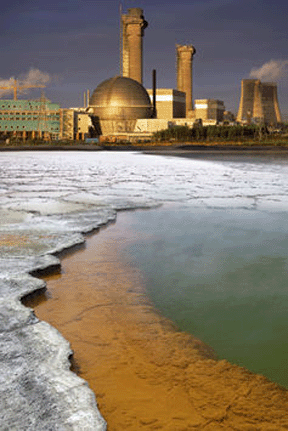
Sellafield has contaminated the Irish Sea with plutonium.
CORE – Cumbrians Opposed to a Radioactive Environment, December 2023
http://corecumbria.co.uk/alternative-tour-of-sellafield/irish-sea/
Sellafield discharges two million gallons of radioactive water into the Irish Sea every day at high tide. This includes a cocktail of over 30 alpha, beta and gamma radionuclides. BNFL admits that radioactive discharges in the 1970’s were 100 times those of today. As a result of these discharges, which include around half a tonne of plutonium, the Irish Sea has become the most radioactively contaminated sea in the world. Caesium-137 and Iodine-129 from Sellafield have spread through the Arctic Ocean into the waters of northern Canada and are having a bigger impact on the Arctic than the Chernobyl accident. Sellafield’s gas discharges of Krypton can be measured in Miami.
The guinea pigs in a ‘deliberate scientific experiment’ to find out levels of contamination in the food chain, were the Cumbrian people and their environment. Claiming then that the radioactive materials discharged from the 2km pipeline would dilute and disperse into the wider oceans, the industry clearly got it wrong, with high levels of radioactive discharge material washed ashore and trapped in the coastal sands and sediments.
A leading government-backed scientist from East Anglia University discovered that plutonium particles, concentrated in waves breaking on the shore, was being blown over West Cumbria, as far as 37 miles inland.This was confirmed by analysis of vacuum cleaner house dust samples taken up and down the coast by a National Radiological Protection Board investigation.
That Sellafield plutonium gets everywhere was shown in post-mortem examinations of former Sellafield workers. Concentrations of hundreds and in one case thousands of times higher than in the general population were found. Cumbrians who never worked at the plant had plutonium levels ranging from 50% to 250% above the average compared to elsewhere in Britain. Atomic Energy Authority scientist, Prof. Nick Priest, studied the teeth of over 3000 young people throughout Britain and Ireland. He found traces of Sellafield plutonium in varying doses, the highest doses being closest to Sellafield.
In November 1983 a team of Greenpeace divers tried to block the Sellafield underwater discharge pipe. When they emerged from the water, their Geiger counters revealed that they were seriously contaminated. It was only when they publicised this fact that BNFL admitted to having problems with their radioactive discharges and that a tankfull of ‘radioactive crud’ had been flushed out to sea. As radioactive flotsam was being washed ashore, posing a danger to health, the Department of the Environment effectively closed the beach and warned the public not to use the fifteen-mile stretch of shoreline north and south of Sellafield. This advice stayed in force for a full six months. In June 1985 BNFL faced a three-day trial, was found guilty and fined £10,000.
BNFL’s own environmental monitoring figures for the first quarter of 1997 revealed alarmingly raised levels of Technetium 99 in seaweed samples from the West Cumbrian coast. A Tc-99 level of 180,000 Bq/Kg in seaweed was sampled from Drigg, just south of the plant. This compared to a level of 71,000 Bq/Kg sampled in the previous quarter and to a level of just 800 Bq/Kg in 1992. Via the food chain Tc-99 is now found in duck eggs, and the use of locally harvested seaweed as a garden fertiliser has led to the discovery of Tc-99 in locally grown spinach. Irish Sea lobster have shown a similar alarming rise from 210 Bq/Kg in 1993 to 52,000 Bq/Kg in 1997 – over 40 times the EU Food Intervention Level set as a safety level for foodstuffs contaminated following a nuclear accident. Raised levels of Tc-99 were subsequently found in Norwegian lobsters.
A wide range of fish, shellfish and molluscs continue to show varying degrees of radioactive contamination from Sellafield’s discharges.
Estonian universities anticipate high costs of training nuclear experts
ERR ee , Joakim Klementi, 4 Dec 23
The future of nuclear energy in Estonia will be decided next year. Universities in Estonia are ready to train specialists in this field, but this requires new curricula, recruiting expensive lecturers from abroad and years of preparation. Due to Estonia’s small population, the pool of nuclear specialists for Estonia must be trained internationally to ensure impartiality in decision making processes.
If Estonia decides to build its own nuclear power plant, it will probably also have to set up a radiation safety and nuclear security authority, similar to as in other nuclear countries.
While the agency could hire a few dozen professionals before the facility is operational, it should eventually employ 60-80 experts. We can compare ourselves to our northern neighbors.
“We have over 100 workers in the nuclear reactor regulation department and roughly 25 in the nuclear waste department in charge of nuclear safety, so about 130-140 people in total,” Tomi Routamo, deputy director of the Finnish radiation protection center, said.
The first reactor is the most expensive for the country, both financially and in terms of the demand for experts. The question of how many experts the plant needs is much more complicated.
“The number of persons in the preliminary phase is about 50-60, while during construction it reaches a few hundred, 200-300. It is expected to be 400 or more throughout the operational period,” Siim Espenberg, the head of the center for applied social science research at the University of Tartu, said.
Since Estonia is the only nuclear country with a small population, predicting the need for experts is impossible. There are few reactors in the world that are a reasonable size for Estonia. However, building a nuclear power facility in Estonia would require 10 or more classes of nuclear experts in additional to the current ones.
There is also a concern characteristic of small population countries that officials from a regulatory body and nuclear plant managers could be past classmates. The agency must be objective and rigorous. This implies that the expert community cannot be too small. It is also critical that nuclear workers have actual expertise in order to deal with unanticipated scenarios……………………………………………………………………………
“Certainly, people should be brought in from overseas, and in my opinion, some people from Estonia should be trained abroad. This type of curriculum, which can span years, can be used to teach professionals at a specific level, but it is also possible for a small number of specialists, perhaps five or ten, to be trained abroad,” Aune Valk, vice-rector of the University of Tartu, said.
These top researchers are quite expensive, particularly if they are recruited from the western Europe or the Nordic countries.
“We are talking about a wage bill of around €150,000 per year. Also, such a top specialist would be expecting investment funding for the establishment of laboratories, a research group, and the recruitment of PhD students. These are very significant investments,” Hendrik Voll, vice rector of Tallinn University of Technology, said.
The new curricula could take seven to 10 years to produce Estonia’s own nuclear engineers, possibly up to 15 years if they are required to obtain practical experience with an employer. Universities are hesitant to start on such costly and time-consuming projects until Estonia has made a solid decision to build a nuclear power plant.
“We might end up educating highly expensive professionals for western Europe, the Nordic countries, or certain eastern European countries if we don’t develop nuclear energy here,” Voll said.
Universities agree that the future of the nuclear power plant in Estonia will require the creation of a school of nuclear engineers…………………
Voll added that in the energy sector, Estonia needs to address the problem that electricity is two or more times more expensive than in its northern neighbors. But whether the solution is a nuclear power plant, neither scientists nor universities can say. https://news.err.ee/1609184221/estonian-universities-anticipate-high-costs-of-training-nuclear-experts
Sweden to slug tax-payers for the costs of small nuclear reactors, and big ones.

Sweden plans new nuclear reactors by 2035, will share costs
By Simon Johnson, November 16, 2023
STOCKHOLM, Nov 16 (Reuters) – Sweden’s government said it aimed to build the equivalent of two new conventional nuclear reactors by 2035 on Thursday to meet surging demand for clean power from industry and transport and was prepared to take on some of the costs.
By 2045 the government wants to have the equivalent of 10 new reactors, some of which are likely to be small modular reactors (SMRs), smaller than conventional reactors.
Energy Minister Ebba Busch said the government was planning a “massive build out” of new nuclear power by 2045.
“It’s decisive for the green transition, for Swedish jobs and at heart for the welfare of our citizens,” she told reporters.
……………..critics have pointed to the huge costs and the private sector’s reluctance to invest without guarantees or other incentives – like Britain’s deal with French nuclear developer EDF for its new Hinkley Point C plant which gave price guarantees.
Sweden’s government has already offered 400 billion crowns ($37.71 billion) of loan guarantees to support new nuclear power, which it says is needed to power developments like fossil-fuel free steel production, but said it was now willing to shoulder more of the burden.
“Guarantees are very important, but that won’t be enough,” Finance Minister Elisabeth Svantesson said. “For this type of infrastructure it is going to require the state to take part and share the risk.” https://www.reuters.com/business/energy/sweden-plans-new-nuclear-reactors-by-2035-can-take-costs-2023-11-16/—
Seymour Hersh: Russia, Ukraine peace underway, 4 new region additions
By Al Mayadeen English, Source: Agencies, 1 Dec 2023 https://english.almayadeen.net/news/politics/seymour-hersh–russia–ukraine-peace-underway–4-new-region
Included in the potential deal would also be Russia’s agreement to Ukraine’s accession to NATO provided that NATO troops are not stationed on its territory and only defensive weaponry is located there.
In his newly released article, renowned US journalist Seymour Hersh assured that peace negotiations between top Russian and Ukrainian generals Valery Gerasimov and Valerii Zaluzhnyi respectively are currently underway which include a potential security of Crimea and another four former regions of Ukraine as part of Russia.
Included in the potential deal would also be Russia’s agreement to Ukraine’s accession to NATO provided that NATO troops are not stationed on its territory and only defensive weaponry is located there.
According to Hersh, both Russia and Ukraine agree that the persistence of war is illogical and that Russian President Vladimir Putin would be with an agreement that fixates borders according to where the troops are stationed after the end of peace negotiations.
Hersh cited a US official involved in the top negotiations as saying: “This was not a spur-of-the-moment event,” adding: “This was carefully orchestrated by Zaluzhny. The message was the war was over and we want out. To continue it would destroy the next generation of the citizens of Ukraine.”
On the other hand, the Biden administration is strongly opposing the peace deal while Ukrainian President Volodymyr Zelensky remains the “wild card” but has been allegedly told that “this is a military-to-military problem to solve and the talks will go on with or without you”.
“The White House is totally against the proposed agreement,” the US official said, noting: “But it will happen. Putin has not disagreed.”
‘Prepare for bad news’ from Ukraine – NATO chief
https://www.rt.com/news/588418-nato-chief-stoltenberg-ukraine-bad-news/ 4 Dec 23
Jens Stoltenberg said the military bloc’s defense industry has yet to reach the level of cooperation needed to satisfy Kiev.
The Ukrainian military has failed to achieve any breakthroughs on the battlefield over the past several months, but the West should stand by the country regardless, NATO Secretary General Jens Stoltenberg has argued. The official also lamented the apparent failure of the military bloc’s defense industry to establish provide Kiev with the munitions it requires.
Earlier this week Stoltenberg warned that Moscow had been amassing missiles ahead of the winter, noting that Russian weapons manufacturers were operating “on a war footing.”
In an interview with Germany’s Das Erste TV channel aired on Saturday, Stoltenberg acknowledged that the frontlines in Ukraine have remained largely unchanged of late, adding that “wars are difficult to plan.”
“We have to be prepared for bad news. Wars move in phases, but we must stand by Ukraine in good and in bad times alike,” NATO’s chief insisted.
According to Stoltenberg, “ramping up production is of decisive importance” at this juncture.
When asked what Kiev should do in the meantime while its backers increase weapons production capacities – something that is bound to take time – Stoltenberg said that he would leave these “difficult operative decisions” to the Ukrainian leadership and military commanders.
“I think one of the problems that we must address is the fragmentation of the European defense industry. We are not capable of working so closely together as we should,” NATO’s secretary general stated. He called on all member states to “overcome the national, narrow interests” and increase supplies instead of enjoying rising prices.
Speaking after a meeting of NATO foreign ministers in Brussels on Wednesday, Stoltenberg warned that “Russia has amassed a large missile stockpile ahead of winter, and we see new attempts to strike Ukraine’s power grid and energy infrastructure.”
Two days prior, he told reporters that “we should never underestimate Russia.” NATO’s chief noted that Moscow had set its “defense industry on a war footing,” making it “hard to achieve the territorial gains we hope for.”
However, he stopped short of characterizing the current situation as a “stalemate” – a description used by the commander-in-chief of Ukraine’s armed forces, General Valery Zaluzhny, in early November.
According to the Russian Defense Ministry’s latest estimates, Kiev’s counteroffensive, which began in early June, has resulted in over 125,000 casualties for the Ukrainian side as of December 1.
Ukraine has lost up to 300,000 soldiers – ex-Zelensky aide
Rt.com 4 Dec 23
Kiev’s refusal to negotiate with Moscow has only caused the country heavy battlefield casualties, Aleksey Arestovich says.
Ukraine has lost up to 300,000 soldiers during its conflict with Russia, Aleksey Arestovich, a former aide to President Vladimir Zelensky, has claimed.
Arestovich made the revelation on Friday while speaking to journalist Yulia Latynina via video link. The former presidential aide was addressing the recent admission made by top Ukrainian MP David Arakhamia, who said the Istanbul talks between Moscow and Kiev were derailed by then-UK PM Boris Johnson, who urged Ukraine to “just continue fighting” instead of attempting to reach a deal with Russia.
“I was a member of the Istanbul negotiating team, but even I don’t know how it happened that we decided to break off the Istanbul [talks],” Arestovich stated.
The initiatives floated during the Istanbul talks were actually “very good,” he admitted, claiming that Ukraine’s neutrality and its non-alignment with NATO was a “red line” for Moscow.
Refusing to negotiate, however, has only resulted in heavy casualties, while its prospects to join NATO still remain dubious, he suggested.
“Where is NATO? Does it accept us or not? And will it accept us? … Then the 200 thousand [Ukrainian servicemen] or whatever, 300 thousand, would still be alive,” the ex-aide said.
…………………………..In recent weeks, top Ukrainian officials admitted the counteroffensive had failed to reach the desired outcome, and they seemed to shift blame for the failure on each other. Early in November, for instance, Valery Zaluzhny, Ukraine’s top general, said the battlefield situation had reached a “stalemate,” with Kiev unlikely to achieve a breakthrough unless it received a wonder-weapon of sorts.
The assessment has been vehemently rejected by Zelensky, who insisted the counteroffensive was still making progress. In an interview with AP published on Friday, however, Zelensky finally admitted that it had failed, stating that he considers the fact that his country’s troops are not retreating at the moment a “satisfying” enough result. https://www.rt.com/russia/588358-ukraine-losses-zelensky-aide/
Zaporizhzhia nuclear plant suffered power outage, energy ministry says

Reuters, December 2, 2023
KYIV, Dec 2 (Reuters) – Ukraine’s Russian-occupied Zaporizhzhia nuclear power plant lost its power supply after the last remaining line to it from Ukrainian-controlled territory was disrupted, but it has since been repaired, the energy ministry said on Saturday.
The plant was occupied by Russia in March 2022 and is no longer generating power, but needs a supply of electricity to cool one of its four reactors which is in a state of ‘hot conservation’ – meaning it has not fully been shut down.
According to a statement published by Ukraine’s energy ministry on Telegram, one power line to the plant was disrupted late on Friday, while the last, 750 kW, line was broken at 2:31 a.m. (0031 GMT) on Saturday.
“This is the eighth blackout which occurred at the (Zaporizhzhia plant) and could have led to nuclear catastrophe,” the statement said.
The ministry said that after losing grid connection the plant turned on 20 backup generators to supply its own electricity needs.
Swiss nuclear power plants are running out of staff
After warning Switzerland over two years ago, the International Atomic Energy Agency (IAEA) recommends the authorities develop a roadmap to deal with the impending problem of labour shortage in Swiss nuclear power plants.
This content was published on December 3, 2023 – 14:17December 3, 2023
Switzerland’s existing nuclear power plants are on the verge of having their lifetimes extended from 50 to 80 years. But now a problem is threatening to thwart these plans.
The search for skilled labour is becoming increasingly challenging, as reported by the NZZ am Sonntag newspaper on Sunday. There are currently over 40 vacancies at the Beznau, Gösgen and Leibstadt nuclear power plants.
A team of experts from the IAEA warned Switzerland back in October 2021. In a report, the agency concluded that the search for personnel was one of the biggest challenges for Swiss nuclear plants and for the supervisory authority itself…………………https://www.swissinfo.ch/eng/business/swiss-nuclear-power-plants-are-running-out-of-staff/49027136
A blank cheque for France’s Industrial Centre for Geological Disposal (Cigéo) does not prove that it is safe.
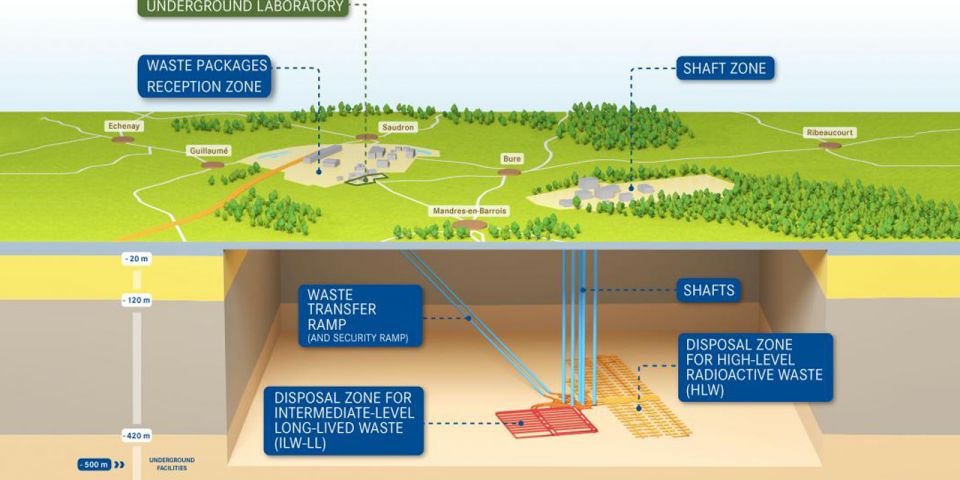
In September 2022, 32 organizations and 30 residents jointly filed an
appeal contesting the declaration of public utility (DUP) which was granted
to the Cigéo project (deep geological burial project for the most
radioactive waste) by decree on July 7, 2022.
This decision allowed the
National Agency for Radioactive Waste Management (ANDRA) to acquire the
missing land control for surface installations and the plumbness of
underground works, i.e. approximately 3,500 hectares (the equivalent of the
surface area of Lille) and to expropriate if necessary.
More than a year
later, on December 1, 2023, the Council of State rendered its decision.
Despite all the uncertainties and inaccuracies of the impact study of the
Cigéo project, ANDRA has succeeded in painting with scientific virtues the
fact that it is unable to provide precise evaluations, even with a
Declaration of ‘Public Utility (DUP) of 6,000 pages and almost 30 years of
studies.
It was enough for the Agency to affirm that it will do its best to
precisely identify the impacts of its project and to analyze and counter,
as the construction of Cigéo progresses, all their consequences. We do not
understand how such a project was able to obtain a DUP when it lacks so
much precise “basic” information. Let us remember: the declaration of
public utility facilitates land control, or even the start of work on other
so-called “preparatory” developments for Cigéo and allows the
industrial site to be physically anchored in the territory.
But for those
who read this decision a little too quickly, no, Cigéo is still not
“validated”. The project still needs to pass the stages of creation
authorization which, without giving up, we will attack by all means when
the time comes. We will at least have warned current decision-makers and
present generations and left messages for future generations, engraved in
stone in the archives of the Republic and its Councils.
Sortir du Nucleaire 1st Dec 2023
https://www.sortirdunucleaire.org/CIGEO-un-blanc-seing-qui-ne-signifie-pas-son
IAEA experts record explosions near two Ukrainian nuclear power plants

The International Atomic Energy Agency (IAEA) experts in Ukraine have
recorded explosions near two nuclear power plants (NPP) on the night of
28-29 November. “IAEA experts based in Ukraine reported sound of military
activity overnight in proximity of Khmelnitsky NPP, not just at the
Zaporizhzhia NPP, Director General Rafael Grossi said today [29 November].”
Pravda 30th Nov 2023
https://www.pravda.com.ua/eng/news/2023/11/30/7430978/
Emerging Risks 30th Nov 2023
1 This Month





PLEASE OPPOSE HR 8255 AND S.3639 – bills would accelerate satellite deployment, with no environmental review or safeguards – https://ncstd5li.quorum.us/campaign/169331/
To see nuclear-related stories in greater depth and intensity – go to https://nuclearinformation.wordpress.com
-
Archives
- October 2026 (19)
- September 2026 (339)
- August 2026 (330)
- July 2026 (355)
- June 2026 (287)
- May 2026 (306)
- April 2026 (356)
- March 2026 (251)
- February 2026 (267)
- January 2026 (308)
- December 2025 (358)
- November 2025 (359)
-
Categories
- 1
- 1 NUCLEAR ISSUES
- business and costs
- climate change
- culture and arts
- ENERGY
- environment
- health
- history
- indigenous issues
- Legal
- marketing of nuclear
- media
- opposition to nuclear
- PERSONAL STORIES
- politics
- politics international
- Religion and ethics
- safety
- secrets,lies and civil liberties
- spinbuster
- technology
- Uranium
- wastes
- weapons and war
- Women
- 2 WORLD
- ACTION
- AFRICA
- Atrocities
- AUSTRALIA
- Christina's notes
- Christina's themes
- culture and arts
- Events
- Fuk 2022
- Fuk 2023
- Fukushima 2017
- Fukushima 2018
- fukushima 2019
- Fukushima 2020
- Fukushima 2021
- general
- global warming
- Humour (God we need it)
- Nuclear
- RARE EARTHS
- Reference
- resources – print
- Resources -audiovicual
- Weekly Newsletter
- World
- World Nuclear
- YouTube
-
RSS
Entries RSS
Comments RSS

