UN Nuclear Chief Says ‘Very Real’ Threat Remains at Moscow-Held Zaporizhzhia Plant
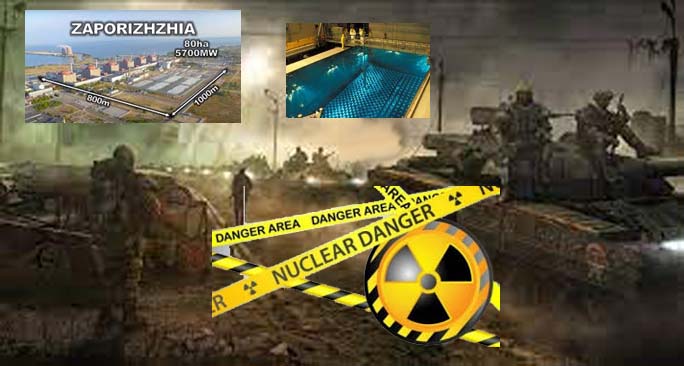
Moscow Times 26 Jan 24
The possibility of a nuclear disaster at the Russian-held Zaporizhzhia nuclear plant in Ukraine remains “very real,” according to the head of the UN’s nuclear watchdog. …….
Regular shelling and drone attacks around the plant have raised the risks of a radioactive disaster, while Kyiv and Moscow have accused each other of planning provocations.
Experts from the International Atomic Energy Agency (IAEA) have been on the ground monitoring the Zaporizhzhia plant since September 2022.
“The plant’s six reactors have been shut down since mid-2022 — five of them in cold shutdown and one in hot shutdown. But the potential dangers of a major nuclear accident remain very real,” IAEA chief Rafael Grossi told the UN Security Council on Thursday.
Grossi warned that issues with access to power could lead to a disaster at the Moscow-controlled nuclear plant.
Emergency diesel generators are now “the last line of defense against a nuclear accident” after they were activated eight times when the plant lost all off-site power, he added.
“The plant is currently relying on just two lines of external power, and sometimes just one, or for a period the backup power was not properly configured. This demonstrates the highly precarious situation regarding essential off-site power.”………. https://www.themoscowtimes.com/2024/01/26/un-nuclear-chief-says-very-real-threat-remains-at-moscow-held-zaporizhzhia-plant-a83860
Finland is a focal point of Nato’s largest exercise since the Cold War, and looks to siting nuclear weapons.
YLE NEWS 26 Jan 24
Nato’s largest military exercise since the Cold War is starting in Finland this week, reports Ilta-Sanomat.
The exercise, dubbed “Steadfast Defender”, is bringing Nato soldiers to Finland. The drill, which includes a total of 90,000 troops from 31 Nato countries, will span this winter and spring and involves thousands of troops moving massive amounts of material through Sweden.
Troops are practicing defending a European Nato ally that has come under attack. Swedish broadcaster SVT has reported that the exercise features a scenario where Russia attacks Finland and Nato invokes Article 5, its collective defence clause.
Nuclear reality
An editorial in Helsingin Sanomat suggests that Finnish leaders have not come to terms with the fact that nuclear weapons are a core part of Nato’s deterrence policy. The paper notes that some presidential candidates don’t support siting nuclear weapons in Finland. At the same time, Finland is reworking its nuclear safety laws. According to HS, these reforms must not impede Nato’s operational activities in a wartime situation in Finland.
The nuclear deterrent is a central component of Nato’s security guarantees, under which Finland sought protection by pursuing membership in the alliance. For that reason, Finland must bear its own responsibility in preserving that deterrent, according to the national daily……………. more https://yle.fi/a/74-20070550
Ukraine to start building 4 new nuclear reactors this year
By Pavel Polityuk. January 25, 2024
KYIV, Jan 25 (Reuters) – Ukraine expects to start construction work on four new nuclear power reactors this summer or autumn, Energy Minister German Galushchenko told Reuters on Thursday, as the country seeks to compensate for lost energy capacity due to the war with Russia.
Two of the units – which include reactors and related equipment – will be based on Russian-made equipment that Ukraine wants to import from Bulgaria, while the other two will use Western technology from power equipment maker Westinghouse.
All four reactors will be built at the Khmelnytskyi nuclear power plant in the west of Ukraine, Galushchenko added.
The timeline is more aggressive than previously outlined by Kyiv, which has spoken of starting work in some time in 2024 and without specifying that all four reactors could be developed simultaneously.
“I think (we’ll start construction) in summer-autumn,” Galushchenko said in an interview. “We need vessels,” he added, referring to the reactor pressure vessels that will have to be imported. We want to do the third and fourth units right away.”
Construction of the 3rd and 4th reactors at Khmelnytskyi began in the 1980s but was frozen.
Since gaining independence from the Soviet Union in 1991, Ukraine has built three new nuclear reactors – one each at Zaporizhzhia, Khmelnytskyi and Rivne nuclear power plants…………………
In parallel with the construction of the Soviet-era VVER-1000 units, Ukraine wants to start preparatory construction work to accommodate two modern Western AP-1000 units, also at Khmelnytskyi.
“We need to pass (parliamentary) legislation and we have draft laws on the 3rd, 4th, 5th and 6th units. This is VVER-1000s, while the 5th and 6th we want to build the AP-type. This is a parallel process,” he said.
In December, Ukraine’s nuclear power firm Energoatom and Westinghouse signed an agreement on the purchase of equipment for Khmelnytskyi’s 5th power unit.
Reporting by Pavel Polityuk; Editing by Mike Collett-White and Nick Macfie https://www.reuters.com/business/energy/ukraine-start-building-4-new-nuclear-reactors-this-year-minister-2024-01-25/
Hinkley Point C could be delayed to 2031 and cost up to £35bn, says EDF

As nuclear plant is hit by further delay, real cost will be far higher after inflation is included, as project uses 2015 prices
Guardian, Alex Lawson, Wed 24 Jan 2024
The owner of Hinkley Point C has blamed inflation, Covid and Brexit as it announced the nuclear power plant project could be delayed by a further four years, and cost £2.3bn more.
The plant in Somerset, which has been under construction since 2016, is now expected to be finished by 2031 and cost up to £35bn, France’s EDF said. However, the cost will be far higher once inflation is taken into account, because EDF is using 2015 prices.
The latest in a series of setbacks represents a huge delay to the project’s initial timescale. In 2007, the then EDF chief executive Vincent de Rivaz said that by Christmas in 2017, turkeys would be cooked using electricity generated from atomic power at Hinkley. When the project was finally given the green light in 2016, its cost was estimated at £18bn…………
Crooks said: “Running the project longer will cost more money and our budget has also been affected by rising civil construction costs. It is important to say that British consumers or taxpayers won’t pay a penny, with the increased costs met entirely by shareholders.”
EDF had previously said that the first reactor unit at the nuclear site would be due to be complete by June 2027, with a 15-month buffer period which was likely to be used – putting its completion at September 2028, and a further year for the second unit. It costs were estimated between £25bn and £26bn, and this was later revised up to £32.7bn in February 2023
EDF gave three scenarios, ranging from becoming operational is 2029, to delays pushing this back to 2031.
It said that the cost of completing Hinkley will be between £31bn and £34bn, although if completion is delayed to 2031 costs would rise to £35bn.
In December it emerged EDF’s partner in the project, China General Nuclear, had halted funding for Hinkley. The move came after the government took over CGN’s stake in Hinkley’s proposed sister site, Sizewell C in Suffolk, stripping the Chinese state-owned company of its role in the project.
The latest financial estimates are based on accounting in 2015 figures, meaning the total cost of the project could be far higher when inflation over the last decade is factored in. Hinkley’s ballooning costs have proved controversial with French taxpayers, which are picking up the tab.
Hinkley Point C and Sizewell C are expected to herald a new era of nuclear plants touted by the government.
Last year the government launched a delivery body, Great British Nuclear, with the aim of accelerating the development of new nuclear projects. Earlier this month ministers set out plans for out for the “biggest nuclear power expansion in 70 years”.
However, the Hinkley Point C delay will add to concerns over project delays and costs, as well as skills in an industry earmarked to deliver a quarter of the national electricity demand by 2050………………..
EDF said in January it would delay the shutdown of four of its UK nuclear reactors for at least two years and increase investment in its British nuclear fleet. https://www.theguardian.com/business/2024/jan/23/hinkley-point-c-could-be-delayed-to-2031-and-cost-up-to-35bn-says-edf—
EDF’s UK Hinkley Nuclear Costs Balloon as Plant Delayed Again – an “unmitigated disaster”?
A government spokesperson said the new plant is “not a government project” and as such “any additional costs or schedule overruns are the responsibility of EDF and its partners and will in no way fall on taxpayers”.
The government has also just doubled its own investment into Sizewell C to £2.5bn and is in the process of raising capital from private investors.
A government spokesperson said the new plant is “not a government project” and as such “any additional costs or schedule overruns are the responsibility of EDF and its partners and will in no way fall on taxpayers”.
The government has also just doubled its own investment into Sizewell C to £2.5bn and is in the process of raising capital from private investors.
Hinkley C: UK nuclear plant price tag could rocket by a third.
By Simon Jack, Business editor
The final cost of the Hinkley Point C nuclear plant being built in Somerset may soar by about a third, according to the French firm developing it.
EDF now estimates that the cost could hit £46bn, when taking price rises into account.
The completion date could also be delayed by three years………………………………
The French state-owned firm manages all five nuclear power stations that are currently generating electricity in the UK, along with three that are defueling, the first stage of winding down operations.
In 2022, the cost of the UK’s first new nuclear plant since the 1990s was estimated at £26bn, with a target date for completion of June 2027.
Previous cost estimates have been expressed in 2015 prices for easy comparison over time.
But taking inflation into account, the previous estimate on final costs of £26bn works out at £34bn today. The updated estimate of £31-35bn, could see costs hit £46bn in today’s prices – an increase of about a third.
In a letter to staff, seen by the BBC, Stuart Crooks, the managing director of Hinkley Point C, said there were 7,000 substantial design changes required by British regulations that needed to be made to the site, with 35% more steel and 25% more concrete needed than originally planned.
The revised estimates come after the government recently announced ambitions for the biggest expansion in nuclear power for 70 years.
The UK government has said in the past it wants nuclear to provide up to 25% of the UK’s electricity needs by 2050 as part of its plans to combat climate change.
A government spokesperson said the new plant is “not a government project” and as such “any additional costs or schedule overruns are the responsibility of EDF and its partners and will in no way fall on taxpayers”…………………………………….
Stuart Crooks, the managing director of Hinkley Point C, pointed out, however, that UK bill payers will not be directly affected by those building and cost time overruns.
The French firm EDF agreed to shoulder the risk and pay the full cost of construction, including any increases. This was in return for an agreed electricity price that was substantially higher than the average price in 2015 and would only rise in line with inflation.
“It is important to say that British consumers or taxpayers won’t pay a penny, with the increased costs met entirely by shareholders,” Mr Crooks’ letter read.
However, this price shock comes at a sensitive time for the UK government, which has agreed to allow construction costs for a new plant at Sizewell in Suffolk to be added to customers’ bills gradually over the decade which it will take to build.
The government has also just doubled its own investment into Sizewell C to £2.5bn and is in the process of raising capital from private investors.
Last week, the government triggered a “development consent order” that allows early-stage construction to begin in Suffolk despite several legal challenges from local and national opponents who have taken their fight to the Supreme Court.
Alison Downes of the campaign group Stop Sizewell C said that the announcement of additional funding was”inexplicable” following news of delays to one of the government’s key nuclear projects.
She described the Hinkley and Sizewell projects as an “unmitigated disaster”.
“The government should cancel Sizewell C instead of handing over scarce billions that could be used instead for renewables, energy efficiency or – in this [general] election year – schools and hospitals,” she added……………….. https://www.bbc.com/news/business-68073279
UK’s flagship nuclear plant could cost up to $59 billion, developer says
A major nuclear plant that Britain’s government hopes will generate affordable, low-carbon energy could cost up to 46 billion pounds, or $59 billion, and the completion date could be delayed to after 2029
abc news, By SYLVIA HUI Associated Press, January 25, 2024
LONDON — A major nuclear plant that Britain’s government hopes will generate affordable, low-carbon energy could cost up to 46 billion pounds ($59 billion), and the completion date could be delayed to after 2029, the firm developing it said Wednesday.
The U.K. government says nuclear projects like the Hinkley Point C plant are a key part of its plans to ensure greater energy independence and achieve its “net zero” by 2050 strategy.
But a re-evaluation showed that the final bill for the plant, being built in Somerset in southwest England, could soar to up to 34 billion pounds in 2015 prices — or 43 billion pounds in current value, French energy giant EDF said…………………………………. https://abcnews.go.com/Business/wireStory/uks-flagship-nuclear-plant-cost-59-billion-developer-106635464
As Trump looms, top EU politician calls for European nuclear deterrent
Center-right leader Manfred Weber says EU needs to prepare for war without US help and must build its own atomic shield.
Politico, BY JAKOB HANKE VELA AND NICOLAS CAMUT, JANUARY 25, 2024
Facing the potential return of Donald Trump to the White House, the head of the EU’s biggest political grouping is calling for Europeans to prepare for war without support from the United States and to build its own nuclear umbrella.
Manfred Weber, leader of the center-right European People’s Party (EPP) — currently tipped to come first in the European Parliament election in June — described Trump and Russian President Vladimir Putin as “the two who set the framework” for 2024.
Trump’s seemingly imminent coronation as Republican presidential contender after wins in Iowa and New Hampshire have spooked Europe, where he is remembered as a NATO skeptic, accusing EU countries of not paying their way and threatening not to come to Europe’s defense if it were attacked………………………………………… more https://www.politico.eu/article/europe-nuclear-warfare-detterence-manfred-weber-vladimir-putin-ukraine-russia-war/
Berkshire nuclear defence workers strike
Planet Radio 24 Jan 24
Workers at the Atomic Weapons Establishment (AWE) at Aldermaston and Burghfield are on a 24-hour strike after two months of other forms of industrial action in a dispute over pay.
Action short of a strike started in mid-November and will re-commence on Thursday January 25. ……………………………………….https://planetradio.co.uk/greatest-hits/berkshire-north-hampshire/news/workers-awe-aldermaston-burghfield-strike/
France presses UK to help fill multibillion-pound hole in nuclear projects

Call comes day after EDF flagged more delays of construction of power plant at Hinkley Point
Sarah White in Paris and Jim Pickard and Rachel Millard in London, 25 Jan 24, https://www.ft.com/content/3320c06e-7ce3-4a6b-ab22-4b8201a4cfca
The French government is pressing the UK to help plug a multibillion-pound hole in the budget of nuclear power projects being built in Britain by France’s electricity operator EDF. The call for a contribution from the UK is likely to cause tensions between Paris and London, a day after state-owned EDF admitted its construction of a new nuclear power station at Hinkley Point in Somerset would suffer further costly delays, taking the bill to as much as £46bn. The UK has said it will not put cash into the project, which counts EDF as a majority shareholder, and is already backed by a government guarantee on its revenues once it is up and running.
But Paris is pushing for a “global solution” that would also encompass funding issues at another planned UK plant, Sizewell C, said a French economy ministry official and another person close to the talks. “It’s a Franco-British matter,” the French economy ministry official said. “The British government cannot at the same time say EDF has to figure it out alone on Hinkley Point and at the same time ask EDF to put money into Sizewell. We’re determined to find a global solution to see these projects through.”
Sizewell in Suffolk has a different financial set-up to Hinkley. The UK this week said it would inject another £800mn of state funds, bringing its total contribution to £2.5bn at the £20bn plant, where it is the top shareholder. Its partner EDF has no obligation to put more money in. French officials said discussions on various options had begun several months ago with British counterparts, although they acknowledged London had flagged budgetary constraints that would have to be taken into account. In the UK, a government official played down the talks, adding that on Hinkley Point: “Costs will be the responsibility of EDF.”
An EDF executive told the BBC on Wednesday that the French company picks up “the tab for the cost overruns”. EDF on Tuesday warned Hinkley Point would not now be completed until 2029 at the earliest, four years later than its original start date, while the two reactors could cost up to £46bn to build at today’s prices, compared with a £18bn budget in 2016.
Other factors might play into the discussions, however. Under Prime Minister Rishi Sunak, Britain took the political initiative to eject Chinese group CGN as an investor in Sizewell — leaving that project in need of fresh private capital, but also prompting CGN to pull back from Hinkley, where it is a 33.5 per cent shareholder. The Chinese group has fulfilled its contracted payments on Hinkley but has no obligation to fund over-costs and stopped doing so a few months ago.
“The French don’t have many levers here but the CGN issue is a very real one,” a third person close to the talks said. Finding private investors to make up the Hinkley shortfall may be tough, several people close to the group said, although formulas such as state guarantees could be discussed. EDF is only just coming out of a period of financial turmoil, and has big investments to make at home, too, in the coming decades. It was fully renationalised last year
“Our goal here . . . is for what’s happening at Hinkley Point, with the delays and the issue with the Chinese partner’s decision, not to impact EDF’s financial trajectory excessively,” the French economy ministry official said. However, one UK nuclear industry figure said that EDF’s plight at Hinkley was the consequence of signing up to a deal with the UK government a decade ago, which at the time was criticised for being too generous to the French group. Under a so-called contract for difference signed with the state, construction costs are not covered but future electricity production is backed up by subsidies in case power prices fall below a certain threshold.
UK nuclear plant hit by new multiyear delay and could cost up to £46bn.
Britain’s flagship Hinkley Point C nuclear plant has been delayed until
2029 at the earliest, with the cost spiralling to as much as £46bn, in the
latest blow to a project at the heart of the country’s long-term energy
plans.
The surging bill and slipping schedule, announced on Tuesday by the
French state-owned operator and constructor EDF, will put pressure on the
UK government to provide extra financial support for the project.
EDF, which has also experienced long delays on recent parallel projects in
Finland and France that use the same reactor technology, blamed the latest
problems at Hinkley in Somerset on the complexity of installing
electromechanical systems and intricate piping. Hinkley was previously
delayed due to construction disruption during Covid pandemic.
Under EDF’s latest scenario, one of the two planned reactors at Hinkley Point C could
be ready in 2029, a two-year hold-up compared with the company’s previous
estimate of 2027. But it could be further delayed to 2031 in adverse
conditions, EDF said. It did not give an estimate for the second reactor.
EDF said the cost would now be between £31bn-£35bn based on 2015 prices,
depending on when Hinkley Point C was completed.
In today’s prices, the cost would balloon to as much as £46bn. The initial budget was £18bn, with a scheduled completion date of 2025. Alison Downes of Stop Sizewell C, a
campaign group opposed to the planned Suffolk nuclear plant, said EDF was
an “unmitigated disaster”. She added the UK government should cancel
Sizewell C, saying state funding for the project could be better spent on
“renewables, energy efficiency or, in this election year, schools and
hospitals”.
FT 23rd Jan 2024
https://www.ft.com/content/1157591c-d514-4520-aa17-158349203abd
EDF’s UK Hinkley Nuclear Costs Balloon as Plant Delayed Again

Francois de Beaupuy, Bloomberg News, Jan 23, 2024
(Bloomberg) — Electricite de France SA’s nuclear project at Hinkley Point in the UK will cost as much as £10 billion ($13 billion) extra to build and take several years longer than planned, the latest in a series of setbacks for the budget and timetable of the country’s largest energy project.
EDF now expects the two reactors it’s building in southwest England to cost between £31 billion and £35 billion in 2015 terms, the French energy company said in a statement on Tuesday. That’s up from an estimate of £25 billion to £26 billion in 2022, and is the fifth budget increase in eight years. At today’s prices, the project would cost as much as £46 billion, according to the Bank of England’s inflation calculator. …………………
The UK is struggling to get its huge nuclear program off the ground. The government is aiming for as much as 24 gigawatts of capacity by 2050 and will have to accelerate rapidly to achieve that. Hinkley Point will be the first new atomic station to start generating in Britain since 1995. Construction of complex nuclear plants is notoriously slow, and the cost overruns and delays at Hinkley may damp investor enthusiasm for the sector…………………………………..
The setback comes just one day after the UK government pledged to invest an additional £1.3 billion in EDF’s second UK project at Sizewell C. Ministers are hoping the commitment will attract enough private capital to make a final investment decision this year and make progress toward its ambitious 2050 target.
EDF was already struggling with the budget for Hinkley after China General Nuclear Power Corp, its partner in the project, stopped funding, potentially leaving the French company to foot the bill until it is completed. The government-owned French company will also have to spend tens of billions of euros on new atomic plants at home in the coming decades.
Hinkley Point C is not a French government project and so any additional costs or schedule overruns are the responsibility of EDF and its partners and will in no way fall on taxpayers, said a spokesperson for the UK Department for Energy Security and Net Zero.
…….. EDF’s current fleet of five nuclear plants is scheduled to shrink to just three by the end of 2026. Last year, output slumped to the lowest in more than four decades.
While rising costs of metals, cement and labor are affecting industries including large offshore wind projects, the revised plan may revive a controversy over how expensive the technology is and whether further delays are inevitable. Still, the UK government said this month that the country will build another large-scale nuclear power plant, beyond current projects led by EDF.
t’s not the first time Hinkley has ballooned beyond its budget. EDF increased its estimates in 2017, 2019, 2021, and 2022 from an initial estimate of £18 billion when the contract was signed with the UK in 2016.
At the start of the project, the French utility expected the first unit to start by the end of 2025. However, Brexit, the Covid pandemic and the war in Ukraine have disrupted supply chains and boosted the cost of labor and essential materials like steel and cement.
“Going first to restart the nuclear construction industry in Britain after a 20-year pause has been hard,” said Stuart Crooks, Managing Director for Hinkley Point C. https://www.bnnbloomberg.ca/edf-s-uk-hinkley-nuclear-costs-balloon-as-plant-delayed-again-1.2025542
CAMPAIGNERS opposing the development of nuclear power in Bradwell-on-Sea say they believe ‘new nuclear’ in the area “remains dead in the water”.
Blackwater Against New Nuclear Group (BANNG) has been fighting its cause for 15 years.
On January 11, the Government released its Civil Nuclear: Roadmap to 2050.
BANNG claims it means the original eight government-listed coastal sites, including Bradwell, are no longer the only sites earmarked for nuclear deployment.
They say new nuclear power stations will only be sited in “suitable locations” identified by developers based on a set of criteria.
BANNG chairman Professor Andy Blowers said: “This new approach to siting effectively rules Bradwell out of any further consideration.
“As we have strenuously demonstrated over the last 15 years, Bradwell is a most unsuitable site and the Blackwater communities are overwhelmingly opposed to nuclear development in such a fragile location, increasingly vulnerable to the impacts of climate change.”
He added: “BANNG welcomes the effective delisting of the Bradwell site. Delisting is something we have insisted on since the list was first compiled more than a decade ago.
“We are at a loss to understand what ‘certain advantages’ can conceivably be attributed to the site.
“Rather as the myriad evidence accumulated and published over the years shows, Bradwell is a wholly unsuitable and unsatisfactory site for the development of nuclear power at whatever scale and capacity.”
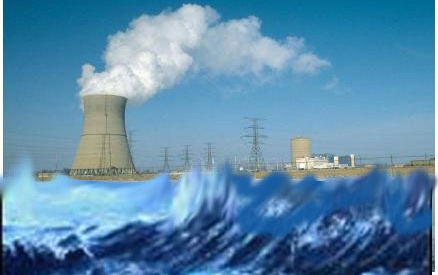
A BANNG spokesman said: “A major problem is the vulnerability of the site to flooding, and to storm surges and coastal processes that are intensifying as the impacts of climate change begin to take hold on this fragile coastline
They added: “There are other significant reasons why Bradwell should be off the Nuclear Road Map.
“The Blackwater area has precious environments in land, sea and sky which are protected, conserved and significant.
“The intrusion of a mega power station or a cluster of smaller reactors would prove intrusive, polluting and detrimental to habitats and to human wellbeing.
“Further, there would be dangerous highly radioactive wastes stored on the site for future generations to cope with, along with all the other problems of climate change.
“Above all, the communities around the Blackwater have over the years overwhelmingly declared against new nuclear development at the Bradwell site.
“New nuclear is not welcome here.”
UK Government’s nuclear power plans a roadmap to a dead-end – CND

“The debate and investment into trying to develop new nuclear energy projects divert funds and political motivation away from further developing truly renewable energy sources, which is the real solution.”
Sara Medi Jones, Campaign for Nuclear Disarmament (CND), assesses the government’s latest nuclear power announcement m https://labouroutlook.org/2024/01/23/governments-nuclear-power-plans-a-roadmap-to-a-dead-end-cnd/
It’s only mid-January and we have already had two major nuclear power announcements in 2024. A long-awaited “roadmap” of nuclear power expansion was unveiled earlier this month, with the government promising to accelerate new nuclear projects. And this week we’ve just heard that construction of the Sizewell C nuclear station in Suffolk should be a step closer.
But the problem is – nuclear is a dead-end technology that is not the answer to our climate or energy needs.
Plans for eight new nuclear sites laid out in 2011 have largely stalled, with the only two projects to have got off the ground – Hinkley Point C and Sizewell C – beset with problems. Costs at Hinkley Point have spiralled by 30% to £33 billion, and the start date has repeatedly been pushed back. Sizewell C is struggling to attract private financing, and despite building permission finally being granted now, there are still many hurdles to clear.
The nuclear roadmap’s main aims are to “explore” another nuclear site, develop small modular reactors, secure more investment, and engage the private sector more
But we are unlikely to see any meaningful progress because nuclear power in its very essence is a dangerous and economically unsustainable technology. It burdens future generations with a potential human and environmental disaster that is not compensated for by the expensive electricity provided.
Any new nuclear projects would take decades to build. But we need an answer to our cost of living struggle and to climate change now. Even if nuclear power capacity was doubled worldwide by 2050 (a hugely ambitious ask in itself), it would only result in a 4% reduction in emissions.
The debate and investment into trying to develop new nuclear energy projects divert funds and political motivation away from further developing truly renewable energy sources, which is the real solution.
We must also bear in mind the main reason this government is so in favour of nuclear power: it helps to ensure the infrastructure and skilled personnel is in place to maintain and manufacture Britain’s nuclear weapons system, Trident. During this time of global instability and increased nuclear risk, Britain would do well to forget about propping up their weapons of mass destruction and instead focus on delivering the things that people in this country need, including a functioning and sustainable energy system.
Italy’s Foreign Minister reveals country ceased arms shipments to Israel starting October 7 over ‘war crime’ concerns
The Times of Israel, Mon, 22 Jan 2024, https://www.sott.net/article/488099-Italys-FM-reveals-country-ceased-arms-shipments-to-Israel-starting-October-7-over-war-crime-concerns
Italian Foreign Minister and Deputy Prime Minister Antonio Tajani told local media Saturday that his country had halted all arms shipments to Israel since Hamas’s brutal October 7 onslaught.
The minister’s comments, made in an interview with Italian newspapers Nazione, Giorno, and Resto del Carlino, were a response to a demand by opposition leader Elly Schlein that the Italian government stop weapons exports to the Middle East. Tajani accused her of being “misinformed.”
“Since October 7, we have decided not to send any more arms to Israel, so there is no need to discuss this point,” said Tajani, according to a report from Italian news agency ANSA.
Speaking at a Friday meeting of the center-left Democratic Party, which she heads, Schlein said that “we must face the issue of avoiding fueling these conflicts, of avoiding sending arms and exporting arms to conflicts, to the conflict in the Middle East, in this case particularly to Israel,” according to ANSA.
“We cannot risk weapons being used to commit what could be construed as war crimes,” added the opposition lawmaker.
According to Israeli news site Walla, some five percent of Israeli arms purchases over the past decade have come from Italy, which include helicopters and naval artillery.
Comment: At irregular intervals over the past few years Italy’s dockworkers and border staff have protested and taken strike action against supplying Israel with arms.
In separate news, Tajani said in an interview with Italian radio Friday that his country would be willing to send troops to a peacekeeping mission in Gaza, ANSA reported.
On Sunday, following Prime Minister Benjamin Netanyahu’s stated refusal to accept a two-state formula for peace, Tajani told reporters that President Isaac Herzog is nonetheless open to such a solution, according to a report in Italian daily Il Tempo.
Tajani, a former air force officer who has led the conservative Forza Italia party since the death of its chairman Silvio Berlusconi in July, made an early solidarity visit to Israel at the start of the war on Hamas, and in November reaffirmed with other G7 nations his belief in Israel’s right to defend itself, within the bounds of international law, against Hamas aggression.
Comment: Key point: within the bounds of international law; although numerous experts have pointed out that, as an occupying force, Israel isn’t ‘defending itself’, these are acts of aggression, and criminal.
By December, the Italian foreign minister struck a more critical tone, condemning Israel for shooting inside a Gaza church. In January, as president of the G7, Tajani explored with other foreign ministers in the group the possibility of applying pressure on Israel to bring the war to a “rapid” end.
On the subject of South Africa’s ongoing claim at the International Court of Justice that Israel is committing “genocide” against Gazans, Tajani has said that although Israel has hit civilians in Gaza, it is not committing genocide.
Berlusconi, the erstwhile leader of Tajani’s party, and a colorful, scandal-ridden, media mogul who served as Italy’s prime minister for a cumulative nine years, was known to be a strong supporter of Israel, even raising the possibility that the Jewish state join the European Union. It was under Berlusconi that Italy sold 30 jet trainers to Israel, in a billion-dollar deal. Though critical of Israel’s West Bank settlements, Berlusconi at one time stated that the West should support Israel in the Israeli-Palestinian conflict.
Comment: Notably Italy, and Spain, despite pressure from the US, refused to send support to the US-UK for their naval campaign against Yemen: Iran warns it could cut off Mediterranean Sea as France, Spain and Italy pull out of Red Sea Op – Israeli vessel hit off India’s coast
Swastikas seen on US-made Ukrainian military hardware (VIDEO)
https://www.rt.com/russia/590928-bradley-ifv-ukraine-swastikas/ 22 Jan 24
Nazi symbols can be seen in footage taken by a local journalist covering the frontline
A video featuring a Ukrainian crew repairing a US-supplied Bradley infantry fighting vehicle near the frontline with Russia has revealed the apparent fondness for Nazi symbols among Kiev’s forces.
The footage, which was shared online by journalist Alla Khotshnyavska, showed a Ukrainian crew repairing the IFV’s tracks at an unspecified location in Donbass. Covered in mud, the Bradley sports a pair of swastikas scratched into the dirt on the side of the vehicle.
Radical Ukrainian nationalists played a key role in toppling the government in Kiev in 2014, and later attained significant influence in the country’s military. Their ideology stems from the forces that collaborated with the invading Nazis against the Soviet Union during World War II.
The presence of far-right activists, including neo-Nazis, in the Ukrainian armed forces was widely acknowledged in the West until hostilities with Russia erupted in February 2022.
Nazi insignia worn by Ukrainian troops has regularly been caught on camera. In one example, a member of President Vladimir Zelensky’s guards was seen with a skull and bones patch on his uniform when the Ukrainian leader was visiting the front line in September 2022. The image closely resembled the insignia of the 3rd SS Panzer Division ‘Totenkopf’.
The same month, a Ukrainian armored vehicle with a swastika painted on it was filmed by a crew from German television channel N-TV.
Last year, former Ukrainian President Pyotr Poroshenko wore a military-style shirt with a patch featuring another Nazi-linked symbol, the Black Sun (or ‘Sonnenrad’), as he was delivering equipment to troops.
An article by the New York Times in June acknowledged the controversial popularity of Nazi iconography in Ukraine, but claimed it did not reflect the ideology of the people using the symbols.
One of Moscow’s goals in its confrontation with Kiev is ‘denazification’ and the removal of radical Ukrainian nationalists from positions of power. Russian officials have argued that the discrimination against ethnic Russians in modern Ukraine is based on Ukrainian supremacism and is similar to Nazi ideology.
President Vladimir Putin told reporters last December that Moscow would not have been compelled to intervene in Ukraine “if they didn’t start to eradicate Russia on our historic lands in Ukraine, expel people from there, [and] declare Russians non-native.” Officials in Kiev were “crazy” to introduce such policies, he suggested.
1 This Month





PLEASE OPPOSE HR 8255 AND S.3639 – bills would accelerate satellite deployment, with no environmental review or safeguards – https://ncstd5li.quorum.us/campaign/169331/
To see nuclear-related stories in greater depth and intensity – go to https://nuclearinformation.wordpress.com
-
Archives
- October 2026 (10)
- September 2026 (339)
- August 2026 (330)
- July 2026 (355)
- June 2026 (287)
- May 2026 (306)
- April 2026 (356)
- March 2026 (251)
- February 2026 (267)
- January 2026 (308)
- December 2025 (358)
- November 2025 (359)
-
Categories
- 1
- 1 NUCLEAR ISSUES
- business and costs
- climate change
- culture and arts
- ENERGY
- environment
- health
- history
- indigenous issues
- Legal
- marketing of nuclear
- media
- opposition to nuclear
- PERSONAL STORIES
- politics
- politics international
- Religion and ethics
- safety
- secrets,lies and civil liberties
- spinbuster
- technology
- Uranium
- wastes
- weapons and war
- Women
- 2 WORLD
- ACTION
- AFRICA
- Atrocities
- AUSTRALIA
- Christina's notes
- Christina's themes
- culture and arts
- Events
- Fuk 2022
- Fuk 2023
- Fukushima 2017
- Fukushima 2018
- fukushima 2019
- Fukushima 2020
- Fukushima 2021
- general
- global warming
- Humour (God we need it)
- Nuclear
- RARE EARTHS
- Reference
- resources – print
- Resources -audiovicual
- Weekly Newsletter
- World
- World Nuclear
- YouTube
-
RSS
Entries RSS
Comments RSS

