Fife Council approve Babcock plan for nuclear waste storage building

24th March, By Ally McRoberts, https://www.dunfermlinepress.com/news/25961651.fife-council-approve-babcock-plan-waste-storage-building/
A TEMPORARY storage facility will be built for waste that’s taken out of old nuclear submarines at Rosyth Dockyard.
Fife Council have given the green light to Babcock for a new warehouse between docks two and three for “decommissioning operations”.
The large industrial building – an ‘intermediate waste storage facility’ – will be 27 metres long and up to 20 metres in height with roller doors and security fencing.
Work is currently taking place at the dockyard to cut up and dismantle HMS Swiftsure, one of seven old nuclear subs that have been laid up in Rosyth for decades.
The demonstrator project is attempting a world first by removing the most radioactive parts left in the vessel, the reactor and steam generators.
The new building “will be utilised for cutting processes to aid submarine dismantling” and will go next to a larger steel shed that was approved in 2024 for the project.
A council report said: “The applicant has indicated that the waste to be temporarily stored would not be considered hazardous under the Town and Country Planning (Hazardous Substances) (Scotland) Regulations 2015 and that the site is currently subject to a permit issued by SEPA covering the related decommissioning activity.
“The site is also subject to regular inspections by the Office of Nuclear Regulation (ONR) and is one of their registered sites.
“Ultimately, the decommissioning activities are controlled by SEPA, the Health and Safety Executive and ONR and fall under their own consenting and control regimes, with mechanisms for changes to existing permits to be reviewed and approved by these bodies.”
There were no objections and the report said SEPA had confirmed that “no reprocessing of radioactive waste or materials takes place at Rosyth”.
The seven decommissioned nuclear subs at the yard are Swiftsure, Revenge, Renown, Repulse, Resolution, Dreadnought and Churchill.
Dismantling takes place in three stages with low level radioactive waste taken out first.
Next is the removal of the reactor pressure vessel, which is classed as intermediate level radioactive waste.
The final stage, once all radioactive material has gone, is [?] recycling.
So far the programme has invested more than £200 million in Rosyth Dockyard.
Switzerland Just Exposed Project Ranger’s Weakness
(Project Ranger, a 1,000-acre hypersonic manufacturing campus in Sandoval County, designed to support high-cadence production of hypersonic strike systems. )
Elaine Cimino, 23 Mar 26
Switzerland’s halt on weapons-related exports to the United States is not symbolic. It is a disruption—and it lands directly on projects like Project Ranger.
This facility is being built on the assumption that a complex, global weapons supply chain will function without interruption. That assumption is now broken.
Advanced weapons manufacturing depends on precision components, machine systems, and specialized inputs that cannot be swapped out overnight. When a country like Switzerland shuts off supply, timelines don’t “adjust”—they fail. Production stalls. Certification resets. Entire sequences of manufacturing have to be reworked.
That means one thing for Rio Rancho:
Project Ranger will not meet its LEDA job timelines as promised as long as the supply chain is disruptied.
LEDA agreements are performance-based. Jobs are supposed to materialize on a defined schedule. That schedule is now tied to a disrupted international supply chain. No amount of local approval, zoning, or political messaging can override that reality.
If the components aren’t there, the jobs aren’t there.
And when the jobs don’t show up on time, the public is left holding the bag.
Because the costs are already locked in.
Rio Rancho has approved development while operating with a water deficit. Return flow credits are not being met. Infrastructure is being expanded. Rates are rising. Nearly 40% of residents are low- or fixed-income—and they are being forced to subsidize a project whose economic return is now uncertain.
Water rates were locked designed for developers and project Ranger build out on the residents dollars.
At the same time, the broader economy is unstable. If the economy contracts—and all indicators say that risk is real—projects dependent on fragile, globalized supply chains are the first to break. Delays compound. Costs escalate. Public subsidies become sunk losses.
This is the predictable outcome of building a local economy around a volatile defense supply system.
And yet, construction continues. Question for how long—Until they stopped cold.
Steel is going up. Concrete is being poured. Commitments are being made in real time, while the underlying conditions that justified those commitments are collapsing. Now from the governor to the Castelion excuses to city dodging questions. Don’t count on the fascist tech bros to let their bomb factory to got to rust.
Switzerland didn’t just halt exports.
It exposed the truth: Project Ranger is not in control of its own timeline.And Rio Rancho is not in control of the consequences. The public pays
Nuclear plant told to improve after ‘near misses
Tom BurgessNorth East and Cumbria,
BBC 24th March 2026, https://www.bbc.co.uk/news/articles/cx24l9epwkdo
A nuclear power plant has been ordered to improve safety measures after an increase in “near misses”, the Office for Nuclear Regulation (ONR) has said.
The decision was made after visits to the Hartlepool site, operated by EDF, identified areas where safety improvements were required after an increase in the number of reported “serious incidents”.
The ONR said the plant remained safe to continue to operate and the events were “not associated with radiological or nuclear risk”.
EDF said it had agreed an improvement plan with the regulator last year and was making progress.
ONR said moving the plant into “significantly-enhanced regulatory attention level” related to efforts it was making to bring about improvements in conventional health and safety and performance.
Dan Hasted, ONR’s director of regulation for operating facilities, said safety improvements were required but the decision to put the plant into the new category was not a punitive measure.
He said: “In the conventional health and safety area there has been an increase in the number of serious events or near misses that Hartlepool is legally required to report to the ONR.
“It’s important to note these have not been associated with radiological or nuclear risk.”
Hasted said it was important to look at the root causes to ensure they do not “transfer across to nuclear safety”.
Vital to Teesside
The Hartlepool site operates two gas-cooled reactors and has generated electricity for 43 years.
EDF said the regulator would be inspecting the site more regularly.
A spokesperson said the station was a vital part of the Teesside community.
They said: “Last year we agreed an improvement plan with the regulator.
“We have been making progress against that plan, but understand the ONR feels that some more focused attention is required to support that.
“We are committed to working with the regulator to ensure it is content that improvements required are being implemented.”
Sizewell C Inquiry

House of Commons 23rd March 2026,
https://committees.parliament.uk/work/9713/sizewell-c/
Sizewell C is a planned large-scale nuclear power station on the Suffolk coast. Funded by the government in partnership with the energy provider EDF, as well as private finance, the project is projected to cost £40.5bn to £47.7bn. When constructed, it will have a generating capacity of 3.2GW, meaning it will be able to generate around 7% of the UK’s current electricity demand.
The Public Accounts Committee (PAC) previously reported on the government’s deal with EDF to construct a nuclear power station at Hinkley Point, the site with Sizewell C will be based on. The PAC were concerned that that government’s negotiations were not championing the interests of consumers, who might be locked into an expensive deal for decades, and warned that the poorest would likely be the hardest hit. In its response, the Government accepted all of the PAC’s recommendations and stated the actions it planned to take in response.
The National Audit Office (NAO) will publish its report on Sizewell C in spring 2026. Following the NAO’s investigation, which is likely to examine the government’s current spend, as well as the potential risks to achieving value for taxpayer’s money, the PAC will hear from senior officials at the Department for Energy Security and Net Zero and Sizewell C on the reports key findings.
If you have evidence on these issues, please submit here by 23.59 on Monday 18 May 2026.
Please note that the Committee’s inquiry cannot assist with individual cases. If you need help with an individual problem you are having, you may wish to read the information on Parliament’s website about who you can contact with different issues.
Nuclear to take up to quarter of British defence budget
26 Mar 2026
https://ukdefencejournal.org.uk/nuclear-to-take-up-to-quarter-of-british-defence-budget/
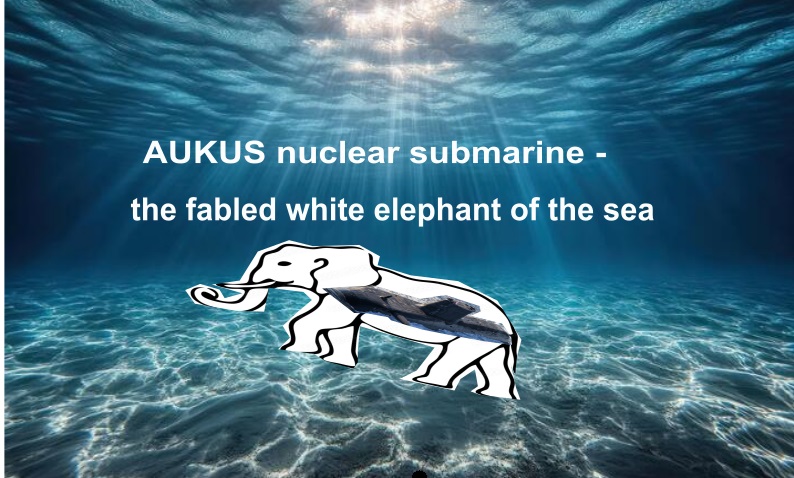
The UK nuclear enterprise is expected to absorb between 20 and 25 percent of the Ministry of Defence budget in the coming years, as spending rises across a growing portfolio of submarine, warhead, infrastructure and fuel programmes.
Giving evidence to the Public Accounts Committee, Permanent Secretary Jeremy Pocklington said defence nuclear spending totalled about £10.9 billion in 2024-25, equivalent to 18% of the department’s budget, and is expected to rise to around 20% in the current financial year.
He told MPs that the share would continue to grow, saying the Defence Nuclear Enterprise was on course to account for “between about 20% and 25% of the MOD’s overall budget.” That growth, he said, reflects both inflation and a broader expansion in the nuclear portfolio.
Pocklington said the increase was not being driven primarily by the core Dreadnought submarine build, which he said remains within the range previously set out to Parliament. “For Dreadnought, we are still within the range that the Department stated to Parliament,” he said, referring to the longstanding £31 billion programme cost plus £10 billion contingency.
Instead, he pointed to other pressures within the wider enterprise, including “scope changes related to AUKUS” and the re-establishment of a defence nuclear fuel capability, which he said had not featured in earlier forecasts in the same way.
He described the Defence Nuclear Enterprise as a large and increasingly complex portfolio, covering not only Dreadnought and Astute, but also warhead work, infrastructure at Barrow, naval bases at Clyde and Devonport, and fuel production. “There are nine programmes with a whole-life cost of over £10 billion in the Defence Nuclear Enterprise,” he said
Pressed repeatedly for a 10-year forecast, a more specific Dreadnought in-service date, and an update on how much of the £10 billion contingency has been drawn down, Pocklington declined to provide further detail, saying much of that would have to wait for the delayed Defence Investment Plan.
On timing, he said there had been no change to the government’s position that the first Dreadnought boat would enter service in the “early 2030s,” but did not narrow that window further.
Committee chair Sir Geoffrey Clifton-Brown argued that the exact date mattered, given the pressure on the existing deterrent fleet and the implications for long submarine patrols and support arrangements if replacement boats arrive later in the decade.
Taxpayers to cough up £65.6 million for nuclear “industry-informed” education in British universities

University of Derby helps drive UK nuclear skills expansion
The University of Derby is part of two university consortia that have been awarded funding to lead new doctoral training programmes designed to develop the UK’s future nuclear workforce. The Government has announced a £65.6 million investment for a bespoke nuclear Doctoral Focal Award
Delivered by UK Research and Innovation (UKRI) and match-funded by industry, the programmes will train more than 500 doctoral students at universities across the country, over the next four academic intakes. The University of Derby is a partner in two of the six new national doctoral training programmes announced.
The first consortium, led by Bangor University, has secured funding to establish PANDA (the Programme for Accelerating Nuclear Development and Applications), which will train up to 100 doctoral researchers. PANDA will be delivered in partnership with the UK National Nuclear Laboratory and the universities of Bristol, Birmingham, Cambridge, Derby, Imperial College London and Manchester. Together, these partners will support a new generation of researchers equipped to meet the UK’s future nuclear and clean‑energy needs, including a specific focus on defence.
Derby is also a partner in the STAND-UP (Skills and Training driving availability of National Defence Assets UP skilling) programme, led by the University of Strathclyde, which will train 80 Engineering Doctorate researchers.
This programme aims to develop the next generation of nuclear engineers and support the transition to ‘net zero’. It will help strengthen the UK’s capabilities in nuclear engineering, advanced manufacturing, digital technologies and nuclear decommissioning, bringing together partner universities Cumbria, Lancaster, Nottingham, Birmingham and Surrey.
Professor Kathryn Mitchell, vice-chancellor and chief executive of the University of Derby, said: “Developing the skills and expertise of the next generation is essential to securing a sustainable talent pipeline for the nuclear sector. The University of Derby is committed to working with partners to drive bold action on the UK’s nuclear skills shortage.”
She continued: “Together with our partners, we are creating clear pathways into specialised careers, delivering industry-informed education, and supporting cutting edge research. Through this work, we are helping to build a stronger national workforce and ensuring the future success of this vital sector.”
The announcement follows the Nuclear Skills Plan, launched in May 2024, which contained a recommendation to quadruple the number of nuclear fission doctoral students to address the shortage of high-level nuclear skills across both civil and defence and replace an aging workforce.
Over 500 doctoral students will be trained at universities across the country in academic years 2026/27 to 2033/34, quadrupling today’s intake of nuclear doctoral students. These doctoral students will be equipped with a broad range of advanced technical skills essential for the UK’s future civil and defence nuclear programmes, supporting the UK’s economic growth, energy and national security, and ‘net zero’ objectives.
UK’s Astute nuclear submarine timeline is very unlikely to be met.

Brief Update on the SSN Programme
17.03.2026, https://www.nuclearinfo.org/article/brief-update-on-the-ssn-programme/
The Astute project has the objective of delivering conventionally armed, nuclear-powered submarines for the Royal Navy, otherwise acronymised as SSNs. Seven submarines are planned to be delivered, with five currently operational: HMS Astute, HMS Ambush, HMS Artful, HMS Audacious, and HMS Anson. During February, HMS Anson arrived in Australia at HMAS Stirling. This visit was intended to be for maintenance and a symbolic demonstration of the trilateral AUKUS partnership between the UK, US, and Australia, which aims to develop nuclear-powered submarines with advanced conventional capabilities. AUKUS submarines are planned to succeed the Astute class. The sixth Astute-class submarine, HMS Agamemnon, was commissioned into the Royal Navy and completed its first dive last year, while HMS Achilles is currently under construction. The seven Astute submarines were once hoped to be delivered by the end of this year, but this timeline is very unlikely to be met.
This reflects the persistent challenges that have long bedevilled submarine construction in the UK, including delays, technical issues, accidents, and rising costs. HMS Anson itself for instance was delayed (among other factors) due to setbacks with HMS Audacious, while the 2024 fire in Barrow, the main shipyard for manufacturing the UK’s nuclear submarines, will further delay progress on the final Astute submarine. Also, AUKUS may generate geopolitical tensions among its partners. A US Congressional report earlier from this year has raised the possibility of withholding submarines from Australia due to concerns that the sale may divert US submarine capacity from a potential conflict with China. Meanwhile, some analysts question the strategic trade-offs of deploying HMS Anson to the Indo-Pacific, given the UK’s defence commitments in Europe and the Atlantic. These issues point to dual risks facing the SSN programme: first, achieving successful and timely delivery, and second, achieving agreement among allies over its strategic objectives and operational use.
Trump ready to put boots on the ground in Iran
Pentagon draws up plans to seize strategic Kharg Island after US president calls Nato allies ‘cowards’
Benedict Smith US Reporter, in Washington. Henry Bodkin Jerusalem Correspondent, 21 Mar 26
Donald Trump is considering putting American troops on the ground in Iran.
The Pentagon has drawn up plans that could involve seizing Kharg Island,
Iran’s key oil terminal in the Persian Gulf. Mr Trump’s top spokeswoman
confirmed the details to The Telegraph but cautioned that the president had
not made a final decision.
Telegraph 21st March 2026,
https://www.telegraph.co.uk/world-news/2026/03/20/us-launch-offensive-reopen-strait-of-hormuz-iran-war-drones/
Russia summons Israeli envoy over missile strike on journalists in Lebanon- Zakharova: “Cannot be called accidental”
Russia has told Israeli envoy Oded Joseph that Moscow wanted an investigation into the attack in southern Lebanon wherein two Russian state TV journalists were injured.
Sharangee Dutta, India Today, Fri, 20 Mar 2026, https://www.sott.net/article/505250-Russia-summons-Israeli-envoy-over-missile-strike-on-journalists-in-Lebanon-Zakharova-Cannot-be-called-accidental
The Russian Foreign Ministry summoned Israeli envoy Oded Joseph on Friday to lodge a formal protest over an Israeli missile strike in southern Lebanon in which two Russian state TV journalists were injured, TASS reported. Moscow has told Joseph that they want an investigation into the attack, which happened on Thursday, and want assurances that such incidents would not be repeated.
A video of the strike, which landed barely 10 metres away from the filming location of RT correspondent Steve Sweeney and his cameraman Ali Rida, was captured on the latter’s camera. Sweeney ducked for cover just in time with the viral clip showing how the strike turned the site into a massive ball of fire.
Both of them survived the attack and received treatment at a local hospital. In one of the videos posted by Rida, doctors are seen removing shrapnel from Sweeney’s arm. The cameraman alleged that Israel intentionally struck the area despite their jackets displaying press credentials.
Russian Foreign Ministry spokesperson, Maria Zakharova, echoed Ali Rida, and condemned the strike. Taking to Telegram, she posted that the attack on the journalists wearing press jackets “cannot be called accidental” considering the killing of 200 correspondents in Gaza.
“Especially since the rocket did not hit a ‘significant strategic military facility’, but rather the location where the report was being filmed,” Zakharova wrote on the social media platform, adding that Moscow was waiting for a response from the international organisation.
Sweeney and Rida were filming near a local military base in southern Lebanon, close to the Al-Qasmiya Bridge. The site is a crucial crossing point over the River Litani, which has faced constant Israeli strikes over the past few days. Israel has claimed that the river crossings are being used by the Iran-supported group Hezbollah to move fighters and weapons amid the war.
In response, Israel said that it had repeatedly given warnings for civilians and residents to move out of the area and that the strike was launched after adequate time had passed. It also stressed that Tel Aviv does not target civilians or journalists and functions in accordance with international law.
Macron slams ‘unacceptable’ Israeli attacks on Lebanon
The French president stressed that the Jewish state’s military operation violates international law and will not enhance its security.
20 Mar, 2026, https://www.rt.com/news/635660-macron-condemns-israel-lebanon-attacks/
Israel’s ongoing military operation in Lebanon violates international law, French President Emmanuel Macron has said.
Speaking at a European Council press conference in Brussels on Thursday, Macron also criticized the attacks on Israel being carried out by Lebanese-based militant movement Hezbollah, which has vowed to avenge the US-Israeli killing of Iranian Supreme Leader Ali Khamenei.
Macron rejected the notion that a third party could resolve the conflict with the Iran-linked group through force, emphasizing that only Lebanese authorities have the legitimacy to address the issue.
“We don’t think that the fight against Hezbollah and the removal of its weapons can be carried out by a third power,” Macron told reporters. “We believe that Israel’s ground military operation and bombardments are inappropriate and even unacceptable in terms of international law and the interests of both the Lebanese and Israel’s long-term security.”
Macron also pointed out that Israel has conducted similar operations in Lebanon for years without ever producing the “expected results.”
The French leader’s comments come as Israel has expanded its military campaign against Hezbollah following the US-Israeli strikes on Iran that began late last month. The Israel Defense Forces announced “limited and targeted ground operations against key Hezbollah strongholds” earlier this week, escalating cross-border hostilities that have already claimed hundreds of lives.
Lebanese authorities report that Israeli strikes have killed over 880 people over the past two weeks, with more than 2,000 injured and over 1 million displaced. The strikes have targeted residential districts, a UN peacekeeping position, and a Russian cultural center in the southern city of Nabatieh.
On Thursday, RT correspondent Steve Sweeney and his cameraman Ali Rida Sbeity were also injured in what appeared to be a deliberate Israeli airstrike on their filming position, despite them wearing clearly labeled press uniforms.
Moscow has condemned Israel over the strike, with Russian Foreign Ministry spokeswoman Maria Zakharova stressing that the attack on journalists wearing press markings “cannot be called accidental given the killing of two hundred journalists in Gaza.”
A MAN and woman have been arrested after attempting to enter Faslane naval base.
20th March, https://www.thenational.scot/news/25954299.man-woman-arrested-attempting-enter-faslane-naval-base/
The incident, which took place at around 5pm on Thursday, saw the pair reportedly ask if they could enter.
They were refused permission and were then arrested shortly after. It is understood the pair did not try to force their way into the base.
According to the PA news agency, the man is understood to be Iranian.
The Faslane naval base, also known as HM Naval Base Clyde, is located on the eastern shore of Gare Loch in Argyll and Bute.
It is home to the core of the UK’s submarine fleet and the Trident nuclear deterrent.
A Police Scotland spokesman said: “Around 5pm on Thursday, 19 March, 2026, we were made aware of two people attempting to enter HM Naval Base Clyde.
“A 34-year-old man and 31-year-old woman have been arrested in connection and enquiries are ongoing.”
A Navy spokesperson said: “Police Scotland have arrested two people who unsuccessfully attempted to enter HM Naval Base Clyde on Thursday 19 March.
“As the matter is subject to an ongoing investigation, we will not comment further.”
Conscientious objector and human rights defender Yurii Sheliazhenko detained.

The undersigned organisations are shocked by the detention and deprivation of liberty of human rights defender Yurii Sheliazhenko, today March 19th, by the Ukrainian authorities in Kyiv. This is just weeks after a joint call to the authorities to withdraw from such persecutions of conscientious objectors and withdraw their ongoing persecution of Mr. Sheliazhenko.1
According to the information available, Mr. Sheliazhenko was apprehended by officers of the Pechersk District Police in Kyiv without a proper legal basis and without compliance with the procedural safeguards required by Ukrainian law. In particular, there are indications that:
– no detention protocol was drawn up;
– no clear legal grounds for the deprivation of liberty were provided;
– access to legal counsel was obstructed;
– contact with the Ukrainian State Bureau of Investigation was obstructed;
– he was transferred, or intended to be transferred, to a Territorial Centre of Recruitment and Social Support (TCC) without due legal procedure.
We note that any involvement of the TCC does not exclude the responsibility of law enforcement officers for the initial deprivation of liberty. These actions may constitute violations of the Constitution of Ukraine and the European Convention on Human Rights, in particular Article 5 (right to liberty and security), and Article 9 of the International Covenant on Civil and Political Rights (ICCPR).
Yurii Sheliazhenko is a well-known conscientious objector, publicly declared since 1998, a pacifist and a human rights defender. He is also an academic, the executive secretary of the Ukrainian Pacifist Movement (member organisation of War Resisters International), Director of the Institute of Peace and Law in Ukraine, and a Board member of the European Bureau for Conscientious Objection and of World Beyond War.
Tragically, he has previously reported on the cruel practices of “busification”, forced conscription and compulsory military registration occurring in Ukraine, which in some cases have even led to tortures and deaths in military recruitment centers.2
We strongly condemn all these actions as grave human rights violations that have no place in democratic countries.
We urge the Ukrainian authorities to immediately release Yurii Sheliazhenko and cease all procedures of forced conscription.
We remind that his case has been previously included in a Communication by the Mandates of the Special Rapporteur on the rights to freedom of peaceful assembly and of association; the Special Rapporteur on minority issues and the Special Rapporteur on freedom of religion or belief.3 The case of Mr. Sheliazhenko, the communication of the Special Rapporteurs and the response of the Ukrainian authorities were highlighted also by the OHCHR, in its report concerning Conscientious objection to military service, and particularly in the chapter titled “Refrain from unduly restricting the human rights of those representing or advocating for the rights of conscientious objectors”.4 His case has been highlighted also in Amnesty International’s Annual Report 2023/2024.5
We repeat our call to the international community to exercise all proper actions to ensure that human rights defenders and peace activists are not criminalised for their actions for peace and nonviolence; moreover, that the right to conscientious objection is fully implemented in line with international standards and that conscientious objectors are provided with the necessary protection against persecution in their country of origin, also with asylum.
Connection e.V.
European Bureau for Conscientious Objection
International Fellowship of Reconciliation
War Resisters’ International
- https://ebco-beoc.org/press-release/2026-01-23-yurii-sheliazhenko-conscientious-objector-to-military-service-and-human-rights-defender-under-immediate-threat ↩︎
- https://ebco-beoc.org/ukraine/2024 ↩︎
- AL UKR 1/2023, 8 November 2023, p. 5-6. https://spcommreports.ohchr.org/TMResultsBase/DownLoadPublicCommunicationFile?gId=28562 ↩︎
- A/HRC/56/30, 23 April 2024, para. 45. https://docs.un.org/en/A/HRC/56/30↩︎
- https://www.amnesty.org/en/documents/pol10/7200/2024/en/ p. 385↩︎
Deader than a doornail -UK’s new nuclear
Several days after announcing the new cost hikes at Hinkley, news broke about similarly soaring electricity prices predicted for the Sizewell C nuclear power plant, another French twin EPR plant targeted for the steadily eroding and submerging UK Suffolk coast.
by beyondnuclearinternational, https://beyondnuclearinternational.org/2026/03/15/deader-than-a-doornail/
Electricity prices from new nuclear plants will be sky high with more delays to completion while jobs don’t materialize.
If you wanted to sum up the most compelling reasons not to build new nuclear power plants, Hinkley Point C, the two-reactor project under construction in Somerset in the UK, encapsulates almost all of them.
When the UK government, still miraculously led by the clinging-by-his-fingernails beleaguered Labour prime minister, Keir Starmer, announced its Golden Age of nuclear last September, obediently gliding in Trump’s gilded wake, it claimed that the new nuclear power plants planned for Britain “will drive down household bills in the long run.” Nothing could be further from the truth.
Far from driving down consumer costs, the Hinkley Point C project, consisting of two 1,630 MW French Evolutionary Power Reactors (EPR), could see the original agreed strike price of $123.50 per megawatt — already considerably higher than the price Britons were paying at the time it was set in 2012 — soar even higher by the time the plant is finished, since prices are designed to increase annually in line with the Consumer Price Index.
The original estimated cost of $24 billion for the two Hinkley C EPRs has now almost tripled, having sky-rocketed to almost $67 billion as announced last week, along with new delays.
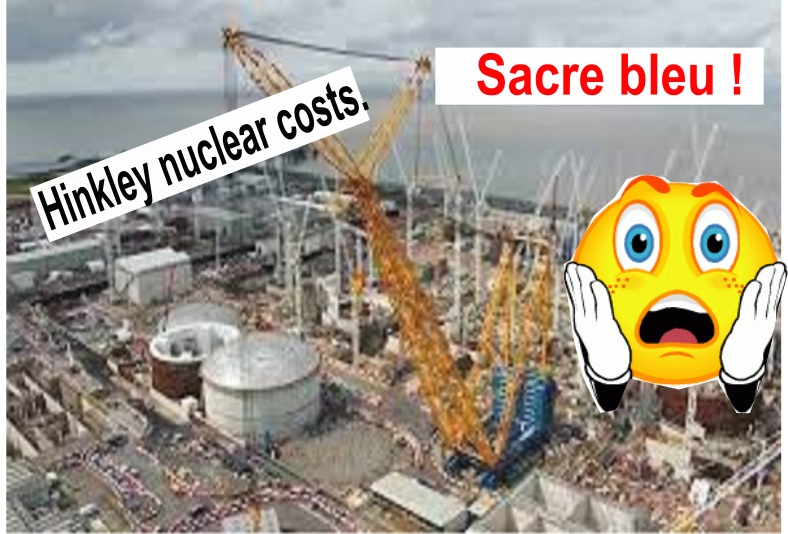
In 2007, when EDF first proposed its Hinkley Point C scheme, an officer with the company predicted locals would be cooking their turkeys using electricity from Hinkley C by Christmas 2017. That’s the same year — in March — that construction eventually began.
The Hinkley C completion date has now been pushed to at least 2030, another deadline extension it probably won’t meet. If the plant does show up in 2030, it will have taken 22 years, 13 longer than planned.
That’s a long time to wait for those new jobs the UK government’s ‘Golden Age’ promised. “Working people will benefit from jobs and growth as companies in the UK and United States sign major new deals that will turbocharge the build-out of new nuclear power stations in both countries,” said that September announcement, embracing yet more hyperbolic rhetoric.
Several days after announcing the new cost hikes at Hinkley, news broke about similarly soaring electricity prices predicted for the Sizewell C nuclear power plant, another French twin EPR plant targeted for the steadily eroding and submerging UK Suffolk coast.
The Sizewell C project was first proposed in 2010 but there are still no shovels in the ground for the plant itself, only site preparation (for that, read tearing up countryside and precious habitat.)
As revealed in an article in the Daily Telegraph, electricity generated from Sizewell C is likely to cost “almost double today’s prices”. The prediction is a staggering $160 per megawatt hour, and that’s according to the government’s own new report.
Incredibly, despite the track record at Hinkley C, with identical reactor designs to Sizewell, this same government report “assumed no escalation in costs” for the Suffolk project. Such an outcome is, to put it mildly, highly unlikely.
In an recent analysis for OilPrice.com, Leonard S. Hyman, an economist and financial analyst, and William I. Tilles, a senior industry advisor and speaker on energy and finance, predicted that “the prospects for new nuclear (both big and small) are deader than the proverbial doornail.”
They viewed the outlook for the so-called small modular reactors that the UK government is poised to green light as even bleaker. (At around 490MW the favored design from Rolls-Royce isn’t actually that small.) Small reactors will have “projected costs that are much higher than gigawatt-scale reactors, making them even less relevant economically,” they wrote.
And yet, the Starmer and Trump governments each press on with their false and fantastical nuclear fantasy plans regardless.
Linda Pentz Gunter is the founder of Beyond Nuclear and serves as its international specialist. Her book, No To Nuclear. Why Nuclear Power Destroys Lives, Derails Climate Progress and Provokes War, can be pre-ordered now from Pluto Press. (Use the scroll menu at the top of the page to select dollars or pounds for payment.)
Coastal erosion raises questions over protection for £40bn Sizewell C nuclear plant

The accelerating pace of coastal erosion after a damaging winter on the UK’s east coast has raised fresh questions over protection for a new £40bn nuclear plant under construction.
19 March 26, https://www.itv.com/news/anglia/2026-03-19/coastal-erosion-raises-questions-over-protection-for-40bn-nuclear-plant
Sizewell C is being built on the Suffolk coast, near the site of two previous nuclear power plants, with an operational and decomissioning timeline stretching for more than 100 years.
But a bruising winter along the coast, which has seen dozens of homes demolished before they fall into the sea, has led to concerns about the wisdom of building the plant on one of the fastest-eroding coastlines in Europe.
Sizewell C said the plant would be built on a “more stable section of the coast between two hard points” and an offshore bank of sediment known as the the Sizewell-Dunwich Bank.
Prof Sir David King, chair of the Climate Crisis Advisory Group, said a secure future for Sizewell lay in adaptable and robust defences.
“The question is no longer should it be built there, because it is being built; but rather ‘How do we protect it?’”, he said.
“I would be constructing a wall around Sizewell B and Sizewell C, and I would see the foundations for this wall going in quite soon.
“Build the foundations now so that in later years, as sea levels rise, we can build them all up to defend appropriately,” he advised.
The plans are for Sizewell C to be built on a platform approximately 7m above today’s sea level.
It will be protected by a sea defence structure more than 14m above today’s sea level, which will take the form of temporary sheet-pile sea defences during construction and will be replaced by permanent structures throughout the plant’s operational lifetime and decommissioning until 2140.
Sizewell C said the plant would be built on a stretch of coastline which had been shown by data to be “comparatively stable”, while the beach will also be enlarged and maintained to form a soft coastal defence.
It adds that it will all be adaptable, meaning if sea levels rise beyond predictions, so too can the defences.
But communities along the coast complain there is an inequality of defence.
While millions are being pumped into defences at Sizewell, others living elsewhere along the coast are being left to fend for themselves and there is a big debate on whether what happens at Sizewell will have an impact on neighbouring areas further down the line.
The campaign group Together Against Sizewell C believes planning approval should not have been granted without Sizewell C demonstrating it had a viable plan to protect the site from an extreme climate change scenario.
Chris Wilson from the group said: “Why was the modelling for flood-risk in the [development consent order] restricted to a site lifetime of 2140 when it was clearly evident that spent fuel would be on site beyond that date?”
“And why was it allowed to be based on an unchanging coastal geomorphology assuming that the protective sand bars… would remain intact throughout the full lifetime of the project?”
There have also been concerns raised about how the defence work to protect Sizewell C will impact further down the coast.
Local resident Jenny Kirtley said erosion had escalated in the past year “far more than anybody thought it would”.
“A worry will be when they start the work out at sea,” she said.
“There will be two jetties built and huge intake and outfall tunnels built under the seabed. We know what’s happened to Thorpeness already. Is this going to make to make it more difficult for Thorpeness? Will these sea defences cause more problems?”
The answers are inconclusive.
Robert Nicholls, professor of coastal adaptation at the University of East Anglia, has studied the coastline for many years.
“The effects of Sizewell become significant if we are forced to protect it”, he said.
“At the current time, Sizewell doesn’t need much protection. So probably I would argue it’s not having a huge effect on its neighbouring coasts, if it suddenly began to erode and you had to protect it, then it might start to have a big effect both on the coast to the north and the south.”
At the village of Thorpeness, 11 families have already lost their clifftop homes to erosion in the last few months.
Residents have been given permission to take matters into their own hands and are raising hundreds of thousands of pounds to place rock bags at the bottom of what is left of the sandy cliff.
But with millions being pumped into defences for Sizewell C, residents want support from the project to help secure their future too.
Dennis Skinner from the Thorpeness Community Interest Company said: “The scientists can do all the studies but, as we’ve seen in the last two months with the amount of erosion here in Thorpeness, I don’t think anyone can be certain about what impact different things are having up and down the coastline
“Sizewell C have got a budget in excess of £50bn, so contributing to Thorpeness will just be a rounding sort of figure.”
A spokesperson from Sizewell C told ITV News Anglia it was monitoring local coastal processes and the situation at Thorpeness.
“We’ve performed thousands of hours of flood risk modelling using the highest plausible estimates for sea level rise and therefore have the highest level of confidence that Sizewell C is in the right location,” they said.
“It’s located on a more stable section of the coast and […] drones are regularly producing 3D maps of changes, coastal erosion, and accretion […] If there are any unexpected developments, we will take action to address them.
“Our assessments show that the power station will be built to withstand a 1-in-10,000-year storm and 1-in-100,000-year surge”.
Roger Hawkins is desperately trying to save his house at Thorpeness from the inevitable erosion.
“We recognise that it’s impossible to defend the whole coast, and there are some areas where you’ve got areas of dense population like towns and docks and infrastructure like Sizewell C, where you can obviously need to have a hard defence.
“But at what point do you stop providing the hard defence?”
UK bets big on homegrown fusion and quantum — can it lead the world?

19 March 2026, Nature, by David Adam
UK government announces multibillion-pound science investments — but what impact will this have on the global race in these fields?
Britain is making an ambitious technological bet. It is investing £2 billion (US$2.66 billion) in quantum-computing development and £2.5 billion in nuclear-fusion energy in a bid to secure technological and energy independence and nurture homegrown scientific talent.
The changes — announced on 16 March as part of an ongoing national science and technology strategy — have been broadly welcomed by the research community. And officials say that the money and increased strategic focus will help to push the United Kingdom to the forefront of both fields globally.
However, some point out that long-term commitments and more money will be needed if Britain is to push past its competitors. Others lament that the funding is not so much a mark of heightened ambition as necessary merely to maintain aspects of the nation’s current scientific capabilities given the disruptive effects Brexit had on its science funding and access to joint European projects.
For example, the United Kingdom withdrew from ITER, a long-running international effort to build an experimental fusion reactor in France.
“You have to go back to Brexit to understand what’s going on now,” says Tony Roulstone, a nuclear-power researcher at the University of Cambridge, UK.
Boost to quantum computing
Officials say that the quantum investment will lay the foundations for the United Kingdom to become the first country to roll out the large-scale use of quantum computers and be the fastest to adopt artificial intelligence in the G7 group of nations.
The £2-billion quantum package aims to support research, infrastructure, skills and commercialization, including funding for hardware and software development, expanded facilities and support for start-ups and industry partnerships.
The government has also pledged to buy and use successful systems as they emerge — echoing the procurement mechanisms used by the United States to promote the development of satellite navigation systems and stealth aircraft.
But Britain faces stiff competition globally. Large-scale quantum computing — systems that offer consistent, practical advantages across multiple sectors — is not yet possible.
Word’s first fusion?
The £2.5-billion fusion investment is similarly ambitious — although how it will compete on a global stage is also unclear. The funds include plans to build a prototype fusion-energy plant called Spherical Tokamak for Energy Production (STEP) on the site of a former coal-fired power station in the centre of the United Kingdom. They also include £45 million for building the nation’s first AI supercomputer dedicated to accelerating fusion-energy research.
Researchers say that STEP is a ‘moonshot’ project, a high-risk initiative that might not prove successful but could still spark scientific breakthroughs. Its aim of producing significantly more power output than the total input — a key requirement for fusion energy — is extremely ambitious.
“It will build a lot of capacity in material science, in magnet engineering, all sorts of things,” says Richard Jones, an experimental physicist who retired last year from the University of Manchester, UK……………………………………………….. https://www.nature.com/articles/d41586-026-00877-2
1 This Month

of the week – Shut Down Drone Warfare!


Tell the Ukrainian Government to Drop Prosecution of Peace Activist Yurii Sheliazhenko

Petition to revoke the licensing of the Near Surface Nuclear Disposal Facility (NSDF) at Chalk River. https://www.ourcommons.ca/petitions/en/Petition/Details?Petition=e-7247
To see nuclear-related stories in greater depth and intensity – go to https://nuclearinformation.wordpress.com
-
Archives
- April 2026 (57)
- March 2026 (251)
- February 2026 (268)
- January 2026 (308)
- December 2025 (358)
- November 2025 (359)
- October 2025 (376)
- September 2025 (257)
- August 2025 (319)
- July 2025 (230)
- June 2025 (348)
- May 2025 (261)
-
Categories
- 1
- 1 NUCLEAR ISSUES
- business and costs
- climate change
- culture and arts
- ENERGY
- environment
- health
- history
- indigenous issues
- Legal
- marketing of nuclear
- media
- opposition to nuclear
- PERSONAL STORIES
- politics
- politics international
- Religion and ethics
- safety
- secrets,lies and civil liberties
- spinbuster
- technology
- Uranium
- wastes
- weapons and war
- Women
- 2 WORLD
- ACTION
- AFRICA
- Atrocities
- AUSTRALIA
- Christina's notes
- Christina's themes
- culture and arts
- Events
- Fuk 2022
- Fuk 2023
- Fukushima 2017
- Fukushima 2018
- fukushima 2019
- Fukushima 2020
- Fukushima 2021
- general
- global warming
- Humour (God we need it)
- Nuclear
- RARE EARTHS
- Reference
- resources – print
- Resources -audiovicual
- Weekly Newsletter
- World
- World Nuclear
- YouTube
-
RSS
Entries RSS
Comments RSS
 nuclear-news