A Closer Look at Two Operational Small Modular Reactor Designs
There are literally dozens of small modular reactor (SMR) and microreactor designs being developed by different companies around the world, and some of the work has been going on for decades. Yet, only two designs have actually been built and put into commercial operation. POWER takes a closer look at both of them.
Power, by Aaron Larson 1 May 24
Many nuclear power supporters have long thought small modular reactors (SMRs) would revolutionize the industry. Advocates expect SMRs to shorten construction schedules and bring costs down through modularization and factory construction. They often cite numerous other benefits that make SMRs seem like no-brainers, and yet, only two SMR designs have ever been built and placed in commercial operation.
The International Atomic Energy Agency (IAEA) publishes booklets biennially on the status of SMR technology. In the IAEA’s most recent booklet, it notes 25 land-based water-cooled SMRs and another eight marine-based water-cooled designs are under development globally. It also lists 17 high-temperature gas-cooled SMRs, eight liquid-metal-cooled fast-neutron-spectrum SMRs, 13 molten-salt SMRs, and 12 microreactors. If you do the math, that’s 83 SMR designs under development, but only the KLT-40S and HTR-PM are actually operational.
KLT-40S
The KLT-40S is a pressurized water reactor (PWR) that was developed in Russia. It is an advanced version of the KLT-40 reactor, which has been used in nuclear-powered icebreakers. The first KLT-40S units, and, to date, the only two of these units to enter commercial operation, were deployed in the Akademik Lomonosov—the world’s first purpose-built floating nuclear power plant (FNPP, Figure 1 on original).
Main Design Features.………………………………………………………………………………………………………….
Deployment Details.…………………………….
Construction and testing of the FPU was completed in 2017 at the Baltic shipyard. In May 2018, the vessel was towed 4,000 kilometers (km), around Finland and Sweden, to Murmansk, completing the first leg of its journey to Pevek. Fuel loading was completed in Murmansk in October 2018. First criticality was achieved in November 2018, then in August 2019, the vessel embarked on the second leg of its journey—a distance of 4,700 km—towed by two tugboats to the Arctic port town of Pevek, where it was connected to the grid on Dec. 19, 2019. Akademik Lomonosov was fully commissioned on May 22, 2020, and it currently provides heat to the town of Pevek and supplies electricity to the regional Chaun-Bilibino power system.
HTR-PM
On Dec. 6, 2023, China National Nuclear Corp. announced it had commenced commercial operation of the high-temperature gas-cooled modular pebble bed (HTR-PM) reactor demonstrator. The HTR-PM project was constructed at a site in Rongcheng, Shandong Province, roughly midway between Beijing and Shanghai in eastern China…………………………………
Main Design Features.…………………………………………………………………………………………………..
Deployment Details.……………………………………………………………………. The civil work for the nuclear island buildings was completed in 2016 with the first of two reactor pressure vessels installed in March that year. The fuel plant reached its expected production capacity in 2017. Startup commissioning and testing of the primary circuit were finished by the end of 2020. The HTR-PM achieved first criticality in September 2021, and was ultimately grid connected on Dec. 20, 2021.
Spotty Results at Best
While it is laudable that these SMRs—the KLT-40S and HTR-PM—have been placed in commercial operation, their performance since entering service has come under fire. In The World Nuclear Industry Status Report 2023 (WNISR), a Mycle Schneider Consulting Project, co-funded by the German Federal Ministry for the Environment, Nature Conservation, Nuclear Safety, and Consumer Protection, it says both designs have operated at low capacity factors recently.
Concerning the Chinese HTR-PM, the WNISR says, “Between January and December 2022, the reactors operated for only 27 hours out of a possible maximum of 8,760 hours. In the subsequent three months, they seem to have operated at a load factor of around 10 percent.” The Russian units’ performance has been nearly as dismal. “The operating records of the two KLT-40S reactors have been quite poor. According to the IAEA’s PRIS [Power Reactor Information System] database, the two reactors had load factors of just 26.4 and 30.5 percent respectively in 2022, and lifetime load factors of just 34 and 22.4 percent. The reasons for the mediocre power-generation performance remain unclear,” the report says.
Meanwhile, the promises of shortened timelines and lower costs were not borne out by these projects. “The experience so far in constructing these two SMRs as well as estimates for reactor designs like NuScale’s SMR show that these designs are also subject to the historical pattern of cost escalations and time overruns. Those cost escalations do make it even less likely that SMRs will become commercialized, as the collapse of the Carbon Free Power Project involving NuScale reactors in the United States illustrated,” the WNISR says………….. https://www.powermag.com/a-closer-look-at-two-operational-small-modular-reactor-designs/
NATO state rejects €100 billion Ukraine war chest ‘madness’
https://www.rt.com/news/596896-hungary-nato-ukraine-madness/ 02 May 2024
Budapest is opposing a potential €100-billion ($107 billion), five-year NATO plan to fund Ukraine in its conflict with Russia,Hungarian Foreign Minister Peter Szijjarto has said. The draft plan on the military aid fund was presented to member states of the US-led bloc by Secretary General Jens Stoltenberg earlier this week, Szijjarto revealed.
The minister made the remarks on Thursday to Hungarian broadcaster M1 before heading for a ministerial meeting of the Organization for Economic Co-operation and Development (OECD) countries in Paris. Szijjarto said:
“On Tuesday, the NATO member states received the secretary-general’s proposal to raise 100 billion that NATO plans to spend on the war. Since the money is to be collected over five years, this means NATO expects the hostilities to continue for this period.”
Budapest will oppose the initiative and is not planning to participate in arming Kiev or training its soldiers, Szijjarto stressed. The draft plan was presented to the bloc’s member states in its “first reading” and is still a subject to negotiations, the senior diplomat noted.
“In the coming weeks during negotiations we will fight for Hungary’s right to stay away from this madness, from collecting these 100 billion and siphoning them out of Europe.”
Budapest prioritizes the security of its own people before anything else and will do its best to “stay out of war,” Szijjarto explained, adding Hungary’s opinion remains that the conflict can only be resolved through negotiations. Nonetheless, Budapest acknowledges mounting global security issues and wants to be ready to face them, he said.
Szijjarto urged:
“We cannot ignore the threat of a new world war and the preparations for a nuclear war. This madness here in Europe must be stopped.”
Hungary has consistently expressed its opposition to the ever-growing involvement of the US-led NATO bloc – and of the EU – in the Ukrainian conflict, refusing to send arms to prop up Kiev or to train its troops, and forbidding use of its territory to funnel such shipments from third countries.
Budapest has also publicly spoken out against the potential accession of Ukraine into NATO, which has long been one of the key goals of Ukrainian leadership.
Fears raised over Wales accident risk involving aircraft carrying nuclear materials
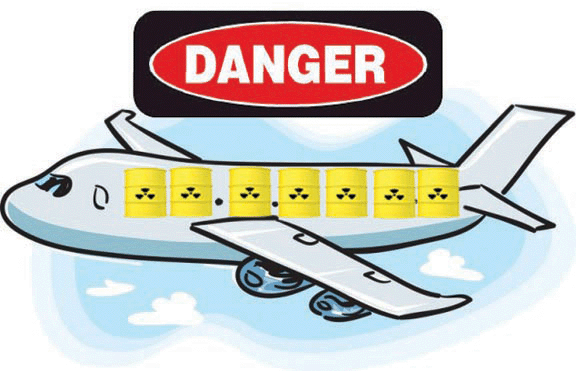
An air crash involving an RAF aircraft carrying US nuclear materials over South Wales may be the stuff of nightmares, but the Chair of the Welsh Nuclear Free Local Authorities has just written to the First Minister of Wales asking him to contemplate just that possibility.
The Campaign for Nuclear Disarmament and Nukewatch have just published a disturbing briefing titled ‘Special nuclear flights between the UK and US: the dangers involved’. The briefing references the transport of nuclear materials made by RAF C-17 Globemaster flying between RAF Brize Norton in Oxfordshire and airbases in the United States. Around ten such round-trips are made every year to transport nuclear materials utilised for the maintenance of Britain’s nuclear arsenal.
The report says of the route taken by these flights: ‘Aircraft fly from Brize Norton out into the Atlantic, overflying the Cotswolds and then the northern edges of Bristol and Cardiff to reach the Bristol Channel, flying south of Ireland to cross the Atlantic. A variation of this route takes the plane further to the north where it overflies Gloucestershire and the South Wales valleys, heading out to sea over Swansea and the Gower, and, again, South of Ireland.’
Although the C-17 Globemasters involved in these flights are four-engine aircraft, and are subject to an enhanced maintenance regime, so catastrophic mechanical failure is less likely, Welsh Forum Chair Councillor Sue Lent wants Welsh emergency planning authorities to properly consider the likely impact of any accident involving nuclear materials. Cllr Lent serves on Cardiff City Council, one of the municipalities flown over, and one of several South Wales local authorities who are members of the NFLAs.
The First Minister acts as Chair of the Wales Resilience Forum. The Forum ‘supports good communication and improves emergency planning across agencies and services’ acting as a coordinating body for local resilience forums across Wales. These ‘bring together all responder organisations that have a duty to co-operate under the Civil Contingencies Act. The groups also include other organisations who would respond to an emergency. Together, they ensure they prepare for emergencies by working in a coordinated and effective way.’[i]
The Minister of Defence hosts annual Astral Bend exercises ‘to practice and test the emergency response to an accident involving an RAF aircraft transporting special nuclear materials’, but investigative reporter Rob Edwards uncovered evidence that such an exercise held in February 2011 at the Caerwent military base in South Wales identified several failures in the actions of first responders which would have led to ‘“avoidable deaths” in a real-life situation’. The MoD has refused to release details of recent exercises held after 2012 in response to Freedom of Information requests; nonetheless the NFLA Secretary has just submitted one.
Councillor Lent asks First Minister Gething to ‘seek a reassurance from the MoD / RAF that such flights will be diverted out to sea, well away from our South Wales municipalities, and revisit emergency planning arrangements should an accident involving these special nuclear materials occur’ and suggests that as the last exercise conducted at Caerwent appears to be that held in 2011 a follow-up exercise to test the preparedness of Welsh emergency service agencies is ‘long overdue.’
Industrial action by nuclear submarine workforce hits Rolls Royce
GMB members working on the company’s nuclear submarine programme have
begun industrial action. The action comes after 90 per cent of GMB members
at the company supported action if company bosses failed to present a pay
rise acceptable to union members. Known as ‘work to rule’, the
industrial action will see GMB members applying strict limits to working
outside of pre-agreed processes. Rolls-Royce is a world leader in the field
of submarine technology, as well as being the supplier to Britain’s
domestic nuclear submarine fleet.
UK Defence Journal 30th April 2024
https://ukdefencejournal.org.uk/industrial-action-by-nuclear-sub-workforce-hits-rolls-royce
UK/Ireland Nuclear Free Local Authorities to join new “Rock Solid2” art exhibition

The UK/Ireland Nuclear Free Local Authorities Secretary will be joining Cumbrian artists and activists at the launch of a new art exhibition at Kendal Museum next month.
Rock Solid 2 has been organised by co-ordinator and artist Marianne Birkby. Marianne supports local campaign groups Radiation Free Lakeland / Lakes against the Nuclear Dump in opposing plans to impose a Geological Disposal Facility upon Cumbria. This could be located by the coast in Mid- or South-Copeland to receive Britain’s legacy and future most toxic radioactive waste, which would be transferred from the Sellafield nuclear complex and buried in tunnels beneath the Irish Sea.
Marianne described the exhibition as “a must see for all those who love Cumbria.” She explained that it was “a unique celebration of Lakeland’s jewel-like geology, landscape, flora, and fauna seen through the lens of a ‘quixotic’ plan to bury atomic wastes deep under the Cumbrian coast and the sea. Altogether 20 artists have produced artworks including comic books, installations, sculpture, and multi-media in a vibrant and thought-provoking exhibition.”.
Winner of the John Moore’s Painting Prize, guest artist Martin Greenland will be joined by internationally renowned mountain painter Julian Cooper, record producer Russell Mills, Lake Artist Society award winners Kate Bentley and Andrea Pentecost, Steve Wallis, and Irene Rogan amongst others. Artists have spent time looking at the Museum’s natural history collection for inspiration.
The exhibition will open in the People’s Gallery on 9th May, but a special official launch will be held on Friday 10th May from 6pm to 8pm.
A follow-up talk, titled ‘Atomic Wastes Under Cumbria’, will be held on the following day on Saturday 11th May in The Venue, which is accessed through the Museum.
Kendal Museum can be found on Station Road, Kendal, LA9 6BT. It is a short distance from the railway station.
Everyone is welcome to both events, which are FREE, but attendees are asked to contact the Museum to book a place at the official launch and/or the meeting by email to info@kendalmuseum.org.uk or by telephone on 01539 815597.
NFLA Secretary Richard Outram has been asked to join radiation expert Dr Ian Fairlie in speaking at the official launch and at the meeting.
Following the events, the exhibition will be open to the public on Thursdays, Fridays, or Saturdays from 9.30am to 4.30pm until 29 June. There is also a related art trail to explore around the galleries and shops of Kendal.
Ends//… For more information please contact the NFLA Secretary Richard Outram by email at richard.outram@manchester.gov.uk
France Increases State Funding for Advanced Nuclear R&D Project

by Jov Onsat, Rigzone Staff, Thursday, May 02, 2024
The French government has received clearance from the European Commission to provide Electricité de France (EDF) a further EUR 300 million ($321.6 million) for the front-end design phase of a project to develop small modular nuclear reactors (SMRs).
The project by Nuward, the nuclear energy-focused subsidiary of state-owned EDF, aims to come up with a design that has a power output of up to 300 megawatts electric.
The front-end design is the third phase of the five-phase project. The Commission previously approved EUR 50 million ($53.6 million) in French state aid for the second phase, which focused on gathering new knowledge for SMR design and construction.
Under the measure, the aid will take the form of a direct grant of up to EUR 300 million that will cover the R&D [research and development] project until early 2027”, the Commission said in a statement announcing clearance for the new funding from European Union competition regulations. “The measure will support Nuward in sizing the modules and components of the SMRs and validating their integration in the SMRs by means of numerical simulators and laboratory tests.
“Nuward will also carry out industrialization studies relating to the modular design and mass production of SMRs. Finally, the measure will also support Nuward in the preparation of the required safety demonstrations for the approval of the project by the national nuclear safety authorities”.
The Commission recently launched an alliance to accelerate the development of SMRs, following moves by the United Kingdom and United States to commercially scale up the advanced nuclear generation technology.
The public-private coalition aims to come up with a working model by the 2030s. “The Alliance targets a wide range of SMR stakeholders including vendors, utilities, specialized nuclear companies, financial institutions, research organizations, training centers and civil society organizations”, the Commission said in a press release February 9 announcing the initiative…………………..
Earlier the UK government announced an investment of GBP 300 million ($376 million) for the domestic production of high-assay low-enriched uranium (HALEU), challenging Russia’s status as the only commercial manufacturer of the fuel for SMRs. The UK previously funded a program by Rolls-Royce PLCs to design an SMR model, which is currently awaiting approval for deployment in Poland, as announced by the company last week—though the product is still undergoing the regulatory design assessment in the UK.
The UK will become the first country in Europe to launch a high-tech HALEU nuclear fuel program, strengthening supply for new nuclear projects and driving Putin further out of global energy markets”, the UK Department of Energy Security and Net Zero (DESNZ) said in a news release January 7 announcing the HALEU funding.
The DESNZ said GBP 10 million ($12.5 million) has also been allotted to develop sites and promote skills development for the production of other “advanced nuclear fuels”.
The International Atomic Energy Agency says HALEU is only produced in the U.S. and Russia but only the latter makes the fuel at a commercial scale. SMRs need HALEU, which contains five to 20 percent of uranium-235, beyond the five percent level that fuels most of today’s nuclear power plants, according to the United Nations nuclear watchdog.
The UK move was followed by an announcement by the US Department of Energy (DOE) offering contracts worth up to $500 million in total for HALEU production, besides funding offers for SMR design development. “Currently, HALEU is not commercially available from U.S.-based suppliers, and boosting domestic supply could spur the development and deployment of advanced reactors in the United States”, the DOE noted in a media statement January 9 announcing the funding offer.
Last year the U.S. Nuclear Regulator Commission issued the country’s first certification for an SMR design, that of NuScale Power Corp. https://www.rigzone.com/news/france_increases_state_funding_for_advanced_nuclear_rd_project-02-may-2024-176607-article/
Rolls-Royce scales back plans to build nuclear factories in UK
Rolls-Royce has scaled back plans to build two new factories for its small modular reactor (SMR) programme in the UK, following delays to a government design competition.
The FTSE 100 company had originally proposed one factory to make heavy pressure vessels for its SMRs and another to make the building blocks of the reactors.
It had drawn up a final shortlist of locations for the pressure vessels factory, including the International Advanced Manufacturing Park on the outskirts of Sunderland, Teesworks in Redcar and the Gateway industrial park in Deeside, Wales.
But on Friday Rolls confirmed it no longer intends to proceed with that plan because there is no longer time to build the factory and make the first pressure vessels for the early 2030s, when it hopes to complete its first SMRs.
It is still proceeding with work to build the second factory, however.
The company had been waiting for the outcome of an ongoing SMR design competition in the UK – first announced by the Government in 2015 – before it made a decision on the pressure vessel plant.
But that competition has been repeatedly delayed, with the arms length body Great British Nuclear only formally created last summer and winners not due to be announced until this June at the earliest.
Instead the engineering giant will now buy its heavy pressure vessels from a third party supplier.
The large, metal components sit at the heart of nuclear reactors and must be able to withstand extremely high temperatures and pressures. They are only made by a select group of companies, partly due to the need for specialist welding techniques.
Among their number is now Sheffield Forgemasters, which was nationalised by the Ministry of Defence in 2021.
Earlier this month, Sheffield became the sole UK company to gain the qualifications needed to make SMR reactor vessel components.
Despite having shelved its plans for a heavy pressure vessel factory, Rolls is still pressing ahead with plans to build its second factory, which will build the modular units that make up its SMRs.
It is understood that sites shortlisted for the pressure vessel factory will also be contenders for the second plant but no decisions have been made.
On Friday, a spokesman for Rolls-Royce SMR confirmed the company had now “prioritised work on our modules assembly and test facility”, adding: “Our efforts are focused on identifying the best site to support our deployment at pace.”
The company has also not ruled out reviving its plan for a heavy pressure vessel factory at some point in the future, so long as it manages to build up a healthy pipeline of orders.
A Government spokesman said: “Our world leading SMR competition aims to be the fastest of its kind, helping secure billions in investment for the UK, meaning cleaner, cheaper and more secure energy in the long-term.”
Rolls-Royce scales back plans to build nuclear factories in UK

Curtailing comes after repeated delays to an ongoing government design competition
Rolls-Royce has scaled back plans to build two new factories for its small
modular reactor (SMR) programme in the UK, following delays to a government
design competition. The FTSE 100 company had originally proposed one
factory to make heavy pressure vessels for its SMRs and another to make the
building blocks of the reactors.
It had drawn up a final shortlist of
locations for the pressure vessels factory, including the International
Advanced Manufacturing Park on the outskirts of Sunderland, Teesworks in
Redcar and the Gateway industrial park in Deeside, Wales.
But on Friday Rolls confirmed it no longer intends to proceed with that plan because
there is no longer time to build the factory and make the first pressure
vessels for the early 2030s, when it hopes to complete its first SMRs.
It is still proceeding with work to build the second factory, however. The
company had been waiting for the outcome of an ongoing SMR design
competition in the UK – first announced by the Government in 2015 –
before it made a decision on the pressure vessel plant.
But that competition has been repeatedly delayed, with the arms-length body Great
British Nuclear only formally created last summer and winners not due to be
announced until this June at the earliest. Instead the engineering giant
will now buy its heavy pressure vessels from a third party supplier. The
large, metal components sit at the heart of nuclear reactors and must be
able to withstand extremely high temperatures and pressures. They are only
made by a select group of companies, partly due to the need for specialist
welding techniques.
Rolls is still pressing ahead with plans to build its
second factory, which will build the modular units that make up its SMRs.
It is understood that sites shortlisted for the pressure vessel factory
will also be contenders for the second plant but no decisions have been
made.
Telegraph 27th April 2024
https://www.telegraph.co.uk/business/2024/04/27/rolls-royce-plans-build-smr-water-vessel-factory-uk
Zelensky wants ten more years of US funding

https://www.rt.com/news/596736-ukraine-us-aid-decade/ 29 Apr 24
The Ukrainian leader has said he is working on getting a long-term assistance package from Washington.
The latest US aid package for Kiev, which was only approved by Congress after more than six months of partisan feuding, might be small potatoes compared to what Ukrainian President Vladimir Zelensky has in mind for his biggest benefactor.
Kiev is negotiating with the administration of US President Joe Biden on a long-term agreement that would put Washington on the hook to provide Ukraine with military, economic, and political support for the next decade, Zelensky said on Sunday in his daily video address. Such commitments are needed to ensure Ukraine has the “efficiency in assistance” it needs to stem recent battlefield advances by Russian forces and gain the upper hand, he said.
“We are working to commit to paper concrete levels of support for this year and for the next ten years,” Zelensky said. “It will include military, financial, and political support, as well as what concerns joint production of weapons.”
Ukraine has already signed bilateral security agreements with several NATO members, including the UK, Germany, and France. Zelensky said he wants the long-term deal under negotiation with Washington to be the strongest pact yet.
However, Ukraine’s bilateral agreements with Western countries so far have stopped short of mutual-defense commitments. The deals merely pledge long-term aid, including support in the event of a future attack, and they are not legally binding. The agreement with Berlin, for instance, can be terminated with six months’ notice.
Zelensky said he wants Ukraine’s bilateral pact with Washington to include specific levels of aid. “The agreement should be truly exemplary and reflect the strength of American leadership,” he said.
US lawmakers approved $61 billion in additional aid for Ukraine earlier this month, after House Speaker Mike Johnson (R-Louisiana) overrode opposition in his own party to pass the bill with unanimous Democrat support. The Biden administration ran out of funding for Ukraine aid earlier this year, after using up $113 billion in previously approved assistance packages.
Republican lawmakers have argued that Biden is merely prolonging the bloodshed in Ukraine without offering a clear strategy for victory or a peace deal with Russia. A poll released in February showed that nearly 70% of Americans want Biden to push for a negotiated settlement with Moscow, involving compromises on both sides, rather than continuing to fund the conflict.
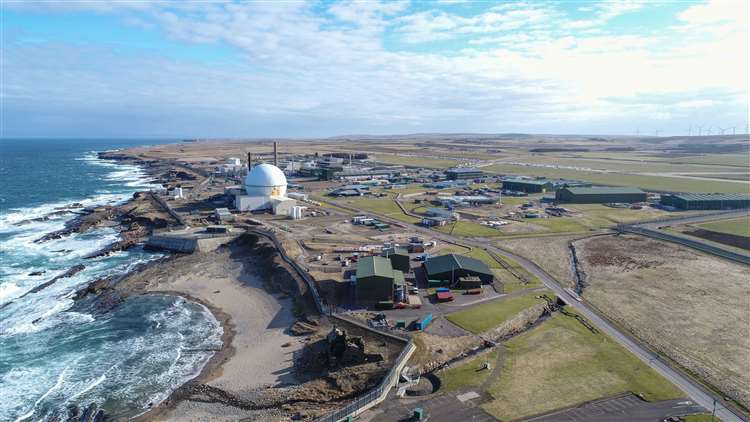
Dounreay & Scottish Nuclear Policy
Allan Dorans , SNP MP for Ayr, Carrick and Cumnock:
Workers at the Dounreay nuclear power complex on Scotland’s north coast plan strike action
next month which will further delay the decommissioning of a plant which
started operating in 1955.
The Prospect, Unite and GMB unions are all
involved. The GMB, the main union for nuclear energy workers, champions
alongside Scottish Labour proposals for new nuclear power stations in
Scotland, despite widespread public opposition to them. The union also
helps to fund Labour candidates.
While it is always disturbing to hear of
industrial conflict at a nuclear plant, these strikes will in reality,
relatively speaking, make little difference to the decommissioning process.
Why? Decommissioning began in 2019 and the plan envisages taking 50-60
years to complete.
But “complete” doesn’t mean the same to the company
responsible for the clean-up and demolition of Dounreay, Magnox Ltd, what
it means to most of us, and the site will be under surveillance – ie, not
usable – for at least 300 years. Leaving aside for the moment the appalling
financial costs of nuclear decommissioning, rarely mentioned in Scottish
Labour’s campaign material, what about the costs for the local people and
the environment over the last nearly 70 years?
There have been three
significant accidents and countless smaller ones. On May 10, 1977, a
65-metre (213ft) deep shaft at the plant was packed with radioactive waste
with at least 2 kg of sodium and potassium. Seawater flooded in and
reacted violently with the sodium and potassium, blowing the huge steel and
concrete lids off the shaft. The explosion littered the area with
radioactive particles, with around 150 of these being found on the beach in
the following 20 years.
This was, according to the New Statesman in 1995,
the worst nuclear accident ever in the UK. Dounreay was never prosecuted.
Researchers based at Oxford University, reporting – conveniently for some
political forces – in July 2014 revisited earlier studies of the incidence
of leukaemia around Sellafield and Dounreay and concluded that children,
teenagers and young adults currently living close to the facilities were
not at an increased risk of developing cancers.
The researchers, who were
dependent upon UK Government grants for their survival, downplayed two
earlier studies that found a raised risk of leukaemia among 0 to
14-year-olds and 15- to 24-year-olds living within 12.5km of Dounreay
during the period 1979-84. A subsequent study in 1996 reported an excess of
childhood leukaemia and Non-Hodgkin’s Lymphoma (NHL) within 25 km of
Dounreay for the period 1968-93. The researchers do not tell us just how
many cases, how many more children and young adults than expected, had
developed these often-deadly cancers, but 1287 cases near seven nuclear
sites in Scotland were looked at in the second study.
Around Dounreay,
almost twice as many cases as expected were found. The difference was
greatest around Dounreay. If we share the 1287 cases among the seven sites,
we get around 180 cases near Dounreay, of which half or might not have
occurred if the plant had never been built. To, me that’s “significant”
and I feel sure it was for those young people and their families. With
every passing month, it becomes clearer that Scottish Labour must
reconsider their plans for a nuclear Scotland.
The National 29th April 2024
Rolls-Royce pulls plug on UK nuclear factory plans
Rolls-Royce has reportedly downscaled its ambitions to construct nuclear factories in the UK, citing delays in a government design competition for its small modular reactor programme
Dimitris Mavrokefalidis, 04/29/2024, https://www.energylivenews.com/2024/04/29/rolls-royce-pulls-plug-on-uk-nuclear-factory-plans/
Rolls-Royce has reportedly revised its plans to construct nuclear factories in the UK, citing ongoing delays in a government design competition for its small modular reactor (SMR) programme.
Initially proposing two factories, the company has decided to forgo building a pressure vessel manufacturing facility due to time constraints, opting instead to procure heavy pressure vessels from third-party suppliers.
While plans for a second factory focused on building modular units for SMRs continue, the decision highlights the challenges posed by the delayed design competition.
Rolls-Royce has indicated the possibility of revisiting its plans for a pressure vessel factory in the future, depending on the establishment of a robust order pipeline.
A Department of Energy Security and Net Zero spokesperson told Energy Live News: “Our world leading SMR competition aims to be the fastest of its kind, helping secure billions in investment for the UK, meaning cleaner, cheaper and more secure energy in the long term.
“We’ve ended the stop-start approach to nuclear and recently launched a roadmap setting out the biggest expansion of the sector in 70 years, simplifying regulation and shortening the process for building new power stations.
We have already launched the tender phase and Great British Nuclear aims to announce successful bidders by the end of 2024.”
Energy Live News has contacted Rolls-Royce for comment.
Alarm over nuclear safety lapses on the Clyde
The Ferret Rob Edwards, April 28, 2024
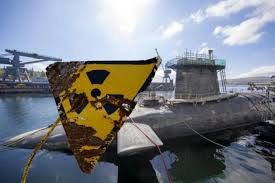
The number of safety incidents that could have leaked radiation at the Trident nuclear base on the Clyde has risen to the highest in 15 years, according to information released by the Ministry of Defence (MoD).
One incident in 2023 at the Faslane base, near Helensburgh, was given the MoD’s worst risk rating. This is the first time this has happened since 2008.
Another four incidents at the base in 2023, and one in 2024, were given the second worst rating. The number in 2023 was the highest since 2006.
According to the MoD’s definitions, all six incidents had “actual or potential for radioactive release to the environment”. In total the MoD logged 179 nuclear safety incidents on the Clyde in 2023 and 2024, though most of them were deemed to be less serious.
The MoD insisted that there had been no “radiological impact” or harm to health from any of the incidents. But it declined to provide any further details for national security reasons.
Campaigners described the rise in serious safety incidents as “alarming” and “chilling”. They condemned the secrecy surrounding the incidents, and called for the MoD to give a “full account” of what happened.
The MoD has released new figures to MPs summarising the number of “nuclear site events” in 2023 and 2024 at Faslane and the nearby nuclear bomb store at Coulport.
A total of 158 incidents of all kinds were recorded for 2023, plus 21 so far in 2024. All but six of the incidents were in three less serious categories, suggesting they posed lower risks.
According to the MoD, the incidents included “equipment failures, human error, procedural failings, documentation shortcoming or near-misses”. But it gave no further descriptions of any of the six more serious incidents.
One incident at Faslane in 2023 was rated as “category A”, the highest risk rating used by the MoD. It has defined such incidents as having an “actual or high potential for radioactive release to the environment” in breach of safety limits.
The last category A incident reported by the MoD was in 2008 when radioactive waste leaked from a barge at Faslane into the Clyde. There were also spillages from nuclear submarines at the base in 2007 and 2006.
The MoD’s figures disclosed four “category B” incidents at Faslane in 2023. This is the highest number of such incidents at the site since 2006, when there were five.
There was another category B incident at Faslane in the first four months of 2024, as well as two in 2022 and three in 2021. The MoD has defined such incidents as having an “actual or high potential for a contained release”, or an “actual or potential for radioactive release to the environment” below safety limits.
Nuclear weapons infrastructure ‘dangerously rotting’

“If you watch media followup, you’ll see NO reporting on the substance, e.g the fact that our nuclear weapons infrastructure is dangerously rotting & is tens of billions secretly in the hole, with huge knockon effects beyond its destructive effects on MoD which has got *even worse* & *even more lying* during the war.
The entire puerile election debate will be based on fake budget numbers that will then be given to Starmer on above-STRAP3 yellow paper, with him given the same nudge to classify, punt and lie. Nobody will report on all this & MPs will continue to ignore it...Dominic Cummins, Substack 31 Dec 2023
The latest figures were released in response to a parliamentary question by the SNP MP for Edinburgh North and Leith, Deidre Brock. In previous questions, she has obtained information on nuclear safety events at Faslane and Coulport back to 2006.
“My annual questions to UK ministers have exposed steadily declining nuclear safety standards at Faslane and Coulport, but the increase in the severity of incidents last year is particularly alarming,” she told The Ferret.
“Reports detailing these incidents should be made public again so that people of Scotland – including those who live near the bases – can weigh up for themselves the risks created by the storage of these nuclear warheads.”
She accused the MoD of “playing down” the safety breaches, pointing out that in December 2023 the former Prime Minister Boris Johnson’s senior advisor, Dominic Cummins, described the UK’s nuclear weapons infrastructure as “dangerously rotting”.
Brock said she would be submitting further parliamentary questions asking for details of the more serious incidents in 2023 and 2024. “But it shouldn’t take the digging of individual MPs or journalists to get piecemeal bits of information from the MoD,” she argued.
The Scottish Campaign for Nuclear Disarmament branded the category A incident at Faslane as “chilling”. The UK’s nuclear weapons were a “catastrophe in waiting”, said the campaign chair, Lynn Jamieson.
She accused the UK government of wanting to suppress “bad news” about nuclear weapons.
The Nuclear Information Service, which researches and criticises nuclear weapons, called for the MoD to give a “full account” of what happened. “This is very concerning, and shows there are clearly problems with safety standards at Faslane,” said the service’s director, David Cullen.
He pointed out that there had been another “serious workplace safety failure” on a Trident submarine at Faslane in August 2021. The UK Office for Nuclear Regulation issued an improvement notice after an “electrical overload”………………………………………………… https://theferret.scot/nuclear-safety-lapses-clyde-alarm/
Macron ready to ‘open debate’ on nuclear European defence
French President Emmanuel Macron is ready to “open the debate” about the role of nuclear weapons in a common European defence, he said in an interview published Saturday
https://www.france24.com/en/europe/20240427-macron-ready-to-open-debate-on-nuclear-european-defence 27/04/2024
It was just the latest in a series of speeches in recent months in which he has stressed the need for a European-led defence strategy.
“I am ready to open this debate which must include anti-missile defence, long-range capabilities, and nuclear weapons for those who have them or who host American nuclear armaments,” the French president said in an interview with regional press group EBRA.
“Let us put it all on the table and see what really protects us in a credible manner,” he added.
France will “maintain its specificity but is ready to contribute more to the defence of Europe”.
The interview was carried out Friday during a visit to Strasbourg.
Following Britain’s withdrawal from the European Union, France is the only member of the bloc to possess its own nuclear weapons.
In a speech Thursday to students at Paris’ Sorbonne University, Macron warned that Europe faced an existential threat from Russian aggression.
He called on the continent to adopt a “credible” defence strategy less dependent on the United States.
“Being credible is also having long-range missiles to dissuade the Russians.
“And then there are nuclear weapons: France’s doctrine is that we can use them when our vital interests are threatened,” he added.
“I have already said there is a European dimension to these vital interests.”
Constructing a common European defence policy has long been a French objective, but it has faced opposition from other EU countries who consider NATO’s protection to be more reliable.
However, Russia’s invasion of Ukraine and the possible return of the isolationist Donald Trump as US president has given new life to calls for greater European defence autonomy.
UK troops could be sent into Gaza to help with aid deliveries
Suggestion comes after US announces none of its own troops would be sent to the enclave
Middle East Eye, By MEE staff, 27 April 2024
British troops could be deployed in Gaza to assist with aid deliveries, after the US said it would not be sending any of its own ground forces.
The US previously said a “third party” would be responsible for driving trucks along a floating causeway onto the beach, a role the BBC has learned could be filled by British forces.
The BBC on Saturday quoted Whitehall as saying no decision had yet been made and that the issue had not yet been raised with Prime Minister Rishi Sunak.
US President Joe Biden first announced the plans for a floating pier in Gaza to deliver aid in March.
The US said it would coordinate the security of the temporary pier with Israel and that the temporary port would increase the amount of humanitarian assistance to Palestinians in the war-battered enclave by “hundreds of additional truckloads” per day.
A British defence source told AFP that a UK ship to house hundreds of US army personnel building the pier had set sail from Cyprus.
According to the Pentagon, Royal Navy support ship Cardigan Bay will help to support the international effort to construct the pier, which is set to be completed in May…………………………………………. https://www.middleeasteye.net/news/uk-troops-could-be-sent-gaza-help-aid-deliveries
Grim nuclear anniversary: Zaporizhzhia must not repeat Chornobyl

Shaun Burnie, Jan Vande Putte and Daryna Rogachuk, 26 April 2024 https://www.greenpeace.org/international/story/66648/grim-nuclear-anniversary-zaporizhzhia-chornobyl-ukraine/
Chornobyl is one of the most recognised synonyms for disaster in the world. Its legacy is a universal reminder of the horrific consequences of nuclear power when things goes wrong: on this day in 1986, a test procedure produced explosions at the power plant in Pripyat, Ukraine, causing a chain reaction that blew a colossal release of radioactive contamination across Europe and eventually much of the Northern Hemisphere.
Millions of Ukrainians have been affected by the destruction of reactor unit 4 and the radiation it released into the environment, either directly or through their families, friends and colleagues and its impact is still felt across generations.
Today, 38 years later, the spectre of nuclear catastrophe looms large – and not only in the abandoned region around Chornobyl: the ongoing illegal Russian military occupation of the south-eastern Zaporizhzhia nuclear power plant, the largest in Europe and one of the 10 biggest in the world, installed by force the Russian state nuclear authority Rosatom. In doing so, Moscow placed in danger not only Ukraine, but most of Europe – and with chilling echoes of a Soviet era mentality that prioritised domination over life and safety and produced the catastrophe in Chornobyl.
Chornobyl’s RBMK reactor design had evolved out of the Soviet Union’s 1950s military reactors used for producing plutonium for nuclear weapons, and were known even then to be unsafe. Scientists warning of integral instabilities, including a ‘positive steam coefficient’ which could lead to an explosion, were ignored. Twenty years later, that design flaw and others led to two massive explosions that destroyed the Chornobyl unit 4 reactor and shook the world.
In the years between 1986-1990, over 600,000 firefighters, soldiers, janitors, and miners – collectively known as ‘liquidators’ – were sent to the Chornobyl site after the explosion in an attempt to respond to the disaster. Many tens of thousands have suffered long term health consequences and death.
The Russian threat at Zaporizhzhia nuclear power plant
By sidelining Zaporizhzhia’s Ukrainian engineers at gunpoint, and by deliberately firing missiles at Ukraine’s wider energy infrastructure, the Kremlin risks repeating terrible lessons from history. The Russian invasion presence places Ukraine’s four nuclear power plants – South Ukraine, Rivne, Khemelnitsky and especially Zaporizhzhia – at risk of an emergency power loss and station blackout.
Despite heroic efforts by Zaporizhzhia workers and citizens of nearby Energodar to barricade the main access road with vehicles, tyres and sandbags to block the advancing Russian troops, they were overwhelmed and the resulting assault damaged the plant, including its vital electricity infrastructure for maintaining the cooling function of the hot nuclear fuel. One reactor core producing heat for the electricity has the power of two million water cookers: if cooling stopped after shutdown, it would take only hours for the cooling water to boil off, expose the hot nuclear fuel to the air and melt down, leading to a new major nuclear disaster. In peacetime, power plant workers still have several options to restore cooling in an emergency, but in a war zone this is severely and constantly compromised.
There is a long list of dangerous incidents caused by the Russian invasion, including the destruction of the Nova Kakhovka dam on 6 June 2023, which not only led to an enormous damage and suffering below the dam, but also emptied the Kakhovka reservoir providing cooling water for the Zaporizhzhia nuclear plant.
Nuclear history repeating itself?
The ultimate blow to nuclear safety however is the plan of Rosatom and Moscow to attempt to restart one or more reactors at the Zaporizhzhia nuclear plant. The existing cooling water resources are far from sufficient to cool an operational reactor. Rosatom would have to build a new pump system, which would not be as reliable, and it does not have the workforce and expertise to control an operational reactor, especially in a warzone. Nuclear energy is incompatible with a world marred by conflict and instability.
Russia might have launched a disinformation campaign to pave the way for blaming Ukraine in case something goes very wrong. Hiding behind false flag attacks might make it easier for them to take higher risks. That is why it is so important to remember Chornobyl today, and how it happened, through irresponsible deliberate decisions and acts by the Soviet system.
Greenpeace Germany has written to Rafael Mariano Grossi, the International Atomic Energy Agency (IAEA) Director General calling on him to make clear to Rosatom and the Russian government that restart of Zaporizhzhia under Russian control is unconscionable. The IAEA must do all it can to prevent restart and not cooperate with Rosatom, nor seek to accommodate the interests of the nuclear industry, or it risks repeating the grave mistakes of the past.
1 This Month




PLEASE OPPOSE HR 8255 AND S.3639 – bills would accelerate satellite deployment, with no environmental review or safeguards – https://ncstd5li.quorum.us/campaign/169331/
To see nuclear-related stories in greater depth and intensity – go to https://nuclearinformation.wordpress.com
-
Archives
- September 2026 (339)
- August 2026 (330)
- July 2026 (355)
- June 2026 (287)
- May 2026 (306)
- April 2026 (356)
- March 2026 (251)
- February 2026 (267)
- January 2026 (308)
- December 2025 (358)
- November 2025 (359)
- October 2025 (375)
-
Categories
- 1
- 1 NUCLEAR ISSUES
- business and costs
- climate change
- culture and arts
- ENERGY
- environment
- health
- history
- indigenous issues
- Legal
- marketing of nuclear
- media
- opposition to nuclear
- PERSONAL STORIES
- politics
- politics international
- Religion and ethics
- safety
- secrets,lies and civil liberties
- spinbuster
- technology
- Uranium
- wastes
- weapons and war
- Women
- 2 WORLD
- ACTION
- AFRICA
- Atrocities
- AUSTRALIA
- Christina's notes
- Christina's themes
- culture and arts
- Events
- Fuk 2022
- Fuk 2023
- Fukushima 2017
- Fukushima 2018
- fukushima 2019
- Fukushima 2020
- Fukushima 2021
- general
- global warming
- Humour (God we need it)
- Nuclear
- RARE EARTHS
- Reference
- resources – print
- Resources -audiovicual
- Weekly Newsletter
- World
- World Nuclear
- YouTube
-
RSS
Entries RSS
Comments RSS

