Moscow to ‘mirror’ West, NATO approaches, including nuclear weapons: Russia
Deputy Foreign Minister Ryabkov rejects West claims about Moscow’s next target in NATO state after Ukraine war, calling them ‘completely absurd’
Elena Teslova 17.05.2024, MOSCOW, https://www.aa.com.tr/en/asia-pacific/moscow-to-mirror-west-nato-approaches-including-nuclear-weapons-russia/3222601
Russian Deputy Foreign Minister Sergey Ryabkov said on Friday that Moscow will “mirror” the West and NATO approaches, including on nuclear weapons issues.
In an interview with the Russian state news agency TASS, Ryabkov mocked the Washington administration, saying “punks” have come to power in the US, who are flagrantly violating Russia’s red lines to show off.
The diplomat emphasized that Russia refrains from responding with full force and exercises “exceptional restraint” to avoid further escalation, acting strictly within the framework chalked out by the country’s leadership and defined in terms of the goals and objectives of the “special military operation.”
“There are also these fashionistas in the Western group, alongside punks, who introduce ideas they deem fresh into discussions of what is going on,” he said.
“For example, at the behest of Washington, the fashion of the spring-summer season of 2024 is the claim that Russian President Vladimir Putin would not stop in Ukraine but would definitely attack other NATO countries,” he said, calling such claims “completely absurd.”
Ryabkov emphasized that such statements are more than just disinformation to distort the essence of Russian foreign policy.
“There is also another trend. This is the claim that strategic uncertainty and ambiguity should be shown concerning Russia so that Moscow does not know how NATO will act in a given situation.
“However, this uncertainty has always been characteristic of the doctrinal approaches of the Western group, including those related to nuclear weapons,” the deputy foreign minister said, vowing, “We will mirror them in this issue.”
When asked about the possibility of lowering the level of diplomatic ties, he said given the current crisis in relations, nothing can be ruled out, though it is not Russia’s choice.
“Those in power in the US and other key Western states have recently gathered quite a lot of figures who are, by and large, provocateurs and have made the meaning of their existence a test of Moscow’s strength,” he said.
Ryabkov also responded to a question about US Secretary of State Antony Blinken’s visit to Ukraine by saying, “Shortly before the departure of this group to Kyiv, we received the relevant information.”
Regarding the exchange of prisoners, he noted that the frequency of contacts on this issue depends on the American side, which focuses on high-profile cases followed by long pauses.
In response to allegations that Russia intends to interfere in the 2024 US Presidential election, Ryabkov said there has been no Russian interference in past elections and that there will be none, as Moscow fundamentally does not interfere in election campaigns in any country, with the US being no exception.
As for the November election outcome is concerned, he said, Moscow is monitoring the situation but sees no prospects for improving relations between the two countries, regardless of who wins, due to “the fundamentally anti-Russian consensus among American elites.”
Blinken to Zelensky: ‘Here’s another $2 billion to get thousands more Ukraine troops killed for nothing

There is something demented in America’s foreign policy toward Ukraine. President Biden just sent his Secretary of War…make that State, Antony Blinken, all the way to Kyiv to demand Ukraine keep America’s proxy war against Russia raging in Ukraine till the eastern quarter of Ukraine becomes part of Russia, and all Ukrainian soldiers are dead.
Blinken touted how this new $2 billion will be a gift for Ukraine to buy US weapons, further enriching US arms makers while Ukraine is collapsing as a functioning state. Blinken further heralded how some of that weapons largess will be used to purchase weapons from US allies, enriching their weapons makers as well.
Besides furthering Ukraine’s ruin, Blinken essentially greenlighted Ukraine using new US weapons to attack the Russian mainland if they so wish. Such Ukraine attacks risk serious escalation that could easily spin out of control. Russia has already warned the UK that it could hit British military sites if Ukraine uses British-provided weapons to attack targets in Russia. When asked about dangerous escalation, Blinken channeled Mad Magazine’s Alfred E. Newman muttering ‘What, me worry?’
If Hollywood ever remakes the series ‘Mad Men’, it should not be about the 1950’s advertising executives of Madison Avenue. It should chronicle the 2020’s Mad Men of Pennsylvania Avenue, Biden and Blinken, leading America and the world to ruin destroying countries in Europe and the Middle East.
UK High Court rules that Julian Assange can appeal against extradition to USA
The Conversation, Erin Cooper-Douglas, Deputy Politics + Society Editor 21 May 24 |
Late last night, Wikileaks founder Julian Assange had a win in the UK High Court: he can now appeal his extradition order to the United States
Legal efforts to keep Assange from being sent to the US, where he potentially faces a 175-year jail term for publishing sensitive government documents, have been some of the most protracted in recent memory. Just getting complete permission to appeal took three highly publicised hearings.
As Holly Cullen explains, one of the key grounds for appeal is freedom of expression. And that’s what makes yesterday’s decision, and the appeal that will now follow, legally groundbreaking. Never before has a UK court, nor the European Court of Human Rights, decided whether a potential violation of freedom of expression can stop someone from being extradited.
While the decision will please Assange’s team and his many supporters, the extradition threat still looms. If the appeal, which is likely to be held later this year, is unsuccessful, he could still find himself in the US.
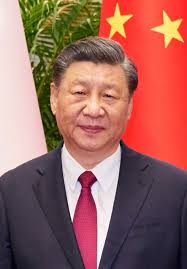
Xi outlines solution to Ukraine conflict
https://www.sott.net/article/491542-Xi-outlines-solution-to-Ukraine-conflict 19 May 24
Chinese President Xi Jinping has stressed that peace negotiations recognized by both Russia and Ukraine are the best way to end the ongoing conflict between the two nations.
Speaking during a meeting with Russian President Vladimir Putin on Thursday at the Chinese leader’s residential compound at Zhongnanhai, Xi argued that the entire global security architecture must be amended in order to end the fighting and avoid similar hostilities in the future, according to the Xinhua news outlet.
Putin is on his first state visit to China since he took office for the fifth time earlier this month.
Xi was cited as saying:
“China supports the timely convening of an international peace conference recognized by both Russia and Ukraine, with equal participation by all parties, and fair discussion of all options. Beijing is willing to aid in brokering the peace talks.”
“Global powers must address both the symptoms and the root cause [of the conflict], and we must consider both the present and the long term.
“The fundamental solution to the Ukraine crisis is to promote the construction of a balanced, effective, and sustainable new security architecture.”
Beijing has repeatedly rejected Western pressure to join in the condemnation of Russia over the Ukraine conflict. Since last year, China has been promoting a peace formula consisting of 12 points, including the cessation of hostilities and unilateral sanctions, mutual respect for national security concerns and the sovereignty of nations, and the rejection of a ‘Cold War’ mentality.
Kiev has rejected the formula as unrealizable because it does not demand a retreat of Russian forces from territories Kiev claims as its own. Ukraine has long insisted that a peace settlement can only be achieved on its terms, which include a return of all former Ukrainian territories, the withdrawal of Russian troops, and an international tribunal for Russian leaders.
Kiev’s Western backers plan to hold a summit on the Ukraine conflict in Switzerland next month, to which Russia has not been invited. Beijing has yet to officially confirm whether it will send a delegation.
Russia has welcomed China’s proposed peace formula from the start, having repeatedly stressed that it remains open to a political solution to the conflict. In an interview with Xinhua ahead of his visit to China, Putin said Beijing’s initiative showed “the genuine desire… to help stabilize the situation” in the region. He added that he would endorse the formula as it calls for a dialogue based on mutual consideration of the interests of all sides involved in the conflict, including Russia.
LABOUR MUST RULE OUT NEW NUCLEAR REACTOR FOR SCOTLAND

Nuclear power has no place in a greener Scotland.
A future UK Labour government must drop plans by the Secretary of State for Scotland, Alister Jack, to open a new nuclear reactor in Scotland, say the Scottish Greens.
Speaking to the House of Lords Constitution Committee this week, Mr Jack said that the UK government is planning to work with anti-independence parties to deliver a new nuclear reactor in Scotland.
Mr Jack told the committee “On the small nuclear reactors, I have asked the energy minister to plan for one in Scotland, because I believe in 2026 we’ll see a Unionist regime again in Holyrood, and they will move forward on that matter.”
In a letter to Scottish Labour leader, Anas Sarwar, the Scottish Greens energy spokesperson, Mark Ruskell, condemned the “environmental vandalism and constitutional overreach” of the Tories, and called on Mr Sarwar to ensure any future UK Labour government would drop these plans.
He has also urged Mr Sarwar to make clear if his party would support a replacement for the Torness nuclear station which is set to be decommissioned in 2028.
Mr Ruskell said: “Scotland does not need or want nuclear power. It is unsafe, expensive and leaves a toxic legacy for future generations. It is also a big distraction. Scotland has a huge abundance of renewable resources that we must be investing in and supporting.
“I have written to Mr Sarwar in the hope that he will provide clarity and assurance that a future UK Labour government would drop plans to expand nuclear power in Scotland against the wishes of our parliament.
“This is a time for progressive parties to stand together for our climate, and I hope that Mr Sarwar will oppose any plans for a new reactor or for a return to nuclear power once Torness has been decommissioned.”
Text of the letter Mark Ruskell sent Anas Sarwar………………………………………………. more https://greens.scot/news/labour-must-rule-out-new-nuclear-reactor-for-scotland
Nuclear waste to be buried 650ft under the English countryside.

Swathes of nuclear waste are set to be buried in the English countryside
after ministers agreed to dig a 650ft pit starting this decade. The
facility, which has yet to be allocated a site, will hold some of the 5m
tonnes of waste that was generated by nuclear power stations over the past
seven decades.
This will ease pressure on the 17 nuclear waste disposal
plants currently in operation around the country, which consist of giant
sheds and cooling ponds. The largest facility is the Sellafield site in
Cumbria.
Plans for the 650ft pit will see it house so-called
intermediate-level waste, possibly in a mine on a pre-existing nuclear site
to minimise planning objections. The facility will be separate from the
much deeper geological disposal site that will hold the UK’s most
dangerous waste, such as plutonium, which is unlikely to be built until
after 2050.
The proposals come amid fears Britain’s stockpile of nuclear
waste will grow in the coming decades with nowhere to put it. Concerns are
particularly acute as the Government is currently planning to build at
least three new nuclear power stations. This will put the country at odds
with the 1976 review of nuclear waste policy by the Royal Commission on
Environmental Pollution, which warned the UK was accumulating nuclear waste
so fast that it should stop building reactors until it had a solution.
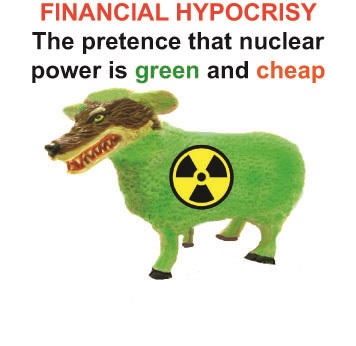
Ministers want to brand nuclear energy as a “green” and
“sustainable” fuel. However, experts on the Government’s own advisory
body, the Committee on Radioactive Waste Management, have said such terms
are misleading if there is no safe place to store radioactive waste.
A government spokesman said: “In addition to long-term plans to dispose of
the most hazardous radioactive waste in a geological disposal facility
hundreds of metres underground, the Nuclear Decommissioning Authority will
explore a facility closer to the surface for less hazardous radioactive
waste. “While a geological disposal facility is not expected to be ready
until the 2050s, a shallower disposal facility – which is up to 200m
below ground – could be available within 10 years.”
Telegraph 16th May 2024
Promising the Impossible: Blinken’s Out of Tune Performance in Kyiv

On May 14, in his address to the Igor Sikorsky Kyiv Polytechnic Institute, Blinken described what could only be reasoned as a vast mirage…….. This astonishingly irresponsible statement makes Washington’s security agenda clear and Kyiv’s fate bleak: Ukraine is to become a pro-US, anti-Russian bastion, with an open cheque book at the ready.
The gong of deceit and delusion must.. go to Blinken.
May 18, 2024, Dr Binoy Kampmark, https://theaimn.com/promising-the-impossible-blinkens-out-of-tune-performance-in-kyiv/
Things are looking dire for the Ukrainian war effort. Promises of victory are becoming even hollower than they were last summer, when US President Joe Biden could state with breathtaking obliviousness that Russia had “already lost the war.” The worst offender in this regard remains the United States, which has been the most vocal proponent of fanciful victory over Russia, a message which reads increasingly as one of fighting to the last Ukrainian.
Such a victory is nigh fantasy, almost impossible to envisage. For one thing, domestic considerations about continued support for Kyiv have played a stalling part. In the US Congress, a large military aid package was stalled for six months. Among some Republicans, in particular, Ukraine was not a freedom loving despoiled figure needing props and crutches. “From our perspective,” opines Kentucky Republican Senator Rand Paul, “Ukraine should not and cannot be our problem to solve. It is not our place to defend them in a struggle with their longtime adversary, Russia.” The assessment, in this regard, was a matter of some clarity for Paul. “There is no national security interest for the United States.”
Despite this, the Washington foreign policy and military elite continue to make siren calls of seduction in Kyiv’s direction. On April 23, the Senate finally approved a $US95.3 billion aid package for Ukraine, Israel and Taiwan, with the lion’s share – some US$61 billion – intended for Ukraine’s war effort.
On April 24, a press release from US Secretary State Antony Blinken announced a further US$1 billion package packed with “urgently needed capabilities including air defense missiles, munitions for HIMARS, artillery rounds, armored vehicles, precision aerial munitions, anti-armor weapons, and small arms, equipment, and spare parts to help Ukraine defend its territory and protect its people.”
On May 14, in his address to the Igor Sikorsky Kyiv Polytechnic Institute, Blinken described what could only be reasoned as a vast mirage. “Today, I’m here in Kyiv to speak about Ukraine’s strategic success. And to set out how, with our support, the Ukrainian people can and will achieve their vision for the near future: a free, prosperous, secure democracy – fully integrated into the Euro-Atlantic community – and fully in control of its own destiny.” This astonishingly irresponsible statement makes Washington’s security agenda clear and Kyiv’s fate bleak: Ukraine is to become a pro-US, anti-Russian bastion, with an open cheque book at the ready.
Russia’s President Vladimir Putin has made the prevention of that vision an article of faith. While Russian forces, in men and material, have suffered horrendous losses, the attritive nature of the conflict is starting to tell. While Blinken was gulling his audience, the military realities show significant Russian advances, including a threatening push towards Kharkiv, reversing Ukrainian gains made in 2022.
There are also wounding advances being made in other areas of the conflict. US and NATO artillery and drones supplied to Ukraine’s military forces have been countered by Russian electronic warfare methods. GPS receivers, for instance, have been sufficiently deceived to misdirect missiles shot from HIMARS launchers. In a number of cases, the Russian forces have also identified and destroyed the launchers.
Russian airpower has been brought to bear on critical infrastructure. Radar defying glide bombs have been used with considerable effect. On the production and deployment front, Colonel Ivan Pavlenko, chief of EW and cyber warfare at Ukraine’s general staff, lamented in February that Russia’s use of drones was also “becoming a huge threat”. Depleted stocks of weaponry are being replenished, and more soldiers are being called to the front.
Despite concerns, one need not scour far to find pundits who insist that such advances and gains can be neutralised. Michael Kofman of the Carnegie Endowment for International Peace admits to current Russian “material advantage” and holding “the strategic initiative,” though goes on to speculate that this “may not prove decisive.”
The gong of deceit and delusion must, however, go to Blinken. Americans, he claimed, understood “that our support for Ukraine strengthens the security of the United States and our allies.” Were Putin to win – and here, that old nag of appeasement makes an undesirable appearance – “he won’t stop with Ukraine; he’ll keep going. For when in history has an autocrat been satisfied with carving off just part, or even all, of a single country?”
Towards that end, “we do have a plan,” he coyly insisted. This entailed ensuring Ukraine had “the military that it needs to succeed on the battlefield.” Biden was encouraged by Ukrainian mobilisation efforts, skipping around the logistical delays that had marred it. Washington’s “joint task” was to “secure Ukraine’s sustained and permanent strategic advantage”, enabling it to win the current battles and “defend against future attacks. As President Biden said, we want Ukraine to win – and we’re committed to helping you do it.”
Even by the standards of US Secretaries of States, Blinken’s conduct in Kyiv proved brazen and shameless. A perfect illustration of this came with his musical effort alongside local band, 19.99, involving a rendition of Neil Young’s “Rockin’ in the Free World.”
Local indignation was quick to follow. “Six months of waiting for the decision of the American Congress” had, fumed Bohdan Yaremenko, legislator and former diplomat with Ukrainian President Volodymyr Zelenskyy’s party, “taken the lives of very, very many defenders of the free world.” What the US was performing “for the free world is not rock ’n’ roll, but some other music similar to Russian chanson.”
As for the performance itself, the crowd at Barman Dictat witnessed yet another misreading – naturally by a US politician – of an anthem intended to excoriate American failings, from homelessness to “a kinder, gentler machine gun hand.” Appropriately, the guitar, much like the performer, was out of tune.
UK government about to overrule Scotland and impose nuclear stations?

Don’t get above your nuclear power station, Scotland
17th May, By Wee Ginger Dug, https://www.thenational.scot/politics/24325966.dont-get-nuclear-power-station-scotland/—
Scotland, know your place. Our exalted Viceroy General Alister Jack – He Who Must Be Obeyed – has said that the UK Government is considering plans to build a nuclear reactor in Scotland, despite fierce opposition from the Scottish Government and even though planning is a devolved matter.
Jack told a committee in the Lords that he expected a “Unionist regime” to gain power in Holyrood after 2026 and said that he has asked ministers at the Department for Energy and Net Zero to plan for a nuclear reactor to be built in Scotland as part of a UK-wide programme.
Although planning is devolved to Holyrood, energy policy is reserved to Westminster. This means that even though Westminster is committed to an expansion of nuclear energy generation, the Scottish Government has a de facto means of blocking the development of nuclear energy in Scotland as it can refuse planning permission for new nuclear power plants.
Jack’s remarks suggest that the UK Government is preparing to overrule Holyrood and impose new nuclear power plants on Scotland against the will of Scotland’s elected representatives.
The Scottish Government is strongly opposed to new nuclear power plants in Scotland, favouring instead a greater development of Scotland’s vast renewable energy potential which is already capable of supplying more energy than Scotland requires for domestic consumption.
Any new nuclear power stations which the UK Government builds in Scotland will not be built because Scotland needs them, they will be built in order to meet the energy needs of the rest of the UK, but these needs could also be met by greater investment in and development of Scotland’s renewable energy potential.
Moreover, given the years long timescale that is required from the commissioning of a new nuclear power plant, any new nuclear reactor that the UK commissions in Scotland would not be on stream until 2033 at the very earliest. New renewable projects can be brought in stream and contributing power to the grid much quicker.
Hinkley Point C, the UK’s first nuclear plant in more than two decades, was estimated to cost between £25bn and £26bn in 2015. The first reactor will not be in use until at least 2029, two years later than the most recent 2027 goal, and could take until 2031 if electromechanical work runs into problems.
The projected cost is now between £31bn and £35bn in 2015 figures and up to £46bn in today’s money.
This dwarfs the cost of a new wind farm. The British Government has allocated just £800m for investment in offshore wind farms. The massive onshore Whitelee wind farm south of Glasgow cost £1.5bn to construct. It has a total capacity of 539 megawatts and can power over 350,000 homes annually.
Jack’s behaviour is ‘menacing’
Jack has been condemned by John Swinney for keeping his plans for new nuclear plants in Scotland a secret from the Scottish Government.
The First Minister was asked about Jack’s comments by SNP MSP Rona Mackay at FMQs. She said: “This week, the Secretary of State for Scotland confirmed that planning is underway to develop new nuclear reactors in Scotland despite opposition …”
She was interrupted by the boors on the Tory benches cheering at the prospect of the democratically elected government of Scotland being overruled.
After the Presiding Officer hushed the adolescents, she went on: “Despite opposition from the democratically elected Scottish Government. Scotland doesn’t need expensive nuclear power. We already have abundant natural energy resources. Can the First Minister advise if the UK Government has approached Scottish ministers about these apparent plans?”
The First Minister replied: said: “I’m often lectured in this parliament about the importance of good intergovernmental relations. The Secretary of State for Scotland has made no mention of this proposal to the Scottish Government.
“This is utterly and completely incompatible with good intergovernmental working and is illustrative of the damaging behaviour, the menacing behaviour, of the Secretary of State for Scotland. The Scottish Government will not support new nuclear power stations in Scotland.”
He added that “supporting the announcements of formidable investments in the renewable energy potential of Scotland” was “the policy agenda of this government, and we have nothing to do with nuclear power”.
But Jack says – don’t get above your nuclear power station, Scotland.
We’re all right Jack: No need for nuclear in Scotland

Contrary to the call of an out-of-touch, and increasingly out-of-time, Conservative Secretary of State that nuclear must be included in Scotland’s energy mix, the Scottish Nuclear Free Local Authorities remain convinced that renewables represent the only way forward to achieve a sustainable, Net Zero future for the nation.
Scottish Secretary Alister Jack, appearing before the House of Lords Constitution Committee on Wednesday, confirmed that he has approached fellow Scot and Nuclear Minister Andrew Bowie MP to plan for a new so-called Small Modular Reactor north of the border.
The sole operational nuclear plant in Scotland is at Torness, but this will cease generating before the end of the decade. Other reactors at Chapelcross, Dounreay, and Hunterston are in the process of being decommissioned.
Such a plan would put the UK Government at odds with that of Scotland, as the SNP-led Administration has affirmed to the NFLAs that it remains implacably opposed to the construction of any new nuclear fission plants in Scotland. Whilst energy policy is determined by Whitehall, the SNP Government can veto any development as planning authority has been devolved. The Minister is then clearly banking on regime change in 2026 at Edinburgh as both the Conservative and Labour Parties have both expressed support for new nuclear in Scotland.
To the NFLAs, an investment in any nuclear would not only be folly, but a lamentable diversion of effort from achieving the credible goal of supplying 100% of Scotland’s electricity from renewables.
Nuclear power plants are enormously expensive to build and notorious for their cost and delivery overruns. The sole UK gigawatt plant under construction at Hinkley Point C in Somerset is now expected to cost up to £47 billion at current prices, approaching triple its original estimate, whilst wildly optimistic claims by operator EDF Energy that the plant would be generating power ‘to cook British turkeys by Christmas 2017’ have been dampened by a series of damaging delays, with the first reactor expected now to become operational in 2031.
Secretary of State Alister Jack appears to be focused on bringing one of the so-called Small Modular Reactors (or SMRs) to Scotland. There has been previous talk of an SMR being co-located with the Grangemouth chemical plant, a prospect nipped in the bud by an NFLA intercession to the Scottish Minister. However, none of the competing SMR designs has yet received the required approvals from the nuclear regulator to even be deployed in the UK; none have been built; no sites have yet been permissioned for their deployment; the facilities to fabricate the parts have yet to be constructed; the necessary finance has yet to be put in place; and the procedures for their onsite assembly have yet to be perfected. SMRs are estimated to cost £3 billion each, but cost overruns are notorious in the nuclear industry, and the earliest any approved and financed SMR would come onstream would be in the early 2030’s.
Nuclear plants are also incredibly expensive to decommission, and the resultant radioactive waste must be managed at vast expense for millennia. There has been research published that suggests that SMRs will produce more radioactive waste per unit of electricity produced that gigawatt reactors.
Instead of wasting cash and time on nuclear, the Scottish NFLAs believe the money and effort would first be far better spent insulating all domestic properties and public buildings to the highest standard to improve energy efficiency, reduce energy consumption, and minimise or eliminate fuel poverty, as well as investing in more renewable energy generating capacity and battery storage capacity.
Not only does Scotland possess more than sufficient natural resources, in the forms of wind, wave, hydro and geothermal energy to meet its own needs, but it can become a powerhouse where the surplus renewable energy can be exported to its neighbour England and to states in Europe, via interconnectors, generating income for the nation.
To realise this, the Scottish NFLAs would like to see the Scottish Government recommit to establishing a state-owned renewable energy company to invest in this potential and to generate an income for the nation, mirroring the commendable action of the Welsh Government. Maximum pressure needs to be applied to the UK Government to boost the capacity of the National Grid to take Scottish renewable energy from wind turbines to England. At present, constraints mean that the network is often incapable of accepting and transmitting the vast amounts of electricity generated by Scottish wind turbines, leading to them being shut off and generators being awarded huge compensation at taxpayers’ expense for lost revenue.
The NFLAs have also called on the UK Government to back the development of stored pumped hydro projects in Scotland. A report from BiGGAR Economics, commissioned by Scottish Renewables, identified six ‘shovel-ready’ pumped-hydro projects in Scotland which could deliver £5.8 billion Gross Value Added (GVA) and almost 15,000 jobs by 2035.
Scotland has some world leading renewable energy companies, such as the O2 Orbital wave power project based in the Orkney Islands and the Gravitricity gravity storage project born in Edinburgh.
The Scottish NFLAs believe that if the Secretary of State for Scotland genuinely wants to see a sustainable, Net Zero future for Scotland that he should call for the British Government to get behind the Scottish Government in backing this strategy, instead of maintaining his mad delusion for nuclear.
Scotland’s First Minister Swinney condemns Jack’s menacing idea for nuclear plant in Scotland
The First Minister was clear that the Scottish Government will not back the construction of such a facility north of the border.
John Swinney has insisted the Scottish Government will have “nothing to do” with a suggested new nuclear power station – as he hit out at the “menacing” behaviour of the Scottish Secretary.
The First Minister reacted angrily after Alister Jack revealed he has instructed UK ministers to start planning work for a nuclear plant in Scotland.
It comes despite the longstanding opposition from the SNP to the construction of such facilities north of the border.
Jack told a Lords committee on Wednesday he believes there will be a “unionist regime again in Holyrood” in 2026, and with the SNP out of power it will be possible to “move forward” with the construction plan.
Speaking about the prospect of a small nuclear reactor, Jack said he has asked the UK energy minister to “plan for one in Scotland”.
But Swinney told MSPs on Thursday that Jack has “made no mention of this proposal to the Scottish Government” – which has powers over planning north of the border.
The First Minister added: “This is utterly and completely incompatible with good intergovernmental working and is illustrative of the damaging behaviour, the menacing behaviour, of the Secretary of State for Scotland.”
He was asked about Jack’s comments by SNP backbencher Rona Mackay, who noted the UK minister’s suggestion came despite “opposition from the democratically-elected Scottish Government” to new nuclear power.
Speaking at First Minister’s Questions, Swinney was clear: “The Scottish Government will not support new nuclear power stations in Scotland.”
He said his Government instead supports investment in “the renewable energy potential in Scotland”, adding “massive investments” in this sector could “bring jobs and opportunities to the Highlands and islands and deliver green, clean energy for the people of Scotland”.
Swinney said: “That’s the policy agenda of this Government and we will have nothing to do with nuclear power.”
Welsh Nuclear Free Local Authorities welcome Traws abandonment from New Nuclear plans
https://www.nuclearpolicy.info/news/welsh-nflas-welcome-traws-abandonment-from-new-nuclear-plans/
The Welsh Nuclear Free Local Authorities Forum hope that the decision made by Great British Nuclear to temporarily postpone plans for new nuclear at Trawsfynydd at this time might become a permanent one.
In March, responding to the UK Government consultation on the siting of new nuclear plants after 2025, the Welsh NFLAs said that the Trawsfynydd site was wholly inappropriate for redevelopment as it lies within the beautiful Eryri National Park. Ministers have previously agreed that any Geological Disposal Facility will not be in the Lake District National Park, and the NFLAs have called for this principal to be applied as a blanket ban on new nuclear plants in National Parks, at World Heritage Sites and in Areas of Outstanding Natural Beauty.
Great British Nuclear has just announced that the site ‘may not be able to deploy quite as quickly as some other sites’, with reports that site was too small and lacked sufficient cooling water to support the deployment of so-called Small Modular Reactors for the foreseeable future.
Trawsfynydd had an operating Magnox nuclear reactor on site until 1991. It was unique in being inland and cooled by the water of an artificial lake, but it is also a brutalist eyesore standing out stark and ugly against the idyllic backdrop of mountains and forest. The plant is now being dismantled by the Nuclear Decommissioning Authority, a British taxpayer funded body responsible for decommissioning redundant nuclear plant and for managing Britain’s radioactive waste inventory.
To the NFLAs, locating a new nuclear power plant in any National Park would be entirely incompatible with the Sandford Principal. From 1971 until 1974, Lord Sandford chaired a committee which examined the future management of National Parks in England and Wales:
‘National Park Authorities can do much to reconcile public enjoyment with the preservation of natural beauty by good planning and management and the main emphasis must continue to be on this approach wherever possible. But even so, there will be situations where the two purposes are irreconcilable… Where this happens, priority must be given to the conservation of natural beauty’.
We want to see the old Trawsfynydd plant decommissioned, and the site cleared and landscaped, as soon as practicable. n our view, any proposed new medical isotope facility would be better located at Bangor University, which has an established academic nuclear faculty and has much better transport links. The activities of the Welsh taxpayer funded Cwmni Egino, which was established to pursue new nuclear at the site, are entirely at variance with the stated ambition of the Welsh Government to source the nation’s domestically consumed electricity from truly ‘green’ sources. The body should be abolished, and its resources used to support the development of Welsh renewable energy projects.
Top Labour donor joins campaign to stop Hinkley nuclear plant

Government wasting billions of taxpayers’ money on power station, warns Dale Vince
Jonathan Leake 16 May 2024
Millionaire Labour donor Dale Vince has joined a campaign to block
Britain’s biggest nuclear power station project. The entrepreneur, who
founded green energy company Ecotricity, has emerged as a patron to Stop
Hinkley after accusing the Government of wasting billions of pounds.
He said the decision to use taxpayer money to fund Hinkley Point C, which is
under construction in Somerset, was flawed because nuclear technology is
“hugely expensive and slow to develop”. His comments will be sure to
raise questions for Ed Miliband, Labour’s shadow energy secretary, who
has vowed to invest in nuclear energy.
The Opposition has accepted around
£1.5m in donations over the past decade from Mr Vince, who severed ties
with Just Stop Oil last year as part of his commitment to Labour. A
spokesman for Stop Hinkley said: “At a time when nuclear power is rapidly
losing ground to the astonishing growth in renewables, it’s great to have
someone onboard who founded a company which allows ordinary members of the
public to actually vote on the nuclear question with their electricity
bill.”
Telegraph 16th May 2024
https://www.telegraph.co.uk/business/2024/05/16/top-labour-donor-joins-campaign-stop-hinkley/
Pension funds need ‘compelling’ returns from UK nuclear projects to invest
Ft. com 17 May 24
Potential investors tell Jeremy Hunt regulatory clarity also essential before backing new power plants.
Local authority pension funds managing hundreds of billions of pounds have told UK chancellor Jeremy Hunt that returns from new nuclear power plants need to be “compelling” to attract their cash. The chancellor is looking to pension funds to help finance the government’s ambition for nuclear power to meet a quarter of the UK’s electricity needs by 2050. Several town hall pension funds, managing more than £100bn in assets between them, were called to a meeting with Hunt this week, where the role of large retirement plans as potential investors in the Sizewell C nuclear project in Suffolk was discussed.
The head of the Sizewell C project spoke at the meeting, according to sources close to those who attended. London CIV, which manages £17bn of pension assets for local authorities in the capital and attended the meeting, outlined the criteria needed for it to invest. “Any infrastructure solution, including nuclear power, will need to provide regulatory clarity, a solid business model and a compelling inflation-linked return stream,” said London CIV. “This is ultimately about what our partner funds need. As they are our shareholders, we’ll collaborate with them to identify whether this area is worth exploring.”
Laura Chappell, chief executive of the Brunel Pension Partnership, which manages about £35bn in assets for eight local authority pension funds, attended the meeting and with other funds offered views to Hunt on the “problems, pitfalls and potential of investing in nuclear in the UK”. “Any infrastructure solution, including nuclear power, will need to provide regulatory clarity,” said Chappell in a statement to the FT. Chappell echoed that potential infrastructure projects would need to have a “solid business model, consistent policy, and a compelling investment proposition”. The pitch to pension funds comes against a backdrop of high-profile challenges for the nuclear sector in the UK.
France’s EDF said in January that the Hinkley Point C 3.2GW nuclear plant it is building in Somerset was on course to cost up to £46bn in today’s prices and would be delayed by two more years to 2029 — compared with an initial budget of £18bn and completion by 2025.
………………………………………………. Hunt’s meeting with pension leaders came more than a year after the government flagged its intention to consult on reforms that would make nuclear a more attractive investment for UK pension funds.
However, the government is yet to consult on these reforms, which would pave the way for nuclear power to be classified as “environmentally sustainable” under the UK’s upcoming “green taxonomy”
The Treasury declined to comment on the pension meeting, including who attended, but said: “We want to incentivise private investment in nuclear as a crucial source of reliable low-carbon energy and a driver of economic growth.
“We have already begun to engage with industry on the topic and will consult on a UK green taxonomy in due course.” The meeting was held in the same week ministers showed signs of losing patience with pension funds over low levels of investment in domestic listed and unlisted markets. In a speech this week, Bim Afolami, City minister, said “We have a challenge with pension funds.” He said if there was “no improvement” in levels of investment in the UK by pension funds then the government would “consider what further action can be taken”. https://www.ft.com/content/70cd278f-8ef5-4904-9535-305fe1095768
Nuclear Free Local Authorities welcome commitment to recruit new Theddlethorpe GDF Community Partnership Chair at less cost who is local
After a prolonged period of paid tenure, the Interim Chair of the Theddlethorpe GDF Community Partnership is finally making way for a successor – and the Nuclear Free Local Authorities have welcomed the commitments made to appoint a local person to the post at a significantly lower cost to the taxpayer.
Jon Collins has acted as Chair since being appointed by Nuclear Waste Services at the inception of the Theddlethorpe GDF Working Party. Mr Collins is the former leader of Nottingham City Council without strong roots within the Theddlethorpe Search Area. The NFLAs have been especially critical of the renumeration package attached to the post, which initially comprised a payment of £1,000 a day for two days per week, since reduced to £750. This day rate is many times higher than the average salary received in the local community.
Now the Community Partnership is recruiting a candidate for the ‘challenging but rewarding role’ to manage the meetings and business of the partnership. Although the NFLAs reject the hyperbole that the GDF represents the ‘biggest environmental protection project of our lifetime’, creditably the advertisement states that members of the partnership ‘have expressed a preference to recruit a Chair who lives or works in the Search Area’ and that renumeration has now been reduced to a more modest annual honorarium of £10,000.
By contrast, in West Cumbria, both Community Partnership Chairs have always been local Councillors and worked solely for expenses rather than salary.
With the Theddlethorpe Community Partnership now moving to public meetings, the appointment of a new independent and impartial Chair at this time will be a welcome move, but it remains to be seen whether a local person is in fact appointed to the role or if the appointee will ‘act independently and not represent either themselves or any organisation of which they are a member’.
The advert also states that the Independent Chair must ensure ‘the work of the Partnership is fair, unbiased and reflects the needs of the community’. This must pose the appointee with a dilemma for clearly the local community does not share the belief of Nuclear Waste Services that the GDF represents the ‘biggest environmental protection project of our lifetime’.
By contrast, in West Cumbria, both Community Partnership Chairs have always been local Councillors and worked solely for expenses rather than salary.
With the Theddlethorpe Community Partnership now moving to public meetings, the appointment of a new independent and impartial Chair at this time will be a welcome move, but it remains to be seen whether a local person is in fact appointed to the role or if the appointee will ‘act independently and not represent either themselves or any organisation of which they are a member’.
The advert also states that the Independent Chair must ensure ‘the work of the Partnership is fair, unbiased and reflects the needs of the community’. This must pose the appointee with a dilemma for clearly the local community does not share the belief of Nuclear Waste Services that the GDF represents the ‘biggest environmental protection project of our lifetime’.
The last thing that Scotland needs is new nuclear power, small or otherwise
Pete Roche, Edinburgh,
The last thing that Scotland needs is new nuclear power, small or otherwise. (Scotsman Editorial 16th May 2024). It is perfectly feasible to supply 100 per cent of Scotland’s energy (not just electricity) from renewable sources. In fact, a recent study [1] by renowned energy modelling academics at the LUT University in Finland, showed that not only is a 100 per cent renewable energy mix feasible for the whole UK but it would save well over £100 billion in achieving net zero by 2050, compared to the UK Government’s current strategy.
It’s true that renewable energy output is variable, and there are times when wind and solar are producing almost nothing. But there are also times when they produce too much power, and we have to pay wind to turn off. The UK could waste more than £3.5bn per year by 2030 this way.[2] The answer is flexibility, not “always on” nuclear power stations which will just end up wasting more power when renewables are plentiful.
Firstly, we need to: reduce overall demand (helping tackle fuel poverty in the process); introduce more flexibility with new smart technologies (for instance making use of demand-response aggregators like Edinburgh-based company Flexitricity), and vehicle to grid technology; build more energy storage – not just batteries, but pumped hydro storage (with several schemes in Scotland awaiting approval), gravity storage (developed in Edinburgh), compressed air storage; and thermal storage (developed in East Lothian).
These are just some of the ways we can make better use of the renewable resources we already have. Nuclear power is too slow and too inflexible and too expensive to play a role in cutting carbon emissions.
1 This Month




PLEASE OPPOSE HR 8255 AND S.3639 – bills would accelerate satellite deployment, with no environmental review or safeguards – https://ncstd5li.quorum.us/campaign/169331/
To see nuclear-related stories in greater depth and intensity – go to https://nuclearinformation.wordpress.com
-
Archives
- September 2026 (339)
- August 2026 (330)
- July 2026 (355)
- June 2026 (287)
- May 2026 (306)
- April 2026 (356)
- March 2026 (251)
- February 2026 (267)
- January 2026 (308)
- December 2025 (358)
- November 2025 (359)
- October 2025 (375)
-
Categories
- 1
- 1 NUCLEAR ISSUES
- business and costs
- climate change
- culture and arts
- ENERGY
- environment
- health
- history
- indigenous issues
- Legal
- marketing of nuclear
- media
- opposition to nuclear
- PERSONAL STORIES
- politics
- politics international
- Religion and ethics
- safety
- secrets,lies and civil liberties
- spinbuster
- technology
- Uranium
- wastes
- weapons and war
- Women
- 2 WORLD
- ACTION
- AFRICA
- Atrocities
- AUSTRALIA
- Christina's notes
- Christina's themes
- culture and arts
- Events
- Fuk 2022
- Fuk 2023
- Fukushima 2017
- Fukushima 2018
- fukushima 2019
- Fukushima 2020
- Fukushima 2021
- general
- global warming
- Humour (God we need it)
- Nuclear
- RARE EARTHS
- Reference
- resources – print
- Resources -audiovicual
- Weekly Newsletter
- World
- World Nuclear
- YouTube
-
RSS
Entries RSS
Comments RSS

