Two legal actions against the hasty commissioning of Flamanville nuclear reactor

Flamanville EPR, still at the heart of scandals, is heading towards a hasty start,
Sortir du Nucleaire, CRIIRAD, CRILAN, Global Chance, Robin des Bois, and the “Exit from Nuclear Power” Network,23 July 24
On May 7, 2024, we denounced the decision to commission the Flamanville EPR. Today, we are raising the alarm through two legal actions about this hasty commissioning while questions remain unanswered. We are filing an appeal with the Council of State against this commissioning decision, and a complaint against X in order to shed full light on the irregularities noted by the Nuclear Safety Authority on parts of the EPR.
We are filing an appeal against the hasty commissioning of the EPR to the detriment of safety requirements
On 7 May 2024, the Nuclear Safety Authority (ASN) gave its approval for the Flamanville EPR to be commissioned, i.e. for it to receive its first fuel load. A decision taken above all to avoid the legal consequences of yet another postponement. Indeed, the commissioning of the Flamanville EPR has already been postponed by decree twice in the past , in 2017 and 2020 , because the facility was not ready to start up.
One might have thought that these two postponements would provide EDF with a comfortable margin to ensure that its installation could start up safely in 2024. However,
despite the additional time granted to the operator, it has not managed to commission the Flamanville EPR within the allotted time:
The nuclear reactor should have been commissioned before April 10, 2024, according to the creation authorization decree. It finally took place almost a month later, on May 7, 2024. Problem: the commissioning deadlines exist to protect the population and the environment from a project that has become too old. It was
the ASN itself that indicated in an opinion that these deadlines aim to
“avoid the commissioning of an installation whose environment would no longer be compatible with its operation and/or not to allow the creation authorization to continue for an installation whose operator would not be able to complete construction” .
The deadline for examining the commissioning application, which can last one or two years if the file is complex, was also not respected. …………………………………………
We are filing a complaint to shed light on the irregularities noted on certain parts of the EPR
This decision to put it into service is even more surprising in light of the revelations of the ASN, which, during its 2024 press wishes, revealed new problems of counterfeiting, falsification and suspicion of fraud (CFS) . [ 1 ]
These cases, according to the ASN, are distinguished by the significant scope of materials potentially affected, as well as by the potentially significant consequences for the safety of the reactors . The Nuclear Safety Authority has therefore reported these facts to the courts and has since refused to give us further information under cover of the confidentiality of the investigation [ 2 ] .
It was an
article from Reporterre that allowed us to obtain more information on this affair and learned that these cases concerned, among others, two companies producing materials intended for the EPR reactor in Flamanville. The article states that
“it was during the examination of the EPR commissioning authorization [that the ASN] allegedly noted irregularities in certificates of conformity, particularly for valves, pipes, etc.”
At this point, with the elements we have, we can ask ourselves:
- Have components that do not comply with essential safety requirements been placed on the market?
- Were false documents drawn up and used to cover up these defects?
- Did EDF properly monitor its suppliers to prevent the installation of non-compliant parts on its EPR?
We demand answers to these questions………………………………………………………………….more https://www.sortirdunucleaire.org/L-EPR-de-Flamanville-toujours-au-coeur-de
EDF looks towards future projects after flagging tough second half
French energy giant EDF aims to meet its schedule for future nuclear
reactor projects, its CEO said on Friday, with final tests ahead of the
start-up of its newest French reactor imminent after years of delays. The
group earlier reported a jump in first-half profit on higher electricity
production, but said regional market prices had fallen and warned core
earnings in the second half would decline year-on-year.
In Britain, EDF is continuing talks with the newly elected Labour government over its Hinkley
Point C and Sizewell C nuclear projects, Remont told reporters, adding it
is “a bit early” to give a date for a final investment decision on
Sizewell.
Reuters 26th July 2024
Sizewell A Nuclear Site: Direction to Nuclear Decommissioning Authority
The Secretary of State for Energy Security and Net Zero (Ed Miliband), 26 July 24 https://hansard.parliament.uk/commons/2024-07-26/debates/24072618000010/SizewellANuclearSiteDirectionToNuclearDecommissioningAuthority
I am today laying a new designation direction to the Nuclear Decommissioning Authority in respect of the Sizewell A nuclear site, which amends the existing direction. The direction has been given in accordance with sections 3 and 5 of the Energy Act 2004, with the consent of Nuclear Restoration Services Ltd, which controls the site.
This direction will end the Nuclear Decommissioning Authority’s responsibilities under the Energy Act 2004 for specific land and buildings on the Sizewell A nuclear site, so that the land can be sold to EDF and become part of the Sizewell B nuclear site. This will facilitate the development of new nuclear at the Sizewell C nuclear site.
Spain: Nuclear Industry Reels After Tax Increase

Energy Intelligence Group, Fri, Jul 26, 2024, Author, Grace Symes, London, Editor, Phil Chaffee
Spain’s nuclear operators are warning that last month’s move by Madrid to significantly raise a tax on these utilities may undermine the commercial viability of Spain’s seven operating reactors, even as they approach a government-mandated nuclear phaseout by 2035.
\The 30% tax rise is meant partly to cover the costs of seven separate interim nuclear waste storage facilities for spent fuel and high-level waste, a strategy mandated after the government discarded plans for a controversial single centralized facility. Owners argue they had no say in the storage decision, and should not be required to pay the significant added costs it will entail…………… (Subscribers only) https://www.energyintel.com/00000190-bb7f-db32-ad93-bb7ff87a0000
Bangor University to collaborate with Rolls Royce and the University of Oxford to develop nuclear power for space

Bangor University is continuing its relationship with Rolls-Royce in the
field of space nuclear power technology. Rolls-Royce has secured funding
from the UK Space Agency under the National Space Innovation Programme
(NSIP), which adds more support for the development of its space nuclear
power technology. The new £4.8m award from NSIP Major Projects will help
to significantly advance the development and demonstration of key
technologies in the space nuclear Micro-Reactor. The Rolls-Royce National
Space Innovation Programme will have a total project cost of £9.1m and
aims to progress the Micro-Reactor’s overall technology readiness level,
which will bring the reactor closer to a full system space flight
demonstration.
Bangor University 24th July 2024
What Labour’s Great British Energy really means for Scotland and is nuclear on the cards?

We know it will be based in Scotland, we know it’s going to invest
in green energy projects, and aim to leverage private investment into the
same. But Thursday’s announcement has thrown up more questions about the
specifics which the Government are yet to answer – especially on what the
project means for Scotland.
There remains no clarity on when people might
expect to see energy bill pressures easing up on their household finances.
The Government has only gone as far as to say that bill reductions can be
expected within the next five years, as a result of their actions. Crown
Estate Scotland is a devolved body and the revenue raised through rents
north of the Border is sent back to the Scottish Government. Its reserved
counterpart can invest directly in Scotland, however, and the two bodies
already work closely together on some projects.
Whether the Crown Estate Scotland will get the same new borrowing powers as its rest-of-UK
counterpart remains to be seen. GB Energy will seek to work alongside GB
Nuclear, a vehicle which came about under the previous government.

This could raise red flags for the Scottish Government, which remains opposed to
nuclear power. It is understood the UK Government views nuclear policy as a
matter for the Scottish Government. And while the Scottish Government said
on Thursday that it believed the “UK Government’s intended investment
in nuclear should instead be used to bolster further renewables” a
spokesperson added there was otherwise a “great deal of agreement between
the two Governments on many of the priorities that have been identified”.
The National 25th July 2024
https://www.thenational.scot/news/24477272.labours-gb-energy-really-means-scotland-nuclear/
Seek shelter ‘best option’ in nuclear incident
Caroline Robinson, 25 July 24, BBC News, Ben Chapple, BBC News, Guernsey
Channel Island authorities will advise people to seek shelter in the unlikely event of a nuclear incident affecting the islands.
The UK Health Security Agency (UKHSA) looked at nuclear risks to the islands as part of “routine risk and business continuity planning”.
It said the risk of a nuclear incident occurring was extremely low and its review considered the worst-case scenarios.
The UKHSA recommended shelter-in-place and stockpiling iodine be considered, but the pan-island Radiation Advisory Group decided shelter was the most appropriate choice for the islands.
‘Shelter-in-place’
Nearby nuclear sites in France, radioactive waste dumped in the Hurd Deep trench off Alderney in the 1950s and 1960s and the transport of nuclear materials by ship in the seas around the Channel Islands were the risks considered.
The sites in France looked at were the Orano La Hague nuclear fuel reprocessing site, the Flamanville nuclear power station and Cherbourg’s naval dockyard, where nuclear submarines are dismantled.
The UKHSA said if an incident happened at one of these sites wind direction and weather were important – wind could blow the radioactive material towards the islands and rain would cause more of it to land on the islands.
Based on five years of weather data it said with the prevailing wind being from the west and south west it was unlikely a plume would be blown towards the islands.
The UKSHA said if any material was due to arrive in the island the “best option” for people was to “shelter-in-place”.
This means going inside, closing doors and windows and turning off ventilation fans and air conditioning…………………………………………………………….. more https://www.bbc.com/news/articles/c3grzg9j3xgo
Nuclear Free Local Authorities back joint statement condemning AUKUS nuclear proliferation

The UK/Ireland Nuclear Free Local Authorities have joined environmental and peace groups around the world in endorsing a statement that will be delivered to a conference at the United Nations.
The 2024 Nuclear Non-Proliferation Treaty Preparatory Committee will meet today to begin work to make preparations for the next conference of signing to the Nuclear Non-Proliferation Treaty (or NPT).
The statement will be delivered to committee delegates by Jemila Rushton, Acting Director of the International Campaign to Abolish Nuclear Weapons Australia. The NFLAs are a member of ICAN.
Particular reference is made to the adverse impact of AUKUS, the military alliance forged between Australia, the United Kingdom, and the United States in opposition to China, on geopolitics in the Pacific.
Amongst its more controversial elements is the provision of nuclear-powered submarines by the other partners to Australia. We share the concern of other signatories that AUKUS violates in spirit both the Nuclear Non-Proliferation Treaty and the Rarotonga – South Pacific Nuclear Free Zone Treaty. The submarines will be powered by weapons-grade nuclear fuel, supplied by the other partners and will operate from Australian bases within a nuclear free zone.
Although present plans provide for these submarines to be conventionally armed, it is not inconceivable that over time they could be rearmed with nuclear weapons. The Leader of the Opposition in the Australian Parliament, Peter Dutton, is currently actively lobbying for Australia to establish a civil nuclear programme and such a programme is critical to support the development of nuclear weapons capacity.
The statement has also been endorsed by our colleagues Labrats, CND Cymru and Together against Sizewell C.
For more information please contact the NFLA Secretary Richard Outram by email to richard.outram@manchester.gov.uk
EU sets date of transfer of Russian money to Ukraine for arms purchases
https://www.rt.com/news/601527-borrell-ukraine-tranche-russia-assets/— 23 July 24
Kiev will receive €1.4 billion, the interest accrued on frozen funds, early next month, the bloc’s top diplomat has said
The EU has revealed when it will begin sending Russian money to Ukraine. The bloc’s top diplomat Josep Borrell has claimed that the first tranche of interest accruing on some €300 billion in frozen Russian assets, totaling some €1.4 billion, will be sent to Kiev in the first week of August to fund arms purchases.
The EU’s top diplomat specified that the funds will be used to meet the key needs of Kiev’s military, including air defense, artillery, “and also, and this is new, procurement for the Ukrainian defense industry.”
“So, we are not going only to provide military support to Ukraine but from Ukraine itself. Which is certainly the most logical and efficient thing we can do,” Borrell concluded.
The EU and G7 group of nations blocked some $280 billion (€260 billion) of sovereign funds belonging to the Central Bank of Russia days after the escalation of the Ukraine conflict in 2022. The bulk of the frozen funds are held in the EU, primarily in the Belgium-based depositary and clearing house Euroclear.
Earlier this year, EU authorities approved a scheme enabling the appropriation of interest accrued on the frozen funds to back Ukraine’s recovery and military defense. Under the agreement, 90% of the money is expected to go into an EU-run fund for Ukrainian military aid, with the other 10% is to be allocated for supporting Kiev in other ways.
Moscow has repeatedly said that any steps taken to transfer its assets without its consent would amount to “theft,” insisting that tapping the funds or engaging in similar moves would violate international law and lead to retaliation.
Earlier this year, Kremlin spokesman Dmitry Peskov warned that the expropriation of Russian sovereign assets could create a dangerous precedent and become a “solid nail in the coffin” of the Western economic system. He stressed that Moscow would inevitably retaliate against such a move by launching legal proceedings against entities that tap its assets.
Russia Says It May Deploy Nuclear Missiles in Response to New US Missile Deployment to Germany

by Dave DeCamp July 18, 2024, https://news.antiwar.com/2024/07/18/russia-says-it-may-deploy-nuclear-missiles-in-response-to-new-us-missile-deployment-to-germany/
The US is deploying missiles previously banned by the INF, a treaty between the US and Russia the Trump administration left in 2019
Russian Deputy Foreign Minister Sergey Ryabkov said Thursday that Moscow won’t rule out deploying nuclear missiles in response to the US planning to deploy missile systems to Germany in 2026 that were previously banned by the Intermediate-Range Nuclear Forces (INF) Treaty.
“I don’t rule anything out,” Ryabkov said when asked about the possibility of a nuclear deployment.
Ryabkov went on to reference Kaliningrad, the Russian Oblast on the Baltic Sea that’s wedged between Lithuania and Poland and separated from the rest of Russia. He said the territory “has long attracted the unhealthy attention of our opponents.”
Hinting Russia could respond to the US deployment by sending weapons to Kaliningrad, Ryabkov said, “Kaliningrad is no exception in terms of our 100 percent determination to do everything necessary to push back those who may harbor aggressive plans and who try to provoke us to take certain steps that are undesirable for anyone and are fraught with further complications.”
The INF, which the US withdrew from in 2019, prohibited land-based missile systems with a range between 310 and 3,400 miles. The planned US deployment to Germany includes a land-based version of nuclear-capable Tomahawk missiles, which have a range of about 1,000 miles and are primarily used by US Navy ships and submarines.
The US announced the deployment during last week’s NATO summit in Washington and said it would also include SM-6 missiles and “developmental hypersonic weapons.” Based on the statement, the US likely plans to deploy a Typhon launcher, a covert system concealed in a 40-foot shipping container that can fire Tomahawks and SM-6 missiles. The SM-6 can hit targets up to 290 miles away, below the levels previously banned by the INF.
When the US withdrew from the INF treaty, it claimed Russia was violating the agreement by developing the ground-launched 9M729 cruise missile. Russian officials denied the missile was a violation, saying it had a maximum range of 298 miles.
Russia also said the US was violating the INF by establishing Aegis Ashore missile defense systems in Romania and Poland. The systems use Mk-41 vertical launchers, which can fit Tomahawk missiles. During the NATO summit, the US also announced that its Aegis system in Poland is now operational.
The US refused to negotiate with Russia on the INF issues, and the Trump administration tore up the treaty in August 2019 and began testing previously banned missile systems almost immediately after. It was clear the US exited the treaty so it could deploy intermediate-range missiles near China, leading Russia to propose a moratorium on the deployment of INF missiles in Europe. But the US never accepted the offer.
UK: Ed Miliband unveils plans for mini-nuclear reactors .
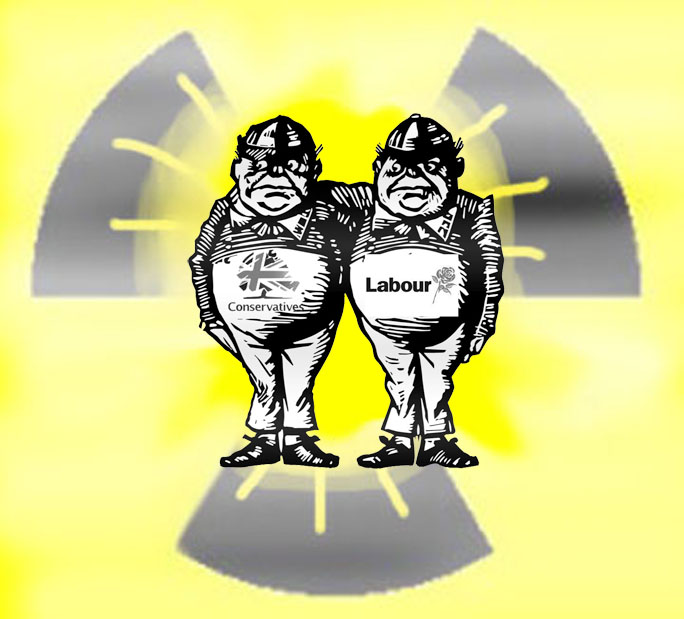
Ed Miliband will press ahead with a new generation of mini nuclear power
plants, with plans to unveil reactor designs by September. The energy
secretary has told MPs that he will give his “absolute support” to
plans to build a fleet of “small modular reactors” around Britain as
part of his clean energy drive.
Looser planning rules are expected to allow
these reactors almost anywhere outside built-up areas, ……………………………………………………….
He is now turning his attention to nuclear power, with a final decision on
Sizewell C due, alongside efforts to finish the Hinkley Point C plant.
Miliband has also committed to continuing the previous government’s drive
to make Britain a world leader in small modular reactors.
A decision on which designs to take forward is due by the end of the summer. Miliband
told MPs this week: “We will strive to keep to the timetable set out.”
Describing nuclear power as “very important for the future”, he said:
“This government were very clear in our manifesto about the role that
nuclear power — both large-scale nuclear and SMRs — can play.”
A final decision is also due this year on liberalising planning rules for
modular reactors. Currently nuclear power plants can be built only on eight
named sites but the previous government wanted developers to be able to
identify their own location based on a new list of safety and environmental
criteria.
Miliband is seen as unlikely to opt for tougher rules, after
repeatedly stressing to MPs this week that local concerns over development
would not be allowed to veto projects seen as vital to energy security and
economic growth. Under the draft rules, only “population density” and
“proximity to military activities” will rule out nuclear plants,
meaning they cannot be built in areas with more than 5,000 people per
square kilometres, covering most towns and cities. This is designed to
“minimise the risk to the public” in the event of a radioactive spill.
All other criteria would be discretionary, including size, flood risk,
proximity to civil airports, the natural beauty, ecological importance or
cultural heritage of the site.
Times 19th July 2024
**GB Energy**
Shiny New MP’s Fizzingly Push For More Nuclear Waste – Hotter the better! And a Complaint to Advertising Standards – Standards? What Standards!

BY MARIANNEWILDART, https://mariannewildart.wordpress.com/2024/07/18/shiny-new-mps-fizzingly-push-for-more-nuclear-waste-hotter-the-better-and-a-complaint-to-advertising-standards-standards-what-standards/
Well we are now awash with new shiny MPs pushing the “clean” “green” nuclear myth and falling over themselves to write fizzingly enthusiastic letters “urging” the new Labour government to “deliver” new unlicensed untested nuclear crapola which the public would be paying for before during and well after any electricity production. Meanwhile Sellafield is bursting at the seams with nuclear wastes which keep on coming – nuclear wastes whose only “solution” is to “decommission” ie disperse, dump, incinerate and forget, make room for more.
How have we come to this – it has taken a lot of effort on the part of the industry and pro nuclear governments from Thatcher to Blair and now Starmer and a lot of forgetting on the part of mainstream environmental NGOs who were the ‘green’ conscience of the people and started out with fierce unequivocal opposition to nuclear but somehow got inveigled into demanding “climate jobs’ with no anti-nuclear caveats giving the now “climate friendly” nuclear industry exactly what it wants.
I wonder how the following adverts [on original] which were in local press over June will be viewed by humanity in future years, or by aliens?
Westinghouse the front end of the industry with its “clean” “climate friendly” uranium fuel and Sellafield, the arse end of the industry with its sponsorship of the “Pride of Cumbria Awards” the Shame of Cumbria is palpable with every radioactive particle that washes back from Sellafied’s radioactive sewers with the tide.
Full Page adverts over consecutive weeks in local press
Anyway more in hope than in expectation of Advertising Standards actually doing its job and making a ruling against breathtaking greenwashing by the most dangerous industry, here is a complaint – also sent to the Westmorland Gazette and Westinghouse on July 8th (no reply from either).
I would like to make a complaint about the advert run in the Westmorland Gazette (and Whitehaven News?) for Westinghouse.
The advert was produced on the same page (on consecutive weeks) with an advert for Sellafield “Proud to be sponsoring the Pride of Cumbria Awards 2024″”.The Westinghouse advert claims that its products: Nuclear Fuel, AP1000 reactors and assisting Sellafield in decommissioning, are “clean” and “carbon free.”
This can be easily refuted as falsehood.
The nuclear fuel produced by Westinghouse at the Springfields site has been burned in nuclear reactors across the UK (and abroad) since the mid-1940s.
Clifton Marsh Landfill
Some of the many waste streams from the manufacture of nuclear fuel are dispersed to the River Ribble and Clifton Marsh Landfill although in January 2022 “the Clifton Marsh low level waste landfill site, operated by Suez, stopped accepting consignments of radioactive waste for disposal. As most of the solid radioactive waste from Springfields is disposed at Clifton Marsh, this has significantly affected routine waste management operations on site. Together with ONR we have discussed and reviewed SFL’s contingency plans to manage waste in the short term, which includes temporary accumulation of radioactive waste on site, improvements to waste characterisation and alternative disposal options. It was anticipated that Clifton Marsh would become available for disposals during the second half of 2022, although this has not yet occurred,” Environment Agency report . Decommissioning Plans Include Incineration of Radioactive Wastes Three Miles from Preston by “Clean” Westinghouse are proposing an incineration plant on their Springfields site just 3 miles from Preston for ” a large, refractory lined oven designed to treat a wide range of low and intermediate-level radioactive materials.” The feed into the incinerator would include European radioactive wastes of up to 3 tonnes a day. Countries such as Germany have now rejected new nuclear on health, safety, climate and financial grounds but still have wastes to dispose of would be keen to use Westinghouse’s new incineration plant.https://www.world-nuclear-news.org/Articles/New-UK-waste-treatment-facility-planned#:~:text=Plans% 20to%20jointly%20develop%20a,for%20the%20European%20nuclear%20market.
River Ribble
“The Ribble estuary near Preston receives radioactive substances from liquid effluent, discharged directly from the nearby Springfields Fuels Ltd site, and also transported down the coast from the Sellafield Ltd site via the Irish Sea. Estuaries are complex environments, influenced by both the marine tidal processes and the freshwater input from rivers. Some of the radioactive substances eventually become deposited in sediment in the estuary and on the nearby salt marsh.” …”The amount of shielding provided by boat hulls varied from almost none in a small pleasure boat, to 50 percent in a medium sized houseboat. Thick, dense clothing materials like rubber boots reduced the dose received from beta radiation by around 80 percent, wax jacket by 20 to 40 percent, while thin, less dense materials like woollen jumpers did not provide any protection” Environment Agencyhttps://assets.publishing.service.gov.uk/media/5a7c323240f0b674ed20f75e/scho0211btkg-e-e.pdf
“Carbon Free”
The latest carbon emissions report for the Preston Springfields site by Westinghouse is 38,617 tonnes for 2019. This is the equivalent of 20,000 cars on the road. https://westinghousenuclear.com/media/5kulvl03/springfields-carbon-reduction-plan.pdf?ver=d5dd1Fr giH03Wqky98f_fA%3D%3D
The uranium fuel rod wastes from Westinghouse end up at Sellafield in Cumbria. The carbon footprint for looking after Westinghouse’s burnt uranium fuel rods last year was, according to Sellafield, 600,000 tonnes of CO2. This is far higher than all the emissions generated by all vehicles using the M6 through Cumbria every year according to Cumbria Action for Sustainability’s figures (CaFS give nuclear a free ride excluding figures despite their gargantuan C02 footprint)
AP1000 reactors – Bankruptcy, Crime and Failed Reactor Coolant Pumps
The advert states “Our AP1000 plant is setting operational records in its global fleet and is ready for deployment in the UK.” Yes it is setting operational records in being the most expensive, and fault ridden reactor to date causing Westinghouse to go into bankruptcy. “By 2016 Westinghouse began to grasp the scope of its dilemma, according to a document filed in its bankruptcy: Finishing the two projects would require Westinghouse to spend billions of dollars on labor, abandoning them would mean billions in penalties. Westinghouse determined it could not afford either option.” It chose Chapter 11 Bankruptcy. https://www.reuters.com/article/world/how-two-cutting-edge-us-nuclear-projects-bankrupted-westingho use-idUSKBN17Y0C7/ Alongside this were charges of Westinghouse executive with dozens of crimes including ” felony counts including conspiracy, wire fraud, securities fraud, and causing a publicly-traded company to keep a false record.”https://thebulletin.org/2021/08/us-attorney-details-illegal-acts-at-construction-projects-sealing-t he-fate-of-the-nuclear-renaissance/
Westinghouse’s “global fleet” is largely in China where AP1000 reactor coolant pumps have failed forcing shut down of the reactors. https://www.spglobal.com/commodityinsights/en/market-insights/latest-news/electric-power/031419-us -designed-chinese-nuclear-reactor-forced-to-shut-by-pump-defect
Scientists in China are concerned enough to have provided “environmental radiation impacts assessment for the hypothetical accident in Haiyang nuclear power plant” saying that “the impact of east wind in August will mainly affect the west area of HYNPP, but it also has an impact on Northeast China, the Korean Peninsula region and Kyushu, Japan. The research results are aimed at supporting emergency decision-making of nuclear accidents and improving nuclear emergency response capabilities in surrounding areas.” https://www.sciencedirect.com/science/article/abs/pii/S0149197020301153?via%3Dihub Former US nuclear regulator Arnie Gunderson has suggested that the AP1000 deployed in the UK could cause a catastrophe that would be “like Chernobyl on steroids.” https://www.independent.co.uk/climate-change/news/nuclear-expert-arnie-gundersen-warns-of-cherno byl-on-steroids-risk-in-uk-from-proposed-cumbria-plant-10109930.html
Clearly Westinghouse’s claim to be “clean” and “carbon free” is false.
yours sincerely
Marianne Birkby
on behalf of Lakes Against Nuclear Dump
Absent but not missed: No mention of nuclear in King’s Speech
https://www.nuclearpolicy.info/news/absent-but-not-missed-no-mention-of-the-n-word-in-kings-speech/ 18th July 2024
The UK/Ireland Nuclear Free Local Authorities could not help but notice that the first speech made by King Charles III at the State Opening of Parliament (17 July) was nuclear free as His Majesty was spared having to utter the word.
By tradition, the Sovereign reads the speech, written for him by Whitehall officials and signed off by Ministers, to a combined gathering of Lords and MPs. This sets out the legislative programme for the coming Parliament. Clearly with the return of a new Labour Government, elected with a huge majority, Ministers are keen to get on and exercise their mandate and the speech was brimming with forty proposals for new legislation[i].
On energy there was an emphasis on meeting the urgent
On energy there was an emphasis on meeting the urgent challenge of climate change whilst reducing customers’ bills through a ‘clean energy transition’, but His Majestry was notably not called upon to extole nuclear energy as a means to do so so; instead the speech referenced the need to ‘accelerate investment in renewable energy, such as offshore wind’ by creating a new vehicle Great Britain Energy which will be publicly owned and headquartered in Scotland. Nuclear was thankfully nowhere to be seen, seemingly stll on its summer holidays[ii].
Interestingly, the Background Briefing Notes issued to accompany the publication of the speech by Number 10 also makes no reference to nuclear.[iii]
Also interestingly, Ed Miliband shortly after his arrival at the Department for Energy Security and Net Zero issued a statement as Secretary of State to his staff – this too makes zero reference to nuclear as a component in the fight to achieve Net Zero.[iv]
Nuclear then appears late for the party, as per usual, or may even have been excluded from the invite list.
For it is notable that whilst Labour’s energy manifesto makes much of getting new nuclear projects at Hinkley and Sizewell ‘over the line’, extending the lifetime of existing plants, and backing new nuclear including Small Modular Reactors by the end of the government’s first term in 2030, mention of any of this has been noticably absent in the government’s recent pronouncements
The NFLAs hope that Ministers on being appraised of the huge costs and massive challenges of delivering a new nuclear programme has quietly opted to go for the common sense approach of choosing cheaper, practicable and achieveable renewables to deliver truly green energy, energy security, lower bills and Net Zero. Fingers crossed.
NATO/US Complicity in Israel’s Relentless Genocide of Gaza
Only 4 of 32 NATO Members do NOT Sell Weapons to Israel or Buy Weapons from Israel
Israel has been the largest cumulative recipient of U.S. foreign aid since its founding in 1948, having received about $310 BILLION dollars in economic and military assistance. Since October 7, 2023, the U.S. has passed legislation that has provided at least $12.5 billion in military aid to Israel, which included $3.8 billion from legislation in March 2024 and $8.7 billion from a supplemental appropriation in April 2024.
Biden says U.S. should not have “Killing Fields,” while he is complicit in the Israeli “Killing Fields” in Gaza.
ANN WRIGHT, JUL 17, 2024, LA Progressive
As Israel continued its relentless genocide on steroids of Palestinians in Gaza with over 140 killed in the past weekend, imprisonment without charges of thousands of Palestinians in the West Bank and destruction of the hospitals, universities, schools (8 UNRWA schools bombed in the past 10 days), cultural centers and indiscriminate bombing of markets, soccer fields and “safe area” residents of Gaza have been forced into, an assassination attempt was made on former President Trump and NATO finished its gala 75th Anniversary celebrations in Washington, DC.
Biden Says “U.S. Politics Should Never Be A Killing Field,” While He is complicit in the Israeli “Killing Fields” in Gaza
As the genocide continued and a few days after the end of the NATO celebrations, an assassination attempt on former President Trump caused President Biden to address the nation and orate that “political violence has no place in America and U.S. politics should never be a killing field.”
The statement of no political violence and no killing fields in America rings totally hollow as the Biden administration and NATO countries fuel the Israeli killing fields in Gaza with over 90 Palestinians killed and 300 wounded by multiple Israeli rocket attacks in Khan Yunis on Saturday, July 12, and 80 Palestinians killed in the past 24 hours of July 13 in several refugee camps.
NATO members fuel the Genocide of Gaza by Selling/Sending Weapons to Israel
Heads of 32 NATO member states and 10 NATO “global partners”, Australia, New Zealand, Japan, South Korea, Colombia, Mongolia, Iraq, Afghanistan and Pakistan, met in Washington, DC at the 75th Anniversary events of NATO.
Some of the NATO members and partners are the same countries that are aiding and abetting the Israeli genocide of Gaza.
An Office for the State of Israel Located in the NATO Headquarters
NATO has a long, close and relatively unknown relationship with Israel that, eight years ago, resulted in establishment of an Israeli office in NATO headquarters in Brussels in 2016. Underscoring the importance to Israeli association with NATO, Prime Minister Netanyahu said upon the opening of the office, “This is an important step that helps Israel’s security. It is further proof to the status of Israel and the willingness of many organizations to cooperate with us in the field of security.”
The invitation from NATO for Israel to have an office in NATO headquarters was a result of pressure by other NATO members on Turkey to drop its veto of the invitation. The invitation arose through a new NATO partnership policy beginning in 2014 but Turkey vetoed the invitation until 2016.
Behind the scenes negotiations between Turkey and Israel in 2015 warmed the chilly relationship that had been essentially severed between the countries in 2010 over Israeli commandos killing 10 Turkish activists and wounding over 50 participants on the Mavi Marmara, a Turkish ship bound for Gaza as a part of the 7-ship Gaza Freedom Flotilla.
According to NATO documents, NATO and Israel have worked together for almost 30 years, cooperating in science and technology, counter terrorism, civil preparedness, countering weapons of mass destruction and women, peace and security. To strengthen NATO naval interoperability NATO brought on Israel as a partner for NATO’s Operation Sea Guardian. Israel’s military medical academy now serves as a “unique asset” for NATO’s Partnership Training and Education Centers community.
Israel is not officially integrated in NATO but is part of the Mediterranean Dialogue, a program sponsored by NATO in cooperation with seven countries of the Mediterranean.
Only 4 of 32 NATO Members do NOT Sell Weapons to Israel or Buy Weapons from Israel
NATO’s long-standing working relationship with Israel has translated into NATO countries selling weapons to Israel and other countries buying weapons from Israel’s big weapons industry.
With the exception of Canada, the Netherlands, Spain and Belgium, the remainder of the 32 NATO members continue to sell/send weapons to Israel as Israel conducts genocide operations on Palestinians in Gaza. Due to a court case, Denmark may suspend export of F-35 fighter jet parts to the U.S., because the U.S. sells the jets to Israel.
Even Latvia sold weapons to Israel, while Lithuania bought weapons from Israel. Greece, Albania, Slovakia, and many other NATO countries have purchased military equipment from Israel.
The Action on Armed Violence has a comprehensive worldwide listing of weapons sales and transfers to Israel.
The US is the mammoth supplier to Israel, providing an estimated 68% of Israel’s foreign-sourced weapons.
Israel has been the largest cumulative recipient of U.S. foreign aid since its founding in 1948, having received about $310 BILLION dollars in economic and military assistance. Since October 7, 2023, the U.S. has passed legislation that has provided at least $12.5 billion in military aid to Israel, which included $3.8 billion from legislation in March 2024 and $8.7 billion from a supplemental appropriation in April 2024.
Since October 7, only two of the more than one hundred military aid transfers to Israel have reportedly met the congressional review threshold of $250 million to be made public, and since the records for the other weapons transfers have not been made public, we can’t be sure . Additionally, the Israeli military received expedited deliveries of weapons from a strategic stockpile of weapons that is normally used to replenishment weapons for U.S. units in the Middle East. The U.S. has maintained massive warehouses for the stockpile of huge variety and amount of weapons since the 1980s…………………. https://www.laprogressive.com/foreign-policy/relentless-genocide—
France’s EDF faces fresh setback after losing Czech nuclear bid
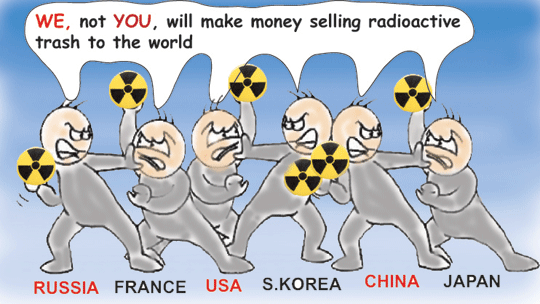
French state power giant EDF lost a bid to build at least two new nuclear
reactors in the Czech Republic on Wednesday, a major blow to Europe’s only
nuclear power plant builder at a critical time for the company. The
project, won instead by Korea’s KHNP, would have been the first contract
for EDF since Hinkley Point in Great Britain in 2016, and a vote of
confidence after being dogged by delays and soaring costs on projects at
home and abroad.
Reuters 17th July 2024
1 This Month




PLEASE OPPOSE HR 8255 AND S.3639 – bills would accelerate satellite deployment, with no environmental review or safeguards – https://ncstd5li.quorum.us/campaign/169331/
To see nuclear-related stories in greater depth and intensity – go to https://nuclearinformation.wordpress.com
-
Archives
- September 2026 (330)
- August 2026 (330)
- July 2026 (355)
- June 2026 (287)
- May 2026 (306)
- April 2026 (356)
- March 2026 (251)
- February 2026 (267)
- January 2026 (308)
- December 2025 (358)
- November 2025 (359)
- October 2025 (375)
-
Categories
- 1
- 1 NUCLEAR ISSUES
- business and costs
- climate change
- culture and arts
- ENERGY
- environment
- health
- history
- indigenous issues
- Legal
- marketing of nuclear
- media
- opposition to nuclear
- PERSONAL STORIES
- politics
- politics international
- Religion and ethics
- safety
- secrets,lies and civil liberties
- spinbuster
- technology
- Uranium
- wastes
- weapons and war
- Women
- 2 WORLD
- ACTION
- AFRICA
- Atrocities
- AUSTRALIA
- Christina's notes
- Christina's themes
- culture and arts
- Events
- Fuk 2022
- Fuk 2023
- Fukushima 2017
- Fukushima 2018
- fukushima 2019
- Fukushima 2020
- Fukushima 2021
- general
- global warming
- Humour (God we need it)
- Nuclear
- RARE EARTHS
- Reference
- resources – print
- Resources -audiovicual
- Weekly Newsletter
- World
- World Nuclear
- YouTube
-
RSS
Entries RSS
Comments RSS

