Long-run exposure to low-dose radiation reduces cognitive performance

Science Direct, Journal of Environmental Economics and Management, Benjamin Elsner , Florian Wozny Volume 118, March 2023, 102785
Abstract
This paper examines the effect of long-run exposure to low-dose radiation on cognitive performance. We focus on the fallout from the Chernobyl accident, which increased the level of ground radiation in large parts of Europe. To identify a causal effect, we exploit unexpected rainfall patterns in a critical time window after the disaster as well as the trajectory of the radioactive plume, which determine local fallout but have no plausible direct effect on test scores. Based on geo-coded survey data from Germany, we show that people exposed to higher radiation perform significantly worse in standardized cognitive tests 25 years later. An increase in initial exposure by one standard deviation reduces cognitive test scores by around 5% of a standard deviation.
1. Introduction
The last 40 years have seen a drastic increase in radiation exposure. Today, the average person in Europe and America receives about twice the annual dose of radiation compared with in 1980 (NCRP, 2009). This increase is almost entirely due to man-made sources of radiation, such as medical procedures, nuclear power and nuclear weapons. Procedures such as CT scans, X-rays, mammograms or radiotherapy expose patients to low doses of radiation, and their use has been steadily increasing over the past decades. Moreover, the fallout from nuclear disasters such as Chernobyl and Fukushima or a nuclear bomb can expose people thousands of miles from the epicenter.
Medical research shows that subclinical radiation can damage human cells, which has potential knock-on effects on health and cognition and that these effects may occur at all ages. The existing literature has mostly focused on the effect of in-utero exposure, documenting significant adverse effects of radiation exposure during pregnancy on education and labor market outcomes many years later (Almond et al., 2009, Heiervang et al., 2010, Black et al., 2019). However, there is little evidence on the long-term effects of exposure to low-dose radiation after birth. Documenting such effects is important, not least because of the number of potentially affected people: the number of people alive at any one point is substantially greater than the number of fetuses in the womb.
In this paper, we exploit plausibly exogenous variation of the Chernobyl fallout to study the impact of exposure to low-dose radiation on cognitive test scores 25 years after the disaster. We focus on Germany, which received a significant amount of fallout due to weather conditions in the aftermath of the disaster in 1986. Because of the long half-life of the radioactive matter, people who continuously lived in areas with higher initial fallout have been exposed to higher radiation levels for over 30 years. For people exposed after birth, there are two plausible biological channels through which radiation can affect cognitive test scores: a direct effect on the brain because radiation can damage brain cells, and an indirect effect through general health, which may lead to fatigue, thus reducing test performance.
Our dataset – the National Educational Panel Study (NEPS), a representative geo-coded survey – allows us to link fine-grained data on fallout levels in a person’s municipality of residence since 1986 to a battery of standardized cognitive tests done 25 years after the disaster. At the time of the disaster, over half of our sample were adolescents or adults, allowing us to estimate the long-run effect of exposure at these ages.
The central identification challenge is a potential correlation between the local amount of radiation and residential sorting. The local amount of radiation is driven by a combination of several factors, for example wind speed, rainfall, altitude or soil composition. Some of these factors may have also influenced residential sorting prior to 1986, thus potentially leading to omitted variable bias. ………………………………………………………………………
Our central finding is that people exposed to higher levels of radiation from 1986 onward performed significantly worse in cognitive tests 25 years later. A one-standard-deviation higher initial exposure in 1986 reduces test scores by around 5% of standard deviation. Over the course of 25 years, the additional radiation dose of a one-standard-deviation higher initial exposure is roughly equivalent to the dose from 6 chest X-rays or 1.65 mammograms, which indicates that the long-term effects of low-dose radiation can be non-trivial. An additional analysis shows that these effects are not driven by selective migration after the Chernobyl disaster.
This result feeds into two domains of the public debate on radiation. One is about the costs and benefits of nuclear power in many countries. While nuclear power offers the advantage of supplying vast amounts of energy at zero carbon emissions, it comes with the cost of potential disasters. In the last 35 years we have seen two major disasters. Given the proliferation of nuclear power along with the emergence of conflicts like the current war in Ukraine, it is possible that more nuclear disasters may follow. Our results, along with those in other studies, point to significant external costs of nuclear power generation and document an important effect of nuclear disasters on the population. Another public debate, more broadly, deals with exposure to man-made radiation. For example, today the average American receives twice the annual radiation dose compared to in 1980, which is mainly due to medical procedures such as X-rays, mammograms or CT scans (NCRP, 2009). Our results can inform the debate about the long-term consequences of this increase in radiation exposure. The radiation dose from medical procedures is similar to the additional radiation dose Germans in highly affected areas received after Chernobyl. And although these procedures offer high benefits for patients, our findings suggest that they come with a health cost due to a higher radiation exposure.
With this paper, we contribute to three strands of literature. First, our findings contribute to the literature on the effect of pollution on human capital. This literature has produced compelling results for two types of effects. One strand focuses on exposure during pregnancy or early childhood and documents adverse long-term effects of pollution. Another strand focuses on adults and estimates the short-run effect of fluctuations in pollution on outcomes such as productivity, test scores and well-being.1 Our study, in contrast, examines the long-run effects among people exposed after early childhood. These effects are important, not least because of the number of people affected. The cohorts in our sample represent around 24 million people, compared to 200,000 children who were in the womb at the time of Chernobyl. Even if the individual effect is smaller for people exposed after early childhood, our study shows that the environment can have adverse consequences for large parts of the population and, therefore, exposure after early childhood deserves more attention in the literature.
Second, this paper adds new evidence to the emerging literature on pollution and cognitive functioning……………………………………………………….
……………………., this paper contributes to the broader literature on the effects of low-dose radiation. Two recent reviews of the epidemiological literature by Pasqual et al. (2020) and Collett et al. (2020) conclude that there is significant evidence that exposure to low-dose radiation early in life has negative effects on health and cognitive performance.
……………………………….. our results point to even wider-reaching adverse effects of nuclear disasters. Germany is over 1200 km from Chernobyl, and our study shows that large parts of the population have been adversely affected.
2. Historical background and review of the medical literature
2.1. The Chernobyl disaster and its impact in Germany
2.1. The Chernobyl disaster and its impact in Germany
The Chernobyl nuclear disaster in 1986 is one of the two largest nuclear accidents in history. It occurred after a failed simulation of a power cut at a nuclear power plant in Chernobyl/Ukraine on April 26, 1986, which triggered an uncontrolled chain reaction and led to the explosion of the reactor. In the two weeks following the accident, several trillion Becquerel of radioactive matter were emitted from the reactor, stirred up into the atmosphere, and – through strong east winds – carried all over Europe.2 The most affected countries were Belarus, Ukraine as well as the European part of Russia, although other regions, such as Scandinavia, the Balkans, Austria and Germany also received considerable amounts of fallout. The only other accident with comparable levels of fallout was the Fukushima disaster in Japan in 2011 (Yasunari et al., 2011).
Post-Chernobyl radiation in Germany.
………………………………….From 1986 to 1989, the governments of West and East Germany rolled out a comprehensive program to measure radiation across the country. At over 3,000 temporary measuring points, gamma spectrometers measured the radiation of Cs137. Based on the decay of the isotopes, all measurements were backdated to May 1986.
………………………………………….Radiation exposure of the German population.
Humans can be exposed to radiation in three ways, namely through inhaling radioactive particles, ingesting contaminated foods, as well as external exposure, whereby radiation affects the body if a person is present in a place with a given level of radioactivity in the environment. Exposure to radiation through air and ground can be directly assigned to – and therefore be strongly correlated with – a person’s place of residence ……………………………………………………………………………………………………………………………..
Information about the nuclear disaster and reactions of the German public
……………………………………………………………………………………. 2.2. Effects of radiation on the human body
The effect of radiation on the human body is by no means limited to high-dose radiation, such as the one experienced by survivors of nuclear bombs or clean-up workers at the site of the Chernobyl reactor. The medical literature has shown that exposure to subclinical radiation – at doses most people are exposed to, for example due to background radiation, medical procedures, or the fallout from Chernobyl in large parts of Europe – can negatively affect cognition, physical health and well-being. Moreover, while the effects of subclinical radiation may be strongest during pregnancy and early childhood, radiation exposure can have adverse effects throughout a person’s life.
Plausible channels.
Radiation exposure can affect cognitive test scores through four types of channels:
- 1.A direct effect on cognition, as radiation can impair the functioning of brain cells.
- 2.An indirect effect through physical health; radiation can impair the functioning of organs and lead to greater fatigue, which in turn may negatively affect test scores.
- 3.An indirect effect through mental health; a review by Bromet et al. (2011) suggests that people’s worry about the long-term consequences of radiation for physical health may lower their well-being and lead to poor mental health.
- 4.Indirect effects through behavioral responses, such as internal migration or changes in life style. To the extent that these effects reflect avoidance behavior, they will dampen the negative biological effects.5
In the following, we summarize the evidence from two types of study: one based on observational studies with humans, the other based on experimental studies with mice and rats. While both arguably have their weaknesses – one is non-experimental, the other has limited external validity – together they show that an effect of radiation on cognitive test scores is biologically plausible.
Observational studies.
The effect of radiation on cognitive performance is an active field of research in radiobiology and medicine. Radiation affects the human body through ionization, a process that damages the DNA and can lead to the dysfunction or death of cells (Brenner et al., 2003). Until the 1970s the human brain was considered radio-resistant, that is, brain cells were assumed to be unaffected by radiation. This view changed when lasting cognitive impairments were found in cancer patients who underwent radiotherapy. Studies find cognitive impairments among 50%–90% of adult brain cancer patients who survive more than six months after radiotherapy. The cognitive impairment can manifest itself in decreased verbal and spatial memory, lower problem-solving ability and decreased attention, and is often accompanied by fatigue and changes in mood ……………………………………………….
Laboratory evidence on rats and mice.
The experimental evidence with rodents confirms the evidence found among human cancer patients. Rats who were treated with brain irradiation experience a reduction in cognitive ability, although the biological processes differ between young and old rats………………………………………
While these studies confirm that radiation can plausibly affect cognitive functioning across the life cycle, they are mostly based on once-off radiation treatments. In contrast, after Chernobyl, the German population was constantly exposed to higher ground radiation for many years. A recent experiment on mice by Kempf et al. (2016) is informative about the effect of regular exposure to low-dose radiation. Among mice who were exposed for 300 days, the researchers detected a decrease in cognitive functioning and a higher incidence of Alzheimer’s disease.
Impact on overall health……………………………………….
3. Data and descriptive statistics…………………………………………………..
3.1. The NEPS data
Our main data source is the NEPS, a rich representative dataset on educational trajectories in Germany. ………………………………………………………………………………………………….
3.2. Estimation sample
Our sample includes all survey participants who were born before Chernobyl. We exclude participants born after Chernobyl because the survey only sampled birth cohorts up to December 1986, leaving us with few participants who were born after Chernobyl. Moreover, because we are interested in the effect of post-natal exposure, excluding them ensures that our estimates are not confounded by exposure in utero, which operates through a different biological channel. ……………………………………………………………………………………………………………………………………..
3.3. Cognitive tests………………………………………………………………………………………………………
3.4. Municipality- and County-level Data
Data on ground deposition……………………………………………………………………………………………
Linkage between individual and regional data.………………………………………………………………………..
Additional data.…………..
3.5. Descriptive statistics………………………………………………………………………………………………………………………………………..
4. Empirical strategy
4.1. Empirical model………………………………………………………………………………………
4.2. Identification challenge and balancing checks……………………………………………………………………………………
4.3. Instrumental variable strategy……………………………
IV component I: local rainfall during a critical time window.………………………………………………………………………………….
IV component II: available radioactive matter in the plume……………………………………………………………
First stage and instrument relevance………………………………………………………………………………..
Instrument validity………………………………………………………………………………………………………………
5. Radiation and cognitive skills: Results
5.1. The effect of initial exposure on cognitive performance………………………………………………………………….
5.2. The effect of average exposure,1986–2010…………………………………………………
5.3. Internal migration as a potential channel………………………………………………………………
5.4. Effect magnitude and discussion…………………………………………………………………
5.5. Robustness checks………………………………………………………………………..
6. Conclusion
In this paper, we have shown that radiation – even at subclinical doses – has negative long-term effects on cognitive performance………………………………………………………………………………………..
Declaration of Competing Interest
The authors declare that they have no known competing financial interests or personal relationships that could have appeared to influence the work reported in this paper.
Appendix A. Supplementary data………………………………….. more https://www.sciencedirect.com/science/article/pii/S0095069623000037
Sellafield apologises after pleading guilty to cybersecurity failings
By Ollie Rawlinson @ORawlinsonNews, Reporter
The charges, brought by the Office for Nuclear Regulation (ONR), cover a four-year period from 2019 to 2023 and were heard in Westminster Magistrates Court.
According to The Guardian newspaper, the court heard that three-quarters of Sellafield’s servers were vulnerable to cyberattacks, leaving the world’s largest store of plutonium exposed to potential threats.
The ONR revealed that sensitive nuclear information (SNI) had been left at risk due to outdated technology, including the use of Windows 7 and Windows 2008.
It was also discovered that critical IT health checks, which Sellafield claimed were being performed, were not conducted.
A report by external IT firm Commissum found that even a ‘reasonably skilled hacker’ could have accessed and compromised sensitive data.
Sellafield CEO Euan Hutton apologised in a written statement, asserting that the company has since addressed these issues………………………………….
Chief Magistrate Paul Goldspring is expected to deliver a final sentencing in September. Sellafield has agreed to pay £53,000 in legal costs.
The case marks the first time a nuclear site has been prosecuted for cybersecurity offences.
Carlisle News & Star 14th Aug 2024
EDF cuts nuclear production in reaction to soaring temperatures
euro news, By Eleanor Butler, 14/08/2024
The energy provider insists there are no looming safety risks as three French regions face heatwave warnings.
EDF has reduced its electricity production at nuclear sites in France in response to soaring temperatures.
Three reactors are currently affected, although the energy provider has said “there is no safety risk”.
A reactor located at the Bugey nuclear power plant, a site near Lyon, has been closed since 12 August.
Also near Lyon, the Saint-Alban nuclear plant has experienced production cuts since 11 August, and similar measures are being taken at the Tricastin site. This is located in the South East of France, north of Avignon.
Heat-related incidents aren’t a new complication for EDF but rather a recurring problem, as exemplified when the firm published a climate change action plan last month……
High temperatures can interfere with nuclear processes as reactors are heavily reliant on water.
Heat from nuclear reactions is used to transform water into steam, which then drives turbines to produce electricity.
Another current of water, outside of the closed loop system, is then drawn from surrounding rivers to cool the reactor…..
During periods of extreme heat, this can produce a number of complications.
If surrounding water sources are warmer than usual, reactors cannot be cooled as efficiently.
French regulations also prevent sites from discharging water that is too hot back into rivers and lakes, to avoid the accidental killing of fish and other wildlife.
EDF told Euronews that it had temporarily reduced production to “respect regulations relating to thermal discharges”.
The firm explained that “discharge limits are established individually for each plant” by the French Nuclear Safety Authority (ASN).
Three departments in France are currently affected by heatwave warnings, with storms now replacing hot weather in some areas. https://www.euronews.com/business/2024/08/14/edf-cuts-nuclear-production-in-reaction-to-soaring-temperatures
NATO Countries Think Ukraine Won’t Be Able To Hold Territory in Russia’s Kursk
Biden called Ukraine’s ground invasion in Kursk a ‘real dilemma’ for Putin
by Dave DeCamp August 13, 2024 https://news.antiwar.com/2024/08/13/nato-countries-think-ukraine-wont-be-able-to-hold-territory-in-russias-kursk/
NATO countries think it’s unlikely Ukraine will be able to hold territory in Russia’s Kursk Oblast even if it takes weeks for Russian forces to drive the Ukrainians out, Bloomberg reported Tuesday, citing a Western intelligence official.
Despite that assessment, the report said NATO doesn’t “harbor reservations” about Ukraine’s invasion of Russian territory, which the US and NATO claim they were unaware of until the attack started. Another NATO official told Bloomberg that the incursion shows Ukraine can challenge Russia.
Heavy fighting has been raging in Kursk since over 1,000 Ukrainian soldiers and dozens of armored vehicles, including many provided by the US, entered Russian territory last Tuesday. While Ukrainian forces have captured dozens of villages, they are also taking heavy losses.
The Russian Defense Ministry said Tuesday that in the past day, Ukraine lost 420 soldiers and said it had lost over 2,000 since the invasion started, although the numbers are not confirmed since Kyiv doesn’t release information on its casualties.
The invasion is seen as an attempt by Ukraine to gain leverage in future negotiations. Ukrainian Foreign Ministry spokesman Georgiy Tykhy said Tuesday that Ukraine was not interested in “taking over” Russian territory. “The sooner Russia agrees to restore a just peace… the sooner the raids by the Ukrainian defenses forces into Russia will stop,” he said.
While the US claims it was unaware of Ukraine’s plans to invade Kursk, it is also strongly backing the invasion by allowing Ukrainian forces to use US weapons. President Biden was asked about the offensive on Tuesday and said it was a “real dilemma” for Russian president Vladimir Putin.
The US-backed operation, which is the largest invasion of Russia since World War II, marks a significant escalation of the proxy war and risks a major Russian response. Putin has said he views the incursion as the West using Ukrainians to attack Russia.
NFLA’s send ‘very best of luck’ to Peace Museum on reopening in historic Salts Mill

13th August 2024
https://www.nuclearpolicy.info/news/nflas-send-very-best-of-luck-to-peace-museum-on-reopening-in-historic-salts-mill/
Saltaire is a village in West Yorkshire that has much to commend it to visitors. It is a World Heritage Site, four miles north of Bradford, which was built by enlightened industrialist Sir Titus Salt in the 19th century. Now the village has one more attraction for the curious to experience – the UK’s only dedicated Peace Museum.
NFLA and Mayors for Peace Secretary Richard Outram was quick to send a note to the trustees, staff, and volunteers to wish them ‘the very best of luck for your reopening today (10 August) and for a successful future in your new premises…The Peace Museum does an incredible job in educating the public about the history of the peace movement and in raising their awareness of the importance of peace in their lives, in their communities, and between nations. That importance has become even more self-evident in recent days with race riots in many of our major towns and cities.’
The Peace Museum is unique in the UK in covering peace history, non-violence, and conflict resolution.
After a four year gap, the Peace Museum has moved from central Bradford to the third floor of the historic Salts Mill, eponymously named after the village’s employer and benefactor. The new home of the Peace Museum is fully-accessible and it can be reached by regular trains which stop at Saltaire Railway Station.
The renovated space will include a newly developed permanent exhibition which explores the often-untold stories of peace, peacemakers, social reform and peace movements. Visitors will be able to see objects from the Museum’s unique collection of 16,000 items, including banners that were originally used at Greenham Common Peace Camp and the Campaign for Nuclear Disarmament’s original drawings of the now well recognized peace symbol. It will also share personal stories of people’s motivations to campaign for peace and the impacts of conflict.
The new Museum will also have temporary exhibitions, an education space, research facilities and a shop.
This development, move, and re-opening have been made possible through the support of various funders, grants, and donations from supporters. The National Lottery Heritage Fund has enabled the creation of a new engaging and accessible exhibition and educational programmes. Generous capital funding has been received from Bradford 2025 and Bradford City Council, and other financial backers include the Key Fund, Art Fund, Association of Independent Museums, Pilgrim Trust, Museum Development North and Arts Council England.
The Peace Museum has a presence on Facebook – peacemuseum.org.uk – where it is possible to subscribe for a regular newsletter.
The Peace Museum is open Wednesday to Sunday, 10am to 4pm. Entry is free, but donations are gratefully received and encouraged.
Hinkley Point B: What happens after a nuclear power station stops making electricity?
After shutting down in 2022, the job now is to carefully
remove tonnes of nuclear waste to be transported for storage at Sellafield
in Cumbria. The team is halfway through that task with one reactor empty
and one more to go.
I was given exclusive access to the power station,
getting the chance to travel deep within the bowels of the building and see
something few people outside EDF Energy get to – the cooling ponds, where
spent fuel is cooled down before being sealed for transport and storage.
there will be another couple of years to finish defuelling operations, then
EDF hands this place over to the Nuclear Decommissioning Authority as the
painstaking job of decommissioning will continue for many years.
ITV 13th Aug 2024
Nato fighter jets intercept Russian nuclear bombers
msn by Gergana Krasteva, 14 Aug 24
Vladimir Putin deployed two Tu-95MS strategic nuclear missile carriers over Nato waters after accusing Britain of coordinating the incursion into Russia with Ukraine, it has been reported.
MiG-31 combat warplanes belonging to the Alliance escorted the Kremlin’s jets, which buzzed over the Norwegian Sea.
Separately, two Tu-22M3 long-range bombers flew over the neutral waters of the Baltic Sea.
Both the Tu-95MS and Tu-22M3 bombers – key parts of Russia’s nuclear arsenal – were escorted by Nato planes during their ‘scheduled’ flights.
This is the latest of the Kremlin’s reconnaissance flights as part of its ongoing attempts to taunt the bloc.
It comes after it accused the UK of involvement in Ukraine’s attack on the border region – now in its second week and forcing Putin to move reserves on a massive scale to Kursk.
Assault troops have pushed about a mile farther into Russia on Wednesday, the commander of the Ukrainian military, General Oleksandr Syrskyi, said in a video posted on president Volodymyr Zelensky’s Telegram channel.
In addition, more than 100 Russian soldiers have been taken prisoner, Syrskyi added…………………………………………………….
Russian authorities have evacuated about 132,000 people from the Kursk and Belgorod regions and have plans to evacuate another 59,000 [could this be related to fears about Kursk’s nuclear power plant?] …….. https://www.msn.com/en-au/news/other/nato-fighter-jets-intercept-russian-nuclear-bombers/ar-AA1oNL0R?ocid=hpmsn—
Sweden Considers Borrowing $28.5 Billion to Finance Nuclear

By Lars Paulsson and Niclas Rolander, August 12, 2024
(Bloomberg) — Sweden could borrow 300 billion Swedish kronor ($28.5 billion) to help finance a new fleet of nuclear reactors in the coming decades.
A government study released Monday in Stockholm highlighted several features of its preferred model in order provide certainty for investors. Funding instruments include government borrowing to support construction, and 40 years of guaranteed revenues through a so-called contract-for-difference or CfD. ……….
Financing is one of the biggest hurdles for nuclear energy, with reactors costing multiple billions of dollars and taking years to build — often compounding the price. The model presented on Monday is focused on financing a program of as much as 6,000 megawatts, or four large-scale reactors, and has taken inspiration from the Czech Republic’s plans for financing new units at the Dukovany complex. ……..
The proposals will be sent for consultation to various institutions, companies and government agencies before they may be adopted by the government.
One feature is the CfD model, used for both Electricite de France SA’s Hinkley Point C in the UK and Dukovany. Under this mechanism, developers and the government agree a fixed price for electricity for a certain period of time, providing certainty of future revenue. If market prices fall too low, the generator receives a top-up from the state. On the flip side, the plant operator must pay back the difference if the market rate is higher.
In contrast with the financing scheme for Hinkley Point, which has a total cost estimate of about £47.9 billion ($61.2 billion) in today’s prices, the suggested model for Sweden also involves public borrowing to finance construction. According to the proposal, the government would borrow as much as 75% of investment costs, which Dillen expects could increase public debt by some 300 billion Swedish kronor ($28.5 billion).
Swedish state-owned Vattenfall AB and Finland’s Fortum are among the utilities studying new reactors……
In a comment on its website, Vattenfall said it agreed with a lot of the points made by Dillen, but that it was unclear how the state will ensure that the first wave of new reactors actually will be built.
Sweden has had a love-hate relationship with atomic energy since the first commercial reactor began operations in 1972. Mounting grassroots opposition in subsequent years culminated in a 1980 referendum calling for the dismantling of all reactors — an effort that ultimately failed. The winning center-right coalition in the 2022 election made a nuclear renaissance a pillar of its election campaign. ………. https://www.bnnbloomberg.ca/investing/2024/08/12/sweden-leans-toward-czech-style-funding-for-new-nuclear-reactors/
How NATO Went Rogue
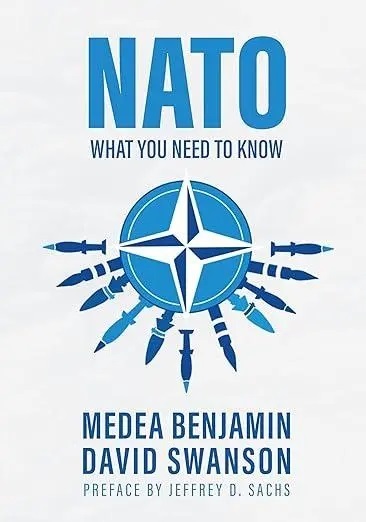
By Tomasz Pierscionek, Morning Star, August 9, 2024, https://worldbeyondwar.org/how-nato-went-rogue/
NATO: What You Need to Know by Medea Benjamin and David Swanson, OR books, £12.99
To mark the 75th anniversary of Nato’s creation, veteran anti-war activists Medea Benjamin and David Swanson have published a book that explores the alliance’s origins and critiques its role in global affairs over the past several decades.
The authors produce a much needed antidote to the pervasive propaganda that claims Nato makes the world a safer place.
Benjamin and Swanson duly set the record straight and offer a powerful riposte to the arguments upon which Nato’s proponents rely in order to justify the military collective’s long overdue existence.
Nato’s first secretary-general allegedly declared that the organisation, originally comprising 12 members when founded in 1949, aimed “to keep the Soviet Union out, the Americans in, and the Germans down.” Notwithstanding this comment’s facetiousness, the words hold a darker meaning and provide an insight into what Nato would become.
Taking Nato’s founding document (the Washington Treaty) at face value, its original members sought collectively to preserve stability within the north Atlantic region while adhering to the principles of the United Nations Charter, desiring to live in peace with all nations, and seeking to resolve any disputes peacefully.
We learn that in the ensuing decades Nato would expand its influence far beyond the north Atlantic area, incorporate countries which were dictatorships at the time (such as Greece and Turkey), support colonialism in Africa, seek to thwart democracy by stifling popular communist and left-wing movements across Europe, and support numerous unsavoury groups such as Kosovan criminals and Islamic terrorists.
Benjamin and Swanson thus show how Nato’s future actions would violate the intentions expressed in its founding document.
We learn too how the USSR, fearful of West German rearmament and having recently lost 27 million of its people, asked to join Nato in the mid-1950s with the intention of being part of the post-war security architecture in Europe. The request was rebuffed, leading to the USSR forming its own defensive Warsaw Pact the following year.
The reader is left to ponder how different history could have been and which future conflicts may have been avoided had Nato’s founders accepted this offer of detente during the cold war’s early years. Perhaps it is not coincidental that Nato’s first military operation only occurred after the USSR’s collapse, when it became engaged in shooting down Serbian planes during the Bosnian war of the mid-1990s.
Subsequent chapters reveal how Nato became a vehicle for the US to pursue its dreams of global dominance without the shackles of international treaties or the constitution. For example, whereas the president of the United States requires Congressional approval to undertake military action, this constraint is not required for the US-led Nato alliance to go to war.
Benjamin and Swanson discuss the role Nato has played in the Yugoslav, Afghan, Iraq and Libyan conflicts to demonstrate how the military bloc leaves a trail of destruction and chaos in its wake, a far cry from the stability and democracy it claims to uphold.
The alliance has also morphed into an excuse to oblige member nations as well as non-member countries (the latter referred to as Nato’s “global partners”) to purchase US-made weapons under the guise of promoting “inter-operability.”
Voicing the opinion that Ukraine joining Nato is a ludicrous idea that will provoke an aggressive response from Russia may nowadays get you demonised as promoting pro-Kremlin propaganda. Yet Benjamin and Swanson tell us that such a view was considered sensible in the upper echelons of US politics not too long ago.
For example, former US ambassador to Moscow William Burns reportedly once sent a communique back home explaining that Ukraine joining Nato would be “the brightest of all red lines for the Russian elite (not just Putin),” adding that this was a view shared by President Putin’s harshest critics and that “I have yet to find anyone who views Ukraine in Nato as anything other than a direct challenge to Russian interests.”
Ironically, as the authors describe, Russia’s invasion of Ukraine gave Nato a new lease of life at a time when some politicians were beginning to question the organisation’s purpose. While rightly condemning the invasion, Benjamin and Swanson explain how relentless expansion and provocation from a US-led Nato over the preceding two decades set the scene for a war that could have been avoided.
I was left wondering how Western nations would have reacted to Russian encroachment after the cold war had roles been reversed. Relabelling the acronym Nato as Not A Tenable Option, Benjamin and Swanson finish by describing alternatives to the alliance that could de-escalate tensions around the globe while providing countries with a sense of security.
The authors present their case in a clear and straightforward manner that makes their analysis easy to comprehend. Despite being less than 150 pages long, Nato: What You Need to Know contains a plethora of vital wisdom for readers across the political spectrum.
Its publication comes at a time when many, including some on the left or those once considered as anti-war, have been seduced into swallowing militarist propaganda that advocates arming Ukraine to fight Russia regardless of what consequences may transpire.
The world is closer to witnessing a conflict between nuclear-armed powers than it has been for decades. Now is the time to change direction before it is too late.
Map reveals nuclear fallout that would happen if Europe’s biggest plant explodes

Metro, Gergana Krasteva and Ben Ashton, 12 Aug 24
A fire at the Russian-occupied Zaporizhzhia nuclear plant is putting Europe’s future at stake.
Ukraine’s leading nuclear energy company, which operated the site until Russian forces seized control in the early days of the war, confirmed that flames broke out at the service water supply facility, later engulfing one of the cooling towers.
Both Vladimir Putin and Volodymyr Zelensky have traded blame for the fire. The six nuclear reactors are in cold shutdown and no nuclear activity was recorded on Sunday, but the overall risk of nuclear meltdown remains elevated.
The Ukrainian president said radiation levels are ‘within norm’, but since the start of the full-scale invasion, there has been widespread concerns about the safety of Zaporizhzhia………………………………..
A major nuclear incident at the plant could put several European nations at grave risk, not just Ukraine.
A model map shows how the continent could be affected by a nuclear explosion if it were to happen – and also illustrates how far and concentrated the release of cesium-137, which poses a major health hazard, would spread……………………………………………………
How would Europe be affected in case of a nuclear incident?
Dr Paul Dorfman, a nuclear safety expert who has advised the British and French governments, says Ukraine, parts of Russia, and central Europe are at risk of radioactive plume coming from the station.
‘So far, we have been lucky. There has been no significant radiological release from Zaporizhzhia. But luck is not a strategy,’ he told Metro.co.uk.
‘If something does go wrong, it will depend on where the plume goes and the nature of the incident.
‘But you can really begin to write off a lot of economies and lives.’
If the worst happens, the effects of a nuclear incident can have a long-term impact by causing illness, inducing cancer or even leading to death……………………………………………………………..
Dr Dorfman stressed the situation at Zaporizhzhia is not yet resolved, adding that ‘knowing sod’s law, if something can go wrong, it probably will’.
He said the much less defended Olympic-sized storage pools for spent fuel from the nuclear reactors, or otherwise known as ‘ponds’, still present a huge risk.
‘If the power supply to these ponds dries up then the water evaporates and there is a significant nuclear incident where the high-level radioactive waste rods blow,’ the expert added.
In terms of the latest modelling, most of the radioactive plume will fall on Ukraine and Russia’s bordering territory.
Central Europe and the northern tip of the Middle East, including Turkey, are also at risk of exposure.
‘It all depends on the wind and the dispersion. Winds can change as well,’ Dr Dorfman said.
‘So, it depends on the kind of radiation, accident and where the wind blows. There is no question about it, something significant can happen.’
Ahead of such a ‘potentially catastrophic’ event, he called for the ‘critical’ distribution of stable potassium iodide through Ukraine, Russia, central Europe and northern Middle East. https://metro.co.uk/2024/08/12/map-reveals-happen-zaporizhzhia-nuclear-plant-explodes-21404991/
Desperate for escalation, did Zelensky bomb Zaporozhye Nuke Plant in Frustration ?
The biggest issue currently is that the much stronger than usual fog of war has allowed Western/pro-UA sources to completely confabulate various fake “advances” in the Kursk region. Virtually every new map from Western sources, whether ISW, the various articles posted above, etc., are currently completely phony. In fact, the AFU was driven out of every deep advance in the Kursk region, and now occupy only a small area around Sudzha.
Desperate for Escalation, Zelensky Bombs Zaporozhye Nuke Plant in Frustration [Excellent extracts and maps on original]
Simplicius, Aug 12, 2024 https://simplicius76.substack.com/p/sitrep-81124-desperate-for-escalation?utm_source=post-email-title&publication_id=1351274&post_id=147536911&utm_campaign=email-post-title&isFreemail=true&r=c9zhh&triedRedirect=true&utm_medium=email
Today Zelensky’s forces appeared to bomb the Zaporozhye nuclear plant:
Russian sources says it was a Ukrainian drone that hit the Zaporizhzhia NPP.
At around 9:00 pm today, Ukrainian militants attacked the Zaporizhzhia Nuclear Power Plant using a kamikaze drone.
Preliminary reports suggest the drone was launched from Nikopol in the Dnipropetrovsk region of Ukraine.
The drone operator appeared to have targeted the plant deliberately the Russian sources say.
Still unconfirmed until we see material indicating the cause of the fire
Zelensky of course blamed Russia, even though, interestingly, he stated Russians began “burning tires” to create the smoke, when even the IAEA above heard loud explosions, despite again being ordered by their masters not to directly name the culprit:
Reportedly some machinery inside one of the cooling towers was set ablaze, but the 6 reactors of Europe’s largest power plant have already been in ‘cold shutdown’ mode, and are said to be in no real danger…for now.
However, most significant to ongoing events is the correct analysis of why Zelensky would choose to strike the plant just now. It is obvious to us that it represents a terminal desperation from the AFU, which can only mean that their situation on the ground is in fact grinding to a culminating point, which answers one of the chief questions we’ve had about the ongoing Kursk adventure.
There was still some hesitation on my part on whether the Kursk madness was truly a sign of an AFU reaching its critical end point or not, though mostly I leaned on the affirmative. However, the latest desperate move seems to fully avow this interpretation of events. But, I believe there are a few multi-varied nuances to properly interpreting Zelensky’s threatening signal.
First: it can be said that this act of desperation was a strong signal to Zelensky’s own “partners” in the U.S. and the West. I predicted long ago—last year—that once things finally grind down to the gristle for Ukraine, Zelensky would have no choice but to begin threatening his partners through escalation to save his own hide. He would threaten not only pushing Russia’s red lines in unnerving ways which would pose the threat of nuclear annihilation to the U.S., but as a last ditch effort he would also float the threat of unveiling many secrets and ‘skeletons in the closet’ of his Western partners as blackmail.
But what’s happening now is in effect a double nuclear blackmail. Not only was Zelensky trying to reach the Kursk nuclear plant for this very purpose, but has now acted out his furious frustration at the ZNPP, as well. It’s difficult to know for certain, but captured AFU POWs have in fact now attested to the Kursk plant as being the objective, or Kurchatov, the town where the plant sits. This was supposed to have been reached in the first day or two, which now appears to have been a miserable failure being covered up by more antics.
But getting back to the second point. I believe the ZNPP strike was also a double threat toward Russia. ZNPP may be currently inactive, but Kursk is in operation, and Zelensky likely meant to send a symbolic message that the Kursk nuclear plant may be “next”. In essence, it is saying: “Be wary, the Kursk plant is in my sights. This is just the first demonstration of my seriousness.”
But why would Zelensky threaten his partners as well? The obvious answer is to shock them into providing more aid and committing totally to Ukraine’s victory. “Give us everything or we’ll take the entire world down with us in a ball of nuclear flame.” Funny how much similarity there is between Zelensky and Israel, what with their Samson Option and all.
The problem is that, more and more evidence is rolling out that not only is the Kursk offensive becoming a disaster, but that Zelensky sacrificed the Donbass front in order to pull this egregious stunt.
First we have a new Financial Times article which openly states that Ukrainian units were pulled from the Donbass front toward Kursk:
“We are going deeper said Denys, a Ukrainian soldier who has made three rotations into Russian territory since the incursion began. His unit, which the Ft is not identifying at te request of Denys and his senior officers, had been rotated to the area from the Eastern Donetsk region more than a week ago to take part in the offensive.” – https://www.ft.com/content/7dcb3009-ec9a-417a-b2e1-01c26c9349a0
The ultimate aim of Ukraine’s incursion — which is using some of its best and most elite brigades — remains unclear. But the operation has demonstrated that Russia’s border defences are still weak more than a year after Ukraine’s first mini-incursion and has given Kyiv a much-needed morale boost.
It further confirms the negotiations angle:
Analysts have said Ukraine may be seeking to use the Kursk offensive to improve its position in potential talks. It is losing territory and men in eastern Ukraine and is still struggling to resolve ammunition and manpower shortages.
Then came a new Economist article which confirmed the same thing:
“Ukraine’s shock raid deep inside Russia rages on
The surprise attack comes as Ukraine is under pressure in the Donbas”
First they do a little shoe-shining to balance out the negative reportage, then they hit us with the truth:
“‘We sent our most combat-ready units to the weakest point on their border,’ says a general-staff source deployed to the region. ‘Conscript soldiers faced paratroopers and simply surrendered.’ But other aspects of the operation indicate a certain haste in preparation. All three soldiers quoted in this article were pulled, unrested, from under-pressure front lines in the east with barely a day’s notice.”
Most damningly for the AFU, they admit that Russia, on the other hand, hardly had to shift reserves from Donbass:
“Russia has shifted troops from the Kharkiv front, but so far it has moved far fewer from the vital Donbas front. ‘Their commanders aren’t idiots,’ says the Ukrainian general-staff source. ‘They are moving forces, but not as quickly as we would like. They know we can’t extend logistics 80 or 100 km.’”
In short: Ukraine pulled its most elite units from vital fronts to carry out Zelensky’s mad pageant, while Russia for the most part didn’t, which explains why the Pokrovsk and Chasov Yar directions continue falling for the AFU as we speak; reportedly, Russia used around 80% rear reserves, with just 20% of detachments pulled from other areas, mostly owing to them already being close by—i.e. the 810th Marines were pulled from Volchansk front because of its proximity and their readiness.
Here’s another deeper explanation from a Russian source:
How did the Ukrainian Armed Forces manage to accumulate a group of six, eight, ten (insert the appropriate) brigades?
There are three to five brigades + reinforcement units operating in the Kursk direction. Formally. In reality, there is reason to believe that the group is made up of a couple of more or less homogeneous brigades (like the 22nd Separate Mechanized Brigade) and heterogeneous battalion (and possibly company) combat groups, hastily transferred from other sections of the front before August 6. The abundance of soldiers from different units and subdivisions, as well as the abundance of heterogeneous equipment, creates the illusion of a huge group.
The same 41st Separate Mechanized Brigade ( mentioned by the Ministry of Defense in its report) is a pretty battered unit. First, it suffered losses near Chasovy Yar. Then it was transferred to a “quiet” area near Toretsk-New York. On July 21, elements of the 41st Separate Mechanized Brigade caught Iskanders at the Barvenkovo station, and now its elements are in the Kursk region. Not enough time has passed between July and early August to make up for the losses in men and equipment. The same can be said about the “anti-heroes” of the unsuccessful defense of Ocheretin — the 115th Separate Mechanized Brigade, as well as the repeatedly beaten 80th and 82nd Air Assault Brigade.
All this gives reason to say that a rapid transfer of brigade elements was carried out, which were unlikely to go into battle in full force.
In the very opening paragraph of the Economist article, they describe how Russian glide bomb’s slaughtered their units:
Note the mention of Sumy hospital in the last sentence. Here they develop that thought:
But the accounts from Ukraine’s wounded suggest it has not been a walk in the park, and remains risky. The hospital ward reeks of the sacrifice: soil, blood, and stale sweat. Foil burn-dressings line the corridor. In the yard, the patients, some wrapped like mummies from head to toe in bandages, smoke furiously. Angol, a 28-year-old paratrooper with the 33rd brigade, looks like a Christmas tree. His left arm is immobilised in a fixation device. Tubes, bags and wires protrude from his body. He was also about 30km into Russia when his luck ran out. He isn’t sure if it was artillery or a bomb that hit him. Maybe it was friendly fire; there was a lot of that. All he can remember is falling to the ground and shouting “300”, the code for wounded. The Russians had been on the run up to then, he insists, abandoning equipment and ammunition as fast as they could.
What’s most notable about this, is our best first-hand, on-the-ground source from the region corroborates every word. A popular TG commentator I’ve mentioned before lives in Sumy and reports on the goings on. He’s provably reliable as he’s the first person who began talking about “massive AFU troop movements” through the city of Sumy a full week before the Kursk incursion began. He now reports:
👉👉👉 Exclusive information from this channel:
Yesterday almost 1000 wounded soldiers, both Russian and Ukrainian were treated in Sumy’s hospitals.
👉👉👉 Hospital admissions for wounded soldiers are now at almost 2000 in Sumy, even hospitals in Kharkov, Cherkassy and Kiev are being prepared. This includes both Russian and Ukrainian injured soldiers, however after the first batch of Russians, now most of the injured are Ukrainians.
So, there’s almost 2,000 mostly Ukrainian wounded flooding Sumy hospitals, with the “Russian” ones he mentions presumably being the dozens of captured POWs.
This is corroborated further by ongoing calls on Ukrainian channels for mass blood donation drives in Sumy:
Now, to be perfectly impartial for the sake of journalistic integrity, Ukrainian sources posted this alleged video of a Russian hospital worker complaining of a local hospital likewise being flooded with injuries:
However, I’ve tracked down a video of a real Kursk region hospital—perhaps even the one in question above—and it is by no means even remotely comparable to what is happening in Ukrainian Sumy hospitals vis-a-vis the killed and wounded flooding in.
Despite the fact that Ukraine has bloodied Russia a little bit, particularly via the HIMARS strike on a Russian reinforcement column, the losses continue to appear lopsided in Russia’s favor from everything I can see.
Getting back to the Economist article, they conclude by admitting it could be a Russian trap:
The source cautions against comparing the Kursk incursion to Ukraine’s successful swift recapture of much of Kharkiv province in late 2022. The Russian army is taking the war more seriously now, he says: “The danger is we’ll fall into a trap, and Russia will grind our teeth down.” On Sunday Russia’s defence ministry claimed, albeit not for the first time, that it had “thwarted” attempts by Ukrainian forces to break deeper into Russia
Now, more and more Western sources not only question the logic of this failing campaign, but even outright predict it leading to catastrophe for AFU.
Der Spiegel dropped this bombshell headline:
“The Kursk maneuver could mark the military end of Ukraine”
And what does Spiegel believe is the ultimate point of this “invasion”?
Once again (excuse the wonky auto-translation):
Better translation:
Gressel: The Ukrainian leadership wants to create pressure for possible negotiations with Russia. For this it needs negotiating leverage, which it now wants to gain with quickly and cheaply occupied territory.
When asked for the worst-case scenario, here’s how they respond:
Gressel: In Germany, the Wagenknecht camp would gain popularity. Ukraine could come across as an unreliable go-getter. Berlin and Washington would reduce their support. The Kursk maneuver could herald the military end of Ukraine.
Other articles have poured out, citing the goal of ‘destabilizing Russia’:…………………………………………………………………………..
The biggest issue currently is that the much stronger than usual fog of war has allowed Western/pro-UA sources to completely confabulate various fake “advances” in the Kursk region. Virtually every new map from Western sources, whether ISW, the various articles posted above, etc., are currently completely phony. In fact, the AFU was driven out of every deep advance in the Kursk region, and now occupy only a small area around Sudzha.
All the earlier advances to as far as Komski Byki, Snagost, or Shagorovo have all been destroyed and pushed back. Russian reinforcements have created an impenetrable wall, and Ukrainian units are now digging in around Sudzha, desperately looking for a chink in Russia’s armor while being slowly destroyed by Russia’s growing aerial-drone dominance of the zone. Even Sudzha itself, which AFU proudly announced as having captured, is now in a kind of gray zone, with AFU certainly not controlling any part of the town, excluding the entrance stele in the northwest by which they took some TikTok photos.
Some videos from the area today:
Russian cluster attack on Ukrainian column:
Lancet strikes:
Here’s what the current frontline actually looks like, with the white circles representing how far Ukrainian DRGs initially pointlessly got by speeding past Russian defenses just to make it look like they were capturing territory—the red areas is where Russia has now retaken everything:
Russian military source update:
*️⃣ Kursk region . We are working on small enemy groups. There were small arms battles. Now we have cleared the nearest 6-7 kilometers.
They are trying to bypass the protected areas of the front and attack from the rear. The Ukrainian Armed Forces have started abandoning their combat equipment. They are running out of fuel, and we have already interrupted their supply of reserves. Their losses are serious. We continue to press.
The commander on site reports 🫡
Regiment named after Issa Pliev
Another quick overview explaining how Ukraine “captured” so much territory, when in reality it couldn’t hold any of it when Russian reinforcements came:
How did the Ukrainian Armed Forces manage to advance so quickly?
Several factors played a role: the abundance of wheeled vehicles, the priority of speed over consolidation, and the sparse combat formations of the Russian Armed Forces. Thus, Ukrainian units, bypassing resistance nodes, in some cases were able to slip through to a depth of 10-15 km in the first day. Another issue is that the mobile armored groups did not have sufficient weight, supplies, or survivability to hold the territory. As soon as the combat formations of the Russian Armed Forces were consolidated, the dashing runs on Ukrainian armored vehicles ceased. With the intensification of the work of UAV operators and army aviation, the ability to mass forces and armored vehicles disappeared. Now even individual armored vehicles are being hunted
– From the Kharkov operational direction (GV “North”) – units of the Russian 138th separate motorized rifle brigade (SMRB), from the 6th combined arms army (OVA) – to the combined reinforced motorized rifle battalion (MSB), the 44th army corps (AK), apparently, from its 128th SMRB and 72nd MRDB, is moving to the Kursk direction, up to 3 battalions
– From the Kupyansk direction, probably the 272nd motorized rifle regiment (47th tank division\td), obviously, also “posted” one motorized rifle battalion
– Up to 2 airborne assault battalions (AAB) have already been recorded, this is “on top” of the parachute assault battalion (PAB) of the 217th parachute assault regiment (PAR) of the 98th airborne division (AAD), which was in the Kursk direction BEFORE the visit of the Ukrainian Armed Forces. They are probably from the 104th airborne assault division (AAD) of the Dnieper Guards, from the Dnieper direction.
There is also information about the movement to the Kursk direction of at least one battalion of marines (OB MP) from the 810th separate marine brigade (OB MP), but I somehow don’t believe it… most likely, this is a battalion from the 155th separate marine brigade, which had previously been deployed and operated in the Volchansk direction.
– The remaining troops (forces) of the first echelon will obviously be made up of units (BTGr) from the 64th and 38th separate motorized rifle brigades (OMSBR) of the 35th combined arms army of the GV “East”…
Thus, we can state…
– In essence, those same “reserves” that the Russians are now pulling into the Kursk operational direction in order to “cut off” the offensive of the Ukrainian Armed Forces represent a real “hodgepodge” (a set of very diverse forces and means, with very different actual levels of their combat capability), obviously hastily assembled.
How to “put all this together” and manage it in a separate operational direction, as they say in a situation “on the fly”, with an obvious time deficit and “problems with monitoring the situation”, is a big question… The Russian command attempted to “pull this trick” in a very similar situation in the Kharkov region, and it ended in obvious failure and the retreat of Russian troops from it…
– At the moment, the Russian command is acting in a completely understandable algorithm, solving two main tasks – “minimization” (containment) of the Ukrainian Armed Forces offensive on a scale (i.e. in its pace and scope), and trying to gain time for the operational deployment of additional forces and resources in a new operational direction, which, obviously, arose for the Russian command “out of plan” and suddenly…
– And finally, I have no reliable information that the enemy has begun to move any additional forces (reserves) to the Kursk region from key areas for itself – Kramatorsk, Toretsk, Pokrovsk or Kurakhovsk, where it is conducting an offensive… And this, obviously, looks quite eloquent…
But, in this context, I would like to note that the situation in the Kursk operational direction obviously has, so to speak, “significant potential”…
Probably, the Russian command will have to quickly deploy a second echelon of ADDITIONAL forces and resources (its reserves) in the Kursk operational direction (quite possibly within the framework of the GV “North”), because it is already obvious that the 10-11 battalions “hastily grabbed” in different directions and of different units and formations will not fundamentally solve the problem there…
In this regard, it will be very interesting to see who and what this “second echelon” will consist of
And here’s Starshe Eddy’s good overview of the current phase of the offensive:
1. It is clear to everyone that the offensive has been stopped for the moment. The enemy is twitching, trying to expand the bridgehead. According to the prisoners, apparently, their task was to really take Kurchatov. And this task was thwarted by the defense of conscripts and border guards in the city of Sudzha. Having an advantage in forces, means, and holding the initiative, the enemy could not take control of it for a long time.
2. It is clear that they are trying to expand the bridgehead and are introducing reserves. But, judging by the fact that their equipment has started to “dry up” [lack of fuel], and the initiative is fading away. This is one of the signs that a second strike can not be expected. That is, new major breakthroughs can not be expected. This does not mean at all that we need to fold our arms and shout “Hurray! We won!” No, but this is one of the markers that the enemy is running out of steam. They are digging in, it will be very difficult to dig them out of the Kursk soil. But how do military people look at this? The number of targets is a sea. For “lancetists”, FPV-shniks – a sea of work, which means ours see them, and this is good. There will be a result. The enemy’s equipment will be destroyed.
3. Should we expect raids from them in other directions? We should. They may well twitch. The fact that we are transferring forces and resources from one front to another shows once again that we do not have enough forces and resources to launch a large-scale offensive. And of course, we still need to make tougher and more solid decisions regarding the war, etc. Because it is very difficult to fight with such forces and resources.
4. Based on the results of this Ukrainian offensive near Kursk, we must now take the President’s words as a basis and finally begin to form a buffer zone. We must stand in Sumy, Chernigov, at a minimum, encircle and then take Kharkov, otherwise we will have no peace day or night from this mad pig.
Just as we discussed last time, last night Ukrainian forces did attempt to probe at least two new directions on the Belgorod front, where I had mentioned forces were accumulating. Recall I had guessed they would go for Grayvoron area, because if you know tactics, it’s one of the few remaining viable areas—and voila, it’s roughly where they struck. They reportedly gathered up to 1 regiment with 100 pieces of mostly light equipment in Bohodukhiv, on the Ukrainian side just south of Grayvoron
They incurred both into Bezymeno, which you can see is right next to Grayvoron checkpoint:
Also into Poroz, on the other, northern side of Grayvoron:
As well as somewhere in the direction of Belaya, just south of Sudzha and north of Grayvoron:
Both of these attacks were beaten back by Russian forces. To use the Zaporozhye offensive as a parallel, the first raid into Sudzha and beyond was the main thrust out of Orekhov and Mala Tokmachka. Now, these secondary probes are equivalent to Ukraine’s initial probes around Vremevka ledge, down into Staromayorske, Urozhayne, etc.
So, for now their main axes have been blunted with a lot of losses and destroyed equipment, but they are supposedly still pulling up remaining reserves while reconnoitering any openings to make a secondary foray. Recall that in the Zaporozhye offensive they did eventually succeed in a couple of the secondary directions—for a while at least, so Russia is not fully out of danger yet. However, it’s looking increasingly favorable for the Russian side as Ukraine has already expended a lot of material for very little gain.
So while there is some danger that Ukraine could still make some advances, with each day that passes, it’s looking more and more unlikely. Russian reserves are being pulled up and while the AFU is digging in around Sudzha, this could spell their doom. That’s because Ukraine’s main success in the opening part of the operation relied on speed in total preference over consolidation of any terrain. Russian units were caught a bit flat-footed, many of which were merely “bypassed” by swift wheeled Ukrainian light vehicles.
But if Ukrainian chooses to dig in and transition the front into another artillery slug-fest, Russia will drown them in a sea of glide-bombs and massive artillery overmatch, destroying their static positions and turning it into another Khrynki-like bloodbath for the AFU. In fact, some have even suggested Putin may again “delay” their expulsion from the territory. I don’t think—as some others believe—it was a totally deliberate trap on the part of the Russian MOD, to lure the AFU into Kursk, but now that they’re here, Putin may take advantage of it by delaying their expulsion in order to openly grind up the AFU’s last remaining elite units, just like in Khrynki. After all, never interrupt your opponent when he’s making a grave mistake—if he presents an opportunity to defeat him at scale in a way that could accelerate the end of the war, then why not?
Don’t forget, the long-rumored “true offensive” was going to focus on the Zaporozhye plant in Energodar. Rezident-UA channel believes that could still be the play, with the Kursk as the first misdirection phase. Zelensky may have signaled such intentions by bombing ZNPP today, showing his obsession with the plant remains a primary focus.
Rezident UA:
#Inside
Our source in the General Staff said that the Armed Forces of Ukraine in the Kursk direction involved 2 thousand military personnel, now they are waiting for additional reserves that are accumulating in Sumy. The new offensive campaign of the Ukrainian Army consists of several stages, the main blow will be focused on the Zaporizhzhya NPP, while the Armed Forces will carry several more distracting operations in Russia.
Ropcke at BILD:
« Ukraine will have to leave Russia ». The military analyst of the German newspaper Bild Julian Repke called for “not to be deceived” about the Kursk operation of the Armed Forces.
“Despite all the euphoria, I still do not understand the Ukrainian strategy. If you really have 5,000 fresh soldiers plus equipment, why not break through the Russian front in Kharkov, Lugansk, Donetsk or Zaporozhye? “He asks a question.
“Let’s not fool ourselves. Of course, Ukraine will have to retreat from Russia. Maybe not immediately, but precisely in the context of peace negotiations and under international pressure. In this regard, the strategy of conquering the Russian region remains extremely risky. And we hope that this is only a distraction before the liberation of the south and east of Ukraine, “said Röpke.
—
By the way, a tertiary reason for Zelensky’s desperate dash into Kursk could be to deliberately nix negotiations, which much of the West is increasingly pushing on him. Just like his coeval of Netanyahu, Zelensky is trapped in an escalation spiral for survival, forced to continue the war at all costs to stave off his own loss of power, which would be followed by him being thrown to the wolves.
He likely believes that by forcing Russia’s hand via continuous flaunting of red lines, he could spark a NATO-Russia confrontation that would ensure the continuation of the conflict, and his clan’s political—and likely corporeal—survival.
Legitimny:
All our sources are sure that the Ukrainian crisis is now possible in the last phase, where Zelensky decided to put everything and go to the all-in. This means that the office people know that « the power reserve » they have little and it is necessary to raise rates, ending the game possible this year on the best conditions for themselves.
If Zelensky’s plan fails, then Ukraine will not exist in its even current territorial borders.
We are watching…
—
I’ll leave you with this last thoughtful reflection on the Kursk situation and ongoing events:
I hope that the escapade in Kursk Oblast will be the swan song of Zelensky’s regime, and after the failure there, he will have no opportunity to repeat something similar. This story is the quintessence of the political style of the Ze-team: it is no coincidence that when it unfolded, there were no allegations of Western puppeteers, Western customers, or a Western trace. The West, represented by its various speakers, immediately said: this is Kyiv itself, its initiative. And this time, somehow, everyone immediately believed him automatically. Because the Style is unique and cannot be reproduced:
1. Media exhaust is the highest value, it replaces the military-strategic meaning, which does not exist at all. Hype, headlines, likes, comments, TikTok videos – all this is valuable in itself and important here and now, even if the general situation worsens from the actions taken, and at the next stage (inevitably) there will be defeat and shame;
2. The main target audience of such shows (at Bankova they think in such categories), as in Kursk Oblast, are the sponsors of the regime in the West. The task is to remind people about themselves, to spur sagging interest, political support and, most importantly, financing. To prove that there is still gunpowder in the powder flasks, and it is premature to dump the project. That is, before us is a PR event – like a presentation of a new album;
3. The task for Russia was publicly voiced by Yermak last spring: to bring war into the home of every Russian. This is the meaning of such loud and empty, like a drum, actions, like drones over the Kremlin. The irrational belief that destabilization will begin from hysteria on social networks in Russia, and the people will go to overthrow Putin. The question of what is the point of investing in this, if all the experience of recent years proves that Russian society reacts to external threats in the exact opposite way, and all signs of destabilization today in Ukraine, makes no sense. This is an argument of reason, and here is collective self-hypnosis. The phenomenon of group thinking;
4. The civilian population is not spared: neither their own nor others. This is the reason for the purges and repressions after the reoccupation of the Kharkov region, this is the reason for the, again, senseless from a military point of view, shelling of residential areas of Donetsk and Belgorod (see point 3), this is the reason for the current use of civilians as hostages and human shields;
5. They don’t spare their own Ukrainian soldiers either, which is why they are so understaffed now, and the whole village is fighting off the guys from the TCC. They were sent to the Kursk region simply to be slaughtered. For the sake of hype.
I repeat, this is not the USA, not Europe, not Soros and not the reptilians. Western systemic media are now writing with bewilderment that, given the critical situation at the front, Kyiv is taking steps that are making its situation even worse. But this is the political style of Zelensky and his “quarter”. Show business is a hypertrophied affectation with partial atrophy of intellect and morality. This is what we are seeing in the Kursk region. When show business comes to power, it turns into a bloody circus. This circus is now fighting for the extension of its power in the way it considers right.
“Nosovich’s Book”
Ukraine war briefing: Main fire at Russia-controlled nuclear plant in Ukraine extinguished
Moscow and Kyiv have accused each other of starting blaze at Zaporizhzhia plant; Russia evacuates parts of Belogrod. What we know on day 901
- The main fire at the Russia-controlled Zaporizhzhia nuclear plant in Ukraine has been extinguished, Russia’s Tass state news agency reported early on Monday, citing Russia’s state-owned nuclear energy company Rosatom. Ukraine’s nuclear power company Energoatom said in a statement on the Telegram messaging app that one of the cooling towers and other equipment was damaged. Tass also reported, citing Rosatom’s statement, that a cooling tower was damaged. Citing local Russian emergency ministry representatives, Tass said that it was a non-functioning tower.
- Moscow and Kyiv accused each other of starting the fire. Ukrainian President Volodymyr Zelenskiy accused Russia of lighting the fire while Evgeny Balitsky, a Russian-installed official in the occupied south, accused Kyiv’s forces of causing it by shelling the nearby city of Enerhodar.
- The UN’s International Atomic Energy Agency (IAEA) nuclear watchdog, which has a presence at the vast six-reactor facility, said its experts had seen strong, dark smoke coming from the northern area of the plant in southern Ukraine after multiple explosions. It said there had been no reported impact on nuclear safety at the site. “Team was told by [the nuclear plant] of an alleged drone attack today on one of the cooling towers located at the site,” it wrote on X.
- Zelenskiy published grainy video showing belching black smoke that appeared to be coming out of a cooling tower with a blaze burning at its foot and said radiation indicators were “normal”. He added: “But as long as Russian terrorists retain control over the nuclear plant, the situation is not and cannot be normal.”
- Russia said on Monday it had evacuated parts of Belgorod, another region next to Ukraine, after Kyiv sharply increased military activity near the border. Regional governor Vyacheslav Gladkov said that evacuations had begun from the Krasnaya Yaruga District due to “enemy activity on the border” that was a “threat”. “I am sure that our servicemen will do everything to cope with the threat that has arisen,” Gladkov said. “We are starting to move people who live in the Krasnaya Yaruga district to safer places.”
- Ukrainian sources have indicated that thousands of troops have been committed to its incursion into Russia’s Kursk province. A Ukrainian security official told the news agency Agence France-Presse that the aim of the incursion was to destabilise Russia and string out Russian forces with light, fast-moving attacks. It remains unclear how sustainable the operation will be in the medium term amid Kremlin threats that it will be snuffed out using Russian reserves.
Russia’s defence ministry said on Monday it had thwarted attacks by Ukrainian “mobile groups” in three villages north and east of Korenevo – Tolpino, Zhuravli, Obshchiy Kolodez – all 15 to 18 miles from the border, the farthest points at which Moscow has acknowledged the incursion to have reached. A pro-Ukrainian Telegram channel released a video of soldiers raising a flag over a building in the Russian village of Guevo, a couple of miles inside the border and seven miles south of Sudzha, one of the first towns reached during the incursion.- Commenting on the incursion in his nightly address on Sunday, Zelenskiy said that Russia had launched nearly 2,000 cross-border strikes from its western Kursk region at Ukraine’s Sumy region over the summer, which deserved a “fair” response. “Artillery, mortars, drones. We also record missile strikes, and each such strike deserves a fair response,” he said.
- A Russian drone and missile barrage on Kyiv overnight into Sunday killed a 35-year-old man and his four-year-old son. Russia attacked Ukraine with four ballistic missiles and 57 Shahed drones, Ukraine’s air force said. Air defences shot down 53 of the drones.
- Zelenskiy said the missile that killed the pair was North Korean. “Our experts have precisely identified the type of missile, and we know the exact area of Russian territory from which it was launched,” he said in his nightly address on Sunday.
- In Russia, Kursk’s regional governor said that a Ukrainian missile shot down by Russian air defenses fell on a residential building, wounding 15 people. The Russian Defense Ministry said that 35 drones were shot down overnight over the Kursk, Voronezh, Belgorod, Bryansk and Oryol regions.
IAEA Director General Statement on Developments in the Russian Federation, (with Kursk Nuclear Power Plant under threat)

“the imperative to ensure the physical integrity of a nuclear power plant. This is valid irrespective of where an NPP is situated.”
Vienna, Austria
The IAEA has been monitoring the situation on the reported military activities taking place in the vicinity of the Kursk Nuclear Power Plant (NPP).
This NPP has six units of two different reactor types: RBMK-1000 and VVER-510. Two of the RBMK-1000 are in shutdown and two are fully operational. The two VVER-510 units are under construction.
In view of the reportedly significant military activity, I wish to remind all parties of the seven indispensable pillars for ensuring nuclear safety and security during an armed conflict. Additionally, I emphasize the five concrete principles to help to ensure nuclear safety and security which have been established for the Zaporizhzhya NPP in the context of the current conflict between the Russian Federation and Ukraine, and which are equally applicable in this situation. These include, among others, the imperative to ensure the physical integrity of a nuclear power plant. This is valid irrespective of where an NPP is situated.
At this juncture, I would like to appeal to all sides to exercise maximum restraint in order to avoid a nuclear accident with the potential for serious radiological consequences. I am personally in contact with the relevant authorities of both countries and will continue to be seized of the matter. I will continue to update the international community as appropriate.
Revealed: ministers’ doubts over nuclear plant at Torness
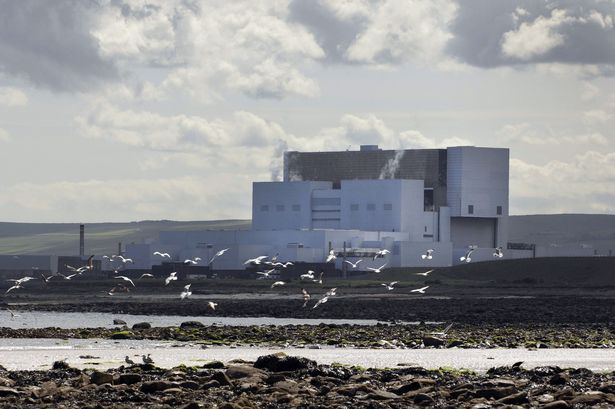
Torness Rob Edwards, August 12, 2024
Labour and Conservative governments secretly harboured doubts about building a nuclear power station at Torness in East Lothian in the late 1970s, according to internal documents released by the Scottish Government.
Campaigns against Torness won support within the then Scottish Office, and came closer to success than realised. There was a “real risk” of the treasury in London delaying the project, warned one official.
But the nuclear industry fought a fierce behind-the-scenes battle in defence of the power station, and it ended up being built in the 1980s.
Campaigners condemned past decision-making about Torness as a “total sham”. According to one former UK Government adviser, lobbying by the nuclear industry had always been “more influential” than evidence.
The Ferret analysed 11 large government files on Torness in 1978 and 1979 at the National Records of Scotland in Edinburgh. One was only released in 2023 after a request under freedom of information law.
The files reveal that ministers and officials in both James Callaghan’s and Margaret Thatcher’s governments privately raised concerns about the proposed nuclear station at Torness.
Torness was the target for a series of anti-nuclear protests in the 1970s, initially organised by the Scottish Campaign to Resist the Atomic Menace (SCRAM). There were demonstrations and an occupation of the site in 1978, and in May 1979 more than 10,000 people joined a weekend protest there.
Despite further protests in 1980 and 1981, the nuclear station was built and formally opened by Thatcher in 1989. It is currently scheduled to keep operating until 2028, though there are plans to run it for longer.
Early in 1978 SCRAM made a submission to the Scottish Office arguing that Torness should be subject to a new public inquiry. An earlier inquiry in 1974 had been inadequate because it had not specified the type of reactors to be built, the campaign group argued……………………………………………………………………………………………………
Case for Torness ‘less than convincing’
However, a covering note from an official on 16 May 1979 admitted that the case for Torness was “less than convincing”. The absence of information in support of the plant was “worrying”, the official commented, “because I think there is a real risk in the present climate of the treasury seeking to re-examine or hold up the project”.
In a memo two days later, Fletcher said: “I still have some doubts concerning the advisability of a nuclear station at Torness”. A handwritten note by an official added simply “Amen”.
A memo on 1 June 1979 reported that Torness’s backer, the government-owned South of Scotland Electricity Board (SSEB), was “most despondent” about the lack of investment approval. All the signs were that the project was “slipping out of control”, it said.
In the end, though, the government documents show that the SSEB, backed by its supporters in the Scottish Office, saved Torness. They worked hard to convince the treasury and, ultimately, Thatcher, that it should go ahead because it was needed to sustain the power station industry…………………………………………………………………………
Torness ‘a total sham’
The veteran environmental campaigner and energy author, Walt Patterson, testified at the Torness inquiry in 1974. “Torness was a total sham, and the inquiry had no relevance to the official decision to build it,” he told The Ferret.
“Torness was ordered just to keep the power station building industry busy, not because we could use the electricity.”
Pete Roche, a nuclear consultant who worked with SCRAM in Edinburgh in the 1970s and 1980s, suggested that politicians might have been worried that cancelling Torness would “somehow legitimise protest”.
He said: “We knew at the time that the case for Torness was collapsing before our very eyes, but it’s a pleasant surprise to learn that both Labour and Tory Ministers had secretly expressed doubts about the plant.”
Dr Ewan Gibbs, a researcher from the school of social and political sciences at University of Glasgow who has studied Torness protests, pointed out that anti-nuclear activists had mobilised tens of thousands of people in opposition to the plant.
“Thanks to these new research findings, we now know that both Scottish Labour and Tory ministers had serious doubts over the nuclear power station project in the late 1970s.”……………………………………….. more https://theferret.scot/torness-nuclear-doubts-ministers/—
Heat aggravated by carbon pollution killed 50,000 in Europe last year – study

Hot weather inflamed by carbon pollution killed nearly 50,000 people in
Europe last year, with the continent warming at a much faster rate than
other parts of the world, research has found.
The findings come as
wildfires tore through forests outside Athens, as France issued excessive
heat warnings for large swathes of the country, and the UK baked through
what the Met Office expects will be its hottest day of the year.
Doctors call heat a “silent killer” because it claims far more lives than most
people realise. The devastating mortality rate in 2023 would have been 80%
higher if people had not adapted to rising temperatures over the past two
decades, according to the study published in Nature Medicine.
Guardian 12th Aug 2024
1 This Month




PLEASE OPPOSE HR 8255 AND S.3639 – bills would accelerate satellite deployment, with no environmental review or safeguards – https://ncstd5li.quorum.us/campaign/169331/
To see nuclear-related stories in greater depth and intensity – go to https://nuclearinformation.wordpress.com
-
Archives
- September 2026 (330)
- August 2026 (330)
- July 2026 (355)
- June 2026 (287)
- May 2026 (306)
- April 2026 (356)
- March 2026 (251)
- February 2026 (267)
- January 2026 (308)
- December 2025 (358)
- November 2025 (359)
- October 2025 (375)
-
Categories
- 1
- 1 NUCLEAR ISSUES
- business and costs
- climate change
- culture and arts
- ENERGY
- environment
- health
- history
- indigenous issues
- Legal
- marketing of nuclear
- media
- opposition to nuclear
- PERSONAL STORIES
- politics
- politics international
- Religion and ethics
- safety
- secrets,lies and civil liberties
- spinbuster
- technology
- Uranium
- wastes
- weapons and war
- Women
- 2 WORLD
- ACTION
- AFRICA
- Atrocities
- AUSTRALIA
- Christina's notes
- Christina's themes
- culture and arts
- Events
- Fuk 2022
- Fuk 2023
- Fukushima 2017
- Fukushima 2018
- fukushima 2019
- Fukushima 2020
- Fukushima 2021
- general
- global warming
- Humour (God we need it)
- Nuclear
- RARE EARTHS
- Reference
- resources – print
- Resources -audiovicual
- Weekly Newsletter
- World
- World Nuclear
- YouTube
-
RSS
Entries RSS
Comments RSS

