Trump, Zelenskyy make ‘95% progress’, but ‘thorny issues’ remain – 5 key points
Aditi, 29 Dec 2025, https://www.financialexpress.com/world-news/trump-zelenskyy-make-95-progress-but-thorny-issues-remain-5-key-points/4090944/
Ukrainian President Volodymyr Zelensky met US President Donald Trump at Mar-a-Lago in Florida for high-stakes talks aimed at ending the nearly four-year Russia–Ukraine war.
Ukrainian President Volodymyr Zelenskyy met US President Donald Trump in Florida on Sunday as both leaders tried to push forward a possible peace deal to end the nearly four-year war between Russia and Ukraine. The meeting took place at Trump’s private club, Mar-a-Lago, in Palm Beach, where the US president is spending the holiday season. Both leaders described the talks as positive. Trump called the meeting “terrific,” while Zelenskyy said it was “great.”
This was Zelenskyy’s third visit to meet Trump this year, and expectations were high that the two would try to close major gaps in a peace plan that has been under discussion for months. Here are all the key points discussed.
Trump and Zelenskyy meet: Trump confident, but ‘thorniest’ issue unresolved
Trump seemed positive after the meeting, but also warned that the talks are complicated and fragile. Standing next to Zelenskyy, he said a deal could be clear “in a few weeks,” but stopped short of giving a firm timeline.
“We could have something where one item that you’re not thinking about is a big item, breaks it up. Look, it’s been a very difficult negotiation,” he said. Trump said he believes a peace agreement is close, possibly with around 95% agreement on key points, but admitted that final hurdles remain.
Speaking of the eastern Donbas region, which Russia has demanded that Ukraine surrender, is still an outstanding issue.
Trump acknowledged that this area is one of the “thorny issues” still unresolved. The US has suggested creating a “free economic zone” in parts of Donbas as part of a negotiated settlement, but details remain unclear.
“We’re getting closer to an agreement on that. And that’s a big issue,” he told reporters in a joint appearance with Ukrainian President Volodymyr Zelenskyy. “Certainly, that’s one of the big issues, and I think we’re closer.”
Trump and Zelenskyy meet: Territory still the hardest question
After the meeting, Zelenskyy made it clear that the issue of land remains the most difficult part of the talks. Speaking to reporters at Mar-a-Lago, he said Ukraine cannot simply give up territory. “You know our position,” Zelenskyy said, according to CNN. “We have to respect our law and our people. We respect the territory which we control.”
He added that any decision about land must be made by the people of Ukraine, not just leaders behind closed doors. Zelenskyy said a national referendum could be used to decide not only territorial questions, but other parts of the peace plan as well. “This is not the land of one person,” he said. “It is the land of our nation for many generations.”
He also said Ukraine’s parliament could be involved, but told reporters that Ukraine’s constitution does not allow territory to be handed over through a simple parliamentary vote. Only the public can approve such a move.
‘Russia wants to see Ukraine succeed,’ Trump says after meeting Zelenskyy
“Russia wants to see Ukraine succeed. Once it sounds a little strange, but I was explaining to the President, President Putin was very generous in his feelings toward Ukraine succeeding, including supplying energy, electricity, and other things at very low prices. So a lot of good things came out of that call today,” Trump told reporters standing next to Zelenskyy after the meeting.
Trump also said he would consider travelling to Ukraine if it helped secure a deal, including possibly speaking to Ukraine’s parliament. However, he suggested such a trip is unlikely. “I have no problem with travelling to Ukraine,” Trump said. “But I would like to get the deal done and not necessarily have to go.”
Trump and Zelenskyy meet: Ukraine and the United States are fully aligned
President Vladimir Putin has repeatedly said he wants four regions captured by Russian forces, along with Crimea, to be recognised as Russian territory. Crimea was illegally annexed by Russia in 2014. Russia is not ready to negotiate on its demands, Moscow has made it clear.
Putin has also demanded that Ukraine withdraw from some eastern areas that Russian forces have not even captured. Kyiv has rejected these conditions.
Despite the challenges, Zelenskyy said there has been strong progress on other parts of the peace plan. According to him, about 90% of the overall plan has broad agreement. On security guarantees and military issues, he said Ukraine and the United States are fully aligned. “We agree that security guarantees are a key milestone in achieving lasting peace,” Zelenskyy said.
He added that the two leaders discussed all aspects of a 20-point peace proposal during their talks.
Trump and Zelenskyy meet: Call with European leaders
During Zelenskyy’s visit, Trump and the Ukrainian president also held a phone call with several European leaders. The call lasted over an hour and included leaders from Britain, France, Germany, Italy, Poland and Norway, along with NATO’s secretary general and the president of the European Commission.
Finnish President Alexander Stubb said the leaders discussed “concrete steps” toward ending the war. European Commission President Ursula von der Leyen said there was good progress made.
Dungeness power station tipped for nuclear return as government ‘aware’ of interest
Dungeness power station tipped for nuclear return as government
‘aware’ of interest. The government has suggested Kent’s scrapped
nuclear power station could start generating energy again – despite being
decommissioned. Dungeness power station previously produced enough
electricity for a million homes a year before defuelling began in 2021.
But ministers say they are “aware” of interest from developers in
establishing new small modular reactors (SMRs) at the Romney Marsh site.
Last month, the government published its ‘nuclear energy generation’
policy, which outlines where nuclear reactors could be built without naming
specific locations. However, ministers have previously said Dungeness is
being considered for the new project. In September, Lord Patrick Vallance,
minister of state at the Department for Energy Security and Net Zero
(DESNZ), listed the Marsh headland as a potential location for new nuclear
power.
Kent Online 29th Dec 2025, https://www.kentonline.co.uk/romney-marsh/news/scrapped-power-station-tipped-for-nuclear-return-under-new-p-334408/
Occupied and Imperiled: Charting a Path for Zaporizhzhia’s Nuclear Future
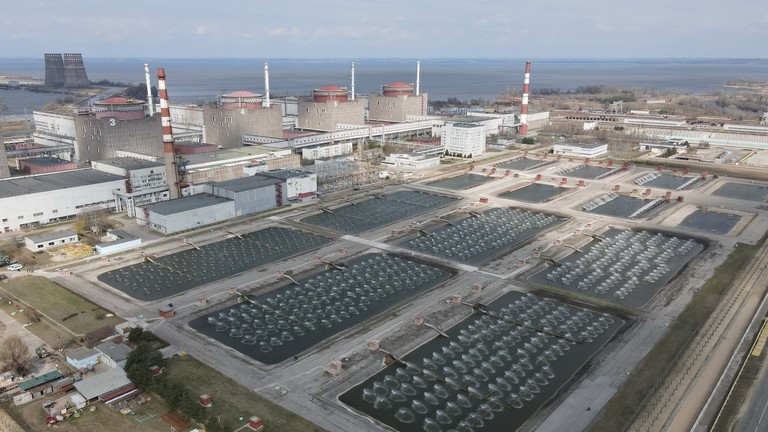
The Zaporizhzhia nuclear power plant, the largest in Europe, is a central issue in U. S. President Donald Trump’s peace plan for the ongoing war between Russia and Ukraine.
ByNewsroom, December 27, 2025, https://moderndiplomacy.eu/2025/12/27/occupied-and-imperiled-charting-a-path-for-zaporizhzhias-nuclear-future/
The Zaporizhzhia nuclear power plant, the largest in Europe, is a central issue in U. S. President Donald Trump’s peace plan for the ongoing war between Russia and Ukraine. This matter is part of a broader peace proposal from Ukrainian President Volodymyr Zelenskiy, comprising 20 key points. The power plant has been under Russian control since March 2022, with Russia asserting ownership while most of the world maintains it belongs to Ukraine. A significant proposal has emerged from the U. S. for a joint trilateral operation of the plant with Ukrainian participation and an American chief manager overseeing its operations.
Currently located in Enerhodar, the power plant has six reactors and a total capacity of 5.7 gigawatts. However, since Russia’s takeover, five reactors have been shut down, and the last one ceased operation in September 2022. Four of the reactors have transitioned to using fuel from Westinghouse, moving away from Russian nuclear fuel. The plant’s management states that all reactors are now in “cold shutdown. ” Both Russia and Ukraine have accused each other of attacks on the plant and disruptions to its power lines, which has often compelled it to rely on emergency diesel generators for essential cooling functions.
The Zaporizhzhia nuclear power plant, the largest in Europe, is a central issue in U. S. President Donald Trump’s peace plan for the ongoing war between Russia and Ukraine. This matter is part of a broader peace proposal from Ukrainian President Volodymyr Zelenskiy, comprising 20 key points. The power plant has been under Russian control since March 2022, with Russia asserting ownership while most of the world maintains it belongs to Ukraine. A significant proposal has emerged from the U. S. for a joint trilateral operation of the plant with Ukrainian participation and an American chief manager overseeing its operations.
Currently located in Enerhodar, the power plant has six reactors and a total capacity of 5.7 gigawatts. However, since Russia’s takeover, five reactors have been shut down, and the last one ceased operation in September 2022. Four of the reactors have transitioned to using fuel from Westinghouse, moving away from Russian nuclear fuel. The plant’s management states that all reactors are now in “cold shutdown. ” Both Russia and Ukraine have accused each other of attacks on the plant and disruptions to its power lines, which has often compelled it to rely on emergency diesel generators for essential cooling functions.
An ongoing concern is the dwindling water supply necessary for cooling the reactors, exacerbated by the destruction of the Kakhovka hydroelectric dam in 2023. The plant requires adequate water for both its reactors and spent fuel pools; without it, the risk of overheating and fire increases. Reports indicate a significant drop in the water level at the plant’s cooling pond, raising alarms about the safety of operations, as the current reserves may only suffice for one or two reactors. Consequently, the situation at the Zaporizhzhia plant raises critical questions about nuclear safety amid the conflict and the potential repercussions if issues remain unaddressed.
Europe’s nuclear sites on high alert for drone threats in the year ahead
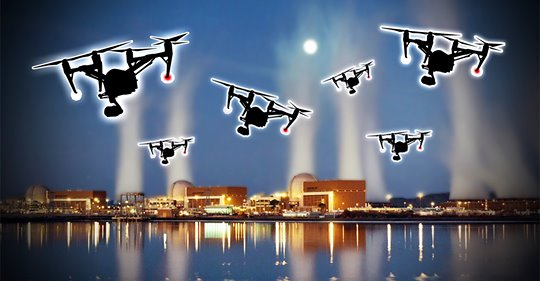
Western countries scramble to bring in new defences as experts see rise of autonomous threats everywhere
Thomas Harding, December 26, 2025. https://www.thenationalnews.com/news/europe/2025/12/26/europes-nuclear-facilities-put-on-a-2026-drone-alert/
It was a taste of what could become one of the decisive threats next year, when the flight path between Dublin and Britain’s Sellafield nuclear reactor was disrupted by unidentified drones.
On the incoming jet was Ukrainian President Volodymyr Zelenskyy and his wife, minutes away from landing at Dublin Airport, slightly ahead of schedule.
After an Irish naval vessel reported that a number of drones were manoeuvring 36km north-east of the city – Sellafield is just 200km from the capital – Ireland’s Justice Minister Jim O’Callaghan said it was a “co-ordinated threat” to “put pressure” on Europe and Ukraine.
Just days later, the menace shifted. The French Navy opened fire on drones detected over a highly sensitive site housing the country’s fleet of nuclear submarines.
The drones at Ile Longue naval base were ultimately intercepted with jamming systems, but their presence over one of the continent’s most heavily protected sites sent a clear message: Europe is waking up to significant vulnerabilities to its military and civilian nuclear sites, and Russia is widely suspected to be behind the activity.
Nuclear threat
France has19 nuclear power stations, Britain has five − including Sellafield, in Cumbria, north-west England − and many more are spread across the continent. Defence analysts have warned that a hostile state could target a vulnerable power station rather than resorting to the outright belligerence of launching a nuclear weapon.
Causing a nuclear incident with several drone strikes would be difficult, but even a limited attack could cause symbolic and economic damage. Fallout could include enforced shutdowns, mass evacuations and financial market panic, all without a state crossing the nuclear threshold.
“What if Russia just blows up one of the nuclear power plants in the UK using drones that are flown from within the UK?” said Ed Arnold, a senior military analyst at the Royal United Services Institute think tank. “That’s a different vector of threat, but it would achieve the same result from a Russian perspective.”
He added that the sites’ “vulnerabilities are really quite critical, because this is hard to defend against,” and that even just flying drones over sensitive sites “is cheap, deniable and has a high economic impact”.
Ukraine, on one level, is responsible for tactics that were previously the stuff of imagination. Its remarkably successful Operation Spider-Web in June demonstrated the changed boundaries of warfare.
The operation used more than 100 short-range kamikaze drones launched from lorries parked within 10km of several Russian airbases, destroying 11 Russian long-range bombers capable of carrying nuclear weapons.
“Although it was a costly lesson, it likely opened Moscow’s eyes to the opportunities afforded by these capabilities,” wrote Dr Daniel Salisbury in an International Institute for Strategic Studies think tank paper on the growing threat. “Even minimal capability can use emerging technologies to hold nuclear assets at risk,” he added.
A year ago, the idea of a head of state being targeted for assassination by drones seemed like a plot from a Tom Clancy novel. Not any more. Presidential security details now carry drone jammers that resemble oversized guns.
But it is not just the French and Irish incidents that are setting off a wave of concern over Europe. Last month, drones were spotted over Kleine-Brogel Air Base in Belgium on three consecutive nights.
New modes
In the Netherlands, guards fired at drones over Volkel Air Base, which hosts US nuclear weapons under Nato’s nuclear-sharing arrangements. Earlier this month, Dutch F-35 fighter jets were scrambled to intercept a drone.
Similar incidents have been reported around RAF Lakenheath in eastern England, which is likely to soon host US nuclear weapons after a two decade absence.
What is troubling the authorities is that the flights are clustered around high-value nuclear and military sites, with drones larger and more capable than those usually used by hobbyists.
“These are not people flying toys,” said Belgium’s Defence Minister, Theo Francken, after the Kleine-Brogel incursion. “They came to spy, to see where the F-16s are, where the ammunition is and other highly strategic information.” Furthermore, some of the UAVs flew higher and proved resistant to jamming.
This adds to a series of incidents since September in which drones flew over civilian airports across Eastern Europe, as well as Germany and Scandinavia.
The flights, likely conducted by criminal gangs and paid for in cryptocurrency by Moscow, could well be construed as “hostile reconnaissance” to look into sites or indeed test their anti-drone technology for a future conflict.
Drones can also gather real-time imagery that satellites cannot and if one could capture either a French nuclear-armed submarines leaving Ile Longue or a Royal Navy one departing Faslane in Scotland it would give enemies a significant tracking advantage.
Drones everywhere
Hostile states can also use the rapidly expanding civilian drone market to blend into the noise to hide their true intentions. In Britain it is estimated that by 2030 there could be 76,000 commercial drones operating in its airspace, according to The Economist. And across Europe, more than 3,800 close encounters between drones and aircraft were recorded last year − more than double the previous year.
Drones, Mr Arnold argued, are perfectly suited to “grey zone” operations, those activities that fall short of open warfare but inflict disruption and apprehension.
Annabelle Walker, an analyst at the intelligence company Sibylline, also suggested that Russia has a strong interest in probing Nato’s readiness.
“The use of drones has exposed a particular gap in European countries,” she said. “Testing response times, decision-making and co-ordination tells you a lot and it can all be done below the threshold of war.”
Shoot ’em down?
Shooting down drones risks collateral damage. Main defences include jamming or “spoofing”, in which drones are tricked into misidentifying their location. Jamming is less effective against autonomous drones programmed to strike or that are using fibre-optic control − as seen widely in the Ukraine-Russia war.
Defenders can use physical countermeasures such as guns that shoot nets, and shotguns, which are broadly carried in Ukraine. The National understands that Kyiv is set to unveil next year a state-of-the art interceptor drone. The counter-drone industry is now becoming a major market for defence companies.
To defend against a serious attack on a nuclear site, governments must identify vulnerable locations then use a layered defence of radar, electronic warfare and trained personnel dedicated to counter-drone operations, said Douglas Barrie of the IISS.
But air defence was an area where European states had underinvested for decades since the Cold War ended. “Western Europe and the UK really need to pay more attention as this is back on the agenda in a big way,” Mr Barrie told The National.
“Moscow is clearly in the frame, and they’re testing the boundaries of what they can get away with before the other side pushes back,” he added.
Mr Zelenskyy’s near-miss over Dublin was not necessarily an act of war but it was a warning − as were the other incidents − and Moscow may well consider further disruptive operations that avoid open conflict.
It is now a question of whether Europe can strengthen its defences against a threat that will only intensify.
The Real Story Behind the Russia–Ukraine War—and What Happens Next
local Ukrainian nationalists joined Hitler’s Wehrmacht in its depredations against Jews, Poles, Roma and Russians when it first swept through the country from the west on its way to Stalingrad; and then, in turn, the Russian populations from the Donbas and south campaigned with the Red Army during its vengeance-wreaking return from the east after winning the bloody 1943 battle of Stalingrad that turned the course of WWII.
As Washington sleepwalks deeper into conflicts that have nothing to do with genuine US security, the stakes for ordinary Americans grow higher by the day.
by David Stockman, Doug Casey’s International Man , 27 Dec 25
Notwithstanding the historic fluidity of borders, there is no case whatsoever that Russia’s invasion of Ukraine in February 2022 was “unprovoked” and unrelated to NATO’s own transparent provocations in the region.
The details are arrayed below, but the larger issue needs be addressed first.
Namely, is there any reason to believe that Russia is an expansionist power looking to gobble up neighbors which were not integral parts of its own historic evolution, as is the case with Ukraine?
After all, if despite Rubio’s treachery President Trump does manage to strike a Ukraine peace and partition deal with Putin you can be sure that the neocons will come charging in with a false Munich appeasement analogy.
The answer, however, is a resounding no!
Our firm rebuke of the hoary Munich analogy as it has been falsely applied to Putin is based on what might be called the double-digit rule. To wit, the true expansionary hegemons of modern history have spent huge parts of their GDP on defense because that’s what it takes to support the military infrastructure and logistics required for invasion and occupation of foreign lands.
For instance, here are the figures for military spending by Nazi Germany from 1935–1944 expressed as a percent of GDP. This is what an aggressive hegemon looks like in the ramp-up to war: German military spending had already reach 23% of GDP, even before its invasion of Poland in September 1939 and its subsequent commencement of actual military campaigns of invasion and occupation.
Not surprisingly, the same kind of claim on resources occurred when the United States took it upon itself to counter the aggression of Germany and Japan on a global basis. By 1944 defense spending was equal to 40% of America’s GDP, and would have totaled more than $2 trillion per year in present day dollars of purchasing power.
Military Spending As A Percent Of GDP In Nazi Germany
- 1935: 8%.
- 1936: 13%.
- 1937: 13%.
- 1938: 17%.
- 1939: 23%.
- 1940: 38%.
- 1941: 47%.
- 1942: 55%.
- 1943: 61%.
- 1944: 75%
By contrast, during the final year before Washington/NATO triggered the Ukraine proxy war in February 2022, the Russian military budget was $65 billion, which amounted to just 3.5% of its GDP.
Moreover, the prior years showed no build-up of the kind that has always accompanied historic aggressors. For the period 1992 to 2022, for instance, the average military spending by Russia was 3.8% of GDP– with a minimum of 2.7% in 1998 and a maximum of 5.4% in 2016.
Needless to say, you don’t invade the Baltics or Poland—to say nothing of Germany, France, the Benelux and crossing the English Channel—on 3.5% of GDP! Not even remotely.
Since full scale war broke out in 2022 Russian military spending has increased significantly to 6% of GDP, but all of that is being consumed by the Demolition Derby in Ukraine—barely 100 miles from its own border.
That is, even at 6% of GDP Russia has not yet been able to subdue its own historic borderlands. So if Russia self-evidently does not have the economic and military capacity to conquer its non-Ukrainian neighbors in its own region, let alone Europe proper, what is the war really about?
Continue readingRussia wants to build a nuclear power plant on the moon in the next few years .
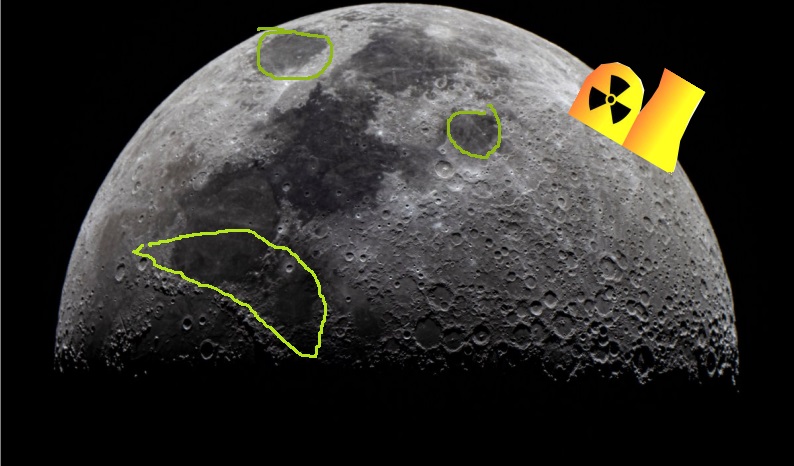
Project aims to supply energy for its lunar space programme
Guy Faulconbridge, Wednesday 24 December 2025, https://www.independent.co.uk/space/russia-china-space-race-moon-nuclear-power-b2890010.html
Russia is reportedly planning to establish a nuclear power plant on the moon within the next decade.
This ambitious project aims to supply energy for its lunar space programme and a joint research station with China, as global powers intensify their
efforts in lunar exploration.
Historically, Russia has held a prominent position in space, notably with Yuri Gagarin’s pioneering journey in 1961.
However, its dominance has waned in recent decades, with the nation now trailing behind the United States and, increasingly, China.
The country’s lunar aspirations faced a significant setback in August 2023 when its uncrewed Luna-25 mission crashed during a landing attempt.
Furthermore, the landscape of space launches, once a Russian speciality, has been revolutionised by figures such as Elon Musk, adding to the competitive pressure.
Russia’s state space corporation, Roscosmos, said in a statement that it planned to build a lunar power plant by 2036 and signed a contract with the Lavochkin Association aerospace company to do it.
Roscosmos said the purpose of the plant was to power Russia’s lunar programme, including rovers, an observatory and the infrastructure of the joint Russian-Chinese International Lunar Research Station.
“The project is an important step towards the creation of a permanently functioning scientific lunar station and the transition from one-time missions to a long-term lunar exploration program,” Roscosmos said.
Roscosmos did not say explicitly that the plant would be nuclear but it said the participants included Russian state nuclear corporation Rosatom and the Kurchatov Institute, Russia’s leading nuclear research institute.
The head of Roscosmos, Dmitry Bakanov, said in June that one of the corporation’s aims was to put a nuclear power plant on the moon and to explore Venus, known as Earth’s “sister” planet.
The moon, which is 384,400 km (238,855 miles) from our planet, moderates Earth’s wobble on its axis, which ensures a more stable climate. It also causes tides in the world’s oceans.
Politico: Despite the war, France will build nuclear fuel in Germany with the help of a Russian company
Can the ambitious plan to phase out Russian nuclear fuel succeed with Russian expertise? Paris believes it can and is pressing Berlin for approval
Protothema, Newsroom, December 22, 2025
Takeawaysby Protothema AI
- A Franco-Russian joint venture plans to produce nuclear fuel components in Lingen, Germany, operated by Framatome
- The project faces scrutiny from German authorities due to security concerns and potential espionage risks
- Framatome is lobbying German officials for approval, arguing it is a European solution despite Russian components
- German regional authorities remain skeptical, citing past energy vulnerabilities with Russia
- A final decision on the Lingen plant’s approval is expected in the coming weeks.
A triangular relationship that is close to becoming a reality, despite the war in Ukraine and the sanctions imposed on Russia, will help France produce nuclear fuel for its reactors.
The Franco-Russian joint venture will manufacture nuclear fuel rods and other components in Lingen, Germany.
The plant will be operated by Framatome, a subsidiary of the French state-owned energy company EDF, using Russian components supplied by TVEL, part of the Kremlin-controlled nuclear giant Rosatom. TVEL will not be directly involved in the operation of the plant but will provide the Russian-made components necessary for producing the nuclear fuel.
The plant will not supply electricity directly; it will focus solely on producing nuclear fuel.
Framatome is putting intense pressure on the German authorities to approve the project, mobilizing the French government at the highest levels. The company argues that what is good for Framatome is good for Europe.
However, as Politico points out, the project comes at a time when the EU is attempting to ban all energy imports from Russia in response to Russia’s invasion of Ukraine. At the same time, the plan raises concerns among state and federal authorities about potential espionage and other security risks.
The French-Russian joint venture has not yet received approval from Berlin. A final decision is expected in the coming weeks, but no timetable has been set……………………………………………………
France–Russia Nuclear Cooperation
The cooperation between Framatome and Rosatom began in 2021, when the two parties signed a long-term partnership and established a joint venture in which Framatome owns 75% and TVEL 25%……………….. https://en.protothema.gr/2025/12/22/politico-despite-the-war-france-will-build-nuclear-fuel-in-germany-with-the-help-of-a-russian-company/
EU launches inquiry into Czech funding plan for new nuclear
WNN, Tuesday, 23 December 2025
The European Commission “has doubts” that the proposed Czech funding plan for its proposed new nuclear units “is fully in line with EU State aid rules”.
In April last year the European Commission (EC), which is the executive arm of the European Union (EU), approved the funding plan for a single new nuclear reactor at the Dukovany nuclear power plant site in the Czech Republic.
In July last year Korea Hydro & Nuclear Power (KHNP) was selected for the project, and in October this year the Czech Republic officially notified the EC it had expanded its plans to two new nuclear units, each with a capacity of 976 MWe
What is the funding plan?
The EC says: “Czechia plans to support the construction of the new nuclear units through three measures: a low-interest repayable State loan of an initial amount currently estimated between EUR23 billion (USD27.1 billion) and EUR30 billion, which will cover the full construction costs; a two-way contract for difference with a proposed duration of 40 years to ensure stable revenues for the nuclear power plant; and a mechanism to protect EDU II in case of policy changes and adverse impacts, to address the risk arising from the longevity of exposure to policy changes.”
EDU II is Elektrárna Dukovany II, a company set up to develop and operate the new nuclear units, which is owned by the Czech state (80%) and the Czech Republic’s nuclear power plant operator ČEZ (20%).
The contract for difference effectively means that if electricity prices are below the agreed level, the nuclear project will receive a subsidy to make it up to the agreed price, and if electricity prices are above the agreed price, the nuclear project would pay money back to the government…………………………………………………..
The EC has doubts about whether it is fully in line with EU State aid rules and wants to ensure that “no more aid than necessary is ultimately granted. In particular, the Commission has doubts on whether the proposed package achieves an appropriate balance between reducing risks to enable the investment and maintaining incentives for efficient behaviour, while avoiding excessive risk transfer to the State”.
It also wants to look at the impact of the State aid measures on competition in the market “in particular, the Commission has concerns that several essential design elements of the CfD remain insufficiently specified, preventing the Commission from fully assessing whether the mechanism maintains efficient operational and maintenance incentives”.
…………………………………….. Asked about the status of any investigation into foreign state aid, a European Commission spokesperson told World Nuclear News on Tuesday: “The Commission’s assessment of a complaint by EDF under the Foreign Subsidies Regulation regarding the award of a tender to KNHP is ongoing. We do not comment on ongoing investigations.” https://www.world-nuclear-news.org/articles/eu-launches-inquiry-into-czech-new-nuclear-funding-plan
Warning Chernobyl nuclear plant radiation shield is at risk of collapse

By PERKIN AMALARAJ, FOREIGN NEWS REPORTER, 24 December 2025
A Russian strike could collapse the internal radiation shelter at the defunct Chernobyl nuclear power station in Ukraine, the plant’s director has warned.
Kyiv has accused Russia of repeatedly targeting the facility, the site of a 1986 meltdown that is still the world’s worst ever nuclear disaster, since Moscow invaded in February 2022.
A hit earlier this year punched a hole in the outer radiation shell, triggering a warning from the International Atomic Energy Agency (IAEA) that it had ‘lost its primary safety functions.’
In an interview with AFP, plant director Sergiy Tarakanov said fully restoring that shelter could take three to four years, and warned that another Russian hit could see the inner shell collapse.
‘If a missile or drone hits it directly, or even falls somewhere nearby, for example, an Iskander, God forbid, it will cause a mini-earthquake in the area,’ Tarakanov said.
The Iskander is Russia’s short-range ballistic missile system that can carry a variety of conventional warheads, including those to destroy bunkers.
‘No one can guarantee that the shelter facility will remain standing after that. That is the main threat,’ he added.
The remnants of the nuclear power plant are covered by an inner steel-and-concrete radiation shell – known as the Sarcophagus and built hastily after the disaster – and a modern, high-tech outer shell, called the New Safe Confinement (NSC) structure.
Our NSC has lost several of its main functions. And we understand that it will take us at least three or four years to restore these functions,’ Tarakanov added.
The IAEA said earlier this month an inspection mission found the shelter had ‘lost its primary safety functions, including the confinement capability, but also found that there was no permanent damage to its load-bearing structures or monitoring systems.’
Director Tarakanov said that radiation levels at the site remained ‘stable and within normal limits.’
Daily Mail 23rd Dec 2025, https://www.dailymail.co.uk/news/article-15409149/Warning-Chernobyl-nuclear-plant-radiation-shield-risk-collapse.html
The cost of eternity
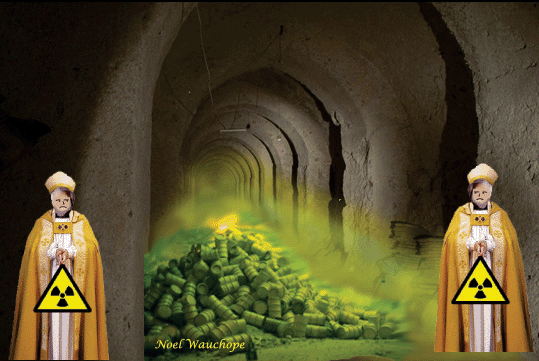
While the hype for nuclear energy is taking over Europe, radioactive waste remains a challenge: it takes billions to store it safely.
Guillaume Amouret | 17/12/2025,
https://europeancorrespondent.com/en/r/the-cost-of-eternity
The world’s first deposit of nuclear waste lies 430 meters underground, beneath a dense pine forest on the peninsula of Olkiluoto, on the shores of western Finland. It should store up to 6,500 tonnes of waste.
Finland opted for a deep geological deposit to permanently and securely dispose of radioactive spent nuclear fuel. Carved in the granite bedrock, deep below the surface, the storage is conceived to protect the surface from radioactivity for at least 100,000 years.
After a one-year delay due to technical difficulties, the Onkalo (“cave” in Finnish) is now awaiting final approval from the Finnish Nuclear Security Agency, STUK.
Contacted by The European Correspondent, the operator of the Onkalo, Posiva, reaffirmed its goal to start operations in 2026.
Safe until the world’s end?
For now, spent fuel elements are usually stored in temporary above-ground facilities next to the reactors or collected in a central storage facility such as La Hague in France.
However, the disposal of radioactive materials has not always been well-thought-out. After the war and until the 1990s, 200,000 barrels of nuclear waste were dumped in the deep sea without consideration for the environmental consequences by the Nuclear Energy Agency.
Today, the Onkalo is pioneering the ”permanent” underground disposal method. Posiva adopted the Swedish KBS-3 system: spent fuel rods are placed in an 8-meter-long copper canister, which is then embedded in bentonite clay and inserted in holes drilled directly into the crystalline rock deep underground.
The remaining free tunnels are eventually filled with bentonite too. All combined, copper bentonite and granite constitute a three-stage protection against radiation.
Billions for projects that locals don’t like
The construction of the Onkalo site has cost around €1 billion so far, Posiva told TEC. The operations and the site’s closing, in a hundred years from now, are further evaluated at an additional €4 billion, bringing the total cost to €5.5 billion. For context, decommissioning a wind turbine in Finland costs between €10,000 and €85,000.
In Forsmark, on the Swedish side of the Gulf of Bothnia, SKB started the construction of a similar deposit in January this year.
The Swedish project should have twice the storage capacity of the Onkalo. And so does its budget. In a recent calculation update, SKB mentioned a global cost of €11 billion from cradle to final closing.
The Swedish and Finnish repositories are not the only ongoing projects in Europe – France and Germany have the most (running or shut down) nuclear reactors in Europe, 71 and 33 respectively. Things get a bit trickier there, however, when it comes to waste storage.
Exit the granite in France, the spent nuclear fuel will be buried in clay rock in Bure, a small village situated in a rural area of eastern France. Originally estimated at €25 billion, the global budget of the French deposit has been recently revised to between €26 and 37 billion.
Asked by TEC, the operator, Andra, justifies the increase through “the extension of schedule, and extra costs due to additional workforce in management and the security of the site”.
This summer, Andra started the construction of a dedicated building for the police squad in charge of monitoring and cracking down on local opposition to the project since 2019.
So far, the trophy for the most chaotic process goes to Germany. In 1973, the first site was selected to build a final repository: Gorleben’s salt mine in Northern Germany. But after decades of fierce opposition from environmental activists against the infrastructure, the site was declared unsuitable five years ago.
In fact, the search for an adequate location restarted from zero at the beginning of the 2010s. And while the search process is still ongoing for a few more years, the German authority for nuclear security, BASE, hopes to open a new site by 2050.
Who pays?
Following the principle ”polluter pays”, nuclear energy companies should fully fund the permanent storage construction. In addition, they are subject to two different taxes to fund the construction of the deposit site: a research and a design tax.
Finland and Sweden work with a relatively similar finance concept. In both Scandinavian countries, the nuclear industry contributes to a dedicated nuclear waste fund every year.
In both cases, the annual fee is determined by the costs of the remaining work for the final disposal. In Finland, this accounts for about 9% of the production cost of nuclear electricity, and around 6% in Sweden.
Germany tried to create a unique public foundation to finance nuclear waste management: KENFO. In 2017, the energy companies E.ON, Vattenfall, EnBW and RWE transferred together €24 billion to the fund.
KENFO then should have developed the fund further by investing parts of it in financial products, but registered a loss of €3 billion in 2023, due to the loss in value of governmental bonds and real estate investment trusts (REIT).
$264million scheme could transform RAF Lakenheath in Suffolk into a nuclear facility
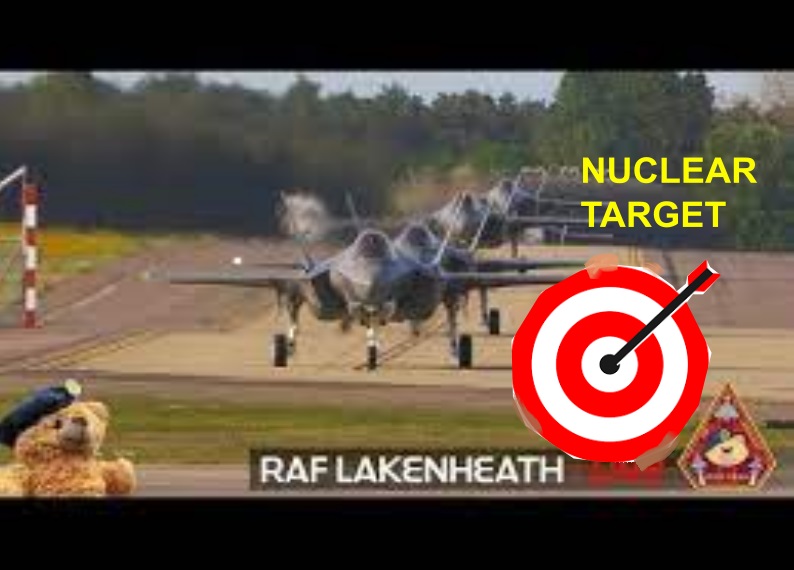
$264million scheme could transform RAF Lakenheath in Suffolk in order for
it to be capable of storing nuclear weapons. Reports claim the US Pentagon
has carried out “detailed assessments” of RAF Lakenheath’s suitability as a
nuclear facility. It follows prolonged speculation the Suffolk air base
already holds specialist weapons.
A plane from the US Air Force’s nuclear
weapon storage facility arrived at RAF Lakenheath in July, fuelling rumours
among experts. The US withdrew its warheads from RAF Lakenheath in 2008.
Eastern Daily Press 23rd Dec 2025 ,By Ben Robinson, West Suffolk & Sudbury Reporter, https://www.edp24.co.uk/news/25721309.264million-scheme-transform-raf-lakenheath-suffolk/
UK to restart nuclear submarine defuelling in 2026

By Lisa West, -UK Defence Journal 23rd Dec 2025 https://ukdefencejournal.org.uk/uk-to-restart-nuclear-submarine-defuelling-in-2026/
The Ministry of Defence has confirmed that defuelling of the UK’s decommissioned nuclear-powered submarines is set to restart in 2026, as preparations continue at specialist dock facilities in Devonport.
In a written parliamentary answer, defence minister Luke Pollard said the twelve remaining first-generation submarines powered by pressurised water reactors would be handled through a tightly regulated process overseen by the Office for Nuclear Regulation.
He said the submarines would dock in “a specialised, licensed dock in Devonport”, where “the used fuel will be removed, loaded into a qualified transport container and transported to Sellafield prior to long-term storage in the Geological Disposal Facility.”
Pollard confirmed that dismantling of each vessel would only take place once defuelling is complete, adding that “work is underway to prepare the dock facilities and associated resources in line with plans to recommence defueling in 2026.”
The update also set out progress on the UK’s first full submarine dismantling programme. HMS Swiftsure, the demonstrator vessel for the Submarine Dismantling Project, began dismantling at Rosyth in 2023.
According to Pollard, the project “will refine the disposal process and is on track to be dismantled by the end of 2026, achieving the commitment given to the Public Accounts Committee in 2019.”
He said lessons from Swiftsure and the Devonport defuelling programme would be used to firm up timelines for the remaining fleet, stating that “lessons learned from these defuel and dismantling projects will provide more certainty around the schedule for defueling and dismantling the remaining 22 decommissioned submarines.”
The UK currently has 27 decommissioned nuclear submarines awaiting defuelling or dismantling, a long-running issue highlighted repeatedly by the National Audit Office and parliamentary committees concerned about safety, cost and delay.
Sweden’s Vattenfall Seeks State Funding for New Nuclear Reactors
By Michael Kern – Dec 23, 2025, https://oilprice.com/Latest-Energy-News/World-News/Swedens-Vattenfall-Seeks-State-Funding-for-New-Nuclear-Reactors.html
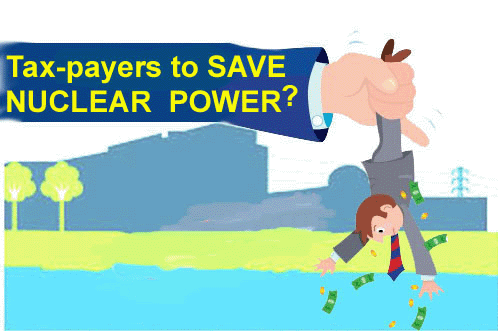
Sweden’s power giant Vattenfall announced on Tuesday it is applying for state aid for an investment in small modular reactors (SMRs) as part of a plan by industrial giants to bet on new nuclear power in the country.
Last month Sweden’s biggest industrial firms signed an agreement with Vattenfall to become shareholders in the power giant’s new company, Videberg Kraft AB, which plans to build SMRs in the country.
One of Europe’s top electric utilities, Vattenfall, created Videberg Kraft AB in April this year as a separate entity to be able to apply for government support.
Now the company and the industry organization, Industrikraft, plan joint investment and collaboration enabling the development of new nuclear power in Sweden.
Industrikraft, whose members include Volvo Group, Saab, Alfa Laval, and Hitachi Energy, will become a shareholder in Videberg Kraft with a 20-percent stake.
The government has previously announced that the state also intends to become a shareholder in the new company.
The Swedish government moved to phase out nuclear power completely in 1980, but that decision was reversed by Parliament in 2010. Five years later, four aging reactors were shut down. Six of 12 reactors remain in operation in Sweden today.
The country is now betting on SMRs to expand its nuclear fleet as Stockholm seeks to further reduce emissions with low-carbon 24/7 energy.
Sweden has tweaked its renewable energy policy, which had called for 100% renewable electricity by 2040, changing the terminology to “100% fossil-free” electricity, paving the way for the construction of more nuclear power plants.
Now Videberg Kraft’s CEO Desirée Comstedt has submitted an application for financing and risk-sharing to the Swedish Government.
When an agreement between the state and Videberg Kraft has been reached, the government may initiate a formal state aid process with the European Commission, Vattenfall said.
Videberg Kraft is planning a project with either five BWRX-300 reactors from GE Vernova Hitachi or three reactors from Rolls-Royce SMR, which will provide a total nuclear power output of about 1,500 MW. There is currently an intensive evaluation process of the two remaining suppliers, and a decision on the final supplier is planned for 2026.
Keir Starmer’s attempt to send Abramovich’s billions to Ukraine is illegal

the government does not have the powers unilaterally to send those funds to Ukraine as that would amount to theft.
British law has nothing to say about how Abramovich disposes of his assets and the British Government has no role in the discussion of how they are disposed of. For now, those assets remains frozen and Keir Starmer is seeking to unfreeze them so they be sent in entirety to Ukraine without Abramovich’s consent.
Frozen assets are not a slush fund that he can dip into because he’s too weak to tell British taxpayers they have to pay for a war doesn’t want to end
Ian Proud, Dec 24, 2025, https://thepeacemonger.substack.com/p/keir-starmers-attempt-to-send-abramovichs?utm_source=post-email-title&publication_id=3221990&post_id=182490948&utm_campaign=email-post-title&isFreemail=true&r=1ise1&triedRedirect=true&utm_medium=email
I didn’t authorise the UK sanctioning of Roman Abramovich in March 2022, but I did authorise over 800 other designations of Russian individuals and firms, while I was still at the Foreign Office. I have no connection with the oligarch, nor do I support Chelsea. But I am alarmed by Keir Starmer’s threat to take him to court over the disposal of the proceeds from the Blues’ sale. This appears illegal and doomed to fail.
On 17 December, Starmer stood up in Parliament and said, “my message to Abramovich is . . . the clock is ticking, honour the commitment you made and pay up now. If you don’t, we’re prepared to go to court so every penny reaches those whose lives have been torn apart by Putin’s illegal war.’
Abramovich was sanctioned by the UK government on 10 March 2022. Under the Russia (Sanctions) (EU Exit) Regulations 2019 all of his assets in the UK were frozen and remain so to this day. He was also subject to other restrictive measures including a director disqualification (i.e. he cannot operate as a director of a UK firm such as Chelsea) and a travel ban.
The practical impact of sanctioning Abramovich was to tip Chelsea into a short-term cash crunch, because the football club’s (i.e. Abramovich’s) assets were frozen. Chelsea’s spending became tightly regulated by a licence issued by the Office for Financial Sanctions Implementation (OFSI) at the Treasury. This forced Abramovich to divest his assets which he did in May 2022 when the club was purchased by a consortium led by Todd Boehly. The proceeds of the sale have been frozen ever since.
Clearly, the sale proved the technical effectiveness of the UK sanctions regime at that time. Liz Truss as Foreign Secretary had made it her quest to close ‘Londongrad’, the catch-all term for very high net worth Russian oligarchs who had parked their money in Britain. Forcing Abramovich to sell Chelsea, which he purchased in 2003, was undoubtedly a feather in her cap in terms of how it played out in UK press coverage.
Yet sanctions policy is governed by law not spin.
With pressure to rid Britain of the taint of Russian money building after the war in Ukraine started on 24 February 2022, Abramovich no doubt saw the writing on the wall and announced his decision to sell the club on 2 March.
In doing so, he pledged to donate “all net proceeds from the sale” to the “victims of the war in Ukraine”.
It was and appears to remain Abramovich’s intention that while much of the money would go to Ukrainian victims of the war, some might also go to victims in other countries, including in Russia.
When he made this announcement, UK lobbyists immediately urged the British government to insist that the funds only go to Ukraine, expressing fears that some money may end up with Russian victims of the war, including former Russian armed forces personnel. It is this pressure which has undoubtedly led the government to take the position that it has.
Yet, Abramovich was not legally required to sell Chelsea nor to donate the proceeds to good causes. His moves appear driven, more, by a desire to insulate the Club from financial disruption and philanthropy.
That’s why Starmer’s pronouncements appear little more than virtue signalling; advancing what he sees as a moral crusade to punish a wealthy Russian under the spurious guise of upholding UK sanctions law.
Yet British law has nothing to say about how Abramovich disposes of his assets and the British Government has no role in the discussion of how they are disposed of. For now, those assets remains frozen and Keir Starmer is seeking to unfreeze them so they be sent in entirety to Ukraine without Abramovich’s consent.
While freezing Abramovich’s assets had a legal basis under the Russia Regulations 2019, attempting to strong-arm him into sending frozen assets to Ukraine is illegal.
Sanctions are not intended to be permanent. It is still far from clear when the Ukraine war will end, but should a peace agreement be sealed and held to, it is conceivable that UK sanctions would be lifted in the future. Should that happen, Abramovich would one day again have access to his capital, including the proceeds from the Chelsea sale, and be free to use it as he pleased.
Of all the oligarchs, Abramovich was most active in supporting efforts to end the Ukraine war, even attending the failed Istanbul peace talks in March and April 2022. His offer to give the Chelsea proceeds to a charitable cause was consistent with his peace efforts but was not legally binding.
It was also unique, as no other sanctioned oligarchs who were previously based in the UK have offered to do the same.
The UK has frozen over £25 bn in Russian assets since the war started; the government does not have the powers unilaterally to send those funds to Ukraine as that would amount to theft. Had the similarly sanctioned oligarch Mikhail Fridman chosen to sell Holland and Barret in 2022, which was owned by his investment firm Letter One, the government could not have insisted that the proceeds be sent to Ukraine in the form of vitamin supplements and health-improving nuts.
The government now issuing a licence to allow for the Chelsea billions to be sent to Ukraine does not impose any requirement on Abramovich to use that licence. The sanctions licencing system exists to allow designated persons to access their frozen assets to meet essential costs. Mikhail Fridman famously complained that the freezing of his assets forced him to ask the government for money ‘to use taxis and buy food’.
The licencing system isn’t designed to provide a slush fund for the government to support good causes overseas. Licences are requested by the designated person and their legal representatives.
This case boils down to two broad themes, neither of which reflect well on the embattled Starmer.
First, a tug of war between what seems right and what is legal. With Ukraine critically short of money – even after Europe’s mega-loan – sending them the Chelsea billions may feel like the right thing to do, but is illegal.
Second, this is another attempt to use sanctioned assets to cover the unsustainable cost of Ukraine’s failing war and so avoid asking British taxpayers to shoulder the burden, at a time when ordinary people are struggling to pay their bills at Christmas.
On the second, the Europeans have already died on a similar hill through their failed attempt to expropriate Russian sovereign assets held in Euroclear. Keir Starmer should ditch his performative threats as legal action against Abramovich would most likely fail if, that is, the UK still has an independent judiciary.
If Starmer wants to waste another pile of British cash in Ukraine, then he should do so and put himself before the court of public opinion. He won’t, though, as he’s weak, deeply unpopular and runs from hard choices faster even than Santa’s sleigh on Christmas Eve.
European Russophobia and Europe’s Rejection of Peace: A Two-Century Failure
CRISD, December 23, 2025
Jeffrey D. Sachs is University Professor and Director of the Center for Sustainable Development at Columbia University, and President of the UN Sustainable Development Solutions Network.
Europe has repeatedly rejected peace with Russia at moments when a negotiated settlement was available, and those rejections have proven profoundly self-defeating. From the nineteenth century to the present, Russia’s security concerns have been treated not as legitimate interests to be negotiated within a broader European order, but as moral transgressions to be resisted, contained, or overridden. This pattern has persisted across radically different Russian regimes—Tsarist, Soviet, and post-Soviet—suggesting that the problem lies not primarily in Russian ideology, but in Europe’s enduring refusal to recognize Russia as a legitimate and equal security actor.
My argument is not that Russia has been entirely benign or trustworthy. Rather, it is that Europe has consistently applied double standards in the interpretation of security. Europe treats its own use of force, alliance-building, and imperial or post-imperial influence as normal and legitimate, while construing comparable Russian behavior—especially near Russia’s own borders—as inherently destabilizing and invalid. This asymmetry has narrowed diplomatic space, delegitimized compromise, and made war more likely. Likewise, this self-defeating cycle remains the defining characteristic of European-Russian relations in the twenty-first century.
A recurring failure throughout this history has been Europe’s inability—or refusal—to distinguish between Russian aggression and Russian security-seeking behavior. In multiple periods, actions interpreted in Europe as evidence of inherent Russian expansionism were, from Moscow’s perspective, attempts to reduce vulnerability in an environment perceived as increasingly hostile. Meanwhile, Europe consistently interpreted its own alliance building, military deployments, and institutional expansion as benign and defensive, even when these measures directly reduced Russian strategic depth. This asymmetry lies at the heart of the security dilemma that has repeatedly escalated into conflict: one side’s defense is treated as legitimate, while the other side’s fear is dismissed as paranoia or bad faith.
Western Russophobia should not be understood primarily as emotional hostility toward Russians or Russian culture. Instead, it operates as a structural prejudice embedded in European security thinking: the assumption that Russia is the exception to normal diplomatic rules. While other great powers are presumed to have legitimate security interests that must be balanced and accommodated, Russia’s interests are presumed illegitimate unless proven otherwise. This assumption survives changes in regime, ideology, and leadership. It transforms policy disagreements into moral absolutes and renders compromise as suspect. As a result, Russophobia functions less as a sentiment than as a systemic distortion—one that repeatedly undermines Europe’s own security.
I trace this pattern across four major historical arcs. First, I examine the nineteenth century, beginning with Russia’s central role in the Concert of Europe after 1815 and its subsequent transformation into Europe’s designated menace. The Crimean War emerges as the founding trauma of modern Russophobia: a war of choice pursued by Britain and France despite the availability of diplomatic compromise, driven by the West’s moralized hostility and imperial anxiety rather than unavoidable necessity. The Pogodin memorandum of 1853 on the West’s double standard, featuring Tsar Nicholas I’s famous marginal note—“This is the whole point”—serves not merely as an anecdote, but as an analytical key to Europe’s double standards and Russia’s understandable fears and resentments.
Second, I turn to the revolutionary and interwar periods, when Europe and the United States moved from rivalry with Russia to direct intervention in Russia’s internal affairs. I examine in detail the Western military interventions during the Russian Civil War, the refusal to integrate the Soviet Union into a durable collective-security system in the 1920s and 1930s, and the catastrophic failure to ally against fascism, drawing especially on the archival work of Michael Jabara Carley. The result was not the containment of Soviet power, but the collapse of European security and the devastation of the continent itself in World War II.
Third, the early Cold War presented what should have been a decisive corrective moment; yet, Europe again rejected peace when it could have been secured. Although the Potsdam conference reached an agreement on German demilitarization, the West subsequently reneged. Seven years later, the West similarly rejected the Stalin Note, which offered German reunification based on neutrality. The dismissal of reunification by Chancellor Adenauer—despite clear evidence that Stalin’s offer was genuine—cemented Germany’s postwar division, entrenched the bloc confrontation, and locked Europe into decades of militarization.
Finally, I analyze the post-Cold War era, when Europe was offered its clearest opportunity to escape this destructive cycle. Gorbachev’s vision of a “Common European Home” and the Charter of Paris articulated a security order based on inclusion and indivisibility. Instead, Europe chose NATO expansion, institutional asymmetry, and a security architecture built around Russia rather than with it. This choice was not accidental. It reflected an Anglo-American grand strategy—articulated most explicitly by Zbigniew Brzezinski—that treated Eurasia as the central arena of global competition and Russia as a power to be prevented from consolidating security or influence.
The consequences of this long pattern of disdain for Russian security concerns are now visible with brutal clarity. The war in Ukraine, the collapse of nuclear arms control, Europe’s energy and industrial shocks, Europe’s new arms race, the EU’s political fragmentation, and Europe’s loss of strategic autonomy are not aberrations. They are the cumulative costs of two centuries of Europe’s refusal to take Russia’s security concerns seriously.
My conclusion is that peace with Russia does not require naïve trust. It requires the recognition that durable European security cannot be built by denying the legitimacy of Russian security interests. Until Europe abandons this reflex, it will remain trapped in a cycle of rejecting peace when it is available—and paying ever higher prices for doing so.
The Origins of Structural Russophobia
The recurrent European failure to build peace with Russia is not primarily a product of Putin, communism, or even twentieth-century ideology. It is much older—and it is structural. Repeatedly, Russia’s security concerns have been treated by Europe not as legitimate interests subject to negotiation, but as moral transgressions. In this sense, the story begins with the nineteenth-century transformation of Russia from a co-guarantor of Europe’s balance into the continent’s designated menace.
After the defeat of Napoleon in 1815, Russia was not peripheral to Europe; it was central. Russia bore a decisive share of the burden in defeating Napoleon, and the Tsar was a principal architect of the post-Napoleonic settlement. The Concert of Europe was built on an implicit proposition: peace requires the great powers to accept one another as legitimate stakeholders and to manage crises by consultation rather than by moralized demonology. Yet, within a generation, a counterproposition gained strength in British and French political culture: that Russia was not a normal great power but a civilizational danger—one whose demands, even when local and defensive, should be treated as inherently expansionist and therefore unacceptable…………………………………………………………………………………………………………………………………………………………………
The tragedy of Europe’s denial of Russia’s security concerns is that it becomes self-reinforcing. When Russian security concerns are dismissed as illegitimate, Russian leaders have fewer incentives to pursue diplomacy and greater incentives to change facts on the ground. European policymakers then interpret these actions as confirmation of their original suspicions, rather than as the utterly predictable outcome of a security dilemma they themselves created and then denied. Over time, this dynamic narrows the diplomatic space until war appears to many not as a choice but as an inevitability. Yet the inevitability is manufactured. It arises not from immutable hostility but from the persistent European refusal to recognize that durable peace requires acknowledging the other side’s fears as real, even when those fears are inconvenient.
The tragedy is that Europe has repeatedly paid heavily for this refusal. It paid in the Crimean War and its aftermath, in the catastrophes of the first-half of the twentieth century, and in decades of Cold War division. And it is paying again now. Russophobia has not made Europe safer. It has made Europe poorer, more divided, more militarized, and more dependent on external power,
The added irony is that while this structural Russophobia has not weakened Russia in the long run, it has repeatedly weakened Europe. By refusing to treat Russia as a normal security actor, Europe has helped generate the very instability it fears, while incurring mounting costs in blood, treasure, autonomy, and cohesion. Each cycle ends the same way: a belated recognition that peace requires negotiation after immense damage has already been done. The lesson Europe has yet to absorb is that recognizing Russia’s security concerns is not a concession to power, but a prerequisite for preventing its destructive uses.
The lesson, written in blood across two centuries, is not that Russia or any other country must be trusted in all regards. It is that Russia and its security interests must be taken seriously. Europe has rejected peace with Russia repeatedly, not because it was unavailable, but because acknowledging Russia’s security concerns was wrongly treated as illegitimate. Until Europe abandons that reflex, it will remain trapped in a cycle of self-defeating confrontation—rejecting peace when it is possible and bearing the costs long after.https://www.cirsd.org/en/news/european-russophobia-and-europes-rejection-of-peace-a-two-century-failure
1 This Month

of the week – Shut Down Drone Warfare!


Tell the Ukrainian Government to Drop Prosecution of Peace Activist Yurii Sheliazhenko

Petition to revoke the licensing of the Near Surface Nuclear Disposal Facility (NSDF) at Chalk River. https://www.ourcommons.ca/petitions/en/Petition/Details?Petition=e-7247
To see nuclear-related stories in greater depth and intensity – go to https://nuclearinformation.wordpress.com
-
Archives
- April 2026 (68)
- March 2026 (251)
- February 2026 (268)
- January 2026 (308)
- December 2025 (358)
- November 2025 (359)
- October 2025 (376)
- September 2025 (257)
- August 2025 (319)
- July 2025 (230)
- June 2025 (348)
- May 2025 (261)
-
Categories
- 1
- 1 NUCLEAR ISSUES
- business and costs
- climate change
- culture and arts
- ENERGY
- environment
- health
- history
- indigenous issues
- Legal
- marketing of nuclear
- media
- opposition to nuclear
- PERSONAL STORIES
- politics
- politics international
- Religion and ethics
- safety
- secrets,lies and civil liberties
- spinbuster
- technology
- Uranium
- wastes
- weapons and war
- Women
- 2 WORLD
- ACTION
- AFRICA
- Atrocities
- AUSTRALIA
- Christina's notes
- Christina's themes
- culture and arts
- Events
- Fuk 2022
- Fuk 2023
- Fukushima 2017
- Fukushima 2018
- fukushima 2019
- Fukushima 2020
- Fukushima 2021
- general
- global warming
- Humour (God we need it)
- Nuclear
- RARE EARTHS
- Reference
- resources – print
- Resources -audiovicual
- Weekly Newsletter
- World
- World Nuclear
- YouTube
-
RSS
Entries RSS
Comments RSS
 nuclear-news