UK’s old nuclear reactors to be kept going as we wait for Small Modular Nuclear Reactors
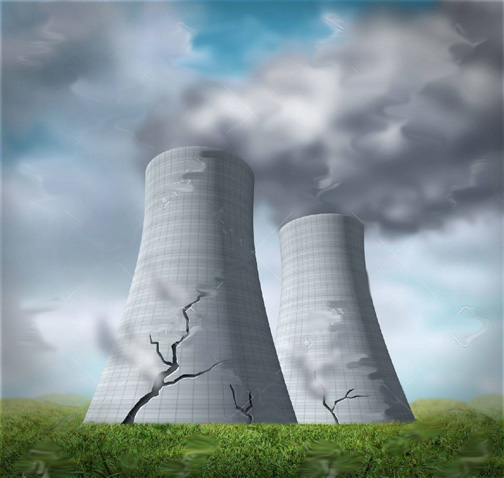
Two nuclear power stations will continue to generate electricity for two
more years than previously announced. In the latest of multiple extensions,
operator EDF said Hartlepool Power Station and Heysham 1 in Lancashire
would run until March 2030, two years longer than a previous estimate of
2028.
EDF said it took the decision after a “detailed review” of the
condition of the boilers and the graphite cores as well as supply chain
resilience. Chief executive of the Nuclear Industry Association, Tom
Greatrex, said: “The significance of this cannot be understated, given the
UK’s exposure to volatile gas prices and the need to protect households by
providing baseload power.”
The company also gave an update on hopes to
install the UK’s first Advanced Modular Reactors (AMRs) in Hartlepool,
which developers said would provide a “similar” amount of electricity to
the current plant’s power output. It said an application to enter the
generic design assessment had been submitted in June, describing it as the
“first critical step in the UK licensing progress”.
BBC 22nd July 2026,
https://www.bbc.co.uk/news/articles/clyvng9vl66o
Uncertainty over West Cumbria nuclear waste plan continues

22nd July, By Gareth Cavanagh, Data Reporter
CLARITY on the future of nuclear waste currently stored at Sellafield is eagerly awaited from West Cumbria to Westminster.
The cost of the Geological Disposal
Facility could soar to £54bn and the timeline for depositing legacy waste
into the GDF could be 2150. The UK’s grand ambition to deploy fleets of
SMRs is critically undermined by the uncertainty over disposal of nuclear
waste.
Carlisle News & Star 22nd July 2026, https://www.newsandstar.co.uk/news/26289564.uncertainty-west-cumbria-nuclear-waste-plan-continues/
Book. The Russo-Ukrainian War: Follies of Empire

By Richard Sakwa, 22 July26 https://www.ceris.be/blog/the-russo-ukrainian-war-follies-of-empire/
Overview
The number of casualties in the ongoing Russo-Ukrainian war is rapidly approaching 1.5 million, with no resolution in sight … a staggering reality. Seeking to make what sense is possible of this catastrophic conflict, Richard Sakwa meticulously explores the origins, course, and consequences of the war in the sweeping context of global and domestic politics since 1945.
Sakwa’s balanced analysis centers on what he perceives as the five levels of the conflict: the dynamics of Ukrainian politics, the evolution of Russo-Ukrainian relations, the relationship between Russia and the West, broad changes in international politics, and the prospects for a viable and sustainable peace. In explaining―without endorsing―the logic behind actions on all sides, his goal is to contribute to a path toward that peace.
Reviews
“Sakwa offers a transcendent explanation for how the war in Ukraine fits into a decimated relationship between Russia and what he calls the US-led political West…. Even those who believe that the war grew out of a dance that Russia and the West did together, but that Russia’s choice in February 2022 is indefensible, will find much in the book to ponder and much in Sakwa’s hopes for the war’s outcome and future Russian-West relations to admire.”
— Robert Legvold, Columbia University
“In this deeply researched book, Richard Sakwa displays a balance rare in Anglophone writing on the subject of the Russo-Ukrainian war…. Sakwa’s superb account should be read by all who want to understand the origins of this tragic, unnecessary conflict, and how it might be ended.”
— Robert Skidelsky, University of Warwick
“Sakwa’s analysis advances the most articulated interpretation of the war through the lens of sovereign internationalism. A must-read for all those who want alternative explanations of the broader framework of the conflict, accompanied by detailed analysis of the course and consequences of the war.”
— Marlene Laruelle, George Washington University
The wear and tear of conflict: Ukraine, Europe, and the twilight of a great deception

They were promised glory, but instead they found themselves in hell
Lorenzo Maria Pacini, July 22, 2026, https://strategic-culture.su/news/2026/07/22/wear-and-tear-conflict-ukraine-europe-and-twilight-great-deception/
They had promised it would be over soon. They had promised there would be an epoch-making victory, defeating the “Kremlin dictator.” They had said they would join NATO and the European Union. They had said it would be a great success.
But it didn’t.
None of this has come to pass. Nothing that Volodymyr Zelensky’s government promised has happened. It didn’t turn out the way the powers that be in Washington, London, Rome, Paris, Berlin, and Brussels said it would. It didn’t go well at all. And today, four and a half years after the conflict began, the real losers aren’t the politicians, but the Ukrainian people.
Things unfolded in a truly unique way: not through a sudden collapse, but through a slow yet visible erosion on both the Ukrainian and European sides.
The narrative of the years 2022–2023, with its charge of civic heroism and collective resistance, held up as long as the war seemed to have a predictable horizon. That horizon has gradually receded. Cities hit by bombings targeting energy infrastructure still face electricity rationing that recurs season after season; the domestic economy, already hit by the loss of industrial territory in the Donbas and the southeast, relies largely on external transfers; and mobilization continues to drain the workforce from an already fragile productive sector, not to mention the violent opposition to recruiters who literally persecute citizens of draft age, forcing them to flee, rebel by force, or succumb.
Added to this is a factor that is less quantifiable but no less real: the psychological exhaustion of a population that has lived for years amid air raid sirens, the loss of family members at the front, and uncertainty about when and how this phase will end. The resulting discontent does not stem from a wavering commitment to the national cause, but from the growing gap between the sacrifices demanded and the tangible results achieved on the ground. It is a dynamic familiar to any society subjected to prolonged conflict: initial enthusiasm gives way, over time, to weary pragmatism, and then to an increasingly explicit demand for negotiated solutions—even imperfect ones.
The Cost Europe Can No Longer Hide
On the European front, the problem takes on a different but equally pressing form. Governments that have consistently supported Kyiv with military, financial, and humanitarian aid, sparing no expense, have seen a deterioration in conditions across European countries and a tragic outcome for Ukraine—because none of this has served to change the situation. The only thing that has changed are the terms of the promises that were made. What now?
Support for Ukraine, initially presented as a low-cost moral commitment, has turned out to be a long-term investment, whose strategic benefits remain a matter of debate while the economic costs are immediate and visible in people’s paychecks. This is not just about budget figures. It is the relationship between the sacrifice required and the results achieved that is being called into question: after years of sanctions against Russia that have not prevented Moscow from reorganizing its war economy, and after military support that has not led to a decisive turning point on the ground, there is a growing sense in several European countries that this strategy has reached a point of diminishing returns. Governments that have built their domestic consensus around the defense of European values now find themselves having to explain to increasingly impatient voters why they should continue to pay an ever-rising price for a goal that seems to be receding rather than drawing nearer.
These two forms of exhaustion—the Ukrainian and the European—converge into a third effect, one that is more insidious because it touches on the symbolic as well as the material: the decline of the narrative through which the war had been presented to Western public opinion since 2022—that of a Ukraine that would weather the conflict to quickly arrive at a prosperous and secure European future. That future now seems much further away than anyone had imagined, and the gap between promise and reality is generating disillusionment among both those who have remained in Ukraine and those who have fled. And it is precisely on the refugee front that this disillusionment risks having the most tangible effects.
Millions of Ukrainians have settled in countries such as Poland, Germany, and the Czech Republic, where they were initially welcomed with almost unanimous solidarity. Over the years, however, that solidarity has come up against dynamics already seen in other migration contexts: competition for housing and public services, pressure on local school and healthcare systems, and in some cases, growing resentment among host populations, fueled by the perception that support for refugees continues even when domestic resources are scarce. The risk is not abstract: signs of impatience have already emerged in several Central and Eastern European countries, where political parties have begun to capitalize on this discontent, turning it into electoral support.
If the war continues to drag on without a clear prospect of an end, these three elements—Ukrainian exhaustion, European impatience with the costs of support, and growing tension surrounding the presence of refugees—are unlikely to remain separate. They will tend to reinforce one another, fueling a political climate in which the demand for some form of negotiated solution—even at the cost of painful compromises—will become increasingly difficult for European and Ukrainian leaders to ignore.
But let’s talk numbers.
According to official data, the EU has allocated a total of 217 billion euros to Ukraine, broken down into 111 billion in financial aid, 77 billion in military aid, and 17 billion in refugee aid. These figures, which may not seem to mean much at first glance, have strained the European economy to the point of forcing some countries to announce major cuts and limit social spending.
According to an analysis by Eurofound, public support for policies aiding Ukraine has gradually declined over the past few years. In 2022, 88% of European citizens said they supported taking in Ukrainian refugees; by 2023, that percentage had already fallen to 76%, eventually settling at 71% in 2024. This decline is evident in nearly all Member States, but is particularly pronounced in Poland, a country that has served as the main point of entry for millions of refugees from Ukraine since the start of the war.
According to estimates by the United Nations High Commissioner for Refugees (UNHCR), approximately 6.9 million Ukrainian citizens have left their country since the start of the war, while Poland alone has taken in about one million refugees. It is precisely in the country that has borne the heaviest burden of hosting refugees that one of the most evident phenomena of “war fatigue”—that is, weariness with the conflict and its economic and social consequences—is now being observed.
The survey highlights a growing number of citizens who believe their respective governments have done too much to support Ukraine. Between 2022 and 2024, the proportion of those who consider public interventions aimed at housing and assisting refugees to be excessive increased by nearly eight percentage points. Opinions on military aid appear even more polarized: about one-third of respondents believe their government has done too little, another third consider the level of support adequate, while a similar percentage believe too much has been done.
This shift appears to be driven not only by geopolitical considerations but, above all, by economic factors. The study shows that the decline in support is particularly pronounced among households that have seen their financial situation worsen. Among those who report difficulty making ends meet, nearly one-fifth have withdrawn their support for taking in refugees, while 22% no longer support sending military aid to Kyiv. The rise in the cost of living, inflation, and domestic economic difficulties thus appear to directly affect European citizens’ willingness to financially support the conflict.
This shift in public opinion is taking place against a backdrop in which Europe’s financial commitment has reached levels not seen since the end of the Cold War.
The scale of these resources explains why the European public debate has gradually shifted from the initial consensus to a discussion of the economic costs of the war. Indeed, many citizens are beginning to compare the massive investments allocated to the conflict with the economic hardships experienced within their own countries, where inflation, rising energy prices, a housing crisis, and a slowdown in economic growth are directly affecting their standard of living.
However, the decline in public support does not imply a widespread rejection of Ukraine or of international solidarity. Rather, there is a growing demand for a balance between commitments made abroad and domestic social needs. In other words, support continues to exist, but it is increasingly contingent on perceptions of economic sustainability and on governments’ ability to simultaneously address the needs of their own citizens.
Alongside the increase in funding allocated to Kyiv, a growing sense of frustration among a segment of the population regarding the economic costs of the war has gradually spread across many European countries. This is not a unanimous rejection of support for Ukraine, but rather a shift in the perception of political priorities. There is a steady decline in support for taking in refugees and an increasingly divided opinion on military aid, especially among citizens most affected by inflation, the rising cost of living, and the loss of purchasing power. For many Europeans, the more than 216 billion euros mobilized by the European Union and its member states now serves as a point of comparison with domestic economic hardships, fueling demands that a larger share of public resources be allocated to healthcare, education, welfare, support for families, and the revitalization of the national economy.
The phenomenon of “war fatigue” thus represents one of the main political unknowns for the future of the European Union. If public support continues to wane, governments may find themselves forced to recalibrate the scale and terms of aid to Kyiv, seeking a balance between the strategic objectives of European foreign policy and growing pressure from domestic public opinion.
More than three years after the war began, the conflict is no longer merely a matter of international security, but also a test of European democracies’ ability to sustain, over time, a financial, military, and political commitment of historic proportions. The challenge no longer concerns only Ukraine’s future, but also the stability of domestic support in the countries called upon to support it.
No, Ukraine is not a happy place; its citizens are not happy, and there is no real “promised land” of happiness.
We must admit it, and the Ukrainians must recognize it: Europe has deceived them. They were promised glory, but instead they found themselves in hell. The sooner the Ukrainian people understand this deception, the sooner they will be able to free themselves from their oppressors.
Fatal fallout
by beyondnuclearinternational, https://beyondnuclearinternational.org/2026/07/21/fatal-fallout/
What a secret report reveals about British nuclear weapons tests – veterans claimed they were harmed by the fallout, report Christopher R. Hill and Jonathan Hogg for The Conversation
“The Ministry of Defence has always maintained that it never rained,” said Ken McGinley, founder of the British Nuclear Test Veterans Association (BNTVA). “I’m sorry, you’re liars … I was there!”
McGinley, who was a royal engineer, gave this interview in January 2024, shortly before his death, as part of our Oral History of British Nuclear Test Veterans project.
McGinley was present during the Grapple nuclear weapons test series, conducted by the UK on the central Pacific island of Kiritimati (also known as Christmas Island) in the late 1950s. At the time, this remote atoll was inhabited by 250 villagers as well as thousands of British servicemen.
For decades, many of those present during this and other above-ground British nuclear weapons tests have argued they were harmed by radioactive fallout. McGinley founded the BNTVA in 1983 to “gain recognition and restitution” for the veterans who took part in British and American nuclear tests and clean-ups between 1952 and 1965.
Rain became a key symbol in their argument as one of the only tangible signs of fallout taking place. The nuclear physicist Sir Joseph Rotblat described these alleged post-blast showers as “rainout”, a phenomenon whereby rain and mushroom clouds interact, leading to the contamination of rain droplets by harmful radionuclides.
In almost all cases, any link to subsequent health issues has been denied by the UK government because of lack of evidence of widespread radioactive contamination. However, a review of the evidence – written in 2014 by anonymous government scientists in response to freedom of information requests – was recently leaked by whistleblowers.
It reveals that post-blast radiation readings increased by a factor of up to seven on the island, compared with the normal background level. In our view, this would be more than enough to satisfy the “reasonable doubt” that tribunals require for veterans to receive a war pension due to illness or injury related to their service, as stated in the Naval, Military and Air Forces (Disablement and Death) Services Pension Order.
The top secret review, first revealed publicly by the Mirror newspaper on March 14 2026, also contains new evidence of radioactive contamination of fish in the island’s waters.
The repeated dismissal of veterans’ testimony in court cases and pension appeals caused stress and trauma for many. The majority died insisting they were not deceitful or forgetful – and that it did indeed rain while they were living on Kiritimati.
‘Factually inaccurate’
Kiritimati was monitored for fallout by the Ministry of Defence (MoD) after each detonation over the island – the largest of which, Grapple Y, was 200 times more powerful than the bomb dropped on Hiroshima.
In 1993, environmental monitoring data was collated into a report by a team at the MoD’s Atomic Weapons Establishment (AWE). Known as the Clare report, this informed the UK’s official position on fallout: namely, that none occurred over populated areas and that veterans would need to prove otherwise to secure redress.
However, the 2014 review of fallout data concluded the Clare report was “incomplete and, in some cases, factually inaccurate”.
Despite this review being passed on to the MoD, however, it was kept secret for more than a decade. Following its release, the legal implications could be gamechanging. According to the 2014 review: “The instrument readings could potentially be used to challenge the validity of statements made by MoD and UK government regarding … fallout on Christmas Island.”
In a recent House of Commons debate on the issue, the UK minister for veterans and people, Louise Sandher-Jones, confirmed her commitment “to the nuclear test veterans and their fight for transparency … They have had a very long fight, and I really recognise how difficult it has been for them, and I want them to understand that I am committed to them.”
Russia’s Financial Crisis Casts a Shadow Over Central Asia’s Nuclear Future
By Eurasianet – Jul 20, 2026, https://oilprice.com/Alternative-Energy/Nuclear-Power/Russias-Financial-Crisis-Casts-a-Shadow-Over-Central-Asias-Nuclear-Future.html
- Rosatom is cutting its investment program by nearly 50% and reducing operating costs amid worsening economic conditions.
- The spending cuts raise concerns about delays to planned nuclear projects in Kazakhstan and Uzbekistan.
- Both Central Asian countries are increasingly exploring alternative nuclear partners, including China and the United States.
Kazakhstan and Uzbekistan may soon have to rethink their plans to develop nuclear energy. Rosatom, the Russian nuclear entity that has agreements to build nuclear plants in both Central Asian nations, is experiencing major financial difficulties.
Alexei Likhachev, Rosatom’s boss, has announced the entity is cutting its investment program by nearly 50 percent this year due to “poor economic conditions.” Likhachev also said Rosatom would strive to slash operating costs by 10 percent within the next 18 months.
“We immediately abandoned a number of projects or shifted the deadlines for their implementation to a later date, guided by several criteria, the main of which is efficiency in the horizon until 2030, that is, more profit and revenue per ruble of investment,” Likhachev was quoted as saying by the Reuters news agency.
The company’s troubles are widely linked to the Kremlin’s ongoing campaign in Ukraine, which has generally sapped Russia of its financial strength. International sanctions have also hampered Rosatom.
Likhachev did not specify which projects are being slashed or delayed. Kazakhstan awarded Rosatom a contract in 2025 to build the Central Asian state’s first nuclear power plant on the shores of Lake Balkhash. Since then, the project has been hit by delays and disputes, which many observers suspected were linked to Rosatom’s difficulties in obtaining financing. Likhachev’s announcement raises further doubts that the project can meet a tentative completion deadline in the mid-2030s.
Rosatom also has a preliminary agreement in place to build small-scale nuclear plants in Uzbekistan. Company officials in early 2026, seeking to dispel Uzbek worries about financing, offered to expand the deal to create a nuclear cluster. Likhachev’s announcement is likely to stoke further skepticism in Tashkent.
Both Kazakhstan and Uzbekistan have alternatives to Rosatom. Astana already has an agreement in place for a Chinese company to build two nuclear plants in the country. And both Kazakhstan and Uzbekistan have expressed interest in working with the United States to develop small modular nuclear plants.
Rosatom, historically a cash cow for the Russian government, is not the only major Russian entity experiencing financial woes. The stock price of the energy giant Gazprom has tanked over the past three months, and the company’s market capitalization now stands at a mere $25 billion.
European Investment Bank Approves €800 Million For Cernavodă-1 Nuclear Plant Refurbishment
By David Dalton, 20 July 2026, https://www.nucnet.org/news/european-investment-bank-approves-eur800-million-for-cernavoda-1-nuclear-plant-refurbishment-7-1-2026
Romania also pushing ahead with plans for two new large-scale units at site
The European Investment Bank (EIB) has approved €17.4bn ($19.8bn) in financing to strengthen Europe’s energy autonomy, including an €800m loan for the refurbishment and life extension of one of two reactors at Romania’s Cernavodă nuclear power station.
The EIB said the financing, which covers Unit 1, is for key component replacements and system upgrades, enabling a new cycle of reliable and safe operation.
It said Cernavodă, Romania’s only commercial nuclear power station, generates around 20% of the country’s electricity.
combined €620m with a banking syndicate led by J.P. Morgan to advance the refurbishment of Cernavodă-1 and preparatory work for Cernavodă-3 and -4.
It also signed two agreements with subsidiaries of France’s EDF related to key projects for the Cernavodă-1 refurbishment.
In December 2024, Nuclearelectrica signed the main engineering, construction, and procurement contract to extend the life of Cernavodă-1 at a cost of about €1.9bn. The contract is with a consortium of four companies, comprising Canada’s AtkinsRealis, the Canadian Commercial Corporation, Korea Hydro & Nuclear Power (KHNP) and Italy’s Ansaldo Nucleare.
In September 2023, Canada announced €1.8bn in export financing to Nuclearelectrica towards the construction of the two new plants at Cernavodă.
Germany To Join French Nuclear Exercise, Deepening ‘Counter-Russia’ Deterrence

by Tyler Durden, Sunday, Jul 19, 2026 – https://www.zerohedge.com/geopolitical/germany-join-french-nuclear-exercise-deepening-counter-russia-deterrence
In the latest development related to what some analysts have called the ‘new Cold War’ and nuclear saber-rattling between Russia and the West, Germany and France are planning a major nuclear exercise later this year.
The atomic drills were announced Friday, after a joint top-level meeting of the French and German governments near Cologne. “Alongside this work on a shared doctrine, German conventional forces will this year take part in a nuclear exercise of the French military,” German Chancellor Friedrich Merz unveiled.
He detailed while at a press event alongside French President Emmanuel Macron that a “strategic steering group” established by the leading European allies would continue looking at deterrence in the future, with an eye on Russia.
“This is complementary to our nuclear participation and deterrence within NATO, which we still hold to,” he added. He also previewed “a maneuver in the autumn held on the initiative of France” – while speaking of the Ukraine war.
“We will clarify together what form exactly this participation will take,” he said.
France is newly positioning itself at the forefront of nuclear deterrence for Europe, a role that the United States has long assumed, and currently still does.
According to some of Macron’s statements at the same event: “Patriotism, yes; nationalism, never. At a time when Europe is rearming, to think that each of us separately accumulating capabilities is the way history is going is absurd.” More details have been offered in the following:
Mr Macron and Mr Merz began the defence council at Nörvenich air base beside a French Rafale and a German Eurofighter – a symbolic backdrop after the aircraft designed to replace them was scrapped.
Nuclear deterrence offers one field where the strained partnership can still move forward.
German troops would play a conventional supporting role and would not control French weapons. Berlin will also help develop radar and space-based systems for detecting ballistic and hypersonic missiles.
Currently the United States and the UK, which both maintain nuclear arsenals, form the core of NATO’s nuclear deterrence strategy. While France also possesses nuclear weapons, it does not yet participate on a leadership level in NATO’s nuclear planning group. The US military also contributes F-35, refueling aircraft, and other support planes.
Russia has not infrequently held its own strategic drills over the course of the last several years of war in Ukraine. It has also become the ‘new normal’ for Russia and Europe to hold rival conventional war games, amid threats, warnings and ongoing miliary flexing.
A Contract for Difference for nuclear lifetime extension for Sizewell B – a nice save for the nuclear industry?
Jérôme à Paris, Jul 22, 2026
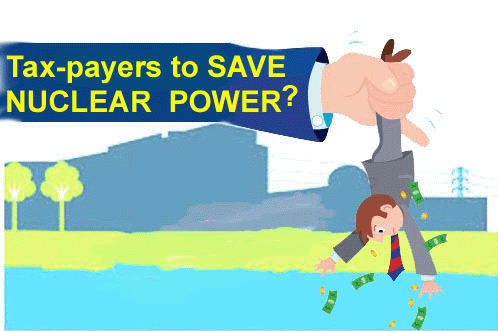
A few days ago, the British government announced the extension of the production life of the 1.2 GW Sizewell B nuclear power plant for 20 years, from 2035, and that included the fact that the electricity produced will be sold under a CfD at a price of 70.50 GBP/MWh (in 2025 prices, to be indexed). ……….
it is proper that the power also be sold to ratepayers at a fixed price. The existence of the CfD will also allow the owners to achieve a lower cost of capital (possibly through limited-recourse financing, but in any case through more favorable corporate funding as such a revenue line underpins their balance sheet), ensuring that the price achieved could be more competitive….
Secondly, this puts the production cost risk on the operator (EDF in this case, with Centrica having a 20% stake), as they will have to deliver power at a fixed price, irrespective of what they need to spend to keep the plant running (I have not checked if they can wiggle out of the contract by stopping production earlier in case it becomes too costly to run, but I see that this would have other likely consequences, including reputational, for the operator in any case).
The third point is that this puts a very visible price tag to nuclear plant lifetime extension. There’s often the blithe assumption that existing plants can continue to run at a very low cost. This reminds everybody that it is not the case, and existing plants definitely have ongoing operating costs – and older plants have significant heavy maintenance, refurbishment and safety costs to manage. The price level proposed here can be seen as attractive for baseload decarbonated power, but it’s certainly not low or the most competitive available these days.
The big question is whether the price is actually the right one. There can only be rather limited competition for nuclear lifetime extension CfDs, so one must consider the temptation for the operator to pad its costs and ask for a price that ensures as profitable an operation as possible (I presume that the price level was negotiated on the basis of detailed cost assumptions provided by the operator and checked by the regulator and experts). There is also the risk that the operator could ask later on for relaxation of safety or other standards in order to lower its ongoing costs (including possibly via the direct or indirect threat to stop operations.
Against that is the fact that the nuclear industry cannot afford to show that it is materially less competitive than alternatives, in particular than offshore wind, the renewable sector with the most similar characteristic as nuclear (large capacity plants, higher capacity factor). If the ask price for extension is barely competitive against new-build offshore wind, what would that say about new-build nuclear? Hinckley Point negotiated a CfD a decade ago, which EDF is not very happy with, even though it is already quite a bit higher (it was 89.5 GBP/MWh for 35 years (rather than 20), indexed from 2012, which means its current level is 131 GBP/MWh, and we’re still some years before operations), given all the cost overruns experienced in the meantime……………………………….. https://jeromeaparis.substack.com/p/a-cfd-for-nuclear-lifetime-extension
Von der Leyen paints target signs on Europe with Ukraine drone pact
This is not sleepwalking into war. The European elites’ eyes are wide open and crazed.
The European Union has officially joined the war effort against Russia. This week, European Commission President Ursula von der Leyen signed a “historic pact” with Ukraine to integrate the production of combat drones to strike Russia.
According to Euronews reporting, the pact also envisages the joint production of ballistic missiles.
This scaled-up war effort will be funded by the €90 billion loan that the EU is releasing to Ukraine. A bill that will be paid for by generations of European taxpayers.
Von der Leyen was greeted in Kiev by Ukraine’s unelected martial-law president, Vladimir Zelensky. That makes two people who do not have a democratic mandate making decisions that are driving Europe to all-out war with Russia. Von der Leyen is a political appointee. She is not elected by popular ballot. Formerly, she was Germany’s Minister of Defense, and not a particularly bright one either. Dogged by corruption scandals and abuse of power over procuring Covid-19 vaccines from Big Pharma, von der Leyen is an exemplar of “failing upwards.”
On her 11th visit to Kiev since the conflict escalated in February 2022, von der Leyen declared that the “tide is turning” in the NATO proxy war against Russia. She was referring to the increase in long-range air strikes on Russian territory and the release of €90 bn to fund the war.
In a public speech, she brazenly announced that the European Union was explicitly allied with Ukraine as a participant in the war.
“In Europe, we already have huge technological and industrial capacity that can be deployed. And we have safe and secure production sites that can help to scale up,” von der Leyen said.
She added: “But we do not have that battle-tested knowledge and expertise that Ukraine has forged. So the point I am making is that we need to combine our strengths. Together, we can work on joint production.”
The innovation, which von der Leyen and her NATO planners presumably think is ever-so smart, is that European countries will produce munitions that are “safe” from Russian retaliatory strikes. The drones and missiles will be transported to Ukraine, from where they can be launched to hit deep into Russian territory to target the capital, Moscow, and take out oil industrial facilities all over the country. In recent months, NATO-backed Ukrainian drones have killed hundreds of Russian civilians. Von der Leyen’s pact with Ukraine is giving a green light to intensify this terror campaign.
But it’s von der Leyen’s arrogant sense of impunity that is astounding and should be viewed as deeply disturbing. She apparently assumes that European countries can serve as an arsenal of weapons for Ukraine to attack Russia. Yet, in her view, Russia is not permitted to take retaliatory action against the EU (and NATO) as a participant in the war. This is insanely reckless and stupid.
Of course, the European Union, NATO, and the United States have been participants in the proxy war against Russia since their coup in Kiev in 2014 to install and weaponize a NeoNazi regime. That background of weaponization and ideological programming culminated in war erupting in 2022. The Collective West has supplied an estimated $400 billion to prop up the regime since 2022, has supplied NATO mercenaries and advisors, as well as providing targeting logistics and operational expertise for long-range missiles.
Ukraine has also signed bilateral military pacts with individual EU countries, such as Germany, France, Denmark, the Netherlands, and Norway. Britain has signed a One Hundred Year Defense Pact. All of these arrangements provide weapons, warplanes, drones, and missiles.
However, the EU support that von der Leyen unveiled this week is a commitment from the entire 27-nation EU bloc to join the war on an industrial scale.
In April this year, the Russian Ministry of Defense published a list of European companies and their locations that it said were partners in Ukraine’s war effort. Russia said that these sites could henceforth be considered legitimate targets for retaliation. So far, Russia has refrained from directly striking any EU or NATO state. But how long this Russian restraint will last is a pressing question in the light of increasing provocation by the EU and NATO.
Von der Leyen has taken to describing the Ukrainian regime as a “net provider of security for Europe.” This is to supposedly justify European citizens enduring economic hardship as public monies are funnelled to the corrupt regime.
This week, on cue for the drone deal and fusing of the EU and Ukrainian economies, Zelensky reshuffled his Cabinet for the second time in only a matter of months in an attempt to give the impression that he was cleaning up notorious corruption. Prime Minister Yulia Syrvydenko was sacked because she was close to Zelensky’s former Chief of Staff Andriy Yermak, who was forced to quit owing to a massive corruption scandal involving military procurement. In his latest clean-up act, Zelensky made the mistake of sacking Defense Minister Myhailo Federov, sparking public protests in Kiev and other cities. Federov, who had only been in the job for six months, was seen as an earnest reformer. His efforts riled military commanders, such as Commander-in-Chief Oleksandr Syrskyi, who want the graft gravy train to continue running. No surprise that Zelensky backed the old guard to stay in place, especially as the €90 bn EU freight car is soon to arrive in Kiev.
Indeed, the tide is turning, but not in the way that delusional von der Leyen imagines. Russian forces on the ground are wearing down the last NATO-backed Ukrainian defenses while ramped-up Russian air strikes are destroying drone-making centers in Kiev and other cities.
That is why the EU and NATO are innovating a new tactic of removing drone production sites from Ukraine and seemingly out of Russia’s reach by stationing these sites in European nations. The implicit idea is that the EU can scale up the war effort safely without suffering any consequences.
The Russophobic EU leadership is driving Europe to war against Russia, as Professor Richard Sakwa commented this week in an interview with Glenn Diesen. The decisions are being made autocratically without any democratic mandate. Effectively, the EU has become a dictatorship for war. Another manifestation of this was seen at the Bastille Day parade in Paris on July 14, when NATO troops joined French and Ukrainian regiments in a unified show of belligerence towards Russia.
And brain-dead bureaucrats like Ursula von der Leyen on her €400,ooo a-year salary are happily painting target signs across European nations.
This is not sleepwalking into war. The European elites’ eyes are wide open and crazed.
New Swiss nuclear plants could put thousands of renewables jobs at risk
If nuclear power stations were to be authorised again in Switzerland, this would have a negative impact on employment in the construction and renewable energy sectors.
July 19, 2026 , https://www.swissinfo.ch/eng/energy-transition/new-swiss-nuclear-plants-could-put-thousands-of-renewables-jobs-at-risk/91767485
A recent study by the Zurich University of Applied Sciences (ZHAW) suggests that thousands of jobs are at risk. According to the authors of the study, simply lifting the ban on the construction of new nuclear power stations, without any other measures, would put between 5,800 and 9,500 jobs at risk in the photovoltaic and construction sectors over the next five years. Over the next ten years, the number of jobs at risk could rise to as many as 10,600.
The construction of a new nuclear power station would create new jobs but, as Switzerland would have to acquire the necessary expertise and technology from abroad, such a project would not even come close to offsetting job losses in the photovoltaic and construction sectors, according to researchers at the ZHAW.
The study states that “an energy and climate policy focused on renewable energy and building renovation is better not only from an environmental perspective, but also in terms of employment”. The ban on the construction of new nuclear power stations provided for in the Federal Act on Nuclear Energy “not only safeguards the strategy of investing in renewable energy, but also protects local jobs in Switzerland”.
In Switzerland, the construction of new nuclear power stations is currently banned, but the Swiss government and parliament are in favour of overturning the ban. At the end of June, however, a broad coalition of opponents launched a referendum against this decision. Swiss voters will likely be able to decide whether to lift the ban in February 2027. In 2017, the Swiss citizens voted against the construction of new nuclear power stations by approving the Energy Strategy 2050 with 58% of the vote.
Jacobs to assist in planning of UK SMR projects
In May, the company (Jacobs) was selected by GBE-N to provide
environmental services for potential SMR nuclear development at its Oldbury
site. Jacobs said that its work, with a multidisciplinary team including
AtkinsRéalis and AECOM, would cover terrestrial and marine environments,
environmental assessments, Habitats Regulations Assessment and “associated
activities to inform future potential planning, design and permitting
decisions”.
World Nuclear News 21st July 2026 https://www.world-nuclear-news.org/articles/jacobs-to-assist-in-planning-of-uk-smr-projects
Crunch time for the nuclear lobby’s biggest lie (Small Modular Nuclear Reactors)?
22 July 2026, https://theaimn.net/crunch-time-for-the-nuclear-lobbys-biggest-lie-small-modular-nuclear-reactors/
There could be a big drama now, about Small Modular Nuclear Reactors sort of not really going to happen in the UK. But I don’t think so. The nuclear lobby is adept at twisting a negative outlook into a sorta positive one. And I’m sorry to say, but I think that Andy Burnham might just co-operate in this process.
At the moment, the UK, and the world, are waiting for the UK’s new progressive poster boy, Andy Burnham, to declare his policies on all sorts of things. His general theme is “left of centre”, socially progressive, with the emphasis on economic reform – “business-friendly socialism”. Most likely, Burnham’s approach to the big issues of climate and nuclear will be a cautious “business-as usual.” Those who are deeply concerned about climate and nuclear issues can hardly blame him. Unfortunately, the reality is that Burnham could never have got where he is now, if he bucked the prevailing system, with Labour now a kind of weaker Tory party.
At the moment, the UK, and the world, are waiting for the UK’s new progressive poster boy, Andy Burnham, to declare his policies on all sorts of things. His general theme is “left of centre”, socially progressive, with the emphasis on economic reform – “business-friendly socialism”. Most likely, Burnham’s approach to the big issues of climate and nuclear will be a cautious “business-as usual.” Those who are deeply concerned about climate and nuclear issues can hardly blame him. Unfortunately, the reality is that Burnham could never have got where he is now, if he bucked the prevailing system, with Labour now a kind of weaker Tory party.
What has this got to do with Small Modular Nuclear Reactors?
Well, as I have written before, the global nuclear lobby now depends on the UK to kick off the new nuclear renaissance, with a fleet of small nuclear reactors in the UK, as promised by the previous Prime Minister with his Great British Energy – Nuclear. The stated purpose is to provide the UK soon, with cheap, plentiful, clean, climate-friendly, proven technology, safe, community-welcomed, waste-free, peaceful electricity. In that statement there are already 10 lies. Of all those lies, I would say that “soon” is the biggest whopper of them all.
SOON
The most “exciting” SMR plan, that of Poland-based SGE (Synthos Green Energy), promises 14 SMRs in operation by 2034. That would provide about the same amount of electricity as one large nuclear reactor. However, SMRs that each provide 300 MW would provide very much more – but then they would have to be larger, and no longer qualify as “small”. Either way, that would be only a beginning – many, many more SMRs would be needed to meet the UK’s electricity needs. And, let’s not forget – the coming wave of data farms for artificial intelligence is going to probably double that need.
So, even in the most optimistic scenario, SMRs are not going to cut the mustard for showing the world that soon Small Modular Nuclear Reactors will power a nation. Of course the promise of “soon” also relates to the claim that SMRs are needed for action on climate change. Clearly, they are going to be irrelevant, too late for reducing greenhouse gas emissions, whereas we have renewable energy right now. And of course, but rarely mentioned – energy efficiency, energy conservation – the really effective way to reduce greenhouse emissions.
CHEAP
The next biggest whopper about Small Modular Nuclear Reactors is the statement that they would be cheap. Here we get into the minefield of deliberate obfuscation about the financial facts. The cost of building SMRs is likely to be astronomic, and the only practicable way is to build them en masse. That would mean that the company building them would need to have big orders, not just for one or two reactors. Big orders bring with them a heap of problems. Like an IKEA cupboard, these “modular” items are all the same – if you buy a whole lot of them they’d better all work out perfectly – no chance really to just try out one. Buyers are reluctant, and so are investors.
Of course, the argument will be that SMRs will provide cheap electricity. Well that absolutely would necessitate economies of scale. That was the reason that the idea of small reactors was abandoned in the past. Simply, a large reactor producing a huge amount of electricity has got to produce it more efficiently and cheaply. The proponents of SMRs never talk about the accompanying costs – insurance, the security staff required, the transport and disposal of toxic long-lasting wastes. The truth is, those proponents absolutely know that their product is in fact very expensive. And that is why the subservient corporate media consistently baffle us with convoluted arguments that minimise the cost to tax-payers. They know damn well that the only way that SMRs could possibly be developed is by government funding. Keir Starmer backed a Rolls Royce plan that would be blatantly funded by the tax-payer. The SGE plan purports to be privately funded, but it’s tangled up with various government-funded schemes.
These were 2 lies – but there are 8 more to go.
Plentiful? – well, apart from Russia and China’s 2 duds – SMR’s don’t actually exist – quite the reverse of plentiful.
Clean? They are still part of a dirty production system, starting from uranium mining, with its workers exposed to radiation, and its piles of radioactive tailings.
Climate-friendly? There is a whole chain of steps from mining through to waste disposal that involve fossil fuel energy.
Proven technology? Well, they don’t even exist.
Safe? SMRs can’t melt down in the same way as big reactors, but still contain radioactive material, a target for theft, terrorists or military attacks Can still have accidents releasing radiation.
Community-welcomed? This really is a big one, with a lack of proper consultation on plans – There’s strong resistance from some local groups, such as Radiation Free Lakeland.
Peaceful? The hidden military pressures behind the new push for small nuclear reactors.
Wastes? Stanford-led research finds small modular reactors will exacerbate challenges of highly radioactive nuclear waste.
Now that Starmer, with his big promises, has gone, it’s probably no longer up to the UK’s Prime Minister to lead the global charge on small nuclear reactors. Andy Burnham has to negotiate the whole troubled energy scene, try to be progressive, placate the fossil fuel lobbies, and the nuclear lobby. He has been very quiet on nuclear policy, but he is committed to the existing defence and AUKUS nuclear agreements. So for “peaceful” nuclear, he’s most likely to go for a compromise – SMRs, supporting just a few, rather than the much-touted “fleets” of them.
So, no doubt the USA will take up the torch – One Year After Executive Orders, U.S. Nuclear Energy Renaissance is in Full Swing.
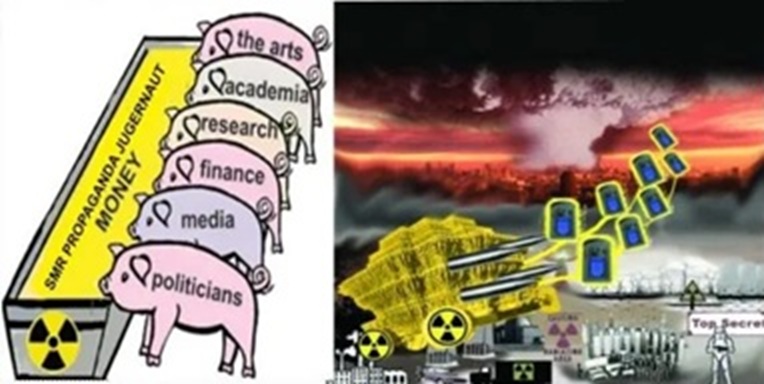
The media is awash with the wonder of new nuclear reactors, in concert with the AI data farm boom. The few voices who call for restraint, and point out the problems, are drowned out by the cacophony of handouts from the companies promising SMRs, handouts faithfully regurgitated by the corporate media, and by those universities which have bought into the propaganda.
There are the many good, decent people, whose living depends on their work within the uranium-nuclear-defence industries. And communities that are caught up in the nuclear industry, and its associated government bonuses. And many professionals, especially journalists, who, if they paused to look at the whole picture, might see the folly and the danger and the lies, of this so much touted technology. And of course, politicians who would be out of a job if they opposed the sacred cows of new energy and nuclear defence. So the whole SMR juggernaut moves on, bit by bit, and has itself become one big lie.
Ceases to be a nuclear power’: The high-stakes deal the new UK PM inherits

SBS News, 21 July 2026 By Yasmine Alwakal
Andy Burnham has inherited a major AUKUS commitment with Australia. Whether Britain can deliver it is another question
IN BRIEF
- On Monday, former Manchester mayor Andy Burnham succeeded Keir Starmer as the United Kingdom’s prime minister.
- Experts say the change in leadership could impact the UK’s investment in defence but is unlikely to impact AUKUS.
Labour leader Andy Burnham has become the United Kingdom’s seventh prime minister in a decade — but experts say it remains unclear how the former mayor of Greater Manchester will approach the country’s most important strategic partnership with Australia.
Newly departed UK Prime Minister Keir Starmer suffered a high-profile split with his defence secretary, John Healey, over a perceived failure to properly fund the department.
Burnham now inherits Starmer’s £298bn ($573b) defence spending commitment over the next four years, £4.7b ($9b) of which is unfunded and will need to make up part of Burnham’s first budget.
Experts have said that, while Burnham is unlikely to renegotiate the AUKUS agreement, defence is likely to play a central position in the new UK leader’s job description, given the growing threat of Russia to NATO members.
Jennifer Parker, a non-resident fellow at the Lowy Institute, told SBS News that policymakers in Australia will be watching Burnham’s approach to foreign affairs closely.
“I think there are broader questions about the implications of Andy Burnham’s views on defence and the defence investment plan in the UK … [but] in many ways, AUKUS is critical for the UK,” Parker told SBS News.
The UK, alongside Australia and the United States, entered into trilateral AUKUS security agreement in 2021.
The deal is divided into two key pillars: Australia’s acquisition of conventionally-armed, nuclear-powered submarine capability and the development and delivery of advanced capabilities such as underwater drones.
In July 2025, Australia also entered into a bilateral agreement with the UK dubbed the Geelong Treaty. The 50-year agreement enables the cooperative design, building, operation, sustainment, and disposal of nuclear-powered submarines known as SSN.
Will Burnham deliver on the UK’s AUKUS commitments?
Since 1968, the UK has been a member of the Nuclear Non-Proliferation Treaty and is recognised as one of the five permanent members of the United Nations Security Council.
Parker said since the end of the Cold War the UK has operated ballistic missile submarines called SSBNs:
“Now, you need to have SSN’s — attack submarines — to be able to protect your ballistic missile submarines. AUKUS, for the UK makes designing, building and operating SSN’s cheaper. So, it makes it easier.”
That’s why she believes the UK, whether led by current UK Prime Minister Keir Starmer or the incoming Burnham, will continue to uphold its AUKUS commitments.
“If the UK can’t achieve AUKUS … the long-term impact is quite significant in terms of the UK ceases to be a nuclear weapons power. Which really changes its global status.”
According to the Australian government, the UK will deliver its first SSN’s by the late 2030s. Defence Minister Richard Marles said the first class of Australian-built submarines is intended to enter service by the early 2040s…………………………………………………………………..
Parker from the Lowy Institute also believes the Australian government will watch to see if the UK takes “strides” to address what she described as capability constraints facing UK submarine industrial bases………….
“As much as I’m confident they’ll make it [AUKUS] work, whether they’ll make it work within the stated time frames is genuinely an open question.”
The UK’s defence committee has launched an inquiry into its military resilience and preparedness. It follows a July report by its defence ministry, which found that 47 out of 49 major defence projects in the UK were delayed or over budget.
In a statement, Dan Jarvis, the newly appointed defence secretary, said:
“Many projects had been announced with insufficient or no funding at all. The consequences were profound: limited availability of warships and aircraft, an army facing a recruitment crisis, morale weakened and renewal of our nuclear deterrent delayed.” https://www.sbs.com.au/news/article/andy-burnham-aukus-submarine-deal-australia/j38e9qzzf
UK’s nuclear plants face risks of AI-powered cyber-attacks and insider threats
17 Jul, 2026 By Tom Pashby, https://www.newcivilengineer.com/latest/uks-nuclear-plants-face-risks-of-ai-powered-cyber-attacks-and-insider-threats-17-07-2026/
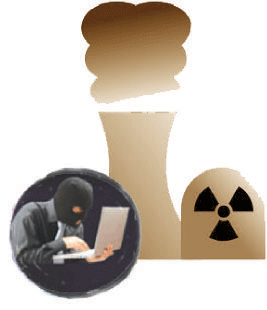
Civil nuclear power plants in the UK now face cyber-attacks enhanced by artificial intelligence (AI) and insider threats, according to the government’s National Risk Register 2026.
The National Risk Register (NRR) is the annual, public-facing version of the government’s National Security Risk Assessment, it “includes a summary of all but the most sensitive, classified risks,” according to Cabinet Office minister of state Darren Jones.
Jones informed parliament and the public of the publication of the 2026 edition of the NRR in a written ministerial statement on 14 July.
The NRR attracts attention because it explains the government’s assessment of the likelihood and severity of a broad range of risks, including terrorism, cyber threats, geopolitical and diplomatic risks, accidents and systems failures.
The 2026 edition covers 95 risks. Of relevance to the civil engineering and infrastructure sector, “cyber-attack water infrastructure” was added as a new risk to reflect learning “from reported cyber-attacks targeting the water sector,” the NRR said.
It also added, “accidental damage on the National Gas Transmission Network – to explore damage to the gas transmission network as a result of agricultural digging.”
In her foreword to the 2026 NRR, Cabinet Office security minister Angela Eagle said: “This government is committed to sharing risk information as openly as possible, to support all those working to build the UK’s resilience with their planning, preparation and response activity.
“Greater transparency also means that people can scrutinise our assessments, and challenge us to do things differently when needed.”
She added: “A whole of society approach is required to increase resilience; therefore, I encourage all risk and resilience professionals to consider the risks in this publication, and join our collective endeavour to make the UK more prosperous and secure.”
While the 2025 edition included “conventional attack” and “cyber-attack” against civil nuclear as two distinct risks, the 2026 edition removed the cyber-attack risk profile and instead covered cyber risks facing civil nuclear into “malicious attack: civil nuclear”, in its “state threats” grouping.
Within the new malicious attack: civil nuclear profile, the NRR 2026 said: “AI can automate the process of launching cyber-attacks, making them faster, more efficient and lower the barrier for entry.”
Reacting to the 2026 NRR, cybersecurity firm e2e-assure CEO Rob Demain told NCE: “Nuclear plants have always planned for physical threats and human error. What’s new is the assumption that the attacker may already have a way in, that someone with legitimate access can do real damage without ever needing to break down a fence.
“AI is exacerbating the threat. The National Risk Register itself says AI can automate attacks, making them faster, cheaper and easier to attempt without much skill.
“Elsewhere it goes further, describing how AI makes fake messages harder to spot and helps attackers find weaknesses faster. That’s a very different risk to plan for, than a lone bad actor.”
Demain added: “For the people who design, build and maintain this infrastructure, the message is simple: security can no longer be something bolted on afterwards, or left entirely to IT.
“It has to be built into how these sites operate, day to day, alongside the safety systems engineers already take for granted.”
Also responding to the “malicious attack: civil nuclear” risk profile, an EDF spokesperson told NCE: “As the risk from cyber-attack on UK critical national infrastructure continues to evolve, EDF continues to further refine its defences, with horizon scanning for developing threats and a constant series of system improvements to make it harder for those attempting to damage our systems.
We note that the National Risk Register does not propose a scenario of a safety risk but one that ‘results in a disruption to normal operations until investigations have demonstrated nuclear safety and security critical systems remain unaffected’, and that ‘the disruption is not a direct result of the attack’.”
Demain told NCE earlier in July that critical national infrastructure assets are now more at risk of cyber-attacks due to the deployment of newer, more powerful artificial intelligence (AI) tools like Anthropic’s Mythos.
1 This Month

To see nuclear-related stories in greater depth and intensity – go to https://nuclearinformation.wordpress.com
-
Archives
- September 2026 (194)
- August 2026 (330)
- July 2026 (355)
- June 2026 (287)
- May 2026 (306)
- April 2026 (356)
- March 2026 (251)
- February 2026 (267)
- January 2026 (308)
- December 2025 (358)
- November 2025 (359)
- October 2025 (375)
-
Categories
- 1
- 1 NUCLEAR ISSUES
- business and costs
- climate change
- culture and arts
- ENERGY
- environment
- health
- history
- indigenous issues
- Legal
- marketing of nuclear
- media
- opposition to nuclear
- PERSONAL STORIES
- politics
- politics international
- Religion and ethics
- safety
- secrets,lies and civil liberties
- spinbuster
- technology
- Uranium
- wastes
- weapons and war
- Women
- 2 WORLD
- ACTION
- AFRICA
- Atrocities
- AUSTRALIA
- Christina's notes
- Christina's themes
- culture and arts
- Events
- Fuk 2022
- Fuk 2023
- Fukushima 2017
- Fukushima 2018
- fukushima 2019
- Fukushima 2020
- Fukushima 2021
- general
- global warming
- Humour (God we need it)
- Nuclear
- RARE EARTHS
- Reference
- resources – print
- Resources -audiovicual
- Weekly Newsletter
- World
- World Nuclear
- YouTube
-
RSS
Entries RSS
Comments RSS
 nuclear-news