Soaring costs are likely for planned Wylfa nuclear station, but EDF, Westinghouse, Kepco clamour to build it
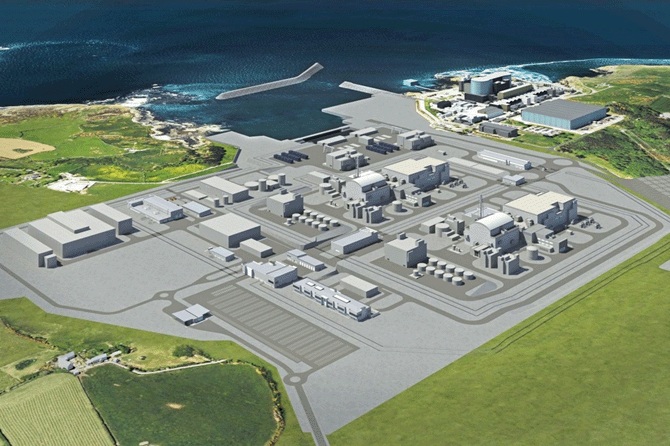
An EDF spokesman described Wylfa as a “fantastic site” and said it
wanted to bid to build the new plant. However, it is expected to face
competition from Westinghouse, an American company, and Kepco, South
Korea’s largest electrical utility firm.
The costs of the new plant are uncertain. Hinkley Point C was originally costed at £18bn but overruns have already pushed that up to at least £46bn. With several more years of
construction needed, final costs are expected to exceed £50bn –
equivalent to about £1,800 per UK home. Hinkley developer EDF is liable
for the extra costs.
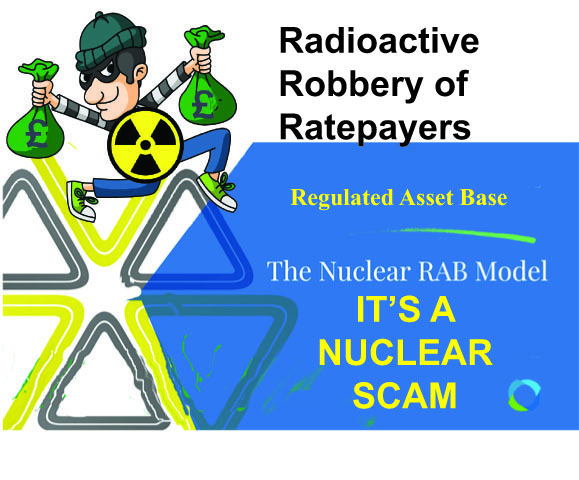
The Wylfa B plant is also likely to be financed under
the RAB system which means consumers will see bill increases for Wylfa B
and Sizewell C before either generates any power. Alison Downes, of Stop
Sizewell C, said: “The Government seems determined to double down on
gigawatt nuclear, the slowest most expensive energy source to build, which
the British public – in the form of taxpayers and consumers – will be
forced to pay for.
“We send our empathy to the people of Anglesey who
will be forced to fight yet another inappropriate development. Our advice
is to take very little of what is promised in the form of ‘community
benefits’ at face value.”
Andrew Bowie, the minister for nuclear
energy, was on Wednesday scheduled to meet with the Nuclear
Non-Governmental Organisation Forum to hear various groups’ concerns over
the expansion of nuclear energy. However, he cancelled the meeting at short
notice as news of the Wylfa plan emerged.
Telegraph 21st May 2024
https://www.telegraph.co.uk/business/2024/05/21/anglesey-host-britain-third-new-nuclear-power-station/
Julian Assange’s five-year battle against extradition to the US continues as he WINS last-ditch legal battle to lodge appeal
‘Today is a victory, but part of the victory only.’
‘Today marks a turning point. We went into court and we sat and heard the United States fumbling through their arguments, trying to paint lipstick on a pig.
‘We are relieved as a family that the courts took the right decision today but how long can this go on for?
Daily Mail, By GEORGE ODLING and ELIZABETH HAIGH, 21 May 24
WikiLeaks founder Julian Assange‘s five-year battle against extradition to the US for espionage charges continues after he won a last-ditch legal battle to appeal.
‘Well, the judges were not convinced. Everyone can see what is going on here. The United States’ case is offensive.
‘It offends our democratic principles, it offends our right to know, it’s an attack on journalists everywhere.
‘We are relieved as a family that the courts took the right decision today but how long can this go on for? Our eldest son just turned seven.
‘All their memories of their father are in the visiting hall of Belmarsh prison, and as the case goes along, it becomes clearer and clearer to everyone that Julian is in prison for doing good journalism, for exposing corruption, for exposing the violations on innocent people in abusive wars for which there is impunity.
There were gasps of relief from the Australian’s wife and other supporters in the High Court as Dame Victoria Sharp said she and Mr Justice Johnson had decided they were not satisfied with assurances given by US prosecutors.
The judges had last month dismissed most of Assange’s legal arguments but said he would be able to bring an appeal on three grounds unless the US provided ‘satisfactory assurances.’
These were that Assange would be protected by and allowed to rely on the First Amendment, that his trial would not be prejudiced by his nationality and that the death penalty would not be imposed.
Dame Victoria told the court they were not satisfied Assange was guaranteed protection under the First Amendment.
Speaking outside court, Assange’s wife Stella said the judges had made the ‘right decision’, adding: ‘He should be given the Nobel prize and he should walk freely with the sand beneath his feet. He should be able to swim in the sea again. Free Assange.’
Delivering the ruling, Dame Victoria told the court: ‘We have carefully considered the submissions made in writing and orally.
‘First, in respect of the appeal under section 103 of the Extradition Act, we have decided to give leave to appeal on grounds four and five.’
Assange’s lawyer, Edward Fitzgerald KC, said he was satisfied with assurances that if the WikiLeaks founder was extradited and convicted he would not face the death penalty.
But lawyers for the US said that the fact that Assange is accused of illegally obtaining and disseminating confidential defence information means he was not guaranteed protection by the First Amendment regardless of nationality.
In written submissions, he said: ‘The position of the US prosecutor is that no-one, neither US citizens nor foreign citizens, are entitled to rely on the First Amendment in relation to publication of illegally obtained national defence information giving the names of innocent sources to their grave and imminent risk of harm.’
This principle applies to both US and non-US citizens irrespective of their nationality, he added.
The US has provided an assurance that if extradited, Assange ‘will be entitled to the full panoply of due process trial rights, including the right to raise, and seek to rely upon, the first amendment as a defence.’
Assange’s wife, Stella, has previously dismissed this pledge as ‘weasel words.’
The ruling will no doubt increase calls in Assange’s native Australia for the government to intervene on his behalf.
More than a hundred supporters gathered outside the Royal Courts of Justice to wave banners emblazoned with logos including ‘If Assange goes, free speech goes with him.’
Assange declined to attend the hearing but Mrs Assange sat next to his father John Shipton in the well of court 4.
Supporters of Julian Assange cheered as news of the decision to allow his appeal against extradition to the United States filtered out of the courtroom.
Hundreds of people gathered outside the Royal Courts of Justice in London, with many holding signs, flags and banners, while a band is also playing music.
Several speakers addressed crowds on a stage erected adjacent to the court building, with one telling supporters: ‘Today is a victory, but part of the victory only.’
Following the decision, one man with a megaphone said to Assange supporters: ‘We have to do more.’
Among the supporters chanting ‘Free Julian Assange’ were former Labour leader Jeremy Corbyn and Labour MP Apsana Begum.
Kaylaa Sandwell travelled from east London to attend the rally and said: ‘It was obvious from the beginning that they want to silence him and I think he’s a very honest man, and he’s spoken up for us, so we need to really support that.
‘He needs to be freed because he hasn’t done anything wrong.
‘If he doesn’t get freed, we won’t have a free press anymore.’
Speaking outside the Royal Courts of Justice after Julian Assange won a bid to bring an appeal against his extradition to the United States, his wife, Stella Assange, said that judges ‘reached the right decision’ and called on the US to drop the ‘shameful’ case.
She said: ‘Today marks a turning point. We went into court and we sat and heard the United States fumbling through their arguments, trying to paint lipstick on a pig.
‘Well, the judges were not convinced. Everyone can see what is going on here. The United States’ case is offensive.
‘It offends our democratic principles, it offends our right to know, it’s an attack on journalists everywhere.
‘We are relieved as a family that the courts took the right decision today but how long can this go on for? Our eldest son just turned seven.
‘All their memories of their father are in the visiting hall of Belmarsh prison, and as the case goes along, it becomes clearer and clearer to everyone that Julian is in prison for doing good journalism, for exposing corruption, for exposing the violations on innocent people in abusive wars for which there is impunity.
On top of that impunity they have gone after the man who put that impunity onto the public record.
‘The Biden administration should distance itself from this shameful prosecution, it should have done so from day one, but it may be running out of time to do the right thing.
‘Everyone can see what should be done here. Julian must be freed. The case should be abandoned. He should be compensated.
‘He should be given the Nobel prize and he should walk freely with the sand beneath his feet. He should be able to swim in the sea again. Free Assange.’
She continued: ‘The judges reached the right decision. We spent a long time hearing the United States putting lipstick on a pig, but the judges did not buy it.
‘As a family we are relieved, but how long can this go on? The United States should read the situation and drop this case now.’
The 52-year-old was indicted by a US grand jury in 2018 on 17 espionage charges and a charge of unlawful use of a computer, which Assange’s lawyers claim could see him sentenced to 175 years in jail.
American prosecutors allege that the Australian encouraged and helped former US army intelligence analyst Chelsea Manning to steal the cables, which they claim put the lives of covert sources around the globe at risk.
President Joe Biden has faced persistent pressure to drop the case filed by his predecessor Donald Trump.
Assange had previously lived inside the Ecuadorian Embassy in Knightsbridge, west London, for almost seven years until he was eventually dragged out in 2019 when the Ecuadorian government withdrew his asylum.
He entered as a fugitive in 2012 to avoid extradition to Sweden on sexual assault charges, which he denied and which Sweden dropped in 2019………………………………………………………………………. more https://www.dailymail.co.uk/news/article-13438235/julian-assange-wikileaks-death-penalty-high-court.html
Nuclear-free councils hit out at ‘mad delusion’ of new reactor

“Instead of wasting cash and time on nuclear, the Scottish NFLAs believe the money and effort would first be far better spent insulating all domestic properties and public buildings to the highest standard to improve energy efficiency, reduce energy consumption and minimise or eliminate fuel poverty, as well as investing in more renewable energy generating capacity and battery storage.”
“
By Alan Hendry alan.hendry@hnmedia.co.uk, 21 May 2024, https://www.northern-times.co.uk/news/nuclear-free-councils-hit-out-at-mad-delusion-of-new-react-351234/
Calls for a nuclear revival in Scotland – including the possibility of a new Dounreay reactor – have been dismissed as “folly” and a “mad delusion”.
Scottish Nuclear Free Local Authorities (NFLAs), a grouping of councils opposed to civil nuclear power, insisted that renewables “represent the only way forward to achieve a sustainable, net-zero future”.
The secretary of state for Scotland, Alister Jack, confirmed last week that he had asked the UK energy minister to plan for a new nuclear site north of the border as part of a nationwide strategy.
Dounreay had been put forward among the possible locations for a small modular reactor (SMR), a series of 10 power stations that engineering giant Rolls-Royce was planning to build by 2035.
Jamie Stone, the Liberal Democrat MP for Caithness, Sutherland and Easter Ross, was quick to press the case for Dounreay to be considered. After a conversation with the Scottish secretary, Mr Stone claimed there was “all to play for”.
Dounreay is being decommissioned, with the end date for the nuclear clean-up now extended to the 2070s.
A proposal that Highland Council should sign up to NFLAs came to nothing in 2019 after some Caithness councillors condemned the idea. Scottish councils that are part of NFLAs are Dundee, East Ayrshire, Edinburgh, Fife, Glasgow, Midlothian, North Lanarkshire, Renfrewshire, Shetland Islands, West Dunbartonshire and Western Isles.
In a statement, Scottish NFLAs said a new focus on nuclear generation would put the UK government at odds with the Scottish Government as the SNP remains “implacably opposed” to the construction of any new nuclear fission plants in Scotland.
“To the NFLAs, an investment in any nuclear would not only be folly, but a lamentable diversion of effort from achieving the credible goal of supplying 100 per cent of Scotland’s electricity from renewables,” the group said.
“Nuclear power plants are enormously expensive to build and notorious for their cost and delivery overruns.”
Scottish NFLAs maintained that “none of the competing SMR designs has yet received the required approvals from the nuclear regulator to even be deployed in the UK” and “the necessary finance has yet to be put in place”.
It went on: “SMRs are estimated to cost £3 billion each, but cost overruns are notorious in the nuclear industry, and the earliest any approved and financed SMR would come onstream would be in the early 2030s.
“Nuclear plants are also incredibly expensive to decommission, and the resultant radioactive waste must be managed at vast expense for millennia.
“Instead of wasting cash and time on nuclear, the Scottish NFLAs believe the money and effort would first be far better spent insulating all domestic properties and public buildings to the highest standard to improve energy efficiency, reduce energy consumption and minimise or eliminate fuel poverty, as well as investing in more renewable energy generating capacity and battery storage.”
Scottish NFLAs said Scotland could become “a powerhouse” with surplus renewable energy being exported to England and continental Europe via interconnectors.
It added: “To realise this, the Scottish NFLAs would like to see the Scottish Government recommit to establishing a state-owned renewable energy company to invest in this potential and to generate an income for the nation.
“The Scottish NFLAs believe that if the secretary of state for Scotland genuinely wants to see a sustainable, net-zero future for Scotland he should call for the British government to get behind the Scottish Government in backing this strategy, instead of maintaining his mad delusion for nuclear.”
Yet another university co-opted by the nuclear industry

Teesside University to set out benefits of X-energy site at Hartlepool
Teesside University is to help set out the huge regional economic benefits of a multi-billion pound nuclear power station project in Hartlepool.
Northern Echo, Mike Hughes, 22nd May 24
X-energy and Cavendish Nuclear have commissioned the university to look at the opportunities – including jobs, skills, supply chain contracts, and investment – led by Professor Matthew Cotton, Professor of Public Policy.
The work is part funded by the UK Government which awarded the firms £3.34m in April this year from the Department of Energy Security and Net Zero’s Future Nuclear Enabling Fund.
This was matched by X-energy which aims to build its Xe-100 advanced modular reactor plant, by the early 2030s, next to Hartlepool’s existing Nuclear Power Station which is scheduled to close this decade.
The assessment is part of a £6.68m programme of work the companies are jointly undertaking to prepare for the proposed roll out of around 40 Xe-100 power stations across the UK………………………………. https://www.thenorthernecho.co.uk/news/24333214.teesside-university-set-benefits-x-energy-site-hartlepool/
UKRAINE DARKNESS: Zelensky’s Mandate Expires Today – Streets Are Empty as Men Hide From New Conscription Law
Paul Serran, The Gateway Pundit, 2024-05-22
And so we’ve come to the point of the war in Ukraine in which the west’s ‘Knight in Shining armor’, the ‘defender of democracy’ Volodymyr Zelensky has outrun his Constitutional Presidential mandate, and is now in power only by virtue of the martial law he enacted.
That is just the most dramatic of the absolutely disheartening (for Kiev) series of developments.
To begin with, a series of videos have surfaced showing how the streets of Ukraine now are deserted, with men hiding from conscription into the army – and somehow, everyone else seemed to have stayed at home, too.
Deserted streets as the new mobilization law came into force on May 18th.
In the context of the rapidly progressing Russian Federation forces, even deep-state aligned papers like WaPo feel compelled to report on the shitshow.
They are catching up to TGP’s report on the abnormal powers held by Zelensky’s top aide Andrey Yermak. So now, they’ve come as far as writing:
“If actor and comedian Volodymyr Zelensky’s top credential when he was elected in 2019 was that he’d played a president on TV, the top qualification of his all-powerful chief of staff, Andrey Yermak, was being Zelensky’s friend.”
Ouch. WaPo discusses how martial law, has concentrated extraordinary authority in the presidential administration, ‘making Yermak perhaps the most powerful chief of staff in the country’s history — virtually indistinguishable from his boss’.
Washington Post reported:
“Yermak’s closeness to the president — and evident influence over him — has drawn a barrage of accusations: that he has undemocratically consolidated power in the president’s office; overseen an unneeded purge of top officials, including commander in chief Gen. Valery Zaluzhny; restricted access to Zelensky; and sought personal control over nearly every big wartime decision.
Now, however, the legitimacy of the president and his top adviser are about to face even bigger challenges as Zelensky’s five-year term officially expires on May 20. Ukraine’s constitution prohibits elections under martial law. But as Zelensky stays in office, he will be vulnerable to charges that he has used the war to erode democracy — seizing control over media, sidelining critics and rivals, and elevating Yermak, his unelected friend, above career civil servants and diplomats.”
Eminence grise Yermak controls which officials can travel abroad and when; has sidelined the Foreign Ministry; interfered in military decisions – and brokered key deals with the United States.
His brother Denys was caught on video using his family ties to sell positions in Zelensky’s administration.
WaPo woke up to the fact that the Defender of Democracy put all six major Ukrainian television stations to broadcast the same news content 24 hours a day, called ‘the United News Telemarathon’.
And, of course, as we spoke at the beginning, there’s the ‘small detail’: Zelensky’s mandate expires today.
“’The Russians will use this’, one longtime Ukrainian official said of Zelensky’s expiring term. To maintain legitimacy, Zelensky ‘must have trust’, this official said, speaking, as many others did for this article, on the condition of anonymity to preserve political relations and to avoid retribution.”
Zelensky’s legitimacy is a question to Moscow as well, Russian President Vladimir Putin declared.
Putin explained that Zelensky’s status has a bearing on any potential agreement between the countries.
RT reported:
“Speaking at a press conference while on a state visit in China on Friday, President Putin said the issue of Zelensky’s legitimacy is something that ‘Ukraine’s own political and legal system’ must address, ‘first of all the Constitutional Court’. He noted that the country’s constitution foresees ‘different variants’.…………………………………..https://www.thegatewaypundit.com/2024/05/ukraine-darkness-zelenskys-mandate-expires-today-streets-are/
University of Sheffield gets into the nuclear debt web, partnering with Rolls Royce to make “small” nuclear reactors
New facility will help de-risk and underpin the Rolls-Royce SMR programme
( De-Risking, is a strategy that companies apply when they cannot manage the money laundering risks that they have obligations to. )
Mirage News, 21 May 24
- The University of Sheffield and Rolls-Royce SMR are setting up a multi-million pound manufacturing and testing facility in South Yorkshire
- Based in the University of Sheffield AMRC’s Factory 2050, the new facility will produce prototype modules for small modular reactors (SMRs)
- New facility will help de-risk and underpin the Rolls-Royce SMR programme that aims to deploy a fleet of factory-built nuclear power plants in the UK and across the world
…………………… The first phase, announced today, is worth £2.7 million and will be part of a wider £15+ million package of work that will further de-risk and underpin the Rolls-Royce SMR programme.
The new facility at the University of Sheffield AMRC will produce working prototypes of individual modules that will be assembled into Rolls-Royce SMR power plants.
The Rolls-Royce SMR programme is UK’s first home-grown nuclear technology for over a generation and today’s announcement is another vital step towards deploying a fleet of factory-built nuclear power plants in the UK and around the globe.
Victoria Scott, Rolls-Royce SMR’s Chief Manufacturing Engineer, said: “Our investment in setting up this facility and building prototype modules is another significant milestone for our business.
“Our factories will produce hundreds of prefabricated and pre-tested modules ready for assembly on site. This facility will allow us to refine our production, testing and digital approach to manufacturing – helping de-risk our programme and ensure we increase our delivery certainty. https://www.miragenews.com/rolls-royce-smr-sheffield-uni-launch-new-1238675/
Assange Wins Right to Appeal on 1st Amendment Issue
The High Court in London ruled Monday that Julian Assange can appeal his extradition to the U.S. on the grounds that he is being denied his First Amendment rights.
May 20, 2024, By Joe Lauria in London Consortium News, https://consortiumnews.com/2024/05/20/assange-wins-right-to-appeal-on-1a-issue/—
The High Court in London on Monday granted Julian Assange the right to appeal the order to extradite him to the United States on the grounds that the U.S. did not satisfy the court that it would allow Assange a First Amendment defense in a U.S. court.
“We spent a lot of time listening to the United States putting lipstick on a pig, but the judges didn’t buy it,” Stella Assange told reporters outside the court building. “As a family we are relieved but how long can this go on? The United States should read the situation and drop the case now.”
Assange has been imprisoned in London’s notorious Belmarsh Prison for more than five years on remand pending the outcome of his extradition. He must now spend an untold number of more months in the maximum security prison awaiting the start of his appeal.
In that sense it was a bitter victory for Assange. He gets to stay in prison another year or more, Joe Biden doesn’t have to worry about a journalist showing up in chains in Alexandria, VA during a presidential campaign and of course Assange could lose his appeal and arrive in the U.S. at a more opportune time for Biden.
In another sense, it was a victory for the supremacy of European law when it comes to free speech,
Background to Monday’s Action
The High Court in London on March 26 had ruled that Assange had three grounds to appeal, because 1). his extradition was incompatible with his free speech rights enshrined in the European Convention on Human Rights; 2.) that he might be prejudiced because of his nationality (not being given 1st Amendment protection as a non-American) and 3). because he had inadequate protection against the death penalty. (Without such protection Britain cannot extradite him.).
Rather than proceed with the appeal on those three grounds, the High Court gave the U.S. the chance, fours years after the extradition process began, to promise it would not use the death penalty, and to guarantee his free speech rights.
Because it is an executive branch decision, the U.S. was able to assure the British government that it would not seek the death penalty, and Assange’s lawyers on Monday said they did not contest that. Left unexplained, however, was why the British home office waited four years to seek what is normally a routine assurance in an extradition case.
The free speech issue was more complicated because a decision about Assange asserting a First Amendment defense at trial will be up to a U.S. federal court and not the Department of Justice. Therefore the DOJ could not issue such an assurance on the free speech issue.
That ultimately led the two judges, Justice Jeremy Johnson and Victoria Sharp, to allow Assange to launch a formal appeal of his extradition because of an apparent violation of British extradition law, based on the European Convention on Human Rights, that requires the receiving country to allow an extradited person the right to free speech.
Johnson and Sharp did not buy the convoluted argument of James Lewis KC for the United States, on why the U.S. should get their hands on Assange despite being unable to guarantee his freedom of expression.
Edward Fitzgerald KC, and Mark Summers KC, barristers for Assange, easily picked apart three pieces of Lewis’ somewhat desperate presentation:
- pointing out how Lewis had misled the court by saying the U.S. assurance would allow Assange to rely on the First Amendment, when in fact it says he can “seek to rely” on it;
- how none of a slew of case law Lewis cited to supposedly bolster his argument actually dealt with a trial, which of course Assange will, if he goes to the U.S.;
- that saying Chelsea Manning was not able to invoke First Amendment rights in defense of leaking classified defense information meant Assange shouldn’t either was “nonsense” because Manning was a government whistleblower who had signed non-disclosure agreements and Assange is a publisher.
The judges apparently also rejected a drawn-out, arcane and overly lawyered argument from Lewis about the difference between citizenship and nationality that to most laymen was nearly incomprehensible.
A Watershed Moment
“This was a watershed moment in this very long battle,” said WikiLeaks Editor-in-Chief Kristinn at an event following the hearing. “Today marked the beginning of the end of the persecution. The signaling from the courts here in London was clear to the U.S. government: We don’t believe your guarantees, we don’t believe in your assurances.”
1st Amendment & Espionage Act
The First Amendment is at the core of the unconstitutionality of the Espionage Act, which makes no exception for a journalist to possess and disseminate defense information.
The Assange case could lead to a constitutional challenge of it, said Marjorie Cohn, former president of the National Lawyers’ Guild. That may be one reason the Department of Justice does not want Assange to invoke the First Amendment in court.
The U.S.-U.K. Extradition Act “bars extradition if an individual might be prejudiced due to his nationality and due to the centrality of the First Amendment to his defense,” Cohn told CN Live! last month. “If he’s not permitted to rely on the First Amendment because of his status as a foreign national, he’ll thereby be prejudiced, potentially very greatly prejudiced by reason of his nationality.”
Assange contends that if he’s given First Amendment rights, “the prosecution will be stopped,” Cohn said. “The First Amendment is therefore of central importance to his defense.”
Cohn added: ‘If he has the right to free expression and freedom of speech, then what he did, what he’s accused of doing, would not violate the law.”
[See: 1st Amendment Authorized Assange’s Possession of Classified Data]
Though allowing First Amendment rights at trial would be ultimately a judge’s decision, and not the executive branch’s, Assistant U.S. Attorney Gordon Kromberg, who is prosecuting Assange, has not only not indicated that he wouldn’t file a motion against it in court, but has said explicitly that non-U.S. citizens do not have First Amendment rights in the U.S. for acts committed abroad.
A date has not yet been set for Assange’s appeal to begin.
UK plans new nuclear plant in Scotland despite Scottish government opposition
the Scottish Parliament has the ability to block projects it opposes as planning powers are devolved.
17 MAY, 2024 BY THOMAS JOHNSON, https://www.newcivilengineer.com/latest/uk-plans-new-nuclear-plant-in-scotland-despite-scottish-government-opposition-17-05-2024/
Recent parliamentary discussions have revealed the UK is exploring the possibility of constructing a new nuclear power plant in Scotland despite fierce opposition from the Scottish government.
The UK government secretary of state for Scotland Alister Jack revealed in a House of Lords committee meeting that discussions were taking place on siting a small modular reactor (SMR) north of the border and that it is part of UK-wide plan.
He said: “On the small nuclear reactors, I have asked the energy minister to plan for one in Scotland.
“I believe that in 2026 we’ll see a unionist regime again in Holyrood and they will move forward with that.”
He also made reference to the shortness of the “timescales in front of us”, which could either be regarding the breadth and speed required for the energy transition or to the looming General Election.
The subject was then brought up in Scottish Parliament’s first minister’s questions (FMQs) on Thursday 16 May.
During FMQs, Member of Scottish Parliament Rona Mackay asked: “Despite opposition from the democratically elected Scottish government, where Scotland does not need expensive nuclear power; we already have abundant natural energy resources, can the first minister advise whether the United Kingdom government has approached Scottish ministers about those apparent plans?
“Can he confirm that the Scottish government will oppose those plans and, instead, focus on Scotland’s substantial renewable energy potential?”
First minister John Swinney responded to say how he was appalled no mention of the discussions had been made to the Scottish government by the secretary of state for Scotland.
Swinney said: “I am often lectured in parliament about the importance of good intergovernmental relations. The secretary of state for Scotland has made no mention of the proposal to the Scottish government.
“That is utterly and completely incompatible with good intergovernmental working and is illustrative of the damaging and menacing behaviour of the secretary of state for Scotland.”
He continued: “The Scottish government will not support new nuclear power stations in Scotland.
“I was in Ardersier on Monday and the cabinet secretary for net zero and energy was in Nigg on Tuesday to support the announcements of formidable investments in Scotland’s renewable energy potential.
Those are massive investments that will bring jobs and opportunities to the Highlands and Islands and deliver green, clean energy for the people of Scotland. That is the government’s policy agenda, and we will have nothing to do with nuclear power.”
Nuclear in Scotland
Scotland already has a nuclear power plant, Torness in East Lothian, which is scheduled to be shut down by 2028, two years earlier than was planned when it was constructed.
Another nuclear power station located within the country, the Hunterston B plant in North Ayrshire, ceased operation in January 2022.
The UK has an ambition of generating a quarter of its electricity from nuclear power by 2050, which is to be delivered by new public body Great British Nuclear.
Currently, energy policy is run by the UK government but the Scottish Parliament has the ability to block projects it opposes as planning powers are devolved.
Department for energy security and net zero under secretary Andrew Bowie, said: “We can’t go beyond preliminary discussions because of the current Scottish government hampering us but if the planning block was lifted then we could make a site north of the border; one of the eight across the UK.”
A Scottish government spokesperson said: “The Scottish government is absolutely clear in defence of the devolution settlement, and in our opposition to the building of new traditional nuclear fission energy plants in Scotland under current technologies.
“Small modular reactors, while innovative in construction and size, still generate electricity using nuclear fission and therefore the process presents the same environmental concerns as traditional nuclear power plants.
“We believe that significant growth in renewables, storage, hydrogen and carbon capture provides the best pathway to net zero by 2045 and will deliver secure, affordable and clean energy supplies for Scotland’s households, business and communities.”
Julian Assange faces judgment day over US extradition
May 19, 2024, https://michaelwest.com.au/julian-assange-faces-judgment-day-over-us-extradition/
A British court could give a final decision on whether WikiLeaks’ founder Julian Assange should be extradited to the United States over the mass leak of secret US documents – the culmination of 13 years of legal battles and detentions.
Two judges at the High Court in London are set to rule on Monday on whether the court is satisfied by US assurances that Assange, 52, would not face the death penalty and could rely on the First Amendment right to free speech if he faced a US trial for spying.
Assange’s legal team say he could be on a plane across the Atlantic within 24 hours of the decision, could be released from jail, or his case could yet again be bogged down in months of legal battles.
“I have the sense that anything could happen at this stage,” his wife Stella said during the week.
“Julian could be extradited or he could be freed.”
She said her husband hoped to be in court for the crucial hearing.
WikiLeaks released hundreds of thousands of classified US military documents on Washington’s wars in Afghanistan and Iraq – the largest security breaches of their kind in US military history – along with swathes of diplomatic cables.
In April 2010 it published a classified video showing a 2007 US helicopter attack that killed a dozen people in the Iraqi capital, Baghdad, including two Reuters news staff.
The US authorities want to put the Australian-born Assange on trial over 18 charges, almost all under the Espionage Act, saying his actions with WikiLeaks were reckless, damaged national security and endangered the lives of agents.
His many global supporters call the prosecution a travesty, an assault on journalism and free speech, and revenge for causing embarrassment.
Calls for the case to be dropped have ranged from human rights groups and some media bodies to Australian Prime Minister Anthony Albanese and other political leaders.
Assange was first arrested in Britain in 2010 on a Swedish warrant over sex crime allegations that were later dropped.
Since then he has been variously under house arrest, holed up in Ecuador’s embassy in London for seven years, and held since 2019 in the top-security Belmarsh jail while he waited for a ruling on his extradition.
“Every day since the seventh of December 2010 he has been in one form of detention or another,” said Stella Assange, who was originally part of his legal team and married him in Belmarsh in 2022.
If the High Court rules the extradition can go ahead, Assange’s legal avenues in Britain are exhausted, and his lawyers will immediately turn to the European Court of Human Rights to seek an emergency injunction blocking deportation pending a full hearing by that court into his case at a later date.
On the other hand, if the judges reject the US submissions, Assange will have permission to appeal his extradition case on three grounds, and that might not be heard until 2025.
It is also possible the judges could decide that Monday’s hearing should consider not just whether he can appeal but also the substance of that appeal.
If they find in his favour in those circumstances, he could be released.
Stella Assange said whatever the outcome, she would continue to fight for his liberty.
She plans to follow him to Australia or wherever he is safe if he is freed.
If he is extradited, she said all the psychiatric evidence presented at court had concluded he was at serious risk of suicide.
“We live from day to day, from week to week, from decision to decision,” she told Reuters.
“This is a way that we’ve been living for years and years.
“This is just not a way to live – it’s so cruel.
“And I can’t prepare for his extradition – how could I?
“But if he’s extradited, then I’ll do whatever I can, and our family is going to fight for him until he’s free.”
Greenpeace Central and Eastern Europe (CEE) condemn Russian government plans to restart nuclear reactors at the Zaporizhzhia nuclear plant
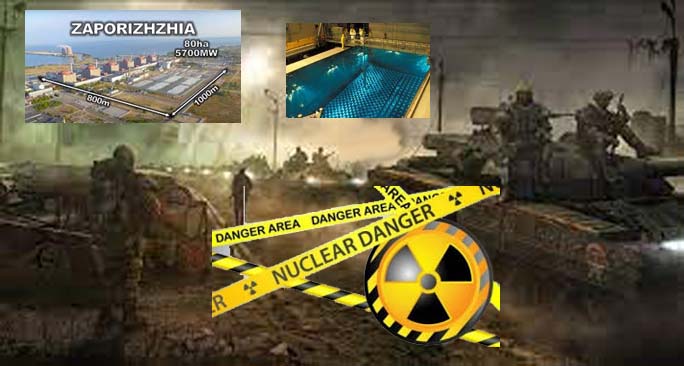
Russian government publishes first detailed plans for restart of Zaporizhzhia nuclear plant – Greenpeace condemns nuclear blackmail.
Kyiv, May 17, 2024 – Greenpeace Central and Eastern Europe (CEE) condemns in the strongest possible terms the plans of Rosatom, the Russian State Nuclear Corporation, and the Russian government to proceed with the restart of nuclear reactors at the Zaporizhzhia nuclear plant. The first details of Rosatom’s plans are contained in an official document submitted to the International Atomic Energy Agency (IAEA) by the Russian government on 14 May, 2024 [1]. The submission reveals plans for the construction of a large pumping station, designed to supply water for the nuclear plant. Following the demolition of the Nova Kakhovka dam on 6 June 2023, the Zaporizhzhia nuclear plant no longer was able to access water from the Kakhovka reservoir. The six reactors at Zaporizhzhia have been shut down since 2022. In an analysis published in February 2024, Greenpeace CEE warned that the nuclear plant site would require a new pumping system to extract water from the Dnipro river channels near the Zaporizhzhia nuclear plant. [2]
“Since Russia attacked, damaged and occupied the Zaporizhzhia nuclear plant on March 4, 2022, the risk of a nuclear disaster has been high. But if plans proceed to restart reactors at the plant the level of risk and the consequences will be much more severe. This submission to the IAEA is outrageous, with Russia claiming that its, “main task is to prevent threats to the safety and security of the plant created by the Kyiv regime.” No – the threat of a nuclear disaster is entirely due to Russia’s war and occupation of the plant – and this is another case of Russian nuclear blackmail which has the potential to explode across Ukraine and Europe,” said Shaun Burnie, nuclear specialist at Greenpeace Central and Eastern Europe.
The Russian submission to the IAEA discloses for the first time that a pumping station is to be constructed. The station would have capacity to supply up to 18,000 cubic meters of water per hour to the cooling pond. Greenpeace analysis has indicated two potential locations for the new pumping station.
In February 2024, Greenpeace CEE in its analysis of the many obstacles to restart, focused on the water problem, and urged the IAEA Director General to take a strong position against any Russian plans for restarting the Zaporizhzhia reactors. In March 2024, Greenpeace issued a warning that restart of one or more reactors at the nuclear plant site could lead to a disaster greater than Fukushima or even Chornobyl.[3] Last month, Greenpeace International wrote wrote to the IAEA Director General, Rafael Mariano Grossi, seeking assurances that the IAEA will not in any way facilitate Rosatom in the restart the reactors at the Zaporizhzhia nuclear plant.(4)
“Rosatom has no legal authority to operate the Zaporizhzhia plant – that lies entirely with the Ukrainian regulator and owner. It also lacks a sufficient number of skilled and qualified workers familiar with the Zaporizhzhia nuclear plant. For more than two years maintenance of critical installations has been wholly inadequate and on eight occasions the plant has lost all off site electrical power due to the war. The electricity supply is essential for the water cooling pumps to the reactors and spent nuclear fuel as well as other safety systems and remains highly unstable. The water supply to the cooling pond has been significantly compromised since the destruction of Nova Kakhovka dam by the Russian armed forces. Restarting one or more reactors in such a situation is not only outrageous it shows a blatant disregard for nuclear safety protocols. Urgent efforts by the international community, including the IAEA, must be made to stop these plans from being implemented,” said Jan Vande Putte, nuclear specialist at Greenpeace Belgium.
Greenpeace CEE is campaigning for comprehensive European Union sanctions against Rosatom and their nuclear partners in Europe and worldwide and actively supporting the development of renewable energy in Ukraine.
For further information:
Daryna Rogachuk, communication officer
daryna.rogachuk@greenpeace.org
1 – Communication from the Permanent Mission of the Russian Federation to the Agency, INFCIRC/1208, 15 May 2024, see www.iaea.org/sites/default/files/publications/documents/infcircs/2024/infcirc1208.pdf
2 – Greenpeace CEE, Is Rosatom Planning The Restart Of Zaporozhzhia Reactor(s)?, 3 February 2024, see https://drive.google.com/file/d/1mipUyMmnA0XXlD57UOQfduYkvj6LcANb/view
3 – Greenpeace Germany, Second anniversary of Russia’s nuclear plant attack in Ukraine, 5 March 2024, see https://www.greenreconstruction.com/news/second-anniversary-of-russias-nuclear-plant-attack-in-ukraine
4 – Greenpeace CEE, Grim anniversary: Zaporizhzhia nuclear plant must not become the next Chornobyl, 26 April 2024, see https://greenpeace.at/cee-press-hub/chornobyl-38-anniversary/
A New Russian Offensive Stretches Ukrainian Forces. Possibly To The Breaking Point.
Just as important an explanation for Ukraine’s struggles is the lack of men. Ukrainian troops are outmanned and exhausted, and casualty rates are soaring.
Radio Free Europe, By Mike Eckel , May 17, 2024
Ukrainian civilians evacuated from border regions with Russia. An important east-west highway in the eastern Donetsk region threatened by encroaching Russian forces. A village captured by Ukraine during last year’s counteroffensive about to return to Russian control. Ukraine’s president cancels all foreign trips.
The news from Ukraine’s battlefield these days is grim: Russia is advancing. Ukraine is struggling to hold its positions, if not outright retreating.
Still, there’s little doubt that Ukraine’s exhausted, outmanned, and possibly still-outgunned forces are struggling in a way not seen possibly since the opening days of the invasion.
“By stretching Ukrainian forces along a wide front, Russia is overcoming the limitations of its undertrained army,” Jack Watling, a senior research fellow at the Royal United Services Institute, said in a report released this week. “Russia has now started the early phases of its anticipated summer offensive with renewed attacks on Kharkiv.”
Here’s where things stand at present on Ukraine’s battlefield.
Ukrainian forces were already under severe pressure in several locations along the 1,100-kilometer front line even before Russia launched a localized offensive north of Ukraine’s second largest city, Kharkiv, last week. Troops moved into a “gray zone” — Ukrainian territory that’s not fully controlled by either Ukrainian or Russian forces. On May 16, Russian units appeared to have entered the town of Vovchansk, about 5 kilometers from the border, and the site of the fiercest fighting in the north.
By some estimates, the amount of territory Ukrainian troops have ceded in recent months is greater than the earliest months after the full Russian invasion in February 2022.
Western military officials, however, downplay Russian chances for a wider breakthrough.
“They don’t have the skill and the capability to do it, to operate at the scale necessary to exploit any breakthrough to strategic advantage,” U.S. Army General Christopher Cavoli said on May 17. “They do have the ability to make local advances and they have done some of that.”
Still, there’s little doubt that Ukraine’s exhausted, outmanned, and possibly still-outgunned forces are struggling in a way not seen possibly since the opening days of the invasion.
“By stretching Ukrainian forces along a wide front, Russia is overcoming the limitations of its undertrained army,” Jack Watling, a senior research fellow at the Royal United Services Institute, said in a report released this week. “Russia has now started the early phases of its anticipated summer offensive with renewed attacks on Kharkiv.”
Here’s where things stand at present on Ukraine’s battlefield.
What’s Happening On The Ground?
After Ukraine’s much-hyped counteroffensive fizzled late last year both sides began retooling and resupply, girding for the next major clashes. Russia, however, seized the initiative to push into the industrial city of Avdiyivka, where Ukraine was able to threaten the Russian-controlled regional administrative center of Donetsk to the southeast. The city fell to Russian forces in February.
Last month, Russian troops took advantage of a Ukrainian troop rotation — some reports say botched — and pushed northwest of Avdiyivka to take control of the village of Ocheretyne. Creeping north and northwest, Russian forces have moved closer to threatening the N32 highway, which runs from Pokrovsk, northeast to the railway town of Kostyantynivka.
Just east of Kostyantynivka is Chasiv Yar, a village on high ground that Russia is hellbent on capturing.
Ukrainian forces have repelled the effort so far, in part by using a water canal that runs through its eastern district as a holding line. Captain Oleh Kalashnikov, a spokesman for the 26th Separate Mechanized Brigade, told Current Time that Russia had fielded as many as 25,000 troops, including elite paratroop units, in their push to take the city.
Seizing Chasiv Yar would allow Russia to threaten Kostyantynivka and its rail and roadway used by Ukraine to resupply its forces. It would crack the door toward Kramatorsk to the north, and Slovyansk, both large population centers and redoubts of Ukrainian troops and supplies.
On May 10, meanwhile, Russian infantry crossed the border north and northeast of Kharkiv, attacking in two different locations, seizing a handful of small settlements, and opening a new front The village of Vovchansk came under some of the worst shelling, forcing rescuers to rush to evacuate civilians………………………………………………
Hundreds of kilometers to the southwest, in the Zaporizhzhya region, Russian forces claimed to have retaken Robotyne, one of a handful of villages that Ukraine succeeded in capturing in its counteroffensive — their biggest to date. Ukrainian officials denied the claim, but if the village does fall, its loss would be a symbolic blow.
“It’s a challenging situation on the battlefield right now in Ukraine,” U.S. Major General Pat Ryder, a Pentagon spokesman, said this week.
“The Russians have exploited the situation on the battlefield, and are attempting to make advances,” he said. “Incremental as they may be, it’s certainly concerning.”
Why Is It Happening?
Continue readingMoscow to ‘mirror’ West, NATO approaches, including nuclear weapons: Russia
Deputy Foreign Minister Ryabkov rejects West claims about Moscow’s next target in NATO state after Ukraine war, calling them ‘completely absurd’
Elena Teslova 17.05.2024, MOSCOW, https://www.aa.com.tr/en/asia-pacific/moscow-to-mirror-west-nato-approaches-including-nuclear-weapons-russia/3222601
Russian Deputy Foreign Minister Sergey Ryabkov said on Friday that Moscow will “mirror” the West and NATO approaches, including on nuclear weapons issues.
In an interview with the Russian state news agency TASS, Ryabkov mocked the Washington administration, saying “punks” have come to power in the US, who are flagrantly violating Russia’s red lines to show off.
The diplomat emphasized that Russia refrains from responding with full force and exercises “exceptional restraint” to avoid further escalation, acting strictly within the framework chalked out by the country’s leadership and defined in terms of the goals and objectives of the “special military operation.”
“There are also these fashionistas in the Western group, alongside punks, who introduce ideas they deem fresh into discussions of what is going on,” he said.
“For example, at the behest of Washington, the fashion of the spring-summer season of 2024 is the claim that Russian President Vladimir Putin would not stop in Ukraine but would definitely attack other NATO countries,” he said, calling such claims “completely absurd.”
Ryabkov emphasized that such statements are more than just disinformation to distort the essence of Russian foreign policy.
“There is also another trend. This is the claim that strategic uncertainty and ambiguity should be shown concerning Russia so that Moscow does not know how NATO will act in a given situation.
“However, this uncertainty has always been characteristic of the doctrinal approaches of the Western group, including those related to nuclear weapons,” the deputy foreign minister said, vowing, “We will mirror them in this issue.”
When asked about the possibility of lowering the level of diplomatic ties, he said given the current crisis in relations, nothing can be ruled out, though it is not Russia’s choice.
“Those in power in the US and other key Western states have recently gathered quite a lot of figures who are, by and large, provocateurs and have made the meaning of their existence a test of Moscow’s strength,” he said.
Ryabkov also responded to a question about US Secretary of State Antony Blinken’s visit to Ukraine by saying, “Shortly before the departure of this group to Kyiv, we received the relevant information.”
Regarding the exchange of prisoners, he noted that the frequency of contacts on this issue depends on the American side, which focuses on high-profile cases followed by long pauses.
In response to allegations that Russia intends to interfere in the 2024 US Presidential election, Ryabkov said there has been no Russian interference in past elections and that there will be none, as Moscow fundamentally does not interfere in election campaigns in any country, with the US being no exception.
As for the November election outcome is concerned, he said, Moscow is monitoring the situation but sees no prospects for improving relations between the two countries, regardless of who wins, due to “the fundamentally anti-Russian consensus among American elites.”
Blinken to Zelensky: ‘Here’s another $2 billion to get thousands more Ukraine troops killed for nothing

There is something demented in America’s foreign policy toward Ukraine. President Biden just sent his Secretary of War…make that State, Antony Blinken, all the way to Kyiv to demand Ukraine keep America’s proxy war against Russia raging in Ukraine till the eastern quarter of Ukraine becomes part of Russia, and all Ukrainian soldiers are dead.
Blinken touted how this new $2 billion will be a gift for Ukraine to buy US weapons, further enriching US arms makers while Ukraine is collapsing as a functioning state. Blinken further heralded how some of that weapons largess will be used to purchase weapons from US allies, enriching their weapons makers as well.
Besides furthering Ukraine’s ruin, Blinken essentially greenlighted Ukraine using new US weapons to attack the Russian mainland if they so wish. Such Ukraine attacks risk serious escalation that could easily spin out of control. Russia has already warned the UK that it could hit British military sites if Ukraine uses British-provided weapons to attack targets in Russia. When asked about dangerous escalation, Blinken channeled Mad Magazine’s Alfred E. Newman muttering ‘What, me worry?’
If Hollywood ever remakes the series ‘Mad Men’, it should not be about the 1950’s advertising executives of Madison Avenue. It should chronicle the 2020’s Mad Men of Pennsylvania Avenue, Biden and Blinken, leading America and the world to ruin destroying countries in Europe and the Middle East.
UK High Court rules that Julian Assange can appeal against extradition to USA
The Conversation, Erin Cooper-Douglas, Deputy Politics + Society Editor 21 May 24 |
Late last night, Wikileaks founder Julian Assange had a win in the UK High Court: he can now appeal his extradition order to the United States
Legal efforts to keep Assange from being sent to the US, where he potentially faces a 175-year jail term for publishing sensitive government documents, have been some of the most protracted in recent memory. Just getting complete permission to appeal took three highly publicised hearings.
As Holly Cullen explains, one of the key grounds for appeal is freedom of expression. And that’s what makes yesterday’s decision, and the appeal that will now follow, legally groundbreaking. Never before has a UK court, nor the European Court of Human Rights, decided whether a potential violation of freedom of expression can stop someone from being extradited.
While the decision will please Assange’s team and his many supporters, the extradition threat still looms. If the appeal, which is likely to be held later this year, is unsuccessful, he could still find himself in the US.
Xi outlines solution to Ukraine conflict
https://www.sott.net/article/491542-Xi-outlines-solution-to-Ukraine-conflict 19 May 24
Chinese President Xi Jinping has stressed that peace negotiations recognized by both Russia and Ukraine are the best way to end the ongoing conflict between the two nations.
Speaking during a meeting with Russian President Vladimir Putin on Thursday at the Chinese leader’s residential compound at Zhongnanhai, Xi argued that the entire global security architecture must be amended in order to end the fighting and avoid similar hostilities in the future, according to the Xinhua news outlet.
Putin is on his first state visit to China since he took office for the fifth time earlier this month.
Xi was cited as saying:
“China supports the timely convening of an international peace conference recognized by both Russia and Ukraine, with equal participation by all parties, and fair discussion of all options. Beijing is willing to aid in brokering the peace talks.”
“Global powers must address both the symptoms and the root cause [of the conflict], and we must consider both the present and the long term.
“The fundamental solution to the Ukraine crisis is to promote the construction of a balanced, effective, and sustainable new security architecture.”
Beijing has repeatedly rejected Western pressure to join in the condemnation of Russia over the Ukraine conflict. Since last year, China has been promoting a peace formula consisting of 12 points, including the cessation of hostilities and unilateral sanctions, mutual respect for national security concerns and the sovereignty of nations, and the rejection of a ‘Cold War’ mentality.
Kiev has rejected the formula as unrealizable because it does not demand a retreat of Russian forces from territories Kiev claims as its own. Ukraine has long insisted that a peace settlement can only be achieved on its terms, which include a return of all former Ukrainian territories, the withdrawal of Russian troops, and an international tribunal for Russian leaders.
Kiev’s Western backers plan to hold a summit on the Ukraine conflict in Switzerland next month, to which Russia has not been invited. Beijing has yet to officially confirm whether it will send a delegation.
Russia has welcomed China’s proposed peace formula from the start, having repeatedly stressed that it remains open to a political solution to the conflict. In an interview with Xinhua ahead of his visit to China, Putin said Beijing’s initiative showed “the genuine desire… to help stabilize the situation” in the region. He added that he would endorse the formula as it calls for a dialogue based on mutual consideration of the interests of all sides involved in the conflict, including Russia.
1 This Month

22 June – Virtual Event –Climate Change: New Data, New Debate

Monday, June 22, 2026 2:30 p.m. – 3:15 p.m. CT
YouTube. Register here

Protect Sazan Island from the Trump family! https://secure.avaaz.org/campaign/en/protect_sazan_island_from_the_trump_family_loc/?bqFCVab&v=174511&cl=22707147157&_checksum=5e9dde668860e8231c33699735e16a1fbf22ab2cb01da50c999fe8732b9775ef&utm_source=email&utm_medium=blast_email&utm_campaign=174511
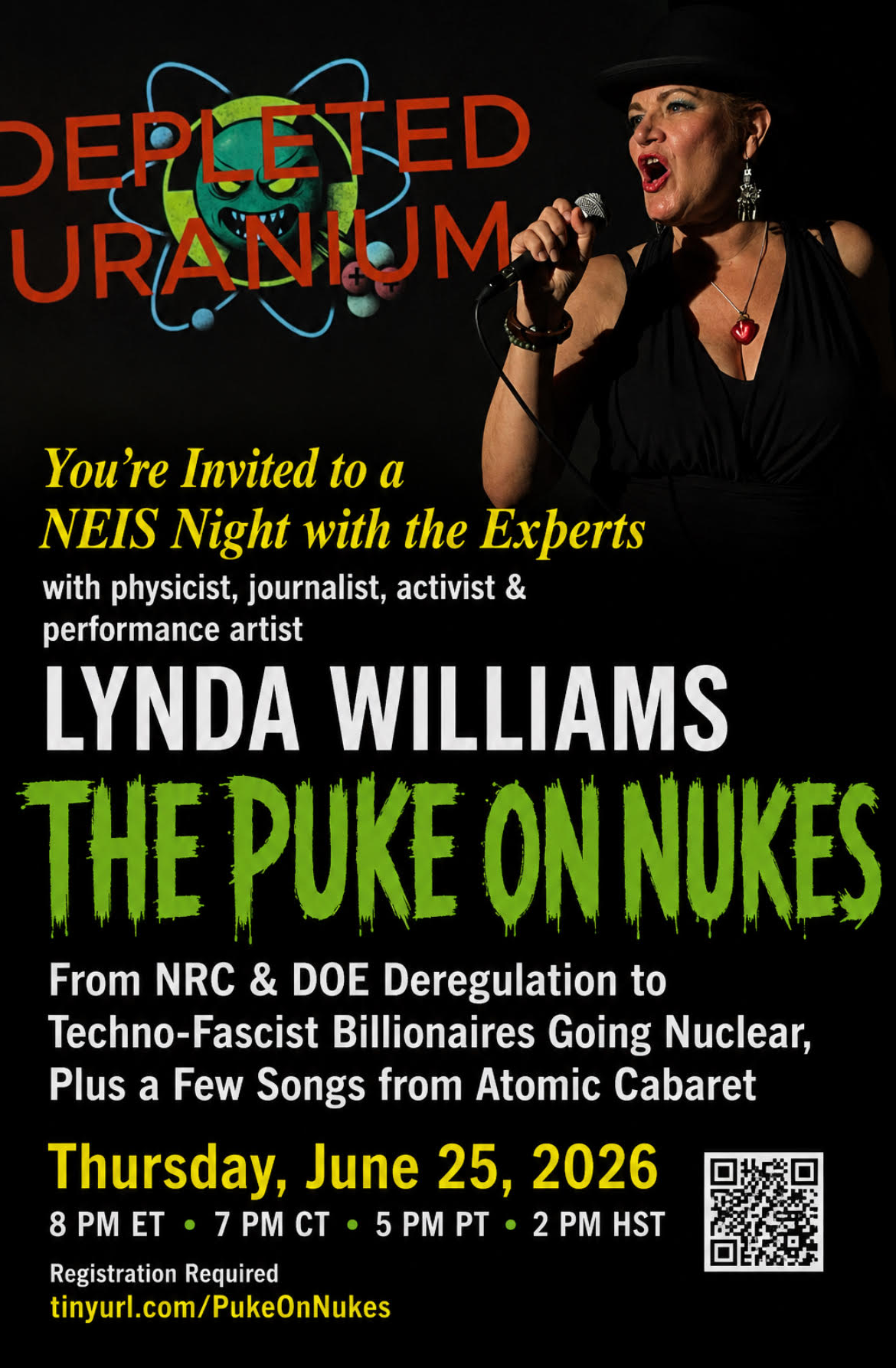
25 June- THE PUKE ON NUKES
Thursday, June 25, 2026
7pm Central Time (8pm ET, 6pm MT, 5pm PT) UTC – 5
From NRC & DOE Deregulation to Techno-Fascist Billionaires Going Nuclear, Plus a Few Songs from Atomic Cabaret REGISTER
26 June – Radiation Trainwreck at the NRC / Join the Protect Better Campaign – https://us02web.zoom.us/meeting/register/4ZlZ5_qLSHGiLSCg8FF6Bg#/registration


Cuba Is Not a Failed State – It Is a Besieged State
PETITION: “Global Appeal to Endorse Palestinian Right of Return of Refugees”
To see nuclear-related stories in greater depth and intensity – go to https://nuclearinformation.wordpress.com
-
Archives
- June 2026 (211)
- May 2026 (306)
- April 2026 (356)
- March 2026 (251)
- February 2026 (268)
- January 2026 (308)
- December 2025 (358)
- November 2025 (359)
- October 2025 (376)
- September 2025 (257)
- August 2025 (319)
- July 2025 (230)
-
Categories
- 1
- 1 NUCLEAR ISSUES
- business and costs
- climate change
- culture and arts
- ENERGY
- environment
- health
- history
- indigenous issues
- Legal
- marketing of nuclear
- media
- opposition to nuclear
- PERSONAL STORIES
- politics
- politics international
- Religion and ethics
- safety
- secrets,lies and civil liberties
- spinbuster
- technology
- Uranium
- wastes
- weapons and war
- Women
- 2 WORLD
- ACTION
- AFRICA
- Atrocities
- AUSTRALIA
- Christina's notes
- Christina's themes
- culture and arts
- Events
- Fuk 2022
- Fuk 2023
- Fukushima 2017
- Fukushima 2018
- fukushima 2019
- Fukushima 2020
- Fukushima 2021
- general
- global warming
- Humour (God we need it)
- Nuclear
- RARE EARTHS
- Reference
- resources – print
- Resources -audiovicual
- Weekly Newsletter
- World
- World Nuclear
- YouTube
-
RSS
Entries RSS
Comments RSS
 nuclear-news