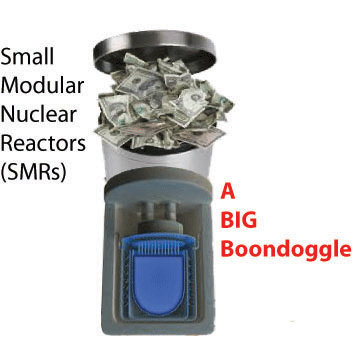
NextEra No Longer Bullish on Nuclear SMRs
By Alex Kimani – Oil Price , Oct 31, 2024,
NextEra Energy is exploring the reopening of the Duane Arnold nuclear plant amid rising data center interest but remains cautious on the viability of small modular reactors.
SMRs, though promising in terms of smaller size, lower fuel needs, and modular design, face significant challenges.
High production costs for HALEU, estimated to reach up to $25,725/kg, pose a substantial financial hurdle.
……………………..CEO John Ketchum said he was “not bullish” on small modular reactors (SMRs), adding that the company’s in-house SMR research unit has so far not drawn favorable conclusions about the technology.
“A lot of [SMR equipment manufacturers] are very strained financially,” he said. “There are only a handful that really have capitalization that could actually carry them through the next several years.”
Ketchum might have a valid point. …………………………………………….
The U.S. Department of Energy has so far spent $1.2B on SMR R&D and is projected to spend nearly $6B over the next decade. Last year, the U.S. Nuclear Regulatory Commission (NRC) certified NuScale Power Corp.(NYSE:SMR) VOYGR 77 MW SMR in Poland, the first ever SMR to be approved in the country.
But there’s a big problem here because the fuel required to power these novel nuclear plants might be really expensive.
Three years ago, U.S. Nuclear Regulatory Commission (NRC) approved Centrus Energy Corp.’s (NYSE:LEU) request to make High Assay Low-Enriched Uranium (HALEU) at its enrichment facility in Piketon, Ohio, becoming the first company in the western world outside Russia to do so. A year later, the U.S. Department of Energy (DoE) announced a ~$150 million cost-shared award to American Centrifuge Operating, LLC, a subsidiary of Centrus Energy. HALEU is a nuclear fuel material enriched to a higher degree (between 5% and 20%) in the fissile isotope U-235. According to the World Nuclear Association, applications for HALEU are currently limited to research reactors and medical isotope production; however, HALEU will be needed for more than half of the SMRs currently in development. HALEU is only currently available from TENEX, a Rosatom subsidiary.
………..A 2023 survey by the Nuclear Energy Institute on U.S. advanced reactor developers estimated that the total market for HALEU could reach $1.6 billion by 2030 and $5.3 billion by 2035.
Last year, the Nuclear Innovation Alliance (NIA) published a report wherein they discussed production costs for HALEU. Here’s an excerpt from the report:
‘‘Calculated HALEU production cost for uranium enriched to 19.75% is $23,725/kgU for HALEU in an oxide form and $25,725 for HALEU in a metallic form under baseline economic assumptions but could be higher.’’
The report claims that a SWU (Separative Work Unit) is going to cost a lot more in a HALEU enrichment cascade compared to a standard LEU (Low-Enriched Uranium) enrichment cascade.
……………….NIA reckons it might cost ~$2000/kgU to make HALEUF6 into HALEUO2, and as much as $4000/kgU to make HALEUF6 into HALEU-metal. At the end of the day, you’d end up with HALEU with 28 times the fissile content of natural uranium at over 100 times the price.
https://oilprice.com/Alternative-Energy/Nuclear-Power/NextEra-No-Longer-Bullish-on-Nuclear-SMRs.html
UK urged to break with France, North Korea and Russia on UN nuclear war resolution
Julian Borger Guardian 31st Oct 2024
Non-proliferation groups call on government not to oppose creation of a study into effects of nuclear conflict
Non-proliferation groups are urging the UK government to make a late about-turn on plans to vote alongside France, Russia and North Korea against a UN resolution to study the effects of nuclear war.
In a debate on Friday, a UN general assembly committee will discuss a resolution to create an international panel of scientific experts to examine the global impact of different nuclear conflict scenarios.
The resolution, drafted by Ireland and New Zealand, is expected to be overwhelmingly approved by the committee and then later by the full assembly. Diplomats involved in preparations for the vote say the US and China are expected to abstain but that the UK, France, Russia and North Korea had indicated they were likely to vote against.
London and Paris joining forces with Moscow and Pyongyang would not stop the resolution but could have an impact on their reputations when it comes to other nuclear proliferation issues.
The UK and French missions to the UN did not respond to requests for comment and diplomats in New York said final decisions could be left until the last hours before the vote.
Arms control advocates expressed disappointment on Thursday that, with just 24 hours to go before the debate, the UK’s new Labour government had shown no signs of changing course.
“People naively thought that, with a Labour government, you would see a shift away from this kind of weird line that the UK has taken on this particular type of thing,” said Patricia Lewis, the head of the international security programme at the Chatham House thinktank. “Maybe this is the Labour party trying to be more Catholic than the pope when it comes to nuclear weapons, but why not vote with the US, and abstain?”
The panel proposed in Friday’s resolution would be the first such UN-mandated study since 1988 and experts say a lot has changed since then, in science and the nuclear threats around the world. For example, Russia and North Korea, countries which have made aggressive nuclear threats, have entered a deepening partnership.
Lewis argued that a no vote by the UK and France would undermine their credibility with other UN member states, especially when London and Paris are trying to rally global support for criticism of Moscow.
“The UK has been struggling to get countries like South Africa and Brazil onboard over the whole issue of Russia’s behaviour, so this is an opportunity for the UK to say: ‘Yes, we hear you,’” Lewis said.
Observers believe the UK position could be the result of a pact with France to fend off criticism of their nuclear arsenals………………………………………………………………………………………
In April, the UK Royal Society was part of a joint statement by the national academies of science of the G7 member states, which said: “Among the roles of the scientific community are to continue to develop and communicate the scientific evidence base that shows the catastrophic effects of nuclear warfare on human populations and on the other species with which we share our planet.”
While some governments and national scientific institutions have done their own research, supporters of the resolution said a UN panel could establish a global consensus and a scientific “gold standard”, emulating the Intergovernmental Panel on Climate Change, and have an impact on policy.
“Studying the results of nuclear war will flesh out how bad it would be to have one, and maybe add pressure on countries who would otherwise think about using nuclear weapons,” said Andrey Baklitskiy, a senior researcher at the UN Institute for Disarmament Research. “Their leaders, their elites would maybe study or read it, or their populations, or partners or allies, who would maybe say we really don’t want this to happen.”
https://www.theguardian.com/world/2024/oct/31/uk-urged-break-france-north-korea-russia-un-nuclear-war-resolution
Race to build Britain’s first mini-nukes delayed again in Budget

‘Tortuously slow’ decision-making blamed for decision to push back development of small modular reactors.
Matt Oliver, Telegraph 31st Oct 2024 https://www.telegraph.co.uk/business/2024/10/31/race-to-build-britains-first-mini-nukes-delayed-again-reeve/
Ministers have delayed the competition to build Britain’s first
mini-nuclear power plants, amid “tortuously slow” decision-making in
Whitehall. The contest to develop small modular reactors (SMRs) was
whittled down to four contenders last month, with two winners originally
expected to be chosen by late this year or early 2025.
That already represented a significant delay on timelines originally set out when six
vendors were shortlisted a year ago. However, the Government has now pushed
back the selection of winners even further, with a decision not expected
until the spring.
The two-sentence update was snuck out in Budget documents
published alongside a speech by Rachel Reeves, the Chancellor, on
Wednesday. On Thursday, Great British Nuclear (GBN) confirmed the new
timetable and said it would provide further updates “in due course”. It
is understood the delay is largely down to a slower-than-expected pace of
decision-making in Whitehall, as well as fears that the process risks being
challenged by judicial review if it is not robust enough.
Nuclear submarine shipyard fire at Barrow-in-Furness leaves two in hospital
Josh Halliday Hannah Al-Othman and Jasper Jolly Guardian, 31 Oct 24
Two people have been taken to hospital after a “significant” fire broke out at BAE Systems’ nuclear submarine shipyard in Cumbria.
Residents said they saw huge flames and smoke billowing from the complex in Barrow-in-Furness, where the UK’s new multi-billion-pound Dreadnought submarines are being built.
Cumbria police said there was no nuclear risk but two people were taken to hospital for suspected smoke inhalation. Police said: “At this time there are no other casualties and everyone else has been evacuated from the Devonshire Dock Hall and are accounted for.”
BAE said the two people taken to hospital were workers at the site and they have since been discharged. About 200 people were working on a night shift at the time the fire broke out.
…………………………………………………………….. Four nuclear submarines from the Dreadnought class are being built there as part of a £31bn programme, which is due to replace the Vanguard submarines in the early 2030s. The last of the Royal Navy’s seven new nuclear-powered submarines, part of the Astute class, is also being built at the site.
It is understood that the boat in the hall is HMS Agincourt, whose completion had already been delayed to 2026. The previous Astute class, HMS Agamemnon, was launched last month. It remains unclear whether any submarines were damaged by the fire.
The MoD has been contacted for comment. Cumbria fire and rescue service said an investigation into the cause of the fire was under way.
Police on Wednesday advised residents to keep doors and windows closed, having earlier instructed people to stay indoors. Motorists in the area have also been told to close their windows, air vents and sunroofs and turn off fans and air-conditioning units.
It is understood that the warning was because of the risk of particles, such as those from metals, being released in the air from the heavy industry site, where sophisticated extraction techniques are normally in place.
BAE Systems reportedly told non-essential staff working at Devonshire Dock Hall to work from home on Wednesday, while the BBC reported that staff turning up for their shifts were confused as to which parts of the 25,000 sq metre site was accessible.
Shares in BAE Systems fell as much as 2% in morning trading after news of the fire, making it one of the biggest fallers on the FTSE 100 index of blue-chip companies.
A BAE Systems spokesperson said: “The area around the Devonshire Dock Hall has been evacuated and everyone has been accounted for. Two colleagues were taken to hospital having suffered suspected smoke inhalation and have both since been released.”
It is understood that the company will launch an investigation into the cause of the fire. The rest of the site remains open and operating normally.
Additional reporting by Dan Sabbagh
https://www.theguardian.com/business/2024/oct/30/nuclear-submarine-shipyard-fire-at-barrow-in-furness-leaves-two-in-hospital
BAE Systems fire: blaze at shipyard ‘could delay Aukus’
Building schedule of new fleet could be set back, experts warn, as two taken to
hospital after blaze breaks out at facility in Cumbria. Investigators are
still trying to determine the cause of a massive fire at a nuclear
submarine shipyard in Cumbria that analysts warned could delay the delivery
schedule of new boats for Australia as part of the Aukus pact.
Times 30th Oct 2024
Cost of maintaining decommissioned nuclear submarines

UK Defence Journal 29th Oct 2024
Graeme Downie, Labour MP for Dunfermline and Dollar, recently raised a question regarding the financial burden of maintaining decommissioned nuclear submarines at two key UK facilities: Rosyth and Devonport. Specifically, he inquired about the annual costs associated with these sites.
In response, Defence Minister Maria Eagle provided the figures for the financial year 2023-24, explaining that “the annual cost for maintaining decommissioned submarines varies each year depending on the respective maintenance requirements.”
For the last financial year, £1.7 million was spent at Rosyth, while the maintenance costs at Devonport were significantly higher, totalling £7.1 million.
These figures highlight the ongoing financial commitment required to manage the UK’s decommissioned nuclear submarines, a task dependent on the maintenance needs of each vessel and the infrastructure of the respective facilities.
Additionally, during a recent exchange in the House of Lords, Lord Coaker expressed the urgency for the UK to expedite its nuclear submarine dismantling programme, addressing the slow progress in decommissioning and dismantling outdated submarines.
Responding to a question from Baroness Bryan of Partick, he outlined the current challenges and ongoing efforts to dismantle the aging fleet, currently spread across Scotland and Devonport, and acknowledged that, without significant changes, the timeline could stretch into decades.
Baroness Bryan highlighted widespread concerns, pointing out that many submarines have been out of service for years or even decades without being dismantled. She cited, for example, the case of a Dreadnought-class submarine stationed at Rosyth since 1980, a delay emblematic of the broader issue. “There remains real concern that not one of these submarines has yet been dismantled,” she noted, adding that with the rate of dismantling, “it will take decades to dismantle the boats remaining in both Scotland and Devonport.”……………………………………………………..
https://ukdefencejournal.org.uk/cost-of-maintaining-decommissioned-nuclear-submarines
Labour just railroaded a secretive US-UK nuclear treaty renewal deal
by The Canary, 30 October 2024
The Campaign for Nuclear Disarmament (CND) said it condemns the government’s outrageous railroading through parliament of the renewal of the US-UK Mutual Defence Agreement (MDA), the secretive treaty that underpins the nuclear ‘special relationship’ between London and Washington.
The MDA: under a cloak of secrecy
In force since 1958, the MDA allows for the transfer of key technologies, information, and nuclear materials to and from the US. Since its inception, the treaty has been amendable every ten years, also requiring parliamentary agreement on its extension.
But the government intends to make this treaty permanent by removing the clause that requires the treaty to be extended, and enables debate and amendment, including rejection. CND said:
n an open and democratic society, a major change like this should be given due consideration and debate in parliament. However, the government has disgracefully obstructed this by announcing its planned changes to the MDA just before parliament’s summer recess – guaranteeing six weeks of inaction.
Upon their return, MPs spent much of September and October engaged with party conferences. This shamefully left little time for parliament to debate the proposed changes before the deadline of 23 October.
Labour’s railroading of US nuclear co-operation: CND reacts
CND general secretary Kate Hudson said:
Thousands of CND supporters have contacted their MPs to raise the MDA as an issue for debate in Parliament before the 23 October deadline. Despite this outpouring of public concern, the limited time MPs have spent in Parliament since the election has left very little space for the open discussion this significant but little-known treaty deserves.
The railroading of the MDA by the government is typical of the policy that successive governments have been pursuing when it comes to Britain’s military policies and its possession of nuclear weapons.
This ‘special relationship’ tethers British military and foreign policy to Washington – and makes redundant the claim that Britain has an independent nuclear weapons system. Without US support, Britain would be unable to sustain its nuclear arsenal. Efforts to scrutinise this relationship are regularly deflected by the government under the guise of national security.
SO, CND will protest not only the MDA, but also the return of US nuclear weapons to Britain – ahead of the US presidential election.
CND protesting at Lakenheath on 2 November
The group and its supporters will mobilise at RAF Lakenheath on Saturday 2 November, to oppose plans to station US nuclear weapons in Britain for the first time since 2008.
This will be CND’s fourth national mobilisation at RAF Lakenheath since 2022, after US government budget documents revealed plans for upgrade works at the US-run air base for the storage of the new B61-12 guided nuclear bomb.
With the US presidential election to take place just days later, the protest aims to highlight the significant impact of US foreign and military policy on the British public, and the increased nuclear dangers brought by deploying its nuclear weapons in Britain – by whoever wins the White House.
Attendees will also witness an unofficial declaration of Lakenheath as a nuclear-free zone, and calls for both the UK and other nuclear weapons states to engage with the UN Treaty on the Prohibition of Nuclear Weapons.
CND will be joined by Melissa Parke ,executive director of the International Campaign to Abolish Nuclear Weapons (ICAN), the organisation that won the 2017 Nobel Peace Prize. Melissa will speak about nuclear dangers in Europe.
No US nuclear weapons on UK soil
Details of the protest are as follows:
- Saturday 2 November.
- 12 noon to 3pm.
- RAF Lakenheath Main Gate, Brandon Road, Lakenheath, Suffolk. More details on parking can be found on the CND website here.
…………………………………………………..
https://www.thecanary.co/uk/news/2024/10/30/cnd-nuclear-weapons-treaty/
Sizewell C nuclear project proceeds by stealth – vast sums of public money spent, with no public disclosure about its true cost
1 The Autumn Budget includes a £14.1bn settlement for DESNZ in 2025/26,
which includes £2.7 bn for Sizewell C. This amounts to half the £5.5bn,
two year subsidy scheme published in August. The Chancellor chose not to
mention Sizewell C or nuclear energy in her speech to the House of Commons.
Stop Sizewell C said: “For a government that criticised the opposition
for playing fast and loose with the nation’s finances, the Chancellor is
surprisingly happy to do the same, allocating another £2.7 billion of
taxpayers’ money on risky, expensive Sizewell C, without making any
guarantee of a Final Investment Decision being taken.
Including £2.5 billion already spent, this means £5.2 billion of our money will be spent
on a project that cannot even help Labour achieve its energy mission, and
is looking increasingly toxic to private investors.”
The Chancellor also announced that David Goldstone has been appointed as the independent Chair of the “Office of Value for Money” within the Treasury. “Stop
Sizewell C urges David Goldstone to call in Sizewell C for immediate
scrutiny, as the project is currently proceeding by stealth. Despite almost
no public disclosure about its true cost or transparency about value for
money, vast sums of public money have already been spent on Sizewell C,
with the potential for billions more to be poured down the drain.”
Stop Sizewell C 30th Oct 2024
Nuclear Free Local Authorities (NFLAs) believe budget is opportunity to lobby Ministers to ditch Sizewell C
Chancellor Rachel Reeves will be unveiling the contents of her red box when making her Autumn Statement on Wednesday and the UK/Ireland Nuclear Free Local Authorities believes this offers an opportunity to lobby Labour to ditch Sizewell C – if opponents act now.
Though intended to be constructed by French owned nuclear operator EDF Energy, the outgoing Conservative Government squandered £2.5 billion of taxpayers money on preparatory work, and in August 2024, Labour compounded the calumny by announcing a new subsidy scheme that could make up to a further £5.5 billion in public money available to support this unwanted white elephant. Consequently, the project is now 76%-owned by the British Government at a time when Ministers and their advisors still desperately chase private sector investors to back this Suffolk turkey.
There are still many unknowns about the eventual overall cost of Sizewell C. In contrast to the amazing reductions achieved in recent years in the cost of generating electricity through renewables, the delivery cost of nuclear continues to rise. Given that Sizewell C’s predecessor, the identical Hinkley Point C, is being delivered hugely over budget with some estimates that the cost in real terms will be up to £46 billion, it is wholly incredible that this project can be delivered for the £20 billion that Ministers claim.
And Sizewell C presents additional costly challenges. As a consequence of climate change, the coastal location will be increasingly threatened by inundation from an encroaching sea, requiring significant expenditure on coastal defences. Further Suffolk is ‘water stressed’ meaning that there will be increasing competition for fresh water from inhabitants or commercial operators, and Sizewell C has still to secure a guaranteed sustainable potable water supply for its planned 60 years of operation.
Given the circumstances it is unsurprising that few players amongst the financial markets have expressed any interest in taking a stake in the Sizewell doonboggle, and there is still considerable uncertainty when, or even if, the Financial Investment Decision will be made.
Sizewell C also represents a double whammy for electricity consumers. As taxpayers, we are expected to front up to £8 billion in funding, incidentally almost the same in total that Labour has dedicated to Great Britain Energy over the entirely of its five year term in office, but as electricity consumers we will also be expected to reimburse the construction costs through the imposition of an additional levy on bills, derisking the project for the profit-focussed operator. Unsurprisingly, the NFLA Secretary has described this Regulated Asset Base (RAB) model as the ROB for it represents daylight robbery.
The Labour Government has announced that they will establish a new ‘Office of Value for Money’ within the Treasury and the appointment of a Chair is expected imminently. Stop Sizewell C has launched a petition calling for that office holder to prioritise an examination of the financial liability that is Sizewell C.
Although initial feedback from the Treasury to campaigners had indicated that Sizewell C would definitely be examined by the new office holder, officials in recent correspondence have been more ambivalent and a recent written answer by Nuclear Minister Lord Hunt to a House of Lords parliamentary question was opaque and non-committal.
Stop Sizewell C are also asking supporters of their campaign to join them in writing to the Chancellor, Prime Minister and Secretary of State for Energy to cancel Sizewell C.
The NFLAs would urge opponents of Sizewell C to sign the petition:
Reeves urged not to cut Sellafield funds amid concern at rise in ‘near misses’

GMB raises safety concerns amid rumours of budget cuts across sites and Nuclear Decommissioning Authority
Guardian, Alex Lawson and Anna Isaac, 28 Oct 24
Rachel Reeves has been urged not to carry out mooted funding cuts for nuclear sites including Sellafield amid safety concerns, as it emerged that the number of incidents where workers narrowly avoided harm had increased at the Cumbrian site.
The GMB union has written to Reeves, the chancellor, before Wednesday’s budget to raise safety concerns after rumours emerged that the budget for the taxpayer-owned Nuclear Decommissioning Authority (NDA) could be reduced, which could result in cuts at nuclear sites including Sellafield and Dounreay in Scotland.
In the letter to Reeves, seen by the Guardian, union leaders warned that a safety incident at Sellafield, Europe’s most hazardous industrial site, would “have devastating consequences far beyond the immediate community”. The NDA had a budget of £4bn in the last financial year.
The warning came as recently released annual accounts for the NDA showed “near misses” at Sellafield had risen in the last financial year, and an “international nuclear event-scale” incident had occurred at the site, which is a vast dump for nuclear waste and also the world’s largest store of plutonium.
The NDA said there was an “inadequate response” during an incident in 2023 as some staff did not follow procedures when an emergency alarm unexpectedly sounded inside the site’s hazardous chemical separation area.
The report also said Sellafield, which employs 12,000 people, had received six enforcement letters from its regulator, the Office for Nuclear Regulation, and that in studying its safety record the “rate of significant near misses is higher across 2023-24”.
It found that the impact on employees from work injuries had “often been significant” even if many of the incidents had appeared innocuous.
In the letter, Denise Walker and Roger Denwood, of the GMB, wrote: “While operators and regulators work tirelessly to ensure safety, the inherent risks of the site mean that any lapse in safety standards could result in serious and far-reaching economic and ecological consequences.”
They said radioactive “materials must be safely managed to prevent leaks or accidental releases of radiation. The health risks of radiation exposure, including cancer and other serious illnesses, are well documented.”
They added: “Any reduction in funding would inevitably result in fewer resources for maintenance, monitoring, and emergency preparedness-heightening the risk of a serious incident.”
The Guardian’s Nuclear Leaks investigation in late 2023 revealed a string of cybersecurity problems at Sellafield, as well as issues with its safety and workplace culture. Last week the National Audit Office said the cost of decommissioning the site had risen to £136bn, with major projects running years behind schedule……………………………. https://www.theguardian.com/business/2024/oct/28/sellafield-work-accidents-reeves-budget
MP seeks answers on Submarine Dismantling Project in Rosyth
26th October, By Ally McRoberts
THE UK Government have been asked what steps they’re taking to keep West Fife safe and mitigate the “potential risks” posed by the Submarine Dismantling Project.
Radioactive waste is being removed from old nuclear subs at Rosyth Dockyard and Babcock have just applied for permission for more hazardous material to be taken out in the next stage.
Christine Jardine, Lib Dem MP for Edinburgh West, submitted a question at Westminster: “To ask the Secretary of State for Defence (John Healey), what steps his department is taking to (a) ensure the safety of and (b) mitigate potential risks posed by the decommissioning of nuclear submarines at Rosyth Royal Dockyard for surrounding residential areas.”
On Mr Healey’s
behalf, Maria Eagle, Minister for Defence Procurement, replied: “All the
submarines currently stored at Rosyth have already been de-fuelled, which
has significantly reduced overall potential risk. “Further, steps include
contractual requirements with Babcock International around safety and
environmental factors. “These include regular sampling of surrounding
waters and beaches, and dismantling one boat as a demonstrator to determine
the safest methods before starting on other boats.
Dunfermline Press 26th Oct 2024, https://www.dunfermlinepress.com/news/24679595.mp-seeks-answers-submarine-dismantling-project-rosyth/
Green jobs and green skills – the state of play

October 26, 2024, https://renewextraweekly.blogspot.com/2024/10/green-jobs-and-green-skills-state-of.html
In 2023, the global renewable energy sector witnessed a record increase in jobs, rising from 13.7 million in 2022 to 16.2 million. China led with an estimated 7.4 million renewable energy jobs, representing 46% of the global total. The EU followed with 1.8 million jobs, while Brazil had 1.56 million. The US and India each contributed nearly one million jobs. The strongest growth was seen in the solar photovoltaics sector, which accounted for 7.2 million jobs globally, with 4.6 million jobs located in China.
However, as I have reported in earlier posts, green skill shortages may slow progress and, exploring this issue in the UK context, an Imperial College Futures Lab briefing paper has investigated the Net-Zero job skills and training requirements in the UK’s energy system. It notes that the governments advisory Committee on Climate Change (CCC) estimates that between 135,000 and 725,000 net new jobs could be created in the UK by 2030 directly in low-carbon sectors, this wide range highlighting uncertainties in estimates about the number of workers required to support the transition to Net-Zero. The Futures Lab study identifies ongoing barriers and opportunities for expanding low-carbon job competencies, culminating in a set of policy recommendations to create clear, inclusive training pathways into low-carbon energy jobs.
Using three sectoral case studies, the paper investigates challenges and opportunities for improving skills and training. Firstly it shows how the building energy retrofit sector faces a significant shortage of skilled workers, particularly in heat pump installation, energy efficiency measures, retrofit coordination, and digital roles. Despite the potential to create 120,000–230,000 new jobs by 2030, it says ‘inconsistent policies and funding have hindered private investment in training’. Secondly, the offshore wind sector is forecast to employ over 100,000 workers in 2030, compared to 32,000 in 2022. But it says ‘offshore wind struggles with skills gaps in electrical, digital, consenting, and marine roles, relying on experienced workers and those from other industries to fill these gaps’. Thirdly, the paper claims the electric vehicles sector ‘could generate at least 80,000 new jobs over the next 10-15 years’ but says that this ‘is contingent on gigafactory development, with key skills needed in charging point installation, vehicle recycling, battery manufacturing, and electrification engineering.’
Most of these cases involve expanding training for specific green energy technologies and electrification, but the report says that ‘not all industrial decarbonisation can be achieved through direct electrification, and particularly across hard-to-abate industries, decarbonisation will depend on the development of hydrogen and CCUS sectors’. It notes that ‘growth of these sectors is considered highly conditional, subject to the competitiveness of international markets, the availability of skilled labour, and levels of investment,’ but reports that the CCC estimates that ‘these industries could create between 1,500 and 97,000 new jobs by 2030’. It adds that ‘the current offshore oil and gas workforce is expected to provide a large number of skills required in these sectors’.
That’s good news (arguably blue hydrogen/CCUS apart) but making it happen won’t be easy. It is interesting in this context that there has recently been a call for £1.9bn a year to help oil and gas workers move into clean energy, with the Green Jobs Taskforce also estimating that ‘the low-carbon transport sector could create 78,000 new jobs by 2040, including 24,500 in battery manufacturing, 43,500 in the battery supply chain, and 10,000 in EV manufacturing’.
Looking to the way ahead, the Future Lab identify a series of barriers facing this type of job transition. First come straight forward ‘skills transferability’ barriers. For example it notes that it has been estimated that 100,000 jobs in the UK’s offshore energy sector will be filled by workers transferring from oil and gas into offshore renewable roles, and by new entrants from outside the sector. But it says ‘there is debate about how transferable skills across high- and low-carbon sectors actually are, and whether a ‘topping up’ of skills or more rigorous retraining will be required for those transitioning’.
Then there are mobility barriers. ‘Whether or not workers are able to take low-carbon jobs will depend on where and when existing jobs are being lost and new jobs become available. It will also depend on the supply of and demand for relevant training, which is likely to be unevenly distributed in terms of quantity and quality. If green jobs or re-skilling opportunities do not appear in areas where jobs have been phased out, workers will either have to lose out on opportunities, seek employment in other high-carbon sectors, or relocate, which risks reinforcing existing regional inequalities.’
That links up to regional barriers. It says ‘UK regions with a higher concentration of energy-intensive industries, such as the North East, Yorkshire and the Humber, and the West Midlands, stand a higher chance of being negatively affected by the transition. These regions are often also those whose economies have seen the least growth in recent decades. They are also likely to have less capacity and resources to be able to provide adequate re-skilling support’.
And finally there are diversity barriers. The report notes that ‘the current energy sector is predominantly represented by white male workers. Available statistics suggest that only 5% of the workforce comes from BAME backgrounds. Unless active measures are taken to support underrepresented groups joining the Net-Zero energy workforce, occupational gender & ethnicity gaps are likely to persist’.
Some of the reports recommended actions are obvious enough from the foregoing analysis. For example green sectors should be ‘inclusive and respectful places to work, where underrepresented groups not liable to be discriminated against’, and we should build ‘closer links between high- and low-carbon energy sectors to create direct routes into new jobs.’
More specifically ‘current public financing mechanisms for skills, including the Apprenticeship Levy, the National Skills Fund, and the Adult Education Budget, should be reviewed to see how funding can be better directed towards the development of training for green jobs. Additional public funding should also be leveraged to support long-term development of skills for Net-Zero, specifically for FE colleges and training providers to be able to develop new, high-quality green courses and overcome low participation rates. There is also a case for targeted funding for SMEs who cannot afford to send staff to be trained or take on apprentices’. And more generally, ‘introduce a national Net-Zero Skills Commission to take on monitoring, research and advisory roles to support development of skills for the Net-Zero transition in England.’
Plenty of good ideas. Let’s hope some are implemented soon, and meantime, the UK government is pushing ahead with its ‘skills passport’ initiative. In parallel, we hope helpfully, OU Visiting Research Fellow Terry Cook and I are putting together a journal paper on this whole area, looking in particular at what governments can do at the strategic level, by making new energy technology funding/subsidies conditional on the provision of green skill training programmes.
CND condemns ‘outrageous railroading’ of US-UK nuclear agreement renewal through Parliament.
Anti-arms campaigners today condemned the
“outrageous railroading” of the US-UK Mutual Defence Agreement (MDA)
renewal through Parliament. The MDA, active since 1958, enables vital
nuclear material and technology transfers between the US and Britain,
reviewed every 10 years. But the Campaign for Nuclear Disarmament (CND)
condemned the government’s intention to make the treaty permanent by
removing the clause that requires the treaty to be extended and enables
debate and amendment, including rejection.
Morning Star 25th Oct 2024 https://morningstaronline.co.uk/article/cnd-condemns-outrageous-railroading-us-uk-nuclear-agreement-renewal-through-parliament
Slovenia cancels referendum on new nuclear plant
By Reuters, October 25, 202, Reporting by Daria Sito-Sucic; Editing by Christina Fincher-
https://www.reuters.com/world/europe/slovenia-cancels-referendum-new-nuclear-plant-2024-10-24/
Slovenian lawmakers on Thursday voted to cancel a referendum on building a new nuclear plant after environmental groups and experts filed complaints questioning its legality at the constitutional court.
The new JEK 2 plant was due to be constructed next to Slovenia’s existing Krsko nuclear power plant, which is jointly owned by Slovenia and Croatia and meets about 20% of the electrical energy demand in Slovenia and 16% in Croatia.
Sixty-nine MPs in the 90-seat parliament voted to cancel the public referendum, one was against and one abstained from voting. The referendum had been due to take place on Nov. 24.
Earlier this month, Slovenia’s parliament decided to call the referendum with the question: “Do you support the implementation of the JEK 2 project, which together with other low-carbon sources will ensure a stable supply of electricity?”
But public criticism of both the question and the project led the parliamentary groups to withdraw their support for the referendum.
Lawmakers said there were valid doubts about whether voters could make an informed, autonomous and responsible decision on such an issue.
“I am personally satisfied that there will be no referendum,” Slovenia’s President Natasa Pirc Musar was quoted as saying by state STA news agency. “I will always emphasize that significantly more information is needed for such a referendum.”
But observers say the cancellation of the referendum next month does not mean it might not take place at a later time.
The government has said it will work on the preparation of a special law on JEK 2, and that the state-owned GEN Energija will continue working on the development of the project, which has been estimated to cost between 9.6 billion euros ($10.37 billion) and 15.4 billion euros.
Slovenia and Croatia agreed in 2023 to prolong the lifespan of the Krsko plant by 20 years until 2043. The thermal power capacity of Krsko is 1,994 Megawatts (MW) with net power output of 696 MW.
UK Snubs Council of Europe Over Assange Inquiry
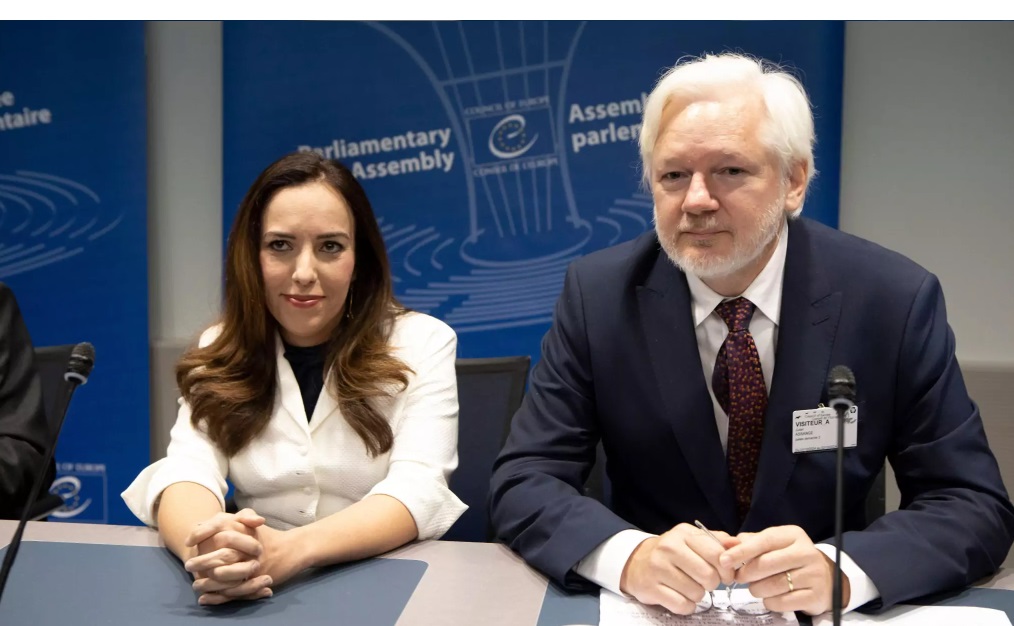
Politicians across Europe want Britain to investigate why the WikiLeaks founder spent five years in jail.
MARK CURTIS, 25 October 2024, https://www.declassifieduk.org/uk-snubs-council-of-europe-over-assange-inquiry/
Britain’s Home Office is making a “grave mistake” by ignoring a call from the Council of Europe to review its treatment of Julian Assange, the WikiLeaks founder’s wife has warned.
The Council’s parliamentary assembly, of which the UK is a member, passed a resolution earlier this month designating Assange as a “political prisoner”.
Assange endured five years in Belmarsh maximum security prison in London before being released in June, and flying to his native Australia. The UK government had incarcerated him while the US pursued extradition proceedings in the British courts.
His treatment has outraged the Council of Europe, which was created in the aftermath of World War Two with strong backing from Winston Churchill.
Its resolution urged the UK authorities to conduct a review “with a view to establishing whether he [Assange] has been exposed to torture or inhuman or degrading treatment or punishment, pursuant to their international obligations”.
It found the UK authorities “failed to effectively protect Mr Assange’s freedom of expression and right to liberty, exposing him to lengthy detention in a high-security prison despite the political nature of the most severe charges against him.”
Declassified asked Britain’s Home Office what its response was to the Council of Europe’s call.
The government department deflected the question, replying: “The longstanding extradition request for Julian Assange has been resolved. As is standard practice, all extradition requests are considered on an individual basis by our independent courts and in accordance with UK law.”
The demands of the parliamentary assembly are not binding on European governments but they are “obliged to respond”.
‘Cover-up’
Stella Assange, Julian’s wife, told Declassified the Home Office is making a “grave mistake” in refusing to heed the Council of Europe’s call.
She said: “We know that the Crown Prosecution Service has disappeared key documents relating to Julian’s imprisonment and refused to provide information, first to a journalist, and now to the court, that might shed a light on the political side of Julian’s persecution in the UK.
“It is one thing for rogue elements in the CPS to collude with foreign governments to persecute a publisher and attempt to cover their tracks. It is quite another for the UK government to stonewall in this manner in the wake of an independent report by the Council of Europe and a vote by the overwhelming majority of the chamber calling on the UK to carry out an investigation.”
She added: “The UK government is effectively partaking in the cover-up, in a way that only a guilty party would.”
‘Psychological torture’
Assange’s detention in maximum security Belmarsh was “out of proportion in relation to his alleged offence”, the Council of Europe’s resolution found.
It recalled the findings of the then United Nations special rapporteur on torture, Nils Melzer, that Assange had been exposed to “progressively severe forms of cruel, inhuman or degrading treatment or punishment, the cumulative effects of which can only be described as psychological torture”.
Melzer’s report, produced in 2019 while Assange had secured asylum in the Ecuadorian embassy in London, called on UK officials to be investigated for possible “criminal conduct” in their treatment of Assange. It was never reported in the UK national media.
The Council of Europe found that the UK authorities “appear to have ignored” Melzer’s findings.
Its resolution was passed with 88 in favour, 13 against and 20 abstentions. All four UK members of the parliamentary assembly voted against, including Lord Richard Keen, a Conservative peer, who expressed a dissenting opinion.
Keen argued that it was “legally incorrect” to find that Assange had been detained unlawfully, as he had violated bail conditions before and was considered a flight risk.
Keen also rejected the accusation of torture against the UK, saying that Assange’s “regrettable psychological state” identified by Melzer was due to Assange’s “self-imposed lengthy isolation in the Ecuadorian embassy in London and cannot be blamed on the UK authorities.”
‘Chilling effect’
The Council of Europe concluded that the treatment of Assange “creates a dangerous chilling effect and a climate of self-censorship affecting all journalists, publishers and others reporting matters essential for the functioning of a democratic society”.
It added: “It severely undermines the role of the press and the protection of journalists and whistle-blowers around the world.”
The resolution also noted that the Council was “alarmed” by reports that the US Central Intelligence Agency had covertly surveyed Assange while he was in the Ecuadorian embassy in London and was allegedly developing plans to poison or even assassinate him on UK soil.
Rebecca Vincent, campaigns director at Reporters Without Borders, told us that Julian Assange’s sentencing by UK courts to 50 weeks in prison for breaking bail was “disproportionate”.
She added: “His subsequent prolonged detention in a high-security prison with no charges against him in the UK, held purely on remand, constituted a gross violation of his rights.”
Vincent said: “We faced unusual restrictions from UK authorities in trying to do our jobs advocating in this case, including extreme difficulties securing consistent access to monitor extradition proceedings against Assange in UK courts, and access to visit him in Belmarsh prison. These aspects all merit a serious independent review.”
1 This Month
26 September – International Day for the Total Elimination of Nuclear Weapons





PLEASE OPPOSE HR 8255 AND S.3639 – bills would accelerate satellite deployment, with no environmental review or safeguards – https://ncstd5li.quorum.us/campaign/169331/
To see nuclear-related stories in greater depth and intensity – go to https://nuclearinformation.wordpress.com
-
Archives
- September 2026 (313)
- August 2026 (330)
- July 2026 (355)
- June 2026 (287)
- May 2026 (306)
- April 2026 (356)
- March 2026 (251)
- February 2026 (267)
- January 2026 (308)
- December 2025 (358)
- November 2025 (359)
- October 2025 (375)
-
Categories
- 1
- 1 NUCLEAR ISSUES
- business and costs
- climate change
- culture and arts
- ENERGY
- environment
- health
- history
- indigenous issues
- Legal
- marketing of nuclear
- media
- opposition to nuclear
- PERSONAL STORIES
- politics
- politics international
- Religion and ethics
- safety
- secrets,lies and civil liberties
- spinbuster
- technology
- Uranium
- wastes
- weapons and war
- Women
- 2 WORLD
- ACTION
- AFRICA
- Atrocities
- AUSTRALIA
- Christina's notes
- Christina's themes
- culture and arts
- Events
- Fuk 2022
- Fuk 2023
- Fukushima 2017
- Fukushima 2018
- fukushima 2019
- Fukushima 2020
- Fukushima 2021
- general
- global warming
- Humour (God we need it)
- Nuclear
- RARE EARTHS
- Reference
- resources – print
- Resources -audiovicual
- Weekly Newsletter
- World
- World Nuclear
- YouTube
-
RSS
Entries RSS
Comments RSS

