Flamanville EPR shutdown prompts fresh questions over reactor design

The first attempt to start up the process of nuclear reaction in the European Pressurized Reactor (EPR) at the Flamanville nuclear power plant, situated on France’s Channel Coast close to Jersey and Guernsey, was aborted by an automatic shutdown last week. The process was finally successfully re-engaged four days later, but the failure was just the latest in a catalogue of incidents and delays at the site, now 12 years overdue. For one specialist, the flaws in the design of the reactor, which is the same design as that planned for Hinkley Point in England, are such that it ‘will never function properly’. Jade Lindgaard reports.
Jade Lindgaard, 9 September 2024, Mediapart
French utility giant EDF was an official sponsor of the Summer Olympic and Paralympic Games in Paris, and it’s management knows only too well how embarrassing a false start can be. For that was the case with its initial announcement last week about the starting up of the European Pressurized Reactor (EPR) at Flamanville, northern France – the most awaited event in the French nuclear energy industry in recent history……………………………………..(Subscribers only) https://www.mediapart.fr/en/journal/france/090924/flamanville-epr-shutdown-prompts-fresh-questions-over-reactor-design
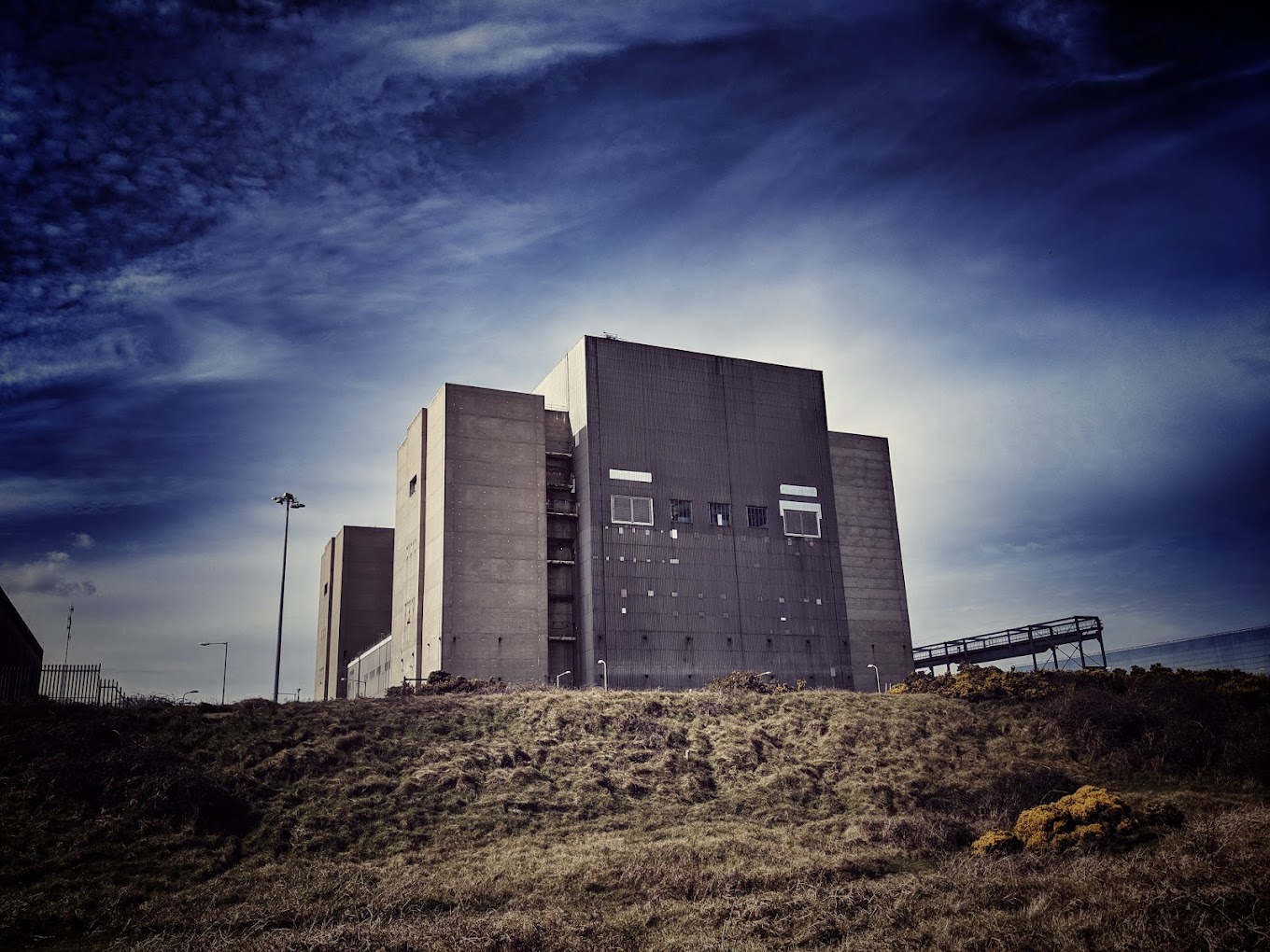
Blackwater – a land in transition
4 September 2024, https://www.banng.info/news/regional-life/blackwater-in-transition/
The Blackwater is a land where earth, water and sky intermingle in an eternal process of transition and transformation. In our time Climate Change and the Energy Transition are creating fundamental changes in the relationship between land, sea and air that will utterly transform our environment in the years to come.
The Blackwater is not an iconic landscape, unlike, say, Constables Country, with its charms set in a romantic afterglow and its appeal as the idealised English landscape. The Blackwater is more a concept with specific meanings and specific environments for farmers, sailors, fishermen, holidaymakers, birders and residents enjoying its waters, marshes, seaside, farmland and settlements. It is a precious region with many national and international conservation designations. Some of its landscapes are ecological treasure chests, especially the dwindling marshes taken from the sea by progressive dyking and draining to produce the so-called ‘meadows of the sea’.
Today, a reversal is in train as coastal squeeze erodes the fragile waterlands in a battle that only the sea can win. Gradually, though inexorably, the land yields as seal levels rise and storm surges, flooding and erosion intensify with global warming.
Global warming is already at critical levels and further increases in temperatures are already baked in. We will have to adapt to inevitable consequences while trying to prevent runaway Climate Change by making a rapid shift from fossil fuels to renewable forms of energy – in other words to achieve an Energy Transition.
While this is a global challenge it must be achieved through local measures already under way and impacting on our landscape. Out to sea in vast arrays of turbines are turning contributing to the UK’s 30GW of offshore wind power capacity. Onshore the windmills on the Dengie represent a tiny part of the 15GW onshore wind, two-thirds comes from Scotland. The government has committed to increasing wind capacity by 2030, to 30GW onshore and 60GW offshore.
This is a herculean ambition and major constraints lie in the way. One of these is transmission as the National Grid confronts local communities with its planned Norwich to Tilbury Great Grid Upgrade. The line of tall pylons will not impact the Blackwater landscape and a landfall at Bradwell is unlikely.
Even more unlikely is the possibility of new nuclear at Bradwell. Climate Change will put paid to the idea of building on a floodable coast today and a vanishing one in the far future. For the present there remains the forlorn hulk of the former Bradwell nuclear power station, once at the forefront of an energy transition now an isolated relic of a bygone age.
Somerset campaigners celebrate as EDF Energy U-turns on planned Hinkley Point C saltmarshes
More than 800 acres have been saved
By Daniel Mumby, Local Democracy Reporter, Somerset Live 11th Sept 2024
Environmental campaigners in Somerset are celebrating after plans to create new saltmarshes to offset the county’s new nuclear power station were scrapped. EDF Energy held a public consultation in January and February over its proposals for new saltmarshes on the Pawlett Hams, which lie on the right bank of the River Parrett near the villages of Combwich and Pawlett.
The plans envisioned more than 800 acres of saltmarsh being created as part of the wider mitigation for the new Hinkley Point C nuclear power station, which is currently under construction. EDF argued that the new marshes would provide safe habitats for fish and animals, improve water quality and reduce the risk of localised flooding – complementing the creation of the Bridgwater tidal barrier immediately upstream.
But following a substantial local backlash, the energy giant has U-turned and promised that any saltmarshes created to offset the power station will be created outside of the Somerset Council area. EDF released a statement confirming the change of heart on Monday evening (September 9), stating that it would be seeing alternative locations “within the wider Severn estuary” before any formal planning application is submitted to the Planning Inspectorate ahead of a public inquiry, which is currently expected to be held in the autumn of 2025.
The company has confirmed that none of the other sites being considered as “within the Somerset Council boundary” and that further rounds of public consultation will take place in the chosen locations. In addition, the company will be looking to upgrade an existing weir on the River Wye at Osbaston near Monmouth, in order to support migrating fish like salmon and shad in their journeys upstream………………………………………………………….. https://www.somersetlive.co.uk/news/somerset-news/somerset-campaigners-celebrate-edf-energy-9542744
World’s largest uranium miner warns Ukraine war makes it harder to supply west
Kazatomprom’s chief executive has warned that Russia’s war on
Ukraine is making it harder for the world’s largest uranium producer.
Kazatomprom’s chief executive has warned that Russia’s war on Ukraine
is making it harder for the world’s largest uranium producer to keep
supplying the west as the gravitational pull towards Moscow and Beijing
grows stronger.
Meirzhan Yussupov, chief of the Kazakh state miner, said
that sanctions caused by the war had created obstacles to supplying western
utilities. “It is much easier for us to sell most, if not all, of our
production to our Asian partners — I wouldn’t call [out] the specific
country . . . They can eat up almost all of our production, or our
partners to the north,” he told the FT.
FT 10th Sept 2024
https://www.ft.com/content/b8b34ec4-20ca-4c00-937b-fc620ae7503e
Which rural area will take the UK’s nuclear waste?

each community being considered for a geological disposal facility (GDF) now receives about £1m a year in investment
If a GDF is built here, Mr Moore says, there will be billions of pounds invested in the area
Victoria Gill and Kate Stephens, Science correspondent and senior science producer, BBC News, 9 Sept 24

“………………………………………………………………………..Sellafield is filling up – and experts say we have no choice but to find somewhere new to keep this material safe.
Nuclear power is also part of the government’s stated mission for ”clean power by 2030”. More nuclear power means more nuclear waste.
…………………….. Sellafield runs 24 hours a day with 11,000 staff. It costs more than £2bn per year to keep the site going, and it comprises more than 1,000 buildings, connected by 25 miles of road.
However, in recent years, doubts have been raised about the site’s security and physical integrity.
One of its oldest waste storage silos is currently leaking radioactive liquid into the ground. That is a “recurrence of a historic leak” that Sellafield Ltd, the company that operates the site, says first started in the 1970s.
Sellafield has also faced questions about its working culture and adherence to safety rules. The company is currently awaiting sentencing after it pleaded guilty, in June, to charges related to cyber-security failings.
An investigation by the Guardian revealed that the site’s systems had been hacked, although the Office for Nuclear Regulation said there was “no evidence that any vulnerabilities had been exploited” by the hackers.
All of this has cast a shadow over an operation that, as well as taking in newly created nuclear waste, also houses several decades worth of much older radioactive material.
The site no longer produces or reprocesses any nuclear material, but this is where the race began to produce plutonium for nuclear weapons at the height of the Cold War.
“It was the dawn of the nuclear age,” says Roddy Miller, Sellafield’s operations director. “But because it was a race, not a lot of thought was given to the long-term safe storage of the waste materials that were produced.”
The leaking storage silo, which was built in the 1960s, is just one of the buildings that now has to be emptied so the material inside can go into more modern silos. The building was only ever designed to be filled, and Sellafield says its plans to clear the site and demolish the building are the safest option.
The site’s head of retrievals, Alyson Armett, points out that without a “permanent solution” for the nuclear waste, the plans to decommission could be delayed.
The current plan for that permanent solution is to bury the waste deep underground.
A complicated search – both scientifically and politically – is currently on for somewhere to lock it away from humanity permanently.
“We need to isolate it from future populations or even civilisations, that’s the timescale we’re looking at,” says Prof Corkhill…………………………………………………..
The plan for permanent, underground storage is to contain that solid waste in a Russian doll-like series of barriers. The glass, encased in steel, will be shielded in concrete, then buried beneath the Earth‘s own barriers – layers of solid rock.
The question is, where will that facility be?
‘The waste is already here’
Six years ago, communities in England and Wales were asked to come forward if they were willing to consider having a disposal facility built near their town or village.
Potential sites will need the ideal geology – enough solid rock to create that permanent barrier. However, they also need something that might be more difficult – a willing community.
There are financial incentives for communities to take part in this discussion. So far, five have come forward. Two have already been ruled out. Allerdale in Cumbria was deemed unsuitable because there was not enough solid bedrock. Then, in September, councillors in South Holderness, in Yorkshire, withdrew after a series of local protests.
Government scientists are assessing the remaining three communities that are currently in the running. Geologists have been carrying out seismic testing – looking for that all-important impermeable rock.
One of the communities being considered is very close to the Sellafield site in West Cumbria, at Seascale.
It is not yet clear if Mid Copeland, the area under consideration that includes Seascale, will have the right rock. The survey and consultation here – and in the other locations being considered – are in their early stages and scheduled to last at least a decade.
In the meantime, the conversation goes on and each community being considered for a geological disposal facility (GDF) now receives about £1m a year in investment while initial scientific tests are carried out.
Mr Moore is part of a committee called a GDF partnership. It includes local residents, local government and representatives of Nuclear Waste Services, which is the government body behind this project.
These partnerships aim to keep the process transparent and ensure local people are well-informed. They also decide how the money is spent.
If a GDF is built here, Mr Moore says, there will be billions of pounds invested in the area. “If we’re going to host this on behalf of the UK, the community should benefit,” he says.
Also still on the shortlist are South Copeland, again on the Cumbrian coast, and a site on the east coast in Lincolnshire, where there have been a number of peaceful, but angry, protests.
On Halloween 2021 in Theddlethorpe, one of the local villages, several residents used their gardens to put up garish anti-nuclear dump scarecrows, inspired by an idea from pressure group the Guardians of the East Coast, which is campaigning against the disposal facility.
Ken Smith, from nearby Mablethorpe, is a member of both the campaign group and the local GDF partnership.
He thinks the government’s approach to finding a nuclear waste disposal site “stinks”.
Mr Smith is concerned that the voices of those most affected might not be heard and says it is unclear how local opinion will be measured at the end of the consultation…………………………………………………………………………………………………………………
https://www.bbc.co.uk/news/articles/czx6e2x0kdyo
Victoria Nuland, former US deputy secretary of state, confirms West told Zelensky to abandon peace deal

Comment: Nuland confirms what was already known. The reason the conflict is ongoing is because the US wanted it to be so.
https://www.rt.com/news/603708-ukraine-istanbul-us-nuland/ 9 Sept 24
Ukraine-Russia talks fell apart after Kiev asked foreign backers for advice, the former US deputy secretary of state has said.
The US, UK and other backers of Ukraine told Kiev to reject the deal reached at the 2022 Istanbul peace talks with Russia, former US under secretary of state Victoria Nuland has said.
In an interview with Russian journalist Mikhail Zygar, former editor-in-chief of the liberal news channel Dozhd, which aired on Thursday, Nuland was asked to comment on reports that the peace process between Moscow and Kiev in late March and early April 2022 collapsed after then-British Prime Minister Boris Johnson traveled to Ukraine and told Vladimir Zelensky to keep fighting.
“Relatively late in the game the Ukrainians began asking for advice on where this thing was going and it became clear to us, clear to the Brits, clear to others that [Russian President Vladimir] Putin’s main condition was buried in an annex to this document that they were working on,” she said of the deal being discussed by the Russian and Ukrainian delegations in Türkiye’s largest city.
The proposed agreement included limits on the kinds of weapons that Kiev could possess, as a result of which Ukraine “would basically be neutered as a military force,” while there were no similar constraints on Russia, the former diplomat explained.
“People inside Ukraine and people outside Ukraine started asking questions about whether this was a good deal and it was at that point that it fell apart,” Nuland said.
The veteran diplomatic hawk, who during her time in the State Department was renowned for her hostility towards Russia, quit the post of under secretary of state for political affairs in March this year. Nuland played a key role in the violent Western-backed coup in Kiev in 2014, which toppled Ukraine’s democratically elected president, Viktor Yanukovich.
During the escalation between Moscow and Kiev in February 2022, she called for deeper US involvement in the conflict and advocated for Ukraine to be armed with increasingly sophisticated weapons. However, in February, the 63-year-old essentially acknowledged the failure of her longstanding policy of containing Moscow, telling the CNN that modern Russia had turned out to be “not the Russia we wanted”
During her conversation with Zygar, Nuland confirmed that both Moscow and Kiev were eager to seek a diplomatic solution a month after the outbreak of the fighting.
“Russia had an interest at that time in at least seeing what it could get. Ukraine, obviously, had an interest if they could stop the war and get and get Russia out,” she said.
US officials “were not in the room” during the talks in Istanbul, only offering Kiev “support” in case it were needed, she claimed.
Putin said last week that the only reason the Istanbul deal failed was because of “the wish of the elites in the US and some European nations to inflict a strategic defeat on Russia,” adding that Boris Johnson served as the messenger to quash the peace process.
The negotiations in Türkiye yielded a draft agreement, which would have ended the hostilities, Putin recalled. Kiev was willing to declare military neutrality, limit its armed forces, and vow not to discriminate against ethnic Russians. In return, Moscow would have joined other leading powers in offering Ukraine security guarantees, he stressed.
According to the Russian leader, talks with Kiev are still possible, but can only happen “not on the basis of some ephemeral demands but on the basis of the documents that were agreed and actually initialized in Istanbul.”
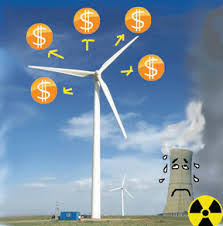
Renewables beat nuclear – even with full balancing included
RENEW EXTRA WEEKLY, 9 Sept 24
A new Danish study comparing nuclear and renewable energy systems (RES) concludes that, although nuclear systems require less flexibility capacity than renewable-only systems, a renewable energy system is cheaper than a nuclear based system, even with full backup: it says ‘lower flexibility costs do not offset the high investment costs in nuclear energy’.
It’s based on a zero-carbon 2045 smart energy scenario for Denmark, although it says its conclusions are valid elsewhere given suitable adjustments for local conditions. ‘The high investment costs in nuclear power alongside cost for fuel and operation and maintenance more than tip the scale in favour of the Only Renewables scenario. The costs of investing in and operating the nuclear power plants are simply too high compared to Only Renewables scenario, even though more investment must be put into flexibility measures in the latter’.
In the Danish case, it says that ‘the scenario with high nuclear implementation is 1.2 billion EUR more expensive annually compared to a scenario only based on renewables, with all systems completely balancing supply and demand across all energy sectors in every hour.’ It goes on ‘to achieve a more cost-efficient system based predominantly on nuclear power- the investment costs would have to drop to 1.55 MEU/MW. This is significantly below any current or future cost projection for nuclear power. Such a high cost-margin indicates that a combination of low-cost RES and sector coupling presents a cost-effective energy transition making it very hard for nuclear power to deliver a competitive alternative’…………………………………………………………………………….
Interestingly, in the UK context, Lord Turner, Chair of the UK Energy Transitions Commission, has also said that costly new nuclear plants may not be needed for net zero, since there are cheaper, low-carbon alternatives that could back up intermittent renewables. Hydrogen fuel or gas power plants fitted with CCS could fill the gap when wind or solar was not enough to keep the lights on. ‘I don’t think it is the case that you need new nuclear to balance the system. The systems of the future don’t absolutely need a base load.’ The power system ‘can work on a combination of intermittent variable renewables, wind & solar plus some hydro. I think the challenge for new nuclear is that it is just expensive. Bluntly, new nuclear can play very little role in a 2030 target.’
Well maybe that’s why there seems to have been some second thoughts about the new EPR reactor proposed for Sizewell in the UK, with the final investment decision for the Sizewell C nuclear plant evidently facing delays. Initially, EDF, the project’s developer, aimed to secure funding by the end of this year, but the timeline may now extend into 2025.
The prospect for nuclear do seem a bit uncertain, with the case for it these day relying in part on the claim that it can back up renewables and help avoid climate change. But that also seems to be uncertain, as is argued in a new comprehensive review of nuclear issues by academics from Germany and Finland, arguing that it has no role to play in responding to climate change. It says that it is ‘not a sustainable and affordable source of energy for the low-carbon energy transformation’ given its ‘cost-intensive nature, coupled with safety considerations’. And crucially it says that it is ‘characterized by very long construction times, and even longer developments of new technical generations, too far away and uncertain to contribute to climate change mitigation anytime soon’.
In addition ‘from an energy system perspective, nuclear power is not compatible with a system based on renewables, but rather hinders its expansion. Last but not least, nuclear power is particularly unfavorable in a future with higher temperatures and weather extremes and more military threats’.
That sounds pretty damning, even leaving aside radioactive waste handing, and also weapons proliferation and terrorism-related issues, with, as Prof. Ramana discusses in his recent powerful overview book ‘Nuclear is not the solution’, in addition to its other problems, reliance on civil nuclear power making ‘catastrophic nuclear war more likely’. Even if, hopefully, we can avoid that, there are still concerns about nuclear blackmail. And all this just to generate expensive energy.
Yes, going for renewables does mean we have invest in flexible balancing technology and energy storage, but that is cheaper overall and it also getting even cheaper, with many new options emerging. As Ramana says, to balance the variability of renewables, ‘we must invest in a mix of renewable energy technologies across various regions, and in battery and other storage technologies to store excess energy. In addition, we need to shape electricity demand to more closely match supply.’ In common with the German and Finnish researchers, he too sees that as the way ahead. https://renewextraweekly.blogspot.com/2024/09/renewables-beat-nuclear-even-with-full.html
Will new UK nuclear power station plan be scrapped?
The Energy Secretary has reportedly directed officials to review the nation’s nuclear plans, including the proposed plant at Wylfa in Anglesey
Dimitris Mavrokefalidis, 09/08/2024, https://www.energylivenews.com/2024/09/08/will-new-uk-nuclear-power-station-plans-be-scrapped/
The government’s plan to build a new nuclear power station in Wales is reportedly under review.
According to The Telegraph, the Energy Secretary has asked officials to reassess future nuclear projects, which puts the planned plant at Wylfa, Anglesey, in question.
The review will also examine the previous target to reach 24 gigawatts of nuclear capacity by 2050, set under Boris Johnson.
There are concerns that these plans were rushed before the last general election.
Minister for Nuclear Lord Hunt wrote on X (formerly known as Twitter): “Great British Nuclear has recently acquired the Wylfa site in Anglesey along with the Oldbury site in Gloucestershire.
“No decisions have yet been taken on the projects and technologies to be deployed at sites and any decision will be made in due course.”
Energy Live News has contacted the Department for Energy Security and Net Zero for comment.
Earlier this week, Ynys Môn MP Llinos Medi urged the UK Government to give definitive commitments and timelines for the Wylfa site and Wales’ overall energy strategy.
During a debate on the Great British Energy Bill on 5th September, Ms Medi emphasised the region’s significant natural energy resources and expressed frustration with the continued political uncertainty around the Wylfa nuclear project.
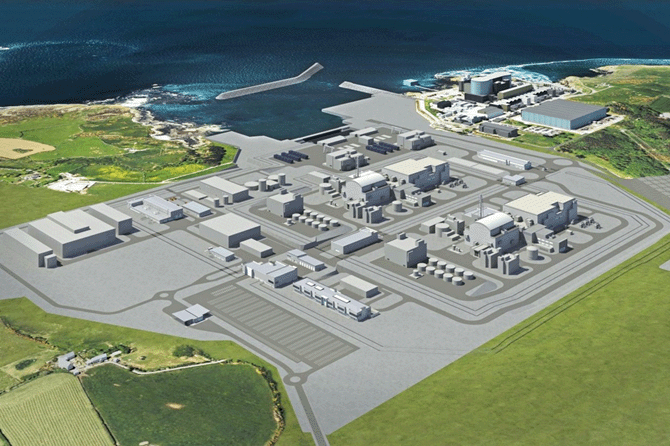
Ed Miliband considers scrapping planned nuclear plant
Move will fuel concerns that Britain’s ambitions for industry are being scaled back
Telegraph UK, Matt Oliver, Industry Editor7 September 2024
Plans to build a large nuclear power station in Wales are at risk of being scrapped as Ed Miliband seeks to accelerate Britain’s switch to a net zero electricity grid.
The Energy Secretary has told officials to review future nuclear plans in a move that has thrown into doubt plans for a third new gigawatt-scale plant to be built at Wylfa, in Anglesey.
The review will also reconsider the official target, announced under Boris Johnson, to deploy at least 24 gigawatts of nuclear capacity by 2050, The Telegraph understands.
It comes amid concerns that the plans set out under the Conservatives were rushed out ahead of the general election and not properly thought through.
On Friday, Whitehall sources stressed no final decisions had been made and that Mr Miliband remained strongly supportive of expanding British nuclear capacity.
However, the move will fuel concerns that Britain’s ambitions are being scaled back, with the Conservatives accusing him of turning his back on the industry.
Wylfa was only confirmed in May by the previous Conservative government to follow similar projects at Hinkley Point, in Somerset, and Sizewell, in Suffolk.
The Welsh site is capable of hosting up to four large reactors and has attracted keen interest from major international firms including US-based Westinghouse and South Korea’s Kepco.
It is understood that ministers remain committed to making a final investment decision on the £20bn Sizewell C power plant before the end of this year, as well as to the programme to develop the first mini nuclear power stations known as small modular reactors (SMRs).
But sources said that the Government’s future commitments were being reviewed in the round as part of wider plans to transition to a net zero energy system.
Possible revisions could still include building multiple SMRs at Wylfa instead of a large power station. Another large plant could still also be built elsewhere.
Great British Nuclear (GBN), the government agency tasked with preparing nuclear sites, is carrying out the review for Mr Miliband and is said to favour building SMRs at Wylfa because officials believe they could be built and switched on more quickly, by the mid-2030s. They are also considering which option provides the best value for money.
Because preparatory work on any large plant would need to begin soon, Whitehall sources said the question of what to do at Wylfa must be resolved as part of the upcoming Easter spending review, which will see departments agree multi-year settlements with the Treasury.
GBN acquired both the Wylfa site and another in Oldbury-on-Severn, Gloucestershire, in a £160m deal in March. Both sites are seen as good options for the first generation of SMRs.
A government spokesman said: “No decisions have yet been taken on the projects and technologies to be deployed at sites and any decision will be made in due course.”
However, the revelation that ministers may scrap plans for a large plant at Wylfa – seen as one of the most promising undeveloped nuclear sites in Europe – will raise fresh concerns that Britain’s promised “nuclear renaissance” is being scaled back.
Claire Coutinho, the shadow energy secretary, said: “Ed Miliband is shutting down the North Sea and now it seems he’s turning his back on nuclear. …………………..
Industry insiders also warned that basing plans for future expansion after Sizewell on SMRs alone could be risky, with the technology still unproven commercially. This contrasts with existing, proven large reactor technologies.
Talks about the future of Wylfa come as GBN prepares for the final stages of the UK’s SMR design competition. The current shortlist of five companies – Rolls-Royce, GE-Hitachi, Westinghouse, Holtec and NuScale – is expected to be reduced to four later this month. …………………………………………………………………. https://www.telegraph.co.uk/business/2024/09/07/ed-miliband-considers-scrapping-planned-nuclear-plant/
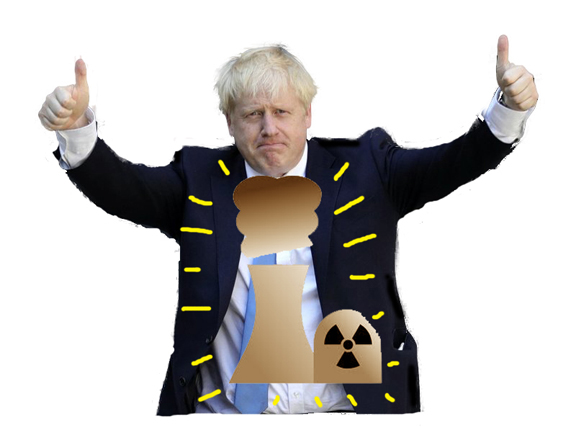
Boris Johnson faces ‘serious questions’ over new business with uranium entrepreneur
Former prime minister also under fire for hiring ex-aide Charlotte Owen as VP despite her lack of energy sector experience
Guardian, Carole Cadwalladr, 8 Sept 24
Boris Johnson failed to disclose that he met a uranium lobbyist while prime minister before entering into a new business with a controversial Iranian-Canadian uranium entrepreneur, the Observer can reveal.
Johnson’s new company Better Earth Limited also employs Charlotte Owen, a junior aide with just a few years work experience whom he elevated to the House of Lords last year at the age of 29, sparking intense controversy.
Transparency campaigners say there appear to be “serious public interest questions to be answered” over the nature and timeline of Johnson’s relationship with his co-director, Amir Adnani, the founder, president and CEO of Uranium Energy Corp, a US-based mining and exploration company, championed by former Trump adviser Steve Bannon.
Amir Adnani, a Canadian citizen who is the director of a network of offshore companies based in the British Virgin Islands, incorporated Better Earth in December last year. On 1 May, Companies House filings reveal, “The Rt Hon Alexander Boris de Pfeffel Johnson” was added as a director and co-chairman. And this summer, Charlotte Owen – now Baroness Owen of Alderley Edge – joined the company to work alongside him as its vice-president.
The Advisory Committee on Business Appointments (Acoba), which oversees ex-ministerial appointments, explicitly warned Johnson in April 2024 that the “broad overlap” between his roles in office and at Better Earth may entail “unknown risks” because of the lack of transparency over the firm’s clients. A statement from the Cabinet Office noted the potential for a conflict of interests particularly because of “the unknown nature of Better Earth’s clients – specifically that there is a risk of a client engaging in lobbying the UK government.” The committee also told the former prime minister it feared “that you could offer Better Earth unfair access and influence across government”.
Acoba was reassured that Johnson “did not meet with, nor did you make any decisions specific to Better Earth during your time in office”. But the Observer can reveal that Johnson met Scott Melbye, the executive vice-president of Uranium Energy Corp – Adnani’s company – in the House of Commons in May 2022 when he was still prime minister.
Adnani’s social media post about the event claimed that Melbye and Johnson spoke about “nuclear power and uranium”.
Neither Johnson or Adnani have responded to press inquiries about this encounter or when they first met. The encounter was not recorded in the prime minister’s official diary.…………………………………………………………………………………………
Baroness Margaret Hodge, the former Labour MP who led parliament’s Public Accounts Committee from 2010-2015 said there were “at least four very serious public interest questions” to be answered about the appointment.skip past newsletter promotion
“What on earth is an ex-prime minister of the United Kingdom doing, working for a company with an opaque structure? In my experience those who choose to have a UK company owned by a foreign entity only do that because they may have something to hide. What is it in this case? Given the sensitivities around nuclear capabilities we should know who he is in business with, where the money is coming from and why he is using a financial structure that appears to hide the beneficial ownership of the company.”
Better Earth, Amir Adnani and Boris Johnson declined to respond to the Observer’s inquiries about Better Earth’s line of work, funding or any other matters…………………………………………………. https://www.theguardian.com/politics/article/2024/sep/07/boris-johnson-faces-questions-uranium-business-charlotte-owen-aide
New images raise concerns over state of UK nuclear submarines
The National By Xander Elliards 8th September 24
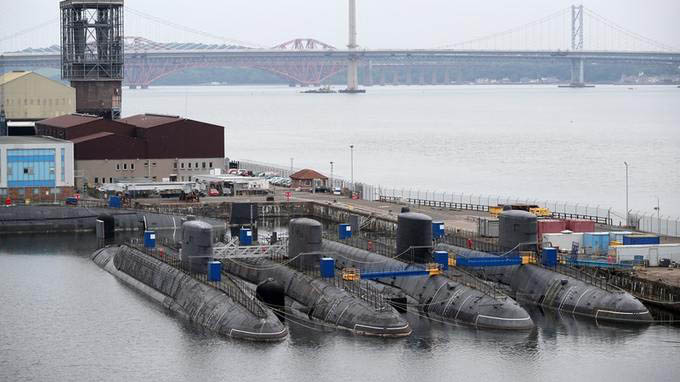
CONCERNS have been raised that the deteriorating state of the UK’s nuclear submarines is “potentially putting the vessel and her crew at risk”.
Alarm bells were rung after the Ministry of Defence (MoD) announced last week that Defence Secretary John Healey had joined one of the UK’s four Vanguard-class submarines as it returned to dock at Faslane.
An image shared by the MoD showed Healey looking at the submarine, which appeared covered in algae, slime and rust along its entire length.
Further photos taken by locals living near the HM Naval Base Clyde showed the submarine was missing numerous patches of anechoic tiles – which line the exterior to help hide the submarine from sonar.
The submarine is thought to have been on patrol since mid-March, meaning it had spent around 160 days underwater.
In March, HMS Vengeance returned to Faslane after 201 days underwater – reported to be the second-longest patrol ever – directly following a mission which lasted 195 days. Patrols on the previous Polaris generation of nuclear submarines averaged 60-70 days, according to the Campaign for Nuclear Disarmament (CND)
HMS Vengeance is one of four Vanguard-class submarines, which were each built with a 25-year lifespan – a limit imposed by the lifespan of major components – and either commenced sea trials or saw their reactor go critical in 1992, 1994, 1996, and 1999. The UK Government noted in 2007 that it “should be possible” to extend these lifespans by five years to a total of 30.
At least one submarine is meant to be patrolling the oceans at any time in order to deliver a nuclear strike if the UK Government orders it. However, the ageing fleet meant that essential works had to be carried out to keep the submarines seaworthy, placing higher pressure on the remaining boats.
In January, alarm bells had been rung after Dominic Cummings, a key adviser during Boris Johnson’s time in Downing Street, said there was a hidden “scandal of nuclear weapons infrastructure” which he called a “dangerous disaster and a budget nightmare of hard-to-believe and highly classified proportions”.
Issues with ageing equipment nearly led to a major disaster in 2022 after a broken depth gauge meant one nuclear submarine was continuing to descend despite unknowingly approaching “crush depth”.
On Saturday, the Daily Mail reported that none of the UK’s attack submarines are currently at sea, and the majority (16 out of 25) of the country’s warships are broken down, being modified, or undergoing trials. Retired rear admiral Chris Parry called the situation “utterly dire”.
In May 2023, HMS Vanguard finally completed a seven-and-a-half-year refit, and in March 2024, work on HMS Victorious was also completed. The final boat in the fleet is called HMS Vigilant, but it is not clear which of the four were greeted by Defence Secretary Healey at Faslane last week.
Responding to the nuclear-armed submarine returning to Faslane, Chris McEleny, Alba Party’s general secretary and a former MoD employee, said: “The latest sight of a Vanguard-class submarine returning to base caked in algae is very concerning. And, yet again we see anechoic tiles are missing, potentially putting the vessel and her crew at risk.
“The lengthy patrols should also spark concerns as to whether or not subs are going out on patrol with increased payloads due to concern over the half-life.
“The MoD have, as usual, failed to provide basic guarantees in regards to the safety-critical implications of these prolonged patrols.”…………………………..
Lynn Jamieson, the chair of the Scottish CND, claimed that the “UK’s nuclear weapons system is a shambles but that does not capture the absurdity and seriousness of its dangers”.
“The longer at sea, the more mental and physical stress on the crew and the more chance of accidents,” she went on. “The older the submarine the more the risks of unplanned radioactive leaks and other such incidents.
“The cost of keeping the ageing nuclear weapon system going and simultaneously building a replacement grows while public services are drastically cut. In 2023 alone, it cost £6.5 billion [according to a report from the independent Nuclear Information Service] and it will be even more this year.”……….
Jamieson said the UK Government should show “true leadership [and] scrap the old system and its replacement rather than continuing to valorise a capacity for genocide that puts the world in peril, a target on our backs and risks in our backyard”.
SNP MSP Bill Kidd, the co-president of Parliamentarians for Nuclear Non-Proliferation and Disarmament (PNND), said Scotland was the “dumping ground for nuclear leaks and discharges into our waters and coasts and we are the target for any potential nukes an enemy would fire at”.
“Nothing is planned to change in all this as far as Westminster is concerned – and that means Labour every single bit as much as Tories”, he said……………………………….. https://www.thenational.scot/news/24568990.new-images-raise-concerns-state-uk-nuclear-submarines/
Ynys Môn MP calls for UK Government clarity on Wylfa site
Ynys Môn MP Llinos Medi has called on the UK Government to provide clear
commitments and timelines regarding the future of the Wylfa site and the
broader energy strategy for Wales.
Speaking during a debate on the Great
British Energy (GBE) Bill on Thursday (5 September), Ms Medi highlighted
the island’s rich natural energy potential and criticised the ongoing
political uncertainty surrounding the future of the Wylfa nuclear site.
She also accused the previous Conservative government of playing a “political
game” and offering local communities a “false dawn” regarding the
future of the site. In May, the Conservative Government had confirmed Wylfa
as the preferred site for a major new nuclear power development.
Nation Cymru 6th Sept 2024,
https://nation.cymru/news/ynys-mon-mp-calls-for-uk-government-clarity-on-wylfa-site/
IAEA’s Grossi says Zaporizhzhia cooling tower likely to be demolished
WNN 05 September 2024
International Atomic Energy Agency Director General Rafael Mariano Grossi has inspected the cooling tower affected by fire last month at Zaporizhzhia Nuclear Power Plant and says it is “not usable in the future, so it will probably be demolished”.
Grossi, on his fifth visit to the six-unit nuclear plant which has been under Russian military control since early March 2022, said that the security situation remains “very fragile … so our work continues … we will be analysing, assessing what we saw today – until the conflict is over or it enters a phase where there is no more active military activity … the possibility of something serious cannot be excluded”.
The IAEA has had a team of experts stationed at Zaporizhzhia for two years – with 23 rotations of staff during that time. Their presence is intended to boost nuclear safety and security at the plant which is on the front line of Russian and Ukrainian forces.
Ukraine and Russia each blame the other side for putting nuclear safety and security at risk. After the fire at the cooling tower Russia accused Ukraine of causing it with drone attacks, while Ukraine accused Russia of causing it deliberately, or by negligence………………………………….. https://www.world-nuclear-news.org/Articles/IAEA-s-Grossi-says-Zaporizhzhia-cooling-tower-set
USING UKRAINE SINCE 1948

By Joe Lauria, Consortium News., June 11, 2024, https://popularresistance.org/using-ukraine-since-1948/

The U.S. Has Staged Operations With Extremists From Ukraine To Undermine Russia For Nearly 8 Decades.
It’s led us to the doorstep of nuclear annihilation.
The United States has for nearly 80 years seen Ukraine as the staging ground for its once covert and increasingly overt war with Russia.
After years of warnings, and after talk since 2008 of Ukraine joining NATO, Russia fought back two years ago. With neither side backing down, Ukraine is increasingly becoming a flashpoint that could lead to nuclear war.
The West thinks Russia is bluffing.
But its doctrine states that if Russia feels its existence is threatened it could resort to nuclear arms. Instead of taking these warnings seriously, NATO is recklessly opening corridors for a ground war against Russia in Ukraine; France says it’s putting together a coalition of nations to enter the war, despite Russia saying French or any other NATO force would be fair game.
In Paris the other day Joe Biden said Russia wants to conquer all of Europe but can’t even take Khariv. It is this kind of inflammatory nonsense, combined with allowing Ukraine to fire NATO weapons into Russian territory, that is imperiling us all.
The danger started building up many years ago but it is now reaching a climax.
The U.S. relationship with Ukraine, and its extremists, to undermine Russia began after the Second World War. During the war, units of the Organization of Ukrainian Nationalists (OUN-B) took part in the Holocaust, killing at least 100,000 Jews and Poles.
Mykola Lebed, a top aide to Stepan Bandera, the leader of the fascist OUN-B, was recruited by the C.I.A. after the war, according to a 2010 study by the U.S. National Archives.
Lebed was the “foreign minister” of a Banderite government in exile, but he later broke with Bandera for acting as a dictator. The U.S. Army Counterintelligence Corps termed Bandera “extremely dangerous” yet said he was “looked upon as the spiritual and national hero of all Ukrainians….”
Instead of Bandera, the C.I.A. was interested in Lebed, despite his fascist background. They set him up in an office in New York City from which he directed sabotage and propaganda operations on the agency’s behalf inside Ukraine against the Soviet Union.
The U.S. government study says:
CIA operations with these Ukrainians began in 1948 under the cryptonym CARTEL, soon changed to AERODYNAMIC. …
Lebed relocated to New York and acquired permanent resident status, then U.S. citizenship. It kept him safe from assassination, allowed him to speak to Ukrainian émigré groups, and permitted him to return to the United States after operational trips to Europe.
Once in the United States, Lebed was the CIA’s chief contact for AERODYNAMIC. CIA handlers pointed to his ‘cunning character,’ his ‘relations with the Gestapo and … Gestapo training,’ [and] the fact that he was ‘a very ruthless operator.’
The C.I.A. worked with Lebed on sabotage and pro-Ukrainian nationalist propaganda operations inside Ukraine until Ukraine’s independence in 1991.
“Mykola Lebed’s relationship with the CIA lasted the entire length of the Cold War,” the study says. “While most CIA operations involving wartime perpetrators backfired, Lebed’s operations augmented the fundamental instability of the Soviet Union.”
Continued Until And Beyond Ukrainian Independence
The U.S. thus covertly kept Ukrainian fascist ideas alive inside Ukraine until at least Ukrainian independence was achieved.
Mykola Lebed, Bandera’s wartime chief in Ukraine, died in 1998.
He is buried in New Jersey, and his papers are located at the Ukrainian Research Institute at Harvard University, the U.S. National Archives study says.
The Successor Organization To The OUN-B In The United States Did Not Die With Him, However. &Nbsp;It Had Been Renamed The Ukrainian Congress Committee Of America (UCCA), According To IBT.
“By the mid-1980s, the Reagan administration was honeycombed with UCCA members. Reagan personally welcomed [Yaroslav] Stetsko, the Banderist leader who oversaw the massacre of 7,000 Jews in Lviv, in the White House in 1983,” IBT reported. “Following the demise of [Viktor] Yanukovich’s regime [in 2014], the UCCA helped organise rallies in cities across the US in support of the EuroMaidan protests,” it reported.
That is a direct link between the U.S.-backed 2014 Maidan coup against a democratically-elected Ukrainian government and WWII-era Ukrainian fascism.
Since 2014, the U.S. pushed for an attack on the Russian speakers in eastern Ukraine who had rejected the coup, and NATO began training and equipping Ukrainian troops. Combined with talk since 2008 of Ukraine joining NATO, Russia reacted after years of warning.
More than two years after Russia’s intervention, with Ukraine clearly losing the war, Western leaders will do just about anything to save their political skins, as they’ve staked too much on winning in Ukraine. Don’t listen to them. They need a West in denial of the dangers facing us.
As President John F. Kennedy said in his 1963 American University speech:
“Above all, while defending our own vital interests, nuclear powers must avert those confrontations which bring an adversary to a choice of either a humiliating retreat or a nuclear war. To adopt that kind of course in the nuclear age would be evidence only of the bankruptcy of our policy–or of a collective death-wish for the world.”
The world may wake up when it’s too late — after nuclear missiles have already started flying.
The billions for Sizewell C show Labour’s shameful nuclear hypocrisy
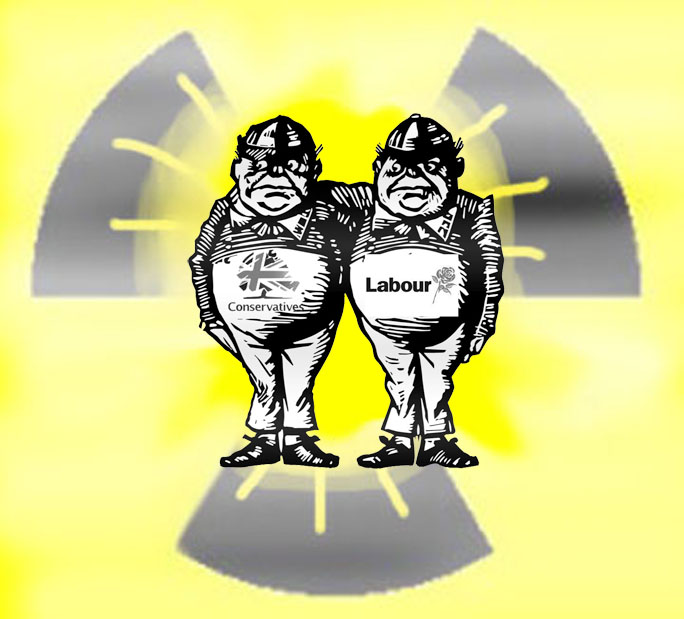
LINDA PENTZ GUNTER condemns Starmer’s willingness to let children go hungry and the elderly shiver while pouring billions into doomed nuclear projects that won’t address the climate crisis
https://morningstaronline.co.uk/article/billions-sizewell-c-show-labours-shameful-nuclear-hypocrisy Linda Penz Gunter6 Sept 24
THE Keir Starmer Labour government won’t scrap the two-child benefit cap because, it claims, the country can’t afford it. Doing away with this punitive measure would lift close to half a million children out of poverty at an estimated cost of £3.6 billion a year.
On the other hand, the Starmer government is perfectly happy to scrap the winter fuel allowance for pensioners, because doing so saves money — an estimated £1.4bn this financial year. That potentially life-saving support will now be stripped from as many as 10 million eligible pensioners.
That’s £5bn saved, on the backs of children and the elderly, two of the most vulnerable segments of our society.
Instead, the Labour government has now announced it will assign almost this identical sum — as much as £5.5bn in life support — to the planned 3,200 megawatt (MW) two-reactor Sizewell C nuclear power plant project on the Suffolk coast.
pensioners shiver in the dark in exchange for an entirely futile energy project that will keep no-one warm anytime soon, if at all.
Reacting to the announcement, Pete Wilkinson, spokesperson for Together Against Sizewell C, a local opposition group, observed: “It’s staggering that Labour has increased the potential outlay on this white elephant project to £8bn just days after Labour claimed the country couldn’t afford winter fuel payments for millions of pensioners.”
This would be the second government subsidy the scheme has received on top of an earlier £2.5bn handed out by the previous Tory government.
The announcement was made on August 30 by the Department for Energy Security and Net Zero, which described it as “a new subsidy scheme — the Sizewell C Devex Scheme — to enable continued support to the development of the proposed new nuclear power plant Sizewell C (SZC) to the point of a Final Investment Decision (FID) and thereby ultimately reach operation.”
The word “ultimately” is key here, since that operational date is very uncertain. Realistically, Sizewell C will never be completed in time to address the climate crisis. The project was initiated in 2010 with the contract awarded to French government corporation, EDF, in 2012.
Fourteen years later, the estimated cost at completion is £20bn, although these calculations are typically unpredictable and underestimated and could soar as high as £30-£40bn. Meanwhile, there are no reactors under construction.
Shovels are in the ground, but only to raze forests and fragile habitats adjacent to the precious Minsmere Nature Reserve. This is being done to make way for non-nuclear construction projects including “new offices, and training facilities,” according to Sizewell C’s joint managing directors Julia Pyke and Nigel Cann.
Further compounding the risks at Sizewell — in addition to the unsolved dangers of radioactive waste storage and meltdowns — the site sits on the shores of the North Sea where erosion has already taken its toll. With climate change precipitating sea-level rise, the plant will become ever more vulnerable to severe flooding and violent storms by the time it becomes operational.
All of this ignores the warnings of climate experts that we now have a window of five years or less in which to take urgent action to reduce carbon emissions to net zero.
Despite this, the Labour government continues to support another nuclear debacle, EDF’s first two-reactor project, the 3,200 MW Hinkley Point C nuclear power plant in Somerset.
Conceived in 2010 in the waning days of the Tony Blair Labour government, it was then ardently embraced by Conservative prime minister, David Cameron, and his Tory successors. Six years into actual construction, Hinkley Point C remains unfinished while its costs have ballooned to at least £34 billion. EDF’s vague completion date is now “after 2029.”
Claims that small modular reactors (SMR) are a promising alternative and can be rolled off assembly lines to answer energy needs are just more pie in the sky. That’s because the hundreds if not thousands of SMRs needed would result in such poor economies of scale it will send electricity prices even higher to compensate for the up-front costs.
SMR designs remain on paper, there is scant interest from buyers, and the flagship SMR project in the US, NuScale, has already collapsed under the weight of its exorbitant finances, which proved unacceptable to investors, many of whom dropped out.
Furthermore, squandering money on new nuclear power plants that are unlikely to materialise on time if ever, diverts much-needed resources away from the technologies that could be deployed quickly and on a significant scale, such as solar and wind power. For every pound squandered on nuclear power, more carbon reductions could be achieved faster by spending it on renewable energy instead.
All of this, however, falls on deaf ears in Westminster. “Labour complained about a black hole in the country’s finances yet now they are proposing to dig still further,” observed Alison Downes of Stop Sizewell C. “Where would this cash come from?”
Certainly not from the military, another nuclear hog at the subsidy trough that Labour is more than happy to overfeed. As Jeremy Corbyn, the former Labour leader and independent MP for Islington North remarked: “If the country’s finances are so bad, then why are we still spending £50bn a year on the military? If there’s no money left, why are we spending £12,000 a minute on nuclear weapons?”
Linda Pentz Gunter is a writer based in Takoma Park, Maryland. She is the independent specialist at Beyond Nuclear (www.beyondnuclear.org).
1 This Month
22 June – Virtual Event –Climate Change: New Data, New Debate

Monday, June 22, 2026 2:30 p.m. – 3:15 p.m. CT
YouTube. Register here

Protect Sazan Island from the Trump family! https://secure.avaaz.org/campaign/en/protect_sazan_island_from_the_trump_family_loc/?bqFCVab&v=174511&cl=22707147157&_checksum=5e9dde668860e8231c33699735e16a1fbf22ab2cb01da50c999fe8732b9775ef&utm_source=email&utm_medium=blast_email&utm_campaign=174511
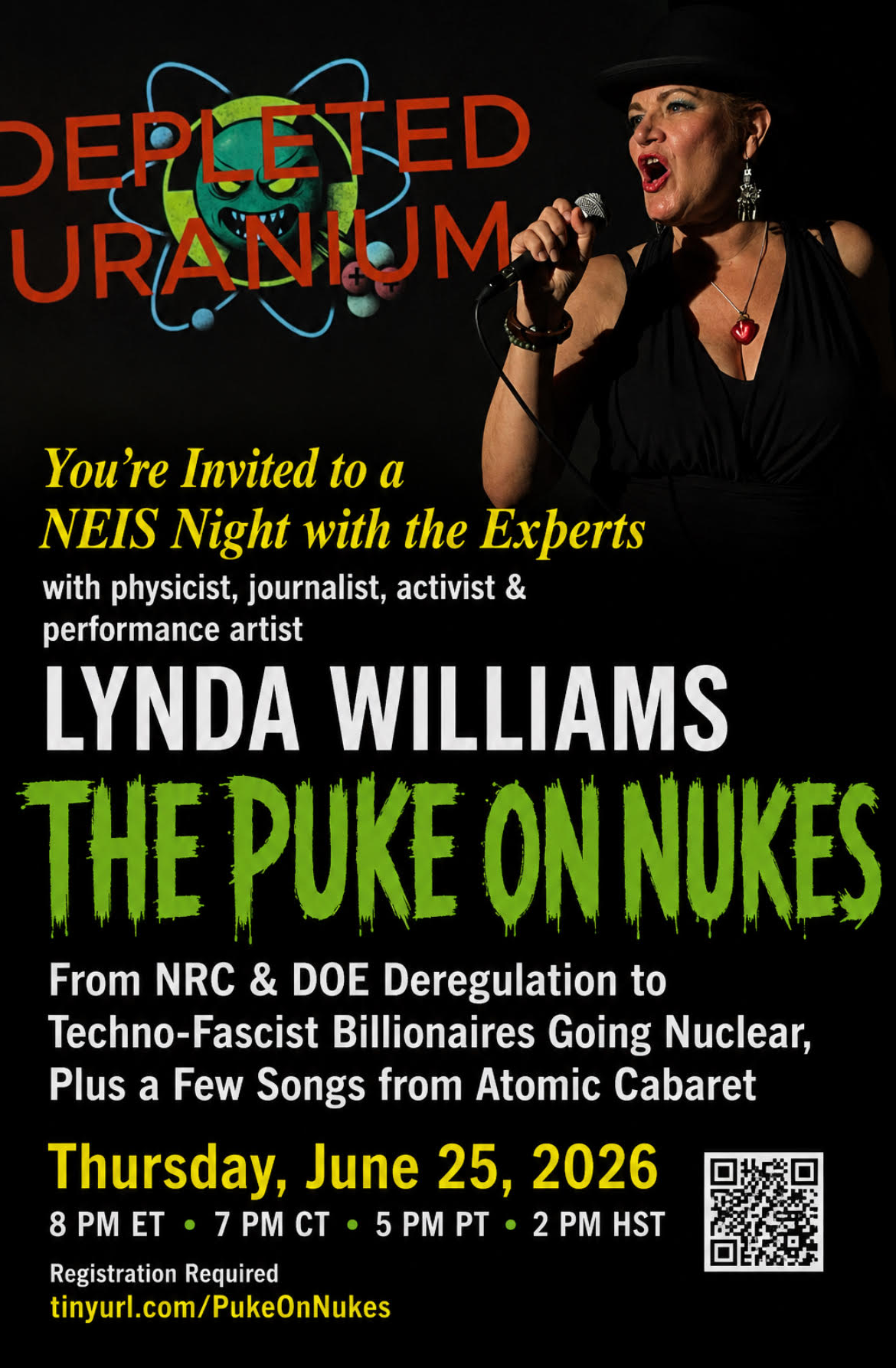
25 June- THE PUKE ON NUKES
Thursday, June 25, 2026
7pm Central Time (8pm ET, 6pm MT, 5pm PT) UTC – 5
From NRC & DOE Deregulation to Techno-Fascist Billionaires Going Nuclear, Plus a Few Songs from Atomic Cabaret REGISTER
26 June – Radiation Trainwreck at the NRC / Join the Protect Better Campaign – https://us02web.zoom.us/meeting/register/4ZlZ5_qLSHGiLSCg8FF6Bg#/registration


Cuba Is Not a Failed State – It Is a Besieged State
PETITION: “Global Appeal to Endorse Palestinian Right of Return of Refugees”
To see nuclear-related stories in greater depth and intensity – go to https://nuclearinformation.wordpress.com
-
Archives
- June 2026 (193)
- May 2026 (306)
- April 2026 (356)
- March 2026 (251)
- February 2026 (268)
- January 2026 (308)
- December 2025 (358)
- November 2025 (359)
- October 2025 (376)
- September 2025 (257)
- August 2025 (319)
- July 2025 (230)
-
Categories
- 1
- 1 NUCLEAR ISSUES
- business and costs
- climate change
- culture and arts
- ENERGY
- environment
- health
- history
- indigenous issues
- Legal
- marketing of nuclear
- media
- opposition to nuclear
- PERSONAL STORIES
- politics
- politics international
- Religion and ethics
- safety
- secrets,lies and civil liberties
- spinbuster
- technology
- Uranium
- wastes
- weapons and war
- Women
- 2 WORLD
- ACTION
- AFRICA
- Atrocities
- AUSTRALIA
- Christina's notes
- Christina's themes
- culture and arts
- Events
- Fuk 2022
- Fuk 2023
- Fukushima 2017
- Fukushima 2018
- fukushima 2019
- Fukushima 2020
- Fukushima 2021
- general
- global warming
- Humour (God we need it)
- Nuclear
- RARE EARTHS
- Reference
- resources – print
- Resources -audiovicual
- Weekly Newsletter
- World
- World Nuclear
- YouTube
-
RSS
Entries RSS
Comments RSS
 nuclear-news