Threat of nuke dump falls on Cumbrian and Lincolnshire rural communities

NFLA 3rd Feb 2025, https://www.nuclearpolicy.info/news/threat-of-nuke-dump-falls-on-cumbrian-and-lincolnshire-rural-communities/
Residents living in rural villages in West Cumbria and East Lincolnshire will have been shocked to discover that Nuclear Waste Services has its eye on their backyard as the potential location for Britain’s high-level nuclear waste dump.
For contained amidst the detailed announcements made last week by NWS of that organisation’s plans to conduct more intensive investigations in so-called Areas of Focus in the three GDF Search Areas were revelations that several small villages are now potentially threatened by this huge civil-engineering project.
The Geological Disposal Facility will be the final repository for Britain’s historic and future high-level nuclear waste, including redundant nuclear submarine reactors, spent nuclear fuel, and the world’s largest civil stockpile of deadly plutonium. Nuclear Waste Services is charged with finding a forever site for the GDF that combines ‘suitable’ geology and a ‘willing’ community.
The facility will comprise a surface site approximately 1 km square that shall receive regular shipments of nuclear waste. This waste will be transferred downwards along a sub-surface accessway into a network of deep tunnels located between 400 and 1,000 metres below the seabed. Here the waste will be placed in permanent storage with tunnels sealed up as they are filled. The network of tunnels could be between 20 – 50 kms square in area and extend up to 22 kms out from the coast (the UK territorial limit).
Last week, Nuclear Waste Services published three ‘brochures’, which identified specific Areas of Focus within each Search Area that NWS consider may have potential to locate the surface facility, the accessway, and the tunnel network. NWS intends to conduct more intensive investigations in these areas, seeking official approval at a later stage to carry out deep borehole drilling at those sites deemed to be most geologically promising by NWS.
It is in the South Copeland and Theddlethorpe GDF Search Areas that the chosen Areas of Focus will court controversy.
In South Copeland, NWS has now finally conceded – as the NFLAs and many local Cumbrians have long suspected – that their area of choice is West of Haverigg, incorporating the former RAF airfield and surrounding the prison [Figure 1]. Although Nuclear Waste Services have made much of their efforts to avoid Haverigg and Millom, referencing the provision of a ‘buffer zone’, they have given no similar consideration to the poor residents of Kirksanton, who will find that the Area of Focus comes up to their very doorsteps and, in some sorry instances, incorporates their properties. In so doing NWS have provided for direct access to the railway line.
As the Area of Focus incorporates the former RAF airfield and surrounds the prison, it seems inconceivable that HMP Haverigg would remain open if the GDF surface facility were to be located there, and the two wind farms owned by Thrive Renewables and Windcluster might also be lost[i]. The prison’s closure would impact more than two hundred staff, over 100 of them local, as well as local businesses which supply the prison[ii].
There is at least some consolation for the good people of Drigg, living on the other side of the South Copeland Search Area. Although a parcel of land northeast of the village was identified as being of interest, in recognition that the Low Level (Radioactive) Waste Repository is located nearby it was considered that ‘an Area of Focus so close to the LLW Repository site could potentially impact ongoing operation of the site’. Consequently, NWS are ‘not prioritising it at this stage’, but this is one to watch as this may represent a stay, rather than a commutation, of execution.
In the Theddlethorpe Search Area, a huge bombshell has been dropped on the unsuspecting residents of Great and Little Carlton and Gayton-le-Marsh, as Nuclear Waste Services’ primary focus has moved from the former Theddlethorpe Conoco gas terminal to the fields that lie between these villages [Figure 2]. As the new site is so far inland, NWS are looking at a prospective accessway of considerable length under the King’s National Nature Reserve to the coast [Figure 3 on original].
The current site selection appears worse than the original. Local Theddlethorpe and Withern Ward Councillor Travis Hesketh explains why: “After 4 years NWS have abandoned the 69-acre brownfield former gas terminal site for 250-1000 acres of productive farmland”. The NFLAs look forward to hearing senior Lincolnshire politicians berating the loss of agricultural land to this energy project as they have so readily condemned the encroachment of solar farms and pylons. But we won’t be holding our collective breath!
Also worrying is the illustration used in the accompanying ‘brochure’, a more detailed version of which is used with this media release [Figure 4 on original and at top of this page]. This incorporates a jetty – termed a Marine Off-loading Facility – which suggests that if the Lincolnshire site is chosen, NWS might consider bringing waste shipments to the site by ship from Sellafield as there is no immediate rail station.
This news will have been a tremendous shock to many local people in Cumbria and Lincolnshire for now the threat of a nuclear waste dump suddenly appears writ large. Residents are already up in arms, and doubtless in coming days, there will also be new protest groups formed to represent the people affected.
It is important though to emphasise that the identification of the final site for a GDF is a long way off, is still very uncertain, and that there is still time to organise and fight back! Cllr Hesketh is clear what should happen next: “Residents are well informed and want a vote now. East Lindsey District Council and Lincolnshire County Council promises of a vote by 2027 are worthless as they will be abolished in local government reorganisations.”
As ever the NFLAs as always stands ready to offer advice and support to these new groups, as we continue to work with existing groups which have long campaigned against the GDF.
Nuclear delusion in Ynys Môn will deny islanders green jobs

NFLA 3rd Feb 2025
Welsh antinuclear campaigners believe that the continued fixation of certain Senedd politicians and civil servants on bringing a new nuclear project back to Wylfa amounts to a delusion which will deny local people of Ynys Môn the opportunity to take up green jobs in the interim and make of Ynys Môn a true ‘green energy island’.
Former Labour First Minister Vaughan Gething MS convened an inaugural meeting of the Nuclear Energy Senedd Cross-Party Group recently with the primary objective of bringing a new nuclear power plant to Wylfa. In the gushing pre-amble accompanying the meeting invite the organisers describe such a project as the ‘single biggest inward investment opportunity in Welsh history’, without seemingly being cognizant that such a project will be costly and uncertain with a previous gigawatt project being derailed by the enormous financial cost and a condemnatory Planning Inspector’s report setting out clear and valid reasons for refusal.
Antinuclear campaigners are adamant that new nuclear cannot deliver ‘clean Welsh power, good jobs and skills and investment in communities’; they believe there should instead be a focus on renewable energy technologies, which will guarantee new ‘green’ jobs and a boost to the Ynys Môn economy.
The promise of such a strategy was outlined in the publication a ‘Manifesto for Mon’, authored by the late renowned Dr Carl Clowes, who identified that the development of sustainable industries, including renewable energy, on the island could create 2,500 – 3,000 jobs for local people. Existing jobs decommissioning the old Wylfa plant would be retained as the project will take decades to complete.
In July 2022, campaign groups met in Caernarfon to adopt a declaration outlining their common goals in opposing new nuclear power and affirming the commitment to achieving a renewable energy future for the nation.

Of nuclear power, the declaration states that ‘it costs too much; takes too long; will come too late [to address the energy or climate change crisis]; is accompanied by operational risks; causes long-term damage to the natural environment; is dependent upon foreign technology, finance, and uranium; is inevitably linked to the production and possession of nuclear weapons; always represents a potential target for terrorists or hostile powers in times of war; and creates toxic waste, left for future generations to deal with.’ ………………………………………………………………………………………………
the reality, as established at the two existing gigawatt projects, at Hinkley Point C in Somerset and increasingly at Sizewell C in Suffolk, is that, for these large construction projects, large national and multinational civil engineering contractors are engaged, with experience in delivering mega projects at this scale, and they bring with them specialist subcontractors with their own transient workforces. These workers require housing and landlords, recognising that they are in highly paid employment and able to pay higher rents, displace existing tenants to free up houses for the workforce. Alternately local holiday camps have been acquired to house the workers denying this accommodation to tourists for years. It is hardly likely that any more than a tiny minority of this workforce would be local or Welsh-speaking.
Referencing specific concerns about its impact on Welsh-speaking Gwynedd and Ynys Môn, the Declaration states that new nuclear ‘will inevitably lead to a huge influx of temporary workers, most of whom will not use Welsh as their first language. This will lead to a dilution in the first use of the Welsh language for daily conversations and transactions, and inevitably adversely impact the linguistic heritage of the region.’
Wylfa was described by former Conservative Prime Ministers Boris Johnson and Rishi Sunak as the ‘best site for new nuclear in Europe’ without either backing this bold statement with any evidence. The Planning Inspectorate clearly had a contrary view as they published a report recommending refusal of Hitachi’s proposal to build the Wylfa Newydd plant.
Energy company Horizon – a subsidiary of Hitachi – needed a Development Consent Order to allow their £16bn project to go ahead, but refusal of the DCO was recommended on several grounds. Although the project was expected to create 1,000 permanent jobs and 9,000 temporary construction posts, planning officers believed that ‘on balance, the matters weighing against the proposed development outweigh the matters weighing in favour of it’ for their assessment identified that the project would displace the Arctic and Sandwich tern populations from Cemlyn Bay where the plant was set to be built, and that the influx of thousands of building workers would have an adverse impact on the local economy and tourism, put huge pressure on local housing, and dilute the prevalent use of the Welsh language.
For the reality, as established at the two existing gigawatt projects, at Hinkley Point C in Somerset and increasingly at Sizewell C in Suffolk, is that, for these large construction projects, large national and multinational civil engineering contractors are engaged, with experience in delivering mega projects at this scale, and they bring with them specialist subcontractors with their own transient workforces. These workers require housing and landlords, recognising that they are in highly paid employment and able to pay higher rents, displace existing tenants to free up houses for the workforce. Alternately local holiday camps have been acquired to house the workers denying this accommodation to tourists for years. It is hardly likely that any more than a tiny minority of this workforce would be local or Welsh-speaking.
In May 2024, Energy Secretary Claire Coutinho announced that Wylfa was the Conservative Government’s ‘preferred site’ for a third large-scale nuclear power plant. Although the Welsh Nuclear Free Local Authorities had urged the Welsh Government to themselves purchase and redevelop the site as a renewable energy hub as a step towards making Ynys Mon a ‘green energy island’, this suggestion was declined and instead the site was eventually bought by the British Government from the former owners – Hitachi – who had wound up its Horizon Nuclear Power subsidiary in March 2021 after failing to secure a satisfactory public subsidy from Conservative Ministers and must have been keen to sell the site, with Oldbury, for £160 million.
It remains unlikely that any third new gigawatt plant at Wylfa will be developed. With two similar projects currently in development securing the necessary finance for a third remains the overriding challenge.
Hinkley Point C is being developed at its own expense by EDF Energy, which is owned by the French state. It is significantly above budget and will be delivered years late. The original estimated cost was £18 billion, but this has risen to £34 billion, based on 2015 prices. Although the project was first expected to be generating by the end of 2017, it is now unlikely to be completed before 2031.
British newspapers have recently reported comments attributed to sources close to the Sizewell C project that the likely budget has doubled to £40 billion. EDF Energy is also a minority stakeholder in this project, but, based on their sobering experience in backing Hinkley Point C, French state auditors have just recommended that no further significant investment be made in such foreign enterprises. The UK Government is the majority stakeholder. It has so far burnt through, or committed, £5.5 billion of taxpayer cash to finance preliminary works, whilst conducting an extensive and, so far, elusive, search for committed private sector partners upon which to offload much of its stake.
With future French and British Government financial support likely to be limited or non-existent, with Chinese state investment being currently effectively excluded by government diktat, and with private finance so difficult to find, it is highly unlikely a third gigawatt project at Wylfa can be funded. Indeed, the Final Investment Decision to proceed at Sizewell C has been put on hold pending the conclusion of an overall Government Spending Review, amidst a backdrop of more and more cross-party voices in both Houses calling for its abandonment.
Prior to the 2024 general election, Conservative Ministers courted the American nuclear concerns Bechtel and Westinghouse as potential suitors to develop the site. The Welsh NFLAs have previously highlighted their very chequered history of working on the Vogtle and V C Summer projects in the United States, with huge cost overruns, work being charged to state taxpayers which has never been delivered, senior executives being prosecuted for corruption, a corporate bankruptcy, and, in South Carolina, $9 billion being squandered on an incomplete and abandoned nuclear plant which shall never generate electricity. Such businesses, averse to risk, focused on profit, and hooked on grift, would be looking for a big public handout to pique their interest; a handout which Chancellor Rachel Reeves, already contemplating the price tag of Sizewell C and an alleged £22 billion blackhole inherited from the Tories to boot, would baulk at.
With a gigawatt plant at Wylfa then unlikely, what then is the new Senedd committee seeking?
Well, the invite gives a big clue as it references potential developments in the spring. This could of course allude to the outcome of the Spending Review, but equally it might refer to the much-delayed decision about which two Small Modular Reactor designs the Department for Energy Security and Net Zero should take forward with support from the public purse (again) following the conclusion of the SMR competition that is being conducted by Great British Nuclear. Four designs are in the running, with the expectation that two will be selected and offered money and development sites for deployment.
As antinuclear campaigners have previously, and repeatedly, pointed out none of these SMR designs have yet fully navigated the regulatory road to approval for deployment, nor have any been built or operated, and it is uncertain where the finance would come from. It is also unlikely that any will be deployed before the early or mid-2030’s, even if they work; are economically viable; and an acceptable solution to the management and disposal of radioactive waste can be identified. Like gigawatt plants, these modular projects will be assembled on-site by specialist teams who doubtless will be moved from site to site by the developer. Operators will thereafter be often specialists who will be relocated with no family or Welsh connections to Wylfa.
Even were new nuclear to eventually come to the ‘energy island’, it would come far too late to help address the energy and climate change crisis we face now. Remember those 2,500 – 3,000 jobs for local people predicted in the Manifesto for Mon; they could be delivered far more quickly and at a much lower cost, and with local people engaged in renewable energy technologies they would also be contributing to reducing the carbon footprint of Wales and generating the affordable energy the nation’s electricity consumers need……………………………………… https://www.nuclearpolicy.info/news/nuclear-delusion-in-ynys-mon-will-deny-islanders-green-jobs/
Israel sends missiles to Ukraine – Axios

https://www.rt.com/news/611950-israel-patriot-missiles-ukraine/, 30 Jan 24
Russia had warned against the transfer of Patriot interceptors
About 90 interceptor missiles for Patriot air defense systems have been sent from Israel to Poland, from where they will be forwarded to Ukraine, Axios has reported, citing three anonymous sources.
After Israel Defense Forces (IDF) retired their US-supplied Patriots in April 2024, Kiev asked for the missiles. Moscow warned West Jerusalem of potential consequences at the time, and the idea seemed to have gone nowhere.
“In recent days,” Axios reported this week, several US Air Force C-17 transport planes ferried the missiles from an airbase in southern Israel to the Polish city of Rzeszow, NATO’s logistics hub for supplying Ukraine.
West Jerusalem informed Moscow of the move and said it was “only returning the Patriot system to the US” rather than supplying weapons to Ukraine, Axios reported, citing an anonymous senior Israeli official. The same official claimed this was the same thing as the US transfer of artillery shells from “emergency storage” in Israel to Ukraine two years ago.
Both the Pentagon and the US European Command declined to give Axios a comment for the story. Russia has not officially addressed the matter as of yet.
According to Axios, Israeli Prime Minister Benjamin Netanyahu refused to take calls from Ukraine’s Vladimir Zelensky “for weeks.” The situation changed in late September when Netanyahu needed Zelensky’s permission for Hasidic pilgrims to visit Uman, a town south of Kiev where their movement’s founder, Reb Nachman of Bratslav, is buried. Zelensky refused until Netanyahu approved the Patriot transfer, a Ukrainian official told Axios.
A spokesperson for Netanyahu acknowledged to Axios that a Patriot system has been “returned to the US,” adding that “it is not known to us whether it was delivered to Ukraine.” The spokesperson also denied any connection between the Patriots and the Uman pilgrimage.
The missile delivery is the “most significant” Israeli contribution to Kiev since the Russia-Ukraine conflict escalated in February 2022. West Jerusalem has long insisted on providing only humanitarian aid to Kiev, out of concern about retaliation from Moscow in Syria, or through supplying Iran with sophisticated weapons, according to media.
Russia’s envoy to the UN, Vassily Nebenzia, warned Israel in July that arming Kiev would “have certain political consequences,” noting that any weapons sent to Ukraine “will eventually be destroyed,” just like the others.
Moscow has reduced its military presence in Syria after President Bashar Assad’s government in Damascus collapsed under an offensive by Hayat Tahrir al-Sham militants in December. Israel used the upheaval to destroy much of Syria’s military infrastructure and occupy additional territory in the Golan Heights. Earlier this month, Russia concluded a “strategic partnership” agreement with Iran.
No UK-Hungarian strategic cooperation deal on nuclear energy signed, says Britain
Hungary’s foreign minister Péter Szijjártó, and his British counterpart, David Lammy, discussed cooperation on energy in the context of reducing Hungarian dependence on Russia in talks earlier this week. https://tvpworld.com/84784041/no-uk-hungarian-strategic-cooperation-deal-on-nuclear-energy-signed-says-britain
However, Britain’s Foreign, Commonwealth and Development Office said no UK-Hungarian strategic cooperation agreement on nuclear energy was signed by the two ministers, as a story published by TVP World on January 30, 2025, had suggested.
Watchdog’s warning over nuclear waste rail crash
Federica Bedend, BBC News, North East and Cumbria, 1 Feb 25, more https://www.bbc.com/news/articles/c74m1rxynkxo
The nuclear watchdog has issued an improvement notice after two railway wagons carrying nuclear waste crashed.
It happened on the Sellafield site, in Cumbria, which manages more radioactive waste in one place than any other nuclear facility in the world.
The Office for Nuclear Regulation (ONR) said although no-one was injured and there were no radiation risks during the incident, which happened in November, it could have had “serious consequences”.
A Sellafield spokesman said: “An internal investigation was initiated to understand the root cause and to prevent this from happening again in future.”
The ONR said one of the wagons on the site’s railway had not been properly secured and it rolled about 200ft (60m), hitting a stationary wagon.
They added the wagons were left with minor damage and the nuclear containers were unaffected “due to their robust construction”, however health and safety improvements were needed to prevent future incidents.
Ian Bramwell, ONR’s head of regulation for Sellafield, said: “This will include improving how Sellafield plan, organise, monitor and review the measures in place to protect personnel directly and indirectly involved in rail activities on the site.”
The ONR will reinspect the site in the coming months and Sellafield has until 13 June to comply with the notice.
A Sellafield spokesman said it was working with the ONR to review its processes.
Hinkley Point C owner warns fish protection row may further delay nuclear plant.
The prospect of a fresh delay to the plant, which is expected to generate about 7% of the UK’s electricity in the 2030s, comes amid a deepening row between green groups and the government over the chancellor, Rachel Reeves’s plan to prioritise economic growth over other considerations, including the environment and net zero.
Solution to stop River Severn fish being sucked into cooling systems taking too long to resolve, EDF says
Jillian Ambrose, Guardian 30th Jan 2025
The owner of Hinkley Point C in Somerset has warned that the much-delayed construction of Britain’s first new nuclear power plant in a generation could face further hold-ups because of a row over its impact on local fish.
The nuclear developer, EDF Energy, warned that the “lengthy process” to agree to a solution with local communities to protect fish in the River Severn had “the potential to delay the operation of the power station”.
As a result, the developer, which is owned by the French state, raised the threat of further delays to Hinkley Point – a project already running years late and billions of pounds over budget.
EDF said last year that Hinkley could be delayed to as late as 2031 and cost up to £35bn, in 2015 money. The actual cost including inflation would be far higher. EDF declined to say how long any new delay could be.
The prospect of a fresh delay to the plant, which is expected to generate about 7% of the UK’s electricity in the 2030s, comes amid a deepening row between green groups and the government over the chancellor, Rachel Reeves’s plan to prioritise economic growth over other considerations, including the environment and net zero.
EDF last week welcomed the government’s new reforms to “stop blockers getting in the way” of new infrastructure projects, including nuclear power plants. It called for the government to establish a framework to manage environmental concerns “in a more proportionate” manner.
The developer has pressured the government to loosen environmental rules while at loggerheads with local communities over its complex plans to protect local fish populations which are at risk of being sucked up into the nuclear power plant’s cooling systems.
The company had planned to install an “acoustic fish deterrent” to keep fish away from the reactor’s water intake system, which is nearly two miles offshore.
The project, which was reportedly informally dubbed “the fish disco” among former ministers, would require almost 300 underwater speakers to boom noise louder than a jumbo jet 24 hours a day for 60 years.
But the plan was later scrapped by EDF over concerns for the safety of divers who would need to maintain the speakers in dangerous conditions. There are also questions over its effectiveness.
Without the deterrent an estimated 18 to 46 tonnes of fish could be killed every year, according to estimates provided by EDF.
The company dismayed local farmers and landowners last year by suggesting plans to turn 340 hectares (840 acres) of land along the River Severn into a salt marsh to compensate for the number of fish forecast to be killed by the reactor every year.
After a growing outcry, it said earlier this month it would delay the formal consultation on its salt marsh plan, which it says would provide safe habitats for fish and animals, from the end of this month until later this year.
Mark Lloyd, the chief executive of the Rivers Trust, said any fish deterrent was vital. “The water intakes will suck in an Olympic swimming pool’s worth of water every 12 seconds, more than the normal flow of all the rivers flowing into the Severn estuary, and without a deterrent mechanism will cause a vast slaughter of millions of fish every year for the next 60 years.
“This will cause the potential extinction of populations of rare and endangered species … As the Severn estuary is a vital fish nursery for the whole region, the strategic and economic impacts for marine fisheries throughout the Irish Sea will be devastating.”……………………………………………………………………………………… https://www.theguardian.com/business/2025/jan/30/hinkley-point-c-owner-warns-fish-row-may-further-delay-nuclear-plant
Sweden building world’s second nuclear waste storage site amid safety concerns
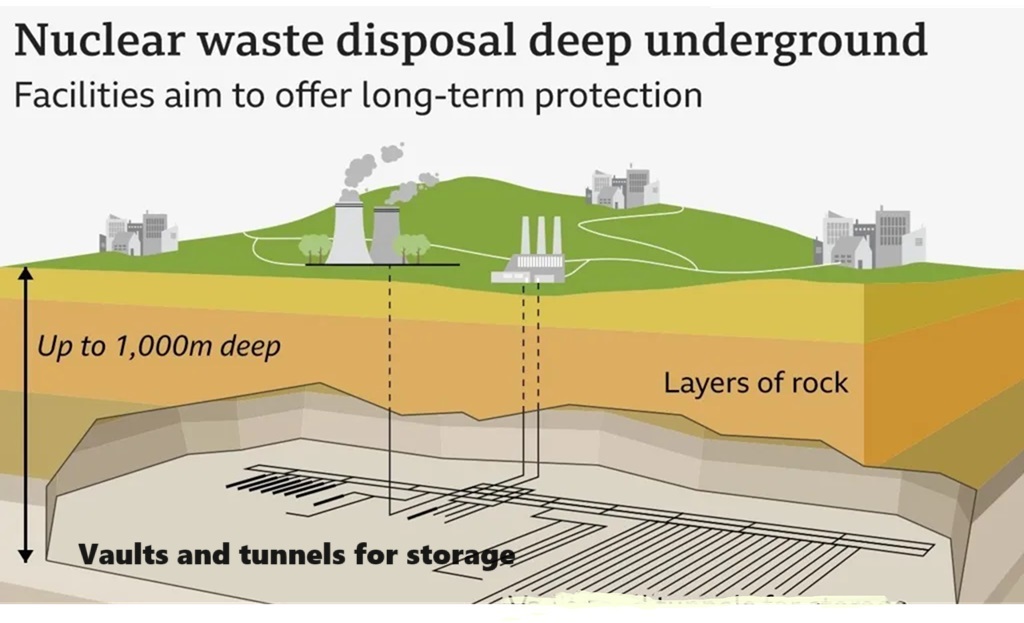
Jan 16, By Jack Aylmer (Energy Correspondent), https://san.com/cc/sweden-building-worlds-second-nuclear-waste-storage-site-amid-safety-concerns/
Sweden has started building the world’s second-ever long-term storage facility for spent nuclear fuel. The site is located in Forsmark, Sweden, approximately 90 miles north of Stockholm, Sweden.
The site is designed to securely contain highly radioactive waste for 100,000 years. Finland remains the only other country nearing completion of a permanent storage solution for nuclear waste.
Permanent storage for nuclear waste has been a longstanding challenge for the industry since the advent of commercial nuclear reactors in the 1950s.
Globally, around 300,000 tons of spent nuclear fuel are awaiting disposal, according to the World Nuclear Association. Nuclear scientists currently store most of this waste in cooling ponds near the reactors that produce it.
The Forsmark repository will feature nearly 40 miles of tunnels buried over 1,600 feet deep in bedrock estimated to be 1.9 billion years old.
Engineers designed the site to hold 12,000 tons of spent nuclear fuel. The fuel will be encased in corrosion-resistant copper capsules, packed in clay and buried.
Officials expect the site to begin receiving waste in the late 2030s, and final closure is projected for around 2080, when the site reaches capacity.
However, the project faces potential delays due to safety concerns. MKG, the Swedish nongovernmental organization Office for Nuclear Waste Review, filed an appeal with a Swedish court calling for additional reviews of the facility.
MKG highlighted research suggesting the copper capsules could corrode over time, potentially releasing radioactive elements into groundwater.
The estimated cost of developing the repository exceeds $1 billion, and will be funded by Sweden’s nuclear industry. It is intended to store waste from the country’s existing nuclear power plants, but will not accommodate waste from future reactors. Sweden already announced plans to construct 10 additional nuclear reactors by 2045.
Somerset Green councillor slams Sir Keir Starmer over Hinkley Point C comments
Why should UK environmental protection be sacrificed for the profit of the French nationalised electricity industry?”
Sir Keir Starmer is trying to make it harder to oppose major infrastructure projects
By Daniel Mumby, Local Democracy Reporter, Somerset Live 28th Jan 2025, https://www.somersetlive.co.uk/news/somerset-news/somerset-green-councillor-slams-sir-9900421
The leader of the Green Party on Somerset Council has attacked the prime minister following his recent comments on Hinkley Point C. EDF Energy has courted controversy over plans to create new saltmarshes in the Severn estuary to offset the environmental impact of Somerset‘s new nuclear power station.
In an article for Mail Online, prime minister Sir Keir Starmer lambasted efforts to block major infrastructure projects, singling out opposition to the acoustic fish deterrent which EDF had originally proposed for Hinkley Point C. These comments have drawn the ire of Councillor Martin Dimery, who warned Mr Starmer that his stance would lose him support across the south west.
Mr Starmer’s comments came as the government announced reforms to the judicial review system, restricting the grounds on which such reviews could be lodged to “stop blockers getting in the way” of infrastructure projects. He said in his article: “There are countless examples of nimbys and zealots gumming up the legal system often for their own ideological blind spots to stop the government building the infrastructure the country needs……………………………………
In an open letter to Mr Starmer, he said: “I wish I was joking when I point out that the sonar device due to be installed at Hinkley Point C was agreed from the outset to avoid the mass carnage of fish being sucked into the reactor’s mechanism, thus destroying huge quantities of the Bristol Channel’s fish stock. Fish remnants can also cause blockage and mechanical failure in nuclear power plants.
“Last year, EDF applied to Somerset Council to scrap the sonar device in an attempt to cut construction costs. As chairman of the climate and place scrutiny committee, I refused to sign off this appalling attempt to disregard the natural environment and the region’s fishing industry for the sake of EDF’s profits. Why should UK environmental protection be sacrificed for the profit of the French nationalised electricity industry?”
Reports recently resurfaced in the national press that Mr Starmer stated “I hate tree-huggers” at a shadow cabinet meeting in July 2023, at which current net zero secretary Ed Miliband MP unveiled new energy policies to combat climate change.
Mr Starmer denied using this phrase, telling BBC correspondent Laura Kuennsberg that his comments about green energy had been taken out of context.
Mr Dimery added, in direct reference to these claims: “‘Tree hugger’ I may be, prime minister, but if you’re so appalled at the prospect of individuals standing for the environment and against disreputable business practice, then you may find you lose a great deal of support from elected councillors of all political persuasions.”
Ukraine nuclear fears increase amid warnings from IAEA
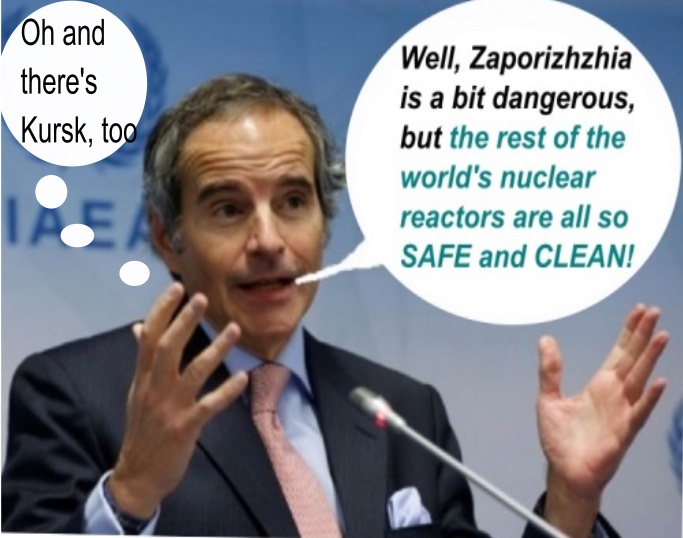
Emerging Risks 28th Jan 2025, https://www.emergingrisks.co.uk/ukraine-nuclear-fears-increase-amid-warnings-from-iaea/
The director general of the International Atomic Energy Agency (IAEA) has said he is growing increasingly concerned that the organisation’s efforts to prevent a major nuclear incident in war-torn Ukraine in under increasing threat.
It comes as Rafael Mariano Grossi (above) revealed the agency’s team based at Ukraine’s Zaporizhzhya Nuclear Power Plant (ZNPP) has heard frequent explosions from outside the site over the past week.
He added The team reported hearing multiple instances of such military activity in recent days, at varying distances from the ZNPP. There was no damage reported to the plant itself. Although the sound of nearby military action has been a common occurrence ever since the IAEA established a continued presence at the ZNPP in September 2022, it has happened virtually daily in recent weeks.
“For almost three years now, we have been doing everything we can to help prevent a nuclear accident at the Zaporizhzhya Nuclear Power Plant and elsewhere in Ukraine,” Grossi explained. “An accident has not occurred, but the situation is not improving. It is still precarious. I remain seriously concerned about nuclear safety and security in Ukraine, including at the Zaporizhzhya site. Our work is far from over.”
He continued as part of the ongoing work to monitor developments relevant for nuclear safety and security, the IAEA team has continued to conduct walkdowns across the site – including but not limited to the main and emergency control rooms of four reactor units and one turbine hall – and observed and discussed various safety-related maintenance activities with the plant.
The IAEA team was also informed that the ZNPP is procuring three new mobile diesel generators, similar to those received late last year. They are in addition to the site’s 20 fixed emergency diesel generators that are designed to provide on-site power if there is a total loss of off-site power.
Separately, the ZNPP said that four diesel steam generators were put into operation for ten days to provide the steam needed to process liquid radioactive waste. These generators were commissioned a year ago.
Elsewhere in Ukraine, the IAEA said air raid alarms were heard on several occasions at Ukraine’s three operating nuclear power plants (NPPs) – Khmelnytskyy, Rivne and South Ukraine – as well as at the Chornobyl site. At the Khmelnytskyy NPP, the IAEA team members have taken shelter at their residence three times in recent days due to such alerts.
At the Khmelnytskyy and South Ukraine NPPs and the Chornobyl site, the IAEA teams were informed of instances of drones being detected at distances ranging from 2 to 30 km from the sites.
Despite such military activities, Ukraine’s nine operating nuclear power reactors have been operating at full capacity this week, safely generating much-needed electricity during the cold winter months.
Separately, the Agency continued with deliveries under its comprehensive programme of nuclear safety and security assistance to Ukraine. Last week, the Chornobyl site received equipment to enhance its nuclear security system. The delivery, the 104th organised by the IAEA since the start of the armed conflict, was supported with funds from the United Kingdom.
Russia claims nuclear plant targeted during massive Ukrainian drone attack

Russia and Ukraine continue to swap daily barrages, with the prospects of ceasefire talks appearing slim.
Aljazeera, 29 Jan 2025
A nuclear power plant was among targets during a massive Ukrainian drone attack, Russian officials have said.
Moscow said on Wednesday that the country’s energy infrastructure had come under attack by at least 100 drones overnight. Ukraine also reported strikes. The continuing barrages were accompanied by barbs from the two countries’ presidents, suggesting little prospect of peace talks.
The Russian Ministry of Defence said on Telegram that 104 drones were involved in raids across western Russia, many targeting power and oil facilities.
Local officials claimed that air defence systems had destroyed one drone that had attempted to strike the nuclear power plant in the western region of Smolensk.
“According to preliminary information, one of the drones was shot down during an attempt to attack a nuclear power facility,” Governor Vasily Anokhin said on the Telegram messaging app. “There were no casualties or damage.”
The Smolensk Nuclear Power Plant, the largest power generating plant in Russia’s northwest, was working normally on Wednesday morning, RIA state news agency reported, citing the plant’s press service.
Russia’s air defences reportedly destroyed drones over nine regions, including 11 over Smolensk, which sits on the border with Belarus. Nearly half were hit over Kursk, where Ukrainian troops have occupied several villages for months following an incursion.
Ukraine and Russia have been swapping drone and missile strikes on an almost daily basis, with energy infrastructure a particular target amid winter.
Warnings that the fighting could spark a nuclear disaster have been sounded since Russia launched its full-scale invasion of its neighbour in February 2022. However, most of the concern has focused on Ukraine’s Zaporizhzhia plant, which sits on the frontlines in the east of the country…………………………………………………………………….https://www.aljazeera.com/news/2025/1/29/russia-claims-nuclear-plant-targeted-during-massive-ukrainian-drone-attack
Nuclear icebreaker sustained hull damage after collision in the Kara Sea
A video published by the pro-Kremlin Telegram channel Mash shows how the 50 Let Pobedy sails straight into the cargo vessel Yamal Krechet.
Thomas Nilsen, 28 January 2025 , https://www.thebarentsobserver.com/news/nuclear-icebreaker-sustained-hull-damage-after-collision-in-the-kara-seanbsp/423819
The dramatic collision happened at 03.51 am on the night to January 26 but did not become known to the public before the press service of Rosatomflot confirmed the facts to several Russian media in the evening of January 28.
Murmansk-based Arctic Observer said in its Telegram channel that the collision happened as the powerful icebreaker was assisting a cargo ship sailing through the ice-covered waters.
According to Rosatomflot, the nuclear powered icebreaker continues to operate in normal mode along the Northern Sea Route, despite the damage to the hull.
Rosatomflot says in the press statement that “seaworthiness has not been lost” and “there were no casualties.”
The state owned operator of Russia’s icebreaker fleet underlines that the two onboard reactors were not harmed in the collision. The information has not been confirmed by independent sources.
Rosatomflot does not provide any information about what caused the navigation mistake leading to the huge icebreaker smashing into the smaller cargo ship.
The 50 Let Pobedy is the newest of the older Arktika-class nuclear-powered icebreakers. Construction of the vessel started in the late Soviet era (1989), but she was not commissioned before 2007.
The icebreaker has Murmansk as homeport, but can operate independently for months at a time during the icy navigation season along the Northern Sea Route.
The cargo vessel Yamal Krechet was according to MarineTraffic.com on her way from Arkhangelsk towards Sabetta, the port where Novatek’s Yamal LNG production facilitates are located.
There are no public reports about the possible damages to the cargo vessel. Several tens of containers can be seen on deck of the Yamal Krechet at the time of the collision, but it is not known immediately known what content the cargo includes.
EDF signals ageing British nuclear fleet can run into ‘the 2030s’.
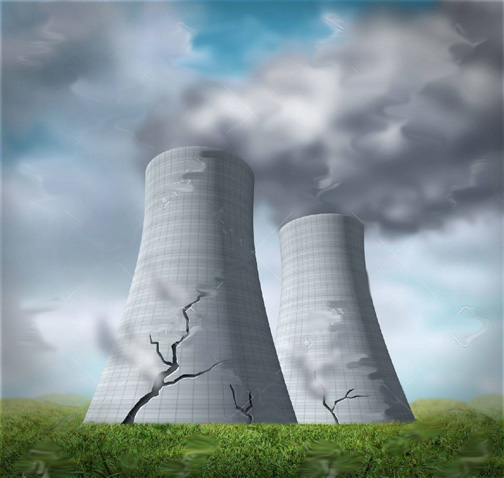
EDF has signalled that Britain’s fleet of ageing
nuclear power plants can keep running into the next decade amid a scramble
to hit Ed Miliband’s [?]clean power targets. The company on Monday said it
aimed to “maximise output” from the remaining gas-cooled nuclear
reactors to “2030+”, providing this can be agreed with regulators.
It is the strongest sign yet that EDF, which is owned by the French state,
believes the plants can go even further beyond their planned lifespans
after extensions were most recently announced in December. Further
extensions would deliver a boost to Mr Miliband, the Energy Secretary, as
he seeks to make the electricity grid at least 95pc reliant on “clean”
sources of power – including wind, solar, batteries and nuclear – in
just five years.
Two of EDF’s oldest nuclear power stations, Heysham 1 in
Lancashire and Hartlepool in Teesside, have had their shutdowns postponed
from spring 2026 to 2027, while the other two, Heysham 2 and Torness in
East Lothian, were extended from 2028 to 2030. But in a newly-published
fleet update, EDF says there is a potential opportunity for all four plants
to remain online until at least 2030.
Telegraph 27th Jan 2025, https://www.telegraph.co.uk/business/2025/01/27/edf-signals-ageing-british-nuclear-fleet-can-run-into-2030s/
Renewables to dominate future EU energy supply despite nuclear buzz – German engineers

Clean Energy Wire, 24 Jan 2025, Benjamin Wehrmann, https://www.cleanenergywire.org/news/renewables-dominate-future-eu-energy-supply-despite-nuclear-buzz-german-engineers
The Association of German Engineers (VDI) has cautioned that new-found enthusiasm for nuclear power, as a means to mitigate global warming, must not slow the rollout of renewables, which are set to become the dominant power source. Germany and Europe therefore must stick to a path that maximises the potential of renewable power, and keeps the supplementary role of nuclear power in check, said VDI energy expert Harald Bradke. A recent paper from the International Energy Agency (IEA) titled “The Path to a New Era for Nuclear Energy” indicated there had been a recent shift towards nuclear energy, which according to the VDI “could lead to false conclusions if taken superficially.”
The IEA’s own World Energy Outlook 2024 painted a more nuanced picture, particularly for Europe, the VDI argued. The energy agency found that the EU’s nuclear power production dropped from 854 TWh in 2010 to 616 TWh in 2023, leading the technology’s share in electricity production to fall from 29 to 23 percent. One scenario on “announced pledges” that countries made in the context of the Paris Climate Agreement used by the IEA for the EU would mean that nuclear generation grows to 860 TWh by 2050 – while its share continues to slide to about 15 percent by that year. At the same time, renewables could grow from 45 to 84 percent. Solar PV’s share in this scenario grows form 9 percent to 24 percent and wind power’s share from 18 to 46 percent between 2023 and 2050. “These figures support the assumption that renewable energy sources are going to remain the main drivers of the energy transition despite the prognosed surge in nuclear energy production,” said VDI energy expert Badke.
Germany shuttered its last three nuclear reactors in April 2023. The step that ended a process which had been in the making for more than two decades was met with criticism both domestically and internationally due to its timing during the European energy crisis and the lost potential of nuclear energy generation for emissions reduction. However, despite a nuclear renaissance championed by Europe’s nuclear power leader France, most countries in the EU have much larger and more advanced plans to boost their renewable power capacities.
Globally, the IEA’s outlook found that nuclear power production grew by a mere 0.33 percent between 2010 and 2023 to 2,765 terawatt hours (TWh), while the share of nuclear power in global electricity production shrank from 13 to 9 percent during the same period. The IEA’s announced pledges scenario forecast a doubling of the world’s nuclear generation to 6,055 TWh by 2050. However, due to the simultaneous rapid surge in electricity demand that looks set to more than double, the technology’s share would remain at only 9 percent by the middle of the century, VDI pointed out.
At the same time, forecasts show that renewables will grow at a much faster pace worldwide during this time: solar power’s global electricity production share will rise from only 5 percent in 2023 to about 40 percent by 2050, while wind power’s share is expected to rise from 8 to 26 percent. All renewable energy sources together could increase their share from 30 to 83 percent, IEA found.
Nuclear- not good vibrations in France

Renew Extra 25th Jan 2025, https://renewextraweekly.blogspot.com/2025/01/nuclear-not-good-vibrations-in-france.html
France is having problems with nuclear power. It was once the poster child for nuclear energy, which, after a rapid government funded build-up in the1980s based on standard Westinghouse Pressurised-water Reactor (PWR) designs, at one point supplied around 75% of its power, with over 50 reactors running around the country. Mass deployment of similar designs meant that there were economies of scale and given that it was a state-run programme, the government could supply low-cost funding and power could be supplied to consumers relatively cheaply.
But the plants are now getting old, and there has been a long running debate over what to do to replace them: it will be expensive given the changed energy market, with cheaper alternatives emerging. At one stage, after the Fukushima disaster in Japan in 2011, it was proposed by the socialist government to limit nuclear to supplying just 50% of French power by 2025, with renewables to be ramped up.
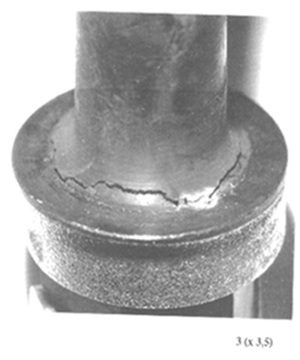
That began to look quite sensible when, in 2016, faults were found with the steel forgings of some of the old PWR plants. There was an extensive programme of reactor checks, with some units having to be shut down for the duration. But the industry, though chastened by stories about cover-ups, survived, and, with a new government in power led by Macron, the 50% limit was delayed. Indeed, proposals were made for significant expansion, based in part on an upgrade European Pressurised-water Reactor (EPR) design.

Macron said ‘Our energy & ecological future depends on nuclear power; our economic and industrial future depends on nuclear power; and France’s strategic future depends on nuclear power’:
The first EPR in France has been built at Flamanville on the Normandy coast, but all did not go well. It was 12 years late and four times overbudget. And new vibration problems could mean that it may not be able to run at full power. In addition, more problems (this time with stress corrosion) have been found with some of the old plants.
With at one stage, 28 of them shut down for tests and/or repairs, EDFs financial situation became increasingly weak. And, it has got worse. With, in 2024, the French government and economy also being in some disarray, it looked as if plans for more projects might have to be reconsidered, their being reports that ‘in the absence of financial commitment from the State, EDF (is) raising the possibility of halving the investments planned in the EPR2 program in 2025.’

It was the same for EDFs programme of building more EPRs in the UK- with one at Sizewell in Suffolk being proposed to follow on from the part-built one at Hinkley Point in Somerset. Indeed, the French Court of Auditors has just recommended ‘not approving a final investment decision for EDF in Sizewell C before obtaining a significant reduction in its financial exposure in Hinkley Point C’.
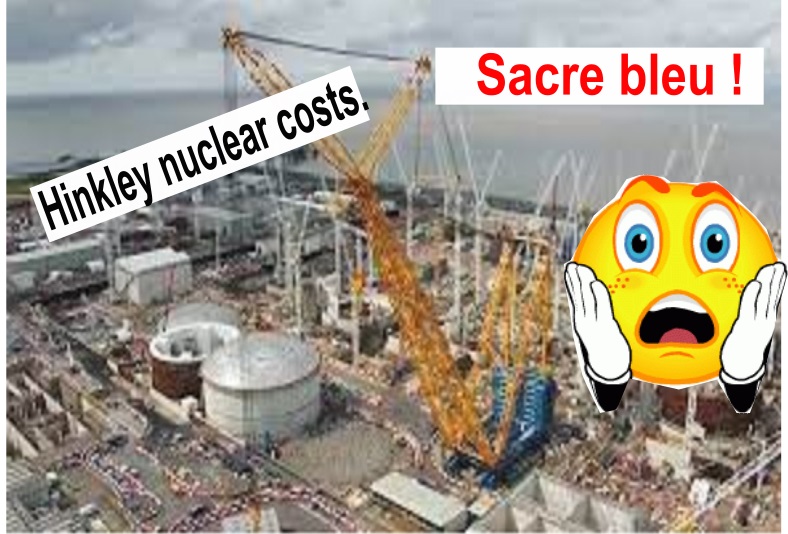
So what next? The somewhat beleaguered French government evidently wants the European Commission to revise EU renewable energy directive to also provide support for new nuclear! But back home, it is arguably ‘far from ready’ for a new nuclear expansion programme. And, with nuclear costs rising, the idea of treating it as ‘low risk’ compared with renewables in EU plans is being resisted. Then again EDF evidently think some new nuclear options are too risky- it has pulled out of work on its initial design for a Small Modular Reactor, so it is no longer a contender for the UK SMR competition.
What does all this mean for the UK? Well, although its overall finances are not good, up until recently, EDF has done quite well out of the UK, still running its fleet of old AGRs and its single PWR, with the UK’s funding subsidy schemes providing support for French profit-making via surcharges on UK consumers bills – in the case of the proposed new RAB scheme for Sizewell C, in advance of project completion. Indeed, some might say EDF’s exploitation of the UK has been overdone and not helpful!
Certainly, EDF’s current troubles add to the increasing level of uncertainty about Sizewell C. China had provided some backing for Hinkley, but, with there being growing concerns about security, the UK government decided that China could not be allowed to back Sizewell. So the hunt was on for new backers. However, it has proven to be hard, and with talk of the bills for these projects ballooning, allegedly to £46bn for Hinkley, the opposition lobby is getting more assertive. Hinkley Point C was originally meant to start up in 2017, but may finally get going in 2031 or so. It is a giant project, impressive in a way, but arguably not what is needed, with renewables getting so much cheaper. Same for Sizewell C- it’s getting increasingly hard to justify it.
EDF do seem to be having it tough with nuclear of late, but although the costs of the EPRs may be disputed, whatever they turn out to be, it’s far from clear if the French EPRs will be value for money. The UK has done quite well so far with renewables, which have helped it get its emissions down by a half between 1990 and 2022, compared to a 23% reduction in France, where nuclear is still predominant and renewable are, so far, less developed. Time for a change everywhere? Certainly, back in 2021, the IEA and RTE Agency in France produced a study asking if it was technically possible to integrate very high shares of renewables in large power systems like that in France. It concluded that, if coupled with adequate storage and system balancing, for renewables to supply 85-90% of power by 2050 and 100% by 2060. However, it would be expensive. But then so would continuing with nuclear, maybe more so.
The Changing Goal Posts of Nuclear Wastes Crazily Earmarked for “Geological Disposal”

The following letter was sent today to Millom Town Council, 25 Jan 25
The Changing Goal Posts of Nuclear Waste Geological Disposal
Lakes Against Nuclear Dump is a Radiation Free Lakeland campaign with a Facebook group of almost 1000 many of whom live in the Millom area.
We would like to thank Millom Town Council for voting to pull out of the so called “Community Partnership” with Nuclear Waste Services. The developer NWS has one aim and that is to deliver a “Geological Disposal Facility.” Nuclear Waste Services are proving to be the very worst of developers. We all know of developers who put in an application for works to get initial approval knowing full well the goal posts are to be changed later down the line. The latest being to bury 140 tonnes of plutonium. The US is looking to bury a far smaller stockpile of plutonium at WIPP, this has generated criticism from the Bulletin of Atomic Scientists and others concerned with nuclear safety, We assume the burial of plutonium was a NDA decision rather than a “Community Partnership” decision.
This is all a far cry from the 1990s NIREX days. The nuclear wastes slated for burial then on what is now the Wasdale Mountain Rescue Centre at Longlands Farm, Gosforth were low and intermediate. A long public inquiry involving multiple scientists and geologists found the NIREX plan for burial of low and intermediate level nuclear wastes to be ultimately flawed and dangerous to public health. The nuclear dump mission creep now includes plutonium. Deep burial and abandonment of long lived nuclear wastes is not a safe option given the shortfalls in the technical and scientific knowledge of permanent containment. The wastes should be constantly monitored and repackaged when necessary. The push for burial in a very large, very deep (and earthquake inducing) sub-sea mine is a purely political choice in order to justify new nuclear wastes.
We believe you will be ratifying your decision on January 29th and we look forward to others including Friends of the Lake District, taking Millom Town Council’s lead and pulling out of the Geological Disposal Facility “Community Partnerships”. of South and Mid Copeland.
Yours sincerely
Marianne Birkby
Lakes Against Nuclear Dump – a Radiation Free Lakeland campaign
Risks of geologic disposal of weapons plutonium
By Cameron Tracy | January 13, 2025https://thebulletin.org/premium/2025-01/risks-of-geologic-disposal-of-weapons-plutonium/
1 This Month
26 September – International Day for the Total Elimination of Nuclear Weapons





PLEASE OPPOSE HR 8255 AND S.3639 – bills would accelerate satellite deployment, with no environmental review or safeguards – https://ncstd5li.quorum.us/campaign/169331/
To see nuclear-related stories in greater depth and intensity – go to https://nuclearinformation.wordpress.com
-
Archives
- September 2026 (313)
- August 2026 (330)
- July 2026 (355)
- June 2026 (287)
- May 2026 (306)
- April 2026 (356)
- March 2026 (251)
- February 2026 (267)
- January 2026 (308)
- December 2025 (358)
- November 2025 (359)
- October 2025 (375)
-
Categories
- 1
- 1 NUCLEAR ISSUES
- business and costs
- climate change
- culture and arts
- ENERGY
- environment
- health
- history
- indigenous issues
- Legal
- marketing of nuclear
- media
- opposition to nuclear
- PERSONAL STORIES
- politics
- politics international
- Religion and ethics
- safety
- secrets,lies and civil liberties
- spinbuster
- technology
- Uranium
- wastes
- weapons and war
- Women
- 2 WORLD
- ACTION
- AFRICA
- Atrocities
- AUSTRALIA
- Christina's notes
- Christina's themes
- culture and arts
- Events
- Fuk 2022
- Fuk 2023
- Fukushima 2017
- Fukushima 2018
- fukushima 2019
- Fukushima 2020
- Fukushima 2021
- general
- global warming
- Humour (God we need it)
- Nuclear
- RARE EARTHS
- Reference
- resources – print
- Resources -audiovicual
- Weekly Newsletter
- World
- World Nuclear
- YouTube
-
RSS
Entries RSS
Comments RSS

