TRUMP’S PURSUIT OF A UKRAINIAN PEACE: Early Results and Future Prospects
Russian and Eurasian Politics, by Gordonhahn, April 4, 2025
U.S. President Donald Trump and his new and internationally inexperienced administration have been in hot pursuit of a ceasefire and peaceful resolution of the NATO-Russia Ukrainian War. The pursuit has laid bare the false promise of an end to the war on the administration’s first or even one-hundredth day as previously advertised. This is no business deal. This the hardball world of international politics, national power and interests, ancient and not-so-ancient local and international resentments, grievances, betrayals, and hatreds. Despite what may seem as a disappointing complications and the inevitably longer timeline for the arrival of any prospective ceasefire or conclusive peace, significant early progress was made, and the stumbling blocs that have appeared were to be expected and can be overcome with time and the further deterioration of Ukraine’s position on the battle fronts, which is inevitable.
There has been some confusion among observers and the public regarding the process, with issues such as NATO expansion tied to a ceasefire in some minds. This is a subject for a final treaty, not a ceasefire, which is needed to allow peace talks to proceed more smoothly, niot to mention ending the bloodshed and destruction. The ceasefire agreement must not be conflated from peace treaty negotiations. A ceasefire will, therefore, take at least several, if not many months. This is not least of all because of the need to resolve what Russian President Vladimir Putin called “nuances” – organizational measures needed to implement a full-fledged ceasefire.
While agreement, violated albeit, has been achieved on a month-long ceasefire regarding energy infrastructure, the two sides are very far apart regarding any treaty. Putin’s 4 goals for Russia’s ‘special military operation (SMO) contradict directly Zelenskiy’s demands for security guarantees and the return of all territory annexed or occupied by Russia. Again, these are problems to be addressed under any peace treaty. The ceasefire must be fully implemented before any treaty can be addressed in any robust fashion.
Trust-building is desperately needed, especially between Russia and Ukraine and can develop as partial agreements are made, complied with, and yield new agreements. Recent history and a long cultural tradition of security vigilance in Russia and in part inherited by Ukraine, the apposition of Russian nationalism and more rabid Ukrainian ultras-nationalism and neofascism, and, most importantly, the exacerbating factor of outside interference in Ukraine and Russian-Ukrainian relations by the U.S., Europe, and NATO create a matrix of distrust between all the parties, including the ostensible mediating side, the U.S., which is the lead combatant on the NATO side of the NATO-Russia Ukrainian War. The last point undermines the peace process from the start, and depending on how that process develops could end in many in Moscow, already being suspicious, coming to see the entire process as a ruse to hold off a Russian victory, viewing Trump’s America as ‘playing the good cop’, while Zelenskiy and Europe continue the war.
The ceasefire is evolving into four distinct elements — energy infrastructure, sea, air, and land ceasefires – to comprise the overall ceasefire prospectively. The full ceasefire could be achieved by mid-summer but more a more realistic target is before the end of the year……………………………………………………………………………………………………………………………………..
Trump has levers to push the parties towards peace. For the Ukrainians, he can withhold intelligence and weapons supplies. For the Russians he can delay or threaten to forego rapprochement or various aspects of it: sanctions relief, trade agreements, and renewed cooperation regarding the world’s various conflicts. Pres. Trump’s “Liberation Day” 20 percent tariff on EU goods might be adjusted depending on Brussels’ compliance with American wishes for sanctions relief for Russia. Otherwise, the EU is positioned to scuttle BSI 2.0. Indeed, Russia’s 10 percent tariffs and 0 percent on Russia can be adjusted depending on where pressure needs to be applied.
In sum, there are a host of problems that will take months of concerted effective diplomacy led by the U.S. as things stand now. But the Trump administration is short of seasoned diplomats and experienced foreign and security policy experts. We have a long, hard way to go before peace reigns in Ukraine. https://gordonhahn.com/2025/04/04/trumps-pursuit-of-a-ukrainian-peace-early-results-and-future-prospects/
Hinkley C nuclear power station site teaches A Level students about “clean” energy !!
By John Thorne Wednesday 2nd April 2025 ,https://www.wellington-today.co.uk/news/hinkley-c-nuclear-power-station-site-teaches-a-level-students-about-clean-energy-780053
A LEVEL students from Bridgwater and Taunton College (BTC) explored the UK’s clean energy future during an educational tour of the under-construction Hinkley Point C nuclear power station.
The trip was an opportunity for students studying subjects such as business, economics, mathematics, physics, and chemistry to witness first hand one of Europe’s most significant infrastructure projects.
Germany’s Conservative Christian Democratic Union (CDU) mulls reactivation of nuclear power plants
Germany’s Conservative Christian Democratic Union (CDU) party is
considering restarting six of the country’s recently deactivated nuclear
power plants. According to newspaper Handelsblatt on April 1, a new working
paper of the CDU’s parliamentary group demanded an investigation on
whether a reactivation of the power stations was technically possible and
economically feasible. If the current owners of the plants in question –
energy companies E.On, RWE and EnBW – were not willing to restart the
reactors themselves, a State-owned enterprise reportedly could take over
ownership of the infrastructure.
Brussels Signal 2nd April 2025 https://brusselssignal.eu/2025/04/germanys-cdu-mulls-reactivation-of-nuclear-power-plants/
Meltdown: the toxic culture that helped destroy the Nuclear Advanced Manufacturing Research Centre (AMRC)
Dan Hayes•28.03.2025, Sheffield Tribune
Complaints about bullying were made as far back as 2018. Why did the University of Sheffield turn a blind eye?
“This is a diary of events in note form and to be clear I have never felt the need, in 30 years of employment, to create such a record.”
That opening line was penned by Carl Hitchens in 2018. Hitchens, the former head of machining at the Nuclear AMRC, sent me the diary in place of a conversation. He told me he just couldn’t face reliving such a painful period.
The Nuclear AMRC was set up in 2009 with a simple mission: to help UK manufacturers win work in the civil nuclear sector. As well as research and development into nuclear technologies, the centre also worked with British firms to help them design and build components that could be used in nuclear power plants. Ostensibly part of the University of Sheffield, the Nuclear AMRC enjoyed a large degree of autonomy from its parent organisation.
As we found in our piece last year, the Nuclear AMRC never found its task easy. Continuing concerns about the safety of nuclear energy, the government’s refusal to commit to its future, and newer technologies like small modular reactors (SMRs) all created a challenging environment to navigate. Despite this, all indications are that, in its early days, the Nuclear AMRC was a fairly happy ship.
So how did something that was meant to put South Yorkshire at the centre of a generational transformation of the UK energy sector fall apart in a few short years? How did the Nuclear AMRC go from being touted as a huge growth success story, to being all but shut down? Carl Hitchens’ diary — and the recollections of his colleagues — are now allowing us to answer that question……………………………………..(subscribers only) https://www.sheffieldtribune.co.uk/meltdown-the-toxic-culture-that-helped-destroy-the-nuclear-amrc/
What really happened in Bucha? The questions Western media won’t ask
By Petr Lavrenin, an Odessa-born political journalist and expert on Ukraine and the former Soviet Union – https://www.rt.com/russia/614967-what-really-happened-in-bucha/ 2 Apr 25 [illustrations]
The narrative on an event from three years ago is under scrutiny. Here’s a closer look at the evidence
On the first day of April in 2022, shocking videos began circulating on Ukrainian social media, showing the streets of Bucha, a town in Kiev region, strewn with dead bodies. The “Bucha massacre” quickly became one of the most widely discussed and controversial chapters of the ongoing Russia-Ukraine conflict. Western media immediately accused the Russian army of mass killings, while Vladimir Zelensky declared that these acts were not only war crimes but a genocide against his country’s people.
However, a closer look at the situation raises numerous questions. An analysis of video footage, satellite images, and eyewitness accounts reveals significant inconsistencies that cast doubt on the official narrative adopted by Kiev and its Western allies. This article explores why it appears the so-called “Bucha massacre” has been fabricated.
What do we know
Bucha, with a population of 40,000 people, found itself on the front lines from the first days of the Ukraine conflict. To the north of Bucha lies the village of Gostomel, home to the strategically important Antonov Airport, where Russian paratroopers landed on the morning of February 24, 2022. This group soon joined the main Russian units advancing from Belarus.
In the days that followed, fierce battles broke out around Bucha as Russian troops attempted to establish a foothold in the town and push toward Irpin, a large suburb of Kiev. Nevertheless, the area remained under the control of the Armed Forces of Ukraine (AFU) and territorial defense units.
Between March 3 and 5, Russian forces entered Bucha from the side of the village of Vorzel, setting up a base at a glass factory and along the southern outskirts of the city. From then on, Bucha became a transit point and rear base for Russian troops engaged in combat near Kiev.
On March 29, following a round of negotiations between Russia and Ukraine, Russian Deputy Defense Minister Alexander Fomin announced a significant reduction in military activity around Kiev and Chernigov.
By March 30, Russian forces began withdrawing from Kiev Region due to the shifting priorities of the military operation.
However, just days after their retreat, shocking footage emerged that stunned the whole world.
When Ukrainian soldiers entered Bucha, international media outlets began publishing photo and video evidence of murdered civilians. Vladimir Zelensky and his team quickly accused Russian troops of committing mass murder, labeling it an act of genocide.
“This is genocide. The annihilation of an entire nation and people,” Zelensky declared on CBS’s Face the Nation. Ukrainian Foreign Minister Dmitri Kuleba called on the G7 countries to impose immediate “new devastating sanctions” against Russia, including imposing a complete embargo on Russian oil, gas, and coal, closing ports to Russian vessels, and disconnecting Russian banks from the SWIFT system.
The Russian Foreign Ministry denied any involvement in civilian deaths. Press Secretary of the President of the Russian Federation Dmitry Peskov said that the images showed “signs of forgery” and manipulation.
From the beginning, the narrative surrounding the “Bucha massacre” was full of inconsistencies and peculiarities, many of which remain unclear to this day.
Timing discrepancies
Among the key arguments that cast doubt on the Ukrainian narrative of mass killings in Bucha are the timing discrepancies.
The Russian Ministry of Defense has consistently stated that all Russian units had left Bucha by March 30, 2022. This claim is supported by local authorities. On March 31, Bucha Mayor Anatoliy Fedoruk recorded a video message confirming the withdrawal of Russian forces but did not mention any mass killings or bodies. In the background of the video, the streets appear clear, and there are no signs of corpses or destruction. At the same time, Ukrainian MPs and military personnel were in Bucha, yet none of them reported seeing dead bodies. Local residents did not mention any mass shootings either.
The first images of the bodies emerged only on April 1-2, a couple of days after Ukrainian military personnel and activists entered the city. This raises questions about the timing and circumstances surrounding their deaths: if Russian troops left Bucha on March 30, how could evidence of the killings have come to light only several days later?
Analysis of video footage from the scene further shows that many bodies appear too “fresh” to have been lying there for over a week. Forensic experts point out that signs of decomposition should have manifested much earlier if the deaths truly occurred in mid-March. Photos and videos provided by Ukrainian and Western media show signs (such as drying skin in certain areas) that suggest death likely took place just hours or a day before the images were captured.
Controversial satellite images and social media data
On April 1, 2022, Maxar Technologies released satellite images dated March 19, allegedly showing bodies on Yablonskaya Street in Bucha. These images were cited by Ukrainian and Western media as key evidence of mass killings supposedly carried out by Russian forces.
However, these images are highly questionable. Independent researchers have noted that the images may have been manipulated or backdated.
Firstly, the March images from Maxar, published by The New York Times, are of very low quality compared to the February photos. This complicates analysis and raises suspicions of manipulation. The objects depicted in the images cannot be unequivocally identified as bodies, so claims about corpses that have been there for a long time rely solely on Western media reports and have not been independently verified. The images could have been altered or backdated to suggest that the bodies had been on the streets since March.
Secondly, the weather conditions captured in the videos do not match the meteorological data for the dates specified in Western media reports. This discrepancy indicates a possible mismatch in the timing of the recordings.
Thirdly, Maxar Technologies has close ties to US government structures, raising concerns about a potential bias and the use of its data for propaganda purposes.
Alexey Tokarev, who has a PhD in political science, and his team from the Moscow State Institute of International Relations conducted an analysis of media coverage, social media, and Telegram channels related to Bucha, and uncovered an intriguing pattern: there were no mentions of bodies on Yablonskaya Street prior to April 1. While there were reports of destruction, prisoners, and fighting, there was no information regarding mass killings.
“If we are to believe the Western media, the town has been full of corpses since April 1, and according to a leading American newspaper, even earlier – since March 11. So why is it that in a video captured by the Ukrainian police on April 2, which features 14 civilians, no one mentions any bodies or mass executions? The nearly eight-minute-long video shows nine different locations in the small town, but we don’t see a single corpse,” Tokarev says.
Discrepancies in visual evidence
The videos and photographs released by the Ukrainian side reveal numerous inconsistencies that suggest a possible staging. For instance, in one case, we see Ukrainian soldiers moving bodies between takes, while in another video, a “corpse’s” hand noticeably twitches. These signs indicate that the individuals depicted were not actually dead.
The Investigative Committee of Russia reported that the bodies did not display signs of having been outside for an extended period – there were no corpse marks and uncoagulated blood in wounds – casting doubt on the official Ukrainian narrative. Experts also noted the absence of shrapnel or explosive damage near the bodies, further contradicting claims of mass shootings.
Additionally, many victims, judging by photos, wore white armbands – a symbol typically associated with pro-Russian civilians. This suggests that Ukrainian forces might have targeted individuals suspected of “collaboration”, i.e., cooperating with Russian troops, and then accused the other side of the murders.
Moreover, in the initial days following the withdrawal of Russian troops from Bucha, a curfew was imposed, restricting locals from venturing into the streets. This created suitable conditions for the potential fabrication of events.
Eyewitness accounts and questionable sources
Adrien Bocquet, a French volunteer and journalist who was in Kiev Region during intense fighting, claimed that he personally witnessed Ukrainian forces staging mass killings in Bucha.
He recounted seeing bodies being brought into the city and arranged on the streets to create the impression of “mass deaths”. “When we drove into Bucha, I was in the passenger seat. As we passed through the city, I saw bodies lying on the roadside, and right before my eyes, people were unloading corpses from trucks and placing them next to those already on the ground to amplify the effect of mass casualties,” he said.
“One of the volunteers who had been there the day before – let me emphasize that this is not something I observed myself, but what I heard from another volunteer – told me he saw refrigerated trucks arriving in Bucha from other cities in Ukraine, unloading bodies and lining them up. From this, I realized that these were staged incidents,” he stated.
According to Bocquet, volunteers were prohibited from taking photos or videos.
Interestingly, in June 2022, the Office of the Prosecutor General of Ukraine stated that many claims made by former Ombudsman for Human Rights in Ukraine Lyudmila Denisova, including those related to the events in Bucha, were not accurate. “Law enforcement officials tried to carry out their own investigation. They went through all medical reports, police statements, and data on the deceased, attempting to find cases (…). However, all this work proved futile,” reported the news outlet Ukrainskaya Pravda.
Russian military correspondents, including Aleksandr Kots, have also referred to the so-called Bucha massacre as fake. Kots, who visited Bucha in February and March 2022, said “It’s not hard to verify what I’m saying. A forensic examination would determine the time of death of those poor people and align it with NATO’s objective monitoring data, which clearly indicates when Russian troops withdrew. But that’s if you’re looking for the truth. And who in the West wants that?”
Motives and geopolitical context
The story of the Bucha massacre emerged at a time when both the Ukrainian and Russian sides, albeit with varying degrees of optimism, were reporting progress in ceasefire negotiations.
“The Ukrainian side has become more realistic regarding issues related to Ukraine’s neutral and non-nuclear status, but the draft agreement is not ready for top-level discussions,” said Vladimir Medinsky, head of the Russian delegation and an aide to the President of Russia. Meanwhile, Ukrainian negotiator David Arahamiya noted that the document was ready, and the two presidents could meet and discuss it.
However, following reports of the “Bucha massacre,” Zelensky withdrew from the peace talks.
The incident in Bucha became a pivotal moment that not only derailed peace negotiations in Istanbul but also intensified Russia’s diplomatic isolation in the West, led to the mass expulsion of Russian diplomats and tighter sanctions, and resulted in Ukraine receiving additional military aid from NATO states.
Without presenting sufficient evidence, Western media spread the narrative of the “atrocities” committed by Russian forces. This suggests that the events in Bucha may have been used as a propaganda tool.
To date, no independent investigation has confirmed the accuracy of Ukraine’s accounts. Additionally, a complete list of casualties and the circumstances surrounding their deaths has yet to be made public.
Analyzing timing discrepancies, satellite images, video footage, eyewitness accounts, and Ukraine’s motives suggests that the events in Bucha may have been fabricated or politically exploited.
Despite the extensive media coverage of the “Bucha massacre,” Ukraine’s official narrative raises many questions and demands an independent inquiry. Ukraine has failed to conduct a thorough investigation or provide any coherent explanation as to why Russian soldiers would kill innocent civilians. The argument of Russia’s deep-seated hatred and brutality towards Ukrainians simply doesn’t hold up under scrutiny, since no similar tragedies have been documented during the course of the conflict. Instead, the “massacre” has become part of a media campaign aimed at dehumanizing Russian soldiers and portraying them as occupiers.
Bucha stands as one of the key propaganda symbols in the anti-Russia campaign. However, a closer examination of the evidence reveals numerous unanswered questions that officials prefer to avoid. An independent investigation could shed light on the true circumstances, but given the ongoing information war, it is unlikely to happen soon.
By Petr Lavrenin, an Odessa-born political journalist and expert on Ukraine and the former Soviet Union
Democracy should not be an April Fools’ Day Joke!
NFLA 1st April 2025
At a time when, across the Atlantic and in Europe, democracy seems to be increasingly challenged and in peril, the UK/Ireland Nuclear Free Local Authorities finds it incongruous and worrying that undemocratic practices can be discovered nearer to home when it comes to plans to locate a Geological Disposal Facility (GDF) in Cumbria.
The GDF would be the eventual repository for Britain’s high-level legacy and future radioactive waste.
Cumberland Council replaced three existing Councils – Allerdale District Council, Copeland District Council and Cumbria County Council – with their powers and resources being subsumed into the new unitary authority.
During the period of the Conservative – Liberal Democrat Coalition Government, Councils were invited to express an interest in participating in investigations for a site for a deep repository in West Cumbria. After four years of involvement, Cumberland’s predecessor Cumbria County Council vetoed the process, when in January 2013, the Council’s Cabinet voted to withdraw its support.
At that time, Council leader Eddie Martin explained the rationale behind the decision: “Cabinet believes there is sufficient doubt around the suitability of West Cumbria’s geology to put an end now to the uncertainty and worry this is causing for our communities. Cumbria is not the best place geologically in the UK and the government’s efforts need to be focused on disposing of the waste underground in the safest place, not the easiest. Members have remained concerned throughout on the issue of the legal right of withdrawal if we proceed to the next stage.”[i]
The County Council’s decision trumped the continued support for the process shown by the lower Allerdale and Copeland District Councils, and so it effectively ended the process at the time.
In the latest attempt to bring a GDF to Cumbria, Allerdale and Copeland again choose to support Nuclear Waste Services, with both Councils becoming the Relevant Principal Local Authorities which are necessary to keep the process going.
Although the County Council was the biggest amongst the three former Councils merged into the new unitary authority, Cumberland Council ignored its opposition and instead chose to ape the position taken by the two lower district councils; this despite the fact that Nuclear Waste Services had already withdrawn from Allerdale citing ‘insufficient’ suitable geology and that Copeland was only taken into the GDF process by the Council’s Executive of only FOUR senior Councillors, including some holding appointments on the West Cumbria Site Stakeholder Group which are renumerated by Nuclear Waste Services. The whole Council was not asked to agree.
Now campaigners at Radiation Free Lakeland have launched a petition calling on Cumberland Council to convene a belated special meeting of the Full Council where Councillors can debate and then vote upon whether to continue to remain engaged with the process of investigating sites for a GDF in Mid- and South-Copeland and to remain represented on the two Community Partnerships. Should most Councillors vote against engagement and representation, in either Mid- or South-Copeland, then the process in that area would cease and NWS would withdraw.
In the third area under consideration for a GDF, the Theddlethorpe Search Area in Lincolnshire, the Leaders of both Relevant Principal Local Authorities, East Lindsey District Council and Lincolnshire County Council, have recommended to their Executives that they should withdraw. The East Lindsey District Council Executive meets tomorrow (2 April) to decide upon the issue. The decision of Lincolnshire County Council must follow the elections held for that body on 1 May. If both recommendations are accepted and are backed by Councillors on their respective Scrutiny Boards, the process will end. This is what happened at South Holderness where the East Riding of Yorkshire Council overwhelmingly voted to withdraw from the process.
The Radiation Free Lakeland sponsored petition reads:………………………………….. https://www.nuclearpolicy.info/news/democracy-should-not-be-an-april-fools-day-joke/
If the Europeans are serious about peace, they should invite Zelensky to fewer meetings.

the inability of Europe’s leaders to hold a meeting without inviting President Zelensky of Ukraine. He appears, in his cargo pants and black sweatshirt, to be treated like royalty.
because Zelensky attends every major European meeting now on the war effort, his narratives dominate the agenda of the day, whether or not the host agrees.
the inability of Europe’s leaders to hold a meeting without inviting President Zelensky of Ukraine. He appears, in his cargo pants and black sweatshirt, to be treated like royalty.
because Zelensky attends every major European meeting now on the war effort, his narratives dominate the agenda of the day, whether or not the host agrees.
Ian Proud, March 30, 2025,https://strategic-culture.su/news/2025/03/30/if-europeans-serious-about-peace-they-should-invite-zelensky-fewer-meetings/
Putin sees that the U.S. is trying to intermediate in talks, rather than simply taking sides with Ukraine.
President Zelensky now attends every major European meeting of Heads. While perhaps understandable, that means the agenda gets hijacked by Ukrainian demands and limits Europe’s ability to play an impartial role in peace talks.
European leaders met again in Paris on 27 March to discuss ideas for a coalition of the willing, specifically, a group of European nations that would be willing to provide security guarantees to Ukraine as part of a future peace process.
That meeting produced no new breakthroughs and the co-hosts, President Macron of France and Prime Minister Starmer of Britain, held separate press conferences at the end. Yet again, it wasn’t possible to reach a consensus on the controversial topic of using frozen Russian assets for reconstruction in Ukraine, given the significant legal and financial risks around this.
No new determination was reached on the controversial notion of deploying western ‘reassurance’ troops to Ukraine in the future. Some European countries including Greece and Italy have made it clear that they see this as an unworkable and dangerous step. Unworkable, because the deployment of, essentially, NATO troops to Ukraine, will almost certainly face resistance from Russia. Dangerous because, even the most optimistic western commentators are talking about a deployed European force of 30,000 troops, which is tiny when set against the 600,000 Russian troops thought to be in Ukraine right now
But there is a deeper problem as well. Proposals to deploy troops to Ukraine, however unworkable and dangerous, are addressing the wrong question. The United States and, indirectly, the NATO Secretary General, have admitted that Ukraine’s desire to join the military alliance is now off of the table. The Paris summit would have better focussed on the detail of what security guarantees for Ukraine might look like as part of any peace deal. This might be along the lines of an Article 5 type of commitment by willing European states, as recommended by the Italian Prime Minister, Giorgia Meloni.
Leaders like Macron and Starmer also can’t claim the threat of a military force is merely a tactic to put pressure on Russia to strike for peace, given the proposed force’s limited size and the reality that it would take months, at the current rate of progress, for troops to arrive in Ukraine, if they ever did.
Yet again, this talks to Europe’s inability to fight wars by committee. Big meetings in Paris give European leaders their moment to say the right things, express solidarity and offer every type of support short of assistance. But, and fundamentally, events like the Paris Summit offer no new ideas and inject no new energy or momentum into efforts to bring peace to Ukraine.
In fact, in terms of the substance, these events have become a distraction from and a delaying tactic to, real peace.
A contributing factor, it seems to me, is the inability of Europe’s leaders to hold a meeting without inviting President Zelensky of Ukraine. He appears, in his cargo pants and black sweatshirt, to be treated like royalty. And, of course, it may be understandable that people feel a sense of solidarity with Ukraine at a time of war and feel a personal affinity to Zelensky.
But the question remains, what role does Zelensky play at these talks?
Clearly, he arrives with his own ‘asks’ and a package of narratives to deploy during his many press engagements in Europe. These include the need to impose more sanctions on Russia, that Europe should force Putin to make peace, that only strengthening Ukraine with more weapons will help. You’ve probably heard these lines countless times before because they are aggressively deployed by every Ukrainian official and media outlet.
As Ukraine is fighting Russia on the battlefield, I understand their need to pursue an aggressive public communications posture as part of their wider war effort, including to prop up morale at home. In Zelensky’s shoes, I might pursue a similar tactic. And yet, the lines he advances, on sanctions and applying pressure on Russia all appear, most likely, to extend the war, not end it.
And because Zelensky attends every major European meeting now on the war effort, his narratives dominate the agenda of the day, whether or not the host agrees.
So, during his press conference in Paris, and following Zelensky’s script, Starmer said that the west should impose more sanctions on Russia as part of efforts to force President Putin to make peace. This despite the fact that eleven years after the first sanctions were introduced, Russia’s economy still outperforms those in Europe. (Indeed, this week the UK Office of Budget Responsibility halved its estimate of UK economic growth in 2025 from 2% to 1%.) Or that, with Russia still retaining the upper hand on the battlefield in Ukraine, imposing further sanctions now will merely, and self-evidently, discourage President Putin from agreeing any peace deal.
An extremely small potential package of sanctions relief on the Russian Agricultural Bank hangs in the balance, despite the US agreeing with the Ukrainian and Russian delegations in Saudi this week to unlock the Black Sea deal. President Macron has said that there can be no sanctions relief until there is complete peace. The European Commission Press Spokesperson has said that sanctions can’t be removed until the compete withdrawal of Russia troops in Ukraine, a position that clearly hasn’t been discussed or agreed with other EU Member States.
These British, French and wider European pronouncements might be well-meaning, but they are usually unhelpful. On top of the already challenging bureaucratic straitjacket on Europe making a constructive input into peace talks, the presence of Zelensky at all of their meetings inevitably drags them towards agreeing and promoting his agenda.
And, of course, it also means that Russia does not see Europe as an independent actor in any peace talks, as it has become an extension of Ukraine and unable to adopt an impartial position. Not least as European leaders seldom, if ever, engage directly with President Putin.
That’s why Putin has been open to engaging in peace talks with Trump, because he sees that the US is trying to intermediate in talks, rather than simply taking sides with Ukraine. Zelensky has now ‘insisted’ that Britian and France should be represented at any future peace talks for Ukraine. In truth, if Starmer and Macron want to play a more prominent role in the process, they should invite Zelensky to fewer meetings.
UK Treasury confident Sizewell C nuclear power investors will soon be‘teed up’ – crunch time for Sizewell.
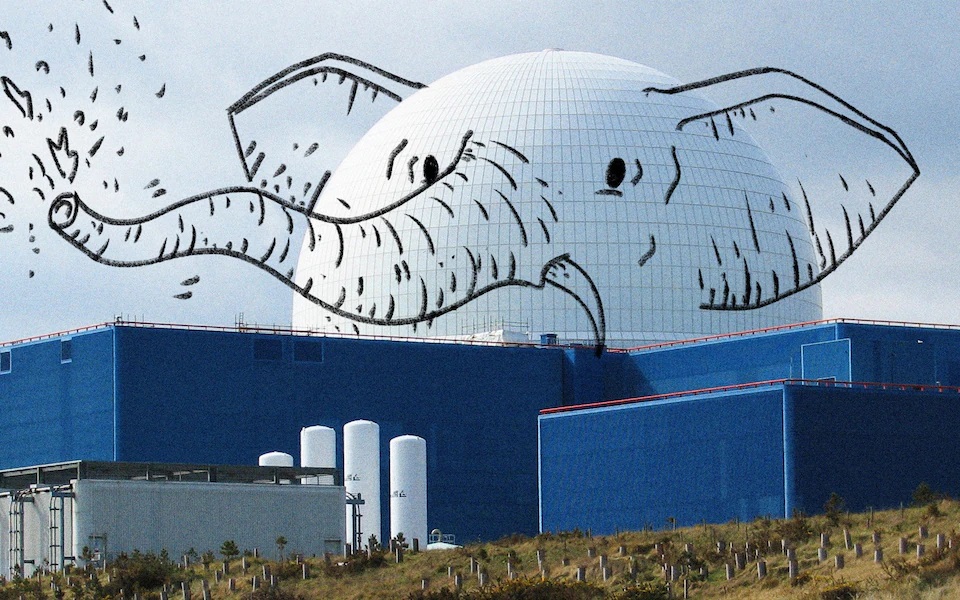
Ministers will decide whether to proceed with delayed
Suffolk scheme in June spending review. A senior Treasury minister has said
he is confident private financing for the Sizewell C nuclear power station
will be “teed up” in time for a final investment decision in June over
whether to proceed with the delayed project.
Darren Jones, chief secretary
to the Treasury, told the Financial Times that the crunch point for the
planned project in Suffolk was coming in just 10 weeks, at the time of the
government’s three-year spending review. “We have to make the final
investment decision [FID] which we will do at the spending review,” he
said. “FID will be taken in June.” Jones added: “You wouldn’t take
FID unless you’ve got all of your investors teed up. We will do.”
The UK government and French energy group EDF, the initial backers of Sizewell
C, have been trying to raise billions of pounds from investors and had
previously hoped to reach a final decision on investment last year. But the
process has dragged on and the price tag has soared since its £20bn
estimate given as recently as 2020.
Government officials and industry
executives expect Sizewell C will get billions of pounds of funding from
British taxpayers alongside investment from sovereign wealth funds and
institutional investors. The government has been negotiating with investors
including Centrica, Emirates Nuclear Energy Company, Amber Infrastructure
Group and Schroders Greencoat. They may not invest and ministers could yet
balk at the huge costs of the project. But Jones said the government had
already released a couple of billion pounds for the current year for
enabling works at the site.
FT 1st April 2025, https://www.ft.com/content/4a889ad7-6d41-47a9-a946-c2535ae2aaa6
Your move: Gamers join nuke industry in planning future atomic disasters
NFLA 1st April 2025
Following a £2.8 million investment made by Sellafield to transform a Whitehaven furniture department store into a high-tech digital and gaming hub[i], today nuclear industry bosses have announced that they are teaming up with Digital Gaming Content PHD students to embrace a new gaming genre – Atomic Disaster Gaming.
Under Project ‘Atomquake’, the students will be invited to participate in multiple team scenarios in which unprecedented catastrophes will be mapped out which place Cumbria’s population and environment in grave peril.
One such scenario relates to the possible location of a Geological Disposal Facility in West Cumbria in which the work of multiple giant boring machines tunnelling mass voids under the sea alongside the Sellafield site trigger earthquakes along the long-dormant Lake District Boundary Fault Zone.
Another envisages the ongoing leaks from Magnox silos contributing to the liquification of the Sellafield site.
Frightening stuff, and in parts true.
But if you were questioning the entire veracity of our story, you would be right to do so – please take account of the date.
In outlining this tale, we tip our hat to acknowledge software developers, Rebellion Developments, who have just released ‘Atomfall’, an acclaimed action game set in an alternate 1960s Cumbria, where radiation from the 1957 Windscale Fire has blanketed much of Northern England making it a contaminated quarantine zone. In the game, participants in the online world take on player characters who are engaged in a battle for survival.
The disaster outlined in ‘Atomfall’ almost came to pass, so, as life sometime imitates art, who is to say whether, in whole or in part, our innocent April Fool’s Day tale may one day also become our future reality.
(The NFLAs wish to thank Marianne Birkby from Radiation Free Lakeland for her contribution to this article and for the illustration she has kindly provided to accompany it)………………………………………………….https://www.nuclearpolicy.info/news/your-move-gamers-join-nuke-industry-in-planning-future-atomic-disasters/
UK nuclear deterrent: the mutual defense agreement is at risk in a Trumpian age
Prime Minister Keir Starmer recently boarded one of the UK’s four
nuclear-armed submarines for a photo call as part of his attempts to
demonstrate the UK’s defence capabilities as tensions with Russia
continue. However, Starmer faces a problem. The submarine, and the rest of
the UK’s nuclear fleet, is heavily reliant on the US as an operating
partner. And at a time when the US becomes an increasingly unreliable
partner under the leadership of an entirely transactional president, this
is not ideal. The US can, if it chooses, effectively switch off the UK’s
nuclear deterrent.
The Conversation 27th March 2025 https://theconversation.com/uk-nuclear-deterrent-the-mutual-defense-agreement-is-at-risk-in-a-trumpian-age-252674
Cumbria could be only option for nuclear disposal

(and still they intend to keep making the foul stuff!)
Ian Duncan, BBC News, 2 April 25
Cumbria could be the only area left in the search for a new nuclear disposal site, councillors have been told.
Members of Cumberland Council’s nuclear issues board were given an update on the search to pin down a site to build a geological disposal facility (GDF) on Monday.
Three areas had previously been shortlisted by government body Nuclear Waste Services (NWS) – Mid Copeland and South Copeland in Cumbria and Lincolnshire.
Councillors were told that Lincolnshire County Council plans to withdraw, however, the authority is due to meet in June after local elections, when the result could signal a change in a new council’s intention.
Nuclear waste would be stored at the GDF beneath up to 1,000m (3,300ft) of solid rock until its radioactivity had naturally decayed.
Earlier this month Lincolnshire County Council said it would pull out of talks unless it received “significant” further information about the plan.
Two surface areas of focus had been identified by NWS in Mid Copeland, east of Sellafield and east of Seascale.
In South Copeland, land west of Haverigg had been chosen.
The Copeland area is already home to Sellafield, where the vast majority of the UK’s radioactive nuclear waste is stored, as well as the world’s largest stockpile of plutonium…………….
The nuclear waste disposal site would need community support, the Local Democracy Reporting Service said.
NWS previously said construction would only start when a potential community had confirmed its “willingness” to host the facility……….
https://www.bbc.co.uk/news/articles/cqj4rvkd8e7o
Walt Zlotow – Why do so many leaders remain stupid about Ukraine war?
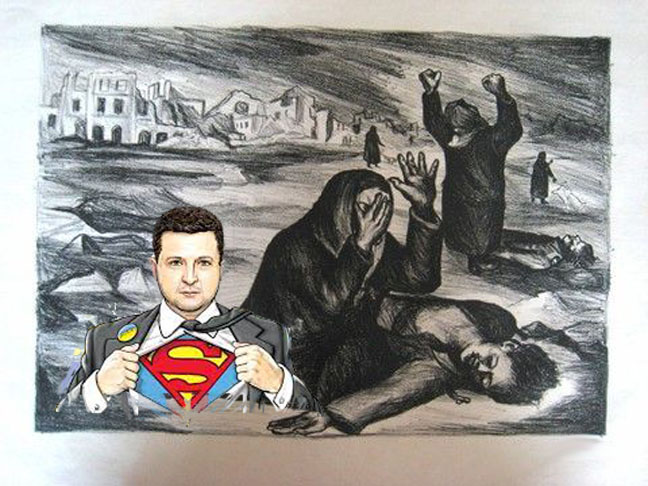
Walt Zlotow, West Suburban Peace Coalition, Glen Ellyn IL , 31 Mar 2.
The 3 year long destruction of Ukraine should never have occurred.
Had leaders in the US, NATO and Ukraine simply used common sense, Ukraine would not be a shell of its former self before the February 24, 2022 Russian invasion that has largely destroyed it. Ukraine economy shattered. Hundreds of thousands of dead and wounded. Over 10 million fled. Over 45,000 square miles lost to Russia forever.
This occurred from massive stupidity by all the leaders in the countries involved.
The stupidity starts with US presidents going back to Bill Clinton. In 1999 he broke the deal with USSR/Russia that he would not expand NATO eastward to their borders. From 1999 thru 2023 US relentlessly doubled NATO from 16 to 32 members.
Reasons likely many but all stupid. Smart diplomats, historians and political scientists were aghast, declaring this would inevitably lead to a US Russian confrontation. It took 23 years but stupid presidents Clinton, Bush, Obama, Biden all stupidly succeeded into provoking Russia to attack.
Odd, but only Trump was not stupid enough to add to NATO during his first term. He was however incredibly stupid to begin arming the Kyiv neofascists to wipe out the Russian leaning Ukrainian separatists in Donbas. That, along with NATO expansion, ensured Russia would intervene.
Western European NATO giants England, France and Germany also took their stupidity cue from Uncle Sam. They were getting cheap energy from Russia but stupidly bowed to US demands to weaken, isolate Russia thru NATO expansion and Kyiv warfare on Donbas Ukrainians. They were cool with replacing cheap Russian gas with exorbitant US LNG. Now they’re economies are crumbing, allowing inroads from MAGA like political opponents. Incredibly, instead of recognizing their stupidly, they’re stupidly planning to squander hundreds of billions of their vanishing treasure to keep the war going till they wreck their economies
If we were awarding a Stupid Prize, it must go to Ukraine President Volodymyr Zelensky. The comedian turned politician campaigned for the Ukraine presidency on a platform of peace with the Donbas Ukrainians being brutalized by the Kyiv government. It got him elected with big majority of Donbas voters. Alas, Zelensky was too stupid to realize the Kyiv neofascists would never allow him to make peace with Donbas separatists they sought to destroy. To save his presidency, possibly even his life, Zelensky abandoned his voting base.
Zelensky even stupidly amassed 60,000 elite troops on the Donbas border in early 2022 to finish off his constituents there. All that achieved, along with stupidly begging NATO for membership, was to provoke the Russian invasion.
Once started, Zelensky became stupider and stupider. He wisely prepared to sign a peace deal with Russia in the first 2 months which would have ended the war without Ukraine losing a single square mile of territory. But Zelensky stupidly caved to stupid US and UK leaders who told him he could win with US/NATO weapons…but no troops. That stupidity sent Ukraine into failed state status.
Ukraine is now on the cusp of peace being negotiated 2 leaders, Trump and Putin, employing common sense instead of stupidity. But the US Democratic Party, Ukraine, UK, French, German and other NATO leadership remain mired in stupidity that this senseless war must continue till the last Ukrainian soldier is dead.
They all forget the first rule of sane, peaceful governance: Don’t do stupid.
Britain is aiding Israel’s nuclear force
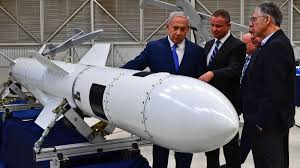
Israeli ministers may not see their nuclear weapons just as weapons of last resort, to be used if the country were threatened with annihilation.
In the months after the Hamas attacks on Israel in October 2023, several Israeli policymakers and commentators—including heritage minister Amihai Eliyahu who was later suspended from the cabinet—suggested that Israel should use nuclear arms against Hamas fighters in Gaza.
DECLASSIFIED UK, MARK CURTIS, 26 March 2025
When the government recently published its arms exports data for the period July to September last year, one item caught the eye: a licence to sell Israel £7.1m worth of “technology for submarines”.
Israel’s submarines are believed to house nuclear arms.
The government data included a footnote stating that the licence related to “marketing and promotional purposes, including demonstration to potential customers, temporary exhibitions”.
Whatever that might mean, what is clearer is that British ministers have authorised 77 export licences to supply Israel with components for its submarines since 2010. This makes that category of equipment the fourth most numerous for all UK military exports to Israel.
The total value of these licences is £8.96m, Declassified has established. Two of the licences are, however, “open” rather than “single”, meaning that unlimited quantities and values of such equipment can be exported from Britain.
These licences for Israel’s submarines were excluded from the UK’s restrictions on exports of military equipment for Israel announced last September during its bombardment of Gaza.
Also excluded were components from Israel’s F-35 warplanes used to devastating effect in the territory.
Israeli military officials are doubtless pleased that British companies can continue to support their submarines – since their underwater and nuclear arms programmes are both being upgraded.
Nuclear dolphins
Research institute SIPRI estimates that Israel has at least 90 nuclear warheads but that the number could reach as high as 300.
While Israel continues to deny it has nuclear arms, SIPRI says it is “believed to be modernizing its nuclear arsenal and appears to be upgrading its plutonium production reactor site at Dimona” in the Negev desert.
The Stockholm-based institute also notes unconfirmed reports that “all or some of the submarines have been equipped to launch an indigenously produced nuclear-armed sea-launched variant of the Popeye cruise missile, giving Israel a sea-based nuclear strike capability”.
It “assesses that around 10 cruise missile warheads might be available for the submarine fleet”………………………………………………………………………….
‘Armed with nuclear weapons’
Israel’s most recent, and sixth, submarine, known as the INS Drakon, is the country’s largest and was unveiled last November at the Kiel shipyard in northern Germany where it was built, and from where it will be delivered to Israel later this year.
“Israeli nuclear submarines have the capability to be armed with nuclear weapons as well as to perform clandestine spying missions all over the world”, the Jerusalem Post reported at the time.
Israeli ministers may not see their nuclear weapons just as weapons of last resort, to be used if the country were threatened with annihilation.
In the months after the Hamas attacks on Israel in October 2023, several Israeli policymakers and commentators—including heritage minister Amihai Eliyahu who was later suspended from the cabinet—suggested that Israel should use nuclear arms against Hamas fighters in Gaza.
Whitehall in denial
The UK government has consistently refused to acknowledge the open secret that Israel possesses nuclear weapons. One reason Whitehall can be certain, however, is that it helped Israel acquire nuclear arms in the first place.
In the late 1950s, Britain sold Israel 20 tonnes of heavy water, a vital ingredient for the production of plutonium at Israel’s top secret Dimona nuclear site.
In fact, Declassified previously found that staff in the Foreign Office and Ministry of Defence have for over 40 years believed Israel has developed nuclear arms.
Britain has also aided Israel’s submarine development…………………………………………………………………….https://www.declassifieduk.org/britain-is-aiding-israels-nuclear-force/?utm_source=Email&utm_medium=Button&utm_campaign=ICYMI&utm_content=Button
Biden Lied About Everything, Including Nuclear Risk, During Ukraine Operation
Sourced to tone-deaf “U.S. officials,” a massive New York Times exposé reveals an unprecedented betrayal of American voters, but also Ukraine
Racket News, Matt Taibbi, Apr 01, 2025
From “The Secret History of the War in Ukraine” in the New York Times:
At a hastily arranged meeting on the Polish border, General Zaluzhny admitted to Generals Cavoli and Aguto that the Ukrainians had in fact decided to mount assaults in three directions at once.
“That’s not the plan!” General Cavoli cried…
Fifteen months into the war, it had all come to this tipping point.
“We should have walked away,” said a senior American official.
But they would not.
When Ukrainian President Volodymyr Zelensky visited the White House nearly a month ago, the New York Times packed its pages with stories denouncing Donald Trump and J.D. Vance for abandoning Ukraine, and the impolitic “dressing down” of a friendly foreign leader. The Times like most Western news outlets for years suggested that anything short of a full-throated expression of support for war was a betrayal of the “democratic world order” that would lead to instant battlefield deaths.
Now that the war appears lost, and newspapers abroad (conspicuously, not here) are full of news about an apparent bombing of Vladimir Putin’s motorcade, and the future of NATO hangs by a thread, the Times has run a 13,000-word “Secret History” that shows the same U.S. officials who denounced Trump and American voters for saying it out loud long ago concluded that they, too, should probably “walk away.”
The piece is also an extraordinarily comprehensive betrayal of Zelensky and Ukraine, exponentially worse than the “dressing down” by Trump. Authored by longtime veteran of controversial intel pieces Adam Entous, it’s sourced to 300 American and European officials who seem to be responding to their apparent sidelining via a shameless tantrum, exhibiting behavior that in the field would get military men shot. Not only do they play kiss and tell with a trove of operational secrets, they use the Times to deflect blame from their own failures onto erstwhile Slavic partners, cast as ignorant savages who snatched defeat from the jaws of America-designed victory. It’s as morally abhorrent a piece of ass-covering ever as I’ve seen in print, and that somehow is not its worst quality.
The people who quarterbacked the NATO side of the Ukraine war are so pleased with themselves, they can’t keep from boasting about things that will make the average American want to pitchfork the lot of them. Entous describes a tale told “through a secret keyhole” that reveals how America was “woven into the war far more intimately and broadly than previously understood.” (Translation: it was hidden from us.) Sources not only make it clear that the public was lied to on a continuous basis from the outset of the conflict, they describe how we were lied to, apparently thinking the methods clever. Some are small semantic gambits the idiots wrongly believe exculpated their actions, but the main revelation involves one gigantic, inexcusable deception. From Joe Biden down, they all lied about the risk of World War III.
They risked our lives and our children’s lives, knowingly, repeatedly, and for the worst possible reason: politics. Afraid to admit a mistake, they planned individual excuses while letting bureaucratic inertia expand the conflict. Worse, as was guessed at on this site late last year, the Biden administration after last November’s election increased the risk of global conflict by “expanding the ops box to allow ATACMS and British Storm Shadow strikes into Russia,” in order to “shore up his Ukraine project.” If you and check this “secret history” against contemporaneous statements of American and European leaders, you’ll find the scale of the lies beyond comprehension. Heads need to roll for this:………………………………….. https://www.racket.news/p/biden-lied-about-everything-including?utm_source=post-email-title&publication_id=1042&post_id=160259839&utm_campaign=email-post-title&isFreemail=true&r=1ise1&triedRedirect=true&utm_medium=email
European Court of Human Rights (ECHR) Finds Ukraine Responsible for Odessa Massacre
The ECHR’s appraisal of criminal investigations into perpetrators of the Odessa massacre, and all the officials who failed in their most basic duties on May 2nd 2014, was absolutely scathing, the details pointing to a very clear, deliberate state-level coverup.
internal documents attesting that security measures had in fact been undertaken were found to have been forged.
the lethal incineration of anti-Maidan activists in May 2014 was an intentional and premeditated act of mass murder, conceived and directed by Kiev’s US-installed far-right government. This interpretation is amply reinforced by testimonies from a Ukrainian parliamentary commission, instituted in the massacre’s immediate aftermath.
(While the video above has been censored. This video below is allowed, as it contains a more favoured view of theUkrainian government.
Kit Klarenberg, Mar 30, 2025, https://www.kitklarenberg.com/p/echr-finds-ukraine-responsible-for?utm_source=post-email-title&publication_id=552010&post_id=160179175&utm_campaign=email-post-title&isFreemail=true&r=nxsz&triedRedirect=true&utm_medium=email
On March 13th, a bombshell judgment by the European Court of Human Rights found the Ukrainian government guilty of grave human rights breaches over the May 2nd 2014 Odessa massacre, in which dozens of Russian-speaking anti-Maidan activists were forced into the city’s Trade Unions House and burned alive by violent ultranationalist thugs. The explosive findings unambiguously uncover a concerted conspiracy by Ukrainian authorities to facilitate and exacerbate the grotesque killing, then insulate its perpetrators, and officials and state agencies which helped it happen, from justice.
In all, 42 people were killed and hundreds injured as a result of the blaze, a bloody bookend to the so-called “Maidan revolution” that saw Ukraine’s democratically-elected president Viktor Yanukovych deposed in a Western-orchestrated coup months earlier. Ever since Ukrainian officials and legacy media outlets have consistently framed the deaths as a tragic accident, with some figures even blaming anti-Maidan protesters themselves for starting the blaze. That notion is comprehensively incinerated by the verdict, which was delivered by a team of seven European judges, including a Ukrainian.
“Relevant authorities’ failure to do everything that could reasonably be expected of them to prevent the violence in Odessa…to stop that violence after its outbreak, to ensure timely rescue measures for people trapped in the fire, and to institute and conduct an effective investigation into the events” means Kiev was found guilty of egregious European Convention on Human Rights breaches. Moreover, numerous incendiary passages make clear industrial scale “negligence” by officials on the day, and ever after, “went beyond an error of judgment or carelessness.”
For example, the ECHR found deployment of fire engines to the site was “deliberately delayed for 40 minutes” – the local fire station being just one kilometer away – and police stood by passively as the building and its occupants burned, refusing to “help evacuate people…promptly and safely.” Moreover, Ukrainian authorities made “no efforts whatsoever” or “any meaningful attempt” to prevent or disrupt the skirmishes between pro- and anti-Maidan activists that prefaced the deadly inferno, despite knowing in advance such clashes were impending on the day.
While stopping short of charging that Ukrainian authorities actively wished for the anti-Maidan activists trapped in the burning building to die, this conclusion is ineluctable based on the ECHR’s findings. So too the apparent immunity from prosecution for implicated officials and ultranationalist perpetrators, and Kiev’s failure to act on “extensive photographic and video evidence” indicating precisely who was responsible for “firing shots during the clashes,” setting the building ablaze, and “assaulting the fire victims” who managed to escape.
The case was brought by 25 people who lost family members in the Neo-Nazi arson attack and clashes that preceded it, and three who survived the fire “with various injuries”. The ECHR has demanded Ukraine pay them just 15,000 euros each in damages. In an even greater affront to justice, the damning ruling stops short of exposing the full reality of the Odessa slaughter, indicting the Western-supported Neo-Nazi elements responsible, and their intimate ties to the February 2014 Maidan Square false flag sniper massacre.
‘Explicit Order’
Once the Maidan protests commenced in Ukraine in November 2013, tensions began steadily brewing between Odessa’s sizable Russian-speaking population and Ukrainian nationalists within and without the city. As the ECHR ruling notes, “while violent incidents had overall remained rare…the situation was volatile and implied a constant risk of escalation.” In March 2014, anti-Maidan activists set up a tent camp in Kulykove Pole Square, and began calling for a referendum on the establishment of an “Odessa Autonomous Republic”.
The next month, supporters of Odesa Chornomorets and Kharkiv Metalist football clubs announced a rally “For a United Ukraine” on May 2, before a scheduled match. Shortly thereafter, the ECHR records “anti-Maidan posts began to appear on social media describing the event as a Nazi march and calling for people to prevent it.” While branded Russian “disinformation” in the ruling, hooligans associated with both clubs had overt Neo-Nazi sympathies and associations, and well-established reputations for violence. They later formed the notorious Azov Battalion.
Fearing their tent encampment would be attacked, anti-Maidan activists resolved to disrupt the “pro-unity march” before it reached them. The ECHR reveals Ukraine’s security services and cybercrime unit had substantive intelligence indicating “violence, clashes and disorder” were certain on the day. Yet, authorities “ignored the available intelligence and the relevant warning signs”, and undertook no actions or “proper measures” to “stamp out any provocation”, such as implementing “enhanced security in the relevant areas.”
So it was on the afternoon of May 2nd 2014, “as soon as the march began,” anti-Maidan activists confronted the demonstrators, and violent clashes erupted. At roughly 17:45, in the precise manner of the Maidan Square sniper false flag massacre three months earlier, multiple anti-Maidan activists were fatally shot “by someone standing on a nearby balcony”, using “a hunting gun.” Subsequently, “pro-unity protesters…gained the upper hand in the clashes,” and charged towards Kulykove Pole square.
Anti-Maidan activists duly “took refuge” in Trade Unions House, a five-storey building overlooking the square, while their ultranationalist adversaries “started setting fire to the tents.” Gunfire and Molotov cocktails were “reportedly” exchanged by both sides, and before long, the building was ablaze. “Numerous calls” were made to the local fire brigade, including by police, “to no avail.” Mysteriously, its chief had “instructed his staff not to send any fire engines to Kulykove Pole without his explicit order,” so none were dispatched.
Several people trapped in the building tried to escape by jumping from its upper windows – some survived, but others died. “Video footage shows pro-unity protesters attacking people who had jumped or had fallen,” the ECHR notes. It was not until 20:30 that firefighters finally entered the building and extinguished the blaze. Police then arrested 63 surviving activists “still inside the building or on the roof.” They were released two days later, after a several hundred-strong group of anti-Maidan protesters “stormed the local police station where they were being held.”
‘Serious Defects’
The litany of security failures and industrial scale negligence by authorities on the day was greatly aggravated by “local prosecutors, law enforcement, and military officers” not being “contactable for a large part or all of time [sic],” as they were coincidentally attending a meeting with Ukraine’s Deputy Prosecutor General. The ECHR “found the attitude and passivity of those officials inexplicable,” apparently unwilling to consider the obvious possibility they purposefully made themselves incommunicado to ensure maximum mayhem and bloodshed, while insulating themselves from legal repercussions.
Still, the ECHR ruled “relevant” Ukrainian authorities “had not done everything they reasonably could to prevent the violence” or “what could reasonably be expected of them to save people’s lives,” therefore finding Kiev committed “violations of the substantive aspect of Article 2” of the European Convention on Human Rights. The Court also concluded authorities “failed to institute and conduct an effective investigation into the events in Odessa” – “a violation of the procedural aspect of Article 2”.
The ECHR’s appraisal of criminal investigations into perpetrators of the Odessa massacre, and all the officials who failed in their most basic duties on May 2nd 2014, was absolutely scathing, the details pointing to a very clear, deliberate state-level coverup. For example, no effort was made to seal off “affected areas of the city centre” in the event’s aftermath. Instead, “the first thing” authorities did “was to send cleaning and maintenance services to those areas,” meaning invaluable evidence was almost inevitably eradicated.
Accordingly, when on-site inspections were finally carried out two weeks later, the probes “produced no meaningful results.” Trade Unions House likewise “remained freely accessible to the public for 17 days after the events,” giving malicious actors plentiful time to manipulate, remove, or plant incriminating evidence at the site. Meanwhile, “many of the suspects absconded.” Several criminal investigations into perpetrators were opened, only to go nowhere, left to expire under Ukraine’s statute of limitations. Other cases that reached trial “remained pending for years”, before being dropped.
This was despite “extensive photographic and video evidence regarding both the clashes in the city centre and the fire,” from which culprits’ identities could be easily discerned. . The ECHR had no confidence Ukrainian authorities “made genuine efforts to identify all the perpetrators,” and several forensic reports weren’t released for many years. Elsewhere, the Court noted a criminal investigation of an individual suspected of having shot at anti-Maidan activists was inexplicably discontinued on four separate occasions, on identical grounds.
The ECHR also noted “serious defects” in investigations of officials, “and their role in the events.” Primarily, this took the form of “prohibitive delays” and “significant periods of unexplained inactivity and stagnation” in opening cases. For instance, “although it had never been disputed that the fire service regional head had been responsible for the delayed deployment of fire engines to Kulykove Pole,” no probe into his flagrantly criminal dereliction of duty was launched until almost two years after the massacre.
Similarly, Odessa’s regional police chief not only failed to implement any “contingency plan in the event of mass disorder” according to protocol, but internal documents attesting that security measures had in fact been undertaken were found to have been forged. However, he only became subject to criminal investigation “almost a year later.” Following pre-trial investigation, his case remained pending “for about eight years,” after which he was released from criminal liability, “on the grounds that the charges against him had become time-barred.”
Burn Everything’
Wholly unconsidered by the ECHR was the prospect that, far from a freak twist of fate produced by two effectively warring factions clashing in Odessa, the lethal incineration of anti-Maidan activists in May 2014 was an intentional and premeditated act of mass murder, conceived and directed by Kiev’s US-installed far-right government. This interpretation is amply reinforced by testimonies from a Ukrainian parliamentary commission, instituted in the massacre’s immediate aftermath.
The commission found Ukrainian national and regional officials explicitly planned to use far-right activists drawn from the fascist Maidan Self-Defence to violently suppress Odessa’s would-be separatists, and disperse all those camped by Trade Unions House. Moreover, Maidan Self-Defence chief Andriy Parubiy and 500 of his armed and dangerous members were dispatched to the city from Kiev on the eve of the massacre. From 1998 – 2004, Parubiy served as founder and leader of Neo-Nazi paramilitary faction Patriot of Ukraine.
He also headed Kiev’s National Security and Defence Council at the time of the Odessa massacre. Ukraine’s State Bureau of Investigations immediately began scrutinising Parubiy’s role in the May 2014 events after he was replaced as lead parliamentary speaker, following the country’s 2019 general election. This probe has seemingly come to nothing since. Nonetheless, a year prior a Georgian militant told Israeli documentarians that he engaged in “provocations” in the Odessa massacre under Parubiy’s command, who told him to attack anti-Maidan activists and “burn everything.”
He is one of several Georgian fighters who has openly alleged they were personally responsible for the February 2014 Maidan Square false flag sniper massacre, under the command of Parubiy, other ultranationalist Ukrainian figures, and Mikhael Saakashvili, founder of infamous mercenary brigade Georgian Legion. That slaughter brought about the end of Viktor Yanukovych’s government, and sent Ukraine hurtling towards war with Russia. The Odessa massacre was another key chapter in that morbid saga – and the West’s foremost human rights court has now firmly laid responsibility for the horror at Kiev’s feet.
1 This Month
26 September – International Day for the Total Elimination of Nuclear Weapons





PLEASE OPPOSE HR 8255 AND S.3639 – bills would accelerate satellite deployment, with no environmental review or safeguards – https://ncstd5li.quorum.us/campaign/169331/
To see nuclear-related stories in greater depth and intensity – go to https://nuclearinformation.wordpress.com
-
Archives
- September 2026 (305)
- August 2026 (330)
- July 2026 (355)
- June 2026 (287)
- May 2026 (306)
- April 2026 (356)
- March 2026 (251)
- February 2026 (267)
- January 2026 (308)
- December 2025 (358)
- November 2025 (359)
- October 2025 (375)
-
Categories
- 1
- 1 NUCLEAR ISSUES
- business and costs
- climate change
- culture and arts
- ENERGY
- environment
- health
- history
- indigenous issues
- Legal
- marketing of nuclear
- media
- opposition to nuclear
- PERSONAL STORIES
- politics
- politics international
- Religion and ethics
- safety
- secrets,lies and civil liberties
- spinbuster
- technology
- Uranium
- wastes
- weapons and war
- Women
- 2 WORLD
- ACTION
- AFRICA
- Atrocities
- AUSTRALIA
- Christina's notes
- Christina's themes
- culture and arts
- Events
- Fuk 2022
- Fuk 2023
- Fukushima 2017
- Fukushima 2018
- fukushima 2019
- Fukushima 2020
- Fukushima 2021
- general
- global warming
- Humour (God we need it)
- Nuclear
- RARE EARTHS
- Reference
- resources – print
- Resources -audiovicual
- Weekly Newsletter
- World
- World Nuclear
- YouTube
-
RSS
Entries RSS
Comments RSS

