A personal story of nuclear-caused suffering, and of hope
 The petition – located here – is part of the campaign of The ATOM Project to draw global attention to the need to show more leadership and take decisive steps towards the elimination of the nuclear threat. Anyone in the world can sign the petition and contribute to building a nuclear-weapons-free world.
My experience of the nuclear horror http://globalpublicsquare.blogs.cnn.com/2013/09/25/my-experience-of-the-nuclear-horror/ By Karipbek Kuyukov, CNN 25 Sept 13 Editor’s note: Karipbek Kuyukov is an artist and Honorary Ambassador of The ATOM Project, a global campaign to eliminate nuclear weapons testing. The views expressed are his own.As world leaders gather for the United Nations High-level Meeting on Nuclear Disarmament in New York, I would like to deliver a short message from the survivors of nuclear weapons testing in Kazakhstan.
The perpetual question of whether to pursue the nuclear arms race or eradicate nuclear weapons has divided international opinion. Experts, politicians and world leaders have traditionally sided either for or against nuclear arms. Some believe that nuclear weapons help preserve peace, yet surely many more believe these weapons are a certain path to another world war and the eventual obliteration of mankind.
But although there has been much discussion of the issue, few on either side have turned for advice to the victims of nuclear tests and explosions. We have a lot to say and a right to be heard.
I was born in 1968, about 100 kilometers away from the notorious Semipalatinsk nuclear test site in eastern Kazakhstan where the Soviet Union tested hundreds of nuclear devices over four decades. I was born without arms, a result of the horrific impact of nuclear radiation on the health of our people. As I grew up, I saw that I was not alone.
I saw mothers and midwifes shocked at the sight of other babies born with birth defects. I saw families too embarrassed to show their children to the outside world, hiding them deep inside their homes and bringing them out only briefly to have some fresh air and sun. I saw families and whole communities decimated by radiation-related cancers. As the United Nations notes, more than 1.5 million people in Kazakhstan suffered the effects of Soviet nuclear weapons testing, which lasted from 1949 until 1991. Continue reading
Kazakhstan’s idea to grow food on plutonium contaminated land
 “Opening the land for grazing and other land use will be an unforgiveable mistake,” said Leonid Rikhvanov, a professor at Russia’s Tomsk Polytechnic University, in a 2010 interview with the Telegraph. “If the plutonium gets into the biological chain it could cause a cytogenetic catastrophe that will backfire on the health of our children and grandchildren.” Many people living near Semipalatinsk feel similarly
But in this poisoned place, on a small patch of land near a few downtrodden trailers, there’s an unexpected hint of vitality: bright yellow sunflowers, clustered together near rows of corn, and a barn full of plump sheep. Here, scientists from Kazakhstan’s Institute of Radiation Safety and Ecology, a governmental organization that studies the medical and biological interaction between radioactivity and the environment, have developed an experimental farm. Their goal is to measure the transference of radioactivity from contaminated soil into edible crops, and from those crops into the meat, milk, and eggs of the animals that eat them. Continue reading
Kazakhstan’s water imperilled by in situ leaching of uranium
Scientists studying the effects of ISL doubt how quickly mine sites can self-cleanse. This uncertainty appears to be little known to both Kazakhstan’s nuclear industry and fledgling environmentalists.
no site in the US has been entirely returned to pre-mining conditions
The cost of being the world’s No.1 uranium producer Kazakhstan’s industry has skyrocketed in the past 10 years. But what could that mean for the environment? Christian Science Monitor, By Ben Arnoldy, Staff writer / August 28, 2013 ASTANA, KAZAKHSTAN
If you make a toxic mess under one of the most isolated parts of the planet, does it matter if you don’t clean it up? Does it make a difference if that mess will be there for thousands of years? Scientists are asking those questions as Kazakhstan has steadily risen to become the world’s No. 1 uranium producer, surpassing such nations as the United States, Canada, and Australia, which require more cleanup.
Rather than employing miners to haul rock up to the surface, mine operators in Kazakhstan have embraced a newer – and generally cleaner – process by which a chemical solution is injected down a pipe to dissolve the underground uranium deposits and then is sucked back up to the surface.

This in situ leach (ISL) method avoids making a mess above ground, but leaves toxic levels of heavy metals in the ground water. In the US, companies using the method have tried for years and failed to return ground water to its pre-mining state. Continue reading
The nuclear devastation in northeastern Kazakhstan
Kazakhstan’s Painful Nuclear Past Looms Large Over Its Energy Future, The Atlantic 13 May 13, The central Asian country is positioning itself as a global nuclear leader, but it’s haunted by the lasting impacts of Soviet testing decades ago……….. Kazakhstan is moving forward with plans to build a civilian nuclear power facility for domestic energy needs, possibly on the Aktau site of a now defunct Soviet-era plant…..

East Kazakhstan’s 812 million tonnes of highly radioactive uranium tailings
 Josef Stalin’s nuclear legacy remains in East Kazakhstan Scotsman.com, 9 October 2012 “…..It was over 20 years after the end of atomic testing in the Polygon that the world began to take notice, but Stalin’s legacy may yet have an impact that could threaten future generations across the globe. The mining of uranium to manufacture the atomic weapons tested in the Polygon has left a staggering 812 million tonnes of highly radioactive uranium tailings (waste byproduct). They lie in dilapidated dumps in four of the five Central Asian republics, posing not just an imminent threat to the environment but a potential flashpoint for violence and conflict. Continue reading
Nuclear weapons do not make a country safe.
Mr. Umarov said that Kazakhstan fully supports a proposal by Secretary-General Ban Ki-moon to adopt a nuclear weapons convention, noting the suggestion of his country’s president that, as an important step in that direction, the United Nations should adopt a Universal Declaration of a Nuclear Weapon-Free World.
Africa: Nuclear Weapons Are No ‘Guarantee of Security,’ Kazakh Foreign Ministers Tells UN Debate AllAfrica.com 30 Sept 12, The inability of nuclear weapons to guarantee a country’s security or independence was highlighted in the speech of Kazakhstan’s Acting Minister of Foreign Affairs, Kairat Umarov, to the United Nations General Assembly today. Continue reading
Kazakhstan’s nuclear fuel bank or nuclear graveyard?
Nuclear fuel bank or nuclear graveyard? Asia Times, 5 Sept 12, By Zhulduz Baizakova Kazakhstan plans to build an international nuclear fuel bank in Ust-Kamenogorsk (Oskemen), in the country’s east, at the site of Ulba Metallurgic Plant, part of the giant national company Kazatomprom, which produces fuel tablets for nuclear power plants.
While the authorities are keen on the plan, some citizens are seriously questioning it – questions that are likely to remain largely unanswered. Continue reading
Kazakhstan’s radioactive disaster continues
Radioactive fallout from nuclear blasts have given Semey and neighboring villages abnormally high rates of cancer and birth defects.
Local oncology centers are screening tens of thousands of patients, trying to detect and treat tumors at early stages. People living in the area are still predisposed to breast and pulmonary cancer.
We are getting more and more disabled infants, each passing day their number increases. Environmental factors work slowly – we can see their effects in 10 or 20 years, in the first, second, third or fourth generation.”
 VIDEO Kazakhstan’s Nuclear Legacy Euro News, 14/04/10 http://www.euronews.com/2010/04/14/kazakhstan-s-nuclear-legacy/ At the elderly care home in Semipalatinsk, we met 85 year old Praskovya. Semipalatinsk, or Semey, is a city 150 kilometers from the main Soviet nuclear weapons test site.
Praskovya is a former warehouse manager who used to work in a small town bordering the restricted area in the 1950s. She witnessed one of the nuclear explosions: “We were curious, so we went outside to watch. When the explosion happened, it looked like a large bowl, with black smoke and flames coming from the bowl. Then it rolled into a ball, and
a smoke column went up, and at the top, the mushroom appeared. And then the soldiers came and made us leave the street, shouting “it’s not allowed, it’s not allowed”. But we already saw everything interesting. And then everyone got health problems. Continue reading
Japanese govt’s nuclear push with Kazakhstan, and the global nuclear industry web
A complex web of agreements across national borders links many of the biggest players in the nuclear industry.
“Japan hasn’t used the Fukushima disaster as an opportunity to push for renewable energy or energy efficiency,” “Instead, it has used the time since the disaster to push for the restart of nuclear reactors.”
How Long Will Japan’s Nuclear Recess Be? Enter KazakhstanTruth Out , 15 May 2012 By Steve Horn, “……Japan Announces Big Nuclear Deal with Kazakhstan Unmentioned by all but two news outlets was the fact that a day before the announcement, the Japanese government signed a deal with Kazakhstan’s state-owned nuclear giant, KazAtomProm, to begin supplying Japan with more nuclear fuel starting in 2013. Continue reading
Iran poses no nuclear threat. But what about Kazakhstan?
 Uranium Diplomacy:The US Double-Standard in Kazakhstan and Iran, THE REAL NEWS, 18 APRIL 2012 By Allen Ruff and Steve Horn [This is a slightly revised version of “Uranium Double-Standard: The U.S., Kazakhstan and Iran,” that originally appeared at Nation of Change. It is the second installment of an ongoing series on U.S. involvement in Kazakhstan. The first originally appeared at Truthout and is also available here.]
Kazakhstan says Japan will continue to buy its uranium
Japan to Purchase Contracted Kazakh Uranium, Kazatomprom Says Bloomberg, By Nariman Gizitdinov and Yuriy Humber – Feb 23, 2012 Kazatomprom (KZAP), the state nuclear company in the world’s biggest uranium-producing nation, said its Japanese customers will take delivery of the fuel they agreed to buy even as the country idles its atomic stations.
The supply contracts with Japan haven’t changed, Chief Executive Officer Vladimir Shkolnik told reporters in Almaty, Kazakhstan, today without identifying the buyers…..
http://www.bloomberg.com/news/2012-02-24/japan-to-purchase-contracted-kazakh-uranium-kazatomprom-says.html
Nuclear bomb testing – a horror that is hard to ban
 Perhaps because its people understand firsthand the horrors of living with the effects of nuclear testing, Kazakhstan has fully supported efforts to ban nuclear testing and nuclear weaponry, and has given up its nuclear arsenal.
Politics Clouds Efforts to Ban Nuclear Testing, By Elizabeth Whitman, UNITED NATIONS, Sep 5, 2011 (IPS) – On Aug. 29, 1949, the Soviet Union conducted the first of 456 nuclear tests in Semipalatinsk in Eastern Kazakhstan, at the site where it ultimately held over two-thirds of all Soviet nuclear tests without warning inhabitants of the region of the impact of exposure to these tests.On Aug. 29, 1991 the site closed, yet the devastating health and environmental effects continue to plague the region to this day. Continue reading
Kazakhtsan – land of nuclear human nuclear radiation guinea pigs
As for the locals, they were little more than guinea pigs…. it is so hard to prove the link between nuclear fallout and the diseases that may strike afterwards.According to Dr. Marat Sandybaev, head of the local oncology centre, cancer rates in the area are still twice as high as the national average, and it is estimated that birth defects are up to 10 times higher.
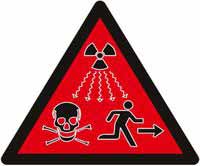 Bringing life to a nuclear wasteland Can a nuclear test site be reclaimed? The Soviets detonated hundreds of bombs in Kazakhstan, poisoning the land and people. Louise Gray of the Telegraph travels to the notorious Polygon site and reports on plans to restore the region By Louise Gray, The Telegraph September 4, 2011 “…. Between 1949 and 1989, the Soviet Union detonated more than 456 nuclear devices on the Semipalatinsk test site, better known as the “Polygon.” Continue reading
Kazakhstan’s land of danger due to nuclear testing
Soviet nuclear legacy surfaces at atomic museum , By Keith Rogers, LAS VEGAS REVIEW-JOURNAL, Sep. 3, 2011 Kazakhstan is grappling with lingering health issues and trying to rehabilitate the land 20 years after nuclear weapons testing stopped at the former Soviet Union’s proving ground .
Heavily contaminated areas of the Semipalatinsk nuclear site are closed to access by Kazaks who used the land for farming and grazing. The government, with the United States, is working to keep dangerous materials out of sinister hands, said Erlan Idrissov, Kazakhstan’s ambassador to the United States.
“All those years we have been trying to make a full assessment of the dangers that were brought to the land by nuclear testing,” Continue reading
Cancer and birth deformities in city near to 456 nuclear bomb tests
City that suffered most calls for an end to nuclear testing, Telegraph, By Louise Gray, Environment Correspondent, Semipalatinsk, 29 Aug 2011, The people of Semey will gather for a strange celebration today. Under a huge statue of a mushroom cloud they will commemorate the end of a chilling experiment on their own people and call for a complete ban on nuclear testing.
Between 1949 and 1989 this area of eastern Kazakhstan was used by the former Soviet Union to test 456 nuclear bombs. The local population was not told about the risks to their lives – or indeed the health of their grandchildren.
It is estimated some 1.5 million people were affected by the fallout and decades on doctors blame high rates of cancer and birth deformity on the continuing effects of radiation. Continue reading
1 This Month

of the week – Shut Down Drone Warfare!


Tell the Ukrainian Government to Drop Prosecution of Peace Activist Yurii Sheliazhenko

Petition to revoke the licensing of the Near Surface Nuclear Disposal Facility (NSDF) at Chalk River. https://www.ourcommons.ca/petitions/en/Petition/Details?Petition=e-7247
To see nuclear-related stories in greater depth and intensity – go to https://nuclearinformation.wordpress.com
-
Archives
- March 2026 (237)
- February 2026 (268)
- January 2026 (308)
- December 2025 (358)
- November 2025 (359)
- October 2025 (376)
- September 2025 (257)
- August 2025 (319)
- July 2025 (230)
- June 2025 (348)
- May 2025 (261)
- April 2025 (305)
-
Categories
- 1
- 1 NUCLEAR ISSUES
- business and costs
- climate change
- culture and arts
- ENERGY
- environment
- health
- history
- indigenous issues
- Legal
- marketing of nuclear
- media
- opposition to nuclear
- PERSONAL STORIES
- politics
- politics international
- Religion and ethics
- safety
- secrets,lies and civil liberties
- spinbuster
- technology
- Uranium
- wastes
- weapons and war
- Women
- 2 WORLD
- ACTION
- AFRICA
- Atrocities
- AUSTRALIA
- Christina's notes
- Christina's themes
- culture and arts
- Events
- Fuk 2022
- Fuk 2023
- Fukushima 2017
- Fukushima 2018
- fukushima 2019
- Fukushima 2020
- Fukushima 2021
- general
- global warming
- Humour (God we need it)
- Nuclear
- RARE EARTHS
- Reference
- resources – print
- Resources -audiovicual
- Weekly Newsletter
- World
- World Nuclear
- YouTube
-
RSS
Entries RSS
Comments RSS
 nuclear-news