Germany Dismisses Ukraine’s Demands for Taurus Missiles and NATO Membership
By Ahmed Adel, Global Research, October 14, 2024
Berlin has spurned two key demands that Ukrainian President Volodymyr Zelensky tried to “sell” during his European tour to promote his so-called Victory Plan: getting the green light for deep strikes into Russian territory (which would require German Taurus missiles, among others) and speeding up Ukraine’s accession to NATO, German media reported.
According to Bild, Zelensky had a packed itinerary that included a whirlwind tour of the UK, France, Italy, and Germany in a bid to garner Western support for his “Victory Plan.” However, the outlet emphasised that although German Chancellor Olaf Scholz did not give a categorical “no”, he did not respond positively to the Ukrainian requests.
Moreover, Bild said the chancellor’s talk about the promised “billions in aid for Ukraine” at a press conference with Zelensky was nothing more than a farce. This package does not include any new weapons since the amount and projects mentioned were, in fact, “already approved and financed last year.”
The outlet said Kiev’s hopes of obtaining more Leopard 2 tanks had been dashed despite the Bundeswehr (German Armed Forces) still having around 300 of the main battle tanks in its inventory. The same applies to infantry fighting vehicles and armoured howitzers. The decision comes as the German Defence Ministry does not believe that Kiev will be able to carry out a new counteroffensive in the near future, the sources told the newspaper.
“By the end of the year, with the support of Belgium, Denmark and Norway, we will deliver another package to Ukraine worth €1.4 billion,” Scholz announced on October 11.
According to him, the package includes IRIS-T and Skynex air defence systems, Gepard anti-aircraft guns, self-propelled artillery systems, armoured vehicles, combat drones and radars.
Germany, Ukraine’s second-largest military donor after the US, has so far provided (or planned) military assistance worth approximately €28 billion. However, according to the draft budget, it has halved its military aid to Ukraine for 2025 compared to this year.
Although Zelensky has long insisted that there can be no peace negotiations with the Kremlin and that Russian forces must be driven back to its pre-2014 borders, officials in Kiev reportedly realise this position is unrealistic. The leadership of the current Ukrainian administration is beginning to discuss the handover of territories claimed by Ukraine as part of a peace agreement with Russia, a high-ranking Ukrainian official admitted to a German magazine.
The unnamed source also expressed concern that Washington will cut its previously generous support for Ukraine no matter who wins next month’s US presidential election. The prospects of losing foreign military aid, which has prolonged the conflict so far, coupled with growing discontent in Ukrainian society, may explain Kiev’s shift in position from refusing to negotiate with Russia and its other irreducible demands.
However, the magazine warned that powerful figures in Ukraine still remain staunchly opposed to peace talks.
Kiev’s insistence on joining NATO is a major obstacle to efforts to resolve the Ukrainian conflict through diplomacy. In addition to recognising the Donetsk and Lugansk People’s Republics and the Zaporozhye and Kherson regions, Russia insists that Ukraine must remain neutral, non-nuclear and unaligned with any military bloc. The Kiev regime, which cancelled elections scheduled for this year and remains in power without being re-elected, is losing Western support and has been considering negotiating with Russia because of this………………………………….more https://www.globalresearch.ca/germany-dismisses-ukraine-demands-taurus-missiles-nato-membership/5870164
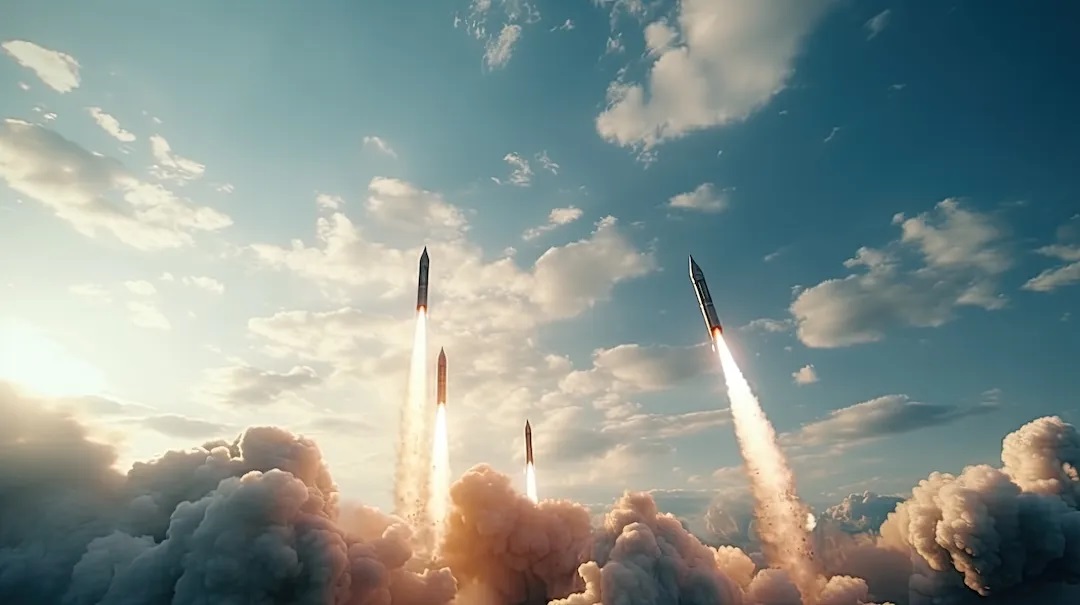
Scholz stands firm on long-range weapons for Kiev
https://www.rt.com/news/604037-scholz-long-range-weapons-kiev/ 16 Sept 24
Berlin will not lift restrictions on its more advanced weaponry, even if Ukraine’s other allies do, German chancellor has said.
Germany will not allow its long-range weapons to be used for Ukrainian strikes deep into Russia, even if other states choose to do so, Chancellor Olaf Scholz has said.
Washington and London have suggested that they could allow Kiev to use missiles such as the American-made ATACMS and the British-made Storm Shadow to hit such targets.
Berlin retains its policy of not permitting Ukraine to use German-provided long-range weapons for such attacks, Scholz said on Saturday at a Q&A session in Prenzlau, Brandenburg.
I’m sticking to my stance, even if other countries decide differently,” Scholz said. “I won’t do that because I think it’s a problem.”
Germany is Ukraine’s second-largest military donor after the US. Berlin has provided or pledged more than €28 billion ($31 billion) in lethal aid to Kiev since the start of the conflict with Russia, according to data from the Federal Government website.
However, Berlin has so far refused to follow the UK and France’s example in arming Ukraine with long-range missiles. In May, Scholz explained that supplying Ukraine with Taurus missiles with a range of 500 km (310 miles) would amount to Berlin’s direct participation in the conflict.
“It would only be tenable to deliver [these weapons] if we determine and define the targets ourselves, and that is again not possible if you don’t want to be part of this conflict,” he stressed.
On Thursday, Russian President Vladimir Putin warned Western powers against further escalating the hostilities. “We are not talking about allowing or prohibiting the Kiev regime from striking Russian territory,” Putin explained, noting that Ukraine was already doing this.
Western-supplied ATACMS and Storm Shadow missiles have been used by Ukraine to strike targets in Crimea and Donbass – Russian territories that Kiev claims as its own – leading to multiple civilian casualties.
Kiev lacks the ability to independently use Western long-range systems, Putin explained.
Targeting for such strikes relies on intelligence from NATO satellites, while firing solutions can “only be entered by NATO military personnel.”
“This will mean that NATO countries, the US, European countries are fighting against Russia,” Putin stressed. Such direct participation will change “the very essence, the very nature of the conflict”, meaning Russia will have to “make the appropriate decisions on the threats,” the Russian leader warned.
In June, Putin pledged that Moscow would shoot down any missiles used in long-range strikes, and retaliate against those responsible. One possible response would be to send similar high-tech weaponry to forces that are in conflict with the West.
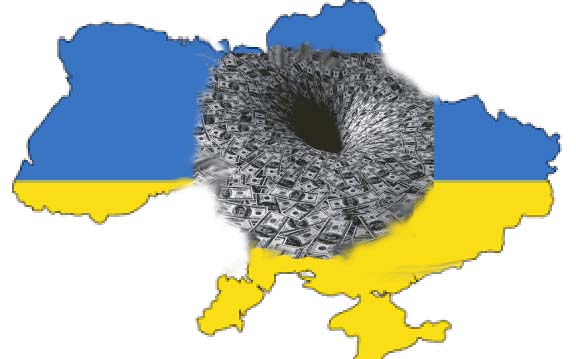
German ministers told there’s no more money for Ukraine – media
https://www.rt.com/news/602719-germany-no-money-ukraine-aid/ 17 Aug 24
Berlin could halve its military assistance to Kiev in 2025, the newspaper claims
German Finance Minister Christian Lindner has issued a request to the country’s defense ministry calling for a limit to military assistance to Ukraine, Frankfurter Allgemeine Zeitung (FAZ) reported on Saturday. According to Lindner, the country’s current budget plan is not capable of allocating funds to Kiev.
The request was made in a letter addressed to German Defense Minister Boris Pistorius and Foreign Minister Annalena Baerbock, and specified that only military aid that has already been approved can be delivered to Kiev. Additional applications from the defense ministry will no longer be accepted, even if issued at the behest of Chancellor Olaf Scholz.
FAZ noted that the block on newly approvals is already in effect and that Berlin would halve its military aid to Ukraine next year. In 2027, the assistance is expected to decline to less than one tenth of its current volume.
Up to €8 billion in aid to Ukraine has been scheduled for 2024, and the planned maximum of €4 billion for 2025 already exceeds available funds, the media outlet noted, adding that only €3 billion is planned for 2026, and €500 million each for 2027 and 2028.
“End of the event. The pot is empty,” an unnamed source in the federal government told FAZ, stressing that Berlin has “reached a point where Germany can no longer make any promises to Ukraine.”
The newspaper noted that the urge comes amid Lindner’s push for harsh austerity measures; these have already been imposed on all German ministries except defense. The finance minister has been resisting intense pressure from Scholz and Economy Minister Robert Habeck to suspend the country’s constitutional limit on debt to allow for the cost of providing military aid to Kiev amid the Ukrainian conflict.
Germany is the second biggest backer of Ukraine after the US. Berlin has provided and committed military aid of at least €28 billion ($30.3 billion) to Kiev in current and future pledges. This includes advanced military equipment such as Leopard 2 tanks, Marder infantry fighting vehicles, and US-made Patriot air-defense systems.
Lindner reportedly doesn’t expect the country’s assistance to Ukraine to drop, as the minister hopes to cover the expenses not with federal budget funds, but through the use of Russian central bank assets that were frozen by Kiev’s Western allies shortly after the conflict escalated.
Nearly $300 billion belonging to Russia’s central bank has been immobilized by the EU and G7 nations as part of Ukraine-related sanctions. In May, Brussels approved a plan to use the interest earned on the frozen assets to support Ukraine’s recovery and defense. Under the agreement, 90% of the proceeds are expected to go into an EU-run fund for Ukrainian military aid, with the other 10% allocated to supporting Kiev in other ways.
Long-run exposure to low-dose radiation reduces cognitive performance

Science Direct, Journal of Environmental Economics and Management, Benjamin Elsner , Florian Wozny Volume 118, March 2023, 102785
Abstract
This paper examines the effect of long-run exposure to low-dose radiation on cognitive performance. We focus on the fallout from the Chernobyl accident, which increased the level of ground radiation in large parts of Europe. To identify a causal effect, we exploit unexpected rainfall patterns in a critical time window after the disaster as well as the trajectory of the radioactive plume, which determine local fallout but have no plausible direct effect on test scores. Based on geo-coded survey data from Germany, we show that people exposed to higher radiation perform significantly worse in standardized cognitive tests 25 years later. An increase in initial exposure by one standard deviation reduces cognitive test scores by around 5% of a standard deviation.
1. Introduction
The last 40 years have seen a drastic increase in radiation exposure. Today, the average person in Europe and America receives about twice the annual dose of radiation compared with in 1980 (NCRP, 2009). This increase is almost entirely due to man-made sources of radiation, such as medical procedures, nuclear power and nuclear weapons. Procedures such as CT scans, X-rays, mammograms or radiotherapy expose patients to low doses of radiation, and their use has been steadily increasing over the past decades. Moreover, the fallout from nuclear disasters such as Chernobyl and Fukushima or a nuclear bomb can expose people thousands of miles from the epicenter.
Medical research shows that subclinical radiation can damage human cells, which has potential knock-on effects on health and cognition and that these effects may occur at all ages. The existing literature has mostly focused on the effect of in-utero exposure, documenting significant adverse effects of radiation exposure during pregnancy on education and labor market outcomes many years later (Almond et al., 2009, Heiervang et al., 2010, Black et al., 2019). However, there is little evidence on the long-term effects of exposure to low-dose radiation after birth. Documenting such effects is important, not least because of the number of potentially affected people: the number of people alive at any one point is substantially greater than the number of fetuses in the womb.
In this paper, we exploit plausibly exogenous variation of the Chernobyl fallout to study the impact of exposure to low-dose radiation on cognitive test scores 25 years after the disaster. We focus on Germany, which received a significant amount of fallout due to weather conditions in the aftermath of the disaster in 1986. Because of the long half-life of the radioactive matter, people who continuously lived in areas with higher initial fallout have been exposed to higher radiation levels for over 30 years. For people exposed after birth, there are two plausible biological channels through which radiation can affect cognitive test scores: a direct effect on the brain because radiation can damage brain cells, and an indirect effect through general health, which may lead to fatigue, thus reducing test performance.
Our dataset – the National Educational Panel Study (NEPS), a representative geo-coded survey – allows us to link fine-grained data on fallout levels in a person’s municipality of residence since 1986 to a battery of standardized cognitive tests done 25 years after the disaster. At the time of the disaster, over half of our sample were adolescents or adults, allowing us to estimate the long-run effect of exposure at these ages.
The central identification challenge is a potential correlation between the local amount of radiation and residential sorting. The local amount of radiation is driven by a combination of several factors, for example wind speed, rainfall, altitude or soil composition. Some of these factors may have also influenced residential sorting prior to 1986, thus potentially leading to omitted variable bias. ………………………………………………………………………
Our central finding is that people exposed to higher levels of radiation from 1986 onward performed significantly worse in cognitive tests 25 years later. A one-standard-deviation higher initial exposure in 1986 reduces test scores by around 5% of standard deviation. Over the course of 25 years, the additional radiation dose of a one-standard-deviation higher initial exposure is roughly equivalent to the dose from 6 chest X-rays or 1.65 mammograms, which indicates that the long-term effects of low-dose radiation can be non-trivial. An additional analysis shows that these effects are not driven by selective migration after the Chernobyl disaster.
This result feeds into two domains of the public debate on radiation. One is about the costs and benefits of nuclear power in many countries. While nuclear power offers the advantage of supplying vast amounts of energy at zero carbon emissions, it comes with the cost of potential disasters. In the last 35 years we have seen two major disasters. Given the proliferation of nuclear power along with the emergence of conflicts like the current war in Ukraine, it is possible that more nuclear disasters may follow. Our results, along with those in other studies, point to significant external costs of nuclear power generation and document an important effect of nuclear disasters on the population. Another public debate, more broadly, deals with exposure to man-made radiation. For example, today the average American receives twice the annual radiation dose compared to in 1980, which is mainly due to medical procedures such as X-rays, mammograms or CT scans (NCRP, 2009). Our results can inform the debate about the long-term consequences of this increase in radiation exposure. The radiation dose from medical procedures is similar to the additional radiation dose Germans in highly affected areas received after Chernobyl. And although these procedures offer high benefits for patients, our findings suggest that they come with a health cost due to a higher radiation exposure.
With this paper, we contribute to three strands of literature. First, our findings contribute to the literature on the effect of pollution on human capital. This literature has produced compelling results for two types of effects. One strand focuses on exposure during pregnancy or early childhood and documents adverse long-term effects of pollution. Another strand focuses on adults and estimates the short-run effect of fluctuations in pollution on outcomes such as productivity, test scores and well-being.1 Our study, in contrast, examines the long-run effects among people exposed after early childhood. These effects are important, not least because of the number of people affected. The cohorts in our sample represent around 24 million people, compared to 200,000 children who were in the womb at the time of Chernobyl. Even if the individual effect is smaller for people exposed after early childhood, our study shows that the environment can have adverse consequences for large parts of the population and, therefore, exposure after early childhood deserves more attention in the literature.
Second, this paper adds new evidence to the emerging literature on pollution and cognitive functioning……………………………………………………….
……………………., this paper contributes to the broader literature on the effects of low-dose radiation. Two recent reviews of the epidemiological literature by Pasqual et al. (2020) and Collett et al. (2020) conclude that there is significant evidence that exposure to low-dose radiation early in life has negative effects on health and cognitive performance.
……………………………….. our results point to even wider-reaching adverse effects of nuclear disasters. Germany is over 1200 km from Chernobyl, and our study shows that large parts of the population have been adversely affected.
2. Historical background and review of the medical literature
2.1. The Chernobyl disaster and its impact in Germany
2.1. The Chernobyl disaster and its impact in Germany
The Chernobyl nuclear disaster in 1986 is one of the two largest nuclear accidents in history. It occurred after a failed simulation of a power cut at a nuclear power plant in Chernobyl/Ukraine on April 26, 1986, which triggered an uncontrolled chain reaction and led to the explosion of the reactor. In the two weeks following the accident, several trillion Becquerel of radioactive matter were emitted from the reactor, stirred up into the atmosphere, and – through strong east winds – carried all over Europe.2 The most affected countries were Belarus, Ukraine as well as the European part of Russia, although other regions, such as Scandinavia, the Balkans, Austria and Germany also received considerable amounts of fallout. The only other accident with comparable levels of fallout was the Fukushima disaster in Japan in 2011 (Yasunari et al., 2011).
Post-Chernobyl radiation in Germany.
………………………………….From 1986 to 1989, the governments of West and East Germany rolled out a comprehensive program to measure radiation across the country. At over 3,000 temporary measuring points, gamma spectrometers measured the radiation of Cs137. Based on the decay of the isotopes, all measurements were backdated to May 1986.
………………………………………….Radiation exposure of the German population.
Humans can be exposed to radiation in three ways, namely through inhaling radioactive particles, ingesting contaminated foods, as well as external exposure, whereby radiation affects the body if a person is present in a place with a given level of radioactivity in the environment. Exposure to radiation through air and ground can be directly assigned to – and therefore be strongly correlated with – a person’s place of residence ……………………………………………………………………………………………………………………………..
Information about the nuclear disaster and reactions of the German public
……………………………………………………………………………………. 2.2. Effects of radiation on the human body
The effect of radiation on the human body is by no means limited to high-dose radiation, such as the one experienced by survivors of nuclear bombs or clean-up workers at the site of the Chernobyl reactor. The medical literature has shown that exposure to subclinical radiation – at doses most people are exposed to, for example due to background radiation, medical procedures, or the fallout from Chernobyl in large parts of Europe – can negatively affect cognition, physical health and well-being. Moreover, while the effects of subclinical radiation may be strongest during pregnancy and early childhood, radiation exposure can have adverse effects throughout a person’s life.
Plausible channels.
Radiation exposure can affect cognitive test scores through four types of channels:
- 1.A direct effect on cognition, as radiation can impair the functioning of brain cells.
- 2.An indirect effect through physical health; radiation can impair the functioning of organs and lead to greater fatigue, which in turn may negatively affect test scores.
- 3.An indirect effect through mental health; a review by Bromet et al. (2011) suggests that people’s worry about the long-term consequences of radiation for physical health may lower their well-being and lead to poor mental health.
- 4.Indirect effects through behavioral responses, such as internal migration or changes in life style. To the extent that these effects reflect avoidance behavior, they will dampen the negative biological effects.5
In the following, we summarize the evidence from two types of study: one based on observational studies with humans, the other based on experimental studies with mice and rats. While both arguably have their weaknesses – one is non-experimental, the other has limited external validity – together they show that an effect of radiation on cognitive test scores is biologically plausible.
Observational studies.
The effect of radiation on cognitive performance is an active field of research in radiobiology and medicine. Radiation affects the human body through ionization, a process that damages the DNA and can lead to the dysfunction or death of cells (Brenner et al., 2003). Until the 1970s the human brain was considered radio-resistant, that is, brain cells were assumed to be unaffected by radiation. This view changed when lasting cognitive impairments were found in cancer patients who underwent radiotherapy. Studies find cognitive impairments among 50%–90% of adult brain cancer patients who survive more than six months after radiotherapy. The cognitive impairment can manifest itself in decreased verbal and spatial memory, lower problem-solving ability and decreased attention, and is often accompanied by fatigue and changes in mood ……………………………………………….
Laboratory evidence on rats and mice.
The experimental evidence with rodents confirms the evidence found among human cancer patients. Rats who were treated with brain irradiation experience a reduction in cognitive ability, although the biological processes differ between young and old rats………………………………………
While these studies confirm that radiation can plausibly affect cognitive functioning across the life cycle, they are mostly based on once-off radiation treatments. In contrast, after Chernobyl, the German population was constantly exposed to higher ground radiation for many years. A recent experiment on mice by Kempf et al. (2016) is informative about the effect of regular exposure to low-dose radiation. Among mice who were exposed for 300 days, the researchers detected a decrease in cognitive functioning and a higher incidence of Alzheimer’s disease.
Impact on overall health……………………………………….
3. Data and descriptive statistics…………………………………………………..
3.1. The NEPS data
Our main data source is the NEPS, a rich representative dataset on educational trajectories in Germany. ………………………………………………………………………………………………….
3.2. Estimation sample
Our sample includes all survey participants who were born before Chernobyl. We exclude participants born after Chernobyl because the survey only sampled birth cohorts up to December 1986, leaving us with few participants who were born after Chernobyl. Moreover, because we are interested in the effect of post-natal exposure, excluding them ensures that our estimates are not confounded by exposure in utero, which operates through a different biological channel. ……………………………………………………………………………………………………………………………………..
3.3. Cognitive tests………………………………………………………………………………………………………
3.4. Municipality- and County-level Data
Data on ground deposition……………………………………………………………………………………………
Linkage between individual and regional data.………………………………………………………………………..
Additional data.…………..
3.5. Descriptive statistics………………………………………………………………………………………………………………………………………..
4. Empirical strategy
4.1. Empirical model………………………………………………………………………………………
4.2. Identification challenge and balancing checks……………………………………………………………………………………
4.3. Instrumental variable strategy……………………………
IV component I: local rainfall during a critical time window.………………………………………………………………………………….
IV component II: available radioactive matter in the plume……………………………………………………………
First stage and instrument relevance………………………………………………………………………………..
Instrument validity………………………………………………………………………………………………………………
5. Radiation and cognitive skills: Results
5.1. The effect of initial exposure on cognitive performance………………………………………………………………….
5.2. The effect of average exposure,1986–2010…………………………………………………
5.3. Internal migration as a potential channel………………………………………………………………
5.4. Effect magnitude and discussion…………………………………………………………………
5.5. Robustness checks………………………………………………………………………..
6. Conclusion
In this paper, we have shown that radiation – even at subclinical doses – has negative long-term effects on cognitive performance………………………………………………………………………………………..
Declaration of Competing Interest
The authors declare that they have no known competing financial interests or personal relationships that could have appeared to influence the work reported in this paper.
Appendix A. Supplementary data………………………………….. more https://www.sciencedirect.com/science/article/pii/S0095069623000037
Germany may take another 50 years to find final repository for waste from shuttered nuclear power

Sören Amelang, Aug 9, 2024, https://reneweconomy.com.au/germany-may-take-another-50-years-to-find-final-repository-for-waste-from-shuttered-nuclear-power/
Germany’s ongoing hunt for a final repository for highly radioactive nuclear waste could last until the 2070s, a report has warned.
The report by the Institute for Applied Ecology (Öko-Institut), which was commissioned by the country’s Federal Office for the Safety of Nuclear Waste Management (BASE), said a decision on a location can be expected in 2074 at the earliest under ideal conditions, reports Zeit Online.
This would be more than 40 years later than the original 2031 target, which the government already gave up almost two years ago. The environment ministry said the report did not take into consideration significant progress in efforts to shorten the search, for example by saving time on long exploration periods.
The ministry declared in November 2022 that the search won’t be completed in 2031, following a paper by the Federal Company for Radioactive Waste Disposal (BGE) that estimated the search could take until 2046 or, in another scenario, until 2068.
The next step will be for the BGE to propose shortlisted siting regions at the end of 2027, the ministry said. “This is the right time to discuss and regulate further acceleration in a transparent manner. A great deal of time can be saved, particularly in the surface and underground exploration,” it added.
But Journalist Bernward Janzing wrote in a commentary it was questionable how much the “scientifically well designed” process can be accelerated without compromising high safety standards.
Germany completed its nuclear phase-out last year and will now have to store 1,900 large containers, or around 28,100 cubic metres (m3), of high-level radioactive waste by 2080, when all its nuclear power stations and many research facilities will have been finally decommissioned and the fuel elements treated at other facilities.
Highly radioactive, heat-generating waste accounts for only five percent of Germany’s radioactive refuse, but is responsible for 99 percent of the radiation. It is currently held at temporary storage facilities near decommissioned nuclear power stations and in central interim repositories.
Construction of a repository following a location decision is scheduled to take about 20 years, according to current plans. The process of transporting and storing thousands of casks in the final repository will then take decades more.
Experts from a parliamentary storage commission said that loading and sealing the repository could be expected to last “well into the next century”.
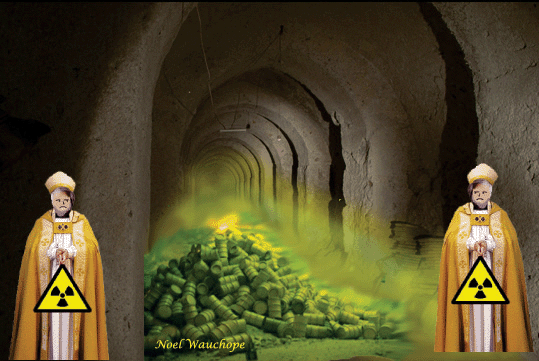
Search for nuclear waste storage facility could be delayed by decades
According to a report by the Freiburg-based Öko-Institut , the search for a final storage facility for
highly radioactive nuclear waste in Germany could take more than 40 years longer than expected. The responsible Ministry of the Environment does not believe this. The law currently stipulates that a site will be determined by 2031. However, it has long been clear that this timetable cannot be met. The study commissioned by the Federal Office for the Safety of Nuclear Waste Management (Base) confirms this and names 2074 as a possible date.
………………………..The search for a final storage facility is about finding a place deep underground for the permanent storage of 27,000 cubic meters of highly radioactive waste (1,750 so-called Castor containers) from more than 60 years of nuclear power in Germany. According to Base, this is five percent of the
radioactive waste in Germany , but it contains around 99 percent of the total radioactivity of all waste. The waste is currently stored in 16 above-ground interim storage facilities in various federal states, whose permits expire before 2050. https://www.zeit.de/wissen/umwelt/2024-08/atommuell-endlager-gutachten
Water leaks reported at Germany’s Asse II radwaste facility
Staff Writer May 28, 2024, https://www.neimagazine.com/news/decommissioning-waste-management/water-leaks-reported-at-germanys-asse-ii-radwaste-facility/?cf-view&cf-closed
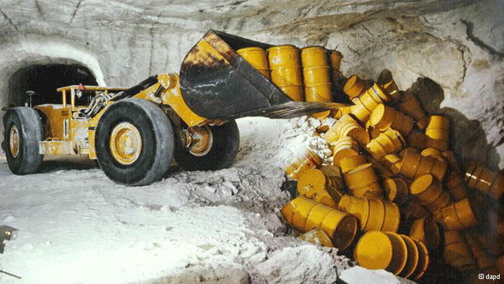
The ageing nuclear waste facility in the Asse II salt mine near Wolfenbüttel in Lower Saxony is facing a growing problem of water penetration. The mine, which holds some 126,000 barrels of low- and intermediate-level radioactive waste, is operated by Germany’s Federal Association for Final Storage (BGE – Bundesgesellschaft für Endlagerung), a federally owned company within the remit of the Federal Environment Ministry. In April 2017, BGE took over responsibility as operator of the Asse II mine and the Konrad and Morsleben repositories from the Federal Office for Radiation Protection. Salt water has been entering the facility for decades, increasing concern about the stability of the 13 chambers filled with waste.
From 1967 to 1978, around 47,000 cubic metres of low- and intermediate-level radioactive waste were emplaced in the mine according to information from former operator, the Association for Radiation Research (now known as Helmholtz Zentrum München, HMGU). Some 67% of the waste originated from NPPs. Typical waste included: filters, scrap metal, paper, laboratory waste, building rubble, wood, slurries and mixed waste. Other waste was delivered by research institutes, the nuclear industry and other waste producers such as the medical industry.
Records show how many drums are stored in the Asse mine, but there is some uncertainty as the radionuclide and substance inventory as the waste declaration at the time does not meet current standards. The radioactive waste was emplaced in 13 former mining chambers Two chambers are located in the central section and 10 in the southern flank of the mine at depths of 725 and 750 metres. A further chamber is located at the 511-metre level.
At the start of emplacement, the waste containers were stacked in an upright position. In order to make better use of the space, the former operator subsequently began stacking them on their sides. From 1971 onwards, the waste was primarily dumped using a wheel loader. The simultaneous handling of multiple drums led to lower costs and lower radiation exposure for staff. There were no plans for retrieval, and possible damage to the waste containers was disregarded. The surrounding rock salt was intended to provide long-term protection.
According to current laws and state of the art of science and technology, the final disposal of radioactive waste in the manner employed at the Asse II mine would not be eligible for a licence although no laws were broken based on the legislation in force at the time. If the waste were to remain in the mine, it would not be possible to demonstrate that the legal safety objectives would be met and the intention is for the waste to be retrieved. So far, none of the barrels have been removed and is not expected to start before 2033 as scientific methods to do it safely are still being investigated. It’s estimated it will cost at least €4.7bn ($5.1bn).
So far, the water penetrating the salt dome from the outside – some 12 cubic metres a day – has been mostly absorbed and pumped to the surface. However, the infiltration patter has changed, BGE head Iris Graffunder recently told the environmental committee of the Bundestag. Graffunder earlier pointed out the deteriorating situation. “Due to this strong change in water access, we are alarmed” she tolkd Braunschweig newspaper. According to the BGE, the amount of water at the main collection point has been decreasing for several months. “This means that the water is collecting somewhere else. That worries us,” she said.
Experts warn that is the partly torn and rusted barrels mix with the water this could eventually contaminates groundwater. The inventory reportedly consists of 104 tonnes of uranium, 81 tonnes of thorium and 29 kilograms of plutonium. There are also toxins such as arsenic, mercury and banned pesticides, which were also disposed of in the mine.
The BGE has applied for the complete renovation of the main collection point, which is located at the 658-metre level in the mine. Experts are currently trying to find and repair possible damaged areas. According to the BGE, the water infiltration has increased from 0.8 to three cubic metres on the lower 725-metre level. At the even lower collection points directly in front of the nuclear waste chambers at the 750-metre level no increase in the salt water level has so far been observed.
Federal Environment Minister Steffi Lemke (Greens) has expressed concern about the situation “I take the situation in the Asse II nuclear waste warehouse in Lower Saxony very seriously,” she said. She added that, in her view, the recovery of the waste was the safest option and “should remain our top priority”.
A vigil behind bars: pair who protested US nuclear bombs in Germany serving time

The judges and prosecutors, as well as the guards in prison, treat us respectfully and politely while at the same time sticking to laws and rules that are unjust and cause suffering. The biggest crime in their eyes is to upset the “order”, even though the order is set up to be criminal.
By Susan Crane and Susan van der Hijden , 29 June 24 https://beyondnuclearinternational.org/2024/06/30/a-vigil-behind-bars/
Here in Rohrbach prison we are awakened by the sounds of doves and other birds, giving the illusion that all is well in the world, until other sounds, keys rattling, doors being shut, and guards doing the morning body check, bring us back to reality.
We are sitting in a prison cell, 123 km from Büchel Air Force Base, where more than 20 U.S. nuclear bombs are deployed.
At the moment, the runway at Büchel is being rebuilt to accommodate the new F-35 fighter jets that will carry the new B61-12 nuclear bombs that were designed and built in the U.S.
The planning, preparation, possession, deployment, threat or use of these B61-bombs is illegal and criminal. The U.S., Germany and NATO know that each B61 nuclear bomb would inflict unnecessary suffering and casualties on combatants and civilians and induce cancers, keloid growth and leukemia in large numbers, inflict congenital deformities in unborn children and poison food supplies.
“We have no right to obey,” says Hannah Arendt.
Although our actions might seem futile, we understand that it is our right, duty and responsibility to stand against the planning and preparation for the use of these weapons. They are illegal under the Non-Proliferation Treaty, which both Germany and the U.S. have signed and ratified, and under the the Hague Convention, the Geneva Convention and the Nuremberg Charter.
During the international peace camps in Büchel (organized by the G.A.A.A. which consists of, among others, IPPNW, ICAN and DFG-VK; the German War Resisters League), we, together with other war resisters, and with the help of many supporters, went onto Büchel Air Force Base to communicate with the military personnel about the illegality and immorality of the nuclear bombs. We also wanted to withdraw our consent and complicity to their use.
The judges who sentenced us for these actions made a decision to follow some laws and ignore others. It is common sense, and we all know, that even the law against trespass can be broken when life is endangered.
The judges and prosecutors, as well as the guards in prison, treat us respectfully and politely while at the same time sticking to laws and rules that are unjust and cause suffering. The biggest crime in their eyes is to upset the “order”, even though the order is set up to be criminal.
We wake up every day with determined joy to continue our “vigil behind bars”. A joy constrained by knowing that the other women here have pain, from being separated from their family and children or from constant physical or psychological difficulties or from being locked in a cell all day with nothing to do.
We are only able to “vigil behind bars” through the immense support of people making sure our Catholic Worker houses can continue, people sending us cards and stamps, organizing visits and money for phone calls, remembering us in their prayers, doing press work and those that continue fighting the death dealing war-makers in the world.
Susan Crane is serving a 229 day sentence, and Susan van der Hijden a 115 day sentence, for their nonviolent nuclear disarmament actions at Büchel air base. You can write cards and letters to them, individually addressed to each at JVA Rohrbach, Peter-Caesar-Allee 1, 55597 Wöllstein, Germany. Updates can be found here.
German MPs snub Zelensky
Sat, 15 Jun 2024 https://www.sott.net/article/492290-German-MPs-snub-Zelensky—
Lawmakers from two German opposition parties, the right-wing Alternative for Germany (AfD) and the new left-wing populist Sahra Wagenknecht Alliance (BSW), refused to attend a speech by Ukraine’s Vladimir Zelensky in the Bundestag on Tuesday. Both parties have expressed opposition to Kiev’s policies, warning they will only lead to further bloodshed.
Zelensky’s speech was the second he has delivered to the German parliament since the start of the conflict with Russia, although it was the first address he has made in person, rather than via video link. The Ukrainian leader thanked Berlin for its support and called on the country to ensure Russian President Vladimir Putin “loses this war.” The outcome of the conflict should leave no doubt about “who had won,” he insisted.
The event, however, was boycotted by all BSW MPs and most AfD lawmakers. Four members of the right-wing party, which placed second with 16% of the vote in last week’s EU parliamentary elections, did attend Zelensky’s speech, calling it “basic courtesy,” though party leaders sharply criticized the Ukrainian leader ahead of the session.
“We refuse to listen to a speaker in a camouflage suit,”Alice Weidel and Tino Chrupalla said, referring to Zelensky’s habit of wearing the military-style clothes. The two politicians also stated that his term has “expired” and that he now only remains “a president of war and beggary.” Ukraine was due to hold presidential elections in March, but Zelensky cancelled the vote, citing martial law. His term formally expired in May.
Ukraine doesn’t need a “president of war” but a “president of peace, [who] is ready to negotiate,” the AfD parliamentary leaders said. The BSW, a party formed by the German left-wing icon Sahra Wagenknecht, also issued a statement ahead of the event, in which it announced a boycott of the speech.
Zelensky is promoting “very dangerous” escalation, the document warned, arguing that the Ukrainian leader was ready to risk a nuclear conflict to achieve his goals. Such policies “should not be honored with a special event in the German Bundestag,” the statement said. The BSW maintained that it condemned Moscow’s military operation against Kiev but still pointed to Russia’s readiness for peace negotiations.
The parliamentary snub drew strong criticism from the German political establishment. Chancellor Olaf Scholz’s office condemned it as a “lack of respect,” adding that the Social Democrat was “very disturbed but not surprised” by the development.
A member of the parliament’s defense committee, Marie-Agnes Strack-Zimmermann, was quick to accuse both parties of doing Moscow’s bidding.
Russia has repeatedly stated that it is ready to engage in peace talks, as long as the situation on the ground is taken into account. In autumn 2022, four former Ukrainian regions joined Russia following a series of referendums. Kiev never recognized the vote, and continues to demand that Moscow withdraw its troops from all the territories Ukraine claims as its own, including Crimea, before any talks start.
Comment: The level of “disobedience” shown by most of the AfD and all of the BSW lawmakers is unthinkable in most other European parliaments who in few cases do not have even a single elected member that dare to deviate from the much touted support for the western war efforts in Ukraine. The two German parties gained 22.1 % (15.9 % and 6.2 % respectively) of the votes at the recent European elections and had their best results in area of the former East Germany. For Germany as a whole this leaves Zelensky with the backing of more than 75 %, so for now he has little to worry about when it comes to milking more aid money out of Germany.
Q&A – Germany’s nuclear exit: One year after

CLEAN ENERGY WIRE, FACTSHEET, 16 Apr 2024, Benjamin Wehrmann
Decades of debates came to an end in April 2023, when Germany finally shuttered its last nuclear power plants after the energy crisis. One year on, predictions of supply risks, price hikes and dirty coal replacing carbon-free nuclear power have not materialised.
Instead, Germany saw a record output of renewable power, the lowest use of coal in 60 years, falling energy prices across the board and a major drop in emissions. Industry representatives warn that an effect on power costs may still become visible once Germany’s economy moves out of recession.
At the same time, many countries plan to expand nuclear power, suggesting the country’s phase-out has not found many followers. Yet, global nuclear power market numbers indicate that a nuclear revival is not imminent either. [UPDATES Government advisor says power prices higher due to exit; majority in survey says nuclear exit was a mistake]
Content
- How has the phase-out been conducted?
- Was there any supply security risk in the aftermath?
- What was the gap left by nuclear power filled with?
- What changed in electricity imports and why?
- Did power prices go up due to the phase-out?
- What happens with the retired nuclear plants and waste materials?
- How did the national debate about nuclear power develop?
- How did the nuclear debate move on in the rest of the world?
………………………………………………………………………………………………………………..more https://www.cleanenergywire.org/factsheets/qa-germanys-nuclear-exit-one-year-after—
Germany records 50 hours of negative electricity prices for April, largely due to renewables.
Average retail prices fell to €6.24 ($6.70)/kWh on the German electricity spot
market in April, largely due to renewables covering about 70% of the
network load. These low price levels in the electricity market can be
attributed to the high shares of renewables in Germany. According to Rabot
Charge, renewable energy systems covered 70% of the network load in April.
PV Magazine 3rd May 2024
Banned By Germany
Apr 30, 2024 YANIS VAROUFAKIS
Germany recently prohibited a Palestinian Congress from taking place in Berlin, arrested its Jewish supporters, and barred one of its organizers, Greece’s former finance minister, from entering the country. But the turn to repression is powerful evidence that the country’s pro-Israel political consensus is breaking down.
ATHENS – Three weeks ago, I was banned from entering Germany. When I asked the German authorities who decided this, when, and under what rationale, I received a formal reply that, for reasons of national security, my questions would receive no formal reply. Suddenly, my mind raced back to another era when my ten-year-old self thought of Germany as a refuge from authoritarianism.
During Greece’s fascist dictatorship, listening to foreign radio broadcasts was banned. So, every evening, at around nine, my parents would huddle under a red blanket with a short-wave wireless, straining to hear Deutsche Welle’s dedicated Greek broadcast. My boyish imagination was propelled to a mythical place called Germany – a place, my parents told me, that was “the democrats’ friend.”
Years later, in 2015, the German media presented me as Germany’s foe. I was aghast; nothing could be further from the truth. As Greece’s finance minister, I opposed the German government’s monomaniacal insistence on harsh universal austerity, not merely because I thought it would be catastrophic for most Greeks, but also because I thought it would be detrimental to most Germans’ long-term interests.
The specter of deindustrialization that today casts a depressing shadow across Germany is consistent with my prognosis.
In 2016, when choosing a European capital to launch DiEM25, the pan-European political movement that I helped to found, I chose Berlin. At Berlin’s Volksbühne Theatre, I explained the reason: “Nothing good can happen in Europe if it does not begin in Berlin.” To reinforce the point, in the 2019 European Parliament elections I chose symbolically to be DiEM25’s candidate not in Greece (where I could win easily) but in Germany.
Given my lengthy relationship with the land of Goethe, Hegel, and Brecht, the German center-left government’s decision to ban me is more bewildering than even my nearest and dearest can imagine. I shall leave to my lawyers the legality of being denied the right to know the rationale behind the ban, and I will set aside the threat to my safety from the reckless insinuation that I am, somehow, a threat to Germany’s national security. Nor will I delve into what my ban means for a European Union where free movement and association are singular virtues. Instead, I want to focus on the ban’s deeper significance.
The trigger for banning me was a Palestinian Congress co-organized by DiEM25’s German party (MERA25), various Palestinian support groups and, crucially, the German organization Jewish Voice for a Just Peace. But the writing had been on the wall well before that.
Last November, Iris Hefets, a friend and member of the aforementioned Jewish organization, staged a one-woman protest in Berlin. Walking alone, in silence, she held a placard on which she had written: “As an Israeli and as a Jew, stop the genocide in Gaza.” Astonishingly, she was arrested for anti-Semitism. Soon after, the bank account of her organization was frozen – by officials unable to grasp the irony, indeed the horror, of the German state seizing Jewish assets and arresting peaceful Jews in Berlin.
In the run-up to our Palestinian Congress, a coalition of political parties representing almost the entire German political spectrum (including two leaders of my former comrades in the Left party) took the extraordinary step of creating a dedicated website for denouncing us. Their charges?
First, they branded us as “terrorism trivializers” vis-à-vis Hamas’s October 7 attacks in Israel. It was not enough for them that we had condemned as war crimes all acts of violence against civilians (regardless of the identity of perpetrator or victim). They wanted us to condemn resistance to what even Tamir Pardo, the former Mossad director, described as an apartheid system designed to push Palestinians either into exile or into permanent servitude.
Second, they claimed that we were “not interested in talking about possibilities for peaceful coexistence in the Middle East against the background of the war in Gaza.” Seriously? All participants in our Congress are committed to equal political rights for Jews and Palestinians – and many of us, taking our cue from the late Edward Said, support a single federal state as the solution to the conflict.
Dismissing their groundless accusations, let me home in on the central question: How could almost the entire German political class embrace this denunciation, which prepared the ground for the subsequent police action? How could they remain silent as the police arrested Udi Raz (another Jewish comrade), prohibited our conference and, yes, banned me from entering Germany – even from connecting via video link to any event in the country?
Their most likely answer is the German state’s official semi-rationale, or Staatsräson: the protection of Jewish lives and Israel’s security. But the German state’s recent behavior is not at all about protecting Jews (especially my friends Iris and Udi) or Israel. The purpose is to defend Israel’s right to commit any war crime its leaders choose in the process of enforcing an agenda whose goal is to render impossible the two-state solution that the German government claims to favor.
If I am right, something else is behind the current political consensus in Germany. My hypothesis is that Germany’s political class has a penchant for national catechisms that unite its members behind a common will: net exports as Germany’s strength; China as German industry’s playground; Russia as its source of cheap energy; and Zionism as proof that it has turned a page, morally.
Once such a catechism is established, debating it rationally becomes next to impossible. Moreover, the fear of being denounced for abandoning it motivates the concerted denunciation of any apostate who questions it.
A silver lining here is that young Germans, seeing the bodies piling up in Gaza, are not afraid that they will be denounced if they challenge a catechism that has jeopardized German democracy, the rule of law, and basic common sense. This is why, despite the ban, I am not giving up on Germany.
Meet Centuria, Ukraine’s Western-trained neo-Nazi army
The Grayzone, KIT KLARENBERG·APRIL 7, 2024
A uniquely Ukrainian strain of Neo-Nazism is spreading throughout Europe, which openly advocates violence against minorities while seeking new recruits. With Kiev’s army collapsing and a narrative of Western betrayal gaining currency, the horror inflicted on residents of Donbas for a decade could very soon be coming to a city near you.
Centuria, an ultra-violent Ukrainian Neo-Nazi faction, has cemented itself in six cities across Germany, and is seeking to expand its local presence. According to Junge Welt, a Berlin-based Marxist daily, the Nazi organization’s growth has been “unhindered by local security services.”
Junge Welt traces Centuria’s origins to an August 2020 Neo-Nazi summit “at the edge of a forest near Kiev.” There, an ultranationalist named Igor “Tcherkas” Mikhailenko demanded the “hundreds of mostly masked vigilante fighters present,” who were members Kiev’s fascistic National Militia, “make sacrifices for the idea of ‘Greater Ukraine.’” As the former head of the Neo-Nazi Patriot of Ukraine’s Kharkiv division, and commander of the state sponsored Azov Battalion from 2014 to 2015, Mikhailenko has professed a desire to “destroy everything anti-Ukrainian.”
Junge Welt reports that since 2017, the National Militia “had been practicing brutal vigilante justice” throughout Ukraine, including “tyrannizing the LGBTQ scene.” Centuria was subsequently blamed for a terrifying November 2021 attack on a gay nightclub in Kiev, in which its operatives assaulted revelers with truncheons and pepper spray.
Now the same Neo-Nazi sect “has an offshoot in Germany,” Junge Welt revealed. On August 24 2023, the 32nd anniversary of Ukraine’s independence, Centuria convened a “nationalist rally” in the central city of Magdeburg, “unmolested by Antifa and critical media reporting.”
Participants proudly posed with the flag of the Organization of Ukrainian Nationalists (OUN) founded by World War II-era Nazi collaborator Stepan Bandera. Centuria boasted at the time on Telegram, “although Ukrainian youth are not in their homeland, they are starting to unite.” Meanwhile, they threatened the “enemies” of their country with “hellish storm,” pledging that “Ukrainian emigrants” would not “forget their national identity for a few hundred euros.”
Junge Welt reports that Centuria “is currently raising funds for its parent organization’s combat unit,” which is commanded by Andriy Biletsky – the Azov Battalion founder who infamously stated in 2014 that the Ukrainian nation’s mission was to “lead the white races of the world in a final crusade… against Semite-led Untermenschen.” At home, Centuria’s members express similar attitudes towards Muslims, Africans, and gays, whom they refer to, respectively, as the “German Caliphate,” “black rapists,” and “pedophiles.”
Now, the group’s members are working hard to pass their ideological vision down to future racists across the continent. “We are creating a new generation of heroes!” Centuria’s Telegram channel boasts. Accordingly, the neo-Nazi group has been arranging hiking trips to Germany’s Harz mountains with a Ukrainian nationalist scout association called Plast. This outfit opened chapters across the Western world beginning in the 1950s, in response to the Soviet Union’s hounding of fascists and nationalists. Besides receiving ideological indoctrination, Plast’s youthful members may have the opportunity to improve their physical fitness and receive military training. As Centuria ominously declares on Telegram, “free people have weapons.”
As Washington gradually backs away from its sponsorship of Ukraine’s war with Russia, it has begun ceding responsibility for the military campaign’s management – and likely failure – to Berlin. If US arms shipments continue to dwindle, Germany will become Kiev’s chief supplier of weapons. And the Germans may find that saying “no” to Ukraine could result in some nasty surprises………………………………………………………………………………………………. https://thegrayzone.com/2024/04/07/centuria-ukraines-western-neo-nazi-army/
US, Germany Supplied 99% of Israel Weapons Import Despite Pressure: Data

JOE SABALLA, MARCH 26, 2024, https://www.thedefensepost.com/2024/03/26/us-germany-israel-weapons/
“At the end of 2023, the US rapidly delivered thousands of guided bombs and missiles to Israel,” the SIPRI report noted, adding that 61 combat aircraft from the US and four submarines from Germany are pending delivery.
SIPRI claimed that the weapons Israel imported from its allies have played a major role in its military actions against Hamas and Hezbollah.
Global Pressure
The data was released amid international calls to stop arming Israel, which has been carrying out relentless ground and aerial attacks on Gaza.
Since the war broke out between Hamas militants and the Israel Defense Forces (IDF) in October last year, more than 32,000 Palestinians, mostly women and children, have been killed.
Canada recently ordered a halt in arms exports to Jerusalem as Canadian Prime Minister Justin Trudeau weighed in on Israel’s right to defend itself and the alleged lack of action to protect civilian lives.
Eight American senators have also sent a letter to President Joe Biden urging him to stop supplying weapons to the country’s Middle Eastern ally.
They said Israeli Prime Minister Benjamin Netanyahu’s actions against humanitarian operations have prevented Washington from safely and easily delivering aid to Gaza.
Media reports have claimed that the relationship between the two leaders has been strained following Biden’s call to scale down the Israeli offensive in the Palestinian territory.
Full Transcript of German Top Military Officials’ Leaked Plot to Attack Crimean Bridge
On February 19, 2024, a conversation took place among Grafe (department head for operations and exercises at the Air Force Forces Command of the Bundeswehr), Gerhartz (Bundeswehr Air Force Inspector), Fenske and Frohstedte (employees of the Air Operations Command within the Space Operations Center of the Bundeswehr).
Earlier in the day, Margarita Simonyan, editor-in-chief of RT and Rossiya Segodnya, Sputnik’s parent media group, published the text of a conversation among high-ranking Bundeswehr representatives discussing the attack on the Crimean Bridge with Taurus missiles and other issues. Full audio is here and full transcript is below.
Gerhartz: Greetings, everyone! Grafe, are you currently in Singapore?
Grafe: Yes.
Gerhartz: Good. We need to verify the information. As you’ve probably heard, Defense Minister Pistorius intends to carefully consider the issue of supplying Taurus missiles to Ukraine. We have a meeting scheduled with him. We need to discuss everything so that we can start working on it. So far, I don’t see any indication of when these deliveries will start. The Chancellor never told him, “I want the information now, and tomorrow morning we’ll make the decision.” I haven’t heard anything like that. On the contrary, Pistorius is evaluating all this ongoing discussion. Nobody knows why the Federal Chancellor is blocking these deliveries. Of course, the most incredible rumors are going around. For example, yesterday a journalist, who is very close to the Chancellor, called me. She heard somewhere in Munich that the Taurus missiles would not work. I asked her who told her that. She replied that someone in a military uniform did. Of course, this is a low-level source of information, but the journalist clung to these words and now wants to make it into a piece of news with a headline like: “Now we know why the Chancellor refuses to send Taurus missiles – they won’t work.” All this is nonsense. Such topics are only available to a limited circle of people. However, we see what kind of garbage is spreading in the meantime. I want to coordinate this issue with you so that we don’t move in the wrong direction. Firstly, I have some questions for Frohstedte and Fenske. Has anyone spoken to you about this? Did Freyding approach you?
Frohstedte: No. I only spoke to Grafe.
Fenske: Same here, I only spoke to Grafe.
Gerhartz: He might reach out to you later. I might have to participate in budget committee hearings because there are issues related to the escalating costs of upgrading the F-35 in Büchel. I have already passed my recommendations through Frank that we have slides to visualize the material. We showed him a draft presentation where Taurus missiles were mounted on a Tornado carrier or other carrier required by the mission. However, I can hardly imagine that. Remember, it’s a half-hour meeting, so don’t prepare a 30-slide presentation. The report should be brief. We need to show what the missile can do and how it can be used. We need to consider the consequences if we make a political decision to transfer missiles as aid to Ukraine. I would appreciate it if you could inform me not only about the problems we have, but also on how we can solve them. For example, if we’re talking about delivery methods… I know how the English do it. They always transport them on Ridgback armored vehicles. They have several people on-site. The French don’t do it that way. They deliver Q7s to Ukraine with Scalp missiles. Storm Shadows and Scalps have similar technical specifications for their installation. How are we going to solve this problem? Are we going to transfer MBDA missiles to them using Ridgbacks? Will one of our people be posted to MBDA? Grafe, report to us on our position on this issue. Fenske and Frohstedte, Gentlemen, report on how you see the situation.
Grafe: I’ll start with the most sensitive issues, with the existing criticism regarding the deliveries. Discussions are taking place almost everywhere. There are several key aspects here. Firstly, it’s about the delivery timelines. If the Chancellor decides now that we should deliver missiles, they will be transferred from the Bundeswehr. Fine, but they will only be ready for use in eight months. Secondly, we cannot shorten the time. Because if we do, there might be an error in its use, the missile might hit a kindergarten, and there will be civilian casualties again. These aspects need to be considered. It must be noted in the negotiations that without the manufacturer, we cannot do anything. They can equip, rearm, and deliver the initial missiles. We can speed up production a bit, but we shouldn’t wait until 20 units have accumulated. We can deliver them in batches of five. The delivery time of these missiles directly depends on the industry. Who will pay for this? Another question to consider is which weapon systems will these missiles be mounted on? And, how should the interaction between the company and Ukraine be maintained? Is there already some form of integration established?
Gerhartz: I don’t think so. Because the manufacturer, TSG, stated that, they can solve this problem within six months, whether it’s a Sukhoi aircraft or an F-16.
Grafe: If the Federal Chancellor decides to go for this, there must be an understanding that it will take six months just for the production of mounts. Thirdly, theoretically, the question of training may concern us. I’ve already mentioned that we cooperate with the missile manufacturer. They handle the maintenance training, and we handle the tactical application. This takes about three to four months. This part of the training can take place in Germany. When delivering the initial missiles, we need to make quick decisions regarding the mounts and training. We may have to turn to the British for these matters and use their know-how. We can provide them with databases, satellite images, and planning stations. Apart from the delivery of the missiles themselves, which we have, everything else can be provided by the industry or the IABG.
Gerhartz: We need to consider that they can use aircraft with mounts for both Taurus and Storm Shadow missiles. The British have been there and outfitted aircraft. There is not much difference between the systems, they can be used for Taurus as well. I can talk about the experience of using the Patriot system. Our experts initially also tallied up long timeframes, but they managed to do it within a few weeks. They managed to get everything up and running so quickly and in so much quantity that our staff said, “Wow. We didn’t expect that.” We are currently fighting a war that uses much more modern technology than our good old Luftwaffe. This all suggests that when we plan deadlines, we shouldn’t go overboard with them. And now, Fenske and Frohstedte, Gentlemen, I would like to hear your opinion on possible deliveries to Ukraine.
Fenske: I would like to focus on the question of training. We have already looked into this, and if we deal with personnel who already have relevant training and will undergo training concurrently, it would only take approximately three weeks for them to become familiar with the equipment and then proceed directly to Air Force training, which would last about four weeks. Thus, it is much less than 12 weeks. However, this is all under the assumption that the personnel meet the necessary qualifications, training can be conducted without the need for translators, and a few other conditions are met. We have already engaged in discussions with Mrs. Friedberger regarding this matter. If we are talking about combat deployment, then in that case, de facto, we will be advised to support at least the initial group. Planning for this undertaking has proven to be challenging; it took approximately a year to train our personnel initially, and we are now aiming to reduce this timeframe to just ten weeks. Moreover, there is the added concern of ensuring they are capable of handling off-road driving in an F1 car. One possible option is to provide scheduled technical support; theoretically, this can be done from Büchel provided secure communication with Ukraine is established. If this were available, then further planning could be carried out. This is the main scenario at least – to provide full manufacturer support, support through the user support service, which will solve software problems. Basically, it’s the same as we have in Germany.
Gerhartz: Hold on a moment. I understand what you’re saying. Politicians might be concerned about the direct closed connection between Büchel and Ukraine, which could imply direct involvement in the Ukrainian conflict. But in that case, we can say that information exchange is going to take place through MBDA, and we’ll send one or two of our specialists to Schröbenhausen. Of course, this is cunning, but from a political standpoint, it probably looks different. If the information exchange goes through the manufacturer, then it has nothing to do with us.
Fenske: The question will arise as to where the information goes. If we’re talking about information on target engagement, ideally including satellite images providing maximum accuracy of up to three meters, then we must first process them in Büchel. I think regardless of this, we can somehow organize an information exchange between Büchel and Schröbenhausen, or we can explore the possibility of transmitting information to Poland, doing it where it’s accessible by car. This matter needs to be examined more closely; options will surely emerge If we are supported, in the worst case scenario we can even travel by car, which will reduce the reaction time. Of course, we won’t be able to react within an hour because we’ll need to give our consent. In the very best case, only six hours after receiving the information will the planes be able to execute an order. For hitting specific targets, an accuracy of more than three meters is sufficient, but if target refinement is necessary, we’ll need to work with satellite images that allow for modeling. And then the reaction time can be up to 12 hours. It all depends on the target. I haven’t studied this issue in detail, but I believe such an option is possible. We just need to figure out how to organize information transmission.
Gerhartz: Do you think we can hope that Ukraine will be able to do everything on its own? After all, it’s known that there are numerous people there in civilian attire who speak with an American accent. So it’s quite possible that soon they’ll be able to use everything themselves, right? After all, they have all the satellite images.
Fenske: Yes, they get them from us. I would also like to touch on air defense issues briefly. We need to seriously consider having equipment in Kiev to receive information from IABG and NDK. We must ensure this is provided to them, which is why I have to fly there on February 21. It is crucial that we plan everything meticulously, unlike what happened with the Storm Shadows where we failed to plan out checkpoints properly. We need to think about how to fly around or fly below the radar coverage sector. If everything is prepared, the training will be more effective. And then we can revisit the question of the number of missiles. If we give them 50, they will be used up very quickly.
Gerhartz: Exactly, it won’t change the course of military actions. That’s why we don’t want to hand them all over. And not all at once. Perhaps 50 in the first batch, then maybe another batch of 50 missiles. It’s perfectly clear, but that’s all big politics. I suppose that’s what it’s really about. I’ve learned from my French and British colleagues that in reality, with these Storm Shadow and Scalp missiles, it’s the same as with the Winchester rifles—they might ask, “Why should we supply the next batch of missiles when we’ve already supplied them? Let Germany do it now.” Perhaps, Mr. Frohstedte wants to say something on this matter?
Frohstedte: Allow me to add a bit of pragmatism. I want to share my thoughts on the Storm Shadow’s characteristics. Regarding air defense, flight time, flight altitude, and so on, I’ve come to the conclusion that there are two interesting targets—the bridge to the east and the ammunition depots, which are higher up. The [Crimean] bridge to the east is difficult to reach, it’s a relatively small target, but the Taurus can do it, and it can also strike the ammunition depots. Considering all this and comparing it with how much the Storm Shadows and HIMARS have been used, I have a question: “Is our target the bridge or the military depots?” Is it achievable with the current shortcomings that the REDs and Patriots have? And I’ve come to the conclusion that the limiting factor is that they usually only have 24 shells…
Gerhartz: That’s clear.
Frohstedte: It makes sense to involve Ukraine in the process. It’ll take a week. I think it’s advisable to consider task planning and centralized planning. Task planning in our unit takes two weeks, but if there’s interest, it can be done faster. If we’re considering the bridge, then I believe Taurus is insufficient, and we need to have an understanding of how it can work, and for that, we need satellite data. I don’t know if we can prepare the Ukrainians for such a task in a short time, in a month, for instance. What would a Taurus attack on the bridge look like? From an operational perspective, I can’t assess how quickly the Ukrainians will learn to plan such actions and how quickly integration will occur. But since we’re talking about the bridge and military bases, I understand they want to seize them as soon as possible.
Fenske: I would like to add something regarding the destruction of the bridge. We’ve been intensely studying this issue, and unfortunately, we’ve come to the conclusion that due to its size, the bridge is akin to a runway. Therefore, it may require more than 10, or even 20 missiles.
Gerhartz: There’s an opinion that the Taurus can achieve this if the French Dassault Rafale fighter aircraft is used.
Fenske: They would only be able to create a hole and damage the bridge. And before making important statements, we ourselves…
Frohstedte: I’m not advocating for the idea of targeting the bridge; I pragmatically want to understand what they want. And what we need to teach them, so it turns out that when planning these operations, we will need to indicate the main points on the images. They will have targets, but it’s important to consider that when working on smaller targets, planning needs to be more meticulous, rather than just analyzing pictures on the computer. When targets are confirmed, it’s simpler, and less time will be spent on planning.
Gerhartz: We all know they want to destroy the bridge, which ultimately signifies how it’s guarded—not only because of its military-strategic importance but also its political significance. Even though they have a ground corridor now. There are certain concerns if we have direct communication with the Ukrainian armed forces. So the question arises: can we use such a ruse and assign our people to MBDA? Thus, direct communication with Ukraine will only be through MBDA, which is much better than if such communication exists with our Air Force.
Grefe: Gerhartz, it doesn’t matter. We have to make sure that from the very beginning there is no language that makes us a party to the conflict. I’m exaggerating a bit, of course, but if we tell the minister now that we are going to plan meetings and travel by car from Poland so that no one notices, that’s already participation, and we won’t do that. If we’re talking about the manufacturer, the first thing to ask is whether MBDA can do it. It doesn’t matter if our people will then deal with it in Büchel or in Schröbenhausen—it still means involvement. And I don’t think we should do that. From the very beginning, we defined this as a key element of the “red line,” so we’ll participate in the training. Let’s say we’ll prepare a “roadmap.” The training process needs to be divided into parts. The long track will take four months, where we’ll thoroughly train them, including practicing scenarios with the bridge. The short track will be two weeks so that they can use the missiles as soon as possible. If they are already trained, then we’ll ask the British if they are ready to take over at this stage. I believe these actions will be the right ones—just imagine if the press finds out that our people are in Schröbenhausen or that we’re driving somewhere in Poland! I find such an option to be unacceptable.
Gerhartz: If such a political decision is made, we must say that the Ukrainians should come to us. First and foremost, we need to know whether such a political decision constitutes direct involvement in task planning. In that case, the training will take a bit longer, and they will be able to tackle more complex tasks, possibly with some experience and high-tech equipment already in use. If there’s a possibility to avoid direct involvement, we can’t participate in task planning, do it in Büchel, and then forward it to them—that’s a “red line” for Germany. We can train them for two months; they won’t learn everything, but they’ll learn something. We just need to ensure they can process all the information and work with all the parameters.
Grefe: Zeppel said we can create both an extended and a brief “roadmap.” The goal is to get a quick result. And if the initial task is to hit ammunition depots rather than complex objects like bridges, then we can proceed with an abbreviated program and get results quickly. As for information from IABG, I don’t see this as a critical issue since they are not tied down to a specific location; they must conduct reconnaissance themselves. It’s clear that efficiency depends on this. This is what we discussed regarding missile delivery. It’s not decided yet, but that’s the plan for now.
Gerhartz: And this will be the main point. There are ammunition depots where short-term preparation won’t be possible due to very active air defense. We’ll need to seriously look into it. I believe that our people will find a solution. We just need to be allowed to try first so that we can provide better political advice. We need to prepare better so as not to fail because, for example, the KSA may not have an accurate idea of where the air defense systems actually are. The Ukrainians have this information, and we have data from the radars. But if we’re talking about precise planning, we need to know where the radars are installed and where the stationary installations are, and how to bypass them. This will allow us to develop a more accurate plan. We have a superb means, and if we have precise coordinates, we can apply it accurately. But there’s no basis to say we can’t do this. There’s a certain threshold where the “red line” politically passes, there’s a “long” and “short” path, and there are differences in terms of utilizing the full potential, which the Ukrainians will be able to utilize better over time as they practice and continually work on it. Personally, I don’t think I need to be present at the meeting. It’s important for us to give a clear-headed assessment and not add fuel to the fire like others do by supplying Storm Shadow and Scalp missiles.
Grefe: The longer they take to make a decision, the longer it will take us to implement it. We need to break everything down into stages. Start with the simple first, and then move on to the complex. Or we can ask the British if they can support us at the initial stage, and have them take on the planning issues? We should facilitate whatever falls within our area of responsibility. Developing mounts for missiles is not our task; Ukraine should resolve this with the manufacturers on their own.
Gerhartz: Right now, we wouldn’t want to encounter problems with the budget committee. It could make it impossible to start construction work at the airbase in Büchel in 2024. Right now, every day counts when it comes to the program.
1 This Month

of the week – Shut Down Drone Warfare!


Tell the Ukrainian Government to Drop Prosecution of Peace Activist Yurii Sheliazhenko

Petition to revoke the licensing of the Near Surface Nuclear Disposal Facility (NSDF) at Chalk River. https://www.ourcommons.ca/petitions/en/Petition/Details?Petition=e-7247
To see nuclear-related stories in greater depth and intensity – go to https://nuclearinformation.wordpress.com
-
Archives
- March 2026 (237)
- February 2026 (268)
- January 2026 (308)
- December 2025 (358)
- November 2025 (359)
- October 2025 (376)
- September 2025 (257)
- August 2025 (319)
- July 2025 (230)
- June 2025 (348)
- May 2025 (261)
- April 2025 (305)
-
Categories
- 1
- 1 NUCLEAR ISSUES
- business and costs
- climate change
- culture and arts
- ENERGY
- environment
- health
- history
- indigenous issues
- Legal
- marketing of nuclear
- media
- opposition to nuclear
- PERSONAL STORIES
- politics
- politics international
- Religion and ethics
- safety
- secrets,lies and civil liberties
- spinbuster
- technology
- Uranium
- wastes
- weapons and war
- Women
- 2 WORLD
- ACTION
- AFRICA
- Atrocities
- AUSTRALIA
- Christina's notes
- Christina's themes
- culture and arts
- Events
- Fuk 2022
- Fuk 2023
- Fukushima 2017
- Fukushima 2018
- fukushima 2019
- Fukushima 2020
- Fukushima 2021
- general
- global warming
- Humour (God we need it)
- Nuclear
- RARE EARTHS
- Reference
- resources – print
- Resources -audiovicual
- Weekly Newsletter
- World
- World Nuclear
- YouTube
-
RSS
Entries RSS
Comments RSS
 nuclear-news