Germany will pull the plug on 3 of its last 6 nuclear power stations
Germany will pull the plug on three of its last six nuclear power stations
on Friday, another step towards completing its withdrawal from nuclear
power as it turns its focus to renewables.
The government decided to speed
up its phasing out of nuclear power following Japan’s Fukushima reactor
meltdown in 2011 when an earthquake and tsunami destroyed the coastal plant
in the world’s worst nuclear disaster since Chernobyl 25 years earlier.
The reactors of Brokdorf, Grohnde and Gundremmingen C, run by utilities E.ON
(EONGn.DE) and RWE (RWEG.DE), will be shut down on Friday after three and
half decades in operation. The last three nuclear power plants – Isar 2,
Emsland and Neckarwestheim II – will be turned off by the end of 2022.
Reuters 30th Dec 2021
https://www.reuters.com/world/europe/germany-pull-plug-three-its-last-six-nuclear-plants-2021-12-30/
Nuclear power in the EU taxonomy and Germany’s position

Q&A: Why is Germany phasing-out nuclear power and why now? 28 Dec 2021, Kerstine Appunn ”……………………………..Nuclear power in the EU taxonomy and Germany’s position
Observers have called France’s push to include nuclear power projects in the EU taxonomy as a sustainable investment a “political nightmare” for Germany. Backed by a group of other European countries such as Bulgaria, Croatia, Czechia, Finland, Hungary, Poland and Romania, French President Emmanuel Macron tries to make nuclear power a pillar of the EU’s decarbonisation strategy, while Germany is betting heavily on wind and solar power. It is supported in its push for a nuclear-free taxonomy by Portugal, Austria, Luxembourg and Denmark. Germany’s new Chancellor Olaf Scholz, of the Social Democrats (SPD), has told Macron that he has always been opposed to nuclear power, much like his coalition partner, the Green Party.
If included in the taxonomy, nuclear power investments could be part of green funds, banks could declare loans to nuclear projects as sustainable investments – all in aid of getting more private investment to flow into climate friendly economic activities and businesses.
Agora Energiewende’s Müller says the German approach is still more future-proof. “The idea that nuclear power stations can be built at predictable costs and by a predictable schedule has not proven to be realistic. We also still have the unresolved problem of nuclear waste storage as well as the possibility of a major accident. Germany’s decision to focus on the expansion of renewables instead of nuclear is reflected also by the markets as renewables dominate electricity investments internationally.”
The European Commission is set to come out with a proposal for the taxonomy in January 2022, which EU member states will then decide on with a majority vote. Instead of an in-or-out decision on nuclear (and natural gas), the commission is likely to present a compromise that would classify nuclear as a temporary, transitional technology which has to be labelled and declared in funds so that consumers and investors have the choice between “entirely green” products, e.g. renewable energies, or second or third tier products that include nuclear or gas technology.
Whatever the decision, Müller says Germany and France should focus more on the common ground concerning the energy transition. “Recent French studies show – independently of the future of nuclear energy – that a massive expansion of renewables is needed to reach the climate targets. And there are also opportunities for cooperation between Germany and France on green hydrogen.”
Shouldn’t Germany – like other countries – embrace and support the use of new small modular reactors?
Using a large fleet of small modular reactors (SMR) to secure climate neutral electricity supply in the future – as proposed by billionaire and philanthropist Bill Gates – has been hailed as a climate change solution. In Belgium, which is set to shutter its two remaining nuclear power stations by 2025, the government agreed to invest 100 million euros in the research on SMR.
SMR proponents claim that, once produced in bulk, these small plants are cheaper and safer thanks to advanced reactor designs and can be operated with converted short-lived radioactive materials, solving the waste problem.

But two assessments commissioned by the Federal Office for the Safety of Nuclear Waste Management (BASE) have found that these tens of thousands of small reactors would carry enormous risks with regard to the proliferation of weapons-grade materials and will probably never be as cheap as their advocates say.
What is different in Germany compared to other countries in Europe which embrace nuclear as a CO2-free solution?
Germany not only has strong public support for, and a long history of, anti-nuclear sentiment, it also has only 11 percent of nuclear left in its power mix. Leaving it behind entirely is therefore a more obvious and easy decision than for other countries, such as France, where the share of nuclear power in domestic generation stands at 70.6 percent, but also in Bulgaria with 40.8 percent, in Sweden with 29.8 percent (in Spain: 22.2%, Russia at 20.%, United States at 19.7%, UK 16%, all in 2020).
Historians also explain the different attitude towards nuclear with the different reactions to the Chernobyl accident, which was felt much closer and more threatening to Germans compared to French or UK citizens. Another explanation for Germany’s sensitivity to nuclear power is that early on, the post-war critique of nuclear weapons was linked to the civilian use of nuclear fission. (A second wave of the German peace movement in the 1980s would also bolster a younger generation’s resistance to nuclear power.)
And even if there are people who make a case for nuclear for climate protection reasons, the exit has now proceeded too far to be reversed, and there is simply no influential political power that would consider re-opening the painful, decade-long debate on nuclear power that has finally been put to rest. https://www.cleanenergywire.org/news/qa-why-germany-phasing-out-nuclear-power-and-why-now
Q&A: Why is Germany phasing-out nuclear power and why now?

Q&A: Why is Germany phasing-out nuclear power and why now?
28 Dec 2021, 10:18 Kerstine Appunn
Content
Facts of the German nuclear phase-out.……………..
How did the nuclear phase-out come about in Germany?…………….
Why the nuclear phase-out was the enabler of the energy transition………………..
What do different stakeholders in Germany think about the nuclear exit?………………..
Is there still a debate to continue the use of nuclear power and could its proponents succeed?………….
Why isn’t Germany phasing out coal before nuclear?………….
Will Germany emit more CO2 because of the nuclear phase-out?……………
No nuclear, no coal: Will the lights stay on?……………..
How does Germany want to make net-zero happen without nuclear?………………..
Why doesn’t Germany get an energy system with both renewables AND nuclear?………….
Will Germany become dependent on (nuclear) power imports from abroad?…………..
What’s more expensive – renewables or nuclear?…………
Nuclear power in the EU taxonomy and Germany’s position………….
Shouldn’t Germany – like other countries – embrace and support the use of new small modular reactors? …………………
What is different in Germany compared to other countries in Europe which embrace nuclear as a CO2-free solution?………………
Facts of the German nuclear phase-out
The last nuclear power plant in Germany will cease operation in December 2022. This definitive end-date is part of the 2011 Nuclear Energy Act (Atomgesetz) which withdrew the authorisation to operate nuclear reactors for power generation according to a phase-out schedule. From having a share of 22.2 percent in total electricity generation in 2010, the contribution of nuclear decreased to 11 percent in 2020. At the same time, renewables such as wind, solar PV and biogas provided around 45 percent of power generation in 2020. After three out of six remaining reactors are shuttered in December 2021 (Grohnde, Gundremmingen C and Brokdorf), only three (with a combined capacity of 4 GW) will remain in service throughout 2022 (Isar 2, Emsland and Neckarwestheim 2).
………………………………….. What do different stakeholders in Germany think about the nuclear exit?
Ever since the latest nuclear phase-out was decided by a large majority in the federal parliament (Bundestag) in 2011, the public has remained supportive of exiting nuclear power for good.
The German government since 2011 has remained steadfast in its decision despite going through a difficult process of securing the money from reactor operators to ensure their safe deconstruction and storage of radioactive waste, initiating the search for a permanent waste storage facility, and weathering the legal proceedings following the not-quite constitutional compensation regulations in the nuclear exit law.. SPD environment minister Svenja Schulze said at the 2021 anniversary of the Fukushima accident that “nuclear power is neither safe nor clean” and could not be a part of a low-carbon power production. Angela Merkel reiterated in her last summer press conferences before the end of her chancellorship, that “the nuclear phase-out is the right thing to do for Germany”, adding that this could be seen differently by other countries and activists who push for climate neutrality. “I don’t think nuclear energy is a sustainable form of energy in the long term,” Merkel said.
The new German government of Social Democrats (SPD), Green Party and Free Democrats (FDP) which took office in December 2021 wrote in its coalition treaty “we stand by the nuclear phase-out”. The new (Green Party) environment minister Steffi Lemke said in December 2021: “Nuclear power would make our energy supply neither safer nor cheaper. A technology that has no solution for the disposal of toxic waste cannot be sustainable.” Climate and economy minister Robert Habeck (Green Party) said on 28 December: “The nuclear phase-out in Germany has been decided, clearly regulated by law and is valid. Security of supply in Germany continues to be guaranteed. Now it is important to consistently push ahead with the transition of our energy supply.”…………
Energy utilities and operators of Germany’s remaining nuclear power stations are adamant that there will be no extension of the reactors’ runtime. The large German utilities have – after years of struggling – embraced a renewable future and the planning security that the end of nuclear power gives them. They also point out that all the legal (compensation) issues of the nuclear phase-out have been resolved, operating licenses are scheduled to expire and difficult to re-obtain, contracts with suppliers and other service companies have been terminated, staff has been reassigned and there is no longer enough fuel…………….
It is “completely out of the question” that German nuclear power plants will get another lifetime extension, said Rainer Baake. “Because the operators don’t want it. Because there is no serious force in politics that is pursuing a lifetime extension, and the topic played no role in the coalition negotiations. Voters have not forgotten Chernobyl and Fukushima and know that there are better alternatives.”…………
Will Germany emit more CO2 because of the nuclear phase-out?……………
Economists of the German Institute for Economic Research (DIW) conclude in a recent paper that “the decline in nuclear power will temporarily lead to a higher use of fossil energies and imports, which will increase CO2 emissions in the short term. However, these should be quickly reduced by the accelerated expansion of renewable energies.” In the short term, nuclear power will indeed be substituted by fossil power plants and via imports. Imports increase by 15 terawatt-hours (TWh), emissions will be around 40 million tonnes CO2 higher, according to the DIW. Other research shows that in the context of the overall cap of the European Emissions Trading System (EU ETS), rising emissions in Germany would be compensated by lower emissions in other countries, therefore keeping overall emissions stable and, at the same time, seeing a slight rise in the price for CO2 allowances.
Overall, renewables are now better placed to prevent carbon emissions than nuclear, physicist Amory B. Lovins, adjunct professor of civil and environmental engineering at Stanford University concludes in an op-ed for Bloomberg Law: “Renewables swelled supply and displaced carbon as much every 38 hours as nuclear did all year. As of early December, 2021’s score looks like nuclear –3 GW, renewables +290 GW. Game over.”……………..
How does Germany want to make net-zero happen without nuclear?
Germany’s energy transition in the electricity sector has turned into a comprehensive plan to decarbonise the entire economy and reach net-zero greenhouse gases in 2045. With nuclear power and coal out of the picture by the end of the decade, the new government – which is adhering to the previous government’s climate targets – is putting the focus on renewables growth. Its aim is to reach a share of 80 percent renewables in electricity demand (which is envisaged to grow). Several “Germany net-zero” studies have shown that a system based on renewables is possible……………………
What’s more expensive – renewables or nuclear?
One of the reasons why it is an obvious choice for Germany to make wind and solar its main power source rather than nuclear, is that new renewable installations have become cheaper than all other electricity sources – especially where a CO2 price is applied.
According to the World Nuclear Industry Status Report 2021 and Institute for Applied Ecology (Öko-Institut), the energy costs for nuclear power generation are currently 15.5 cents per kilowatt hour, compared to 4.9 cents for solar energy and 4.1 cents for wind power.
The British government has given a price guarantee of 11 cents per kilowatt-hour for 35 years to the nuclear power plant project Hinkley Point C. In Germany, feed-in tariffs for onshore wind and solar PV are between 6-7 ct/kwh or, in some tenders, even lower. Offshore wind parks are now being built without any government support.
New reactor projects often turn out to be much more expensive than envisaged. The costs for a new “Evolutionary Power Reactor (EPR)“ in Flamanville, France, have risen from 3.4 billion to more than 19 billion euros, while the project will likely take at least 11 years longer than planned. Similar price hikes and delays have occurred in the UK, Finland and the U.S.
“Nuclear technology has had negative learning rates, which means that new projects became more expensive instead of cheaper. If we take current investment costs as a basis, then it is clear that the cheapest power system is one that is fully based on renewables,” Simon Müller said. The global market situation shows that renewables dominate investments. The 2050 long-term projections by the International Energy Agency (IEA) see nuclear energy supplying about 10 percent of electricity. “For the transformation, we need to thus look to renewables,” Müller said.
As many new nuclear projects also take considerably longer to construct than planned, the Öko-Institut concludes that it would also be faster to build a system based on renewables………. https://www.cleanenergywire.org/news/qa-why-germany-phasing-out-nuclear-power-and-why-now
Germany’s Brokdorf nuclear station closes, so activists end their 35 year vigil against it.
Germany’s long anti-nuclear protest ends, DW, 29 Dec 21,
Activists have been protesting in front of the nuclear power plant in Brokdorf, northern Germany for 35 years. But now that the plant is set to be removed from the grid, their vigil is finally over………
Singing peace songs and chatting while standing in a circle, the groups appear well-adjusted to the freezing cold, having met at the power plant’s gate on the sixth day of each month for the last 35 years.
Today, the activists are once again holding a vigil to commemorate the victims of nuclear catastrophes while also demanding the shutdown of the nuclear reactor in their neighborhood.
Today is different, however. This 425th vigil will be the last. Later this month, the Brokdorf nuclear power plant will be shut down as part of Germany’s 2022 nuclear phaseout.
First nuclear reactor after Chernobyl
Amid the growing anti-nuclear movement in the 1980s, hundreds of thousands protested against the construction of the nuclear plant in Brokdorf.
Time and again, the protesters clashed with the police — especially after the nuclear accident in Chernobyl in 1986 saw increased radiation levels in soil and foods across Germany…..
Opening in late 1986, Brokdorf was the first nuclear reactor in the world to go into operation after the Chernobyl disaster.
At that time, Werner and a few allies protested peacefully and decided to continue their protests in the future. They vowed to meet once a month until Brokdorf was shut down…….
Increased cancer risk, and an ice rink
His fears weren’t unjustified. In 2008, a study found that children growing up in close proximity to a German nuclear power plant face a higher risk of developing leukemia.
Yet plants stayed open amid such health threats. One reason might be the decades of high revenues earned by the Brokdorf municipality through a commercial tax on the plant. Local politicians were loath to give up this income…….
Meanwhile, the nuclear power lobby is promoting nuclear energy as an allegedly clean and, most importantly, climate-friendly alternative……….. compared to power from wind and solar energy, the technology costs are much higher, and the construction of nuclear plants takes significantly longer.
Military motives
The fact that states still stick with nuclear power clearly also has another reason, said Andrew Stirling, professor of science and technology policy at the University of Sussex.
“Globally speaking, those countries that are the most truly dedicated to a civil use of nuclear energy either also have nuclear weapons or they are very keen on getting them,” he said.
According to Stirling, the civil use of nuclear energy is often needed for the realization of nuclear weapons programs, a point admitted by nuclear armed France and the US.
Without the engineers and specialists working in the commercial nuclear power sector, it would be impossible to build nuclear-powered submarines, for example, Stirling explained.
“The reports from the USA are absolutely clear. Even if the costs of nuclear energy were twice as high, it would still make sense for them to build reactors because this allows them to keep up their military activities,” he said……….
although Brokdorf will be removed from the grid on December 31, the plant will continue to serve as a temporary storage facility for nuclear waste for decades. There is still no final repository for radioactive waste.
“Therefore, our commitment is not yet over,” said one of the activists. https://www.dw.com/en/germanys-long-anti-nuclear-protest-ends/a-60278006
Germany steadfast in rejecting nuclear power, aims for 100% renewables
The Germans persist and sign against nuclear power and for renewables. Across the Rhine, the debate pushed by France on nuclear power, presented as “green” energy, is clearly not taking hold. The consensus remains around the bet made by the new government that a direct switch to “all renewable” is possible and will ultimately pay off much more, even if it involves painful decisions. Mediapart 25th Dec 2021 https://www.mediapart.fr/journal/international/251221/les-allemands-persistent-et-signent-contre-le-nucleaire-et-pour-le-renouvelable |
German experts argue that high costs, delays and toxic wastes mean that money for nuclear power would be better spent elsewhere
From CNN 19 Dec 21, ……..German politicians and experts argue that high costs and the time it takes to build new plants — no fewer than five years, and often much longer — mean money would be better spent elsewhere.
German politicians and experts argue that high costs and the time it takes to build new plants — no fewer than five years, and often much longer — mean money would be better spent elsewhere.
German officials also argue that the lack of a global plan for storing toxic waste should disqualify nuclear as a “sustainable” energy source.Christoph Hamann, an official at Germany’s federal office for nuclear waste management, emphasized that government efforts to construct sites below ground where waste can be stored indefinitely remain a work-in-progress.”We’re talking about a very toxic, high radioactive waste, which is producing problems for the next tens of thousands, or even hundreds of thousands of years. And we’re directing this problem, when using nuclear power, to future generations,” Hamann said………..
Nuclear exit to unleash wind power in Northern Germany

Nuclear exit to unleash wind power in Northern Germany
By Charlotte Nijhuis and Nikolaus J. Kurmayer | EURACTIV.com with CLEW 10 Dec 2021
The shutdown of the last nuclear power plant in Schleswig-Holstein will unclog the electricity grid and unleash wind power in the northern German state, according to its environment minister Jan Philipp Albrecht, reports Clean Energy Wire.
“Nuclear power is clogging our grids, especially in the direction of the south,” Albrecht told press agency dpa.
Due to grid bottlenecks, offshore wind turbines indeed have to be switched off in some cases.
The importance of nuclear power as a whole is therefore overestimated,” Albrecht added.
After the shutdown of the nuclear plant at the end of this year, the north of Germany could cover 160% of its electricity needs with renewable energy and there will be more wind power exports to the south, Albrecht said.
Fears of power blackouts due to the nuclear phaseout are unfounded, he said. “After all, we will continue to massively expand renewable energies in Germany now. In the future, we will not be dependent on nuclear power being generated in France.”
His anti-nuclear party, the Greens, have recently entered federal government in Germany, with Super-Minister Robert Habeck in charge of boosting the expansion of renewable energies up to 80% of the country’s power supply.
Germany is set to turn off the nuclear reactors Grohnde, Gundremmingen C and Brokdorf by the end of December.
Shutting down the remaining three nuclear reactors in 2022 will then conclude a decades-long struggle by the anti-nuclear movement that gave rise to the Green Party and other environmental groups in the 1980s.
…….researchers are confident that the shutdown of Germany’s last nuclear power plants will not cause supply shortages, according to calculations by the German Institute for Economic Research (DIW Berlin).
In order to keep grid operation stable, congestion management will need to be adjusted. But “the lights will not go out in Germany,” study author Claudia Kemfert said in statement.
“On the contrary: the [nuclear] shutdown paves the way for the overdue expansion of renewable energies. Nuclear energy was uneconomical from the start and characterised by incalculable risks,” she added………https://www.euractiv.com/section/electricity/news/nuclear-exit-to-unleash-wind-power-in-northern-germany/
The shutdown of Germany’s last nuclear power plant could enable Germany’s North to cover 160% of its electricity needs with renewables.
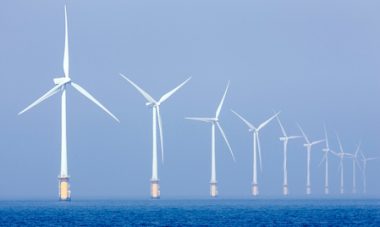
The shutdown of the last nuclear power plant in Schleswig-Holstein will boost wind power in the northern German state, its environment minister Jan Philipp Albrecht (Greens) expects. “Nuclear power is clogging our grids, especially in the direction of the south,” Albrecht told press agency dpa in an article carried by Focus Online.
Due to grid bottlenecks, offshore wind turbines would have to be switched off in some cases. “The importance of nuclear power as a whole is therefore overestimated,” he added.
After the shutdown of the nuclear plant at the end of this year, the north of Germany could cover 160 percent of its electricity needs with renewable energy and there will be more wind power exports to the south, Albrecht said.
Fears of power blackouts due to the nuclear phaseout are unfounded, he said. “After all, we will continue to massively expand renewable energies in Germany now. In the future, we will not be dependent on nuclear power being generated in France.”
Clean Energy Wire 9th Dec 2021
New German government aims for coal exit, and 80 pct renewables, by 2030

New deal between SDP, Greens and pro-business party calls for coal exit by 2030, and an 80 per cent share for renewables. The post New German government aims for coal exit, and 80 pct renewables, by 2030 appeared first on RenewEconomy.
Soren Amelung and Benjamin Wehrmann 25 November 2021 https://reneweconomy.com.au/new-german-government-aims-for-coal-exit-and-80-pct-renewables-by-2030/ Germany’s prospective new government has agreed to speed up the country’s coal exit and accelerate the rollout of renewable power to get the country on track for climate neutrality.
“We will align our climate, energy and economic policies nationally, in Europe and internationally with the 1.5 degree path and activate the potential at all levels of government,” states the coalition agreement between Social Democrats (SPD), Greens, and pro-business Free Democrats.
“With ambition and perseverance, we are making the country a pioneer in climate protection,” likely future chancellor Olaf Scholz, a Social Democrat, said during the presentation of the coalition treaty. He added that “modernisation won’t be for free – we will invest massively so Germany can stay a world leader.”
Germany plans to become climate-neutral by 2045, but the measures implemented by the outgoing government, a coalition between chancellor Angela Merkel’s Conservatives and the SPD, are insufficient to reach that target.
The September vote had been called a “climate election” due to the high importance many voters had given the topic.
Scholz aims to be elected chancellor in the week of December 6. Prior to that, the Greens will invite all 120,000 party members to vote on the coalition agreement online. The SPD and the FDP will organise party conferences on December 4 and 5, respectively, to secure their members’ backing for the agreement.
Faster rollout of renewables
“Reaching climate targets will require an accelerated exit from coal power generation,” the coalition treaty reads. “Ideally, this will be achieved by 2030 already.”
Green Party co-leader Robert Habeck said the measures agreed by the three parties would put Germany on an emissions reduction path compatible with the Paris Climate Agreement‘s target of limiting global warming to 1.5 degrees Celsius.
The coalition treaty’s “core” principle would be to reconcile prosperity with climate action, he argued.
“We have decided against setting higher climate targets in the coalition agreement, but rather formulated concrete measures,” Habeck said, adding that these measures would put the country on a 1.5 degree path.
The three parties aiming to form the next German government, said they aim to cover 80 percent of the country’s power demand with renewables by 2030, a significant increase from the current target of 65 percent. “Renewables are no longer an addition but will have to carry our supply security,” Habeck said.
FDP leader Christian Lindner, who is likely to become new finance minister, said “no other industrialised country will make efforts in climate action as great as ours, this is the most ambitious programme to date” and the government would make sure that it is sufficiently funded. At the same time, Germany would remain “an advocate of prudent financial policy,” Lindner added.
The parties also rejected calls for postponing the end of nuclear power plants. “We will stick to the nuclear exit,” their coalition agreement says.
To help the country’s famed industry to lower emissions, the future government plans to use new instruments, such as carbon contracts for difference, and support an EU-wide carbon border adjustment mechanism.
The coalition partners also said they will consider a national carbon floor price of 60 euros if the price in the EU emissions trading system falls below that limit. In the transport sector, they want to achieve a fast transition to low-emission mobility. “Our target is at least 15 million fully electric cars by 2030,” the treaty says.
The future government also agreed on considerable changes to the government architecture to implement its climate agenda. The parties plan to create a novel climate ministry that merges the energy and industry departments of the economy ministry with the environment ministry’s climate department.
First published on Clean Energy Wire
German nuclear power shutdown will not lead to power shortage: report
German nuclear power shutdown will not lead to power shortage: report https://www.euractiv.com/section/energy/news/german-nuclear-power-shutdown-will-not-lead-to-power-shortage-report/
By Jessica Bateman and Nikolaus J. Kurmayer | EURACTIV.com with CLEW 24 Nov 21, The shutdown of Germany’s last nuclear power plants will not cause supply shortages, according to calculations by the German Institute for Economic Research (DIW Berlin), CLEW reported.
As the so-called “traffic light” coalition in Berlin takes shape, there have been concerns that the country’s upcoming phase-out of nuclear power could cause power shortages as the country’s renewable expansion has been slow-going for years.
“I’m looking for a flashing orange traffic light emoji when the German government will have to face blackouts later this winter,” tweeted energy analyst Thierry Bros.
Researchers used modelling methods to see how the decommissioning of nuclear power plants Brokdorf, Grohnde and Gundremmingen C (which will be taken off the grid at the end of this year) and Neckarwestheim 2, Isar 2 and Emsland (which will be shut down in late 2022) will affect power flows and the energy mix in Germany.
They found the decline in nuclear power will temporarily lead to a higher use of fossil fuels and imports, but that this should be quickly reduced by the accelerated expansion of renewable energies.
German energy use is expected to increase by 100 TWh until 2030, while the next German government wants to phase out coal by 2030 and to be done with gas in 2040.
The next government is expected to boost the expansion of renewable energy in Germany by speeding up planning and permitting processes, as well as mandatory solar PV installations on newly built buildings, according to FAZ.
According to reports, the next German government may aim for 80% renewable electricity in 2030, up from the current target of 65%.
Projections currently put Germany’s 2030 energy demand somewhere between 645 to 665 TWh. If those prove true, it would mean that wind and solar would have to generate upwards of 516 TWh per year, or more than double the current renewable energy generation capacity.
In 2020, renewable energy consumption was 251 TWh, according to CLEW.
In order to keep grid operation stable, congestion management will also need to be adjusted. “The lights will not go out in Germany,” study author Claudia Kemfert said in statement.
“On the contrary: the [nuclear] shutdown paves the way for the overdue expansion of renewable energies. Nuclear energy was uneconomical from the start and characterised by incalculable risks.”
Plans to phase out nuclear energy in Germany were introduced in 2011 after the Fukushima nuclear disaster in Japan. The decision has been criticised for worsening the country’s reliance on imported fossil gas while Germany exits coal at the same time.
Will Germany’s Next Government Ditch U.S. Nuclear Bombs?
Explainer: Will Germany’s Next Government Ditch U.S. Nuclear Bombs? U.S. News, By Reuters|Reporting by Sabine Siebold, Editing by William Maclean, Nov. 22, 2021, BERLIN (Reuters) – NATO allies will be scouring the policies of Germany’s next federal government for one crucial detail: Will Berlin remain part of NATO’s nuclear sharing agreement?
Or will it drop out and ask the United States to remove its nuclear bombs from German soil?
While such a move might be popular among some Germans, it would reveal a rift within NATO at a time when the alliance’s relations with Russia are at their lowest since the end of the Cold War.
WHAT IS NATO’S NUCLEAR SHARING?
As part of NATO’s deterrence, the United States has deployed nuclear weapons in Belgium, Germany, Italy, the Netherlands and Turkey – all NATO allies that do not have their own nuclear weapons. In the case of a conflict, the air forces of these countries are meant to carry the American nuclear bombs.
WHAT EXACTLY IS GERMANY’S ROLE?
Around 20 U.S. nuclear bombs are estimated to be stored at the German air base of Buechel, in a remote area of the state of Rhineland-Palatinate. The base is also home to a squadron of Tornado fighter jets belonging to the German air force, the only German jets fitted to carry the nuclear bombs.
WHAT IS THE PROBLEM WITH THE TORNADO FIGHTER JETS?
The German air force has been flying the Tornado jets since the 1980s, and it has become increasingly expensive to maintain them and difficult to find spare parts to keep the plane in the air. The German defence ministry plans to phase out the jet between 2025 and 2030. Should Berlin not purchase new jets fitted for the task of carrying U.S. nuclear weapons, Germany would simply drop out of nuclear sharing when the last Tornado retires around 2030.
WHAT CHANGES MAY THE NEW GERMAN GOVERNMENT BRING?
In spring 2020, Defence Minister Annegret Kramp-Karrenbauer, a member of Chancellor Angela Merkel’s conservatives, proposed replacing the Tornado jets in Buechel with F-18s made by Boeing, but the decision was later pushed into 2022.
Now, the likely new German government will be led by the Social Democrats, a party that has some lawmakers who would like to get rid of U.S. nuclear weapons on German soil. The Greens, who are expected to be part of the coalition, also have some lawmakers who take that view………https://www.usnews.com/news/world/articles/2021-11-22/explainer-will-germanys-next-government-ditch-u-s-nuclear-bombs
German banks sceptical about nuclear and gas inclusion in green taxonomy.
German banks sceptical about nuclear and gas inclusion in green taxonomy.
Eight German banks have said there is “limited room” for nuclear and
gas power in the EU’s list of sustainable economic investments, warning
that the ‘green taxonomy’ should only include genuinely
climate-friendly activities.
ENDS Europe 19th Nov 2021
Germany’s Chancellor Merkel maintains stand against nuclear power being classified as sustainable
Merkel defends nuclear power exit despite climate challenges, Euro News, By Andreas Rinke, 17 Nov 21,
BERLIN -Chancellor Angela Merkel has defended her decision to phase out nuclear energy, even though it has made it harder for Germany to wean its economy off fossil fuels.
In an interview with Reuters, the outgoing chancellor also said she was opposed to any plans by the European Union to label nuclear power as “sustainable”.
“It’s true, of course, that we now face the very ambitious and challenging task of completing the energy transition while phasing out coal and nuclear power,” said Merkel, who will step down once a new government is sworn in following an election in September.
“But it’s also true that this will be worth it for our country if we do it right.”
Merkel, who has led her country for 16 years, pushed for Germany to abandon nuclear power after the Fukushima disaster in Japan a decade ago, a decision that most Germans agree with……..
RENEWABLES
The share of renewables in the energy mix of Europe’s largest economy has been growing steadily since the Fukushima disaster, though energy economists say it has not risen fast enough to help Germany meet its ambitious emissions targets.
Renewables accounted for 45% of Germany’s energy last year, up from 17% in 2010, data compiled by the Agora Energiewende think-tank showed. The share of electricity generated from coal fell to 23% from 42% a decade ago. Nuclear power was halved to 11%.
The EU executive, the European Commission, is drawing up a sustainable finance “taxonomy” setting out which activities meet the environmental criteria to qualify for funding under an EU sustainable investment programme.
A document viewed by Reuters in March indicated experts were preparing to label nuclear power as sustainable because it has none of the carbon dioxide emissions produced by fossil fuels.
Merkel said Germany would continue to oppose the plan but acknowledged that it would be hard to rally 19 other members behind its position to block it.
“It’s difficult to stall the procedure as such once the European Commission has presented an act,” said Merkel.
“We in Germany believe – across party lines – that nuclear energy should not be classified as being as clean as wind and solar energy.”……… https://www.euronews.com/next/2021/11/17/germany-merkel-nuclear-exclusive
Germany reaffirms its opposition to nuclear power being designated as ”sustainable”
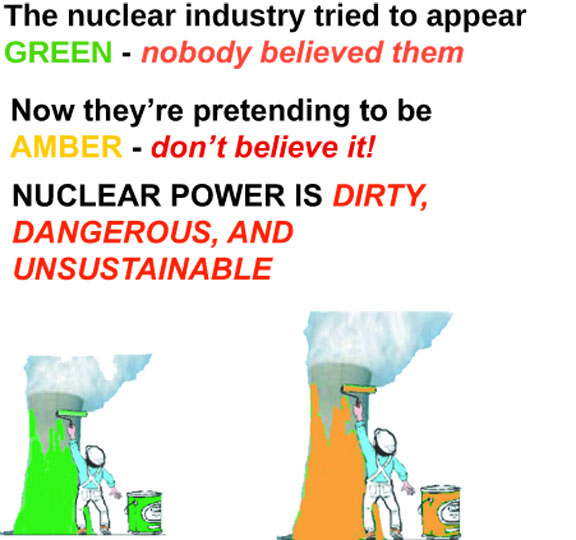
Germany will work towards an exclusion of nuclear power from the EU taxonomy for sustainable investments, the country’s environment minister Svenja Schulze has affirmed. “We don’t want nuclear energy, we don’t think it’s sustainable and we don’t want the EU to support it,“ the acting minister from the Social Democrats (SPD) told newspapers of the Funke Mediengruppe in an article carried by the Frankfurter Allgemeine Zeitung.
Schulze added that the German government is not alone on this position, countering an initiative of several other EU member states under the leadership of France to give nuclear power a greater role in the EU’s plans for decarbonisation and the greening of the financial system.
Building nuclear plants would be much too expensive and time-consuming for effective climate action, with plants commissioned now only being ready for operation by 2045 due to lengthy searches for a location, licensing hurdles and expectable protests against it, she argued. Conservative (CSU) Bavarian state premier Markus Söder backed Schulze’s rejection to make the
technology a tool for climate action, arguing that Germany’s nuclear phase-out “is based on broad societal acceptance.”
Clean Energy Wire 8th Nov 2021
New Study: Electricity would already be Cheaper today with a Full Supplyof 100% Renewables.
New Study: Electricity would already be Cheaper today with a Full Supply
of 100% Renewables. New short study by the Energy Watch Group (EWG) finds:
Electricity would already be cheaper today with a full supply of 100%
renewables.
In the coalition negotiations for the new German government,
both ambitious climate protection and the reduction of electricity prices
play a central role. The previous government still expects only 45%
renewables in the electricity mix by 2025.
A new short study by the Energy
Watch Group offers an answer to the rising energy costs: The study
calculates that a full supply with 100% renewables would already be
economically competitive today compared to the current energy system based
on coal, natural gas and nuclear. By 2025 at the latest, an energy system
based on 100% renewables would then be significantly cheaper than power
generation with fossil fuels.
Sonnenseite 28th Oct 2021
1 This Month
23-25 October – on Zoom – World BEYOND War’s annual global conferenc


Shut down the radiation-damaged Heysham nuclear reactors now
To see nuclear-related stories in greater depth and intensity – go to https://nuclearinformation.wordpress.com

Say No to NASA’s Reckless Nuclear Reactor on the Moon
Say No to NASA’s Reckless Nuclear Reactor on the Moon

-
Archives
- October 2026 (247)
- September 2026 (339)
- August 2026 (330)
- July 2026 (355)
- June 2026 (287)
- May 2026 (306)
- April 2026 (356)
- March 2026 (251)
- February 2026 (267)
- January 2026 (308)
- December 2025 (358)
- November 2025 (359)
-
Categories
- 1
- 1 NUCLEAR ISSUES
- business and costs
- climate change
- culture and arts
- ENERGY
- environment
- health
- history
- indigenous issues
- Legal
- marketing of nuclear
- media
- opposition to nuclear
- PERSONAL STORIES
- politics
- politics international
- Religion and ethics
- safety
- secrets,lies and civil liberties
- spinbuster
- technology
- Uranium
- wastes
- weapons and war
- Women
- 2 WORLD
- ACTION
- AFRICA
- Atrocities
- AUSTRALIA
- Christina's notes
- Christina's themes
- culture and arts
- Events
- Fuk 2022
- Fuk 2023
- Fukushima 2017
- Fukushima 2018
- fukushima 2019
- Fukushima 2020
- Fukushima 2021
- general
- global warming
- Humour (God we need it)
- Nuclear
- RARE EARTHS
- Reference
- resources – print
- Resources -audiovicual
- Weekly Newsletter
- World
- World Nuclear
- YouTube
-
RSS
Entries RSS
Comments RSS

