The secret audit that crucifies most French nuclear start-ups.
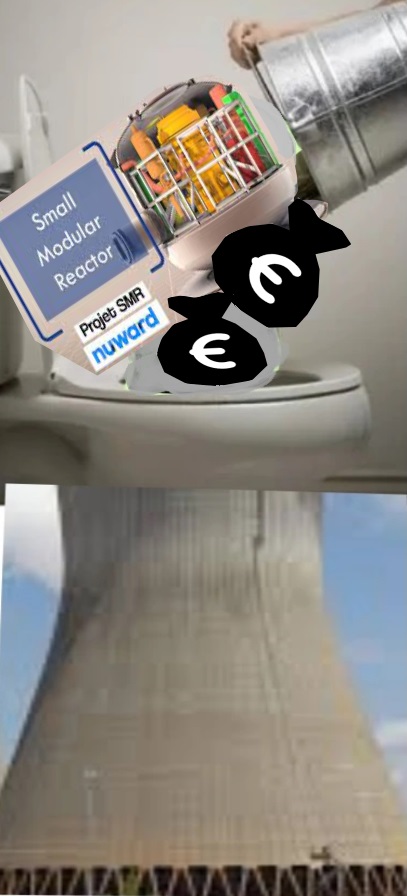
Classified as a top secret, the results of the audit conducted in the spring by the High Commissioner for Atomic Energy and submitted to the Élysée Palace reveal that many subsidized nuclear start-ups will not keep their promises.
By Géraldine Woessner Le Point 22nd Nov 2024
This is what could be called a vast smokescreen operation. On November 19, the start-up Naarea, founded in 2020 to develop fourth-generation modular reactors, with molten salts and fast neutrons, published a triumphant press release on its LinkedIn account: “It is a great honor to have been able to discuss with the High Commissioner for Atomic Energy the conclusions of his report,” the company trumpeted, proudly announcing to potential investors that the audit conducted by the experts had “not identified any unavoidable blocking point” concerning the deployment of its program……… (Subscribers only) https://www.lepoint.fr/economie/exclusif-l-audit-secret-qui-crucifie-la-plupart-des-start-up-francaises-du-nucleaire-22-11-2024-2575980_28.php
Gravelines nuclear power plant: EDF refuses to respond on flood risks and tries to silence whistleblowers

Greenpeace France reminds that Monday morning’s action in the perimeter of the Gravelines power plant carries a message of public interest on the risks of marine submersion and flooding on the Gravelines power plant, an area combining climatic, industrial and nuclear vulnerabilities. For Greenpeace France, in light of the forecasts of scientists and the large uncertainties of the different climate scenarios, it is too dangerous to build two new nuclear reactors on this site, as EDF aims to do.
Greenpeace France 30th Oct 2024, https://www.greenpeace.fr/espace-presse/gravelines-edf-refuse-de-repondre-sur-les-risques-dinondations-et-tente-de-faire-taire-les-lanceurs-dalerte/
After more than 48 hours of deprivation of liberty, 10 of the 12 activists arrested have just been released. This arrest follows the action of Greenpeace France in the perimeter of the Gravelines power plant . Since 9 a.m. this morning, a gathering has been taking place in front of the Dunkirk Judicial Court, at the initiative of several local organizations that came to support the activists. The court informed the activists that a trial would be held on March 3, 2025 at 1:30 p.m. for intrusion into a civil facility housing nuclear materials in assembly. EDF has filed a complaint [1].
After spending two nights in police custody, the activists were brought before the Dunkirk Judicial Court in the early morning, at the request of the public prosecutor. The first activist to be released was deprived of his liberty for a total of 52 hours.
Greenpeace France reminds that Monday morning’s action in the perimeter of the Gravelines power plant carries a message of public interest on the risks of marine submersion and flooding on the Gravelines power plant, an area combining climatic, industrial and nuclear vulnerabilities. For Greenpeace France, in light of the forecasts of scientists and the large uncertainties of the different climate scenarios, it is too dangerous to build two new nuclear reactors on this site, as EDF aims to do.
While EDF refused to respond to Greenpeace France’s questions sent during the summer concerning the consideration of the impacts of climate change on the choice of the Gravelines site and the construction of new nuclear reactors, Greenpeace France dug into the subject and examined EDF’s project file, which resulted in the publication of a report on October 3 demonstrating the underestimation of the seriousness of climate change and the risks inherent in this project to build new reactors.
Greenpeace France also got involved in the consultation areas, particularly the ongoing public debate in Gravelines, and repeated its questions to obtain information on flood risks and the protective measures planned for the new reactors, ahead of the meetings on nuclear safety (theme of 19 November) and climate change (theme of 10 December). After Monday’s action, media reported that EDF did not wish to comment.
For Pauline Boyer, Energy Transition campaign manager at Greenpeace France: ” EDF is ignoring our questions about the risks that the construction of the two EPR2 reactors in Gravelines would create for the population, the workers at the plant and for the environment. In line with its behavior during the public debate for its similar project in Penly, it is clearly sending a signal of contempt for questions from the public, whether NGOs or residents. EDF is operating a diversion strategy by taking activists to court over the form of their action, in order to better evade the substantive issues. EDF is losing more points of trust. EDF will not succeed in gagging the whistleblowers. “
For Marie Dosé, the activists’ lawyer: ” The custody measures are unjustified and have only one purpose: to dissuade activists from alerting the population on a subject of general interest. All of them could have been the subject of a free hearing but, once again, the prosecuting authority preferred to make them sleep two nights in cells and bring them hastily before the court. “
Two activists remain in court at the time of writing this press release.
EDF reportedly seeking up to £4bn from investors to finish Hinkley Point C
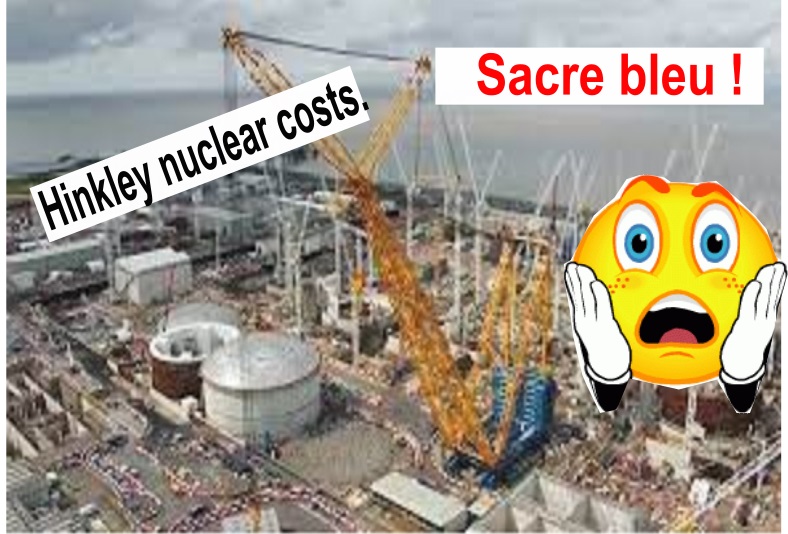
French energy firm reported to be in talks over potential investment to cover ballooning cost of nuclear project
Jillian Ambrose 11 Oct 24, https://www.theguardian.com/uk-news/2024/oct/10/edf-seeks-to-raise-up-to-4bn-to-finish-delayed-hinkley-point-c
The French energy company EDF is reportedly in talks with investors to raise up to £4bn to finish the delayed Hinkley Point C project in Somerset, Britain’s first new nuclear reactors in a generation.
The utilities company, owned by the French state, has approached investors to help cover the ballooning cost of constructing the nuclear plant, which is understood to have reached almost £50bn due in part to supply chain issues and struggles securing skilled engineers, according to Bloomberg.
EDF is reportedly engaged in talks with sovereign wealth funds and large infrastructure funds to raise the extra money through a bespoke financial instrument that would hand investors a stake in Hinkley while protecting them against the risk that the project is not finished.
Hinkley Point C is due to begin generating electricity by 2030, according to EDF – five years later than first planned and 12 years after construction began. The project’s costs have also spiralled, from £18bn when its contracts were signed in 2016 to £47.9bn in today’s money.
The cost overruns and delays are understood to be in part due to spending on extra safety measures to satisfy UK authorities, and trouble securing skilled engineers after Brexit.
A team of specialist engineers at the Hinkley site, represented by the trade union Prospect, voted to strike for 24 hours from Thursday after pay talks broke down. The union said the engineers had not had a pay increase in the last four years.
The financial pressure on the project has deepened after EDF’s partner, China General Nuclear Power Group (CGN), a state-run company, declined to plough more funding into the project beyond its contracted term in 2023.
CGN has scaled back its interest in investing in the UK after tensions between Westminster and Beijing over security concerns made it clear that a Chinese company would not be given permission to lead a nuclear project in the UK.
In response, EDF has called on the UK government to stump up the cash to help finish the project, which will only benefit from bill payer subsidies once it begins generating, but the suggestion was rebuffed by the previous government.
One of the companies considering an investment in the troubled project is Centrica, the owner of British Gas, which has previously been linked to investment talks relating to EDF’s planned nuclear project at Sizewell C in Suffolk. The FTSE 100 company is reportedly in early talks to invest up to £1bn in Hinkley Point C, according to the Daily Telegraph.
Investing in new nuclear reactors would help to secure future electricity supplies for Centrica, which holds a 20% share in all five of EDF’s remaining UK nuclear power stations, four of which are due to close this decade.
Centrica is understood to be interested in investing in either Hinkley or Sizewell – but not both.
EDF and Centrica declined to comment.
Greenpeace warns of flooding risks at France’s biggest nuclear plant
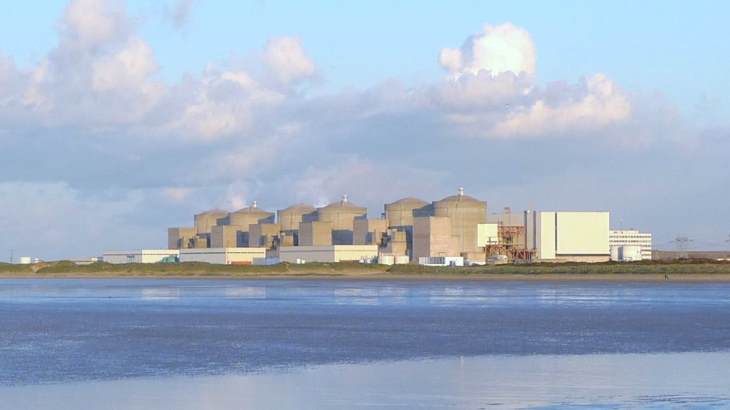
Greenpeace is urging French energy giant EDF to abandon its plans to build two new reactors at its Gravelines nuclear plant, citing the risk of flooding due to rising sea levels. The environmental group accuses the French nuclear industry of underestimating the threat to the coastal site.
04/10/2024 By:RFI
With six 900MW reactors, the Gravelines nuclear power plant on the Channel coast is already the most powerful in Western Europe.
EDF’s proposal to build two additional new generation pressurised water reactors (EPR2) of 1600 MW each is part of President Emmanuel Macron’s nuclear revival programme.
The new reactors are currently the subject of public debate. If they pass safety criteria laid down by France’s nuclear safety authority (ASN), construction would begin in 2031 and they could be on stream by 2040.
While they would be built on a 11-metre-high platform, Greenpeace claims there is a significant safety risk.
“The entire power plant site could find itself – during high tides and when there is a 100-year surge – below sea level” by 2100, it warned in a report published Thursday.
EDF refutes their calculations.
“The height of the platform chosen for the EPR2 reactors at Gravelines provides protection against “extreme” flooding, taking into account the effects of IPCC [Intergovernmental Panel on Climate Change] scenarios, which are among the most penalising with regard to sea-level rise”, EDF said in a statement to RFI.
Protective measures
Greenpeace argues that EDF’s calculations are outdated and do not fully account for the realities of global warming.
“We can’t think as if the current situation were going to remain stable and that sea levels were just going to rise a little”, says Pauline Boyer, Greenpeace’s energy transition campaigner.
The NGO has therefore based its projection on the IPCC’s most pessimistic scenario, which assumes that no action will be taken to reduce greenhouse gas emissions by 2100……………………….
Boyer believes a comprehensive risk study, factoring in climate change, “should govern the choice of site”, and be carried out before the public debate ends on 17 January.
While Greenpeace’s report centres on Gravelines, Boyer warned that climate change threatens other nuclear plants, with risks tied to rising temperatures and extreme weather events like storms.
She also pointed to potential conflicts over access to river water needed to cool reactors. https://www.rfi.fr/en/france/20241004-greenpeace-warns-of-flooding-risks-at-france-s-biggest-nuclear-plant
France asserts itself against Netanyahu over Lebanon: Macron calls for Arms Embargo against Israel
Informed Comment Juan Cole10/06/2024
Ann Arbor (Informed Comment) – In a radio interview with France Inter on Saturday, French president Emmanuel Macron called for an arms embargo against Israel over its ongoing attacks on Gaza and now Lebanon.
BFMTV reported that he said, “I think that today the priority is to return to a political solution, and that we must halt the delivery of arms for pursuing combat against Gaza. France will not deliver them.”
He clarified that France would continue to export defensive materiel, such as parts for the Israeli Iron Dome anti-missile defense system.
The station notes that President Joe Biden has often called for the avoidance of civilian casualties but has steadfastly declined to use his leverage with Israel, given its dependence on US weaponry and ammunition, to pressure it. In Britain, the Labour government of PM Keir Starmer has halted 10 out of 350 weapons licenses on the grounds that those ten weapons would likely be used by Israel against civilians.
Macron is the first leader of a major European country to argue for an embargo of offensive weapons to Israel in response to its total war on Gaza.
The French president has been heavily criticized by former French diplomats and other public figures for not showing the spine toward the Israeli……………………………. more https://www.juancole.com/2024/10/asserts-against-netanyahu.html
Heatwaves caused cuts in France’s nuclear power production.
(Montel) Heatwaves in July and August provoked a 430 GWh cut in nuclear output at four EDF nuclear power plants – double last summer’s amount but slightly below the nine-year median, a French consultancy said on Tuesday.
EDF summer heat cuts double but below 9-year median
Reporting by: Sophie Tetrel, 01 Oct 2024 .
https://montelnews.com/news/70ed2eeb-e06c-4494-abca-42207139db11/edf-heat-cuts-double-from-summer-2023-but-stay-below-9-yr-median
This summer’s cut represented less than 1% of the country’s total atomic generation and was below the 600 GWh median recorded over the 2015-2023 period, said Thibault Laconde, head of analysis consultancy Callendar.
Last year’s climate-related cuts amounted to only 217 GWh due to several reactors being offline for maintenance, he added.
He said the noteworthy aspect of this year was that high temperature levels caused the outages, rather than a lack of water supply due to drought.
Production cuts or stoppages were concentrated between 29 July-3 August and 11-15 August, corresponding with the summer heatwaves, he said.
The cuts amounted to 279 GWh at Golfech, 93 GWh at Bugey, 55 GWh at St Alban and 7 GWh at Tricastin.
However, they were well below the 3 TWh record seen in 2020, Laconde added.
Many French nuclear plants use river water to cool reactors and EDF is required to reduce their output if river temperatures or low flows break legal limits.
Outgoing French nuclear safety chief warns of 25% budget cut

(Montel) France’s ASN nuclear safety authority faces a 25% cut to its budget next year which would leave the body “unable to operate”, its outgoing head, Bernard Doroszczuk, has told parliamentarians.
by: Muriel Boselli, 25 Sep 2024
The same would apply when ASN plans to merge with its technical arm, the Institute for Radiation Protection and Nuclear Safety (IRSN), to create a new body ASNR from 2025, he told a French lower house committee on Tuesday.
“Whether it’s the ASNR or the separate ASN and IRSN, we don’t have the means to operate with these figures,” he said.
The planned cuts, due to be tabled in the government’s finance bill next month, would leave a EUR 37m hole in ASN’s EUR 150m budget, Doroszczuk said, adding this was “very alarming”.
Merger on 1 January?
President Emmanuel Macron proposed the head of the nation’s nuclear waste agency Pierre-Marie Abadie to succeed Doroszczuk when his term ends on 12 November.
One of Abadie’s first tasks will be to oversee the controversial merging of the ASN and the IRSN from 1 January 2025 as approved by parliament and officially stipulated as law on 22 May.
Despite legislative delays following France’s snap election, the launch of ASNR could go ahead on 1 January as planned even if “it won’t be perfect”, Doroszczuk said.
It would be a “transitional” entity at first, with only 30 reconfigured positions out of more than 2,000. The general management will be unified, but the entities responsible for nuclear safety and radiation protection within ASN and IRSN will remain unchanged.
New iodine tablets for communes near French nuclear power sites.
The tablets are distributed for use in the event of an emergency, but some say
the scheme does not go far enough. New iodine tablets are to be distributed
again to people living in French communes near nuclear power station sites,
after authorities renewed the campaign.
Since September 15, residents
living or people working within a 10 km radius of the Penly and Paluel
nuclear power plants (Seine-Maritime, Normandy) have been receiving new
free iodine tablets to use in the event of a nuclear plant accident.
Pharmacies are now able to distribute the tablets. The tablets can also be
collected and dispensed by public establishments to make it easier for
residents to get hold of them (if they are not able to get to a pharmacy).
Connexion 17th Sept 2024
Flamanville EPR shutdown prompts fresh questions over reactor design

The first attempt to start up the process of nuclear reaction in the European Pressurized Reactor (EPR) at the Flamanville nuclear power plant, situated on France’s Channel Coast close to Jersey and Guernsey, was aborted by an automatic shutdown last week. The process was finally successfully re-engaged four days later, but the failure was just the latest in a catalogue of incidents and delays at the site, now 12 years overdue. For one specialist, the flaws in the design of the reactor, which is the same design as that planned for Hinkley Point in England, are such that it ‘will never function properly’. Jade Lindgaard reports.
Jade Lindgaard, 9 September 2024, Mediapart
French utility giant EDF was an official sponsor of the Summer Olympic and Paralympic Games in Paris, and it’s management knows only too well how embarrassing a false start can be. For that was the case with its initial announcement last week about the starting up of the European Pressurized Reactor (EPR) at Flamanville, northern France – the most awaited event in the French nuclear energy industry in recent history……………………………………..(Subscribers only) https://www.mediapart.fr/en/journal/france/090924/flamanville-epr-shutdown-prompts-fresh-questions-over-reactor-design
Delays, debts and false promises — inside France’s nuclear nightmare.
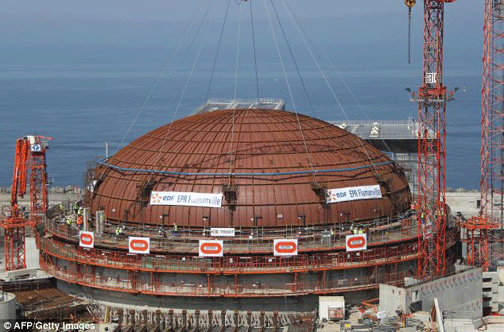
The energy giant EDF pledged to rebuild Britain’s atomic power sector,
starting with Hinkley Point. But setbacks to a similar project in Normandy
throw the UK’s nuclear future into doubt.
This week, the one and only EPR
that France has itself tried to build was finally switched on — 12 years
behind schedule. When work got under way on the reactor in Flamanville,
Normandy, in 2007, engineers had promised that it would be up and running
by 2012, at a cost of €3.3 billion (£2.8 billion).
The final bill is estimated to be €19.1 billion and it is not even plugged into the grid
yet. EDF says that will happen “by the end of the autumn”, signalling
yet another delay.
The project has been beset by problems. Safety
inspectors discovered “deviations” in eight welds in the reactor’s
main steam transfer pipe, for instance. It instructed EDF’s welders to do
the job again. Then the Nuclear Safety Authority, the French watchdog, came
across what it called a “manufacturing anomaly in the lower dome and the
vessel closure head”, which are also key components.
It has ordered the replacement of the head, although it agreed to allow the reactor to start
up with the existing one still in place. It will be removed after about 18
months of operation, to coincide with the first fuelling outage. The delays
and cost overruns at Flamanville have been viewed as a national
humiliation. Critics have asked how the project could have gone so wrong,
given France’s proud nuclear tradition — its reactors supplying about
two thirds of the country’s electricity.
Times 4th Sept 2024
France still faces problems in starting up long-delayed super-expensive Flamanville nuclear reactor
https://www.ft.com/content/31bb42d9-603c-4456-a8d3-9dcaa19c7759, Sarah White in Paris, 2 Sept 24
New unit could be connected to grid by end of year but optimism over further expansion faces political hurdles
France is starting up its first newly built nuclear reactor in a quarter of a century, 12 years behind schedule and after multiple setbacks as the industry looks to a revival with plans for more new plants.
EDF, the French state-owned operator of Europe’s biggest fleet of nuclear power stations, said late on Monday that the first chain reactions — or so-called divergence operations — at the Flamanville 3 reactor on France’s Normandy coast were due to get under way overnight.
If these are successful the reactor will eventually be connected to the grid before the end of the year, once it has reached 25 per cent of its total 1.65 gigawatt capacity — enough to power a large city.
Please use the sharing tools found via the share button at the top or side of articles. Copying articles to share with others is a breach of FT.comT&Cs and Copyright Policy. Email licensing@ft.com to buy additional rights. Subscribers may share up to 10 or 20 articles per month using the gift article service. More information can be found here.
https://www.ft.com/content/31bb42d9-603c-4456-a8d3-9dcaa19c7759
The reactor, France’s 57th and a prototype of models EDF wants to develop at home and overseas, had come to epitomise the reversals the nuclear industry was suffering globally in the wake of a downturn in orders over recent decades, which prompted skilled workers to leave the sector.
Flamanville ended up costing more than four times its initial budget at €13.2bn, and took longer to finish than similar models EDF built in China and Finland that were also hit by delays.
Components for the complex design had to be retooled, some after complaints from safety regulators. EDF was also criticised by the French government for how it struggled to co-ordinate the project that involved hundreds of suppliers.
Please use the sharing tools found via the share button at the top or side of articles. Copying articles to share with others is a breach of FT.comT&Cs and Copyright Policy. Email licensing@ft.com to buy additional rights. Subscribers may share up to 10 or 20 articles per month using the gift article service. More information can be found here.
https://www.ft.com/content/31bb42d9-603c-4456-a8d3-9dcaa19c7759
“It’s a historic step in this project,” Régis Clement, co-head of EDF’s nuclear production division, said of the launch. “Our teams are on the starting blocks.”
EDF, which has contracts to build new reactors in Britain and is tendering to export its design elsewhere, said it had learned valuable lessons from Flamanville 3 that will allow it to whittle down construction times in future.
But it still faces a series of hurdles at home despite French President Emmanuel Macron launching a plan to build at least six new reactors.
The orders have yet to be formalised, and a political impasse in Paris may only delay the process further, after legislative elections this summer delivered a hung parliament.
EDF, which is spending money filling thousands of new positions to prepare for the orders, needs to agree on a funding plan for the projects, which could cost over €52bn.
Hopes of reaching a deal by the end of the year are fading, several people close to the company said. An initial ambition to deliver the new reactors by 2037 seems optimistic as a result, they added.
Other challenges include improving design updates for the future reactors while training a range of staff from engineers to welders will take time. EDF also faces competition overseas from other players, such as South Korean rivals, amid a worldwide revival of nuclear technology.
Though valued for its low carbon emissions, nuclear power has faced an atmosphere of distrust after the Chernobyl accident of 1986 and the Fukushima meltdown in Japan following a tsunami in 2011.
A new French fairy tale: “Cheap” nuclear electricity in France is not what it appears.

The French public are paying for their nuclear addiction — and will pay even more when the plants need decommissioning.

By Axel Mayer, 11 Sept 23, https://beyondnuclearinternational.org/2023/09/11/a-new-french-fairy-tale/—
“Bread and games”(Panem et circenses) were the enforcement strategies in the Roman Empire to maintain power. “Cheap petrol, cheap electricity and football” are popular campaign strategies under a democracy, says Axel Mayer, Vice-President of the Trinational Nuclear Protection Association (TRAS).
In France, the nuclear industry is in decline and the nuclear company EDF is heavily in debt. At the same time, President Macron is once again promising cheap nuclear power and wants to have new small nuclear power plants built. A small part of the French nuclear industry’s financial problems is to be solved with EU money.
In this context, the fairy tale of cheap French nuclear power is happily spread in France and also in Germany and the use of nuclear energy is praised as the miracle weapon in the losing war against nature and the environment. However, the price of electricity in France is only apparently cheap.
According to a report of the supreme audit court in France, the research and development, as well as the construction of the French nuclear power plants, cost a total of 188 billion euros. Since in France the “civilian” and the military use of nuclear power cannot be separated, the sum is probably much higher. Retrofitting France’s outdated reactors will cost over 55 billion euros. Liberation magazine reports retrofitting costs of nearly 100 billion euros by 2030.
People of France are paying for expensive nuclear power with their taxes
According to a report by the French Ministry of Economy, the semi-state-owned EDF had debts of about 41 billion euros at the end of 2019, an amount that is expected to be nearly 57 billion euros by 2028. To avoid domestic political problems, EDF is not allowed to raise the price of electricity for political reasons. EDF liabilities are driving up France’s national debt massively. The people of France (and especially their grandchildren) are paying for the seemingly cheap, but in reality expensive nuclear power with their taxes.
This cost does not include the dismantling of the nuclear power plants or any costs of a severe accident. A serious nuclear accident would have devastating consequences in France. A government study estimates the cost at 430 billion euros.
Demolition costs of over 100 billion euros
In France, EDF operates 56 outdated reactors that are now becoming old and decrepit almost simultaneously, but the company has built up almost no reserves for decommissioning. In Germany, the government is very optimistic about a 47 billion euros cost for decommissioning and final storage. The decommissioning of the large number of French nuclear power plants could cost well over 100 billion euros as costs rise, if no savings are made on safety. There is a distinct possibility that the nuclear industry could bankrupt the French state even without a nuclear accident that could happen at any time.
A “European Pressurized Water Reactor” (EPR) has been under construction on France’s Atlantic coast in Flamanville since 2007. The flagship project was originally scheduled for completion in 2012 at a fixed price of 3.2 billion euros. Since then, the start of operation has been postponed again and again, and the Court of Auditors now puts the cost at over 19 billion euros. Whether the EPR can go online in 2024 is questionable. The model reactor will never work economically.
In countries with a functioning market, no new nuclear power plants are building
Swiss nuclear lobbyist and Axpo CEO Christoph Brand puts the kibosh on dreams of cheap nuclear power from new, small nuclear plants. “The production costs for the electricity supplied by new nuclear power plants are currently about twice as high as those of larger wind and solar plants,” Brand said. “No matter how one assesses the risks of nuclear power, it is simply not economical to rely on new nuclear plants,” he said in the pro-nuclear NZZ on Oct. 21, 2021.
In countries with a functioning market, no new nuclear power plants are being built. When in doubt, it always helps to look at EDF’s share price, which has fallen massively over the long term, to assess the market chances of the nuclear renaissance announced by President Macron.
“Bread and games” with artificially low nuclear electricity prices can work in election campaigns. Low-cost, risk-free electricity is generated today with photovoltaics and wind energy. (AM/hcn)
EDF cuts nuclear production in reaction to soaring temperatures
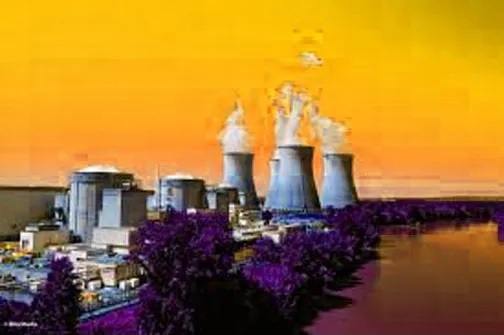
euro news, By Eleanor Butler, 14/08/2024
The energy provider insists there are no looming safety risks as three French regions face heatwave warnings.
EDF has reduced its electricity production at nuclear sites in France in response to soaring temperatures.
Three reactors are currently affected, although the energy provider has said “there is no safety risk”.
A reactor located at the Bugey nuclear power plant, a site near Lyon, has been closed since 12 August.
Also near Lyon, the Saint-Alban nuclear plant has experienced production cuts since 11 August, and similar measures are being taken at the Tricastin site. This is located in the South East of France, north of Avignon.
Heat-related incidents aren’t a new complication for EDF but rather a recurring problem, as exemplified when the firm published a climate change action plan last month……
High temperatures can interfere with nuclear processes as reactors are heavily reliant on water.
Heat from nuclear reactions is used to transform water into steam, which then drives turbines to produce electricity.
Another current of water, outside of the closed loop system, is then drawn from surrounding rivers to cool the reactor…..
During periods of extreme heat, this can produce a number of complications.
If surrounding water sources are warmer than usual, reactors cannot be cooled as efficiently.
French regulations also prevent sites from discharging water that is too hot back into rivers and lakes, to avoid the accidental killing of fish and other wildlife.
EDF told Euronews that it had temporarily reduced production to “respect regulations relating to thermal discharges”.
The firm explained that “discharge limits are established individually for each plant” by the French Nuclear Safety Authority (ASN).
Three departments in France are currently affected by heatwave warnings, with storms now replacing hot weather in some areas. https://www.euronews.com/business/2024/08/14/edf-cuts-nuclear-production-in-reaction-to-soaring-temperatures
How French nuclear output has declined faster in France than Germany
French decline may be caused by having to ‘load follow’ renewables
David Toke, Aug 09, 2024, https://davidtoke.substack.com/p/how-french-nuclear-output-has-declined
Whatever one thinks of the German decision to phase-out nuclear power, a really strange thing is that the French are coordinating an unintentional phase-out of nuclear energy. At the same time as Germany has been running down its nuclear production. Much attention has focussed on criticising German policy, but much less on criticising what is a continuing failure of French energy policy.
For sure French non-fossil energy production is still much higher than most countries, but this lead is seriously declining. The proportion of non-fossil electricity production is now little higher than a country such as non-nuclear Denmark which has built up its renewables from virtually nothing in recent times. Talk of building half a dozen more French nuclear plant is – just talk.
Plans for new nuclear plant have been bullish for decades- the term ‘nuclear renaissance’ has been doled out for 20 years. However, in practice, little gets built. On the other hand France is failing to develop its renewable energy industry at anything like a good enough speed to make up for the decline in nuclear production. You can see the comparison of nuclear decline in France and Germany in the graph below [on original], which takes its data from the Energy Institute ‘s Statistical Review of World Energy, see HERE
As can be seen in the graph, from 2011 French nuclear production declined by 104 TWh, whilst in Germany it declined by 101 TWh. Yet it has been the decline in German nuclear production (following the decision to phase out nuclear in 2011) that has been much more of a long-term talking point.
Certainly, the dominant message in the press in the UK, spread by politicians from Labour and Conservatives, is that the failure to stop the decline in nuclear production which has also occurred in the UK is because of political failure. But this story ought to be wearing thin, after so many years of so-called nuclear renaissance and its promotion. Might it just have something to do with the failing nature of the technology itself? This seems obvious to independent observers, but it does not detract from our leaders’ desire to throw immense sums after technology that takes almost forever to deliver.

I discuss these issues in my recently published book Energy Revolutions, Profiteering versus Democracy’ (Pluto Press) (see HERE). But a few salient points can be made here to attempt to explain the decline in nuclear power in France. One can hypothesise a couple of reasons why French nuclear production may be declining. One factor may well simply be that the French nuclear industry did a bad job and built a lot of sub-standard power plant.
There is another possibility which may be adding to the problems caused by the first suggested reason. The French nuclear power stations may be accelerating their own demise because of the technical damage caused by the balancing role they are being forced to play in the French power market. Nuclear power plant in France have been forced to ‘load-follow’ ie, often reduce their output, because of variations in solar and wind power that is generated across the continental electricity system. #
The continental electricity interconnectors use AC transmission equipment which means that France cannot just disconnect when there is too much electricity coming into the French system. French power plant have to power down, and since nuclear forms such a dominant part of French generation, the nuclear power power plant has to regularly ramp up and down.
There are relatively few publicly available discussions of the possibilities for reactor damage in such load-following activities. Such discussions as they are, seem to be side-shows to ascertaining whether load following by nuclear reactors is possible, rather than the long-term damage involved. But there are some pointers in the discussions that are available.
One academic thesis commented, on a simulation based on a Swedish reactor, that: ‘The mechanisms for the damages are for example erosion-corrosion, fatigue, vibrations and wear. In the reactor core, there are also limitations for the rate of how quickly the power decrease and increase can be performed and how low the power can be reduced before problems with xenon poisoning and PCI occur……………….An increased usage of the pumps and valves was shown, which will give an added risk of wear and tear’ (Bjurenfolk, 220, 9 see HERE) . A study published by the Nuclear Energy Agency for the OECD commented: ‘Load cycling leads to variation in the coolant temperature, and thus in the temperatures of different components (see Figure 3.3 and Figure 3.4). These periodic temperature variations lead to cyclic changes in the mechanical load in some parts of the equipment, and could induce localised structural damage (fatigue) of these elements if the temperature gradients are large.’ OECD/NEA 2011, 41, see HERE
Of course in the UK no such problems of damage due to load-following will ever occur for the simple reason that in the UK nuclear power has a privileged position. Despite increasing international interconnection, the interconnection is through DC transmission systems which offer much greater control over imports. Nuclear power plants are allowed to generate as much as they can, and it is renewable energy that has to power down in cases where there are grid constraints or an excess of supply compared to demand.
In the case of Hinkley C, when it eventually comes online, the contracts given to EDF encourage it to carry on generating, not load follow. In the UK it is windfarms that bear political blame for compensation paid to them for lost production when they have to switch off (very often to protect nuclear production). This has been documented by 100percentrenewableuk in the case of Scotland, see HERE.
However, turning back to France, the French Government’s recent press releases on building future nuclear power obscure the fact that it has taken around two decades to build one plant. Meanwhile, the amount of solar and wind power production added in France since 2011 is rather less than the decline in nuclear production. To cap it all EDF has called for subsidies for solar pv to be reviewed (see HERE).
Yes, solar pv may be inconvenient for nuclear power, but it does seem that unless France develops renewables, including solar pv, much more quickly than has been done since 2011, the French electricity system will (at recent rates of nuclear decline) gradually collapse.
Certainly, the dominant message in the press in the UK, spread by politicians from Labour and Conservatives, is that the failure to stop the decline in nuclear production which has also occurred in the UK is because of political failure. But this story ought to be wearing thin, after so many years of so-called nuclear renaissance and its promotion. Might it just have something to do with the failing nature of the technology itself? This seems obvious to independent observers, but it does not detract from our leaders’ desire to throw immense sums after technology that takes almost forever to deliver.
I discuss these issues in my recently published book Energy Revolutions, Profiteering versus Democracy’ (Pluto Press) (see HERE). But a few salient points can be made here to attempt to explain the decline in nuclear power in France. One can hypothesise a couple of reasons why French nuclear production may be declining. One factor may well simply be that the French nuclear industry did a bad job and built a lot of sub-standard power plant.
There is another possibility which may be adding to the problems caused by the first suggested reason. The French nuclear power stations may be accelerating their own demise because of the technical damage caused by the balancing role they are being forced to play in the French power market. Nuclear power plant in France have been forced to ‘load-follow’ ie, often reduce their output, because of variations in solar and wind power that is generated across the continental electricity system. #
The continental electricity interconnectors use AC transmission equipment which means that France cannot just disconnect when there is too much electricity coming into the French system. French power plant have to power down, and since nuclear forms such a dominant part of French generation, the nuclear power power plant has to regularly ramp up and down.
There are relatively few publicly available discussions of the possibilities for reactor damage in such load-following activities. Such discussions as they are, seem to be side-shows to ascertaining whether load following by nuclear reactors is possible, rather than the long-term damage involved. But there are some pointers in the discussions that are available.
One academic thesis commented, on a simulation based on a Swedish reactor, that: ‘The mechanisms for the damages are for example erosion-corrosion, fatigue, vibrations and wear. In the reactor core, there are also limitations for the rate of how quickly the power decrease and increase can be performed and how low the power can be reduced before problems with xenon poisoning and PCI occur……………….An increased usage of the pumps and valves was shown, which will give an added risk of wear and tear’ (Bjurenfolk, 220, 9 see HERE) . A study published by the Nuclear Energy Agency for the OECD commented: ‘Load cycling leads to variation in the coolant temperature, and thus in the temperatures of different components (see Figure 3.3 and Figure 3.4). These periodic temperature variations lead to cyclic changes in the mechanical load in some parts of the equipment, and could induce localised structural damage (fatigue) of these elements if the temperature gradients are large.’ OECD/NEA 2011, 41, see HERE
Of course in the UK no such problems of damage due to load-following will ever occur for the simple reason that in the UK nuclear power has a privileged position. Despite increasing international interconnection, the interconnection is through DC transmission systems which offer much greater control over imports. Nuclear power plants are allowed to generate as much as they can, and it is renewable energy that has to power down in cases where there are grid constraints or an excess of supply compared to demand
As can be seen in the graph, from 2011 French nuclear production declined by 104 TWh, whilst in Germany it declined by 101 TWh. Yet it has been the decline in German nuclear production (following the decision to phase out nuclear in 2011) that has been much more of a long-term talking point.
Certainly, the dominant message in the press in the UK, spread by politicians from Labour and Conservatives, is that the failure to stop the decline in nuclear production which has also occurred in the UK is because of political failure. But this story ought to be wearing thin, after so many years of so-called nuclear renaissance and its promotion. Might it just have something to do with the failing nature of the technology itself? This seems obvious to independent observers, but it does not detract from our leaders’ desire to throw immense sums after technology that takes almost forever to deliver.
I discuss these issues in my recently published book Energy Revolutions, Profiteering versus Democracy’ (Pluto Press) (see HERE). But a few salient points can be made here to attempt to explain the decline in nuclear power in France. One can hypothesise a couple of reasons why French nuclear production may be declining. One factor may well simply be that the French nuclear industry did a bad job and built a lot of sub-standard power plant.
There is another possibility which may be adding to the problems caused by the first suggested reason. The French nuclear power stations may be accelerating their own demise because of the technical damage caused by the balancing role they are being forced to play in the French power market. Nuclear power plant in France have been forced to ‘load-follow’ ie, often reduce their output, because of variations in solar and wind power that is generated across the continental electricity system. #
The continental electricity interconnectors use AC transmission equipment which means that France cannot just disconnect when there is too much electricity coming into the French system. French power plant have to power down, and since nuclear forms such a dominant part of French generation, the nuclear power power plant has to regularly ramp up and down.
There are relatively few publicly available discussions of the possibilities for reactor damage in such load-following activities. Such discussions as they are, seem to be side-shows to ascertaining whether load following by nuclear reactors is possible, rather than the long-term damage involved. But there are some pointers in the discussions that are available.
One academic thesis commented, on a simulation based on a Swedish reactor, that: ‘The mechanisms for the damages are for example erosion-corrosion, fatigue, vibrations and wear. In the reactor core, there are also limitations for the rate of how quickly the power decrease and increase can be performed and how low the power can be reduced before problems with xenon poisoning and PCI occur……………….An increased usage of the pumps and valves was shown, which will give an added risk of wear and tear’ (Bjurenfolk, 220, 9 see HERE) . A study published by the Nuclear Energy Agency for the OECD commented: ‘Load cycling leads to variation in the coolant temperature, and thus in the temperatures of different components (see Figure 3.3 and Figure 3.4). These periodic temperature variations lead to cyclic changes in the mechanical load in some parts of the equipment, and could induce localised structural damage (fatigue) of these elements if the temperature gradients are large.’ OECD/NEA 2011, 41, see HERE
Of course in the UK no such problems of damage due to load-following will ever occur for the simple reason that in the UK nuclear power has a privileged position. Despite increasing international interconnection, the interconnection is through DC transmission systems which offer much greater control over imports. Nuclear power plants are allowed to generate as much as they can, and it is renewable energy that has to power down in cases where there are grid constraints or an excess of supply compared to demand.
In the case of Hinkley C, when it eventually comes online, the contracts given to EDF encourage it to carry on generating, not load follow. In the UK it is windfarms that bear political blame for compensation paid to them for lost production when they have to switch off (very often to protect nuclear production). This has been documented by 100percentrenewableuk in the case of Scotland, see HERE.
However, turning back to France, the French Government’s recent press releases on building future nuclear power obscure the fact that it has taken around two decades to build one plant. Meanwhile, the amount of solar and wind power production added in France since 2011 is rather less than the decline in nuclear production. To cap it all EDF has called for subsidies for solar pv to be reviewed (see HERE).
Yes, solar pv may be inconvenient for nuclear power, but it does seem that unless France develops renewables, including solar pv, much more quickly than has been done since 2011, the French electricity system will (at recent rates of nuclear decline) gradually collapse.
EDF extends heat-related warning cuts at 3 nuclear plants
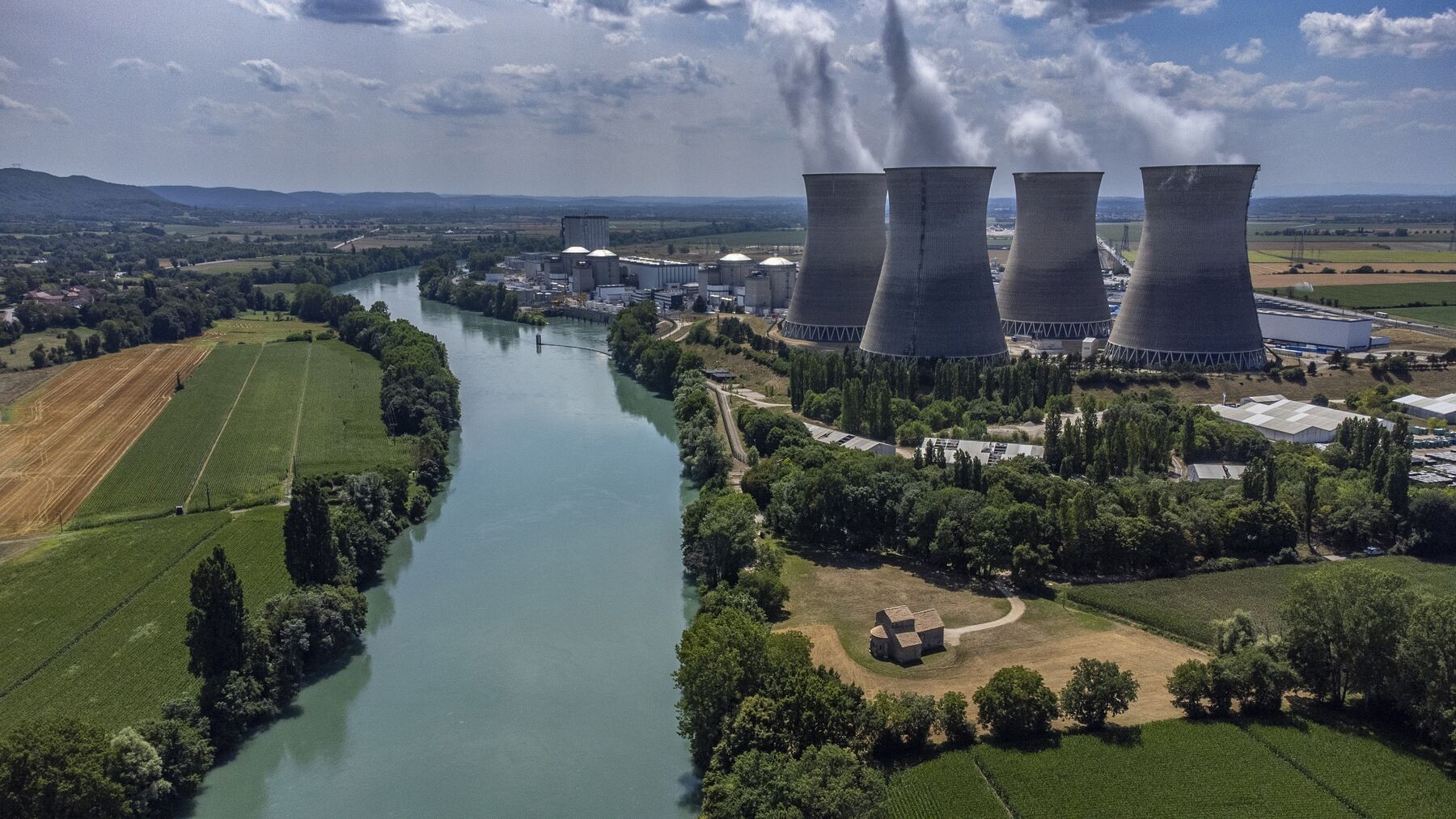
(Montel) French utility EDF has extended by two days a warning of power output curbs at three nuclear power plants – totalling 10 GW – along the river Rhone in southeastern France from tomorrow until Friday next week due to high temperatures.
Reporting by: Muriel Boselli, 08 Aug 2024, https://montelnews.com/news/f1e0a4b4-61b8-4d45-8027-d549192b910e/edf-warns-of-heat-related-cuts-at-3-nuclear-plants-10-gw
EDF could curb output at 3.6 GW Tricastin, 3.6 GW Bugey and 2.6 GW St Alban, the state-owned utility said on Thursday.
Weather service Meteo France has forecast temperatures to intensify in southeast France over the next few days, with peaks reaching 35C.
At some power plants, EDF uses river water to cool reactors. However, it could reduce output if river water temperatures or levels are too warm or too low.
Separately, EDF has extended a capacity cut warning at its 2.6 GW Golfech nuclear power plant in southwest France by three days to 17 August, due to warm temperatures.
1 This Month

of the week – Shut Down Drone Warfare!


Tell the Ukrainian Government to Drop Prosecution of Peace Activist Yurii Sheliazhenko

Petition to revoke the licensing of the Near Surface Nuclear Disposal Facility (NSDF) at Chalk River. https://www.ourcommons.ca/petitions/en/Petition/Details?Petition=e-7247
To see nuclear-related stories in greater depth and intensity – go to https://nuclearinformation.wordpress.com
-
Archives
- March 2026 (244)
- February 2026 (268)
- January 2026 (308)
- December 2025 (358)
- November 2025 (359)
- October 2025 (376)
- September 2025 (257)
- August 2025 (319)
- July 2025 (230)
- June 2025 (348)
- May 2025 (261)
- April 2025 (305)
-
Categories
- 1
- 1 NUCLEAR ISSUES
- business and costs
- climate change
- culture and arts
- ENERGY
- environment
- health
- history
- indigenous issues
- Legal
- marketing of nuclear
- media
- opposition to nuclear
- PERSONAL STORIES
- politics
- politics international
- Religion and ethics
- safety
- secrets,lies and civil liberties
- spinbuster
- technology
- Uranium
- wastes
- weapons and war
- Women
- 2 WORLD
- ACTION
- AFRICA
- Atrocities
- AUSTRALIA
- Christina's notes
- Christina's themes
- culture and arts
- Events
- Fuk 2022
- Fuk 2023
- Fukushima 2017
- Fukushima 2018
- fukushima 2019
- Fukushima 2020
- Fukushima 2021
- general
- global warming
- Humour (God we need it)
- Nuclear
- RARE EARTHS
- Reference
- resources – print
- Resources -audiovicual
- Weekly Newsletter
- World
- World Nuclear
- YouTube
-
RSS
Entries RSS
Comments RSS
 nuclear-news