Woes of France’s nuclear company AREVA, as it splits into three
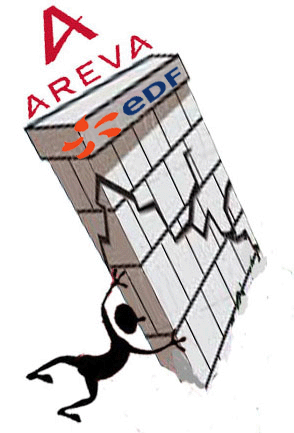
 French firm involved in Hinkley Point C unveils restructure plan Areva, a 10% equity participant in the Somerset scheme, reveals plans to split into three to stem losses and isolate Finnish project, Guardian, Terry Macalister, 16 June 16, Areva, one of the French companies at the heart of the controversial Hinkley Point C nuclear project, has unveiled plans to break itself up into three parts in a bid to stem huge losses.
The 87% state-owned atomic engineering and uranium mining company is hoping to raise €9bn (£7bn) from the government and from selling off assets after running up losses of €2bn last year.
Areva, a 10% equity participant in the £18bn planned new Hinkley scheme, is also using the split to isolate financial commitments to a hugely delayed project at Olkiluoto in Finland……
EDF, which is also part-owed by the French state, has its own massive debt problems and had refused to buy part of Areva, as ministers wanted, unless it could take the business without any financial commitments for the Olkiluoto 3 scheme.
Areva, which is providing the same European pressurised water reactor for Olkiluoto as is planned for Hinkley, is currently in a standoff over competing legal claims with the Finnish utility TVO relating to the project in Finland…….
A formal decision to go ahead with the investment at Hinkley has been put off until September amid internal opposition at EDF from unions and others about the wisdom of taking on such a major financial commitment……..https://www.theguardian.com/business/2016/jun/15/french-firm-involved-in-hinkley-point-c-unveils-restructure-plan
French company EDF manages to postpone closure of Fessenheim nuclear plant
French power company stalls nuclear plant closure http://www.dw.com/en/french-power-company-stalls-nuclear-plant-closure/a-19336521
The Fessenheim plant will not be closed until EDF is given a new assesment for damages compensation, the electric company has said. This pushes back plans to shut down the 40-year-old plant for at least a year. The fight over the plan to close France’s oldest operational nuclear power station took another turn on Thursday. The operators of the Fessenheim Nuclear Power Plant near the German and Swiss borders want a new assessment of the damages they will be awarded before they begin the process of shutting down the reactors.
The news came at the same time French nuclear watchdog ASH said one of Fessenheim’s reactors had to be shut down temporarily due to irregularities in a steam generator.
Opposition to Fessenheim began even before it was built in the 1970s, but has ramped up in recent years due to a number of minor safety breaches in the past decade. Leading the charge has been anti-nuclear power Germany, particularly the state of Baden-Württemberg, whose border lies a mere 1.5 kilometers (0.93 miles) from the reactors.
President Francois Hollande had promised to shut the plant by the end of 2016, but now EDF, France’s majority state-owned electrical company, wants a new appraisal of how much the government should pay it in damages for losses incurred as a result of the shut down. They say the 100 million euros ($114 million) offered by the government is far too little.
Observers say that a realistic timeline for the plant to go offline would be 2018, but to that end EDF has given no official date for its end of operations.
Finland concerned about the uncertain state of France’s nuclear industry
 Finns deeply worried about French nuclear industry Ft.com Richard Milne, Nordic Correspondent , 14 June 16
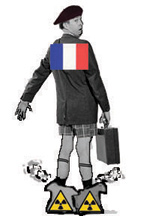
One of the main international customers for a much-delayed and costly nuclear reactor has expressed deep worries over the future of France’s atomic industry amid signs of political wrangling.
Finland’s TVO was the first customer for French nuclear group Areva’s European Pressurised Reactor technology — due to also be used at the UK’s controversial Hinkley Point power station — but the project has been beset by large cost overruns and a delay of almost a decade.
The two companies had been in negotiations in recent weeks to resolve multibillion-euro legal claims by both parties, as well as pave the way for the sale of a majority stake in Areva’s nuclear reactor business to French utility EDF.
But the sudden breakdown of those talks has rattled TVO, which operates some of Finland’s nuclear power plants. Jarmo Tanhua, chief executive, told the Financial Times of his big concerns about the future of France’s nuclear industry.
“We are afraid of what is happening. One thing is we don’t really understand why we don’t proceed with the negotiations. Our understanding is that it has something to do with the restructuring in France or the politics,” he said.
Mr Tanhua added that his biggest fear was that the French could decide to run down “some parts of the industry or some know-how”, particularly in its EPR technology.
AREVA’s second biggest shareholder, Kuwait funds, wants to sell out of AREVA
 Kuwait fund wants to sell French nuclear group Areva stake -media, 13 June 16, ra ra http://www.reuters.com/article/us-areva-kuwait-idUSKCN0YZ19M Sovereign wealth fund Kuwait Investment Authority (KIA) has told French authorities it wants to sell its stake in nuclear group Areva (AREVA.PA), La Lettre de l’Expansion reported on Monday.KIA is Areva’s second-biggest shareholder with a 4.82 percent stake, according to ThomsonReuters data.
The newsletter said the Kuwaiti fund had complained that its investment in Areva, which is majority owned by the French government, was made based on incorrect company accounts.
French Industry Minister Emmanuel Macron and Areva declined to comment on the report. KIA was not immediately available for comment.
KIA paid 600 million euros ($676 mln) for the stake in 2010, but since then Areva shares have plunged by about 90 percent as the firm’s equity has been wiped out by years of losses. Areva will be rescued by a 5 billion euro state-funded capital increase and its nuclear reactor unit will be taken over by state-owned utility EDF (EDF.PA) later this year or early next year.
The French state holds about 87 percent of Areva’s capital.
KIA or other minority shareholders have never publicly complained about Areva’s accounts, but former Areva chief executive Anne Lauvergeon was put under formal investigation last month for her role in the 2007 acquisition of uranium mining firm Uramin.
In France, a formal investigation does not automatically lead to a trial but often does.
Lauvergeon has repeatedly denied any wrongdoing and has said that asset depreciations at Uramin were partly due to the collapse of uranium prices after the Fukushima nuclear disaster in Japan in March 2011.
Areva has had to write down billions of euros on Uramin, which contributed to years of losses and eventually wiped out its equity, leading to a state rescue package early this year.
($1 = 0.8875 euros)
(Reporting by Geert De Clercq, Michel Rose and Andrew Torchia; Editing by Susan Fenton and Alexander Smith)
Renewable power peaks in Western Europe squeezing out French nuclear power
France is surrounded by countries with a lot of solar and wind, with the exception of Switzerland. It thus seems that renewable power peaks in western Europe might be squeezing out French nuclear power.
French nuclear under pressure – from German renewables http://reneweconomy.com.au/2016/french-nuclear-pressure-german-renewables-27574 By Craig Morris on 7 June 2016 In late May, strikes reduced nuclear power production in France. Yet even more plants were offline a few weeks earlier without any strikes at all. German and European renewable electricity may have been one reason why France switched off so many nuclear plants that weekend. Craig Morris takes a look.
The news has been a bit difficult to comprehend. For instance, Reuters reported that labor union strikes on May 26 would affect the country’s “19 plants”. To be more precise, the country has 58 reactors in 19 locations. The difference in these numbers is important if we want to understand what it means that nine reactors were switched off that day because of the strike. Less than a sixth of the reactors were thus affected, not nearly half. Still, nuclear “must be designed to sidestep labor-management antagonisms,” wrote Mark Hertsgaard back in 1983. Strikes are relevant for nuclear safety.
On the other hand, 33 of France’s 58 reactors were offline or running at reduced output that day. Yet, the situation on Thursday (May 26) was not as grave as the one on Sunday (May 15) though it drew much less attention. The strikes on May 25 “only” brought nuclear power production down below 40 GW (and briefly below 37 GW, as shown in the chart below [on original] ).
In contrast, nuclear power production fell below 28 GW on Sunday (May 15) which may be an historic low (it is the low for the year). Note as well the time difference; the low on May 26 (workday) occurred in the middle of the night, when demand is low. But the low on Sunday (May 15) occurred in the afternoon.
There is an interesting correlation between the probably record peak share of renewable electricity in Germany at 3 PM that same day. As the chart below [on original] shows, wind and solar power collectively came in at around 35 GW – to serve demand only around 10 GW higher. All other power plants (hydro, biomass, coal, natural gas, and nuclear) were pushed down to 17 GW, more than half of which was for export.
That day, 34 of France’s 58 nuclear reactors were off-line or running at throttled output, a number that may be an historic record (if anyone can help us find that out, please use the comment box below). Eight of those 34 events were unplanned.
Note that all eight of those unplanned events in France began no later than May 14, the day before the new record in the share of renewable electricity in Germany. But as the chart above [on original] shows, renewables were already putting intense pressure on Germany’s power fleet that Saturday as well.
France is surrounded by countries with a lot of solar and wind, with the exception of Switzerland. It thus seems that renewable power peaks in western Europe might be squeezing out French nuclear power. If so, we will see how flexible the nuclear fleet can be. My bet is that France cannot afford to build up solar and wind any further unless it starts closing nuclear reactors. If neighboring countries continue to develop these two energy sources, the result could be more failures in France’s aging nuclear fleet.
Some of the other shutdowns deserve closer attention. On March 31, the nuclear plant Paluel 2 “just barely escaped catastrophe,” as Le Parisien put it (in French). That day, a 465-ton steam generator suspended above the reactor’s concrete pool (the facility was not in operation at the time) fell some 22 meters, causing an impact “comparable to an earthquake,” according to the French paper. It is unclear whether the reactor will ever go into operation again.
If it doesn’t, then the country’s oldest reactor, Fessenheim, technically might not need to be switched off. The current deal is that it will be shut down so that the new one in Flamanville can be turned on. Flamanville may never be completed, however, and Fessenheim is not doing so well itself. Block 1 was switched off in May when the potential for a leak was discovered. Overall, the reactor failed four times in May alone and was also switched off completely once for two days of scheduled maintenance.
France has put so many eggs in the nuclear basket that it cannot transition away from the technology. And because too many people concerned about carbon emissions fail to understand how incompatible nuclear is with wind & solar, France just may try to integrate the two. The result could be an accident that will change public opinion in the country forever, but it would be a high price to pay for the insight that the future is with wind & solar – and that nuclear is incompatible with them.
Hinkley nuclear project’s future is in doubt – French unions not happy with Hinkley plan

 Hinkley Point: French unions put nuclear plant’s future in doubt By Jake Morris & Chris Cook BBC Newsnight 27 May 2016
The future of the planned new nuclear power plant at Hinkley Point remains in doubt as key French unions still oppose the project, BBC Newsnight has learned.
EDF, which would build the plant, had delayed a decision on the project in Somerset until the summer while it consulted French union representatives.
The company, which is 85% French state-owned, had hoped to win support from a committee of workplace representatives.
But the committee said staff had not been reassured about the plant’s costs.
Trade union representatives hold six of the 18 seats on EDF’s board.
‘Several reservations’
Jean-Luc Magnaval, secretary of the Central Works Committee that EDF consulted with, told Newsnight that staff feared the cost of the project would cripple EDF.
He said: “We have reservations about several aspects of the project: organisation, supply chain, installation, and procurement.
“The trade unions are unlikely to give their blessing to the project in its current state.
“We are not reassured by the documents we have received. We have been given a marketing folder, not the full information we require.
“We got the documents on 9 May – we are sending EDF a request for more explanations.”…….
EDF chief executive Vincent de Rivaz also told MPs on the committee that he did not know when a final decision on the project would be made…….
While one third of the £18bn capital costs of the project are being met by Chinese investors, Hinkley Point would remain an enormous undertaking for the stressed French company……..http://www.bbc.com/news/business-36394601
EDF hoping to extend life of nuclear reactors, postpone decommisson costs
EDF sees French energy plan shaping nuclear depreciation schedule http://uk.reuters.com/article/uk-edf-nuclear-idUKKCN0YA211 PARIS | BY GEERT DE CLERCQ 19 May 16.The French government’s energy investment plan due in July will be a key indicator for whether and for how long EDF will extend the depreciation period of its nuclear plants, an executive said on Thursday.
EDF hopes to get nuclear energy regulator ASN’s authorisation to extend the lifespan of its nuclear plants to 50 years from 40, and already wants to extend the depreciation period on these assets, which would boost bottom-line profit.
Early this year ASN said it expects to give generic guidelines on French nuclear plant life extensions by 2018, but said extensions could not be taken for granted and that they would be decided reactor by reactor.
The government’s long-awaited multi-year energy investment plan (PPE) – implementing the August 2015 energy transition law – will not specify reactor lifespan, but should set targets for the share of nuclear in France‘s power mix.
President Francois Hollande has vowed to reduce that share from 75 percent to 50 by 2025, but has taken no concrete steps towards that goal.
“The PPE, and notably its nuclear chapter, expected early July, will figure largely in our decision about the accounting lifespan of our nuclear reactors,” EDF nuclear chief Dominique Miniere told reporters.
In 2003, EDF extended the depreciation schedule for its reactors in its accounts to 40 years from 30 – six years before the ASN authorised the move.
CEO Jean-Bernard Levy said in April EDF plans to extend the depreciation period by the closing of first-half results.
Miniere said the PPE should signal how many of EDF’s 58 reactors can keep operating, which will determine over what period reactors and related maintenance costs can be depreciated.
He said life extension would also impact EDF’s 23 billion euros (1 billion pounds) worth of decommissioning and nuclear waste provisions.
“Delaying reactor decommissioning also means delaying provisions,” he said. Miniere said 80 percent of EDF’s 58 reactors were built between 1980 and 1990. From 2020, many need to close or get approval operate another decade.
Miniere said every reactor has annual maintenance costs of about 50 million euros, or about 3 billion euros per year for EDF’s fleet.
Extending EDF’s reactors by 10 years and incorporating safety lessons learned from the Fukushima disaster will boost that to 4-4.2 billion euros per year in the 2014-2025 period, a total of just over 50 billion, after which costs will ease to 4.2-3 billion euros per year, he said. (Reporting by Geert De Clercq, editing by David Evans)
France’s President Hollande backs Hinkley nuclear project, despite near bankruptcy of EDF
 Hollande renews support for Hinkley Point nuclear reactors http://www.theguardian.com/uk-news/2016/may/17/hollande-renews-support-edf-hinkley-point-nuclear-reactors
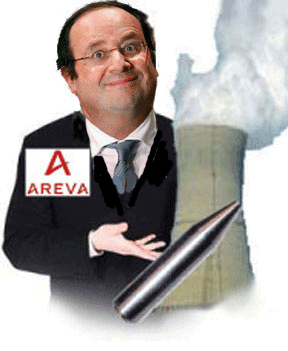
French president backs project despite fears that £18bn price tag could bankrupt EDF, which is 85% state-owned François Hollande has renewed his support for the controversial nuclear project planned by the French energy company EDF at Hinkley Point in Britain.
“I am in favour that this project goes ahead,” the French president told Europe 1 radio on Tuesday.
“It’s very important to understand that we need a high-performance, highly secure nuclear industry in France, and that we cannot let others take over terrain, including on exports, that has been French up to now,” he said.
A final decision on the plan to build two new-generation nuclear reactors at Hinkley Point in south-west England was due this month, but was delayed after unions at EDF demanded a review of the costs.
A joint project between EDF and China General Nuclear Power Corporation, it carries a projected price tag of £18bn ($26bn, €23bn) that will make it one of the world’s most expensive nuclear power plants.
Unions at EDF, which is 85% state-owned, fear it could bankrupt the company, which is already saddled with more than €37bn of debt.
Last month, the management agreed to consult the internal committee which has brought in outside experts to review the financial implications of the project.
Hollande said the review would be completed “in the coming weeks”.
There have been dissenting voices over Hinkley Point within the French government.
On Friday, France’s environment minister Ségolène Royal, who is also mother to Hollande’s children, told the Financial Times that she was worried about the “colossal sums” involved in the project and questioned whether it should go ahead
Ratings agencies Standard and Poor’s and Moody’s both lowered their forecasts for EDF last week, saying efforts to streamline the company were insufficient.
Hollande restated his vow to restructure and boost financing at EDF and rival energy giant Areva, “because they are the future”.
“The French nuclear industry has 200,000 employees. It represents our energy independence,” Hollande told Europe 1.
“EDF and Areva are public companies on which we should rely. But at the same time, we must give them new support.”
CGN, which is due to cover a third of the costs, said on Monday that it would not go ahead with the project if EDF pulls out.
Former AREVA CEO ‘Atomic Anne’ Lauvergeon under a cloud at Rio Tinto
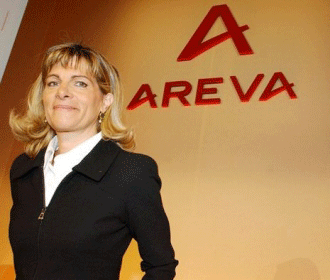 The future of Rio Tinto director ‘Atomic Anne’ Lauvergeon is under a cloud, The Age, May 16, 2016 Peter Ker Resources reporter The future of Rio Tinto director Anne Lauvergeon is under a cloud after French prosecutors starting investigating her conduct while chief executive of energy giant Areva almost a decade ago.
French prosectors spent Friday questioning Ms Lauvergeon over whether she deliberately filed misleading accounts for Areva in 2007.
The investigations centre on Areva’s disastrous takeover of London listed company Uramin in 2007, and the disclosure of multi-billion dollar impairments several years later.
London newspaper the Financial Times reported over the weekend that French prosecutors had confirmed that Ms Lauvergeon was being investigated for “publication of inaccurate accounts” during her time at Areva.
The 56-year-old Ms Lauvergeon, who is known as “Atomic Anne” in France, has served as a non-executive director of Rio since 2014.
The weekend’s revelations come barely two months after French prosecutors launched a separate investigation into alleged insider trading by Olivier Fric, who is Ms Lauvergeon’s partner.
The prosecutors are investigating whether Mr Fric used privileged information to profit from the Uramin deal. Mr Fric’s lawyers have reportedly denied the allegations.
The controversy surrounding Ms Lauvergeon and Mr Fric was known when the Rio board endorsed Ms Lauvergeon for re-election in March……..
Ms Lauvergeon’s continuing work at Rio while the French investigations go ahead is at odds with the approach taken by ASX chief executive Elmer Funke Kupper, who has stood down while the Australian Federal Police conduct anti-bribery investigations into his time spent working for Tabcorp. http://www.theage.com.au/business/mining-and-resources/the-future-of-rio-tinto-director-atomic-anne-lauvergeon-is-under-a-cloud-20160515-govnv7.html
Sparks flew at Electricite de France’s AGM: EDF has €37 billion of debt
nuClear News No 85 May 16“…….Sparks were flying at EDF’s Annual General Meeting on 12th May as EDF employees were given a chance to air their views and grill the company’s board, which remains divided on whether to go-ahead with HPC. In the run up to the meeting EDF announced that the contingency needs of HPC could increase the cost by about £3bn to £21bn.EDF desperate for business? trying to quickly sell 6 nuclear reactors to India
 EDF to propose deal for six nuclear reactors in India by year-end By Reuters | 12 May, 2016 PARIS: EDF will deliver a proposal to theIndian government by year’s end to build six nuclear reactors, an executive at the French utility said on Thursday, in what could be the world’s biggest nuclear deal.
“Hinkley Point will help us continue our activities and preserve our skills base and jobs,” he said. ……..
Chief Executive Jean-Bernard Levy told shareholders that EDF needs growth in international markets because European power markets are stagnant. http://economictimes.indiatimes.com/articleshow/52240726.cms?utm_source=contentofinterest&utm_medium=text&utm_campaign=cppst
Nuclear corporation EDF’s Annual General Meeting faces more financial gloom
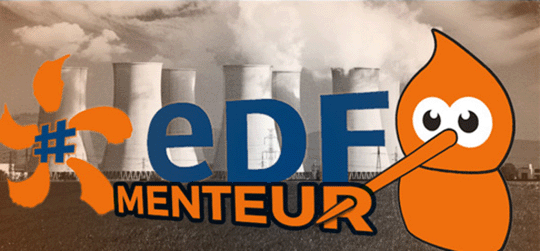 Nuclear giant EDF Energy reports sales fall as AGM looms, BBC News, 11 May 16 French energy giant EDF says sales fell 7% in the first three months of the year in the face of stiff competition, a mild winter and lower energy prices.
The figures come ahead of Wednesday’s AGM where investors will quiz management over their plans for the Hinkley Point nuclear plant in the UK.
EDF, 85% controlled by the French state, has struggled to find the cash for its 66.5% stake in the project.
In April it pushed a final decision on the £18bn plant back to September.
Chief financial officer Thomas Piquemal resigned in April following an internal disagreement over whether to press on with the controversial project.
However, EDF has outlined plans to raise €4bn, with up to €3bn provided by the French government.
Tough markets
Credit rating agencies are due to assess the group in the coming days and their verdict on its finances will determine how easy it will be for the group to raise cash.
Meanwhile, tough market conditions mean EDF is cutting costs and planning to sell €10bn in assets by 2020, including a stake in French power-grid operator RTE……http://www.bbc.com/news/business-36262029
Former Electricite de France SA Chief Financial Officer says he quit because of financial risks of Hinkley nuclear project
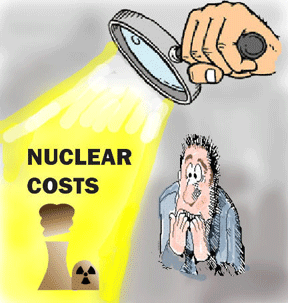 Ex-EDF CFO Quit Over Financial Risks From U.K. Nuclear Project, Bloomberg, Francois De Beaupuy FrancoisDeBeaup
-
Piquemal says French utility needs to strengthen balance sheet
-
EDF can’t afford significant downgrade in rating: Piquemal
Former Electricite de France SA Chief Financial Officer Thomas Piquemal said he quit two months ago to highlight the risks of proceeding with the 18 billion-pound ($26 billion) Hinkley Point nuclear power project without additional financing.
The timetable pushed by EDF Chairman and Chief Executive Officer Jean-Bernard Levy for an investment decision on the U.K. project meant there wouldn’t have been time to strengthen the utility’s balance sheet, Piquemal told a hearing at the National Assembly in Paris. That would have left the company reliant on its 85 percent shareholder, the French state, providing funding and threatened EDF with the same fate as troubled nuclear-reactor builder Areva SA, he said.
“A new nuclear project is an extra risk for a company,” Piquemal said in his first public statement since quitting. “I didn’t want to approve a decision that could leave EDF in Areva’s situation one day.”……
Financial Strain
Speculation has mounted over the future of Hinkley Point since Piquemal resigned amid concerns the project would put EDF under too much financial strain, while labor unions have called for a three-year delay until similar nuclear plants built by the company start operating in France and China…….
EDF has held off on making a final investment decision even after forming a partnership with China General Nuclear Power Corp. and securing guaranteed power prices from the U.K. government at almost three times the current market rate for 35 years.Rating companies will probably downgrade EDF because large nuclear projects such as Hinkley Point will increase its risk profile, the ex-CFO said. While EDF had no financing problems at the end of 2015, it can’t afford a “significant” downgrade that would push its hybrid debt into the “junk” category because it would complicate a potential refinancing from 2020, Piquemal said. http://www.bloomberg.com/news/articles/2016-05-04/ex-edf-cfo-quit-over-financial-risks-from-u-k-nuclear-project
UK nuclear parts made at French plant in fakery probe
Telegraph Emily Gosden, energy editor 4 MAY 2016 Parts of the Sizewell B nuclear power station in Suffolk were made at a French plant being investigated over possible fake manufacturing records, EDF Energy has confirmed.
Mr Piquemal said he had sought a three-year delay to Hinkley as he was not prepared to “bet 60 to 70pc of [EDF’S] equity on a technology that has not yet proven that it can work and which takes 10 years to build”.
He said the proposed reactor technology involved “major construction risk”.
EDF has already postponed a decision on the £18bn Hinkley project until September as it consults with unions on a plan to shore up its balance sheet, but the problems at the Le Creusot plant have raised further doubts about the project and as well as nuclear safety at existing plants………http://www.telegraph.co.uk/business/2016/05/04/uk-nuclear-parts-made-at-french-plant-in-fakery-probe/
‘400 irregularities’ in nuclear power plant parts – admits France’s nuclear firm AREVA
France’s nuclear giant Areva admits to ‘400 irregularities’ in nuclear power plant parts, with 50 still in operation, Telegraph, UK, Henry Samuel, Paris 3 MAY 2016
France’s ailing nuclear giant, Areva, faced a major scandal on Tuesday after the country’s nuclear watchdog confirmed there have been “irregularities” in 400 parts produced in its reactors since 1965, and that “around 50 are currently in service in France’s nuclear power plant fleet”.
France’s independent Nuclear Safety Authority, ASN, said the “irregularities” were listed in an audit it had ordered from Areva after it detected a “very serious anomaly” in a reactor vessel in the country’s Flamanville EPR nuclear plant, the same model Britain plans to use for two new plants at Hinkley Point.
The fault in the vessel destined to house the plant’s nuclear fuel and confine its radioactivity was detected last year.
“These irregularities consist in incoherencies, modifications or omissions in manufacturing dossiers,” ASN said in a statement.
The revelation came hours after Areva’s director general admitted that 400 documents assessing whether parts of nuclear plants met required standards may have been “falsified”.
The doubts over documents supposed to rubber-stamp the quality of parts destined for new-generation nuclear power reactors will be a cause for serious concern for the British government as it is poised to finalise a controversial, multi-billion pound contract to build reactors at Hinkley Point designed by Areva.
Areva launched an audit late 2015 into anomalies at the Le Creusot Forge site, which specialises in highly complex moulded parts for new-generation nuclear reactors. http://www.telegraph.co.uk/news/2016/05/03/frances-nuclear-giant-areva-admits-to-400-irregularities-in-nucl/
1 This Month

of the week – Shut Down Drone Warfare!


Tell the Ukrainian Government to Drop Prosecution of Peace Activist Yurii Sheliazhenko

Petition to revoke the licensing of the Near Surface Nuclear Disposal Facility (NSDF) at Chalk River. https://www.ourcommons.ca/petitions/en/Petition/Details?Petition=e-7247
To see nuclear-related stories in greater depth and intensity – go to https://nuclearinformation.wordpress.com
-
Archives
- April 2026 (114)
- March 2026 (251)
- February 2026 (268)
- January 2026 (308)
- December 2025 (358)
- November 2025 (359)
- October 2025 (376)
- September 2025 (257)
- August 2025 (319)
- July 2025 (230)
- June 2025 (348)
- May 2025 (261)
-
Categories
- 1
- 1 NUCLEAR ISSUES
- business and costs
- climate change
- culture and arts
- ENERGY
- environment
- health
- history
- indigenous issues
- Legal
- marketing of nuclear
- media
- opposition to nuclear
- PERSONAL STORIES
- politics
- politics international
- Religion and ethics
- safety
- secrets,lies and civil liberties
- spinbuster
- technology
- Uranium
- wastes
- weapons and war
- Women
- 2 WORLD
- ACTION
- AFRICA
- Atrocities
- AUSTRALIA
- Christina's notes
- Christina's themes
- culture and arts
- Events
- Fuk 2022
- Fuk 2023
- Fukushima 2017
- Fukushima 2018
- fukushima 2019
- Fukushima 2020
- Fukushima 2021
- general
- global warming
- Humour (God we need it)
- Nuclear
- RARE EARTHS
- Reference
- resources – print
- Resources -audiovicual
- Weekly Newsletter
- World
- World Nuclear
- YouTube
-
RSS
Entries RSS
Comments RSS
 nuclear-news