The nuclear power dilemma: where to put the lethal waste?

The nuclear power dilemma: where to put the lethal waste
France is exploring new ways to dispose of radioactive materials but public opposition is as fierce as ever, Ft.com Anna Gross in Chooz and Sarah White in Bure 6 Feb 22,
Every morning, Benoit Gannaz places a small black device in his breast pocket to make sure his work is not killing him. Like every worker at the Chooz A nuclear power facility in northern France, he carries a detector that measures ionising radiation levels at all times. The reactor was turned off more than three decades ago and the most hazardous materials removed soon after, but nobody here is taking any chances — least of all the project manager overseeing the challenging and lengthy process of decommissioning Chooz A. Gannaz’s job is to ensure the remaining hazardous materials on site are removed and stored away safely now that the lifecycle of the reactor is at an end. ………….
…………….. as momentum grows for a new generation of nuclear power plants in Europe and elsewhere, there is little discussion of the huge costs and complexity of dismantling the plants at the end of their approximately 50-year lifespan. And nobody has yet given a satisfactory answer to the question of what to do with thousands of metric tonnes of high-level nuclear waste, some of which can remain radioactive, and thereby lethal, for up to 300,000 years.
A quarter-million metric tonnes of spent fuel rods are believed to be spread across 14 countries worldwide, mostly collected in cooling pools at closed-down nuclear plants, as engineers and waste specialists puzzle over how to dispose of them permanently. Many believe these are sitting ducks for terrorist organisations and that they could potentially cause catastrophic spills or fires. The cost of maintaining these sites can be extraordinary, and last for decades. Sellafield in the UK, for example, contains the largest stock of untreated nuclear waste on earth, including 140 tonnes of plutonium. Though the plant was shut down in 2003, it remains the biggest private employer in Cumbria. More than 10,000 people continue to undertake a colossally expensive clean-up that is expected to take more than 100 years and cost above £90bn.
“Nowhere in the world has anyone managed to create a place where we can bury extremely nasty nuclear waste forever,” says Denis Florin, partner at Lavoisier Conseil, an energy-focused management consultancy in Paris. “We cannot go on using nuclear without being adult about the waste, without accepting we need to find a permanent solution.” With the Chooz A reactor, France is attempting to do just that — and in the process create a prototype for how decommissioning could be done more efficiently. If it succeeds, it could help convince environmentalists that nuclear power has a part to play in creating a greener planet. But there is still a heavy dose of popular opposition to the best option there is on the table for the waste: burying it.
The legacy of a spent reactor The challenge with cleaning up Chooz A is not so much the site itself as the materials once contained within. The facility was shut in 1991, and within three years 99.9 per cent of the most highly radioactive materials had been evacuated to a specialist plant 620km away in La Hague, in the north-west of France. According to French law, the most highly radioactive elements of a plant, the fuel and the rods, should be removed as quickly as possible once the plant has been shut down — in stark contrast to policy in most other parts of the world, where the most hazardous products are handled last.
Decommissioning a reactor
Click on the numbers to see the process in sequence (Interactive graphic on original)
Some of these products have since been recycled. In a process pioneered by France, many of the uranium, plutonium and fission chemicals have been reprocessed into new fuel at the La Hague site, while waste chemicals that cannot be reused have been vitrified, or turned into glass, for short-term storage in shallow sites underground. Though EDF says the 23,000 tonnes of spent fuel it has reprocessed at La Hague are enough to power France’s nuclear fleet for 14 years, critics point to the fact that the fuel can only be reused once and the process itself creates yet more radioactive waste, without providing a long-term solution.
The dismantling of the rest of Chooz A began in 2007, after it received legal permission from the state, and is due to be completed by 2024, at a total cost of €500mn. But the most hazardous waste removed from the site will remain radioactive for centuries to come, and perhaps millennia. “Only a state or a religion will live as long as the waste, and maybe not even them,” says Florin. Countries have toyed with ejecting such waste into space or burying it deep under the seabed, but these ideas were eventually deemed either impossible or too dangerous. Only one long-term solution is broadly considered safe and feasible: deep geological repositories, where radioactive material can be stored several hundred metres below ground in formations of clay, rock salt and granite that have not moved for millions of years.
But no one has yet managed to do it. The US has come close; it pumped $15bn into a project to bury waste beneath Yucca Mountain in Nevada, but the initiative was eventually abandoned in the face of intense and sustained public backlash. Similar opposition from local communities has dogged attempts to find burial sites in Germany, the UK and Japan. Some countries have earmarked provisional sites to try again. After a decades-long planning and negotiation process with a remote island community, Finland will bury its radioactive waste in copper tubes in a tomb 1,400 feet below the granite bedrock in Olkiluoto island. The burial site is expected to begin operation in 2023.
France has identified its own site, just outside Bure, 300km east of Paris, in which radioactive waste might be entombed. Consisting of a research centre sitting above a web of tunnels and vaults almost 500 metres below ground, the Cigeo project has so far cost €2.5bn and involved 25 years of research.
The French government is due to decide this year whether to declare the site officially viable as a storage option, setting in motion another sequence of construction and authorisation stages that would lead to the first toxic samples being deposited between 2035 and 2040. The ambition is to seal all the tunnels irreversibly from 2150, with residues encased in blocks of cement or steel within the ultimate barrier — a subterranean layer of clay with the ideal properties to entrap any material that eventually seeps out. This seeping material should lose its radioactive qualities within the 100,000 years it would take them to permeate other strata,,,………………https://www.ft.com/content/246dad82-c107-4886-9be2-e3b3c4c4f315?segmentid=acee4131-99c2-09d3-a635-873e61754ec6
France is exploring new ways to dispose of radioactive materials but public opposition is as fierce as ever

“There may be a price [communities] are willing to accept in order to stomach the waste and its risks, but we don’t know what that price is yet,” … “If it’s high enough, it will ultimately add to the cost of disposal.” Local authorities have poured millions of euros of subsidies and compensation into the area to support the project
The nuclear power dilemma: where to put the lethal waste
France is exploring new ways to dispose of radioactive materials but public opposition is as fierce as ever, Ft.com Anna Gross in Chooz and Sarah White in Bure 6 FEB 22,
”………………….Resistance is fissile Cigeo has attracted the same kind of vocal opposition found at other potential burial sites. And, as a result Bure, a village of fewer than 100 inhabitants, has become a battleground where protesters have regularly clashed with police over the future of the site. Demonstrators have set up a “house of resistance” in Bure that has become a magnet for anti-nuclear protesters around the country. The former barn is equipped with a projection room, mattresses to welcome guests and a cosy communal kitchen.
Campaigners say the Bure site has become representative of a broader cause. “Beyond the waste, it’s nuclear production above all else that worries us,” says a 29-year-old jurist who gave his name as Antoine, one of a handful of campaigners manning the fort on a snowy February morning. “It’s a supposedly low carbon source of energy, but you’ve got to build the reactors . . . it is such a dangerous and destructive solution.” Yet the state holds that the undeniable risks of nuclear energy are outweighed by its potential benefits as a cost-effective way of cutting CO2 emissions. According to a report last year from French grid operator RTE, France’s cheapest way to reach carbon neutrality by 2050 would involve building 14 new reactors. Under the scenarios RTE presented, if France built no new nuclear reactors and relied exclusively on expanding renewables and extending the lifespan of existing nuclear, this would cost €10bn more per year than other options including new reactors, with the cost of decommissioning factored into the final bill.
But that may not factor in the costs of convincing French citizens to host such facilities in their backyards. Bure resident Anne-Marie Henn, a retiree, says the project has forced her and her artist husband Jacques to give up on their dream of creating a painting atelier in an annex to their home. “We’d like to leave, but our house isn’t worth anything any more,” she says. Ed Lyman, senior global security scientist with the Union of Concerned Scientists, who has spent decades researching nuclear power safety, says the science behind burying waste is robust, and the dangers of corrosion or leakage minimal. But there remain real risks for the public, he says, such as accidents happening when materials are transported to the site.
“There may be a price [communities] are willing to accept in order to stomach the waste and its risks, but we don’t know what that price is yet,” he adds. “If it’s high enough, it will ultimately add to the cost of disposal.” Local authorities have poured millions of euros of subsidies and compensation into the area to support the project and residents. In Bure, that has translated into snazzy lampposts lining every street alongside the barns and stone houses; households have also got fibre optic internet connections and sanitation networks have been improved. “We’ve got to deal with this crap,” Henn says. “At the very least we can benefit a bit from [subsidies].”
But the concerns of many communities go way beyond immediate dangers to more existential questions: how can we ensure that not just our children and grandchildren, but people living thousands of years in the future have the knowledge and understanding to handle it responsibly? And how can we be sure that the storage containers we have developed now will stand the test of time? “What we’ll be getting here is the really dangerous core of the waste,” Henn says, adding that it was “the generations to come” that worried her.
Andra, the French state agency responsible for nuclear waste management, is considering ways to warn future generations of what lies below Bure — perhaps by inscribing microscopic information on a hard disk of sapphire, designed to withstand erosion, should the site be forgotten. “Even if we lose our collective memory, the storage site will be safe,” says spokesperson Audrey Guillemenet. If these kinds of innovations fail to impress French lawmakers and the site does not win approval, that leaves the government with a problem that goes far beyond the billions spent on construction. “Some 50 per cent of the [nuclear] waste destined to come here eventually already exists,” says Guillemenet. Forget the next generation of power plants; the decades-old materials Gannaz and his predecessors have removed from Chooz A are a problem that needs a solution. If it is not Bure, then what is it? https://www.ft.com/content/246dad82-c107-4886-9be2-e3b3c4c4f315?segmentid=acee4131-99c2-09d3-a635-873e61754ec6
French nuclear capacity low in February, need for vigilance remains
French nuclear capacity low in February, need for vigilance remains – RTE Nasdaq, Forrest Crellin Reuters PARIS, Feb 4 (Reuters) – French power grid operator RTE said France’s nuclear capacity in February was expected to remain around the relatively low level recorded last winter, but there was little risk to power supply as mild weather was expected in the coming weeks.
The current maintenance schedule now allows between nine and 13 reactors to be shut down during the month of February depending on the week, either for standard maintenance or following identification of additional corrosion defects, RTE said…………
In January, the nuclear fleet reached its lowest level ever with an average of around 48 GW of available capacity for the month………
State-controlled power group EDF EDF.PA and the French nuclear safety authority ASN are expected to implement a strategy to control the corrosion that took five nuclear reactors offline, which will have consequences in terms of supply beyond this winter, added the RTE.
The effect of the outages will be reported in coming seasonal analyses and balance sheet forecasts, RTE said.
The outages at the five reactors that were taken offline following the detection of welding faults were extended in mid-January……… https://www.nasdaq.com/articles/french-nuclear-capacity-low-in-february-need-for-vigilance-remains-rte-0
Cracks found in Civaux nuclear reactors, both 1 and 2
On 21 October 2021, following ultrasonic checks scheduled during the
second ten-yearly outage of Civaux NPP reactor 1 (1450 MWe reactor), EDF
informed ASN that it had detected indications on welds on the elbows of the
safety injection system piping[2] of the reactor’s main primary system
(see image below).
As Civaux NPP reactor 2 was the only 1450 MWe reactor
not yet to have undergone these types of checks, EDF shut it down in
November 2021 so that they could be carried out ahead of the date initially
scheduled for its second ten-yearly outage.
The checks confirmed the
presence of indications similar to those of reactor 1. On 15 December 2021,
EDF informed ASN that the metallurgical analyses conducted on the parts of
the pipes removed from Civaux NPP reactor 1 had revealed the presence of
cracking resulting from an unexpected stress corrosion phenomenon on the
inner face of the piping, close to the weld bead.
ASN 31st Jan 2022
France’s far-right Marine Le Pen has pro nuclear, anti-renewables policy for the coming election.
Le Pen’s climate programme: pro-nuclear and pro-hydrogen, but anti-wind
By Nelly Moussu | EURACTIV France | translated by Daniel Eck, 27 Jan 22,
Three months before the French presidential election, far-right candidate Marine Le Pen’s Rassemblement National presented its ‘economically viable’ climate policy project, which aims to be pro-nuclear and pro-hydrogen, but anti-wind. EURACTIV France reports.
Le Pen’s spokesperson, MEP Nicolas Bay, presented Le Pen’s climate and energy programme on Tuesday (25 January), insisting on the idea of “a model that is authentically ecological but economically viable”………….
Building six EPR reactors
On nuclear power, Le Pen plans to build six new European Pressurised Reactors (EPRs) and increase the life span of existing plants. EPR is a third-generation pressurised water reactor design…………. https://www.euractiv.com/section/energy/news/le-pens-climate-programme-pro-nuclear-and-pro-hydrogen-but-anti-wind/
Striking workers reduced France’s nuclear power generation by 2.2gigawatts (GW)
Striking workers reduced France’s nuclear power generation by 2.2
gigawatts (GW) and hydropower by a further 1.3 GW, data from power utility
EDF (EDF.PA) showed early on Wednesday. EDF workers began protests on
Sunday over a government plan to increase the amount of cheap energy EDF
must sell to rivals at under-market prices, and to call for higher pay and
pensions.
Reuters 26th Jan 2022
https://www.reuters.com/business/energy/french-power-output-reduced-by-ongoing-strike-2022-01-26/
How France greenwashes nuclear weapons

President Macron has announced investment of one billion euros in research and construction of small modular reactors (SMRs). SMRs are small nuclear reactors that are to be used primarily for submarine propulsion and thus for military purposes in distant theatres of war
Behind the planned modernisation of French nuclear power, allegedly to ensure cheaper electricity, nestles the agenda of its nuclear weapons programme. For years now, the state has imposed the exorbitant costs of its civilian-military nuclear industry on the French public.
France plans to modernise its nuclear power – allegedly to insure cheaper and greener electricity. Yet behind it nestles a nuclear weapons agenda https://www.ips-journal.eu/topics/foreign-and-security-policy/how-france-greenwashes-nuclear-weapons-5668/ 23 Jan 22,
At the turn of the year, France assumed the presidency of the Council of the European Union. And last week, the EU defence ministers met informally to talk about the Common Security and Defence Policy (CSDP). Among other issues, they discussed nuclear security and nuclear deterrence strategies.
In recent years, the French president has been a strong advocate of nuclear power. Historically, France’s independent development of nuclear technology for atomic weapons has been an important source of national pride. Since the 1990s, however, nuclear power has been declining as a consequence of the Chernobyl disaster. Annual reports by Mycle Schneider, an international consultant on energy and nuclear policy, show that this is a part of a global trend. Nevertheless, France continues to be a tireless advocate of this technology.
Nuclear answers for green energy and weapons
On 1 January 2022, a draft regulation of the European Commission classified the investment in nuclear energy and natural gas as sustainable. This concerns billions of euros in financial support in the so-called EU Taxonomy. Emmanuel Macron was keen to acquire a ‘Green Label’ for nuclear energy. France’s real interests concerning nuclear energy emerged clearly in a speech Macron delivered on a visit to Framatome’s Le Creusot facility in 2020: ‘Without civilian nuclear energy there is no military use of this technology – and without military use there is no civilian nuclear energy’. In a nutshell, this means that without a cutting-edge nuclear industry France cannot continue to expand and modernise its nuclear weapons arsenal. This remains true for all nuclear weapons states.
At present, these states are upgrading their arsenals. Russia and the United States are procuring new delivery systems – such as hypersonic missiles – that will be able to deliver their nuclear bombs much more quickly and accurately, leaving the enemy with no time to defend themselves. Thus, a new nuclear arms race has begun.
The US think tank Atlantic Council is quite open about how crucial it regards civilian use of nuclear power to be for national security policy: the civilian US nuclear industry is a U.S. strategic asset of vital importance for US national security. Similar formulations can be found in the speeches of other presidents of nuclear weapons states. Its civilian nuclear complex costs the United States at least USD 42.4bn a year. The International Campaign to Abolish Nuclear Weapons (ICAN) claims that all nuclear weapons states together invest over USD 100bn a year in their nuclear weapons arsenals.
France, too, wants to join in the ongoing technological development in other nuclear weapons states for quite some time. President Macron has announced investment of one billion euros in research and construction of small modular reactors (SMRs). SMRs are small nuclear reactors that are to be used primarily for submarine propulsion and thus for military purposes in distant theatres of war. The new Hunter class submarines underline France’s great-power ambitions. This needs to be understood against the background of the collapsed submarine deal with Australia. Last year Australia announced that it was cancelling its contract to buy French diesel submarines in favour of US and UK nuclear technology.
Flexible submarine-based nuclear weapons systems have major strategic importance for all nuclear weapons states. They have the capability of going for up to three months without surfacing. They can cover great distances at high speeds undetected and surface almost wherever they want around the globe. They are capable of launching up to 20 missiles, each with a dozen individual guided warheads. All this plays a key role in the nuclear weapons doctrine of the five ‘official’ nuclear weapons states, the United States, the United Kingdom, Russia, France, and China. At the same time, the possession of this technology underpins these countries’ great-power status. France, like the other nuclear weapons states, is keen to consolidate its status.
Exposing the French agenda
The first meeting of EU defence ministers under the French Council Presidency was held on 12–13 January 2022 in Brest. This is where France’s sea-based nuclear weapons are stationed, making this a clear demonstration of its military power. As early as his 2020 speech in Le Creusot, the French President confirmed his country’s military ambitions: ‘the nuclear industry will remain the cornerstone of our strategic autonomy. It affects every aspect of deterrence, powering our nuclear submarines, submarines for launching ballistic missiles, and powering our nuclear aircraft carriers.’
Nuclear power and nuclear sharing are controversial in the European Union. Austria and Luxembourg have sharply criticised the EU Taxonomy. At the same time, there has been a multilateral UN treaty banning weapons of mass destruction since the Treaty on the Prohibition of Nuclear Weapons of 22 January 2021.
Behind the planned modernisation of French nuclear power, allegedly to ensure cheaper electricity, nestles the agenda of its nuclear weapons programme. For years now, the state has imposed the exorbitant costs of its civilian-military nuclear industry on the French public. The costs of building the pressurised water reactor in Flamanville, for example, ran to €19.4bn. Ultimately, electricity customers and investors subsidise military applications with ‘climate-saving nuclear power’.
In any case, as France takes over the EU Council Presidency it is now perfectly placed to promote the civilian-military use of nuclear energy and a European security and defence strategy based on the doctrine of nuclear deterrence.
The tribulations of France’s Flamanville nuclear reactor.
| “EDF is struggling to sleep off its nuclear power”. Here is the title at the top of page 3 of the Chained Duck of this Wednesday, January 19, 2022. Is this a new article following the announcement, a week ago, of a delay and an additional cost of 300 million euros for the site of the future Flamanville EPR reactor? No, there is no question of welding rework operations taking longer than expected. “The energy company must face a formidable puzzle encountered on the reactor vessel, where nuclear fission takes place”, announces from the outset journalist Hervé Liffran. The concern was flushed out followingan incident on the other side of the world, in China. The Taishan nuclear power plant, with the world’s first EPR reactor in service, was shut down on July 30, 2021, after damaged fuel rods caused a buildup of radioactive noble gases in the reactor’s primary circuit. In November, we learned thata fault in the design of the tank would be the cause of the problem. It was a whistleblower working in thenuclear industry who informed, on condition of anonymity, the Commission for Independent Research and Information on Radioactivity (Criirad), which in turn alerted the Authority. Nuclear Safety Authority (ASN) by post. And the shutdown of the plant was ordered “because of the presence of numerous and dangerous debris in the water of the primary circuit bathing the heart of the reactor”. Questioned this Wednesday on this subject, the Deputy Director General of the Nuclear Safety Authority, Julien Collet, replied: “ASN has asked EDF to take account of experience feedback from this event at EPR Taishan 1 prior to the commissioning of the Flamanville EPR reactor. EDF will either have to demonstrate that the Flamanville EPR is not concerned, or propose measures to prevent fuel degradation. JHServers 20th Jan 2022 https://jhservers.com/nuclear-is-the-flamanville-epr-vessel-poorly-designed/ |
EDF’s costly EPR nuclear reactor failures – in France, UK, China
Emmanuel Macron hammers EDF as Britain’s nuclear energy future hangs in
the balance. The energy giant is our last hope in the push for big new
reactors. But the French president has handed it an almighty financial
headache.
Macron ordered the company to sell more electricity at knock-down
prices to its competitors, in order to keep a lid on soaring energy bills.
For Macron, it makes complete political sense. Three months out from an
election, he is keen to temper voter anger over energy costs, which, as in
the UK, have been pushed higher by surging gas prices.
EDF is 84 per cent owned by the French state and has to bow to its will — even when the
government’s intervention is “painful and defies good economic
sense”, as newspaper Le Monde put it. EDF calculated that Macron’s
demand would cost it €8.4 billion (£7 billion).
The company had no choice but to scrap its profit guidance for the year and warned investors
that it may need to seek more capital. Shares in EDF, listed in Paris,
plunged. In a leaked memo, chief executive Jean-Bernard Levy claimed that
Macron’s demand was a “real shock”. “It is going to weigh very
heavily on our results,” he added.
Trade union members at EDF have called
for a strike this week in protest at the president’s order.
Macron’sedict could not have come at a worse time for EDF, which was already facing
huge demands on its capital. On the same day that Kwarteng toured Hinkley,
the company cut its expected output of nuclear power this year by 8 per
cent, after warning that five faulty reactors in France would have to stay
offline while being serviced for longer than expected. This pushed the
total number of EDF reactors currently offline to nine.
EDF is midway through a long, slow upgrade of France’s fleet of 56 ageing nuclear
reactors; this project could cost it at least €50 billion. And, earlier
this month, it pushed back the start date and nudged up the expected cost
for its new reactor at Flamanville in France; the project’s cost has
quadrupled from initial estimates in 2004.
Flamanville’s overruns havetheir parallels at Hinkley Point, which is also years late and over budget.
It uses the same type of European pressurised water reactor (EPR) as
Hinkley, too. Other EPRs designed by EDF have run into problems: the
much-delayed Olkiluoto nuclear power plant in Finland is now finally
looking to start up this year; and Taishan — in Guangdong province in
China — has been offline since July because of a fault.
Taishan was supposed to be EDF’s “proof of principle for the EPR design”, said
Paul Dorfman, associate fellow in the science policy research unit at
Sussex University. “But that has not been the case. To shut down the
reactor is hugely expensive in terms of power, reputation, and in potential
safety … The EPR reactor has failed miserably in terms of cost overruns
everywhere that it’s been built.”
EDF remains confident that Hinkley
will be completed by 2026. Five and a half years into construction, it is
now at the halfway point. When operational, it will supply 7 per cent of
the UK’s electricity. About half of the £23 billion earmarked for
Hinkley has already been spent, and the remainder is expected to come from
EDF’s €27.5 billion cash pile. Hinkley, in other words, should be
completed despite the company’s travails. The outlook for EDF’s
Sizewell B in Suffolk, the next big nuclear project in the queue, is less
clear.
Times 23rd Jan 2022
https://www.thetimes.co.uk/article/emmanuel-macron-hits-nuclear-button-edf-hinkley-point-cpcvtccn3
France’s Nuclear Safety Authority considers abandoning the reprocessing of nuclear waste.
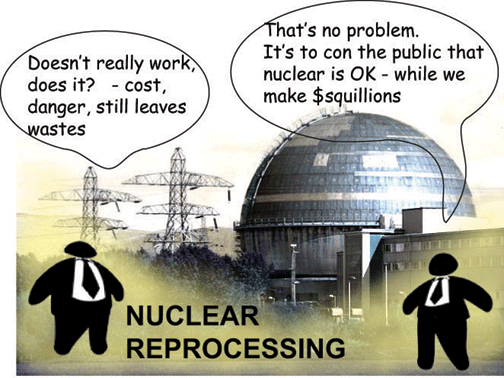
ASN is considering abandoning the reprocessing of nuclear waste, https://reporterre.net/L-ASN-envisage-l-abandon-du-retraitement-des-dechets-nucleaires The director of the Nuclear Safety Authority ( ASN ) described on January 19 the “ fragilities of the fuel cycle and the nuclear fleet ”. It opened up the possibility of eventually stopping the reprocessing of spent fuel, a particularity of French industry.
For the first time, to the knowledge of Reporterre , a nuclear manager in France is openly considering the end of the reprocessing of spent fuel at La Hague (Manche). On Wednesday January 19, during his back-to-school video press conference, Bernard Doroszczuk, Director of the Nuclear Safety Authority ( ASN ), said that this option had to be considered: ” It will be necessary either to provide for the renovation of the installations current if reprocessing is continued ; or anticipate the implementation of alternative solutions for the management of spent fuel, which should be available by 2040, if reprocessing is stopped. »
For the first time, to the knowledge of Reporterre , a nuclear manager in France is openly considering the end of the reprocessing of spent fuel at La Hague (Manche). On Wednesday January 19, during his back-to-school video press conference, Bernard Doroszczuk, Director of the Nuclear Safety Authority ( ASN ), said that this option had to be considered: ” It will be necessary either to provide for the renovation of the installations current if reprocessing is continued ; or anticipate the implementation of alternative solutions for the management of spent fuel, which should be available by 2040, if reprocessing is stopped. »
spent fuel, it has a whole series. Each poses a difficult management problem: plutonium (we can’t manage to use all the stock), minor actinides, reprocessed uranium, spent Mox, etc. By evoking the end of reprocessing, Mr. Doroszczuk therefore attacks a sacred cow of French nuclearists.
Why this new proposal ? Because, explained the director of the ASN , ” a series of events weakens the entire chain of the fuel cycle ” and several of its links are clogged:
• the pool at the La Hague plant (Manche), in which the spent fuel is currently stored, is reaching saturation point ;
• Orano’s Melox plant, in which part of the plutonium is recycled to make fuel, says Mox, works very poorly: “ We have too many breakdowns. Last year, we produced between 50 and 60 tonnes while the order book shows 120 tonnes per year , ” Régis Faure, spokesperson for the Orano Melox site , told Usine Nouvelle . Thus, the plutonium accumulates at the entrance, while at the exit, explained Mr. Doroszczuk, ” these problems that Orano has not mastered lead to the disposal of waste that contains more plutonium than expected. » ;
• finally, revealed the director of the ASN , “ the faster-than-expected corrosion of the evaporators at the Orano La Hague plant weakens the reprocessing capacities ” .
It therefore recommends anticipating the crisis, and either choosing to continue the reprocessing or to stop it. In both cases, this will involve very substantial investments, which we must think about now.
“ A nuclear accident is always possible ”
More generally, the ASN director underlined “ the absolute need to maintain margins so that there is no competition between production needs and safety decisions ” . Indeed, the nuclear situation is very tense, both currently, with ten reactors shut down, and in the future: it is not at all certain that the reactors will be able to operate beyond fifty years, indicated Mr Doroszczuk. And the sector lacks skills, both to manage the current fleet and its future dismantling and waste management: it would be necessary to “ train 4,000 engineers per year ” . We are far from it.The director of the ASN of course wants to stay out of the political debate. But it is clear that the “ messages ” he formulated on January 19 should be carefully listened to and understood by all presidential candidates who believe that nuclear power is the magic answer to climate change. He also repeated throughout his speech the requirement of security. ” A nuclear accident is always possible , ” he said.
Electricite de France has become a nightmare for investors, and a danger to regional energy security.
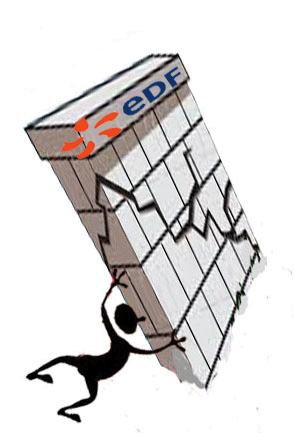
The long decline of Electricite de France SA isn’t only a political
crisis for the government in Paris, it’s a growing economic threat for
much of Europe
The giant nuclear operator, once a source of national pride
and reliable low-cost electricity, has become a nightmare for investors and
an increasingly wobbly pillar of regional energy security.
Technical problems at some of its largest reactors mean EDF is set to produce the
smallest amount of atomic power in three decades, slashing France’s
exports to neighboring countries. It’s a one-two punch for a region
that’s already reeling from record natural gas prices, and shows little
sign of abating.
Instead of helping EDF deal with its problems, the French
government is extracting billions of dollars from the company to shield
households from high energy costs. “The generic issue with EDF’s
reactors is leading to an unprecedented decline in production, which starts
being worrying,” said Nicolas Goldberg, a senior manager in charge of
energy at Colombus Consulting in Paris. “We’re going to have high
prices on the European market for a while. Everybody’s going to pay
more.”
Bloomberg 23rd Jan 2022
Design flaws in Flamanville EPR nuclear reactor vessel, and attempts to solve this
The EPR reactor vessel is not designed like the previous vessels, and the
water does not follow the flow movements observed on conventional reactors.
EDF engineers therefore had a piece of metal (deflector) installed in each
tank bottom to redirect the water correctly. But that would be
insufficient.
What solutions? The most logical solution would therefore be
to change this deflector “with the key to a work of development as
complex as ruinous, notes the weekly. And no one is sure, given the limited
space available in an EPR tank, that this repair is technically
possible”.
The other solution envisaged would therefore be to “reinforce
the fuel assemblies, reinforce the protective grids so that the blades
resist the flows”, mentioned Julien Collet.
EDF will present its plan to us
in February, so we can see if their proposals can solve the problem.
Another possibility mentioned at the end of the article: “To limit the
pressures of the water, it would be a question of running the EPR at only
60% of its power, Flamanville would then go from a capacity of 1,650
megawatts less than 1,000 and would end up, for a record bill of 13 billion
euros, less efficient than the reactors built 50 years ago.”
La Presse de la Manche 20th Jan 2022
France’s nuclear waste problem, and the lack of transparency on military wastes

“The lack of transparency on military nuclear waste poses a serious democratic problem” To guarantee access to the information that is lacking on the subject of the dismantling of the installations, “parliamentary involvement” is essential, believe the director of the Armaments Observatory, Patrice Bouveret, and the spokesperson for ICAN France, Jean -Marie Collin, in a forum in Le Monde.
Le Monde 20th Jan 2022
France’s nuclear company EDF accused of cover-ups over ‘serious and unexpected’ corrosion on Tricastin and other reactors.
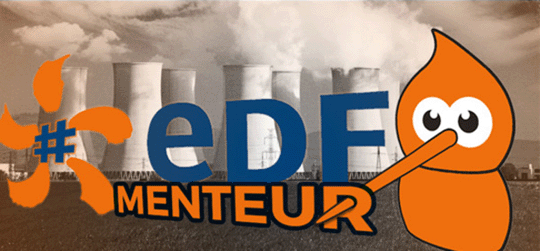
“Hugo”, nuclear whistleblower: “I accuse EDF of cover-ups”. “With this
type of attitude, our power plants are not safe”: the shocking testimony of
a member of the management of the Tricastin nuclear power plant, worried
that the culture of nuclear safety is taking a back seat to financial
imperatives within the EDF group.
Mediapart 19th Jan 2022
Nuclear reactors shut down due to ‘serious and unexpected’ corrosion
problem. EDF, which operates the French power plants, should say by the end
of January whether other facilities in the fleet could be affected by this
as yet unexplained anomaly.
Le Monde 19th Jan 2022
Difficulties at Orano nuclear elements site adds to France’s nuclear woes.
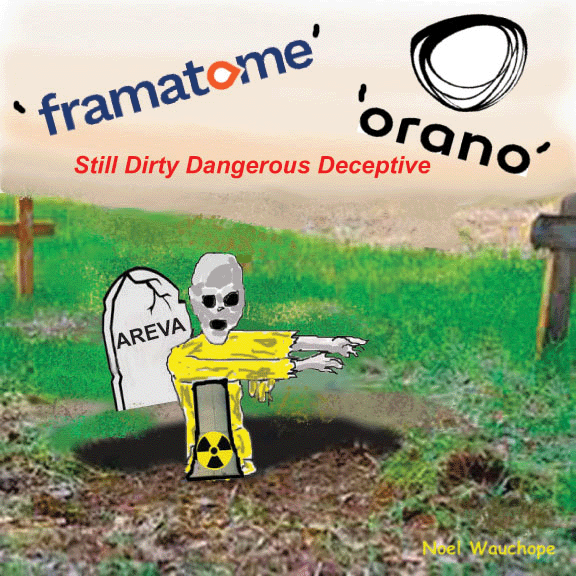
France’s nuclear sector, which lately came under additional pressure due
to newly discovered corrosion problems at some EDF (EDF.PA) sites, may need
a “Marshall plan” to survive, said the head of France’s ASN nuclear
watchdog. Difficulties also increased at Orano’s Melox site which produces
nuclear elements for plants, adding to EDF’s problems, ASN President
Bernard Doroszczuk told reporters.
Reuters 19th Jan 2022
1 This Month
29 Jan. Thursday 7-8 p.m. Webinar – World’s Largest Nuclear Station in Port Hope, ON?
To see nuclear-related stories in greater depth and intensity – go to https://nuclearinformation.wordpress.com/



31st January – Challenging the War Machine – a DECLASSIFIED UK SUMMIT

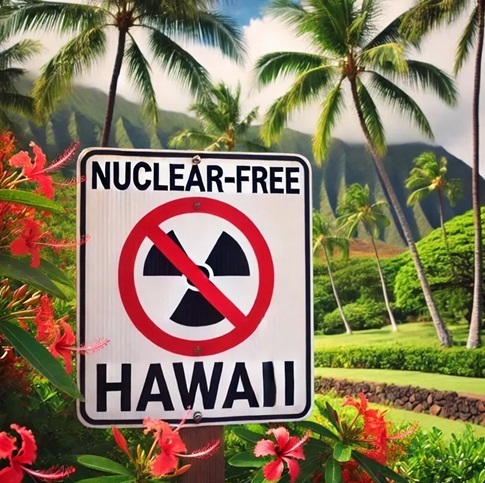
Website of the Week
Now until to February 10, 2026 Radioactive waste storage in France: the debate is finally open! How to participate?
-
Archives
- January 2026 (296)
- December 2025 (358)
- November 2025 (359)
- October 2025 (376)
- September 2025 (258)
- August 2025 (319)
- July 2025 (230)
- June 2025 (348)
- May 2025 (261)
- April 2025 (305)
- March 2025 (319)
- February 2025 (234)
-
Categories
- 1
- 1 NUCLEAR ISSUES
- business and costs
- climate change
- culture and arts
- ENERGY
- environment
- health
- history
- indigenous issues
- Legal
- marketing of nuclear
- media
- opposition to nuclear
- PERSONAL STORIES
- politics
- politics international
- Religion and ethics
- safety
- secrets,lies and civil liberties
- spinbuster
- technology
- Uranium
- wastes
- weapons and war
- Women
- 2 WORLD
- ACTION
- AFRICA
- Atrocities
- AUSTRALIA
- Christina's notes
- Christina's themes
- culture and arts
- Events
- Fuk 2022
- Fuk 2023
- Fukushima 2017
- Fukushima 2018
- fukushima 2019
- Fukushima 2020
- Fukushima 2021
- general
- global warming
- Humour (God we need it)
- Nuclear
- RARE EARTHS
- Reference
- resources – print
- Resources -audiovicual
- Weekly Newsletter
- World
- World Nuclear
- YouTube
-
RSS
Entries RSS
Comments RSS
 nuclear-news