France’s Power Prices Jump 22% as Heatwave Trims Nuclear Output


By Michael Kern – Aug 11, 2026,
https://oilprice.com/Latest-Energy-News/World-News/Frances-Power-Prices-Jump-22-as-Heatwave-Trims-Nuclear-Output.html
The new heatwave in France is curbing nuclear power generation in Europe’s biggest nuclear electricity supplier and leading to spiking day-ahead power prices.
France’s day-ahead power prices soared by as much as 21.8% to $164.39 (142.5 euros) per megawatt hour (MWh) on Tuesday morning local time, per LSEG data cited by Reuters, as nuclear power generation is expected to be curbed at the mid-day peak on Wednesday.
Data by nuclear power plants operator EDF showed that France would see its nuclear generation cut by 7.3 gigawatts (GW) on Wednesday, equal to 12% of the total capacity, amid this week’s heatwave which is at least the fifth extremely hot wave to grip the country since June.
Power prices in France, where nuclear energy accounts for about 70% of the electricity mix, are now being pressured upwards by reduced nuclear output as water levels in rivers used for cooling reactors are low and/or very warm.
Additional upward pressure comes from the increase in power consumption during these heatwaves.
France has already had to resort to curbing nuclear power generation amid the prolonged and intense heatwaves this summer.
In the middle of last month, France’s nuclear power generation was slashed by 6.4 GW amid a prolonged and intense heatwave that hiked river temperatures and limited the ability of the power plants to use the water to cool reactors.
The heatwaves have also affected nuclear power output in central and eastern Europe, where Hungary and Romania this month were forced to shut down reactors at their respective only nuclear power plants, due to the lowest water level of the Danube river in 90 years.
Hungary saw one of the turbines at the Paks nuclear resume electricity production on Monday as the Danube water level inched up thanks to rainfall in Austria.
Romania, for its part, last week blasted a rock formation and sank barges filled with rocks to deviate the Danube’s flow and secure enough water for cooling the reactors of its only nuclear power plant at Cernavoda.
Swarming jellyfish overrun French nuclear plant on same date two years in a row
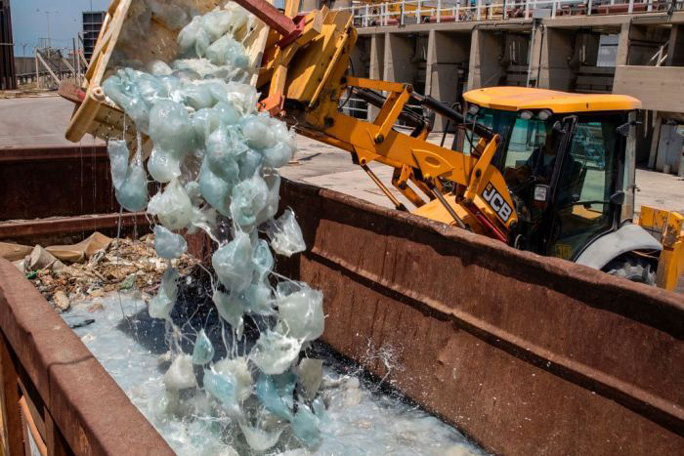
The jellyfish invasion is the latest in a series of climate change-driven incidents that have affected a record number of French nuclear reactors over the summer.
August 11, 2026 By Nicolas Camut,
https://www.politico.eu/article/swarming-jellyfish-overrun-french-nuclear-plant-on-same-date-two-years-in-a-row/
Aug. 11 is quickly becoming jellyfish invasion day at the Gravelines nuclear power plant in northern France.
Despite spending hundreds of thousands of euros to protect the plant from a jellyfish swarm like the one that saw reactors shuttered on Aug. 11, 2025, French utility provider EDF on Tuesday was again forced to bring the parts of the facility offline due to the presence of “several dozen tons” of jellyfish blocking pumping systems.
“On-site teams are fully mobilized to ensure the safety of the facilities and to reconnect the reactors to the national power grid,” EDF said in a statement.
Three fishing vessels are now “constantly patrolling off the coast of the plant” to conduct “preventive fishing operations […] 24/7,” the company added.
Tuesday’s jellyfish invasion is the latest in a series of climate change-driven incidents that have affected French nuclear energy during a particularly infernal summer.
Nuclear power plants are typically built by rivers or on coastlines so they can use nearby water sources to cool their reactors. But a record number in France this summer have been forced to temporarily shut down due to heatwaves and droughts affecting their water supply.
Rising sea temperatures have made jellyfish swarms more common along the French coast in recent years, and those swarms can affect a plant’s ability to bring in seawater — which is what happened at Gravelines. Following last year’s incident at the plant along the North Sea, EDF installed cameras and deployed fishing boats to monitor the situation.
While the vessels “prevented a massive influx of jellyfish” on Saturday and Sunday, they were eventually overwhelmed as the swarm grew from “about 100 kilograms” to “several dozen tons,” the French state-owned utility giant said.
Opponents of nuclear energy were quick to jump on the incident.
“This only highlights that nuclear power plants are ill-equipped to deal with the consequences of climate change,” the French branch of Greenpeace said in statement.
First measurement of antineutrinos from spent nuclear fuel confirms emissions persist after reactor shutdown
Phys Org, by Max Planck Societ, edited by Sadie Harley, reviewed by Robert Egan, August 4, 2026
Even when the lights go out and nuclear reactors are turned off, the story inside the reactor core still has a great deal to tell. Radioactive, long-lived fission products continue to decay for months or even years, producing a faint flux of a specific type of particle known as antineutrinos. (Anti)neutrinos are the lightest and most elusive known particles in the universe, allowing them to escape unhindered from both the reactor and the surrounding shielding.
Researchers in the Double Chooz collaboration have now measured this residual antineutrino emission for the first time. The study, which was published in Physical Review Letters, was led by Anthony Onillon and Thierry Lasserre from the Max-Planck-Institut für Kernphysik (MPIK) in Heidelberg, Germany.
The results demonstrate that antineutrino detectors can probe nuclear reactors even during shutdown periods, opening new perspectives for reactor monitoring, nuclear safety and safeguards.
How Double Chooz sees the signal
The measurement was performed at the Chooz nuclear power plant in northern France. The Double Chooz detector is located underground at a distance of about 400 meters (1,300 feet) from the two reactor cores. The detector contains more than 30 cubic meters of liquid scintillator, a material that emits tiny flashes of light when an antineutrino interacts inside the detector.
“Antineutrinos interact only extremely rarely with matter. However, when one interacts within the Double Chooz detector, a characteristic double-light signal is produced that can be distinguished from background events,” explains Lasserre from the independent research group OMINA, also located at MPIK. This allows researchers to identify the reactor antineutrinos.
The collaboration analyzed 17.2 days of data recorded while both reactor units were completely shut down. During this period, the detector observed around 100 antineutrino candidate events originating from residual radioactivity in the reactor cores and nearby spent-fuel cooling pools.
The measured signal agrees remarkably well with detailed simulations of the remaining nuclear fuel inventory and the decay of long-lived fission products. This constitutes the first direct experimental validation of predictions for antineutrino emission from shutdown reactors and spent fuel…………………………………………………………………………………………………………………………………………………………………………………………………………………………..https://phys.org/news/2026-08-antineutrinos-spent-nuclear-fuel-emissions.html
France Shuts Off More Nuclear Power as Heat Builds Across Europe
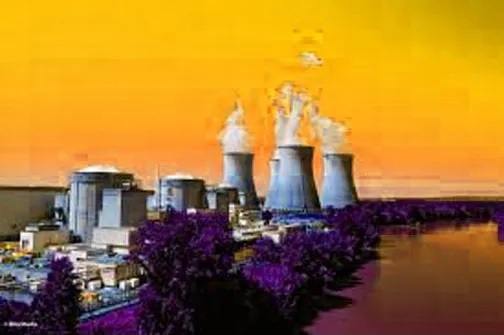
Electricite de France SA shut
down the Golfech-2 nuclear reactor in southern France as a blistering heat
wave pushes temperatures toward 40C across parts of Europe. The Golfech
shutdown is the latest in a record number of heat-related outages across
France’s nuclear fleet this summer, curbing output from the backbone of
Europe’s electricity system. EDF has also warned that the Tricastin plant
could face production cuts overnight as soaring river temperatures
constrain reactor cooling.
Bloomberg 30th July 2026, https://www.bloomberg.com/news/articles/2026-07-30/france-shuts-off-more-nuclear-power-as-heat-builds-across-europe
EDF exploring sale of stakes in modular reactor subsidiary Nuward


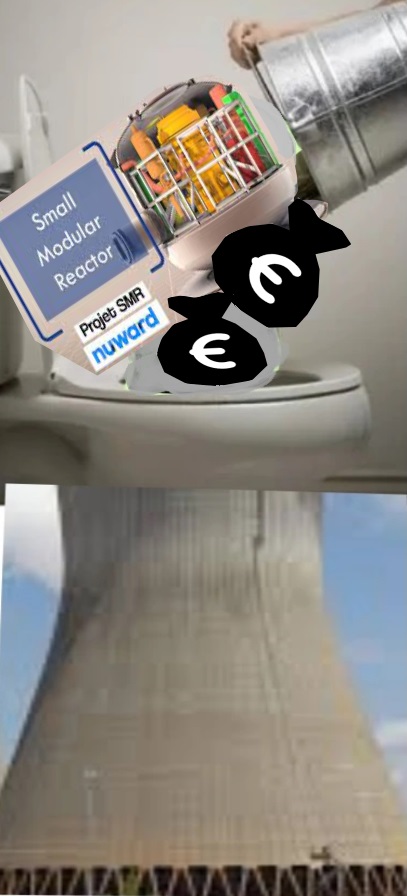
French nuclear rnergy group looking to sell down holding in Nuward to lock in clients and fund development. French nuclear energy group
EDF is seeking investment
partners in Europe to help fund its small reactor venture as it looks to
make up ground against Rolls-Royce and dozens of smaller start-ups
globally. The fundraising effort could also bring in potential buyers of
the small modular reactor technology to lock them in as clients.
The state-owned company, which runs Europe’s biggest fleet of 57 large-scale
reactors in France, is finalising a second SMR design through its Nuward
subsidiary after abandoning a first effort that was too complicated two
years ago.
It now wanted to press ahead with a commercial launch of the
Nuward SMR from 2029, and would seek board approval for those plans on
Thursday, three people familiar with the matter said. EDF was also working
to bring new investors into the subsidiary, two of the people added,
potentially leaving the utility as a minority holder of Nuward. Interested
parties could include countries such as Belgium, Finland and Poland that
already have or are building nuclear plants, and others which do not rely
on the technology, such as Greece or Italy, they added.
FT 30th July 2026, https://www.ft.com/content/34d2542b-8818-4d51-b934-e3baabebf93d
‘Fire cloud’ over Bordeaux as France braces for new heatwave
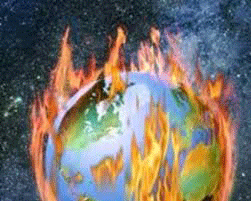
A rare “fire cloud” has formed in Bordeaux as wildfires continue to
ravage France forcing British tourists to flee. The “apocalyptic”
fires, which have so far forced the evacuation of 360,000 people across
France and Spain, have created a “pyrocumulonimbus”, a fire cloud never
seen before in France. The giant cloud, normally caused during volcanic
eruptions, creates its own winds and lightning that can worsen fires.
Telegraph 27th July 2026,
https://www.telegraph.co.uk/world-news/2026/07/27/fire-cloud-over-bordeaux-as-france-braces-for-new-heatwave/
Germany To Join French Nuclear Exercise, Deepening ‘Counter-Russia’ Deterrence

by Tyler Durden, Sunday, Jul 19, 2026 – https://www.zerohedge.com/geopolitical/germany-join-french-nuclear-exercise-deepening-counter-russia-deterrence
In the latest development related to what some analysts have called the ‘new Cold War’ and nuclear saber-rattling between Russia and the West, Germany and France are planning a major nuclear exercise later this year.
The atomic drills were announced Friday, after a joint top-level meeting of the French and German governments near Cologne. “Alongside this work on a shared doctrine, German conventional forces will this year take part in a nuclear exercise of the French military,” German Chancellor Friedrich Merz unveiled.
He detailed while at a press event alongside French President Emmanuel Macron that a “strategic steering group” established by the leading European allies would continue looking at deterrence in the future, with an eye on Russia.
“This is complementary to our nuclear participation and deterrence within NATO, which we still hold to,” he added. He also previewed “a maneuver in the autumn held on the initiative of France” – while speaking of the Ukraine war.
“We will clarify together what form exactly this participation will take,” he said.
France is newly positioning itself at the forefront of nuclear deterrence for Europe, a role that the United States has long assumed, and currently still does.
According to some of Macron’s statements at the same event: “Patriotism, yes; nationalism, never. At a time when Europe is rearming, to think that each of us separately accumulating capabilities is the way history is going is absurd.” More details have been offered in the following:
Mr Macron and Mr Merz began the defence council at Nörvenich air base beside a French Rafale and a German Eurofighter – a symbolic backdrop after the aircraft designed to replace them was scrapped.
Nuclear deterrence offers one field where the strained partnership can still move forward.
German troops would play a conventional supporting role and would not control French weapons. Berlin will also help develop radar and space-based systems for detecting ballistic and hypersonic missiles.
Currently the United States and the UK, which both maintain nuclear arsenals, form the core of NATO’s nuclear deterrence strategy. While France also possesses nuclear weapons, it does not yet participate on a leadership level in NATO’s nuclear planning group. The US military also contributes F-35, refueling aircraft, and other support planes.
Russia has not infrequently held its own strategic drills over the course of the last several years of war in Ukraine. It has also become the ‘new normal’ for Russia and Europe to hold rival conventional war games, amid threats, warnings and ongoing miliary flexing.
Warming Europe complicates France’s bet on nuclear power

“It is certain that climate change is taken into account in deciding the location of new plants. If you invest €13 billion in a site and it becomes obsolete the very next day because there isn’t enough water to cool the core, the investment is not right,”
Extreme heat is forcing the country to shut down nuclear reactors, just as the appetite for cheap, carbon-free electricity is set to explode.
July 13, 2026 ,By Giorgio Leali and Nicolas Camut, https://www.politico.eu/article/warming-europe-complicate-france-nuclear-power/
PARIS — A summer of fierce heat waves in France is fueling concerns about whether the country’s nuclear energy infrastructure can survive life on the planet’s fastest-warming continent.
Monday’s broiling temperatures in France forced EDF to stop three of France’s 57 nuclear reactors and reduce production in another seven, the state-owned utility provider said in a statement. When the mercury rose to record-breaking levels last month, a trio of reactors went offline and five were slowed down, causing an 8.7 percent dip in power production just as air conditioners caused a rise in electricity demand.
None of the shutdowns caused power outages, so we’re a long way from offline reactors plunging people into the dark ages.
But the appetite for France’s cheap, carbon-free electricity is about to explode. Paris has in recent years tried to leverage its abundant nuclear power to court promising, energy-intensive industries like artificial intelligence and cloud computing, hoping new investments in these fields can kickstart a moribund economy.
“Our citizens need to have complete trust in our ability to produce even under these circumstances,” EDF CEO Bernard Fontana said earlier this month.
Politically, the dividing lines have been drawn as expected. Supporters of nuclear power, such as Energy Minister Maud Bregeon and prominent MEP Christophe Grudler, have expressed confidence in the resilience of plants across the country.
“What we are living is ordinary,” Bregeon, who also serves as government spokesperson, said in an interview with radio station RTL on Monday. “Every year nuclear plants face a power reduction when the temperature goes above a certain threshold.”
Opponents of nuclear power, like the far-left France Unbowed, call into question whether its widespread use — nuclear power provides France with about 60 percent of its electricity — is sustainable.
“The situation we are experiencing today should open all of our eyes. Nuclear power is not resilient to climate change,” high-ranking France Unbowed lawmaker Manuel Bompard said Monday.
Analysts, meanwhile, remain sanguine about France’s big bet on nuclear power.
“France has a surplus of low-carbon electricity that could indeed be partly absorbed by data centers. But predicting exactly how much electricity future data centers will require is extremely hard,” said Phuc-Vinh Nguyen, head of the Jacques Delors Institute’s energy center.
“Still, even with more stops due to heat waves, as long as the existing nuclear fleet is authorized to extend its lifetime, there will probably be no problems.”
Warm rivers and jellyfish
Rising temperatures affect nuclear power plants because they rely on rivers and oceans to draw in water to cool reactors and release the warmer water back out. During a heat wave, water gets hotter and scarcer, complicating power production.
Last summer, the Gravelines plant in northern France was forced to halt operations at four reactors because of a climate-change-fueled jellyfish invasion near where seawater was pumped in. To avoid the same problem this summer, EDF installed cameras and has fishing boats ready to be deployed.
All of the shutdowns this summer have been triggered at riverside plants to protect nearby marine life and biodiversity from the dangers of excessively hot water, not problems with the plants themselves.
EDF plans to invest €8.7 billion between now and 2040 to adapt its nuclear reactors to a warmer France, including by expanding the use of so-called “cooling towers.”
The first such towers were installed near the city of Poitiers, at the Civaux nuclear plant along the Vienne River, where traditionally low water levels have exacerbated climate-related problems. But the cooling towers there use ventilators to chill water by 3 to 7 degrees Celsius before it is reinjected into the Vienne.
“EDF is anticipating the impacts of climate change on its facilities through detailed modeling that extends through the end of the century,” the company said in a statement to POLITICO.
Nuclear expansion
Construction of six new reactors, which are expected to cost more than €80 billion, is underway, and the government is expected to decide by the end of the year whether to build another eight on top of those.
To minimize the risk of local opposition, authorities plan to build any new reactors alongside existing plants. Four of those being built are located at two seaside sites.
Climate change will likely play a decisive role in choosing future locations.
“The water issue is one of the key factors in determining which sites to select,” confirmed one senior French official, who was granted anonymity to speak about the confidential selection procedure, which will conclude by the end of the year.
Grudler, who chairs a cross-party group of pro-nuclear lawmakers in the European Parliament, concurred.
“It is certain that climate change is taken into account in deciding the location of new plants. If you invest €13 billion in a site and it becomes obsolete the very next day because there isn’t enough water to cool the core, the investment is not right,” he said.
Former energy minister Agnès Pannier-Runacher, who helped draw up Macron’s nuclear energy policy during his second term, is confident that the government can find a sufficient number of sites for new nuclear plants, even if “it won’t happen in the blink of an eye.”
“Nuclear power plants have been designed with an overemphasis on safety and security. They are in fact much more robust […] than many other facilities in our energy system,” she said, citing concerns over the electric grid.
“Of course, it needs to be factored into the to-do list, but it isn’t a challenge that stands out on the critical path of nuclear power plant construction,” said Pannier-Runacher.
France Cuts 6.4 GW of Nuclear Power as Heatwave Grips the Country


By Michael Kern – Jul 13, 2026, https://oilprice.com/Latest-Energy-News/World-News/France-Cuts-64-GW-of-Nuclear-Power-as-Heatwave-Grips-the-Country.html
France’s nuclear power generation was slashed by 6.4 gigawatts (GW) on Monday amid a prolonged and intense heatwave that hiked river temperatures and limited the ability of the power plants to use the water to cool reactors.
As many as eight reactors in France, which is Europe’s leader in nuclear power generation, were forced to curtail power output, according to data from the plants’ operator EDF and grid operator RTE cited by Reuters.
The 6.4 GW of curtailed power output was equivalent to 14% of France’s overall power demand as of Monday morning.
The reactors where output has been limited include Saint Alban 1 and 2, reactors 3, 4, and 5 at Bugey, Golfech 2, and Blayais 1 and 3.
The Golfech 2 and Bugey 3 reactors were taken fully offline, while the other six were operating at reduced rates as of Monday morning.
This is not the first time France has had to curb output at reactors and limit the nuclear power production, due to high summer temperatures.
France’s nuclear power generation accounts for around 70% of its electricity mix, and when its reactors are fully operational, it is a net exporter of electricity to other European countries.
Despite the curbs of nuclear generation during the current heatwave, data from RTE suggests that France would remain a net exporter with over 10 GW of power exported to France’s neighboring countries on Monday.
The hydropower generation would also be a concern amid the heatwave that has lasted a least a week and is expected to continue at least until Wednesday this week.
With temperatures topping 40 degrees Celsius (104 F) for days, red alerts have been issued throughout France amid the heatwave, and thousands of people have died of heat-related conditions since late June, when the record-breaking extreme summer temperatures started to disrupt life. Even the most famous and prestigious cycling event, the Tour de France, held a shortened stage on Sunday for the first time ever, due to the extreme heat.
France temporarily shuts down three nuclear reactors over heatwave
France’s main energy provider on Sunday said that three nuclear reactors have been temporarily shut down, while eight others are operating at reduced power. The measure is an environmental protection requirement to avoid discharging too much hot water into rivers already warming from the heatwave.
FRANCE 24, 12/07/2026, https://www.france24.com/en/france/20260712-france-temporarily-shuts-down-three-nuclear-reactors-over-heatwave
France‘s main energy provider on Sunday said three nuclear reactors had been temporarily shut down and eight others were operating at reduced power due to the heatwave sweeping France.
“Due to the weather conditions and to comply with regulations on (cooling water) discharges, and thus to protect the environment,” reactors at the Golfech, Bugey and Chooz plants, located on the banks of the Garonne, Rhone and Meuse rivers respectively, have been shut down, the EDF energy group told AFP.
The measure is an environmental protection requirement to avoid discharging too much hot water into rivers already warming from the heatwave.
The economy ministry on Saturday issued an exemption to the temperature limits for the heating of the Rhone around the Bugey plant “to ensure the security of the power grid”, valid until July 20.
The shut downs are the second time in recent weeks that EDF has had to stop nuclear reactors due to extreme heat, after a record-breaking heatwave hit France in June.
On Sunday, the third heatwave to sweep the country since May saw more than a third of France under the national weather service’s highest heat alert.
More than 25 million people were baking in temperatures that forecasters said could reach up to 41C, according to an AFP tally based on population data.
The heatwave has forced tourist hotspots to shutter early, event cancellations and a shortened stage on the Tour de France.
Wildfires have proliferated and deaths by drowning have spiked amid the heat.
Since the end of May, France has been hit hard by repeated episodes of intense heat, which have caused excess mortality and exposed problems with infrastructure maladapted to extreme weather, the increasing frequency of which scientists have linked to man-made climate change.
Nuclear power reactor forced to shut down due to extreme 28C heat
We will see more heatwaves in a warmer world,” said Samantha Burgess, strategic climate lead at the European Centre for Medium-Range Weather Forecasts (ECMWF), which operates Copernicus.
French energy officials have shut down another reactor at the Golfech nuclear power plant as a scorching heatwave continues to grip Europe
Lauran O’Toole and Eliana Nunes News Reporter, 10 Jul 2026
Reactor 2 at the Golfech nuclear power plant in south-west France’s Tarn-et-Garonne department was taken offline on Thursday, state-owned electricity company EDF said. The temperature of the River Garonne, from which the plant draws water to cool its reactors, was approaching the regulatory limit of 28C.
EDF said the temperature of the Garonne is expected to reach 28C on Friday, when France’s national weather service has placed nine departments under the highest-level red heatwave alert.
A 2006 EU directive on freshwater quality stipulates that cooling water discharged from power plants must not cause river temperatures to exceed 28C.
Reactor 2 was the only unit operating at the site as Reactor 1 has been offline for maintenance since May. EDF had already suspended operations at Golfech on June 23 for the same reason before restarting Reactor 2 on July 3, the Express reports.
A spokesperson for the company said: “Weather conditions over the last few days have led to a significant rise in the temperature of the Garonne (river), which is expected to reach 28C this Friday July 10.
“As a precautionary measure, production unit No. 2 at EDF’s Golfech nuclear power station was shut down on Thursday July 9 at 11:30 a.m.”
During the previous heatwave at the end of June, EDF also shut down two other nuclear reactors – at the Bugey nuclear power station on the River Rhône and the Nogent-sur-Seine plant on the River Seine – to comply with environmental limits on river temperatures, Le Parisien reports.
The EU’s Copernicus Climate Change Service said on Thursday that western Europe experienced its hottest June on record this year. The average temperature reached 20.74C – more than 3C above the average between 1991 and 2020, the climate monitor said.
“We will see more heatwaves in a warmer world,” said Samantha Burgess, strategic climate lead at the European Centre for Medium-Range Weather Forecasts (ECMWF), which operates Copernicus.
“They will be more intense and they will last longer, and they will impact more geographical areas.”
Heatwave: EDF will once again shut down nuclear reactors.
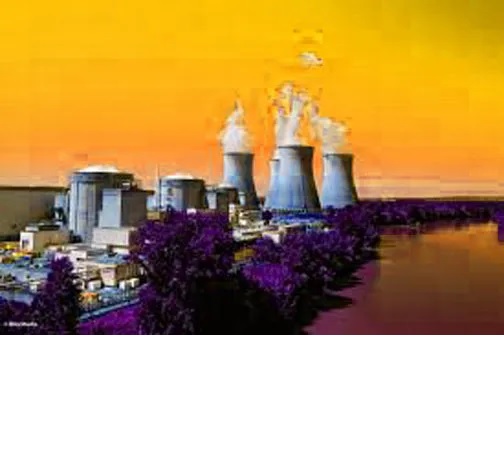
Two weeks after the latest heatwave, EDF has had to halt production at several reactors to prevent further warming of the rivers. The electricity company is planning new upgrades at Golfech on the Garonne and at Chooz on the Meuse in response to climate change.
By Amélie Laurin, July 9, 2026
The respite was short-lived for EDF’s nuclear power plants. After the exceptional heatwave at the end of June which had put three reactors out of service, the public electricity company will again stop two of them on Thursday evening, due to the high temperatures: Bugey 3, on the Rhône, from 9 p.m., then Golfech 2, on the Garonne, at 11:45 pm.
Their reconnection to the grid is scheduled for July 17, after the Bastille Day holiday weekend, which is expected to reduce national electricity consumption by several GW per day, according to forecasts from RTE, the high-voltage transmission network operator. A power reduction is also planned for this Thursday for environmental reasons at Saint-Alban 2, on the Rhône River, according to regulatory announcements from EDF., the operator of high-voltage lines. A power
reduction is also planned this Thursday for environmental reasons at
Saint-Alban 2, on the Rhône, according to EDF’s regulatory messages………. (Subscribers only)
Les Echos 9th July 2026 https://www.lesechos.fr/industrie-services/energie-environnement/canicule-edf-va-de-nouveau-arreter-des-reacteurs-nucleaires-2241469
Europe’s Nuclear Plants Can’t Beat the Heat
By Haley Zaremba – Jul 10, 2026, https://oilprice.com/Alternative-Energy/Nuclear-Power/Europes-Nuclear-Plants-Cant-Beat-the-Heat.html
- France is cutting output at up to five nuclear plants this week as record heat pushes river temperatures too high to cool reactors safely.
- Last month’s heat wave already knocked out power to 70,000 households on France’s hottest day ever, 44°C, and Germany and the UK both rely on French nuclear exports.
- More than 1,000 heat-related deaths in France and stalled EU adaptation funding show the grid crisis is outpacing the response.
Europe’s blistering heat wave is threatening energy security across the continent as power plants shut down and the risk of rolling blackouts rises. Electric grids are overstressed, and ecosystems are too. Rivers are greatly affected by soaring temperatures, which in turn impacts the energy industry and power plants that rely on that water supply for their cooling systems. Just this week, France announced that it will reduce production at as many as five nuclear power plants, with two already curbing output this week.
France is expected to receive the worst of a coming high-pressure heat dome over the next few weeks, with temperatures soaring to as high as 42 Celsius (107.6 Fahrenheit) in some parts of the country on Wednesday. When Europe experienced a similar heat wave last month, a transformer failed, leaving nearly 70,000 households without power as temperatures reached deadly levels. The country recorded its hottest day ever on record, with temperatures reaching a blistering 44 °C (111 °F).
These temperatures are not only deadly to humans, they are also a huge threat to the ecosystem. Rivers are growing hotter under these conditions, and one of the impacts of that change is that their waters are no longer as effective for cooling down nuclear power plants, which serve as the backbone of France’s energy mix. As a result, the country anticipates needing to curb production at plants around the country at the very same time that demand is surging.
It’s a sad irony that just as electricity is needed more than ever to keep indoor temperatures at survivable levels, the power grid is most likely to fail. “As it gets hotter, things stop working quite so well,” Iain Staffell, associate professor of sustainable energy at Imperial College London, was recently quoted by DW. “I think we do need to adapt the power system to cope with the changing weather,” he went on to add.
The reduction of nuclear power output in France could greatly affect energy availability and affordability within France and in neighboring countries such as Germany and the United Kingdom, which import electricity generated by the nation’s sizable nuclear power sector. And nuclear is only part of the story. The heat wave is also impacting the output of hydropower and limiting the cooling abilities of coal and gas plants.
Europe can expect this kind of strain to be the new normal as global warming alters climatic patterns around the world and increases the frequency and intensity of extreme weather. Policies will need to be put into place, and enacted quickly, in order to prepare European grids to withstand these kinds of temperatures at regular intervals going forward.
“Utilities can adapt by planning for summer peaks, making cooling demand more flexible, reinforcing grids for high temperatures, deploying batteries and demand response, and climate-proofing power plants’ cooling systems,” Simone Tagliapietra, senior fellow at Bruegel, an economic and policy think tank, recently told MIT Technology Review via email.
However, all of these imperatives are massively costly and difficult to implement, leading to inaction on the part of European leadership and widespread vulnerabilities of the continent’s energy infrastructure. Last year, the European Environment Agency reported that all 27 countries in the European Union have climate adaptation plans, but noted that “insufficient long-term funding” has stifled implementation.
This has led to frustration and resentment amongst the public, not to mention over 1,000 unnecessary deaths. “Everyone is asking, why are we not ready?” Francois Gemenne, an environmental politics professor at French business school HEC Paris, recently told the New York Times. “We are becoming aware of our own vulnerability.”
Wildfire in southern France forces evacuation of 10,000 people
Neil Murphy
A wildfire has forced the evacuation of thousands of people in southern
France as the country grapples with the impacts of an early summer heatwave
that scorched much of Europe. More than 10,000 people have been ordered to
leave more than a dozen small towns and villages in the foothills of the
French Pyrenees, near the border with Spain. The fire, located in
Trévillach near Perpignan, has burned at least 4,600 hectares (11,366
acres), local prefect Pierre Regnault de la Mothe said in a post on X.
BBC 6th July 2026, https://www.bbc.co.uk/news/articles/crlwweye9glo
EDF agrees to sell US, Canada unit to KKR
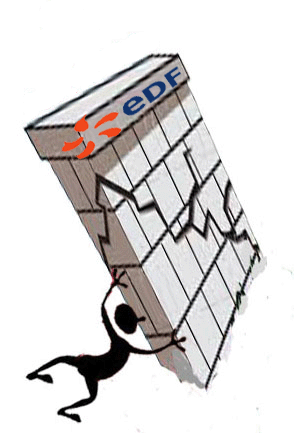
EDF, which owns and operates France’s nuclear fleet, must raise cash to maintain its 57 aging reactors and finance the construction of six new units.
By Reuter, June 27, 2026, https://www.reuters.com/business/energy/edf-signs-deal-sell-us-canada-unit-kkr-2026-06-26/
June 26 (Reuters) – EDF signed an agreement to sell EDF Power Solutions in the United States and Canada to private equity firm KKR, the company said on Friday.
KKR will acquire the operations and assets. In the U.S. and Canada, EDF Power Solutions operates 5.6 gigawatts of renewable assets.
EDF, which owns and operates France’s nuclear fleet, must raise cash to maintain its 57 aging reactors and finance the construction of six new units.
In November EDF CEO Bernard Fontana told Reuters the company was considering selling between 50% and 100% of its U.S. renewable unit, a deal that could value the business at nearly €4 billion ($4.56 billion).
EDF has developed 26 gigawatts of wind, solar and battery storage projects plus electric vehicle charging sites and has 17 GW under service contracts in North America, which includes a small amount in Canada and Mexico, according to its website.
($1 = 0.8773 euros)
Reporting by Margaux Perrin in Gdansk, Editing by Louise Heavens
1 This Month
23-25 October – on Zoom – World BEYOND War’s annual global conferenc


Shut down the radiation-damaged Heysham nuclear reactors now
To see nuclear-related stories in greater depth and intensity – go to https://nuclearinformation.wordpress.com

Say No to NASA’s Reckless Nuclear Reactor on the Moon
Say No to NASA’s Reckless Nuclear Reactor on the Moon

-
Archives
- October 2026 (209)
- September 2026 (339)
- August 2026 (330)
- July 2026 (355)
- June 2026 (287)
- May 2026 (306)
- April 2026 (356)
- March 2026 (251)
- February 2026 (267)
- January 2026 (308)
- December 2025 (358)
- November 2025 (359)
-
Categories
- 1
- 1 NUCLEAR ISSUES
- business and costs
- climate change
- culture and arts
- ENERGY
- environment
- health
- history
- indigenous issues
- Legal
- marketing of nuclear
- media
- opposition to nuclear
- PERSONAL STORIES
- politics
- politics international
- Religion and ethics
- safety
- secrets,lies and civil liberties
- spinbuster
- technology
- Uranium
- wastes
- weapons and war
- Women
- 2 WORLD
- ACTION
- AFRICA
- Atrocities
- AUSTRALIA
- Christina's notes
- Christina's themes
- culture and arts
- Events
- Fuk 2022
- Fuk 2023
- Fukushima 2017
- Fukushima 2018
- fukushima 2019
- Fukushima 2020
- Fukushima 2021
- general
- global warming
- Humour (God we need it)
- Nuclear
- RARE EARTHS
- Reference
- resources – print
- Resources -audiovicual
- Weekly Newsletter
- World
- World Nuclear
- YouTube
-
RSS
Entries RSS
Comments RSS

