Electricity: A confidential EDF report anticipates an explosion in costs and risks.
Le Point has obtained EDF’s internal report on the consequences of adjusting its nuclear power plant fleet to make room for renewables. This explosive document comes as the government prepares to publish its Multiannual Energy Programme (PPE).
Géraldine Woessner, Editor-in-Chief of the Society Department.
They marched to Matignon this Friday, February 6 – wind power unions, solar power unions, network managers, representatives of the nuclear industry – “in an electric atmosphere, no pun intended,” a counselor whispered.
With the budget finally passed, the government intends to publish
its 3rd Multiannual Energy Programme (PPE 3) by the end of next week , a strategic document setting out the country’s energy roadmap until 2035. A storm is guaranteed, as the text, delayed by two and a half years, has been the subject of intense – and sometimes outrageous – lobbying by the industries concerned for months, against a backdrop of strong budgetary constraints and falling electricity consumption.
Le Point 7th Feb 2026, https://www.lepoint.fr/economie/electricite-un-rapport-confidentiel-dedf-anticipe-une-explosion-des-couts-et-des-risques-4G7YLSKDKBD7VOCDY66CHASSVQ/
Since 2021, EDF has detected more than 80 significant cracks on its French nuclear reactors.
Since 2021, EDF has detected more than 80 significant cracks on its French
nuclear reactors, and will likely find more in the future, officials from
the Nuclear Safety and Radiation Protection Authority (ASNR) said on
Tuesday.
Montel 27th Jan 2026, https://montelnews.com/fr/news/a5e4816f-9e51-4039-bfa6-ee32fcafb6b4/edf-a-repare-plus-de-80-fissures-sur-ses-reacteurs-asnr
The secret nuclear influencer in the heart of Moscow.
Dr Eva Stegen 21st Jan 2026
Nuclear energy does not appear in any of the 19 EU sanctions packages, thanks to a key individual. Former nuclear power executive Henri Proglio has maintained several consulting offices in Moscow, the heart of Putin’s power, for the past 10 years. The former head of the state-owned Électricité de France (EdF) still sits on the international advisory board of Putin’s nuclear power conglomerate Rosatom.
Déjà vu: A wave of outrage swept through Germany when the “family business owners” tested the boundaries by extending an invitation to the AfD. The business lobby group eventually backtracked. The German “corporate families” may have been inspired by French far-right extremists who have been casting their nets into corporate boardrooms for some time. The French trial balloon was launched two years ago, a few months before the elections, and provoked a media frenzy. Marine Le Pen, the presidential candidate of the National Rally (RN), orchestrated a meeting with an extremely polarizing manager: Henri Proglio. He was one of the country’s most powerful business leaders until he was deemed inferior at the nuclear power company Électricité de France (EdF).
Critics consider the self-proclaimed Putin supporter, who calls himself a “killer ,” to be “not as successful as he would have people believe .” They claim he has “developed a system of clans, gangs, and sinecures” that promoted nuclear technology exports to crisis regions. Under his leadership (2009-2014), he forged ties with Chinese rulers, the Libyan dictator Gaddafi , the Saudi Bin Laden Group, and other dubious business partners. His mentor, Nicolas Sarkozy, was imprisoned over the Libya affair. Another key figure in this corrupt clique, the secret protector of Proglio’s career, “Monsieur Alexandre,” also received a prison sentence. Proglio’s enforcer, a former gang leader from the Parisian suburbs , knows prison from the inside. The middleman rose from the underworld to the highest circles of politics and business: “I hold them all by the balls .”……………………………………………………………………………………………………………………………………………
Proglio and the National Rally (RN) are advocating for a “Frexit,” wanting to withdraw from the EU electricity market and give preferential treatment to French companies. These ideas of European division are welcomed by the Kremlin. ………………………………
the fact that “the fuels that power our nuclear power plants largely
come from Russia” amounts to nothing less than import dependency . And this is with a high-risk technology of civil-military relevance.
“Why is the nuclear industry spared?”
Investigate Europe and Tagesspiegel asked back in 2022. Nuclear power does not appear in a single one of the (now 19) EU sanctions packages. In their joint research, they show:
“ The close connection between the French and Russian nuclear industries is exemplified not least by Henri Proglio , the former CEO of the French state-owned electricity supplier EDF, who still sits on the international advisory board of Rosatom ,” the Russian nuclear conglomerate used by Vladimir Putin as a geopolitical instrument to expand his influence in Europe.
No nuclear sanctions – thanks to import dependency and a key personnel decision
In addition to his position at Rosatom, Proglio has maintained several consulting offices in Moscow for the past ten years, profiting handsomely from Putin’s war in Ukraine and orchestrating shady deals, including in the nuclear sector. This is particularly sensitive because he is privileged to the most closely guarded secrets of France, a civilian-military nuclear power. While he can keep secrets—he even concealed the lucrative activities of companies like ‘Henri Proglio Consulting’ and ‘HP Energy Advisory’ in Moscow from the parliamentary inquiry committee—it is highly questionable whether this is always in the best interests of France or Europe.
……………………….He believes the existing reactors should be allowed to operate until a medium-power reactor (1000 MW) is developed. He himself is responsible for the sale of the intellectual property rights for precisely this technology to China. That was the death knell for the French reactor manufacturer Areva.
ts engineers were stunned when they discovered a Chinese pirated copy of their plans, developed with Japanese colleagues for a 1000 MW reactor. Proglio was behind it:
“We will build Franco-Chinese reactors. And we will also build Franco-Russian reactors.” He himself was present at the clandestine signing of far-reaching contracts , which amounted to a ticket into the heart of France’s highly sensitive nuclear infrastructure. ………………………………………………………………………………………………………………………………………………………………………………………………………..
Rosatom’s geostrategy for global dependence
According to its own statements, “Rosatom is the only company worldwide that possesses all technologies of the nuclear fuel cycle .” The nuclear giant, with its 450 arms, employs around 420,000 people and aims to establish itself as the world market leader in the entire nuclear process chain, from uranium mining through conversion, enrichment, fuel element production, reactor construction, operation, maintenance and decommissioning, to waste management…………………………………………………………………………………….https://www-eva–stegen-de.translate.goog/blog/atom-Influencer-im-herzen-moskaus.html?_x_tr_sl=de&_x_tr_tl=en&_x_tr_hl=de&_x_tr_pto=wapp
Flamanville nuclear plant to remain offline to 1 Feb following storm
(Montel) Units 1 (1.3 GW) and 3 (1.6 GW) of French utility EDF’s Flamanville nuclear plant will remain offline until 1 February due to the damage caused by storm Goretti last week.
by: Elise Wu12 Jan 2026, https://montelnews.com/news/2d1b9548-51d9-41fa-932f-6d42f4c4d017/flamanville-nuclear-plant-to-remain-offline-to-1-feb-following-storm
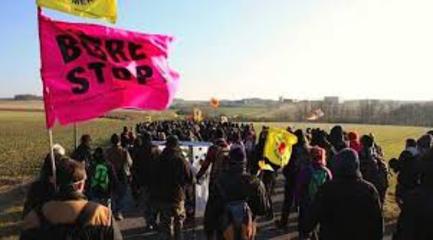
The French Resistance at Bure: the campaign to oppose a nuclear waste dump.
Richard Outram, NFLA Secretary, 6 January 2026
Introduction.
The outline for this briefing was first written almost two years ago for British and Canadian campaigners working collaboratively in opposing plans to establish high level radioactive waste repositories in their respective nations, either an off-shore and undersea Geological Disposal Facility (UK) or an inshore and underground Deep Geological Repository (Canada).
It was intended to raise their awareness of the decades long struggle waged by colleagues against the similar Cigéo Project under development in France.
Contrary to the positive articles published by Nuclear Waste
Services Community Partnerships and puff pieces that have appeared in the pro-nuclear Cumbrian media all is not ‘sweetness and light’, for there have been public protests involving local people and environmental activists against this project for decades.
Protests have often been opposed by police using tear gas, water cannons, and stun grenades to disperse demonstrators. Authorities maintain a heavy police presence in the area, and multiple injuries have been reported on both sides during serious confrontations. The French state has also resorted to spying and the wholesome clearance and destruction of protestors’ camps.
This then is a background paper to the campaign in opposition to the Cigéo Project, and the tactics employed by the French State and Police in opposing them…………………………
Lengthy detailed history. with excellent photos and graphics.
Conclusion.
With sections of the media reporting that the British Government is looking to abandon the ‘consent based’ approach, and with the former Nuclear Minister suggesting that such a move is inevitable, there must be concerns that a nuclear waste dump might eventually be imposed on a wholly unwilling community in the UK.
Such an announcement would most likely lead to more robust public opposition. Could this lead in turn to the UK Government looking to resort to the heavy-handed policing seen at Bure?
Although UK police services have historically operated based on consent, this is perhaps less fanciful than it might appear. Ministerial approval has already been given to deploy armed officers of the Civil Nuclear Constabulary at national energy infrastructure sites outside of nuclear power stations and Ministers announced as part of the 2025 Defence Review that an armed auxiliary civilian guard force would be created for a similar purpose.
If the UK Government does move away from a ‘consent-based approach’ to GDF siting, Bure may provide a salutary lesson for an unwilling, and disenfranchised, community in the UK faced with the prospect of a highlevel nuclear waste facility being imposed by the British State.
Forewarned is forearmed. https://www.nuclearpolicy.info/wp/wp-content/uploads/2026/01/A446NB332-The-French-Resistance-at-Bure-the-campaign-to-oppose-a-nuclear-waste-dump-Jan-2026.pdf
Politico: Despite the war, France will build nuclear fuel in Germany with the help of a Russian company
Can the ambitious plan to phase out Russian nuclear fuel succeed with Russian expertise? Paris believes it can and is pressing Berlin for approval
Protothema, Newsroom, December 22, 2025
Takeawaysby Protothema AI
- A Franco-Russian joint venture plans to produce nuclear fuel components in Lingen, Germany, operated by Framatome
- The project faces scrutiny from German authorities due to security concerns and potential espionage risks
- Framatome is lobbying German officials for approval, arguing it is a European solution despite Russian components
- German regional authorities remain skeptical, citing past energy vulnerabilities with Russia
- A final decision on the Lingen plant’s approval is expected in the coming weeks.
A triangular relationship that is close to becoming a reality, despite the war in Ukraine and the sanctions imposed on Russia, will help France produce nuclear fuel for its reactors.
The Franco-Russian joint venture will manufacture nuclear fuel rods and other components in Lingen, Germany.
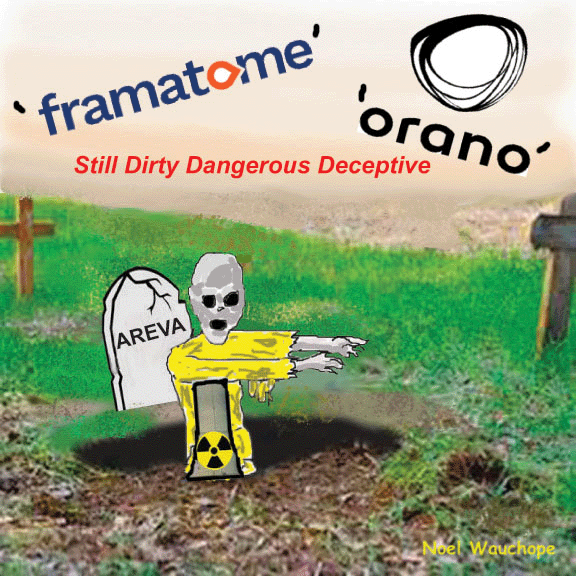
The plant will be operated by Framatome, a subsidiary of the French state-owned energy company EDF, using Russian components supplied by TVEL, part of the Kremlin-controlled nuclear giant Rosatom. TVEL will not be directly involved in the operation of the plant but will provide the Russian-made components necessary for producing the nuclear fuel.
The plant will not supply electricity directly; it will focus solely on producing nuclear fuel.
Framatome is putting intense pressure on the German authorities to approve the project, mobilizing the French government at the highest levels. The company argues that what is good for Framatome is good for Europe.
However, as Politico points out, the project comes at a time when the EU is attempting to ban all energy imports from Russia in response to Russia’s invasion of Ukraine. At the same time, the plan raises concerns among state and federal authorities about potential espionage and other security risks.
The French-Russian joint venture has not yet received approval from Berlin. A final decision is expected in the coming weeks, but no timetable has been set……………………………………………………
France–Russia Nuclear Cooperation
The cooperation between Framatome and Rosatom began in 2021, when the two parties signed a long-term partnership and established a joint venture in which Framatome owns 75% and TVEL 25%……………….. https://en.protothema.gr/2025/12/22/politico-despite-the-war-france-will-build-nuclear-fuel-in-germany-with-the-help-of-a-russian-company/
France is to build a nuclear-powered aircraft carrier that will be the largest warship in Europe.
The carrier will be smaller only than the US
supercarriers and is intended to bolster France’s air power on the
oceans, President Macron has announced. The new ship, which has been under
consideration since Macron backed the project in 2018, is set to replace
the Charles de Gaulle, France’s naval flagship, which has been in service
since 2001. The new ship will be the only nuclear-powered carrier with
catapult launching apart from the ones in the US navy. It will displace up
to 80,000 tonnes, nearly double that of the Charles de Gaulle.
Times 21st Dec 2025, https://www.thetimes.com/world/europe/article/macron-aircraft-carrier-france-8p0qns8bj
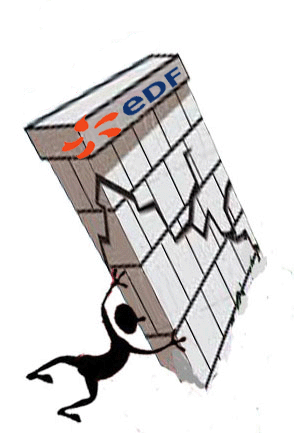
EDF faces the financial equation: Bernard Fontana is considering massive asset sales to generate 20 billion euros
December 16, BY Emma Ray
Barely installed at the helm of EDF, Bernard Fontana is embarking on a
major strategic shift. Faced with unprecedented investment needs and an
already substantial debt, the new CEO is preparing a sweeping adaptation
plan aimed at generating nearly €20 billion in financial flexibility over
three years.
This strategy comes as EDF’s financial situation continues to
be a cause for concern. At the end of 2024, net debt reached €54,3
billion, a level deemed worrying by the French Court of Auditors.
Entrevue 16th Dec 2025, https://entrevue.fr/en/societe/edf-face-a-lequation-financiere-bernard-fontana-envisage-des-cessions-massives-pour-degager-20-milliards-deuros/
New UK-France Nuclear Steering Group Meets to Advance Cooperation Under Northwood Declaration
Statement by the United Kingdom and the French Republic on Nuclear Policy and Cooperation.
From: Cabinet Office, 18 December 2025, https://www.gov.uk/government/news/new-uk-france-nuclear-steering-group-meets-to-advance-cooperation-under-northwood-declaration
At the UK-France Summit in July 2025, Prime Minister Keir Starmer and President Emmanuel Macron affirmed their commitment to strengthening the UK-France nuclear relationship. They signed the Northwood Declaration, which established the UK-France Nuclear Steering Group in order to provide political direction and coordinate bilateral work across nuclear policy, capability and operations.
On 10 December, the Nuclear Steering Group met for the first time in Paris, jointly chaired by senior officials from the UK Cabinet Office and the Presidency of the French Republic.
They were accompanied by senior military personnel and officials from defence and foreign ministries to discuss Euro-Atlantic security issues and coordination of their respective independent deterrents. They discussed their approach to strengthening deterrence in Europe and confirmed their ambition for bilateral co-operation on nuclear deterrence.
They also observed Operation POKER which was the first time foreign officials were given access to this demonstration of France’s strategic nuclear airborne component.
Nuclear power: the courts put a stop to the project for two EPR2 reactors at Bugey
December 10, 2025
“ It’s a dramatic turn of events ” against the project to build two EPR2 reactors in the Ain region. Speaking by phone, Jean-Pierre Collet, from the Sortir du nucléaire ( SDN ) Bugey network, made no secret of his satisfaction. On Wednesday, December 10, 2025, the Lyon Administrative Court
overturned amendments to urban planning documents—
the SCOT ( Regional Planning Scheme ) in February 2023 and
the PLU ( Local Urban Development Plan ) in September 2024—that would have allowed the construction of these two new reactors on the EDF site at Bugey.
This decision follows a hearing on November 18th and sides with the anti-nuclear group Sortir du nucléaire Bugey and several residents. The court ruled that the ecological impact had not been sufficiently considered, particularly the presence of numerous protected species and the proximity of the Natura 2000 site of Isle Crémieux.
This decision comes as the project was already underway, with archaeological excavations already begun, according to Jean-Pierre Collet. A public debate held in early 2025 took place in a heated atmosphere, with the team in charge of organizing the debates lamenting the lack of data on the actual cost of the new facilities.
“
The construction site is suspended for a while,” Jean-Pierre Collet rejoiced.
“This shows that even on large-scale projects, you can’t ignore the rules. There are urban planning regulations, you can’t pretend they don’t exist. For us, this is very good news. ”……………………………………………………………………… https://reporterre.net/Nucleaire-la-justice-met-un-coup-d-arret-au-projet-de-deux-EPR2-au-Bugey
Nuclear power? Its account is (almost) OK
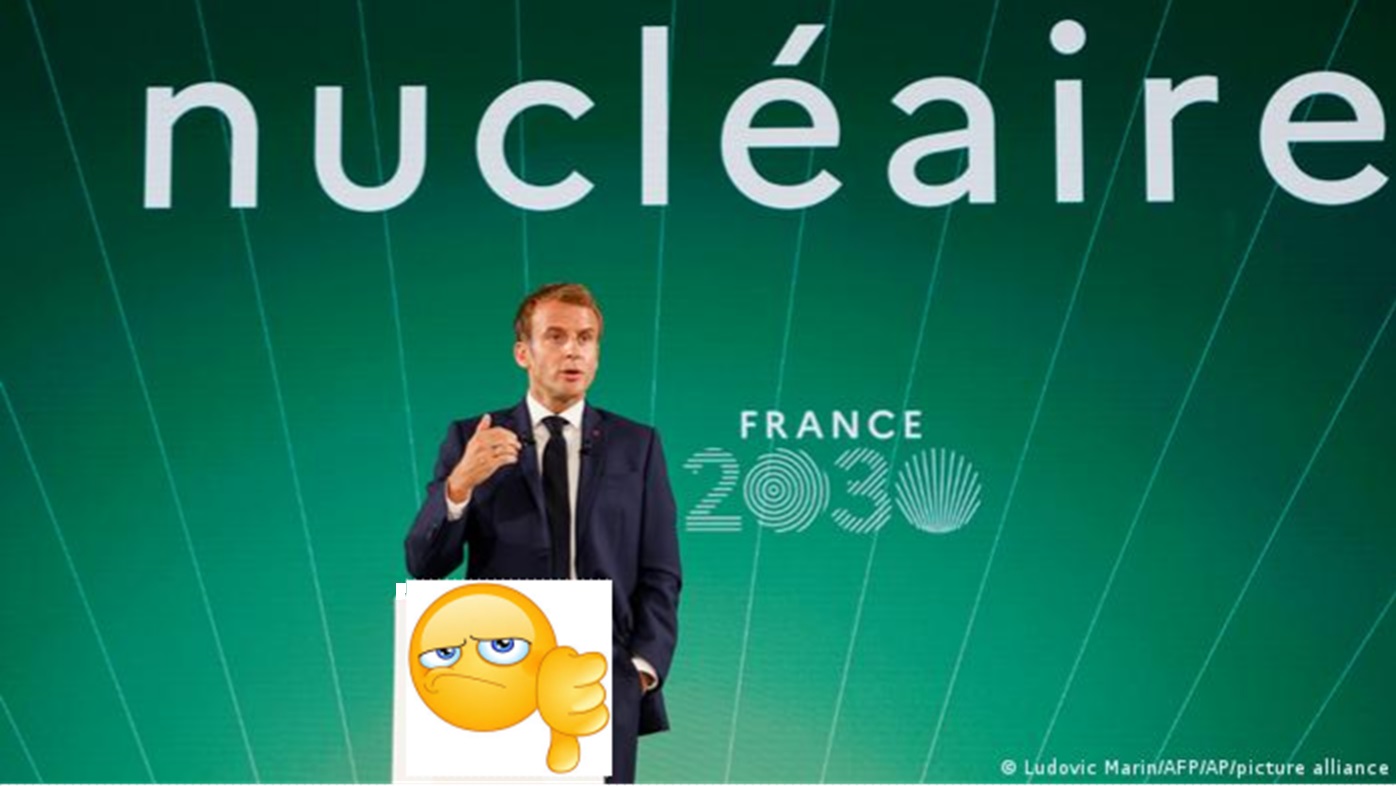
In France, it has been decided that widespread electrification will mean a nuclear revival. But the feasibility and viability of this revival are questionable. Technically, industrially… and also economically and financially. Laure Noualhat delivers a damning indictment of the cost of nuclear power for the coming years and envisions France defaulting on its debt due to this investment choice. A provocative statement designed to shock: intrigued, the public might be inclined to watch her documentary, ”
Nuclear Power Will Ruin France, ” or read her book of the same name to discover figures recently validated by the Court of Auditors. Perhaps even underestimated.
Science involving nuclear power is nothing but the ruin of the state.
This new nuclear perspective rests on a risky gamble, devoid of any studies or clearly established facts. The long-awaited third multi-year energy program (PPE) has not yet been published, but the decision is already considered final:
three pairs of EPR2 reactors have been announced, with four more expected to follow. And the current dithering at the highest levels of government will not allow for the swift publication in the Official Journal of the implementing decrees for the corresponding laws passed in 2019 and 2021, relating to renewable energies and nuclear power. While the second PPE was largely dominated by the question of the pace of reducing the share of nuclear energy in electricity production, this third version intends to prioritize nuclear power, while curbing the development of wind and solar power.
Plans drawn up without much detail regarding the financial arrangements. A vague understanding of the economic impact of such investments in France. This is the general observation, which is hardly reassuring given the sums involved.
Aside from the future design and construction of new reactors ( whose final design is not yet complete ), the nuclear sector faces expenses related, for example, to the annual operating costs of the existing fleet. While considered minor compared to the initial investment and expected to decrease continuously, these costs are actually increasing each year for an aging fleet due to so-called “refurbishment” investments and safety upgrades (the “major overhaul” plan). These are all bills to be paid, essential for ensuring the fleet’s operation beyond 40 or 50 years and beyond, and considerably larger than initially anticipated.
This is clearly considered in the numerous reports conducted by the Court of Auditors (CC) on EDF (
2012 report ,
updated in 2014 ,
2021 report ). Given the difficulty of extracting the precise elements for a comprehensive analysis of the situation from EDF’s financial reports, the Court’s reports prove to be a valuable journalistic contribution. Valuable, but still incomplete. The Court of Auditors itself admits that the reports are systematically produced with little cooperation from the national company: the CC emphasizes that projections sometimes had to be established “without EDF’s data,” disregarding “hidden costs,” “concealed amounts,” and “difficult calculations,” despite the various accounting methods that are always prone to significantly altering the evolution of the different parameters.
So much so that the CC finally admits to having to put forward the figures ‘with caution’, not without difficulty since EDF is playing with the withholding of sensitive information…………….
From this murky situation, Laure Noualhat takes on the almost sacred mission of reconstructing the future burden of nuclear power in France. And, in addition to the costs of the EPR2 reactors, it turns out that costs are also rising through operating expenses, maintenance investments, the cost of future expenses (decommissioning, waste and spent fuel management), changes in the fleet’s production, the level of economic lease payments…
This interview returns to the investment problems raised, the growing financial consequences of this technology, deemed totally unreasonable by Laure Noualhat.
Published in the Reporterre media collection , the bias with which the book could be accused easily falls away: the figures are corroborated by the Court of Auditors itself.
The goal would therefore be to find €200-250 billion, a conservative estimate reconstructed by Laure Noualhat. This is equivalent to the investment costs for the construction of the 58 existing civilian reactors (€106 billion in 2018; the two reactors at Fessenheim have since been shut down ). However, the national electricity provider remains heavily indebted (by approximately €54 billion) and cannot claim to finance the new nuclear program on its own. Furthermore, the cost has increased by 100% since the announcement in 2019 (the initial estimate was €52.7 billion). Undoubtedly, all of this will require guarantees from the State.
However, there is nothing very attractive about it for investors given the hypothetical financial returns which could be considered insufficient over a period running from the construction phase to the operation phase, i.e. more than 60 years.
The costs of existing reactors will increase, particularly in the event of generic defects, combined with the risks associated with the aging of the fleet that will inevitably come to light. This growth will be difficult to control and anticipate. Therefore, given the significant investments it may require, this issue has become urgent, as it will severely impact the budget.
The risk of insufficient performance of the nuclear fleet is among the most critical in the group’s risk assessment. It is directly affected by the occurrence of generic faults, which can reduce fleet availability while they are being addressed. This risk has been assigned the highest impact level and a control level ranging from medium to low.
It’s an open secret that all this is because the premature aging of internal materials and components has been known since 1986. The Energy Regulatory Commission itself noted that EDF believed that with the aging of the fleet, generic hazard problems would become more structural: this was the case during the episode of stress corrosion cracking discovered quite by chance, and there is reason to fear that others will occur.
Indeed. Just recently, an ASNR meeting revealed that new cracks measuring 2 to 3 millimeters had been detected and confirmed at the Civaux nuclear power plant on reactor 2 (1450 MW). The piping of the affected RRA circuit (the primary circuit under normal operating conditions) has reportedly already been dismantled and sent for analysis, suggesting that the cracks were detected well before this announcement. This specter of renewed stress corrosion cracking raises concerns about the technical and technological control of this accelerated aging process under irradiation and extreme operating conditions (temperature, pressure).
An already outdated figure
The Court of Auditors’ investigation into EDF is far from over. A new
report was just published at the end of September 2025. The findings are alarming: EDF faces a massive investment challenge of €460 billion over 15 years…………………………………………………………………………………………………………………………………………………………………………….
Protected like few others, supported by the political class, the nuclear sector deviates from certain minimal procedures in terms of accounting and transparent financing. It is decidedly not subject to any of the economic rules that prevail in other industrial sectors.
The aim of this investigation, led by Laure Noualhat, was to shed more light on the expenses generated by undebated political decisions. Mission accomplished.
Will these colossal investments put an end to the new nuclear program in France? https://homonuclearus.fr/nucleaire-compte-presque-bon/?utm_source=Homo+nuclearus&utm_campaign=3e0276f781-EMAIL_CAMPAIGN_2020_02_12_08_27_COPY_01&utm_medium=email&utm_term=0_338d2a581d-3e0276f781-433658419
French navy shoots at 5 drones buzzing nuclear submarine base, AFP reports

The incident follows a string of recent drone incursions in NATO airspace
December 5, 2025 , By Marion Solletty, https://www.politico.eu/article/drones-france-nuclear-submarine-base-reports/
PARIS — The French navy opened fire at drones that were detected over a highly-sensitive military site harboring French nuclear submarines, according to newswire Agence France-Presse.
Five drones were detected Thursday night over the submarine base of Île Longue, in Brittany, western France, a strategic military site home to ballistic missile submarines, the AFP reported, citing the the French gendarmerie, which is part of the military. The submarines harbored at the base carry nuclear weapons and are a key part of France’s nuclear deterrent.
French navy troops in charge of protecting the base opened fire, the report said. It was unclear whether the drones were shot down.
Local authorities told the AFP a legal investigation had been launched and that the base wasn’t affected in its operations.
Drones had already been spotted in the area last month, albeit not directly above the base, per reports in French media. The site had been buzzed by drones long before the invasion of Ukraine.
The incident follows a string of recent drone incursions in NATO airspace, with unmanned aircrafts seen buzzing around sensitive military sites and civil infrastructures in recent months across Europe, including in Belgium, Germany, Denmark and Norway.
In Poland, fighter jets were scrambled in September to shoot down drones of Russian origin, an incident widely seen as an escalation of Russian President Vladimir Putin’s hybrid war on Europe.
French authorities haven’t yet commented on the suspected origin of the drone incident Thursday at the well-known military site.
Illegal drone shot down at nuclear submarine base
Officials are investigating an illegal drone which flew over the Atlantic coast base
Ap Correspondent, Independent UK, 05 December 2025
French authorities have launched an investigation into an unauthorised drone overflight of the nation’s nuclear-armed submarine base on the Atlantic coast.
The incident, confirmed by officials on Friday, involved multiple drones detected on Thursday night above the highly sensitive Île Longue base in Brittany, western France.
This strategic facility serves as the home port for France’s four nuclear ballistic missile submarines: Le Triomphant, Le Téméraire, Le Vigilant, and Le Terrible.
While French media reported several aerial intruders, military authorities have refrained from disclosing their exact number or type.
Defence Minister Catherine Vautrin confirmed that personnel at the base successfully intercepted the overflight. However, she did not specify whether this involved firing shots, electronic jamming, or other countermeasures. The identity of those responsible for the incursion remains unclear.
Ms Vautrin stated: “Any overflight of a military site is prohibited in our country. I want to commend the interception carried out by our military personnel at the Île Longue base.”
A number of European Union member countries have reported mysterious drone flights in their airspace in recent months. Some led to airport shutdowns, disrupting commercial flights. Others have been detected near or over military facilities………………………….. https://www.independent.co.uk/news/world/europe/drone-france-brittany-nuclear-base-b2879026.html
France & UK Still Insist On Sending Troops To Ukraine, In Effort To Sabotage Trump Peace Plan
by Tyler Durden, Tuesday, Dec 02, 2025 ,https://www.zerohedge.com/geopolitical/france-uk-still-insist-sending-troops-ukraine-effort-sabotage-trump-peace-plan
As we reported earlier, the important Miami meeting wherein American and Ukrainian delegations hammered out a revised ceasefire draft for some five hours on Sunday did not have European participation. But this is where the real deal-making is taking place. Trump envoy Steve Witkoff is en route to Moscow, where he’s expected to meet with President Putin on Tuesday, in order to present where things stand on the peace plan.
The Miami meeting reportedly focused on where the new de facto border would be in the east, after the 19-point plan featured significant territorial concessions in the Donbass and Crimea. As for Europe, is still touting a “coalition of the willing” which are vowing ongoing military support to the Zelensky government.
At this moment, France and the United Kingdom especially are continuing to push for the deployment of troops from NATO-member states to Ukraine as part of their version of peace settlement, despite this being very obviously unacceptable to Moscow.
Last week Politico reported that when US Secretary of State Marco Rubio joined a discussion involving the coalition of the willing via phone call, he made clear to all that the White House wants a peace agreement in place before committing to any long-term security guarantees for Kiev.
But UK Prime Minister Kier Starmer tried to push back, arguing that a “multinational force” would be essential for ensuring Ukraine’s future security.
Bloomberg then followed with a report saying that UK officials have already selected the military units they plan to deploy, based on several reconnaissance trips to Ukraine.
France’s President Emmanuel Macron proposed that such troops could operate in the capital area or western regions of the country, far from the front lines. But this would flagrantly cross all Russia’s red lines. NATO troops on its doorstep was key Putin’s decision-making in launching the ‘special military operation’ in the first place.
It must be recalled that the original US-drafted 28-point peace plan, which leaked to the press and more recently was condensed down to 19 points, included an explicit prohibition on deploying NATO troops to Ukraine.
The European-proposed counter-plan, which was also quickly leaked to the media, greatly softened that stance and laid out that instead of a blanket ban, NATO would not “permanently station troops under its command in Ukraine in peacetime.”
At a moment Trump’s peace plan advances, and with Witkoff on his way to meet with President Putin, hawks in Europe are growing even more hawkish:
Such intentionally vague language leaves open the possibility of NATO troop rotations into Ukraine. The Kremlin has time and again said it would not tolerate this, and such a move would lead to direct war with the West.
Europe’s plan also seeks to leave open a Ukrainian path to NATO, but this is also a sticking point which the US plan leaves out, given it would of course be dead on arrival if presented to Putin.
France’s EDF again sends spent uranium to state-owned Russian firm for recycling
France’s EDF again sends spent uranium to state-owned Russian firm for
recycling. A shipment of reprocessed uranium from French nuclear power
plants has left the Channel port of Dunkirk to be enriched at a specialised
Russian industrial plant run by the country’s nuclear energy group Rosatom,
before being in part returned to France for further use in civil reactors.
The shipment, loaded at the weekend on a Russian-operated,
Panama-registered cargo vessel, was described by Greenpeace as a “cargo of shame”, and “immoral”, while both French utility giant EDF, which
operates the country’s nuclear power plants, and the French economy
ministry, declined to comment. Jade Lindgaard reports.
Mediapart 18th Nov 2025, https://www.mediapart.fr/en/journal/ecologie/181125/frances-edf-again-sends-spent-uranium-state-owned-russian-firm-recycling
1 This Month

of the week – Shut Down Drone Warfare!


Tell the Ukrainian Government to Drop Prosecution of Peace Activist Yurii Sheliazhenko

Petition to revoke the licensing of the Near Surface Nuclear Disposal Facility (NSDF) at Chalk River. https://www.ourcommons.ca/petitions/en/Petition/Details?Petition=e-7247
To see nuclear-related stories in greater depth and intensity – go to https://nuclearinformation.wordpress.com
-
Archives
- March 2026 (237)
- February 2026 (268)
- January 2026 (308)
- December 2025 (358)
- November 2025 (359)
- October 2025 (376)
- September 2025 (257)
- August 2025 (319)
- July 2025 (230)
- June 2025 (348)
- May 2025 (261)
- April 2025 (305)
-
Categories
- 1
- 1 NUCLEAR ISSUES
- business and costs
- climate change
- culture and arts
- ENERGY
- environment
- health
- history
- indigenous issues
- Legal
- marketing of nuclear
- media
- opposition to nuclear
- PERSONAL STORIES
- politics
- politics international
- Religion and ethics
- safety
- secrets,lies and civil liberties
- spinbuster
- technology
- Uranium
- wastes
- weapons and war
- Women
- 2 WORLD
- ACTION
- AFRICA
- Atrocities
- AUSTRALIA
- Christina's notes
- Christina's themes
- culture and arts
- Events
- Fuk 2022
- Fuk 2023
- Fukushima 2017
- Fukushima 2018
- fukushima 2019
- Fukushima 2020
- Fukushima 2021
- general
- global warming
- Humour (God we need it)
- Nuclear
- RARE EARTHS
- Reference
- resources – print
- Resources -audiovicual
- Weekly Newsletter
- World
- World Nuclear
- YouTube
-
RSS
Entries RSS
Comments RSS
 nuclear-news