|
Olkiluoto 3 nuke delayed yet again, now 12 years behind schedule https://yle.fi/uutiset/osasto/news/olkiluoto_3_nuke_delayed_yet_again_now_12_years_behind_schedule/11128489
– 20 Dec 19, Finland’s fifth nuclear reactor will not begin regular operations before 2021, rather than 2009 as originally planned. The startup date for the Olkiluoto 3 (OL3) nuclear reactor on Finland’s southwest coast has been pushed back again. Plant owner Teollisuuden Voima (TVO) said on Thursday that it had been informed of the new schedule by the main supplier, the Areva-Siemens Consortium.The supplier now says that fuel will be loaded into the reactor next summer ahead of grid connection in November 2020. Regular electricity production would start in March 2021, instead of September 2020 as most recently announced.
Faulty components found
TVO says the latest delays are due to slow progress in system testing and shortcomings in spare part deliveries. For instance auxiliary diesel generators were found to have faulty components.
“Because of numerous delays we have to do maintenance to equipment and components already installed to ensure fluent start-up and continuous operation. The manufacturing and deliveries of the spare parts take time,” OL3 Project Director Jouni Silvennoinen said in a TVO statement.
Construction work on OL3 started nearly 15 years ago. According to the original timetable, it was to have gone online in 2009. Since then there have been many delays, lawsuits and massive cost overruns.
With a total cost estimate of at least 8.5 billion euros, it has been described as the second-most expensive building in human history, behind a hotel complex in Mecca.
Construction of the original atomic power station began in 1973. The first unit began commercial operations six years later, becoming the country’s second reactor after one in Loviisa.
The Fennovoima consortium hopes to build Finland’s first entirely new nuclear plant since the 1970s in Pyhäjoki, near Raahe. That project too has been beset by delays and is yet to receive a construction permit.
|
|
December 21, 2019
Posted by Christina Macpherson |
business and costs, Finland, politics |
Leave a comment
 Long-delayed Finland nuclear reactor to start July 2020 – TVO https://www.reuters.com/article/finland-nuclear/long-delayed-finland-nuclear-reactor-to-start-july-2020-tvo-idUSL8N24I4LH PARIS, July 17 (Reuters) – Finnish Teollisuuden Voima Oyj (TVO) said in a statement on Wednesday that the long-delayed Olkiluoto 3 nuclear plant would start generating electricity in July 2020.
TVO said that the Areva-Siemens Consortium that is building the reactor had informed it that nuclear fuel will be loaded into the reactor in Jan. 2020, the first connection to the grid will take place in April 2020, and start of regular electricity production in July 2020.
The EPR reactor in western Finland is already more than a decade behind schedule and had been due to start producing electricity in January 2020.
A similar reactor under construction for French utility EDF in Flamanville, France is also years behind schedule and billions over budget due to a string of major technical problems, including weak spots in its steel and faulty weldings.
In Taishan, China the world’s first EPR reactor went into commercial operation in Dec. 2018 and the second one is expected to go into full operation in the fourth quarter of 2019.
EDF, which has a 30 percent stake in the Taishan reactors, is also building two EPR reactors in Hinkley Point, Britain. (Reporting by Geert De Clercq Editing by Bate Felix)
July 18, 2019
Posted by Christina Macpherson |
Finland, politics |
Leave a comment

Nuclear waste firm plans big investment at Olkiluoto final disposal site https://yle.fi/uutiset/osasto/news/nuclear_waste_firm_plans_big_investment_at_olkiluoto_final_disposal_site/10847558 26 June 19
According to Posiva, the decision will lead to the world’s first safe final disposal system for nuclear waste. Nuclear waste firm Posiva is to spend some 500 million euros on a production facility for spent fuel handling at its underground Onkalo site, adjacent to the Olkiluoto nuclear power plant in Eurajoki, southwest Finland.
The company plans to build a final disposal facility and an encapsulation plant, which it says will allow spent nuclear fuel rods to be stored safely for millennia.
Posiva is owned by the utilities TVO and Fortum, which plan to use Onkalo to store waste from Olkiluoto and Loviisa nuclear power plants.
Olkiluoto has two reactors, with a long-delayed third one due to begin operations sometime next year, more than a decade behind schedule. Plans for a fourth reactor have been shelved. Loviisa has two reactors built in the late 1970s. Posiva has said there is no room at Onkalo for waste from the proposed Fennovoima plant in northern Finland, which has yet to receive a construction permit.
“World’s first”
Sections of the Onkalo storage cave that have already been dug out will be upgraded with systems needed for begin the final disposal procedures.
According to Posiva CEO Janne Mokka, the investment decision paves the way for the world’s first safe final disposal system for nuclear waste.
“In Finland, full life-cycle management is a precondition for the production of climate-friendly nuclear electricity. Posiva will execute the final disposal of the spent fuel of its owners’ Olkiluoto and Loviisa nuclear power plants responsibly,” he said in a statement on Tuesday.
The firm estimates that the half-billion-euro construction project will generate some 2,500 person years of employment.
“We expect to award contracts for the most significant works in the near future,” Mokk
June 27, 2019
Posted by Christina Macpherson |
Finland, wastes |
Leave a comment
|
 Fresh setback for Finland’s delayed Olkiluoto 3 reactor https://af.reuters.com/article/commoditiesNews/idAFL8N21S3EX, Anne Kauranen, Lefteris Karagiannopoulos, HELSINKI/OSLO, April 10 (Reuters) Fresh setback for Finland’s delayed Olkiluoto 3 reactor https://af.reuters.com/article/commoditiesNews/idAFL8N21S3EX, Anne Kauranen, Lefteris Karagiannopoulos, HELSINKI/OSLO, April 10 (Reuters)
- Fuel loading pushed back to at least August from June
* Likely to delay planned January 2020 start-up
* Project already more than 10 years behind schedule – The start-up of Finland’s long-delayed Olkiluoto 3 nuclear reactor is likely to be pushed back by at least another two months, its project director said on Wednesday.
The reactor in western Finland, built by a consortium of France’s Areva and Germany’s Siemens, is already more than a decade behind schedule and had been due to start producing electricity in January 2020.
However, operator Teollisuuden Voima (TVO) said that modification work during the first quarter had not progressed according to schedule.
This means the loading of nuclear fuel into the reactor will now be pushed back by at least two months, to August from June, it added.
“This new schedule review informed by the plant supplier is disappointing of course,” it said in a statement.
Changes to automated systems had been made and needed to be checked, which took longer than expected, said project director Jouni Silvennoinen.
He told Reuters the fuelling delay would likely postpone the start-up of regular electricity production by an equal number of months.
Prior to Wednesday, the most recent delay to the project was announced in November 2018, as a result of which TVO was entitled to a payment of 18 million euros ($20 million) from Areva.
Silvennoinen said the financial impact of the new delay would be clarified when the plant eventually started producing electricity regularly.
|
|
April 11, 2019
Posted by Christina Macpherson |
business and costs, Finland |
Leave a comment
WSAU 22nd Feb 2019 Safety problem found at Areva’s Finnish reactor before start-up –
regulator. Finland’s nuclear regulator has identified a safety issue at
Olkiluoto 3, a 1.6-gigawatt reactor built by France’s Areva, now renamed
Orano, and the problem needs to be fixed before the unit can receive a
permit to operate, the regulator told Reuters. The reactor is due to start
producing electricity in January next year after a decade-long delay. Part
of the pressuriser, a primary circuit component of the reactor, is
vibrating at levels that exceed safety limits, said Pekka Valikangas, the
regulator’s section head for nuclear reactor regulation, ahead of an
important assessment which is due to be published on Monday. “The test
results show that these vibrations are not approved,” Valikangas said in an
interview.
https://wsau.com/news/articles/2019/feb/22/exclusive-safety-problem-found-at-arevas-finnish-reactor-before-start-up-regulator/
February 25, 2019
Posted by Christina Macpherson |
Finland, safety |
Leave a comment
Watchdog: Wild mushrooms OK to eat despite lingering Chernobyl radiation, YLE, 16 Jan 19, More than 30 years on, radiation from the Chernobyl disaster remains present in Finnish wild foods.
The Finnish Radiation and Nuclear Safety Authority (Stuk) says that fallout from the Chernobyl nuclear accident can still be detected in Finnish foods, but that it accounts for less than one percent of the average annual radiation dose for people in Finland.
 The city of Helsinki’s urban environment division said on Monday that two samples of funnel chanterelle (or yellow leg) mushrooms it tested contained levels of radioactive caesium that exceeded the recommended maximum.
According to EU guidelines, food products offered for sale should not contain more than 600 becquerels per kilo (Bq/kg) of caesium-137. Mushrooms picked in Pälkäne in Pirkanmaa, south-central Finland had a reading of nearly 1,000 Bq/kg. Meanwhile those picked in Hyvinkää, some 60 km from the capital, contained 1,300 Bq/kg. Wild produce from around the country is widely sold at marketplaces in the capital…… https://yle.fi/uutiset/osasto/news/watchdog_wild_mushrooms_ok_to_eat_despite_lingering_chernobyl_radiation/10598680
January 17, 2019
Posted by Christina Macpherson |
environment, Finland |
2 Comments
Rudolph the radioactive reindeer https://beyondnuclearinternational.org/2018/12/16/rudolph-the-radioactive-reindeer/ December 16, 2018 by beyondnuclearinternational
Dosed by Chernobyl and atomic tests, reindeer and their herders are carrying a heavy nuclear burden, By Linda Pentz GunterFallout from Soviet atomic bomb tests over the Arctic Ocean, compounded by the 1986 Chernobyl nuclear power plant explosion, have left reindeer too radioactive to eat, even today. That may be good news for the reindeer, sort of. But it’s bad news for the indigenous Laplanders in Finland and Sami herders in Norway, who carry high levels of radiation in their own bodies as well as in the reindeer on which they depend for sustenance and sales.
Reindeer carry heavy radioactive doses, mainly of cesium-137, because they devour lichen, moss and fungi, which bioaccumulate radioactive deposits from fallout. Norway’s radioactive contamination is primarily from Chernobyl, made worse because it was snowing heavily at the time of the April 26 accident.
The Sami story is beautifully explained in this stunning photo essay by Amos Chapple and Wojtek Grojec for Radio Free Europe/Radio Liberty.
As the essay describes it, despite the length of time since the Chernobyl disaster, the fallout is a nasty gift that keeps on giving. “In 2014, there was a huge spike in radiation levels that scientists put down to a bumper season for mushrooms. Hundreds of Norwegian reindeer intended for slaughter had to be released back into the wild.” Levels apparently shot from 1,500 becquerels per kilogram to 8,200.
A video of Chapple and Grojec’s work, on Tech Insider, also explains the impact of cesium-137 fallout on reindeer and their herders. [0n originall]
Unfortunately, Norway’s “allowable” radiation standards are far higher than in other parts of Europe, at 3,000 becquerels per kilogram of food compared to the EU standard of 600 becquerels. When Chapple and Grojec were compiling their story, the herd they visited was testing at 2,100 becquerels, passing the Norwegian test for “safe”. The authors say that the higher levels were established by the Norwegian government in “response to radiation levels in reindeer that threatened the very existence of the Sami herders.”
This practice of simply moving the radiation goalposts to make dangerous levels safe still goes on today, of course, most notably in Japan. As was pointed out in an earlier story on our site, the Japanese government, eager to show the world that the Fukushima region could quickly be made safe for habitation, simply raised the “allowable” annual exposure rate from 1 millisievert to 20, an entirely unacceptable dose for most people, especially women and children.
In Finland, most of the persistent radiation levels are due to atomic testing during the Cold War. Measurements continue to be taken among the Lapland reindeer herders where cesium levels are ten times higher than in the rest of Finland. Although cesium levels in humans were a shocking 45,000 becquerels per kilo in the 1960s according to one report, they still hover at over 1,000 today.
The reduction in slaughter of reindeer comes with other side effects as well. As far back as 1997, it was already being observed that the increase in reindeer population, leading to “Over-grazing and trampling, is causing more damage to the fragile tundra than some of the world’s most seriously polluting factories,” wrote Geoffrey Lean in The Independent.
Now, as Russia begins using floating nuclear reactors to plunder the Arctic Ocean for oil, the region has been placed under threat of a radioactive catastrophe again. From both an economic and health perspective, neither the reindeer nor their indigenous herders can afford a second assault.
December 17, 2018
Posted by Christina Macpherson |
environment, Finland, Reference |
1 Comment
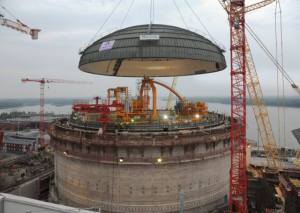 World Nuclear News 29th Nov 2018, The start of regular electricity generation at the Olkiluoto 3 (OL3) EPR has been pushed back by a further four months and is now expected to begin
in January 2020, Finnish utility Teollisuuden Voima Oyj (TVO) announced
today.
Last month, the plant’s supplier – the Areva-Siemens consortium –
announced it wanted to update the schedule for completing the unit as
commissioning tests were taking longer than planned. TVO said it has been
informed by the Areva-Siemens consortium that fuel will now be loaded into
the reactor core in June 2019, with grid connection to take place next
October, and the start of regular electricity generation scheduled for
January 2020.
Under the previous schedule provided by the plant supplier in
June this year, fuel loading was expected in January 2019, grid connection
in May and the start of regular electricity production in September.
http://www.world-nuclear-news.org/Articles/New-delay-in-start-up-of-Finnish-EPR
December 1, 2018
Posted by Christina Macpherson |
business and costs, Finland, politics |
1 Comment
https://www.researchgate.net/publication/289163143_Extreme_weather_and_nuclear_power_plants_EXWE_EXWE_summary_report
see also download at :http://safir2014.vtt.fi/finalseminar/Day_2/TR5_8_4_EXWE_SAFIR2014.pd fKirsti Jylhä
32.05Finnish Meteorological Institute, Hanna M. Mäkelä, 24.69Finnish Meteorological Institute, Ari Venäläinen
34.18Finnish Meteorological Institute, Milla Johansson, 19.57Finnish Meteorological Institute
“This research comprehensively described the occurrence of extreme weather and climate events and aspects of sea level rise that are relevant from the view point of safety of nuclear power plants.
Studies about the frequency, intensity, and spatial and temporal variation of the extreme weather events and their combinations were carried out utilising instrumental meteorological observations, a 1 200-year long preindustrial control simulation and future climate model simulations.
In addition to the role of natural climate variability, the study clarified the influence of human-induced climate change on extreme weather events and sea level values. The longest future climate and sea level projections extend to the end of the 21st century.
According to them, the daily maximum temperatures and the length of the longest hot spells will clearly increase in Finland. The largest changes, however, are projected for the wintertime minimum temperatures. During summer there will be more intensive precipitation events and during winter more frequent precipitation days. The mean sea level is projected to rise, the change depending on the location along the Finnish coastline. Uncertainty ranges in the mean sea level scenarios are large mainly due to uncertainties in the future behaviour of the continental ice sheets.” end quote. Please see original link above.
November 5, 2018
Posted by Christina Macpherson |
climate change, Finland |
Leave a comment
 Finnish Olkiluoto-3 nuclear unit tests slipping behind schedule: TVO https://www.spglobal.com/platts/en/market-insights/latest-news/electric-power/100418-finnish-olkiluoto-3-nuclear-unit-tests-slipping-behind-schedule-tvo, Elaine Hiruo –Jonathan Dart
HIGHLIGHTS
New final phase schedule due in December
Too early to say if first power tests delayed
Output schedule ‘available ahead of commercial op’
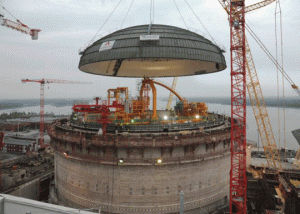
London — Areva-Siemens is to provide a new schedule in December for the final phases of the 1.6-GW Finnish Olkiluoto-3 nuclear reactor after slippage in its commissioning tests, owner operator TVO confirmed Thursday.
This could potentially push back first delivery of power in tests currently scheduled from May 2019, “but we won’t know this until December,” TVO spokesman Pasi Tuohimaa told S&P Global Platts.
Previously TVO has said test production over a roughly five-month period could account for 10%-15% of Finland’s annual electricity needs ahead of full commercial operation, or 2-4 TWh.
Such is the potential volume at risk that TVO is to put up a schedule of Olkiluoto-3’s production tests six months before commercial operation, Tuohimaa said. He stressed that at this stage it was impossible to assess accurately how much electricity would be produced during testing.
“The completion of the commissioning tests has not been progressing according to the updated schedule for commissioning by the plant supplier Areva-Siemens Consortium,” TVO said in a statement late Wednesday.
The operator could not say whether “rebaselining” of the final phase schedule would affect the current September target for the start of commercial operation at the plant, which is already almost 10 years behind the original schedule and three times over the original Eur3.2 billion budget.
Neither could TVO say whether test production of electricity at varying power levels from May 2019 would be affected by the re-scheduling.
In June 2017, TVO said Olkiluoto-3 would begin commercial operation in September 2019, rather than in May of that year as expected. Hot testing had taken longer than expected, it said.
Q2 2019 Nordic baseload power on the NASDAQ futures exchange traded Thursday 0900 GMT at Eur36.40/MWh, down 30 euro cent from two trades earlier in the European morning.
elaine.hiruo@spglobal.com– jonathan.dart@spglobal.com
October 5, 2018
Posted by Christina Macpherson |
business and costs, Finland |
Leave a comment
Nuclear plant delay, YLE 4 Oct 18 Daily Turun Sanomat reports that the start of regular power production at Finland’s biggest nuclear reactor, Olkiluoto 3, may be pushed back yet again.
TVO – the owner of the power plant – said the French-German consortium Areva-Siemens has not been able to complete commissioning tests at the Eurajoki site as planned, the paper says. According to TVO, it is still unclear whether the supplier’s test delays will affect the launch of the plant, which has been scheduled for September 2019.
The project in western Finland has been hit by repeated delays, spiraling costs and legal disputes. The construction of the 1,600 MW reactor began in 2005, and initially it was scheduled to start producing electricity in 2009.
On Tuesday, Finland’s Radiation and Nuclear Safety Authority expressed concerns about the safety culture at energy company Fennovoima, which seeks to build a nuclear power plant in northern Finland. https://yle.fi/uutiset/osasto/news/thursdays_papers_bus_driver_walk-out_nuclear_power_plant_delay_and_finns_in_drug_bust/10438247
October 5, 2018
Posted by Christina Macpherson |
business and costs, Finland |
Leave a comment

Finnish firms target Chinese radwaste market, WNN, 23 August 2018
Finnish utility Fortum and consulting engineering company AINS Group have signed a memorandum of understanding to provide radioactive waste management services to China’s rapidly expanding nuclear industry. Through the MoU, the companies will provide services for the management of low- and intermediate-level radioactive waste in China. The agreement also enhances cooperation between the firms and other Finnish companies and organisations, including VTT Technical Research Centre of Finland Ltd and Posiva Solutions.
Based on expected installed nuclear generating capacity of 50 GWe by 2020, China’s annual used fuel arisings will amount to about 1200 tonnes at that stage, the cumulative total being about 14,000 tonnes then.
“As China becomes increasingly mindful of environmental integrity and reduces its use of fossil fuels, [its] zero-carbon nuclear energy solution requires enhanced focus on radioactive waste management,” the companies said in a joint statement. “Finnish expertise has an important role in disposing of Chinese radioactive waste and building a cleaner future together with shared respect for nature and the environment.”……….Finnish waste management company Posiva – jointly owned by Fortum and TVO – launched Posiva Solutions in June 2016. The business, it said, would “focus on the marketing of the know-how accumulated from the design, research and development efforts in the final disposal of used nuclear fuel, as well as on associated consulting services”. http://www.world-nuclear-news.org/Articles/Finnish-firms-target-Chinese-radwaste-market
August 24, 2018
Posted by Christina Macpherson |
China, Finland, wastes |
Leave a comment
 Warm sea water in Finland reduces power from Loviisa nuclear plant https://www.reuters.com/article/us-finland-nuclear-fortum-oyj/warm-sea-water-in-finland-reduces-power-from-loviisa-nuclear-plant-idUSKBN1KF2COLefteris Karagiannopoulos 26 July 18 OSLO (Reuters) – Finland’s Loviisa power plant, consisting of two reactors with a combined capacity of 1 gigawatt, had to reduce power by 170 megawatts on Wednesday as the sea water that is used to cool the reactors had become too warm, operator Fortum said.
Because of the very warm temperatures the Nordic region is currently experiencing, the sea water that is collected to cool the Loviisa reactors is warmer and the water released is also warmer, at 32 degrees Celsius on Wednesday.
Releasing hot water back to the sea after cooling the reactors could be a hazard and if it exceeds 34 degrees Fortum said the reactors must be shut down due to regulations.
“We decreased power by 170 megawatts for a bit less than two hours. The sea water that cools the reactors was at 24 degrees, which is warmer than usual,” Fortum’s chief of operations in the plant, Timo Eurasto, told Reuters.
Such a rare occurrence may happen again in the next days because of the unusually warm temperatures, he said, adding that there was no danger to people, the plant, or the environment.
“High sea water temperature may indeed reduce the efficiency of the cooling systems of the plant. This is compensated by reducing or shutting down the reactor power,” said Nina Lahtinen, nuclear safety section head at Finland’s regulator STUK.
In Germany traders warned last week that higher temperatures in August may create cooling issues for the country’s reactors, with E.ON subsidiary PreussenElektra cutting output slightly from two units.
Sweden’s nuclear energy regulator SSM, told Reuters on Tuesday that power production at the Forsmark nuclear plant has also been reduced “by a few percentage points” due to cooling issues.
Last time Fortum had to reduce power in its reactors due to warmer-than-usual cooling water was seven years ago, said Loviisa plant’s Eurasto.
Unusually warm and dry weather in the Nordics led temperatures to record highs this summer, affecting water levels at the reservoirs that feed Norway and Sweden with hydropower, causing prices to spike as a result.
July 27, 2018
Posted by Christina Macpherson |
climate change, Finland |
Leave a comment
 Nucnet 25th June 2018, A full-scale in-situ system test for spent nuclear fuel disposal is
expected to begin this week at Posiva’s planned final deep geologic
disposal facility at Olkiluoto, Finland. Posiva’s owner Teollisuuden
Voima Oyj (TVO) said the test will be the first of its kind and means that
Posiva is making progress towards the operational test phase of its final
disposal system and technology.
According to TVO, the test will last for
several years. It aims to prove that the prototype processes for geological
storage at Posiva’s repository are “all working concepts”. The test
has been in preparation since December 2017, TVO said. The processes
include placing fuel assemblies packed in copper-steel canisters inside
holes drilled in the bedrock tunnels. This is followed by backfilling the
tunnels with bentonite clay and sealing them with a cast plug. Two test
canisters will be equipped with thermal resistors simulating the residual
temperature of spent nuclear fuel, TVO said. A TVO official said the
temperature and pressure in the canisters, test holes and the surrounding
bedrock, and the behaviour of the backfill of the tunnels, will be
monitored by some 500 sensors over several years.
https://www.nucnet.org/all-the-news/2018/06/25/finland-s-posiva-to-begin-world-s-first-in-situ-system-test-at-final-repository-site
June 29, 2018
Posted by Christina Macpherson |
Finland, wastes |
Leave a comment
Tekniik & Talous 14th May 2018 , [Machine Translation] New problems have arisen in TVO’s hot tests at
Olkiluoto 3. The connection line of the main pipework of the plant, the reactor cooling circuit, vibrates more than allowed. The problem is reported by the supervising authority Stuk in its recent monitoring report.
The problem has emerged in hot tests where the reactor and turbine plant systems are heated by the heat generated by the main circulation pumps to the correct operating temperatures. Heat tests ensure that the facility is safe to charge nuclear fuel. Before that, the body still needs a government license. According to Stuk, the reason for the vibration is still under way. Stuk explains the following. In Stucco’s Executive Director Petteri Tiippana, the problem is not negligible.
https://www.tekniikkatalous.fi/tekniikka/energia/olkiluoto-3-n-tarkein-putkisto-varahtelee-liikaa-stukin-mukaan-korjaaminen-on-mittava-tyo-6724597
May 16, 2018
Posted by Christina Macpherson |
Finland, safety |
Leave a comment