South Korean unionists protest US-South Korea war games
Saturday, 13 August 2022, Frank Smith, Press TV, Seoul
Thousands of South Korean unionists and their progressive supporters rallied in downtown Seoul to protest against joint US-South Korea war games planned for later this month.
The drills will be the largest in years, and follow the May election of President Yoon Suk-yeol, who has promised to take a hardline with North Korea. Union leaders worry about risks.
While many South Koreans, especially supporters of President Yoon on the right, favor close ties with the U.S., large numbers also argue the US military and the country’s alliance with Washington, prevent the improvement of ties with North Korea – and generate tension…………….. more https://www.presstv.ir/Detail/2022/08/13/687322/South-Korean-unionists-protest-US-South-Korea-war-games
Fukushima water dumping plan triggers fresh anger from South Korea
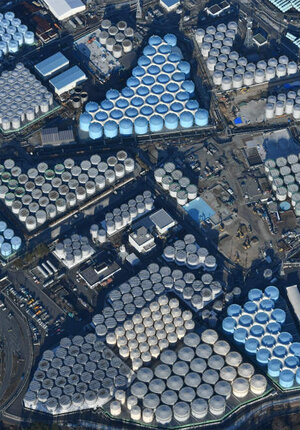
As water-dumping moves advance, S. Koreans seek firm regional stance, http://global.chinadaily.com.cn/a/202208/09/WS62f1be52a310fd2b29e7119d.html By YANG HAN in Hong Kong |2022-08-09
Japan’s plan to dump radioactive wastewater from the stricken Fukushima nuclear power plant will endanger the lives of people in the Asia-Pacific region, say experts who want to see stepped-up efforts against the ocean disposal from the countries most at risk.
South Koreans have been among those expressing their opposition to the plan, and voices have again been raised after Japan moved a step closer to implementing its planned discharge of the nuclear-contaminated water from next year, following the recent approval of the plan’s details by the nation’s nuclear regulator.
“The discharge of wastewater from Fukushima is an act of contaminating the Pacific Ocean as well as the sea area of South Korea,” said Ahn Jae-hun, energy and climate change director at the Korea Federation for Environment Movement, an advocacy group in Seoul.
“Many people in South Korea believe that Japan’s discharge of the Fukushima wastewater is a wrong policy that threatens the safety of both the sea and humans,” Ahn told China Daily.
Last month, Japan’s nuclear regulator approved the plan to discharge wastewater into the Pacific Ocean from the Fukushima Daiichi power plant, after it built up a huge amount of radiation-tainted water. The water has been collected and stored in tanks following efforts to cool down the reactors after an earthquake and tsunami struck Japan in 2011.
The dumping plan has drawn fierce opposition from government officials and civic groups in South Korea, one of the world’s major consumers of seafood.
On Aug 1, South Korea’s Minister of Oceans and Fisheries Cho Seunghwan said the government is considering whether to take the issue to the International Tribunal for the Law of the Sea, Yonhap News Agency reported. Cho said the government’s primary plan is to prevent Japan from releasing the contaminated water. “We do not accept the release plan”, he said.
Ahn said radioactive materials can generate long-term effects and it remains unclear how they will affect the marine ecosystem.
Though the South Korean government is considering taking the issue to the international tribunal, Ahn said it will be difficult to quantify the potential damage.
South Korea has said it will conduct a thorough analysis and revision of the impact of Japan’s plan, but the government has not received enough data from Japan to conduct such research, South Korea’s Hankyoreh newspaper reported in June.
After Japan’s nuclear regulator approved the Fukushima discharge plan, South Korean President Yoon Suk-yeol said Tokyo needs to transparently explain and gain consent from neighboring countries before releasing the contaminated water.
Potential impact
Shaun Burnie, a senior nuclear specialist with Greenpeace Germany, said the environmental group is concerned about the potential impact of the water’s release on the wider Asia-Pacific region.
The level of exposure depends on multiple variables including the concentration in seawater and how quickly it concentrates, disperses and dilutes, forms of life, and the type of radionuclide released and how that disperses or concentrates as it moves through the environment, Burnie said.
“The concentrations are of direct relevance to those who may consume them, including marine species like fish and, ultimately, humans,” Burnie told China Daily.
Noting that the Fukushima contaminated water issue comes under the United Nations Convention on the Law of the Sea as it is a form of pollution to international waters, Burnie said there are strong grounds for individual countries to file a legal challenge against Japan’s plan.
Ahn said joint expressions of opposition in the region could force the Japanese government to choose a safe method to deal with the wastewater instead of dumping it into the sea. China is also among the neighboring countries that have voiced opposition to the Fukushima discharge plan.
Nuclear Weapons Policies of Japan and South Korea Challenged
By Jaya Ramachandran, GENEVA (IDN)31 July 22, — The Basel Peace Office, in cooperation with other civil society organisations, has challenged the nuclear weapons policies of Japan and South Korea in the UN Human Rights Council, maintaining that these violate the Right to Life, a right enshrined in Article 6 of the International Covenant on Civil and Political Rights (ICCPR).
The two East Asian countries’ nuclear strategies have been called into question in reports submitted on July 14 as part of the Universal Periodic Review (UPR) of the obligations of Japan, South Korea and 12 other countries under human rights treaties. (See Submission on Japan and Submission on South Korea).
The submissions, presented at a time when Russia has made nuclear threats to the US and NATO if they intervene in the Russian invasion of Ukraine, underline the need to address the risks of nuclear deterrence policies. Besides, Russia is not the only country that possesses nuclear weapons and/or maintains options to initiate nuclear war………………
both Japan and South Korea are engaged in extended nuclear deterrence policies which involve the threat or use of US nuclear weapons on their behalf in an armed conflict. Both have also supported the option of first use of nuclear weapons on their behalf, even when the United States has been trying to step back from such a policy.
The Basel Peace Office and other civil society organisations argue that the extended nuclear deterrence policies of Japan and South Korea violate their human rights obligations, as is their lack of support for negotiations for comprehensive, global nuclear disarmament.
The submissions make several recommendations of policies the governments could take to conform to the Right to Life. These include adopting no-first-use policies and taking measures to phase out the role of nuclear weapons in their security doctrines.
This they could do by establishing a Northeast Asia Nuclear-Weapon-Free Zone and urging at the ongoing Non-Proliferation Treaty (NPT) Review Conference an agreement on the global elimination of nuclear weapons by 2045, the 75th anniversary of the NPT………………………..
more https://www.indepthnews.net/index.php/armaments/nuclear-weapons/5487-nuclear-weapons-policies-of-japan-and-south-korea-challenged
Increasingly economical renewables mean now’s no time for South Korea to cling to nuclear power
In these changing times, it is unfortunate that Korea is choosing to cling to the nuclear industry, the marketability of which is becoming increasingly unclear.
https://english.hani.co.kr/arti/english_edition/english_editorials/1051124.html Jul.15,2022
The new administration’s nuclear power advocacy runs counter to global trends toward renewables.
A new report released by the International Renewable Energy Agency (IRENA) has revealed that global solar and wind power generation costs are down 13%-15% compared to one year ago.
According to IRENA’s “Renewable Power Generation Costs in 2021” report released on Wednesday, the global weighted average levelized cost of electricity (LCOE) of new onshore wind projects added in 2021 fell by 15% year on year while that of new utility-scale solar PV and offshore wind both declined by 13%.
The report explains that the LCOE of a given technology is the ratio of lifetime costs to lifetime electricity generation; it is used as a measure to compare the economic feasibility of the various methods of generating electricity.
In 2021, renewables’ share of total power generation capacity growth reached 81%. It seems that these figures continue to improve as the economy gets stronger.
In Korea, however, the perception that nuclear power equals cheap energy is still strong. This is despite the fact that globally, renewable energy dominates nuclear power in terms of economic feasibility.
According to a report released by Lazard, a global asset management company, in October of last year, the average cost of electricity per megawatt-hour (MWh) of solar power fell by 90%, from $359 in 2009 to $36 last year. Wind power also fell 72% from $135 to $38.
Comparatively, nuclear power saw a 36% increase in cost from $123 to $167 during the same period. In fact, nuclear power has already become 4.5 times more expensive than renewable energy.
This is because, while technology is developing day by day as investment into renewable energy increases in step with the global trend of transitioning to cleaner energy sources, construction costs for nuclear power plants are increasing as safety regulations are strengthened after the Fukushima incident.
Advanced economies, particularly those in Europe, are scrambling to come up with energy policies centered on renewable energy. To this end, the EU announced in May that it would increase the share of renewable energy from the current 22% to 45% by 2030. This is an upward revision of the 40% target set a year ago.
The change is reportedly aimed at quickly getting rid of Europe’s dependency on Russian energy. In other words, Europe seems to be choosing to expand its use of renewable energy as a solution to its current energy crisis.
South Korea, however, is running counter to this trend by advocating to become a leader in the nuclear power field. By 2030, the proportion of Korea’s energy mix derived from nuclear power will increase to more than 30% while the proportion of renewable energy will reportedly be adjusted to a “reasonable” level.
The plan is to lower the existing renewable energy target, which stands at 30.2% by 2030, because it is perceived as being too high.
In the near future, whether or not companies use renewable energy is likely to act as a new trade barrier. In these changing times, it is unfortunate that Korea is choosing to cling to the nuclear industry, the marketability of which is becoming increasingly unclear.
South Korean government to massively fund developing small nuclear reactors, partnering with USA companies NuScam and Terra Power.
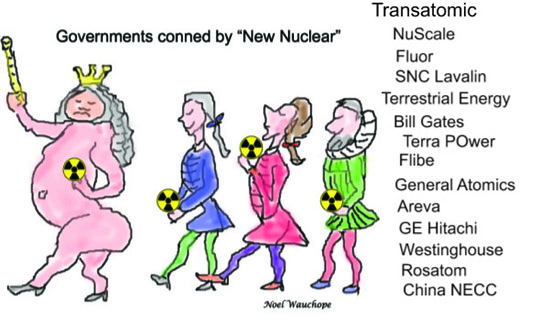
Policymakers endorse massive injection of state money for SMR development
Lim Chang-won Reporter(cwlim34@ajunews.com) | Lim Chang-won Reporter, email : cwlim34@ajunews.com© Aju Business Daily & www.ajunews.com
June 2, 2022, SEOUL — With the blessing of President Yoon Suk-yeol, South Korea’s nuclear power industry grabbed a new opportunity to rebound after policymakers endorsed a massive injection of state money for the development of a relatively safe small modular reactor called “i-SMR” that can be operated in an underground water tank and cooled naturally in case of emergency.
Yoon, who took office in early May, dumped his predecessor’s “nuclear-exit” policy of phasing out nuclear power plants and vowed to actively revitalize South Korea’s struggling nuclear power industry and develop next-generation reactors, insisting that nuclear power plants are an essential factor in restoring industrial competitiveness.
Up to Yoon’s expectations, the proposed development of i-SMRs has passed a preliminary feasibility study, according to the Ministry of Science and ICT. Some 399.2 billion won ($319.9 million) will be spent from 2023 to 2028 for the i-SMR project aimed at developing a reactor with a power generation capacity of less than 300 megawatts. ……..
Mainly through partnerships with American companies, South Korean companies have jumped into the SMR market, such as Hyundai E&C and Doosan Enerbility, a key player in South Korea’s nuclear industry that tied up with NuScale Power, an SMR company in the United States.
In May 2022, Samsung C&T strengthened its partnership with NuScale Power to cooperate in SMR projects in Romania and other East European countries. SK Group tied up with TerraPower for cooperation in the development and commercialization of SMR technology.
Separately, the government approved the proposed spending of 348.2 billion won from 2023 to 2030 to develop technologies for the dismantling of defunct reactors………
Hyundai E&C has tied up with its American partner, Holtec International, for the decommissioning of defunct nuclear power plants, starting with the Indian Point Energy Center in Buchanan in Westchester County. https://www.ajudaily.com/view/20220602110820983
South Korea to keep import ban on Japan seafood due to Fukushima concern.

South Korea to keep import ban on Japan seafood due to Fukushima concern https://english.kyodonews.net/news/2022/05/d973d7db8578-s-korea-to-keep-import-ban-on-japan-seafood-due-to-fukushima-concern.html
KYODO NEWS 26 May 22, South Korea will maintain an import ban on Japanese seafood from areas affected by the 2011 Fukushima nuclear crisis, a minister said Wednesday, denying any plan to lift it in a bid to secure Tokyo’s support to join a regional free trade accord.
“We’ve taken a resolute stance on the issue. We aren’t considering allowing imports of Japan’s Fukushima seafood as a tactic to get backing for our bid to join” the Trans-Pacific Partnership accord, Oceans Minister Cho Seung Hwan said during a meeting with reporters, according to Yonhap News Agency.
Japan is one of the leading members of the 11-nation TPP, which also includes Australia, Singapore and Mexico. Consent of all members is required for new membership.
South Korea has been working on domestic procedures to submit an application, Yonhap said.
China and Taiwan are also seeking to join the TPP.
Taiwan in February lifted an import ban on food products from Fukushima and some other Japanese prefectures imposed in the wake of the Fukushima disaster.
Amid radiation concerns, South Korea has banned Japanese seafood imports from eight prefectures, including Fukushima.
New South Korean President plans to reverse the nuclear phaseout policy
South Korean President Yoon Suk-yeol was formally inaugurated on 10 May.
He is committed to strengthening the nuclear power sector, reversing the
policy his predecessor, President Moon Jae-in of phasing out nuclear power
adopted in 2017. Investing in nuclear energy formed part of the platform on
which Yoon fought the election.
Nuclear Engineering International 13th May 2022
https://www.neimagazine.com/news/newssouth-korea-expected-to-end-nuclear-phase-out-9696004
Greenpeace chief urges Yoon to reevaluate nuclear-focused decarbonization plan
Greenpeace chief urges Yoon to reevaluate nuclear-focused decarbonization plan https://en.yna.co.kr/view/AEN20220422004700315
All News 11:20 April 22, 2022 SEOUL, April 22 (Yonhap) — The leader of Greenpeace urged President-elect Yoon Suk-yeol on Friday to “reevaluate” his nuclear-focused decarbonization plan in a letter sent to him on the occasion of Earth Day.
Yoon’s transition team is pushing to modify the country’s carbon neutrality plans that the outgoing Moon Jae-in administration declared with a goal to reduce its greenhouse gas emissions by 40 percent from the 2018 levels by 2030 and reach carbon neutrality by 2050.
The overhaul will likely include reversal of Moon’s nuclear phase-out policy and changes in energy mix.
“We urge you to reevaluate whether nuclear energy could be safe, fast, and affordable enough to achieve the 1.5 degree C temperature goal,” Greenpeace International Executive Director Norma Torres said in the letter.
She said, “Korea already has the highest nuclear power plant density in the world … we wonder whether further nuclear expansion will be acceptable by the public.”
Torres also said, “The unsolved nuclear waste problem is also a major issue you need to consider in your nuclear focused decarbonization plan.”
South Korea, instead, needs a new, ambitious energy transition strategy to employ more renewable energy coupled with an ambitious fossil fuel and nuclear phase-out plan, according to her.
“Needless to say, your term from 2022 to 2027 is a critical time to decide whether Korea will pull its weight and therefore contribute to the global mission to prevent disastrous climate change in time or not,” she said.
South Korea’s president-elect wants U.S. nuclear bombers, submarines to return
South Korea’s president-elect wants U.S. nuclear bombers, submarines to return, By Hyonhee Shin, SEOUL, April 6 (Reuters) – Advisers to South Korea’s president-elect sought redeployment of U.S. strategic assets, such as nuclear bombers and submarines, to the Korean peninsula during talks held on a visit to Washington, one of the advisers said on Wednesday……… (subscribers only) https://www.reuters.com/world/asia-pacific/skoreas-president-elect-wants-us-nuclear-bombers-submarines-return-2022-04-06/
Reporting by Hyonhee Shin; Additional reporting by Jeff Mason in Washington; Editing by Clarence Fernandez
Wildfire on South Korea’s east coast threatens nuclear and liquefied natural gas plants
Wildfire on South Korea’s east coast threatens nuclear and liquefied natural gas plants
ABC Sat 5 Mar 2022 Thousands of South Korean firefighters and troops are battling a large wildfire that has been tearing through an eastern coastal area and threatened a nuclear power station and a liquefied natural gas plant.
Key points:
- Around 7,000 personnel, 65 helicopters and 513 vehicles have been deployed to contain the fire
- President Moon Jae-in issued an alarm as the fire reached the perimeter of the seaside nuclear power plant
- The operator reduced production to 50 per cent and cut off some electricity lines as preventive measures
The fire began Friday morning on a mountain in the seaside town of Uljin and burned across more than 6,000 hectares to the nearby city of Samcheok………………..
Around 7,000 firefighters, troops and public workers as well as 65 helicopters and 513 vehicles, have been deployed to contain the fire, which after reaching Samcheok began moving southward back toward Uljin, driven by wind……………
President Moon Jae-in issued an alarm Friday afternoon as the fire reached the perimeter of a seaside nuclear power plant in Uljin, forcing the operator to reduce production to 50 per cent and cut off some electricity lines as preventive measures.
Hundreds of firefighters were deployed to the plant and kept the blaze under control before winds drove it northward toward Samcheok………… https://www.abc.net.au/news/2022-03-05/south-korea-wildfires-threaten-nuclear-lng-plants/100885914
Wildfires threaten a nuclear power plant in South Korea
Thousands of South Korean firefighters and troops are battling a large
wildfire that has been tearing through an eastern coastal area and
threatened a nuclear power station and a liquefied natural gas plant.
ABC News 5th March 2022
https://www.abc.net.au/news/2022-03-05/south-korea-wildfires-threaten-nuclear-lng-plants/100885914
Sky 6th March 2022
Why joint US-South Korean research on plutonium separation raises nuclear proliferation danger
Why joint US-South Korean research on plutonium separation raises nuclear
proliferation danger by Frank N. von Hippel. South Korea, like the United
States, has long relied on nuclear power as a major source of electric
power.
As a result, it has amassed large stores of spent nuclear fuel and,
as in the United States, has experienced political pushback from
populations around proposed central sites for the spent fuel. South Korea
also has a history of interest in nuclear weapons to deter North Korean
attack.
Bulletin of Atomic Scientists 13th Jan 2022
Why joint US-South Korean research on plutonium separation raises nuclear proliferation danger
South Korea presidential contender vows to seek nuclear-powered submarines, months after Australia’s Aukus deal.

South Korea presidential contender vows to seek nuclear-powered submarines, months after Australia’s Aukus deal, Guardian, 31 Dec 21,
Lee Jae-myung aims to counter North Korea threats and pledges to restart stalled talks between Pyongyang and Washington
South Korea’s ruling party presidential candidate said he will seek US support to build nuclear-powered submarines to better counter threats from North Korea and proactively seek to reopen stalled denuclearisation talks between Pyongyang and Washington.
In an interview with Reuters and two other media outlets, Lee Jae-myung also pledged to put aside “strategic ambiguity” in the face of intensifying Sino-US rivalry, vowing pragmatic diplomacy would avoid South Korea being forced to choose between the two countries………………
Lee said he will persuade the US to win diplomatic and technology aid to launch nuclear-powered submarines, which can operate more quietly for longer periods, amid renewed calls for building one in the military and parliament after North Korea test-fired a new missile from a submarine in October.
Lee cited the deal Australia struck under a trilateral security partnership with the US and Britain in September to build its own nuclear-powered submarines…………………………… https://www.theguardian.com/world/2021/dec/30/south-korea-presidential-contender-vows-to-seek-nuclear-powered-submarines-months-after-australias-aukus-deal
U.S., Japan, S.Korea to meet over N.Korea nuclear standoff
U.S., Japan, S.Korea to meet over N.Korea nuclear standoff, By Josh Smith SEOUL, Sept 10 (Reuters) – Officials from the United States, South Korea and Japan will hold a meeting on North Korea next week in Tokyo, South Korea’s foreign ministry confirmed on Friday.
The three countries have been discussing ways to break a standoff with North Korea over its nuclear weapons and ballistic missile programmes, which have drawn international sanctions.
……………. U.S. President Joe Biden’s administration has said it will explore diplomacy to achieve North Korean denuclearisation, but has shown no willingness to ease sanctions.
…… Pyongyang has also said it is open to diplomacy, but that it sees no sign of policy changes from the United States, citing issues such as sanctions as well as joint military drills with South Korea.Reporting by Josh Smith and Hyonhee Shin in Seoul and David Brunnstrom in Washiington; Editing by Kevin Liffey and Alistair Bell https://www.reuters.com/world/us-japan-skorea-meet-over-nkorea-nuclear-standoff-2021-09-10/
South Korea developing a missile as powerful as a nuclear weapon
 |
|
S Korea developing missile as powerful as nuclear weapon, Al Jazeera, 3 Sept 21,
Three-tonne missile designed to destroy underground facilities by penetrating tunnels to effectively nullify nuclear launches. South Korea is in the final stages of developing a surface-to-surface ballistic missile as powerful as a tactical nuclear warhead, Yonhap news agency reported, as the country unveiled budget proposals aimed at bolstering its defences against North Korea.
According to the report published on Thursday, the new weapon can carry a warhead of up to three tonnes with a flight range of 350 to 400 km (217 to 248 miles).
The missile is designed to destroy underground missile facilities and bases by penetrating underground tunnels to effectively nullify nuclear and intercontinental ballistic missiles (ICBMs) ahead of their launches. The report said it can also reach all areas of North Korea if fired from around the inter-Korean border.
The project went ahead after the full lifting of US-imposed restrictions on missile development……….
The missile would be the latest in a tit-for-tat conventional missile race between the two Koreas…………
The defence plan also seeks to expand Seoul’s presence in space with an eye to deploy a new radar system to monitor space objects by the early 2030s.
Meanwhile, its Navy also plans to build more 3,000-tonne or larger submarines to replace ageing frigates with new ones with improved operational and combat capabilities. https://www.aljazeera.com/news/2021/9/3/s-korea-developing-missile-as-powerful-as-nuclear-weapon-report
1 This Month
19 November – Webinar – The Reality of Reprocessing
Time: 11:00 AM Pacific Time (US & Canada) / 2:00 PM Eastern / 7:00 PM UK / 8:00 PM CET
Register for the Zoom Event Here

Tell Congress: Prevent Nuclear Catastrophe in Iran

Tell Congress: Prevent Nuclear Catastrophe in Iran

Read the Public Inquiry Report, the Commissioners’ report, Surrendering Australia: The AUKUS Deception is available to download for free at aukuspublicinquiry.com. Or just watch the replay of the National Press Club Luncheon.


Shut down the radiation-damaged Heysham nuclear reactors now
To see nuclear-related stories in greater depth and intensity – go to https://nuclearinformation.wordpress.com

Say No to NASA’s Reckless Nuclear Reactor on the Moon
Say No to NASA’s Reckless Nuclear Reactor on the Moon
-
Archives
- November 2026 (156)
- October 2026 (302)
- September 2026 (339)
- August 2026 (330)
- July 2026 (355)
- June 2026 (287)
- May 2026 (306)
- April 2026 (356)
- March 2026 (251)
- February 2026 (267)
- January 2026 (308)
- December 2025 (358)
-
Categories
- 1
- 1 NUCLEAR ISSUES
- business and costs
- climate change
- culture and arts
- ENERGY
- environment
- health
- history
- indigenous issues
- Legal
- marketing of nuclear
- media
- opposition to nuclear
- PERSONAL STORIES
- politics
- politics international
- Religion and ethics
- safety
- secrets,lies and civil liberties
- spinbuster
- technology
- Uranium
- wastes
- weapons and war
- Women
- 2 WORLD
- ACTION
- AFRICA
- Atrocities
- AUSTRALIA
- Christina's notes
- Christina's themes
- culture and arts
- Events
- Fuk 2022
- Fuk 2023
- Fukushima 2017
- Fukushima 2018
- fukushima 2019
- Fukushima 2020
- Fukushima 2021
- general
- global warming
- Humour (God we need it)
- Nuclear
- RARE EARTHS
- Reference
- resources – print
- Resources -audiovicual
- Weekly Newsletter
- World
- World Nuclear
- YouTube
-
RSS
Entries RSS
Comments RSS

