South Korea does not need nuclear subs
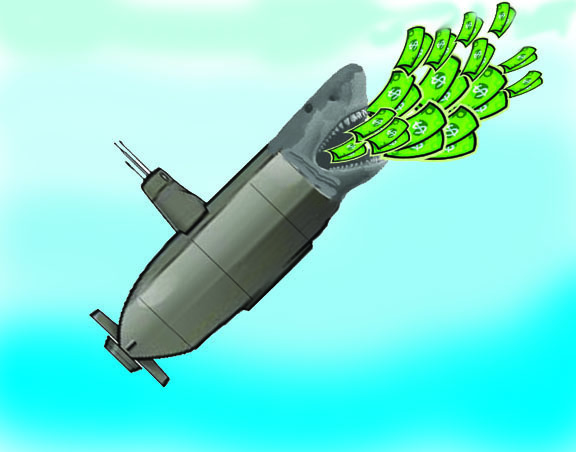
The Hill BY DOV S. ZAKHEIM, OPINION CONTRIBUTOR – 11/24/23
South Korea is again debating whether to develop and build a nuclear-powered submarine.
During a National Assembly confirmation hearing that took place last week, Admiral Kim Myung-Soo, the nominee for chairman of South Korea’s Joint Chiefs of Staff, responded positively to a question about the utility of nuclear-powered submarines, stating that “those capabilities are needed.” He noted, however, that the current U.S.-Korean nuclear agreement restricts the use of nuclear materials for military purposes.
Nevertheless, there appears to be a growing sentiment on the part of both of South Korea’s leading parties and the general public in favor of Seoul acquiring nuclear-powered boats. The government should resist the temptation to do so.
In theory, South Korea could avoid America’s restrictions by turning to France to help it develop or acquire a nuclear-powered submarine. France could help South Korea develop its own nuclear-powered sub, much as Paris has assisted Brazil with its own nuclear-powered submarine program.
However, there are many reasons why Seoul should not imitate the Brazilians and forge ahead with its own program. To begin with, it was only in April of this year that President Biden and South Korean president Yoon Suk Yeol reached an agreement that not only calls for greater consultation on nuclear matters between the two countries, in the form of a newly created nuclear consultative group, but also provides for an enhanced American nuclear presence around the peninsula to deter North Korean aggression…………………………………………………..
In any event, it is not clear how Seoul could afford to undertake a nuclear-submarine program unless it were to dramatically increase its defense spending beyond current levels…………………………………
…………………… Lastly, there are good operational reasons why South Korea should continue to acquire conventionally powered submarines rather than nuclear powered boats. The waters around the Korean peninsula are relatively shallow, which favors the employment of quiet conventional subs. South Korea now operates seven Son–Won II–class diesel-electric submarines, powered by a hybrid diesel‐electric/fuel cell with air-independent propulsion technology. These subs are extremely quiet; they can travel up to 20 knots when submerged and remain under water for seven weeks. They are perfectly suited for operations around the Korean Peninsula.
The South is currently planning both to upgrade the Son-Won II for about $100 million per boat and is proceeding with a new Son-Won III class at about $900 million per submarine. In other words, the country could acquire three state-of-the-art conventional submarines for less than the cost of one nuclear-powered sub.
The costs, the technologies, and operational realities all weigh against South Korea acquiring nuclear-powered submarines. If that were not enough, America’s recent commitment to bolster the nuclear umbrella that it has long provided to South Korea and that is so critical to its deterrent should settle the argument once and for all.
Dov S. Zakheim is a senior adviser at the Center for Strategic and International Studies and vice chairman of the board for the Foreign Policy Research Institute. He was undersecretary of Defense (comptroller) and chief financial officer for the Department of Defense from 2001 to 2004 and a deputy undersecretary of Defense from 1985 to 1987. https://thehill.com/opinion/international/4324038-south-korea-does-not-need-nuclear-subs/
South Korea will expand the number of spots for water testing amid concerns over the release of nuclear waste from Japan’s crippled Fukushima power plant.
Seoul plans to raise the number of testing spots to nearly 250 next year, said South Korean Oceans Minister Cho Seung-hwan.
About a month ahead of Tokyo’s release of treated radioactive water from the Fukushima plant in August, South Korea had begun “emergency radiation tests on samples from a total of 75 coastal locations in the east, west and south of South Korea, as well as the waters off the southern island of Jeju,” Seoul-based Yonhap News reported on Monday.
“We chose the spots, as they are expected to have the released waters first given the sea current. We will add more locations to the list, particularly in the East Sea, to further ensure safety,” said Cho, after visiting a test spot off the southern port city of Busan last week.
Seoul is also conducting radiation tests on 33 points from more distant areas, the minister said.
Tokyo began releasing the nuclear waste on Aug. 24, triggering a sharp reaction from China and opposition parties in South Korea.
Beijing has imposed a blanket ban on imports of seafood from Japan.
Today, the Chinese Embassy in Tokyo refuted claims that Beijing had “refused to join” the International Atomic Energy Agency’s international monitoring mechanism.
Early this month, Seoul warned it will take Japan to the UN if Tokyo does not follow its original plan about releasing the treated radioactive water from its crippled Fukushima nuclear power plant.
The warning came after Seoul called for a discussion on the potential impacts on the marine environment while Japan ignored the call https://www.aa.com.tr/en/asia-pacific/south-korea-to-expand-water-testing-amid-concerns-over-japan-s-nuclear-waste/2994594
South Korea: Mass protests continue against Fukushima nuclear waste dumping
South Korea Peter Boyle, Denise Yoon , September 6, 2023
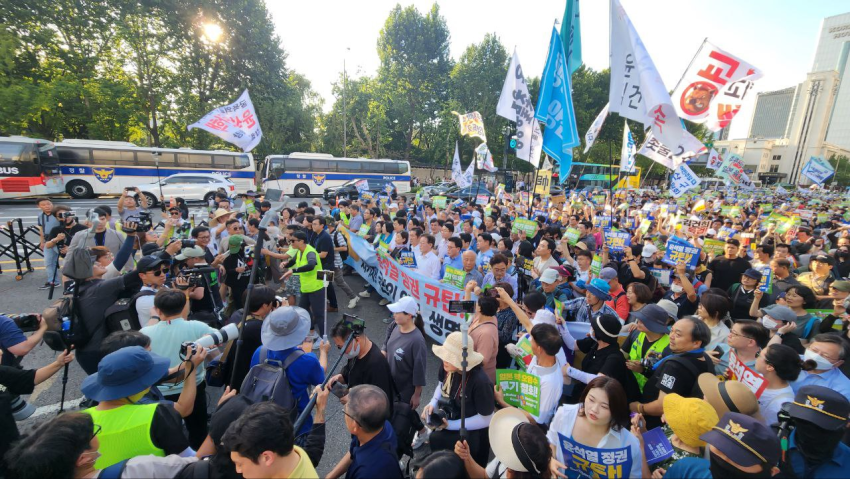
The biggest of the global protests against Japan’s dumping of radioactive wastewater from the Fukushima nuclear power plant into the Pacific Ocean — which began on August 25 — have been in Seoul, the capital of South Korea. Green Left‘s Peter Boyle spoke to Denise Yoon, a key organiser of the movement.
Since August 26, we have had two big national rallies in Seoul and around 50,000 people have gathered at each.
About half of the demonstrators are members of four opposition parties: the Democratic Party, the Justice Party, the Progressive Party and the Basic Income Party. The rest are from religious and civil society groups, including environmental and consumer organisations, parents organisations, justice and democracy activists and human right defenders.
According to a public poll by the Seoul city government in August, around 80% of citizens oppose Japan’s ocean dumping of nuclear wastewater and condemn the Korean government’s support of Japan without appropriate regard for Korean people’s safety from ocean pollution.
People think the Korean government has failed to explain scientifically, environmentally and economically why they claim that the Fukushima wastewater is not a big deal. They also distrust the International Atomic Energy Authority’s report because its conclusion [supporting Japan’s dumping] is based on deficient data and evidence.
Due to the Korean government’s very active promotion of Japan’s unilateral decision to commence dumping, many Korean people are getting very angry at the government. Polls show that President Yoon Suk Yeol now has a disapproval rate of 58% and this is influenced not only by the Fukushima issue, but also by government incompetence on other issues.
This is why we were able to hold these two big rallies.
We will organise a national rally every Saturday in September and expect more people will join the protest.
We will hold the 4th National Candlelight Rally in Gwanghwamun Plaza and we expect more than 50,000 people to join in for speeches, bands and cultural performances. Global solidarity messages will be shared. This rally will call on Japan to stop the dumping and it will demand that the Korean government prohibit the import of marine products from Japan.
South Koreans worry about Fukushima water: more disapprove of President Yoon
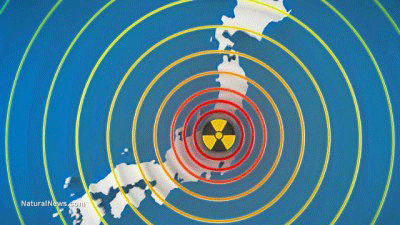
A majority of South Koreans are worried about Japan’s discharge of treated
radioactive water from the Fukushima nuclear plant into the sea despite
efforts by their government to allay fears, a poll published on Friday
showed.
Japan says the water from the wrecked nuclear power plant is safe
and it began releasing it into the Pacific on Aug. 24 despite objections at
home and abroad, particularly from China, Japan’s biggest trade partner,
which banned Japanese seafood.
The South Korean government, however, has
said it sees no scientific problem with the water release, though stressing
it does not approve of it, and banning the import of seafood from waters
off Fukushima, north of Tokyo. President Yoon Suk Yeol has led a campaign
to ease public concern and encourage consumption of seafood. On Thursday,
he visited a major fisheries market to shop and have lunch. Despite such
efforts, South Korean environmental groups and many members of the public
are alarmed and Yoon’s disapproval rating has risen to the highest in
months, a Gallup Korea poll of 1,002 people showed.
Reuters 1st Sept 2023
Fukushima water release poses test for Japan-South Korea unity
TOKYO/SEOUL – Japan Times , BY TIM KELLY, SAKURA MURAKAMI AND HYONHEE SHIN
REUTERS 18 Aug 23
U.S. President Joe Biden wants to lock in friendly ties between Japan and South Korea at a summit on Friday, but their readiness to shelve grievances will be tested when Tokyo begins pumping water from its wrecked Fukushima nuclear plant into the sea.
Japan already delayed the release to avoid stirring up political opposition in South Korea before President Yoon Suk-yeol joins Prime Minister Fumio Kishida for a meeting with Biden at the Camp David retreat on Friday, four officials in Japan and South Korea said.
The dumping of radioactive water may happen days after the summit, which the United States is billing as a “historical” trilateral meeting that will deliver a “bold counter” to regional rival China.
That puts less domestic political pressure on Yoon, said one of the officials, who asked not to be identified because of the sensitivity of the issue.
Washington needs its Asian allies to work together because they see the military power balance in East Asia, including around Taiwan, shifting in China’s favor.
…………………….. Even if Fukushima fades as an issue, the risk of bad blood remains real. As relations soured in 2019, for example, Moon nearly scrapped a critical intelligence-sharing deal with Japan, reversing the decision at the last minute under U.S. pressure.
By accepting an International Atomic Energy Agency (IAEA) report last month that greenlit Japan’s Fukushima water release, Yoon could encourage fresh dissent that China will try to amplify, analysts say.
“There is certainly some possibility that Yoon will come under pressure over this, particularly if there is data that shows that the water is more dangerous than we otherwise thought,” said Christopher Johnstone, a former East Asia director of Biden’s National Security Council who is now with the Center for Strategic and International Studies.
Japan says it will remove most radioactive elements from the water except for tritium, a hydrogen isotope that must be diluted because it is difficult to filter.

U.S. Secretary of State Antony Blinken on Tuesday expressed satisfaction with Japan’s plans.
………………….a Gallup poll in late June showed that 78% of South Koreans worry about potential contamination of the ocean and seafood…………………………
more https://www.japantimes.co.jp/news/2023/08/18/japan/politics/south-korea-fukushima-radioactive-water/
South Korea’s opposition party to file UN complaint against Japan over nuclear waste
Democratic Party plans to visit Tokyo to oppose release of treated water from crippled Fukushima nuclear plant
Esra Tekin |14.08.2023 -ISTANBUL, https://www.aa.com.tr/en/asia-pacific/south-koreas-opposition-party-to-file-un-complaint-against-japan-over-nuclear-waste/2967294
South Korea’s main opposition party announced on Monday its intention to lodge a formal grievance with the United Nations Human Rights Council (UNHRC) in the upcoming week, regarding Japan’s proposed strategy to release water from the Fukushima site.
According to representative Woo Won-shik, who leads the Democratic Party (DP) committee that opposes Tokyo’s proposal to discharge treated water from the damaged Fukushima nuclear plant into the ocean, the complaint will be formally submitted on Thursday, Seoul-based Yonhap News reported.
The DP asserts that the planned release, set to start as soon as late August, breaches several international agreements and lacks verified scientific safeguards.
The UNHRC assesses grievances originating from individuals, entities, or nations pertaining to instances of ongoing and severe human rights transgressions.
Alongside submitting the complaint, the DP intends to collect signatures from roughly 1.5 million citizens and deliver them to the office of the president.
Furthermore, DP members are making preparations for a visit to Japan by the end of this month to express their opposition to Tokyo’s scheme, subsequent to two prior visits made in April and July.
Japan is expected to release treated nuclear waste from the crippled Fukushima nuclear power plant this month or early next month.
Japan’s water discharge plan, announced in April 2021, faced significant criticism from China, South Korea, North Korea, Taiwan, and international organizations, including the UN.
The US supported the proposal, following years of discussions on dealing with over 1 million tons of water stored at the Fukushima nuclear complex since the 2011 disaster.
In South Korea, activists march against Tokyo’s waste plan
Hundreds of people in South Korean took to the streets of Seoul on Saturday
to protest against Japan’s contentious plan to release treated nuclear
wastewater into the Pacific Ocean. Tokyo is set to release the water from
the tsunami-hit Fukushima nuclear plant later this month. It has been
approved by the UN nuclear watchdog, and a South Korean assessment found it
meets international standards. But protesters fear marine life will be
destroyed and seafood contaminated. Marching in central Seoul, they held
signs reading “Protect the Pacific Ocean” and “Nuclear Power? No Thanks!”.
BBC 12th Aug 2023
Another Washington declaration: U.S. nuclear weapons on the Korean Peninsula
Foreign Policy Research Institute, Joseph Su 9 Aug 23
- On July 18, the USS Kentucky docked in South Korea, marking the first visit by a potentially nuclear-armed US submarine since the 1980s on the heels of North Korean missile launches.
- After North Korea conducted a record amount of missile tests in 2022, South Korea has become increasingly worried about the nuclear threat and sought further nuclear security guarantees with the United States, signing the Washington Declaration to increase deployments of US strategic assets on the peninsula.……….
Sending Kentucky to Korea
On July 18, 2023, the USS Kentucky, an Ohio-class ballistic missile submarine, docked in Busan, South Korea. The USS Kentucky is one of 14 Ohio-class submarines tasked with conducting nuclear deterrence patrols and carries up to 20 Trident II D5 nuclear-armed ballistic missiles. This visit marks the first port call by a nuclear-capable submarine since the 1980s and the 1991 decision to withdraw US nuclear forces from the Korean Peninsula.
…………………………………………………. The USS Kentucky is an Ohio-class submarine that joined the fleet in 1983 and continues to carry the United States’ nuclear forces at sea. Equipped with 20 launch tubes for the Trident II D5 missile which carries on average four nuclear warheads per missile, a single Ohio submarine could carry a nuclear payload 1,100 times more powerful than the two bombs combined that were dropped in 1945, even abiding by treaty limitations………………………………………………………………………………………………………………………………………………………………………………. https://www.fpri.org/article/2023/08/another-washington-declaration-us-nuclear-weapons-on-the-korean-peninsula/
Japan claims that China and South Korea both pour radioactive waste-water , worse than Japan’s, into the oceans

Japan said Thursday that China and South Korea have both discharged liquid
waste containing high levels of tritium, a radioactive material, countering
Beijing’s criticism of Tokyo’s plan to release treated water from the
Fukushima nuclear power plant. Chief Cabinet Secretary Hirokazu Matsuno
also said Japan will explain to China “based on scientific perspectives”
the planned water discharge into the sea from the nuclear complex, crippled
by a devastating earthquake and ensuing tsunami in March 2011. Japan’s
standard for the release of tritium, at below 22 trillion becquerels per
year, is far stricter than that of other nations including its neighbors
China and South Korea, Matsuno, the top government spokesman, said at a
regular press conference.
In 2021, the Yangjiang nuclear plant in China
discharged around 112 trillion becquerels of tritium, while the Kori power
station in South Korea released about 49 trillion becquerels of the
radioactive material, Japan’s industry ministry said.
Japan Today 6th July 2023
Huge protest against Rafael Grossi at Gimpo airport, Seoul, South Korea
Sung-Hee Choi , 7 July 23
Most western mainstream media says that the [right wing] South Korea government agrees with the IAEA draft that the Japanese government’s decision to discharge nuclear contaminated water into the ocean fits to standard.
However, it does seldom say that just last night(July 7/8), Grossi, the director-general of the IAEA was hugely unwelcomed, stranded for hours in the Gimpo airport, Seoul, thanks to protestors with the signs including the one which read, “Did you leak the draft for 1 million euroes?” Around 280 policemen were mobilized to fence Grossi from the righteously angry South Korean protesters.
See the photos
https://www.kukinews.com/newsView/kuk202307080001?skin=news
Please watch the videos
https://www3.nhk.or.jp/nhkworld/en/news/20230708_04/. (English)
https://www.ytn.co.kr/_ln/0101_202307080504347351
“More than 80 percent of respondents in 11 countries in the Asia-Pacific region except for Japan said Japan’s plan of dumping nuclear-contaminated water into the sea is “irresponsible” and nearly 90 percent of respondents showed negative sentiments such as worries and shock toward the plan, and 94 percent of them deemed such move will have a negative effect not only on Japan and Pacific Rim countries but also the whole world, a survey conducted by the Global Times Research Center found.”
https://www3.nhk.or.jp/nhkworld/en/news/20230630_20/?fbclid=IwAR3CNvbsTp_
US nuclear-powered submarine arrives in South Korea
By Hyunsu Yim, June 16 2023 https://www.canberratimes.com.au/story/8237042/us-nuclear-powered-submarine-arrives-in-south-korea/
A US nuclear-powered submarine has arrived at a port in the South Korean city of Busan, the South Korean military says.
It is the first time a submarine classified as “SSGN” by the US Navy, or a cruise-missile submarine, has stopped off in South Korea in almost six years.
The USS Michigan’s arrival on Friday comes after North Korea fired two short-range missiles off its east coast on Thursday and follows a failed attempt by Pyongyang to launch a spy satellite last month.
In April, South Korean President Yoon Suk Yeol and US President Joe Biden agreed in Washington to “further enhance the regular visibility of strategic assets” on the Korean Peninsula.
The leaders also agreed a US Navy nuclear-armed ballistic missile submarine (SSBN) would visit South Korea for the first time since the 1980s to help demonstrate Washington’s resolve to protect the country from a North Korean attack.
There was no timetable given for such a visit.
South Korea begins public briefings to address concern over Fukushima water
South Korea’s fisheries ministry held the first of a series of nationwide
briefings for the public on Tuesday regarding seafood safety amid Japan’s
plan to release treated radioactive water from the disaster-hit Fukushima
nuclear power plant into the sea.
The Oceans and Fisheries Ministry said
Monday the briefings will continue until late June to provide scientific
information on the treated water at the Fukushima No. 1 plant that Japan
plans to start discharging in the summer.
The first event was held in the
southern port city of Busan with about 40 people — all working in the
local fisheries industry — in attendance, a ministry official said. Song
Sang-keun, the vice fisheries minister, said Monday, “(The ministry)
plans to meet face-to-face with the public, especially those working in the
fisheries industry, to explain how safe our marine products are, based on
scientific and objective facts. “There is no way that inappropriate
marine products will get to the table of our people,” Song added.
Japan Times 14th June 2023
https://www.japantimes.co.jp/news/2023/06/14/national/south-korea-briefings-fukushima-water/
Anxiety and disagreement in South Korea about Fukushima radioactive wastewater
[Lee Kyong-hee] Fallout from Fukushima radioactive wastewater, By Korea Herald, Jun 8, 2023
“………………….. quoting a diplomatic source, the reports say that President Yoon Suk Yeol vowed to make all-out efforts to remove public concerns in Korea about the wastewater discharge when he met Japanese lawmakers in March during his visit to Tokyo for a summit with Prime Minister Fumio Kishida.
Many Koreans were caught off guard, and this administration’s purported stance is further proof that their president is bent on fence-mending with an unrepentant government at whatever cost.
Yoon has neither confirmed nor denied the reports. Transparency is not a priority of his administration, though his search for avenues of rapprochement with Japan is clear.
As Yoon remains tight-lipped, we can only guess his views about the rationality of the discharge and whether he grasps the potential risks. Hence a confrontation with the main opposition Democratic Party of Korea is underway, each side blaming the other for spreading malicious rumors lacking scientific basis.
Amid the accusations, the science community also has misgivings. Seo Kyun-ryeol, a professor emeritus at Seoul National University’s Department of Nuclear Engineering, is an outspoken critic. He is among several scientists who question the contaminated water filtration process and cautions that sea currents will ultimately bring some of discharged wastewater to Korea’s shores.
…………………….public mistrust is understandable, given TEPCO’s history; a Japanese government investigation report in 2012 said TEPCO had failed to meet initial safety requirements.
………………………. Seo says, “There is no guarantee that all of the system’s many filters for different isotopes will work perfectly all of the time, given the condition and quantity of the water, let alone the period of time required.”
The SNU professor highlights the potential hazards associated with cesium, strontium and plutonium, which were released from the reactors due to the disaster. “These substances not only enter the bloodstream but also penetrate the muscles, bones and brain, leading to the development of solid cancers and tumors,” he said.
Seo has raised concerns that marine life and ocean currents can carry harmful radioactive isotopes across the Pacific. He warns of the potential risks to entire marine ecosystems, from the deep-sea organisms up to invertebrates, fish and marine mammals through the food chain, eventually reaching humans.
Naturally, among the most vocal critics of the ocean discharge is the Pacific Islands Forum, an organization representing 18 island nations. They have already suffered from nuclear tests by the United States and European countries. Their concerns are reasonable as most of their populations are coastal residents who depend on the ocean for their livelihoods.
The International Atomic Energy Agency is expected to release its final assessment later this month before Japan embarks on its plan. The root of the problem, as contended by Ken Buesseler, a marine radiochemist and advisor to the Pacific Islands Forum, is that Japan is moving already with a plan which has not proven workable.
Masashi Goto, a retired nuclear engineer who designed reactor containment vessels for Toshiba for many years, bemoans the “safety culture” he encountered in the industry. In a presentation marking the 10th year after the Fukushima accident, he said, “Risks can be expressed in terms of their potential for damage or probability of occurrence. Many unlikely scenarios run the risk of horrendous consequences.”
Goto’s views concerning the decommissioning of a nuclear reactor are worth heeding. “TEPCO claims to have a decommissioning schedule that can be completed within the next 30 to 40 years, but this is completely unrealistic. Given the severity of what happened and the current state of the reactors, in practice we are looking at a process lasting anywhere from 100 to 200 years.”
“What is the number one priority? It’s the same question that was thrust upon the citizens of Japan 10 years ago. Do we prioritize the economy and convenience at any cost, or do we choose to live modestly in safety and free from worry?” he asked.
All said, Japan should suspend the planned release of the wastewater. Heeding the concerns of the international community, it may well consider other possible options, such as long-term storage and processing through half-lives of isotopes or cement-based solidification. https://www.koreaherald.com/view.php?ud=20230607000843
South Korea experts say more study needed on Japan’s nuclear water plan
Yahoo! News, Hyonhee Shin, Wed, 31 May 2023
SEOUL (Reuters) – South Korean nuclear safety experts who visited Japan’s wrecked Fukushima nuclear power plant said on Wednesday that detailed analysis was needed to verify Japan’s plan to release tonnes of contaminated water from it into the sea…………
Japan plans to dump more than one million tonnes of contaminated water that was mainly used to cool the reactors into the sea by around this summer, triggering alarm at home and abroad, especially in fishing communities.
“Given our closest location, we are reviewing whether Japan has an appropriate discharge plan from a scientific and technological standpoint,” Yoo Guk-hee, chairman of the Nuclear Safety and Security Commission, who led a delegation on a site visit last week, told a briefing.
……….. The 21-member South Korean team had focused during its six-day trip on water purification, transport and release equipment, as well as sampling and analysis facilities.
The visit came days after President Yoon Suk Yeol and Japanese Prime Minister Fumio Kishida held a summit in Seoul this month amid a thaw in relations following years of tension between the neighbours, both important U.S. allies………… https://au.news.yahoo.com/south-korea-experts-more-study-073331552.html
South Korean nuclear experts to tour Fukushima plant amid water concerns
Japan Times, BY ERIC JOHNSTON. STAFF WRITER. May 22, 2023
A team of South Korean experts arrived in Japan on Sunday for an unprecedented six-day visit that will include a trip on Tuesday to the crippled Fukushima No. 1 nuclear power plant, where the government is planning to release treated water into the ocean as part of a decadeslong decommissioning process.
Concerned about the aftereffects of the March 2011 nuclear disaster, South Korea continues to uphold a ban on seafood and marine imports from the area around the Fukushima No. 1 plant, despite Japanese government insistence the food is safe.
Nuclear Safety and Security Commission Chairperson Yoo Guk-hee is heading a 21-member team of government experts, who on Monday met with nuclear officials from plant operator Tokyo Electric Power Company Holdings (Tepco) and various government agencies that oversee Japan’s nuclear power industry. They will tour the plant on Tuesday and Wednesday, paying particular attention to Japan’s plans to discharge treated water, currently being stored at Fukushima No. 1, into the ocean……………. https://www.japantimes.co.jp/news/2023/05/22/national/south-korean-experts-fukushima-tour/
1 This Month
23-25 October – on Zoom – World BEYOND War’s annual global conferenc


Shut down the radiation-damaged Heysham nuclear reactors now
To see nuclear-related stories in greater depth and intensity – go to https://nuclearinformation.wordpress.com

Say No to NASA’s Reckless Nuclear Reactor on the Moon
Say No to NASA’s Reckless Nuclear Reactor on the Moon

-
Archives
- October 2026 (247)
- September 2026 (339)
- August 2026 (330)
- July 2026 (355)
- June 2026 (287)
- May 2026 (306)
- April 2026 (356)
- March 2026 (251)
- February 2026 (267)
- January 2026 (308)
- December 2025 (358)
- November 2025 (359)
-
Categories
- 1
- 1 NUCLEAR ISSUES
- business and costs
- climate change
- culture and arts
- ENERGY
- environment
- health
- history
- indigenous issues
- Legal
- marketing of nuclear
- media
- opposition to nuclear
- PERSONAL STORIES
- politics
- politics international
- Religion and ethics
- safety
- secrets,lies and civil liberties
- spinbuster
- technology
- Uranium
- wastes
- weapons and war
- Women
- 2 WORLD
- ACTION
- AFRICA
- Atrocities
- AUSTRALIA
- Christina's notes
- Christina's themes
- culture and arts
- Events
- Fuk 2022
- Fuk 2023
- Fukushima 2017
- Fukushima 2018
- fukushima 2019
- Fukushima 2020
- Fukushima 2021
- general
- global warming
- Humour (God we need it)
- Nuclear
- RARE EARTHS
- Reference
- resources – print
- Resources -audiovicual
- Weekly Newsletter
- World
- World Nuclear
- YouTube
-
RSS
Entries RSS
Comments RSS


