Military strategy relying on nuclear weapons – a dangerous myth
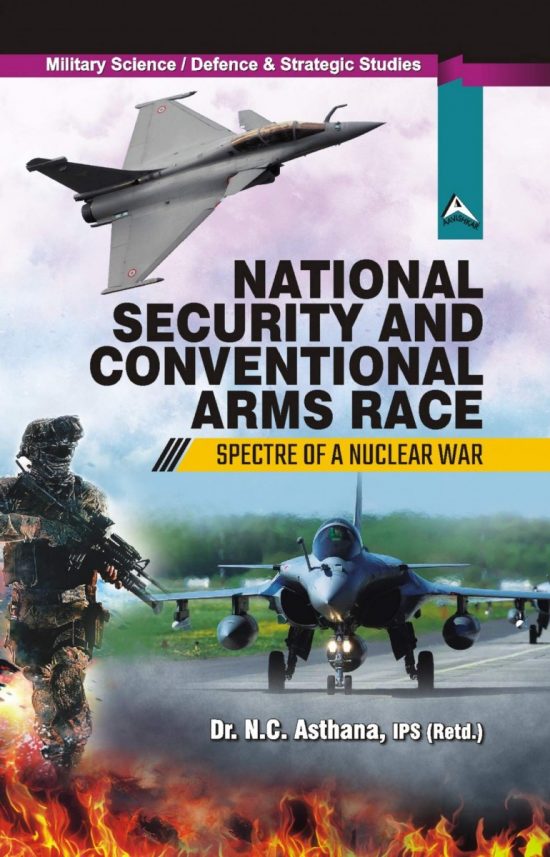 The myth of nuclear power, Financial Express By: fe Features | January 10, 2021 A cogent analysis of why just mere possession of nuclear weapons does not guarantee victory; sound strategy does, The myth of nuclear power, Financial Express By: fe Features | January 10, 2021 A cogent analysis of why just mere possession of nuclear weapons does not guarantee victory; sound strategy does,…….. ” In National Security and Conventional Arms Race: Spectre of a Nuclear War, Asthana argues that there is no way the Indian military can guarantee a “solution of the Pakistan problem or the China problem” by inflicting a decisive defeat on the nuclear-armed adversaries, frenzied race to import conventional weapons notwithstanding.
Consider these lines in the opening chapter: “We might blunder into a war almost unknowingly because since the past few years, people have collectively started consuming the heady mix of a cleverly manufactured hyper-nationalism and xenophobia. This means that both the people and the rulers have been playing into the hands of populist sentiments and exploit them in turn for electoral benefits… In popular perception, shared by political as well as military leaders, no significance is attached to the fact that both Pakistan and China are nuclear powers. It demonizes them with all the attributes of an evil human being, who will not behave unless they are spanked… Under a delusion that we have somehow, magically become invincible, a large number of Indians seem to be itching for a war.”
Asthana cautions that our weapon acquisition notwithstanding, our invincibility in a nuclear neighbourhood may be a myth. He points out that nobody has so far invented a miraculous weapon anywhere in the world that could ensure a quick, decisive victory in a conventional or nuclear war. Cautioning against the growing trend of politicians exploiting enmity with Pakistan for electoral benefits, he says this has left India with a one-dimensional policy, one which is unrealistic in view of Pakistan’s nuclear weapons.
India’s Achilles heel, he argues, is that there is no “national war-fighting strategy”………
“In any case, the moment Pakistan feels that it is going to lose a conventional war under the weight of a bigger Indian military, they will have to go nuclear immediately. This is not 1971 and a military defeat now will become an existential crisis for Pakistan as a nation, something they cannot afford at all. A decisive victory in a conventional war, short or long, in a nuclear overhang, is therefore a treacherous fallacy, spelling nothing but doom,” he says. To win any war, Indians, as a people, he asserts will have to be prepared for suffering the horrors and devastations of war. “Our strategic planning has not prepared the people for a nuclear war. Raw valour of troops is no substitute for sound strategy and the national will essential for sustaining great destruction,” he writes. ……..
Asthana concludes that Indian citizens and the political leadership must understand that accepting the nuclear reality is not synonymous with any sign of national impotence.
National Security and Conventional Arms Race: Spectre of a Nuclear War |
|
Kim Jong Un signals plans to develop new nuclear weapons
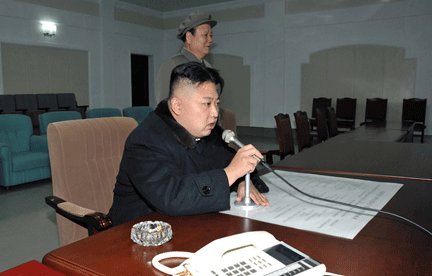 Kim Jong Un signals plans to develop new nuclear weapons. North Korea raises tensions with incoming US administration of Joe Biden. Ft.com Edward White in Seoul JANUARY 9 2021 Kim Jong Un has signalled plans to develop new nuclear weapons and described the US as North Korea’s “biggest enemy”, moves that threaten to raise tensions with US president-elect Joe Biden. The North Korean leader’s comments, made at a rare gathering of top political officials in Pyongyang, marked the dictator’s strongest broadside against Washington since Mr Biden won the presidency in November’s election.
“Our external political activities going forward should be focused on suppressing and subduing the US, the basic obstacle, biggest enemy against our revolutionary development,” Mr Kim said, according to a translation by South Korea’s Yonhap news agency. ………. https://www.ft.com/content/b4971c6e-8b89-43b5-93d2-9098d5f229ef
Indonesia’s nuclear ambitions could prove disastrous for the Southeast Asian region
More dangerously, Indonesia’s nuclear stakeholders have traditionally run into trouble selling the idea of nuclear energy to their constituents given widespread fear over Indonesia being prone to earthquakes and volcanic activity given its unique position within the Pacific’s ‘Ring of Fire’.
|
Will Indonesia become a nuclear power? https://www.trtworld.com/magazine/will-indonesia-become-a-nuclear-power-43025 6 Jan 21, In spite of its nuclear ambitions, Indonesia does not yet have the capacity to manage its nuclear waste disposal, which could prove disastrous for the Southeast Asian region.
Indonesia may be taking steps to revive its nuclear ambitions under President Joko Widodo’s government. In February 2020, Luhut Binsar Pandjaitan, Indonesian minister of maritime affairs and former chief of staff to Widodo, publicly proclaimed that powerful nations like the United States do not see Indonesia as a serious international player due to its lack of nuclear weapons. His statement quickly captured local news headlines. The retired four-star army general turned political heavyweight is a major proponent behind recent interest in acquiring nuclear reactor technology to capitalize on Indonesia’s wealth of mineral resources. If Indonesia takes the nuclear track, it would be a major departure from its traditional foreign policy footing. Historically, Indonesia organised the Bandung Conference in 1955 which gave rise to a global Non-Aligned Movement (NAM) of African and Asian states who collectively opted out of aligning with either the United States or Russia during the dawn of the cold war. Nuclear pivot Continue reading |
High court drops TEPCO’s appeal against order for compensation to affected Fukushima worker
| High court drops TEPCO’s appeal against order for compensation to affected Fukushima worker |
http://www.japan-press.co.jp/modules/news/index.php?id=13357, December 17, 2020
In the court battle, the man, who worked for the TEPCO subsidiary Kandenko at the time of the Fukushima nuclear disaster, stated that he experienced anxiety over health problems due to radiation exposure during emergency work he was assigned to do at the crippled nuclear power plant. According to the worker, he was assigned to emergency work that included connecting cables to a power panel in the basement of the No. 3 reactor’s turbine building. He suffered external exposure to radiation of up to 10.81 mSv and internal exposure of 5.8 mSv. The worker demanded a total of 1.1 million yen in damage from his company and TEPCO on the grounds that they failed to fulfill their responsibility to ensure workers’ safety.
At the appeal hearing, TEPCO demanded that the district court decision be reviewed because the amount of radiation which the worker received was less than that needed to be compensated.
The high court ruling pointed out that it is generally accepted that exposure to some levels of radiation may increase the risk of health problems such as getting cancer. Stating that the plaintiff’s health anxiety is understandable, the court turned down the utility’s demand.
At a press conference after the ruling, lawyer Hirota Tsuguo on behalf of the plaintiff’s legal team said, “It is significant that the court ordered TEPCO, which has dominant power in the nuclear power-related industry, to compensate the worker. The company should abide by the court judgement.”
Past related article:
> Radiation-exposed worker sues TEPCO [May 8, 2014]
In March 2011 Japan’s government considered evacuating the then Emperor Akihito further away from Fukushima
|
Emperor’s evacuation to Kyoto weighed after Fukushima nuclear disaster , Japan Times, 3 Jan 2021 The government led by the now-defunct Democratic Party of Japan unofficially proposed that then-Emperor Akihito evacuate to Kyoto or somewhere further west immediately after the eruption of the March 2011 Fukushima nuclear crisis, a former administration official has said.However, the Imperial Household Agency flatly dismissed the idea, saying there was “no way” the emperor would do so at a time when people were not evacuating Tokyo, leading to the government of Prime Minister Naoto Kan to give up the proposal.
Several former senior officials at the Prime Minister’s Office separately said the administration at the time also briefly considered evacuating Prince Hisahito, the son of Crown Prince Akishino and Crown Princess Kiko, from Tokyo to Kyoto…….. https://www.japantimes.co.jp/news/2021/01/02/national/emperor-fukushima-nuclear/ |
|
Turkey’s aspirations to become a nuclear weapons power
|
Will Turkey become a nuclear weapon power with Pak’s covert support? The Siasat Daily By IANS| 3rd January 2021 New Delhi: A rogue nexus involving Pakistan and Turkey, with China looking the other way, maybe taking root to fulfil Ankaras ambition to emerge as the worlds next nuclear weapon power.
Suspicions about Pakistan’s covert support for Turkish nukes has been aroused by a recent meeting of the Turkey-Pakistan High-Level Military Dialogue Group (HLMDG). The assemblage took place on December 22-23, 2020. Pakistan’s Defence Secretary Lt. Gen. (Retd.) Mian Muhammad Hilal Hussain led the delegation from Islamabad, while Deputy Chief of Turkish Army General Selcuk Bayraktaroglu headed the Turkish team, says an article published by the website zeenews.india.com.
There are other indications that collaboration on nuclear delivery systems was the hot topic discussed during the meeting. The visitors from Islamabad met top Turkish Army generals and bureaucrats dealing with missile production and aerial military hardware. The hosts included Professor Ismail Demir head of Presidency of Turkish Defence Industries and Temil Kotil, CEO of Turkish Aerospace Limited (TAI). The Pakistani defence delegation also visited top Turkish defence companies including Bakyar (UAV OEM), TAI, HAVELSAN and ASELSAN. Staunch strategic allies Analysts say that the insider meetings in Turkey took place within a rapidly evolving geopolitical context. Islamabad and Ankara have become staunch strategic allies, a partnership sealed by personal bonds between Turkey’s ambitious President, Recep Tayyip Erdogan and Pakistan’s military backed Prime Minister Imran Khan. It is no secret that Erdogan hopes to emerge as the pre-eminent Islamic leader, marginalising established heavyweights such as Mohamed bin Sultan, the Crown prince of Saudi Arabia………..
On his part, Erdogan has made no secret about his nuclear ambitions—a gateway for the fulfilment of his self-espoused dream of elevating Turkey’s status to the heights of the Ottoman empire.
In September 2019, he said: “Some countries have missiles with nuclear warheads, not one or two. I, however, am not supposed to have missiles with nuclear warheads. This, I cannot accept… And right next to us, there is Israel, right? With everything, it is frightening.”…….. https://www.siasat.com/will-turkey-become-a-nuclear-weapon-power-with-paks-covert-support-2059645/
|
|
Fukushima nuclear clean-up hugely affected by discovery of lethal radiation levels

|
Lethal Levels of Radiation Found in Damaged Fukushima Reactor Will Have ‘Huge Impact’ on Shutdown, Regulators Warn https://www.commondreams.org/news/2020/12/30/lethal-levels-radiation-found-damaged-fukushima-reactor-will-have-huge-impact The radiation levels reported around shield plugs at two reactors are high enough to kill a worker exposed for even an hour. Brett Wilkins, staff writer
In what Japanese regulators on Wednesday called an “extremely serious” development, lethal levels of radiation have been recorded inside the damaged reactor building at the Fukushima No. 1 nuclear power plant, threatening the shutdown and decommissioning of the site of the second-worst peacetime nuclear disaster in history.”This will have a huge impact on the whole process of decommissioning work.” —Toyoshi Fuketa, Nuclear Regulation Authority According to The Asahi Shimbun, Japan’s Nuclear Regulation Authority (NRA) reported that massive amounts of radioactive materials have been found around shield plugs of the containment vessels in the No. 2 and No. 3 reactors. NRA officials estimated radiation levels at 10 sieverts per hour—enough to kill a worker who spends just one hour there. Decommission of the reactor requires workers to remove the shield plugs, which block radiation from the reactor core during normal plant operation. This discovery has forced officials to reconsider their shutdown plans. NRA chair Toyoshi Fuketa said that removing the highly irradiated shield plugs made safe retrieval of nuclear fuel debris—an already dangerously daunting task—all the more difficult.. “It appears that nuclear debris lies at an elevated place,” Fuketa said at a news conference earlier this month. “This will have a huge impact on the whole process of decommissioning work.” The latest alarming find is the result of an investigation that resumed in September after a five-year pause in which the NRA took new measurements of radiation levels around the shield plugs at the No. 2 and No. 3 reactors. Tokyo Electric Power Co., the operator of the plant, announced December 24 that nuclear fuel debris removal would be postponed until 2022 or later due to the coronavirus pandemic. As Common Dreams reported in October, Greenpeace and other environmental and anti-nuclear advocates expressed shock and outrage after the Japanese government announced a plan to release stored water from the ill-fated plant into the Pacific Ocean. Greenpeace subsequently released a report claiming that radioactive carbon-14 released into the ocean “has the potential to damage human DNA.” The Fukushima Daiichi disaster—the result of a 2011 earthquake and tsunami that killed more than 15,000 people in northeastern Japan—was the worst nuclear incident since the 1986 Chernobyl meltdown in the former Soviet Union, and the worst in Japan since the United States waged a nuclear war against the country in 1945 that killed hundreds of thousands of people. |
India and Pakistan exchange list of nuclear installations

 India, Pakistan exchange list of nuclear installations
The exchange was made in accordance with Article-II of the Agreement on Prohibition of Attacks against Nuclear Installations and Facilities between Pakistan and India. Hindustan Times, INDIA Jan 01, 2021, Press Trust of India by Kunal Gaurav Islamabad
Pakistan and India on Friday conducted the annual practice of exchanging the list of their nuclear installations under a bilateral arrangement that prohibits them from attacking each other’s atomic facilities.
The exchange was made in accordance with Article-II of the Agreement on Prohibition of Attacks against Nuclear Installations and Facilities between Pakistan and India, signed on December 31, 1988, the Foreign Office (FO) said in a statement here.
It said that “the list of nuclear installations and facilities in Pakistan was officially handed over to a representative of the Indian High Commission at the Ministry of Foreign Affairs today, at 1100 hrs (PST).” “The Indian Ministry of External Affairs in New Delhi handed over the list of Indian Nuclear installations and facilities to a representative of the Pakistan High Commission at 1130 hrs (IST),” it added.
The agreement contains the provision that both countries inform each other of their nuclear installations and facilities on January 1 every year.
This has been done consecutively since January 1, 1992, according to the FO.
The exchange of information comes despite the ongoing tensions between India and Pakistan…….. https://www.hindustantimes.com/india-news/india-pakistan-exchange-list-of-nuclear-installations/story-UGFFx7sfYdK4QWTLKNYtxM.html
In Indonesia – small nuclear reactors as a prelude to nuclear weapons?
Never give up! 95 year old Hibakusha welcomes the UN nuclear ban treaty
 Hibakusha: A-bomb survivor, 95, never giving up the battle to eliminate nuclear weapons https://mainichi.jp/english/articles/20201229/p2a/00m/0na/032000c
December 30, 2020 (Mainichi Japan) Following news that the Treaty on the Prohibition of Nuclear Weapons would enter into force early in 2021, some 200 people including atomic-bomb survivors, or hibakusha, gathered in front of the Atomic Bomb Dome in the western Japan city of Hiroshima on Oct. 25, 2020 and shared their joy.
But one “face” of the city bombed during World War II, who four years earlier had smiled as he shook hands with Barack Obama, the first U.S. President to visit Hiroshima while in office, was not able to take part. The following hibakusha report, coming 75 years after the atomic bombing of Hiroshima, focuses on the life of this figure, 95-year-old Sunao Tsuboi, who has stood at the forefront of hibakusha activities with an indomitable spirit.
Tsuboi has served as chairman of the Hiroshima Prefectural Confederation of A-bomb Sufferers Organizations (Hiroshima Hidankyo) for the past 16 years. He now spends his days at his home in Hiroshima’s Nishi Ward, where a decorative card bears his creed in calligraphic ink: “Futo Fukutsu — Never give up!”
From around the time the imperial year changed from Heisei to Reiwa in May 2019, Tsuboi’s legs became extremely weak, and he was unable to do without his wheelchair. He has been receiving intravenous drips once a fortnight for cancer, heart disease and anemia. This year he received at least 30 blood transfusions, and it has not been easy for him to get out of bed.
On the day of the atomic bombing on Aug. 6, 1945, Tsuboi suffered burns over his entire body, and he remained unconscious for over 40 days. His sight became impaired in his left eye, and he became critically ill three times. To repay his feeling of indebtedness for being able to live, he became a teacher, and continued to share his experiences with students for over four decades, becoming known as “Pikadon Sensei” — a reference to the flash (pika) and boom (don) of the atomic bomb.
After he retired, he continued to share his experiences both in Japan and overseas, visiting 21 countries including Britain, France, China, India, Pakistan and North Korea, which possess nuclear weapons.
“The color of our skin doesn’t have to be the same. We don’t need borders. Humankind won’t be happy unless we help each other,” Tsuboi says. With his fist raised high, he has continued to call for a world without nuclear weapons.
Tsuboi released comments expressing his joy after he learned that the Treaty on the Prohibition of Nuclear Weapons would enter in force.
“I am filled with excitement, thinking, ‘At long last. This is great.’ It is a major step toward my long-held, earnest desire for nuclear weapons to be banned and eliminated,” he said. At the same time, he noted that states with nuclear weapons, as well as Japan, had not ratified the treaty and said, “The road hereafter may be rough.”
Still, each time I have met Tsuboi, he has repeatedly stated, “I won’t give up until there are zero nuclear weapons. Never give up!”
(Japanese original by Naohiro Yamada, Osaka Photo Group)
South Korean government to cut nuclear power generation
Government to Cut Coal-fired and Nuclear Power Generation, Business Korea, By Jung Suk-yee, December 29, 2020The South Korean government finalized its ninth national power supply plan on Dec. 28. According to it, half of coal-fired power plants in South Korea will be shut down within 15 years for the purpose of carbon reduction, 11 old nuclear power plants will be shut down at the ends of their service lives without any service life extension, and LNG- and renewable energy-based power generation will be expanded to offset the resultant decrease in power supply. ……
SOUTH KOREA’S CORRUPT AND DANGEROUS NUCLEAR INDUSTRY
 “During the eighteen months from the beginning of 2012 to mid- 2013, major corruption incidents occurred in the nuclear power industry in every country currently seeking to export nuclear reactors: the United States, Canada, Japan, South Korea, Russia, France, and China….. “In the Korean case, systemic nuclear industry corruption was found
Supplementary Submission to the Victorian Parliament’s Standing Committee on Environment and Planning
Inquiry into Nuclear Prohibition Friends of the Earth Australia www.nuclear.foe.org.au
June 2020 – Extract
SOUTH KOREA’S CORRUPT AND DANGEROUS NUCLEAR INDUSTRY
South Korea’s reactor project in the UAE is years behind schedule: the start-up of the first reactor has not yet occurred despite initially being scheduled for 2017. The project has been promoted as a US$20 billion (A$29 billion) contract but costs have undoubtedly increased. The World Nuclear Industry Status Report gives a figure of €24.4 billion (A$40 billion).[1]
[1] https://www.worldnuclearreport.org/The-World-Nuclear-Industry-Status-Report-2017-HTML.html
[2] KBS, 8 May 2020, ‘S. Korea Unveils Energy Plan to Reduce Coal-powered, Nuclear Power Plants’, http://world.kbs.co.kr/service/news_view.htm
The following articles discuss:
- The endemic corruption in South Korea’s nuclear industry.
- The business model which sacrifices safety in order to improve economics (the CEO of French nuclear utility Areva likened Korea’s AP1400 reactor design to ‘a car without airbags and safety belts.'[1])
- The level of state-sponsored skullduggery associated with South Korea’s nuclear industry is almost beyond belief, even extending to a secret military side-agreement to the UAE reactor contract which was agreed without the knowledge or agreement of South Korea’s parliament
Nuclear corruption and the partial reform of South Korea’s nuclear mafia
Jim Green, Nuclear Monitor #887, 17 June 2020, https://wiseinternational.org/nuclear-monitor/887/nuclear-monitor-887-17-june-2020
The corrupt behavior of Japan’s ‘nuclear village’ ‒ and the very existence of the nuclear village ‒ were root causes of the March 2011 Fukushima disaster and a string of earlier accidents.1 In the aftermath of the Fukushima disaster, academic Richard Tanter identified a worldwide pattern of nuclear corruption:2
“During the eighteen months from the beginning of 2012 to mid- 2013, major corruption incidents occurred in the nuclear power industry in every country currently seeking to export nuclear reactors: the United States, Canada, Japan, South Korea, Russia, France, and China. A number of other countries that operate or plan to have nuclear power plants also had major corruption cases, including Lithuania, Bulgaria, and Pakistan; moreover, serious allegations of corruption were raised in Egypt, India, Jordan, Nigeria, Slovakia, South Africa, and Taiwan.
“In the Korean case, systemic nuclear industry corruption was found; in Canada, deep corporate corruption within the largest nuclear engineering corporation was one matter, and bribery of nuclear technology consuming countries’ senior ministers was another. In Russia, the issue was persistent, deep seated, and widespread corruption in state-owned and private nuclear industry companies, with profound implications for the safety of Russian nuclear industry exports.
South Korea is slowly phasing out its nuclear power industry. In the late 2000s, it was anticipated that South Korea’s nuclear capacity would rise from 18 gigawatts (GW) to 43 GW by 2030. The current plan is to reduce the number of reactors from a peak of 26 in 2024 to 17 reactors (approx. 17 GW) in 2034.[2] Thus the ambitions have been more than halved. In recent years the South Korean government has shut down the Kori-1 and Wolsong-1 reactors, and suspended or cancelled plans for six further reactors.
“Two cases in nuclear technology importing countries, Lithuania and Bulgaria, revealed large-scale bribery involving government, the nuclear industry, and foreign (US and Russian) companies.
“Post-Soviet bloc geostrategic energy interests are central to both stories. The profound influence of organized crime in national energy policy, and on a transnational basis, is revealed in the Bulgarian and Russian cases. Suspicions are widespread and allegations common in the cases of India, Taiwan, and Bangladesh, but confirmed evidence remains weak.”
Since Tanter’s 2013 article, more information has surfaced regarding corruption in Russia’s nuclear industry3-4 and Russia’s nuclear dealings with India.5-7 The corruption associated with the abandoned Westinghouse nuclear power project in South Carolina is gradually coming to light.8 Corruption has been uncovered in the nuclear programs of South Africa9-15, Brazil16, Ukraine17 and, no doubt, elsewhere.
The International Atomic Energy Agency (IAEA) noted in its 2015 Nuclear Technology Review that counterfeit, fraudulent and suspect items (CFSIs) “are becoming an increasing concern for operating organizations and regulators”18 And again in 2019, an IAEA report noted that CFSIs “are of increasing concern in the nuclear industry and generally throughout the industrial and commercial supply chains.”19 The 2019 report noted that CFSIs “can pose immediate and potential threats to worker safety, facility performance, the public and the environment, and they can negatively impact facility costs.”
“Post-Soviet bloc geostrategic energy interests are central to both stories. The profound influence of organized crime in national energy policy, and on a transnational basis, is revealed in the Bulgarian and Russian cases. Suspicions are widespread and allegations common in the cases of India, Taiwan, and Bangladesh, but confirmed evidence remains weak.”
“The sequence of events that led to the station blackout began on 4 February 2012 when the management carried out a planned shutdown of the reactor for refuelling. On 9 February, the plant suffered a loss of power due to human error during a test of the main generator. After this, one of the two emergency diesel generators failed to start. The other generator was undergoing maintenance. In addition, the connection to one of the offsite auxiliary transformers failed to work as it had not been properly set up after maintenance; and the other offsite transformer was just entering maintenance. This caused a station blackout lasting 11 minutes 43 seconds. Cooling was lost for 11 minutes. The plant manager only reported the event to the Nuclear Safety and Security Commission on 12 March, more than one month later. … The plant manager justified the decision not to report the blackout on the risk of loss of public confidence and of credibility of the plant with the management of the operating company.”
Not long after, a much broader pattern of corruption began to come to light:
“Investigations of 101 companies revealed a wide range of illegal activities including bribery, overpaying, preferential treatment and favouritism, limiting competition in bidding, accepting parts with fraudulent or even no certificate, and collusion by parties in the falsification of testing reports.”
An investigation by the Korea Institute for Nuclear Safety showed that 2,114 test reports had been falsified by material suppliers and equipment manufacturers; that a further 62 equipment qualification documents (environmental and seismic qualification) were falsified between 1996 and 2012; and that a further 3,408 test reports and 53 qualification reports could not be verified or were unclear.22,23 Over 7,000 reactor parts were replaced in the aftermath of the scandal.23
Andrews-Speed details the corruption that probably had the greatest consequences for reactor safety:22
[1] Nucleonics Week (2010) : No core catcher, double containment for UAE reactors, South Koreans say, April 22, 2010.
“A very special case of systematic counterfeiting came to light in May 2013 when it was revealed that safety-grade control cable installed in four reactors had been falsely certified. The supplier of the cable was a Korean company, JS Cable. In 2004, KHNP decided for the first time to purchase cable from a domestic rather than foreign supplier. JS Cable submitted a bid to KEPCO E&C, despite not having the capability to make cable to the required specifications. KHNP awarded the contract to JS Cable with the first delivery due in 2017, on the condition that the cable met the required standards.
An investigation by the Korea Institute for Nuclear Safety showed that 2,114 test reports had been falsified by material suppliers and equipment manufacturers; that a further 62 equipment qualification documents (environmental and seismic qualification) were falsified between 1996 and 2012; and that a further 3,408 test reports and 53 qualification reports could not be verified or were unclear.22,23 Over 7,000 reactor parts were replaced in the aftermath of the scandal.23
“JS Cable chose Saehan TEP to test the cable, but this firm lacked the capacity to undertake the required loss of coolant testing. So Saehan TEP outsourced the process to the Canadian testing firm, RCM Technologies (RCMT). RCMT tested six samples, but only one passed. JS Cable sent six further samples. Only two passed, but these two samples were illegitimate as they had not been exposed to radiation before testing. In response, KHNP instructed KEPCO E&C to make the test results acceptable. So KEPCO E&C, Saehan TEP and JS cable agreed together to modify the test reports from RCMT to show that all the samples met the required standards.”
The corruption also affected South Korea’s reactor construction project in the UAE. Hyundai Heavy Industries employees offered bribes to KHNP officials in charge of the supply of parts for reactors to be exported to the UAE.24 And ‒ incredibly ‒ the reactor contract was underpinned by a secret military side-agreement, signed without the knowledge or approval of South Korea’s National Assembly, and containing a clause that does not require approval from the National Assembly to engage in conflict, should there be a request for military assistance from the UAE.25-28 The pact includes a clause that would obligate South Korea to intervene militarily to protect the UAE in the event of a crisis, in addition to the deployment of South Korean special forces and the ongoing supply of military equipment.25
Structural problems
Andrews-Speed describes the interlinking elements of South Korea’s ‘nuclear mafia’ involving nuclear power companies, research centers, regulators, government, and educational institutions. He notes that the country’s nuclear industry possesses some special features that make it particularly prone to corruption, relating to the structure and governance of the industry, and its close links with the government.
Both KHNP and KEPCO E&C are monopolists in their fields, and both suffer from poor corporate governance and weak internal management:22
“The poor corporate governance has its roots in the way in which the Ministry of Trade, Industry and Energy is directly involved in the management of KEPCO and its subsidiaries and in the political nature of appointments of many board members and senior managers. The weak internal management was particularly pertinent to safety because, before it was amended in 2014, the Act on Nuclear Safety and Security did not address the safety standards of parts and equipment. Thus, the selling of sub-standard components was not illegal and the task of supply chain oversight was left to KHNP to manage.”
Improvements and lingering problems
Andrews-Speed notes that the Kori-1 blackout and the systemic supply-chain corruption led to efforts to curb corruption. These included revisions to the Nuclear Safety Act giving greater powers to the newly created Nuclear Safety and Security Commission; placing new reporting obligations on all actors in the nuclear supply chain; and broader legislation and regulations governing public procurement, the conduct of public officials and corruption.
But it is doubtful whether these reforms are sufficient:22
“The principal obstacles to progress relate to power and structure. The Nuclear Safety and Security Commission lacks the authority of nuclear regulators in some other countries for a number of reasons
First, after 2013 the status of the Commission Chair was reduced from Ministerial to Vice-Ministerial level and their reporting line was changed from the President to the Prime Minister. The reason for this change of status related more to the career mobility of civil servants than to the governance of nuclear safety. Nevertheless, the consequences for the authority of the Commission have been significant. It cannot now issue any regulations without the approval of the Ministry of Justice and other Ministries. This results in delay and occasional suppression of new regulations. In addition, it has been alleged that the Nuclear Safety and Security Commission redacts and sanitizes the safety reports of the Korea Institute Nuclear Safety. The consequences of this practice on safety are exacerbated by the ability of ministries, politicians and KEPCO subsidiaries to block the tough enforcement of safety standards.
“Second, the National Assembly provides little oversight of the Commission. Instead, authority lies solely with the government. Finally, the term of the Commission Chair is just three years which is shorter than that of the nation’s president which is five years. This contrasts with the situation in the USA, for example, where the Chair of the Nuclear Regulatory Commission is appointed for a five-year term, one year longer than that of the US President. As a result, Korean Presidents have significant influence over the nuclear regulator given their remit to appoint all nine members of the Commission. Taken together, these three factors enhance the power of the executive over the Nuclear Safety and Security Commission.
“The structural weaknesses within Korea’s nuclear industry are multiple. The Ministries of Finance and Strategy and of Trade, Industry and Energy exert excessive influence over state-owned enterprises, including KHNP and KEPCO E&C. These two corporations not only have strong monopolistic positions but KHNP combines the roles of constructor, owner and operator of nuclear power plants. In addition, KHNP exerts undue influence over KEPCO E&C. This strong triangular relationship between government and two monopolists persists today and forms the core of Korea’s ‘nuclear mafia’. Only radical structural and governance reform can address this fundamental weakness.
“Further compounding factors include: the corporate culture of KEPCO and its subsidiaries that emphasizes the need for conformity; the weak culture of accountability that arises in part from the absence of a strong law providing for punitive damages; and the general standard of personal and corporate ethics in Korea.”
One indication of ongoing problems ‒ and efforts to resolve them ‒ was the awarding of ‘prize money’ to 14 whistleblowers in 2019 for reporting violations of nuclear or radiation safety laws to the Nuclear Safety and Security Committee.29
There were another six arrests related to nuclear corruption in 2018 ‒ an outcome that only scratched the surface of the problems according to a whistleblower.30
A recent example of violations of safety regulations occurred at the Hanbit-1 reactor on 10 May 2019. The reactor’s thermal output exceeded safety limits but was kept running for nearly 12 hours when it should have been shut down manually at once.31 In addition, the control rods were operated by a person who does not hold a Reactor Operator’s license.32
References: Continue reading
Delay in removal of melted nuclear fuel from Fukushima No 1 Power plant, because of the pandemic
|
Pandemic delays melted nuclear fuel removal at Fukushima http://www.asahi.com/ajw/articles/14059716, By YU KOTSUBO/ Staff Writer, December 25, 2020 The government and operator of the Fukushima No. 1 nuclear power plant announced they had abandoned plans to start removing melted nuclear fuel and other contaminated debris from the stricken facility within 2021, citing delayed development in Britain of a robotic arm crucial for the purpose.They explained that the novel coronavirus pandemic was chiefly to blame for the delay.
The government and Tokyo Electric Power Co. had planned to start the hazardous task in 2021 but said Dec. 24 that is no longer feasible. In December 2011, nine months after the triple meltdown triggered by the March earthquake and tsunami disaster, the two parties set a goal of starting to retrieve the melted fuel “within 10 years” so reactor decommissioning could start. Since then, they have had to downsize the scale of debris that can be realistically be retrieved, mainly because the technology does not exist to accomplish such dangerous work. The No. 2 reactor, along with the No. 1 and No. 3 reactors, went into meltdown after tsunami generated by the 2011 Great East Japan Earthquake knocked out cooling systems at the plant. Debris retrieval constitutes the biggest obstacles to deciding how reactor decommissioning will progress in the years ahead. The debris is emitting extremely high levels of radiation, making it difficult to access the site even with robots. Little is known about the state of the debris or its composition. The government and TEPCO revised the timetable last December with the aim of retrieving a few grams of debris on an experimental basis in 2021 from the No. 2 reactor. The No. 2 reactor was chosen because the state of the containment housing is better understood than for the other reactors. Japan approached Britain to develop a special robotic arm because it has more experience in this field. But the work has experienced significant delays because of the COVID-19 pandemic. Trial tests for the robotic arm are planned to be held in Japan next spring or later with retrieval work postponed to 2022 or later. However, many questions remain about the reactor decommissioning of the Fukushima No. 1 nuclear power plant as a whole due to a number of factors such as wrecked equipment at the site. For example, initial projections to complete the removal of used nuclear fuel from a fuel pool were delayed for 10 years. However, the government and TEPCO are sticking to their schedule to complete reactor decommissioning between 2041 and 2051. With regard to debris retrieval, this is to be done on a “step-by-step” basis. The two parties on Dec. 24 also announced they will postpone the start of probing the interior of the No.1 reactor’s containment vessel from the second half of fiscal 2020 to fiscal 2021. They have been working to secure a route that will allow robotic equipment to explore the interior but experienced huge hurdles because their current method caused radioactive substances to spread. The accumulated debris in the three reactors is estimated to total about 880 tons. Tentative plans call for increasing the amount of debris to be retrieved gradually after a few grams are collected with a metallic brush attached to the top of the robotic arm and analyzed. |
|
Economic crisis forces North Korea to put new nuclear parade facilities on ice.
Kim Jong Un forced to put new nuclear parade facilities on ice. Satellite images show economic crisis is delaying North Korean leader’s vanity projects, Edward White in Seoul, DECEMBER 24 2020 “…….”…….The delays are the latest indications of the financial crisis unfolding in the secretive state, where the economy has been buffeted by sanctions, pandemic-linked border closures and damage from extreme flooding and typhoons this year. Rapid construction previously observed at Wonsan, as well as a new hospital in Pyongyang and facilities at a training ground for the regime’s theatrical nuclear weapons parades continue to “lose steam”, according to analysis of images published on Wednesday by 38 North, a programme run by the Stimson Center, a US think-tank. ……. https://www.ft.com/content/68dd3c40-5add-4ce7-979c-63cbb945aa58
China rejects reports of hitch in investment pact talks with EU
Negotiations have stalled at the last stretch because China is raising additional demands on nuclear energy, German magazine WirtschaftsWoche reported on Wednesday.
“As I understand, talks are goings smoothly,” Chinese foreign ministry spokesman Wang Wenbin told a news briefing on Thursday.
“The news about talks being stuck because China has put up more requests about nuclear energy is fake,” Wang said.
He did not deny or confirm that China had made fresh demands on nuclear energy investment.
1 This Month
Chernobyl: The Lost Tapes – A good documentary on Chernobyl on SBS available On Demand for the next 3 weeks– https://www.sbs.com.au/ondemand/tv-program/chernobyl-the-lost-tapes/2352741955560

of the week–London Campaign for Nuclear Disarmament

Tell the Ukrainian Government to Drop Prosecution of Peace Activist Yurii Sheliazhenko
To see nuclear-related stories in greater depth and intensity – go to https://nuclearinformation.wordpress.com
-
Archives
- April 2026 (139)
- March 2026 (251)
- February 2026 (268)
- January 2026 (308)
- December 2025 (358)
- November 2025 (359)
- October 2025 (376)
- September 2025 (257)
- August 2025 (319)
- July 2025 (230)
- June 2025 (348)
- May 2025 (261)
-
Categories
- 1
- 1 NUCLEAR ISSUES
- business and costs
- climate change
- culture and arts
- ENERGY
- environment
- health
- history
- indigenous issues
- Legal
- marketing of nuclear
- media
- opposition to nuclear
- PERSONAL STORIES
- politics
- politics international
- Religion and ethics
- safety
- secrets,lies and civil liberties
- spinbuster
- technology
- Uranium
- wastes
- weapons and war
- Women
- 2 WORLD
- ACTION
- AFRICA
- Atrocities
- AUSTRALIA
- Christina's notes
- Christina's themes
- culture and arts
- Events
- Fuk 2022
- Fuk 2023
- Fukushima 2017
- Fukushima 2018
- fukushima 2019
- Fukushima 2020
- Fukushima 2021
- general
- global warming
- Humour (God we need it)
- Nuclear
- RARE EARTHS
- Reference
- resources – print
- Resources -audiovicual
- Weekly Newsletter
- World
- World Nuclear
- YouTube
-
RSS
Entries RSS
Comments RSS
 nuclear-news