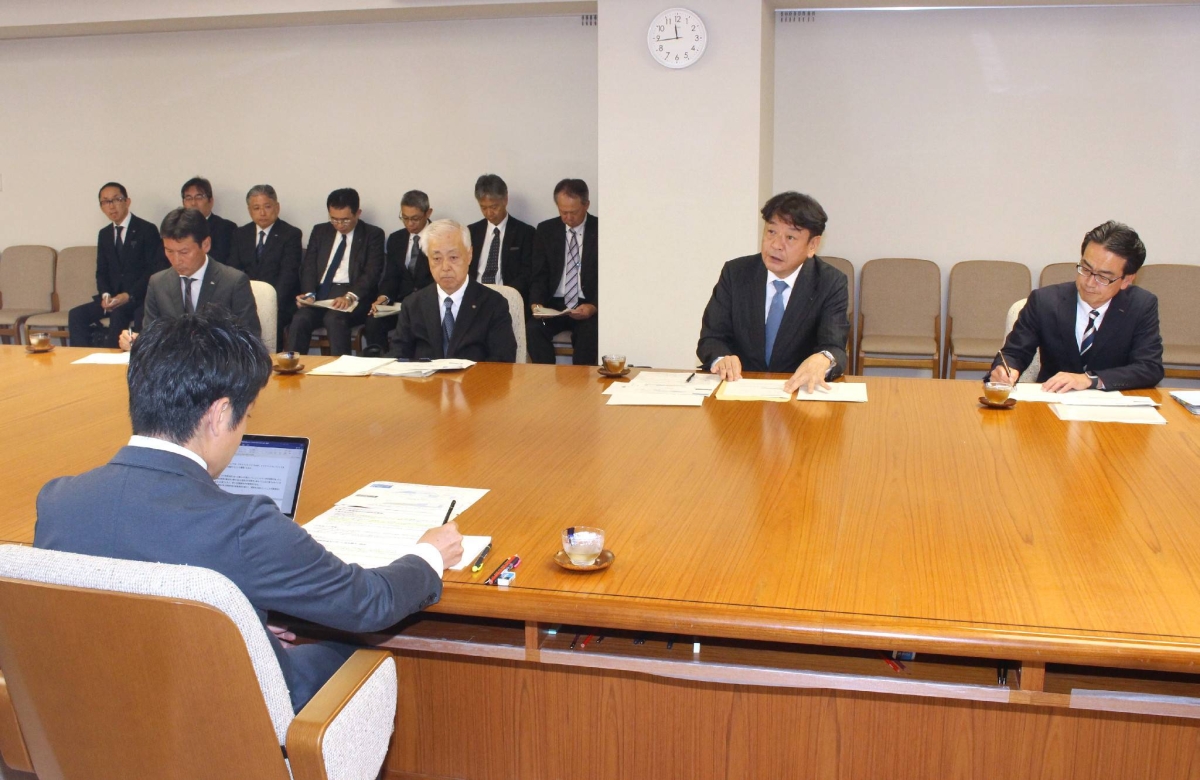
Tepco plans to move spent nuclear fuel from Fukushima to Mutsu facility
Tokyo Electric Power Company Holdings (Tepco) suggested Monday that it
plans to transfer spent nuclear fuel from its Fukushima No. 1 nuclear power
plant to an interim storage facility in the city of Mutsu in Aomori
Prefecture. The plan was included in a medium- to long-term program for the
facility, presented to Aomori Gov. Soichiro Miyashita by Tepco President
Tomoaki Kobayakawa at a meeting in the Aomori Prefectural Government office
the same day.
Spent nuclear fuel stored at the plant’s No. 5 and No. 6
reactors, a joint storage pool and the Fukushima No. 2 plant at the time of
the March 2011 nuclear meltdown at the No. 1 plant is set to be transferred
to the Mutsu facility.
Japan Times 8th July 2025, https://www.japantimes.co.jp/news/2025/07/08/japan/tepco-move-mutsu/
Nuclear comeback? Japan’s plans to restart reactors hit resistance over radioactive waste
The Japanese government wants to turn its nuclear power
stations back on – but some local residents and Indigenous Ainu people
don’t want nuclear waste stored near them. Fourteen years after the
Fukushima disaster, Japan is restarting its nuclear reactors – and two
wind-blown near-deserted fishing villages on the northern island of
Hokkaido could be the destination for all their radioactive waste. But,
while some residents of Suttsu and Kamoenai welcome the government money
that volunteering to store the waste will bring, others are fiercely
opposed due to fears that the nuclear waste will contaminate their land and
water. The controversy could delay Japan’s goals to use carbon-free
nuclear energy to replace electricity generation from expensive imported
fossil fuels and cut greenhouse gas emissions on the way to net zero by
2050.
Climate Home News 6th July 2025, https://www.climatechangenews.com/2025/07/06/nuclear-comeback-japans-plans-to-restart-reactors-hit-resistance-over-radioactive-waste/
China lifts a nearly 2-year ban on seafood from Japan over Fukushima wastewater
China has reopened its market to seafood from Japan after a nearly
two-year ban over the discharge of slightly radioactive wastewater from the
tsunami-destroyed Fukushima nuclear power plant. A notice from the customs
agency said the ban had been lifted Sunday and that imports from most of
Japan would be resumed. The ban, imposed in August 2023, was a major blow
to Japan’s fisheries industry. China was the biggest overseas market for
Japanese seafood, accounting for more than one-fifth of its exports.
Daily Mail 30th June 2025, https://www.dailymail.co.uk/wires/ap/article-14859601/China-lifts-nearly-2-year-ban-seafood-Japan-Fukushima-wastewater.html
Pacific Rim countries say no to U.S.-China war
The question that the people of the Pacific and Pacific Rim countries are asking is: Why do we have to respond to this demand by the U.S.? We are not threatened by China. Where is the dire urgency that demands such a huge distortion of our public spending on the military?
The indications are that the United States is preparing for war against China, but cannot wage such a war from the West Coast of the USA. It needs military bases, port facilities and airfields in the countries on the west side of the Pacific Rim; for example, South Korea, Japan, the Philippines, Guam, Micronesia and Australia. Without these bases, without the backing of the military forces and munitions and manufacturing capabilities of the Pacific Rim countries, the United States cannot launch and sustain a war against China.
By Bevan Ramsden | 16 June 2025, https://independentaustralia.net/politics/politics-display/pacific-rim-countries-say-no-to-us-china-war,19837
As the U.S. pushes Pacific Rim allies to ramp up military spending for a possible war with China, a new campaign asks: at what cost and for whose benefit? Bevan Ramsden writes.
THE PACIFIC and Pacific Rim countries have a geographical commonality. They are encircled by, or have a border with, the vast, blue, peaceful Pacific Ocean. They also share a political commonality. The people and countries of this region are under pressure to lift their military spending at the expense of addressing their social needs.
The pressure comes from the United States, whose Defence Secretary, Peter Hegseth, at the recent Singapore Defence Summit, declared that the U.S. expects its allies in this region to increase their defence spending to 5% of their GDP. His justification was a “possibly imminent threat” posed by China. He emphasised how the U.S. is “reorienting towards deterring aggression by China” and made it clear that the Donald Trump Administration’s defence strategy revolves around stifling the rise of China.
Responding to this expectation would involve the doubling of South Korean expenditure on military defence, from 2.6% of its GDP to 5%.
It would mean Japan’s military defence spending would have to triple from 1.8 % of its GDP to 5%.
In Australia, such an increase would represent a two-and-a-half times increase from 2% to 5% of its GDP.
These examples show that the 5% target represents a massive increase in military spending, which can only be made by reducing funding for urgent infrastructure, social needs such as health and education and loss of resources to address the real threat to their living environments, the climate crisis.
The question that the people of the Pacific and Pacific Rim countries are asking is: Why do we have to respond to this demand by the U.S.? We are not threatened by China. Where is the dire urgency that demands such a huge distortion of our public spending on the military?
Another commonality among the countries of the Pacific Rim, particularly those on the western and southern rim of the Pacific, is U.S. troops and U.S. military installations stationed on their territory. In the case of South Korea, these are substantial, close to 30,000 and put that country’s military virtually under the control of the U.S.
Japan has 57,000 U.S. troops, including 20,000 on Okinawa, where the U.S. Kadena Air Base is its largest outside of the USA. Clearly, this level of foreign military occupation exerts substantial pressure on Japan’s foreign policy.
The Philippines has four U.S. bases with troops rotating through its territory and training with its defence forces, and is setting up logistic centres for equipment and munitions.
The people of Guam, a territory under direct U.S. control, are subject to 7,000 U.S. troops, with almost a third of the land controlled by the U.S. military. The Joint Region Marianas is a U.S. military command combining the Andersen Air Force Base and the Naval Base Guam.
Andersen Air Force Base hosts B-52 bombers and fighter jets. Naval Base Guam is the home port for four nuclear-powered fast attack submarines and two submarine tenders. American military commanders have referred to the island as their “permanent aircraft carrier”.
Australian governments, in their subservience to the U.S., have signed the Force Posture Agreement, giving the U.S. military unimpeded access to Australia’s ports and airfields and enabling the establishment of a Northern Territory base for its B-52 bombers, some of which are nuclear-capable. The Agreement is giving the U.S. fuel and munitions storage areas to support war operations and an $8 billion port facility for servicing their nuclear submarines and storage of their nuclear waste.
The people of Pacific Rim countries, including Australia, need to ask: Why does the U.S. have these extensive military facilities in our countries and why are they demanding such huge military expenditures from us?
The answer, unfortunately, is not for the benefit of the people of this region but for its own foreign policy objectives, which include maintaining its dominance in the region by “containing” China and preventing the rise of its influence.
The indications are that the United States is preparing for war against China, but cannot wage such a war from the West Coast of the USA. It needs military bases, port facilities and airfields in the countries on the west side of the Pacific Rim; for example, South Korea, Japan, the Philippines, Guam, Micronesia and Australia. Without these bases, without the backing of the military forces and munitions and manufacturing capabilities of the Pacific Rim countries, the United States cannot launch and sustain a war against China.
So the United States needs us but we don’t need such a war.
It would only bring devastation to our lives and our economies, and if it turned nuclear, who would survive?
The Pacific Peace Network, with representatives from the Pacific Rim countries and together with World Beyond War, has produced a solidary campaign which is being launched on 21 June 2025.
This is a campaign in which the people of each country on the Pacific Rim, including Australia, can say no to such a war and no to an increase in military spending for it, through a common petition which is a call on their governments.
The common petition can be accessed here at the World Beyond War website.
This call on governments reads:
For sustainable peace and the survival of our peoples and environment, we ask you:
- refuse to join military preparations for a U.S.-China war;
- declare you will not fight in a U.S.-China war;
- declare neutrality should such a war break out; and
- do not allow your territory or waters to be used in such a war, including the collection and relay of military intelligence, sales of weapons and hosting combatant troops and facilities.
Later this year, the petitions will be presented to their respective governments by peace activists in each country.
‘We Are Preparing for War’ With China ‘Threat’, Says US Defense Secretary Pete Hegseth.
US Secretary of Defense Pete Hegseth delivered an extremely hawkish speech at the Shangri-La Dialogue 2025 summit in which he demonized China as a “threat” and said, “We are preparing for war” in the Asia-Pacific region.
By Ben Norton, 5 June 25, https://geopoliticaleconomy.com/2025/06/06/preparing-war-china-threat-us-defense-secretary-pete-hegseth/
US Secretary of Defense Pete Hegseth delivered an extremely hawkish speech in which he demonized China as a “threat” and said, “We are preparing for war”.
“Those who long for peace, must prepare for war. And that’s exactly what we’re doing. We are preparing for war, in order to deter war — to achieve peace through strength”, Hegseth stated.
The top Donald Trump administration official made these aggressive remarks at the Shangri-La Dialogue 2025, a summit held in Singapore on 31 May.
“The threat China poses is real, and it could be imminent. We hope not, but it certainly could be”, Hegseth claimed, indicating that the Pentagon was preparing for a war over Taiwan.
“Beyond our borders and beyond our neighborhood, we are reorienting toward deterring aggression by Communist China”, he stressed.
The message of Trump’s Pentagon: war is peace
The Trump administration’s Pentagon has essentially pushed the message “war is peace”.
Hegseth has incessantly reiterated the slogan “peace through strength”.
“President Trump said it himself [in May] in Riyadh – and will never hesitate to wield American power swiftly and decisively if necessary. That is re-establishing deterrence”, the defense secretary emphasized in Singapore.
Hegseth is a war hawk and a religious fundamentalist. He made his name as a former host on the conservative TV network Fox News, where Trump discovered him.
In 2020, Hegseth published a book called “American Crusade”, in which he proudly identified as a “crusader” and wrote that the US right wing is waging a “holy war” against China, the international left, and Islam.
“Communist China will fall—and lick its wounds for another two hundred years”, he promised in the extremist book.
Trump admin pressures Asia-Pacific countries to minimize “economic cooperation with China”
In his speech in Singapore in May 2025, Pete Hegseth noted that it was his second time in his four months serving as secretary of defense that he had visited the Asia-Pacific region (which Washington has sought to rebrand as the “Indo-Pacific”).
In March, Hegseth traveled to Japan and the Philippines, where he threatened China and boasted of US “war-fighting” preparations and “real war plans”.
At the Shangri-La Dialogue conference, Hegseth half-jokingly threatened the Asia-Pacific region with his endless presence……………………………..
The Trump administration essentially told countries that they must choose between either the United States or China — that they can’t have good relations with both sides, because a war could be coming soon.
Hegseth said (emphasis added):
Facing these threats, we know that many countries are tempted by the idea of seeking both economic cooperation with China and defense cooperation with the United States. Now that is a geographic necessity for many. But beware the leverage that the CCP seeks with that entanglement. Economic dependence on China only deepens their malign influence and complicates our defense decision space during times of tension.
China opposes hegemony, while the US empire seeks it
Defense Secretary Hegseth claimed in his May speech in Singapore that, supposedly, “China seeks to become a hegemonic power in Asia. No doubt”.
This is false. China has consistently emphasized, over decades, that it does not seek hegemony. In fact, Beijing does not want any country to have hegemony.
Principled opposition to hegemony has been a constant since the founding of the People’s Republic of China (PRC) under Mao Zedong in 1949, through the Reform and Opening Up initiated by Deng Xiaoping in 1978, and into the New Era launched by President Xi Jinping in 2012.
The Chinese government has always stressed what it calls its “unequivocal commitment to supporting other developing countries in their efforts to defend national sovereignty, develop national economy and fight imperialism, colonialism, and hegemonism”.
In a speech at the United Nations General Assembly in 1974, Deng Xiaoping stated, “If one day China should change her color and turn into a superpower, if she too should play the tyrant in the world, and everywhere subject others to her bullying, aggression, and exploitation, the people of the world should identify her as social-imperialism, expose it, oppose it, and work together with the Chinese people to overthrow it”.
In fact, when the PRC normalized diplomatic relations with the United States and Japan in the 1970s, a source of diplomatic tension was China’s insistence that, in the joint statements signed by Beijing and Washington and Beijing and Tokyo, there had to be an “anti-hegemony” clause.
It is actually the United States that has consistently sought to impose its hegemony on the rest of the world.
This was spelled out clearly in a 1992 document published by the US Department of Defense, known as the Wolfowitz Doctrine (because it was co-written by Paul Wolfowitz, who then served as US under secretary of defense for policy, before later returning as secretary of defense under George W. Bush).
The Pentagon’s Wolfowitz Doctrine stated (emphasis added):
Our first objective is to prevent the re-emergence of a new rival. This is a dominant consideration underlying the new regional defense strategy and requires that we endeavor to prevent any hostile power from dominating a region whose resources would, under consolidated control, be sufficient to generate global power. These regions include Western Europe, East Asia, the territory of the former Soviet Union, and Southwest Asia.
The Trump administration’s foreign policy is still consistent with much of the Wolfowitz Doctrine. Although Trump has de-prioritized Western Europe and the territory of the former USSR, he has dedicated significant resources to US military operations in East Asia and Southwest Asia (also known as the Middle East).
In fact, the main theme of Hegseth’s speech was that the Pentagon will not accept China challenging US dominance in the Asia-Pacific region.
“We will not be pushed out of this critical region”, Hegseth said, in a clear message to Beijing.
This was the US empire stating clearly that it seeks to impose its hegemonic control over East Asia.
Bipartisan warmongering in Washington
This aggressive anti-China stance is bipartisan in Washington.
A former top Joe Biden administration official said he agreed with the thrust of the anti-China policy pursued by Pete Hegseth, a right-wing extremist and religious fanatic.
Ely Ratner, who served as the assistant secretary of defense for Indo-Pacific security affairs in Biden’s Pentagon, wrote approvingly on Twitter/X, “Rhetoric aside, on actual defense policy Secretary Hegseth’s speech was near total continuity with the previous administration”.
“That’s good, but we’ll need heightened urgency, attention, and resources to address the China challenge”, Ratner added.
Biden’s neoconservative Secretary of State Antony Blinken had also maintained a hardline anti-China position.
In a speech in 2022, Blinken announced what was essentially a containment policy targeting China.
“We cannot rely on Beijing to change its trajectory. So we will shape the strategic environment around Beijing”, he said.
Blinken added, “The scale and the scope of the challenge posed by the People’s Republic of China will test American diplomacy like nothing we’ve seen before”.
China unveils world’s first AI nuke inspector
China creates artificial intelligence system to oversee nuclear warhead detection despite concerns it could leak tech secrets
China creates artificial
intelligence system to oversee nuclear warhead detection despite concerns
it could leak tech secrets. Chinese scientists have developed an artificial
intelligence system that can distinguish real nuclear warheads from decoys,
marking the world’s first AI-driven solution for arms control
verification. The technology, disclosed in a peer-reviewed paper published
in April by researchers with the China Institute of Atomic Energy (CIAE),
could bolster Beijing’s stance in stalled international disarmament talks
while fuelling debate on the role of AI in managing weapons of mass
destruction.
South China Morning Post 30th May 2025, https://www.scmp.com/news/china/science/article/3312270/china-unveils-worlds-first-ai-nuke-inspector
US Has 500 Troops in Taiwan in Major Challenge to China
The number of US troops in Taiwan was disclosed by a retired US Navy rear admiral in a recent congressional hearing
by Dave DeCamp May 26, 2025, https://news.antiwar.com/2025/05/26/us-has-500-troops-in-taiwan-in-major-challenge-to-china/
A retired US Navy admiral recently revealed that the US has 500 troops in Taiwan, a major challenge to Beijing’s red lines related to the island.
Ret. Adm. Mark Montgomery made the disclosure at a House hearing on May 15, where he was arguing that the US should send more military personnel to Taiwan.
“We absolutely have to grow the joint training team in Taiwan. That’s a US team there that’s about 500 people now, it needs to be 1,000,” said Montgomery, who now works for the Foundation for the Defense of Democracies (FDD), an extremely hawkish think tank.
“If we’re going to give them billions of dollars in assistance, sell them tens of billions of dollars worth of US gear, it makes sense that we’d be over there training and working,” he added.
So far, the Pentagon has not confirmed the number, but due to the sensitivity of the matter, the US military typically offers few details about its operations in Taiwan.
After Washington severed diplomatic relations with Taipei in 1979, the US would still deploy a handful of military trainers to Taiwan. The small US presence was always an open secret but wasn’t officially confirmed until 2021, when then-President Tsai Ing-wen became the first Taiwanese leader to acknowledge US troops were on the island since 1979.
At the time of Tsai’s acknowledgment, only a few dozen US troops were believed to be on the island for training purposes. In 2023, media reports said the US was increasing its military presence to about 200 soldiers.
Last year, Taiwan confirmed that some of the US military trainers were deployed to Kinmen, a group of islands that are controlled by Taiwan but located just off the coast of mainland China.
The US has significantly increased military support for Taiwan in recent years despite constant warnings from China that the island is the “first red line” in US-China relations that must not be crossed.
Why the US Won’t Be Able to Help Build Taiwan’s Nuclear Future
Washington itself hasn’t solved the problems that fed into Taiwan’s nuclear phase-out: waste storage and high costs.
By Benjamin Yang and M.V. Ramana, May 26, 2025, https://thediplomat.com/2025/05/why-the-us-wont-be-able-to-help-build-taiwans-nuclear-future/
When the 40-year operating license of Taiwan’s last remaining commercial nuclear reactor expired on May 17, the country realized its nuclear phase-out policy after decades of politicized debates.
If anything, though, the imminent decommissioning of the Maanshan Nuclear Power Plant’s second reactor has only fueled another round of heated discussions on the potential role of nuclear power in Taiwan’s energy future.
On May 13, the Legislative Yuan – Taiwan’s national legislature, where opposition parties currently hold a majority – passed amendments to the Nuclear Reactor Facilities Regulation Act, allowing nuclear power plant operators to apply for a 20-year license renewal beyond the original 40-year cap and easing restrictions on their restarts. In the meantime, it also passed a proposal from the Taiwan People’s Party (TPP) for a referendum on restarting the Maanshan plant, which is now set to take place in August.
Such renewed interest in nuclear energy is a result of a few compounding factors: power shortage concerns amid grid-induced blackouts over the past few years and growing power demands from the semiconductor and AI industries; rising electricity prices that pro-nuclear groups have framed as a result of phasing out nuclear; stalled momentum in renewable energy development; and national security threats of a naval blockade from China.
At the same time, there are several reasons why nuclear power may not really address these questions, most notably the high costs and long construction times of building nuclear plants. Meanwhile, proponents of the nuclear phase-out point to the risks of accidents associated with nuclear reactors and the lack of a demonstrated solution to managing radioactive wastes of different kinds produced by the nuclear fuel chain.
Amid this domestic debate in Taiwan over nuclear power, Director Raymond Greene of the American Institute in Taiwan, the de facto U.S. embassy, added a new twist. In a recent interview, he announced that the United States stands ready to introduce “existing and new technologies such as SMRs (small modular reactors) and to help Taiwan address its nuclear waste storage challenges.” Can U.S. support on SMRs and nuclear waste storage help with the challenges that led Taiwan to phase out nuclear power?
The problem with nuclear waste is two-fold: a shortage of short-term storage capacity at some sites, and the complete absence of a long-term option. Currently, Taiwan has over 21,500 spent fuel rods from almost five decades of operation; all but 112 of these are stored on-site, either in their respective reactor cores or spent fuel pools. Only a portion from the Chinshan Nuclear Power Plant has been moved to a dry storage facility. In July 2021, Taiwan Power Company, the state-owned utility that owns and operates all of Taiwan’s nuclear power plants, had to take unit 1 of the Kuosheng Nuclear Power Plant offline five months before the expiry of its operating license due to the lack of used fuel storage capacity. These are just the problems with short-term storage. In the long term, there is just no plan: the government has yet to create regulations governing the disposal of high-level waste.
With local government concerns over wastewater runoff pollution hampering progress on constructing dry storage facilities and a final disposal repository nowhere in sight, creating more nuclear waste through extensions, restarts, or even building new SMRs will only aggravate this unsolved issue.
The United States has no long-term plan for its nuclear waste, either. Yucca Mountain, the site selected back in 1987 under the 1982 Nuclear Waste Policy Act, proved to be technically problematic, because it had an oxidizing environment and, despite being advertised as a very dry site, proved to allow seepage of lots of water. No alternative site has been seriously considered since Yucca Mountain was picked, although high level committees like the Blue Ribbon Commission set up by President Barack Obama have recommended setting up a process to find a new site. In short, the United States has no successful experience to point to if it intends to help Taiwan with its nuclear waste.
The story is similar with SMRs, the other part of the offer from Greene. Despite much media attention and hype, the United States has so far not constructed a single small modular reactor. In terms of planning, the most advanced SMR project was proposed by the Utah Associated Municipal Power System. Announced in 2015, the UAMPS project was initially expected to start operations “around 2023” at an “overnight cost” of $3 billion. The estimated costs of the project subsequently rose to $6.1 billion, and finally $9.3 billion in 2023. That last figure was for a mere 462 megawatts of electricity capacity. Later that year, the project was canceled because of a lack of demand.
When viewed in terms of the cost per unit of power capacity (i.e., dollars per megawatt), the cost of the UAMPS project was higher than even the most expensive nuclear power plant built in the United States, the Vogle project in Georgia, which cost $36.8 billion. This is to be expected. Small modular nuclear reactors, which produce less than 300 megawatts of power as compared to the roughly 1,000 megawatts for the typical reactors that have been constructed in recent decades, are more expensive per unit of power capacity due to diseconomies of scale.
The underlying reason is that the cost of constructing or operating a nuclear reactor is not directly proportional to the amount of power it is designed to generate. SMRs, therefore, start off with an economic disadvantage and will further undermine the financial viability of nuclear plants.
In the United States, nuclear plants are the most expensive way to supply electricity and building SMRs will make nuclear power even less competitive, especially in comparison to solar and wind energy, with or without electricity storage. No wonder renewables constitute the vast majority of new electricity installations in the United States. Also growing rapidly are energy storage technology, geothermal technologies, and grid resilience innovations such as virtual power plants. If the U.S. is serious about addressing Taiwan’s energy situation, maybe these are the technologies it should be offering.
In the end, the decommissioning of Taiwan’s final nuclear reactor marks a critical crossroads in its energy transition. Every choice Taiwan makes at this juncture would need to tackle the multitude of challenges that come with balancing rising demands, economic development, national security, climate action, and public safety. With the storage solutions for existing nuclear waste yet to appear and the costliness of constructing SMRs both in terms of time and capital, nuclear is unable to serve as a safe, cost-effective, and timely climate solution – even with U.S. support.
Govt Eyes Reuse of Fukushima Soil at PM’s Office

Tokyo, May 23 (Jiji Press) https://jen.jiji.com/jc/eng?g=eco&k=2025052300665
–The Japanese government is considering reusing soil removed from the ground during radiation decontamination work after the 2011 nuclear reactor meltdowns in Fukushima Prefecture in the grounds of the prime minister’s office in Tokyo, informed sources have said.
The government hopes to promote public understanding over the reuse of the soil from the decontamination work in the northeastern Japan prefecture, home to Tokyo Electric Power Company Holdings Inc.’s disaster-stricken Fukushima No. 1 nuclear power plant.
The move came after planned pilot projects for using the soil in Tokyo and its northern neighbor, Saitama Prefecture, have stalled due to opposition from local residents.
The government plans to compile a basic policy on the recycling and final disposal of the soil shortly, including its use at the prime minister’s office. It also plans to draw up a specific road map by around this summer.
Some 14 million cubic meters of the soil from the decontamination work is currently stored at interim facilities in the Fukushima towns of Okuma and Futaba, where the TEPCO plant is located.
Reactor closure marks Taiwan’s nuclear exit
Monday, 19 May 2025, WNN
Unit 2 of the Maanshan nuclear power plant – Taiwan’s last operating reactor – has been disconnected from the grid and will be decommissioned following the expiry of its 40-year operating licence, in accordance with Taiwan’s nuclear phase-out policy. ………………………..
Phase-out policy
Taiwan’s Democratic Progressive Party (DPP) was elected to government in January 2016 with a policy of creating a “nuclear-free” Taiwan by 2025. Under this policy, Taiwan’s six operable power reactors would be decommissioned as their 40-year operating licences expire. Shortly after taking office, the DPP government passed an amendment to the Electricity Act, passing its phase-out policy into law. The government aims for an energy mix of 20% from renewable sources, 50% from liquefied natural gas and 30% from coal……………………………..
Unit 1 of Taiwan’s oldest plant, Chinshan, was taken offline in December 2018, followed by Chinshan 2 in July 2019………………….https://www.world-nuclear-news.org/articles/reactor-closure-marks-taiwans-nuclear-exit
India’s genocidal project is building a military base.
Survival, 21 May 25
Uncontacted people on Indian island face genocide in the name of “mega-development”
The Shompen are one of the most isolated peoples on Earth. They live on Great Nicobar Island in India, and most of them are uncontacted, refusing all interactions with outsiders.
Numbering around 300 people, they are now at risk of being totally wiped out by a “mega-development” plan to transform their small island home into the “Hong Kong of India.”
If the project goes ahead, huge swathes of their unique rainforest will be destroyed – to be replaced by a mega-port; a new city; an international airport; a power station; a defense base; an industrial park; and up to 650,000 settlers – a population increase of nearly 8,000%.
An island unlike any other
For centuries, most Shompen have refused all contact with outsiders, and this has kept them safe from the terrible effects of contact experienced by most other Indigenous peoples of the Andaman and Nicobar Islands.
Living in the rainforest of Great Nicobar Island in the eastern Indian Ocean, the Shompen have guarded and maintained a unique landscape for thousands of years. The Shompen are nomadic hunter-gatherers, living in small groups, whose territories are identified by the rivers that criss-cross the rainforest…………………….
Their home, Great Nicobar Island, is small but has extremely high levels of biodiversity. Around 95% of the island is covered in rainforest and it’s home to 11 species of mammals, 32 species of birds, 7 species of reptiles and 4 species of amphibians, all found only here. It’s a place where monitor lizards and crocodiles share the rainforest with macaques and tree shrews, where giant turtles swim among the coral reefs with dugongs and dolphins.
The right to remain uncontacted
While a few Shompen have contact with their Nicobarese Indigenous neighbors, settlers and government officials, most remain in the rainforest and reject contact with outsiders. This does not mean that the Shompen are unaware of the outside world but, for the most part, they choose to be left alone. As with the Sentinelese people in the nearby Andaman Islands, outsiders forcing their way into Shompen territory is illegal and could be deadly for them. That’s why in March 2025, American influencer Mykhailo Viktorovych Polyakov was arrested for trying to contact the Sentinelese, and could face jail.
The few Shompen who do leave the rainforest tend to do so to collect and exchange things with outsiders before returning to the island’s interior and sharing them among other Shompen families. Like other uncontacted peoples around the world, the Shompen are incredibly vulnerable to diseases to which they have no immunity and Shompen who return have been known to quarantine in special houses outside their communities. A government report stated:
Our attempt to reach the main camp…about 50 metres away from the ‘out-houses’ was resisted by throwing spears (we escaped narrowly) as the Shompens of this region strongly believe that outsiders carry diseases.
Andaman and Nicobar Administration
The report then acknowledged then that these uncontacted Shompen were certainly “healthier than those who have contacts with others”. Most contact for the Shompen at the moment occurs as it should for all Indigenous communities – on their own terms.
Mega development = mega disaster
But the Indian government is now planning to transform the Shompen’s small island into the ‘Hong Kong of India’, which will totally change their lives forever. Its ‘Great Nicobar Project’ will have a devastating impact on the lives of the Shompen and the neighbouring Nicobarese. As neither peoples have given their consent to the scheme, it violates both Indian and international law.
The mega-project will take up around a third of the island – half of it within the official Tribal Reserve. Equally disastrous is the massive population explosion planned for Great Nicobar. The total population of the island is currently around 8,000, but the government plans to settle up to 650,000 people there under the scheme, a population the size of Las Vegas.
Shompen communities, along with their hunting and foraging grounds, will be devastated by the project. Their sacred river system will also be ruined. This will in turn destroy their pandanus trees, one of their most important sources of food. With their rivers devastated, the Shompen’s ability to survive and entire way of life will face collapse.
As well as causing unprecedented social and environmental devastation for the Shompen, these plans also drastically increase their exposure to outside diseases to which could wipe them out.
The Indian government is well aware of such risks and their official Impact Assessment for the project states: “Any disturbance or alteration in the natural environmental setup where they live, may cause serious threat to their existence” and “once infections spread among the tribal [Shompen]…the whole community may face extinction.” However, in an attempt to mitigate the risks, the government is proposing sinister sounding “geo-fencing cum surveillance towers” to monitor the Shompen.
In February 2024, 39 international genocide experts wrote to the Indian President, describing the mega-project as a “death sentence for the Shompen, tantamount to the international crime of genocide”. They called for the scheme to be immediately abandoned.
It’s impossible to imagine that the Shompen will be able to survive this overwhelming and catastrophic transformation of their island………………….https://www.survivalinternational.org/tribes/shompen
The authorities plan to create a mega-port; a city; an international airport; a power station; a defence base; an industrial park; and tourism zones, spread over more than 244 square km of land, including 130 square km of rainforest. The government claims that it will ‘offset’ the loss of rainforest through planting new trees in the scrublands of North India. Such offsetting projects are false solutions and Survival is actively campaigning against the growing threat they pose to Indigenous peoples around the world.
To the Shompen, every tree, plant, leaf and flower is sacred and has a spirit of their own. It’s hard to imagine what cutting down millions of trees will mean to a people who do not even allow the cutting of leaves on their territory.
China and Russia plan to build nuclear power station on moon
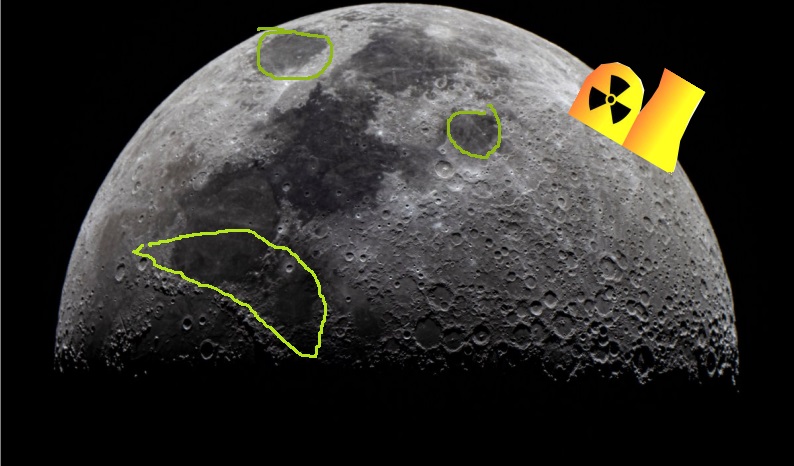
China and Russia plan to build a nuclear reactor on the moon by 2035 to
power a permanent lunar base. The International Lunar Research Station
(ILRS) will rely on the power plant for its scientific research. The IRLS
involves over a dozen international partners and is seen as a rival program
to NASA’s Artemis Program.
Deutsche Welle 16th May 2025, https://www.dw.com/en/china-and-russia-plan-to-build-nuclear-power-station-on-moon/a-72565465
Too Cruel to Even Imagine—Nuclear War in Densely Populated Areas
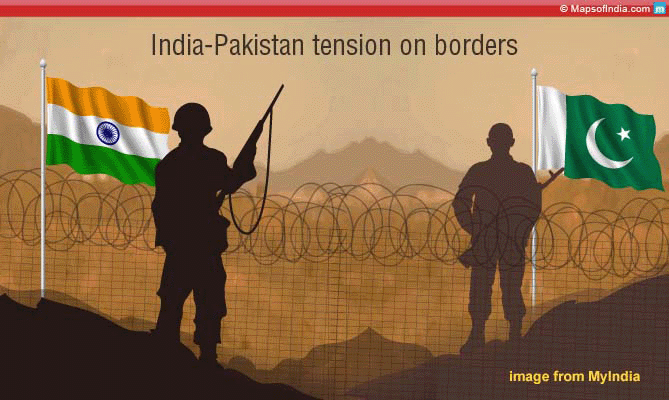
in South Asia, by Bharat Dogra 12/05/2025, https://countercurrents.org/2025/05/too-cruel-to-even-imagine-nuclear-war-in-densely-populated-areas/
Nuclear war should never happen as it is the most destructive thing imaginable. While nuclear weapon war anywhere is so destructive that this cannot be accepted, it is at its most cruel in more densely populated areas. No one can question this reality, but despite this we have the most dreadful and frightening situation of escalating conflict between India and Pakistan, two nuclear weapon countries which possess a total of about 340 nuclear weapons, according to recent estimates, and are also included among the most densely populated countries of the world, in terms of people living per one square km.
While the average world population density for the entire world is 60, it is 331 for Pakistan and 483 for India. In several cities and the most densely populated city districts of these countries, the population density can be easily over 5,000, going up to around 55,000 in the most densely populated city district (Karachi Central). While war even with conventional weapons can be very highly destructive in such conditions, in the context of nuclear weapons, even smaller and tactical ones, this is too cruel even to be imagined. Yet the possibility cannot be brushed aside and must be considered as a real life possibility, a relatively low possibility but nevertheless real possibility, whenever the two countries are involved in escalating conflict situations.
Eric Schlosser, a well-known writer on nuclear weapons, has spoken at length to top officials and commanders at various stages of planning and control of nuclear weapons. In addition he has close contacts with peace movements struggling for a world free from nuclear weapons. He has written that these very different persons share a very strong and sincere desire to avoid actual use of nuclear weapons.
The reason why both these sections share this strong belief is that both groups are well-informed about what actual use of nuclear weapons means. This makes them tremble about the implications.
In the specific context of India and Pakistan, the two nuclear weapon countries of South Asia, Schlosser has written, “The latest studies suggest that a relatively small nuclear exchange (relative to the total number of nuclear weapons that exist in world) would have long-term effects across the globe. A war between India and Pakistan, involving a hundred atomic bombs like the kind dropped in Hiroshima, could send five million tons of dust into the atmosphere, shrink the ozone layer by as much as fifty per cent, drop worldwide temperatures to their lowest point in a thousand years, create worldwide famines and cause more than a billion casualties.”
Thus it is clear that apart from killing millions of people immediately, war with nuclear weapons can lead to unprecedented environmental catastrophe which can kill an even larger number of people while also destroying other life-forms like never before. If the nuclear weapon exchange is between two countries alone, people particularly of neighbouring countries will also suffer very serious consequences without being involved in any dispute at all.
Some strategists have argued that there can be a less catastrophic role for nuclear weapons in the form of tactical nuclear weapons. As not just peace movements but several independent experts have pointed out, this is a highly flawed and mistaken view. A nuclear war started with tactical weapons can easily spill into a full-blown nuclear war if the opposing side also has nuclear weapons. Secondly, use of even tactical nuclear weapons can be very destructive, even for the using country!
Pakistan in particular has been keen to develop tactical nuclear weapons in recent times as it feels that this can be one way of checking and defeating an invasion by a country with superior conventional war capability and bigger economic resources. However saner scientific voices in Pakistan have warned that if Pakistan uses tactical weapons against an invading army on its land, its own military and civilian losses can be very high due to the highly destructive impacts of these weapons.
In the much earlier days of the cold war the NATO had stocked a lot of tactical nuclear weapons in West Germany to check a possible Soviet invasion. A war game Carte Blanche was played out to see the possible impacts in case of a Soviet invasion. It was realized only then that German civilian deaths from the use of tactical nuclear weapons on its own land can be higher than total German civilian deaths in the Second World War! Such is the destructive power of these weapons.
Moreover when tactical nuclear weapons have to be prepared for use then control has to be more dispersed and scattered. This increases the possibility that persons with fanatic or fundamentalist leanings can also gain access to this control. Hence the possibilities of terrorists gaining access to such control also increase at least to some extent. The Pakistani authorities including armed forces have time and again faced evidence-based criticism for supporting terror-groups and this combination of terror groups and nuclear weapons can prove very dangerous in a national as well as international context. From time to time attacks by such terror groups, some of whom also break free from the control of the authorities to a lesser or greater extent, have led to crisis situations nationally and internationally.
It is not at all justified to be under the false impression that tactical weapons provide some form of safer nuclear weapons. Let no one create such a false impression as such a delusion can be extremely catastrophic for millions and millions of people.
Let us face the reality. All evidence points to the fact that nuclear weapons should never be used. In fact even accidental use of nuclear weapons or accidents relating to nuclear weapons can be very destructive. Hence ultimately the only safe option if we care for life on earth is to give up all nuclear weapons and all weapons of mass destruction once and for all at the level of the entire world. The more you study and explore this issue, no matter which side you belong to, the only honest conclusion can be that tomorrow if not today we have to do away with nuclear weapons if we want to save life on earth; so why not make a beginning today itself.
The discussion here has been in the context of South Asia, but of course the consequences of an exchange of nuclear weapons between the USA and Russia or between the USA and China will be even more destructive, much more devastating for the world as these countries have more weapons and their destructive capacity is higher. As a part of world, South Asia will also suffer very harmful impacts from this. Hence the only safe future for us and for our children is on the path which is entirely free from nuclear weapons and entirely free of all weapons of mass destruction.
As for the immediate issue at hand, the maximum efforts need to be made to prevent further escalation of ongoing India-Pakistan conflict and also to end this conflict as early as possible.
Close the US military bases in Asia!

The US acts as if Japan needs to be defended against China. Let’s have a look. During the past 1,000 years, during which time China was the region’s dominant power for all but the last 150 years, how many times did China attempt to invade Japan? If you answered zero, you are correct. China did not attempt to invade Japan on a single occasion.
Jeffrey D. Sachs, Swiss Standpoint, Sun, 04 May 2025, https://www.sott.net/article/499470-Close-the-US-military-bases-in-Asia
(2 May 2025) President Donald Trump is again loudly complaining that the US military bases in Asia are too costly for the US to bear. As part of the new round of tariff negotiations with Japan and Korea,1 Trump is calling on Japan and Korea to pay for stationing the US troops. Here’s a much better idea: close the bases and return the US servicemen to the US.
Donald Trump implies that the US is providing a great service to Japan and Korea by stationing 50,000 troops in Japan and nearly 30,000 in Korea. Yet these countries do not need the US to defend themselves. They are wealthy and can certainly provide their own defense. Far more importantly, diplomacy can ensure the peace in northeast Asia far more effectively and far less expensively than US troops.
The US acts as if Japan needs to be defended against China. Let’s have a look. During the past 1,000 years, during which time China was the region’s dominant power for all but the last 150 years, how many times did China attempt to invade Japan? If you answered zero, you are correct. China did not attempt to invade Japan on a single occasion.
You might quibble. What about the two attempts in 1274 and 1281, roughly 750 years ago? It’s true that when the Mongols temporarily ruled China between 1271 and 1368, the Mongols twice sent expeditionary fleets to invade Japan, and both times were defeated by a combination of typhoons (known in Japanese lore as the Kamikaze winds) and by Japanese coastal defenses.
Japan, on the other hand, made several attempts to attack or conquer China. In 1592, the arrogant and erratic Japanese military leader Toyotomi Hideyoshi launched an invasion of Korea with the goal of conquering Ming China. He did not get far, dying in 1598 without even having subdued Korea. In 1894-1895, Japan invaded and defeated China in the Sino-Japanese war, taking Taiwan as a Japanese colony. In 1931, Japan invaded northeast China (Manchuria) and created the Japanese colony of Manchukuo. In 1937, Japan invaded China, starting World War II in the Pacific region.
Nobody thinks that Japan is going to invade China today, and there is no rhyme, reason, or historical precedent to believe that China is going to invade Japan. Japan has no need for the US military bases to protect itself from China.
The same is true of China and Korea. During the past 1,000 years, China never invaded Korea, except on one occasion: when the US threatened China. China entered the war in late 1950 on the side of North Korea to fight the US troops advancing northward towards the Chinese border. At the time, US General Douglas MacArthur recklessly recommended attacking China with atomic bombs. MacArthur also proposed to support Chinese nationalist forces, then based in Taiwan, to invade the Chinese mainland. President Harry Truman, thank God, rejected MacArthur’s recommendations.
South Korea needs deterrence against North Korea, to be sure, but that would be achieved far more effectively and credibly through a regional security system including China, Japan, Russia, North Korea, South Korea, than through the presence of the US, which has repeatedly stoked North Korea’s nuclear arsenal and military build-up, not diminished it.
In fact, the US military bases in East Asia are really for the US projection of power, not for the defense of Japan or Korea. This is even more reason why they should be removed. Though the US claims that its bases in East Asia are defensive, they are understandably viewed by China and North Korea as a direct threat – for example, by creating the possibility of a decapitation strike, and by dangerously lowering the response times for China and North Korea to a US provocation or some kind of misunderstanding.
Russia vociferously opposed NATO in Ukraine for the same justifiable reasons. NATO has frequently intervened in US-backed regime-change operations and has placed missile systems dangerously close to Russia. Indeed, just as Russia feared, NATO has actively participated in the Ukraine War, providing armaments, strategy, intelligence, and even programming and tracking for missile strikes deep inside of Russia.
Note that Trump is currently obsessed with two small port facilities in Panama owned by a Hong Kong company, claiming that China is threatening US security (!), and wants the facilities sold to an American buyer. The US on the other hand surrounds China not with two tiny port facilities but with major US military bases in Japan, South Korea, Guam, the Philippines, and the Indian Ocean near to China’s international sea lanes.
The best strategy for the superpowers is to stay out of each other’s lanes. China and Russia should not open military bases in the Western Hemisphere, to put it mildly. The last time that was tried, when the Soviet Union placed nuclear weapons in Cuba in 1962, the world nearly ended in nuclear annihilation. (See Martin Sherwin’s remarkable book, “Gambling with Armageddon” for the shocking details on how close the world came to nuclear Armageddon). Neither China nor Russia shows the slightest inclination to do so today, despite all the provocations of facing US bases in their own neighborhoods.
Trump is looking for ways to save money – an excellent idea given that the US federal budget is hemorrhaging $2 trillion dollars a year, more than 6% of US GDP. Closing the US overseas military bases would be an excellent place to start.
Trump even seemed to point that way at the start of his second term, but the Congressional Republicans have called for increases, not decreases, in military spending. Yet with America’s 750 or so overseas military bases in around 80 countries, it’s high time to close these bases, pocket the saving, and return to diplomacy. Getting the host countries to pay for something that doesn’t help them or the US is a huge drain of time, diplomacy, and resources, both for the US and the host countries.
The US should make a basic deal with China, Russia, and other powers. “You keep your military bases out of our neighborhood, and we’ll keep our military bases out of yours.” Basic reciprocity among the major powers would save trillions of dollars of military outlays over the coming decade and, more importantly, would push the Doomsday Clock back from 89 seconds to nuclear Armageddon.2
The Challenge to Japan’s Nuclear Restart

The story of Japan’s nuclear village should serve as a
cautionary tale for other places engaged in debates on nuclear energy.
Nuclear power is a key plank in Japan’s national energy vision, but 14 years after the Fukushima meltdown, the restart process hasn’t overcome the central problem.
By Zhuoran Li, May 03, 2025
The restart of nuclear power plants is based on the Sixth Basic Energy
Plan, approved by the Cabinet in October 2021. Given that the trauma of the
2011 Fukushima nuclear disaster remains vivid in the public consciousness,
the government has adopted a cautious, step-by-step approach. The
reactivation of reactors must first be approved by the Nuclear Regulation
Authority under the new regulatory standards. Subsequently, the restart can
proceed only with the consent of local governments and residents.
The government hopes that its safety-first approach will reassure local
communities and alleviate their concerns about nuclear energy. In addition,
efforts are underway to develop and construct next-generation innovative
reactors. These include plans to replace decommissioned nuclear plants with
advanced models, contingent on securing local support.
While maintaining the effective 60-year operational limit, the government is also promoting a policy that excludes certain shutdown periods from being counted toward
that limit. The story of Japan’s nuclear village should serve as a
cautionary tale for other places engaged in debates on nuclear energy. For
example, Taiwan faces many of the same trade-offs as Japan. On one hand,
Taiwan is an energy importer with a vulnerable supply. On the other hand,
it is prone to earthquakes. As a result, nuclear energy has become a
central political debate.
The Diplomat 3rd May 2025,
https://thediplomat.com/2025/05/the-challenge-to-japans-nuclear-restart/
1 This Month

of the week – Shut Down Drone Warfare!


Tell the Ukrainian Government to Drop Prosecution of Peace Activist Yurii Sheliazhenko

Petition to revoke the licensing of the Near Surface Nuclear Disposal Facility (NSDF) at Chalk River. https://www.ourcommons.ca/petitions/en/Petition/Details?Petition=e-7247
To see nuclear-related stories in greater depth and intensity – go to https://nuclearinformation.wordpress.com
-
Archives
- March 2026 (244)
- February 2026 (268)
- January 2026 (308)
- December 2025 (358)
- November 2025 (359)
- October 2025 (376)
- September 2025 (257)
- August 2025 (319)
- July 2025 (230)
- June 2025 (348)
- May 2025 (261)
- April 2025 (305)
-
Categories
- 1
- 1 NUCLEAR ISSUES
- business and costs
- climate change
- culture and arts
- ENERGY
- environment
- health
- history
- indigenous issues
- Legal
- marketing of nuclear
- media
- opposition to nuclear
- PERSONAL STORIES
- politics
- politics international
- Religion and ethics
- safety
- secrets,lies and civil liberties
- spinbuster
- technology
- Uranium
- wastes
- weapons and war
- Women
- 2 WORLD
- ACTION
- AFRICA
- Atrocities
- AUSTRALIA
- Christina's notes
- Christina's themes
- culture and arts
- Events
- Fuk 2022
- Fuk 2023
- Fukushima 2017
- Fukushima 2018
- fukushima 2019
- Fukushima 2020
- Fukushima 2021
- general
- global warming
- Humour (God we need it)
- Nuclear
- RARE EARTHS
- Reference
- resources – print
- Resources -audiovicual
- Weekly Newsletter
- World
- World Nuclear
- YouTube
-
RSS
Entries RSS
Comments RSS
 nuclear-news