Are Americans Prepared To Fight A Nuclear War Over Taiwan?
1945, By Doug Bandow, 25 May 22,
The consequences of a U.S.-China war over Taiwan need to be understood: A president suffering from an occasional case of verbal diarrhea about political infighting is an embarrassment. A president repeating loose comments about international affairs is dangerous.
For the third time, President Joe Biden declared a new U.S. policy toward Taiwan, only to have his officials insist that nothing has changed. That might mollify the public, but other nations, especially the People’s Republic of China, aren’t fooled.
On his trip to East Asia, intended to convince friends and allies that Uncle Sam can walk and chew gum at the same time, the president’s statement roiled the region. When asked if he would defend Taiwan, he responded “yes,” adding that “it’s a commitment we made.” His words circled the globe at warp speed, appearing to yet again repudiate the policy of “strategic ambiguity,” by which Washington refused to clarify its position toward a Chinese attack on Taiwan.
Since the Carter administration dropped diplomatic ties with Taiwan, legally the Republic of China, and recognized the PRC, America’s defense ties with Taipei have been ambiguous. Washington retains unofficial diplomatic ties with the island state and is committed by law to sell the latter defensive weapons. However, Taiwan enjoys neither a defense treaty, as possessed by Japan and South Korea, nor any other formal military commitment. Making U.S. policy a straightforward “maybe.”
The Strategy of Strategic Ambiguity
In theory, the uncertainty and possibility of forfeiting U.S. support are supposed to deter Taipei from recklessly challenging Beijing. At the same time, the PRC is supposed to avoid taking military action, lest Washington decides to intervene. Voila, America achieves the best of both worlds. However, the opposite result also is possible. The Taiwanese might believe eight decades of cooperation in war and peace mean the U.S. would intervene on the former’s behalf. And the Chinese might decide that no rational American president would risk Los Angeles for Taipei.
In fact, strategic ambiguity looks like an excuse to avoid deciding. As long as policymakers need not give a clear yes or no, they need not clearly decide yes or no. And they can simply hope the contingency never arises.
China is Not Ambiguous About Reunification
However, this strategy is becoming increasingly untenable. There is no sign of an imminent Chinese military action, but noted by the Quincy Institute’s Michael Swaine: “this possibility cannot be discounted over the longer term if present trends continue.” Beijing’s patience appears to be diminishing:……………….
of the many possible lessons of Russia’s attack on Ukraine, the most important for Xi might be the importance of a quick victory.
……………………. Is America Ready for Strategic Clarity?
However, the American people should be consulted, starting now, Admitted Rep. Michael McCaul, ranking member of the House Foreign Affairs Committee. “I don’t know how many Americans would want to go to war over a tiny island they know nothing about,” he said. And if they fully understood the cost of defending Taiwan from China – the possibility of conventional defeat and nuclear disaster – they might firmly oppose doing so.
…………………………. Alas, fighting the PRC over Taiwan would be nothing like America’s recent military experience. Iraq and Afghanistan were cakewalks compared to high-intensity war against the well-armed and highly motivated People’s Liberation Army, generously stocked with missiles and an expanding nuclear arsenal. At its worst, air and naval combat between the U.S. and PRC would take Americans back to World War II’s Pacific war, which surely no one wants to relive, with a possible nuclear twist if such weapons were used against America.
And Beijing appears ready for war, if necessary, though that certainly is not its preference. …………………………………
In short, the American people could find themselves risking national bankruptcy and destruction to confront this one contingency: defending Taiwan from China.
The more than 23 million people of Taiwan deserve to set their own destinies. They have created a democratic policy, market economy, and vibrant society. However, risking their homeland is a high price for Americans to pay, too high. War with China means personnel killed, planes downed, ships sunk, and bases bombed. War with China also means the possibility of nuclear-tipped missiles hitting American cities. And even a U.S. victory likely would be transitory, as China could retreat and prepare for another round, rather like Germany between World Wars I and II.
Better to seek a regional modus vivendi, which ensures that Taipei eschews claims of independence and military relationships with other nations, while Beijing reduces military threats and affirms peaceful reunification.
Washington also should consider the lessons of Ukraine: arming and training Taiwanese forces, preparing global sanctions in response to an attack, and developing asymmetric military responses. The goal should be to put the greatest responsibility on Taiwan while raising the price more for China than for America.
The president’s inability to control his mouth is dangerous. Failing to consider the full consequences of war with China over Taiwan is worse. And expecting Americans to accept without debate the costs and risks of full-scale combat with the PRC is a political crime. The Biden administration should address all three issues before the Taiwan Strait becomes the world’s latest crisis. https://www.19fortyfive.com/2022/05/are-americans-prepared-to-fight-a-nuclear-war-over-taiwan/
A 5.5 Magnitude Earthquake Shakes Area Near the Fukushima Disaster Site

NatureWorld News, By Rain Jordan May 25, 2022 Scientists believe a significant earthquake was reported off the coast of Japan, near Fukushima, the location of a nuclear disaster precipitated by a quake a decade ago.
The 5.5-magnitude quake struck off the coast of Fukushima Prefecture in northeastern Japan on Sunday, but no damage or casualties were reported. A tsunami warning was not issued.
The epicenter of the quake, according to the USGS, was 82 miles southeast of Shizunai, Japan, at a depth of 19 miles. The Japanese Meteorological Agency raised the magnitude to 6.0.
After the earthquake, the JMA warned locals about the danger of landslides.
Because Japan is located in the seismically active “Pacific Rim of Fire” area, earthquakes occur often.
A 7.3-magnitude earthquake hit off the shore of Fukushima in March, killing one person and wounding scores of others.
The 2011 earthquake caused a tsunami, which resulted in an accident at the Fukushima Daiichi Nuclear Power Plant………………….. https://www.natureworldnews.com/articles/51000/20220525/a-5-5-magnitude-earthquake-shakes-area-near-the-fukushima-disaster-site.htm
South Korea to keep import ban on Japan seafood due to Fukushima concern.

South Korea to keep import ban on Japan seafood due to Fukushima concern https://english.kyodonews.net/news/2022/05/d973d7db8578-s-korea-to-keep-import-ban-on-japan-seafood-due-to-fukushima-concern.html
KYODO NEWS 26 May 22, South Korea will maintain an import ban on Japanese seafood from areas affected by the 2011 Fukushima nuclear crisis, a minister said Wednesday, denying any plan to lift it in a bid to secure Tokyo’s support to join a regional free trade accord.
“We’ve taken a resolute stance on the issue. We aren’t considering allowing imports of Japan’s Fukushima seafood as a tactic to get backing for our bid to join” the Trans-Pacific Partnership accord, Oceans Minister Cho Seung Hwan said during a meeting with reporters, according to Yonhap News Agency.
Japan is one of the leading members of the 11-nation TPP, which also includes Australia, Singapore and Mexico. Consent of all members is required for new membership.
South Korea has been working on domestic procedures to submit an application, Yonhap said.
China and Taiwan are also seeking to join the TPP.
Taiwan in February lifted an import ban on food products from Fukushima and some other Japanese prefectures imposed in the wake of the Fukushima disaster.
Amid radiation concerns, South Korea has banned Japanese seafood imports from eight prefectures, including Fukushima.
Japan’s new ‘green economy’ bond may fund nuclear projects

- BY TAKASHI UMEKAWA AND SHOKO ODA, BLOOMBERG May 25, 2022
Japan plans to use its new type of sovereign debt to fund a wide range of projects designed to reduce emissions, possibly including nuclear power.
Prime Minister Fumio Kishida last week proposed a “green economy transformation bond” to raise as much as ¥20 trillion ($157 billion) to help meet climate goals. The government decided not to issue green bonds because the more standard instruments also constrain the use of proceeds, according to people familiar with the matter.,………… https://www.japantimes.co.jp/news/2022/05/25/business/green-economy-bond-nuclear/
Asianization of NATO: China, Russia react to Biden visit — Anti-bellum
Global TimesMay 25, 2022 Tensions escalate in Korean Peninsula as QUAD summit shakes Asian stability The US and South Korea jointly fired two missiles on Wednesday in response to North Korea’s reported launch of three missiles, marking a further escalation of the Korean Peninsula situation as US President Joe Biden concluded his Asia trip to […]
Asianization of NATO: China, Russia react to Biden visit — Anti-bellum
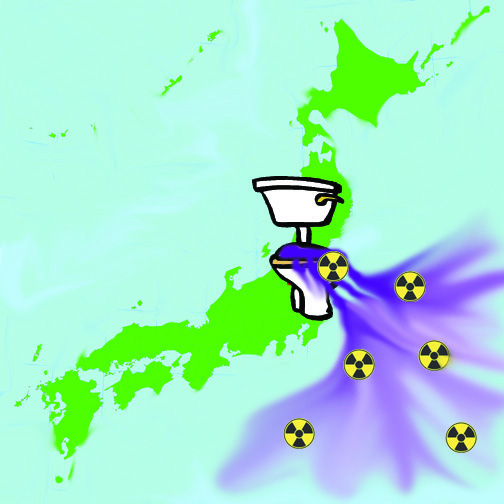
Nuclear expert reaffirms harm of dumping nuclear-contaminated water into ocean, calls on Japan to stop pressuring opposition voices
By Zhang Changyue, May 22, 2022
Nuclear expert reaffirms harm of dumping nuclear-contaminated water into ocean, calls on Japan to stop pressuring opposition voices https://www.globaltimes.cn/page/202205/1266269.shtml
Experts have reaffirmed the inevitable radioactive pollution to be caused by the dumping of nuclear-contaminated water from the Fukushima nuclear plant into the Pacific Ocean after Japan on Wednesday initially approved the discharge plan.
They demanded the Japanese government to stop pressuring those opposed to the plan and to truly listen to concerns from domestic public and international community, as a 30-day public comment period will finally determine the fate of the plan.
The Japanese government and Tokyo Electric Power Company (TEPCO) haven’t conducted a comprehensive environmental impact assessment as required by international law, Shaun Burnie, a senior nuclear specialist at Greenpeace, a global environmental protection organization, told the Global Times.
Their assessment made fundamental mistakes in radiation protection by ignoring the evidence that many different radionuclides would be discharged from the Fukushima nuclear power plant. For example, how much radioactivity in total is planned to be discharged has not been provided,” Burnie pointed out.
“The contaminated water contains radioactive cesium, strontium, tritium and other radioactive substances, which could be incorporated and concentrated in marine biota and end up in the bodies of humans. Some could cause damage to DNA, while others result in higher risks of diseases such as leukemia and blood cancer,” said Burnie.
“To assess the consequences of the tank releases, we need a full accounting of what isotopes are left in each tank after any secondary treatments. This is not just for the nine isotopes currently reported but for a larger suite of possible contaminants, such as plutonium,” explained Burnie. The expert added that since different radionuclides behave differently in the environment, models of tritium’s rapid dispersion and dilution in the ocean cannot be used to assess the fate of other potential contaminants.
Some isotopes are more readily incorporated into marine biota or seafloor sediment, said Burnie. For example, the biological concentration factor for fish for carbon-14 is up to 50,000 times higher than for tritium. Cobalt-60 is up to 300,000 times more likely to end up associated with seafloor sediment.
Also, the discharge could in reality continue for many decades longer than the period of 30 years claimed by the Japanese government – potentially for the rest of this century and beyond, Burnie noted.
Although the Japanese government and TEPCO agreed in 2015 that the consent of the Fukushima Fishermen’s Association would be a condition for any future discharges, they are trying to pressure those opposed to say yes, said Burnie, encouraging efforts in Japan and the international community to continue to stop the unlawful and unjustified dumping plan.
Magnitude 6.0 quake shakes Japan’s east and northeast
https://www.japantimes.co.jp/news/2022/05/22/national/earthquake-ibaraki-fukushima/An earthquake with a preliminary magnitude of 6.0 struck Fukushima and other prefectures in Japan’s east and northeast on Sunday, but there was no threat of a tsunami, the Meteorological Agency said.
There were no immediate reports of injuries or serious property damage following the quake, which occurred around 12:24 p.m.
The quake’s magnitude was later revised upward from the initial estimate of 5.8, the agency said.
The quake registered lower 5 on the Japanese seismic intensity scale to 7 in the city of Iwaki in Fukushima, according to the agency. Its focus was at a depth of about 30 kilometers in the Pacific off Ibaraki Prefecture.
The quake registered 4 in some other parts of Fukushima and 3 in the neighboring prefectures of Miyagi, Yamagata, Ibaraki, Niigata and Tochigi.
No abnormalities were found at the Tokai No. 2 nuclear power plant on the coast of Ibaraki or at the Fukushima No. 1 and No. 2 nuclear power plants, their operators said.
There were also no major transport disruptions. JR East said it briefly suspended services on a section of the Tohoku Shinkansen line between Fukushima and Miyagi prefectures.
Tritium isn’t harmless — Beyond Nuclear International

Dumping Fukushima’s radioactive water is one of many wrong options
Tritium isn’t harmless — Beyond Nuclear International Japan plan to dump tritiated water into the ocean comes with big risks https://wordpress.com/read/feeds/72759838/posts/4028994254
On May 18, Japan’s Nuclear Regulation Authority gave its initial approval for Tokyo Electric Power to release radioactive water from the destroyed Fukushima nuclear power plant into the Pacific Ocean, claiming that there are no safety concerns. But science disagrees with this conclusion. In a September 2019 blog entry, now updated by the author, Dr. Ian Fairlie looks at the implications of dumping largely tritiated water into the sea and whether there are any viable alternatives.
By Ian Fairlie
At the present time, over a million tonnes of tritium-contaminated water are being held in about a thousand tanks at the site of the Fukushima Daichi nuclear power station in Japan. This is being added to at the rate of ~300 tonnes a day from the water being pumped to keep cool the melted nuclear fuels from the three destroyed reactors at Fukushima. Therefore new tanks are having to be built each week to cope with the influx.
These problems constitute a sharp reminder to the world’s media that the nuclear disaster at Fukushima did not end in 2011 and is continuing with no end in sight.
Recently TEPCO / Japanese Government have been proposing to dilute, then dump, some or all of these tritium-contaminated waters from Fukushima into the sea off the coast of Japan. This has been opposed by Japanese fishermen and environment groups.
There has been quite a media debate, especially in Japan, about the merits and demerits of dumping tritium into the sea.
Many opinions have been voiced in the debate: most are either incorrect or uninformed or both. This post aims to rectify matters and put the discussion on a more sound technical basis.
- TEPCO / Japanese Government have argued that, as tritium is naturally-occurring, it is OK to discharge more of it. This argument is partly correct but misleading. It is true that tritium is created in the stratosphere by cosmic ray bombardment, but the argument that, because it exists naturally, it’s OK to dump more is false. For example, dioxins, furans and ozone are all highly toxic and occur naturally, but dumping more of them into the environment would be regarded as anti-social and to be avoided.
- TEPCO / Japanese Government have argued that it is safe to dump tritium because it already exists in the sea. Yes, tritium is there but at low concentrations of a few becquerels per litre (Bq/l). But the tritium concentrations in the holding tanks at Fukushima are typically about a megabecquerel per litre (MBq/l). In layman’s terms, that’s about a million times more concentrated.
- TEPCO / Japanese Government have argued coastal nuclear plants routinely dump water that contains tritium into the ocean. Yes, this does (regrettably) occur as their cooling waters become tritiated during their transits of reactor cooling circuits. But two wrongs do not make a right. Moreover, the annual amounts are small compared with what is being proposed at Fukushima. A one GW(e) BWR reactor typically releases about a terabecquerel (trillion Bq) of tritium to sea annually. But Fukushima’s tanks hold about one petabecquerel (PBq or a thousand trillion Bq) of tritium – that is, a thousand times more. A much bigger problem.
- Readers may well ask where is all this tritium coming from? Most (or maybe all) the tritium will come from the concrete structures of the ruined Fukushima reactor buildings. After ~40 years’ operation they are extremely contaminated with tritium. (Recall that tritium is both an activation product and a tertiary fission product of nuclear fission.) And, yes, this is the case for all decommissioned (and by corollary, existing) reactors: their concrete structures are all highly contaminated with tritium. The older the station, the more contaminated it is. In my view, this problem constitutes an argument for not building more nuclear power stations: at the end of their lives, all reactor hulks will remain radioactive for over 100 years.
- What about other radioactive contaminants? Reports are emerging that the tank waters also remain contaminated with other nuclides such as caesium-137 and especially strontium-90. This is due to the poor performance of Hitachi’s Advanced Liquid Processing System (ALPS). Their concentrations are much lower than the tritium concentrations but they are still unacceptably high.
For example, on 16 October 2018, the UK Daily Telegraph stated:
“Tokyo Electric Power Co (Tepco) which runs the plant, has until recently claimed that the only significant
contaminant in the water is safe levels of tritium, which can be found in small amounts in drinking water, but is dangerous in large amounts. The [Japanese] government has promised that all other radioactive material [apart from tritium] is being reduced to “non-detect” levels by the sophisticated (ALPS).
“However documents provided to The Telegraph by a source in the Japanese government suggest that the ALPS has consistently failed to eliminate a cocktail of other radioactive elements, including iodine, ruthenium, rhodium, antimony, tellurium, cobalt and strontium.
“That adds to reports of a study by the regional Kahoko Shinpo newspaper which it said confirmed that levels of iodine-129 and ruthenium-106 exceeded acceptable levels in 45 samples out of 84 in 2017. Iodine 129 has a half-life of 15.7 million years and can cause cancer of the thyroid; ruthenium 106 is produced by nuclear fission and high doses can be toxic and carcinogenic when ingested.
In late September 2017, TEPCO was forced to admit that around 80 per cent of the water stored at the Fukushima site still contains radioactive substances above legal levels after the Ministry of Economy, Trade and Industry held public hearings in Tokyo and Fukushima at which local residents and fishermen protested against the plans. It admitted that levels of strontium 90, for example, are more than 100 times above legally permitted levels in 65,000 tons of water that has been through the ALPS cleansing system and are 20,000 times above levels set by the government in several storage tanks at the site.”
So what is to be done?
First of all, the ALPS system has to be drastically improved. After that, some observers have argued that, ideally, the tritium should be separated out of the tank waters. Some isotopic tritium removal technologies have been proposed, for example by the International Atomic Energy Agency, but the picture is complicated. The only operating facility I’m aware of, is located at Darlington near Toronto in Canada, though secret military separation facilities may exist in the US or France.
However the Darlington facility was extremely difficult and expensive to construct (~12 years to build and to get working properly), and its operation consumes large amounts of electricity obtained from the Darlington nuclear power station nearby. Its raison d’ȇtre is to recover very expensive deuterium for Canadian heavy water reactors.
Other proposed remedies will probably be more expensive. One problem is basic physics. The tritium is in the form of tritiated water, which is effectively the same as water itself, so that chemical separation or filtration methods simply do not work.
Another problem is inefficiency: with isotope separation, one would have to put the source hydrogen through thousands of times to get even small amounts of separated non-radioactive hydrogen. A third problem is that hydrogen, as the smallest element, is notoriously difficult to contain, so that gaseous tritium emissions would be very large each year.
None of these technologies is recommended as a solution for Japan: any such facility would release large amounts of tritium gas and tritiated water vapor to air each year, as occurs at Darlington. Tritium gas is quickly converted to tritiated water vapor in the environment. The inhalation of tritiated water vapor from any mooted Japanese facility would likely result in higher collective doses than the ingestion of tritiated sea food, were the tritium to be dumped in the sea.
I recommend neither of these proposed solutions.
There are no easy answers here. Barring a miraculous technical discovery which is unlikely, I think TEPCO/Japanese Government will have to buy more land and keep on building more holding tanks to allow for tritium decay to take place. Ten half-lives for tritium is 123 years: that’s how long these tanks will have to last – at least.
This will allow time not only for tritium to decay, but also for politicians to reflect on the wisdom of their support for nuclear power.
Japan OKs plan to release Fukushima nuclear plant wastewater
Japan’s nuclear regulator has approved plans by the operator of the wrecked Fukushima nuclear plant to release its treated radioactive wastewater into the sea next year, saying the outlined methods are safe and risks to the environment minimal
By Mari Yamaguchi Associated Press, May 18, 2022,
………. There is still concern in the community and neighboring countries about the potential health hazards of the release of the wastewater that includes tritium — a byproduct of nuclear power production and a possible carcinogen at high levels.
The government and TEPCO say more than 60 isotopes selected for treatment can be lowered to meet safety standards, except for tritium, but that it is safe if diluted. Scientists say impact of long term low-dose exposure to the environment and humans are unknown, and that tritium can have a bigger impact on humans when consumed in fish than in water.
,,,,,,,,,, Under the plan, TEPCO will transport water that has been treated to below releasable levels through a pipeline from the tanks to a coastal facility, where the water is diluted with seawater.
From there, the water will enter an undersea tunnel to be discharged at a point about 1 kilometer (0.6 mile) from the plant to ensure safety and minimize the impact on local fishing and the environment, according to TEPCO.
The plan will become official after a 30-day public review, a formality that is not expected to overturn the approval.
………..The contaminated water is being stored in about 1,000 tanks at the damaged plant, which officials say must be removed so that facilities can be built for its decommissioning. The tanks are expected to reach their capacity of 1.37 million tons next year — slower than an earlier estimate of later this year……….. https://abcnews.go.com/Technology/wireStory/japan-oks-plan-release-fukushima-nuclear-plant-wastewater-84800836
Climate change makes record-breaking heatwaves in northwest India and Pakistan 100 times more likely

Climate change makes record-breaking heatwaves in northwest India and
Pakistan 100 times more likely, a Met Office study finds. The region should
now expect a heatwave that exceeds the record temperatures seen in 2010
once every three years.
Without climate change, such extreme temperatures
would occur only once every 312 years, the Met Office says. The report
comes as forecasters say temperatures in north-west India could reach new
highs in the coming days. The extreme pre-monsoon heatwave the region has
suffered in recent weeks eased a little after peak temperatures reached 51C
in Pakistan on Saturday.
But the heat looks likely to build again towards
the end of this week and into the weekend, the Met Office’s Global Guidance
Unit warns. It says maximum temperatures are likely to reach 50C in some
spots, with continued very high overnight temperatures.
BBC 18th May 2022
New South Korean President plans to reverse the nuclear phaseout policy
South Korean President Yoon Suk-yeol was formally inaugurated on 10 May.
He is committed to strengthening the nuclear power sector, reversing the
policy his predecessor, President Moon Jae-in of phasing out nuclear power
adopted in 2017. Investing in nuclear energy formed part of the platform on
which Yoon fought the election.
Nuclear Engineering International 13th May 2022
https://www.neimagazine.com/news/newssouth-korea-expected-to-end-nuclear-phase-out-9696004
Extreme heat hitting India
An intense heatwave has been sweeping through northern India with
temperature hitting a record 49.2C in parts of the capital, Delhi. Reports
say this is the fifth spell of a heatwave in the capital this summer.
Officials in many parts of the country have asked people to take
precaution. They warned the heat could cause moderate health concerns for
the vulnerable, including infants, the elderly and people with chronic
diseases.
BBC 16th May 2022
Japan Says It Needs Nuclear Power. Can Host Towns Ever Trust It Again?

The Ukraine war has shown the fragility of Japan’s energy supplies. But the decision to restart plants after the Fukushima disaster is fraught with emotions and political calculation.
May 4, 2022
KASHIWAZAKI, Japan — Growing up, Mika Kasahara saw the nuclear power plant that hugs the coast of her hometown simply as the place where her father worked, a familiar fortress of cooling tanks and steel lightning towers overlooking the Sea of Japan.
“We thought that as long as nothing bad happened, it’s fine,” Ms. Kasahara, 45, said.
After the disaster 11 years ago at a nuclear power station in Fukushima, where an earthquake and tsunami led to a triple meltdown, Japan took most of its nuclear plants offline. Now, Ms. Kasahara, spooked by security breaches and damaged infrastructure at the power station near her home, wants it shuttered for good.
Ms. Kasahara symbolizes the long road Japan faces as Prime Minister Fumio Kishida, confronting threats to fuel supplies posed by the Ukraine war and vowing urgent action to reduce carbon emissions, intensifies efforts to reboot the country’s nuclear power network.
For the first time since the Fukushima catastrophe, a small majority of the Japanese public has expressed support for bringing the plants back online, indicating a growing awareness that the world’s third-largest economy may struggle to keep the lights on as it confronts its own limited resources during a time of geopolitical upheaval.
But the decision to restart the plants is fraught with emotions and political calculation, not to mention the gargantuan technical task of fortifying the stations against future disasters in an earthquake-prone nation.
In Kashiwazaki, a midsize suburban city, and neighboring Kariwa, a small village, which together host the seven-reactor plant — the world’s largest — in Niigata Prefecture in northwestern Japan, the fate of the nation’s idled power plants is deeply personal.


When Ms. Kasahara’s father died of esophagus and lung cancer three years ago, she wondered if his two decades inside the plant had been a factor. A traffic jam during an evacuation drill left her fearing that she and her family would be trapped by a nuclear accident.
“I was honestly very afraid,” she said.
Business leaders and workers whose livelihoods depend on the plant warn that if it does not come back online, the area will deteriorate, like many rural Japanese communities that are experiencing steep population decline. Currently about 5,500 people are working to maintain the idled plant, although employment would be likely to grow if it reopened.
Many local residents work in the plant or know friends and family who do. “I think that there are more people who understand the necessity of the plant,” said Masaaki Komuro, chief executive of Niigata Kankyo Service, a maintenance contractor at the facility.
Public polling presents a muddier picture. According to a 2020 survey by the city of Kashiwazaki, close to 20 percent of residents want to decommission the plant immediately. About 40 percent would accept the temporary operation of some reactors, but ultimately want the plant shut down. Just over half of prefectural residents oppose a nuclear restart, according to a 2021 survey by Niigata Nippo, a local newspaper.
The public wariness will be tested in an election for governor this month in Niigata Prefecture. The current governor, Hideyo Hanazumi, 63, is backed by the governing Liberal Democrats but has remained vague about his restart intentions. His challenger, Naomi Katagiri, a 72-year-old architect, promises to block the resumption of operations in Kashiwazaki and Kariwa.
The stakes are high because an unwritten government policy requires local political leaders to ratify nuclear reboots. Kariwa’s mayor, Hiroo Shinada, 65, is a vociferous proponent, while the mayor of Kashiwazaki, Masahiro Sakurai, 60, is investing in wind power but would support the temporary operation of some reactors.


“Japan is not like Communist China that can impose a project” on communities, said Daisaku Yamamoto, an associate professor of Asian studies at Colgate University and a native of Kashiwazaki. While the national government influences local decisions, host communities “are not powerless either,” he said.
Local opposition isn’t the only obstacle to restarting nuclear power stations. All plants must adhere to strict new guidelines adopted by Japan’s nuclear regulator two years after the Fukushima disaster. Operators are required to bolster tsunami defenses, build backup cooling pools and install filtered vents that would reduce radioactive discharges.
Out of 60 reactors in Japan, 24 have been decommissioned and five are currently operating. Another five have been approved to restart but are suspended for routine checkups, and three are under construction. The rest have not been approved to restart.
Nuclear power now contributes less than 4 percent of the nation’s electricity, down from nearly a third before the Fukushima disaster. Japan currently draws more than three-quarters of its electricity from fossil fuels, and about 18 percent from renewable sources.
Since 2014, the Liberal Democrats have said nuclear plants should generate more than 20 percent of Japan’s electricity by 2030. The war in Ukraine and the threat of a blackout in Tokyo after a strong earthquake this spring have made the public more receptive to this message.
In a March poll by the Nikkei business newspaper, 53 percent supported a restart of the plants. As recently as four years ago, more than 60 percent of the Japanese public opposed rebooting nuclear power.
In hopes of accelerating regulatory approvals, some Liberal Democratic lawmakers have submitted a proposal to loosen requirements for physical barriers to terrorism at plants.


“The people who say that they are afraid of war or terrorism attacks against nuclear plants are probably the type of people who would oppose the restarts no matter what,” said Tsuyoshi Takagi, secretary-general of the Liberal Democrats’ task force on energy stability.
In Kashiwazaki and Kariwa, the national regulator has suspended approvals, citing concerns about the safety culture at the Tokyo Electric Power Company, the plant’s operator.
Last year, Tokyo Electric revealed that a plant worker had used a colleague’s security card and bypassed biometric systems in 2020, gaining entrance to a control room. The company admitted flawed welding work and a failure to install fire prevention machinery in a reactor. It reported that an earthquake in 2007 had damaged two concrete pegs in a building foundation, and the regulator found a risk of liquefaction in the ground beneath a sea wall protecting reactors.
Officials at Tokyo Electric say they are addressing the issues. The company has spent about $9 billion reinforcing the Kashiwazaki-Kariwa plant.
The setbacks have raised doubts among residents about the competence of the company, which also operated the Fukushima plant where the meltdowns occurred 11 years ago.
“I only feel distrust,” Miyuki Igarashi, 33, said as she loaded her 6-month-old daughter into an S.U.V. at a strip mall in Kashiwazaki. “I think they are hiding things.”
Some local residents say the problems have been overblown by antinuclear activists.
“People who oppose the restarts keep pointing out things that are wrong, and there is no end to it,” said Motonori Nishikata, 44, who worked at the plant for seven years before opening a grilled beef restaurant in Kashiwazaki.


The community is already preparing for an eventual restart, in part by readying for a possible accident. Public shelters have installed filters to keep out radioactive contaminants. Pharmacists stock iodine pills, meant to block the most harmful effects of radiation.
Those who lived through the 2011 Fukushima crisis say the risk is not worth it.
Junko Isogai, 48, was raising two young daughters with her husband in Koriyama, a city in Fukushima Prefecture, when the meltdowns occurred 42 miles away.
Worried about their daughters’ health, the couple decided that she and the girls should move to Niigata, although her husband stayed behind for the next five years, working to pay the mortgage on a house they had built just before the disaster.
In Niigata, her elder daughter, Suzu, was bullied at school, called “dirty” by a classmate because of her Fukushima roots.
Three years ago, Ms. Isogai ran for a seat in the prefectural assembly, opposing a restart at the Kashiwazaki-Kariwa plant. She lost but plans to run again next April.
“I don’t want anyone else to be in the situation that I was put in,” she said.

3 doctors to be dispatched nationwide to respond to nuclear accident; government requests early expansion

May 2, 2022
The Federation of Electric Power Companies of Japan (DENJIREN) learned in an interview on May 2 that only three doctors have been dispatched to power plants nationwide to provide initial treatment and health care to workers in the event of a nuclear power plant accident. The Federation of Electric Power Companies of Japan (DENJI-ren) explained that “doctors can be stationed at the power plants for about one month after the accident,” and they plan to increase the number of doctors to five in FY2024.
The Ministry of Health, Labor, and Welfare (MHLW) has pointed out that “it is difficult to maintain a permanent system with only three doctors,” and has called for an early expansion.
The dispatched doctors will provide lifesaving treatment and simple decontamination in the plant’s infirmary and other facilities in the event of worker injuries and illnesses, determine the priority of treatment, and prevent heat stroke and infectious diseases. Surgeries and mass exposures will not be handled, but transported outside. The company will respond to any nuclear power plant.
https://kahoku.news/articles/knp2022050201000378.html?fbclid=IwAR1pKh0iAGQwD56hGTvK47NdqEjWClLYf7q1W4U5u6zbKaAd-nT-a30ZlSs
Nuclear War Threat Drives Greater Divide Between U.S., China
NewsWeek, BY JON JACKSON ON 5/6/22 THE ALREADY TENUOUS RELATIONSHIP BETWEEN THE UNITED STATES AND CHINA RISKS FURTHER DETERIORATION FOLLOWING RECENT COMMENTS FROM EACH COUNTRY REGARDING THE THREAT OF NUCLEAR WAR THE OTHER PRESENTS.
Admiral Charles Richard spoke Wednesday during a hearing assembled by the Senate Armed Services strategic forces subcommittee about the escalated nuclear threat posed by China since its ally Russia began its invasion of Ukraine.
“We are facing a crisis deterrence dynamic right now that we have only seen a few times in our nation’s history,” Richard, who is head of the U.S. Strategic Command, said. “The war in Ukraine and China’s nuclear trajectory—their strategic breakout—demonstrates that we have a deterrence and assurance gap based on the threat of limited nuclear employment.”
During a Friday press conference, China’s foreign ministry spokesperson Zhao Lijian was asked about Richard’s remarks.
| China follows a self-defensive nuclear strategy and keeps its nuclear forces at the minimum level required to safeguard national security. We stay committed to no first use of nuclear weapons at any time and under any circumstances, and undertake unequivocally and unconditionally not to use or threaten to use nuclear weapons against non-nuclear-weapon states or nuclear-weapon-free zones,” Zhao said. “This policy remains clear and consistent. China opposes any form of ‘China nuclear threat’ theory.”He further charged that U.S. officials were trying to shift “the blame to others.””Some individuals in the U.S. have been hyping up various versions of the so-called ‘China nuclear threat,'” Zhao said. “As is known to all, the U.S. is the biggest source of nuclear threat in the world”…………………………………….. . https://www.newsweek.com/nuclear-war-threat-drives-greater-divide-between-us-china-1704340 |
1 This Month

of the week – Shut Down Drone Warfare!


Tell the Ukrainian Government to Drop Prosecution of Peace Activist Yurii Sheliazhenko

Petition to revoke the licensing of the Near Surface Nuclear Disposal Facility (NSDF) at Chalk River. https://www.ourcommons.ca/petitions/en/Petition/Details?Petition=e-7247
To see nuclear-related stories in greater depth and intensity – go to https://nuclearinformation.wordpress.com
-
Archives
- April 2026 (114)
- March 2026 (251)
- February 2026 (268)
- January 2026 (308)
- December 2025 (358)
- November 2025 (359)
- October 2025 (376)
- September 2025 (257)
- August 2025 (319)
- July 2025 (230)
- June 2025 (348)
- May 2025 (261)
-
Categories
- 1
- 1 NUCLEAR ISSUES
- business and costs
- climate change
- culture and arts
- ENERGY
- environment
- health
- history
- indigenous issues
- Legal
- marketing of nuclear
- media
- opposition to nuclear
- PERSONAL STORIES
- politics
- politics international
- Religion and ethics
- safety
- secrets,lies and civil liberties
- spinbuster
- technology
- Uranium
- wastes
- weapons and war
- Women
- 2 WORLD
- ACTION
- AFRICA
- Atrocities
- AUSTRALIA
- Christina's notes
- Christina's themes
- culture and arts
- Events
- Fuk 2022
- Fuk 2023
- Fukushima 2017
- Fukushima 2018
- fukushima 2019
- Fukushima 2020
- Fukushima 2021
- general
- global warming
- Humour (God we need it)
- Nuclear
- RARE EARTHS
- Reference
- resources – print
- Resources -audiovicual
- Weekly Newsletter
- World
- World Nuclear
- YouTube
-
RSS
Entries RSS
Comments RSS
 nuclear-news