India not happy with restrictions on nuclear technology purchases
The guidelines restrict the sale of such technology to countries which, like nuclear-armed India, have not signed up to the Nuclear Non-Proliferation Treaty.
India sees the move as a challenge to the waiver from NSG rules — negotiated by the United States — that the country was granted in 2008.
Companies from France, Russia, the United States and Japan are competing for a slice of the $175 billion India plans to spend on nuclear reactors, and Rao hinted that a willingness to provide technology transfers would be a factor in awarding contracts…….http://www.google.com/hostednews/afp/article/ALeqM5jkXesvZlAN_8w4o-iAseAmj42rUA?docId=CNG.a2927e2a2a9f66d6246282cccdc54dd8.651
Decentralised solar energy boom taking off in India
 solar technology presents an elegant and immediate solution to powering everything from light bulbs and heaters to water purifiers and pumps…….most new grid capacity will be sucked up by industry, leaving little for the poor who live in off-grid desert outcrops, mountain hamlets and jungle villages like Nada. For them, the surest way to get electricity anytime soon may be to get a solar panel and make it themselves.
 Fuel for solar boom could come from rural India, where thousands give up on grid, buy panels, Washington Post, 2 July 11 “……….Across India, thousands of homes are receiving their first light through small companies and aid programs that are bypassing the central electricity grid to deliver solar panels to the rural poor. Those customers could provide the human energy that advocates of solar power have been looking for to fuel a boom in the next decade.
With 40 percent of India’s rural households lacking electricity and nearly a third of its 30 million agricultural water pumps running on subsidized diesel, “there is a huge market and a lot of potential,” said Santosh Kamath, executive director of consulting firm KPMG in India. “Decentralized solar installations are going to take off in a very big way and will probably be larger than the grid-connected segment.”…… Continue reading
Opposition in Japan to restarting Genkai nuclear reactors
Saga governor comes under fire over Genkai restart, Japan Times, July 2, 2011, KYODO, Saga — Saga Gov. Yasushi Furukawa came under fire at the prefectural assembly Friday over his apparent willingness to approve the restart of two reactors at the Genkai nuclear power station. …
During a session of the assembly’s committee on nuclear power safety, Yasushige Miyazaki, an independent, said a possible future crisis cannot be ruled out at the plant in the town of Genkai, Saga Prefecture.
He also expressed doubts about the Nuclear and Industrial Safety Agency’s explanation that the crisis at the Fukushima No. 1 nuclear plant was triggered by the March 11 tsunami rather than the magnitude 9.0 earthquake.
Miyazaki urged the governor to seek more data from the central government to confirm that no serious damage was caused to the crippled Fukushima plant by the initial quake. But the governor rejected the request, saying the government has provided sufficient data.
…..many of the assembly’s 38 members oppose a resumption of operations, citing local residents’ safety concerns.
Furukawa said he will make a final decision after meeting with Prime Minister Naoto Kan on whether to restart the No. 2 and No. 3 reactors of the Genkai plant, which are currently shut down for regular checks. Their restart has been delayed due to the Fukushima crisis……..http://search.japantimes.co.jp/cgi-bin/nn20110702a3.html
India’s North Eastern States call for renewable energy funding
North Eastern ministers call for 90% funding The Assam Tribune Spl Correspondent NEW DELHI, July 2 – The Power Ministers of the NE States have called for 90 per cent funding from the Ministry of New and Renewable Energy for the renewable energyprojects in the region.
The Power Ministers also sought help for preparing the State-specific action plans forrenewable energy. They were participating in a meeting convened by New andRenewable Energy Minister Dr Farooq Abdullah to review the implementation of renewable energy policies and programmes in the NE States, here in Delhi today. The meeting was attended by the Chief Minister of Meghalaya and the Power Ministers of other NE States, senior officials from the ministry and the State governments.
Official sources said that Dr Abdullah agreed for getting the resource mapping of solar, wind and micro and small hydro projects prepared for these States. The States in the region have also been advised to put in more efforts for popularization of renewable energy for maximizing use of these technologies. The ministers of NE States would be given opportunities to visit showcase projects within and outside the country…..
It was informed during the meeting that out of 4,965 remote villages to be electrified and illuminated through renewable energy systems in the region, 3,841 villages have been provided solar lights. There are over 160 small and micro hydel projects installed in the NE States with 275 MW aggregate capacities… http://www.assamtribune.com/scripts/detailsnew.asp?id=jul0311/at07
More radiation problems predicted for Japan
Specifically, Mr. Kosako said the government set a relatively high ceiling for acceptable radiation in school yards, so that only 17 schools exceeded that limit. If the government had set the lower ceiling he had advocated, thousands of schools would have required a full cleanup. With Mr. Kan’s ruling party struggling to gain parliamentary approval for a special budget, the costlier option didn’t get traction, he said.
“When taking these steps, the only concern for the current government is prolonging its own life,” Mr. Kosako said……
He said he is especially concerned with contamination of the ocean by the large amounts radioactive material from the damaged Fukushima Daiichi reactors dumped into surrounding waters.
Radiation Expert Predicts More Threats, WSJ By YUKA HAYASHI, 2 July 11, Tokyo
In his first media interview since resigning his post in protest in April, Toshiso Kosako, one of the country’s leading experts on radiation safety, said Mr. Kan’s government has been slow to test for dangers in the sea and to fish, and has understated certain radiation threats to minimize clean-up costs. In his post, Mr. Kosako’s role was to advise the prime minister on radiation safety.
And while there have been scattered reports of food contamination—of tea leaves and spinach, for example—Mr. Kosako predicted there will be broader discoveries later this year, especially as rice, Japan’s staple, is harvested. Continue reading
Need to test children in Fukushima region for internal radiation contamination
 When asked whether the cesium levels found in these children were significant, Mr. Boilley said, “The amount of cesium should be zero.” He said Acro has determined traces of Cesium-137 in the air, soil and water around the world before the Fukushima Daiichi disaster, saying these traces could be remnants from nuclear experiments in the 1960s and the Chernobyl disaster in 1986. But he says that Cesium-134 is certainly from the Fukushima disaster.
More Fukushima Worries: Internal Contamination, WSJ By Anna Novick, 2 July 11 A urine analysis performed by a French non-profit organization on a small number of children in Fukushima city suggests they may have suffered internal radiation contamination from reactor fuel from the crippled Fukushima Daiichi nuclear power plant, even though they live outside the national government’s 30-kilometer evacuation zone. Continue reading
Push for decentralised renewable energy to meet the needs of rural India
 “The centralised grid based approach of RGGVY has not been able to meet people’s aspirations. Rural areas have always been neglected in this energy hierarchy. Decentralised renewable energy can break this hierarchy and provide quick, reliable and sustainable power to people.
|
30 years radiation health monitoring for 2 million Fukushima residents
Residents in the Fukushima region have expressed growing concern surrounding the possible longterm health risks, in particular for children, triggered by the on-going nuclear power plant crisis.
Two million Fukushima residents to undergo radiation health checks Telegraph By Danielle Demetriou in Tokyo, 21 June 11 More than two million residents living in the region surrounding Japan’s damaged nuclear power plant will undergo longterm health checks starting from this month. 20 Jun 2011 The health of residents in Fukushima prefecture in northeast Japan will be monitored over the next 30 years in order to ease growing concerns surrounding radiation contamination. Continue reading
UK government held gravest fears about Fukushima crisis
 A substantial number of documents were withheld on grounds that they contained “information which, if disclosed, would adversely affect international relations,” the government’s civil contingencies team said…….
UK government’s Fukushima crisis plan based on bigger leak than Chernobyl As Japan’s nuclear emergency unfolded, scientists devised a worst case scenario involving issuing iodine pills to Briton. Ian Sample, science correspondent. guardian.co.uk, 20 June 2011
The British government made contingency plans at the height of the Fukushima nuclear crisis which anticipated a “reasonable worst case scenario” of the plant releasing more radiation than Chernobyl, new documents released to the Guardian show. Continue reading
TEPCO’s sloppy care of 3700 nuclear clean-up workers
Whereabouts of 30 nuclear power plant subcontractors unknown: Health Ministry Mainichi Daily News 21 June 11 The whereabouts of about 30 subcontractors who helped deal with the crisis at the crippled Fukushima No. 1 Nuclear Power Plant is unknown, the Ministry of Health, Labor and Welfare said on June 20.
The workers are among some 3,700 who worked to control the disaster in March, the month the plant was struck by the Great East Japan Earthquake and tsunami.
The workers’ names were listed in records showing that they had been loaned dosimeters, but when the plant’s operator, Tokyo Electric Power Co. (TEPCO), contacted the companies they were associated with, the companies replied that there was no record of those workers.
The ministry has branded TEPCO’s administration of workers “sloppy” and ordered the company to conduct an investigation to identify the workers.
“We don’t know why there is no record of the workers. The records and dosimeters were managed by TEPCO and its administration can only be described as sloppy,” a representative of the ministry’s Labor Standards Bureau said…..http://mdn.mainichi.jp/mdnnews/news/20110621p2a00m0na005000c.html
Another failure in Fukushima water treatment system
Decontamination system fails again at Japan nuclear plant THE HINDU 22 June 11The operator of a damaged Japanese nuclear plant suspended another test run of a newly installed water-treatment system after its pump stopped on Tuesday.
Tokyo Electric Power Co said the pump was overburdened by excessive liquid flow, Kyodo News reported.
The system designed to decontaminate highly radioactive water stopped only five hours into full operation on Friday at the Fukushima Daiichi plant, 250 kilometres north-east of Tokyo.
The operator concluded on Monday that absorbent materials inside the decontamination equipment needed changing more frequently than previously estimated, public broadcaster NHK reported.
The company is trying to reduce radioactivity in water that has accumulated around the plant as a result of emergency measures to cool the reactor cores. Storage facilities for contaminated water were reaching capacity.
IAEA likely to rubber stamp Australian company’s plan for dumping radioactive waste in Malaysia
 “How can we monitor daily? The risks of human error are too high,” she said, pointing out that the half-life of thorium was 14 billion years…..Fuziah promised that if the report from the panel, which includes members of the IAEA, was as she anticipated, she will continue to bring the issue to a higher level and exert pressure on authorities.
No confidence in Lynas safety review’, Free Malaysia Today Tashny Sukumaran, June 20, 2011, The IAEA report on the Lynas Corp is bound to be slanted and the human factor will not be taken into account, says Kuantan MP Fuziah Salleh. KUALA LUMPUR: Kuantan MP Fuziah Salleh is already second guessing the International Atomic Energy Agency’s (IAEA) report on the Lynas Corp’s rare earth refinery in Gebeng, Pahang.
She said she has no confidence in the independent panel’s safety review of the RM300 million Lynas Corp rare earth refinery . “I can imagine the outcome will contain acknowledgement of safety concerns, but also on how this refinery can be made safe,” said Fuziah. Continue reading
Giant cover for No 1 nuclear reactor to stop Fukushima radiation to atmosphere
 N-bldg cover to be built, unbuilt, rebuilt, The Yomiuri Shimbun, 21 June 11 IWAKI, Fukushima–-Work to assemble parts of a giant cover for the No. 1 nuclear reactor building at Tokyo Electric Power Co.’s Fukushima No. 1 nuclear power plant is proceeding at a fever pitch at Onahama Port in Iwaki, Fukushima Prefecture.
The giant cover is designed to prevent most radioactive substances from dispersing into the atmosphere from the No. 1 reactor, which was damaged by a hydrogen explosion on March 12.
It will enclose an area of 42 meters by 47 meters and will stand 54 meters high.
To limit workers’ exposure to radiation and shorten the construction period, 62 parts, including pillars, beams and polyester-sheeted panels, are being assembled at the port into a unified structure. After it is confirmed that the parts fit together properly, the cover will be disassembled and transported to the nuclear power plant by ship.
On-site assembly of the components is scheduled to start next Monday. TEPCO plans to complete the work in late September. Final construction of the cover will be carried out by two giant cranes, which will be remote-controlled.A traditional Japanese insertion-only joint method, which does not employ welding or bolts for joining materials, is being used to assemble the cover… http://www.yomiuri.co.jp/dy/national/T110620004790.htm
Japan experimenting with incineration of radioactive rubble
Environment Ministry to approve incineration of rubble contaminated with radiation, (Mainichi Japan) June 20, 2011 The Environment Ministry has decided to approve the proposed incineration of rubble contaminated with radiation from the tsunami-hit Fukushima nuclear power plant at existing incineration facilities equipped with exhaust gas filters and absorption devices, officials said.
It made the decision after discussing how to safely dispose of rubble contaminated with radiation from the crippled Fukushima No. 1 Nuclear Power Plant.
No law currently provides for ways to dispose of waste contaminated with radiation from a crippled nuclear power plant. After consultations between ministries and agencies concerned, the government decided to apply the Waste Disposal and Public Cleaning Law to the disposal of radioactive rubble.
The ministry had initially urged local governments not to move radioactive rubble out of temporary storage sites. However, it will explain its decision to local governments concerned and ask them to resume their disposal of contaminated rubble as early as the end of this month……….
The government will also try to form a consensus among Fukushima residents about its plan to build final disposal sites for radioactive waste in the prefecture….http://mdn.mainichi.jp/mdnnews/news/20110620p2a00m0na017000c.html
Tokyo residents fearful, as radiation ‘hot spots’ confirmed, far from Fukushima
Some city, ward, town and village governments in the Tokyo metropolitan area have started doing their own radiation checks. An increasing number of citizens also are apparently checking radiation levels themselves…..

 Precise response needed to quell ‘hot spot’ concerns,The Yomiuri Shimbun,18 June 11 As the crisis at the Fukushima No. 1 nuclear power plant continues to unfold, high radiation readings have been confirmed in several isolated areas outside evacuation zones. Residents in these areas are feeling increasingly anxious about their radiation exposure.The government must quickly expand the scope of radiation measurements to grasp the actual condition on the ground and take steps to remedy the problem.”Hot spots” with high levels of radiation also were detected after the 1986 Chernobyl nuclear meltdown in the former Soviet Union. Some were several thousand kilometers from the Chernobyl plant. Continue reading
1 This Month

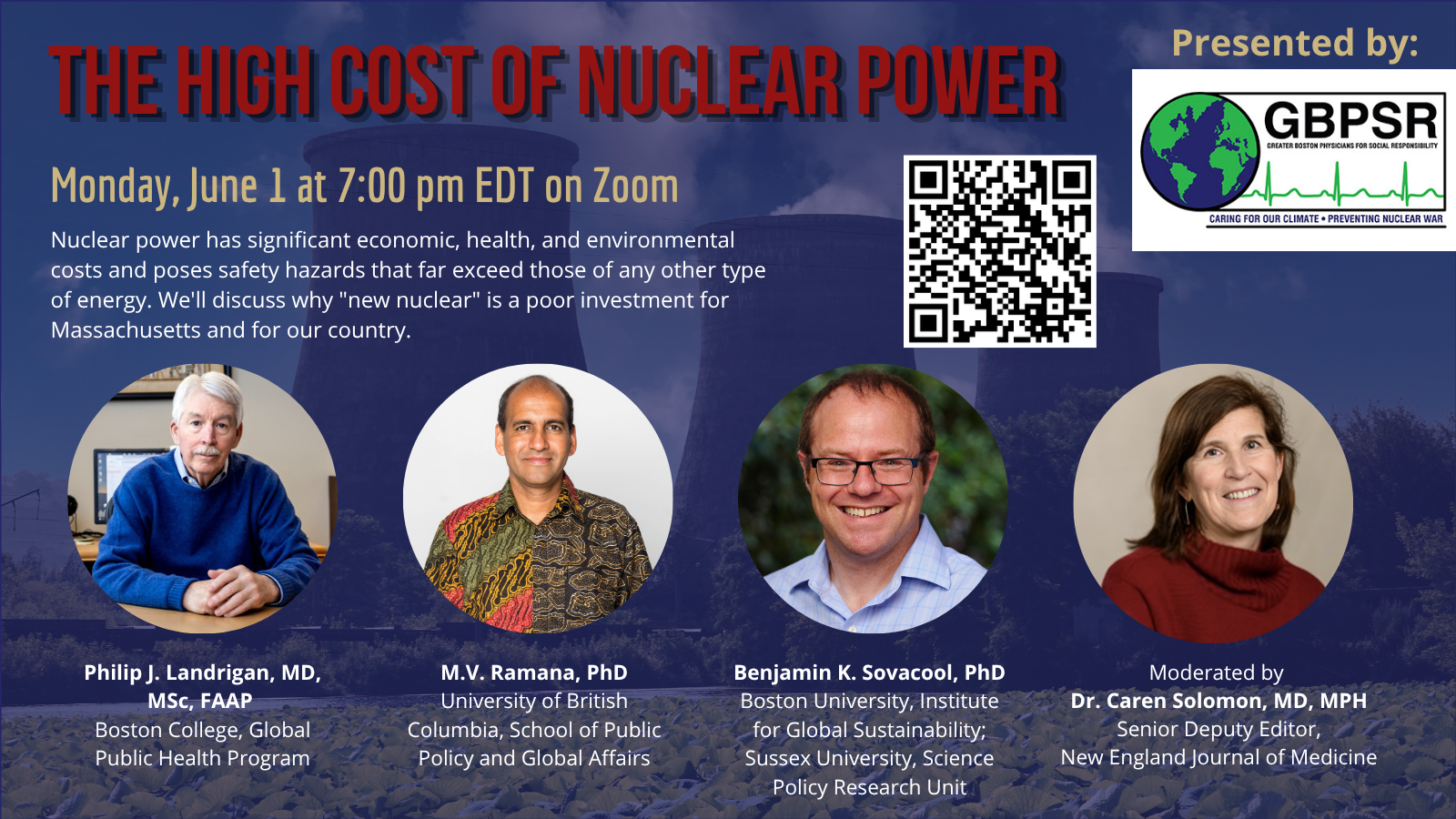
1 June Webinar – The High Cost of Nuclear Power – Register


of the week– Nuclear Reactor Information Task Force
To see nuclear-related stories in greater depth and intensity – go to https://nuclearinformation.wordpress.com
-
Archives
- May 2026 (262)
- April 2026 (356)
- March 2026 (251)
- February 2026 (268)
- January 2026 (308)
- December 2025 (358)
- November 2025 (359)
- October 2025 (376)
- September 2025 (257)
- August 2025 (319)
- July 2025 (230)
- June 2025 (348)
-
Categories
- 1
- 1 NUCLEAR ISSUES
- business and costs
- climate change
- culture and arts
- ENERGY
- environment
- health
- history
- indigenous issues
- Legal
- marketing of nuclear
- media
- opposition to nuclear
- PERSONAL STORIES
- politics
- politics international
- Religion and ethics
- safety
- secrets,lies and civil liberties
- spinbuster
- technology
- Uranium
- wastes
- weapons and war
- Women
- 2 WORLD
- ACTION
- AFRICA
- Atrocities
- AUSTRALIA
- Christina's notes
- Christina's themes
- culture and arts
- Events
- Fuk 2022
- Fuk 2023
- Fukushima 2017
- Fukushima 2018
- fukushima 2019
- Fukushima 2020
- Fukushima 2021
- general
- global warming
- Humour (God we need it)
- Nuclear
- RARE EARTHS
- Reference
- resources – print
- Resources -audiovicual
- Weekly Newsletter
- World
- World Nuclear
- YouTube
-
RSS
Entries RSS
Comments RSS
 nuclear-news