Stiff opposition in South Korea to new nuclear power plants

 New nuclear plants face public backlash, Korea Herald, By Shin Hyon-hee, 27 Dec 11 2011 Civic groups, environmentalists, residents stage protests, voicing safety concerns The government’s plan to install new nuclear reactors in the country’s eastern shore faces stiff opposition from residents, stoking safety concerns in the aftermath of a Japanese disaster.
Last week, the government picked two candidate sites for nuclear power plants –Yeongdeok in North Gyeongsang Province and Samcheok in Gangwon Province. The decision will be finalized by late next year after on-site inspections and environmental surveys.
On Monday, civic groups, religious organizations, environmentalists and residents staged a mass rally in downtown Seoul and the two regions, calling to scrap the country’s atomic energy policy.
“The government’s latest site selection completely neglects a global anti-nuclear trend that has been reigning supreme since the Fukushima meltdown in March,” Green Korea United, one of the country’s major environmental groups, said in a statement. In Samcheok, Gangwon
Province Gov. Choi Moon-soon added fuel to the flame by expressing his regret over the announcement. “It’s hard to understand the government is pushing ahead with its nuclear expansion program at a time when there is no national consensus and public understanding of the safety of the plan,” he said. ..
..Among the imminent issues is the storage of spent radioactive fuel rods that will run of space in 2016. The ministry plans to host a public forum in the first half of next year to discuss how to take care of such obsolete equipment, Hong said….http://www.koreaherald.com/business/Detail.jsp?newsMLId=20111226000732
78% of Japanese do not believe that Fukushima nuclear plant crisis is over
78 percent of poll participants did not accept Noda’s announcement this month of the effective end of the accident at the Fukushima Daiichi nuclear plant,

 Japan PM’s public support plunges Channel Asia News 26 December 2011 TOKYO: Support for Japan’s primeminister plunged in December as voters lost faith in his leadership, amid party turmoil and criticism over his handling of the nuclear crisis, a poll said Monday. Continue reading
Japan taking a moral position about the unsafety of India’s nuclear plants!
Japan likely to speak out on N-plants’ safety during talks with India The Pioneer, 22 DECEMBER 2011 SANDHYA SHARMA | NEW DELHI Japan will voice concerns over the safety of nuclear plants with India as two Prime Ministers Manmohan Singh and his Japanese counterpart Yoshihiko Noda are set to meet in New Delhi next week for the 6th Annual Summit between the two leaders.
The two sides will enhance the cooperation in nuclear sector despite the Fukushima disaster that rocked Tokyo last year….. even less than a year to the Fukushima Daiichi nuclear accident, Japan is recommencing steps it hopes will lead to exports of commercial nuclear technology to counties like India and Vietnam. This resumption comes even as Japan itself is scaling back the use of nuclear energy
at home.
Japan’s ruling Democratic Party is promoting nuclear technology exports as a pillar of its economic growth strategy. The earthquake in March with ensuing accident at the Fukushima Daiichi power plant led to a suspension of negotiations with India toward accords on the
transfer of nuclear energy technology.
New Delhi on the other hand is facing the flack from the locals over the commencement of the Kudankulam nuclear plant which is a joint Indo-Russian collaboration project following the Fukushima disaster….http://dailypioneer.com/nation/29789-japan-likely-to-speak-out-on-n-plants-safety-during-talks-with-india.html
Japan trying to sell nuclear technology to India
India, Japan PMs to meet today, N-trade tops agenda Times of India, Sachin Parashar, TNN | Dec 27, 2011, NEW DELHI: Despite the Japanese Parliament, Diet, clearing Japan’s civil nuclear cooperation with four other countries allowing it to resume its supply of nuclear reactors, India remains uncertain about the resumption of its own negotiations for such cooperation with Tokyo.
Ahead of Japanese PM Yoshihiko Noda’s visit to India on Tuesday for the 6th annual India-Japan summit, officials said the issue would be taken up in Noda’s meeting with his counterpart Manmohan Singh, but added that it was not possible to say what the outcome would be…..http://timesofindia.indiatimes.com/india/India-Japan-PMs-to-meet-today-N-trade-tops-agenda/articleshow/11261201.cms
Fukushima radiation in Japan’s mushrooms and forests
 Radiation fears spread to forest industry SHIROISHI, Mainichi Daily News, 26 Dec 11 Miyagi –– Radiation fears stemming from the ongoing crisis at the Fukushima No. 1 Nuclear Power Plant and radiation monitoring activities are raising concern among people handling trees to grow mushrooms and make charcoal.
Forest workers are very concerned about any potential fallout from the nuclear crisis because they have to independently monitor radiation before applying to the plant operator, Tokyo Electric Power Co. (TEPCO), for compensation, unlike farmers and fishermen who have
standing in law.
Decontamination work in the mountains is said to be much more difficult than on flat land Continue reading
India’s Nuclear Liability law now discriminates against women and the poor
 India’s low liability cap was seen as a capitulation by the government to the interests
  of US nuclear suppliers,
the law is also controversial over discriminatory compensation to be awarded to the poor or female victims of any nuclear disaster. As currently written, it allows the government’s claims committee to withhold compensation payments from women, the disabled, the illiterate, the low-caste and the ”fiscal backword” and give their money instead to relatives, quarantine it in bank accounts, or to pay it out in instalments.
 Fear over India’s nuclear embrace, Narromine News BEN DOHERTY With SOM PATIDAR 23 Dec, 2011“…….While farmers and villagers protested against the creation of nuclear parks, which they argue will displace them and rob their livelihoods, India’s political class are angered by the government’s decision to limit the liability of nuclear plant operators and suppliers to just 15 billion rupees ($A270 million). Continue reading
Amid safety risks, India’s ambitious nuclear plan gets a sham safety regulator

 Fear over India’s nuclear embrace, Narromine News BEN DOHERTY With SOM PATIDAR 23 Dec, 2011 “…..The Indian government is seeking to dismantle the Atomic Energy Regulatory Board, proposing to abandon the long-standing independent regulator in favour of a new body directly controlled by the central government.
Critics have condemned the move, arguing the new regulator will be captive to government and unable to properly pursue safety concerns. Although the law is expected to pass the national Parliament without significant alteration, a former head of the Atomic Energy Regulatory Board, Dr A Gopalakrishnan, has labelled the proposed replacement body
as a sham. Continue reading
India weakens nuclear safety, and nuclear liability law
The bill aims at a formal ‘regulatory capture’ of the nuclear sector so that a few top people in the executive branch, in collusion with some of the senior atomic scientists, bureaucrats and politicians, can help the Indian and foreign corporate sectors in importing foreign power reactors into India on their terms, irrespective of their
relative safety or cost merits.”
Safety fears for new uranium customer SMH, Ben Doherty, Som Patidar, Som Patidar December 23, 2011 NEW DELHI: India, Australia’s newest uranium export destination, is to dismantle its nuclear regulator, replacing the expert panel with a government-controlled body critics say will be a ”sham” and ”no regulator at all”. Legislation before the Indian parliament would replace the Atomic Energy Regulatory Board, which has monitored the use, transfer and disposal of nuclear material in India for 28 years, with the Nuclear Safety Regulatory Authority.
The NSRA will be answerable to a clutch of government ministers who can direct the regulator, even sack its members, giving rise to allegations that the new body will be captive to government. The controversial move comes as Australian officials prepare to begin negotiations with India about the sale of uranium to its civilian nuclear program.
This month the Labor Party overturned a long-standing ban on selling uranium to India because it refused to sign the nuclear non-proliferation treaty. India remains steadfastly outside the treaty Continue reading
Victims of low level radiation wain legal cases in Japan
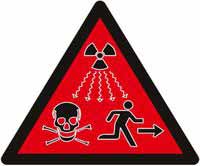 The 1986 nuclear accident at Chernobyl in Ukraine deepened the understanding of internal exposure. When thyroid cancer surged among children there, it was traced to contaminated cows’ milk they had consumed. ..
Since 2006, about 300 hibakusha [in Japan] have won in 30 class-action suits nationwide. In many, judges ruled “early entrants” should also get benefits. In effect, this was the first official acknowledgment that internal exposure could cause health problems, given that these people weren’t exposed to the blasts, but to later fallout.
Discovery of radiation in autumn rice crops from Fukushima has put people on alert. …..
Extended low-level exposure might actually be more hazardous than a one-time blast if a brief, high dose just kills cells, whereas internal exposure could damage them even at low levels, ultimately causing cancer.
 Past Haunts Tally of Japan’s Nuke Crisis, WSJ By YUKA HAYASHI, 23 Dec 11 KASHIWA, Japan—The struggle to understand the health consequences of the Fukushima Daiichi nuclear meltdown carries an eerie echo of Japan’s past: The nation is still debating who is a victim of the atomic bombs that destroyed Hiroshima and Nagasaki in World War II.
On Wednesday, in the latest in a series of high-profile lawsuits, four of five people who were exposed to radiation from the bombings—but weren’t present at the actual blasts—won official recognition as victims. Until recent years, Japan held that only people who experienced the actual blasts at close range were victims, because secondary radiation posed negligible danger.
This debate resonates today because many potential victims of the Fukushima disaster will have received only secondary radiation, for instance from eating tainted food or inhaling dust. Continue reading
Mothers are turning out to be a threat to the nuclear industry’s future
The leadership of women in civic movements is also unprecedented. Mothers have been leading the demonstrations, with many of them coming out for the first time to gain sympathy and support for their campaign to prevent exposing children to the dangers of radiation…..Mothers Rise Against Nuclear Power , IPS News, By Suvendrini Kakuchi TOKYO, Dec 22, 2011 – Japan’s nuclear power industry, which once ignored opposition, now finds its existence threatened by women angered by official opaqueness on radiation from the Fukushima Daiichi nuclear plant after it was struck by an earthquake- driven tsunami on Mar. 11.
“Mothers are at the forefront of various grassroots movements that are working together to stop the operation of all nuclear plants in Japan from 2012,” Aileen Miyoko Smith, head of Green Action, a non- governmental organisation (NGO) that promotes renewable energy told IPS. Continue reading
Japan’s coverup of public health risk from radioactive fallout
Public health fallout from Japanese quake, CMAJ, Lauren Vogel, 22 Dec 11, A “culture of coverup” and inadequate cleanup efforts have combined to leave Japanese people exposed to “unconscionable” health risks nine months after last year’s meltdown of nuclear reactors at the Fukushima Dai-ichi power plant, health experts say.
Although the Japanese government has declared the plant virtually stable, some experts are calling for evacuation of people from a wider area, which they say is contaminated with radioactive fallout.
They’re also calling for the Japanese government to reinstate internationally-approved radiation exposure limits for members of the public and are slagging government officials for “extreme lack of transparent, timely and comprehensive communication.” Continue reading
“cold shutdown” – incorrect words to hide the truth on Fukushima
News of a “cold shutdown” sounds like a PR smokescreen.
Redefining “Cold shutdown” doesn’t hide the truth about Fukushima Greenpeace, by Justin McKeating – December 20, 2011 The Japanese authorities stated last Friday that Fukushima is in a state of “cold shutdown. This is not true. At first glance, the announcement that the stricken nuclear reactors are now “stable” sounds like some rare good news from the disaster zone. Not at all. As we all know, first impressions can be deceptive.
The industry definition of “cold shutdown” means that the temperature inside a nuclear reactor has stabilized below 95℃ from the hellish temperatures of the nuclear fission process. In the case of Fukushima, this suggests the crisis is over. Nothing could be further from the truth.
In fact, the Japanese authorities have cheated by redefining “cold shutdown” to suit the situation at Fukushima. Continue reading
Japanese taxpayers to take over Tepco Electric Power Company
Japan to take over two thirds stake in Tepco: report (Reuters) by Nobuhiro Kubo and James Topham; Editing by Edwina Gibbs, 21 Dec 11– The Japanese government plans to take a stake of more than two-thirds in Tokyo Electric Power Co (9501.T) in a de facto nationalization of the operator of the crippled Fukushima nuclear power plant, the Yomiuri newspaper said on Wednesday. Continue reading
Death of Kim Jong Il raises fears about North Korea’s nuclear arsenal
Pyongyang’s Neighbors Worry Over Nuclear Arms, WSJ, 20 Dec 11 By KEITH JOHNSON WASHINGTON—For years, the biggest questions surrounding North Korea have involved the isolated country’s nuclear devices and its missiles, some of which could reach Alaska.
How the country’s leadership succession will unfold in the aftermath of dictator Kim Jong Il’s death—and what that means for North Korea’s huge military and its nuclear arsenal—has now emerged in sharp relief. Continue reading
No confidence in safety of Taiwan’s new nuclear plant
Even though it is not yet operational, the plant had already been declared by the World Nuclear Association as one of the most dangerous in the world,
NGOs have no confidence in safety of nuclear plant, Taipei Times, 20 Dec 11 TIME IS TICKING:One NGO director said solutions for several flaws at the Fourth Nuclear Power Plant would be useless unless they were implemented immediately By Shelley Shan Non-governmental organizations (NGO) supervising the construction and operation of the Fourth Nuclear Power Plant said they would issue a statement of no-confidence in reaction to a safety
report, to be submitted by Taiwan Power Corp (Taipower) today, which fails to tackle structural issues. Continue reading
1 This Month
23-25 October – on Zoom – World BEYOND War’s annual global conferenc


Shut down the radiation-damaged Heysham nuclear reactors now
To see nuclear-related stories in greater depth and intensity – go to https://nuclearinformation.wordpress.com

Say No to NASA’s Reckless Nuclear Reactor on the Moon
Say No to NASA’s Reckless Nuclear Reactor on the Moon

-
Archives
- October 2026 (219)
- September 2026 (339)
- August 2026 (330)
- July 2026 (355)
- June 2026 (287)
- May 2026 (306)
- April 2026 (356)
- March 2026 (251)
- February 2026 (267)
- January 2026 (308)
- December 2025 (358)
- November 2025 (359)
-
Categories
- 1
- 1 NUCLEAR ISSUES
- business and costs
- climate change
- culture and arts
- ENERGY
- environment
- health
- history
- indigenous issues
- Legal
- marketing of nuclear
- media
- opposition to nuclear
- PERSONAL STORIES
- politics
- politics international
- Religion and ethics
- safety
- secrets,lies and civil liberties
- spinbuster
- technology
- Uranium
- wastes
- weapons and war
- Women
- 2 WORLD
- ACTION
- AFRICA
- Atrocities
- AUSTRALIA
- Christina's notes
- Christina's themes
- culture and arts
- Events
- Fuk 2022
- Fuk 2023
- Fukushima 2017
- Fukushima 2018
- fukushima 2019
- Fukushima 2020
- Fukushima 2021
- general
- global warming
- Humour (God we need it)
- Nuclear
- RARE EARTHS
- Reference
- resources – print
- Resources -audiovicual
- Weekly Newsletter
- World
- World Nuclear
- YouTube
-
RSS
Entries RSS
Comments RSS

