Japan’s Tsuruga nuclear plant over an active earthquake fault

 Fault under Tsuruga nuclear plant could trigger M7.4 quake: research TOKYO Mainichi Daily News, 6 March 12, (Kyodo) — An active fault running under the Nos. 1 and 2 reactors at Japan Atomic Power Co.’s Tsuruga nuclear plant in Fukui Prefecture is at least 35 kilometers long and could trigger an earthquake with a magnitude of around 7.4, much higher than previously anticipated, a team of government-affiliated researchers said Monday. Continue reading
Fukushima to get off shore wind farm
 Mixed Greens: Offshore wind for Fukushima REnew economy, By Sophie Vorrath 7 March 2012 Almost one year after an earthquake and tsunami hit Fukushima and sent three out of six of its nuclear reactors into meltdown, the Japanese government has announced plans to install two Mitsubishi Heavy 7MW turbines, and a 2MW turbine made by Fuji Heavy, at a floating wind farm off the coast of the devastated prefecture. Recharge News reports that the estimated ¥12.5 billion project is part of a government plan to kick-start the country’s offshore wind sector and rejuvenate the Fukushima region. Tokyo has flagged plans to install 1GW of offshore wind power in the Fukushima region, and Japan’s Wind Power Association estimates potential for 519GW of floating offshore wind capacity in Japan. “The Tokyo area has good potential for offshore. It’s easy to get grid connections. The Fukushima nuclear power plants will never operate again so there’s a vacant grid line there,” says Yoshinori Ueda, assistant general manager at MHI.
The floating wind farm will be located between 20-40km offshore, where ocean depths range from 100-150 metres, the average wind speed is more than 7-metres per second and wave heights are 10-15 metres. It will be built by a consortium including Japanese trading house Marubeni, MHI, Mitsubishi Corp, IHI Marine United, Mitsui Engineering & Shipbuilding, Nippon Steel, Hitachi, Furukawa Electric and Shimizu; with consultation from the University of Tokyo and Mizuho Information & Research Institute. The first phase of the project, due to be completed by March 2013, will see the installation one of Fuji Heavy’s Subaru80 2MW turbines with a four-column, semi-submarine type floater and a 66kV floating offshore substation. In the second phase, from 2013-15, Mitsubishi Heavy will install two of its new 7MW turbines, with a three-column, semi-submarine type floater.
Mitsubishi Heavy’s 7MW turbine, known as the ‘SeaAngel’ and developed with about ¥5 billion in backing from the Japanese government, uses a hydraulic transmission system to eliminate the need for a gearbox. The first prototype is set to be installed onshore in the UK next year, ahead of the Fukushima offshore project…. http://reneweconomy.com.au/2012/mixed-greens-offshore-wind-for-fukushima-64769
Malaysia’s weaker environmental laws led Australian company to set up rare earths plant there
ANAWA and EDO strongly believed that Lynas had chosen to move its operations to Malaysia because of the heavy metals and radioactive waste involved in the processing. “We believe Lynas picked Malaysia to save money and enable it to operate under less stringent laws,”
“The biggest concerns about the processing are the storage and waste management issues which are made more difficult in Gebeng which we understand to be wetlands.”
“There is no way it could operate the way it is in Malaysia over here,” he said. “Australia’s laws are much more stringent.”


 Aussie NGO: Gebeng not part of Lynas’ blueprint, Free Malaysia Today News, Stephanie Sta Maria | March 6, 2012 Anti Nuclear Alliance of Western Australia (ANAWA) claims that Lynas’ massive changes to its plan has resulted in its plant being built in Gebeng where laws are looser and labour is cheaper. PETALING JAYA: The Anti-Nuclear Alliance of Western Australia (ANAWA) has revealed that Lynas Corporation Ltd was supposed to build its plant in Western Australia and not Malaysia. Continue reading
Confusion about Australian company Lynas rare earths and radioactive waste in Malaysia
 No decision yet on sending Lynas waste to Western Australia The Star, Malaysia, KUALA LUMPUR, 7 March 12, : The Cabinet has not decided on a proposal asking Lynas Corp rare earth waste material to be sent back to Western Australia, said Green Technology, Energy and Water Minister Datuk Seri Peter Chin.
He said Western Australian Minister for Mines and Petroleum Norman Moore was entitled to his view that Australia would not accept responsibility for any waste produced by Lynas Malaysia Sdn Bhd. “Our Cabinet has not made a decision on the matter. Wait for it to be announced,” he said after the launch of the National Energy Security Conference 2012 yesterday.
Moore told the Australian parliament that the Western Australian government does not support the import and storage of other countries’ radioactive waste.
PKR MP Fuziah Salleh had proposed that the rare earth waste material for Lynas be returned to Australia. ….http://thestar.com.my/news/story.asp?file=/2012/2/29/nation/10825847&sec=nation
Lynas to send residue abroad if no suitable disposal site found in Malaysia The Star, Malaysia, By ONG HAN SEAN KUANTAN, March 6, 2012:Lynas Corp has already submitted a letter of undertaking to send its rare earth processing residue abroad if it cannot find a suitable waste disposal site in Malaysia. International Trade and Industry Minister Datuk Seri Mustapa Mohamed said the move was taken as an assurance to the people’s psychological and emotional safety.“Even though the Government is satisfied there will be no radioactive residue produced during the plant’s operation, we have ordered Lynas to guarantee and plan the provision of a permanent waste disposal facility far from human population as recommended by the International Atomic Energy Agency.
“Failing which, Lynas has already expressed willingness to take the residue out of Malaysia,” said Mustapa in a joint statement with Pahang Mentri Besar Datuk Seri Adnan Yaakob here Tuesday.
He said the Government had also announced the setting up of an independent monitoring panel to audit the plant’s construction as an additional measure. On the residue’s radiation monitoring, Mustapa said the plant had yet to start operation and the Government had not appoint independent experts to analyse the radiation level of the residues produced by the
plant….. http://thestar.com.my/news/story.asp?file=/2012/3/6/nation/20120306154934&sec=nation
 Shut down or there’ll be another anti-Lynas rally, Govt told http://thestar.com.my/news/story.asp?file=/2012/2/28/nation/10818800&sec=nation The Star, Malaysia, 6 March 12, KUANTAN: Another anti-Lynas rally will be held if the Government does not shut down the rare earth refinery project in Gebeng, said the Himpunan Hijau committee which organised the first protest on Sunday.
Its chairman Wong Tack said he was disappointed with Prime Minister Datuk Seri Najib Tun Razak’s statement that the Government had to look for a solution that would be acceptable to the people without affecting investments. “We cannot accept his statement. Therefore, the Himpunan Hijau 3.0 rally is on – unless the project is cancelled,” Wong said at a press conference yesterday. The organisers had called on the Government to respond within 24 hours after the Himpunan Hijau 2.0 rally ended two days ago. Najib had said Lynas was looking for an uninhabited location to store the waste material from the plant, although it was scientifically safe. Wong said the committee would discuss with Bersih chairman Datuk Ambiga Sreenevasan on the possibility of holding a joint rally soon.
$100 dollars a day: workers face radiation risks at Fukushima nuclear plant
 it’s really important to reduce the amount of radiation that each individual gets and to do that, we need to bring in more people.” Bringing in more workers is going to be hard. Already, 167 workers have exceeded their lifetime radiation exposure limit of 100 milliseverts.
Safety fears at Fukushima Daiichi nuclear plant 03/05/2012 By majiroxnews TOKYO — Low pay and overwork could trigger a shortage of workers at Japan’s Fukushima Daiichi nuclear power plant. The Tokyo Occupational Safety and Health Center warned this week of thesedangers – with workers at the crippled site earning as little as 100 dollars a day.
After the March 11, 2011, earthquake and tsunami crippled Japan’s Fukushima Daiichi nuclear power plant, conditions of the workers seem to be plummeting. Continue reading
Muslims, Christians join other religions in opposing Kudankulam nuclear powerr

 Religions unite in fight against nuclear plant, TNN | Mar 5, 2012, TIRUNELVELI: In a strong message that all religions are united in the fight against the Kudankulam Nuclear Power Plant (KKNPP), protesters offered special prayers at the Viswamithrar temple situated at Vijayapathi village near Kudankulam, on Sunday.
About 250 villagers, both men and women fasted from Friday onwards to prepare themselves for the ritual of carrying milk pots to the temple. At the break of day on Sunday, people from coastal villages like Chettikulam, Kudankulam, Idinthakarai, Vairavikinaru, Avudayapuram, Thillainagar, Koothankuli gathered at the Pathrakaliamman temple at Kudankulam where special prayers were offered before commencing the rally. After the prayers, 207 women carried the milk pots and went on a rally through Kudankulam, Vairavikinaru, Idinthakarai, Mela Vijayapathi and Keela Vijayapathi to reach the Viswamithrar temple situated on the sea shore at Vijayapathi village.
The rally, which started from Kudankulam at 6am, reached the temple by 7.15am after which special poojas were performed. The villagers, who hailed from all religious denominations, received the ‘prasad’ at the temple and prayed that the KKNPP will be abandoned…..
“People from every religion, including Muslims from Keela Vijayapathi participated in the ceremony and offered prayers at the temple. Among the 207 milk pots, 13 of them were carried by Christians from Idinthakarai. We are together in our fight against the nuclear power plant that will endanger our lives,” said Peter Milton from Idinthakarai, who is also a member of the People’s Movement Against Nuclear Energy (PMANE)…. http://timesofindia.indiatimes.com/city/madurai/Religions-unite-in-fight-against-nuclear-plant/articleshow/12140823.cms
Japan’s radioactive cleanup, a mammoth and uncertain task that will take decades
 The waste would remain in the longer-term storage for 30 years, until half the radioactive cesium breaks down. Then it would still have to be treated and compacted using technology that hasn’t been fully developed yet before being buried deep underground in enclosed
containers. ….
Japan cleans up radiation zone, unsure of success, The News, March 06, 2012 FUKUSHIMA, Japan: Workers in rubber boots chip at the frozen ground, scraping until they’ve removed the top 2 inches (5 centimeters) of radioactive soil from the yard of a single home. Total amount of waste gathered: roughly 60 tons.
One down, tens of thousands to go. Continue reading
Where to put over 100,000 tons of radioactive waste materials?
6,800 tons of radiation-tainted rice straw left lying in 8 prefectures, Mainichi Daily News, 5 Mar 12, http://mdn.mainichi.jp/mdnnews/news/20120303p2a00m0na010000c.html Some 6,800 metric tons of rice straw contaminated with radioactive substances leaked from the crippled Fukushima No. 1 Nuclear Power Plant remains in eight prefectures with no immediate prospect of disposal, the Mainichi has learned.
Moreover, sludge generated from radiation-contaminated waste water as well as ash tainted with radioactive materials amounts to some 97,000 tons in 12 prefectures — 3.6 times the figure as of July last year, according to the Land, Infrastructure, Transport and Tourism Ministry. Continue reading
Pakistan fires nuclear capable missile

 Pakistan military says nuclear-capable missile test-fired, Can deliver warheads with high accuracy, Gulf News, IANS March 6, 2012, Islamabad: Pakistan on Monday successfully test-fired a nuclear-capable short-range surface-to-surface ballistic missile, the military said.
The Hatf-2 missile can travel up to 180km and deliver nuclear as well as conventional warheads with high accuracy, the statement from Inter-Services Public Relations said.
The test is part of the process of validation of a land-based ballistic missile system, it said.
“The test provides an operational level capability to Pakistan’s strategic forces, in addition to the strategic and technical level capability which Pakistan already possesses,” Xinhua quoted the military as saying…. http://gulfnews.com/news/world/pakistan/pakistan-military-says-nuclear-capable-missile-test-fired-1.990638
$67 billion lawsuit against executives of nuclear company Tepco
 Shareholders to sue Tepco execs for $US67b, SMH, March 6, 2012, Shareholders of Tokyo Electric Power Co Inc, operator of the crippled Fukushima nuclear plant in northeast Japan, are suing the utility’s executives for a record 5.5 trillion yen ($US67.4 billion) in compensation, lawyers said….
. In the biggest claim of its kind in Japan, 42 shareholders filed a lawsuit in the Tokyo District Court on Monday accusing 27 current and former Tepco directors of ignoring multiple warnings of a possible tsunami and of failing to prepare for a severe accident, lawyers for the shareholders said in a statement.
They want the executives to pay damages to Tepco, which would then use the money to compensate those affected by the disaster.
There is deep public anger over Tepco’s handling of the crisis and the perceived arrogance of top management, including underplaying the seriousness of the disaster in its early stages and delays in compensating those forced to leave their homes. Government officials
have walked a tightrope between that taxpayer anger and keeping afloat a firm that provides electricity to 45 million people in Japan.
Japan’s trade minister last month approved nearly $US9 billion in additional support for Tepco to help compensate victims of the crisis, but said the government would not go ahead with a plan to inject more money into the utility unless it had more say in its management.
“By seeking to hold individuals responsible, we want to correct the collective and systemic irresponsibility in the nuclear industry,” Hiroyuki Kawai, one of the lawyers, told a news conference.
Kawai said the record compensation was based on calculations by a government-appointed experts’ panel of what Tepco might have to pay to victims and businesses. The company has forecast an annual net loss of 695 billion yen……. http://www.smh.com.au/business/world-business/shareholders-to-sue-tepco-execs-for-us67b-20120306-1ueup.html#ixzz1oN2tudjN
Solar industry’s bright prospects in Japan
 New Tariff, Nuclear Halt May Fuel Japan Solar Demand By MARI IWATA, March 5, 2012, TOKYO—Japan may become a bright spot for the solar industry due to regulatory changes and its nuclear power crisis, which equipment makers from home and abroad hope will help offset a profit outlook clouded by oversupply, falling prices and shrinking demand elsewhere.
A new feed-in tariff designed to boost industrial use of renewable energy will come into force this summer, with the government likely to recommend Tuesday rates that utilities should pay for renewable energy-sourced electricity and periods during which they should buy it.
Around the same time, the last of the country’s fleet of 54 reactors will be shut pending government decisions on Japan’s nuclear future.
The new feed-in tariff and the vacuum left by idled nuclear capacity are contributing factors to a European Photovoltaic Industry Association forecast of a 50% rise in Japanese solar panel demand in 2012, to 1.5 gigawatts.
Several foreign solar panel and component makers have already set up shop in Japan, putting them head-to-head with big local producers such as Sharp Corp. and Kyocera Corp., who have benefited from local consumers’ faith in locally made products.Kyocera said Monday that it and partner Softbank have been selected by Kyoto City to build and operate two 2.1-megawatt utility-scale solar power plants that together will be able to supply enough power for 1,000 households. They will be the largest such installations in the prefecture, and are due to be operational by July, when the new feed-in tariff takes effect.
SB Energy, a renewable energy unit of Softbank Corp., said separately Monday that it will build two solar farms, one in Gumma and the other in Kyoto…. http://online.wsj.com/article/SB10001424052970204276304577262781511394776.html
Japan’s March 11 radiation forecast was too scary to be released
Ministry hid data on fallout from public,SPEEDI forecast judged too chilling to be released: internal memo, Japan Times, 5 March 12, Kyodo Former science minister Yoshiaki Takaki and other top ministry officials decided to withhold radiation forecast data from the public four days after the March 11 disasters triggered the nuclear crisis, an internal document shows.
Takaki, lawmakers serving as top ministry officials and senior bureaucrats decided March 15 to withhold data about the predicted spread of radioactivity, including an assumption that all radioactive material would be discharged from the crippled reactors’ cores at the Fukushima No. 1 nuclear plant.
The prediction of the spread of radioactive substances, compiled through the System for Prediction of Environmental Emergency Dose Information (SPEEDI), “could by no means be released to the public,” the document, dated March 19, shows….. http://www.japantimes.co.jp/text/nn20120304a1.html
Malaysia needs an independent panel to scrutinise Lynas’ radioactive wastes
’Let independent panel monitor Lynas’, New Straits Times, 05 March 2012, KUALA LUMPUR: The government has been urged to hire independent monitoring bodies to publish the radiation readings of residue to be disposed by Lynas Corporation. Environmental Protection Society Malaysia adviser Gurmit Singh said this was important as proof that the radiation level was safe as the government had claimed…
…. “As long as the research and findings by the government are not published, there is always going to be concern,” he told the New Straits Times when contacted yesterday. Citing the now-closed Asian Rare Earth (ARE) project in Bukit Merah, Perak, as an example, he urged the government to reconsider its decision to continue with the project.
“Shifting the disposal site is not going to address bigger problems that will occur later in the future, the site might be shifted far from where people live but there is still the eco-system and animals could also be affected. ”Radiation is not something that can be immediately seen or felt, hence the phobia by the public.”
On Friday, Prime Minister Datuk Seri Najib Razak said the government had decided to ask Lynas Corporation to dispose of residue from its rare earth processing plant to a dedicated site far from residential areas.
Lynas ordered to relocate its proposed radioactive waste site
Malaysia Upholds Decision on Lynas; but Wants Relocation of Residue Disposal Facility, International Business Times, By Esther Tanquintic-Misa | March 5, 2012 The Malaysian government continues to uphold Australian miner Lynas Corp., and its beleaguered Lynas Advanced Materials Plant (LAMP) after it directed the Australian company to relocate its earlier proposed residue disposal facility to a site that is far from the LAMP location in Gebeng, Kuantan province.
Malaysian news agencies reported over the weekend it was Malaysian Prime Minister Datuk Seri Najib Tun Razak who specifically ordered the rare earths miner to locate an alternative location for its residue disposal facility that is away from Gebeng and its residential communities.
Suffice to say, this could mean Lynas Corp.’s assurance of a winning edge over its detractors who have turned the business investment into a political mill. The Lynas plant would remain at its present location, Mr Najib was quoted as saying by www.asiaone.com. The new location of the residue disposal facility would be announced later……
On Feb. 17, Gebeng residents filed a case against Lynas Corp., as well as an application for leave for judicial review, over the temporary operating licence it received from the AELB and the Science, Technology and Innovation Ministry (Mosti) issued end January.
The High Court Apellate and Special Powers Judge Justice Rohana Yusuf had scheduled Mar. 20 as initial hearing.
Tighter radiation limits for food in Japan
Under the revised regulations, the upper limit on foods such as meat, vegetables and fish will be set at 100 becquerels per kilogram. The limit will be 50 becquerels per kg for milk and infant food and a maximum of 10 becquerels for drinking water.
At present, the levels are set at 500 becquerels per kg for the majority of foodstuffs and 200 becquerels for milk, dairy produce and water. There is presently no specific figure for infant food. Continue reading
1 This Month

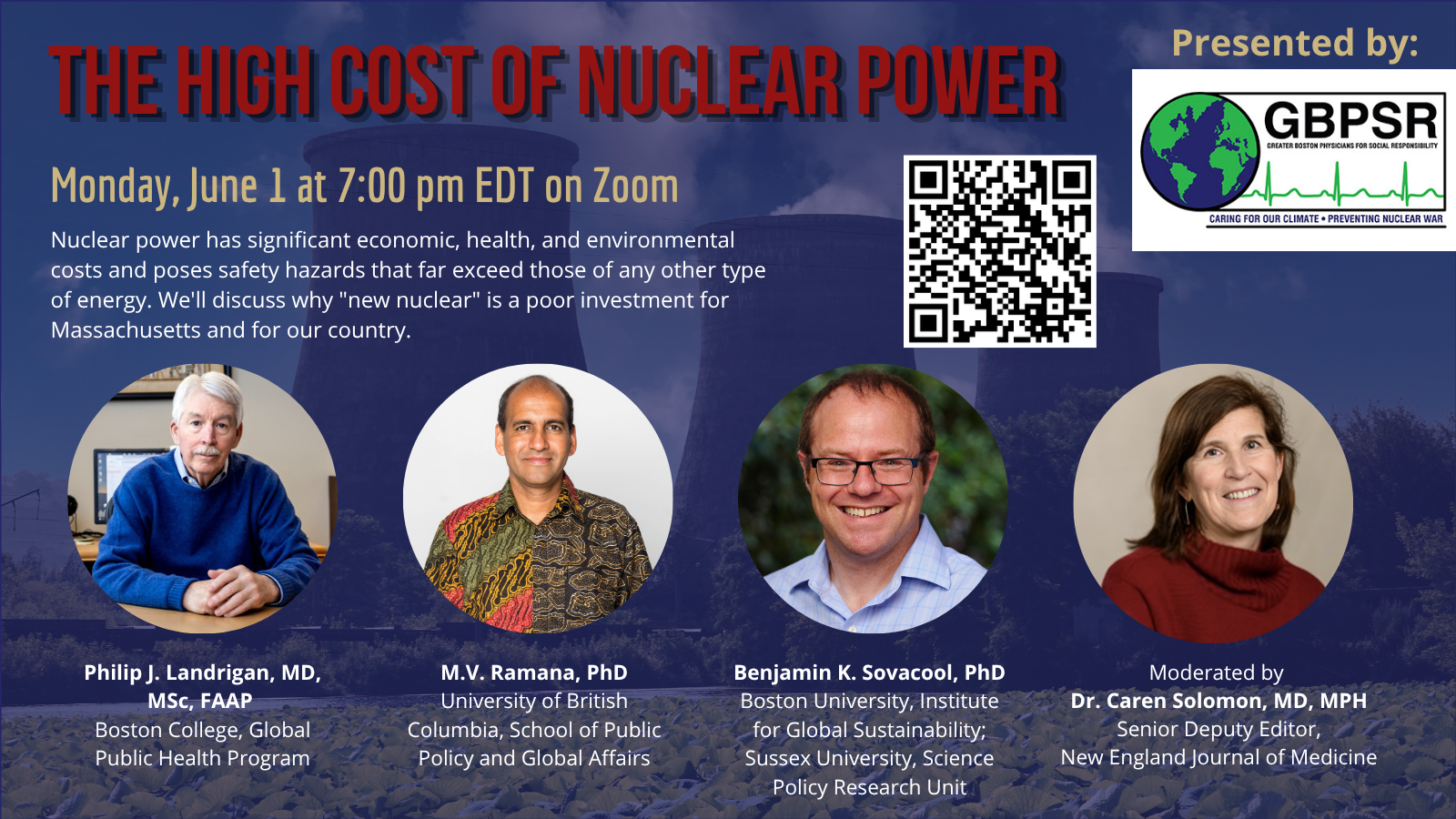
1 June Webinar – The High Cost of Nuclear Power – Register


of the week– Nuclear Reactor Information Task Force
To see nuclear-related stories in greater depth and intensity – go to https://nuclearinformation.wordpress.com
-
Archives
- May 2026 (255)
- April 2026 (356)
- March 2026 (251)
- February 2026 (268)
- January 2026 (308)
- December 2025 (358)
- November 2025 (359)
- October 2025 (376)
- September 2025 (257)
- August 2025 (319)
- July 2025 (230)
- June 2025 (348)
-
Categories
- 1
- 1 NUCLEAR ISSUES
- business and costs
- climate change
- culture and arts
- ENERGY
- environment
- health
- history
- indigenous issues
- Legal
- marketing of nuclear
- media
- opposition to nuclear
- PERSONAL STORIES
- politics
- politics international
- Religion and ethics
- safety
- secrets,lies and civil liberties
- spinbuster
- technology
- Uranium
- wastes
- weapons and war
- Women
- 2 WORLD
- ACTION
- AFRICA
- Atrocities
- AUSTRALIA
- Christina's notes
- Christina's themes
- culture and arts
- Events
- Fuk 2022
- Fuk 2023
- Fukushima 2017
- Fukushima 2018
- fukushima 2019
- Fukushima 2020
- Fukushima 2021
- general
- global warming
- Humour (God we need it)
- Nuclear
- RARE EARTHS
- Reference
- resources – print
- Resources -audiovicual
- Weekly Newsletter
- World
- World Nuclear
- YouTube
-
RSS
Entries RSS
Comments RSS
 nuclear-news