India’s nuclear bodies trample on civil liberties and natural justice
the DAE and NPCIL habitually behave as if they were a law unto themselves. … pre-emptive land acquisition, like imposition of unsafe projects on an unwilling people, violates natural justice. That’s nuclear power for you.

 Nuclear power and natural justice, By Praful Bidwai Apr 04 2012MyDigitalFC.com “…. India’s department of atomic energy (DAE), and its subsidiary, Nuclear Power Corporation of India (NPCIL), are blithely proceeding with a massive expansion of nuclear power generation even as they seek special exemptions under the Right to Information (RTI) Act.
They have proposed two amendments to the Act, which exempt sensitive information on radiation safety and commercially-sensitive information on technology-holders, and to
insulate the RTI Act from bodies to be created under the Nuclear Safety Regulatory Authority Bill to oversee nuclear facilities established for strategic and national defence purposes. Mercifully, central information commissioner Shailesh Gandhi has forcefully rejected these proposals.
Even more pernicious are the nuclear establishment’s moves to bypass or violate safety procedures, Continue reading
A really INDEPENDENT radiation expert in Fukushima
Radiation expert takes on red tape in disaster zone, Japan Times, 5 April 12, Kyodo Shinzo Kimura, a radiation hygiene expert combating the nuclear contamination in Fukushima, is a man of action who stops at nothing to accomplish his mission Continue reading
Japan’s nuclear utilities: debts piling up, banks nervous about funding
the latest setback over Tepco’s restructuring suggests even the mega banks are getting cold feet over providing unsecured loans to their utility clients.
Lights dim for Japan’s nuclear utilities, Reuters, By Mia Stubbs TOKYO, April 4 (IFR) – As the future of Tokyo Electric Power remains in question, concerns are building over how other nuclear power operating electric power companies (Epcos) will fund themselves going forward. Continue reading
Nuclear power in China has a doubtful future
 Prospects for Nuclear Power in 2012, The Energy Report, 5 April 12, “…….China has dominated new nuclear plant orders in the past few years, accounting for 25 out of the 38 reactors on which construction started worldwide between 2008 and 2010. Six of these units were for Gen III+ designs, four AP1000s and two EPRs. Almost all the others used a design imported from France in the 1980s, which in turn had been licensed from Westinghouse in the early 1970s. This design, the CPR1000, is showing its age and there was an expectation, even before Fukushima, that the AP1000 would replace it. This would have been a huge boost to the AP1000, giving it the volume of orders that might have allowed costs to come down and for teething problems to be solved. The EPR, by contrast, appears to have no prospect of further orders in China.
However, there were signs that the strain of the rapid pace of construction was beginning to show. In 2011, no new starts were made, compared with 10 in 2010. Fukushima explains this to a degree, but some might have been expected in the first three months of 2011 before disaster struck. The reason behind the slowdown is the high cost of the AP1000. The large Chinese utilities appear to be looking at other options.
There is now talk of pursuing indigenous advanced designs developed from the CPR1000 as well as Small Modular Reactors (SMRs). China has always been adept at convincing nuclear suppliers that there was a great future for their particular technology in China. It is unclear whether talk of SMRs and new advanced designs will go any further. China is looking much less committed to nuclear power than it was a year ago.
There is also speculation that China may enter the export market on the entirely unsupported assumptions that its reactors will be cheap and that it can successfully build them away from home soil. South Africa is particularly enthusiastic about Chinese designs, but whether this enthusiasm can be turned into orders remains to be seen.
The reality is that China needs nuclear power much less than the nuclear industry needs China. ….” http://www.theenergyreport.com/pub/na/12441
Nuclear corporations’ funding to Japan’s nuclear agency damages its credibility

 Nuclear agency under fire for donations from industry body, Japan Times, 4 April 12, Kyodo Donations to the Japan Atomic Energy Agency from an electric utility industry federation and 11 companies in the industry have raised the possibility of a conflict of interest. The federation and 11 companies, including electric utilities and firms constructing and operating nuclear power plants, donated about ¥250 million over the past four years until Sunday, the last day of fiscal 2011, agency officials said.
Because the agency dispatches 10 staff members to a 62-strong examination committee at the government’s Nuclear Safety Commission, which oversees construction and modification of nuclear plants nationwide, the “donations could make the examinations a dead letter,” according to critics. Continue reading
Democracy losing out in South Korea, as govt stifles anti nuclear voices
nuclear energy is not considered a safe, clean or sustainable energy source by the UN’s Intergovernmental Panel on Climate Change. It is, therefore, not included in the UN’s Clean Development Mechanism.
the government declared it would spend an additional 10 billion won to promote nuclear energy
Greenpeace will continue to reach out to the people of Korea, despite the fovernment’s attempt to quash public debate and discontent over its nuclear plans

 Nuclear Power and Democracy Don’t Mix , HUFFINGTON POST, 3 April 12, Kumi NaidooExecutive Director, Greenpeace International,On Monday South Korea deported three senior Greenpeace staff, known for their role in our campaign
against that country’s nuclear expansion plans. This is just the latest proof that nuclear power and democracy do not mix. It’s the latest attack on freedom of speech from an industry forged in the furnace of military secrecy, which has over the last 60 years left in
it’s a wake a legacy of lies, cover-ups and broken promises.
What is it the industry and its government sponsors fear? What do they hope to achieve by excluding peaceful people from Greenpeace? What do they have to hide? What is it that they do not wish the people of Korea to hear?…. Continue reading
Japan postponing decision on restarting nuclear reactors
 Japan holds off on decision to restart reactors
* PM wants Fukushima accident taken into account on safety standard
* Safety concerns run deep, local govts want new measures
By Risa Maeda, TOKYO, April 3 (Reuters) – Japan needs more time to decide whether to restart two offline nuclear reactors, the trade minister said on Tuesday, as concerns about a summer power crunch vie with safety worries in the wake of last year’s Fukushima crisis.
Prime Minister Yoshihiko Noda will not make any immediate decision on a restart date, Continue reading
South Korea deported anti nuclear Greenpeace staff
Greenpeace deportation. Korea Herald, 3 April 12, It was unnecessary and excessive for the immigration authorities to bar the entry of three Greenpeace staff at Incheon International Airport on Monday and send them back to Hong Kong. An Immigration Service officer said the three members of a four-man group were detained at the airport at the request of a relevant government office which cited “national interest reasons.” Continue reading
84% of Japanese do not believe in safety of Japan’s nuclear reactors
84 percent say government stress tests for nuclear plant restarts inadequate: survey Mainichi Daily News 2 April 12, Despite the Nuclear Safety Commission (NSC) of Japan’s conclusion that the idled Oi Nuclear Power Plant clears safety standards required for resuming operations, 84 percent of the public do not believe that the government’s safety tests are sufficient, a Mainichi opinion poll has found… Continue reading
Solar photovoltaic energy going ahead in Asia and South America
 Solar week roundup: China, Latin America pushing ahead with solar, Clean Energy, Chris Meehan, APR 02, 2012 News in the world of solar is increasingly becoming worldwide. As the U.S. imposed preliminary duties on Chinese silicon photovoltaics, the top 10 solar producers are looking to increase the Asian PV market for more sales. At the same time interest in Latin and South America is picking up as costs for solar continue to come down and costs for other energy sources go up.
In the U.S., the news is more mixed with some places embracing solar while others are trying to reduce incentives to support renewables. But even Minnesota could go 100 percent renewable at a small cost. …. South America’s largest country, Brazil, is considering legislation that could grow the amount of solar in the country.
The country is considering a national net-metering program for home and small business owners, to credit PV owners for generation. And it’s considering legislation that would slash taxes on utilities by 80 percent on electricity sourced from distributed solar generation.
The Inter-American Development Bank (IDB) increased financing for solar, renewable projects in Latin America to $736 million in 2011. That’s more than it invested over the decade between 2000 and 2010, when it invested more $663 million in renewable energy projects in Latin American and Caribbean countries. The IDB also plans to invest more than $700 million in such projects in 2012. …. http://www.cleanenergyauthority.com/solar-energy-news/solar-energy-news-week-roundup-040212/
India bumping up its nuclear weaponry
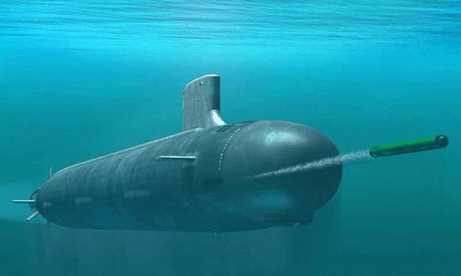 Govt to induct Russian-origin Akula II class Nerpa into the Navy, Economic Times, 4 April 12, NEW DELHI: India is all set to join the elite club of nations possessing nuclear-powered submarines with the induction of the Russian-origin ‘Nerpa’ into the Navy on Wednesday…
.. India had signed a deal worth over $ 900 million with Russia in 2004 for leasing the submarine. It was expected to be inducted a couple of years earlier, but after an accident in 2008, in which scores of Russian sailors died during trials, the delivery
schedule was shifted….
India is also working to develop arsenal for Arihant as it has already carried out more than 10 test launches ofthe K-15 missile (also known as Sagarika) in the Bay of Bengal. The
nuclear-capable ballistic missile is said to have a range of over 700
km. http://economictimes.indiatimes.com/news/politics/nation/govt-to-induct-russian-origin-akula-ii-class-nerpa-into-the-navy/articleshow/12526102.cms
Japan struggling with the idea of nuclear regulation independent of nuclear promotion
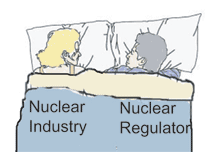 ‘Obviously, having promoters and regulators under the same roof is not desirable’
Previous investigations into the Fukushima accident have found evidence of lax supervision by NISA, cozy relations with utilities and delays in upgrading safety measures.
Japan’s new nuclear regulatory agency delayed Bloomberg, By MARI YAMAGUCHI 2 April 12, Japan’s government has failed to create a revamped nuclear regulatory agency by the promised date, April 1, amid political infighting, raising questions about its commitment to bolstering oversight in the wake of last year’s nuclear crisis. Continue reading
Seoul: agreements on non-nuclear medical isotopes the only bright spot
waste and spent fuel which are stored on an interim basis in pools of water or in casks are of the greatest concern
agreement between the U.S., France, Belgium, and the Netherlands was made to produce medical isotopes without the use of HEU by 2015.
Korea’s Nuclear Summit a Damp Squib, Asia Sentinel by Lee Byong-chul, 30 MARCH 2012 Little of significance despite the presence of the world’s most powerful leaders The Nuclear Security Summit held on March 26-27 in Seoul, has turned out to be a half-baked extravaganza that produced little of significance except for proclaiming the lofty goal of a nuclear-free world vision – while one of the world’s nuclear outlaws lurked just 65 km to the north, rattling rockets in the face of the world’s most powerful leaders. Continue reading
Cover-up of Fukushima radiation, in Japan and beyond
the core problem is that all of the world’s nuclear agencies are wholly captured by the nuclear industry … as are virtually all of the supposedly independent health agencies.
 Fukushima Radiation Plume Hit Southern and Central California, Global Research. 30 March 12, The Journal Environmental Science and Technology reports in a new study that the Fukushima radiation plume contacted North America at California “with greatest exposure in central and southern California”, and that Southern California had 2,500 Bq/kg of iodine-131 in seaweed … over 500% higher than other tests in the U.S. and Canada:
Projected paths of the radioactive atmospheric plume emanating from the Fukushima reactors, best described as airborne particles or aerosols for 131I, 137Cs, and 35S, and subsequent atmospheric monitoring showed it coming in contact with the North American continent at California, with greatest exposure in central and southern California. Government monitoring sites in Anaheim (southern California) recorded peak airborne concentrations of 131I at 1.9 pCi m−3
Anaheim is where Disneyland is located……. In addition, radioactive debris is starting to wash up on the Pacific Coast. And because the Japanese are burning radioactive materials instead of disposing of them, radioactive rain-outs will continue for some time … even on the Pacific Coast. Continue reading
Nuclear industry dead at home, but Japan tries to sell it abroad
 Japanese May Invest in U.K. Nuclear, WSJ, By SELINA WILLIAMS, 30 March 12 “……-RWE and E.ON are now seeking to sell their U.K. nuclear joint venture vehicle, named Horizon, that has two sites for new atomic power stations–at Wylfa in Wales and Oldbury in Gloucestershire in central England, as well as grid connections and around 130 employees,
including technical specialists, engineers, and project development specialists….
Japanese nuclear companies such as reactor vendors Hitachi and Toshiba Corp. and nuclear developers Mitsubishi Heavy Industries are seen by many in the nuclear industry as the most likely buyers.
Stymied at home following the Fukushima nuclear disaster last March, these companies are actively seeking new markets elsewhere and the U.K. could be a good base for expansion plans in Europe. “You could see a strong Japanese team coming in–there’s not going to
be building in Japan for the forseeable future, so growth for them can only come out of exports,” said George Borovas, a nuclear lawyer and partner at Pillsbury law firm that specializes in the energy sector…..
Stumping up the billions of pounds investment required to build a new reactor, coupled with the long lead times of construction as well as the cost overruns seen at other similar projects pose a huge challenge for any company seeking the finance, especially now in these
credit-strapped times.
1 This Month
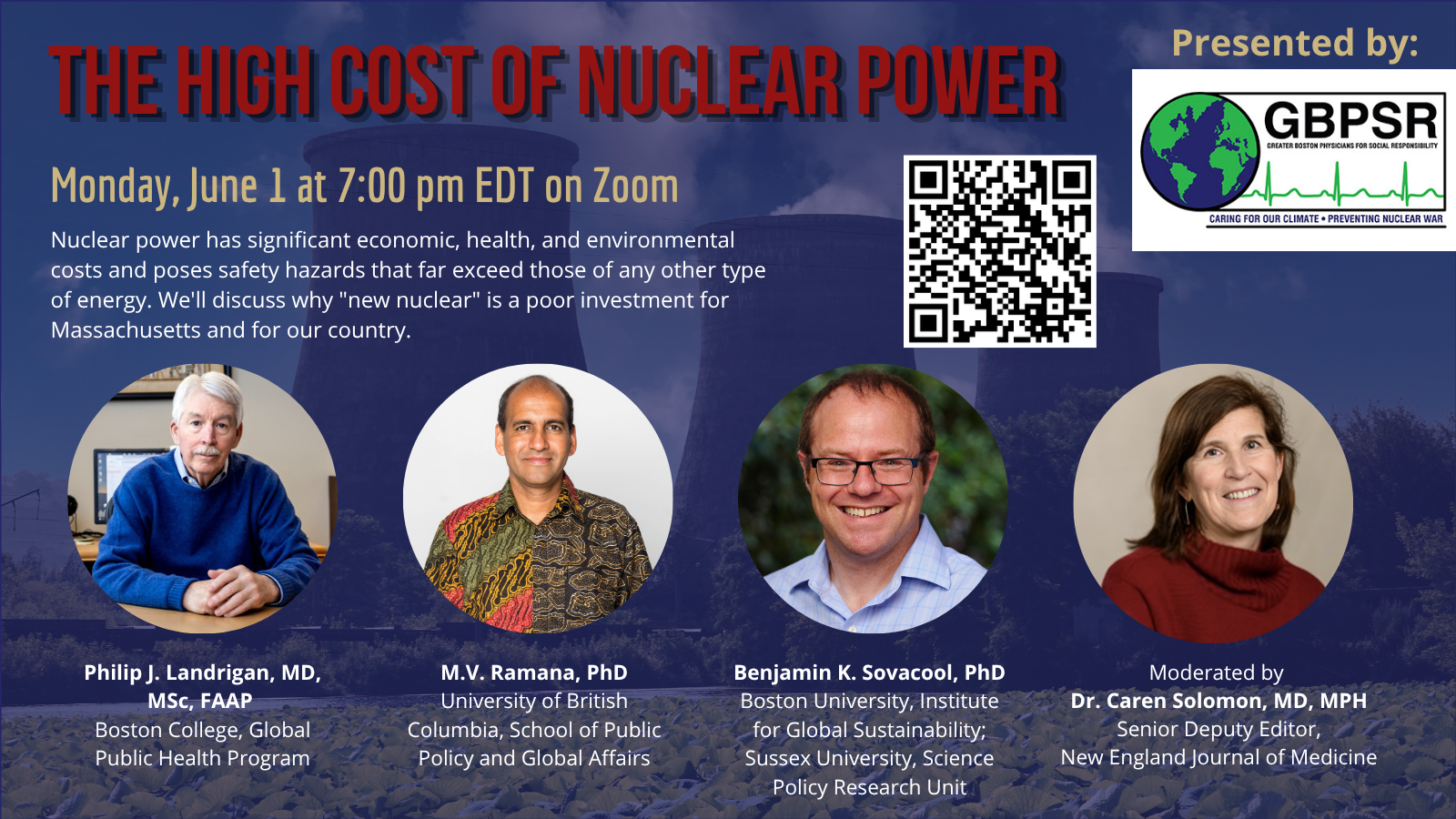
1 June Webinar – The High Cost of Nuclear Power – Register


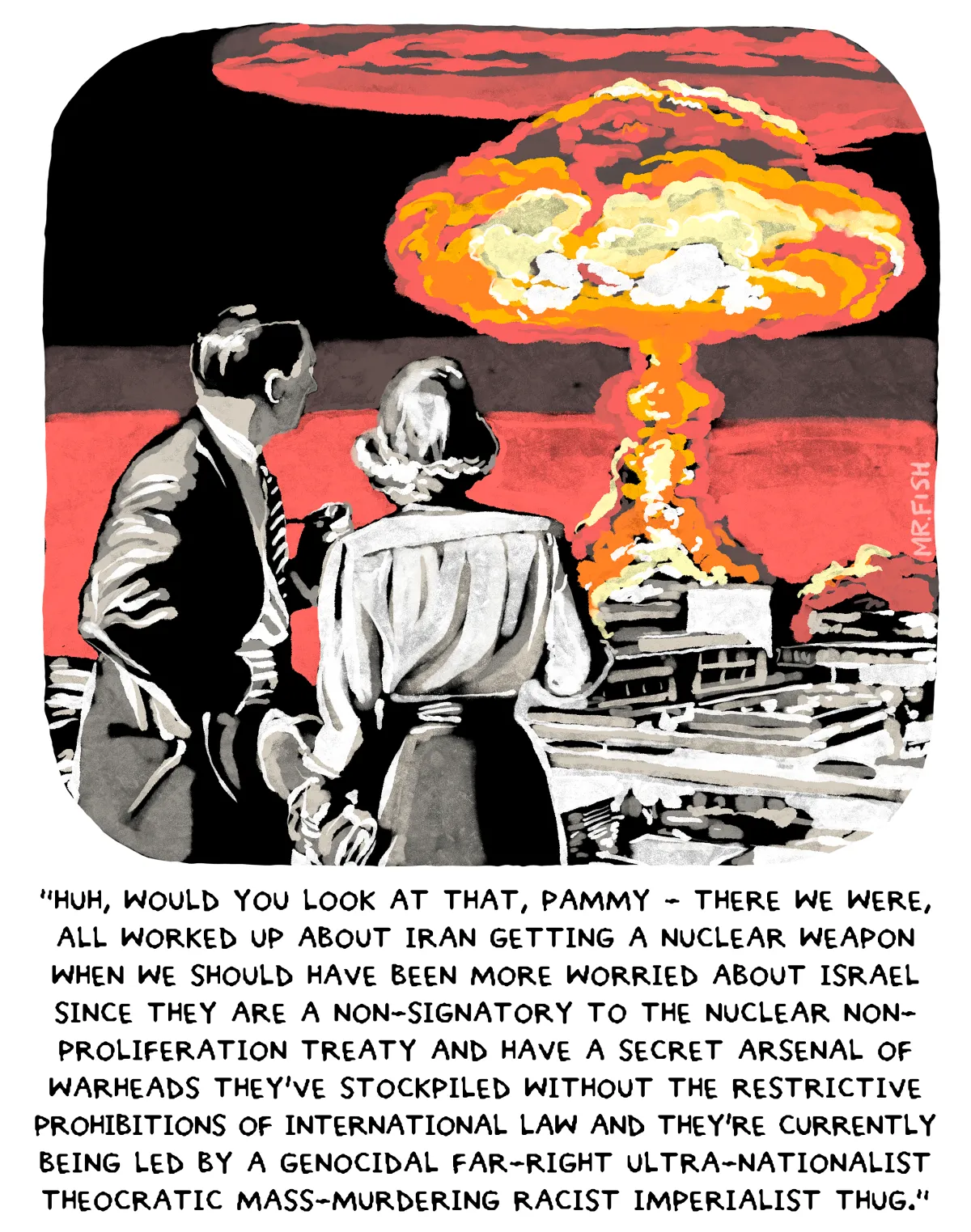
of the week– Nuclear Reactor Information Task Force
To see nuclear-related stories in greater depth and intensity – go to https://nuclearinformation.wordpress.com
-
Archives
- May 2026 (243)
- April 2026 (356)
- March 2026 (251)
- February 2026 (268)
- January 2026 (308)
- December 2025 (358)
- November 2025 (359)
- October 2025 (376)
- September 2025 (257)
- August 2025 (319)
- July 2025 (230)
- June 2025 (348)
-
Categories
- 1
- 1 NUCLEAR ISSUES
- business and costs
- climate change
- culture and arts
- ENERGY
- environment
- health
- history
- indigenous issues
- Legal
- marketing of nuclear
- media
- opposition to nuclear
- PERSONAL STORIES
- politics
- politics international
- Religion and ethics
- safety
- secrets,lies and civil liberties
- spinbuster
- technology
- Uranium
- wastes
- weapons and war
- Women
- 2 WORLD
- ACTION
- AFRICA
- Atrocities
- AUSTRALIA
- Christina's notes
- Christina's themes
- culture and arts
- Events
- Fuk 2022
- Fuk 2023
- Fukushima 2017
- Fukushima 2018
- fukushima 2019
- Fukushima 2020
- Fukushima 2021
- general
- global warming
- Humour (God we need it)
- Nuclear
- RARE EARTHS
- Reference
- resources – print
- Resources -audiovicual
- Weekly Newsletter
- World
- World Nuclear
- YouTube
-
RSS
Entries RSS
Comments RSS
 nuclear-news