Aruna Roy, India’s powerful voice against nuclear energy
 Stop new nuclear projects, Aruna Roy urges Sonia Gandhi http://timesofindia.indiatimes.com/india/Stop-new-nuclear-projects-Aruna-Roy-urges-Sonia-Gandhi/articleshow/15649860.cms TNN | Aug 25, 2012, NEW DELHI: National Advisory Councilmember Aruna Roy has asked the chairpersonSonia Gandhi to stop the installation and commission of new nuclear projects, including the one at Kudankulam.
Adding her voice to protestors at the Tamil Nadu site, Roy in a letter addressed to Sonia said, “The prime minister’s recent remarks about the liability issue related to reactors 3 and 4 at the Kudankulam nuclear power plant has brought out the lack of clarity regarding the liability issue related to reactors 1 and 2, which are to be commissioned soon.”
Roy said she had visited the site and met the people, “All of them expressed anguish and dismay at the government’s insistence on going ahead with the plant, turning a deaf ear to their legitimate concerns of safety and survival.”
She noted that “many of them had police cases against them for expressing dissent. This included charges as serious as sedition, and waging war against the state”. Continue reading
Tremendous growth in renewable energy in India
Renewable Energy As Solution And Responsibility, Huffington Post, Mohamed NasheedFormer President of the Republic of Maldives, 24 Aug 12
India’s power sector has been in the headlines for all the wrong reasons lately. Last month, technical problems in India’s over-stretched electricity grid plunged half the country, some 600 million people, into darkness for up to two days, in the worst power outage in history.
Behind the stormy news reports, however, shines a brighter energy story. India’s renewable energy sector, and its solar sector in particular, is experiencing tremendous growth. Far from being a decrepit laggard in renewable energy India is fast becoming a leading light, with technology that has the potential toreduce carbon emissions on a global scale. Renewable energy already accounts for some 12% of India’s total installed power capacity …. Continue reading
Food to hospitals from radiation contaminated area in Japan

 More hospital food will be from contaminated area
They are pushing food from contaminated area even to hospital and senior citizens’ home.
On 8/22/2012, MAFF sent an official request to Public Interest Incorporated Association “Japan medical kyushoku (Lunch) association” to consume more food from the contaminated area.
全国規模での被災地産食品の消費拡大が図られるよう、医療施設、介護・福祉施設において食事提供の業務をされている貴会員の皆様に、被災地産食品の利用の促進を働きかけていただくなどご尽力を賜りますようお願い申し上げます。
<Translate>
In order to improve the consumption of food from disaster area, we request you to actively purchase and consume food from disaster area for medical facilities and nursing facilities.
<End>
When you are hospitalized, you can not choose the origin of food.
Vested interests keen to sell nuclear reactors to Indonesia
 AUDIO Indonesia’s nuclear power plans http://www.radioaustralia.net.au/international/radio/program/connect-asia/indonesias-nuclear-power-plans/1005302 24 August 2012 Pressure is
  mounting on Indonesia to push ahead with planning for the country’s first nuclear power plant. Neighbouring Vietnam and Malaysia already have nuclear planning firmly in place, and nuclear power advocates within government are proving to be increasingly vociferous in Jakarta.
But for now at least a long standing scheme to build a nuclear power plant in Central Java is off President Susilo Bambang Yudhoyono’s agenda, and has been ever since the Fukushima disaster in Japan last year.
So where does Indonesia go next ? Presenter: Richard Ewart
Speaker: Professor Richard Tanter, senior research associate, Nautilus Institute for Security and Sustainability
TANTER: Well there certainly are companies that want to be involved in it, there are certainly also foreign companies where nuclear power vendors, like Mitsubishi in Japan, Kepco in Korea, also Russian companies.
Unfortunately though, there’s a new factor, a wild card in the election campaign for president which is now beginning to get
underway in Indonesia. One of the leading contenders, Prabowo Subianto, who has a very famous or rather infamous record of human rights violations while a Kopassus military leader. He has come out and said Indonesia must get nuclear power, so that’s a big new change.
… don’t think he [the current President] will back nuclear power….. the pressures mainly are coming from as you would say before vested interests, Continue reading
JAPANESE FISH FOUND WITH RADIATION 250 TIMES LEGAL LIMIT
, fish Update.com, 25 Aug 12 NEW tests have detected high levels of radioactive cesium on fish caught close to the Japanese Fukushima nuclear power plant badly damaged in a massive earthquake more than 18 months ago.
Some reports suggests that the rock trout caught contained more than 250 times the legal limit.The Japanese government has already banned the sale of most species fish from that area and this is likely to continue in the light of the new tests. A few months ago radiation from the plant was found in fish close to the US West Coast…
http://www.fishupdate.com/news/fullstory.php/aid/18105/FISHupdate_Briefing.html
All Fukushima rice to be checked for radiation
Asahi Shimbun August 24, 2012 By TETSUYA KASAI/ Staff Writer With early rice harvests under way in Fukushima Prefecture, farmers are keeping their fingers crossed that this year’s crop passes government radiation checks.
For the second year following the disaster at the Fukushima No. 1 nuclear power plant, the Fukushima prefectural government is inspecting all bags of rice produced in the prefecture to ensurelevels of radiation are below government limits, which were lowered this year to 100 becquerels per kilogram…. http://ajw.asahi.com/article/0311disaster/fukushima/AJ201208240074
UNSCEAR to investigate radiation impact of Fukushima nuclear disaster
Next December Carl-Magnus Larsson, head of the Australian Radiation Protection and Nuclear Safety Agency, takes over as UNSCEAR chairman.UNSCEAR has been the go-to body for such complex, high-profile investigations since it was established by the UN General Assembly in 1955 under the chairmanship of Australian radiation expert Cecil Eddy…. the Fukushima report .. will be presented to the [United Nations] General Assembly late next year.
Radiation risks high in Japan http://www.theaustralian.com.au/news/health-science/radiation-risks-high-in-japan/story-e6frg8y6-1226456949429 BY: LEIGH DAYTON The Australian August 25, 2012 IT’S hard to believe, but earlier this month the power company that runs Japan’s devastated Fukushima nuclear power plant revealed that five people working on the clean-up had covered their radiation detectors with lead, rendering them useless.
The Tokyo Electric Power Company said the five were contracted by a subcontractor of a – yes – subcontractor and were not even authorised to work at the plant. Other workers were found not to have used dosimeters at all. Continue reading
Shocking increase in amounts of radioactive caesium-137 into Fukushima fish
 Fukushima Fish Soaked In Record Levels Of Radiation MARIO AGUILAR, AUGUST 22, 2012 http://www.gizmodo.com.au/2012/08/fukushima-fish-soaked-in-record-levels-of-radiation/ During last year’s nuclear disaster, the deadly radiation inside Fukushima 1, became one with the surrounding environment, contaminating everything. Things aren’t getting any better. Record quantities of the deadly radioactive isotope caesium-137 have just been discovered in the fisheries around Fukushima.
We’ve known about the untold and nearly inconceivable quantities of caesium-137 released into the surrounding ecosystem for over a year. But these numbers reported by the AFP are still shocking:
The fishes, captured 20 kilometres (12.5 miles) off the plant on August 1, registered 25,800 becquerels of caesium per kilo, Tokyo Electric Power Co. (TEPCO) said — 258 times the level the government deems safe for consumption. The previous record in fish and shellfish off Fukushima was 18,700 becquerels per kilo detected in cherry salmons, according to the government’s Fisheries Agency.
Authorities had hoped things were getting better, and as the AFP reports , they allowed fishermen to get back to work for a trial run as long as they were more than 50km from the disaster site and stuck to shellfish. So far, the experimental catches have proven (relatively) clean. Still, while everyone in the region is understandably eager to get back to normal, let’s hope the wishful thinking doesn’t get out of hand. [AFP ]
VIDEO Aruna Roy speaks out for India’s thousands of anti nuclear people
 “Place for dissent is shrinking in our country which is evident here (in Kudankulam) where non-violent protests being seen as intolerable by the Indian government.”
Ms Roy said she was very distressed about the action being taken on the non-violent protests against the establishment of a nuclear plant in Kudankulam.
 VIDEO Social activist Aruna Roy slams nuclear energy http://www.ndtv.com/article/india/social-activist-aruna-roy-slams-nuclear-energy-258453 by Pallava Bagla, Edited by Shamik Ghosh August 23, 2012 New Delhi: Nuclear energy is bad for development and India should not adopt it – this was the key outcome of a people’s hearing on nuclear energy projects in India held on August 22-23 where concerns of the local communities regarding safety, viability and impacts of these projects on the lives and livelihoods of the surrounding
population and their environment were discussed.
Jury members included social activist Aruna Roy, member of the National Advisory Committee, former Navy chief Admiral L Ramdas, and KS Subrahmaniam, who heard testimonies of people part of the grassroots movements at sites where nuclear plants were coming up like in Kudankulam (Tamil Nadu), Jaitapur (Maharashta), Chutka (Madhya
Pradesh), Gorakhpur (Haryana), Banswada (Rajasthan), and Rawatbhata (Rajasthan), where strong agitations against upcoming and existing nuclear facilities are underway. Continue reading
China going for energy efficiency, to the tune of $372 billion
Seven Chinese cities and provinces will launch CO2 emissions trading schemes over the next two years ahead of a national scheme later in the decade, as China seeks to move away from traditional command-and-control measures to combat spiraling carbon emissions.
 China to spend $372 billion on cutting energy use, pollution Planet Ark : 23-Aug-12 Kathy Chen and Stian Reklev China will plough $372 billion into energy conservation projects and anti-pollution measures over the next three-and-a-half years, part of a drive to cut energy consumption by 300 million tonnes of standard coal, the country’s cabinet said Tuesday.

A report from China’s State Council, or cabinet, said the investments will take China almost halfway to meeting its target to cut the energy intensity 16 percent below 2010 levels by 2015.
The government has earmarked $155 billion of the money for projects that shrink energy use, and while the plan did not detail which types of projects or sectors would benefit from the funds, a big share of the cash is expected to go to industry. Continue reading
New fast Lithium Ion Battery for electric cars
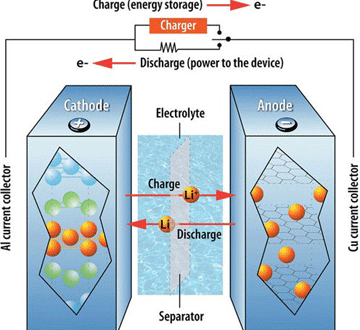 New Korean Lithium Ion Battery for EVs Charges in Under 1 Minute http://www.greenoptimistic.com/2012/08/21/korean-lithium-ion-carbonized-battery/?utm_source=feedburner&utm_medium=email&utm_campaign=Feed%3A+TheGreenOptimistic+%28The+Green+Optimistic%29#.UDbvH8FlT4Y By Ovidiu Sandru August 21, 2012 A new lithium ion battery developed in Korea could make those long waiting times for an electric car to charge become history. A team of researchers at the Ulsan National Institute of Science and Technology (UNIST) claim they can build a battery that can charge in less than a minute, 30 to 120 times faster than a classic Li-Ion battery. Continue reading
Weakness of India’s nuclear safety agency
India’s nuclear safety report warns of Fukushima-like disaster NDTV, Edited by Sabyasachi Dasgupta August 23, 2012 New Delhi: The national auditor’s report on India’s nuclear safety has raised concerns over a weak regulatory body. In its report on the
Atomic Energy Regulatory Board’s (AERB) performance audit, the Comptroller and Auditor General has warned a Fukushima or Chernobyl-like disaster if the nuclear safety issue is not addressed by the government. Continue reading
Fish found to have record radiation levels, near coast of Fukushima
 Record radiation found in fish off Japan http://www.news.com.au/breaking-news/world/record-radiation-found-in-fish-off-japan/story-e6frfkui-1226456080459#ixzz24P8h1Smb August 22, 2012 RECORD levels of radioactive caesium were detected in fish caught within 20 kilometres of Japan’s damaged Fukushima Daiichi Nuclear Power Station.
The operator Tokyo Electric Power Co said it had found 25,800 becquerels per kilogram of radioactive caesium in greenling, 258 times higher than the government safety standard.
Fishing in waters off the plant has been voluntarily restricted since
the nuclear disaster at the plant, which went into meltdown after the
March 2011 earthquake and tsunami.
Less than a month after the start of the disaster, Tokyo Electric
dumped more than 11,000 tonnes of wastewater containing radioactive
substances into the Pacific.
The previous record of radioactive contamination in fish was 18,700
becquerels per kilogram detected in cherry salmon caught in March,
according to the Fisheries Agency.Wakao Hanaoka, a Greenpeace Japan
official, said the government now needs to carry out a full
investigation of radioactive contamination in a wide range of sea
areas off Fukushima, which has not been done yet.
The organisation’s surveys show higher levels of radioactive
contamination were found in fish and seaweed sampled in areas further
from the Fukushima plant.
Factors that affect the spread of contamination include ocean currents
and seabed configuration, Hanaoka added.
India’s nuclear power projects grinding to a halt

 NTPC puts nuclear power projects on hold, Hindu Business Line, RAHULWADKEMUMBAI,Mumbai, AUG. 22: NTPC has put its plans to set up nuclear power projects, jointly with Nuclear Power Corporation of India, on the backburner. The company has also begun to relocate employees assigned for the projects due to uncertainty in the nuclear power arena.
Nuclear Power Corporation of India (NPCIL) is facing severe delays in setting up plants and NTPC is actually considering exiting the joint venture, said a senior NTPC official, requesting anonymity due to the sensitive nature of the issue.
Another NTPC official, who also did not wish to be named, said around 40 engineers from NPCIL’s Mumbai office, who were being trained to build nuclear plants, have been pulled out and relocated to NTPC’s other thermal power plants. In all, 74 engineers were stationed across the country.
The official said the rest would be withdrawn in phases. Engineers, who were relocated out of Mumbai, were being trained in plant designing, while those stationed at other plant sites were involved in the commissioning of the under-construction plants. Nuclear projects country-wide have been facing massive opposition. While considerations revolve around the safety of the people living near the plant, NPCIL has also been facing a delay in acquisition of land, all of which have
adversely impacted the project.
In the last two years, the engineers had voiced their concerns about their career and lack of professional growth in the joint venture with the senior-most personnel of NTPC. Prolonged disruption of work at the Kudankulam nuclear plant in Tamil Nadu, following protests from anti-nuclear campaigners, had also affected the morale of the engineers. Taking all these factors into consideration they are being withdrawn, the official added….. http://www.thehindubusinessline.com/companies/article3808172.ece?homepage=true&ref=wl_home
Decentralised solar energy for a billion Indian villagers
 Solar energy offers a ray of hope http://www.thehindu.com/news/cities/Visakhapatnam/article3806664.ece RAVI P BENJAMIN TERI is engaged in setting up solar charging stations in rural and Agency areas
With a view to easing the power situation, The Energy and Resources Institute (TERI), a global NGO, is engaged in setting up Solar Charging Stations in the rural and Agency areas in collaboration with the Union Ministry of New and Renewable Energy.
As part of the MNRE mandate to popularise the tapping of solar power, TERI has been introducing solar appliances, including home lighting systems, individual lanterns, and task lights, etc, in the villages which are experiencing long hours of power-cut. TERI State coordinator V. Murthy told The Hindu that nearly 100 SCSs were being set up in rural areas in the State. Solar lights and other appliances were being supplied to every home so that villages can overcome total darkness at the time of power interruption.
The objective of SCSs is mainly to recharge batteries which can be used for four to six hours every day. TERI is engaged in supply of solar lights as well as in opening charging stations manned by a single person. The stations can charge up to 50 lights at a time. Every village will have a local entrepreneur who will supply and maintain the solar lamps.
Every nine villages will have a technical resource person who will ensure smooth functioning of the SCSs. As many as 11 stations are operating in the district and 46 more are in the process of being set up. Thirty stations are operating in Srikakulam district, four in East Godavari district, and 40 are being established. Nine stations are running in Guntur, 12 in Karimnagar, and two in Adilabad. The local people in every village take care of the entrepreneur’s salary by paying for battery recharge.
Also, the nine villages contribute Rs.300 each to take care of the technician’s salary. Local NGOs engaged in Maa Thota and coffee plantations are working with TERI. TERI, Nabard, Vikasa, Kovel Foundation, and a host of NGOs are engaged
in the solar mission of lighting a billion lives.
1 This Month

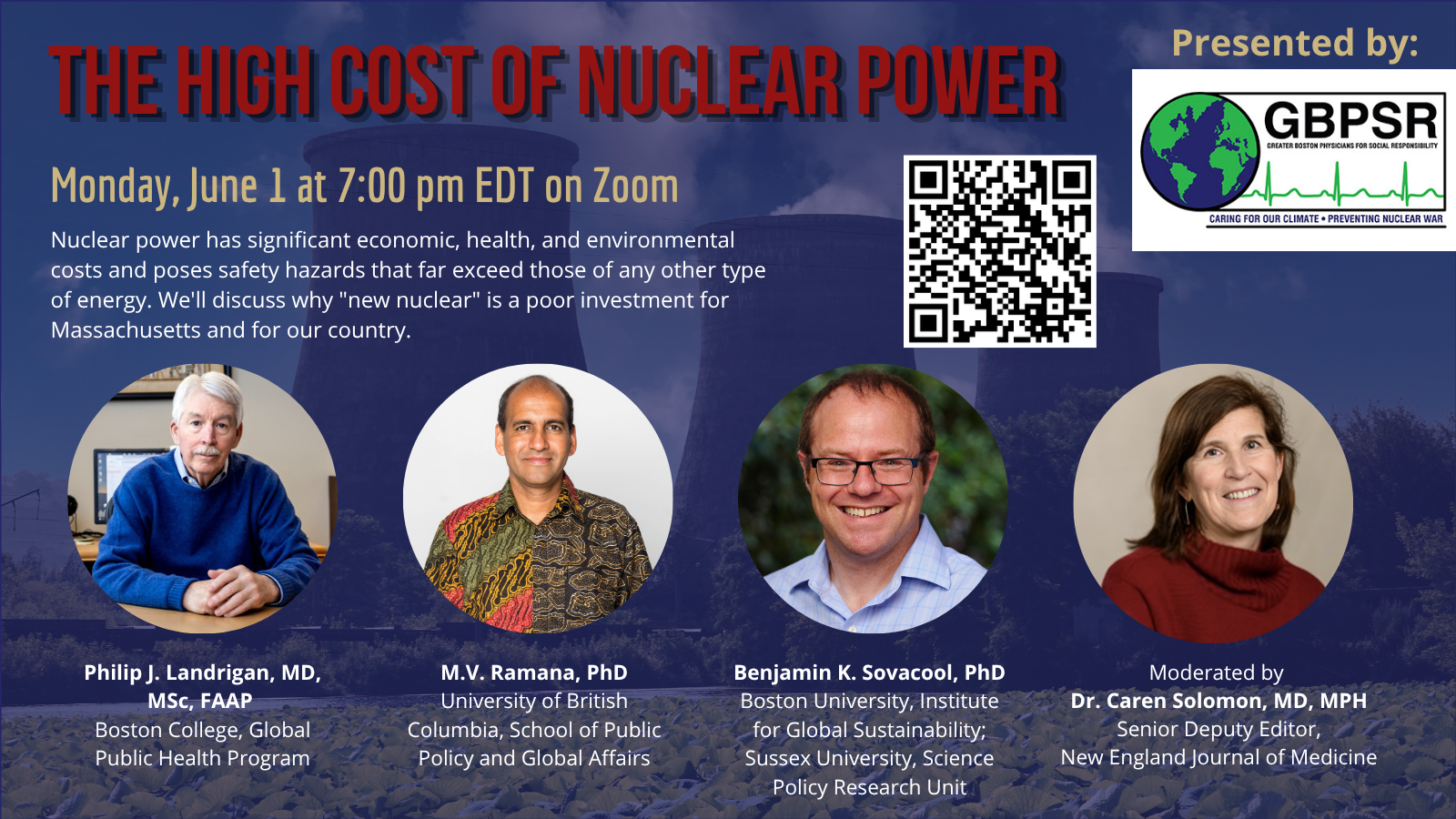
1 June Webinar – The High Cost of Nuclear Power – Register


of the week– Nuclear Reactor Information Task Force
To see nuclear-related stories in greater depth and intensity – go to https://nuclearinformation.wordpress.com
-
Archives
- May 2026 (235)
- April 2026 (356)
- March 2026 (251)
- February 2026 (268)
- January 2026 (308)
- December 2025 (358)
- November 2025 (359)
- October 2025 (376)
- September 2025 (257)
- August 2025 (319)
- July 2025 (230)
- June 2025 (348)
-
Categories
- 1
- 1 NUCLEAR ISSUES
- business and costs
- climate change
- culture and arts
- ENERGY
- environment
- health
- history
- indigenous issues
- Legal
- marketing of nuclear
- media
- opposition to nuclear
- PERSONAL STORIES
- politics
- politics international
- Religion and ethics
- safety
- secrets,lies and civil liberties
- spinbuster
- technology
- Uranium
- wastes
- weapons and war
- Women
- 2 WORLD
- ACTION
- AFRICA
- Atrocities
- AUSTRALIA
- Christina's notes
- Christina's themes
- culture and arts
- Events
- Fuk 2022
- Fuk 2023
- Fukushima 2017
- Fukushima 2018
- fukushima 2019
- Fukushima 2020
- Fukushima 2021
- general
- global warming
- Humour (God we need it)
- Nuclear
- RARE EARTHS
- Reference
- resources – print
- Resources -audiovicual
- Weekly Newsletter
- World
- World Nuclear
- YouTube
-
RSS
Entries RSS
Comments RSS
 nuclear-news