India is NOT watering down its Nuclear Liability Law to suit USA’s nuclear salesmen
 India in 2010 passed a law making suppliers of nuclear reactors and other equipment liable for any accidents. This spooked companies that wanted to sell nuclear technology
Local media last month reported that the government may dilute the nuclear-liability law in order to push through the deal with Westinghouse.
“No compromise of any kind has been made,” said the official at the Department of Atomic Energy. “All these reports are false.”
 India Official: Won’t Relax Nuclear-Liability Rules Nuclear Power Corp. of India, Westinghouse Sign Preliminary Contract WSJ, By BIMAN MUKHERJI 2 Oct 13
NEW DELHI—India won’t relax a law holding suppliers of nuclear-power equipment responsible for accidents, a senior government official said Thursday, denying media reports that suggested it could bend rules to allow a reactor-supply deal with Westinghouse Electric Co. to go through.
State-run Nuclear Power Corp. of India Ltd. signed a preliminary contract with U.S.-based Westinghouse late last month, the Indian company said. Westinghouse didn’t reply to emailed questions. Continue reading
Japan’s Nuclear Regulator’s doubt Tepco’s radiation measurements
 JP Gov doubts the reliability of Tepco’s radiation measurement / Nuclear Regulatory Agency to send inspectors http://fukushima-diary.com/2013/10/jp-gov-doubts-the-reliability-of-tepcos-radiation-measurement-nuclear-regulatory-agency-to-send-inspectors/ by Mochizuki on October 1st, 2013 Following up this article..
On 9/30/2013, Nuclear Regulation Authority commented they are planning to send inspectors to Tepco’s radiation measurement site in the working group meeting for the contaminated water in Fukushima nuclear plant.
NRA has been doubting the reliability of Tepco’s nuclide analysis. Also, in mid September, Tepco discharged the “rainwater” retained in the tank areas due to the Typhoon. However, they took only 5 minutes to analyze Cesium-134/137 of the sample to check if it’s really rainwater, which NRA found questionable about the quality.
NRA commented the inspectors from Nuclear Regulatory Agency are going to see them analyzing the samples actually. http://www.youtube.com/watch?v=B8eT6fe8WSk
Japanese firm very keen to sell nuclear technology to Britain
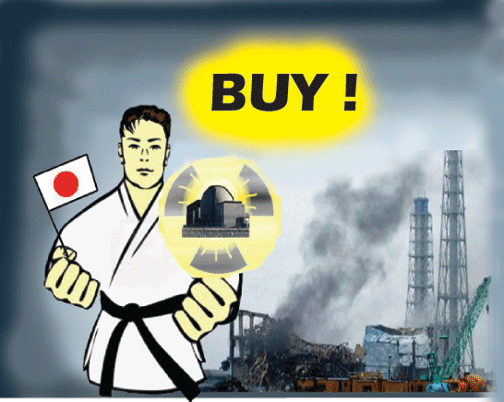 Toshiba wants majority stake in British nuclear consortium: CEO By Sophie Knight and Maki Shiraki TOKYO | Thu Oct 3, 2013
(Reuters) – Toshiba Corp wants a majority stake in British nuclear consortium NuGen and aims to decide on the matter before the end of the year, its chief executive said, as it seeks its first order for a nuclear reactor since the Fukushima crisis in 2011.
Hisao Tanaka told Reuters in an interview on Thursday that the company was confident about securing orders for 29 new nuclear reactors by March 2018 and that he sensed post-Fukushima anti-nuclear sentiment had begun to thaw……http://uk.reuters.com/article/2013/10/03/us-toshiba-nuclear-idUKBRE99204I20131003
Children in Kanto (Includes Tokyo) – 70% have radioactive cesium in their urine
 Weekly Asahi: 70% of children tested in Kanto (Includes Tokyo) have radioactive cesium in their urine -Journalist #Fukushima http://enenews.com/weekly-asahi-70-of-children-tested-in-kanto-region-including-tokyo-had-radioactive-cesium-in-their-urine-journalist
October 1st, 2013
Title: Slight rise in birth defects in post-meltdown Japan; more study needed
Source: Jake Adelstein
 Date: Sept. 26, 2013
[…] This week the Weekly Asahi (週刊朝日)published a report that in urine samples from children living in Kanto, 70% of those tested, contained cesium, a radioactive element that results in internal exposure […]
Increasing health effects in Japan following Fukushima nuclear catastrophe
 AP: Fukushima unleashed radiation that will affect region’s health for decades — Book: Effects seem to be rapidly increasing http://enenews.com/ap-fukushima-disaster-unleashed-radiation-will-affect-regions-health-decades-book-effects-be-increasing-rapidly-large-numbers-spontaneous-abortions-congenital-malformations-sudden-heart-failure-chi
September 30th, 2013
Hiroshima to Fukushima,a, Science Policy Reports (2014): Incidences of adverse health effects seem to be increasing rapidly at the time of writing (March 2013), 2  years after the accident. Thyroid anomalies among children are now widespread and observed all over Japan. Sudden heart failure seems to be increasing among the young, too. Chronic fatigue syndrome is also becoming prevalent. All kinds of infectious diseases are increasing, very likely due to weakening of the immune systems in many people […] No official data are yet available, but a large number of cases of adverse health effects have been reported, such as severe nose bleeding, hair loss, severe fatigue syndrome, acute heart failure, acute lymphatic leukemia, systemic collagenosis, spontaneous abortion, and congenital malformation.
Associated Press, Sept. 26, 2013: […] the March 2011 Fukushima disaster unleashed radiation that will affect the region’s health for decades. […] it is impossible to know what the health toll will ultimately be. Only recently has the government acknowledged that much more radioactive water is leaking into the sea than it had previously believed. […] Some medical experts are worried about sickness that may emerge in coming years […] Shuntaro Hida, 96, was among the doctors who treated the people of Hiroshima […] He said Hiroshima never fully faced up to the effects of internal radiation, and that same mistake is being repeated in Fukushima.
Japan’s public does not trust the government on Fukushima’s safety
 there is widespread distrust of Japanese officials, belonging to the nuclear establishment or the government, in that country. A recent poll by the Asahi Shimbun showed that 94% of Japanese believe that the Fukushima accident has not been brought under control. Prime Minister Abe’s strong claims about there being no problems at Fukushima, and his emphatic reassurances that there are no health effects only increase the levels of distrust. Regaining that trust is going to take both full transparency and openness as well as a complete overhaul of Japan’s “nuclear village”. There is little evidence of either of these happening anytime soon.
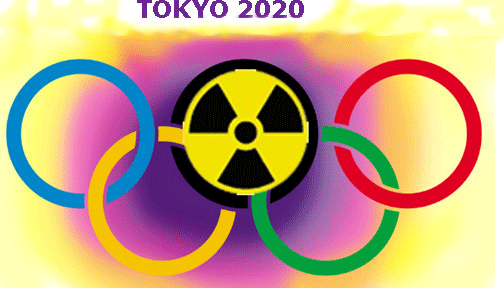 The 2020 Olympics, Fukushima and Trust http://www.epw.in/postscript/2020-olympics-fukushima-and-trust.html Oct 5 2013 The recent leaks from the Fukushima nuclear plant demonstrate that the accident that started on 11 March 2011 is by no means over.
M V Ramana (ramana@princeton.edu) is at the Nuclear Futures Laboratory & Program on Science and Global Security, Woodrow Wilson School of Public and International Affairs, Princeton University, the US.
When the announcement about Tokyo being selected for the 2020 Olympics came – after the Japanese Prime Minister Shinzo Abe made a strong pitch to the International Olympic Committee (IOC) – one of my acquaintances on Facebook reacted with a three-letter acronym that is not used in polite language (Hint: the third letter corresponds to a four-letter word that starts as “Fukushima” does!) What else can one say to the kind of assurances that Prime Minister Abe had offered to the IOC. Witness, for example, his answers to questions by Norwegian IOC member Gerhard Heiberg about the recent leaks in Fukushima as well as the 2011 accident. According to Yahoo News, Prime Minister Abe said (in Japanese, of course): “It poses no problem whatsoever…There are no health-related problems until now, nor will there be in the future…I make the statement to you in the most emphatic and unequivocal way.” Continue reading
Rapid increase in thyroid cancer in Fukushima kids – cover-up of causes
Fukushima Cover-Up: Extraordinary amount of kids have thyroid cancer — Officials say NOT caused by Fukushima since Chernobyl’s cancers took 4-5 yrs to appear — Yet data shows it started soon after ’86 meltdown… number of cases still rising 25 years later http://enenews.com/fukushima-cover-up-extraordinarily-high-thyroid-cancer-rates-in-kids-officials-not-related-to-nuclear-disaster-since-it-took-4-or-5-years-to-show-up-after-chernobyl-yet-data-shows-it-appe
September 29th, 2013
Kyodo,, June 5, 2013: Researchers at Fukushima Medical University […] said they do not believe that the most recent cases are related to the nuclear crisis. They point out that thyroid cancer cases were not found among children hit by the 1986 Chernobyl nuclear accident until four to five years later. […]
Asahi Shimbun, August 21, 2013: A Fukushima prefectural government official said, “It is likely (the 44 children) developed tumors or lumps before the nuclear accident.” […] In the case of the Chernobyl disaster in 1986, thyroid cancer cases started to soar four to five years later […] A number of residents have expressed strong dissatisfaction with the Fukushima prefectural government over its interpretation of the effects of radiation exposure, the accuracy of its thyroid testing and the way it discloses information.
Wikipedia:: As of August 2013, there have been more than 40 children newly diagnosed with thyroid cancer and other cancers in Fukushima prefecture as a whole, but these cancers are not attributed to radiation from Fukushima […] if Chernobyl is anything to go by the increase in thyroid cancer rates won’t begin until approximately 4–5 years after the accident.
Thyroid cancer found in 18 Fukushima children NHK WORLD English
Hiroshima to Fukushima – Data on Fukushima,, Eiichiro Ochiai (2014): “12 out of 174.000 children” […] is much higher than that seen in the Chernobyl incident […] If 15 more likely cases were taken account of, the thyroid cancer incident rate among Fukushima children would be about 7.8/100.000/year, extraordinarily a high rate. (Note: this number is still an underestimate. This number would he 21/100,0110/y if the data is more properly analyzed). The authority denies that they were caused by the radiation released from the TEPCo NPP on the basis that thyroid cancer would emerge only 4-5 years after such an incident. However, the data on the Chernobyl incident show that thyroid cancer did show up even just one year later (see Fig. 14.4) […]
Hiroshima to Fukushima – Data on Chernobyl, Eiichiro Ochiai (2014): […] a few cases of thyroid cancer seem to have occurred almost immediately within 1 year. In children, the incidence […] has kept increasing, even after 25 years. A similar trend has been observed for the groups aged 15 years or more (Ukraine report 2011). This continuous rise suggests that radiation sources other than the short-lived I-131, such as I-129 and Cs-137 may also be involved. In a highly contaminated area. Gomel of Belams, the annual incidence of thyroid cancers among children 2-18 years of age in 1998 was 58 times higher than that in 1973 […]
See also: Japan Professor: Fukushima crisis is leading to surge in thyroid cancers… First signs of health catastrophe — NHK: Trend seen in new cancer tests is ‘suspicious’ (VIDEO)
Acute danger of huge radiation release in TEPCO’s work on Fukushima Nuclear reactor no 4

 A Mistake Now Could Release 14,000 Times More Radiation than Hiroshima http://oilprice.com/Latest-Energy-News/World-News/A-Mistake-Now-Could-Release-14000-Times-More-Radiation-than-Hiroshima.html By James Burgess | Sat, 28 September 2013 Lately the bad news emanating from Japan is that the reactors at the Fukushima nuclear power plant have been leaking thousands of gallons of water ever since the earthquake that struck it in 2011. There is a high chance that the radioactive water could hit Korea, China, and the West Coast of North America, and it is only likely to get worse with time as Tepco, the Japanese utility and operator of the power plant, is unsure how to stop the leaks.
Now however there is worse news that could prove dangerous to much of the world, and again Tepco could be responsible.
At Fukushima, used nuclear fuel rods are stored in pools and, especially at reactor 4, some of these pools are damaged and at risk of completely breaking open in the event of another earthquake. If one of the pools were to collapse or catch fire, then the impacts would affect the world. Arnie Gunderson, a nuclear expert, and Helen Caldicott, a physician, have even suggested that if this occurs then people should evacuate the Northern Hemisphere. And Akio Matsumura, a former advisor for the UN, has called the situation “an issue of human survival.”
Tepco could be responsible for unleashing this devastation on the world as starting in November they have decided to begin an operation to remove 400 tonnes of fuel rod assemblies, on their own. Aworkforce of thousands is preparing to work on the fuel rod pools at the instable reactor 4 in order to relocate them to a safer location.
The spent fuel, which contains plutonium, one of the most deadly substances in the universe, will prove to be a very delicate procedure. If a fuel rod is broken, cracked, or dropped whilst being removed, then it could cause an explosion, a meltdown, or a fire; all of which would release radionuclides into the atmosphere, and result in the evacuation of Tokyo and much of Japan.
The more than 1,300 fuel rod assemblies tightly packed into the building at reactor 4 contain enough radiation equivalent to 14,000 times the radiation released during the atomic bomb dropped on Hiroshima in 1945.
Each fuel rod assembly weighs close to 300kg and measure 4.5 metres long. The reactor 4 building contains 1,331 of spent assemblies and 202 unused assemblies.
Working completely underwater, the fuel assemblies will be pulled off their racks where they are currently stored, and then inserted into a heavy steel chamber, which shields the radiation. Then they will be removed from the pool, lowered to ground level and transported across the plant to a storage pool in an undamaged building.
Toshio Kimura, a former technician at Tepco, said that “previously Previously it was a computer-controlled process that memorized the exact locations of the rods down to the millimeter and now they don’t have that. It has to be done manually so there is a high risk that they will drop and break one of the fuel rods.”
Whilst aware of the inherent dangers, Tepco is confident that it can carry out the operation safely.
Tepco doesn’t measure radiation accumulated on the bottom of the sea
Tepco doesn’t measure radiation accumulated on the bottom of the sea http://fukushima-diary.com/2013/09/tepco-doesnt-measure-radiation-accumulated-on-the-bottom-of-the-sea/ by Mochizuki on September 29th, 2013 Following up this article.. Tepco “We don’t see Tokyo bay contamination” [URL]
Regarding the Pacific contamination, Tepco stated they analyze seawater but they take the samples only from the surface of the sea on 9/27/2013.
They commented when they collect seawater samples outside of Fukushima nuclear plant port, the samples are not taken from near the bottom of the sea.
Cesium-134/137 is assumed to be accumulated on the bottom of the sea, but Tepco doesn’t and is not planning to analyze it.
Even inside of the plant port, they collect the seawater samples mostly from the surface of the sea.
Tepco explained the measurement means was not decided by only Tepco, but also with the Fisheries Agency, Fukushima prefectural government and Ministry of Education, Culture, Sports, Science and Technology.
Also, Strontium-90 is water-soluble, so even if they analyze only the surface water, they can detect the marine contamination level.
According to Tepco and Japanese government, they don’t measure high level of radiation in their sampling points of the Pacific.
Spill of tonnes of radioactive water into Fukushima soil
 TEPCO Just Spilled Tonnes Of Radioactive Water Into Fukushima’s Soil http://www.gizmodo.com.au/2013/10/tepco-just-spilled-tons-of-radioactive-water-into-fukushimas-soil/ ADAM CLARK ESTES The operator of Japan’s infamously crippled Fukushima nuclear power plant recently attempted to move some radioactive water from one tank to another. In the process, it spilled four tonnes of deadly sludge.
To be fair, the four tons of water is just a drop in the bucket compared to the 300 tonnes that recently leaked from a nearby tank. And the radiation levels in the newly leaked water are relatively low compared to puddles they found forming outside the tanks about six weeks ago. TEPCO’s not in the clear yet, though. A tropical storm is on the way, which creates the potential for even more radioactive leaks.
It’s also worth remembering that this little leak pales in comparison to Fukushima’s bigger problems. Its primary leak is getting worse, and if something’s not done about it soon, it will continue to spread and contaminate the surrounding area. Recently, Japan’s government agreed to bankroll a massive project to build an underground ice wall to contain the leaked groundwater. Experts seem to agree that the plan is feasible. All TEPCO has to do is stop spilling radioactive water into the ground. [Reuters]
International concern as USA bans food and fish imports from irradiated areas of Japan
 FDA Import Alert: U.S. bans agricultural and fishery products from 14 prefectures in Japan due to Fukushima radionuclides — Top Newspaper: Concern over contamination is spreading to most countries around Pacific http://enenews.com/fda-import-alert-u-s-bans-japans-agricultural-and-fishery-products-from-14-prefectures-due-to-fukushima-radionuclides-concern-over-contamination-is-spreading-to-most-countries-around-pacific
Dong-A Ilbo, Sept. 28, 2013 (Korea’s top newspaper): […] Concerns over Japan’s radioactive contamination and its seafood is spreading to most countries in the Pacific basin. The United States has recently banned agricultural and fishery imports from 14 prefectures in Japan, up from eight. South Korea puts a similar ban on fishery imports from eight prefectures, while China and Taiwan does so for 10 and five prefectures, respectively. [… The IAEA’s] upcoming probe needs to shed light on the cause and situation of soil and sea water contamination. […] It would be much better if experts from South Korea, the United States and China participate in the investigation. It is natural for a global organization to intervene in an international issue. […] Continue reading
Large area received Fukushima radiation fallout
Textbook: Fukushima disaster contaminated the territory of Japan, Sea of Japan, Korea — Up to 8 orders of magnitude above global fallout background off prefecture’s coast http://enenews.com/book-fukushima-contaminated-japan-sea-of-japan-korean-peninsula-cesium-137-up-to-8-orders-of-magnitude-above-global-fallout-background-in-coastal-seawater
September 28th, 2013_
Title: Fukushima Accident: Radioactivity Impact on the Environment
Source: Elsevier
Authors: Pavel P. Povinec, Katsumi Hirose, Michio Aoyama
Date: July 9, 2013
Emphasis Added
Apart from the contamination of the Japanese territory (Hirose, 2012; Kanai, 2012; Tanaka et al., 2012), the Japan Sea (Inoue et al., 20I2a), and the Korean Peninsula (Hernandez-Ceballos et al., 2012; Lee et al., 2012), due to prevailing western winds, the radionuclides emitted to the atmosphere were mainly transported from Fukushima over the Pacific Ocean (Kamenik et al., 2013) […]
[…] large quantities of radioactive materials released to the atmosphere and coastal waters following a nuclear accident at the Fukushirna Dai-ichi NPP increased considerably the Cs-137 concentrations in coastal seawater off Fukushima up to eight orders of magnitude above the global fallout background (TEPCO, 2012; MEXT, 2012).
Portions of the book available here
Sharp increase in physical health symptoms in Fukushima residents
Fukushima Mother’s Plea to U.N.: Children and adults are suffering tremendously — Sharp increase in bloody urine, bone pain, more — Doctor says many have similar symptoms with unknown causes — Family’s health deteriorated all at once, recovered soon after moving http://enenews.com/fukushima-mothers-letter-to-u-n-children-and-adults-suffering-tremendously-sharp-increase-in-bloody-urine-bone-pain-low-blood-pressure-more-familys-health-deteriorated-all-at-once-reco
Fukushima City mother’s letter to the United Nations Scientific Committee on the Effects of Atomic Radiation (UNSCEAR), translated by journalist Mari Takenouchi and published by Save Kids Japan on Sept. 24, 2013: […] 2 years after the accident, members of my family had deteriorated health all at once. We continued to have stuffed throat with phelm, could not stop dry coughing […] the doctor couldn’t tell the cause of our symptoms [… he] said that there are many patients who show the same symptom with unknown causes. My child began to complain pain in his foot bones and I heard many people including children and adults have the same […] I myself had bone pains […] After that, my son and I had continued naucea [sic] and headaches. My son had lowered blood pressure and bloody urine, too.
My family moved out of Fukushima in July. One month afterwards, we all became better […] there is a sharp increase of people who show the same symptoms. There is a much increase of children who has prolonged nose bleeding […] people who died of acute myocardial infarction is increasing. […] Both children and adults have been suffering tremendously. […]
Read more at Save Kids Japan here and follow journalist Mari Takenouchi on Twitter here
Japan’s intractable Fukushima radioactive trash problem
 Mission Impossible. What Future Fukushima? The Asia-Pacific Journal, Vol. 11, Issue 39, No. 1. September 30, 2013. Critics say Japan’s government is engaged in a vast, duplicitous and fruitless campaign to decontaminate Fukushima Prefecture. David McNeill and Miguel Quintana in Fukushima, Japan
“……The differences over what constitutes “acceptable” radiation levels will inevitably complicate policy over the return of evacuees. Local leaders like Kanno and Sakurai set limits lower than central government requirements. “The government says we don’t need to get radiation down to 1millisievert a year but that’s not how we see it,” says Sakurai. The central government, however, is sticking to its guns on its original limit. “In principle, the threshold of 20 millisieverts remains valid,” says Matsumoto Shintaro, of the Cabinet Office’s Support Team for Residents Affected by Nuclear Incidents. “But the lifting of evacuation orders won’t be decided on the basis of radiation doses alone. It will also depend on the status of each municipality’s infrastructure, whether the community is able to function, and the understanding of residents.
The government plans to define a specific policy by the end of 2013.” The Fukushima cleanup, however, faces another, perhaps insurmountable challenge: securing sites to store contaminated soil, leaves and sludge. Many landowners balk at hosting “interim” dumps – in principle for three years – until the central government builds a mid-term storage facility. Local governments throughout Japan have refused to accept the toxic waste, meaning it will probably stay in Fukushima for good.
The waste is stored under blue tarpaulins across much of the prefecture, sometimes close to schools and homes. Makita Kunihiro, who heads Minamisoma’s decontamination office, accepts that storage is the biggest difficulty it faces. “We need 19 sites according to our estimates, and we have seven.” The city’s contracts with landowners are usually signed for a minimum of three years, but Ito says the timeframe is simply not believable. “Nobody believes that temporary storage will be for only 3 years.” – See more at:http://japanfocus.org/-David-McNeill/4000#sthash.RH288s36.dpuf
The gap between official information and the real news about Fukushima
Nuclear Industry Report: ‘Reduced stability’ of fuel pool in Fukushima Unit 4; Admits there’s damaged fuel inside? — Gundersen: Fuel racks moved and damaged; Fallen debris distorted tops (AUDIO) http://enenews.com/nuclear-industry-report-reduced-stability-of-unit-4-fuel-pool-at-fukushima-admits-some-fuel-inside-is-damaged-gundersen-fuel-racks-moved-from-quake-fallen-debris-distorted-tops-audio
World Nuclear News,Sept. 26, 2013 (Emphasis Added): […] Underwater inspections in the [Unit 4] pond have shown most of the fuel to be undamaged, but the pond contains a lot of dust and debris which will complicate operations. […] Its full core load of fuel, plus used fuel from previous operation, was being stored in a fuel pool at the top of the reactor building. […] The stability of the pool was then reduced by major structural damage to the building caused by the ignition of hydrogen […]
World Nuclear News is funded by the World Nuclear Association. The WNA represents the interests of the international nuclear industry. -Source
Bridging the News Gap, with Professor Matt Noyes
Fairewinds Energy Education Podcast, Sept.. 26, 2013 (at 21:15 in) – Arnie Gundersen, Fairewinds Chief Engineer: These racks [in the Unit 4 fuel pool] have moved, they’ve been distorted by the earthquake, there’s junk that’s fallen on top of them and distorted the tops. […] One of two things is going to happen. They’re either going to pull too hard and snap the bundle, or they’re going to be unable to pull all of the fuel out of the pool. Full podcast available here
1 This Month
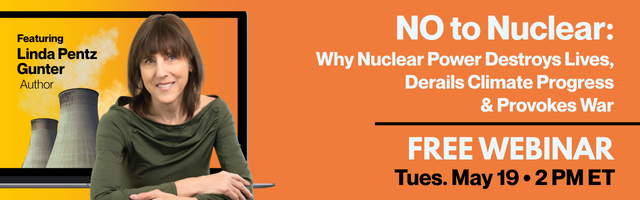
19 May – Webinar No To Nuclear: Why Nuclear Power Destroys Lives, Derails Climate Progress and Provokes War
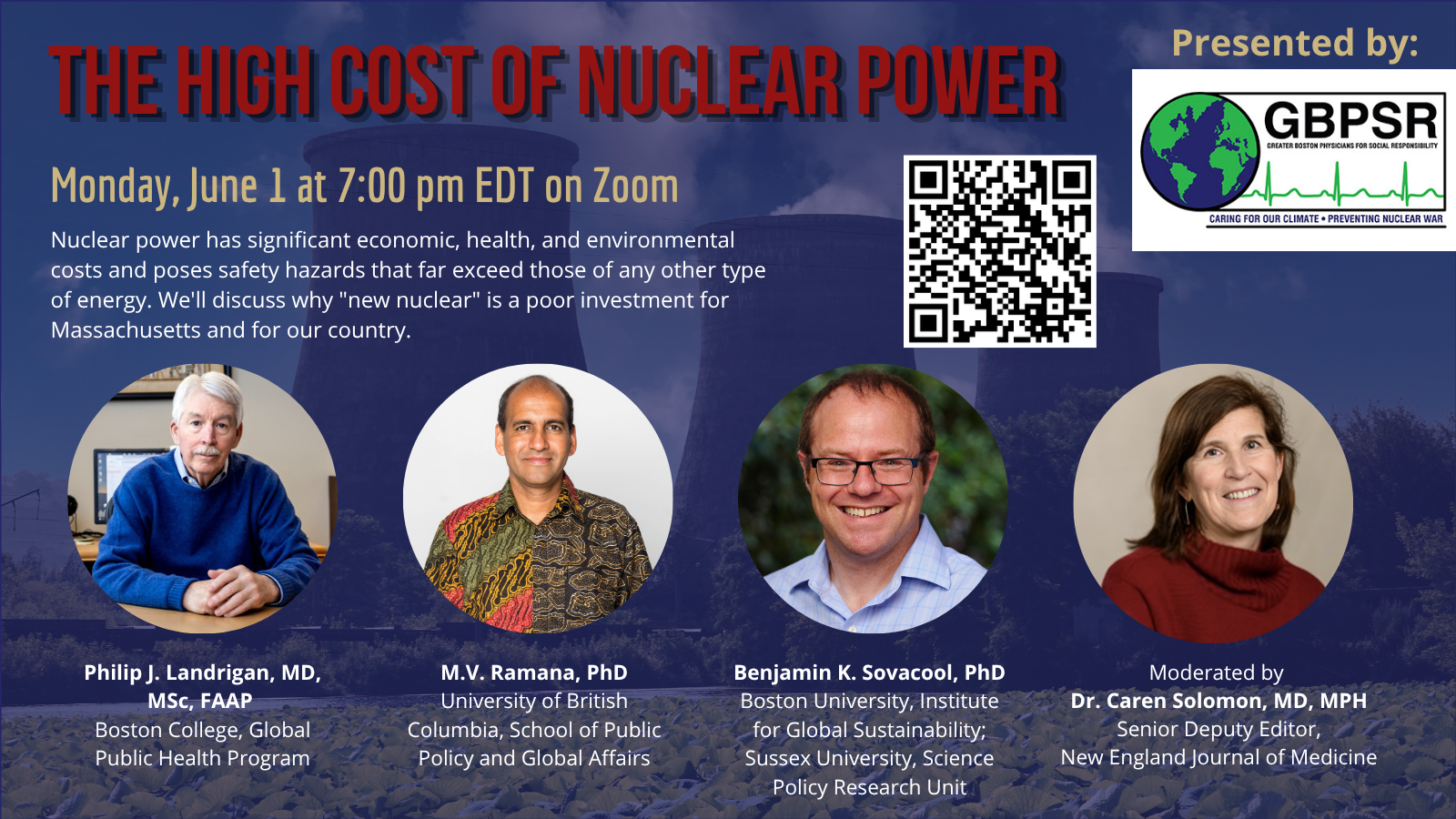
1 June Webinar – The High Cost of Nuclear Power – Register


of the week– Nuclear Reactor Information Task Force
To see nuclear-related stories in greater depth and intensity – go to https://nuclearinformation.wordpress.com
-
Archives
- May 2026 (199)
- April 2026 (356)
- March 2026 (251)
- February 2026 (268)
- January 2026 (308)
- December 2025 (358)
- November 2025 (359)
- October 2025 (376)
- September 2025 (257)
- August 2025 (319)
- July 2025 (230)
- June 2025 (348)
-
Categories
- 1
- 1 NUCLEAR ISSUES
- business and costs
- climate change
- culture and arts
- ENERGY
- environment
- health
- history
- indigenous issues
- Legal
- marketing of nuclear
- media
- opposition to nuclear
- PERSONAL STORIES
- politics
- politics international
- Religion and ethics
- safety
- secrets,lies and civil liberties
- spinbuster
- technology
- Uranium
- wastes
- weapons and war
- Women
- 2 WORLD
- ACTION
- AFRICA
- Atrocities
- AUSTRALIA
- Christina's notes
- Christina's themes
- culture and arts
- Events
- Fuk 2022
- Fuk 2023
- Fukushima 2017
- Fukushima 2018
- fukushima 2019
- Fukushima 2020
- Fukushima 2021
- general
- global warming
- Humour (God we need it)
- Nuclear
- RARE EARTHS
- Reference
- resources – print
- Resources -audiovicual
- Weekly Newsletter
- World
- World Nuclear
- YouTube
-
RSS
Entries RSS
Comments RSS
 nuclear-news