Food Safety after Fukushima Disaster
On 21 May 2015, the Japanese government referred measures taken by the Korean government to the World Trade Organization (WTO). Since Sept. 6 2013, the Korean government has restricted the import of Japanese fisheries products from eight prefectures including Fukushima, where a nuclear-power-plant disaster occurred in 2011.
According to the Korean government, import restrictions are indispensable for food safety reasons, while the Japanese government argues that its products are safe for humans to consume.
The Agreement of Sanitary and Phytosanitary Measures (SPS Agreement) provides that members have the right to take SPS measures necessary for the protection of human, animal or plant life or health.
However, members must ensure that any SPS measure is applied only to the extent necessary to protect human, animal or plant life or health, and is not maintained without sufficient scientific evidence, based on a risk assessment under the SPS Agreement (Art. 2).
Since the risk assessment under the SPS Agreement is “the evaluation of the potential for adverse effects on human or animal health arising from the presence of additives, contaminants, toxins or disease-causing organisms in food, beverages or feedstuffs,” (Annex A, para.4 emphasis added) risk assessments based on the minority scientific opinion can be used as justification for measures taken by South Korea, as long as there is any possibility of adverse effects on human health.
Most man-made radionuclides emitted from atomic energy incidents were classified as carcinogenic to humans (Group 1) by the International Agency for Research on Cancer (IARC) in 2001.
The international standard recommended by the CODEX Alimentarius Commission is 1,000Bk/kg for cesium (Cs) 134/137, reflecting the maximum acceptable level for human health.
The Commission, however, proposed that radionuclides in foods should be maintained to a level that is “as low as reasonably achievable.”
According to the SPS Agreement, members may maintain SPS measures resulting in a higher level of protection than the relevant international standards, if there is a scientific justification, or a member determines to be appropriate in accordance with Article 5 (Art.3.3).
Regarding Cs 134/137 in foods, many members including South Korea (100Bq/kg), the European Union (100Bq/kg), Taiwan (370Bq/kg), China (90~800Bq/kg) and Japan (10~100Bq/kg) have, therefore, maintained higher levels of protection than recommended by CODEX.
Under Article 5.7 of the SPS Agreement, South Korea can take provisional measures to restrict the importation of the Japanese products, if relevant scientific evidence is insufficient.
Given the on-going nature and unprecedented magnitude of Fukushima disaster, it is doubtful whether Japan has provided South Korea with sufficient information regarding the actual conditions of radioactive contamination after the disaster and whether a complete risk assessment estimating the adverse effects of radionuclides on human health will be currently possible.
Since South Korea and Japan failed to settle the trade dispute through consultation, under the Understanding on Rules and Procedures Governing the Settlement of Disputes, the dispute is due to be referred to the Panel.
During the Panel process, Japan must prove that there have been no more additional emissions of man-made radionuclides into the environment after the disaster, and provide the Panel with sufficient scientific evidence supporting the food safety of Japanese marine products.
Source: The Korea Times
https://www.koreatimes.co.kr/www/news/biz/2015/08/123_185658.html
481,000 Bq/Kg of Cs-134/137 measured from earth of Minamisoma city

On 8/23/2015, a researcher of a citizen reported high level of radioactive material is still detected from earth beside Yokokawa dam in Minamisoma city Fukushima. The dam provides agricultural and industrial water. The analysis was implemented on 8/18/2015.
The highest reading of Cs-134/137 was 481,000 Bq/Kg from moss and soil. The second highest reading was 222,000 Bq/Kg from the soil on the bridge.
Monkey’s excrement was also analyzed to detect 50,000 Bq/Kg of Cs-134/137. The second highest reading was 36,600 Bq/Kg.
http://matome.naver.jp/odai/2144031450144590601
https://www.google.com/maps/d/viewer?hl=ja&hl=ja&authuser=0&authuser=0&mid=z4fm9dhqAJdo.k22dQUmzqLPM
https://www.city.minamisoma.lg.jp/index.cfm/7,4147,72,html#yoko_syogen
Source: Fukushima Diary
http://fukushima-diary.com/2015/08/481000-bqkg-of-cs-134137-measured-from-earth-of-minamisoma-city/
Japan nuclear watchdog revises guideline to create medical network in event of atomic crisis
The Nuclear Regulation Authority on Wednesday revised a key guideline that would boost the country’s medical preparedness in the event of an atomic disaster, reflecting lessons learned from the March 2011 triple meltdowns at the Fukushima No. 1 complex.
The watchdog is aiming to create a nationwide medical service network over roughly the next three years by asking local municipalities that host nuclear plants to designate one or more hospitals as institutions that can provide emergency treatment for radiation exposure.
The disaster at Tokyo Electric Power Co.’s Fukushima No. 1 nuclear power plant saw enormous amounts of radioactive materials belched into the environment, and exposed the vulnerability of hospitals and medical networks in the event of an atomic emergency. Because hospitals were not prepared to deal with a situation where radioactive substances are diffused over a wide area, many evacuees were not given proper treatment.
The regulator designated a total of five university hospitals and research institutions as facilities for treating large numbers of people exposed to high-level radiation who could not be treated locally. These sites include Fukushima Medical University and Hiroshima University.
Under the revised guideline, the watchdog is also calling for strengthening medical staffers’ education on radiation treatment, while organizing teams — comprised of doctors, nurses and nuclear experts — that will be dispatched to support local hospitals in the event of a nuclear emergency.
On Aug. 11, a reactor at the Sendai nuclear power plant in Kagoshima Prefecture was the nation’s first to be rebooted under the post-Fukushima, upgraded safety regulations.
The government is seeking to reactivate the remaining idled reactors that have cleared the beefed-up regulations, though lingering safety concerns and a majority of the public opposed to nuclear power remain obstacles to that goal.
Source: Japan Times
Fukushima today: A first-person account from the field and the conference table

It has been more than four years since the east coast of Japan was hit with a trifecta: an earthquake of Magnitude 9 on the Richter scale, followed by a massive tsunami triggered by the quake’s tremors, and then the meltdown of three nuclear reactors in the Fukushima Daiichi nuclear generating complex. Design mistakes, a poor safety culture, and human error exacerbated the situation. And it all happened within the span of an hour, searing the name “Fukushima” into the collective memory of all. Like Hiroshima a few hundred kilometers to the south, the name Fukushima became synonymous with the horrors that can befall a nation from uncontrolled atomic chain reactions.
I had traveled to Japan to attend a meeting of the Japan Scientists’ Association in Yokohama, near Tokyo, which was expected to announce a major change in its pro-nuclear energy position.
While there, several other conference attendees and I received permission to go on a guided tour to the restricted areas surrounding the Fukushima Daiichi plant to see for ourselves, first-hand, the things that we had all been discussing in conference rooms and lecture halls for the past three days. One of the conference organizers—Yoshimi Miyake, a professor at Akita University—accompanied us on our trip to Fukushima. (To be precise, Fukushima is a prefecture with the namesake city its capital. The plant itself is called Fukushima Daiichi.) Another participant, Lucas Wirl from Germany, volunteered to act as our photographer.
What follows are my personal impressions from the tour that occurred immediately after the meeting, and a few of the relevant highlights from the meeting itself—which called for the elimination of nuclear power from Japan as soon as possible. A total of seven of us traveled about 50 miles, starting from a point some 40 miles south of the power plant, then heading along a series of coastal highways until the road took us to within just a little over a mile and a half from the plant, within the town limits of Futaba—which was about as close as anyone could get to the site without special protective gear. We then continued northeast to the village of Namie, one of the nearest villages to the plant, and a place where the government was aggressively pushing for former inhabitants to return to live year-round.
Along the way, we passed through many towns and little villages that had been hit hard. As for the plant itself, the radiation levels are so high that it is difficult to even operate robots. And in places like Namie—whose closest boundary lay less than five miles away from the plant—the radiation levels posed significant risks, because they are so much higher than normal natural background radiation. Also accompanying us were Itoh Tatsuya of the Iwaki City chamber of commerce and Baba Isao, an assemblyman from the town of Namie—both locales hurt substantially by the multiple disasters.
Getting there. We traveled by Shinkansen—bullet train—from Tokyo to Iwaki City in Fukushima prefecture, where we stayed overnight before beginning our journey the next day. As we left our hotel after breakfast, one of our guides—Tatsuya—readied his Geiger counter. Before leaving, he took a measurement of the background radiation level and announced that it was higher than normal today, even though Iwaki is more than 40 miles from the ill-fated power plant. It sounded like he was a weather forecaster talking about humidity levels. He did not give a figure as to how much higher the background radiation was.
As we started heading north, we saw homes destroyed by the tsunami. Iwaki lost 200 people, Tatsuya said. As we began to reach the outskirts of Iwaki City, the radiation level rose consistently, if in very small amounts. Here at about 20 miles from the plant it was about 0.1 microSieverts per hour—objectively not really high at all, but above where we started, and marginally higher than the normal natural background radiation. The Geiger counter’s needle flickered, occasionally registering higher levels, especially when we passed through some tunnels.
As I looked out the window, I thought of what one of the conference presenters, Mitsugu Yoneda of Chuo University in Tokyo, had said: There were 120,000 evacuees across the Fukushima prefecture, and it was unlikely that they would be able to return to their homes in 2016 in the so-called “difficult-to-return” zones, where the cumulative annual exposure is expected to be 20 milliSieverts or more. In recognition of this fact, the government had come up with a new category called “release preparation zones,” where the cumulative annual exposure is estimated to be well above “normal” but less than 20 milliSieverts. The government’s plan to promote an early return to these areas was called a politically motivated whitewash by Yoneda, because anything close to 20 milliSieverts is far higher than the normally accepted safe annual limit. (One milliSievert is about equal to about 100 millirems—the units most commonly used in the United States. Thus, 20 milliSieverts would be 2,000 millirems.)
Different countries have different standards, but in the United States, the Nuclear Regulatory Commission requires that its licensees limit annual radiation exposure to individual members of the public to 1 milliSievert (100 millirems) above the average annual background radiation. Because the natural background radiation usually averages in the range of about 3.1 milliSieverts (310 millirems), that figure plus the allowed exposure from the nuclear power plants makes for a total of about 4.1 milliSieverts (410 millirems) annually—a far cry from the 20 milliSieverts (2,000 millirems) that could be encountered by a member of the public in any putative “release preparation zone” near Fukushima Daiichi.
To give a sense of scale, the average person gets 0.16 milliSieverts (about 4 millirems) from a single chest X-ray, and about 0.96 milliSieverts (24 millirems) in cosmic radiation annually if that person is living at sea level. Cumulative dosages of 500 milliSieverts (50,000 millirems) or above are considered “high,” and cause acute radiation sickness, many different forms of cancer, and death. But because radiation affects different people in different ways—depending upon one’s age, general health, and genetic predisposition—it is not possible to indicate precisely what dose is needed to be fatal to a given individual. All that researchers can do is give statistical averages, such as “50 percent of a population would die within 30 days of receiving a dose of between 350,000 to 500,000 millirems (3,500 to 5,000 milliSieverts).”
Some of the other background information that Yoneda provided was similarly dismal. For one thing, the building containing the failed reactors has radiation levels as high as 4,000 to 5,000 milliSieverts per hour (400,000 to 500,000 millirems per hour), making even the operation of robots difficult. In fact, two power company robots had to be abandoned while inside the depths of the plant. And some spots, such as inside the primary containment vessel, went as high as 9.7 Sieverts per hour (970,000 millirems per hour). In addition, it has not been possible to precisely locate the melted core. (Another conference speaker, Jun Tateno, who was a former research scientist with the Japanese Atomic Energy Research Institute, accused the government of suppressing voices from the scientific community that were critical of the safety of power plants. He said that we have reached a situation in which we do not even know how much plutonium is in the core.) In the meantime, huge amounts of water must be pumped in to keep the reactors cool; this liquid then mixes with ground water, contaminating it as a result.
The picture is not much better when it comes to the land. In an effort to decontaminate residential areas, radioactive soil is being dug up from approximately 1,000 sites. The government wants to consolidate this contaminated material in semi-permanent storage sites in the “difficult-to-return zones” in Futaba and Okuma towns. Local residents, meanwhile, fear that these could turn into permanent repositories of radioactive material.
I was jolted out of my reverie by the comments of Tatsuya, who pointed out a large apartment building that looked empty. He said that in days past there would have been many children’s clothes hanging from the balconies. The only people who are living there now are some of the laborers who are working to decontaminate the town.
Tatsuya noted that the Geiger counter was reading about 1 microSievert per hour as he moved the counter around the parking lot. That was bad enough; it translated to 8.76 milliSieverts per year.
He then bent down to take a reading from a grassy spot. The counter needle pinned to the right. “Off the scale!” he exclaimed. It was higher than 5 microSieverts per hour, which is more than 50 times higher than normal natural background radiation per hour in Tokyo. It translated into a cumulative annual dose of 43 milliSieverts—many times above the 6.2 milliSieverts (620 millirems) average annual exposure for members of the general public, according to the US Nuclear Regulatory Commission. (In addition to the natural background radiation level of about 3.1 milliSieverts [310 millirems], the average person is also likely to fly in an airplane, watch television, or undergo medical procedures, and all these manmade sources together add another 3.1 milliSieverts [310 millirems] per year to one’s exposure, making for a total radiation dose of 6.2 milliSieverts, or 620 millirems. This figure could colloquially be considered the “normal” amount of radiation exposure for a member of the general public, as a very rough rule of thumb.)
We left soon thereafter. We were told that most workers did not wear dosimeters to record their cumulative radiation dose. There was good money to be made in decontamination work. They did not want to know.
But if one does the math, what the workers and their supervisors were ignoring—or were being told to ignore—could be significant. If a person spent one week working at this part of a supposedly safe parking area for 8 hours per day, then he or she would have been exposed to 40 microSieverts per day. And if that person was there for a 5-day workweek, then over the course of a single week that person would have been exposed to 200 microSieverts. In a year, that person could receive 10 milliSieverts, a significant dose. Of course, scientists are rightly cautious of such “anecdotal” evidence; our Geiger counter readings could have been off, or the machine calibrated incorrectly, or some other source of error introduced—though I doubt it because it had earlier read the background correctly. But the result of such quick and dirty, back-of-the-envelope calculations for what is supposedly a low-risk parking area, well away from the restricted hot zones, do give one pause—especially as the ongoing lack of dosimeters means that no one really knows a given individual’s cumulative dose. The amount of exposure to a thing that you cannot see, hear, smell, taste, or feel sneaks up on you. Even when you think you are safe, you are not.
If nothing else, the fact that a simple, random spot-check registered so highly is an eye-opener, and counter to what has been officially portrayed. An April 16, 2015 story in the Asahi Shimbun—one of the major, reputable, national newspapers in Japan, of a stature comparable to the New York Times—quoted a government agency as saying: “Cleanup crews around the crippled Fukushima No. 1 nuclear power plant were exposed to an average dose of 0.5 millisievert of radiation per year, well below the government safety standard, a report shows.”
An important item seemed to lie further down in the article, which noted: “However, the health ministry said the number of workers surveyed is different from the total number of cleanup personnel reported by the Environment Ministry, which could mean the association failed to record radiation doses of all individuals working around the Fukushima plant.”
No wonder there has been public distrust and charges of a lack of clarity about the radiation clean-up operation, as can be seen in the title of a 2013 Guardian newspaper article: “Life as a Fukushima clean-up worker—radiation, exhaustion, public criticism.” Even when the approximately 7,000 workers involved in the clean-up do wear dosimeters, that is no guarantee of accuracy; there have been reports of a Tokyo Electric Power Company executive who tried to force clean-up workers to manipulate dosimeter readings to artificially low levels by covering their devices with lead shields.
The voice of science. Because of such activities, it is hard to pin down basic data. Accordingly, the conference had been a key opportunity for researchers from different countries and different fields—including physicists, of course, but also economists and climate scientists, among others—to get together and compare notes.
Nearly 80 scientists, engineers, and academics from all over Japan attended. Many of the Japanese attendees were renowned academics in nuclear physics and engineering. Several had held high-level positions in the nuclear research establishment. Among international participants were delegates from the United States, Germany, and South Korea, among other places.
While there were no representatives from China at the meeting, Jusen Asuka, an environmental policy professor from Tohoku University, gave his analysis of the impact of Fukushima on the Chinese nuclear program. He said that the accident in Fukushima created a figurative, as well as literal, shock wave throughout China: People started stocking up on iodized salt, and stores ran out of the substance within 30 minutes of opening. The Chinese government suspended all license applications for new reactors, temporarily halted all nuclear plant construction, and established a nuclear safety law. China also began investing heavily in non-hydro renewables.
The meeting’s goals. The importance of the meeting could hardly be underestimated, given that Japan is at a critical juncture in its debate about what path to follow in its energy future. On the one hand, a conservative government led by Prime Minister Shinzo Abe and backed by powerful forces in business and the nuclear industry, was pushing hard to bring back the nuclear plants—and even build new ones. Simply put, the Abe administration’s objective is to make the Fukushima Daiichi tragedy a thing of the past; therefore, it promotes the idea that things are getting back to normal. After all, Abe won an election victory in December 2014, with one plank being that the nuclear plants would be restarted. Abe is counting on the fact that with 54 nuclear reactors in a small country, many people’s livelihoods depended on the reactors’ continued operation.
It is hard to tell if the government’s promotional campaign is succeeding. The Abe government is continuing to push for the revival of nuclear power in Japan, as exemplified by the recent restart of the Sendai plant.
By doing so, it clearly sought to lay down a marker—and also perhaps to gauge public opinion before proceeding to restart other plants.
On the other hand, public opinion has been growing stronger in opposition—although the opinion polls have not been overwhelming. One of the significant aspects of the conference was the vigorous participation of women scientists like Miyake, who spoke out strongly against nuclear power and also challenged the male domination in the scientific community. Young mothers were participating in increasing numbers in anti-nuclear protests in Japan and also in Korea, we were told by Hye-Jeong Kim, a leader of the anti-nuclear movement in South Korea, who is also a member of the country’s Nuclear Safety and Security Commission, an equivalent of the NRC in the United States.
With these developments in mind, a scientific community that can speak with one voice and make a credible case against the government-industry publicity campaign is crucial. The Japanese Scientists’ Association envisioned its role as accurately communicating to people around the world the dangers of nuclear power and the seriousness of the damage suffered by the Japanese people. And the group hoped to use science to counter the forces that promote nuclear power in Japan, and demand that Japan give top priority to renewables.
A welcoming banner. Heading north towards Tomioka, we found large tracts of land piled high with green trash bags. From a distance, the piles looked like vegetation; it was only as we got closer that we saw that they were full of the radioactive dirt that had been excavated from the topsoil as part of the government’s efforts to decontaminate the soil. It appeared to be a hopeless task.
In reaching Tomioka—badly hit by the tsunami—we found a nearly destroyed town invoking an image of the Apocalypse. All we saw were homes, businesses, and shops as they stood or fell after the tsunami hit and then the radiation struck. There was no sign of life other than decontamination workers going about their grim task.
Continuing our journey toward Namie—one of the worst-hit towns, whose boundaries lie about six miles northeast of Fukushima Daiichi at the closest point—we passed through the small villages of Okuma and then Futaba. We continued onward, and edged as close as 1.5 miles from the plant at one spot, but no closer. All roads to the plant from here on were barricaded. Ironically, one banner welcoming visitors to the town read: “Nuclear Power is Our Future.”
Can Japan make the switch to renewables? A key goal of the conference was the public announcement that the Japan Scientists’ Association formally opposed nuclear power in Japan, and that its opposition was based upon scientific analysis of the accident in Fukushima and its impact. This about-face was a major step; it meant that some of the same Japanese scientists who had been the most forceful and outspoken proponents of nuclear energy now opposed it. To bolster the impact of this statement, the association had to show both the economic and technical feasibility of alternative sources of energy. Consequently, much of the meeting focused on the lessons learned from the experiences of other countries, and the keynote speaker of the conference, professor Juergen Scheffran of Hamburg University, Germany, gave the European perspective on the implications of the transition from fossil and nuclear to renewable energy. The focus was especially on Germany, which is in the middle of its own planned transition to a non-nuclear future.
With that in mind, Reiner Braun, co-president of the International Peace Bureau in Geneva, Switzerland, spoke about the status of the German exit from nuclear power and entrance into renewables. Known as Energiewende in German (literally “energy turn”), it would entail shutting down all nuclear plants by 2022, with seven plants shut down immediately. The renewable energy sector would be expanded at the same time that there was a step-by-step reduction in fossil fuel use; modern natural gas plants are to be used as a transition technology. Structural changes would also be made to the distribution network to account for the decentralized nature of the new energy supply.
Braun, a veteran of the protest movements against nuclear weapons and nuclear power, said it was important to understand why a politically conservative government had made this U-turn. A vast majority of the German people had rejected nuclear energy and there were decades of organized resistance, starting with massive protests against the stationing of NATO’s tactical weapons on German soil. While progress was promising so far, Braun reminded his audience that Energiewende was the “largest technological challenge” faced by the country since the post-WW II reconstruction efforts. The political challenges, meanwhile, were comparable to those encountered after the reunification of the two Germanys after the end of the Cold War.
But there was no doubt it had to be done, or that Japan could learn from observing the German experience. The feeling from the meeting was best summed up by the conference chair, Tsuyoshi Kawasaki, an expert on climate science and an emeritus professor at Tohoku University. Kawasaki ended his brief remarks with the words: “The Japanese Scientists’ Association believes that human beings and nuclear power cannot coexist.”
I was reminded of these words many times as we toured the forbidden land of once-lively towns of Fukushima prefecture.
It might have been worse. Finally we arrived at Namie, our destination, and as close as we could get to the actual plant itself. Another of our guides, Baba Isao, an Assemblyman from the town, had secured special permission for us to enter. We first went to the town hall for a quick lunch; the building had undergone a decontamination operation and there were a few town employees at work. A radiation level monitor with a large digital readout was in front of the building.
Namie had a population of 21,000 before it was evacuated. About 14,000 were relocated within Fukushima prefecture (his family being one) and 6,000 outside. Two hundred people were known to have perished in the tsunami. Isao told us that his wife had gone back to their house a few weeks ago and found the radiation level to be 34 microSieverts per hour, which is nearly 7 times higher than the “hotspot” we had encountered in J-Village. It would be considered an absolute no-go. Newspaper reports have cited other such hotspots in Namie.
Isao said that some people wanted to return, but he had advised them against it, although we found a convenience store to be open. Meanwhile, the government was making Namie’s clean-up a priority, undertaking infrastructure improvement and house-to-house decontamination. The town was considering a proposal that would allow people to return in 2017, but Isao was doubtful.
In addition to the presence of radiation, there was another reason not to return: There were no longer any jobs in these communities, where the nuclear power plant was the raison d’etre for the town. In fact, before the accident, in a bid to boost the economy, the town had been negotiating with the Tohoku Electric Power Company to set up another nuclear plant in Namie.
We found a perfect ghost town where life ceased to exist, as if a light switch had been turned off. Abandoned homes were now inhabited by cats. In the downtown area there were closed stores, including a barbershop and a bakery. All looked as if the employees were on a break. There were tens of bikes left at the train station; a few buses were parked in their designated spots as if waiting for commuters to disembark from a train.
We drove through more silent streets before arriving at an elementary school, which had been in the tsunami’s path. The school building was destroyed, but the children miraculously survived by running to a hill nearby. Inside the building, there were children’s lockers with small boxes for crayons. A memorial stupa—a mound-like, Buddhist shrine—stood on the roadside, with flowers and candles.
From the elementary school, we could just barely see what appeared to be the top of the turbine buildings of the Fukushima Daiichi plant. Red and white construction cranes hovered over them. Namie escaped more damage thanks to the prevailing winds, which dispersed much of the fallout toward the ocean. And what if that second nuclear plant had already been up and running when disaster struck?
Ironically, Namie had been lucky. Things could have been much worse.
Source: Bulletin of the Atomic Scientists
http://thebulletin.org/fukushima-today-first-person-account-field-and-conference-table8683
Fukushima Health Impact Summary
nuClear news No.77, September 2015 New emerging evidence from Fukushima shows that nuclear disasters and their aftermaths can kill thousands of people due to necessary evacuations. Between 2011 and 2014, about 2,000 Japanese people, including many old people, died from ill-health and suicides connected with the evacuations. Some nuclear advocates, including government officials, have said these deaths are the fault of the evacuations, as if they were unconnected with the nuclear disaster.
This is incorrect: the evacuations were necessary to avoid large radiation exposures from the radioactive fallout due to the plumes from the Fukushima explosions and meltdowns. In future, such deaths should be included in assessments of the fatalities from nuclear disasters. In sum, the human toll from Fukushima is horrendous: 2,000 Japanese people have died from the evacuations and another 5,000 are expected to die from future cancers 1. Ian Fairlie’s Blog 16th Aug 2015 http://www.ianfairlie.org/news/summing-the-health-effects-of-thefukushima-nuclear-disaster/ http://www.no2nuclearpower.org.uk/nuclearnews/NuClearNewsNo77.pdf
Concerns over reliability, safety, chemistry of planned Advanced Boiling Water Nuclear Reactors (ABWR)
 No2NuclearPower nuClear news No.77, September 2015 ABWRs According to World Nuclear News (WNN) there are four operable Advanced Boiling Water Reactors (ABWR) in Japan while two more are under construction. Another two are being built in Taiwan and two planned for Lithuania, although another two have been shelved in the USA. The design is already licensed in Japan and the USA. WNN points out, disturbingly that ABWRs can run on a full core of mixed oxide (MOX) nuclear fuel, raising the prospect of armed plutonium shipments travelling from Sellafield to Anglesey and Gloucestershire. (6)
Pakistan building up nuclear weapons in fear of India’s nuclear weapons

 Pakistan stockpiling nuclear arms due to fears over India: U.S. report, National Post, Tim Craig, Washington Post | August 28, 2015 SLAMABAD, Pakistan – A new report by two American think tanks asserts that Pakistan may be building 20 nuclear warheads annually and could have the world’s third-largest nuclear stockpile within a decade.
The report by the Carnegie Endowment for International Peace and the Stimson Center concludes that Pakistan is rapidly expanding its nuclear capabilities because of fear of its arch-rival, India, also a nuclear power. The report, released Thursday, says Pakistan is far outpacing India in the development of nuclear warheads.
Analysts estimate that Pakistan has about 120 nuclear warheads, while India has about 100.
In the coming years, the report states, Pakistan’s advantage could grow dramatically because it has a large stockpile of highly enriched uranium that could be used to quickly produce low-yield nuclear devices. India has far larger stockpiles of plutonium, which is needed to produce high-yield warheads, than Pakistan does. But the report says India appears to be using most of its plutonium to produce domestic energy.
Pakistan could have at least 350 nuclear weapons within five to 10 years, the report concludes. Pakistan would then possess more nuclear weapons than any country except the United States and Russia, which each have thousands of the bombs.
“The growth path of Pakistan’s nuclear arsenal, enabled by existing infrastructure, goes well beyond the assurances of credible minimal deterrence provided by Pakistani officials and analysts after testing nuclear devices,” the report states.
Pakistani military officials were not available to comment on the report.
Western officials and analysts have struggled for years to get an accurate assessment of Pakistan’s nuclear capabilities. Several Pakistani analysts questioned the findings of the report, saying it is based on a faulty assumption that Pakistan is using all of its existing stockpiles of fissile material to make nuclear weapons.
Mansoor Ahmed, a nuclear expert at Quaid-i-Azam University in Islamabad, said he suspects that a more accurate assessment of Pakistan’s capability is that it can develop no more than 40 to 50 new warheads over the next several years.
Ahmed, however, doesn’t dispute that Pakistan’s military is seeking to expand its nuclear capabilities………
India and Pakistan, which have fought three major wars, became declared nuclear powers in 1998. Since then, Western leaders have been increasingly alarmed about the potential for a nuclear exchange between the rivals.
India has adopted a no-first-use policy on nuclear weapons. Pakistani leaders have repeatedly declined to take a similar stance, saying they might be forced to resort to using the weapons should India’s larger army ever invade Pakistan.
India views nuclear weapons “as a political tool, a prestige item, not something you use on a battlefield,” Krepon said. In Pakistan, he said, nuclear weapons are seen as “things you have to be willing to use” to guarantee stability.
But Krepon and Dalton said there is still time for Pakistan to slow down the development of its nuclear arsenal. If it does, they said, the international community should consider what steps it can take to recognize it as a responsible nuclear state. http://news.nationalpost.com/news/world/pakistan-stockpiling-nuclear-arms-due-to-fears-over-india-u-s-report
Radiation exposure to Fukushima workers and the community
 Fukushima today: A first-person account from the field and the conference table, Bulletin of the Atomic Scientists, 26 Aug 15 Subrata Ghoshroy “……….the building containing the failed reactors has radiation levels as high as 4,000 to 5,000 milliSieverts per hour (400,000 to 500,000 millirems per hour), making even the operation of robots difficult. In fact, two power company robots had to be abandoned while inside the depths of the plant. And some spots, such as inside the primary containment vessel, went as high as 9.7 Sieverts per hour (970,000 millirems per hour). In addition, it has not been possible to precisely locate the melted core. (Another conference speaker, Jun Tateno, who was a former research scientist with the Japanese Atomic Energy Research Institute, accused the government of suppressing voices from the scientific community that were critical of the safety of power plants. He said that we have reached a situation in which we do not even know how much plutonium is in the core.) In the meantime, huge amounts of water must be pumped in to keep the reactors cool; this liquid then mixes with ground water, contaminating it as a result.
The picture is not much better when it comes to the land. In an effort to decontaminate residential areas, radioactive soil is being dug up from approximately 1,000 sites. The government wants to consolidate this contaminated material in semi-permanent storage sites in the “difficult-to-return zones” in Futaba and Okuma towns. Local residents, meanwhile, fear that these could turn into permanent repositories of radioactive material……….
We were told that most workers did not wear dosimeters to record their cumulative radiation dose. There was good money to be made in decontamination work. They did not want to know.
But if one does the math, what the workers and their supervisors were ignoring—or were being told to ignore—could be significant. If a person spent one week working at this part of a supposedly safe parking area for 8 hours per day, then he or she would have been exposed to 40 microSieverts per day. And if that person was there for a 5-day workweek, then over the course of a single week that person would have been exposed to 200 microSieverts. In a year, that person could receive 10 milliSieverts, a significant dose. Of course, scientists are rightly cautious of such “anecdotal” evidence; our Geiger counter readings could have been off, or the machine calibrated incorrectly, or some other source of error introduced—though I doubt it because it had earlier read the background correctly. But the result of such quick and dirty, back-of-the-envelope calculations for what is supposedly a low-risk parking area, well away from the restricted hot zones, do give one pause—especially as the ongoing lack of dosimeters means that no one really knows a given individual’s cumulative dose. The amount of exposure to a thing that you cannot see, hear, smell, taste, or feel sneaks up on you. Even when you think you are safe, you are not.
If nothing else, the fact that a simple, random spot-check registered so highly is an eye-opener, and counter to what has been officially portrayed. ……..An important item seemed to lie further down in the article, which noted: “However, the health ministry said the number of workers surveyed is different from the total number of cleanup personnel reported by the Environment Ministry, which could mean the association failed to record radiation doses of all individuals working around the Fukushima plant.”
No wonder there has been public distrust and charges of a lack of clarity about the radiation clean-up operation, as can be seen in the title of a 2013 Guardian newspaper article: “Life as a Fukushima clean-up worker—radiation, exhaustion, public criticism.”Even when the approximately 7,000 workers involved in the clean-up do wear dosimeters, that is no guarantee of accuracy; there have been reports of a Tokyo Electric Power Company executive who tried to force clean-up workers to manipulate dosimeter readings to artificially low levels by covering their devices with lead shields………http://thebulletin.org/fukushima-today-first-person-account-field-and-conference-table8683#.Vd6Rj7YbwEs.twitter
No proper assessment of radioactive iodine in Fukushima food and water
 no iodine would be detectable at all, it was announced that a whole body counter study will begin to measure the internal exposure dose of Fukushima residents. Now, however, dose assessment is said to be impossible due to “the lack of direct measurements in residents immediately after the accident.” Government experts should have been well aware of the half-life of iodine 131. Why did they not conduct a thorough survey at the time while iodine 131 was still detectable?
 Oshidori Mako Interviews Experts Regarding Excess Occurrence of Pediatric Thyroid Cancer in Fukushima, Fukushima Voice, English Version 6 Aug 15,”…….Issue to be considered #3:
 Experts now doubt that excess thyroid cancer in Fukushima children is due to “screening effect”
Oshidori Mako Interviews Experts Regarding Excess Occurrence of Pediatric Thyroid Cancer in Fukushima, Fukushima Voice, English Version 6 Aug 15, “………Issue to be considered #2: The Japanese Scientists’ Association joins strong public opinion against nuclear power
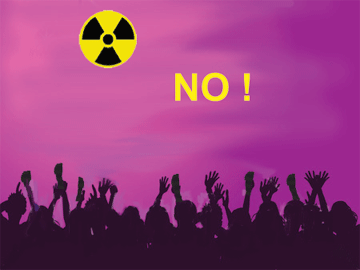 Fukushima today: A first-person account from the field and the conference table, Bulletin of the Atomic Scientists, 26 Aug 15 Subrata Ghoshroy “…… It is hard to tell if the government’s promotional campaign is succeeding. The Abe government is continuing to push for the revival of nuclear power in Japan, as exemplified by the recent restart of the Sendai plant.
By doing so, it clearly sought to lay down a marker—and also perhaps to gauge public opinion before proceeding to restart other plants.
On the other hand, public opinion has been growing stronger in opposition—although the opinion polls have not been overwhelming. One of the significant aspects of the conference was the vigorous participation of women scientists like Miyake, who spoke out strongly against nuclear power and also challenged the male domination in the scientific community. Young mothers were participating in increasing numbers in anti-nuclear protests in Japan and also in Korea, we were told by Hye-Jeong Kim, a leader of the anti-nuclear movement in South Korea, who is also a member of the country’s Nuclear Safety and Security Commission, an equivalent of the NRC in the United States.
With these developments in mind, a scientific community that can speak with one voice and make a credible case against the government-industry publicity campaign is crucial. The Japanese Scientists’ Association envisioned its role as accurately communicating to people around the world the dangers of nuclear power and the seriousness of the damage suffered by the Japanese people. And the group hoped to use science to counter the forces that promote nuclear power in Japan, and demand that Japan give top priority to renewables……
…………Editor’s note: The conference was organized in collaboration with the International Network of Engineers and Scientists; other conference organizers included Keiiji Ujikawa, (an economics professor at Yokohama National University, Shinjiro Hagiwara (an emeritus professor of economics at the same institution), and Fujio Yamamoto, (an emeritus professor of mechanical engineering at Fukui University.)
The author had made a video presentation earlier about his visit to Fukushima at a meeting in Boston. http://thebulletin.org/fukushima-today-first-person-account-field-and-conference-table8683#.Vd6Rj7YbwEs.twitter
Fukushima: Excess Occurrence of children’s thyroid cancer not due to overdiagnosis
physicians actually involved with diagnosis during the thyroid examination unanimously agree that “it is not overdiagnosis.” These physicians include Dr. Akira Miyauchi from Kuma Hospital, one of nation’s top thyroid clinicians, as well as Dr. Shinichi Suzuki from Fukushima Medical University, director of thyroid examination in Fukushima Prefecture.
 Oshidori Mako Interviews Experts Regarding Excess Occurrence of Pediatric Thyroid Cancer in Fukushima, Fukushima Voice, English Version 6 Aug 15,
This is a translation of an article written by Oshidori Mako and published in the July issue of DAYS JAPAN, posted here with permission of Oshidori Mako. Pediatric Thyroid Cancer in Fukushima
The Thyroid Examination Assessment Subcommittee of
the Prefectural Oversight Committee Meeting for the Fukushima Health Management Survey
Admits Excess Occurrence of Pediatric Thyroid Cancer
In Full-Scale Screening or second round screening, 15 children were newly diagnosed similarly.
Sendai nuclear plant operator set to plug leaks in 5 cooling system pipes
SATSUMA-SENDAI, Kagoshima Prefecture–The operator of the recently reactivated Sendai nuclear power plant here said it had pinpointed the sites of leaks that forced a postponement of full reactor operations.
Kyushu Electric Power Co. said it detected tiny cracks in five narrow pipes that carry seawater used to cool steam. The pipes are part of the steam condenser at the No. 1 reactor, which resumed operation on Aug. 11.
Output will be maintained at 75 percent of capacity, while the utility carries out checks for further holes.
Kyushu Electric was expected to release a final report on the glitch on Aug. 25. At the same time, it said fully restored reactor operations will be postponed from the scheduled date of Aug. 25.
The regional utility detected a tiny amount of seawater leaked into one of three condensers in the secondary cooling system of the reactor, which has an output of 890 megawatts, on Aug. 20.
The seawater was flowing in the condenser, a device that converts steam used in power generation to water by cooling it, and became mixed with the secondary cooling water that does not contain radioactive materials.
Kyushu Electric suspended operations of one of the two water circulation channels through the condenser at issue and inspected narrow pipes forming the system by passing an electric current through it.
Technicians found miniscule holes in five of 13,000 pipes they had inspected as of 10 a.m. on Aug. 24. After inspecting all the pipes, the workers will repair the faulty bits.
Kyushu Electric said the seawater was removed with a desalination device and operations at the No. 1 reactor were not hindered.
The reactor was restarted earlier this month for the first time since it was shut down for a periodic inspection in May 2011. Opponents of the plant have voiced safety concerns
Source: Asahi Shimbun
http://ajw.asahi.com/article/behind_news/social_affairs/AJ201508250046
Agreement reached on decontaminated water disposal
Fishers in Japan’s northeastern prefecture of Fukushima have formally allowed the release of decontaminated groundwater from around buildings of nuclear reactors into the sea.
The release is aimed at reducing production of heavily contaminated water in the basements of the buildings at the Fukushima Daiichi plant.
Groundwater flowing into the buildings is producing 300 tons of highly radioactive water daily, resulting in a huge number of storage tanks at the plant.
Plant operator Tokyo Electric Power Company, or TEPCO, and the government have been asking the fishers to allow the release to keep the water from flowing into the buildings and becoming heavily tainted.
TEPCO plans to use 41 wells already dug around the buildings to pump up the water and lower the levels of radioactive substances to between one-one-thousandth and one-ten-thousandth of their original amounts before releasing it.
The operator, the government and an independent institution plan to check so that only water below allowed levels is discharged.
On Tuesday, the local federation of fisheries cooperatives approved the plan on condition that the release rules are strictly followed and that compensation is paid for any damage due to harmful rumors.
Federation chairman Tetsu Nozaki said the approval was decided unanimously, but that some members were dissatisfied. He added that the plan is needed for steadily decommissioning the plant, and that he wants TEPCO and the government to keep their word.
The firm’s Fukushima headquarters chief Yoshiyuki Ishizaki said the plan is a big step forward in the decommissioning process as well as tackling the problem of contaminated water. He said fishermen told him that the plan could lead to rebuilding of Fukushima’s fishing industry, and that he will keep their remarks in mind.
TEPCO plans to start releasing the water soon.
Source: NHK
http://www3.nhk.or.jp/nhkworld/english/news/20150825_33.html
Fishermen OK TEPCO’s plan to dump Fukushima plant water into sea
FUKUSHIMA, Japan (Kyodo) — Fishermen in Fukushima Prefecture approved on Tuesday a plan by Tokyo Electric Power Co. to pump up contaminated groundwater continuously flowing into the stricken Fukushima Daiichi nuclear station and dump it into the ocean after removing almost all radioactive materials from it.
The plan is one of TEPCO’s key measures aimed at curbing the amount of toxic water buildup at the complex. Local fishermen had long opposed the plan amid concern over pollution of the ocean and marine products.
“I don’t know if it’s acceptable for all fishery operators, but stable work of decommissioning (of the Fukushima plant) is necessary for the revival of Fukushima’s fishery industry,” Tetsu Nozaki, chairman of the Fukushima Prefectural Federation of Fisheries Co-operative Associations, told reporters after a board meeting.
He also called on TEPCO to make sure it will only discharge water which does not contain radioactive materials exceeding the legally allowable limit.
The amount of toxic water is piling up every day, as untainted groundwater is seeping into the reactor buildings and mixing with radioactive water generated in the process of cooling the reactors that suffered meltdowns in the nuclear crisis triggered by a massive earthquake and tsunami in 2011.
By pumping up water through drainage wells and dumping it into the ocean after treatment, TEPCO said it will be able to halve some 300 tons of contaminated water being generated each day.
In exchange for approving the plan, the Fukushima fisherman’s association demanded on Aug. 11 that the government and TEPCO continue paying compensation for the fishermen as long as the nuclear plant causes damage to their business, among other requirements.
On Tuesday, the National Federation of Fisheries Cooperative Associations also gave the green light for the release of treated water into the sea.
TEPCO has been struggling to resolve the problem of toxic water buildup at the plant for more than four years after the nuclear crisis, with radiation leakages into the environment still occurring regularly at the complex.
The company is also behind schedule on a project to build a huge underground ice wall, another key measure to prevent radioactive water from further increasing at the site.
Source: Mainichi
http://mainichi.jp/english/english/newsselect/news/20150825p2g00m0dm075000c.html
Persistence of radioactive caesium in ocean floor near Fukushima Daiichi
 Nuclear Accident: Cesium contamination persists in ocean floor near Fukushima Daiichi site http://www.sciencedirect.com/science/article/pii/S0265931X1530031X Journal of Environmental Radioactivity Volume 148, October 2015, Pages 92–110
Highlights
- • The majority of radiocesium is transported in the particulate fraction.
- • The contribution of the dissolved fraction is only relevant in base flows.
- • Significant transfer of particulate-bound radiocesium occurs during heavy rainfall.
- • Radiocesium deposited in floodplains may be remobilized, inducing contamination.
- • Transdisciplinary approach is required to quantify radiocesium transfers.
- Abstract The devastating tsunami triggered by the Great East Japan Earthquake on March 11, 2011 inundated the Fukushima Dai-ichi Nuclear Power Plant (FDNPP) resulting in a loss of cooling and a series of explosions releasing the largest quantity of radioactive material into the atmosphere since the Chernobyl nuclear accident. Although 80% of the radionuclides from this accidental release were transported over the Pacific Ocean, 20% were deposited over Japanese coastal catchments that are subject to frequent typhoons. Among the radioisotopes released during the FDNPP accident, radiocesium (134Cs and137Cs) is considered the most serious current and future health risk for the local population.
- The goal of this review is to synthesize research relevant to the transfer of FDNPP derived radiocesium from hillslopes to the Pacific Ocean. After radiocesium fallout deposition on vegetation and soils, the contamination may remain stored in forest canopies, in vegetative litter on the ground, or in the soil. Once radiocesium contacts soil, it is quickly and almost irreversibly bound to fine soil particles. The kinetic energy of raindrops instigates the displacement of soil particles, and their bound radiocesium, which may be mobilized and transported with overland flow. Soil erosion is one of the main processes transferring particle-bound radiocesium from hillslopes through rivers and streams, and ultimately to the Pacific Ocean. Accordingly this review will summarize results regarding the fundamental processes and dynamics that govern radiocesium transfer from hillslopes to the Pacific Ocean published in the literature within the first four years after the FDNPP accident.The majority of radiocesium is reported to be transported in the particulate fraction, attached to fine particles. The contribution of the dissolved fraction to radiocesium migration is only relevant in base flows and is hypothesized to decline over time. Owing to the hydro-meteorological context of the Fukushima region, the most significant transfer of particulate-bound radiocesium occurs during major rainfall and runoff events (e.g. typhoons and spring snowmelt). There may be radiocesium storage within catchments in forests, floodplains and even within hillslopes that may be remobilized and contaminate downstream areas, even areas that did not receive fallout or may have been decontaminated.
- Overall this review demonstrates that characterizing the different mechanisms and factors driving radiocesium transfer is important. In particular, the review determined that quantifying the remaining catchment radiocesium inventory allows for a relative comparison of radiocesium transfer research from hillslope to catchment scales. Further, owing to the variety of mechanisms and factors, a transdisciplinary approach is required involving geomorphologists, hydrologists, soil and forestry scientists, and mathematical modellers to comprehensively quantify radiocesium transfers and dynamics. Characterizing radiocesium transfers from hillslopes to the Pacific Ocean is necessary for ongoing decontamination and management interventions with the objective of reducing the gamma radiation exposure to the local population.
1 This Month


of the week– Nuclear Reactor Information Task Force

14 May – online event From Bombs to Data Centres: the Face of Nuclear Colonialism
To see nuclear-related stories in greater depth and intensity – go to https://nuclearinformation.wordpress.com
-
Archives
- May 2026 (156)
- April 2026 (356)
- March 2026 (251)
- February 2026 (268)
- January 2026 (308)
- December 2025 (358)
- November 2025 (359)
- October 2025 (376)
- September 2025 (257)
- August 2025 (319)
- July 2025 (230)
- June 2025 (348)
-
Categories
- 1
- 1 NUCLEAR ISSUES
- business and costs
- climate change
- culture and arts
- ENERGY
- environment
- health
- history
- indigenous issues
- Legal
- marketing of nuclear
- media
- opposition to nuclear
- PERSONAL STORIES
- politics
- politics international
- Religion and ethics
- safety
- secrets,lies and civil liberties
- spinbuster
- technology
- Uranium
- wastes
- weapons and war
- Women
- 2 WORLD
- ACTION
- AFRICA
- Atrocities
- AUSTRALIA
- Christina's notes
- Christina's themes
- culture and arts
- Events
- Fuk 2022
- Fuk 2023
- Fukushima 2017
- Fukushima 2018
- fukushima 2019
- Fukushima 2020
- Fukushima 2021
- general
- global warming
- Humour (God we need it)
- Nuclear
- RARE EARTHS
- Reference
- resources – print
- Resources -audiovicual
- Weekly Newsletter
- World
- World Nuclear
- YouTube
-
RSS
Entries RSS
Comments RSS
 nuclear-news