China should not be supplying nuclear reactors to Pakistan – says India
India red flags fresh nuclear reactors in Pakistan with China’s help By Dipanjan Roy Chaudhury, ET Bureau | 18 Dec, 2015 NEW DELHI: India has red flagged fresh nuclear reactors that are being set up in Pakistan with Chinese assistance and asserted that it is taking adequate steps to safeguard any challenge to the country’s security due to these developments.
“The government remains committed to taking all necessary steps to safeguard India’s national security interests,” he said.
Earlier this year a Chinese official publicly confirmed that Beijing is involved in at least six nuclear power projects in Pakistan and is likely to export more to the country. …….
Revelations about the growing Sino-Pakistan nuclear partnership comes amid continuing concerns in some quarters that ongoing cooperation is happening without the sanction of the Nuclear Suppliers Group (NSG) which helps supervise the export of global civilian nuclear technology. China is a member of the NSG and existing regulations prohibit members from exporting such technology to nations such as Pakistan which does not have full-fledged safeguard mechanism……
http://economictimes.indiatimes.com/articleshow/50227479.cms?utm_source=contentofinterest&utm_medium=text&utm_campaign=cppst
“Culture of quiet” about India’s Top-Secret Nuclear City to Produce Thermonuclear Weapons
The nuclear city would, in short, be ringed by a security perimeter of thousands of military and paramilitary guards.
in choosing to remain publicly silent, the United States was taking a risk, evidently to try and reap financial and strategic rewards.

 India Is Building a Top-Secret Nuclear City to Produce Thermonuclear Weapons, Experts Say The weapons could upgrade India as a nuclear power — and deeply unsettle Pakistan and China. Foreign Policy.com BY ADRIAN LEVY DECEMBER 16, 2015 “………A culture of quiet
Like the villagers in Challakere, some key members of the Indian Parliament say they know little about the project.
One veteran lawmaker, who has twice been a cabinet minister, and who asked not to be named due to the sensitivity of the topic, said his colleagues are rarely briefed about nuclear weapons-related issues. “Frankly, we in Parliament discover little,” he said, “and what we do find out is normally from Western newspapers.” And in an interview with Indian reporters in 2003, Jayanthi Natarajan, a former lawmaker who later served as minister for environment and forests, said that she and other members of Parliament had “tried time and again to raise [nuclear-related] issues … and have achieved precious little.” Continue reading
India moves closer into nuclear industry of dubious safety
The strange love for nuclear energy http://www.thehindu.com/opinion/lead/on-the-indiajapan-civil-nuclear-deal/article7996972.ece M.V. RAMANA SUVRAT RAJU
The prospect of a nuclear deal with Japan is worrying because it ignores voices on the ground and takes India a step closer to the construction of untested and expensive reactors
During Japanese Prime Minister Shinzô Abe’s visit to India last week, Japan and India reportedly made progress on a nuclear deal that they have been discussing for more than seven years. The governments did not actually conclude the deal: the Joint Statement released by the Prime Ministers only includes a droll phrase welcoming the “agreement reached… on the Agreement… for Cooperation in the Peaceful Uses of Nuclear Energy” and expresses the hope that “this Agreement will be signed after the technical details are finalised”.
- These “details” include deep concerns about India’s growing weapons arsenal within Japan’s polity that even Mr. Abe’s militaristic government has found difficult to ignore. Nevertheless, even the prospect of an India-Japan nuclear deal is worrying because it takes the country a step closer to the construction of untested and expensive reactors. Moreover, despite the Narendra Modi government’s “Make in India” rhetoric, the agreement will primarily benefit multinational corporations based in Japan. Continue reading
India’s secret nuclear weapons building city
 India Is Building a Top-Secret Nuclear City to Produce Thermonuclear Weapons, Experts Say The weapons could upgrade India as a nuclear power — and deeply unsettle Pakistan and China. Foreign Policy.com BY ADRIAN LEVY DECEMBER 16, 2015 “………..Only after construction on the site began that year did it finally become clear to the tribesmen and others that two secretive agencies were behind a project that experts say will be the subcontinent’s largest military-run complex of nuclear centrifuges, atomic-research laboratories, and weapons- and aircraft-testing facilities when it’s completed, probably sometime in 2017. Among the project’s aims: to expand the government’s nuclear research, to produce fuel for India’s nuclear reactors, and to help power the country’s fleet of new submarines.
But another, more controversial ambition, according to retired Indian government officials and independent experts in London and Washington, is to give India an extra stockpile of enriched uranium fuel that could be used in new hydrogen bombs, also known as thermonuclear weapons, substantially increasing the explosive force of those in its existing nuclear arsenal.
India’s close neighbors, China and Pakistan, would see this move as a provocation: Experts say they might respond by ratcheting up their own nuclear firepower. Pakistan, in particular, considers itself a military rival, having engaged in four major conflicts with India, as well as frequent border skirmishes.
New Delhi has never published a detailed account of its nuclear arsenal, which it first developed in 1974, and there has been little public notice outside India about the construction at Challakere and its strategic implications. The government has said little about it and made no public promises about how the highly enriched uranium to be produced there will be used. As a military facility, it is not open to international inspection.
But a lengthy investigation by the Center for Public Integrity (CPI), including interviews with local residents, senior and retired Indian scientists and military officers connected to the nuclear program, and foreign experts and intelligence analysts, has pierced some of the secrecy surrounding the new facility, parts of which are slated to open in 2016. This new facility will give India a nuclear capability — the ability to make many large-yield nuclear arms — that most experts say it presently lacks.
A nuclear stockpile in a dangerous neighborhood
The independent Stockholm International Peace Research Institute (SIPRI)estimates that India already possesses between 90 and 110 nuclear weapons, as compared to Pakistan’s estimated stockpile of up to 120. China, which borders India to the north, has approximately 260 warheads…..
India, according to former Australian nonproliferation chief John Carlson, is one of just three countries that continue to produce fissile materials for nuclear weapons — the others are Pakistan and North Korea. The enlargement of India’s thermonuclear program would position the country alongside the United Kingdom, the United States, Russia, Israel, France, and China, which already have significant stockpiles of such weapons.
Few authorities in India are willing to discuss these matters publicly, partly because the country’s Atomic Energy Act and the Official Secrets Act shroud everything connected to the Indian nuclear program and in the past have been used to bludgeon those who divulge details. Spokesmen for the two organizations involved in the Challakere construction, the Defense Research and Development Organisation (DRDO) and the Bhabha Atomic Research Centre (BARC), which has played a leading role in nuclear weapons design, declined to answer any of CPI’s questions, including about the government’s ambitions for the new park. The Indian Ministry of External Affairs also declined to comment.
The secret city emerges
Western analysts, speaking on condition of anonymity, say, however, that preparation for this enrichment effort has been underway for four years, at a second top-secret site known as the Rare Materials Plant, 160 miles to the south of Challakere, near the city of Mysore.
Satellite photos of that facility from 2014 have revealed the existence of a new nuclear enrichment complex that is already feeding India’s weapons program
Satellite photos of that facility from 2014 have revealed the existence of a new nuclear enrichment complex that is already feeding India’s weapons program and, some Western analysts maintain, laying the groundwork for a more ambitious hydrogen bomb project. It is effectively a test bed for Challakere, they say, a proving ground for technology and a place where technicians can practice producing the highly enriched uranium the military would need……..
Gary Samore, who served from 2009 to 2013 as the White House coordinator for arms control and weapons of mass destruction, said there was little misunderstanding. “I believe that India intends to build thermonuclear weapons as part of its strategic deterrent against China,” said Samore. It is unclear, he continued, when India will realize this goal of a larger and more powerful arsenal, but “they will.”
A former senior British official who worked on nuclear issues likewise said intelligence analysts on both sides of the Atlantic are “increasingly concerned” about India’s pursuit of thermonuclear weapons and are “actively monitoring” both sites. U.S. officials in Washington said they shared this assessment. “Mysore is being constantly monitored, and we are constantly monitoring progress in Challakere,” a former White House official said.
Robert Kelley, who served as the director of the Iraq Action Team at the International Atomic Energy Agency (IAEA) from 1992-1993 and 2001-2005, is a former project leader for nuclear intelligence at the Los Alamos National Laboratory. He told CPI that after analyzing the available satellite imagery, as well as studying open source material on both sites, he believes that India is pursuing a larger thermonuclear arsenal. Its development, he warned, “will inevitably usher in a new nuclear arms race” in a volatile region.
However, Western knowledge about how India’s weapons are stored, transported, and protected, and how the radiological and fissile material that fuels them is guarded and warehoused — the chain of custody — remains rudimentary. After examining nuclear security practices in 25 countries with “weapons-usable nuclear materials,” the Nuclear Threat Initiative (NTI), a nonprofit organization headquartered in Washington, in January 2014 ranked India’s nuclear security practices 23rd, above only Iran and North Korea. An NTI analyst who asked to remain unnamed told CPI that India’s score stemmed in part from the country’s opacity and “obfuscation on nuclear regulation and security issues.”
But the group also noted the prevalence of corruption in India and the insecurity of the region: the rise ofIslamist jihad fronts in India and nearby Bangladesh, Pakistan, and Afghanistan, as well as homegrown leftist insurgencies. “Many other countries, including China, have worked with us to understand the ratings system and better their positions.” But India did not, the NTI analyst said.
A culture of quiet
Like the villagers in Challakere, some key members of the Indian Parliament say they know little about the project. ….http://foreignpolicy.com/2015/12/16/india_nuclear_city_top_secret_china_pakistan_barc/
Unknown – the methods, costs, time taken, to clean up Fukushima nuclear site
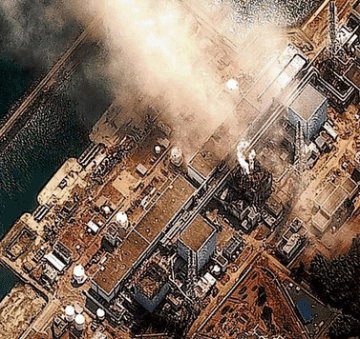
 Fukushima chief says ‘no textbook’ for nuclear cleanup, CTV News, Yuri Kageyama, The Associated Press , December 15, 2015 TOKYO — The man leading the daunting task of dealing with the Fukushima nuclear plant that sank into meltdowns in northeastern Japan warns with surprising candour: Nothing can be promised.
How long will it take to decommission the three breached reactors, and how will it be accomplished, when not even robots have been able to enter the main fuel-debris areas so far? How much will it ultimately cost? Naohiro Masuda, tapped last year as chief of decontamination and decommissioning for plant owner Tokyo Electric Power Co., acknowledges he is a long way from answering those questions definitively.
“This is something that has never been experienced. A textbook doesn’t exist for something like this,” Masuda told The Associated Press in an interview at TEPCO’s Tokyo headquarters Monday. Continue reading
Vehement anti nuclear protests in India
 India’s nuclear solution to global warming is generating huge domestic protests Transparency and accountability are lacking at India’s largest nuclear park, where a Russian reactor was constructed with faulty parts over violent local resistance Center for Public Integrity By Adrian Levy , 15 Dec 15
Key findings:
- India is planning to curb its greenhouse gas emissions partly by opening dozens of nuclear reactors over the next two decades, but domestic opposition to additional reactors has been fierce.
- Citizens have been alarmed by the nuclear industry’s poor reactor safety record and by evidence that the country’s new Russian-built reactors contain defective parts due to corrupt manufacturing.
- The government has reacted aggressively to the protests, arresting hundreds of thousands of participants and depicting some of them as stooges of the United States and other foreign powers who harbor anti-Indian sentiments.
- The vehemence of the protests raises questions about the Indian government’s plan to use nuclear power to keep from becoming the world’s largest contributor to global warming over the next 35 years.
Nagercoil, Tamil Nadu, INDIA — In a town riven by blackouts every summer, the startup in December of commercial operations for a multi-billion-dollar, Russian-built nuclear reactor near here would ordinarily have been a cause for celebration.
It was more than a billion dollars over its budget and six years late. But its full operation in Kudankulam, a remote fishing village in the southern tip of India, 1,700 miles from the capital, was portrayed by operators and builders from the two countries as the latest symbol of their national friendship and technical prowess, as well as a showcase step in India’s ambitious plan to bring a total of 57 reactors on line to power the subcontinent’s economic surge.
S.P. Udayakumar, a bespectacled 56-year-old schoolteacher and protest leader in the region, isn’t rejoicing, however. From his bungalow in Nagercoil, a town 30 miles west of the plant whose wealth rests on making coconut fiber and the spice trade, Udayakumar has organized a long-running protest movement that’s drawn in a large number of residents — hundreds of thousands.
It’s motivated, he says, by research that sympathetic lawyers and nuclear experts have conducted into the reactor’s problematic construction as well as the checkered safety records of the giant Indian and Russian consortiums that erected it. Although the reactor is now shuttered again for maintenance — due to problems with parts supplied by a Russian company that Moscow authorities have accused of wrongdoing — a second reactor at this vast nuclear park, India’s largest, should be completed soon, after fourteen years of construction and testing, to be followed by two more reactors next year.
Udayakumar worries that the massive new Russian pressurized-water reactors, of a size and type never before seen on the subcontinent, have been constructed of shoddy material; that their design and location leave them vulnerable to a flooding disaster like the one experienced by Japan’s Daichi reactor at Fukushima; and that India’s nuclear regulators are either asleep at the switch or under the thumb of pro-nuclear officials that he believes cannot be trusted. In Oct. 2011, the country’s prime minister attempted at a direct meeting to persuade Udayakumar these concerns were unwarranted, but without luck.
His complaints — many of which are backed up by documents obtained by the Center for Public Integrity from the country’s nuclear regulator, retired government officials, government auditors, and industry analysts — were echoed in an unprecedented letter sent in May 2013 to India’s prime minister by 60 of the country’s most prominent scientists, most of them pro-nuclear and working for elite state-run institutions. Their letter called for a moratorium in Kudankulam, while new inquiries were made into allegations of widespread corruption and a fraud associated with the fabrication of the reactor’s components in Russia.
The outcome of this bitter debate has implications far outside India’s borders…….http://www.publicintegrity.org/2015/12/15/18873/indias-nuclear-solution-global-warming-generating-huge-domestic-protests
India’s river of nuclear death and disease
 India’s nuclear industry pours its wastes into a river of death and disease Scientists say nuclear workers, village residents, and children living near mines and factories are falling ill after persistent exposure to unsafe radiation Center For Public Integrity , By Adrian Levy
 December 14, 2015 Jadugoda, Jharkhand, INDIA —
When Ghosh’s team seven years ago collected samples from the river and also from adjacent wells, he was alarmed by the results. The water was adulterated with radioactive alpha particles that cannot be absorbed through the skin or clothes, but if ingested cause 1,000 times more damage than other types of radiation. In some places, the levels were 160 percent higher than safe limits set by the World Health Organization.
“It was potentially catastrophic,” Ghosh said in a recent interview. Millions of people along the waterway were potentially exposed.
What the professor’s team uncovered was hard evidence of the toxic footprint cast by the country’s secret nuclear mining and fuel fabrication program. It is now the subject of a potentially powerful legal action, shining an unusual light on India’s nuclear ambitions and placing a cloud over its future reactor operations……..
On August 21, 2014, however, a justice in this state’s court ordered an official inquiry into allegations that the nuclear industry has exposed tens of thousands of workers and villagers to dangerous levels of radiation, heavy metals or other carcinogens, including arsenic, from polluted rivers and underground water supplies that have percolated through the foodchain — from fish swimming in the Subarnarekha River to vegetables washed in its tainted water.
Given the absolute secrecy that surrounds the nuclear sector in India, the case is a closed affair, and all evidence is officially presented to the judge. But the Center for Public Integrity has reviewed hundreds of pages of personal testimony and clinical reports in the case that present a disturbing scenario.
India’s nuclear chiefs have long maintained that ill health in the region is caused by endemic poverty and and the unsanitary conditions of its tribal people, known locally as Adivasi, or first people. But the testimony and reports document how nuclear installations, fabrication plants and mines have repeatedly breached international safety standards for the past 20 years. Doctors and health workers, as well as international radiation experts, say that nuclear chiefs have repeatedly suppressed or rebuffed their warnings. Continue reading
Official data now reveals hugh extent of Fukushima radiation to USA West Coast
OFFICIAL DATA: FUKUSHIMA BOMBARDED WEST COAST WITH 790X NORMAL RADIATION http://www.thedailysheeple.com/official-data-fukushima-bombarded-west-coast-with-790x-normal-radiation_122015 DECEMBER 14, 2015 | JOSHUA KRAUSE | THE DAILY SHEEPLE |Ever since the meltdown of the Fukushima Daiichi power plant in 2011, our government has been pretty quiet about the environmental and health implications of that disaster. When the plant first melted down, much of our population was justifiably alarmed. After all, many of us remembered the Chernobyl incident and how the radiation it produced spread all across Europe, and in smaller amounts, the world.
But the government assured us that everything would be fine, and at most we would see a negligible amount of radioactive particles in the United States. Everyone who said otherwise was and still is, called a quack or a conspiracy theorist.
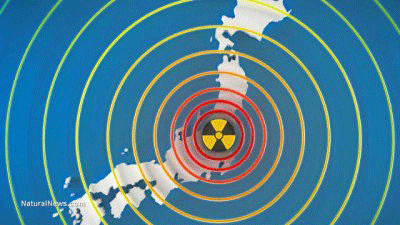
However, official government data that was collected in 2011 has just seen the light of day, and it suggests that our initial concerns were probably correct. The information was collected by officials with Los Angeles County when concerns were raised by residents. After state and federal agencies failed to test the area for radiation in a timely manner, the county hired their own people to run the test. Natural News reported on the results.
Samples were taken between April 29 and May 2, 2011, approximately seven weeks after the radioactive releases from Fukushima. The county found that gross alpha radiation levels at a location in Los Angeles were 300 femtocuries per cubic meter (fCi/m3), and levels at a Hacienda Heights location were 200 fCi/m3.
For context, the Lawrence Livermore National Laboratory reports the average (annual median) level of gross alpha activity for the state of California as just 0.38 fCi/m3 – that is, 790 times lower.
The levels detected in Los Angeles County were a full 100 times higher than the level that requires an investigation at a U.S. nuclear laboratory, according to the Environmental Monitoring Plan at Brookhaven National Laboratory: “If the gross alpha activity in the [air] filters is greater than 3 fCi/m3, then collect more samples in the vicinity, and project manager will review all detections above the limits … All values greater than the above-stated gross alpha/beta concentration shall trigger an investigation.”
Finally, the Los Angeles County levels were almost 15 times higher than the federal regulatory limit for alpha radiation, which is 21 fCi/m3, according to a 2010 document from Idaho National Laboratory.
Moreover, the alpha radiation emitting particles that were deposited on the West Coast are incredibly dangerous for humans. While Gamma and Beta Radiation have far more power and penetration, Alpha rays produce a tremendous amount of damage in the human body when ingested. Because they don’t penetrate materials like Gamma rays do, all of their energy is deposited into the cells that reside near the particle.
More importantly, it doesn’t take very many of these particles to ruin your long-term health. For instance, if you were exposed to a temporary large dose of radiation, your body could probably recover from it, perhaps without even developing cancer. But when the particle itself is embedded in your tissue for weeks, months, and in some cases for years, as it destroys and mutates surrounding cells over and over again, you can expect a significantly shorter lifespan. Even if the amount radiation is small, it’s also continuous, and its source is difficult to remove
So while the government was telling us that everything was hunky dory in the weeks after the Fukushima meltdown, major West Coast cities like Los Angeles were being drenched in alarming levels of this radioactive waste.
Who knows how much of that fell onto the countless farms in the Central Valley, which feed much of the United States? And since they failed to inform us about the danger we were in then, who knows how much danger we are in now? Our government hates to admit when its wrong (or they won’t admit that they lied to us), so if we are still in danger, somehow I doubt they will have anything to say to us now.
Delivered by The Daily Sheeple
We encourage you to share and republish our reports, analyses, breaking news and videos (Click for details).
Contributed by Joshua Krause of The Daily Sheeple.
Joshua Krause is a reporter, writer and researcher at The Daily Sheeple. He was born and raised in the Bay Area and is a freelance writer and author. You can follow Joshua’s reports at Facebook or on his personal Twitter. Joshua’s website is Strange Danger .
China keenly marketing nuclear technology to South Africa
 China confident of winning $80b S. Africa nuclear power bid
By Lyu Chang (China Daily): 2015-12-12 Industry officials are confident of China being the front-runner to win the right to build South Africa’s new generation of nuclear power stations.
“We think we are likely to win the bid, after preparing all the documents for the tender,” ZhengMingguang, head of the Shanghai Nuclear Engineering Research and Design Institute, ahigh-tech arm of the State Nuclear Power Technology Corp.
“The nuclear energy industry also involves other issues, so we can’t set any date yet on thefinal bidding process,” he said.
The country hopes to land the contract using its CAP1400 nuclear technology, which isdesigned by SNERDI and based on the AP1000 reactor technology developed by the UnitedStates-based Westinghouse Electric Co LLC.
South Africa currently operates the continent’s only nuclear power plant, near Cape Town, butthe country is currently facing chronic electricity shortages.
The Pretoria government invited tenders in July for an estimated $80 billion contract to buildfour nuclear reactors-the largest contract in the country’s history-which attractedwidespread interest, including from State Nuclear Power Technology Corp, Russia’s stateatomic agency Rosatom and French nuclear firms…….http://www.chinadaily.com.cn/business/2015-12/12/content_22695369.htm
Concerns about China’s nuclear technology: is it safe?
China’s nuclear technology ambition is worrying: The Yomiuri Shimbun Straits.com 15 Dec 15 In its editorial on Dec 15, 2015, The Yomiuri Shimbun hopes China will follow up on its nuclear ambitions with suitable regulatory measures. We cannot afford to be unconcerned about China’s moves to accelerate construction of nuclear power plants.
Is the safety of these facilities ensured?….
The administration of Chinese President Xi Jinping is planning to further increase the number of nuclear power plants to cope with the nation’s serious air pollution, which stems from coal-fired power generation, and increasing energy demand.
According to local media reports, Beijing will build six to eight nuclear reactors annually in the next five years. By 2030, the number is set to reach 110, surpassing the 99 in the United States.
One major concern is that information about nuclear power plants in China is extremely limited.
China’s nuclear power operations began in 1994, and the number of nuclear reactors has increased rapidly since then.
However, the details of regulatory standards are not disclosed – it is quite obscure what kind of safety measures China is currently taking.
There are limited examples of the Chinese government officially disclosing troubles with the nation’s nuclear power plants to the public, such as leaks of radioactive material or mechanical problems caused by accidents.
The less information available, the more concern there is. The Japanese government must reinforce its measures to collect information on China’s nuclear power plants.
Prevailing westerlies bring yellow sand and air pollutants to Japan from China. If serious nuclear accidents occur in China, there could be serious repercussions for Japan.
It cannot be overlooked the fact that China’s nuclear power plants are concentrated in coastal areas.
After the nuclear accident at Tokyo Electric Power Co.’s Fukushima No. 1 nuclear power plant, Beijing has put restrictions on the construction of nuclear power plants in inland areas. We assume Beijing is wary of the domestic impact from accidents if they occur inland.
China’s nuclear reactors rarely use technologies developed in the country – they are basically an amalgamation of technologies imported from European countries, the United States and Japan.
Japan provides core parts, such as reactor pressure vessels.
In recent years, China’s export drive on nuclear power plants has received worldwide attention…….
Beijing is also constructing Hualong One reactors in Pakistan, and is seeking to launch a promotion drive in South American and African countries.
However, we must point out that Hualong One is a model still under construction even in China itself. It is problematic that a model without sufficient operation records has begun sweeping the whole world…….. http://www.straitstimes.com/asia/east-asia/chinas-nuclear-technology-ambition-is-worrying-the-yomiuri-shimbun
India’s authorities in denial about nuclear industry’s radiation-caused deaths
“Inside UCIL, they see themselves as under siege, defending the nation, one atom at a time,” Biruli said, “and outside … we are absorbing those atoms and whatever else the corporation spews out from its broken pipes and dams. We’re drinking it all up, feeding it to our kids, and our wives, if they can conceive, are absorbing them into their blood stream.”
 India’s nuclear industry pours its wastes into a river of death and disease Scientists say nuclear workers, village residents, and children living near mines and factories are falling ill after persistent exposure to unsafe radiation Center For Public Integrity , By Adrian Levy December 14, 2015 Jadugoda, Jharkhand, INDIA
……..Denying what scientists documented
India’s nuclear project is seen as the country’s most prestigious enterprise, a tangible expression of the nation’s resilience and resourcefulness. This idea was cemented when India tested nuclear devices in 1998, in twin blasts. Feeding the weapons program was UCIL’s duty, and protecting the mines became paramount.
As a result, the UCIL-funded health studies were not welcomed by the Bhabha Atomic Research Center, the country’s premier civil and military nuclear research facility, which has a Health Physics Laboratory in Jadugoda. It said in 1999, after a quick visual inspection of villagers living close to the mines, that its own experts “unanimously agreed that the disease pattern could not be ascribed to radiation exposure.” The complainers were “backwards people” who suffered from “alcoholism, malaria and malnutrition,” the company said. But it took no soil, water or air samples and launched no epidemiological study.
UCIL subsequently reversed its own position. “There is no radiation or any related health problems in Jadugoda and its surrounding areas,” J.L. Bhasin, the managing director of UCIL, concluded in 1999, in a press conference before local reporters in Jadugoda. A.N. Mullick, UCIL’s chief medical officer for 25 years, issued a press statement a few months later that “I have not come across any radiation-related ailments during my entire career.” Continue reading
Middleman for North Korea nuclear program found guilty
Singapore shipping agent guilty of acting as middleman for North Korea nuclear program Anna Fifield and Monica Miller, Washington Post | December 15, 2015 TOKYO – Singapore sent a stern warning Monday to companies doing business for North Korea, with a court handing down guilty verdicts to a local shipping agent accused of transferring money to help Pyongyang buy weapons.
The case against Chinpo Shipping – which had transferred millions of dollars for North Korea – revealed a trove of information about how North Korea has been using intermediaries to send money through the international banking system without detection.
“This is a significant case in terms of prosecuting North Korean middlemen,” said Andrea Berger, a nonproliferation expert at the Royal United Services Institute in London, noting that this was the first case under a Singaporean regulation that bars companies from helping North Korea with its nuclear and missile programs…….http://news.nationalpost.com/news/singapore-shipping-agent-guilty-of-acting-as-middleman-for-north-korea-nuclear-program
India’s secretive, toxic, uranium industry and its radiation deaths
According to the uranium corporation’s own records, 17 UCIL laborers died in 1994, 14 more in 1995, 19 in 1996 and 21 in 1997; no cause of death was revealed in the records seen by the Center, but critics claim most if not all were radiation-related.
The corporation will not discuss the causes of these deaths. But a spokesman for the Jarkhandi Organization Against Radiation (JOAR), a local group formed in 1998 out of a student lobby for indigenous rights, said it has investigated these cases and that “from what we can see all of them contracted illnesses associated with radiation or exposure to heavy metals.”
India’s nuclear industry pours its wastes into a river of death and disease Scientists say nuclear workers, village residents, and children living near mines and factories are falling ill after persistent exposure to unsafe radiation Center For Public Integrity , By Adrian Levy December 14, 2015 Jadugoda, Jharkhand, INDIA “………Charting the trail of disease and ill health back to its source, Ghosh’s team learned that the alpha radiation they had recorded came from the mines, mills and fabrication plants of East Singhbhum, a district whose name means the land of the lions, where the state-owned Uranium Corporation of India Ltd is sitting on a mountain of 174,000 tons of raw uranium. The company, based in Jadugoda, a country town 160 miles west of Kolkata, is the sole source of India’s domestically-mined nuclear reactor fuel, a monopoly that has allowed it to be both combative and secretive.
After starting work in 1967 with a single mine, the corporation now controls six underground pits and one opencast operation that stretch across 1,313 hilly acres, extracting an estimated 5,000 tons of uranium ore a day, generating an annual turnover of $123 million. It supplies nine of the reactors that help India produce plutonium for its arsenal of nuclear weapons, and is thus considered vital to India’s security.
The company crushes the ore below ground and treats it with sulfuric acid, transforming it into magnesium diuranate or “yellowcake,” which is then loaded into drums and taken to the Rakha Mines railway station. From there, it is transported to the Nuclear Fuel Complex in Hyderabad, 861 miles to the southwest. Workers ultimately process it into uranium dioxide pellets that are stacked in rods, inserted into reactors all over India.
Wherever uranium is extracted, anywhere in the world, from Australia to New Mexico, it is a messy, environmentally disruptive process. However, the poor quality of ore eked out of these wooded hills means that for every kilogram of uranium extracted, 1750 kilograms of toxic slurry, known as tailings, must be discarded into three, colossal ponds. Studies by scientists from North America, Australia and Europe show that while these ponds contain only small quantities of uranium, equally hazardous isotopes connected to uranium’s decay are also present, including thorium, radium, polonium and lead, some of which have a half-life of thousands of years. Arsenic is a byproduct, as is radon, a carcinogen.
The tailing ponds in Jharkhand, Ghosh’s team and other scientists discovered, have never been lined with rubble, concrete or special plastics, as organizations like the U.S. Environmental Protection Agency have advised for domestic ponds, and as a result their contents leached in winters into the water table. Lacking a cap, the ponds evaporated in summers, leaving a toxic dust that blew over nearby villages. Thirty five thousand people live in seven villages that lie within a mile and half of the three huge ponds, most of them members of tribal communities.
Moreover, during the monsoon season, the ponds regularly overflowed onto adjacent lands, with contaminants reaching streams and groundwater that eventually tainted the Subarnarekha River, according to studies of the issue by Ghosh’s team and other scientists. Pipes carrying radioactive slurry also frequently burst, leaching into rivers and across villages, according to photographs taken by residents. Lorries hired by the mines also dumped toxic effluent in local fields when the ponds were full, actions caught in photographs and on video taken by villagers and shown to the Center.
When Ghosh published his team’s results, there was no reaction from the mine or the Indian government. A senior official in the U.S. State Department declined to discuss the contents of Jardine’s leaked cable, but said he was aware of criticisms about the uranium corporation.
The evidence begins to pile up……… According to the uranium corporation’s own records, 17 UCIL laborers died in 1994, 14 more in 1995, 19 in 1996 and 21 in 1997; no cause of death was revealed in the records seen by the Center, but critics claim most if not all were radiation-related.
The corporation will not discuss the causes of these deaths. But a spokesman for the Jarkhandi Organization Against Radiation (JOAR), a local group formed in 1998 out of a student lobby for indigenous rights, said it has investigated these cases and that “from what we can see all of them contracted illnesses associated with radiation or exposure to heavy metals.” The spokesman, who asked the Center to withhold his name because intelligence officials and police have arrested him in the past and accused him of “anti-national activities,” claimed the number of deaths was actually “four times higher” than UCIL admitted.
Birulee contacted doctors and public health researchers at Jawaharlal Nehru University, in Delhi, one of India’s best government-funded institutions. They came up with a hypothesis about his mother’s death, blaming the family’s laundry. “My father,” Birulee said, “would bring back his cotton uniform, caked in uranium dust, to be washed once a week, as did all the other contract laborers. There were no facilities in the mines and no warnings.”
Birulee wondered how many other families had been similarly affected and, working with the JNU doctors, helped arrange for midwives to visit nearby villages. They found that 47% of women suffered disruptions to their menstrual cycle, while 18% had had miscarriages or stillborn babies over the previous 5 years. One third were infertile. Many complained their children were born with partially formed skulls, blood disorders, missing eyes or toes, fused fingers or brittle limbs. Livestock too were suffering, with veterinarians reporting that buffaloes and cows were infertile or suffering from blood disorders.
Arjun Soren was one of those affected. Born in Bhatin village, adjacent to another uranium mine on the other side of the tailing pond, Soren became the first member of the Santhal tribe to get a medical degree, and one of his first cases was to track the deteriorating health of his family. “My aunt died of cancer of the gallbladder,” Soren recalled. “My nephew has a rare blood disorder.” Then Soren himself was diagnosed with leukemia and transferred to Mumbai for treatment. “Radiation and toxins from the mining processes has to be the reason,” Soren said. “I spent my childhood playing, breathing, drinking, eating there.”………..
Birulee lodged a protest with the state’s Environment Committee, in Bihar’s capital. Its chairman, Gautam Sagar Rana, directed UCIL to finance an independent health inquiry, led by two professors from Patna Medical College, who were accompanied by the uranium conglomerate’s deputy general manager, R.P. Verma; and the head of its health unit, A.R. Khan. Analyzing a representative sample of those between 4 and 60 years old living within a mile and a half of the third tailing dam, the researchers hired by UCIL concluded that the residents were “affected by radiation.”……..http://www.publicintegrity.org/2015/12/14/18844/india-s-nuclear-industry-pours-its-wastes-river-death-and-disease
High level nuclear waste into the ocean: Japanese govt’s latest idea
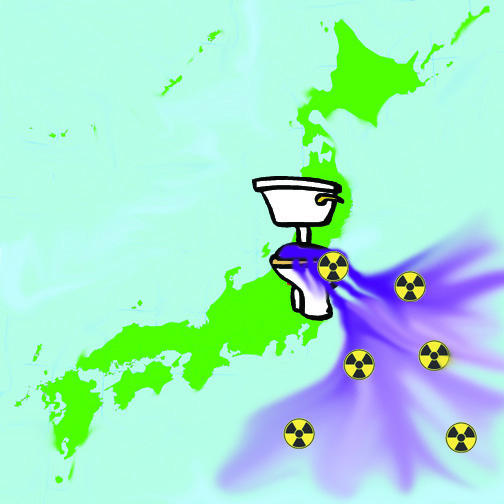 Japan to consider ocean disposal of nuclear waste http://ajw.asahi.com/article/behind_news/social_affairs/AJ201512120027 December 12, 2015 THE ASAHI SHIMBUN
The industry ministry will consider the feasibility of burying high-level radioactive waste from nuclear power plants under the seabed, which a working panel said Dec. 11 could be a “highly appropriate” solution.
In an interim report on disposal methods of highly contaminated materials from spent nuclear fuel, the panel said such waste could be disposed of in adjacent waters within 20 kilometers of the coastline.
It called the disposal method relatively realistic because the circulation of groundwater at sea is not as strong as on land. The panel said the site should be created in adjacent waters so that nuclear waste can easily be transported by ships.
The panel included the under-the-seabed disposal plan in nearby waters as a viable option for the final disposal site.
Based on this proposal, the ministry will set up an expert panel in January to discuss what specific technical challenges lay ahead.
The expert panel will discuss locations of active faults under the seabed and the impact of sea level changes to evaluate the feasibility of the project. It is expected to issue its recommendations by next summer.
While the government has encouraged municipalities to submit candidate sites for nuclear waste disposal, it is being forced to rethink this policy because no local government has come forward to provide a realistic disposal site.
Instead, it will hand-pick the “candidate sites from scientific perspectives” and unilaterally request local governments to comply with its research and inspection efforts.
Declassified report shows Fukushima nuclear situation much worse than we were told
Fukushima report declassified: Worse than we were told Rt.com 12 Dec, 2015 Fukushima nuclear power plant is still experiencing major contamination issues nearly five years after the earthquake, tsunami, and subsequent meltdown. A new declassified report from the US Nuclear Regulatory Commission, written on March 18, 2011 just days after the disaster, sheds light on just how bad it was.
We now know that “100% of the total spent fuel was released to the atmosphere from unit 4.” According to nuclear expert and whistleblower Arnie Gundersen in an interview with WBAI in New York, unit four contained more cesium “than in all 800 nuclear bombs exploded above ground”.
Cesium has been linked to thyroid cancer, which is on the increase in the Fukushima area since the tsunami, according to the US National Library of Medicine. The chemical is highly soluble in water and can find its way into foodstuffs that have been prepared in contaminated areas.
Another report this week revealed there are more than nine million bags of nuclear material piling up in Japan, according to the Fukushima Prefecture and the Environment Ministry.
Engineers at Fukushima are still dealing with fallout from four years ago. Last week, the radioactivity at Reactor 1 was measured at 482,000 becquerels per liter of radioactive cesium, Tokyo Electric Power Company (TEPCO) said.
This is 4,000 times higher than last year and the company believes the contaminated water stored at a nearby building may have leaked into the duct, according to The Asahi Shimbun.
Increases in other areas have not been registered, the company said.
400 to 500 tons of radioactive seawater that washed ashore in the 2011 tsunami is pooled in the tunnels, which lie next to a temporary storage facility for radioactive water being used to cool nuclear fuel inside the damaged reactors.
TEPCO said they plan to investigate the spike in radiation. https://www.rt.com/news/325663-fukushima-nuclear-report-declassified/
-
Archives
- October 2026 (104)
- September 2026 (339)
- August 2026 (330)
- July 2026 (355)
- June 2026 (287)
- May 2026 (306)
- April 2026 (356)
- March 2026 (251)
- February 2026 (267)
- January 2026 (308)
- December 2025 (358)
- November 2025 (359)
-
Categories
- 1
- 1 NUCLEAR ISSUES
- business and costs
- climate change
- culture and arts
- ENERGY
- environment
- health
- history
- indigenous issues
- Legal
- marketing of nuclear
- media
- opposition to nuclear
- PERSONAL STORIES
- politics
- politics international
- Religion and ethics
- safety
- secrets,lies and civil liberties
- spinbuster
- technology
- Uranium
- wastes
- weapons and war
- Women
- 2 WORLD
- ACTION
- AFRICA
- Atrocities
- AUSTRALIA
- Christina's notes
- Christina's themes
- culture and arts
- Events
- Fuk 2022
- Fuk 2023
- Fukushima 2017
- Fukushima 2018
- fukushima 2019
- Fukushima 2020
- Fukushima 2021
- general
- global warming
- Humour (God we need it)
- Nuclear
- RARE EARTHS
- Reference
- resources – print
- Resources -audiovicual
- Weekly Newsletter
- World
- World Nuclear
- YouTube
-
RSS
Entries RSS
Comments RSS

