China’s nuclear fusion experiment – it’s still decades away from practical application
 Chinese Fusion Test Hits A Milestone By Creating 90 Million °F For 102 Seconds http://www.techworm.net/2016/02/chinese-fusion-test-hits-milestone-creating-90-million-f-102-seconds.html BY KAVITA IYER ON FEBRUARY 9, 2016
 Chinese scientists create record by hitting 90 Million °F For 102 Seconds which is three times hotter than the Sun
Scientists in China were able to heat plasma to three times the temperature of the core of our sun using nuclear fusion – a temperature of 90 million °F – for an impressive 102 seconds, as they continued their search to derive energy from nuclear fusion.
They have surpassed the nuclear fusion experimental device referred to as the Wendelstein 7-X (W7-X) stellerator developed by a team of German researchers from the Max Planck Institute that managed to heat hydrogen gas to 80 million degrees Celsius, and sustain a cloud of hydrogen plasma for a quarter of a second.
According to a statement on the institute’s website last Wednesday, the experiment was conducted on a magnetic fusion reactor at the Institute of Physical Science in Hefei, capital of Jiangsu province.
The experiments were carried out in a donut-shaped reactor, officially known as the Experimental Advanced Superconducting Tokamak (EAST). The reactor was able to heat a hydrogen gas – a hot ionised gas called plasma – to about 50 million Kelvins (49.999 million degrees Celsius). The interior of our sun is calculated to be around 15 million Kelvins.
The plasma can be contained by careful control of intense magnetic fields in a tight ring by running through the center of the donut’s circular cross section. In other words, the walls of the structure are never directly exposed to the high temperatures of the plasma.
For the long term goal of such fusion reactors, it is very necessary to make sure that those temperatures can be sustained for long period of time, as a huge input of energy is required to get them started. But, if they end up stopping too soon, the reaction is net negative in energy terms. Such high energies cause great instabilities making it difficult to confine them, as controlling such intense heat is tough. Therefore, it is a positive step indeed for running an experiment at such temperatures for 102 seconds.
It’s not the hottest temperature ever created on Earth. So far, the hottest temperature to have been created artificially in the lab remains that reached by the gargantuan Large Hadron Collider (LHC) at CERN, which managed to achieve temperatures of 4 trillion degrees Celsius back in 2012. However, those conditions last for the sheer flicker of time, which is inadequate for creating energy.
The ultimate goal of China’s team is to hit 100 million degrees Celsius now, and sustain the resulting hydrogen plasma for over 1,000 seconds, or 17 minutes. In the meantime, now that their ‘proof of concept’ experiment is out of the way, the German team says it could possibly sustain its plasma for as long as 30 minutes.
However, most scientists who are in agreement advocate that the long-yet-intense burn required for fusion needs to be around 180 million °F, which means we are likely decades away from actually connecting nuclear fusion to solve humanity’s energy problems.
North Korea rocket launch: UN Security Council condemns Pyongyang, vows ‘serious consequences’
The UN Security Council has strongly condemned North Korea’s rocket launch, saying it will speed up work on a sanctions resolution “in response to these dangerous and serious violations”.
http://www.abc.net.au/news/2016-02-08/un-security-council-condemns-north-korea-missile-launch/7147354
Ambiguities in marketing nuclear reactors to India
 Nuclear ambiguities, THE HINDU, 7 Feb 16 India’s nuclear politics was in the limelight again last week, and not for the best of reasons. More than five years after it signed the Convention on Supplementary Compensation (CSC), India ratified the insurance pooling agreement, which pertains to civil liability in the event of a nuclear accident in any of the acceding countries. Prima facie, this was a good move, bringing to an end a game of will-they-or-won’t-they, which had cast India in poor light internationally and which sat uncomfortably beside three hard-fought nuclear landmarks — the India-U.S. Civil Nuclear Agreement (CNA) and the Nuclear Suppliers Group (NSG) waiver, both passed in 2008, and India’s Civil Liability for Nuclear Damage Act (CLNDA), which became law in 2010.
The dangers in Pakistan’s nuclear strategy
The Other Bomb: Pakistan’s Dangerous Nuclear Strategy, Huffington Post 02/07/2016
For the last seventy-five years, the international politics of the Indian subcontinent, and, to a lesser extent, the broader south and central Asian region that surrounds it, have revolved around the continuing Indian-Pakistani conflict. …….
The program got a significant boost when A.Q. Kahn, a metallurgist working in the Dutch subsidiary of the British-based Uranium Enrichment Company (URENCO Group) returned to Pakistan in 1975. Khan brought with him blueprints for various centrifuge designs and a broad array of business contacts. By buying individual components rather than complete gas centrifuges, he was able to evade existing export controls and acquire the necessary equipment.
Khan would go on to establish an illicit nuclear weapons technology procurement and consulting operation, the “Khan Network,” that would play a major role in the transmission of nuclear weapons technology to Iran, Libya and to a lesser extent, North Korea. The Pakistani government has denied that it had any knowledge of Khan’s illicit side business but under American pressure arrested A.Q. Khan, sentencing him to house arrest, and dismantled his network.
There continue to be reports, however, that rogue elements of that network continue to operate clandestinely……..
According to various intelligence sources, Pakistan currently has between 100 and 120 nuclear weapons under its control. It is believed, however, that Pakistan has produced and stockpiled around 3,000 kilograms (6,600 lbs) of weapons grade HEU and about 200 kilograms (440 lbs) of plutonium. Pakistan’s HEU based warheads utilize an implosion design that requires between 15 and 20 kg of HEU. The current stockpile is enough for an additional 150 to 200 weapons, depending on the warhead’s desired yield……….
Ultimately, in the long-term, the future direction of Pakistan’s nuclear weapons policy is going to be a function of the state of Indian-Pakistan relations on the subcontinent. In the short-term, however, Pakistan’s rapid growth of its nuclear arsenal and its deployment of battlefield nuclear weapons adds one more factor of instability to the regions international politics and further raises the risk that nuclear weapons could fall into the hands of either rogue elements in Pakistan or international jihadist groups.
Volcano erupts rather close to Sendai nuclear station
Sakurajima Volcano erupts violently just a few miles away from nuclear power plant [good video and pictures] MIRROR UK, 5 FEB 2016 BY ELAINE LINES
Fountains of lava spewed out of the mountain but there were no reports of any immediate damage. A Japanese volcano about 30 miles from a nuclear plant violently erupted last week, shooting ash nearly 2 km into the night sky.
Fountains of lava spewed from the Sakurajima mountain, but there were no immediate report of damage and operations at the power station were not affected.
Following what they termed an “explosive eruption,” Japan’s Meteorological Agency raised the warning level on the peak to grade three, meaning people should not approach the mountain.
- Kazuhiro Ishihara, a professor at Kyoto University, told NHK national television: “It appears that stones have been thrown about 2 km from the crater, but this area is quite far from any communities.”
Television footage showed red streams of lava bursting from the side of the volcano, but Ishihara said he thought the impact of the eruption would not be that serious…….
- Japan lies on the “Ring of Fire” – a seismically active horseshoe-shaped band of fault lines and volcanoes around the edges of the Pacific Ocean – and has more than 100 active volcanoes. http://www.mirror.co.uk/news/world-news/sakurajima-volcano-erupts-violently-just-7315024
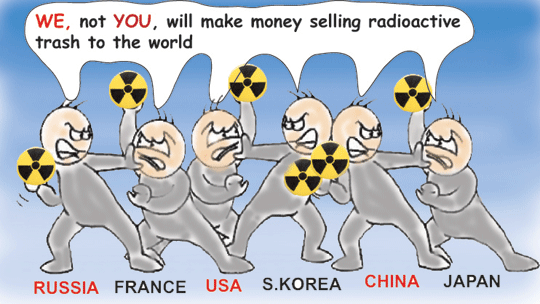
Problems for China’s nuclear power plans
Convention on Supplementary Compensation for Nuclear Damage might or might not work for global nuclear salesmen
India Joins Nuclear Liability Pact, Opening Door to Foreign Reactor Investments http://www.insurancejournal.com/news/international/2016/02/05/397765.htm By Rajesh Kumar Singh and Stephen Stapczynski | February 5, 2016 India’s decision to join a global treaty on nuclear accident liability may help it woo reactor suppliers, including Westinghouse Electric Co. and General Electric Co., that have been reluctant to sell technology to the nation.
The country ratified the Convention on Supplementary Compensation for Nuclear Damage, also known as CSC, the International Atomic Energy Agency said on Thursday. India’s current law allows operators to hold suppliers responsible for accidents, making international equipment makers hesitant to sign deals as the nation seeks to expand nuclear power capacity more than 10-fold by 2032………
India’s decision to join a global treaty on nuclear accident liability may help it woo reactor suppliers, including Westinghouse Electric Co. and General Electric Co., that have been reluctant to sell technology to the nation.
The country ratified the Convention on Supplementary Compensation for Nuclear Damage, also known as CSC, the International Atomic Energy Agency said on Thursday. India’s current law allows operators to hold suppliers responsible for accidents, making international equipment makers hesitant to sign deals as the nation seeks to expand nuclear power capacity more than 10-fold by 2032.
One Step
Ratifying the CSC is the latest effort the government has taken to ease suppliers’ concerns that they would be open to liability claims in case of a nuclear accident. Joining the treaty “marks a conclusive step in the addressing of issues related to civil nuclear liability in India,” the country’s external affairs ministry said in a statement Thursday.
In 2011, India capped suppliers’ liability, saying claims by the nation’s nuclear plant operator can’t exceed the amount of compensation paid by the utility. That was followed last year with the creation of a 15 billion rupees ($222 million) insurance pool to shield the operator, Nuclear Power Corp. of India Ltd., and the suppliers against claims. The government also last year issued a note explaining the law, including the sections that leave suppliers exposed to lawsuits.
No Modification
“The ratification is a very important step for the comfort of foreign vendors,” said Sekhar Basu, secretary at India’s Department of Atomic Energy.
Westinghouse Electric expects to reach a deal with India by the end of this year to provide at least six nuclear reactors, Chief Executive Officer Daniel Roderick said in December. France’s Areva SA signed an accord in 2009 to supply six 1,650-megawatt reactors at Jaitapur, a coastal town in India’s western province of Maharashtra.
“Ratifying the CSC is a step in the right direction towards unlocking the market potential for further nuclear development in India,” Jeff Benjamin, senior vice president of new plants and major projects at Westinghouse, said by e-mail. General Electric and Areva didn’t respond to requests for comment outside normal business hours.
The ratification doesn’t change the country’s existing liability laws, according to R. Rajaraman, emeritus professor of physics at Jawaharlal Nehru University’s School of Physical Sciences.
“This will not lead to a re-think or a modification of our liability act,” Rajaraman said in an e-mail. “That would not be politically feasible.”
Vikas Swarup, spokesman for India’s External Affairs Ministry, didn’t respond to requests seeking comment. Calls to Jagdish Thakkar, a spokesman at the prime minister’s office, weren’t answered.–With assistance from Archana Chaudhary.
Convention on Supplementary Compensation (CSC) does not override India’s nuclear liability law
Nuclear still unclear: Does ratification of CSC fix problems of nuclear law? Now that India has ratified the Convention on Supplementary Compensation (CSC) for Nuclear Damage, the question is whether this paves the way for firms like GE, Westinghouse and Areva setting up nuclear plants in India or whether the Indian Civil Liability for Nuclear Damage (CNLD) Act still effectively acts as a deterrent. The Financial Express, By: Sunil Jain | New Delhi | February 5, 2016 Now that India has ratified the Convention on Supplementary Compensation (CSC) for Nuclear Damage, the question is whether this paves the way for firms like GE, Westinghouse and Areva setting up nuclear plants in India or whether the Indian Civil Liability for Nuclear Damage (CNLD) Act still effectively acts as a deterrent. Considering that, on his visit to India less than six months ago, GE CEO Jeff Immelt was quite dismissive of the changes proposed by India, it would appear it isn’t quite the done deal that was made out by the government which, after the ratification in Vienna, said “this marks a conclusive step in the addressing of issues related to civil nuclear liability in India”.
While in India, Immelt had said “the world has an established liability regime … it has been accepted and adopted … I can’t put my company on risk … India can’t reinvent the language on liability”. All that the ratification means, for all practical purposes, is that India considers its nuclear liability law to be in conformity with the CSC; it doesn’t mean that the CSC will now override the Indian law. Indeed, as the FAQs released by the ministry of external affairs (MEA) last year in February make clear, India has believed its law to be in conformity with CSC for a long time. “Based on the presentations by the Indian side …”, the MEA’s FAQs read, “there is a general understanding that India’s CLND law is compatible with the CSC”; at another place, the FAQs states “the provisions of the CLND Act are broadly in conformity with the CSC”.
Over 0.5 μSv/h detected from mud in Shibuya ward Tokyo

On 2/4/2016, a Japanese citizen posted on Twitter that 0.51 μSv/h was detected on accumulated mud in Shibuya ward of Tokyo.
The location is 2-17-5 Jingu-mae, Shibuya ward. The area is used as a coin-parking lot. The area is not blockaded.
Source : http://fukushima-diary.com/2016/02/photo-over-0-5-%CE%BCsvh-detected-from-mud-in-shibuya-ward-tokyo/
Government OKs multiple-site storage of radioactive waste
MITO, IBARAKI PREF. – The Environment Ministry has allowed Ibaraki Prefecture to continue storing waste contaminated with radioactive substances from the March 2011 nuclear disaster in multiple locations for the time being.
The ministry on Thursday supported ongoing use of the multiple-site storage option at a meeting with officials from Ibaraki Prefecture and 14 municipalities in the prefecture that are currently storing such designated waste on a temporary basis.
This is the first time the ministry, which has upheld a policy to construct one designated waste disposal facility in each of the prefectures of Miyagi, Ibaraki, Tochigi, Gunma and Chiba, to give the green light to multiple-site storage within a prefecture.
On Friday, Environment Minister Tamayo Marukawa said at a news conference the ministry will continue coordinating with local municipalities to deal with the issue.
As part of the process, she said, it would consult with the community to move forward with lifting the designation on waste where radiation levels have lowered and consolidate remaining waste.
Designated waste, including incineration ash, sewage sludge and paddy straw, is contaminated with radioactive substances exceeding 8,000 becquerels per kilogram as a result of the triple meltdown at Tokyo Electric Power Co.’s Fukushima No. 1 nuclear power plant caused by a major earthquake and tsunami.
Although the ministry has been pursuing the policy of concentrating such waste in one location in each of the five prefectures for disposal, the construction of disposal facilities has yet to transpire five years after the nuclear accident amid strong opposition from local residents.
The ministry’s decision to tolerate multiple-site storage is apparently intended to overcome the situation.
The ministry plans to have the municipalities in Ibaraki Prefecture continue safely storing designated waste for now, and have them dispose of the waste as general waste after radiation levels fall below 8,000 becquerels per kilogram.
As a result, the ministry forecasts that the amount of designated waste in the prefecture will drop to about 0.6 ton in about 10 years from 3,643 tons at present.
It will examine whether multiple-site storage can be continued in Gunma and Chiba prefectures, where municipalities are storing designated waste indoors just like those in Ibaraki Prefecture.
At Thursday’s meeting, the ministry proposed rules that would require the central and local governments to hold talks in advance if the radioactive waste designation is to be lifted.
The ministry also indicated a plan to consider providing financial support to municipalities that dispose of the waste after removal of the designation as radioactive waste at their existing facilities.
http://www.japantimes.co.jp/news/2016/02/05/national/government-oks-multiple-site-storage-radioactive-waste/#.VrTSbFLzN_l
How Officials and Popular Academics Have Responded to Disaster Victims

On Fukushima Prefecture and Hiroshi Kainuma: How Officials and Popular Academics Have Responded to Disaster Victims in the Wake of Tokyo Electric Power Company’s Fukushima Nuclear Accident
By Toshinori Shishido
日本語の原文『東京電力福島原子力発電所事故発生前後から現在までの、福島県庁と開沼博氏達による被災者への対応』
1. About the author
I worked as a full-time teacher at a public high school in Fukushima for about twenty-five-and-a-half years, until July 31, 2011. During the first four years of my career, I taught at Futaba High School in Futaba-machi, home to the Fukushima Daiichi Nuclear Power Plant. Naturally, I have heard stories about the harsh working conditions of nuclear workers. For example, in a certain area of the power plant, working for 10 minutes would exceed the legal maximum daily radiation exposure limit. So each shift was officially recorded as 10 minutes even though their actual worked shift was 8 hours. The workers would primarily wipe water leaking from the piping surrounding the nuclear reactor. When workers died of illnesses like cancer, their families received unusually high amounts of cash as lump-sum payments, while actual workmen’s compensation insurance was not provided.
At the time of the 2011 nuclear accident, I was living in a city 53 kilometers (33 miles) away from the power plant with my wife and two children. I was working at a public school 60 kilometers (37 miles) from the plant.
After the accident, on the evening of March 15, 2011, the maximum airborne radioactive levels of 23 microsievert/hour was detected in Fukushima City, where I worked. Outside the school the following day, however, the annual school acceptance announcements were held as scheduled. Several faculty, including myself, met with the principal to insist that usual outdoor announcement be cancelled as to avoid having young students exposed to radiation–but the announcement event was forced outdoors. The principal cited reasons such as, “the Fukushima Prefecture office strongly supports the outdoor plan” and he “had no choice as the school principal.”
From April 2011 on, aside from the prohibition of outdoor gym classes, neither my school nor the Fukushima Board of Education took any measures to prevent further radiation exposure for students. The school had students practice club activities outdoors as usual. Indoor club athletes were made to run outdoors as well, without any protective measure against radiation exposure. Despite the standard practice, measures such as gargling, washing hands, changing clothes, and showering weren’t deemed necessary for students when returning from outdoor activities. Since I had some knowledge about radiation exposure, I advised the students to take caution to remove potential contamination whenever possible. However, in response to my giving the students advice to prevent radioactive materials from entering the building, I had been cautioned by the Fukushima Prefectural Board of Education, in the form of official “guidance” which forbids me to even talk about radiation and nuclear power plants to the students. Given that I was officially barred from protecting students from radiation exposure, I decided to make my move: along with my family, I evacuated my hometown and relocated to Sapporo city in Hokkaido. We were supported by staff and Toru Konno at the Hokkaido Prefectural government who led the way through the interference by Fukushima Prefecture, and Sapporo City, as well as by the support of the people at the NPO Musubiba. Once we evacuated, we found out about a financial system by Fukushima Prefecture which supports voluntary evacuees from the areas outside of the officially restricted zone (though it only approved applications from evacuees pre-December 2012; those who evacuated thereafter would not be financially supported).
I have been teaching part-time in Hokkaido. Since finding out that within the public school system the Fukushima Prefecture Board of Education can intervene to oversee public high school relocation anywhere, I have been teaching at private schools only. Aside from my part-time job, I have been involved in a nuclear power plant damages lawsuit as a plaintiff as well as a member of the refugee organization.
1. Fukushima Prefectural Government and the Tokyo Electric Power Company (TEPCO)’s Fukushima Nuclear Accident
The reactors at the TEPCO Fukushima Daiichi Nuclear Power Plant, especially Unit 1 and Unit 2, were delivered and installed from the US after the US manufacturer finished all of their construction. As for Units 3, 4, 5, and 6 the Japanese manufacturer added their own “improvements” to the original structure.
I will try to avoid a lengthy explanation. TEPCO’s Fukushima Daiichi Nuclear Power Plant frequently had accidents immediately after beginning operation and the nuclear workers’ exposure levels amounted to twice to ten times the average exposure dose at other nuclear plants. Furthermore, TEPCO kept a lot of serious accidents hidden from Fukushima Prefecture and the Japanese government. TEPCO proposed using Unit 3 for so-called pluthermal power generation, utilizing fuel which can contain weapons-grade plutonium in order to reduce the plutonium surplus in Japan. Eisaku Sato, then-governor of Fukushima, strongly objected to the proposal.The Japanese government arrested and convicted Governor Sato on bribery charges with the amount of the bribe recognized as “zero yen.” They drove him to resign, then elected Yuhei Sato as the new governor. As described above, neither the Fukushima governor nor the organization called the Fukushima Prefectural Government had power over TEPCO.
2. Nuclear accident and the Fukushima Prefectural Government
March 11, 2011, when a massive earthquake hit a wide area including Fukushima Prefecture, the building of the Fukushima prefectural office (which had been planned to function as a Disaster Response Headquarters) was damaged in the earthquake. The headquarters were set up in a small building next to the main office building to serve temporary functions. The prefectural government has never publicized records of proceedings and documents from over 20 meetings in the beginning. From the 25th meeting, they finally began keeping records of proceedings.
At the time, the temporary disaster response headquarters was believed to have had little to no communication lines, and had reportedly only two satellite mobile phones. Although the communication infrastructure began to be rebuilt gradually, what was happening then still remains largely unknown. There has been no official investigation into the correspondence between the local governments, the central government and TEPCO, and no evacuation orders to the local communities.
As far as public record goes, the only time Fukushima Governor issued an announcement in the first week was on the evening of March 14th. “Follow the instructions and do not panic,””High school entrance announcements will be held as planned on March 16th,”— these two lines were broadcast repeatedly throughout local media.
From another angle, the recordings of the TEPCO video conference shows that Fukushima Prefecture requested TEPCO make a public announcement saying “the explosion in the Unit 3 at Fukushima Daiichi will not cause health damage.” Appalled by the request, thinking they “couldn’t say such an irresponsible thing,” TEPCO decided to “ask the central government to suppress Fukushima Prefecture,”—as evidently recorded during the video conference.
However Fukushima Prefecture repeatedly expressed that in the “Nakadōri” region—which includes the prefectural capitol, Fukushima City, and the commercially and industrially flourishing Koriyama City—there would be zero risk of health damage from radiation.
There has been a use of protective measures like wearing long-sleeves and masks for school children, which may have been a globally familiar sight through media reports. However this was not a recommendation or an order issued by Fukushima Prefecture, but rather a result of demands from local PTAs to boards of education in individual school districts.
Towards the end of March 2011, right before the school year resumed, the Fukushima governor was seen out in local grocery stores saying “Fukushima today is business as usual,” in which he began a campaign to “dispel harmful rumors” about local agricultural produce being contaminated by radiation. The governor also opposed widening the evacuation zone beyond the 20km radius of the nuclear power plant, and has repeatedly made remarks to avoid increasing the number of evacuees from outside the official evacuation zone.
As a result, aside from two local Fukushima newspapers, NHK, and four private television networks in addition to NHK Radio and Radio Fukushima, there was little to no mention of messages from outside Fukushima offering free housings and support networks for voluntary evacuees. Fukushima Prefecture also prohibited the use of not only public conference centers, but private facilities for hosting “counseling room” for evacuation as well. People around me practically had no knowledge of local autonomous support groups offering evacuation support. I have heard numerous times that “there is no evacuation order from outside the prefecture, meaning we have been abandoned.” In fact, it was Fukushima Prefecture who had been interfering with such efforts to reach our community.
Hiroshi Kainuma, “the Sociologist”
In 2011, an author from Fukushima became renowned after publishing the book “Fukushima’ theory–the birth of a nuclear village,” based on a thesis he wrote as a sociology student at the University of Tokyo Graduate School of Interdisciplinary Information Sciences. His name is Hiroshi Kaiuma, born in Iwaki City, Fukushima, and graduated from the University of Tokyo Literature department at the age of 25 and advanced to the graduate program. I must note that this is difficult to grasp if you are not well-connected within Fukushima. But in short, Iwaki City, where Mr. Kainuma was born and raised, has very little connection to the Futaba district which hosts TEPCO’s power plant. In terms of large-scale trading areas, while the Futaba district is part of the Sendai, Miyagi Prefecture trade area, Iwaki City would be part of Mito City in Ibaraki Prefecture. In any case, Mr. Kainuma did not have strong connections to the Fukushima Prefectural government prior to March 11th, 2011.
Since the meltdown, however, he has somehow become “the Fukushima spokesperson who speaks about Fukushima on TV and radio.”
Additionally, I have written several critiques of his writings, one of which can be found on the following link (in Japanese): “Personal note on “‘Fukushima’ theory–the birth of a nuclear village’” http://togetter.com/li/815862
4. Hiroshi Kainuma and the Fukushima Prefectural Government
After 3.11, his master’s thesis was published in books and he began to be featured in various media, including an appearance as a commentator on the popular evening program “Hodo Station (News Station).” We must note that the content of his remarks have been consistent—such as, “The acceptance of nuclear power plant by local communities was necessary for the regions’ survival”; “Those outside of Fukushima protesting against nuclear energy do not understand the reality of nuclear-hosting communities.” His views and comments on the anti-nuclear movement have been antagonistic from the beginning, for example, “People who oppose nuclear energy are rubbing local communities the wrong way.”
Mr. Kainuma currently holds the title of Junior Researcher of the Fukushima Future Center for Regional Revitalization, but at the same time he is a PhD student at the University of Tokyo. While it would be appropriate to call him a sociology researcher, I feel it’s an overestimation to refer to him as a sociologist.
Currently the gist of Mr. Kainuma’s speech is towards the “recovery of Fukushima in visible forms” and its target audience is outside Fukushima Prefecture. While many others have in fact been referring to “bags” jammed with contaminated waste—seen everywhere and impossible to be ignored upon entering Fukushima—Mr. Kainuma continues to emphasize the “ordinary Fukushima” without mentioning the bags.
I see the previous governor of Fukushima, Yuhei Sato, in Mr. Kainuma in many ways, like in his seeming lack of experience interacting with people in temporary housings immediately following the meltdowns, or with shelter residents still living with much confusion and inconveniences as a result of the disaster.
Even the current Fukushima governor does not seem to have made too many visits to temporary shelters during or after elections.
To those who evacuated Fukushima to outer prefectures like myself, the Prefecture kept even more distance. By principle, they never made any official inspection visits to meet the evacuees. There is a notable lack of inspection visits not only in remote areas such as Hokkaido, but also in places like Yamagata and Niigata which are adjacent to Fukushima Prefecture.
In the wake of the disaster, though there was housing support for those who evacuated the areas outside of Fukushima as well, such efforts have gradually died down—as of March 2016, state subsidies for housing would be available only for evacuees who are from Fukushima. In addition, the housing subsidy program for those who evacuated the non-restricted zone will end in March 2017. However, there is no housing program for returning residents to Fukushima even if they decide to move back there.
Starting March 2017, voluntary evacuees still living in outer prefectures need to choose one of the three following choices:
1) Return home to Fukushima while paying out-of-pocket for most of the expenses associated with the move and your life thereafter. 2) Continue living outside Fukushima while relinquishing your rights to access resources as a disaster victim 3) Upon proving your need for financial assistance, receive housing subsidies for up to 2 years to live in privately-owned housing.
The reason for this policy change was credited to correspondence between the Minister of Environment and the Nuclear Regulatory Authority, a non-governmental agency to provide scientific grounds for nuclear policy. The Minister of Envirnoment asked the NRA if “it is considered desirable to evacuate the areas that don’t have restrictions” to which the NRA answered, ”these areas are no longer fit to be evacuated.” It should be noted that there was no legal ground for this correspondence to be treated as official; how this exchange was reviewed and by whom is unknown.
Based on this document issued by the NRA, the Japanese government made a Cabinet decision to largely reduce support for evacuees through the Nuclear Accident Child Victim’s Support Law.
Following this decision, Fukushima Prefecture also determined its policy would end support for the voluntary evacuees from non-restricted areas.
Hiroshi Kainuma is working from an assumed role to justify such policy of Fukushima Prefecture, utilizing his position as a so-called sociologist. Even if he has ideas and views that differ from Fukushima Prefecture’s policy, he does not speak about them on media or at talk events.
For instance, when Mr. Kainuma was relatively unknown before 3.11, he had reportedly interviewed local anti-nuclear activists. Another instance tells us that although he had met and interviewed several people who have moved voluntarily out of the non-restricted areas, he proceeds to ignore the voices and opinions of them as though they had never existed.
Last year, nuclear reactors in Japan started resuming operation. Mr. Kainuma has not been seen or heard expressing opposition to it. Neither Fukushima Prefecture nor the Prefectural Assembly expresses any intentions to oppose nuclear restorations.
5. The current presence of “Hiroshi Kainuma”
Through the circumstances described above, Hiroshi Kainuma is working so as to be portrayed by the media as a Fukushima Prefecture spokesperson, intent on selling “business-as-usual” appeal and depicting a Fukushima that “overcame a nuclear disaster.”
Meanwhile, and quite unfortunately, many Fukushima residents agree with his words and actions. Just as there are many people hoping to forget the scars from the 1995 Great Hanshin Earthquake, there are many who explicitly “do not evacuate,” comprising an overwhelming majority of the Fukushima population and wishing to forget and move past the disaster and nuclear crisis.
Here we have an academic scholar who speaks for us and to those who are outside Fukushima as well, saying to leave the nuclear disaster in the past.
Thus, this concludes the significance of Hiroshi Kainuma’s existence today.
(Translation by Sloths Against Nuclear State)
Source : https://jfissures.wordpress.com/2016/02/04/on-fukushima-prefecture-and-hiroshi-kainuma/
Fukushima Meltdown Highly Radioactive Glass Nanoparticles
Researchers in Japan found new materials they described as tiny spherical glass particle that was highly radioactive. Researchers found that the radioactivity was highest in the center of the particle, indicating the cesium was incorporated into the glass particle during the molten phase of the meltdown. The glass particle also contains materials that indicate it includes either concrete from the containment vessel or seawater that was injected.
Microparticles containing substantial amounts of radiocesium collected from the ground in Fukushima were investigated mainly by transmission electron microscopy (TEM) and X-ray microanalysis with scanning TEM (STEM). Particles of around 2 μm in diameter are basically silicate glass containing Fe and Zn as transition metals, Cs, Rb and K as alkali ions, and Sn as substantial elements. Nano-sized crystallites such as copper- zinc- and molybdenum sulfide, and silver telluride were found inside the microparticles, which probably resulted from the segregation of the silicate and sulfide (telluride) during molten-stage. 0.2 μm thick exists at the outer side of the particle collected from cedar leaves 8 months after the nuclear accident, suggesting gradual leaching of radiocesium from the microparticles in the natural environment.

Photo of the glass sphere from Nihonmatsu, from the Yamaguchi et al study.

Cross section of the NWC-1 glass sphere from Nihonmatsu, photo credit Yamaguchi et al.
Although almost five years have passed since the accident of Fukushima Daiichi Nuclear Power Plant (FDNPP), radioactive contamination in the surrounding area is still a serious problem in Japan. Wet deposition was a major source of radiocesium contamination of terrestrial environment1, while contribution of dry deposition was larger near the FDNPP2. Deposition of radiocesium as insoluble particles has also been pointed out. On the aerosol filter collected from March 14–15, 2011 in Tsukuba, 170 km south-southwest of FDNPP, Adachi et al.7 discovered spherical particulate radiocesium of 2.0–2.6 μm in diameter, with particles insoluble in water having a glass-like structure8. These microparticles contain several fission products of U-235 other than radiocesium, and Fe and Zn which are also used in nuclear reactors8. Hence, they were considered to be released directly from nuclear reactors.
Kaneyasu et al.9 suggested that vaporized radiocesium was transported with sulfate aerosol in the air, dissolved to cloud droplets and fell as rain. On the aerosol filter collected on March 20–21, 2011, rainy days in Tsukuba, the majority of radiocesium was in water-soluble form7. Such water-soluble radiocesium that reached the ground surface as a solute was fixed to soils, especially to clay minerals10. In the terrestrial environment, the majority of radiocesium is present in solid form regardless of the initial form of deposition. However, compared to clay minerals originally contaminated by soluble radiocesium in soil, the solid radiocesium, which was initially deposited as radioactive microparticles, had stronger radioactivity. Although the contribution or percentage of such radioactive microparticles in the contamination level of Fukushima has not been evaluated, its influence on human health may be serious in terms of its intense radioactivity. Moreover, the structural detail of the microparticles may give insights into the state of the broken reactor and fuel debris.
In the present study, we investigated radioactive microparticles, similar to those reported by Adachi et al.7, but collected from the ground, by observing their internal structure with transmission electron microscopic (TEM) techniques.
Structure and composition of Cesium-bearing radioactive microparticles
Cesium-bearing radioactive microparticles that had been deposited on non-woven fabric cloth (NWC-1) and on a needle of Japanese cedar (Cryptomeria japonica) (CB-8) were investigated. Scanning electron microscope (SEM) images of NWC-1 of the whole microparticle before preparing thin sections for TEM analyses; and elemental composition of the whole particle determined by synchrotron radiation microbeam X-ray fluorescence (SXRF) are shown in Supplementary Figs S1 and S2 online, respectively. The activities of 137Cs for the NWC-1 and CB-8 were 5.04 ± 0.472 and 3.14 ± 0.178 Bq, respectively.

Photo credit Yamaguchi et al.
Our most significant finding is that the matrix of the Cs-bearing microparticles is silicate glass, based on the TEM-EDS analysis with FIB sample preparation. Previous studies suggested that Fe, Mo, Sn and Zn in the Cs-bearing microparticles had a similar X-ray absorption near-edge structure to those composed of glass8, however the presence of Si in the microparticles has not been verified7,8. It is probable that the high-temperature melt-down fuel from the reactor came into contact with and melted the concrete, and then splashed microparticles of silicate melt, which were solidified by cooling to form silicate glass in the atmosphere. For instance, Ca which is one of the major elements in concrete, was almost absent in the microparticles of NWC-1. Since TEM observed only a small portion of the microparticles, by making them thin using FIB, there may have been other elements in the microparticles, for instance, as a form of chalcogenide nanoparticle.

Photo credit Yamaguchi et al.
The next important finding is the alkali-depleted crust in CB-8 microparticle. This is probably the result of elution of alkali ions by contact with acidic solution in the field, commonly observed in silicate glass13. This may be attributed to the different environments of the two microparticles after release from the nuclear plant. It is well-known that silicate glass elutes alkali components from their surface by ion-exchange with proton or hydronium ions to form an alkali-leaching layer on the surface if pH of reacting solution is low, whereas the silicate framework of the glass itself is dissolved with high-pH solution13,14. The finding of the alkali-depleting crust on the surface of the Cs-bearing radioactive microparticle indicates that radiocesium in the particles can be released by “weathering” of the glass in natural environments, and considering its small size, duration for the total release of the radioactive cesium from the particles is probably not long, from several years to a few decades, though it will strongly depends on the environment.
In order to investigate the dissolution rate and detailed Cs-leaching properties of the Cs-bearing radioactive microparticles, a leaching experiment should be conducted as a function of temperature and pH. However, collecting and isolating the Cs-bearing microparticles is time-consuming and it is difficult to obtain a large enough number of Cs-bearing microparticles to investigate dissolution properties. Alternatively, synthesized silicate glass with the same composition as the microparticles presented in this study may help to obtain information on the fate of Cs-bearing radioactive microparticles. that fixed to clay minerals in the soil via wet deposition and that contained in the microparticles of silicate glass flown directly from the nuclear reactors. On the other hand, contribution of the microparticles to the air radiation is most likely not significant, but their radiation density is very high, which is particularly problematic for organisms including humans if the microparticles are inhaled or ingested. The plant availability of radiocesium in the microparticles should depend on its solubility.

Photo credit Yamaguchi et al.

Photo of black sand substances found in Namie, from research paper by Marco Kaltofan. Photo credit Marco Kaltofan.
 Sources :
1.
Yamaguchi, N. et al. : Internal structure of cesium-bearing radioactive microparticles released from Fukushima nuclear power plant. Sci. Rep. 6, 20548; doi: 10.1038/srep20548 (2016).
http://www.nature.com/articles/srep20548
2.
Marco Kaltofen, MS, PE : Radiological analysis of Namie street dust
http://fr.scribd.com/doc/152720091/Radiological-Analysis-of-Namie-Street-Dust
3.
Japan’s Black Dust, with Marco Kaltofen
http://www.fairewinds.org/nuclear-energy-education/japans-black-dust-with-marco-kaltofen
Life after Fukushima and Chernobyl nuclear disasters with Prof. T. Mousseau
 Comparing fukushima and Chernobyl concerning raionuclide distribution and Isotopic variations on Land and effects on the environment. New studies by Timothy Mousseu and his team.
Tim was interviewed and he gave us an overall look at the situation and compares the 2 nuclear disasters for us. Link to Timothy Mousseau cricket.biol.sc.edu/Mousseau/Mousseau.html
Link to podcast here;
Strontium and Plutonium isotopes
“Most of the those other isotopes in are very small quantities relative to the cesium that were released – that were very different to the Chernobyl situation where huge quantities of Strontium, about equal Cesium and Strontium were released along with several isotopes of of Plutonium, The Plutonium is in the process of decaying into Americium and (that) is more radioactive than Plutonium apparent”
Strontium in Fukushima Prefecture
In Japan the the Strontium was not volatised as did Cesium and Iodine and it did not travel far (on Land) but large quantities of Strontium are still being released by the ground water at the plant and and from the cooling water leaking into the ocean.
Contamination of the Nursery areas in the deep ocean and off the coast of Japan?
On the 4th February 2016 a Press conference was held in the Foriegn Correspondents Club in Japan calling for more research funding to be done concerning the Human health effects of the Fukushima nuclear disaster and we find a similar problem faced by epidemiologists and researchers to the lack of interest and therefore funding in this area. During the interview with Timothy we touched on research funding issues in a variety of areas relevant to the nuclear disaster including the aquatic environment.
Timothy responded to a question put to him saying that only some studies have been done (to his knowledge) on the bottom feeding fish and that these fish had been found to high contamination but that very other few studies have been done. He went on to say;
“surveillance work to determine wether fish can be consumed rather than the biological impacts (and) ecological impacts of the fish themselves, this is one of the important questions and that is one of the interests we have as a group.”
He went on to say that the issues for thre authorities are that;
“Whether or not —“ The fish are below regulatory limits for export, that is the main – you know- economic driver of interest but the biological drive is almost nil as far as I can tell”
Terrestrial (land) contamination issues on wildllife, plant and micro–organisms

Of the limited research happening in this area, Tims and his team is at the forefront in developing novel and creative ways to ascertain the effects from the nuclear disaster. Usng their experience gleaned from the radiological effected areas of Chernobyl (with the help of Anders Pape Møller, CNRS, University of Paris-Sud) and applying this invaluable eperience on the highly effected areas on the mountain sides and hills sorrounding the Fukushima city to the coastal areas including Namie and IItate areas of Fukushima and some less contaminated areas for comparison studies.
These studies have resulted in some 8 to 9 primary papers on birds and Insects. Also, new research on Rodents is about to be released and cameras have been set up in various locations studying large mamals such as pigs and monkeys.
Oze National Park in southern Fukushima Prefecture and Northern Chiba Prefecture (north of Tokyo)
On the search for clean areas for comparison studies, Tim said that he was disapointed. He looked at the huge and remote Oze national Park as a possible localtion (largly situated in the Chiba Prefecture but his radiation readings were more than 10 times normal at 0.5 mcSv/h (compared to the contaminated research area with 30 – 40 and 50 mcSv/h in the hills sorrounding Fukushima City.
we talked about the effects of sediment transfer from the mountains down through the lakes and forests of Oze Park. Tim then mentioned a Typhoon he witnessed that stripped large areas of soil into the rivers and was concerned of the effects in the extensive lake system in Oze Park and the result of contamination making its way to the river outflows on the coast and effects on the fisheries. Asked as to wether any studies were being done he said that in the last year (some 5 years after the nuclear accident) many geollogists from around the world were vying for funding to commence studies in “the next year or two” studying such issues but presently;
“I don`t know of any studies being done” he said
The issue of funding was mentioned here and that the Japanese government seemed only interested in funding studies for issues around food and health issues (link to issues around health studies being grossly limited here
(courtesy of FFCJ www.youtube.com/watch?v=e58yF8zZQ9w )
Only a handful of scientists can afford to do these studies he went on to say. And I mentioned that TEPCO owned the larger share of this PNational Park. (Some findings concerning the issues and info on Oze National Park here www.opednews.com/articles/Does-Tepco-ow… )
Discussing the pros and cons of the peer review process
He said that it is always a consttant battle
“.. and I suppose its a really positive aspect of the peer review process”
On the pitfalls of the process he mentioned that for some decades finding sufficiently knowledgeable and open minded reviewers to consider “creative studies” is difficult. He went onto say that he and dis colleagues have managed to submit and have accepted some 80 papers in the last ten years concerning Chernobyl and Fukushima.
Funding issues for research and analysis
Here we discussed Ken Buesslers citizen crowd funding campaign for testing water off the west coast USA.
Tim noted that his costs come to some hundreds of thousands of dollars a year and that Kens study was very limited due to the cost of transportation of samples and costs for sampling etc. Kens was limited by the lack of funding raised concerning this campaign and pointed out that the costs are not fully covered by the monies raised.
“its a limited effort and doesnt in any way provide the level of info to address the bigger question but, that said, he has done a fabulous job with what he has got to do it”
I hen asked Tim if such a scheme might be implimented in Japan, he said
“You dont want the middle schoolers collecting radioactive dirt do you?”
Also, getting permission to work in these contaminated areas is difficult and omly open to professional research activities.
The new Japanese Secrets Law brought in at the end of 2013
On this he said that (aside form legal issues) there is “alot of self censorship in Japan to do with this disaster”
But he said that locals in Fukshima Prefecture have been incredibly helpful giving food, finacial support and property for laboratory analysis.
“There is an incidious form of censorship going on that most people are not tuned intoit and thats the fact that if you dont fund science – the resouces for research – it doesnt get done and (by) consequesnce questions are not asked and certainly not answered”
Lack of funding is the biggest form of censorship with this disaster.
He went on to say that on funding issues;
“I haven`t had a much luck with som of the conventional (funding) sources”
Chernobyl, new mice study
Last week Tim said he produced a study showing hightened prevelance of cataracts in the eyes of mice.
and that this was corroborated with an earlier study on birds.
Finding clues and evidence on previous relevant biosphere studies to date
A meta analysis is being done on previous studies looking into plant, animals and bacteria are adpting or evolving, on some level or other. Looking at all the evidence (including the issue of high U.V. radiation found on earth millions of years ago). His conclusions seem to point to the facts that the evolutionary response was “actually negative” and this report should be out in about a month. His earlier study on birds with Black pigment showed that some resiliance in a small amount of bird species was due to them using antioxidents to protect from gentic damage but that some cost. This might limit the lower antioxident levels left in these birds might cause problems for them to find mates and deal with environmental changes (such as climate change)
“Organisms can use these antioxidents to the mutational load OR use it to advertise to a mate or defend itself against some other diseases but there is this ultimate trade off that limits the success in one way or another”
Thermal regulation might be another factor due to this imbalance he said.
Chernobyl Heart – Fukushima heart?
We discussed pin holes found in babies even today in the contaminated areas of Belarus, Ukraine and Russia. Tim said that it is recognised that there are well documented cardio vascular damage in the areas of contamination and that he would check out this problem in the near future using samples he has collected already. (A previous article I have looked at some statistics and posits on this www.opednews.com/articles/The-manipulat…)
Issues on the decontamination and Top soil removal
We also discussed the issues of the damage to the environment by removing the living soil around houses and roads to reduce the geiger readings (dose). Tim also said that only limited top soil is removed and
“.. a superficial attempt to provide this appearencce of reduced contamination but it is not a solution to the area”
He went onto point out that the leaves and branches that fall will eventually cover these areas that are cleaned and a radioactive build up will re occour over time. He is running similar test into the issue found in Chernobyl with micro organisms not survivng and causing forest debris to build up (and causing wildfires etc). He is not sure if the levels and isotopic types found in Fukushima are going to cause the same problem that was found in Chernobyl but that he would know when an experiment he is running is concluded in the next few months or so.
South Korea’s President Park under pressure from nuclear weapons lobby
Pressure For South Korea To ‘Go Nuclear’ For Defense Against North’s Arsenal, Forbes, Donald Kirk , CONTRIBUTOR , 4 Feb 16
North Korea’s success in conducting a fourth nuclear test has ignited calls for South Korea also to produce nuclear warheads as a “defensive” measure that could heighten the balance of terror that already threatens the Korean peninsula.
South Korean nuclear physicists and engineers have been tinkering with developing nuclear warheads since 1970 but have been frustrated by U.S. insistence that the South abide by the nuclear non-proliferation treaty, which the South signed under U.S. pressure in 1975. The most they can do, under a deal reached with the U.S. last year, is to enrich uranium up to 20% — way above the 4% level for nuclear energy but far below the level for nuclear warheads……..
Calls for South Korea to develop a nuclear arsenal are heard in public, in the media and in political gatherings. The conservative Chosun Ilbo, South Korea’s biggest-selling newspaper, articulated the argument in an editorial reflecting the widespread view that China will do nothing to stop North Korea from exploding more warheads and firing more missiles – and that sanctions against the North will be weak and ineffective……..
At the same time, South Korea would have to abrogate the agreement signed by both Koreas in 1991 for denuclearizing the Korean peninsula – a deal that the North violated from the outset.
‘The U.S. has passed the buck for taming North Korea to China,’ said Chosun Ilbo. “China is doing nothing. Seoul now faces a real need for public discussion of the development of its own nuclear weapons.”
GlobalSecurity.org, a website that specializes in such issues, traced South Korea’s recurring interest in developing its own nukes back to the presidency of Park Chung-hee, father of the current president, Park Geun-hye……..
The current President Park has said her government will abide by the 1991 denuclearization agreement, but she faces rising demands at least for a review of longstanding policy……http://www.forbes.com/sites/donaldkirk/2016/02/04/pressure-mounts-in-south-korea-for-its-own-nukes-to-combat-north-koreas-nuclear-arsenal/#3e42677c345f
Another new plan to try to inspect Fukushma nuclear reactor 1
New Plan To Inspect Fukushima Unit 1 Unveiled, Simply Info January 31st, 2016
IRID has published a new plan to complete phase 2 of the robot containment inspection of unit 1 at Fukushima Daiichi. The initial plan involved dropping the shape changing robot down to the basement level of the containment structure. Due to brackish water and small debris in the water they have opted to not attempt to drop the shape changing robot or another swimming robot down into the lower level……..http://www.fukuleaks.org/web/?p=15279
1 This Month





PLEASE OPPOSE HR 8255 AND S.3639 – bills would accelerate satellite deployment, with no environmental review or safeguards – https://ncstd5li.quorum.us/campaign/169331/
To see nuclear-related stories in greater depth and intensity – go to https://nuclearinformation.wordpress.com
-
Archives
- October 2026 (91)
- September 2026 (339)
- August 2026 (330)
- July 2026 (355)
- June 2026 (287)
- May 2026 (306)
- April 2026 (356)
- March 2026 (251)
- February 2026 (267)
- January 2026 (308)
- December 2025 (358)
- November 2025 (359)
-
Categories
- 1
- 1 NUCLEAR ISSUES
- business and costs
- climate change
- culture and arts
- ENERGY
- environment
- health
- history
- indigenous issues
- Legal
- marketing of nuclear
- media
- opposition to nuclear
- PERSONAL STORIES
- politics
- politics international
- Religion and ethics
- safety
- secrets,lies and civil liberties
- spinbuster
- technology
- Uranium
- wastes
- weapons and war
- Women
- 2 WORLD
- ACTION
- AFRICA
- Atrocities
- AUSTRALIA
- Christina's notes
- Christina's themes
- culture and arts
- Events
- Fuk 2022
- Fuk 2023
- Fukushima 2017
- Fukushima 2018
- fukushima 2019
- Fukushima 2020
- Fukushima 2021
- general
- global warming
- Humour (God we need it)
- Nuclear
- RARE EARTHS
- Reference
- resources – print
- Resources -audiovicual
- Weekly Newsletter
- World
- World Nuclear
- YouTube
-
RSS
Entries RSS
Comments RSS

