South Asian leader slams AUKUS pact

“It is a military alliance moved against one country – China.”
The US-led initiative was created to antagonize Beijing, Sri Lanka’s president has said.
https://www.rt.com/news/583182-sri-lanka-slam-aukus-pact/ 20 Sept 23
Sri Lankan President Ranil Wickremesinghe has condemned the AUKUS pact as an alliance designed to target China, calling it a “strategic misstep,” and insisting it will only divide Asia into rival camps and destabilize the region.
Speaking on the sidelines of the UN General Assembly on Monday, Wickremesing he took aim at AUKUS, which was formed by the US, UK, and Australia in 2021. “I don’t think it was needed,” he said.
“I think it’s a strategic misstep. I think they made a mistake,” the president stated. “It is a military alliance moved against one country – China.”
Wickremesinghe went on to say that Sri Lanka wants no part in the growing tensions between Washington and Beijing, adding that his country would like to maintain good relations with both powers and does not wish to see Asia divided into competing blocs.
“The next round of rivalry is going on. And that’s taking place in Asia. It’s the question of China versus the US, on how they are going to divide their region of influence in Asia,” he said. “Why are we getting pulled into it? It’s difficult for us to understand.”
The president also expressed concern about the stepped-up US military presence in the region in recent years – often labeled ‘freedom of navigation’ missions by American officials. “As far as the Indian Ocean is concerned, we don’t want any military activity,” he continued, saying most neighboring countries “will not want NATO anywhere close by.”
AUKUS was established in 2021 between Washington, Canberra, and London in part to facilitate the transfer of military technology among the three allies. Though officials from each country have maintained that the bloc is not a formal military alliance and is solely focused on technology sharing, Beijing has condemned the project, claiming it will only help to spread nuclear weapons around the globe and kick off an arms race in Asia.
“The three countries have gone further down the wrong and dangerous path for their own geopolitical self-interest, completely ignoring the concerns of the international community,” Chinese Foreign Ministry spokesman Wang Wenbin said earlier this year, adding that the AUKUS pact is based on a “Cold War mentality which will only motivate an arms race, damage the international nuclear nonproliferation regime, and harm regional stability and peace.”
Tensions between Washington and Beijing have steadily escalated in recent years, with former US President Donald Trump kicking off a low-level trade war with China which persists under his successor, Joe Biden.
The Biden administration has also deployed navy warships to waters near China on a near-monthly basis, including the disputed Taiwan Strait, drawing repeated condemnation from Chinese officials
South Korea will expand the number of spots for water testing amid concerns over the release of nuclear waste from Japan’s crippled Fukushima power plant.
Seoul plans to raise the number of testing spots to nearly 250 next year, said South Korean Oceans Minister Cho Seung-hwan.
About a month ahead of Tokyo’s release of treated radioactive water from the Fukushima plant in August, South Korea had begun “emergency radiation tests on samples from a total of 75 coastal locations in the east, west and south of South Korea, as well as the waters off the southern island of Jeju,” Seoul-based Yonhap News reported on Monday.
“We chose the spots, as they are expected to have the released waters first given the sea current. We will add more locations to the list, particularly in the East Sea, to further ensure safety,” said Cho, after visiting a test spot off the southern port city of Busan last week.
Seoul is also conducting radiation tests on 33 points from more distant areas, the minister said.
Tokyo began releasing the nuclear waste on Aug. 24, triggering a sharp reaction from China and opposition parties in South Korea.
Beijing has imposed a blanket ban on imports of seafood from Japan.
Today, the Chinese Embassy in Tokyo refuted claims that Beijing had “refused to join” the International Atomic Energy Agency’s international monitoring mechanism.
Early this month, Seoul warned it will take Japan to the UN if Tokyo does not follow its original plan about releasing the treated radioactive water from its crippled Fukushima nuclear power plant.
The warning came after Seoul called for a discussion on the potential impacts on the marine environment while Japan ignored the call https://www.aa.com.tr/en/asia-pacific/south-korea-to-expand-water-testing-amid-concerns-over-japan-s-nuclear-waste/2994594
U.S. HELPED PAKISTAN GET IMF BAILOUT WITH SECRET ARMS DEAL FOR UKRAINE, LEAKED DOCUMENTS REVEAL
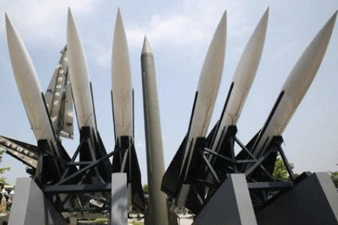
Pakistan’s embattled military regime further dependent on the IMF, the U.S., and the production of munitions for the war in Ukraine to sustain itself through a crisis that shows no sign of resolution.
The U.S.-brokered loan let Pakistan’s military postpone elections, deepen a brutal crackdown, and jail former Prime Minister Imran Khan.
The Intercept, Ryan Grim, Murtaza Hussain, September 17 2023
SECRET PAKISTANI ARMS sales to the U.S. helped to facilitate a controversial bailout from the International Monetary Fund earlier this year, according to two sources with knowledge of the arrangement, with confirmation from internal Pakistani and American government documents. The arms sales were made for the purpose of supplying the Ukrainian military — marking Pakistani involvement in a conflict it had faced U.S. pressure to take sides on.
The revelation is a window into the kind of behind-the-scenes maneuvering between financial and political elites that rarely is exposed to the public, even as the public pays the price. Harsh structural policy reforms demanded by the IMF as terms for its recent bailout kicked off an ongoing round of protests in the country. Major strikes have taken place throughout Pakistan in recent weeks in response to the measures.
The protests are the latest chapter in a year-and-a-half-long political crisis roiling the country. In April 2022, the Pakistani military, with the encouragement of the U.S., helped organize a no-confidence vote to remove Prime Minister Imran Khan. Ahead of the ouster, State Department diplomats privately expressed anger to their Pakistani counterparts over what they called Pakistan’s “aggressively neutral” stance on the Ukraine war under Khan. They warned of dire consequences if Khan remained in power and promised “all would be forgiven” if he were removed.
Since Khan’s ouster, Pakistan has emerged as a useful supporter of the U.S. and its allies in the war, assistance that has now been repaid with an IMF loan. The emergency loan allowed the new Pakistani government to put off a looming economic catastrophe and indefinitely postpone elections — time it used to launch a nationwide crackdown on civil society and jail Khan.
“Pakistani democracy may ultimately be a casualty of Ukraine’s counteroffensive,” Arif Rafiq, a nonresident scholar at the Middle East Institute and specialist on Pakistan, told The Intercept.
Pakistan is known as a production hub for the types of basic munitions needed for grinding warfare. As Ukraine grappled with chronic shortages of munitions and hardware, the presence of Pakistani-produced shells and other ordinances by the Ukrainian military has surfaced in open-source news reports about the conflict, though neither the U.S. nor Pakistan has acknowledged the arrangement.
Records detailing the arms transactions were leaked to The Intercept earlier this year by a source within the Pakistani military. The documents describe munitions sales agreed to between the U.S. and Pakistan from the summer of 2022 to the spring of 2023. Some of the documents were authenticated by matching the signature of an American brigadier general with his signature on publicly available mortgage records in the United States; by matching the Pakistani documents with corresponding American documents; and by reviewing publicly available but previously unreported Pakistani disclosures of arms sales to the U.S. posted by the State Bank of Pakistan.
The weapons deals were brokered, according to the documents, by Global Military Products, a subsidiary of Global Ordnance, a controversial arms dealer whose entanglements with less-than-reputable figures in Ukraine were the subject of a recent New York Times article.
Documents outlining the money trail and talks with U.S. officials include American and Pakistani contracts, licensing, and requisition documents related to U.S.-brokered deals to buy Pakistani military weapons for Ukraine.
The economic capital and political goodwill from the arms sales played a key role in helping secure the bailout from the IMF, with the State Department agreeing to take the IMF into confidence regarding the undisclosed weapons deal, according to sources with knowledge of the arrangement, and confirmed by a related document.
To win the loan, Pakistan had been told by the IMF it had to meet certain financing and refinancing targets related to its debt and foreign investment — targets that the country was struggling to meet. The weapons sales came to the rescue, with the funds garnered from the sale of munitions for Ukraine going a long way to cover the gap.
Securing the loan eased economic pressure, enabling the military government to delay elections — a potential reckoning in the long aftermath of Khan’s removal — and deepen the crackdown against Khan’s supporters and other dissenters. The U.S. remained largely silent about the extraordinary scale of the human rights violations that pushed the future of Pakistan’s embattled democracy into doubt………………………………………..
Bombs for Bailouts
On May 23, 2023, according to The Intercept’s investigation, Pakistani Ambassador to the U.S. Masood Khan sat down with Assistant Secretary of State Donald Lu at the State Department in Washington, D.C., for a meeting about how Pakistani arms sales to Ukraine could shore up its financial position in the eyes of the IMF.
……………………………………………………………………………………………………………………………………………… In an interview with The Intercept at the Capitol on Tuesday, Van Hollen said that his knowledge of the U.S. role in facilitating the IMF loan came directly from the Biden administration………………………………………………………..
Eleventh-Hour IMF Deal
…………………………………………………………………….. The secret arms deal for Ukraine would allow Pakistan to add nearly another billion dollars to its balance sheet ………………………………………………………………………………..
As The Intercept previously reported, Lu, the senior State Department official, said in a meeting with then-Pakistani Ambassador Asad Majeed Khan two weeks after the invasion that it was the belief of the U.S. that Pakistan had taken a neutral position solely at Khan’s direction, adding that “all would be forgiven” if Khan was removed in the no-confidence vote. Since his ouster, Pakistan has firmly taken the side of the U.S. and Ukraine in the war.
……………………………………………………………………………..After orchestrating Khan’s removal, the military embarked on a campaign to eradicate his political party through a wave of killings and mass detentions. Khan himself is currently imprisoned on charges of mishandling a classified document and facing some 150 additional charges — allegations widely viewed as a pretext to stop him from contesting future elections.
………………………………………………………..The absence of other foreign support left Pakistan’s embattled military regime further dependent on the IMF, the U.S., and the production of munitions for the war in Ukraine to sustain itself through a crisis that shows no sign of resolution. https://theintercept.com/2023/09/17/pakistan-ukraine-arms-imf/
Pakistan has 170 nuclear warheads, and may increase it to 200 by 2025, say American atomic scientists
LiveMint. 15 Sep 2023
Top American nuclear scientists have estimated that Pakistan currently possesses roughly 170 nuclear warheads, and this number could potentially increase to approximately 200 by the year 2025, based on the current rate of expansion.
As reported by PTI citing the Nuclear Notebook column published in the Bulletin of the Atomic Scientists on September 11, “We estimate that Pakistan now has a nuclear weapons stockpile of approximately 170 warheads. The US Defense Intelligence Agency projected in 1999 that Pakistan would have 60 to 80 warheads by 2020, but several new weapon systems have been fielded and developed since then, which leads us to a higher estimate.”……………………………………………………………………………………………………………………
Even when the document listed fissile materials production and inventory from available sources in the public domain, the scientists put out a disclaimer: “Calculating stockpile size based solely on fissile material inventory is an incomplete methodology that tends to overestimate the likely number of nuclear warheads.”
“We estimate that Pakistan currently is producing sufficient fissile material to build 14 to 27 new warheads per year, although we estimate that the actual warhead increase in the stockpile probably averages around 5 to 10 warheads per year,” they further said………………………………………………………………………
Commenting on the 2017’s medium-range ballistic missile called Ababeel that Pakistan said is “capable of carrying multiple warheads, using multiple independent reentry vehicle (MIRV) technology,” the Nuclear Notebook observed, “Development of multiple-warhead capability appears to be intended as a countermeasure against India’s planned ballistic missile defense system. Its status remains unclear as of July 2023.”
Pointing out that the total number and location of Pakistan’s nuclear-capable missile bases and facilities remains unknown, the document said, “Analysis of commercial satellite imagery suggests that Pakistan maintains at least five missile bases that could serve a role in Pakistan’s nuclear forces.”………………………………….
Admitting that little is publicly known about warhead production, the scientists said: “But experts have suspected for many years that the Pakistan Ordnance Factories near Wah, northwest of Islamabad, serve a role. One of the Wah factories is located near a unique facility with six earth-covered bunkers (igloos) inside a multi-layered safety perimeter with armed guards.” https://www.livemint.com/news/world/pakistan-has-170-nuclear-warheads-and-may-increase-it-to-200-by-2025-says-american-atomic-scientists-11694753125105.html
Radioactive material leaks detected at Japan’s plutonium nuclear fuel research facility

New Straits Times By Bernama – September 13, 2023
TOKYO: The Japan Atomic Energy Agency (JAEA) has confirmed the detection of radioactive material leaks in one of its nuclear fuel research facilities but reported no adverse effects on the health of the staff or the surrounding environment, Xinhua quoted local media reports.
The leaks were detected within the Plutonium Fuel Development Room No. 3 at the JAEA’s Nuclear Fuel Cycle Engineering Laboratories, located in Tokai Village, Ibaraki Prefecture, national news agency Kyodo reported, citing the agency.
Last Friday, the Plutonium Fuel Development Room No. 3 identified pollution caused by radioactive materials at four locations within the facility.
The pollution was discovered during a routine inspection of the glovebox equipment, which is designed to be airtight………………………..
At present, the cause of the radioactive material leak is under investigation. Authorities at the laboratories suspected that the radioactive materials may have seeped out of the equipment. –BERNAMA https://www.nst.com.my/world/world/2023/09/954873/radioactive-material-leaks-detected-japans-nuclear-fuel-research-facility
Germany’s Scholz: Fresh nuclear disarmament talks should include China
Reuters, September 12, 2023 https://www.reuters.com/world/germanys-scholz-fresh-nuclear-disarmament-talks-should-include-china-2023-09-12/
BERLIN, Sept 12 (Reuters) – German Chancellor Olaf Scholz called for new international negotiations on nuclear disarmament on Tuesday, saying that not only Russia and the United States but also China should be involved.
“Getting a fresh start on arms control would be very important,” he said at a religious event in Berlin, adding that several other countries had also built up a nuclear arsenal.
Preventing Iran from producing uranium that could contribute to nuclear weapon production “remains an important task,” he said.
Scholz said nuclear weapons posed an existential threat to humanity, which is why there is an “immediate obligation” to do everything possible to ensure they are never used.
According to the Stockholm International Peace Research Institute (SIPRI), the number of operational nuclear weapons rose slightly in 2022 as countries implemented long-term force modernisation and expansion plans.
Reporting by Andreas Rinke, Writing by Friederike Heine, Editing by Miranda Murray
Japan to start old nuclear reactor checks in October
Japan’s Nuclear Regulation Authority (NRA) will begin receiving
applications for nuclear safety inspections of aged reactors from October,
ahead of the country’s new nuclear safety regulations that will take effect
on 6 June 2025.
Under the new rule, all the country’s reactors that will be
operating for or beyond 30 years as of 6 June 2025 will in advance need to
secure approval from the NRA for safety plans by 5 June 2025. Nuclear power
operators will have to obtain such permission every 10 years or less after
their 30-year operating period is over. The NRA will start safety screening
of each old reactor.
But it is still unclear how long the process will
take. If a nuclear power operator fails to secure safety permission by 5
June 2025, the company could shut down the reactor, an official at the NRA
said.
Argus Media 13th Sept 2023
https://www.argusmedia.com/en//news/2488629-japan-to-start-old-nuclear-reactor-checks-in-october
The Discharge of Fukushima’s Radioactive Water could be a Precedent for Similar Actions

Obviously, it would be misleading to rely on the IAEA’s statements suggesting that radioactive wastewater does not pose any risk to global health. This information strengthens the likelihood that the IAEA did not reveal valid and precise radiation data regarding the Chornobyl accident and Zaporizhia nuclear power plant during the ongoing Ukrainian war either.
Pinar Demircan 7 Sept 23 https://www.dianuke.org/the-discharge-of-fukushimas-radioactive-water-could-be-a-precedent-for-similar-actions/
Underlying the disregard for objections from global civil society and transforming the ocean into a nuclear waste dump lies a bigger goal inspired by capitalist practices that arise from its crisis: to achieve another threshold by normalization of cost-cutting measures for the sake of the nuclear industry.
While the climate crisis is rapidly turning forests and habitats of living creatures into coal and ash with a tiny spark of fire in Turkiye, Greece, and Canada, the planet’s seas, already polluted with plastics and waste, are also being recklessly infused with radioactivity, driven by profit and cost-centered policies. On August 24, within the framework of the procedures carried out by the Japanese government and TEPCO, the discharge of 1.34 million tonnes of radioactive water which is accumulated in tanks at the plant site, started.
The installation of a treatment system costing 23 million USD, the discharge of wastewater without an Environmental Impact Assessment (EIA) is being realized by foregoing safer alternatives such as solidification of wastewater into construction materials or long-term storage costing 100 times more that constitutes ecocide. Clearly, this method of release that is expected to be carried out over the next 40 years, indicates a systemic assault on the global ecosystem that is longer and more severe than presently apparent.
The Japanese Government is not telling the truth about ‘purification’
The discharge process of the wastewater resulting from the complete meltdown of three reactor cores at the Fukushima nuclear facility began in 2011 and is at par with the danger level ascribed to the Chornobyl disaster. This also highlights how the Fukushima discharge differs from the regular discharge processes of nuclear power plants and indicates the extent of danger that nuclear power plants pose. Furthermore, the radioactive isotopes treated in the accumulated wastewater is only half of the whole amount according to what was stated on the website of the Japanese Ministry of the Environment.
A detail that has been overlooked till today is that there is no information regarding the amount of discharge during this 40-year time frame for the disposal of radioactive water into the ocean. This might indicate that the discharged amount may even be equivalent to the period of, for example, 100 years despite the declared duration of 40. In addition, since the present objections have been disregarded, it is worth considering the potential impact of future oppositions at the end of the 40 years.
A threshold to be achieved
Apparently, over the next decade, the radioactive water discharged from Fukushima is anticipated to disseminate into multiple seas worldwide, encompassing the Marmara, Mediterranean, Aegean, and Black Sea, which surrounds Turkiye. A recent scientific study [2] suggests that the evaporation in these seas will escalate industrial radioactivity levels in the ecosystem. Given this backdrop, it is important to ask why TEPCO, the Japanese government, and the IAEA continue to disregard the adverse impacts of the discharge, which also makes them responsible for the potential increases in cancer, DNA damage, increased miscarriages, hormone imbalances, and unhealthy future generations worldwide? Underlying the disregard for objections raised by global civil society, and transforming the ocean into a nuclear waste dump, lies a bigger goal inspired by capitalist practices that arise from its crisis: to achieve another threshold of the normalization of cost-cutting measures for the sake of nuclear industry.
How can we be sure of the exact amount to be released?
It is also possible to consider the above statement with the possibility of adding wastewater from the other nuclear power plants across Japan to the already 1 million 340 thousand tonnes of water accumulated over the past 12 years at Fukushima. While nuclear power plants operate under higher costs and have to cope with four times cheaper renewable energy production costs, the ocean dumping of the radioactive wastewater offers an easy solution for the nuclear industry. Crossing this threshold guarantees the capability to manage climate-induced hazards to nuclear facilities since now, societal consent has been obtained for this plan of action. Imagine how beneficial this course of action will be for the nuclear industry, with the IAEA promising its support for the industry – to the 410 reactors operating worldwide, approximately 50 reactors under construction, and 80 reactors [3] in various stages of maintenance, repair, decommissioning, and dismantling.
Take for example, Rosatom of Russia, the owner of the Akkuyu Nuclear Power Plant which reached its final stage of construction for the first reactor in Turkiye. It has a long history of concealing the Mayak nuclear power plant accident, well into the 1990s. Furthermore, from 1948 to 2004, Rosatom discharged nuclear waste into the Techa River, thus reinforcing its already questionable track record, and also points to how the legalization of nuclear discharge might be beneficial for the industry. It is also easy to predict the potential impact of this approach in the Mediterranean region by a nation with an underdeveloped democratic system and institutional dynamics dominated [4] by political power. This is especially important since an exemption made for the Akkuyu NPP in the article which allows for the discharge water from the facilities around the Mediterranean temperature of the plant and allows the sea temperature to reach up to 35 Celsius and poses serious ecological challenges indicating that Turkiye violates Barcelona Agreement.
The Role of the IAEA
The example of Fukushima’s radioactive water discharge presents us a picture of a political power that has adopted the corporate management mentality prioritizing profits and industry interests under the guise of efficiency and profitability. The International Atomic Energy Agency (IAEA) plays a vital role in ensuring that nuclear energy generation is conducted safely and within established guidelines. However, a leaked document [5] from the IAEA reveals that the agency, which declared its support for TEPCO and the Japanese government, advised them to refrain from making statements that could portray nuclear power plants negatively and disseminate information that influences the press and public opinion. As this scandal brings to light the deep connections between the IAEA, the Japanese government, and TEPCO, it is important to consider the role of the IAEA as a highly regarded global organization.
It is noteworthy to mention that the IAEA’s involvement in the nuclear industry stems from a confidential agreement WHA 12-40 [6] with the World Health Organization (WHO) in 1959, stating that “whenever either organization proposes to initiate a programme or activity on a subject in which the other organization has or may have a substantial interest, the first party shall consult the other with a view to adjusting the matter by mutual agreement”. Consequently, the IAEA, established to promote the growth of nuclear power plants worldwide, refrained from disclosing any potential health hazards posed by these plants.
Obviously, it would be misleading to rely on the IAEA’s statements suggesting that radioactive wastewater does not pose any risk to global health. This information strengthens the likelihood that the IAEA did not reveal valid and precise radiation data regarding the Chornobyl accident and Zaporizhia nuclear power plant during the ongoing Ukrainian war either.
It is important to inform the global society that the IAEA, which focuses mainly on promoting nuclear power, should not be involved in discussions related to public health in line with the principle of separating responsibilities to avoid conflict of interest. Therefore, it is recommended that civil society should inform the international community about the content of the recently disclosed IAEA document and demand an end to the discharge of radioactive water from Fukushima into the ocean. Accordingly, it should be ensured that all processes involved in disposing radioactive contamination in Fukushima are subject to internal and financial control measures performed by a minimum of two separate units.
At this stage, it is essential to take measures by clarifying the issues emphasized by the non-governmental organizations following the processes, and it should be ensured that realistic solutions can only be produced with the involvement of a consortium of neighbouring countries such as South Korea, China, Taiwan and the Pacific Islands. In this regard, the process management for the construction of the steel dome shelter, which was completed in 2016 with financing by 40 countries that came together in 1997 to protect the exploded fourth reactor of the Chornobyl Nuclear Power Plant from external weather conditions, can be taken as an example. [7]
Undoubtedly, the economic and administrative control mechanisms created for Chornobyl due to Ukraine’s lack of financial resources is not acceptable for the technology-giant Japan, which bears the costs of the disaster on its own. However, since global society has not entirely shown its commitment to changing the system, an in-system solution can prevent adding the radioactive disaster to the climate crisis before the transformation of life on the planet hits its constraints. In other words, claiming efficiency and profitability and institutionalization of the logic of ‘running the state like a business’, which has become the common discourse of political powers will at least help to achieve the rationality of emulated corporate management.
” The future of nuclear as an alternative energy source relies on the success of the Fukushima release” – Rafael Grossi.

“more broadly, the future of nuclear as an alternative energy source relies on the success of the Fukushima release,” he said. Though there has been heightened public alarm toward nuclear plants recently – for instance, regarding the Russian-occupied Zaporizhzhia plant in Ukraine – “the problem there is war, the problem is not nuclear energy,” Grossi said.
AEA chief ‘completely convinced’ it’s safe to release treated Fukushima nuclear wastewater .
By Jessie Yeung, Marc Stewart and Emiko Jozuka, Tokyo CNN, 7 July 23
Japan’s plan to release treated radioactive water into the ocean is safe and there is no better option to deal with the massive buildup of wastewater collected since the 2011 Fukushima nuclear disaster, the head of the United Nations’ nuclear watchdog told CNN.
Japan will release the wastewater sometime this summer, a controversial move 12 years after the Fukushima nuclear plant meltdown. Japanese authorities and the IAEA have insisted the plan follows international safety standards – the water will first be treated to remove the most harmful pollutants, and be released gradually over many years in highly diluted quantities.
But public anxiety remains high, including in nearby countries like South Korea, China and the Pacific Islands, which have voiced concern about potential harm to the environment or people’s health. On Friday, Chinese customs officials announced they would maintain a ban on food imports from 10 Japanese prefectures including Fukushima, and strengthen inspections to monitor for “radioactive substances, to ensure the safety of Japanese food imports to China.”……………………..
On Tuesday, Grossi formally presented the IAEA’s safety review to Japanese Prime Minister Fumio Kishida. The report found the wastewater release plan will have a “negligible” impact on people and the environment, adding that it was an “independent and transparent review,” not a recommendation or endorsement……………………….
The 2011 disaster caused the plant’s reactor cores to overheat and contaminate water within the facility with highly radioactive material. Since then, new water has been pumped in to cool fuel debris in the reactors. At the same time, ground and rainwater have leaked in, creating more radioactive wastewater that now needs to be stored and treated.
That wastewater now measures 1.32 million metric tons – enough to fill more than 500 Olympic-sized swimming pools.
Japan has previously said there were “no other options” as space runs out – a sentiment Grossi echoed on Friday. When asked whether there were better alternatives to dispose of the wastewater, the IAEA chief answered succinctly: “No.”
It’s not that there are no other methods, he added – Japan had considered five total options, including hydrogen release, underground burial and vapor release, which would have seen wastewater boiled and released into the atmosphere………………………………………
International skepticism
But some critics have cast doubt on the IAEA’s findings, with China recently arguing that the group’s assessment “is not proof of the legality and legitimacy” of the wastewater release.
Many countries have openly opposed the plan; Chinese officials have warned that it could cause “unpredictable harm,” and accused Japan of treating the ocean as a “sewer.” The Secretary General of the Pacific Islands Forum, an inter-governmental group of Pacific island nations that includes Australia and New Zealand, also published an op-ed in January voicing “grave concerns,” saying more data was needed.
And in South Korea, residents have taken to the streets to protest the plan. Many shoppers have stockpiled salt and seafood for fear these products will be contaminated once the wastewater is released – even though Seoul has already banned imports of seafood and food items from the Fukushima region.
International scientists have also expressed concern to CNN that there is insufficient evidence of long-term safety, arguing that the release could cause tritium – a radioactive hydrogen isotope that cannot be removed from the wastewater – to gradually build up in marine ecosystems and food chains, a process called bioaccumulation…………………………………
more broadly, the future of nuclear as an alternative energy source relies on the success of the Fukushima release, he said. Though there has been heightened public alarm toward nuclear plants recently – for instance, regarding the Russian-occupied Zaporizhzhia plant in Ukraine – “the problem there is war, the problem is not nuclear energy,” Grossi said……….. https://edition.cnn.com/2023/07/06/asia/japan-fukushima-water-iaea-chief-interview-intl-hnk/index.html
Japan’s Insane Immoral, Illegal Radioactive Dumping
CounterPunch, BY ROBERT HUNZIKER 8 Sept 23

Japan cannot possibly outlive the atrocity of dumping radioactive wastewater into the Pacific Ocean. In fact, Tokyo Electric Power Company (TEPCO) is an example of how nuclear meltdowns negatively impact the entire world, as its toxic wastewater travels across the world in ocean currents. The dumping of stored toxic wastewater from the meltdown in 2011 officially started on August 24th, 2023. Meanwhile, the country restarts some of the nuclear plants that were shut down when the Fukushima Daichi Nuclear Power Plant exploded.
Fukushima’s broken reactors are an example of why nuclear energy is a trap that can’t handle global warming or extreme natural disasters. Nuclear is an accident waiting to happen, for several reasons, including victimization by forces of global warming.
According to Dr. Paul Dorfman, chair of the Nuclear Consulting Group, former secretary to the UK Scientific Advisory Committee on Internal Radiation, and Visiting Fellow, University of Sussex: “It’s important to understand that nuclear is very likely to be a significant climate casualty. For cooling purposes nuclear reactors need to be situated by large bodies of water, etc. …” Essentially, global warming is nuclear energy’s Waterloo; it has already seriously endangered France’s 56 nuclear reactors with partial shutdowns because of extreme global warming. Nuclear reactors cannot survive global warming. See “the nuclear energy trap” link at the end of this article.
TEPCO’s treacherous act of dumping radioactive water into a wide-open ocean is a deliberate violation of human decency, as it clearly violates essential provisions of the International Atomic Energy Agency’s (IAEA) General Safety Guide No. 8 (GSG-8).
Japan should be forced to stop its diabolical exercise of potentially destroying precious life. Shame on the IAEA and shame on the member countries of the G7 for endorsing this travesty. They’ve christened the ocean an “open sewer.” Hark! Come one, come all, dump your trash, open toxic spigots, bring chemicals, bring fertilizers, bring plastic, bring radioactive waste that’s impossible to dispose… the oceans are open sewers. It’s free! Yes, it’s free but only weak-minded people would allow a broken-down crippled nuclear power plant to dump radioactive waste into the world’s ocean. It is a testament to human frailty, weakness, insipience, not courage.
According to Arjun Makhijani, Ph.D. Institute for Energy and Environmental Research, TEPCO’s ALPS-treated Radioactive Water Dumping Plan Violates Essential Provisions of IAEA’s General Safety Guide No. 8 (GSG-8) and Corresponding Requirements in Other IAEA Documents, June 28, 2023: “The IAEA is an important United Nations institution. Like the rest of the Expert Panel, the author of this paper has been reluctant to criticize the IAEA. Yet, its outright refusal to apply its own guidance documents in full measure is stark. Its constricted view of the dumping plan has allowed it to evade its responsibilities to many countries. Its eagerness to assure the public that harm will be “negligible” has been carried to the point of grossly overstating well-known facts about tritium. The serious lapses of the IAEA in the Fukushima radioactive water matter have made criticism unavoidable.”………………………………………………………………………………………………………….
“At high doses, ionizing radiation can cause immediate damage to a person’s body, including, at very high doses, radiation sickness and death. At lower doses, ionizing radiation can cause health effects such as cardiovascular disease and cataracts, as well as cancer. It causes cancer primarily because it damages DNA, which can lead to cancer-causing gene mutations.” (Source: National Cancer Institute)
How is it possible to justify dumping any amount of radioactive wastewater into the Pacific Ocean? Is the world’s consciousness so low, so lacking a moral compass, that it’s okay to dump the most toxic material on the planet into the oceans?
Stop destroying the oceans!
And please contemplate the dire ramifications of the nuclear energy trap. more https://www.counterpunch.org/2023/09/08/japans-insane-immoral-illegal-radioactive-dumping/?fbclid=IwAR0IaIETBoTgZeDUmJ3caeJAlFFWGPrdCtsqt5oR0A7XP8NEl1fKqLJwu54
Robert Hunziker lives in Los Angeles and can be reached at rlhunziker@gmail.com.
Pakistan nuclear weapons, 2023
Bulletin, By Hans M. Kristensen, Matt Korda, Eliana Johns, September 11, 2023
Pakistan continues to gradually expand its nuclear arsenal with more warheads, more delivery systems, and a growing fissile material production industry. Analysis of commercial satellite images of construction at Pakistani army garrisons and air force bases shows what appear to be newer launchers and facilities that might be related to Pakistan’s nuclear forces.
We estimate that Pakistan now has a nuclear weapons stockpile of approximately 170 warheads (See Table 1 on original). The US Defense Intelligence Agency projected in 1999 that Pakistan would have 60 to 80 warheads by 2020 (US Defense Intelligence Agency 1999, 38), but several new weapon systems have been fielded and developed since then, which leads us to a higher estimate. Our estimate comes with considerable uncertainty because neither Pakistan nor other countries publish much information about the Pakistani nuclear arsenal.
With several new delivery systems in development, four plutonium production reactors, and an expanding uranium enrichment infrastructure, Pakistan’s stockpile has the potential to increase further over the next several years. The size of this projected increase will depend on several factors, including how many nuclear-capable launchers Pakistan plans to deploy, how its nuclear strategy evolves, and how much the Indian nuclear arsenal grows. We estimate that the country’s stockpile could potentially grow to around 200 warheads by the late 2020s, at the current growth rate. But unless India significantly expands its arsenal or further builds up its conventional forces, it seems reasonable to expect that Pakistan’s nuclear arsenal will not continue to grow indefinitely but might begin to level off as its current weapons programs are completed…………………………………………………………………………………………………………………………………………………………………………………………………………………..more https://thebulletin.org/premium/2023-09/pakistan-nuclear-weapons-2023/
Residents file suit to halt wastewater release from Fukushima plant

About 150 residents from prefectures such as Fukushima and Miyagi went to court on Friday to halt the release of treated radioactive water from the crippled Fukushima nuclear plant, making it the first lawsuit of its kind.
In the suit filed with the Fukushima District Court against the central government and plant operator Tokyo Electric Power Company Holdings Inc, the plaintiffs said the water discharge, which started on Aug. 24, threatens citizens’ right to live safely and hinders local fishermen’s businesses.
They are also seeking nullification of nuclear regulators’ approval of facilities installed for the water discharge and a ban to be placed on the release.
An additional lawsuit at the end of October is being planned…………………………………………………………………. https://japantoday.com/category/national/residents-file-suit-to-halt-wastewater-release-from-fukushima-plant
The West’s blueprint for goading China was laid out in Ukraine
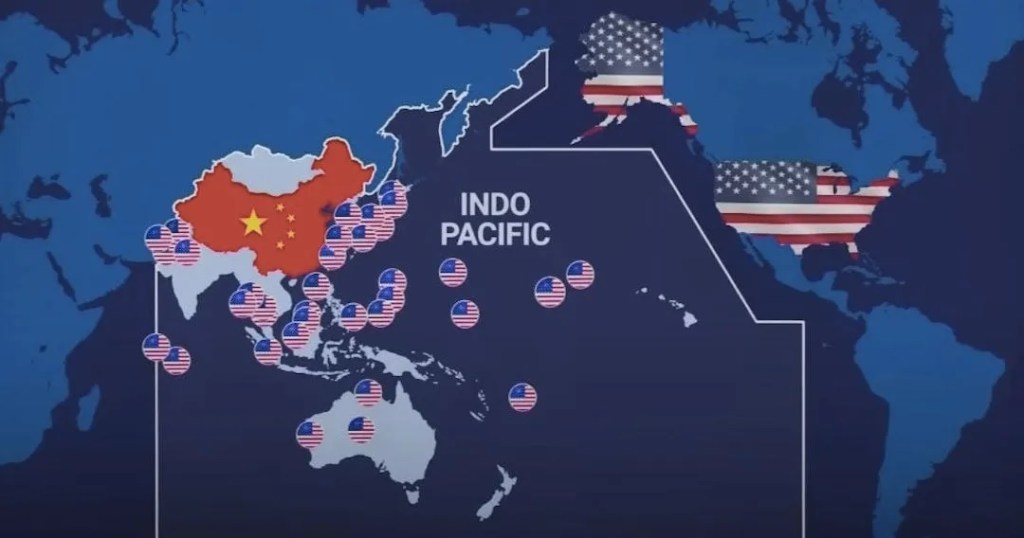
After Ukraine, Taiwan, we are told, must be the locus of the West’s all-consuming security interest.
Europe fears losing access to Chinese markets, plunging it deeper into a cost-of-living crisis. But it fears Washington’s wrath more
JONATHAN COOKSEP 8, 2023, Middle East Eye
The West is writing a script about its relations with China as stuffed full of misdirection as an Agatha Christie novel.
In recent months, US and European officials have scurried to Beijing for so-called talks, as if the year were 1972 and Richard Nixon were in the White House.
But there will be no dramatic, era-defining US-China pact this time. If relations are to change, it will be decisively for the worse.
The West’s two-faced policy towards China was starkly illustrated last week by the visit to Beijing of Britain’s foreign secretary, James Cleverly – the first by a senior UK official for five years.
While Cleverly talked vaguely afterwards about the importance of not “disengaging” from China and avoiding “mistrust and errors”, the British parliament did its best to undermine his message.
The foreign affairs committee issued a report on UK policy in the Indo-Pacific that provocatively described the Chinese leadership as “a threat to the UK and its interests”.
In terminology that broke with past diplomacy, the committee referred to Taiwan – a breakaway island that Beijing insists must one day be “reunified” with China – as an “independent country”. Only 13 states recognise Taiwan’s independence.
The committee urged the British government to pressure its Nato allies into imposing sanctions on China.
Upping the stakes
The UK parliament is meddling recklessly in a far-off zone of confrontation with the potential for incendiary escalation against a nuclear power, a situation unrivalled outside of Ukraine.
But Britain is far from alone. Last year, for the first time, Nato moved well out of its supposed sphere of influence – the North Atlantic – to declare Beijing a challenge to its “interests, security and values”.
There can be little doubt that Washington is the moving force behind this escalation against China, a state posing no obvious military threat to the West.
t has upped the stakes significantly by making its military presence felt ever more firmly in and around the Straits of Taiwan – the 100-mile wide waterway separating China from Taiwan that Beijing views as its doorstep.
Senior US officials have been making noisy visits to Taiwan – not least, Nancy Pelosi last summer, when she was house speaker.
Meanwhile, the Biden administration is showering Taiwan with weapon systems.
If this weren’t enough to inflame China, Washington is drawing Beijing’s neighbours deeper into military alliances – such as Aukus and the Quad – to isolate China and leave it feeling threatened. The Chinese president, Xi Jinping, describes this as a policy of “comprehensive containment, encirclement and suppression against us”.
Last month, President Biden hosted Japan and South Korea at Camp David, forging a trilateral security arrangement directed at what they called China’s “dangerous and aggressive behavior”.
Meanwhile, the Pentagon’s “Pacific Defence Initiative” budget – chiefly intended to contain and encircle China – just keeps rising.
In the latest move, revealed last week, the US is in talks with Manila to build a naval port in the northernmost Philippine islands, 125 miles from Taiwan, boosting “American access to strategically located islands facing Taiwan”.
That will become the ninth Philippine base used by the US military, part of a network of some 450 operating in the South Pacific.
Dirty double game
So what’s going on? Is Britain – along with its Nato allies – interested in building greater trust with Beijing, as Cleverly argues, or backing Washington’s escalatory manoeuvres against a nuclear-armed China over a small territory on the other side of the globe, as the British parliament indicates?
Inadvertently, the foreign affairs committee’s chair, Alicia Kearns, got to the heart of the matter. She accused the British government of having a “confidential, elusive China strategy”, one “buried deep in Whitehall, kept hidden even from senior ministers”.
And not by accident.
European leaders are torn. They fear losing access to Chinese goods and markets, plunging their economies deeper into recession after a cost-of-living crisis precipitated by the Ukraine war. But most are even more afraid of angering Washington, which is determined to isolate and contain China.
That divide was highlighted by French President Emmanuel Macron following a visit to China in April,……………………………………………………………………………………….
After Ukraine, Taiwan, we are told, must be the locus of the West’s all-consuming security interest…………………………………………………………………………………………………………………………………………………..
Economic chokehold
As with Ukraine, the cover story concealing the West’s provocations towards China has been carefully directed from Washington.
Europeans like Cleverly are parading around Beijing to make it look like the West desires peaceful engagement. But the only real engagement is the crafting of a military noose around China’s neck, just as a noose was crafted earlier for Russia. …………………………………………………………………………………………………………………..
The US isn’t likely to go down without a fight. Which is why Ukrainians and Russians are currently dying on the battlefield. And why China and the rest of us have good reason to fear who may be next. https://www.middleeasteye.net/opinion/china-west-blueprint-goading-ukraine-laid-out
Taiwan’s ‘clear and present’ spent nuclear fuel danger

Above-ground storage pools at Chinshan and Kuosheng nuclear power plants would be vulnerable to missiles in a Chinese attack
ASIA TIMES, By JORSHAN CHOI, SEPTEMBER 6, 2023
The war in Ukraine has drawn concerns that there is potential for a conflict to happen across the Taiwan Strait.
In Ukraine, the attack and occupation of nuclear facilities, including the Zaporizhzhia nuclear power plant by the Russian military, initiated a dangerous situation for the safe and secure operation of civilian nuclear power plants, including the spent fuel facilities. It also hindered the International Atomic Energy Agency’s effort to ensure the proper accounting and control of nuclear materials in these facilities.
If a military conflict were to happen across the Taiwan Strait, there would be similar concerns. There are six operating or shut-down nuclear reactors in Taiwan: two pressurized water reactors and four boiling water reactors in Taiwan. Of the six, the four BWRs situated on the northern tip of Taiwan pose the biggest safety, security, and safeguards concerns.
Taiwan’s first nuclear power plant, Chinshan 1 & 2, consisted of BWRs similar to Fukushima Daiichi 1, which was involved in the 2011 accident in Japan, with spent fuel pools that are high up above ground.
Taiwan’s second plant, Kuosheng 1 & 2, featured a later BWR design, with spent fuel pools at a lower elevation. The two pressurized water reactors have spent fuel pools at ground level.
When Chinshan 1 & 2 went offline in 2018-2019, more than 6,000 spent fuel assemblies were stored in the two elevated spent fuel pools. At Kuosheng 1 & 2, the capacities of both ground-level spent fuel pools have become insufficient to support reactor operation.
To free up space in the pools for newly discharged spent fuel, TAIPOWER, the utility company, moved those 15-year-old spent fuel assemblies for storage in the upper (refueling) pools, which are well above the ground level.
According to the US National Academies of Sciences, the vulnerability of a spent fuel pool depends in part on its location with respect to ground level as well as its construction. In a potential military conflict across the Taiwan Strait, the spent fuel pools built above ground in Chinshan and Kuosheng may thus be susceptible to accidental attacks from misfired or stray missiles.
Significantly, to protest the Pelosi visit to Taiwan in August 2022, two missiles fired by the Chinese military landed in water about 50 km north of the Chinshan plant.
The Fukushima accident highlighted the vulnerability of elevated spent fuel storage. The explosion that occurred in the reactor building of Fukushima Daiichi 4 destroyed the roof and most of the walls on the fourth and fifth (refueling) floors……………………………………………………………………..
A sense of urgency
Spent fuel has accumulated in the Chinshan and Kuosheng plants over the 40 years of their operating lives. Due to objections from the local public over moving the spent fuel to dry cask storage and the lack of suitable storage or disposal sites on the geographically limited island, spent fuel discharged from Chinshan 1 & 2 reactors has remained in the refueling-turned-into-storing pools adjacent to the reactor wells, high above ground……………………………………………..
The war in Ukraine and rockets/missiles landing in or around the Zaporizhzhia plant (with all six pressurized water reactors’ spent fuel pools situated at ground level) should have given TAIPOWER another warning that spent fuel in high-elevation pools should be moved to ground-level pools or dry cask storage.
TAIPOWER should have a sense of urgency for this “clear and present” danger in Taiwan, especially given that it has the technology and resources to accomplish the task. Taiwan’s internal politics and objection of the local public are the primary causes for the procrastination.
The longer-term problem with moving the spent fuel off the island centers around something called “consent rights,” which is complicated given US involvement in the installation of the nuclear power plants in Taiwan…………………………………………………………………….
The US rights over Taiwan’s nuclear activities are so extensive that Washington instructed the German government in the 1980s that any nuclear items supplied to Taiwan by a German exporter would be subject to US “control rights,” which included US “fallback safeguards rights” if deemed necessary.
Nowhere else does the United States have as much leverage over a foreign nuclear program. Yet whenever Taiwan has requested the United States to take back the spent fuel, Washington has declined…………………………………………….
Removing the spent fuel from Taiwan would eliminate its “clear and present” spent fuel danger, while fulfilling the goal of ensuring a “nuclear-free” Taiwan. This should be a priority. https://asiatimes.com/2023/09/taiwans-clear-and-present-spent-nuclear-fuel-danger/
How a nuclear disaster spurred Fukushima to become a renewables leader

Japan Times, BY FRANCESCO BASSETTI, MINAMISOMA, FUKUSHIMA PREF. – 5 Sept 23
As you reach the coast on Fukushima Prefectural Route 74, which runs between the towns of Minamisoma and Soma, scenes typical of the Japanese countryside — rice paddies and hills blanketed by lush green forests — undergo a swift transformation.
Now, expanses of metal, glass and silicon shimmer in the midday sun, stretching out to a horizon dotted with four white wind turbines, blades humming as they turn in the summer breeze.
Following the 2011 triple disaster — and the subsequent cratering of support for nuclear energy — Fukushima Prefecture has positioned itself at the forefront of Japan’s low-carbon transition.
Few projects better exemplify that than the Minamisoma Mano-Migita-Ebi solar power plant, which was the largest in Fukushima Prefecture until 2019 and is made up of 220,000 solar panels that, if laid end to end, would cover 350 kilometers — roughly the distance between Nagoya and Tokyo. The panels can generate up to 60 megawatts of electricity, enough to power 20,000 households.
Because of projects like the Minamisoma facility, Fukushima Prefecture has claimed the crown as the Tohoku region’s leader in cumulative solar power generation since 2013, and this is a direct consequence of the reconstruction policies that were put in place after the March 2011 earthquake, tsunami and nuclear disaster.
But today, grid connection issues, opposition by incumbent energy companies and a return to nuclear energy in some parts of the country are slowing progress in Fukushima and beyond. In 2022 almost 80% of the increase in total electricity generation in Japan came via fossil fuels — a worrying signal that, although renewable energy generation continues to increase, it is not keeping up with the pace of electrification.
Renewable recovery
Particularly in the coastal areas of Fukushima Prefecture, solar panels have a strong presence: They cover fields, occupy clearings that have been carved out of forests and hillsides, and rest on the rooftops of houses. Cars and trucks brandishing the names of the companies that operate them are a regular feature as they carry equipment and workers along well-kept roads…………………………………………………………………………………………………………………….
“Recovery plans have always been tied to developing a society that is no longer dependent on nuclear power,” says Masaki Moroi, deputy director of Fukushima Prefecture’s Energy Division.
By the end of 2021, Fukushima Prefecture had covered 47% of its energy demand with renewables, compared with just 23.7% in 2011. That’s a particularly impressive feat when compared with Japan’s national average of just 22.7% in 2022.
“Fukushima took the lead after 2011 because of its direct experience with disaster and clear commitment by policymakers to quit nuclear energy and back renewables,” says Hikaru Hiranuma of the Tokyo Foundation for Policy Research.
According to Hiranuma, the single most influential policy in the initial boom in renewable energy was the introduction of a feed-in-tariff program by the Ministry of Economy, Trade and Industry in July 2012………………………………………………………………………………………..
Beyond Minamisoma, Fukushima Prefecture implemented policies promoting renewable energy projects in areas affected by the tsunami and nuclear fallout where there were high rates of abandoned land………………………………………………………………………………………………………………………. more https://www.japantimes.co.jp/environment/2023/09/05/fukushima-renewable-energy-leader/
1 This Month

of the week – Shut Down Drone Warfare!


Tell the Ukrainian Government to Drop Prosecution of Peace Activist Yurii Sheliazhenko

Petition to revoke the licensing of the Near Surface Nuclear Disposal Facility (NSDF) at Chalk River. https://www.ourcommons.ca/petitions/en/Petition/Details?Petition=e-7247
To see nuclear-related stories in greater depth and intensity – go to https://nuclearinformation.wordpress.com
-
Archives
- April 2026 (19)
- March 2026 (251)
- February 2026 (268)
- January 2026 (308)
- December 2025 (358)
- November 2025 (359)
- October 2025 (376)
- September 2025 (257)
- August 2025 (319)
- July 2025 (230)
- June 2025 (348)
- May 2025 (261)
-
Categories
- 1
- 1 NUCLEAR ISSUES
- business and costs
- climate change
- culture and arts
- ENERGY
- environment
- health
- history
- indigenous issues
- Legal
- marketing of nuclear
- media
- opposition to nuclear
- PERSONAL STORIES
- politics
- politics international
- Religion and ethics
- safety
- secrets,lies and civil liberties
- spinbuster
- technology
- Uranium
- wastes
- weapons and war
- Women
- 2 WORLD
- ACTION
- AFRICA
- Atrocities
- AUSTRALIA
- Christina's notes
- Christina's themes
- culture and arts
- Events
- Fuk 2022
- Fuk 2023
- Fukushima 2017
- Fukushima 2018
- fukushima 2019
- Fukushima 2020
- Fukushima 2021
- general
- global warming
- Humour (God we need it)
- Nuclear
- RARE EARTHS
- Reference
- resources – print
- Resources -audiovicual
- Weekly Newsletter
- World
- World Nuclear
- YouTube
-
RSS
Entries RSS
Comments RSS
 nuclear-news