How safe is the release of treated radioactive water from Fukushima plant
#nuclear #antinuclear #nuclear-free #NoNukes
5 Oct 2023Japan begins second discharge of treated nuclear water from Fukushima Japan has begun discharging a second batch of treated radioactive water from the crippled Fukushima plant into the ocean. It’s happening amid protest from countries like China, Russia and South Korea who are all concerned about the risks. Robert Jacobs from the Hiroshima Peace Institute explains with these worries are founded.
Repeated malfunctions reveal safety issues in Fukushima discharge

CGTN 6 Oct 23 #nuclear #antinuclear #nuclear-free #NoNukes
Japan started the second discharge of nuclear-contaminated wastewater from the crippled Fukushima Daiichi Nuclear Power Plant into the Pacific Ocean on Thursday, despite strong opposition from local fishermen as well as neighboring and Pacific island countries.
The plant’s operator, Tokyo Electric Power Company (TEPCO), said it plans to carry out the release over 17 days to discharge 7,800 tons of the radioactive wastewater, about the same amount as the first discharge which ended on September 11.
Currently, more than 1.3 million tons of nuclear-contaminated wastewater has been accumulated in storage tanks at Fukushima.
The company’s key facility for nuclear-contaminated water treatment, the Advanced Liquid Processing System (ALPS), is a multi-filter system that can remove radioactive materials through a series of chemical reactions. The international community has had doubts about the safety, effectiveness and sustainability of the system, due to its treatment capacity and incidents of malfunction.
When the amount of nuclear-contaminated water is too large, the chances to replace the filters are limited and the performance of the ALPS is significantly degraded, said Ryota Koyama, a professor at Fukushima University in Japan.
“If nuclear-contaminated water is discharged, I think there must be a problem. If the Japanese government or the TEPCO really wants to discharge the contaminated water into the sea, they need to explain in more detail,” Koyama told China Media Group (CMG) in an interview……………………………..
The ALPS has failed to remove isotopes adequately, with the adsorbents used to remove radioactive isotopes being replaced less often than they were supposed to be. As a result, 70 percent of the water in the storage tanks still contains non-tritium radionuclides at a concentration that exceeds the regulatory standards applicable for discharge into the environment.
Since its trial operation in 2013, the ALPS has frequently experienced malfunctions. Just before the first discharge in August, TEPCO found leaks in a hose used to transfer nuclear-contaminated water, according to Japanese broadcaster NHK………………..
In June, the government of Republic of Korea said that there have been eight confirmed cases of malfunction with the ALPS between 2013 and 2022, which concerned corrosion of facilities and issues with filters, after its experts conducted an on-site inspection, said the country’s public broadcaster KBS.
According to previous reports, TEPCO found that there were at least 10 breakages on the ALPS’ filters used to absorb nuclides in August 2021. In the process of replacing the broken filters, the company discovered that 24 filters were damaged. A month later, TEPCO announced that five more filters in the ALPS were found to have been damaged, and radioactive contamination had been detected near some of the filters.
Hikaru Amano, senior researcher of the Nuclear Science Research Institute, Japan Atomic Energy Agency, told CMG that another problem with the ALPS is that there is little room to store used filters.
Amid concerns of Japan’s discharge of nuclear-contaminated wastewater, the Republic of Korea (ROK) plans to raise the number of testing spots to nearly 250 next year, increasing from the 75 coastal locations where emergency radiation tests were conducted about a month ahead of Japan’s first release in August, Seoul-based Yonhap News reported…………… https://news.cgtn.com/news/2023-10-06/Repeated-malfunctions-reveal-safety-issues-in-Fukushima-discharge-1nFOJHDPdgQ/index.html
As Japan releases more Fukushima water, what about the rest of the plant?

A second batch of treated water is being released into the Pacific, but the entire decommissioning process will be far more complex.
all that will need to take place in an environment where the level of radiation is so high, it is nearly impossible for workers to get inside.
Japan has not yet worked out where all the waste will go
Aljazeera, By Hanako Montgomery, 5 Oct 2023 #nuclear #anti-nuclear #nuclear-free #NoNukes
“…………………………………………………………………………………………Japan has promised to decommission the power station as part of its recovery plan for Namie town and the rest of Fukushima prefecture. The plant’s six reactors suffered catastrophic damage, after the tsunami smashed into the complex, crippling the plant’s cooling systems. As radioactive material leaked from the site, 470,000 people were forced to evacuate.
But while the plant had been rendered useless, progress towards its decommissioning has been slow.
Complex challenge
According to Tokyo Electric Power Company (TEPCO), the plant operator, that is partly because of the accumulation of 1.3 billion tonnes of treated radioactive wastewater that was used to cool the three reactors that were in operation at the time of the disaster.
The 1,000 or so blue and white tanks to store the water have taken up space needed for decommissioning, according to TEPCO, which has had to contend with strong criticism from local fishing communities and neighbouring countries like China, which have continued to protest against Japan’s plan to discharge the water into the ocean.
………………………………………………………………… According to TEPCO, the entire decommissioning process will take between 30 and 40 years. That is at least six times longer than it typically takes to decommission a plant under normal circumstances, Brent Heuser, a nuclear engineering professor from the University of Illinois in the United States, told Al Jazeera.
“Decommissioning involves removing fuel stored in structured arrangements. Japan, however, is facing unique challenges such as widely dispersed fuel, requiring both human and robotic efforts for detection,” he told Al Jazeera.
Japan has not yet worked out where all the waste will go.
TEPCO is planning to reduce some of it through incineration or recycling onsite, but that does not include the waste that will be produced from the dismantling of reactor buildings, and there is no estimate for how much radioactive waste there will be as the process moves forward.
To decommission the Daiichi plant, TEPCO must first remove the spent fuel and the fuel debris that is stuck inside the damaged units. Experts will then place the collected debris in storage containers before they can transport it to a new facility that will be built onsite.
The reactor buildings must also be dismantled.
Later this year, TEPCO will carry out a trial removal of melted debris from Unit 2. The retrieval will be expanded in stages if successful.
By 2027, plant operators hope to be able to turn their attention to Unit 1, the most seriously damaged of the reactors, which they plan to enclose with a large cover.
By 2031, they will focus on removing the melted debris.
But all that will need to take place in an environment where the level of radiation is so high, it is nearly impossible for workers to get inside.
“The doses they would receive would go way beyond any allowable limit, so that certainly is playing a role in the extended timeline for the decommission process,” Heuser said, suggesting more staff may be needed given the short period of time they will be able to remain on site.
“They’re spreading the worker dose exposure over a much larger body of people.”
Help from robots
The level of radiation means Japan is also yet to understand the full extent of the damage inside the corroded reactors.
TEPCO has used robotic probes to try and get a sense of the destruction. Equipped with 3D scanners, sensors, and cameras, robots have mapped the terrain, measured radiation levels, and searched for the elusive missing fuel.
Although some headway has been made in assessing the condition of the reactors, the data is far from reassuring.
Since 2022, TEPCO has dispatched a robotic probe into Unit 1.
The probe’s findings revealed the core had largely melted and settled at the bottom of the containment chamber – which serves as a vital safeguard against the release of radioactive material – and possibly Unit 1’s concrete basement. Furthermore, it suggested significant damage to the pedestal, the primary support structure directly beneath Unit 1’s core.
Financial considerations also loom large in Japan’s struggle with decommissioning
Ordinarily, the decommissioning of a standard nuclear plant would cost between $300m to $400m, according to the US nuclear regulator.
But given the extensive damage, compensation paid to local residents and the specialised equipment required for managing one of the world’s worst nuclear disasters, the Japanese government predicts the final bill could come to about 21.5 trillion yen ($141bn).
Akira Ono, who leads TEPCO’s decommissioning unit, has admitted the work is “challenging”. Earlier this year, a remotely-operated vehicle managed to collect only a tiny sample from Unit 1’s reactor, which is thought to contain some 880 tonnes of melted fuel debris -10 times the amount removed during the cleanup of Three Mile Island in the northeastern United States in 1979………………………………………………………………………….. https://www.aljazeera.com/news/2023/10/5/as-japan-releases-fukushima-water-into-the-sea-what-about-everything-else
A Chinese nuclear-powered submarine has sunk with the loss of 55 sailors
#nuclear #anti-nuclear #nuclear-free #NoNukes The nuclear submarine sank after it was caught in a trap intended for American and British vessels, leaked intelligence reports disclose. China has six Type 093 attack
submarines, which have a displacement of 6,096 tonnes and are armed with
553mm torpedoes. The nuclear-powered submarines, designed to be quieter
than previous models, entered service in the past 15 years.
Times 4th Sept 2023
Typhoon Koinu Could Slam Straight Into Nuclear Power Plant

Newsweek, BY ANNA SKINNER ON 10/4/23 #nuclear #anti-nuclear #nuclear-free #NoNukes
Category 4 typhoon is headed straight toward a nuclear power plant in southern Taiwan.
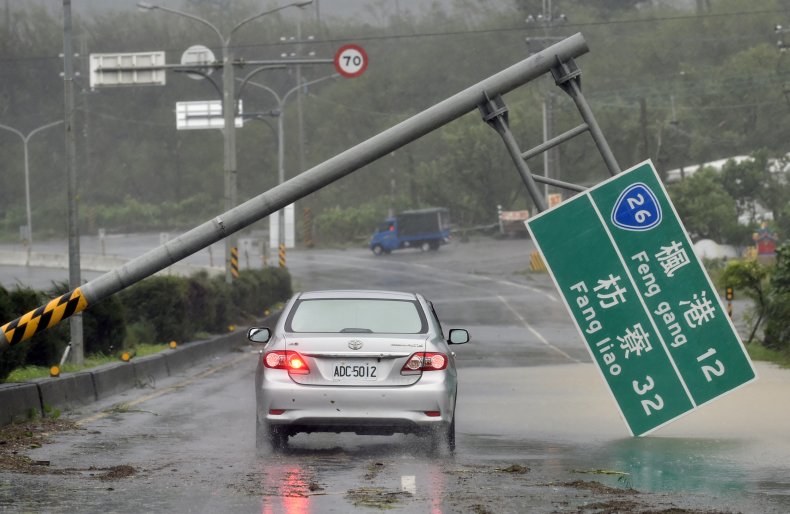
Typhoon Koinu slammed into Taiwan’s southeastern islands on Wednesday and the massive storm is anticipated to hit southern Taiwan in the next few hours, which would be Thursday morning local time. The storm’s strength prompted meteorologists and storm chasers to voice concern ahead of its landfall, as wind gusts of 212 miles per hour were documented by Lanyu Weather Station as the storm lashed Orchid Island on Wednesday. The storm has sustained winds of 130 miles per hour, which makes it equivalent to a Category 4 hurricane.
If the wind gust recording is accurate, it would be one of the top five strongest wind gusts ever recorded on Earth, a concerning fact as the storm is barreling toward the Maanshan Nuclear Power Plant in southern Taiwan. AccuWeather meteorologist Bill Deger told Newsweek he expects the storm may weaken to a Category 2 or Category 3 by the time it makes landfall.
However, the storm is expected to pass directly over Taiwan’s last active nuclear power plant.
“It’ll come very close to where the eye of this typhoon is expected to move,” Deger told Newsweek
In 2021, Taiwan Power Company submitted an application to shutter the two-unit power plant. The plant’s 40-year operating licenses are set to expire, but the nuclear units won’t close until 2024 and 2025.
Despite the storm’s direct path toward the plant, there are no announcements on the power company’s website about efforts being made to protect the plant from the incoming storm’s harsh winds.
With a storm of Koinu’s strength, Deger said power outages, structural damage and flooding can be expected. Up to 12 inches of rain is expected to fall as well, causing a flood risk.
Storm chasers and weather experts have issued warnings in advance of the storm’s impact, with one storm chaser seemingly very concerned about the storm’s path…………………………………………..
Natural disasters have posed a high risk to power plants in the past. The Fukushima Daiichi nuclear plant in Japan was damaged by a tsunami after a 9.0-magnitude earthquake struck the area in 2011.
01:40
Tropical Storm vs Cyclone vs Hurricane vs Typhoon: What’s The Difference?
Share
Share on FacebookShare on TwitterShare on LinkedInShare on RedditShare on FlipboardShare via EmailComments
WORLDTYPHOONSTORMTAIWANNUCLEAR ENERGY
ACategory 4 typhoon is headed straight toward a nuclear power plant in southern Taiwan.
Typhoon Koinu slammed into Taiwan’s southeastern islands on Wednesday and the massive storm is anticipated to hit southern Taiwan in the next few hours, which would be Thursday morning local time. The storm’s strength prompted meteorologists and storm chasers to voice concern ahead of its landfall, as wind gusts of 212 miles per hour were documented by Lanyu Weather Station as the storm lashed Orchid Island on Wednesday. The storm has sustained winds of 130 miles per hour, which makes it equivalent to a Category 4 hurricane.
If the wind gust recording is accurate, it would be one of the top five strongest wind gusts ever recorded on Earth, a concerning fact as the storm is barreling toward the Maanshan Nuclear Power Plant in southern Taiwan. AccuWeather meteorologist Bill Deger told Newsweek he expects the storm may weaken to a Category 2 or Category 3 by the time it makes landfall.
SUBSCRIBE NOW FROM JUST $1 PER MONTH >
However, the storm is expected to pass directly over Taiwan’s last active nuclear power plant.
“It’ll come very close to where the eye of this typhoon is expected to move,” Deger told Newsweek.
READ MORE
- Taiwan scrambles to secure sunken cargo ship before Typhoon Doksuri hits
- Typhoon Mawar path, track update as “direct hit” expected for Guam
- NASA image shows powerful cyclone that injured 700 people
In 2021, Taiwan Power Company submitted an application to shutter the two-unit power plant. The plant’s 40-year operating licenses are set to expire, but the nuclear units won’t close until 2024 and 2025.
SIGN UP FOR NEWSWEEK’S DAILY HEADLINES >
Despite the storm’s direct path toward the plant, there are no announcements on the power company’s website about efforts being made to protect the plant from the incoming storm’s harsh winds.
With a storm of Koinu’s strength, Deger said power outages, structural damage and flooding can be expected. Up to 12 inches of rain is expected to fall as well, causing a flood risk.
Storm chasers and weather experts have issued warnings in advance of the storm’s impact, with one storm chaser seemingly very concerned about the storm’s path.
“12:10 am. Could be one of my final posts,” storm chaser Josh Morgerman posted on X, formerly Twitter with a screenshot of the storm’s intimidating radar image. “Star = my location in Jialeshui #Taiwan. Just outside #Typhoon #KOINU‘s potent eyewall. Wind starting to rip. 987 mb & falling fast. I’ll post as long as I can.”
Others commented on the storm’s strength.
“Wow. Lanyu Weather Station on Orchid Island, Taiwan, at an elevation of 324 m, recorded a wind gust of 342 km/h (212 mph) at 9:53 pm local time as the eyewall of Typhoon Koinu moved over the area. This is provisionally the highest gust ever recorded in Asia,” one user posted on X, formerly Twitter.
ADVERTISING
Natural disasters have posed a high risk to power plants in the past. The Fukushima Daiichi nuclear plant in Japan was damaged by a tsunami after a 9.0-magnitude earthquake struck the area in 2011.
A typhoon is classified as a severe tropical cyclone occurring in the Northwest Pacific. A hurricane is the term for the same type of storm in the Northeast Pacific and Northern Atlantic. Outside of these regions, the storms are called tropical cyclones. https://www.newsweek.com/typhoon-koinu-could-slam-straight-nuclear-power-plant-1832169
Low-Dose Radiation Affects Cardiovascular Disease Risk in Human Aortic Endothelial Cells by Altering Gene Expression under Normal and Diabetic Conditions.
#nuclear #Nuclear-free #anti-nuclear #NoNukes
by Soo-Ho Lee 1,†, Ye Ji Jeong 1,†, Jeongwoo Park 1,2, Hyun-Yong Kim 1, Yeonghoon Son 1, Kwang Seok Kim 1,* and Hae-June Lee 1,*
Divisions of Radiation Biomedical Research, Korea Institute of Radiological and Medical Sciences, Seoul 01812, Korea
2 New Drug Development Center, Daegu Gyeongbuk Medical Innovation Foundation, Daegu 41061, Korea
*Authors to whom correspondence should be addressed.
†These authors contributed equally to this work.
2 August 2022 (This article belongs to the Special Issue Advances in Radiation Toxicity)
Abstract
High doses of ionizing radiation can cause cardiovascular diseases (CVDs); however, the effects of <100 mGy radiation on CVD remain underreported. Endothelial cells (ECs) play major roles in cardiovascular health and disease, and their function is reduced by stimuli such as chronic disease, metabolic disorders, and smoking. However, whether exposure to low-dose radiation results in the disruption of similar molecular mechanisms in ECs under diabetic and non-diabetic states remains largely unknown; we aimed to address this gap in knowledge through the molecular and functional characterization of primary human aortic endothelial cells (HAECs) derived from patients with type 2 diabetes (T2D-HAECs) and normal HAECs in response to low-dose radiation. To address these limitations, we performed RNA sequencing on HAECs and T2D-HAECs following exposure to 100 mGy of ionizing radiation and examined the transcriptome changes associated with the low-dose radiation. Compared with that in the non-irradiation group, low-dose irradiation induced 243 differentially expressed genes (DEGs) (133 down-regulated and 110 up-regulated) in HAECs and 378 DEGs (195 down-regulated and 183 up-regulated) in T2D-HAECs. We also discovered a significant association between the DEGs and the interferon (IFN)-I signaling pathway, which is associated with CVD by Kyoto Encyclopedia of Genes and Genomes (KEGG) pathway analysis, protein–protein network analysis, and module analysis. Our findings demonstrate the potential impact of low-dose radiation on EC functions that are related to the risk of CVD.
Keywords: low-dose radiation; endothelial cells; diabetes mellitus; gene profiling; cardiovascular disease …………………………………………………………………………….more https://www.mdpi.com/1422-0067/23/15/8577
Fukushima Study Links Low-Dose Radiation to Diabetes
Mirage, 3 Oct 23
New research to be presented at this year’s Annual Meeting of The European Association for the Study of Diabetes (EASD), Hamburg (2-6 Oct), suggests that exposure to low doses of radiation may contribute to an increased risk of diabetes.
The study by Dr Huan Hu and Dr Toshiteru Ohkubo from the Japanese National Institute of Occupational Safety and Health involved more than 6,000 out of around 20,000 emergency workers who responded to the radiation accident at the Fukushima Daiichi Nuclear Power Plant, which was hit by a huge tsunami in March 2011.
Substantial amounts of radioactive materials were released into the environment following explosions at the nuclear plant.
In 2014, the Epidemiological Study of Health Effects in Fukushima Emergency Workers (NEWS) was established to clarify the long-term health effects of radiation among emergency workers.
Few human studies have examined the impact of radiation exposure on diabetes development, particularly at low doses. To find out more, researchers examined the association between low-dose radiation exposure and risk of diabetes in 5,326 male emergency workers (average age 46 years) taking part in the NEWS study.
Between March and December 2011, individual emergency worker’s radiation exposure was measured using a pocket alarm dosemeter for external exposure and a whole-body counter for internal exposure.
Study participants underwent regular health examinations involving more than 70 components, including blood sugar, lipids, urine tests, inflammation biomarkers, thyroid function tests, and eye examinations.
Between 2012 and 2021, 392 participants developed diabetes—defined as a fast plasma glucose level of at least 126 mg/dL, an HbA1c level of at least 6.5%, or self-reported diagnosis of diabetes.
The researchers assessed the association between incident diabetes and cumulative radiation exposure after adjusting for a wide range of potential confounders including age, body mass index, smoking, alcohol consumption, leisure-time physical activity, employment at the nuclear power plant, dyslipidaemia (abnormally high levels of fats in the blood), and high blood pressure.
The analysis found that compared with the lowest cumulative low-dose radiation exposure (0-4 millisieverts [mSv]), the risk of developing diabetes was 6% higher for workers exposed to 5-9 mSv, and 47% and 33% greater for those exposed to 10-19 mSv and 20-49 mSv, respectively.
However, no elevated risk was detected in those exposed to radiation doses of 50 mSv or higher, likely due to the small sample size in this group.
“Our findings suggest an increased risk of diabetes among nuclear emergency workers from low levels of radiation. While the potential mechanisms remain somewhat unclear, reports suggest that radiation can adversely affect pancreatic cells responsible for insulin production, potentially contributing to diabetes. Additionally, there is an association between radiation exposure and heightened inflammation, a well-known factor in insulin resistance and the development of diabetes”, explains lead author Dr Hu.
He adds, “Ongoing follow-up of NEWS participants will provide an even clearer picture of diabetes risk at low radiation doses. As more diabetes cases emerge within our study group, our expanded dataset will enable more robust analyses, allowing researchers to better assess the link between radiation exposure and diabetes risk.”……………………………………………………………………………………………………….. more https://www.miragenews.com/fukushima-study-links-low-dose-radiation-to-1095852/
Editorial: Japan city’s rejection of nuclear waste site probe casts doubt on gov’t stance.

Tsushima Mayor Naoki Hitakatsu announced on Sept. 27 that
the Nagasaki Prefecture city will not accept a reference material-based
preliminary survey for the construction of a final disposal facility for
nuclear waste, going against the local assembly’s initial adoption of a
petition calling for the survey’s approval.
The Japanese government must accept the reality that the search for a candidate site to dispose ofhighly radioactive nuclear waste, which will continue to accumulate as long
as nuclear power plants are in operation, is proving difficult.
Mainichi 30th Sept 2023
https://mainichi.jp/english/articles/20230930/p2a/00m/0op/009000c
Japan city forgoes applying for government survey on nuclear waste site

The mayor of Tsushima in southwestern Japan said Wednesday he has decided
against applying to the state for a preliminary survey to gauge the island
city’s suitability to host an underground disposal site for highly
radioactive waste from nuclear power generation. The decision comes in
contrast with the local assembly’s approval earlier this month of a request
filed by proponents urging the city to accept the survey.
“There is insufficient consensus among the public,” Mayor Naoki Hitakatsu said at a city assembly session, with some fearing the potential impact on tourism and primary industries such as fisheries.
He later told reporters he also has concerns about reputational damage that may arise from conducting the survey.
The preliminary survey is the first step in a three-stage process spanning two decades to select a permanent disposal site for nuclear waste. Struggling to find one, the central government is looking for municipalities willing to accept the survey, but only two municipalities in Hokkaido have so far done so.
Tsushima, on a remote island in Nagasaki Prefecture, was identified as a potential disposal site on a map of such locations released by the central government in 2017.
Hitakatsu has raised worries about hosting such a site, saying, “The risks that may arise from unperceived factors cannot be ruled out.”
Opponents of the plan have also said it would not be appropriate for the city to host a disposal site for nuclear waste given the history of the U.S. atomic bombing of Nagasaki city in 1945.
Local construction groups and other proponents argued that state subsidies of 2 billion yen ($13.4 million) for accepting the survey could be used for measures to rev up the shrinking city’s economy and support child-rearing.
The mayor, who may seek a third four-year term after his current term expires in March, told a press conference that the reputational damage that may arise from carrying out the survey “cannot be covered by a subsidy of 2 billion yen.”
He also said he “judged it would become difficult to reject” the subsequent geological research if the preliminary survey showed that the city is suited as a site for the final disposal of nuclear waste.
The surveys, conducted by the Nuclear Waste Management Organization, a quasi-government body in Tokyo, involve checking land conditions and volcanic activity based on published geological sources.
Following Tsushima’s decision, the central government said it will continue efforts to find more areas to carry out preliminary surveys.
“We are very grateful that Tsushima showed interest and had considered” accepting the survey, said Chief Cabinet Secretary Hirokazu Matsuno at a press conference.
Fast-aging Tsushima, where the number of residents fell below 30,000 in 2020, depends on squid fishing and pearl farming but is struggling to find young people to carry on the running of its industries.
It is located closer to the South Korean port city of Busan, 50 kilometers away, than any major Japanese cities.
High-level radioactive waste, produced when extracting uranium and plutonium from spent fuel, must be stored in bedrock at least 300 meters underground for tens of thousands of years until the radioactivity declines to levels that pose no harm to human health or the environment.
Japan, like many other countries with nuclear plants, is struggling to find a site for such disposal.
Kyodo News 27th Sept 2023
Japan to release second batch of wastewater from Fukushima nuclear plant next week
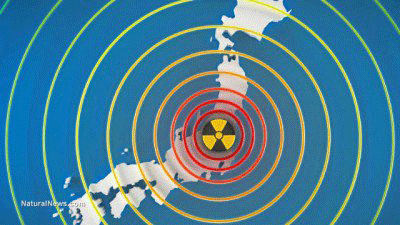
UN-approved release to go ahead despite China’s ban on all Japanese sea imports following first batch
Japan will begin releasing a second batch of wastewater from the crippled
Fukushima nuclear plant from next week, its operator has said, an exercise
that angered China and others when it began in August.
Guardian 29th Sept 2023
North Korean parliament enshrines nuclear ambitions in constitution
Leader Kim Jong Un says the constitutional amendment will help North Korea hold a ‘definite edge’ in deterring threats.
North Korea’s parliament has unanimously moved to enshrine its nuclear programme in the country’s constitution.
The state news agency KCNA reported on the “crucial agenda item” early on Thursday, explaining that the new constitutional amendment would establish North Korea’s pursuit of a nuclear force “as the basic law of the state”.
The news follows a meeting on Tuesday and Wednesday of the Supreme People’s Assembly, North Korea’s rubber-stamp legislature. The country’s leader, Kim Jong Un, addressed the assembly to support the passage of the amendment.
Kim called to “accelerate the modernisation of nuclear weapons in order to hold the definite edge of strategic deterrence” against perceived threats, like the United States and South Korea…………………………………….
The announcement that nuclear weapons would be enshrined in the country’s constitution comes in defiance of multiple UN Security Council sanctions, meant to deter North Korea from pursuing nuclear arms.
Over the past year, North Korea has been escalating the number of weapons tests it conducts, launching an array of ballistic and cruise missiles……………. https://www.aljazeera.com/news/2023/9/27/north-korean-parliament-enshrines-nuclear-ambitions-in-constitution
Pakistan’s new nuclear brinkmanship
Recently, Pakistan’s strategic planners have hinted to a shift in Pakistan’s nuclear doctrine, which seems to be quite radical.
Deccan Herald, Abhinav Narayan Jha, 23 September 2023
In July, when India celebrated the 24th Vijay Diwas of the 1999 Kargil War, the nuclear question between the two arch-rivals got refreshed. Both sides are said to have reportedly weighed the nuclear option then.
Pakistan was reported to have moved ballistic missiles toward the border. American officials and security experts had in 2000 claimed that India, too, had prepared nuclear-tipped ballistic missiles. If true, this was the closest India and Pakistan had ever come to a nuclear exchange.
Recently, Pakistan’s strategic planners have hinted to a shift in Pakistan’s nuclear doctrine, which seems to be quite radical. On the 25th anniversary of Pakistan’s nuclear tests, Lt General Khalid Kidwai (retd), adviser to Pakistan’s National Command Authority, sent ripples across the strategic and security community in Asia and the West when he revisited Pakistan’s nuclear strategy. Kidwai, who was the first and longest-serving Director-General of Pakistan’s Strategic Plans Division, touched on two important things: First, he referred to “Full Spectrum Deterrence” (FSD); second, he referred to “Zero meters to 2,750 kilometres”. Both phrases suggest a makeover of Pakistan’s nuclear doctrine.
Read more at: https://www.deccanherald.com/opinion/pakistan-s-new-nuclear-brinkmanship-2697746
Fukushima: China’s seafood imports from Japan down 67% in August
China’s imports of seafood from Japan slumped last month as Tokyo started
to release treated waste water from the damaged Fukushima nuclear power
plant. Imports of Japanese seafood fell 67.6% in August from the same month
last year, China’s customs authority said.
Japan’s ministry of agriculture
and fisheries says China was the world’s top importer of the country’s
seafood. Last year, Asia’s largest economy imported 84.4 billion yen
($571m; £461m) of seafood from its neighbour. The sharp fall came as Japan
prepared to start releasing the waste water and in the aftermath of the
release.
BBC 20th Sept 2023
South Asian leader slams AUKUS pact

“It is a military alliance moved against one country – China.”
The US-led initiative was created to antagonize Beijing, Sri Lanka’s president has said.
https://www.rt.com/news/583182-sri-lanka-slam-aukus-pact/ 20 Sept 23
Sri Lankan President Ranil Wickremesinghe has condemned the AUKUS pact as an alliance designed to target China, calling it a “strategic misstep,” and insisting it will only divide Asia into rival camps and destabilize the region.
Speaking on the sidelines of the UN General Assembly on Monday, Wickremesing he took aim at AUKUS, which was formed by the US, UK, and Australia in 2021. “I don’t think it was needed,” he said.
“I think it’s a strategic misstep. I think they made a mistake,” the president stated. “It is a military alliance moved against one country – China.”
Wickremesinghe went on to say that Sri Lanka wants no part in the growing tensions between Washington and Beijing, adding that his country would like to maintain good relations with both powers and does not wish to see Asia divided into competing blocs.
“The next round of rivalry is going on. And that’s taking place in Asia. It’s the question of China versus the US, on how they are going to divide their region of influence in Asia,” he said. “Why are we getting pulled into it? It’s difficult for us to understand.”
The president also expressed concern about the stepped-up US military presence in the region in recent years – often labeled ‘freedom of navigation’ missions by American officials. “As far as the Indian Ocean is concerned, we don’t want any military activity,” he continued, saying most neighboring countries “will not want NATO anywhere close by.”
AUKUS was established in 2021 between Washington, Canberra, and London in part to facilitate the transfer of military technology among the three allies. Though officials from each country have maintained that the bloc is not a formal military alliance and is solely focused on technology sharing, Beijing has condemned the project, claiming it will only help to spread nuclear weapons around the globe and kick off an arms race in Asia.
“The three countries have gone further down the wrong and dangerous path for their own geopolitical self-interest, completely ignoring the concerns of the international community,” Chinese Foreign Ministry spokesman Wang Wenbin said earlier this year, adding that the AUKUS pact is based on a “Cold War mentality which will only motivate an arms race, damage the international nuclear nonproliferation regime, and harm regional stability and peace.”
Tensions between Washington and Beijing have steadily escalated in recent years, with former US President Donald Trump kicking off a low-level trade war with China which persists under his successor, Joe Biden.
The Biden administration has also deployed navy warships to waters near China on a near-monthly basis, including the disputed Taiwan Strait, drawing repeated condemnation from Chinese officials
South Korea will expand the number of spots for water testing amid concerns over the release of nuclear waste from Japan’s crippled Fukushima power plant.
Seoul plans to raise the number of testing spots to nearly 250 next year, said South Korean Oceans Minister Cho Seung-hwan.
About a month ahead of Tokyo’s release of treated radioactive water from the Fukushima plant in August, South Korea had begun “emergency radiation tests on samples from a total of 75 coastal locations in the east, west and south of South Korea, as well as the waters off the southern island of Jeju,” Seoul-based Yonhap News reported on Monday.
“We chose the spots, as they are expected to have the released waters first given the sea current. We will add more locations to the list, particularly in the East Sea, to further ensure safety,” said Cho, after visiting a test spot off the southern port city of Busan last week.
Seoul is also conducting radiation tests on 33 points from more distant areas, the minister said.
Tokyo began releasing the nuclear waste on Aug. 24, triggering a sharp reaction from China and opposition parties in South Korea.
Beijing has imposed a blanket ban on imports of seafood from Japan.
Today, the Chinese Embassy in Tokyo refuted claims that Beijing had “refused to join” the International Atomic Energy Agency’s international monitoring mechanism.
Early this month, Seoul warned it will take Japan to the UN if Tokyo does not follow its original plan about releasing the treated radioactive water from its crippled Fukushima nuclear power plant.
The warning came after Seoul called for a discussion on the potential impacts on the marine environment while Japan ignored the call https://www.aa.com.tr/en/asia-pacific/south-korea-to-expand-water-testing-amid-concerns-over-japan-s-nuclear-waste/2994594
1 This Month

of the week – THE ONENESS of HUMANITY
26 June – Radiation Trainwreck at the NRC / Join the Protect Better Campaign – https://us02web.zoom.us/meeting/register/4ZlZ5_qLSHGiLSCg8FF6Bg#/registration

1st July – Webinar Waste of Space: The Environmental Harm of Military and Civil Space Activity st July, 7 pm

Report Launch Online: We are seeing an increasing exploitation of space for military and commercial purposes. This must change.

Protect Sazan Island from the Trump family! https://secure.avaaz.org/campaign/en/protect_sazan_island_from_the_trump_family_loc/?bqFCVab&v=174511&cl=22707147157&_checksum=5e9dde668860e8231c33699735e16a1fbf22ab2cb01da50c999fe8732b9775ef&utm_source=email&utm_medium=blast_email&utm_campaign=174511


Cuba Is Not a Failed State – It Is a Besieged State
PETITION: “Global Appeal to Endorse Palestinian Right of Return of Refugees”
To see nuclear-related stories in greater depth and intensity – go to https://nuclearinformation.wordpress.com
-
Archives
- June 2026 (251)
- May 2026 (306)
- April 2026 (356)
- March 2026 (251)
- February 2026 (268)
- January 2026 (308)
- December 2025 (358)
- November 2025 (359)
- October 2025 (376)
- September 2025 (257)
- August 2025 (319)
- July 2025 (230)
-
Categories
- 1
- 1 NUCLEAR ISSUES
- business and costs
- climate change
- culture and arts
- ENERGY
- environment
- health
- history
- indigenous issues
- Legal
- marketing of nuclear
- media
- opposition to nuclear
- PERSONAL STORIES
- politics
- politics international
- Religion and ethics
- safety
- secrets,lies and civil liberties
- spinbuster
- technology
- Uranium
- wastes
- weapons and war
- Women
- 2 WORLD
- ACTION
- AFRICA
- Atrocities
- AUSTRALIA
- Christina's notes
- Christina's themes
- culture and arts
- Events
- Fuk 2022
- Fuk 2023
- Fukushima 2017
- Fukushima 2018
- fukushima 2019
- Fukushima 2020
- Fukushima 2021
- general
- global warming
- Humour (God we need it)
- Nuclear
- RARE EARTHS
- Reference
- resources – print
- Resources -audiovicual
- Weekly Newsletter
- World
- World Nuclear
- YouTube
-
RSS
Entries RSS
Comments RSS
 nuclear-news