Justice Department Announces Nuclear Materials Trafficking Charges Against Japanese Yakuza Leader
Takeshi Ebisawa, Leader within the Yakuza Transnational Organized Crime Syndicate, Allegedly Trafficked Nuclear Materials, Including Uranium and Weapons-Grade Plutonium
A superseding indictment was unsealed in Manhattan today charging a Japanese national with conspiring with a network of associates to traffic nuclear materials from Burma to other countries.
According to court documents, Takeshi Ebisawa, 60, and co-defendant Somphop Singhasiri, 61, were previously charged in April 2022 with international narcotics trafficking and firearms offenses, and both have been ordered detained.
“The defendant stands accused of conspiring to sell weapons grade nuclear material and lethal narcotics from Burma, and to purchase military weaponry on behalf of an armed insurgent group,” said Assistant Attorney General Matthew G. Olsen of the Justice Department’s National Security Division. “It is chilling to imagine the consequences had these efforts succeeded and the Justice Department will hold accountable those who traffic in these materials and threaten U.S. national security and international stability.”
“As alleged, the defendant brazenly trafficked material containing uranium and weapons-grade plutonium from Burma to other countries,” said U.S. Attorney Damian Williams for the Southern District of New York. “He did so while believing that the material was going to be used in the development of a nuclear weapons program, and while also negotiating for the purchase of deadly weapons. It is impossible to overstate the seriousness of this conduct. I want to thank the career prosecutors of my office and our law enforcement partners for ensuring that the defendant will now face justice in an American court.” …………………………………………………………………………………………………………………………………………………………………………………………………. more https://www.justice.gov/opa/pr/justice-department-announces-nuclear-materials-trafficking-charges-against-japanese-yakuza
Minister urges TEPCO to ensure nuclear safety measures
By Jiang Xueqing in Tokyo 2024-02-22 , https://global.chinadaily.com.cn/a/202402/22/WS65d6a0fca31082fc043b86ea.html
Japan’s industry minister said on Wednesday a recent radioactive water leak at the wrecked Fukushima Daiichi Nuclear Power Plant earlier this month has caused anxiety in Japan and abroad and will hinder the completion of the decommissioning of the plant.
Ken Saito, minister of economy, trade and industry, summoned Tomoaki Kobayakawa, president of the Tokyo Electric Power Company, operator of the Fukushima plant, to his office on Wednesday, urging TEPCO to take the incident as a serious management issue and ensure thorough safety measures.
Furthermore, Saito requested an analysis to identify any common factors contributing to a series of troubles for the purpose of preventing recurrence. He also urged the utilization of digital technology to prevent human errors, Japanese public broadcaster NHK reported.
On Feb 7, TEPCO informed the International Atomic Energy Agency that water containing radioactive materials was found to have leaked from a caesium absorption tower at the plant.
TEPCO calculated that the leakage totaled around 5.5 cubic meters of water containing an estimated 0.022 terabecquerel of radioactive substances, according to the IAEA.
The water was assessed to have leaked from a valve left open during cleaning work at the absorption tower.
On Oct 26 last year, TEPCO announced that two male workers in their 20s and 40s, who were exposed to nuclear-contaminated water while cleaning pipes at the Advanced Liquid Processing System at the Fukushima nuclear power plant, have been hospitalized for decontamination and observation.
The two workers, employees of a partner firm of TEPCO, were engaged in the cleaning process along with three other male workers. During the operation, a hose used to transfer nuclear-contaminated water to a tank went loose, leading to the splashing of approximately 100 milliliters of radioactive water, as reported by The Asahi Shimbun, one of the major daily newspapers in Japan.
In the process of handling the Fukushima nuclear-contaminated water, accidents have occurred repeatedly, fully exposing the chaotic and disorderly internal management of TEPCO, a spokesperson of the Chinese Embassy in Japan said on Feb 8.
The accidents also demonstrate the inadequate and ineffective supervision measures by the Japanese government and once again prove the lack of long-term reliability of the nuclear-contaminated water treatment equipment, highlighting the necessity for international supervision, he said.
Japan has so far dumped approximately 23,400 cubic meters of nuclear-contaminated water from the Fukushima nuclear power plant into the sea since August 2023 in three rounds. The fourth round is scheduled to commence in late February.
The spokesperson of the Chinese Embassy in Japan said the discharge of nuclear-contaminated water from Fukushima into the sea concerns the health of all mankind, the global marine environment and international public interests.
“We once again earnestly urge Japan to take seriously the concerns of neighboring countries and the international community; engage in sincere consultations with relevant stakeholders; fully cooperate in establishing effective international monitoring arrangements with substantive participation from stakeholders; and handle nuclear-contaminated water in a scientific, safe and transparent manner,” he said.
Japanese mafia boss conspired to traffic nuclear materials, says US
By Bernd Debusmann Jr, BBC News, Washington, 22 Feb 24
US prosecutors have charged an alleged member of the Japanese mafia with conspiring to traffic nuclear materials.
Takeshi Ebisawa, 60, tried to sell uranium and plutonium that he believed would be transferred to Iran to build a nuclear bomb, it is alleged.
Mr Ebisawa and a Thai co-defendant were previously hit with weapons and drug charges in April 2022.
He faces life imprisonment if convicted of the latest charges.
US authorities say Mr Ebisawa – who is being held in a Brooklyn jail – is a senior figure in the Japanese organised crime syndicate, known as the Yakuza, with operations in Sri Lanka, Myanmar, Thailand and the US.
The US Department of Justice said Mr Ebisawa and his “confederates showed samples of nuclear materials in Thailand” to an undercover agent from the US Drug Enforcement Agency (DEA)……………………………………………………………………………
Mr Ebisawa faces charges including conspiracy to commit international trafficking of nuclear materials, narcotics importation conspiracy, conspiracy to acquire, transfer and possess anti-aircraft missiles and money laundering.
His co-conspirator in the case – 61-year-old Thai national Somphop Singhasiri – is facing drugs and weapons charges.
Both are facing life in prison if convicted.
The pair will be arraigned in a New York federal courtroom on Thursday.
https://www.bbc.com/news/world-us-canada-68365597
The odds of China using nuclear war to resolve the Taiwan issue
By John F. CopperFeb 20, 2024, https://johnmenadue.com/the-odds-of-china-using-nuclear-war-to-resolve-the-taiwan-issue-u-s-expert-versus-taiwan-experts/
Recently the Centre for Strategic and International Studies, a thinktank in Washington, DC, did a survey asking U.S. and Taiwan Experts if China might use nuclear weapons in a conflict with or over Taiwan. The results were astonishing to most who read the study. Almost half of U.S. experts reported they thought China would. Only one quarter that number of Taiwan experts, 11 percent, so opined.
Different histories and variances in views of the world order explain this.
The US view
The United States was born out of war in the late 1700s. Americans call it a revolutionary war or a war of independence. It was the latter. (Social classes did not change.)
Growing from a small country on the East Coast to a two-ocean nation in a century was built on wars with the indigenous people (American Indians) that were reduced from 100 percent of the population to 2 percent today. The wars were vicious, including the use of germ weapons and deliberately starving the enemy. Essentially wars of annihilation.
In the late 1800s the Indians were defeated marked by a victory (some called a massacre) in the Battle of Wounded Knee. Thenceforth the U.S. became an external expansionist power: incorporating Hawaii, defeating Spain to colonise the Philippines, and taking some other Pacific Islands.
World War I and II enhanced America’s world power status: from being an important nation to being a preeminent world power (superpower). In 1991, the U.S. defeated the Soviet Union, the only other superpower, with an arms race that America won—to become the world’s sole superpower.
Four years ago, former President Jimmy Carter noted America had been at peace only 16 of the last 242 years and concluded the U.S. was the most warlike nation in history. By contrast, China had not been at war in the last 40 years.
Meanwhile, after World War II the U.S. built a new world order employing its superior national power and its view of what the world should be –a world of global trade and economic growth and dragooned democracy. It worked well for a while.
But America became overstretched from its role as a military giant, and in some ways soft or at least tired of its global responsibilities. After the fall of the Soviet Union, it was not ready to lead a unipolar world.
More important, it faced a growing challenge. Mao, China’s great leader, died in 1976 and two years later Deng Xiaoping reconstructed China, getting rid of Mao’s radical communism and replacing it with free-market capitalism, trade and a system that built on China’s education tradition. China boomed economically.
It even grew during the world recession of 2008 and the subsequent almost slowest U.S. recovery in recent history. China became the number one nation in the world economically based on purchasing power. It led the word in steel production and other measures of big power status. In made the UN’s poverty eradication project work by helping developing countries grow with its formidable Belt and Road Initiative that was heading toward spending a trillion dollars compared to America’s biggest, the Marshall Plan (costing a bit over 100 billion in today’s dollars). Meanwhile, China passed the U.S. in registering patents and publishing academic articles while building modern airports and fast trains (more than the rest of the world combined while American had none).
President Trump met the China challenge with a make America great again policy. He sought to bring important industries back and restore U.S. capitalism. However, he faced virtually impossible hurdles to do this: an inflated and powerful government bureaucracy, too many lawyers that impeded business, horribly expensive penal and welfare systems, high taxes and a burdensome debt. Plus, the intelligence agencies and the federal police (FBI), the mainstream media, and American academe all opposed him while the Democratic Party that was bigger than his party had more money.
President Biden sought to destroy Trump’s America. As a globalist he advocated the idea of the US as an exceptional country and a superpower. America was to be a nation organising a bloc of democracies facing off against the China-led authoritarian nations. But this failed. America’s democracy appeared to many to have evolved into partisan rule by the deep state. Europeans did not want to be led by the U.S. Europe and Japan did not wish to end important economic ties with China. The Biden administration engaged in a financial and technology war with China, which hurt the U.S. more than China. The developing countries of the world continued to admire China for its aid and investments.
Good luck competing with China…
Meanwhile, pundits were taken by an idea expressed in the ancient book by Thucydides, The Peloponnesian Wars, that competition and eventually war between a status quo power (Sparta) and a rising power (Athens) was the model for most major wars after that. The relationship between America and China fit the model well. Thus, war was coming.
Provoking a war by demonising China as an expansionist power and an abuser of human rights meant that the U.S. should to go to war soon—before China, experiencing a renaissance and rising in national power, might defeat the U.S. that was experiencing decline.
The Taiwanese view
Taiwan has a very different history and view of the world from America. It early on grew up in isolation. Then it was exposed to the world outside via trade handled by its merchants, pirates, and outsiders. Chinese migrated to Taiwan and subdued the indigenous population reducing it to 2 percent of residents as happened in America; but this did not make Taiwan a world power.
Instead, Taiwan was ruled by Westerners (the Netherlands) for a brief time that improved its economy and more. For two centuries it was then ruled by China that did not have much interest in Taiwan and eventually abandoned it. Forthwith, Taiwan became a colony of Japan, during which time it saw economic modernisation without political choice or democracy.
Then the United States defeated Japan in war and returned Taiwan to China according to wartime agreements made at Potsdam and Tehran. Taiwan was not given any choice in the matter.
But China was at war with itself–a civil war between Chiang Kai-shek’s Nationalists and Mao Tse-tung’s Communists. Four years later Chiang lost and retreated to Taiwan to regroup. Again, Taiwan had no voice.
Owing to the Korean War the United States viewed Mao as a confederate of the Soviet Union and therefore an enemy. America gave aid and protection to Chiang’s Republic of China based on Taiwan. But the U.S. did not want a war with China allied with the Soviet Union and the result was a stalemate.
Chiang shifted his attention to Taiwan’s economic development and succeeded beyond almost anyone’s expectations. Its gross national product grew at a pace that far exceeded Western countries or Japan at their halcyon growth days.
Peace made this possible. Economic growth produced prosperity. Prosperity begat a middle class. A middle class serve to create political change and democracy.
Taiwan became a model for economic development and political change. Something similar happened in China under Deng: a booming economy and some political liberalisation. China and Taiwan linked up with trade and investments such that it made for mutual understanding and the avoidance of war, the same conditions that made the European Community work.
Strategically, Taiwan aligned with the United States against China in the Cold War. Like before it had no choice. But it avoided developing a nuclear weapon believing Chinese leaders when they said they would not use its nukes against Taiwan as they would not consider killing their own people.
Taiwan believed this because China did not engage in a nuclear arms race with America even though in the last two or three decades it could afford to do so. China sought to deal with Taiwan with its economic prowess, though it pulled its punches in using pressure and Taiwan knew it.
Taiwan’s residents’ national identity made it favour its sovereignty and separation from China or independence. Yet they knew this was contingent on America’s protection, regarding which they had some doubts.
Washington’s policy was that there was one China and Taiwan was part of China. President Biden restated this in the presence of world leaders at an APEC meeting in San Francisco. Feelings grew in Taiwan that America regarded it a pawn. The Biden administration forced Taiwan to invest in producing top-of-the line computer chips in Arizona, thus disabling what President Tsai called Taiwan’s “silicon shield.” She and Taiwan’s population could also see that China was on the rise; the U.S. was not.
Opinion polls in Taiwan reflected this. While residents’ identity favoured Taiwan and they picked independence over unification, they fancied the status quo more, and perceived Taiwan would reunify with China in the long run. Most of all they wanted peace. War, even if the U.S. kept its promises and fought for Taiwan, would still mean Taiwan would suffer grievously.
Finally, they preferred China’s world order that was founded on financial and technological power, not America’s system which relied on military might that Henry Kissinger, among others, opined was in quick decay.
Hence, it is understandable why U.S. pundits see China attacking Taiwan even with nuclear weapons much more likely than Taiwan scholars.
Touring South Korea to support opposition to US space warfare plans
Organizing notes, Bruce Gagnon, 19 Feb 24
https://space4peace.blogspot.com/2024/02/touring-south-korea-to-support.html
I’ve just landed in South Korea (ROK) where I will be on a speaking tour around the country for the next 10 days.
I was invited to come and talk about Washington’s push to entrap South Korea into the Pentagon’s space technology strategy aimed at North Korea, China and Russia.
Already at the US Osan AFB in South Korea the Space Force has set up operations with the ROK client state.
The US has pushed the right-wing Seoul government to massively expand their spending on military space tech. With the current US national debt now at $35 trillion, Washington can’t afford to pay for its expensive and ambitious plans to ‘control and dominate’ space. Thus the #1 job of the Pentagon and State Department is to get the allies to help pay for the space warfare infrastructure.
Currently the ROK government is building space R & D centers, satellite production facilities, new airfields likely to test hypersonic missiles and expanding ‘missile defense’ deployment sites.
One key goal the US has is to use ROK satellite production and launch facilities to hoist mini-satellites into Lower Earth Orbit (LEO) to help fill up the already crowded orbits before China and Russia can get there. Eyes and ears in LEO give a nation a decisive advantage in full scale war making.
Late last year the US hosted a big space industry conference in the capital city of Seoul in order to cement this expanding space warfare relationship. Dangling the promise of ‘lots of high-tech jobs’ the US has drawn the ROK into the trap.
The problem for the ROK (like all of Washington’s allies participating in this space warfare operation) is that they will have little to no input into how and when this Star Wars program will be used. Even though ROK will help pay for it (and host many of the bases) the Pentagon will remain in charge of the ‘tip of the spear’. Once becoming a colony of the US war machine, a nation loses their right to be full partners.
One sad thing about all of this is how Jeju Island (just off the southern tip of the Korean peninsula) is becoming further militarized via this new space tech operation.
Late last year the US hosted a big space industry conference in the capital city of Seoul in order to cement this expanding space warfare relationship. Dangling the promise of ‘lots of high-tech jobs’ the US has drawn the ROK into the trap.
The problem for the ROK (like all of Washington’s allies participating in this space warfare operation) is that they will have little to no input into how and when this Star Wars program will be used. Even though ROK will help pay for it (and host many of the bases) the Pentagon will remain in charge of the ‘tip of the spear’. Once becoming a colony of the US war machine, a nation loses their right to be full partners.
One sad thing about all of this is how Jeju Island (just off the southern tip of the Korean peninsula) is becoming further militarized via this new space tech operation.
South Korea’s nuclear mafia

Japan’s corrupt ‘nuclear village’ gave us the Fukushima disaster and there’s every reason to be concerned about South Korea’s corrupt ‘nuclear mafia’.
JIM GREEN, FEB 18, 2024, Substack,
Zion Lights’ latest substack post is a vacuous puff-piece about South Korea’s nuclear power industry. Therefore I’ve copied below a few articles I wrote for Nuclear Monitor about South Korea’s corrupt and dangerous nuclear industry.
Literally everything in Lights’ post could have been lifted from a nuclear industry promotional piece. Just one thing caught my eye: the three countries with the best record for building reactors relatively quickly are Japan, South Korea and China according to a table included in Lights’ post. Those three countries all have seriously corrupt nuclear industries. Correlation, causation, coincidence?
Lights is a British nuclear power advocate who previously worked for self-confessed liar, climate denier and MAGA lunatic Michael Shellenberger. You can read more about Lights here, Shellenberger here, and you can read Extinction Rebellion’s important statement about both of them here.
This is an excerpt from a 2017 Nuclear Monitor article, with some light editing to update the content.
In 2009, a KEPCO-led consortium won the contract to build four power reactors in the United Arab Emirates. In 2010, boosted by the UAE contract, South Korea’s Ministry of Trade, Industry, and Energy set a target of winning contracts to build 80 power reactors overseas by 2030, and in 2015 KEPCO had a target of winning overseas contracts for six reactors by 2020.6 But all those targets have come to absolutely nothing ‒ KEPCO and KHNP haven’t won any reactor construction contracts since the 2009 UAE contract.
South Korea has signed nuclear cooperation agreements with at least 27 countries8 but those agreements aren’t leading to reactor contracts……………………………………………………………………
Nuclear corruption and the partial reform of South Korea’s nuclear mafia
The corrupt behavior of Japan’s ‘nuclear village’ ‒ and the very existence of the nuclear village ‒ were root causes of the March 2011 Fukushima disaster and a string of earlier accidents.1 In the aftermath of the Fukushima disaster, academic Richard Tanter identified a worldwide pattern of nuclear corruption:2
“During the eighteen months from the beginning of 2012 to mid- 2013, major corruption incidents occurred in the nuclear power industry in every country currently seeking to export nuclear reactors: the United States, Canada, Japan, South Korea, Russia, France, and China. A number of other countries that operate or plan to have nuclear power plants also had major corruption cases, including Lithuania, Bulgaria, and Pakistan; moreover, serious allegations of corruption were raised in Egypt, India, Jordan, Nigeria, Slovakia, South Africa, and Taiwan.
“In the Korean case, systemic nuclear industry corruption was found; in Canada, deep corporate corruption within the largest nuclear engineering corporation was one matter, and bribery of nuclear technology consuming countries’ senior ministers was another. In Russia, the issue was persistent, deep seated, and widespread corruption in state-owned and private nuclear industry companies, with profound implications for the safety of Russian nuclear industry exports.
…………………………………………………………………………………………….. Corruption scandals are partly responsible for the massive downgrading of South Korea’s nuclear power ambitions.21 A detailed article on the scandals by Philip Andrews-Speed from the National University of Singapore has recently been published in the Journal of World Energy Law & Business.22 Importantly, Andrews-Speed notes that the problems only partially been resolved.
……………………………………………………………
, a much broader pattern of corruption began to come to light:
“Investigations of 101 companies revealed a wide range of illegal activities including bribery, overpaying, preferential treatment and favouritism, limiting competition in bidding, accepting parts with fraudulent or even no certificate, and collusion by parties in the falsification of testing reports.”
An investigation by the Korea Institute for Nuclear Safety showed that 2,114 test reports had been falsified by material suppliers and equipment manufacturers; that a further 62 equipment qualification documents (environmental and seismic qualification) were falsified between 1996 and 2012; and that a further 3,408 test reports and 53 qualification reports could not be verified or were unclear.22,23 Over 7,000 reactor parts were replaced in the aftermath of the scandal.23
Andrews-Speed details the corruption that probably had the greatest consequences for reactor safety:22………………… https://jimkgreen1.substack.com/p/south-koreas-nuclear-mafia
Breakthrough research unveils effects of ionizing radiation on cellular DNA

Feb 14 2024The Korea Advanced Institute of Science and Technology (KAIST)
Recent release of the waste water from Japan’s Fukushima nuclear disaster stirred apprehension regarding the health implications of radiation exposure. Classified as a Group 1 carcinogen, ionizing radiation has long been associated with various cancers and genetic disorders, as evidenced by survivors and descendants of atomic bombings and the Chernobyl disaster. Despite much smaller amount, we remain consistently exposed to low levels of radiation in everyday life and medical procedures.
Radiation, whether in the form of high-energy particles or electromagnetic waves, is conventionally known to break our cellular DNA, leading to cancer and genetic disorders. Yet, our understanding of the quantitative and qualitative mutational impacts of ionizing radiation has been incomplete.
On the 14th, Professor Young Seok Ju and his research team from KAIST, in collaboration with Dr. Tae Gen Son from the Dongnam Institute of Radiological and Medical Science, and Professors Kyung Su Kim and Ji Hyun Chang from Seoul National University, unveiled a breakthrough. Their study, led by joint first authors Drs. Jeonghwan Youk, Hyun Woo Kwon, Eunji Kim and Tae-Woo Kim, titled “Quantitative and qualitative mutational impact of ionizing radiation on normal cells,” was published in Cell Genomics.
Employing meticulous techniques, the research team comprehensively analyzed the whole-genome sequences of cells pre- and post-radiation exposure, pinpointing radiation-induced DNA mutations. Experiments involving cells from different organs of humans and mice exposed to varying radiation doses revealed mutation patterns correlating with exposure levels.
Notably, exposure to 1 Gray (Gy) of radiation resulted in on average 14 mutations in every post-exposure cell. Unlike other carcinogens, radiation-induced mutations primarily comprised short base deletions and a set of structural variations including inversions, translocations, and various complex genomic rearrangements. (Figure 3) Interestingly, experiments subjecting cells to low radiation dose rate over 100 days demonstrated that mutation quantities, under equivalent total radiation doses, mirrored those of high-dose exposure. ……………………………………….. more https://www.news-medical.net/news/20240214/Breakthrough-research-unveils-effects-of-ionizing-radiation-on-cellular-DNA.aspx
Latest Fukushima leak exposes failures in nuclear crisis management
Xinhua 2024-02-12, https://www.chinadaily.com.cn/a/202402/12/WS65c9eda7a3104efcbdaeab75.html
In a chilling revelation that sent shockwaves through the world, a new nuclear waste leak has unearthed the gaping crack in Japan’s professed claim of responsible handling the accident at the Fukushima Daiichi nuclear power plant.
The leakage of about 5.5 tons of water containing radioactive materials from the plant also highlights the need for international supervision of Japan’s controversial discharge of the Fukushima nuclear-contaminated water into the ocean.
It is estimated that 22 billion becquerels of radioactive materials such as cesium and strontium are contained in the leaked water, and the plant’s operator, Tokyo Electric Power Company (TEPCO), claimed on Wednesday that monitoring of a nearby drainage channel did not show any significant radiation level changes.
This begs the question: What constitutes a “significant” level?
Nearly 13 years after the catastrophic earthquake and tsunami, recurring leaking incidents still hint at the utility’s mismanagement and the Japanese government’s inadequacy in overseeing it.
On Oct. 26, 2023, just one week before Japan started the third round of release, two men were hospitalized after being accidentally splashed with radioactive liquid at the plant. On Aug. 11, 2023, days before the first round of discharge started, TEPCO found leaks in a hose used to transfer nuclear-contaminated water, which, as it said, would not affect the discharge plan.
Even more concerning, the causes of these incidents have fully exposed the chaos and disorder of TEPCO’s internal management. The leak on Wednesday stemmed from a valve left open during cleaning operations, while the October incident resulted from a loose hose channeling contaminated solutions. In August, TEPCO attributed a leak to cracks approximately four centimeters in length found in a hose.
The deficiencies in the fundamental equipment raise questions about the potential for similar occurrences and whether TEPCO conducts regular inspections of its equipment.
While TEPCO this time claimed that there is no risk to the public and that the surrounding environment remains unaffected by the leak, its history of cover-ups and opacity has eroded public trust.
For instance, it took TEPCO over two years after the 2011 tsunami to acknowledge that radioactive tritium had leaked into the Pacific Ocean, contradicting its initial assertions that the toxic water had been contained within the plant’s premises.
Also, in February 2015, TEPCO admitted that since April 2014, it had been aware of radioactive substances from a rainwater drainage ditch linked to one of its buildings being leaked into the sea when it rained.
Until meaningful reforms are enacted, the specter of Fukushima will continue to haunt Japan, serving as a sober reminder of the country’s failure to protect its citizens and the broader environment.
Citing World Court, Japan Firm Cuts Ties With Israel Arms Maker
The ICJ’s ruling on Israel potentially committing genocide in Gaza is already showing substantive consequences for Israel’s arm industry.
By Ali Abunimah / The Electronic Infitada, 10 Feb 24
Amajor Japanese industrial conglomerate is cutting ties with Israeli arms maker Elbit, citing the International Court of Justice ruling that Israel may be committing genocide in Gaza.
Itochu Corporation said its aviation division would terminate its partnership with Elbit by the end of February.
Tsuyoshi Hachimura, Itochu’s chief financial officer, said that his company’s partnership with Elbit was “based on a request from the Japan’s defense ministry for the purpose of importing defense equipment for the Self-Defense Forces necessary for Japan’s security, and is not in any way related to the current conflict between Israel and Palestine.”
But the decision to end the relationship clearly is.
“Taking into consideration the International Court of Justice’s order on 26 January, and that the Japanese government supports the role of the Court, we have already suspended new activities related to the MOU [memorandum of understanding], and plan to end the MOU by the end of February,” Hachimura added.
The deal signed less than a year ago was hailed at the time by Israel’s ambassador in Tokyo as evidence of the “deepening relations between Israel and Japan, relations that are based on mutual interests and shared values.”
Action against Israel in Belgium, Spain and Switzerland
This is one of the first signs that the ICJ decision is already prompting companies and governments to cut ties with Israel – perhaps fearing that they too could become legally implicated in genocide.
This week the government of Wallonia, one of Belgium’s three federal regions, suspended arms export licenses to Israel, also citing the ICJ decision…………………………………………………
And on Tuesday, Spanish foreign minister José Manuel Albares told Al Jazeera that Madrid had suspended all arms exports to Israel since 7 October.
Albares said that the events of that day “made us realize the importance of a just and lasting solution to the issue of the Palestinian people.”
US arms genocide
While these steps are important and necessary, the reality remains that Israel’s chief arms supplier, the United States, shows no signs of slowing down its airlift of the bombs and other weapons Tel Aviv is using to methodically exterminate Palestinians in Gaza.
Last week, US President Joe Biden said he held Iran responsible for the deaths of three American soldiers in a drone attack on a base in Jordan because, he alleged, “they’re supplying the weapons to the people who did it.”
Biden has also previously acknowledged that Israel has engaged in “indiscriminate bombing” of Gaza – a war crime.
By his own standards, therefore, Biden is effectively confessing to his own guilt for war crimes that a growing number of companies and governments around the world refuse to support. https://electronicintifada.net/blogs/ali-abunimah/citing-world-court-japan-firm-cuts-ties-israel-arms-maker
5.5 tons of radioactive water leaked from Fukushima nuclear plant: media
China Daily, Xinhua 2024-02-07
TOKYO — Approximately 5.5 tons of water containing radioactive materials have leaked from an equipment at Japan’s Fukushima Daiichi nuclear power plant, local media reported Wednesday.
At about 8:53 am local time on Wednesday, workers discovered water leaking from the outlet of a device used to purify nuclear-contaminated water during the inspection of the equipment, Fukushima Central Television reported, citing the plant’s operator Tokyo Electric Power Company (TEPCO).
TEPCO estimates that the amount of water that leaked was approximately 5.5 tons, which may contain 22 billion becquerels of radioactive materials such as cesium and strontium, the report said.
Most of the leaked water appeared to have seeped into the soil, but monitoring of a nearby drainage channel did not show any significant radiation level changes, it added.
TEPCO has made the area where the water was leaked a no-go area……………………………. more https://www.chinadaily.com.cn/a/202402/07/WS65c35af9a3104efcbdaea423.html
Nuclear secret: India’s space program uses plutonium pellets to power missions
Rt.com 5 Feb 24
New Delhi is experimenting with radioisotopes to charge its robotic missions to the Moon, Mars and beyond.
Indians are ecstatic over their space program’s string of successes in recent months. The Indian Space Research Organization (ISRO) has a couple of well-kept tech secrets – one of them nuclear – that will drive future voyages to the cosmos.
In the Hollywood sci-fi movie ‘The Martian’, astronaut Mark Watney, played by Matt Damon, is presumed dead and finds ways to stay alive on the red planet, mainly thanks to a big box of Plutonium known as a Radioisotope Thermoelectric Generator (RTG).
In the film, Watney uses it to travel in his rover to the ‘Pathfinder’, a robotic spacecraft which launched decades ago, to use its antenna to communicate with his NASA colleagues and tell them he’s still alive. Additionally, the astronaut dips this box into a container of water to thaw it.
In real life, the RTG generates electricity from the heat of a decaying radioactive substance, in this case, Plutonium-238. This unique material emits steady heat due to its natural radioactive decay. Its continuous radiation of heat, often lasting decades, made it the material of choice for producing electrical power onboard several deep-space missions of the erstwhile USSR and the US.
For short-duration voyages, Soviet missions used other isotopes, such as a Polonium-210 heat source in the Lunokhod lunar rovers, two of which landed on the Moon, in 1970 and 1973.
NASA has employed Plutonium-238 to produce electricity for a wide variety of spacecraft and hardware, from the science experiments deployed on the Moon by the Apollo astronauts to durable robotic explorers, such as the Curiosity Mars rover and the Voyager 1 and 2 spacecraft, which are now at the edge of the solar system.
The ISRO first used nuclear fuel to keep the instruments and sensors going amid frigid conditions during a successful lunar mission, Chandrayaan-3. A pellet or two of Plutonium-238 inside a scaled-down version of the RTG known as the radioisotope heating unit (RHU) made its way to space aboard the rocket. It was provided by India’s atomic energy experts.
RHUs are similar to RTGs but smaller. They weigh 40 grams and provide about one watt of heat each. Their ability to do so is derived from the decay of a few grams of Plutonium-238. However, other radioactive isotopes could be used by today’s space explorers……………………………………………………………………………………..
Meanwhile, the Indian space agency has also kept under wraps two critical technologies developed for future missions by a Bengaluru-based space tech startup, Bellatrix Aerospace.
These unique propulsion systems – engines that utilize electricity instead of conventional chemical propellants onboard satellites – were tested in space aboard POEM-3 (PSLV Orbital Experimental Module-3), which was launched by PSLV on January 1, 2024. The crew also tried replacing hazardous Hydrazine with a non-toxic and environment-friendly, high-performing proprietary propellant.
Hydrazine, an inorganic compound that is used as a long-term storable propellant has been used in the past by various space agencies; even for thrusters on board NASA’s space shuttles. However, it poses a host of health hazards; engineers wear space suits to protect themselves while loading it before the launch of a satellite or a deep-space probe.
In 2017, the European Union recommended banning its use as a satellite fuel, prompting the European Space Agency (ESA) to research alternatives to Hydrazine. The US administration has proposed a ban on the use of Hydrazine to propel satellites in outer space by 2025……… https://www.rt.com/india/591138-india-space-program-plutonium-pellets/
Chinese nuclear fuel engineer Li Guangchang caught in anti-corruption net targeting ‘high-risk’ areas
- Li, former nuclear fuel director at China National Nuclear Corporation, is suspected of serious violations of discipline and law, CCDI says
- Communist Party’s top corruption watchdog says he is undergoing disciplinary inspection and supervision, but website post offers no details
Amber Wang in Beijing, 4 Feb, 2024
A leading Chinese nuclear fuel engineer has been placed under investigation, becoming the latest case in Beijing’s sweeping crackdown on corruption in “high-risk” areas such as energy and state-owned enterprises.
Li Guangchang, a member of the science and technology committee of China National Nuclear Corporation (CNNC), is suspected of committing serious violations of discipline and law, the Central Commission for Discipline Inspection (CCDI) said in a statement on its website…………… https://www.scmp.com/news/china/politics/article/3250877/chinese-nuclear-fuel-engineer-li-guangchang-latest-corruption-net-clean-drive-high-risk-areas?campaign=3250877&module=perpetual_scroll_0&pgtype=article
Japan’s Nuclear Follies

Nuclear energy may make sense in places where reactors can be operated safely, but Japan is a seismically active archipelago.
By Jeff Kingston, February 03, 2024, https://thediplomat.com/2024/02/japans-nuclear-follies/
A nuclear energy love fest surfaced at COP28 in the United Arab Emirates, where nuclear power was touted as the only option to save the planet from climate change. Yet, the 7.6 magnitude Noto earthquake on January 1 provided a stark reminder that operating nuclear power plants is risky business, especially in Japan. The powerful quake shook the idled Shika nuclear plant on the Noto Peninsula beyond design specifications. Fortunately, there was no major damage reported, but two of the back-up generators failed and there was temporary loss of power in one of the cooling pools.
Japan has been celebrating its recent moon landing, but it took a month to restore electricity on the quake-stricken Noto Peninsula and thousands will not have water until mid-March. Meanwhile, at the end of January some 14,000 residents remain displaced in evacuation shelters where conditions are grim.
Shika has been shut down since the Fukushima disaster in 2011, but electricity is essential for cooling the spent fuel rod pools; if cooling is interrupted the water evaporates and the rods could explode, releasing plumes of radiation into the windy skies. In such a scenario, Kanazawa – population 465,000, just over 60 km away – would have to be evacuated. This would not only devastate the regional economy but also put the brakes on incoming tourism, just as it ground to a halt nationwide following the three meltdowns at Fukushima 13 years ago.
Plans to build another reactor on the Noto Peninsula are now shelved, but it was always a puzzling site given major quakes and tsunami in 1964, 1983, and 1993. The area has experienced an earthquake swarm over the past three years. The 2024 peak ground acceleration was almost the same as during the 2011 Tohoku quake that triggered the the Fukushima disaster.
Problematically, the utility initially reported that there were no changes in water levels at coastal intake valves but later corrected this to a rise of 3 meters, the height of the tsunami that devastated coastal towns on the peninsula. Apparently, this was a communication glitch rather than a gauge fault, but the snafu prompted the Nuclear Regulation Authority (NRA) to admonish the utility for not learning key lessons from the Fukushima accident.
The NRA should look in the mirror.
According to NHK, the NRA acknowledged that its disaster response guidelines failed to anticipate a complex disaster as happened in Fukushima. In a nuclear accident, the NRA calls on residents to shelter in place, but that is not an option for those in Noto whose homes were destroyed by the combination of the earthquake, tsunami, and related fires. The 2011 triple disaster in Tohoku should have ensured that a cascading disaster is integrated into the emergency response plan. NHK also reported that most radiation monitoring devices on the peninsula failed to function, leaving authorities in the dark about radiation levels and dispersal. This would make it difficult to manage evacuation of the 150,000 residents within the 30 km evacuation zone around the plant.
The current disruptions to Noto’s transport and communication networks have slowed emergency relief efforts and would be further compromised in the event of a radiation release or one of the region’s epic snowfalls.
The NRA guidelines require towns in that zone to conduct evacuation drills because the Fukushima experience demonstrated that improvising an exodus can be catastrophic. Yet, over the past decade there have been no comprehensive evacuation drills anywhere and only nine staged exercises in the nation’s 15 nuclear plant zones.
One of these limited exercises was conducted in the Shika zone, but it was a fiasco. There is nothing more disconcerting than watching a botched evacuation drill aimed at reassuring residents. Authorities assumed the road leading to the plant would be impassable and planned to evacuate local residents by ship, but waves were too high, so they reverted to a time consuming and embarrassing bus evacuation by the road.
The implications for TEPCO, Japan’s biggest utility, are huge as it hoped to restart the world’s largest nuclear complex in neighboring Niigata, but anxieties and opposition have spiked and delayed that plan. Back in 2007 a major quake there jammed the emergency control room door, forcing the plant manager to manage the six reactors in the parking lot using whiteboards and mobile phones. Due to extensive revelations about a culture of lax safety practices and its shambolic disaster response in 2011, TEPCO has since discovered that trust is not a renewable resource.
At Fukushima the backup generators were inundated in the 2011 tsunami and failed to function, a key factor in the three meltdowns. Regulators had urged TEPCO to relocate the generators to higher, safer, ground behind the plant, but they were left in the lower vulnerable location between the plant and the ocean. This is an example of regulatory capture in which regulators kowtow to the regulated. Thirteen years ago, the Fukushima meltdowns displaced more than 450,000 people in the vicinity and even now there are still nearly 30,000 nuclear refugees and many people remain barred from returning to their homes due to radiation. Once vibrant communities have become ghost towns. Subsequently, across the nation everyone understands that in a nuclear disaster the government and utilities can’t be relied on.
Despite this stark situation, in December 2022, Prime Minister Kishida Fumio announced plans to restart Japan’s aging fleet of nuclear reactors, extend their operating licenses from 40 years to 60 years and build new reactors.
Back in 2012, The Economist determined that nuclear energy is not financially viable and that remains true. But generating costs can be reduced if corners are cut on safety in operating and maintaining nuclear reactors. The energy crisis triggered by Russian President Vladimir Putin’s invasion of the Ukraine created a window of opportunity for Kishida to overturn the safety regime established in the wake of Fukushima. In light of Japan’s backsliding on safety issues, China’s and Russia’s ambitious nuclear energy plans further cautions against the COP28’s nuclear exuberance, especially given these nations’ track records on transparency.
Japan’s nuclear renaissance confronts the lack of a permanent storage site for its nuclear waste. There is also no evidence that mothballed reactors approaching the 40-year operating limit are now safer, but without the benefit of stress tests the government has yet again wished risk away. By ignoring the lessons of Fukushima, the government is shortchanging public safety. Nuclear energy may make sense in places where reactors can be operated safely, but Japan is a seismically active archipelago and as we learned from Fukushima, human error in operating safety systems amplifies such risks. It is time for Japan to retire its nuclear reactors and invest more in renewable energy and smart grids.
Residents ask for full examination of damage to nuclear plant caused by quake
Japan Today, By MARI YAMAGUCHI, TOKYO, 3 Feb 24
A group of residents of towns near Japanese nuclear plants submitted a petition on Friday asking regulators to halt safety screening for the restart of idled reactors until damage to a plant that partially lost external power and spilled radioactive water during a recent powerful earthquake is fully examined.
The magnitude 7.6 quake on New Year’s Day and dozens of strong aftershocks in north-central Ishikawa prefecture left 240 people dead and 15 unaccounted for and triggered a small tsunami.
Two idled reactors at Shika nuclear power plant on the Noto Peninsula in Ishikawa suffered power outages because of damage to transformers. Radioactive water spilled from spent fuel cooling pools and cracks appeared on the ground, but no radiation leaked outside, operator Hokuriku Electric Power Co. said.
The damage rekindled safety concerns and residents are asking whether they could have evacuated safely if it had been more severe. The earthquake badly damaged roads and houses in the region.
All Japanese nuclear power plants were temporarily shut down after the 2011 Fukushima nuclear disaster for safety checks under stricter standards. The government is pushing for them to be restarted but the process has been slow, in part because of lingering anti-nuclear sentiment among the public. Twelve of the 33 workable reactors have since restarted.
Residents of Ishikawa and other towns with nuclear plants gathered in Tokyo on Friday and handed their petition to officials at the Nuclear Regulation Authority. They are asking officials to freeze the screening process while damage at the Shika nuclear plant is fully examined and safety measures are implemented.
Susumu Kitano, a Noto Peninsula resident, said there would be no way to escape from his town in case of a major accident at the plant.
Nuclear safety officials have noted that the extensive damage suffered by houses and roads in the area of the Shika plant make current evacuation plans largely unworkable. The damage, including landslides, made many places inaccessible, trapping thousands of people on the narrow peninsula.
Experts say current nuclear emergency response plans often fail to consider the effects of damage from compounded disasters and need to be revised to take into account more possible scenarios.
Takako Nakagaki, a resident of Kanazawa, about 60 kilometers (35 miles) south of the Shika plant, said the current evacuation plan is “pie in the sky.” Under the plan, residents closer to the plant are advised to stay indoors in case of a radiation leak, but that would be impossible if houses are damaged in an earthquake.
The Noto quake also sparked fear in neighboring Fukui prefecture, where seven reactors at three plants have restarted, and in Niigata prefecture, where the operator of the tsunami-hit Fukushima nuclear plant is preparing to restart its only workable nuclear plant, the world’s largest seven-reactor Kashiwazaki-Kariwa plant.
Hundreds of other residents of towns hosting nuclear plants submitted similar requests to regulators and Prime Minister Fumio Kishida earlier this week……………………. more https://japantoday.com/category/national/residents-ask-for-a-full-examination-of-damage-to-a-japanese-nuclear-plant-caused-by-a-recent-quake
Man suffered most painful death imaginable after horror accident made him ‘cry blood’ and ‘skin melted’
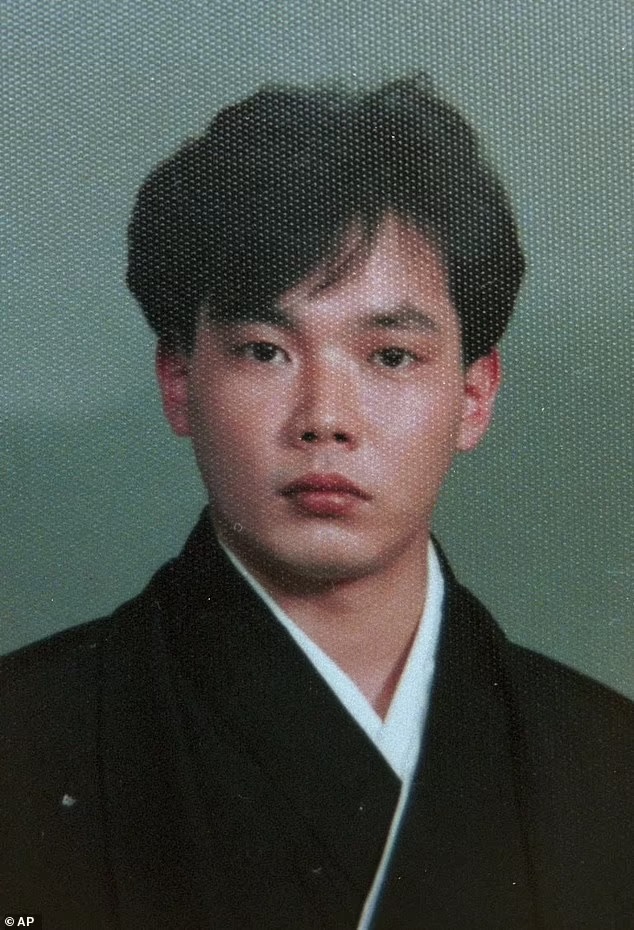
Joshua Nair 30 Jan 24, https://www.ladbible.com/news/world-news/tokaimura-nuclear-disaster-japan-366945-20240130
A man died in excruciating pain, ‘crying blood’ as his ‘skin melted’, reportedly begging doctors to stop treating him.
Hisashi Ouchi was a technician at the Tokaimura Nuclear Power Plant, about 90 miles northwest of Tokyo.
Disaster struck in 1999 when three workers attempted to pour uranium into a huge metal vat.
Ouchi was helping a colleague with the dangerous task, but due to a miscalculation, the harmful liquid reached ‘critical point’, releasing dangerous neutron radiation and gamma rays into the building.
Unfortunately, none of the men involved in the delicate process were trained to carry it out, as it was later discovered that it involved 16kg of uranium, 13.6kg over the limit.
Reports state that, due to the fact that workers were manually carrying out the procedure, there was no way of measuring how much was being transferred.
Ouchi got exposed to more radiation than the other workers, suffering burns, becoming dizzy, and violently vomiting.
The 35-year-old’s nightmare was only getting started though.
It was discovered that Ouchi had absorbed 17 Sieverts (sv) of radiation, which is still the highest amount of radiation taken on by a single living person, around twice the amount that should kill someone.
For comparison, emergency responders at Chernobyl were exposed to just 0.25 sv.
After he was rushed to the University of Tokyo Hospital, the area surrounding the plant was put into lockdown.
Doctors discovered that there were no white blood cells in Ouchi’s body, and that he was in desperate need of extensive skin grafts and multiple blood transfusions.
Exposure to the dangerous substance reportedly left him ‘crying blood’, bleeding from his eyeballs.
Doctors desperately tried to keep him alive, but Ouchi begged them to stop just a week into treatment.
Ouchi reportedly yelled: “I can’t take it any more! I am not a guinea pig!”
However, at the request of his family, doctors were able to get it started again.
But on 21 December that year, Ouchi’s body eventually gave out and he died as a result of multiple organ failure.
The technicians’ supervisor, Yutaka Yokokawa, also received treatment, but was released after three months with minor radiation sickness, before going on to face charges of negligence in October 2000.
Nuclear fuel company JCO later paid $121 million to settle 6,875 compensation claims from people and businesses who had suffered from or been exposed to radiation from the accident.
1 This Month

of the week – Shut Down Drone Warfare!


Tell the Ukrainian Government to Drop Prosecution of Peace Activist Yurii Sheliazhenko

Petition to revoke the licensing of the Near Surface Nuclear Disposal Facility (NSDF) at Chalk River. https://www.ourcommons.ca/petitions/en/Petition/Details?Petition=e-7247
To see nuclear-related stories in greater depth and intensity – go to https://nuclearinformation.wordpress.com
-
Archives
- March 2026 (251)
- February 2026 (268)
- January 2026 (308)
- December 2025 (358)
- November 2025 (359)
- October 2025 (376)
- September 2025 (257)
- August 2025 (319)
- July 2025 (230)
- June 2025 (348)
- May 2025 (261)
- April 2025 (305)
-
Categories
- 1
- 1 NUCLEAR ISSUES
- business and costs
- climate change
- culture and arts
- ENERGY
- environment
- health
- history
- indigenous issues
- Legal
- marketing of nuclear
- media
- opposition to nuclear
- PERSONAL STORIES
- politics
- politics international
- Religion and ethics
- safety
- secrets,lies and civil liberties
- spinbuster
- technology
- Uranium
- wastes
- weapons and war
- Women
- 2 WORLD
- ACTION
- AFRICA
- Atrocities
- AUSTRALIA
- Christina's notes
- Christina's themes
- culture and arts
- Events
- Fuk 2022
- Fuk 2023
- Fukushima 2017
- Fukushima 2018
- fukushima 2019
- Fukushima 2020
- Fukushima 2021
- general
- global warming
- Humour (God we need it)
- Nuclear
- RARE EARTHS
- Reference
- resources – print
- Resources -audiovicual
- Weekly Newsletter
- World
- World Nuclear
- YouTube
-
RSS
Entries RSS
Comments RSS
 nuclear-news