China Will Dominate Global Nuclear Energy Through 2035, Analyst Says.
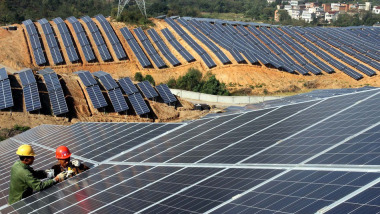
COMMENT. This all sounds great for the nuclear industry.
But let’s not forget – China Keeps Beating Renewable Targets And Missing Nuclear Ones
Oil Price, By Haley Zaremba – Sep 20, 2026
- China added 34 gigawatts of nuclear capacity over the last decade while the US added just one plant, Georgia’s long-delayed Plant Vogtle.
- Beijing signed a new deal with the IAEA to share its expertise on high-temperature gas-cooled reactors, a rare opening from a historically secretive sector.
- Analysts expect China to overtake the US as the world’s top nuclear energy producer within the next decade, with AI’s power demand adding urgency.
The future of nuclear energy is in China’s hands. While the United States remains the world’s largest producer of nuclear energy, China’s sector is growing at such a rapid clip that it is expected to overtake France as well as the United States to become the world’s leading nuclear power producer within the next decade. In addition to this rapid expansion of traditional nuclear power capacity, Beijing has also quickly become the global leader in a broad and diverse range of advanced nuclear power technologies.
“By a wide margin, China will have the world’s most dynamic and significant nuclear industry through 2035,” Damien Ma, energy lead analyst for Gavekal Technologies, wrote in a recent report, as quoted by the South China Morning Post. “Construction efficiencies mean China can build a new plant in about six years, compared with more than a decade for the latest Vogtle reactors in the US,” Ma went on to say.
The United States has added just one nuclear plant in the last decade, Georgia’s long-delayed, over-budget, and controversial Plant Vogtle. Over the same time, China added a staggering 34 gigawatts of capacity. And, Beijing’s latest five year plan shows that China has no intentions of slowing down……………………………………………………………………………………………………………………………………………………………………………………….
while China is historically quite secretive about its technological advancements and cutting-edge energy sector developments, this week Beijing made a surprising move to share its expertise with the rest of the world. This week, China signed a deal with the International Atomic Energy Agency (IAEA) to more freely share its knowledge on high-temperature gas-cooled reactors (HTGRs) with other countries. HGTRs are a form of advanced fourth-generation reactor that is capable of producing nuclear energy at extremely high temperatures, opening avenues for use in a variety of industrial applications.
The new deal “covers cooperation in HTGR research and development, reactor design, construction, commissioning and operation,” as well as the exchange of “information on supply chains and personnel training,” according to a recent Interesting Engineering report. “The deal could give other countries greater access to China’s engineering experience with HTGRs as interest grows in nuclear systems that can provide both electricity and high-temperature industrial heat.”………….https://oilprice.com/Alternative-Energy/Nuclear-Power/China-Will-Dominate-Global-Nuclear-Energy-Through-2035-Analyst-Says.html
Ending the nuclear arms race starts with cities doing their part

A recent study from the People’s Liberation Army Rocket Force Characteristic Medical Centre, which was published in the Chinese Journal of Radiological Health, was a stark reminder that while low, the probability of a nuclear attack on cities is not zero. Any such attack would overwhelm emergency services.
More than 1,000 cities in 24 countries have called on their national governments to join the TPNW as a way to halt the nuclear arms race. Cities such as New York, Canberra, Berlin, Paris, Rome and Washington have all encouraged their governments to join the TPNW and eliminate their nuclear arsenals.
As cities are the main targets of nuclear weapons, they have a responsibility to speak out and encourage efforts to eliminate them
Susi Snyder, 18 Sep 2026, Susi Snyder is director of programmes for the International Campaign to Abolish Nuclear Weapons (ICAN), the 2017 Nobel Peace Prize winner.
The catastrophic danger posed to cities by nuclear weapons is nothing new. Putting major urban areas at risk across generations is, in fact, the point of these weapons of terror. The practice of doing so is benignly called nuclear deterrence, but it requires holding the cities of adversaries – real and imagined – under constant threat.
The use of even the smallest nuclear weapons in today’s arsenals would cause a humanitarian emergency in cities. That is why city leadership should have a voice in nuclear policymaking.
Attacking cities or other densely populated areas has always been part of warfare. Whether it’s medieval sieges to unseat ruling powers or drone attacks on Kyiv, cities are not safe from war. Efforts to restrict or limit civilian suffering in cities and populated areas have included the endorsement by 91 countries of a political declaration on explosive weapons in populated areas.
Through this, nations are looking for ways to reduce and prevent the known reverberating effects of explosive ordnance contamination in urban areas, effects which are compounded and made long-lasting by the destruction of cultural, educational, commercial, infrastructure and healthcare facilities. Nuclear weapons are highly explosive weapons which also leave a lasting radioactive legacy.
No country is prepared to respond to the use of nuclear weapons. A 2014 report from the United Nations Institute for Disarmament Research showed that there are unique problems associated with nuclear weapon use, including radiation and radioactive fallout, large numbers of injured people with multiple trauma, serious burn injuries and radiation-related illness. They also found “there are inadequate specific procedures and systems appropriate to nuclear weapon detonation events as these differ from civil nuclear accidents in significant ways”.
A recent study from the People’s Liberation Army Rocket Force Characteristic Medical Centre, which was published in the Chinese Journal of Radiological Health, was a stark reminder that while low, the probability of a nuclear attack on cities is not zero. Any such attack would overwhelm emergency services.
The International Campaign to Abolish Nuclear Weapons (ICAN) published a study looking at the response capacity in key global cities, including Beijing. In that study, we found even if just one average-sized, 100-kiloton nuclear weapon was detonated over Beijing today, the immediate health impact would be catastrophic. There are not enough medical personnel or hospital facilities to treat what could amount to 1.2 million casualties.
The International Committee of the Red Cross (ICRC) put it succinctly, saying: “There is no adequate humanitarian response capacity in case of use of nuclear weapons.” The ICRC, UN humanitarian agencies and more than 100 governments recognise the only way to ensure protection from nuclear weapons is by preventing their accidental or intentional use.
The legal framework to do so exists. The framework of nuclear weapons-related agreements, from the Treaty on the Non-Proliferation of Nuclear Weapons to the Treaty on the Prohibition of Nuclear Weapons (TPNW), offers a way to move towards verifiable and irreversible nuclear disarmament.
As cities are the main targets of nuclear weapons, municipalities have a special responsibility to their populations to speak out against any role for nuclear weapons in national security doctrines and encourage efforts to eliminate the risk of nuclear weapons. Mayors and other municipal leaders are rising to the challenge.
More than 1,000 cities in 24 countries have called on their national governments to join the TPNW as a way to halt the nuclear arms race. Cities such as New York, Canberra, Berlin, Paris, Rome and Washington have all encouraged their governments to join the TPNW and eliminate their nuclear arsenals.
Through the ICAN Cities Appeal, these cities are empowered to act locally on global issues such as nuclear disarmament, stand up for the protection of those living in their cities and demand action. The gruesome images of the two cities destroyed by nuclear weapons, Hiroshima and Nagasaki, are a reminder of everything at risk from nuclear dangers.
In efforts to protect civilians, leadership might not always come from the highest levels of government. Instead, it might rise from the cities, the communities and the people who see nuclear weapons as a threat. The growing support for the ICAN Cities Appeal and the TPNW, especially in countries where national governments are clinging to outdated policies that allow for the use of nuclear weapons, shows that leadership.
North Korea’s Underground Nuclear Tests Are Reactivating Dormant Earthquake Fault Lines
Scientists recorded 1,399 local quakes since North Korea began its underground nuclear tests—a spike unlike anything the region has seen since seismic activity was first catalogued there.
By Matthew Phelan, September 17, 2026, https://gizmodo.com/north-koreas-underground-nuclear-tests-are-reactivating-dormant-earthquake-fault-lines-2000813481
The Democratic People’s Republic of Korea has conducted at least six major underground nuclear weapons tests at its secretive Punggye-ri facility beneath Mount Mantap within the nation’s coastal North Hamgyong Province. Back in September 2017, American seismologists with the U.S. Geological Survey (USGS) registered the final of these as a 6.3-magnitude earthquake-like event after DPRK scientists detonated their test bomb—but the aftershocks and quakes have reverberated onward into the present day.
A coalition across three of China’s research universities and the nation’s China Earthquake Administration (CEA) have now traced revived earthquake activity along several once quiet faultlines surrounding Mantap. These quakes, which began with a seismic event on September 23, 2017 (or three weeks after that final September 3 test) have persisted, periodically recurring all the way up to May 2025, the last month that this group collected data for its study.
“The progressive increase in both the earthquake rate and the moment release rate indicates that the crust did not simply relax toward equilibrium after the final explosion,” the researchers wrote in their new study, published Thursday in the journal Science.
Instead, they reported, seismic activity “expanded gradually as preexisting faults became active.”
A literal seismic shift
The nuclear weapon that North Korea tested in September 2017 had an estimated explosive yield between roughly 100 and 250 kilotons of TNT—at least 10 times the power of the atomic bomb that the U.S. dropped on Hiroshima near the end of World War II. The study’s first author, geophysics researcher Xingli Fan of the Chengdu University of Technology’s Key Laboratory of Earth Exploration and Information Techniques, worked with his team to pull seismic data from sensors in both China and South Korea to better understand this test’s consequences.
Some of these seismographic stations were quite close, within roughly 50 to 124 miles (80 to 200 kilometers) from the secret nuclear site. The data, which spanned the years from 2008 to 2025, identified 1,399 local earthquakes events during this period—a spike never before seen in earthquake data collected from the region since events like these were first formally catalogued on the Korean peninsula back in 1904. For Fan and his colleagues, the fact that North Korea’s first major nuclear test beneath Mantap detonated on October 9, 2006, served as something of an early indicator that these non-metaphorically earth-shattering blasts were altering local plate tectonics near the mountain.
Another big clue, they noted, was that satellite radar had measured “substantial ground deformation” atop Mount Mantap’s peak.
“Rather than generating only short-lived aftershock sequences, such perturbations can initiate the delayed reactivation of intraplate faults that unfold over years,” the researchers wrote.
Global shockwaves
While it’s true that underground nuclear testing has been associated with earthquake activity since the start of the Cold War, what’s happening in North Korea’s northeastern province is measurably different. Past studies of these kinds of underground tests at the Nevada National Security Site (Area 51’s neighbor) and the former Soviet Union’s Semipalatinsk Test Site in Kazakhstan also documented seismic aftershocks.
But, like ripples in a pond, these episodes were typically limited to the days and weeks directly after each underground nuclear test and were tightly constrained to the region closest to each bomb test’s epicenter. And they almost always faded back to normal in short order.
The increasing seismic activity near Mount Mantap, then, is anomalous for these kinds of tests—with major implications not just for local earthquake safety but also ongoing monitoring and verification efforts under the Comprehensive Nuclear-Test-Ban Treaty.
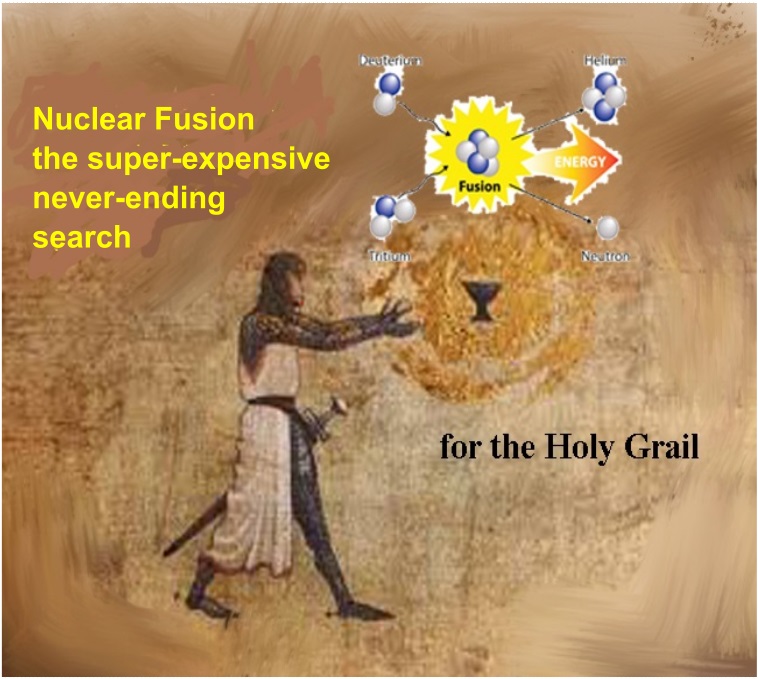
China sets out fusion progress, collaboration opportunities
World Nuclear News 18th Sept 2026
China’s aim to achieve the commercial utilisation of fusion energy by 2050, and the benefits to be gained from international collaboration, have been set out at Fusion for the Future: Engineering the Key Pathway to Realising Fusion Energy, a side event at the 70th IAEA General Conference.
The event, hosted by China Fusion Energy Co, which is part of China National Nuclear Corporation (CNNC), began with the signing of cooperation agreements with the multinational ITER fusion project and between China’s Southwestern Institute of Physics and the Thailand Institute of Nuclear Technology.
China Fusion Energy Co was established in 2025 and manages the Southwestern Institute of Physics (SWIP) which was established in 1965 and was China’s earliest professional research institute dedicated to the development of controlled nuclear fusion energy and research on fusion plasma physics.
The institute, which has developed more than 20 fusion research devices of various magnetic configurations, “serves as a national team and core force in fusion reactor R&D under the ‘three step’ national nuclear energy development strategy”. It has three campuses across two cities – Chengdu in Sichuan province and in Shanghai.
The event in Vienna was also told that the HL-3 device, the largest and highest-parameter tokamak in China, had since 2020 achieved “continuous breakthroughs” and in 2025 it achieved “dual hundred-million-degree” operation, with an ion temperature of 120 million degrees Celsius and an electron temperature of 160 million degrees Celsius…………………………………………………
In terms of global cooperation, the meeting heard that nuclear fusion “has advanced from fundamental research to engineering demonstration and pre-commercial phases”. But while scientific feasibility has been verified, “engineering bottlenecks remain the key challenge” and “existing international mechanisms focus on R&D, lack dedicated frameworks for fusion engineering innovation, industrial collaboration and standard-setting”.
“Gaps in the engineering chain propagate costs and risks downstream, demanding systematic engineering collaboration. Confronted with unprecedented engineering challenges, accelerated breakthroughs can only be achieved by pooling global wisdom and strengths. The initiative targets breaking down barriers, promoting co-construction and shared benefits, and advancing the early commercialisation of fusion energy.”
A Global Fusion Supply Chain Sharing Programme is proposed which “aims to break bottlenecks, cut costs and accelerate industrialisation, pursues joint procurement, unified standards, risk-sharing and technology collaboration and builds a safe, efficient and sustainable industrial ecosystem”.
The tasks include creating a “universal engineering language for fusion engineering” and uniting “top global fusion experts to jointly develop a scientific, rigorous industry-standard system”.
Global research institutions and enterprises were invited to participate with the message that “together we can build an open, collaborative ecosystem that delivers clean, sustainable energy for humanity’s future”.
https://www.world-nuclear-news.org/articles/china-sets-out-fusion-progress-collaboration-opportunities
Japan aims to increase its reliance on nuclear power, but headwinds remain
the government secured passage of a revised electricity business law in July, enabling public financing for reactor replacement projects.
Efforts to address spent nuclear fuel generated by nuclear power plants remain stalled. The nuclear fuel cycle policy, which calls for reprocessing and reusing spent fuel, lacks a clear path forward, as completion of the key reprocessing plant in the village of Rokkasho, Aomori Prefecture, has been repeatedly postponed.
A final disposal site has also yet to be selected for the high-level radioactive waste produced through reprocessing.
Sep 16, 2026 , https://www.japantimes.co.jp/news/2026/09/16/japan/nuclear-power-five-rebuild-2040/
The Japanese government has set a target of replacing up to five nuclear reactors by the 2040s and as many as 14 by the 2050s.
In the July decision to revise its nuclear energy policy guidelines, the government presented specific numerical targets for reactor replacement for the first time since the triple meltdown at Tokyo Electric Power Company’s Fukushima No. 1 nuclear power plant in March 2011.
The government also reaffirmed its policy of making “maximum use” of nuclear power, seeking to encourage investment in related industry sectors and to foster skilled personnel.
Important step
After the Ministry of Economy, Trade and Industry released draft revisions to the guidelines in June, Nozomu Mori, chairman of the Federation of Electric Power Companies of Japan and president of Kansai Electric Power, welcomed the move.
“This sends a powerful message that Japan will continue to utilize nuclear power in the future,” Mori told a news conference. “An extremely important step has been taken.”
The previous guidelines, adopted in 2023, effectively extended the maximum operating life of nuclear reactors beyond the standard 60-year limit and called for making maximum use of existing facilities.
The latest revision goes further by adopting a more proactive approach to replacing reactors that are to be decommissioned after reaching the end of their operating lives.
Within the industry, Kansai Electric has already begun geological surveys in preparation for the possible construction of a new reactor at its Mihama nuclear power plant in Fukui Prefecture.
Another proposal calls for building a reactor at Kyushu Electric Power’s Sendai nuclear power plant in Kagoshima Prefecture e while decommissioning reactors at the utility’s Genkai nuclear power plant in Saga Prefecture.
Data centers
With electricity demand expected to rise sharply amid the construction of data centers and semiconductor plants, the government regards nuclear power, together with renewable energy, as a key source of decarbonized electricity.
Under the Strategic Energy Plan approved by the Cabinet in 2025, the government aims to increase nuclear power’s share of the electricity generation mix to around 20% in fiscal 2040.
The revised guidelines set numerical targets for reactor replacement on the basis of estimates that nuclear generating capacity could fall as much as 5.5 million kilowatts short of the level needed to meet that goal by the 2040s and up to 16 million kilowatts short by the 2050s.
By establishing specific targets, the government hopes to create a business environment conducive to large-scale investments and strengthen efforts to develop skilled personnel.
The number of people seeking employment in the nuclear power industry has declined since the accident at the disaster-stricken Fukushima No. 1 plant. Nuclear power projects typically take about 20 years from the start of construction to the launch of operations and can cost trillions of yen, making it difficult to raise funds and recoup investments.
Against this backdrop, the government secured passage of a revised electricity business law in July, enabling public financing for reactor replacement projects.
At a meeting of ministers responsible for nuclear energy policy, in which the revisions to the guidelines were adopted, participants agreed to provide funding for nuclear power projects through the New Energy and Industrial Technology Development Organization and to draw up a road map for workforce development.
“We will make maximum use of nuclear power, which contributes to energy security and decarbonization,” Prime Minister Sanae Takaichi said at the meeting.
Nuclear fuel cycle issues
Efforts to address spent nuclear fuel generated by nuclear power plants remain stalled. The nuclear fuel cycle policy, which calls for reprocessing and reusing spent fuel, lacks a clear path forward, as completion of the key reprocessing plant in the village of Rokkasho, Aomori Prefecture, has been repeatedly postponed.
A final disposal site has also yet to be selected for the high-level radioactive waste produced through reprocessing. As part of the repository selection process, a first-stage survey has started on Minamitorishima, a Pacific island administered by the Tokyo village of Ogasawara. Still, Ogasawara is only the fourth municipality nationwide to accept such a survey.
In late August, the industry ministry asked Hitachiomiya, a city in Ibaraki Prefecture, to accept a first-stage survey for the final disposal site selection.
With no clear prospect for any further increase in the number of candidate sites, officials in affected local governments have voiced criticism. One asked, “Is it really appropriate to allow discussions on reactor construction alone to continue moving forward?”
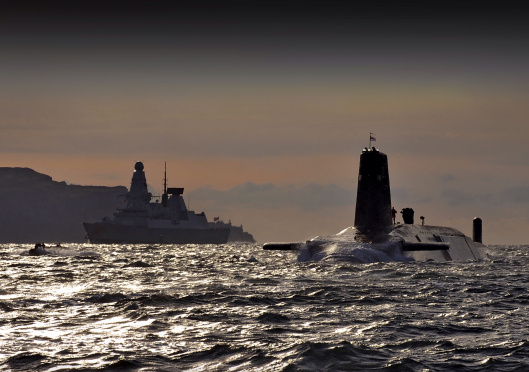
Japan’s Defense Minister: Nuclear-Powered Submarines Will Not Be Ruled Out
NAVAL NEWS, 15/09/2026, By Kosuke Takahashi
Speaking at a press conference on September 11, Koizumi was asked about reports that a U.S. Navy official had expressed a positive view of Japan potentially acquiring nuclear-powered submarines. While declining to comment directly on individual media reports, Koizumi said the option would be considered as part of the government’s planned revision of Japan’s three key national security documents: the National Security Strategy, National Defense Strategy and Defense Buildup Program. The three documents are expected to be revised by year-end.
As I have said before, in the course of revising the three documents, we will consider all options without ruling anything out,”
“Of course, we will also proceed with our consideration without ruling out nuclear-powered submarines as an option.”Japan’s Defense Minister Shinjiro Koizumi
Koizumi stressed that no decision had been made and that the government was not working toward a predetermined conclusion.
Asked about the strategic advantages of nuclear-powered submarines and the challenges Japan would face if it decided to acquire them, Koizumi offered one of his most detailed public assessments of SSNs to date. Speaking in general terms, he said nuclear-powered submarines can remain submerged for long periods, conduct extended operations, and are said to be capable of speeds several times higher than those of conventionally powered submarines.
“These characteristics make it possible to conduct the required activities while ensuring a higher level of safety for the crew,” Koizumi said.
At the same time, he acknowledged significant disadvantages. He said nuclear-powered submarines are said to be less quiet underwater than conventionally powered submarines. He also cited the high cost of nuclear propulsion systems, the need for larger hulls, and the specialized technical expertise required to operate, maintain, and service nuclear propulsion plants.
“In an increasingly rapidly changing security environment across various fields, we will examine the measures necessary to improve deterrence and response capabilities without ruling out any options,” Koizumi said.
U.S. Navy Official Voices Support for Japan Considering SSNs
Koizumi’s remarks came two days after a U.S. Navy official reportedly expressed a positive view of Japan considering nuclear-powered submarines.
The unnamed U.S. Navy official spoke to Japanese, South Korean, and other Asia-Pacific journalists at Joint Base Pearl Harbor-Hickam in Hawaii on September 9.
According to Japanese media reports, when asked whether Japan should consider acquiring nuclear-powered submarines, the official responded positively, pointing out that Japan operates nuclear power plants and possesses relevant nuclear technology. The same official also drew attention in South Korea by saying Seoul needed a “valid reason” for acquiring nuclear-powered submarines and warning against pursuing them merely as a “status symbol.”
Japan currently operates only conventionally powered diesel-electric submarines, but the debate over nuclear propulsion has accelerated over the past year…………………………….
Major obstacles remain, however. Nuclear-powered submarines would be far more expensive than Japan’s current conventional boats and would require an entirely new infrastructure for naval nuclear propulsion, including reactor maintenance, nuclear fuel management, and specialized personnel. There are also legal and political questions. Japan’s Atomic Energy Basic Act restricts the use of nuclear energy to peaceful purposes, raising longstanding questions about the compatibility of nuclear-powered warships with the existing legal framework.
Koizumi’s September 11 remarks do not mean Japan has decided to acquire SSNs. But his explicit statement that nuclear-powered submarines will not be excluded from consideration, combined with his detailed public assessment of their advantages and disadvantages, suggests that the issue is moving from a largely theoretical debate toward a concrete defense policy discussion. https://www.navalnews.com/naval-news/2026/09/japan-defense-minister-nuclear-powered-submarines/
Japan’s submarine debate signals break from nuclear taboos
Japan weighing nuke subs to deter China’s rising threat, but it’s not clear Tokyo has the capital, crew or capacity to keep a nuclear fleet afloat
Asia Times, by Gabriel Honrada, September 14, 2026
Japan is edging closer to a once-unthinkable choice: whether nuclear propulsion should underpin its next generation of undersea deterrence.
This month, the Japan Times reported that Japanese Defense Minister Shinjiro Koizumi confirmed that Japan is keeping the option of acquiring nuclear-powered submarines on the table, following encouraging signals from a US Navy official.
Speaking at a regular press conference, Koizumi stated that Japan will not rule out the capability as it prepares revisions to three key national security documents by year-end.
The remarks came after an unnamed US Navy official, later corroborated by the US Pacific Fleet, suggested discussions should proceed given Japan’s advanced nuclear expertise, noting that asset procurement must align with national operational needs.
The submarine debate also follows Koizumi’s July 2026 call for Japan to discuss nuclear deterrence without taboos, saying the country could no longer avoid confronting nuclear weapons policy amid its worsening security environment…………………………… https://asiatimes.com/2026/09/japans-submarine-debate-signals-break-from-nuclear-taboos/
Erdogan hints at larger nuclear partnership with Russia, unsettling Turkey’s allies
rfi, 12/09/2026
Turkish President Recep Tayyip Erdogan is signalling a move to expand nuclear power cooperation with Russia, just as his country’s first Russian-built nuclear station prepares to go live later this year. The deepening partnership is likely to unsettle Turkey’s western allies.
On the sidelines of a recent gathering of regional leaders in Kyrgyzstan, Erdogan told his Russian counterpart, Vladimir Putin, that Russia and Turkey “will take steps together to open some new power plants, along with the opening of the Akkuyu nuclear power plant”.
The Akkuyu nuclear power plant, built by Russia’s state nuclear company Rosatom on Turkey’s Mediterranean coast, is due to go online later this year.
Erdogan’s announcement comes amid strained ties with Russia, as the Turkish leader has deepened relations with United States President Donald Trump.
Ozgur Unluhisarcikli, head of the Ankara office of US think tank the German Marshall Fund, describes Erdogan’s move as a “gesture” to Putin.
“Although Turkey is competing with Russia geopolitically, and although Turkey is firmly anchored in NATO and is improving its relationship with the United States, it does not intend to sever all ties with Russia,” Unluhisarcikli explained.
“Indeed, Turkey sees the Turkey-Russia relationship as a long-term strategic one. And this is, by the way, consistent with Turkey’s balancing act.”………………………………………………………………………………… https://www.rfi.fr/en/podcasts/international-report/20260912-erdogan-hints-at-larger-nuclear-partnership-with-russia-unsettling-turkey-s-allies
N Korea has built two-storey uranium enrichment facility, says watchdog
Yvette Tan, BBC 9th Sept 2026
North Korea has built a new two-storey uranium enrichment facility, the head of the world’s nuclear watchdog said this week, calling it a cause for “serious concern”.
The new building is part of the main Yongbyon nuclear complex, and reportedly capable of housing up to 28 centrifuge cascades used to enrich uranium.
In a report published late last month, the International Atomic Energy Agency (IAEA) said Pyongyang had also begun operating an expanded annex at another enrichment site.
These findings point to a steady expansion of the North’s sancitoned nuclear infrastructure. The agency, which has no inspectors in North Korea since it was expelled in 2009, relies on satellite imagery for assessments.
“The continuation and further development of the DPRK’s [Democratic People’s Republic of Korea] nuclear programme are clear violations of relevant UN Security Council resolutions and are deeply regrettable,” IAEA director Rafael Grossi said in a statement earlier this week.
The IAEA first referred to the existence of the building in June, although Grossi had mentioned the possibility earlier in the year.
In June, the agency said that North Korean leader Kim Jong Un visited a “newly inaugurated nuclear materials production factory” on 3 June, which it identified as the Yongbyon enrichment facility.
Kim had praised the country’s “greatly expanded production capacity”, adding that this would “offer the possibility of carrying out larger plans”, according to the agency’s report……………………………………………………………………..
https://www.bbc.co.uk/news/articles/cy0zqk2w92lo
China v. US: The Great Mideast AI Race Heats Up

Officials, activists and academics have warned that while economically Middle Eastern states may benefit from the race between the US and China to offer them investment and technology, this will likely come at an environmental cost.
September 8, 2026, Neil Thompson, https://www.juancole.com/2026/09/china-great-mideast.html
London– Last week, China’s President Xi Jinping made his first state visit to Egypt since 2016, amid deepening economic and security ties between Beijing and one of Washington’s major Arab allies. Egypt’s government said the two sides agreed to launch the third phase of a cooperative industrial zone in the Suez Canal, as Cario seeks to diversify its major foreign policy relations beyond just the US. The latter still supplies Egypt with $1.3 billion in military aid each year but faces growing geopolitical competition from China.
In a statement clearly designed to appeal to Egyptian audiences, where the Suez Canal is a major economic engine, Xi said that China “stands ready to work with countries in the region to safeguard the security of international shipping lanes, advance development cooperation … and eliminate the breeding grounds for conflict.” Instability in the Red Sea since 2023 and the US-Iran conflict since February have caused maritime traffic through the canal to drop sharply, though the major Maersk and Hapag-Lloyd shipping lines signalled last month that they were planning a phased return. hottest year on record in 2024, and that heatwaves there are becoming longer and more intense.
It is also during these months that the region’s new AI infrastructure needs the most water and energy to cool its server farms, too. Even without higher temperatures, the average data centre has the equivalent water demand of around 1,000 households per day, while a large one uses around 5 million gallons a day, the same as a town of up to 50,000 residents. Gulf countries like the UAE are engaged in massive construction of more desalination plants to meet this expected AI-related upsurge in water (and power) demand as a result. UAE regulators have denied the increase in water demand will cause them problems, with the head of regulatory affairs at Abu Dhabi’s Department of Energy saying in April: “We rely on desalination [plants] that have proven in the last 50 years to be a very reliable source for potable water.”
Conclusion
Middle Eastern countries outside the GCC will face similar problems with rising temperatures driving household power and water demand just as AI-related demand also increases. AI infrastructure projects may outpace regional water and power development without careful planning. In May, Egypt said it planned to meet future AI data centre power demand there using renewable energy. It is investing significantly in wind farms and other projects, including expanding regional interconnections with other countries’ power grids in Saudi Arabia, Europe and Sudan. However, these projects are vulnerable to timetable slippages from obstacles like construction sector supply chain disruption or port congestion at Egyptian terminals. With a growing population seeking jobs, Egypt’s government seems likely to press ahead regardless.
China’s expertise in both AI and green technology could likely help ease many Middle Eastern countries’ attempted transition to a digitalised and clean-energy powered economic future. But geopolitical competition with the US will add a political and diplomatic dimension to any projects with Chinese participation. The US is still a major security partner for many Middle Eastern governments, and Washington could threaten to withdraw military aid in response to a growing dependence on Chinese AI systems in allied regional governments or economies. The US fears Egypt allowing Chinese AI systems in its public sector would create cybersecurity risks for its agents and companies there. US fear of China could impede Middle Eastern states’ uptake of Chinese AI infrastructure and models, but also their uptake of Beijing’s greener gifts.
China Dangles Growth, Security Partnership
Beijing has also made Egypt’s government another offer of economic and technological development through state-linked firm Huawei. Egypt has ambitious plans to expand AI’s contribution to its economy to 7.7% of GDP by 2030, offering China an opening to challenge the US lead on global AI infrastructure by starting with a small project in the Middle East. Huawei bid on an Egyptian government tender in August to build public sector AI data centers there, in partnership with iFlytek, a Chinese surveillance company. Both Chinese companies are on a US blacklist, and Washington has approached US firms including Nvidia, AMD and Microsoft to put together a counterbid. Egypt has yet to announce a decision, but the move signals an intensifying race between Beijing and Washington to recruit more regional states into their respective AI stacks.
China’s Middle Eastern AI Footprint Expands Elsewhere
China and the US have each launched their own multinational AI alliances; in China’s case, this is the World AI Cooperation Organisation (WAICO), while the US set up the Pax Silica in December. Both groups contain a few Middle Eastern states so far, with Iran, Algeria and Oman joining WAICO, and Israel, Qatar, and the UAE have joined the Pax Silica. However, Chinese companies have launched AI-related projects in multiple Middle Eastern countries prior to WAICO’s launch, and Beijing’s AI-infrastructure footprint is likely to extend well outside the alliance’s formal Middle Eastern members. Middle Eastern firms are increasingly willing to use Chinese technology to launch their own AI models indigenous to the region, too.
In October, Chinese firm Alibaba opened a sector data centre in Dubai. In January, the UAE’s Emirate of Sharjah signed an agreement with Chinese AI infrastructure and cloud computing services provider DataCanvas to examine establishing data centers there. Finally, in September Saudi technology firm Humain released an Arabic-language AI model based on a Chinese one created by Chinese AI firm MiniMax. Chen Jing, a vice president of China’s Technology and Strategy Research Institute, told state media there that: “Unlike in the past, when Chinese LLMs primarily entered overseas markets through APIs or application products, in this collaboration, MiniMax M3 has directly become the foundational model for overseas indigenous model development.” Humain is financed by Riyad’s Saudi Public Investment Fund, indicating Saudi state backing for the firm’s project, despite Saudi Arabia not being a member of WAICO.
AI Growth, Environmental Cost?
Officials, activists and academics have warned that while economically Middle Eastern states may benefit from the race between the US and China to offer them investment and technology, this will likely come at an environmental cost. In April, the Qatar-based Middle East Council on Global Affairs research centre published a report warning that water and power demand for AI data centres presented a significant ecological challenge to Gulf Cooperation Council (GCC) states. GCC members already struggle to meet power and water demand during the summer months, when temperatures traditionally soar. This issue is getting worse. In December, the World Meteorological Organization issued its first report on the state of the climate in Arab states. It warned that these states had their
The historical fascists are preparing to take their revenge
SOTT – Signs of the Times, Thierry Meyssan, Voltairenet.org, Tue, 01 Sep 2026
Before our very eyes, the historical forces of fascism are reorganizing.The losers of World War II, those who massacred millions of Soviets, Chinese, and Jews, are once again in power in Japan, Israel, and Ukraine. They hope to take their revenge. It is up to us to denounce their preparations and prevent them from unleashing the apocalypse.
The losers of World War II are demanding revenge. They have no interest in it. They just want to win and reorganize the world hierarchically, with themselves at the top. Here’s what they have to say.
For the “militarists,” Japan never lost the war.
Japanese Prime Minister Sanae Takaichi is a staunch supporter of the Emperor. Every August 15th, the anniversary of the surrender, she visits the Yasukuni Shrine. This shrine honors all those who gave their lives for the Emperor during the “Fifteen Years’ War” — that is, the invasion of the Far East and World War II. She regularly pays her respects at the graves of those convicted of crimes against humanity, something she is legally prohibited from doing since becoming Prime Minister.
This year, unable to attend, she sent offerings. Four of her ministers and about one hundred and fifty parliamentarians who were able to go, did so.
For them, the crimes of the Imperial Army never existed. They are merely fabrications by Japan’s enemies. But Koreans and Chinese have a different memory: the Imperial Army treated all those who did not acknowledge the Emperor’s divinity as subhuman.Japanese conscripts were trained to massacre and torture these individuals, and if they refused, they were severely beaten. In Nanjing, 100,000 women and children were raped and enslaved to satisfy the Emperor’s soldiers, and then 300,000 people were massacred. In Korea, Unit 731 performed vivisections on prisoners without anesthesia; crimes that inspired Dr. Mengele at Auschwitz.
The same crimes were repeated in Singapore, Malaysia, Indochina and Thailand, although the population did not have as strong a memory of them as in Korea and China.
The Japanese militarists are not seeking to repeat their crimes. They know full well that in modern times, they cannot demand the worship of an emperor who has acknowledged that he is no longer a god. But they are rearming their country.
While commemorating the massacres of Hiroshima and Nagasaki on August 6 and 9, Sanae Takaichi carefully avoided mentioning that they had been perpetrated by the United States under President Harry Truman. Similarly, unlike her predecessors, she expressed neither remorse nor offered any apology for Japan’s role in World War II.
Japan only admitted its defeat in 1945 with the declaration of socialist Prime Minister Tomiichi Murayama on the 50th anniversary of the event, on August 15, 1995. This was called into question by liberal-democratic Prime Minister Shinzō Abe on the occasion of the appointment of the Minister of Self-Defense Forces on August 3, 2016. This is now the official position of Japan, defended by Shinzō Abe’s protégé, Sanae Takaichi [ 1 ] .
It was with full knowledge that Mrs. Takaichi violated the pacifism of the Japanese constitution and supplied military trucks to Ukrainian “integral nationalists” and soldiers to NATO HQ in Wiesbaden on May 29 [ 2 ] .
For the “revisionist Zionists,” it is time to resume the war against the “Zionists.”
The Kahanist (that is, the disciple of the terrorist rabbi Meir Kahane) Itamar Ben-Gvir, Minister of National Security, announced on August 28 that his men had located the wreck of the Altalena. This was a ship, chartered by the “Revisionist Zionists,” with nearly 900 militiamen on board, which the “Zionist” Prime Minister David Ben-Gurion had sunk before it reached Israel on June 22, 1948.
The “revisionist Zionists,” that is, the followers of the Ukrainian Vladimir Zeev Jabotinsky, and the “Zionists” proper, that is, the followers of the Hungarian Theodor Herzl, engaged in a fierce hatred. Herzl wanted a homeland where Jews would escape pogroms, while Jabotinsky wanted a Jewish empire like the Italian and German empires………………………………………………………………………………………………………………………………………………………………………………………………………………………………………………And now
We can no longer ignore what is happening. The forces of historical fascism — not some nostalgic eccentrics clinging to parades in uniform, but those who aspire to continue the Second World War — have awakened. They have begun to rewrite history. They have used our indifference to erase the memory of their crimes.
Our immediate responsibility is to deny them any political responsibility before they attempt to take their revenge and trigger the apocalypse. We must demand immediate elections in Ukraine and Japan. Elections have been called in Israel, but we must ensure that the election campaign is fair.
References:……………………………………………….. https://www.sott.net/article/508192-The-historical-fascists-are-preparing-to-take-their-revenge
North Korea hits out at Trump’s ‘pointless’ demands and vows to strengthen nuclear force
Trump has been seeking another summit with Kim Jong-un, following three meetings in 2018 and 2019
Kyu-seok Shim, 31 August 2026
North Korea declared on Monday that Washington’s hostile policy remains unchanged and pledged to continue strengthening its nuclear capabilities, rebuffing repeated American calls for denuclearization.
In a statement released via state media KCNA, a Foreign Ministry spokesperson accused Washington of maintaining a confrontational stance through demands for Pyongyang’s “complete denuclearisation,” criticism of its human rights record, and upcoming joint military exercises with South Korea and Japan.
“The Trump administration has thus fully reconfirmed its invariable hostile policy to wantonly violate the sovereignty, political system and security interests of the DPRK,” the spokesperson said, referring to the Democratic People’s Republic of Korea.
The official described the country’s nuclear arsenal as “an absolute guarantee for defending its sovereignty,” adding that U.S. demands would not weaken its nuclear status………………………………………………………………………………………… https://www.the-independent.com/news/world/americas/us-politics/north-korea-trump-nuclear-force-hostile-us-policy-b3042186.html
Japan Govt Asks Eastern City to Accept N-Waste Site Survey
Hitachiomiya, Ibaraki Pref., Aug. 31 (Jiji Press), https://jen.jiji.com/jc/eng?g=eco&k=2026083100449
–The industry ministry Monday asked the city of Hitachiomiya in Ibaraki Prefecture, eastern Japan, to accept a literature survey for selecting a final disposal site for high-level radioactive waste from nuclear power plants.
If realized, Hitachiomiya would become the fifth site in the country to accept a literature survey, after the town of Suttsu and the village of Kamoenai, both in the northernmost prefecture of Hokkaido, the town of Genkai in the southwestern prefecture of Saga and Minamitorishima, a remote Tokyo island in the Ogasawara chain in the Pacific.
This is the second case of the central government seeking approval for the survey without request from local communities.
Senior ministry officials visited Hitachiomiya and handed a written request to Mayor Sadayuki Suzuki.
“I view the request very positively,” he said, adding that he wants to make a final decision after hearing from the city assembly.
Evacuees from Fukushima nuclear meltdown reach settlement with Tepco
Aug 26, 2026, https://www.japantimes.co.jp/news/2026/08/26/japan/crime-legal/tepco-fukushima-settlement/
SAPPORO – A total of 176 people who fled Fukushima Prefecture following the March 2011 nuclear disaster have reached a settlement with Tokyo Electric Power Company Holdings in their damages lawsuit filed against the firm and the government.
The settlement was reached on Aug. 18 at the Sapporo High Court, according to lawyers for the plaintiffs.
All the plaintiffs withdrew their damages claims against the government. The decision came on the heels of the Supreme Court’s June 2022 ruling, and a series of similar court decisions that followed, that the government was not liable for the nuclear accident.
The plaintiffs evacuated from Fukushima Prefecture to Hokkaido in the wake of the triple meltdown at the tsunami-stricken Fukushima No. 1 plant.
Under the settlement, Tepco apologized for the irreparable damage the plaintiffs suffered because of the accident.
The settlement amount was not disclosed. The plaintiffs’ lawyers said the sum was “not sufficient but took into account their claims to a certain extent.”
Seiichi Nakate, head of the plaintiffs, and his family evacuated from the city of Fukushima to Sapporo in 2012.
“The settlement is far from enough to make up for our indescribable suffering, but we decided (to accept it) because we cannot endure any more exhaustion,” he said.
In its March 2020 ruling, the Sapporo District Court ordered the government and Tepco to pay about ¥53 million in total to some of the plaintiffs, finding both liable for the accident. The plaintiffs, Tepco and the government all appealed the ruling.
AI robots and drones to assist in Fukushima nuclear plant cleanup
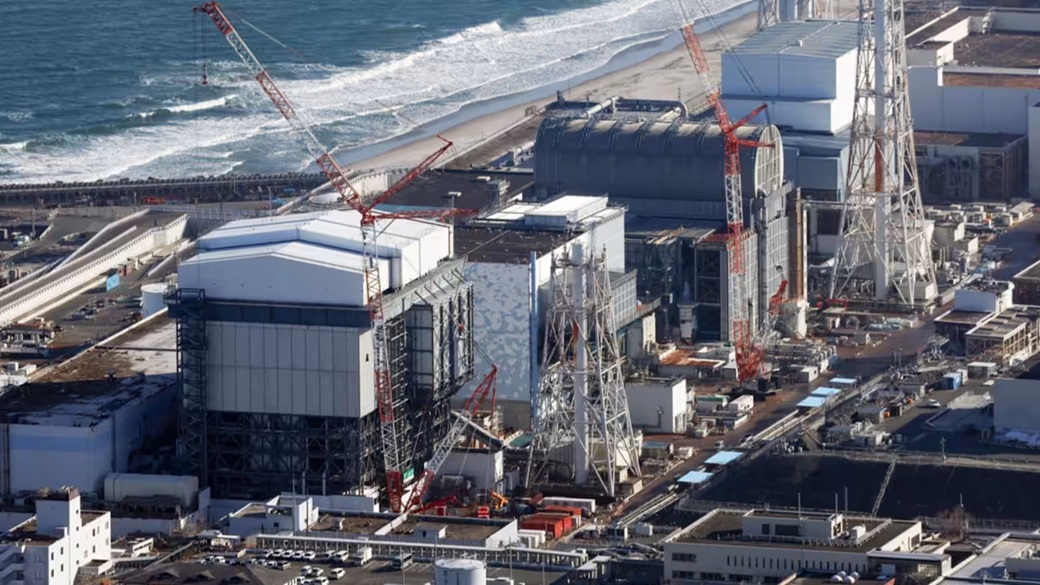
Three reactors at the Fukushima Daiichi nuclear plant contain 880 tons of debris. (Photo by Akitoshi Sugiura)
Japan government, TEPCO to launch consortium as decommissioning progresses
MASATOSHI IDA, August 30, 2026
AI robots and drones to assist in Fukushima nuclear plant cleanup. Japan
government, TEPCO to launch consortium as decommissioning progresses……..(Subscribers only)
Nikkei Asian Review 30th Aug 2026, https://asia.nikkei.com/business/technology/artificial-intelligence/ai-robots-and-drones-to-assist-in-fukushima-nuclear-plant-cleanup
1 This Month
23-25 October – on Zoom – World BEYOND War’s annual global conferenc


Shut down the radiation-damaged Heysham nuclear reactors now
To see nuclear-related stories in greater depth and intensity – go to https://nuclearinformation.wordpress.com

Say No to NASA’s Reckless Nuclear Reactor on the Moon
Say No to NASA’s Reckless Nuclear Reactor on the Moon

-
Archives
- October 2026 (219)
- September 2026 (339)
- August 2026 (330)
- July 2026 (355)
- June 2026 (287)
- May 2026 (306)
- April 2026 (356)
- March 2026 (251)
- February 2026 (267)
- January 2026 (308)
- December 2025 (358)
- November 2025 (359)
-
Categories
- 1
- 1 NUCLEAR ISSUES
- business and costs
- climate change
- culture and arts
- ENERGY
- environment
- health
- history
- indigenous issues
- Legal
- marketing of nuclear
- media
- opposition to nuclear
- PERSONAL STORIES
- politics
- politics international
- Religion and ethics
- safety
- secrets,lies and civil liberties
- spinbuster
- technology
- Uranium
- wastes
- weapons and war
- Women
- 2 WORLD
- ACTION
- AFRICA
- Atrocities
- AUSTRALIA
- Christina's notes
- Christina's themes
- culture and arts
- Events
- Fuk 2022
- Fuk 2023
- Fukushima 2017
- Fukushima 2018
- fukushima 2019
- Fukushima 2020
- Fukushima 2021
- general
- global warming
- Humour (God we need it)
- Nuclear
- RARE EARTHS
- Reference
- resources – print
- Resources -audiovicual
- Weekly Newsletter
- World
- World Nuclear
- YouTube
-
RSS
Entries RSS
Comments RSS

