Nikkei Asian Review 30th Nov 2018 The French government has informed Japan it will halt joint development of
advanced nuclear reactors, Nikkei has learned, dealing a blow to the fuel
cycle policy underpinning much of the East Asian country’s energy plans.
https://asia.nikkei.com/Economy/France-halts-joint-nuclear-project-in-blow-to-Japan-s-fuel-cycle
December 1, 2018
Posted by Christina Macpherson |
France, Japan, politics international |
Leave a comment
How climate change  , BBC News , 26 November 2018
November 27, 2018
Posted by Christina Macpherson |
ASIA, climate change, health |
1 Comment

 New scare as quake hits nuclear disaster city By JONATHAN BUCKSA powerful earthquake has struck the Japanese nuclear disaster zone of Fukushima.
Daily Mail 25th Nov 2018 https://www.dailymail.co.uk/news/article-6425835/New-scare-quake-hits-nuclear-disaster-city.html
Measuring 5.0 on the Richter scale, the quake, which hit the Japanese city at about 11.30pm local time on Friday is not believed to have caused major damage.
One Twitter user said it could be felt as far away as the country’s capital 150 miles to the south-west: ‘It was an earthquake? I felt that too! I’m staying in Tokyo and I just felt my whole Airbnb shake!’
Another said he felt a ‘long rattling in Yokohama’ – which is even further away from the Fukushima region. Despite the earthquake, no tsunami warning had been issued last night.
More than 100,000 people were displaced from the city in 2011 after a 15-metre tsunami sparked by a major earthquake led to a massive explosion in a nuclear plant.
About 18,000 people were killed by the tsunami while the explosion was said to have been the worst nuclear disaster since Chernobyl in 1986.
November 25, 2018
Posted by Christina Macpherson |
Japan, safety |
Leave a comment

 Reuters 22nd Nov 2018 , Vietnam’s National Assembly voted on Tuesday to abandon plans to build
two multi-billion-dollar nuclear power plants with Russia and Japan, after
officials cited lower demand forecasts, rising costs and safety concerns.
The estimated investment needed for the projects had doubled since 2009 to
nearly 400 trillion dong ($18 billion), state media Tien Phong quoted Le
Hong Tinh, vice chairman of the National Assembly’s science, technology
and environment commission, as saying earlier this month.
https://www.reuters.com/article/us-vietnam-politics-nuclearpower-idUSKBN13H0VO
November 25, 2018
Posted by Christina Macpherson |
politics, Vietnam |
Leave a comment
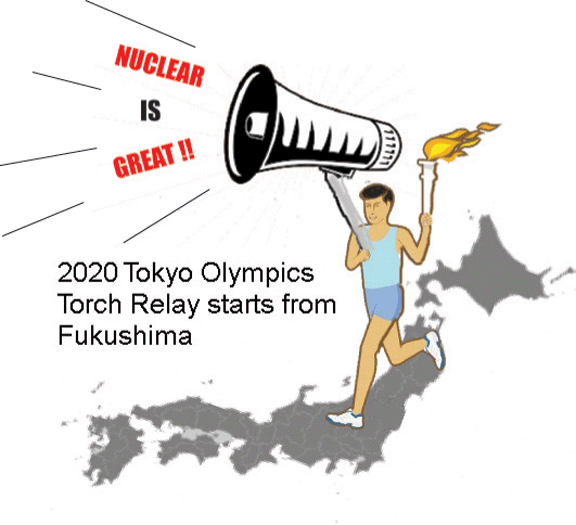
IOC chief ‘impressed’ at Fukushima recovery progress https://www.channelnewsasia.com/news/sport/ioc-chief–impressed–at-fukushima-recovery-progress-10965390, 25 Nov 18
Olympics chief Thomas Bach said Saturday he was impressed at the “great progress” made in the reconstruction of Fukushima, in a visit to the region devastated by the 2011 tsunami and nuclear disaster
TOKYO: Olympics chief Thomas Bach said Saturday (Nov 24) he was impressed at the “great progress” made in the reconstruction of Fukushima, in a visit to the region devastated by the 2011 tsunami and nuclear disaster.
Amid hopes that hosting events will help revive the region, International Olympic Committee President Bach visited a stadium set to hold baseball and softball matches during the Tokyo 2020 Olympics.
During his visit, he told Japanese Prime Minister Shinzo Abe that he was “very much impressed” by the “great progress”.
“The Fukushima region is the suitable place to show the power of the Olympics, the power of sports,” Abe said, reiterating his hopes of showing the world the recovery of Fukushima and other disaster-hit areas during the sporting event, for which Tokyo is the designated host city.
Fukushima has also been chosen as the starting point for the Olympics torch relay.
The passing of the flame is scheduled to start on March 26, 2020, and the torch will head south to the subtropical island of Okinawa – the starting point for the 1964 Tokyo Games relay – before returning north and arriving in the Japanese capital on Jul 10.
The March 2011 tsunami, triggered by a massive undersea quake, killed around 18,000 people and swamped the Fukushima nuclear plant, sending its reactors into meltdown and leading to the world’s worst nuclear disaster since Chernobyl.
Tens of thousands of people evacuated their homes. Authorities have been working to rebuild the region, about 240 kilometres north of Tokyo, although areas near the crippled plant remain uninhabitable because of radiation dangers.
November 25, 2018
Posted by Christina Macpherson |
Japan, spinbuster |
2 Comments
Anti-nuclear group undeterred by passing of pro-nuclear referendum http://m.focustaiwan.tw/news/aipl/201811250029.aspx By Wu Hsin-yun, Ku Chuan and Evelyn Kao Taipei, Nov. 25 (CNA) Taiwanese on Saturday voted against the government’s policy of phasing-out nuclear power by 2025, prompting an environmental group opposed to nuclear power to reaffirm its support for the phasing out of all nuclear power plants.
The anti-nuclear group National Nuclear Abolition Action Platform said in a statement issued Sunday that it is wrong to return to nuclear power and promised to continue to campaign for an end to the use of nuclear power in Taiwan.
The statement came after Taiwanese voted in 10 referendums alongside Saturday’s local government elections, including one that asked: “Do you agree with abolishing the first paragraph of Article 95 of the Electricity Act, which means abolishing the provision that ‘all nuclear-energy-based power-generating facilities shall cease to operate by 2025’?”
As a result, 5,895,560 votes were cast in favor of repealing the nuclear phase-out, and 4,014,215 against the initiative, according to the Central Election Commission.
For a referendum to pass, the number of voters in favor of a proposition must exceed the number who vote against it, and reach a minimum of 4,939,267 votes, or one quarter of the 19,757,067 voters eligible to cast votes in the referendums.
Commenting on the referendum result, the anti-nuclear group said that not all those who voted in favor of stopping the nuclear phase-out are unconditional supporters of nuclear power, but rather some lack confidence in Taiwan’s energy transformation.
The result does not mean those who voted in favor of repealing the nuclear phase-out do not support the government’s nuclear-free, carbon reduction and renewable energy policy, the group said.
Currently, the decommissioning of the No. 1 and No. 2 nuclear power plants in New Taipei is underway and cannot be reversed according to the law, the group said.
The result of the referendum is most likely to impact the No. 3 nuclear plant in Pingtung and possibly postpone its decommissioning, it added.
However, as the No. 3 nuclear plant is near the active Hengchun fault line, the group said the geological environment is not suitable for extending the operational life of the nuclear plant to be or installing new units at the plant.
Taiwan can not withstand a nuclear disaster and the passage of the referendum does nothing to guarantee safety, the group noted.
The group stressed Taiwan is on the path to a nuclear-free homeland and carbon reduction and should not return to nuclear power and coal-fired plants.
Under the Referendum Act, a law repealed in a referendum has to be rescinded three days after the result is officially announced by the Central Election Commission, Cabinet spokeswoman Kolas Yotaka said Sunday.
This means the first paragraph of Article 95 of the Electricity Act will be removed.
However, “the government’s goal of making Taiwan a nuclear-free homeland by 2025 remains unchanged,” Kolas said, adding that in practice it may not be possible to postpone the phase-out of the No. 1, No. 2 and No. 3 nuclear plants.
According to the law, applications for postponement are required to be submitted 5-10 years before the scheduled retirement dates of nuclear plants, Kolas said, adding that any such applications cannot be made within the statutory time period.
As to whether the currently-mothballed No. 4 nuclear power plant will start commercial operations, Kolas said it is estimated any such reversal would take 6-7 years and cost NT$68.8 billion (US$2.22 billion).
Even if the nuclear plant is activated in 2019, it would not be ready to begin commercial operations in 2025, when the government’s goal of a nuclear-free homeland will be achieved, at which point Taiwan will have no need for nuclear power, she noted.
November 25, 2018
Posted by Christina Macpherson |
politics, Taiwan |
Leave a comment
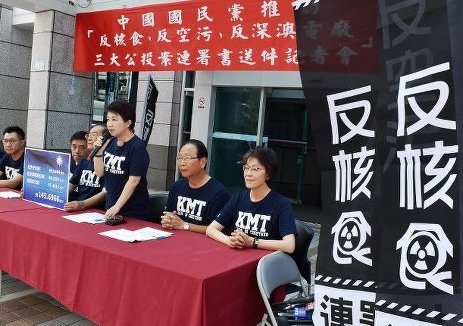 In this file photo dated Aug. 27, 2018, senior officials of the Kuomintang, Taiwan’s major political party, hold a press conference in Taipei to state their opposition to lifting a ban on food imports from Fukushima and four other Japanese prefectures. The banners read “oppose nuclear food.” (Mainichi/Shizuya Fukuoka)
TAIPEI (Kyodo) — A referendum on maintaining a ban on food products from five Japanese prefectures, imposed after the 2011 Fukushima nuclear disaster, saw the restrictions kept in place on Saturday, dealing a major blow to the government of President Tsai Ing-wen and the island’s relations with Japan.
For a referendum to deliver a decisive result in Taiwan, the “yes” vote must account for more than 25 percent of the electorate, or about 4.95 million voters.
The Central Election Commission website showed that more than 15 million of the 19.76 million eligible voters cast their ballots. More than 6 million voters approved the initiative, well over the 25 percent required.
The referendum is legally binding and government agencies must take necessary action.
The result dealt a significant blow to the Democratic Progressive Party government which proposed easing the ban after coming to power in May 2016, but backed away when the main opposition Nationalist Party (KMT) questioned the new government’s ability to ensure the safety of the imported products.
Government officials responsible for the policy declined to comment on Sunday, only saying it is a matter for President Tsai to decide.
Tsai announced her resignation as DPP leader on Saturday following her party’s disastrous defeat in key mayoral elections that day, races viewed as indicators of voter sentiment ahead of the next presidential and island-wide legislative elections in 2020.
Some worry that the result of the referendum on Japanese food imports will have a negative impact on the island’s relations with Japan. Taiwan’s representative to Japan, Frank Hsieh, said the initiative was a KMT scheme aimed at undermining bilateral relations between Taiwan and Japan at a time when the two are seeking closer ties as a way of protecting themselves from an increasingly belligerent China.
He also warned that if the referendum is successful, Taiwan would pay “a grave price” that will affect all its people.
China is the only other country still restricting comprehensive imports from Fukushima Prefecture and nearby Ibaraki, Gunma, Tochigi, and Chiba prefectures.
The referendum, initiated by the KMT, was one of 10 initiatives put to a vote in conjunction with Saturday’s island-wide local elections.
Voters approved two other referendums initiated by the KMT. One sought to stop the construction of new coal-fired power plants or the expansion of existing ones, and the other asked voters if they wanted to phase out thermal power plants.
Beijing will be happy about the result of a referendum on the name the island uses when competing at international sports events. It had sought to change the name used to participate in future international events, including the 2020 Tokyo Olympics, from “Chinese Taipei” to “Taiwan.”
The CEC website showed that more than 8.9 million cast their ballots. About 3 million of the eligible voters approved the initiative, less the 25 percent needed for the referendum to count.
The referendum was highly unpopular among athletes, who were worried that a successful outcome would hamper their right to compete, as the International Olympic Committee resolved in May that it would stand by a 1981 agreement that Taiwanese athletes must compete as “Chinese Taipei.”
The IOC had also warned that Taiwan would risk having its recognition suspended or cancelled if the referendum was successful.
China was annoyed by the proposal and pressured the East Asian Olympic Committee to revoke Taichung’s plan to host the 2019 East Asian Youth Games.
Beijing said that if the referendum was successful, it would not sit idly by and would “definitely respond,” without elaborating.
There were also five referendums relating to same-sex marriage — three initiated by opponents of same-sex marriage and two by supporters.
The CEC website showed that all three of the anti-same sex marriage initiatives passed, while both the pro-same sex marriage referenda failed.
The result also puts the Tsai government in an awkward position as Taiwan’s highest court, the Council of Grand Justices, ruled 18 months ago that the government must, within two years, amend the Civil Code or enact a special law legalizing gay marriage.
https://mainichi.jp/english/articles/20181125/p2g/00m/0in/010000c?fbclid=IwAR0ZlvV-JO_PHes83Gn8mutF6jKkFBzyx6iAYPJPw_2FA-tSqx3W71k9y2c
November 25, 2018
Posted by dunrenard |
Taiwan | Contaminated Food, Fukushima Food Ban, Fukushima Radiation |
Leave a comment
November 23, 2018
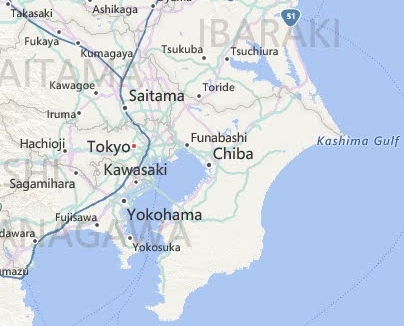
The Japan Atomic Energy Agency said Wednesday that some of the low-level radioactive waste stored underground at a facility near Tokyo may leak from its containers due to inadequate disposal procedures.
The government-backed agency keeps 53,000 drums of low-level radioactive waste, or about 10,600 kiloliters, in a concrete pit in the basement of a building of the Nuclear Research and Science Institute in the village of Tokai, Ibaraki Prefecture.
Some of the waste did not undergo the proper water removal process when placed in the pit, and leakage and corroded containers in the pit were found during inspections between 1987 and 1991, according to the agency.
The nuclear research body planned to inspect the drums over the next 50 years to check for leakage. But the Nuclear Regulation Authority said at a meeting Wednesday that the agency needs to check them more quickly.
The agency should inspect all the drums within five years, Shinsuke Yamanaka, an NRA commissioner, said at the meeting.
The agency currently inspects the drums visually once a year but will now begin to lift and check them individually.
According to the agency and the NRA, the low-level radioactive waste is placed at the facility, built sometime from around 1964 to 1976, for disposal.
The agency said it did not properly conduct the process of removing water and other materials in some cases during the 1960s.
https://www.japantimes.co.jp/news/2018/11/22/national/low-level-radioactive-waste-stored-tokai-research-facility-near-tokyo-may-leak-agency-says/#.W_mJgvZFzIV
November 25, 2018
Posted by dunrenard |
Japan | Ibaraki Prefecture, Radioactive leaks, Tokai NPP |
Leave a comment
As a reminder, Iodine tablets only protect you from Iodine 131, not from all the other radionuclides.
Plus it has to be taken at least 4 hours before an exposure to radiation, and as usually you will be informed always late of the nuclear accident by the government authorities it will be too late for you to take those tablets….
Just another prop from the nuclear industry and of government, a make believe that you will be safe because they generously distribute you iodine tablets.
 The Nuclear Regulation Authority decided Wednesday to review the nation’s distribution system for iodine tablets against radiation exposure.
November 21, 2018
The Nuclear Regulation Authority decided Wednesday to review the nation’s distribution system for iodine tablets against radiation exposure.
Japan’s nuclear regulation body decided Wednesday to review the nation’s distribution system for iodine tablets against radiation exposure, with an eye on giving priority to children.
Current rules say iodine tablets should be in principle distributed in advance to all residents living within a 5-kilometer radius of 16 nuclear plants in 13 prefectures, where doing so is deemed difficult in emergency situations.
But some municipal governments have yet to hand out the tablets to all residents, including children who are more vulnerable to radiation exposure.
An expert panel set up by the Nuclear Regulation Authority will hold its first meeting next month to review the distribution system with the aim of compiling a report by April. The NRA will decide on a new policy based on the report.
Radioactive iodine released in nuclear accidents could be accumulated in the thyroid gland, increasing the risk of thyroid cancer, particularly among children.
If the tablets are taken beforehand, potassium iodine can saturate the thyroid gland and block radioactive iodine from being stored there.
When Japan was hit by a nuclear crisis at the Fukushima No. 1 plant following the March 2011 earthquake and tsunami, iodine tablets stored at municipal governments were not effectively used.
According to the NRA, the plan to review the pre-distribution of iodine tablets is based on a guideline compiled by the World Health Organization in 2017. WHO says the protection of children and adolescents must be considered a priority as their risk of developing thyroid cancer is higher than adults. Individuals older than 40 are less likely to benefit from iodine tablets.
WHO says the timely administration of the tablets is the key for blocking radioactive exposure, and the most effective protection is offered if they are taken before or immediately at the time of radioactive exposure.
Experts are expected to discuss whether it is reasonable to reflect the WHO recommendations in the NRA’s manual on the pre-distribution of iodine tablets.
Among other topics, the panel will study how doctors will be involved in tablet distributions. It will also hear the views of municipal governments on the matter.
https://www.japantimes.co.jp/news/2018/11/21/national/japans-nuclear-watchdog-weighs-giving-children-priority-distribution-iodine-tablets/?fbclid=IwAR0VwtP0bCjc1nx_xVx9maK3aR7mM9d6F87dQ4uGor2jCqPaUhtdDUmpZro#.W_rLkOhKjIX
November 25, 2018
Posted by dunrenard |
Japan | Iodine Tablets Distribution, NRA |
Leave a comment
 Low-level radioactive waste stored at Tokai research facility near Tokyo may leak, agency says, Japan Times,
KYODO, 23 Nov 18 The Japan Atomic Energy Agency said Wednesday that some of the low-level radioactive waste stored underground at a facility near Tokyo may leak from its containers due to inadequate disposal procedures.
The government-backed agency keeps 53,000 drums of low-level radioactive waste, or about 10,600 kiloliters, in a concrete pit in the basement of a building of the Nuclear Research and Science Institute in the village of Tokai, Ibaraki Prefecture.
Some of the waste did not undergo the proper water removal process when placed in the pit, and leakage and corroded containers in the pit were found during inspections between 1987 and 1991, according to the agency.
The nuclear research body planned to inspect the drums over the next 50 years to check for leakage. But the Nuclear Regulation Authority said at a meeting Wednesday that the agency needs to check them more quickly……..https://www.japantimes.co.jp/news/2018/11/22/national/low-level-radioactive-waste-stored-tokai-research-facility-near-tokyo-may-leak-agency-says/#.W_hm2IczbGg
November 24, 2018
Posted by Christina Macpherson |
Japan, safety, wastes |
Leave a comment
 Pompeo to Seoul: Nuclear progress must not lag better Korea ties, REUTERS, November 21, 2018 WASHINGTON--The United States has told its ally South Korea it should not improve ties with North Korea faster than Pyongyang takes steps to give up its nuclear weapons, U.S. Secretary of State Mike Pompeo said on Tuesday.
Speaking as a working group with South Korea to coordinate North Korean policy held an inaugural meeting in Washington, Pompeo indicated that Washington had been concerned that Seoul had moved too quickly with Pyongyang.
“We have made clear to the Republic of Korea that we do want to make sure that peace on the peninsula and the denuclearization of North Korea aren’t lagging behind the increase in the amount of inter-relationship between the two Koreas,” he told a news briefing………
Last month, in a rare sign of discord between Seoul and Washington, South Korean Foreign Minister Kang Kyung-wha said Pompeo had expressed “discontent” at an inter-Korean military pact reached during a summit in September.
The Koreas also agreed in October to begin reconnecting rail and road links despite U.S. concerns that the rapid North-South thaw could undermine efforts to press Pyongyang to give up its nuclear weapons.
At an unprecedented summit in June, U.S. President Donald Trump and North Korean leader Kim Jong Un agreed to work toward denuclearization and peace on the Korean Peninsula and establish new relations.
But negotiations have since made little headway, with Pyongyang upset by Washington’s insistence that international sanctions must remain until it gives up its nuclear weapons.
Last week, South Korean Unification Minister Cho Myoung-gyon said in Washington it was important to provide North Korea with motivation to denuclearize but that sanctions would stay in place “until we see actual progress on denuclearization.” http://www.asahi.com/ajw/articles/AJ201811210041.html
November 22, 2018
Posted by Christina Macpherson |
North Korea, politics international, South Korea, USA |
1 Comment
 Residents of nuclear crisis hit Namie to sue TEPCO, gov’t after settlement talks fail
November 19, 2018 (Mainichi Japan) KORIYAMA, Fukushima — Residents of the town of Namie, Fukushima Prefecture, are set to sue the government and the operator of nearby Fukushima Daiichi Nuclear Power Station for more compensation over damages caused by the plant’s March 2011 triple core meltdown, lawyers for the residents said on Nov. 18.
The lawyers told a press conference here that the residents decided to take the case to the Fukushima District Court on Nov. 27 after the operator, Tokyo Electric Power Co. (TEPCO), repeatedly rejected settlement proposals offered in an alternative dispute resolution (ADR) process.
The lawyers said roughly 100 people from the town in northeastern Japan are expected to launch the suit, but the number will likely reach about 2,000. Participating residents held a meeting on Nov. 18 to establish a group of plaintiffs in the prefectural city of Koriyama.
This will be the first time that a group of residents has filed a class action lawsuit after an ADR effort over the nuclear disaster was discontinued, according to the attorneys…….
In the suit, the residents will demand compensation for being forced to evacuate from their neighborhoods, having their communities destroyed by the disaster and having their expectations for a settlement betrayed by the utility.
Evacuation instructions have been lifted in Namie except in areas designated as zones where it will be difficult for residents to return in the foreseeable future. However, the residents will demand a uniform amount of damages in the suit they will launch. They will also sue the government in order to clarify the state’s responsibility for the nuclear accident in March 2011……….
(Japanese original by Toshiki Miyazaki, Fukushima Bureau) https://mainichi.jp/english/articles/20181119/p2a/00m/0na/015000c
November 22, 2018
Posted by Christina Macpherson |
Japan, Legal |
Leave a comment
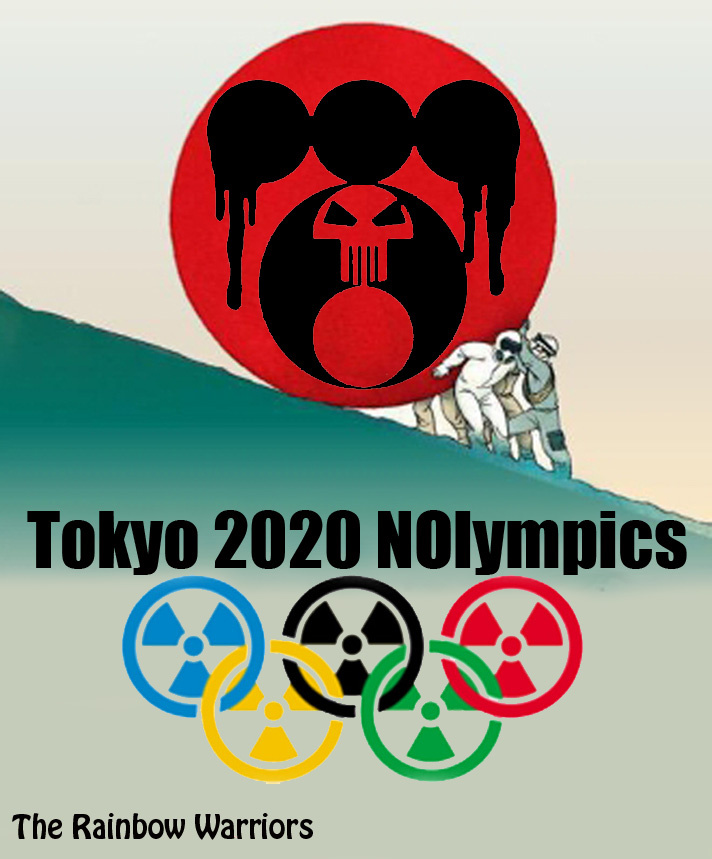
Revival hopes as Olympics chief set to visit Fukushima https://www.france24.com/en/20181121-revival-hopes-olympics-chief-set-visit-fukushimaTOKYO (AFP) 21 November 2018 Olympics chief Thomas Bach will visit Japan’s Fukushima this weekend, a region devastated by the 2011 tsunami and resulting nuclear disaster that officials hope to revive by bringing some events to the region.
International Olympic Committee President Bach will on Saturday visit a stadium set to host 2020 Olympics baseball and softball games, and meet 60 students who play the sports, organisers said in a statement.
Bach will also speak with local high school students and meet Fukushima Governor Masao Uchibori. Japanese Prime Minister Shinzo Abe has expressed hopes of showing the world the recovery of Fukushima and other disaster-hit areas during the sporting event, for which Tokyo is the designated host city.
Fukushima was also chosen as the starting point for the Olympics torch relay.
The passing of the flame is scheduled to start on March 26, 2020, and the torch will head south to the subtropical island of Okinawa — the starting point for the 1964 Tokyo Games relay — before returning north and arriving in the Japanese capital on July 10.
The March 2011 tsunami, triggered by a massive undersea quake, killed around 18,000 people and swamped the Fukushima nuclear plant, sending its reactors into meltdown and leading to the world’s worst nuclear disaster since Chernobyl.
Tens of thousands of people evacuated their homes. Authorities have been working to rebuild the region, about 240 kilometres (150 miles) north of Tokyo, although areas near the crippled plant remain uninhabitable because of radiation dangers.
November 22, 2018
Posted by Christina Macpherson |
Japan, spinbuster |
Leave a comment
http://focustaiwan.tw/news/asoc/201811200015.aspx Taipei, Nov. 20 (CNA) Taiwan is set to host the annual No Nuke Asia Forum (NNAF) next year, the Taiwan Environmental Protection Union (TEPU) said Tuesday.
Founded in 1993, the NNAF is an annual gathering that brings together experts and academics from various anti-nuclear groups across Asia to discuss and share their visions on how to counter nuclear energy.
Taiwan’s upcoming referendum on the government’s policy of phasing out nuclear power in Taiwan by 2025 has been a topic of popular discussion at this year’s NNAF, which was held in the Philippines Nov. 11-15, the TEPU said.
TEPU Chairman Liu Chih-chien (劉志堅), who attended the event, said Taiwan’s efforts to phase out nuclear energy also garnered widespread support from members from Japan, South Korea, Vietnam and India.
During the forum, the union also came to share Taiwan’s past experiences, including a referendum that helped stop the ongoing construction of the country’s fourth nuclear plant in 2014, Liu said.
According to the TEPU, the 26th Asian anti-nuclear forum is scheduled to be held toward the end of 2019.
(By Wu Hsin-yun and Ko Lin)
Enditem/J
November 22, 2018
Posted by Christina Macpherson |
ACTION, Taiwan |
Leave a comment
Nov. 13 (UPI) — U.S. Vice President Mike Pence vowed to work toward the complete denuclearization of North Korea and fully enforce sanctions during a joint press conference with Japan’s prime minister on Tuesday.
Pence, who is expected to attend the APEC meeting in Papua New Guinea on Saturday instead of President Donald Trump, said the United States stands firmly against countries that threatened freedom and openness in the region, including North Korea, NHK reported……
Pence told reporters economic sanctions against North Korea will be fully enforced until complete denuclearization, and that there is still a lot of work that needs to be done before embargoes are lifted. ….https://www.upi.com/Top_News/World-News/2018/11/13/Mike-Pence-North-Korea-sanctions-to-remain-until-denuclearization/8321542114175/
November 17, 2018
Posted by Christina Macpherson |
North Korea, politics international, USA |
Leave a comment








