IAEA to have marine sampling near Fukushima plant with China, others
The International Atomic Energy Agency said Friday it will conduct a
sampling of the marine environment near the wrecked Fukushima nuclear power
plant from next week with international experts including those from China.
China, a staunch opponent of the discharge of treated radioactive water
from the power complex into the sea, imposed a blanket ban on seafood
imports from Japan immediately after the discharge started in August last
year. Meanwhile, the Japanese government has repeatedly urged Beijing to
repeal the ban. The environment monitoring and assessment activities will
be carried out from Monday to Oct 15 by a team of IAEA scientists and
experts from laboratories in China, South Korea and Switzerland.
Japan Today 5th Oct 2024, https://japantoday.com/category/national/iaea-to-have-marine-sampling-near-fukushima-plant-with-china-others
What reports got wrong about China’s ‘sunken nuclear submarine’
Western news organizations often miss crucial context—and even the real news—about Chinese military modernization.
Defense One, By J. Michael Dahm and Peter W. Singer 4 Oct 24
The purported sinking of a Chinese nuclear submarine at a Wuhan shipyard pier is the latest example of Western reporting on military developments in China that overlooks important details and context, or even takes the wrong lessons from the fragments of stories they tell.
The incident, which took place in June, drew some mention the following month on social media and even in the defense press, but it went viral after a Sept. 26 report in the Wall Street Journal touched off coverage from Fox News to CBS. What apparently lit up the U.S. media landscape were the assertions, attributed to unnamed U.S. defense officials, that the submarine was nuclear-powered. Many of the subsequent reports suggested that the incident revealed safety concerns about a new class of PLA Navy nuclear submarine and a serious setback for China’s military modernization.
These are mischaracterizations. Moreover, the reporting actually buried the lead. The shipyard accident tells us very little about the future of PLA naval modernization, but the submarine itself does.
The afflicted boat was said to be a “Type 041 Zhou-class submarine” powered by a nuclear reactor. But tracing that claim to its origins reveals the importance of context and of using varied sources………………………………………………………………………………………………………………………………….
The point is that a preponderance of public sourcing indicates there is far more uncertainty about the ship itself than the headlines would have it. Indeed, there is nothing in the available reporting that indicates an actual nuclear incident. The satellite photos showed four crane barges that may have been deployed to raise a sunken object, but no nuclear-response efforts were detected. This was not Chernobyl.
……………………………….. This story also underlines a larger problem in Western media reporting on China’s military in recent years: too often, it swings between two extremes that portray the PLA as either comically inept or ten feet tall……………………………………
…………… The issues in U.S.-China security are of growing domestic interest and political importance, especially during an election season. As such, it is ever more vital that mass media reporting on PLA capabilities avoids the temptation to hunt for “clicks” and “eyeballs” and instead seeks out the details and context necessary to fully understand the implications of China’s military modernization.
J. Michael Dahm is a Senior Associate with BluePath Labs, a Senior Fellow at the Mitchell Institute for Aerospace Studies, and a Lecturer in International Affairs at the George Washington University.
P.W. Singer is a best-selling author of such books on war and technology as Wired for War, Ghost Fleet, and Burn-In; senior fellow at New America; and co-founder of Useful Fiction, a strategic narratives company. https://www.defenseone.com/ideas/2024/10/chinas-sunken-nuclear-sub-was-likely-nothing-sort/400001/
Chinese nuclear-powered attack submarine sank earlier this year, says senior US defence official
ABC News, 27 Sept 24
In short:
China’s newest nuclear-powered attack submarine sank earlier this year, according to a senior US defence official.
A series of satellite images from Planet Labs from June appear to show cranes at the Wuchang shipyard, where the submarine would have been docked.
What’s next?
China’s submarine force is expected to grow to 65 by 2025 and 80 by 2035, the US Department of Defense has said.
A senior US defence official has said that China’s newest nuclear-powered attack submarine sank earlier this year, marking a potential embarrassment for Beijing as it seeks to expand its military capabilities.
China already has the largest navy in the world, with over 370 ships, and it has embarked on production of a new generation of nuclear-armed submarines.
The US defence official, speaking on condition of anonymity on Thursday, local time, said China’s new first-in-class nuclear-powered attack submarine sank alongside a pier sometime between May and June.
A Chinese embassy spokesperson in Washington said they had no information to provide.
“In addition to the obvious questions about training standards and equipment quality, the incident raises deeper questions about the PLA’s internal accountability and oversight of China’s defence industry — which has long been plagued by corruption,” the official said, using an acronym for the People’s Liberation Army.
“It’s not surprising that the PLA Navy would try to conceal the sinking,” the official added………………………………………………. more https://www.abc.net.au/news/2024-09-27/one-of-china-submarine-sank-says-us-defence-official/104406362
Japan’s new Prime Minister calls for deployment of US nuclear weapons
MILITARNYI 29 Sept 24
Japan’s new Prime Minister Shigeru Ishiba considers it necessary to discuss the prospect of deploying US nuclear weapons.
The deployment of nuclear weapons in the Asia-Pacific region should be discussed during the revision of the agreement on the status of the US contingent in Japan.
He also called for the creation of the country’s own nuclear arsenal to strengthen national security. According to Mr. Ishiba, the absence of a collective self-defense system similar to that of NATO in Asia creates a risk of new military conflicts in the region.
In particular, he expressed concern about China’s growing military activity around the Japanese islands…………………………….
The Asian version of NATO should specifically consider the joint use of nuclear weapons with the United States or the introduction of nuclear weapons into the region.
Officially, Shigeru Ishiba will become the new Prime Minister of Japan on October 1 after being approved by the parliament.
Since the 1990s, the politician has been actively involved in defense issues. He has consistently advocated for expanding the use of the Japan Self-Defense Forces and revising the pacifist provisions of the postwar Constitution………………..
In September, it was reported that the United States expressed an interest in deploying its MRC Typhon medium-range missile system with Tomahawk missiles to Japan…………………………….. more https://mil.in.ua/en/news/japan-s-new-prime-minister-calls-for-deployment-of-us-nuclear-weapons/
Spent nuclear fuel shipped to Japan’s 1st interim storage facility in Aomori
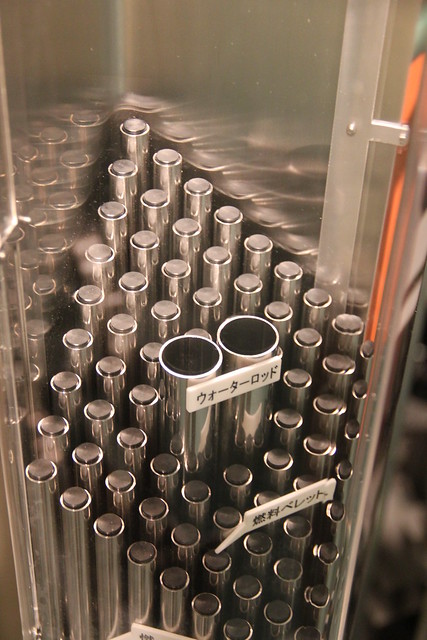
The interim storage facility, set up with joint investment from TEPCO and Japan Atomic Power Co, can store up to 5,000 tons of spent nuclear fuel for up to 50 years.
But there are concerns that the storage period will be exceeded
Sep. 25 TOKYO, https://japantoday.com/category/national/spent-nuclear-fuel-shipped-to-japan’s-1st-interim-storage-facility
The operator of a nuclear power plant in central Japan on Tuesday shipped spent fuel to the country’s first interim storage facility.
Tokyo Electric Power Company Holdings Inc sent 69 spent fuel assemblies from the Kashiwazaki-Kariwa plant in Niigata Prefecture by ship. The fuel will be delivered to the interim storage facility in Mutsu, Aomori Prefecture, on Thursday at the earliest.
With capacity at spent fuel pools at the plant’s No. 6 and No. 7 reactors approaching the limit, TEPCO plans to transfer two containers that can hold 138 fuel assemblies and five containers with 345 assemblies from the plant to the interim storage facility in fiscal 2025 and fiscal 2026, respectively.
The 69 assemblies, which had been kept at the No. 4 unit, were shipped out in a metal container.
The interim storage facility, set up with joint investment from TEPCO and Japan Atomic Power Co, can store up to 5,000 tons of spent nuclear fuel for up to 50 years.
But there are concerns that the storage period will be exceeded as a nuclear fuel recycling plant due to be built in Rokkasho, also in Aomori, has yet to be completed.
The storage facility is expected to begin operations in late October following inspections by the Nuclear Regulation Authority.
There were 13,752 spent fuel assemblies kept at the Nos. 1-7 reactors at Kashiwazaki-Kariwa before the shipment, accounting for over 80 percent of the spent fuel pools’ capacity. At No. 6 and No. 7 units, the spent fuel pools were at over 90 percent capacity.
Japan and 11 other countries call for early start of fissile material ban talks

New York – https://www.japantimes.co.jp/news/2024/09/24/japan/politics/kishida-nuke-material-ban-treaty/
Japan and 11 other countries on Monday agreed to work together to launch negotiations immediately on a proposed treaty banning the production of fissile materials, including highly enriched uranium and plutonium, for nuclear weapons.
A Fissile Material Cut-off Treaty will significantly contribute to nuclear disarmament and nonproliferation, high-level representatives from the 12 countries, including Prime Minister Fumio Kishida, said in a joint statement after a meeting in New York.
“A nondiscriminatory, multilateral and effectively verifiable treaty banning the production of fissile material for nuclear weapons and other nuclear explosive devices would represent a significant practical contribution to nuclear disarmament and nonproliferation efforts,” the statement said.
“The participants confirmed that they would work closely together…for the immediate commencement of negotiations on an FMCT,” the statement said. The 12 countries included three nuclear powers — the United States, Britain and France.
Kishida told the meeting that a strong political will is needed to start FMCT negotiations. Creating a momentum for an early start of the negotiations will help to maintain and strengthen the Nuclear Non-Proliferation Treaty regime, he said.
He also said Japan will send hibakusha atomic bomb victims abroad to promote the understanding of the reality of exposure to nuclear weapons. Next year marks 80 years since the U.S. atomic bombing of Hiroshima and Nagasaki.
US Military Policy Is Stoking the Risk of Nuclear War on Korean Peninsula
As Trump and Harris bicker over North Korea, the US military lays plans that could bring nuclear tensions to a brink.
By Ju-Hyun Park , Truthout, September 19, 2024
U.S. politicians can’t stop talking about Kim Jong Un. The two major party conventions have come and gone, with both presidential candidates mentioning the North Korean leader by name. At the Republican National Convention (RNC), Donald Trump claimed Kim had endorsed him, adding, “He misses me.” Just weeks later at the Democratic National Convention (DNC), Kamala Harris alluded to her opponent’s claims, declaring before an enraptured audience that the “tyrant” Kim is “rooting for Trump.”
Neither candidate told the truth. The North Korea’s state news agency was swift to respond to Trump back in June, clarifying the position of the government with characteristically pointed remarks: “No matter what administration takes office in the U.S., the political climate, which is confused by the infighting of the two parties, does not change and, accordingly, we do not care about this.”
The fact-free treatment of North Korea by both parties is a sign of how the electoral cycle has reduced the Korean crisis to a political football. This is especially dangerous in a time when the risk of war in Korea is at its highest in decades. Significantly, neither Republicans nor Democrats seem interested in a public discussion about the concrete situation in Korea, or the major escalations the U.S. is undertaking there.
While the news cameras and the eyes of the electorate were trained on the DNC in Chicago, the U.S. military executed one of the largest war games on Earth in Korea: Ulchi Freedom Shield (UFS). UFS is the latest name for an annual series of military exercises conducted by the Combined Forces Command, the command structure under which the military of South Korea answers to U.S. generals. (The U.S. has had operational wartime command of South Korea’s armed forces since 1950.) Originating in 1976, UFS and its predecessors routinely deploy tens of thousands of troops, along with U.S. “strategic assets” such as aircraft carriers, heavy bombers and nuclear submarines.
This is a major, and widely misunderstood, component of the unfinished Korean War — that for over half a century, some of the largest military maneuvers on Earth are conducted on an annual basis in Korea within sight of the border bisecting the peninsula. Although the U.S. and Republic of Korea (ROK), South Korea’s official name, insist these exercises are defensive, many of them rehearse the invasion and occupation of North Korea.
These “war games,” by their very nature, look identical to the first steps of a real invasion. This year’s UFS featured a whopping 48 individual war drills, deploying 19,000 South Korean troops, 200 military aircraft and an unknown number of U.S. soldiers. What’s more, this year’s war games took place in the context of another significant escalation: emergent plans to potentially redeploy U.S. nuclear weapons to Korea.
Killing Peace
The Korean War was concluded with a ceasefire rather than a permanent peace treaty, making it the longest war in U.S. history. For over 50 years, relations between North and South Korea were structured through the paradigm of independent, peaceful reunification — a mutual commitment to nonviolently end both the Korean War and the division of the Korean people. And since the late 1980s, relations between the U.S. and North Korea were also based on the framework of denuclearization. Both of these diplomatic paradigms have now crumbled.
………………………………………………………………………………………………………………………………………… more https://truthout.org/articles/us-military-policy-is-stoking-the-risk-of-nuclear-war-on-korean-peninsula/
US Navy chief unveils plan to be ready for possible war with China by 2027
The announcement of the goals comes as US leaders are treading a fine line, pledging a commitment to the defence of Taiwan while also working to keep communication open with Beijing to deter greater conflict.
Beijing regards Taiwan as part of China to be reunited, by force if necessary. Most countries, including the US, do not recognise Taiwan as an independent state.
But Washington opposes any attempt to take the island by force and is legally bound to support Taiwan’s military defence capability.
Admiral Lisa Franchetti says lessons from combat in the Red Sea and Ukraine’s Black Sea fight can help the US prepare for an attack on Taiwan
SCMP, Associated Press, 19 Sep 2024
The US Navy is taking lessons from its combat in the Red Sea over the past year and what Ukraine has done to hold off the Russians in the Black Sea to help US military leaders prepare the service for a potential future conflict with China.
From drones and unmanned surface vessels to the more advanced operation of shipboard guns, the US Navy is expanding its combat skills and broadening training. It is also working to overcome recruiting struggles so it can have the sailors it needs to fight the next war.
Admiral Lisa Franchetti, chief of naval operations, is laying out a series of goals, including several that will be highly challenging to meet, in a new navigation plan she described in an interview. The objective is to be ready to face what the Pentagon calls its key national security challenge – China.
“I’m very focused on 2027. It’s the year that President Xi [Jinping] told his forces to be ready to invade Taiwan,” Franchetti said. “We need to be more ready.”
The new plan, released on Wednesday, includes what she considers seven priority goals, ranging from removing delays in ship depot maintenance to improving US Navy infrastructure, recruiting and the use of drones and autonomous systems.
One significant challenge is to have 80 per cent of the force be ready enough at any given time to deploy for combat if needed – something she acknowledged is a “stretch goal”. The key, she said, is to get to a level of combat readiness where “if the nation calls us, we can push the ‘go’ button and we can surge our forces to be able to meet the call”.
The announcement of the goals comes as US leaders are treading a fine line, pledging a commitment to the defence of Taiwan while also working to keep communication open with Beijing to deter greater conflict.
Beijing regards Taiwan as part of China to be reunited, by force if necessary. Most countries, including the US, do not recognise Taiwan as an independent state.
But Washington opposes any attempt to take the island by force and is legally bound to support Taiwan’s military defence capability.
An important element in any Asia-Pacific conflict will be the need to control the seas. Franchetti said the US can learn from how the Ukrainians have used drones, air strikes and long-range unmanned vessels to limit Russian ship activity in the western Black Sea and keep access open to critical ports.
“If you look at the Ukrainian success in really keeping the Russian Black Sea fleet pushed all the way over into the east, that’s all about sea denial and that’s very important,” Franchetti said. She added that Ukraine has been innovating on the battlefield by using existing systems, such as drones, in different ways.
The US Navy’s months-long battle with the Iran-backed Houthi rebels in Yemen has provided other lessons…………………………………………………………………. https://www.scmp.com/news/world/united-states-canada/article/3279048/us-navy-chief-unveils-plan-be-ready-possible-war-china-2027
Turkey needs to acquire nuclear arms to stop Israel, urges Erdogan’s chief fatwa giver
September 19, 2024, Abdullah Bozkurt/Stockholm, Nordic Monitor
Hayrettin Karaman, the 90-year-old Islamic jurist and chief fatwa (religious edict) giver for Turkish President Recep Tayyip Erdogan and a prominent ideologue for the Turkish Muslim Brotherhood, has said Turkey must pursue nuclear capabilities to counter Israel and establish deterrence against its adversaries.
In an article published September 8 in the Islamist Yeni Şafak daily, Karaman argued that Turkey’s current efforts are insufficient to stop Israel. He urged that “either the Islamic world must unite and collaborate with China and Russia, or Turkey must move forward by acquiring nuclear warheads and weapons.”…………………………………………………………………………………………………
Recalling his 1995 trip to Israel and Palestine, Karaman said he personally observed how Jews envision a “Greater Israel,” known as the “promised land” (Arz-ı Mev’ud). He claimed that Jews are advancing toward this goal with support from the West.
The so-called “promised land” conspiracy allegedly extends to parts of southeastern Turkey. President Erdogan has echoed this claim in public speeches, alleging that Israel seeks to annex Turkish territory. Erdogan has also praised Hamas, saying the group defends not only the rights of Palestinians but also those of Turks…………………………………………………………………………………………………………………………………………………….. more https://nordicmonitor.com/2024/09/turkey-needs-to-acquire-nuclear-arms-to-stop-israel-urges-erdogans-chief-fatwa-giver/
TEPCO again halts work to collect melted nuclear fuel
By KEITARO FUKUCHI/ Staff Writer, September 17, 2024
https://www.asahi.com/ajw/articles/15429866
Once again, Tokyo Electric Power Co. has been forced to halt its project to collect melted nuclear fuel debris at the stricken Fukushima No. 1 nuclear power plant.
On Sept. 17, TEPCO could not confirm camera images of equipment being used to remove the debris from the No. 2 reactor of the plant, bringing a stop to the project, the utility said.
TEPCO had planned to pick up melted fuel debris from the bottom of the reactor’s containment vessel that day.
The cause of the problem is under investigation, and there are no prospects of soon resuming the fuel-collecting operation, TEPCO said.
The company had earlier planned to start the fuel-removal work on Aug. 22. But the project was suspended after it was discovered that equipment for the operation had been installed in an incorrect order.
The work resumed on Sept. 10 after TEPCO took measures to prevent a recurrence.
After the fuel-removal device was pushed inside the reactor containment vessel, TEPCO checked the operation of the camera on the tip of the device. It was working on Sept. 13.
Workers had been checking the equipment from the morning of Sept. 17.
But a glitch occurred in the remote control room, about 400 meters away from the site, and the camera images could not be checked, the utility said.
Because of this, workers were unable to pick up the fuel debris.
Surge in Russian uranium sent to China
https://www.telegraph.co.uk/world-news/2024/09/17/ukraine-russia-war-latest-news27/
Washington fears Russia is sending large quantities of enriched uranium to China in an effort to evade sanctions imposed after its invasion of Ukraine.
Chinese imports of enriched uranium from Russia, the world’s largest exporter of the radioactive metal, soared in 2022 and 2023, according to data released by the World Bank.
The US is now investigating whether the uranium, used as nuclear power plant fuel, is then being imported to America.
China only started to send vast quantities of enriched uranium to the US after Congress passed a ban on the import of the metal from Russia after the Ukraine invasion.
“As China may be seeking to carve out a greater role for itself in world enriched uranium markets, increased imports of Russian enriched uranium may facilitate the pursuit of Beijing’s ambitions,” said a report in March by the London-based Royal United Services Institute think tank.
India considers joining Russia, China to build nuclear plant on Moon
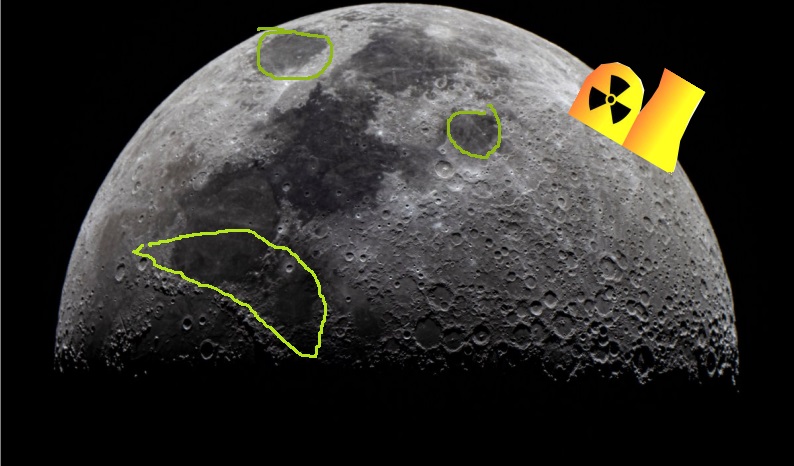
Rivals India and China are said to be keen on joining a Russian project to build an atomic power plant for a human base on the Moon.
14/09/2024, By: Pratap Chakravarty, https://www.rfi.fr/en/international/20240914-india-considers-joining-russia-china-to-build-nuclear-plant-on-moon
Russia’s atomic energy corporation Rosatom says the lunar reactor will be built with “minimal human involvement” and deployed around 2036.
According to Russia’s state-owned news agency Tass, Rosatom CEO Alexey Likhachev told a meeting of the Eastern Economic Forum in Vladivostok earlier this month that both India and China have shown interest in the venture.
“The task we are working on is the creation of a lunar nuclear power plant with an energy capacity of up to half a megawatt,” Likhachev told the gathering of potential investors.
“Both our Chinese and Indian partners are very interested in collaborating as we lay the groundwork for several international space projects,” the Rosatom chief executive claimed.
Cooperation among rivals
Delhi has not commented on the purported collaboration.
While Russia is its key arms supplier and a partner on several space ventures, Indian media have been surprised by the possibility of India teaming up with China.
Alluding to unresolved border disputes which took India and China to war in 1962 and sporadic clashes in following years, local daily Business Standard called the two countries “foes on Earth, pals on Moon”.
The proposed power plant will be integrated into a wider Chinese-Russian project to set up a base called the International Lunar Research Station (ILRS), either on lunar soil or in lunar orbit.
ILRS will serve as a fulcrum of scientific research and will be open to all countries and “international partners” after it becomes operational between 2035 and 2045.
But it would require a stable power supply – which only a nuclear reactor can provide, as the Moon’s lengthy lunar nights make solar energy unreliable.
Nasa has been mulling the construction of similar reactors for its own future lunar bases.
India’s space ambitions
The Russian-led project is separate from India’s own ambitions to set up a space station by 2035 and launch a manned mission to the Moon five years later.
Analysts say India, with its ambitions of creating a human colony on the Moon, is actively seeking out potential opportunities to accelerate its space ambitions.
In August 2023, India landed a spacecraft on the Moon and joined a select space-faring club comprising of China, Russia and the United States – the only nations to have ever reached the Earth’s closest celestial object.
India has shortlisted four military pilots to travel on the country’s first manned space flight next year.
The Indian government says the Gaganyaan spacecraft will orbit Earth at an altitude of 400 kilometres and land at sea three days later.
It will also send a humanoid robot into space later this year in line with preparations to land an Indian on lunar soil by 2040.
Air force pilot Rakesh Sharma became India’s first astronaut to go to space in April 1984, when he spent almost eight days on board the Soviet Salyut-7 space station.
Japan, to make the biggest mistake in history: nuclear energy with water, and risk of explosion
by Jessica A., 09/15/2024, https://www.ecoticias.com/en/nuclear-energy-japan-hydrogen/6246/
Japan has a traumatic history with nuclear power, but that’s not stopping the country from taking new risks
The Fukushima nuclear disaster of 2011 devastated Japan and left the rest of the world terrified of nuclear power. While it wasn’t as horrific as the Chernobyl nuclear reactor explosion of 1986, it still traumatized both the Japanese people and the government. Yet now, Japan is facing an energy crisis, and nuclear energy may be the only realistic solution.
Japan is one of the countries at the forefront of the green energy revolution. The Japanese government understands that solar, wind, and hydroelectric energy can only produce a portion of the fuel and electricity the country and the world need. Hydrogen will have to make up some of the difference in the industrial sector, for uses in shipping, aviation, and manufacturing. Japan wants to use next-generation nuclear reactors to produce hydrogen with zero emissions.
Next-generation nuclear reactors have lower energy outputs and marginally better safety records
To make hydrogen a viable option for industrial fuel needs, Japan plans to use nuclear reactors
Many companies are already producing hydrogen for the industrial sector, but they often use natural gas or fossil fuels to do it. These methods result in at least some greenhouse emissions, and Japan wants to have a zero-emissions hydrogen production process in place by 2040 to help meet the world’s energy needs.
Nuclear reactors seem to offer a good solution to this problem because they generate a lot of heat, and that heat can be used to break down water for hydrogen harvesting. Hydrogen is the only clean fuel that scientists know of that can power industrial shipping vessels, planes, and large machinery.
To avoid making the climate crisis worse, governments need to commit to making the production of hydrogen a green process, meaning releasing zero emissions. Japan is looking at innovative ways of designing nuclear reactors to keep them safe so that they can power homes and produce hydrogen.
Many people are skeptical of nuclear energy, and Japan could be courting disaster with its plans to use high temperatures to break down water. One more nuclear explosion could mean the end of nuclear power forever. Only time will tell if the next-gen reactors pass all the safety tests required to go online.
TEPCO restarts debris extraction attempt at Fukushima plant

 KYODO NEWS – https://english.kyodonews.net/news/2024/09/35e573ef1ad3-urgent-tepco-restarts-debris-extraction-attempt-at-fukushima-plant.html
The operator of the Fukushima Daiichi nuclear complex restarted Tuesday a bid to retrieve a small amount of melted fuel from one of its stricken reactors after its first attempt last month was suspended due to setup complications.
The trial extraction was put on hold on Aug. 22 due to issues discovered during preparations, according to Tokyo Electric Power Company Holdings Inc.
The resumption comes after TEPCO confirmed that five pipes set to be used to insert a retrieval device into the No. 2 reactor’s containment vessel are now installed in the correct order.
TEPCO said earlier that it and contractor Mitsubishi Heavy Industries Ltd. failed to check the order in which the pipes were set up, causing the earlier issues.
There are an estimated 880 tons of fuel debris in the Nos. 1, 2 and 3 reactors.
The task of retrieving melted fuel remains a serious challenge in the decades-long decommissioning plan for the Fukushima Daiichi complex, which was damaged following a massive earthquake and tsunami in March 2011.
North Korea’s Kim Jong Un says country to increase number of nuclear weapons, KCNA says
By Reuters, September 10, 2024,
Reporting by Joyce Lee Editing by Chris Reese, https://www.reuters.com/world/asia-pacific/north-koreas-kim-jong-un-says-country-increase-number-nuclear-weapons-kcna-says-2024-09-09/
SEOUL, – North Korean leader Kim Jong Un said the country is now implementing a nuclear force construction policy to increase the number of nuclear weapons “exponentially,” state media KCNA said on Tuesday.
Kim gave a speech on North Korea’s founding anniversary on Monday, KCNA said.
North Korea must more thoroughly prepare its “nuclear capability and its readiness to use it properly at any given time in ensuring the security rights of the state,” Kim said, according to KCNA.
A strong military presence is needed to face “the various threats posed by the United States and its followers,” Kim added.
1 This Month

of the week – Shut Down Drone Warfare!


Tell the Ukrainian Government to Drop Prosecution of Peace Activist Yurii Sheliazhenko

Petition to revoke the licensing of the Near Surface Nuclear Disposal Facility (NSDF) at Chalk River. https://www.ourcommons.ca/petitions/en/Petition/Details?Petition=e-7247
To see nuclear-related stories in greater depth and intensity – go to https://nuclearinformation.wordpress.com
-
Archives
- March 2026 (244)
- February 2026 (268)
- January 2026 (308)
- December 2025 (358)
- November 2025 (359)
- October 2025 (376)
- September 2025 (257)
- August 2025 (319)
- July 2025 (230)
- June 2025 (348)
- May 2025 (261)
- April 2025 (305)
-
Categories
- 1
- 1 NUCLEAR ISSUES
- business and costs
- climate change
- culture and arts
- ENERGY
- environment
- health
- history
- indigenous issues
- Legal
- marketing of nuclear
- media
- opposition to nuclear
- PERSONAL STORIES
- politics
- politics international
- Religion and ethics
- safety
- secrets,lies and civil liberties
- spinbuster
- technology
- Uranium
- wastes
- weapons and war
- Women
- 2 WORLD
- ACTION
- AFRICA
- Atrocities
- AUSTRALIA
- Christina's notes
- Christina's themes
- culture and arts
- Events
- Fuk 2022
- Fuk 2023
- Fukushima 2017
- Fukushima 2018
- fukushima 2019
- Fukushima 2020
- Fukushima 2021
- general
- global warming
- Humour (God we need it)
- Nuclear
- RARE EARTHS
- Reference
- resources – print
- Resources -audiovicual
- Weekly Newsletter
- World
- World Nuclear
- YouTube
-
RSS
Entries RSS
Comments RSS
 nuclear-news