But the deal failed to emerge then, and in January Argentina’s nuclear energy undersecretary, Julian Gadano, and the ambassador to China, Diego Guelar, met officials in Beijing for talks about the project, the government source said.
China trying to market nuclear technology to Argentina
 Chinese delegation set to revive stalled Argentina nuclear power plant talks
Technical team expected to go to Latin American country to discuss project reportedly worth up to US$8 billion, SCMP, 16 Mar, 2019 A delegation from China will visit Argentina this month to discuss the construction of a nuclear power plant, signalling possible progress in a deal that could increase Beijing’s deepening influence in the South American nation.
Fall in numbers of children in Fukushima municipalities
8 Years On: Number of Kids Dives in Disaster-Hit Fukushima Municipalitieshttps://www.nippon.com/en/news/yjj2019031300954/8-years-on-number-of-kids-dives-in-disaster-hit-fukushima-municipalities.html Mar 15, 2019 Fukushima, March 15 (Jiji Press)–In 10 Fukushima Prefecture municipalities where elementary and junior high school have reopened after the lifting of nuclear evacuation advisories, the number of students stood at 758 as of May 1, 2018, about 10 pct of the level before the March 2011 disasters.
During protracted evacuations, many child-rearing families rebuilt their lives in new locations, leading to the sharp fall in the number of students in Fukushima.
As a result, the local governments are facing difficulties in school operations.
In the Yamakiya district of the town of Kawamata, the evacuation advisory was removed in March 2017, six years after the nuclear accident at Tokyo Electric Power Company Holdings Inc.’s <9501> Fukushima No. 1 plant, heavily damaged by the 9.0-magnitude earthquake and the ensuing tsunami.
Elementary and junior high schools reopened in the town in April 2018, but five six-graders are the only elementary school children. With no freshman joining this spring, the elementary school plans to suspend its operations in April.
$70 billion price tag for restarting Taiwan’s No. 4 nuclear plant project , and that’s not counting wastes costs
 Restarting No. 4 nuclear plant project could cost NT$70 billion: AEC Focus Taiwan, 2019/03/14 Taipei, March 14 (CNA) It could cost an estimated NT$60-70 billion (US$1.94-2.26 billion) and take at least 10 years to revive the mothballed fourth nuclear power plant at Longmen in New Taipei’s Gongliao District, Atomic Energy Council (AEC) Minister Hsieh Shou-shing (謝曉星) said Thursday.
However, Hsieh said that a decision to search for a final disposal repository for radioactive waste has not been reached and he declined to answer the question of when the location of a final repository can be determined, because no cities or counties in the country are willing to have such a facility in their localities.
Hsieh was responding to a legislator’s questioning about restarting the nuclear plant project during a legislative hearing, as the topic has sparked considerable debate after pro-nuclear energy activists recently proposed a referendum on the issue……..
the ministry also cited Taipower estimates that it would require about NT$47.8 billion to revive the nuclear plant and put it into commercial operation, adding that the amount could be even higher than that.
(By Liu Lee-jung and Evelyn Kao) http://focustaiwan.tw/news/aeco/201903140013.aspx
Fukushima Prefecture to lose 15 high schools, due to population decline
As population declines, Fukushima Prefecture to lose 15 of its 96 high schools, Japan Times , FUKUSHIMA MINPO, MAR 15, 2019
The mergers will be implemented over the span of three years from fiscal 2021 and will reduce the number of high schools in the prefecture from 96 to 81.
Twenty-five schools will be merged and reorganized into 13 under the plan, which will integrate schools located in close proximity of one another. Each school will retain four to six classes per grade.
With the merger, the prefecture’s 88 day schools and seven night schools will be reduced to 74 and six, respectively, by the end of March 2024, according to the education board’s reform plan revealed Feb. 8. Fukushima’s only correspondence school will remain open……… https://www.japantimes.co.jp/news/2019/03/15/national/population-declines-fukushima-prefecture-lose-15-96-high-schools/#.XIwdDSIzbGg
Yamaguchi court rejects residents’ call to halt last Ikata nuclear reactor in Ehime Prefecture
Japan Times, KYODO YAMAGUCHI 15 Mar 19- A district court on Friday rejected a plea by residents to halt a reactor at the Ikata nuclear power plant in Ehime Prefecture.
The decision by the Iwakuni branch of the Yamaguchi District Court is in line with rulings made by other regional courts and allows the No. 3 reactor to continue operating. The plant is managed by Shikoku Electric Power Co.
Unit No. 3, the sole remaining reactor at the plant, passed the state safety screening process that was revamped in the wake of the 2011 Fukushima nuclear crisis. But concerns remain about its safety, which led residents to turn to the courts to seek an injunction.
Of the more than 30 reactors in Japan, excluding those set to be decommissioned, only a few are in operation.
A previous order forcing a halt in operations was issued by the Hiroshima High Court in December 2017, citing the risk of an eruption at the caldera of Mount Aso about 130 kilometers away. The decision was overturned in September 2018 and the utility company restarted the unit a month later. …….
The plaintiffs pointed out that pyroclastic flows from possible catastrophic eruptions could reach the plant.
They also said the utility underestimated the fact that the reactor sits on the median tectonic line, a massive fault zone, as well as the potential damage from a massive earthquake off the Pacific coast of central and western Japan……. https://www.japantimes.co.jp/news/2019/03/15/national/yamaguchi-court-rejects-residents-call-halt-last-ikata-nuclear-reactor-ehime-prefecture/#.XIwI2SIzbGg
South Korea: Nuclear reactor shut after ‘malfunction’
https://www.aa.com.tr/en/asia-pacific/south-korea-nuclear-reactor-shut-after-malfunction-/1419440
Hanbit 5 nuclear reactor has been shut down twice in last six months, local media report says
Riyaz ul Khaliq |15.03.2019 , ANKARA
A nuclear reactor in South Korea has been shut down on Friday following a technical glitch, local media reported.
According to Yonhap news agency, South Korea Hydro & Nuclear Power (KHNP) announced 1 million-kilowatt Hanbit No. 5 in Yeonggwang region “stopped operating at around 1.25 p.m. (0425GMT), apparently due to a malfunction in its transformer”.
South Korea has six operational reactors at the Hanbit plant. The same nuclear reactor was shut down last September for its regular examination. It restarted generating power in November.
KHNP said that the malfunction in the nuclear reactor “did not cause any radiation leak or pose safety risks”.
Yonhap reported that South Korean officials have opened an investigation into what caused the malfunction in the Hanbit plant.
Hanbit No. 5 is expected to resume its operation as soon as inspections are completed, the news agency said.
New study on the social consequences of the 3/11 nuclear accidentin Fukushima prefecture.
IRSN 11th March 2019 IRSN publishes a study on social consequences of the 3/11 nuclear accident
in Fukushima prefecture. Result of the French-Japanese research project
Shinrai, the report “The 3/11 accident and its social consequences – Case
studies in Fukushima prefecture” analyses post accidental policy in
Fukushima prefecture, particularly the questions linked to return or
non-return to evacuated towns and villages. The report also compares the
concrete experience of the inhabitants and the decision-makers with a
number of principles that underlies international post accidental policy
and recommendations.
https://www.irsn.fr/EN/newsroom/News/Pages/20190311_Fukushima-shinrai-study-social-consequences.aspx
Nobody wants to host Fukushima’s millions of cubic metres of radioactive soil

Fukushima grapples with toxic soil that no one wants https://www.theguardian.com/world/2019/mar/11/fukushima-toxic-soil-disaster-radioactive Eight years after the disaster, not a single location will take the millions of cubic metres of radioactive soil that remain, Justin McCurry in Okuma 12 Mar 2019
Workers at a soil separation facility for decontamination work in Okuma. Photograph: Issei Kato/Reuters
Not even the icy wind blowing in from the coast seems to bother the men in protective masks, helmets and gloves, playing their part in the world’s biggest nuclear cleanup.
Away from the public gaze, they remove the latest of the more than 1,000 black sacks filled with radioactive soil and unload their contents into giant sieves. A covered conveyor belt carries the soil to the lip of a huge pit where it is flattened in preparation for the next load. And there it will remain, untouched, for almost three decades.
It is repetitive, painstaking work but there is no quick way of addressing arguably the most controversial physical legacy of the triple meltdown that occurred eight years ago at the nearby Fukushima Daiichi nuclear power plant.
In the years after the disaster, about 70,000 workers removed topsoil, tree branches, grass and other contaminated material from areas near homes, schools and public buildings in a unprecedented ¥2.9tn (£21bn) drive to reduce radiation to levels that would enable tens of thousands of evacuees to return home.
The decontamination operation cleaned generated millions of cubic metres of radioactive soil, packed into bags that carpet large swaths of Fukushima prefecture.
Japan’s government has pledged that the soil will moved to the interim storage facility and then, by 2045, to a permanent site outside of Fukushima prefecture as part of a deal with local residents who do not want their communities turned into a nuclear dumping ground.
But the government’s blueprint for the soil is unravelling: so far, not a single location has agreed to accommodate the toxic waste.
While workers inside the ruined nuclear plant struggle to contain the build-up of more than 1m tonnes of radioactive water, outside, work continues to remove, process and store soil that will amount to 14m cubic metres by 2021.
The task is expected to take another two years, according to Jiro Hiratsuka, an environment ministry official who is guiding a small group of foreign journalists, including the Guardian, around the interim storage facility.
“We are required by law to find a final storage place outside Fukushima, so it can’t be kept here indefinitely,” Hiratsuka said. “It’s true that we have yet to find an appropriate location, but a lot will depend on how much space we need and the level of radioactivity in the soil.”
There is opposition, too, to the idea of using soil with lower radiation levels – or less 8,000 becquerels per kilogram – as the foundation for roads, embankments and other infrastructure in Fukushima.
The storage facility straddles the towns of Okuma and Futaba, located west of the power plant, where radiation levels are still too high for residents to return. So far, 2.3m cubic metres of soil – about 15% of the total – have been brought to the site.
The operation involves thousands of workers, including drivers who make 1,600 return trips every day. So far, 355,000 trucks have been used – and officials say they need more.
“I am aware that some people are saying it would be better to keep it here, but the people of Okuma and Futaba have had a really tough time, and they agreed the soil could be kept here on the condition that it would eventually be moved out of Fukushima,” Hiratsuka said.
Despite the decontamination efforts, only a small number of residents who were ordered to leave after the triple meltdown have returned to neighbourhoods where evacuation orders have been lifted, according to local government data.
A poll by the Asahi newspaper and a local broadcaster found that almost two-thirds of evacuated residents felt anxious about radiation despite official claims that decontamination work had been a success.
As Japan marked the eighth anniversary on Monday of the magnitude-9 earthquake and deadly tsunami that triggered the Fukushima meltdown, environmental groups warned that some “safe” neighbourhoods still contained radiation hotspots.
A Greenpeace investigation revealed high levels of radiation in areas that had been declared safe, and accused the government of misleading the international community about the risks faced by returning evacuees and decontamination workers.
“Some areas still have significantly high levels of radiation,” said Shaun Burnie, a senior nuclear specialist at Greenpeace Germany who is based in Japan. “They are much higher than background radiation before the accident.”
Minoru Ikeda, who took part in the decontamination effort, said workers cut corners to meet strict deadlines. “There were times when we were told to leave the contaminated topsoil and just remove the leaves so we could get everything done on schedule,” he said. “Sometimes we would look at each other as if to say: ‘What on earth are we doing here?’”
He was sceptical of official claims that a permanent home would be found the for soil. “I don’t believe for a minute that they will be able to move all that soil out of Fukushima,” he said. “The government has to come up with a plan B.”
A nuclear nightmare is brewing between India and Pakistan
|
Japan Times BY JAMES STAVRIDIS, BLOOMBERG, MAR 11, 2019 NEW YORK – While India and Pakistan seem to have stopped bombing one another, the causes behind the cross-border tensions aren’t going away any time soon. The two nations are nuclear-armed; have large conventional armed forces; have had four serious wars since they became independent in 1947; and have enormous cultural and religious antipathy. This is a prescription for a disaster, and yet the confrontation is flying below the international radar — well below North Korea, Brexit, China-U.S. trade confrontations, Iran and even the “yellow vests” of France. A full-blown war in Kashmir is a very real possibility………. The most recent crisis was set off in mid-February when a Pakistani terrorist group, Jaish-e-Mohammad, detonated a suicide bomb in Indian-controlled Kashmir, killing 40 Indian soldiers. ……… The fragile cease-fire in place for two decades is fraying. Partly this is the result of domestic politics in India:…….. Most worrisome, of course, are the significant nuclear arsenals of the combatants. Each has roughly 150 missiles, although only India has a submarine-based ballistic missile capability and thus a true nuclear triad (land, air and sea). Pakistan is developing sea-launched cruise missiles to counter that Indian threat. India has adopted a “no first use” doctrine, although Pakistan — which has smaller conventional forces and thus potentially the need for a more ambiguous doctrine — has not made an equivalent pledge. ………. With Pakistan’s economic plight and the upcoming elections in India, South Asia is in a situation in which a military miscalculation, perhaps even a nuclear one, is real possibility. https://www.japantimes.co.jp/opinion/2019/03/11/commentary/world-commentary/nuclear-nightmare-brewing-india-pakistan/#.XIbKfskzbGg |
Radioactive boars thrive in Fukshima towns

Times 11th March 2019 The towns around the Fukushima Dai-ichi nuclear power plant are among the
most perilously radioactive in the world, yet in their own strange way they have never been busier. The people who lived here fled in a rush after the meltdown of the nuclear reactors, but a new citizenry has established itself and is thriving in the unusual conditions. They squat in family groups in the wooden interiors of the traditional Japanese houses. They
thrive on the fruit on the trees and the water that flows around the old rice fields. They are hairy, tusked and weigh 200lb.
They are the radioactive wild boars of Fukushima. It is eight years today since the massive earthquake and tsunami that smashed into Fukushima Dai-ichi, and a good deal has changed since the terrible weeks that followed. The spewing
reactors have been largely contained, although it will be a lifetime before they are fully dismantled. The radiation in the towns has been reduced and in those marginal areas where the levels are lowest people have been permitted to return.
Even when gas and electricity are reconnected, their once thriving towns have few shops, schools or social services. But there is another obstacle to their return: the takeover of the evacuation zone by wild animals. In the absence of Man, nature has marched off the forested mountains and taken over his former home. Raccoons and rats, monkeys and
palm civets have all taken advantage of the empty houses to find food, shelter and a convenient place to breed. But none has better adapted, or done more damage, than the wild boar.
https://www.thetimes.co.uk/article/26b333e2-435f-11e9-924d-9729bcd51a7f
The US has hardened its position on North Korea- the influence of John Bolton?
 A top US diplomat just laid out the new approach to North Korea. It’s doomed.
Stephen Biegun told a Washington audience that “we are not going to do denuclearization incrementally.”Vox, By The top US diplomat tasked with negotiating with North Korea just laid out a denuclearization plan that’s destined to fail.
above – John Bolton
In his first public comments since President Donald Trump and North Korean leader Kim Jong Un met in Vietnam last month, Stephen Biegun, the US special representative for North Korea, told a Washington audience Monday that the administration wants Pyongyang to give up all of its weapons of mass destruction before anything else.
“We are not going to do denuclearization incrementally,” the envoy said at the Carnegie Endowment for International Peace’s nuclear conference. “The foundation of US policy is denuclearization.”
But it’s not just nuclear weapons: The Trump administration also wants the complete removal of chemical and biological weapons from North Korea, Biegun said, meaning the US wants Pyongyang only to have conventional weapons by the end of the process.
Let’s be extremely clear about what this means: If the US maintains this position, any chance for the US to convince North Korea to part with its nuclear arsenal is gone.
Pyongyang for years has said that the only way it would consider giving up its nuclear weapons is through a step-by-step process where both sides offer reciprocal, commensurate concessions. By resolving smaller disagreements, like lifting sanctions in exchange for the closure of an important nuclear facility, over time the US and North Korea would eventually arrive at the grand prize: the end of Pyongyang’s nuclear program.
But Biegun said the US won’t do that. Instead, the Trump administration wants to see North Korea dismantle its nuclear arsenal before it offers any economic or diplomatic benefits. That’s just not going to work, experts say.
The US has hardened its position on North Korea………..
It’s unclear why the US position has changed so starkly. One of the main theories is that National Security Adviser John Bolton, a noted North Korea hardliner, has gained more power in the negotiation process. ……… the US now openly holds an “all or nothing” stance toward North Korea. And if that’s the case, the talks are doomed. https://www.vox.com/world/2019/3/11/18260024/north-korea-stephen-biegun-nuclear-trump-kim-bolton
Much opposition and anxiety, as Japan prepares to restart the biggest nuclear station in the world
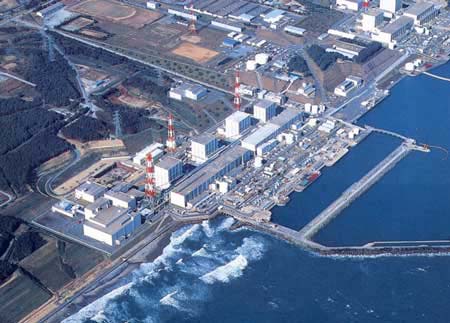
Japan’s Tepco fights for return to nuclear power after Fukushima, DW, 11 Mar 19
Eight years after the accident in Fukushima, preparations are underway to restart the Kashiwazaki-Kariwa nuclear power plant operated by Tepco. But residents fear a second disaster. Kiyo Dörrer reports from Kashiwazaki.
Decades ago, nuclear power was supposed to be the perfect solution for Japan’s thirst for energy and for its rural economies. And in the sleepy town of Kashiwazaki, in the prefecture next to Fukushima, the solution was supposed to be the Kashiwazaki-Kariwa nuclear power plant, run by the power company Tepco — the company responsible for the 2011 Fukushima accident.
When in full operation, the Kashiwazaki-Kariwa power plant is the biggest in the world, capable of servicing 16 million households. But all of its seven reactors have been idle since the nuclear accident at Fukushima Daiichi. This is Tepco’s only remaining nuclear power plant apart from the tsunami-stricken plants in Fukushima, in the neighboring prefecture.
Tepco has been repeatedly criticized for its negligence and has been ordered to pay compensation to the residents. The cleanup of the Fukushima power plant has been causing major headaches, while the reasons for the accident have yet to be clarified even eight years later.
But amid the controversy, in 2017 Japan’s nuclear regulation authority gave the go-ahead to launch the lengthy process toward a restart of two of Tepco’s reactors, which are located about 250 km (155 miles) east of the Fukushima plants, on the coast of the Sea of Japan. The reactors No. 6 and No. 7 at the Kashiwazaki-Kariwa power plant, which are being prepared for a restart, are both the same type as those that melted down in Fukushima.
This time everything is going to be different, the deputy head of the Kashiwazaki-Kariwa plant, Toshimitsu Tamai, assures visitors on a tour of the facility. To banish fears of a second Fukushima, Tepco has built a 15-meter (49-foot) wall that is supposed to be able to withstand the highest tsunamis imaginable………..
Majority of residents against the nuclear reactors
But the local residents aren’t all buying Tepco’s story. Hopes of an economic boost ring hollow in the almost deserted shopping streets; the once bustling town center is now full of shuttered storefronts. Like many other country towns, Kashiwazaki has fallen victim to economic problems caused by the aging population and a growing rural exodus — trends no nuclear power plant can change.
According to the exit polls held in last year’s governor’s race, over 60 percent of residents of Niigata Prefecture, in which Kashiwazaki lies, are against the restart of the nuclear power plant. Locals have been alarmed by multiple mishaps during the preparations. In December 2018, the cables connecting reactor No. 7 with emergency backup power caused a fire for unknown reasons. And as recently as February 28, radioactive water leaked out of the core inside one of the idle reactors.
“To be honest, we just keep thinking: not again! They take one step forward and three steps back,” says Tsutomu Oribe, who runs a sushi restaurant in central Kashiwazaki. “We’ve all learned too well what could happen.”
“I don’t think that anybody should entrust Tepco with restarting a nuclear power plant if the company doesn’t even know what happened in Fukushima,” says Kazuyuki Takemoto, a retired local councilor and veteran anti-nuclear activist.https://www.dw.com/en/japans-tepco-fights-for-return-to-nuclear-power-after-fukushima/a-47836968
Taiwan conference urges phasing out of nuclear power
Lee Yuan-tseh pushes nuclear phase-out http://www.taipeitimes.com/News/taiwan/archives/2019/03/12/2003711332 By Lin Chia-nan / Staff reporter Local industries should upgrade their production techniques to curb carbon emissions, and the nation should phase out nuclear power to avoid leaving more nuclear waste to future generations, former Academia Sinica president Lee Yuan-tseh (李遠哲) told an energy conference in Taipei.The conference was hosted by the Taiwan Environmental Protection Union (TEPU) and other anti-nuclear groups, following another energy forum on Sunday organized by former president Ma Ying-jeou (馬英九) and former premier Jiang Yi-huah (江宜樺) that called for maintaining nuclear power.
Advocates of nuclear power have gained more momentum after most people voted in favor of abolishing the “nuclear-free homeland by 2025” policy in a referendum on Nov. 24 last year.
Attendees — including Democratic Progressive Party Legislator-at-large Chen Man-li (陳曼麗) and New Power Party Legislator Huang Kuo-chang (黃國昌) — first prayed for victims of the Fukushima Dai-ichi nuclear power plant disaster on March 11, 2011.
Phasing out nuclear power is not only a security concern, but would also curb nuclear waste, said Lee, Taiwan’s first Nobel laureate in chemistry in 1986, adding that the older generation should not leave nuclear waste to future generations for their own convenience.
The nation needs to develop small-scale renewable energy generation systems to curb fossil fuel pollution and global warming, he said.
The global community might start tracking companies’ carbon footprints in two or three years, so local firms should start cutting their use of fossil fuels, he said, reiterating his suggestion that the government implement a carbon tax to curtail emissions.
The TEPU is working on two referendum proposals, including one recommending that the mothballed Fourth Nuclear Power Plant compound be converted into a site for renewable power research and development, union founding chairman Shih Shin-min (施信民) said.
The second proposal asks: “Do you agree that any construction or extended operation plans for nuclear power plants can only begin after they are approved by local referendum voters within the 50km-radius of the plants?”
The proposals are aimed at countering two referendum proposals by nuclear power advocates that seek to continue construction of the mothballed plant and to extend the permits of three operational nuclear power plants, Shih said.
The annual parade against nuclear power is scheduled for April 27, which would focus on renewable power development, Green Citizens’ Action Alliance deputy secretary-general Hung Shen-han (洪申翰) said.
Separately, President Tsai Ing-wen (蔡英文) wrote on Facebook that the Fukushima Dai-ichi disaster pushed Taiwanese to seriously consider energy issues and the then-Chinese Nationalist Party (KMT) administration to mothball the plant.
While people hold varied views about when the nuclear-free homeland policy should be achieved, it is the nation’s common goal to ensure that the next generation has safe power generation, Tsai wrote.
Prejudice against Fukushima nuclear evacuees
‘You’re Contaminated’: The Stigma Against Japan’s Fukushima Survivors, Broadly, 12 Mar 19,
A 2011 quake and tsunami led to a meltdown at the Fukushima Daiichi Nuclear Power Plant, killing thousands and displacing more. Two ‘nuclear refugees’ explain why returning home is more complicated than it seems.
…….. While the nuclear disaster is becoming a distant memory for most Japanese, for some others it is their everyday reality. Nuclear refugees and evacuees face discrimination, separation from loved ones, and in some cases, they are even forced to return to the former evacuation zone.
The government, worried about people getting exposed to radiation, declared a 20-km evacuation zone around the plant and uprooted close to 165,000 people. As of today, there are still 50,000 people who haven’t returned to Fukushima.
Keiko Owada, 66, is one of them. When I meet her in Tokyo, she refers to the Japanese capital as her home for the past seven years. That will soon change due to the government’s decision to withdraw her free housing subsidies.
Because decontamination work has made progress and food declared safe from radiation, it has been deemed safe to return to most villages within the evacuation zone. The same goes for Owada’s village Naraha, where the evacuation order was lifted two years ago.
Owada is not excited about the prospect of returning to Naraha. “Would I continue to get financial support for my apartment here in Tokyo, I would have stayed here, yes. I’ll tell you why: there is no hospital in Naraha, only a small hospital for first aid. There is no supermarket, only a small convenience store. And the reason is simple: only a few people have returned.”
Life as an evacuee hasn’t always been easy, Owada explains. “It wasn’t like people were treating me any different, but my neighbors never greeted me. I think it’s because of the compensation I received and the free housing. They knew I was from Fukushima, that’s why.”
According to Owada, some of the other evacuees in Tokyo she knows have faced harsher treatment. “I know of others whose cars were damaged on purpose because they had a Fukushima license plate. That’s why I never parked my car in the middle of the parking lot, but always in a corner, so no one could see it.”
If anything, Owada’s story illustrates how many evacuees continued to live in fear. Displaced from their homes, dropped in a new community—the disaster is anything but over for them. ……….
When Kamata got in touch with relatives living in other parts of Japan, she was shocked to hear one sister-in-law’s initial response. “After the disaster, I wanted to flee to Chiba [a prefecture next to Tokyo], my sister-in-law picked up the telephone and told me I didn’t have to come to their house. ‘You’re contaminated,’ she told me.”……….
As Kamata remembers what life was like back in Fukushima, she uses a handkerchief to wipe a tear from her cheek. She barely speaks to her friends anymore.
“The disaster divided our communities, both physically as well as mentally. ………https://broadly.vice.com/en_us/article/mb5zny/japan-fukushima-earthquake-survivors-stigma
Eight Years on, Fukushima Nuclear Disaster Still Poses Health Risks

https://havanatimes.org/?p=149927 March 9, 2019 By Akio Matsumura HAVANA TIMES – On March 11, we commemorate the 8th anniversary of the Fukushima nuclear disaster. To an outside observer, this anniversary passes as a technical progress report, a look at new robot, or a short story on how lives there are slowly returning to normal.
Yet in Japan, the government has not figured out how to touch or test the irradiated cores in the three crippled reactors, which continue to contaminate water around the site of the melt down. The government does not know where it will put that radioactive material once it can find a way to move it.
Meanwhile, the government and site operator are running out of room to store the contaminated water, which is filling up more and more tanks. The cleanup is estimated to take forty years and the cost is estimated at $195 billion.
The latest publicly released findings of radiation levels are from 2017, when Tokyo Electric Power Company had to use a remote-controlled robot to detect the levels in Reactor 2, since no human can approach the crippled reactor.
The rates read 530 sieverts per hour, the highest since the March 2011 meltdown. We have no reason to believe that they have fallen since then. Remote-control robots are being used in the other reactors as well, indicating that radiation levels are similarly high there.
Even using the robot, work can only be carried out for very short times, since the robots can only stand 1000 sieverts of exposure – less than two hours in this case.
This is an extremely high amount of radiation. After TEPCO published the rate, the Asahi Shimbun reported that “an official of the National Institute of Radiological Sciences said medical professionals have never considered dealing with this level of radiation in their work.”
The Japan Times quoted Dr. Fumiya Tanabe, an expert on nuclear safety, who said that the “findings show that both the preparation for and the actual decommissioning process at the plant will likely prove much more difficult than expected.”
Fukushima’s Children Need International Attention
There have been many victims of this disaster. Thousands of people have been displaced from their homes. Local fishermen are worried that the government will proceed with its plan to dump the storage tanks of contaminated water into the ocean.
Others worry that the flow of the radioactive wind and contaminated water are reaching North America and will continue to do so for the next forty years.
Above all of these important issues, it is the children of Fukushima who most need our attention. They are at risk of higher rates of cancer because of their exposure to the contamination from the initial explosion. In Chernobyl, the only comparable case we have, more than 6,000 cases of thyroid cancer were found in children according to the UN through 2005.
There is evidence that thyroid cancer rates are higher among Fukushima’s children than the national population, but it is a latent disease: it is still too early to tell what the full impact will be. But it is clear the case needs action.
Scientists will always offer different opinions, swayed first by uncertainty, but also, sadly, by politics, money, and ambition.
Some will claim that the evidence has been exaggerated, underestimated, or that perhaps we’re at too early a stage to be certain. Or that we need more time to clarify the results. I have seen many instances of these arguments at the United Nations and international science conferences. Why do we wait and make another mistake?
Helen Caldicott, a medical doctor and founding president of Physicians for Social Responsibility, part of a larger umbrella group that was awarded the Nobel Peace Prize in 1985, wrote: “The truth is that most politicians, businessmen, engineers and nuclear physicists have no innate understanding of radiobiology and the way radiation induces cancer, congenital malformations and genetic diseases which are passed generation to generation. Nor do they recognize that children are 20 times more radiosensitive than adults, girls twice as vulnerable as little boys and fetuses much more so.”
UNICEF Can Lead
We face many complex challenges of climate change, poverty alleviation, and national security. The health and welfare of children must always be our top priority. They are our future; our deepest purpose is to care and provide for them. By deciding not to fully investigate the effects of Fukushima, we fail them.
We all agree with that personally, but which institution is best positioned to carry out the mission? To me, UNICEF, the United Nations Children’s Fund, is the only answer. Indeed, putting children above national security is at UNICEF’s core.
Maurice Pate, an American humanitarian and businessman who joined UNICEF at its inception in 1947, agreed to serve as the Executive Director upon the condition that UNICEF serves the children of “ex-enemy countries, regardless of race or politics.” In 1965, at the end of Pate’s term, the organization won the Nobel Peace Prize.
To this day, its mission includes a commitment to “ensuring special protection for the most disadvantaged children – victims of war, disasters, extreme poverty, all forms of violence and exploitation and those with disabilities.” The children of Fukushima deserve the protection of UNICEF.
——
*Akio Matsumura is also the Secretary General of the Global Forum Moscow Conference hosted by President Gorbachev at the Kremlin in 1990 as well as of the Parliamentary Earth Summit Conference hosted by Brazil National Assembly in Rio de Janeiro in 1992
1 This Month
26 September – International Day for the Total Elimination of Nuclear Weapons





PLEASE OPPOSE HR 8255 AND S.3639 – bills would accelerate satellite deployment, with no environmental review or safeguards – https://ncstd5li.quorum.us/campaign/169331/
To see nuclear-related stories in greater depth and intensity – go to https://nuclearinformation.wordpress.com
-
Archives
- September 2026 (292)
- August 2026 (330)
- July 2026 (355)
- June 2026 (287)
- May 2026 (306)
- April 2026 (356)
- March 2026 (251)
- February 2026 (267)
- January 2026 (308)
- December 2025 (358)
- November 2025 (359)
- October 2025 (375)
-
Categories
- 1
- 1 NUCLEAR ISSUES
- business and costs
- climate change
- culture and arts
- ENERGY
- environment
- health
- history
- indigenous issues
- Legal
- marketing of nuclear
- media
- opposition to nuclear
- PERSONAL STORIES
- politics
- politics international
- Religion and ethics
- safety
- secrets,lies and civil liberties
- spinbuster
- technology
- Uranium
- wastes
- weapons and war
- Women
- 2 WORLD
- ACTION
- AFRICA
- Atrocities
- AUSTRALIA
- Christina's notes
- Christina's themes
- culture and arts
- Events
- Fuk 2022
- Fuk 2023
- Fukushima 2017
- Fukushima 2018
- fukushima 2019
- Fukushima 2020
- Fukushima 2021
- general
- global warming
- Humour (God we need it)
- Nuclear
- RARE EARTHS
- Reference
- resources – print
- Resources -audiovicual
- Weekly Newsletter
- World
- World Nuclear
- YouTube
-
RSS
Entries RSS
Comments RSS

