How bloody conflict 4,000 miles away could spark nuclear Armageddon killing billions
The “Army of the Righteous” terror group has been accused of slaughtering 22 Indian tourists holidaying in the Baisaran valley – which is pushing India and Pakistan to the brink of conflict
12:23, 02 May 2025, Ryan Fahey News Reporter, https://www.mirror.co.uk/news/world-news/how-bloody-conflict-4000-miles-35158973
While the West is focused on how close Vladimir Putin is to pushing the red button, the real threat of Armageddon could be brewing in South Asia.
In April, suspected Islamist Pakistani militants shot dead 22 Indian tourists holidaying in the Baisaran valley, which is now pushing India and Pakistan – both nuclear-armed countries – to the brink of a nuclear confrontation. The gunmen are said to have prowled through the group of tourists, picking off any individual unable to recite Islamic verses. It’s being viewed by Indians as the worst massacre since the 2008 Mumbai bombings.
India’s security services are also being blamed for failing to realise the looming threat as the public outcry for retribution continues to grow. Indian national identity and foreign policy expert Dr Manali Kumar said the relations between the two countries are at a critically low point and “just short of war”. However, any overt acts of war would see a swift response from Pakistan, which would likely push the two sides into an escalating conflict that would be impossible to reverse once started.
India has an active army of 1.2million, with an additional 250,000 individuals split between the navy and air force, while Pakistan has less than 700,000 – but experts believe the two sides are far more evenly matched than it would seem.
Defence experts say that Pakistan could still “inflict significant damage and cause massive casualties”, according to the MailOnline.
Where the most concerning comparison comes is when looking at the nuclear arsenals of each country. Both Pakistan and India are understood to have around 170 warheads heads each, according to the Arms Control Association. While India has agreed to a “no first use” nuclear pact”, Pakistan does not adhere to the same moral restriction.
And if the apocalypse did happen in South Asia, 125 million people would be dead in a matter of days, researchers warned back in 2019.
India has accused Pakistani nationals – said to be members of the same “Army of the Righteous” terror group responsible for Mumbai – of carrying out the April 22 killing spree. Pakistan has denied involvement, and has already warned it would respond to any military aggression on the basis of “baseless and concocted allegations”.
The reason India has conflated the Pakistani government with the terror group is that they are said to have links to Pakistan’s Inter-Services-Intelligence (ISI) agency.
In the Bulletin of Atomic Scientists in 2019, researchers said that there would be “tens of millions” of immediate victims if a nuke was launched in South Asia. It would have devastating environmental impacts, causing famines that could affect billions of people across the world.
“The direct effects of this nuclear exchange would be horrible; the authors estimate that 50 to 125 million people would die, depending on whether the weapons used had yields of 15, 50, or 100 kilotons,” the article read.
“The ramifications for Indian and Pakistani society would be major and long-lasting, with many major cities largely destroyed and uninhabitable.
“Smoke and radioactive particles would ‘spread globally within weeks… cooling the global surface, reducing precipitation and threatening mass starvation.”
India and Pakistan: Nations on brink of ‘nuclear war’

news.com.au 2 May 25
Two tough-talking leaders. Two nations struggling with internal turmoil. Both armed with nuclear weapons.
It’s quickly adding up to be a zero-sum crisis.
India and Pakistan are again on the brink of war after a terrorist attack in the troubled state of Kashmir killed 26 tourists — mostly Hindu Indians — and triggered a deadly blame game between the disgruntled neighbours.
“India will identify and punish every terrorist and their backers. We will pursue them to the ends of the earth. India’s spirit will never be broken by terrorism. Terrorism will not go unpunished.”
These words, proclaimed by Indian Prime Minister Narendra Modi, were spoken in English.
As such, it was a message intended for a global audience.
For its part, Pakistan was dismissive.
“In the absence of any credible investigation and verifiable evidence, attempts to link the Pahalgam attack with Pakistan are frivolous, devoid of rationality and defeat logic,” reads a statement from the Office of Pakistan’s Prime Minister Shehbaz Sharif.
Beneath the bluster, the plight of Kashmir is already being forgotten.
The Hindu-ruled (but mostly Muslim) Principality of Kashmir was given the choice of becoming a semi-independent state of either Pakistan or India by the retreating British Empire in 1947.
It chose India in the face of tribal incursions from Pakistan.
SponsoredNew rules of recruitment in 2025
Two tough-talking leaders. Two nations struggling with internal turmoil. Both armed with nuclear weapons.
It’s quickly adding up to be a zero-sum crisis.
India and Pakistan are again on the brink of war after a terrorist attack in the troubled state of Kashmir killed 26 tourists — mostly Hindu Indians — and triggered a deadly blame game between the disgruntled neighbours.
“India will identify and punish every terrorist and their backers. We will pursue them to the ends of the earth. India’s spirit will never be broken by terrorism. Terrorism will not go unpunished.”
Loaded: 100.00%
Click to unmute
You are watching
Pakistan’s huge nuke call amid crisisContinue watchingSHARE

Pakistan’s huge nuke call amid crisis
Pakistan’s defence minister has addressed…See more
These words, proclaimed by Indian Prime Minister Narendra Modi, were spoken in English.
As such, it was a message intended for a global audience.
For its part, Pakistan was dismissive.
“In the absence of any credible investigation and verifiable evidence, attempts to link the Pahalgam attack with Pakistan are frivolous, devoid of rationality and defeat logic,” reads a statement from the Office of Pakistan’s Prime Minister Shehbaz Sharif.
Beneath the bluster, the plight of Kashmir is already being forgotten.
The Hindu-ruled (but mostly Muslim) Principality of Kashmir was given the choice of becoming a semi-independent state of either Pakistan or India by the retreating British Empire in 1947.
It chose India in the face of tribal incursions from Pakistan.
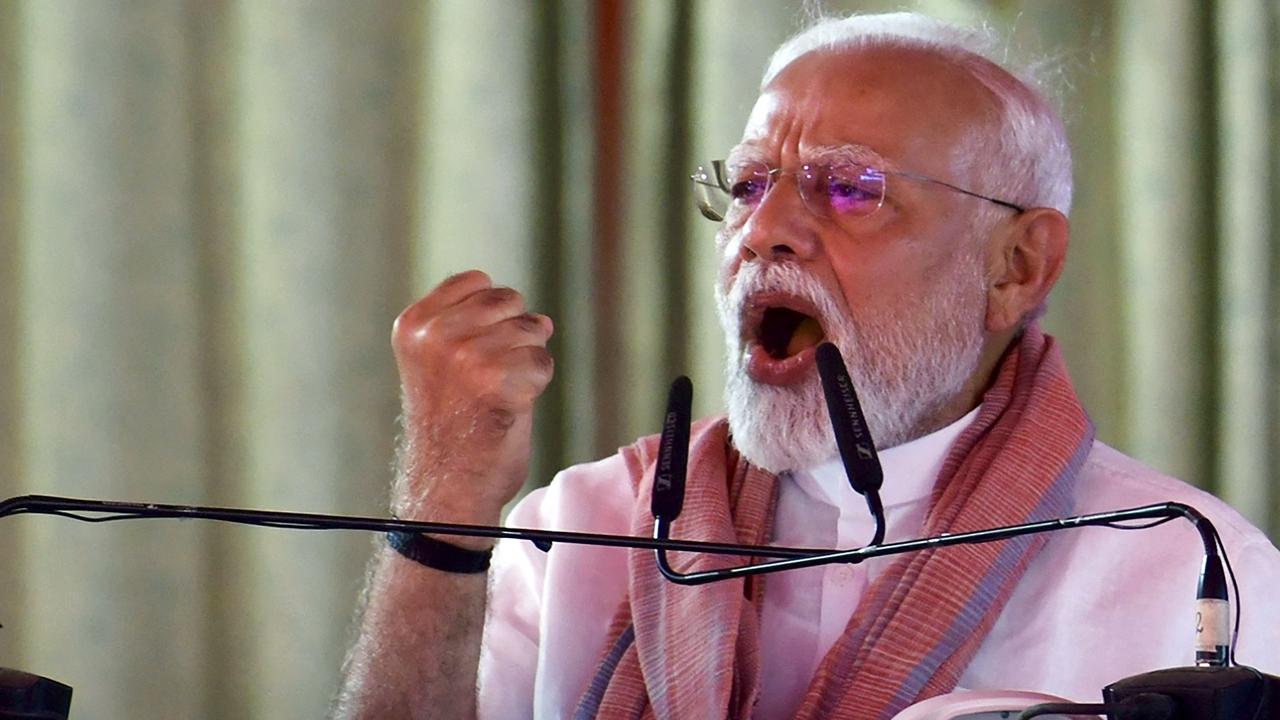
India’s Prime Minister Narendra Modi, said that their ‘spirit will not be broken’ by terrorism.. Picture: Sachin KUMAR / AFP
But Prime Minister Modi has, in recent years, suspended the region’s special freedoms and allowed his Hindu nationalist supporters to impose their ways on the culturally distinct populace.
“India’s hard-line policies under Modi and the imposition of direct central rule on Kashmir have fuelled deep alienation in the Muslim-majority region,” argues Yale University lecturer Sushant Singh.
That backlash, he adds, has triggered much broader tensions that has been simmering beneath the surface for decades.
“With Modi’s rhetoric leaving little room for compromise, Pakistan’s military leadership under pressure to respond forcefully to any Indian strike, and China’s growing involvement in the region, events in Kashmir risk triggering uncontrollable escalation,” he said.
Kashmir Conundrum
“At the heart of the Kashmir crisis is a combustible mix of religious nationalism, authoritarian governance, and unresolved political grievances,” explains Mr Singh.
Mr Modi stripped Kashmir, India’s only Muslim-majority state, of its constitutional privileges in 2019.
Local elections have been suspended. Curfews, media controls and political arrests have become commonplace.
“The reality on the ground remains one of pervasive fear and violence,” adds Mr Singh.
“Kashmir has endured recurring militant attacks, including the killing in Pahalgam, and the continued imposition of draconian laws and heavy security deployments.”
Responsibility for the Pahalgam attack has been claimed by a group calling itself The Resistance Front (TRF), which analysts believe to be an offshoot of Pakistan’s Lashkar-e-Taiba militant group.
The TRF has accused Indian Hindus of a co-ordinated campaign to establish settlements in Kashmir and overwhelm its indigenous population.
PM Modi has seized on the TRF’s Pakistani ties to label the incident as a cross-border attack backed by Islamabad.
He’s expelled Pakistani diplomats. He’s closed the border. He’s ordered the suspension of the Indus Waters Treaty.
ashmir is inseparable from his broader political strategy, in which he projects strength as a Hindu nationalist strongman, promises violent retribution against enemies, and seeks to rally domestic support through exploiting moments of national security crisis,” Mr Singh states.
Pakistan’s Power Plays
Islamabad has condemned suspension of the Indus water agreement as an “act of war”.
It has also closed its airspace to Indian flights and suspended all bilateral treaties, including a 1972 peace treaty that laid out a path towards a normalised relationship between the two nations.
But Pakistan is in the grip of a severe internal crisis……………………………………………………………………………………………………………………………….. https://www.news.com.au/technology/innovation/military/india-and-pakistan-nations-on-brink-of-nuclear-war/news-story/2f6d318483fdad71eebf466349123137
India and Pakistan: The nuclear standoff that we really should all be worried about
As tensions between the two countries escalate following a
terrorist attack in Kashmir, Ashis Ray looks at how a conflict could
involve China and America in a war over sovereignty and security.
Independent 30th April 2025 https://www.independent.co.uk/asia/india/india-pakistan-kashmir-attack-terrorism-nuclear-b2741719.html
As US military prepares for war on China, Silicon Valley tech oligarchs are profiting
Hegseth is a far-right theocratic extremist. He published a book in 2020 called “American Crusade”, in which he proudly declared that the US right is in a “holy war” against the international left, China, and Islam.
Hegseth revealed that the US military is making “real war plans” for China, over Taiwan.
The US military is preparing for war on China. It has missile systems in the Philippines aimed at major Chinese cities. Defense Secretary Pete Hegseth says the USA is turning “Japan into a war-fighting headquarters”. Silicon Valley Big Tech oligarchs are making hugely profitable investments.
By Ben Norton, https://geopoliticaleconomy.com/2025/04/28/us-military-war-china-silicon-valley/
Evidence grows showing that the US military is setting the stage for war on China.
A leaked memo obtained by the Washington Post reveals that the US Department of Defense has made preparing for war with China into its top priority, giving it precedence over all other issues.
The Pentagon is concentrating its resources in the Asia-Pacific region as it anticipates fighting China in an attempt to exert US control over Taiwan.
US Defense Secretary Pete Hegseth, a fundamentalist self-declared “crusader” who called for overthrowing the Chinese government, took a trip in March to Japan and the Philippines, where he repeatedly threatened Beijing and boasted of US “war-fighting” preparations and “real war plans”.
In 2024, the US military installed its Typhon missile system in the northern Philippines. This has a range of 1,240 miles (roughly 2,000 kilometers), and can hit most major cities on the Chinese mainland.
The United States has access to at least nine military bases in the Philippines.
The Wall Street Journal reported that this “new U.S. missile system deployed in the Philippines puts key Chinese military and commercial hubs within striking distance”.
The newspaper added that it “is the first time since the Cold War that the U.S. military has deployed a land-based launching system with such a long range outside its borders”.
This blatant US provocation has caused outrage in Beijing, which sees the Pentagon’s move as a significant escalation of Washington’s new cold war on China.
Cold War Two
Cold War Two has more and more parallels to Cold War One.
Students in US schools are often taught that the Soviet Union’s deployment of nuclear weapons to Cuba in the 1962 missile crisis was an act of “aggression”. Their classes usually omit the fact the United States first put nuclear weapons in NATO member Turkey in 1959, provoking Moscow.
Today, Washington is provoking Beijing in many domains.
Donald Trump launched a unilateral, aggressive trade war on China in 2018, during his first term.
Trump’s Democratic successor, Joe Biden, not only continued this trade war but expanded it further, adding more tariffs and export restrictions in an attempt to strangle China’s high-tech sector.
Now in his second term, Trump has waged a nuclear trade war on China, threatening tariffs of 245%.
This new cold war has become a lucrative enterprise for some US oligarchs.
Silicon Valley oligarchs hope to profit from US war on China
Big Tech capitalists in Silicon Valley have poured money into new weapons systems, hoping to profit off of war on China.
The Wall Street Journal published an article in 2024 titled “Tech Bros Are Betting They Can Help Win a War With China”. It featured an interview with right-wing billionaire Palmer Luckey, a former Facebook executive who founded the arms manufacturer Anduril Industries.
Anduril has established itself as a significant Pentagon contractor, with its work developing advanced autonomous weapons.
The Wall Street Journal wrote (emphasis added):
These weapons, Luckey argues, are needed for a potential conflict with China, which the Pentagon two years ago announced is the greatest danger to U.S. security. The U.S. military, Luckey and others say, needs large numbers of cheaper and more intelligent systems that can be effective over long stretches of ocean and against a manufacturing and technological power like China.
Anduril is so focused on a conflict with Beijing, Luckey says, that many teams inside the company are building only weapons that can be completed by 2027—the year Chinese President Xi Jinping has said his country should be prepared to invade Taiwan. The fictional sword for which Anduril is named [from the Lord of the Rings] is also called the “Flame of the West.”
“We keep our eyes on the prize, which is great-power conflict in the Pacific,” Luckey said.
The newspaper highlighted how the US military-industrial complex has become increasingly privatized.
There has been a rapid influx of venture capital funds into weapons corporations in recent years. The Wall Street Journal reported (emphasis added):
Anduril is part of one of the largest shifts to take place in the defense sector since World War II: the flow of venture-capital funding into defense-technology companies.
For decades, the U.S. government funded defense companies, like Lockheed Martin, to develop new weapons, ranging from stealth aircraft to spy satellites. But as the private-sector money available for research and development has outstripped federal-government spending, particularly in areas like AI, a new cohort of defense startups is using private capital to develop technology for the Pentagon.
The amount of private capital flowing into the venture-backed defense-tech industry has ballooned, with investors spending at least 70% more on the sector each of the past three years than any prior year. From 2021 through mid-June 2024, venture capitalists invested a total of $130 billion in defense-tech startups, according to data firm PitchBook. The Pentagon spends about $90 billion on R&D annually.
A major investor in Anduril is Founders Fund, the Silicon Valley venture capital firm co-founded by Peter Thiel.
Thiel is a far-right billionaire oligarch who has strongly supported Donald Trump and has funded Republican politicians. He even previously employed US Vice President JD Vance, and bankrolled his successful 2022 Senate campaign.
A former FBI informant, Thiel co-founded another major Pentagon contractor, Palantir, which the CIA helped to fund.
Thiel is also an extreme anti-China hawk. He openly defends monopolies, arguing “competition is for losers”, and wants to ban Chinese competitors to US Big Tech monopolies.
Like Thiel, Anduril founder Palmer Luckey is staunchly pro-Trump. He is from the same community of far-right Silicon Valley oligarchs.
The Financial Times reported that Thiel’s Palantir, Luckey’s Anduril, and Elon Musk’s SpaceX sought to create a “consortium” — or, rather, a cartel — to jointly bid for US government contractors.
US Defense Secretary Pete Hegseth wages “holy war” on China, from Japan and the Philippines
Trump has surrounded himself with a team of war hawks, including neoconservative Secretary of State Marco Rubio, National Security Advisor Mike Waltz, and Defense Secretary Pete Hegseth.
Hegseth personally signed the Pentagon document obtained by the Washington Post that showed that the number one priority of the US military is preparing for war with China over Taiwan.
In this memo, which is officially known as the “Interim National Defense Strategic Guidance”, the Pentagon wrote, “China is the Department’s sole pacing threat, and denial of a Chinese fait accompli seizure of Taiwan — while simultaneously defending the U.S. homeland is the Department’s sole pacing scenario”.
The Washington Post revealed that several parts of this document were copied word-for-word from a vehemently anti-China report published by the Heritage Foundation, a right-wing Washington, DC-based think tank that is funded by large corporations and conservative billionaires.
The oligarch-backed Heritage Foundation organized the notorious Project 2025, which crafted a detailed policy program for the Trump administration to implement.
Hegseth is a far-right theocratic extremist. He published a book in 2020 called “American Crusade”, in which he proudly declared that the US right is in a “holy war” against the international left, China, and Islam.
“Communist China will fall—and lick its wounds for another two hundred years”, Hegseth pledged in the book. He wrote, “If we don’t stand up to communist China now, we will be standing for the Chinese anthem someday”.

In March 2025, Hegseth traveled to Asia to pressure US allies to join Washington in its new cold war on China. The Wall Street Journal summarized his trip with the headline “Hegseth Tells Asian Allies: We’re With You Against China”.
When he spoke in Japan, Hegseth vowed to “strengthen our bilateral bonds and deepen our operational cooperation” against Beijing.
The US defense secretary stated that the Pentagon is turning “Japan into a war-fighting headquarters”.
Japan previously colonized China. The Japanese empire, which later allied with Nazi Germany and Fascist Italy, killed tens of millions of people in China and other parts of Asia in the 1930s and ’40s.
“America and Japan stand firmly together in the face of aggressive and coercive actions by the Communist Chinese”, Hegseth asserted, fearmongering about “the severe nature of the threat”.
“Those who long for peace must prepare for war”, the US defense secretary said. “We must be prepared. We look forward to working closely together as we improve our war-fighting capabilities, our lethality, and our readiness”.
Hegseth articulated “three pillars” of the Trump administration’s Pentagon strategy: “Reviving the warrior ethos, rebuilding our military, and restoring deterrence”.
The US defense secretary made similarly aggressive comments in the Philippines, blasting what he called “communist China’s aggression in the region”.
Hegseth revealed that the US military is making “real war plans” for China, over Taiwan.
At a press conference in the Philippines, Hegseth spoke of Admiral Samuel Paparo, the commander of the US Indo-Pacific Command. He said (emphasis added):
It’s not my job to determine where the Seventh Fleet goes. I defer to Admiral Paparo and his war plans. Real war plans. Admiral Paparo understands the situation, understands the geographic significance, understands the urgency, and is prepared to work with those in the region to ensure we are leaning forward in our posture. Not waiting for events to develop, not retrograding to places further from the front, but deploying capabilities forward, posturing and creating dynamics and strategic dilemmas for the Communist Chinese, that help them reconsider whether or not violence or action is something they want to undertake.
During the first cold war, the US hosted a military base on Taiwan, where it stored nuclear weapons.
In the second Taiwan Strait crisis in 1958, top US military officials wanted to attack the Chinese mainland with nuclear bombs, but President Dwight D. Eisenhower preferred conventional weapons.
Danger of an India-Pakistan war and Canada’s Reactors
Normand Lester, Journal de Montréal, 27 avril 2025, https://www.journaldemontreal.com/2025/04/27/danger-de-guerre-indo-pakistanaise-et-nos-candu
An individual with dual Canadian and Pakistani citizenship has just been arrested in the USA for attempting to acquire technology for Pakistan’s nuclear weapons program and smuggle it through Canada.
The case comes to light as tension mounts between India and Pakistan following the massacre of 26 Indian tourists in the disputed region of Kashmir. New Delhi accuses Pakistan of being responsible. The latter denies being behind the attack. India has annexed Muslim-majority Kashmir, which is claimed by Pakistan. China is a major ally of Pakistan, while India has close defense ties with the United States.
Clashes between the two armies increased, raising fears of a large-scale military conflict. Peace has never really been restored since 1947, when the British Indian Empire was violently partitioned into two independent states: Muslim-majority Pakistan and Hindu-majority India. The war of religious partition is thought to have claimed between one and two million lives, and led to the massive displacement of between 12 and 20 million people.
A-bomb: thanks to Canada
India and Pakistan have already fought two major wars, in 1965 and 1971, before acquiring nuclear weapons… with the help of Canada. Any war between them could therefore turn into a nuclear exchange.
Since then, India and Pakistan have experienced a major border skirmish in 1999, which left at least 1,000 people dead.
After donating one nuclear reactor to India in 1956, Ottawa heavily subsidized the purchase of another by India in 1963. As part of this purchase, Canada trained 271 Indian scientists, engineers and technicians, who went on to develop New Delhi’s atomic bomb.
In 1971, Canada built a 137-megawatt CANDU nuclear reactor in Karachi, Pakistan. The contract also included a heavy water production facility. Three years later, in 1974, India detonated its first nuclear device, dubbed the “Smiling Buddha”, using plutonium from the reactor donated by Ottawa in 1956.
According to experts, Canadian reactors are ideal for producing weapons-grade plutonium, and Ottawa hasn’t even asked India to comply with the safeguards required by the International Atomic Energy Agency (IAEA).
Canada sneaks away
U.S. Secretary of State Henry Kissinger then roundly criticized Canada, telling the media that the Indian nuclear explosion had been carried out using material diverted from a Canadian reactor lacking the appropriate safeguards.
With its guilt exposed, Canada quietly withdrew from the Indian CANDU project. It also stopped supplying uranium to Karachi, and withdrew from the Pakistani project. This did not prevent it from carrying out its first nuclear test in 1998.
If India and Pakistan ever wage nuclear war on each other, Canada will have to assume – in part – the moral responsibility.
Robotic arm struggles to take fuel sample from Fukushima plant

By KEITARO FUKUCHI/ Staff Writer, April 28, 2025, https://www.asahi.com/ajw/articles/15704793
A narrow, attic-like space lies directly below the No. 5 reactor at the Fukushima No. 1 nuclear power plant, showing the difficult route a robotic arm must take to collect samples of melted fuel debris in a sister reactor.
The robotic arm is 22 meters long, weighs 4.6 tons and has 18 articulatable joints.
It has been developed to retrieve samples from the No. 2 reactor of Tokyo Electric Power Co.’s Fukushima No. 1 plant—which was crippled when the 2011 Great East Japan Earthquake and tsunami triggered a nuclear disaster at the facility.
To this day, an estimated 880 tons of melted fuel debris remain in the No. 1 through No. 3 reactors, and recovering this material is considered the most challenging phase in the long decommissioning process.
After more than six years of development using taxpayer money and undergoing numerous setbacks, the robotic arm may go on its first real debris retrieval mission later this fiscal year—or face being scrapped.
“The latest attempt may prove a failure since numerous trials have produced no successful outcomes so far,” said a nuclear industry insider. “The robot arm might be left to gather dust without ever being used.”
News reporters were given a tour in January of the crippled power plant’s No. 5 reactor, which is the same model and reportedly has the same dimensions as the No. 2 reactor, to see the route the arm must take if it is to succeed.
THE MISSION
To reach the debris, the arm will have to be navigated—by remote control—through the same narrow route at the No. 2 reactor that the reporters traversed at its twin.
The first step will be to carefully insert the arm, which is 40 centimeters tall, through an opening with an inner diameter of just 55 cm.
Once inside the 1.5-meter-tall space directly under the reactor, the approximately 4-meter-long tip of the arm will be slowly rotated and lowered to reach the fuel debris at the bottom of the containment vessel.
“Adjusting the joints’ angles is particularly difficult,” said a TEPCO public relations representative. “Even a single error can cause the device to hit its surroundings.”
TRIAL AND ERROR
The robotic arm has been under development since fall 2018 by Mitsubishi Heavy Industries Ltd. and a British company from the nuclear power industry. As much as 7.8 billion yen ($53.1 million) in taxpayers’ money has been invested in the arm and related projects.
However, the project has faced numerous setbacks.
The government and TEPCO initially planned to debut the arm in a debris retrieval test in 2021, but the device was unable to move with the necessary precision, causing delays.
When the first retrieval test was finally undertaken in November 2024, a simpler device with a solid track record in past applications was used instead. The same device was used in the second retrieval test earlier this month—while revisions on the robotic arm continued.
Because the arm’s weight is supported at its base, the device tends to bend and move unsteadily when extended.
“They are working hard to carry out this difficult procedure under particularly challenging conditions,” said Hajimu Yamana, president of the Nuclear Damage Compensation and Decommissioning Facilitation Corp. (NDF), which serves as an adviser on the decommissioning work.
As the arm’s development dragged on for more than half a decade, new problems arose in and after August 2024.
Disconnection of motor cables that had deteriorated over time was detected, as was a failure in the arm’s obstacle removal mechanism.
In December that year, the robotic arm came into contact with a model of the containment vessel during a test. However, it later safely passed through the opening without encountering any obstructions after its operators fine-tuned the insertion point.
“New issues arise each time a test is conducted,” lamented Yusuke Nakagawa, a TEPCO group manager involved in the project. “We just have to address them one by one again and again.”
TEPCO began dismantling part of the robotic arm in February to examine the deteriorated cable. The inspection is expected to take three to four months, and the arm will likely undergo additional operational tests after that.
THE FUTURE
For now, TEPCO plans to put the robotic arm to practical use at the site in the latter half of fiscal 2025.
“The final decision (on whether to actually use the arm on site) will be made after taking into account the results of the envisioned operational tests,” said Akira Ono, president of TEPCO’s Fukushima Daiichi Decontamination and Decommissioning Engineering Co.
The future of the robotic arm is still unclear given that its official introduction has already been delayed four times.
Officials involved are expressing a growing sense of alarm.
Toyoshi Fuketa, an ex-chairman of the Nuclear Regulation Authority, calls for reviewing the current plan.
“Never changing a plan once it has been decided upon, even if it does not work properly, is a bad habit of Japan,” he noted. “People should have the courage to back down at times (by giving up on the robotic arm).”
China, Russia may build nuclear plant on moon to power lunar station, official says
China is considering building a nuclear plant on the moon to power the
International Lunar Research Station (ILRS) it is planning with Russia, a
presentation by a senior official showed on Wednesday. China aims to become
a major space power and land astronauts on the moon by 2030, and its
planned Chang’e-8 mission for 2028 would lay the groundwork for
constructing a permanent, manned lunar base.
Reuters 23rd April 2025, https://www.reuters.com/business/energy/china-led-lunar-base-include-nuclear-power-plant-moons-surface-space-official-2025-04-23/
Russia’s Rosatom says will proceed with Myanmar nuclear plant despite quake.
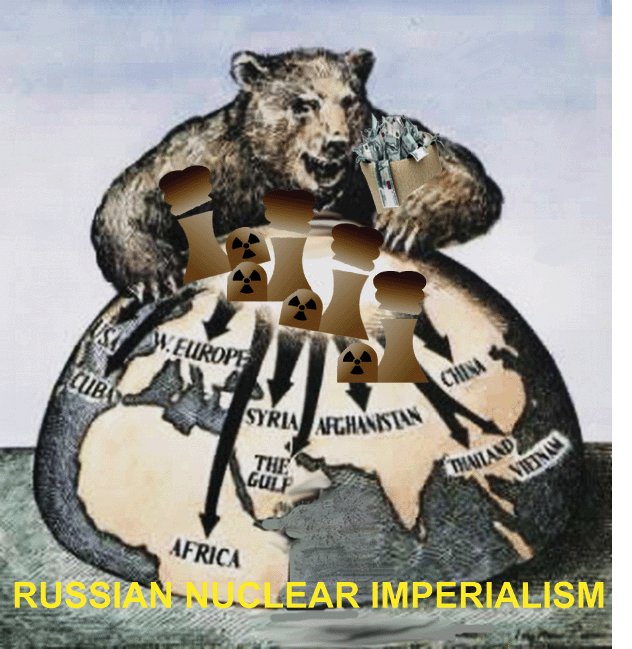
Myanmar lies on the boundary between two tectonic plates and is one of the world’s most seismically active countries.
Reuters, By Panu Wongcha-um, April 22, 2025
Summary
Myanmar is one of the world’s most seismically active countries
Myanmar and Russia agreed in early March to build small-scale nuclear facility
Construction timeline and location have not been announced
Thousands were killed in March 28 earthquake
BANGKOK, April 22 (Reuters) – A plan to build a nuclear power plant will continue in Myanmar, a war-torn Southeast Asian country partly devastated by a massive earthquake in March, the Russian state-owned firm leading the project told Reuters.
Myanmar’s junta chief Min Aung Hlaing and Russian President Vladimir Putin last month signed an agreement for a small-scale nuclear facility, three weeks before the 7.7 magnitude quake flattened communities and left more than 3,700 people dead – the country’s deadliest natural disaster in decades.
The agreement involves cooperation to build a Small Modular Reactor (SMR) in Myanmar with an initial 110 MW capacity, consisting of two 55 MW reactors manufactured by Russia’s state nuclear corporation Rosatom.
“The recent earthquake has not affected Rosatom’s plans in Myanmar,” the company’s press office said in an email.
“Rosatom adheres to the highest international safety and reliability standards, including strict seismic resistance requirements.”
The company’s intention to go ahead with the nuclear plan despite the quake, which crippled critical infrastructure, has not been previously reported.
Rosatom declined to provide any construction timeline or details of the location of the proposed nuclear facility that will be powered by RITM-200N reactors, which were made by the company for use initially on icebreaker ships.
A Myanmar junta spokesman did not respond to calls from Reuters seeking comment.
The push for nuclear power in Myanmar comes amid an expanding civil war triggered by a 2021 military coup that removed the elected government of Nobel laureate Aung San Suu Kyi.
Facing a collection of established ethnic armies and new armed groups set up in the wake of the coup, the ruling junta has lost ground across large parts of the country and increasing leaned on its few foreign allies, including Russia.
The conflict, which stretches from the border with China to the coast along the Bay of Bengal, has displaced more than 3.5 million people and left Myanmar’s mainly agrarian economy is tatters.
Myanmar is currently evaluating options for financing the Russia-backed nuclear power project. “This may involve both own and borrowed funds,” Rosatom said. In places such as Bangladesh and Egypt, Russia has funded conventional nuclear power projects through low interest loans.
Authorities in neighbouring Thailand, which is closely monitoring Myanmar’s nuclear developments, assess that a plant could be built in Naypyitaw, a fortified purpose-built capital that was heavily damaged by the earthquake, according to a security source briefed on the matter.
Two other potential sites include a location in the central Bago region and the Dawei special economic zone in southern Myanmar, where the junta and Russia have announced plans to build a port and an oil refinery, according to the Thai assessment.
Myanmar lies on the boundary between two tectonic plates and is one of the world’s most seismically active countries.
MONEY AND MANPOWER
Southeast Asia’s first nuclear facility – the 621 MW Bataan Nuclear Power Plant in the Philippines – was finished in 1984 with a price tag of $2.3 billion but mothballed in the wake of the Chornobyl disaster, opens new tab in the then Soviet Union two years later.
The Philippines and other regional countries have since mounted repeated efforts to explore nuclear energy but made limited progress.
Vietnam is, however, renewing a bet on nuclear power after it suspended its programme in 2016.
Russia and Myanmar have been collaborating in the sector for years, with Burmese students studying nuclear energy and related subjects in Russian universities under government quotas since 2019, according to Rosatom…………………
With the Myanmar junta prioritising exports of natural gas, which could be used to fuel cheaper domestic power generation, to earn foreign exchange, the nuclear plan makes no economic sense for a cash-strapped administration, said Richard Horsey, senior Myanmar adviser at International Crisis Group.
“Nuclear power is very expensive, and Myanmar simply can’t afford it,” he said.
Reporting by Panu Wongcha-um; Editing by Devjyot Ghoshal and Kate Mayberry, https://www.reuters.com/business/energy/russias-rosatom-says-will-proceed-with-myanmar-nuclear-plant-despite-quake-2025-04-22/
India Aims to Lure Foreign Nuclear Power Providers With Eased Liability Laws
Oil Price, By Tsvetana Paraskova – Apr 18, 2025,
India plans to remove an unlimited liability clause in its nuclear energy laws in a bid to attract foreign firms, especially U.S. companies, to its nuclear energy sector.
The Indian Department of Atomic Energy has prepared a bill that would remove a clause in the Civil Nuclear Liability Damage Act of 2010 that exposes suppliers to unlimited liability if accidents occur, government sources told Reuters.
India plans a major expansion to its nuclear energy capacity in the coming decades as a pillar of reliable zero-carbon electricity to meet surging power demand.
By capping the liability for suppliers of nuclear reactors, India seeks to attract foreign companies to an industry expected to become key to the country’s energy transition……………………………………..
ndia’s largest power utility, NTPC, plans to invest over the next two decades $62 billion in building 30 GW of nuclear generation capacity, sources with direct knowledge of the matter told Reuters earlier this year.
NTPC is also reportedly looking to hire consultants for feasibility studies for small modular reactors that could potentially replace some of the utility’s old coal-fired power plants…………….. https://oilprice.com/Latest-Energy-News/World-News/India-Aims-to-Lure-Foreign-Nuclear-Power-Providers-With-Eased-Liability-Laws.html
The Conservative Argument Against Nuclear Power in Japan

It has been said that nuclear power stations are like nuclear weapons directed at your own country. I couldn’t agree more.
Getting rid of these “nuclear weapons directed at our own country” will not require huge defense spending or difficult diplomatic negotiations. All that is required is the ability to look square at the facts, and a conservative mindset determined to protect our rich and productive land and pass it on to the next generation.
Higuchi Hideak, Apr 15, 2025, https://www.nippon.com/en/in-depth/d01111/
A Devastating Loss of Territory
“Conservatism is essentially realism. A conservatism that refuses to confront reality is as worthless as a progressivism without ideals.”
This is how I opened my Hoshu no tame no genpatsu nyūmon (Nuclear Power: An Introduction for Conservatives), which came out last summer. In the book, I tried to bring attention to the contradictions inherent in the policies of the Liberal Democratic Party: a party that claims to support conservative values and uphold the ideals of patriotism but nevertheless advocates that Japan should continue or increase its reliance on nuclear power, even in the aftermath of the Fukushima disaster.
In the book, I made three main points. First, nuclear power is fundamentally incompatible with conservatism and patriotism. Second, nuclear power stations are inherently vulnerable to earthquakes, for structural reasons. And third, nuclear power stations are also vulnerable from a national security perspective.
The disaster at the Tokyo Electric Power Company’s Fukushima Daiichi Nuclear Power Station in March 2011 led to the evacuation of more than 150,000 people. More than 20,000 are still not able to return to their homes even today. And the state of emergency declared shortly after the disaster has still not been lifted, 14 years later.
In Fukushima Prefecture, evacuation orders are still in effect across more than 300 square kilometers, in what the government has designated as “closed to inhabitation indefinitely.” This is in spite of the fact that the annual safety limits for radiation exposure among the general population were lifted from 1 millisievert to 20 millisieverts. An area of more than 300 square kilometers—equivalent to the size of Nagoya, one of Japan’s key economic centers—is still effectively under evacuation orders. The country has effectively lost territory 50 times larger than the Senkaku Islands in Okinawa Prefecture, controversially claimed by China and the frequent focus of national security anxiety. As if this weren’t bad enough, more than 300 young people have been diagnosed with childhood thyroid cancer, a condition that would normally be expected to affect only around one in a million. Many of these have been serious cases requiring invasive surgery.
When I sat as presiding judge in the case brought before the Fukui District Court to stop the planned reactivation of the Ōi Nuclear Power Station, operated by the Kansai Electric Power Company, the argument put forward by the Liberal Democratic Party (then newly returned to power) and the business lobby was that shutting down nuclear plants would force Japan to import vast amounts of oil and natural gas to fuel thermal power stations. This would result in a massive outflow of the nation’s wealth and lead to national impoverishment.
On May 21, 2014, the court handed down its verdict. Even if shutting down the plant did lead to a trade deficit, the court rejected the idea that this would represent a loss of national wealth. True national wealth, the court held, consists of rich and productive land—a place where people can put down roots and make a living. The risk of losing this, and being unable to recover it, would represent a more serious loss of national wealth. Compare the arguments of the LDP and economic business lobby with the decision of the Fukui District Court. Which represents true conservatism, unafraid to look squarely at the facts about nuclear disasters? Which best represents the true spirit of patriotism?
Disaster Caused by a Power Failure
Let’s consider a few of the characteristics of nuclear power stations. First, they must be continuously monitored and supplied with a constant flow of water to cool the reactor. Second, if the supply of electricity or water is interrupted, there is the risk of an immediate meltdown. A serious accident could potentially mean the end of Japan as a nation.
The accident at Fukushima Daiichi came perilously close to rendering much of the eastern part of Japan uninhabitable. Yoshida Masao, the director in charge at the time, feared that radioactive fallout would contaminate all of eastern Japan when it looked as though the containment building at the Unit 2 reactor would rupture after venting became impossible. The chair of the Japan Atomic Energy Commission also expected it would be necessary to evacuate the population from a 250-kilometer radius of the plant, including Tokyo.
The accident at Fukushima did not happen because the reactor was damaged directly by the earthquake or tsunami. The initial earthquake interrupted the external supply of electricity, and the tsunami that followed cut off the emergency supply as well. Essentially, a power failure made it impossible to cool the reactor, and this was enough to trigger a catastrophe.
These characteristics mean that the resilience of nuclear power stations depends not on how physically robust the reactors and containment buildings are, but on the dependability of the electricity supplied to them. Nuclear power plants in Japan are designed to be able to withstand seismic activity between 600 to 1,000 gals (a gal being a unit of acceleration used in gravimetry to measure the local impact of an earthquake). But earthquakes over 1,000 gals are not unusual in Japan, and some have exceeded 4,000 gals. For this reason, some construction companies build housing that is designed to withstand seismic shocks up to 5,000 gals.
There are only 17 fully constructed nuclear power stations across the country. Six earthquakes exceeding the safety standards have already occurred at four of these: Onagawa, Shika, Kashiwazaki-Kariwa, and Fukushima Daiichi (twice each at Onagawa and Shika). Japan experiences more earthquakes than any other country on earth. Although the country accounts for just 0.3% of the world’s landmass, more than 10% of all the world’s earthquakes happen here. Despite the inherent dangers, there are 54 nuclear reactors along the coasts, around 10% of the world’s total.
Since it is impossible to forecast what scale of earthquake might hit a given site in an earthquake-prone country like Japan, construction companies operate on the principle that houses should be able to withstand seismic events equivalent to the strongest earthquake on record in the past.
The government ratified the Seventh Strategic Energy Plan at a cabinet meeting in February this year. This latest iteration of the plan removed references to an ambition to reduce the country’s dependence on nuclear power as much as possible, and signaled a clear intention to restore nuclear power to a more prominent position in the country’s energy strategy. Despite this, the seismic planning standards for nuclear power stations still assume that it is possible to accurately predict the maximum size of any earthquake that will hit in the future by analyzing past seismic data and running a site assessment of local geotechnical conditions. Whose position demonstrates better scientific judgement and a more realistic assessment of the facts—the government’s or the construction companies’?
Why Europe’s Biggest Nuclear Power Plant Fell into the Hands of the Enemy
TEPCO was a huge company, with annual revenue of around ¥5 trillion and a profit margin of 5%, meaning the company was making ¥250 billion every year. But the economic damages from the Fukushima accident came to at least ¥25 trillion, equivalent to 100 years in revenue for the company. What can we say about an approach to electricity generation in which a single accident can wipe out a century’s worth of revenue and essentially bankrupt a huge company like TEPCO? It is an energy source that is not just cost-ineffective but unsustainable.
For example, it is estimated that if an accident on a similar scale happened at the Tōkai Daini Nuclear Power Station in Ibaraki Prefecture, it would cause damage worth ¥660 trillion (compared to the national government budget of ¥110 trillion). As head of the Fukushima plant, Yoshida was resigned to losing the containment building of the unit 2 reactor to an explosion. He was saved by a “miracle” when a weakness somewhere in the structure of the building allowed pressure to escape and a rupture was avoided. Without this lucky intervention, it is estimated that the economic damages might have reached ¥2.4 quadrillion.
These figures make clear that the problem of nuclear power is not merely an energy issue. It has profound implications for national survival, and should be regarded as a national security priority. Russia’s war in Ukraine has provided a stark reminder of the seriousness of this threat. The Zaporizhzhia station on the Dnieper River is the largest nuclear power plant in Europe. A threat from Russia to attack it was enough to persuade Ukraine to hand over the plant to Russian control. If the plant really had been attacked, it might have caused a crisis with the potential to lay waste to large parts of Eastern Europe.
It has been said that nuclear power stations are like nuclear weapons directed at your own country. I couldn’t agree more. And in Japan we have 54 of these reactors bristling our shores, all but unprotected against earthquakes, potential enemies, and terrorist attacks. The LDP government mocks those who oppose Japan’s holding the offensive capability to attack enemy bases and argue for an exclusively defense-oriented posture as indulging in “flower garden” thinking. At the same time, the party is blind to the fact that nuclear power stations represent this country’s biggest national defense vulnerability.
Getting rid of these “nuclear weapons directed at our own country” will not require huge defense spending or difficult diplomatic negotiations. All that is required is the ability to look square at the facts, and a conservative mindset determined to protect our rich and productive land and pass it on to the next generation.
In my previous books and articles, I addressed the legal issues involved in nuclear power. In my Nuclear Power: An Introduction for Conservatives, I made clear that my own political stance is conservative. I was prepared for a backlash from progressives, who make up the bulk of the antinuclear movement, but in fact I received no pushback from that quarter all. In fact, I was taken aback by the resounding support I received.
Most of the criticism came from supposed conservatives who were apparently determined to discredit my sincere intentions and grumbled that it was unseemly for a former judge to be sticking his nose into politics. On Amazon, my reviews were flooded with apparently coordinated personal attacks and slander. But I am still convinced that true and fair-minded conservatives will understand my true intentions.
Geologists acknowledge that it is simply not possible to accurately predict earthquakes with today’s science. A huge earthquake could strike tomorrow, causing a catastrophe at one of the nation’s nuclear power stations that could wipe out or render inhabitable large parts of the country. My aim is simply to make as many people as possible aware of this terrifying fact.
(Originally written in Japanese. )
Robot starts 2nd mission to retrieve debris at Fukushima nuclear plant
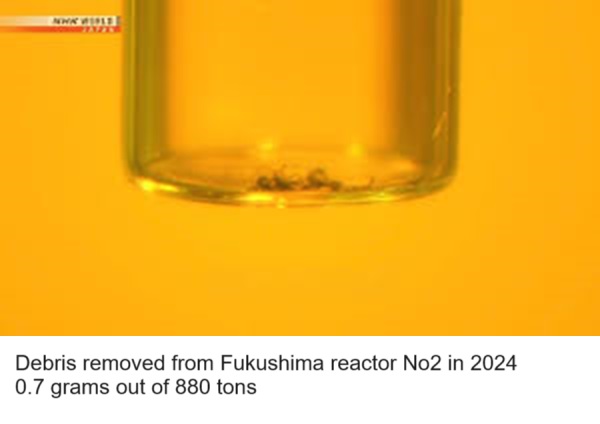
Apr. 16 , By Mari Yamaguchi, TOKYO, https://japantoday.com/category/national/robot-starts-2nd-mission-to-retrieve-debris-at-fukushima-nuclear-plant
A remote-controlled robot on Tuesday embarked on its second mission to retrieve tiny bits of melted fuel debris from inside a damaged reactor at the Fukushima nuclear plant that was wrecked by a tsunami 14 years ago.
The mission, which follows the first such debris retrieval in November, is aimed at eventually developing the technology and robots needed for a larger scale cleanup of the plant, destroyed by the earthquake and tsunami in March 2011.
The extendable “Telesco” robot carries cameras and a tong to grip tiny nuggets of radioactive debris. It entered the No. 2 reactor’s primary containment vessel Tuesday, according to Tokyo Electric Power Company.
This time, the company aims to send the robot further into the containment vessel to get a sample from an area closer to the center where more melted fuel is believed to have fallen.
It is expected to take several days before the front tip of the robot reaches the targeted area, where it will lower a device carrying a tong and camera in a fishing-rod style.
That first sample retrieval in November, despite a number of mishaps, was a crucial step in what will be a daunting, decades-long decommissioning that must deal with at least 880 tons of melted nuclear fuel that has mixed with broken parts of internal structures and other debris inside the three reactors ruined in 2011.
After a series of small missions by robots to gather samples, experts will determine a larger-scale method for removing melted fuel, first at the No. 3 reactor, beginning in the 2030s.
Experts say the huge challenge of decommissioning the plant is just beginning, and that the work could take more than a century.
Attacked, demonized and forced into hiding
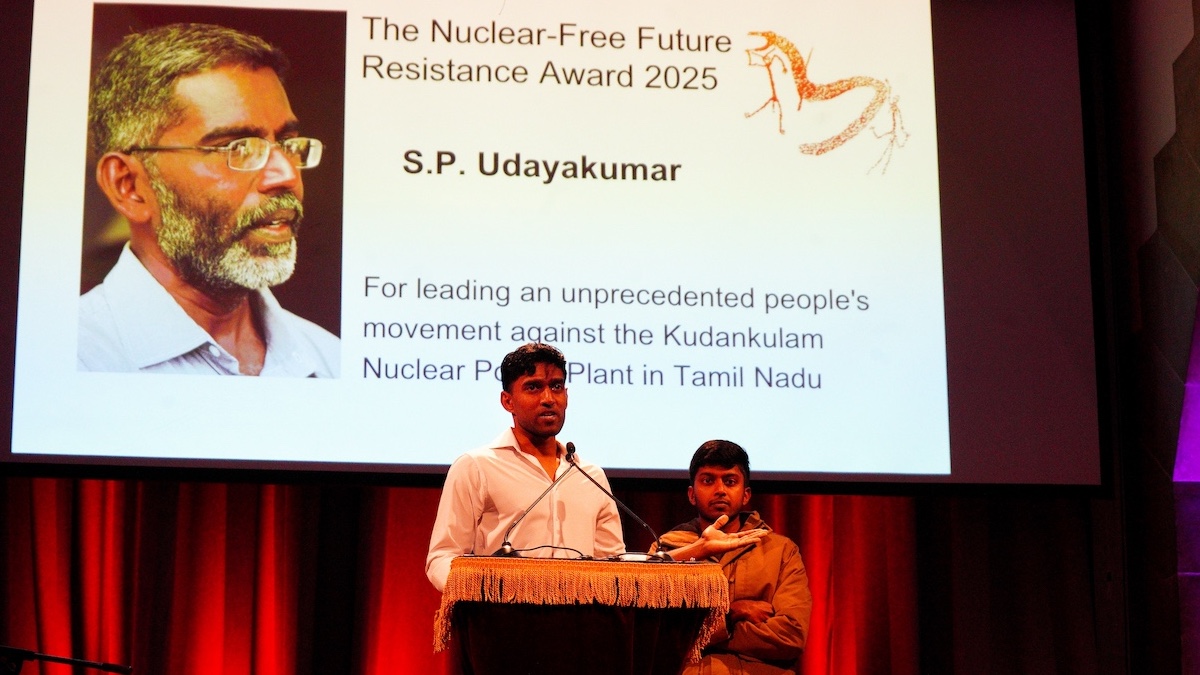
by beyondnuclearinternational, https://beyondnuclearinternational.org/2025/04/13/attacked-demonized-and-forced-into-hiding/
S.P. Udayakumar and thousands of other Indian activists challenged a Russian nuclear plant
S.P. Udayakumar was awarded the 2025 Nuclear-Free Future Award for resistance. Owing to visa constraints he was not able to be present in New York City, where the Awards ceremony was held, to accept his prize in person. He delivered these remarks via a video recording, which was met with prolonged applause. We reproduce his speech here. (A report and photos of the 2025 Nuclear-Free Future Awards ceremony, was published last week.)
I am extremely happy and immensely grateful that the Nuclear-Free Future Awards family that includes Beyond Nuclear, IPPNW and the international jury have chosen me and our struggle for the 2025 “Nuclear-Free Future” Award in the resistance category.
Tens of thousands of people including children, youth, women and men are struggling against the Russian-supplied Koodankulam Nuclear Power Project near the southernmost tip of India. Several people have sacrificed their lives, scores of people have gone to prison, so many of us have braved police harassment, State surveillance, court cases, property losses, income deprivation, and umpteen number of various difficulties.
Lots and lots of religious leaders, community leaders, political leaders, lawyers, film personalities, intellectuals, writers, publishers, poets, artists, media persons, international human rights activists, even some conscientious government officials, police officers and the general public from all over Tamil Nadu and the larger India have contributed significantly to this 2011-2014 phase of a much longer struggle.
I know that you cannot honor all the people who have taken part in our struggle and that I have been chosen as a representative of all of them. On behalf of all those thousands and thousands of fellow protesters, I humbly accept this great award. Thank you!
Although I am disappointed that I could not be with you all this evening and accept this award in the hall where the ‘Great Emancipator’ President Abraham Lincoln’s voice had once reverberated, I am glad that my sons, who had to undergo so much suffering, are receiving this award from you and celebrating this timely and important recognition of our people and the struggle.
The struggle against the Koodankulam nuclear power project began back in 1988 right after the Chernobyl accident in April 1986. The government of India has adopted the 4-I strategy of Ignore, Insult, Intimidate and Incinerate. We were totally ignored when we asked for the basic information about the project, such as the detailed project report, environmental impact assessment, site evaluation study, safety analysis report etc. When we persisted with our campaign, we were called all kinds of names, that we were anti-Indian, anti-national, foreign-funded, American stooges, left-wing radicals and so forth.
When we still pressed ahead with our campaign, the State came down upon us heavily with 349 cases with very serious charges, including sedition, waging war on the state, attempt to murder and so on. We are attending court hearings even now. Our passports have been impounded, bank accounts frozen, ‘Look Out Circular’ issued, our properties vandalized, and we are still being treated as dangerous criminals.
We were physically attacked when we went for a dialogue with government officials, several of us were imprisoned for months together, and a few of us were shot to death by police, and killed by low-flying coastguard planes, and prison negligence etc.
Because of all this highhanded behavior of the State, the concerted campaign was ended in 2014 but we have been propagating our anti-nuclear messages to the people of India through peaceful and democratic means.
Our messages are simple and straightforward:
Nuclear power is NOT cheap, or safe, or clean, or climate-friendly.
Nuclear power and nuclear bomb are both sides of the same coin. Nuclear reactors are stationary bombs and nuclear bombs are moving reactors.
Nuclear power is not suitable for a country like India that is highly and densely-populated. As you all know, the world’s worst industrial disaster took place in the Union Carbide pesticide plant in Bhopal in December 1984. The debilitating chemical waste of the Bhopal gas disaster has just been removed after 40 long years.
Both nationally and internationally, the nuclear hawks and hawkers promote nuclear power as THE answer for climate destruction. But consider the amount of carbon-emitting power that is used for uranium mining, milling, reactor construction (with thousands of tons of steel and cement over 20-30 years of construction), reactor operation for 40-60 years, decommissioning, waste management and so forth! Can anyone honestly claim that nuclear power is the answer for climate destruction? Even if it was, can poisoned earth be the answer for polluted air? How are we going to deal with the dangerous nuclear wastes for the next 48,000 years?
Nuclearism is part and parcel of profiteering globalism. The India-US nuclear deal is not about India’s energy security, or national security or safeguarding India’s growth and development. This deal is a naked corporate business deal which will bring humongous profits to a few American corporate houses. Similarly, the nuclear deals that India has signed with Russia, France, Kazakhstan, Namibia, Argentina, and others will bring profits and prosperity to these countries’ corporate houses but will result in disaster and destruction for the poor in India. Yes, desire for profit, power, and prominence drives the nuclear industry.
On the other hand, it is hate, fear and recklessness that fuel this very industry. Some countries’ revision of nuclear doctrines, refusal to extend nuclear arms treaties, rising weapons count, continuing Uranium enrichment, constant testing, actual threat to use nuclear bombs, and several wars around the world poised to reach a “nuclear threshold” foretell the precarious situation of our global society today. Yes, Nuclearism and Fascism are inter-related. Fascism is the ideology behind Nuclearism and Nuclearism is the penultimate expression of Fascism.
When all is said and done, this beautiful planet of ours, the Earth, can be likened to a humongous commercial airplane with clear class divisions, limited supply of resources, lopsided opportunity structures, and unbalanced entitlement arrangements, etc. And this plane of ours has been hijacked by the P-5 and the other nuclear States such as Israel, India, Pakistan, North Korea and who knows who else?
The great poet, Robert Frost had predicted back in 1920:
Some say the world will end in fire,
Some say in ice.
From what I’ve tasted of desire
I hold with those who favor fire.
But if it had to perish twice,
I think I know enough of hate
To say that for destruction ice
Is also great
And would suffice.
The delegates of the Third Meeting of States Parties (3MSP) to the Treaty on the Prohibition of Nuclear Weapons (TPNW) who are meeting in New York City right now have a tough task ahead. We wish them all the best!
And let us continue to strive for a nuclear-free future that will have No Deals, No Mines, No Reactors, No Dumps, and No Bombs! Nowhere in the world!!
To quote my favorite Robert Frost again:
Woods are lovely, dark and deep,
But we have promises to keep!
And miles to go before we sleep,
And miles to go before we sleep!
The Journey Beyond Nukes Begins with an Apology

Robert C. Koehler 7 April 25 https://abombtribunal.campaignus.me/34/?q=YToxOntzOjEyOiJrZXl3b3JkX3R5cGUiO3M6MzoiYWxsIjt9&bmode=view&idx=158534555&t=board
When the powerful speak, mushroom clouds emerge – oh so easily. Power is about conquest; winning the war, getting what you want no matter the cost.
For instance, Israel should nuke Gaza. “Do whatever you have to do.” Thus declared Sen. Lindsey Graham last year in a Meet the Press interview, comparing the current genocide in Palestine to the U.S. decision to end World War II by A-bombing Hiroshima and Nagasaki. “That was the right decision,” he said, spewing out the historical abstraction that still rules the world.
Nothing is more sacred than self-defense! And nothing is more necessary for that than nuclear weapons, at least for the countries that possess them. To think beyond this abstraction – to cry out against the pain of the victims and declare their use is potential human suicide – violates the political norm of the powerful and is easily categorized by the media, often sarcastically, as naïve.
And thus we’re stuck in a MAD world, apparently: a world under unending threat of mutually assured destruction. If you have a problem with that, you’re probably a weakling singing “Kumbaya.”
Or so the global war machine wants us to believe, reducing humanity’s anti-nuke – antiwar – sanity to a hollow hope.
It is in this context that I heard Sim Jintae and Han Jeong-Soon speak at a small event the other day in suburban Chicago, sponsored by an organization called – brace yourself – The International People’s Tribunal to hold the U.S. accountable for dropping A-bombs. The two speakers (via translator) are Korean victims of the bombs the U.S. dropped on Hiroshima neaarly eight decades ago. Sim Jintae is a first-generation survivor: He was 2-years-old when the bomb was dropped. Han Jeong-Soon is a second-generation survivor – the child of survivors of the inferno, who has suffered throughout her life from the after-effects of the bombing. Their message: Nuclear war lasts forever!
Well, that’s part of their message. Note: The movement they represent is Korean. A little known fact about the bombings of Hiroshima and Nagasaki is that thousands of Koreans were what you might call doubly victimized by the horror, This was during an era when Japan had colonial control over Korea, and some 100,000 Koreans had been forcibly moved to Japan to do wartime labor. Many of them, including Sim Jintae’s parents, had been working in a munitions factory in Hiroshima.
About 40,000 Koreans died in the bombings. Those who survived suffered the after-effects in silence . . . until they reclaimed one another and found a collective voice. This is the voice I heard last week at the event I attended, and it resonated as loud as – perhaps louder than – the pro-nuke media and their supplicants. Their collective voice emerges from reality, not abstraction. My God, I hope it’s louder than that Lindsey Graham, and so many other politicians.
Here is the voice of Han Jeong-Soon. Born in Korea fourteen years after the destruction of Hiroshima – her parents had also been forced laborers there, living a few kilometers from the epicenter of the bomb blast – she suffered all her life from birth defects: heart problems, chest pain, lung issues. She had multiple surgeries. She suffered on her own . . . until she saw a film about the bombing in 2004. Then:
“I realized my pain was not only my pain but other people’s pain,” she told us. She began organizing other second-generation survivors, and began telling the world: “My war has not ended. No war should be allowed or tolerated. No to all war.”
Is this the voice that will drown out the military-industrial complex? The People’s Tribunal is demanding, as the starting point of the human journey beyond war, for the United States to apologize for dropping atomic bombs on Hiroshima and Nagasaki. This was an action that instantly expanded the scope of hell the human race could inflict on itself.
When I heard that word, “apologize,” in the context of first- and second-generation Korean A-bomb victims – victims who were denied necessary health care, by both Japan and the United States – what I heard was a soul scream: a demand that the perpetrator grasp and acknowledge the full extent of the harm it caused, and in so grasping, vow never to use such a monstrous weapon again . . . and, indeed, vow to transcend war itself.
The International People’s Tribunal put it this way:
“The A-Bomb Tribunal aims to establish the illegality of the U.S. atomic bombings in 1945 to secure the basis for condemning all nuclear threats and use as illegal today. The fact that the atomic bombings of Hiroshima and Nagasaki were illegal under the international laws in 1945 means that the use and threat of nuclear weapons today are also illegal.
“The A-Bomb Tribunal aims to overcome the nuclear deterrence theory that justifies the use and threat of nuclear weapons by nuclear-weapon states, and contribute to the realization of denuclearization of the Korean Peninsula and a nuclear-free world.”
Let us listen to those who have suffered the most. Let us hear the cry of their throbbing souls and begin to understand that the time has come for us to create a world beyond dominance and war. Indeed, let us begin listening to one another and, in so doing, learn that we all matter. This is the true nature of power.
TEPCO’s rehabilitation plan delays expose limits to nuke power reliance.
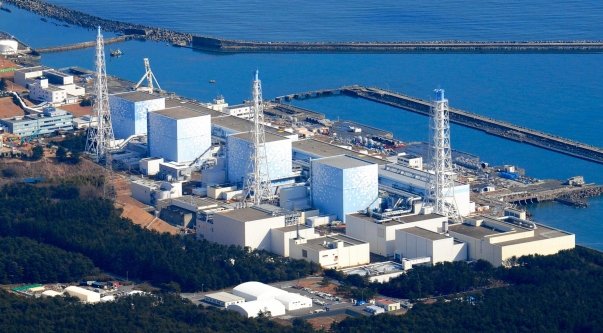
It was unreasonable in the first place for the power company to draw up a rehabilitation scenario relying on atomic power despite having caused a serious nuclear plant accident.
April 9, 2025 (Mainichi Japan), https://mainichi.jp/english/articles/20250409/p2a/00m/0op/029000c
Tokyo Electric Power Company (TEPCO) Holdings Inc. has postponed the revision of its business rehabilitation plan, which it had scheduled to carry out by the end of fiscal 2024. The company attributed the postponement to a lack of prospects for restarting the Kashiwazaki-Kariwa nuclear power plant in Niigata Prefecture, which it had seen a trump card in improving its earnings.
Will the utility be able to fulfill its responsibility in the recovery from the Fukushima disaster and the stable power supply amid such a state of affairs?
TEPCO has borrowed money from the national government to deal with the aftermath of the Fukushima nuclear meltdowns. This includes funds needed for compensation payments to affected residents and the decommissioning of the Fukushima Daiichi Nuclear Power Station. It has also taken out bank loans to fund its electric power business. The rehabilitation plan was supposed to form the premise for this financial aid.
The plan was first formulated in 2012, the year after the onset of the Fukushima disaster, and has since been updated almost every three years. The cost for handling the nuclear catastrophe was initially estimated at 6 trillion yen (approx. $41.27 billion), but that figure swelled to 21.5 trillion yen (148 billion) under the current plan outlined in 2021. The cost further rose to 23.4 trillion yen (approx. $161 billion) when taking into account compensation for fishery operators due to the release of treated water from the stricken Fukushima nuclear plant, among other expenses.
The cap on borrowing from the national government was subsequently raised to 15.4 trillion yen (approx. $106 billion). Based on these developments, calls grew to update TEPCO’s rehabilitation plan.
While TEPCO is scheduled to repay 500 billion yen (approx. $3.45 billion) annually to the national government, the actual repayment amount has hovered around 400 billion yen (around $2.76 billion) on average in recent years due to the firm’s poor performance.
The primary factor behind TEPCO’s sluggish earnings is that the Kashiwazaki-Kariwa nuclear plant has yet to be restarted. TEPCO had initially expected to resume the plant’s operations in fiscal 2019, eyeing a balance improvement of 100 billion yen (approx. $688 million) per reactor brought back online. But following a series of scandals including inadequate antiterror measures at the plant, the prospect of gaining local consent for its restart has waned.
TEPCO’s injection of more than 1 trillion yen (approx. $6.88 billion) into safety measures has also taken a heavy toll on its management, weighing down its cash flow. There are concerns that the utility may not even be able to afford capital investment essential for a stable power supply.
It was unreasonable in the first place for the power company to draw up a rehabilitation scenario relying on atomic power despite having caused a serious nuclear plant accident. In the amendments to be made to the rehabilitation plan by the end of fiscal 2025, the utility should completely overhaul its strategy.
TEPCO must accelerate its business realignment to improve its earning capacity. Its thermal power generation sector was integrated into Chubu Electric Power Co. in 2019, yet TEPCO needs to expand collaboration with other firms in renewable energy and other sectors with high growth potential. It urgently needs to streamline operations to stave off deterioration of its finances.
The company is urged to carry out a rehabilitation plan that is not reliant on nuclear power generation.
Impeachment of Yoon Suk-yeol threatens South Korea’s nuclear energy policy momentum
Impeachment turmoil may disrupt the trajectory of Korea’s nuclear sector
Chosun Biz, 4th April 2025, By Jin Sang-hoon
The Constitutional Court has cited the impeachment of President Yoon Suk-yeol, making it likely that the energy policy centered on nuclear power promoted by the former president will lose momentum.
The Yoon Suk-yeol government, established in May 2022, has abandoned the nuclear phase-out policy pursued during the previous Moon Jae-in administration and has been implementing an energy policy centered around nuclear power again. In July 2022, the decision was made to resume the construction of the Shin Hanul Units 3 and 4 nuclear power plants, which began construction in September last year, and the procedure for the continued operation of 10 nuclear plants, including the Hanul Units 1 and 2, which will reach their designed lifespan by 2030, has also begun.
In early 2018, the proportion of nuclear power in total electricity generation was 23.4%, but under the Yoon Suk-yeol government, it rose to 29.6% in 2022. There was also an ambitious push to win overseas nuclear power contracts, resulting in securing two nuclear power plants in the Czech Republic worth 24 trillion won. In the case of the Czech Dukovany nuclear power project, the detailed coordination between Korea Hydro & Nuclear Power and the Czech authorities has been completed, leaving only the final contract.
However, the decision to impeach the former president has made it uncertain whether the nuclear-centered energy policy will continue. Since intergovernmental nuclear contracts are made at the government level, it is crucial to see how determined the government is in pushing forward.
With the early presidential election following the impeachment of the former president, if the Democratic Party comes to power, the nuclear power policy may be reversed again. The government has established the 11th Basic Plan for Electricity Supply and Demand, which includes forecasts for electricity demand and supply plans up to 2038, believing that three large new nuclear power plants are necessary. However, as the Democratic Party demands a reduction in new nuclear power plants and an expansion of the share of renewable energy, the plan for large new nuclear plant construction has been reduced to two.
An anonymous energy industry official noted, “During the Moon Jae-in administration, a large budget was invested in renewable energy, leading to the emergence of many solar-related businesses and stakeholders in local areas,” adding, “If the Democratic Party comes to power and they demand support again, the budget for nuclear power could be reduced.”…………………… https://biz.chosun.com/en/en-policy/2025/04/04/3U66VMSXWZDU5CHQUD5PS75NHY/
1 This Month


Tell the Ukrainian Government to Drop Prosecution of Peace Activist Yurii Sheliazhenko

Petition to revoke the licensing of the Near Surface Nuclear Disposal Facility (NSDF) at Chalk River. https://www.ourcommons.ca/petitions/en/Petition/Details?Petition=e-7247


of the week – STOP SMALL MODULAR REACTORS IN CANADA
To see nuclear-related stories in greater depth and intensity – go to https://nuclearinformation.wordpress.com
-
Archives
- March 2026 (212)
- February 2026 (268)
- January 2026 (308)
- December 2025 (358)
- November 2025 (359)
- October 2025 (376)
- September 2025 (258)
- August 2025 (319)
- July 2025 (230)
- June 2025 (348)
- May 2025 (261)
- April 2025 (305)
-
Categories
- 1
- 1 NUCLEAR ISSUES
- business and costs
- climate change
- culture and arts
- ENERGY
- environment
- health
- history
- indigenous issues
- Legal
- marketing of nuclear
- media
- opposition to nuclear
- PERSONAL STORIES
- politics
- politics international
- Religion and ethics
- safety
- secrets,lies and civil liberties
- spinbuster
- technology
- Uranium
- wastes
- weapons and war
- Women
- 2 WORLD
- ACTION
- AFRICA
- Atrocities
- AUSTRALIA
- Christina's notes
- Christina's themes
- culture and arts
- Events
- Fuk 2022
- Fuk 2023
- Fukushima 2017
- Fukushima 2018
- fukushima 2019
- Fukushima 2020
- Fukushima 2021
- general
- global warming
- Humour (God we need it)
- Nuclear
- RARE EARTHS
- Reference
- resources – print
- Resources -audiovicual
- Weekly Newsletter
- World
- World Nuclear
- YouTube
-
RSS
Entries RSS
Comments RSS
 nuclear-news