North Korea blasts Japan, claiming that Japan in “nuclear weaponizing”
In a commentary published Saturday in the Rodong Sinmun, the official newspaper of the North’s ruling party criticized what it claimed were “voices for the revision of the constitution and increased military spending and nuclear weaponization” from within the administration of Prime Minister Shinzo Abe.
The commentary said that under Abe, Japan “can go nuclear anytime after giving up ‘three non-nuclear principles.’ ” Consequently, it claimed, “peace in the Asia-Pacific region will be exposed to a great danger.”
Japan, the only country to have endured a nuclear attack, has long maintained that it adheres to its three nonnuclear principles of not possessing, not producing and not permitting the introduction of nuclear weapons. However, the government admitted in 2010 that previous administrations had lied to the public for decades about atomic weapons, after a government-appointed panel confirmed the existence of secret Cold War-era agreements allowing the U.S. to bring them into the country.
The Rodong Sinmun commentary said that if Japan ditches its three nonnuclear principles, there would be “unimaginable” and “catastrophic consequences.”
“All the countries that truly want global peace and security should keep close watch over Japan’s nuclear weaponization.”
Japan has ramped up military spending and the acquisition of sophisticated weapons in recent years, spending around 1 percent of its gross domestic product on the Self-Defense Forces — which, given the size of its economy, makes it one of the world’s biggest military spenders……. https://www.japantimes.co.jp/news/2019/02/25/national/politics-diplomacy/north-korea-alleges-nuclear-weaponization-japan-trump-kim-summit-draws-near/#.XHRA0YkzbGg
2020 Olympic Games – a promotion for the nuclear industry? But they’re not getting many volunteers

Disaster-hit Fukushima still short of 2020 Games volunteers, Japan Today Feb. 24 FUKUSHIMA Fukushima Prefecture is still well short of its target for recruiting volunteers to help it stage some events at the 2020 Tokyo Olympics and Paralympics — a setback to its efforts to showcase its recovery from the 2011 earthquake, tsunami and nuclear disaster.
With the deadline for recruitment approaching at the end of this month, the northeastern prefecture, which is to host several softball and baseball games, was only a third of the way to its target of 1,500 volunteers.
Of the 503 people who had applied as of early February, 70 percent were in their 40s or above, with much lower participation from those in their teens and 20s, according to the prefecture.
Prefectural officials said the low number of applicants may be because the schedules for most of the games have yet to be set, while also acknowledging that promotion efforts have barely paid off.
One of the main themes of the Tokyo games is to demonstrate Japan’s reconstruction from the 2011 disasters and Fukushima, one of the hardest-hit areas, wants to use the opportunity to show the progress it has made and convey a message of gratitude for support. It also hopes to promote inbound tourism.
The prefecture has increased events for recruiting volunteers at company offices and colleges, while seeking to reassure potential volunteers that they can always change their minds later and withdraw their applications……..
“Whenever the opportunity arises, I want to call out for more volunteers by stressing how attractive (the job) is,” said Takahiro Sato, head of the prefecture’s Olympic and Paralympic promotion office. https://japantoday.com/category/sports/disaster-hit-fukushima-still-short-of-2020-games-volunteers
Robot claw grasped bits of molten nuclear Fuel in Fukushima reactor
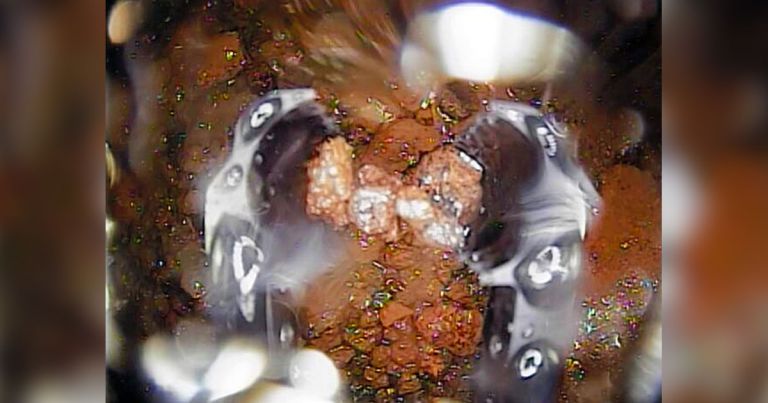
Claw Game Japan Sends Robot Into the Nuclear Hell of the Fukushima Reactor https://futurism.com/japanese-spacecraft-hayabusa2-bullet-asteroid It’s like a Roomba — for nuclear waste. Dan Robitzski, February 20th 2019
Nuclear Probe
The Tokyo Electric Power Company (TEPCO) just sent a robot into one of the reactors of the Fukushima nuclear power plant, which was destroyed by a tsunami back in 2011.
The robot made contact with the melted fuel, picking it up and putting it back down to determine whether it was solid enough to cart away during a future mission, according to Ars Technica.
The Claw
Fukushima won’t be fully decommissioned for another 30 to 40 years. But this robotic mission is the first step toward determining how other robots will go about cleaning it up.
In this case, the robot was able to pick up small chunks of the radioactive fuel at five of the six test sites, all of which were located inside one of the power plant’s three damaged reactors. TEPCO published a video of the process taken by the robot’s built-in camera, in which you can see a robotic claw position itself around and pick up small pieces of fuel.
Catch And Release
None of the radioactive fuel left the reactor along with the robot when the mission was over. But that wasn’t the plan. Rather, this mission marks the first time that a robot has been able to physically examine Fukushima’s fuel.
The team hopes to start retrieving some of the deadly fuel in 2021, now that they know it can be physically lifted. READ MORE: Japanese utility makes first contact with melted Fukushima fuel [Ars Technica]
For the 5th time, a court rules the Japanese govt liable for the Fukushima nuclear catastrophe
 Japan gov’t, Fukushima operator told to pay over nuclear disaster https://news.abs-cbn.com/overseas/02/20/19/japan-govt-fukushima-operator-told-to-pay-over-nuclear-disaster, Agence France-Presse, TOKYO- A Japanese court Wednesday awarded nearly $4 million in fresh damages to scores of residents forced to flee their homes after the 2011 Fukushima nuclear meltdown.
TEPCO sat by idly on reports of fires, glitches at nuclear plants

Tokyo Electric Power Co.’s Fukushima No. 2 nuclear power plant
Unit 2 of Genkai NPP will be decommissioned.

Japan’s Nuclear Authority investigated Tepco’s failure to report fires, glitches at nuclear plants
 TEPCO sat by idly on reports of fires, glitches at nuclear plants, By YUSUKE OGAWA/ Staff Writer, Asahi Shimbun 14th Feb 2019 , Tokyo Electric Power Co. ignored reports on fires and other problems from its nuclear power plants and didn’t even bother to share the information in-house or consider precautionary measures, the nuclear watchdog revealed.
The Nuclear Regulation Authority decided Feb. 13 it will investigate the failure by TEPCO’s headquarters to tackle the problems reported by its three facilities: the Kashiwazaki-Kariwa nuclear plant in Niigata Prefecture and the Fukushima No. 1 and No. 2 nuclear plants, both in Fukushima Prefecture.
A TEPCO official said that the company put off tackling the problems because the deadline for dealing with such matters “was not clearly stated.” TEPCO’s safety regulations stipulate that blazes, glitches in air-conditioning and other problems at nuclear plants must be dealt with by the main office of the operator.
ttp://www.asahi.com/ajw/articles/AJ201902140054.html
Long haul to clean up radioactive debris in Fukushima’s shattered nuclear reactors – remote probe in use
Call to preserve Japan’s historic “Fukuryu Maru” memorial of atomic bombing

Final mission: Keep anti-nuke message at site of Tsukiji market, http://www.asahi.com/ajw/articles/AJ201902130004.html, By NAOMI NISHIMURA/ Staff Writer, February 13, 2019 Busy construction workers and fast-walking passers-by pay little notice to a metal plate that symbolizes one of the darker periods in the postwar history of the now-closed Tsukiji fish market in Tokyo.
The continuing dismantling work and the future of the iconic former market has gained much of the public’s attention. The plate, measuring 42 centimeters tall and 52 cm wide, will remain on a fence surrounding the site at least until the project is complete.
The plate, marking the fallout of nuclear bomb tests carried out in the 1950s, carries a message that many people hope will remain in one form or another at the site.
“We have set up this plate out of the wish that there will be no suffering again from nuclear weapons,” the plate says in part.
A Tokyo metropolitan government official said “nothing has been decided on what objects will be installed” afterward at the Tsukiji site.
The plate is witness to the “A-bomb tuna” that arrived 65 years ago at the Tsukiji market in the capital’s Chuo Ward.
“Nearly 460 tons of contaminated fish were found from more than 850 fishing boats across Japan … and fish consumption dropped sharply,” another part of the plate’s inscription reads.
The radioactive “A-bomb” fish were actually exposed to radiation from hydrogen-bomb tests.
The text on the plate refers to the Daigo Fukuryu Maru (Lucky Dragon No. 5), a fishing vessel caught in the fallout of a U.S. H-bomb test near the Bikini Atoll in March 1954.
Some of the tuna and other fish caught by the Daigo Fukuryu Maru ended up at the Tsukiji market.
“There was a real panic” when the haul tested positive for radiation, said Takuji Adachi, 92, who was a metropolitan government official at the time in charge of hygiene on the market grounds.
Radiation was also found in other tuna hauls that arrived later from different parts of the country.
Workers sat up all night testing fish with radiation detectors borrowed from a university lab and elsewhere before their early-morning auctions, sources said.
Tuna lost half to two-thirds of their prices, and the values of other fish species also dropped. The radiation tests continued through the year-end, with 3,000 tuna going to waste.
The names of 856 Japanese fishing boats were identified as having been contaminated by radioactive fallout from a series of hydrogen-bomb tests conducted between March and May 1954, according to officials of the Daigo Fukuryu Maru Exhibition Hall.
The plate was installed at the Tsukiji fish market 45 years later.
PETITION FOR RELOCATING STONE MONUMENT
Matashichi Oishi, who was a crew member on the Fukuryu Maru involved in freezing the catch, wanted to set up a physical testimony to peace.
The now 85-year-old had asked the Tokyo metropolitan government to allow the installation at Tsukiji of a stone monument engraved with “Maguro Zuka” (tuna memorial).
He called for donations in units of 10 yen ($0.09) each time he gave a public speech. He ended up collecting 3 million yen, and the stone monument was completed.
However, opinion was divided at the time over whether the Tsukiji market should be relocated or redeveloped on the same site. Authorities said there was no space available for the stone monument, but they allowed the plate to be attached by the side of the main gate.
The stone monument currently stands in an open space on the grounds of the exhibition hall in Tokyo’s Koto Ward, where the hull of the Daigo Fukuryu Maru remains preserved.
The plate has since served as a memento for about two decades, but the Tsukiji market was relocated to the Toyosu district of Koto Ward in October last year.
With the future of the plate unknown, Oishi has collected 5,622 signatures over three years for a petition to have the stone monument relocated to a corner of the former Tsukiji market.
“Words engraved in stone will stay 50 years and 100 years down the road,” Oishi said last September during a meeting on the possible uses of the stone monument. “History could be repeated unless someone keeps talking about the horror of nuclear weapons.”
He said he hopes to hand the signatures to Tokyo Governor Yuriko Koike to coincide with the March 1 Bikini Day, the anniversary of the Fukuryu Maru’s nuclear exposure.
Oishi said setting a path for the stone monument’s relocation is his “final mission in life.”
“The Fukuryu Maru later symbolized calls for eliminating nuclear weapons,” he said. “Tsukiji must also have the role of being a witness to the nuclear exposure incident.”
Japan’s Kyushu Electric to scrap aging nuclear reactor at Genkai
TOKYO (Reuters) – Japan’s Kyushu Electric Power Co Inc said on Wednesday it will decommission an aging reactor at its Genkai nuclear plant as the country’s power industry struggles to meet new nuclear safety standards set after the 2011 Fukushima disaster. 13 Feb 19,
This will bring the number of reactors being scrapped to 17 since the meltdowns at the Fukushima Daiichi plant nearly eight years ago.
The move comes as Japan’s return to nuclear power is slowly gathering pace, although the industry still faces public opposition, court challenges and unfavorable economics.
Kyushu Electric will scrap the No.2 reactor at the Genkai plant, about 930 km (580 miles) west of Tokyo. ……
Many of Japan’s reactors remain shut, with only nine operating, while they undergo relicensing to meet new standards set after the Fukushima crisis highlighted shortcomings in regulation.
Reporting by Yuka Obayashi; Editing by Gopakumar Warrier
Japan’s Reconstruction Agency to air ad for Fukushima products on TV, online and at cinemas
 https://www.japantimes.co.jp/news/2019/02/08/national/japans-reconstruction-agency-air-ad-fukushima-products-tv-online-cinemas/#.XF3p09IzbGg
JIJI, FEB 8, 2019, The Reconstruction Agency said Friday that it will run a television commercial advertising farm, fishery and forestry products made in Fukushima Prefecture for about a week from Saturday.
The 30-second spot is aimed at dispelling harmful rumors about the safety of products from the prefecture following the nuclear meltdown at Tokyo Electric Power Company Holdings Inc.’s Fukushima No. 1 power plant, which was heavily damaged in the March 2011 earthquake and tsunami.
The agency hopes to capitalize on rising interest in Fukushima Prefecture ahead of the eighth anniversary of the disaster on March 11.
The commercial, which will also highlight tourism spots in the prefecture, will be broadcast nationwide. It will also be run at movie theaters and online.
The agency has also created a section on its website to explain the current conditions in Fukushima Prefecture, helping visitors to learn about radiation and progress in reconstruction efforts.
Fire extinguisher system at nuclear plant freezes
Hokkaido Electric Power Company says a worker discovered the problem at its Tomari nuclear plant in the country’s northernmost prefecture of Hokkaido early Saturday morning.
The problem affected equipment designed to maintain water pressure in the event of firefighting at the No.1 and No.2 reactors. All three of the plant’s reactors have been offline since 2012, following the Fukushima nuclear accident.
The utility says a part of the equipment was frozen due to the severe cold, causing the system to break down. It says there is no problem with the plant’s fire extinguisher system, and the problem did not affect firefighting functions.
Temperatures fell to minus 30 degrees Celsius or lower in many parts of the prefecture on Saturday. A nearby town recorded minus 12.7 degrees Celsius.
.
The company also says the temperature was nearly minus five degrees in the room which houses the equipment, but a worker forgot to turn on the heating system.
The utility says it will work quickly to restore the faulty equipment and take measures to prevent a recurrence.
Japan’s propaganda about Fukushima’s ‘recovery’- getting people back to nuclear irradiated areas
The returning residents of Fukushima’s nuclear disaster
Near site of Fukushima nuclear disaster, a shattered town and scattered lives, WP, By Simon Denyer, February 3 2019 NAMIE, Japan — Noboru Honda lost 12 members of his extended family when a tsunami struck the Fukushima prefecture in northern Japan nearly eight years ago. Last year, he was diagnosed with cancer and initially given a few months to live.
Today, he is facing a third sorrow: Watching what may be the last gasps of his hometown.
For six years, Namie was deemed unsafe after a multiple-reactor meltdown at the Fukushima Daiichi Nuclear Power Plant following a 2011 earthquake and tsunami.
In March 2017, the government lifted its evacuation order for the center of Namie. But so far, hardly anyone has ventured back.
Its people are scattered and divided. Families are split. The sense of community is coming apart.
“It has been eight years; we were hoping things would be settled now,” the 66-year-old Honda said. “This is the worst time, the most painful period.”
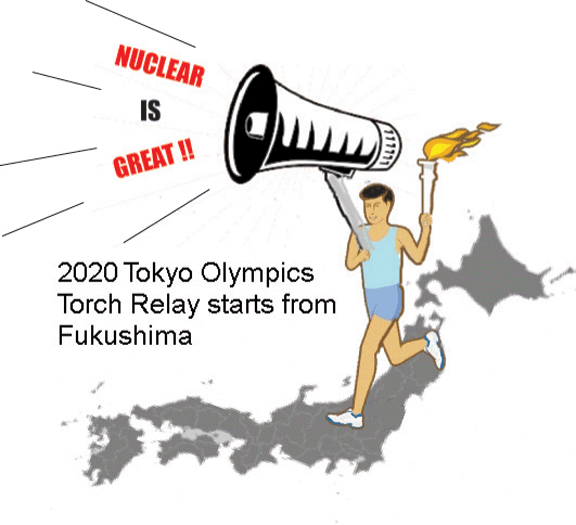
For the people of Namie and other towns near the Fukushima plant, the pain is sharpened by the way the Japanese government is trying to move beyond the tragedy, to use the 2020 Tokyo Olympics as a symbol of hope and recovery, a sign that life can return to normal after a disaster of this magnitude.
Its charm offensive is also tied up with efforts to restart the country’s nuclear-power industry, one of the world’s most extensive networks of atomic power generation.
Six Olympic softball games and a baseball game will be staged in Fukushima, the prefecture’s bustling and radiation-free capital city, and the Olympic torch relay will start from here.
But in Namie, much closer to the ill-fated nuclear plant, that celebration rings hollow, residents say.
This was a close-knit community of farmers, fishermen and potters — of orchards, rice paddies and cattle sandwiched between the mountains and the sea. It was a place where people celebrated and mourned as a community, and families lived together across generations.
That’s all gone. On the main street, a small new shopping arcade has opened. But a short walk away, a barber shop stands abandoned, its empty chairs gathering years of dust. A sign telling customers to make themselves at home is still displayed in a bar, but inside debris litters the floor. A karaoke parlor is boarded up. Wild boars, monkeys and palm civets still roam the streets, residents say.
Just 873 people, or under 5 percent, of an original population of 17,613 have returned. Many are scared — with some obvious justification — that their homes and surroundings are still unsafe. Most of the returnees are elderly. Only six children are enrolled at the gleaming new elementary school. This is not a place for young families.
Four-fifths of Namie’s geographical area is mountain and forest, impossible to decontaminate, still deemed unsafe to return. When it rains, the radioactive cesium in the mountains flows into rivers and underground water sources close to the town.
Greenpeace has been taking thousands of radiation readings for years in the towns around the Fukushima nuclear plant. It says radiation levels in parts of Namie where evacuation orders have been lifted will remain well above international maximum safety recommendations for many decades, raising the risks of leukemia and other cancers to “unjustifiable levels,” especially for children.
In the rural areas around the town, radiation levels are much higher and could remain unsafe for people to live beyond the end of this century, Greenpeace concluded in a 2018 report.
“The scale of the problem is clearly not something the government wants to communicate to the Japanese people, and that’s driving the whole issue of the return of evacuees,” said Shaun Burnie, senior nuclear specialist with Greenpeace. “The idea that an industrial accident closes off an area of Japan, with its limited habitable land, for generations and longer — that would just remind the public why they are right to be opposed to nuclear power.”
Today, Namie’s former residents are scattered across all but one of Japan’s 47 prefectures. Many live in the nearby town of Nihonmatsu, in comfortable but isolating apartment blocks where communal space and interaction are limited. With young people moving away, the elderly, who already feel the loss of Namie most acutely, find themselves even more alone.
………. many residents say the central government is being heavy handed in its attempts to convince people to return, failing to support residents’ efforts to build new communities in places like Nihonmatsu, and then ending compensation payments within a year of evacuation orders being lifted. …….https://www.washingtonpost.com/world/asia_pacific/near-site-of-fukushima-nuclear-disaster-a-shattered-town-and-scattere
Possible uranium sold on internet auction site, seized by police

Radiation leaks at Japan’s Tokai plutonium lab; ‘no workers exposed’

1 This Month
Chernobyl: The Lost Tapes – A good documentary on Chernobyl on SBS available On Demand for the next 3 weeks– https://www.sbs.com.au/ondemand/tv-program/chernobyl-the-lost-tapes/2352741955560

of the week–London Campaign for Nuclear Disarmament

Tell the Ukrainian Government to Drop Prosecution of Peace Activist Yurii Sheliazhenko
To see nuclear-related stories in greater depth and intensity – go to https://nuclearinformation.wordpress.com
-
Archives
- April 2026 (152)
- March 2026 (251)
- February 2026 (268)
- January 2026 (308)
- December 2025 (358)
- November 2025 (359)
- October 2025 (376)
- September 2025 (257)
- August 2025 (319)
- July 2025 (230)
- June 2025 (348)
- May 2025 (261)
-
Categories
- 1
- 1 NUCLEAR ISSUES
- business and costs
- climate change
- culture and arts
- ENERGY
- environment
- health
- history
- indigenous issues
- Legal
- marketing of nuclear
- media
- opposition to nuclear
- PERSONAL STORIES
- politics
- politics international
- Religion and ethics
- safety
- secrets,lies and civil liberties
- spinbuster
- technology
- Uranium
- wastes
- weapons and war
- Women
- 2 WORLD
- ACTION
- AFRICA
- Atrocities
- AUSTRALIA
- Christina's notes
- Christina's themes
- culture and arts
- Events
- Fuk 2022
- Fuk 2023
- Fukushima 2017
- Fukushima 2018
- fukushima 2019
- Fukushima 2020
- Fukushima 2021
- general
- global warming
- Humour (God we need it)
- Nuclear
- RARE EARTHS
- Reference
- resources – print
- Resources -audiovicual
- Weekly Newsletter
- World
- World Nuclear
- YouTube
-
RSS
Entries RSS
Comments RSS
 nuclear-news