 Rethinking Japan’s Energy Security 8 Years After Fukushima Rethinking Japan’s Energy Security 8 Years After Fukushima
To increase energy self-sufficiency after the 2011 nuclear disaster, renewables are Japan’s only option.
The Diplomat, By Xie Zhihai
March 21, 2019 “………How should Japan tackle the challenges of energy security, then? It will take another round of strategic efforts for Japan to develop new alternative energy sources. To bring back its energy self-sufficiency rate to the 2010 level or even higher, renewable energy is the only possible solution as Japan has a very low primary energy reserve. Also it is not practical to reopen most nuclear power plants while the decommissioning of Fukushima Daiichi doesn’t appear to be going smoothly and many Fukushima people still haven’t been able to return to a normal life
In July 2018, the government of Japan formulated the Strategic Energy Plan in order to show the public the basic direction of Japan’s energy policy. The Plan set the goal to raise Japan’s energy self-sufficiency rate from around 8 percent in 2016 to 24 percent in 2030. This looks unrealistic, but it’s not impossible if Japan can concentrate on the development and spread of renewable energy.
However, the Strategic Energy Plan stays ambiguous about Japan’s future energy policy, despite its aim to shed light on that very subject. One big problem with the Plan is that the priority of the energy policy is not clear. The government aims to use renewable energy as the major power source by 2030, according to the Plan — but at the same time, the plan also attempts to restore nuclear energy and raise its share to 20 percent-30 percent.
Former Prime Minister Koizumi Junichiro is well known for advocating the “zero nuclear energy” campaign after the 3.11 triple disaster. He continues to argue that Japan must be able to live without nuclear energy. In a recent talk show, he questioned the current Japanese government’s energy policy and said it was a lie to claim that nuclear energy is safe, low-cost, and clean.
Some commentators criticize Japan for being poor at decisively changing track when necessary. When the time came for Japan to give up nuclear energy once and for all, the government was not ready to make a tough political decision. In the wake of the Fukushima nuclear accident, countries such as Germany declared they would abandon nuclear energy. However, it is ironic that Japan, the direct victim of the nuclear disaster, still doesn’t dare to say goodbye to nuclear energy completely.
The Fukushima nuclear accident caused a crisis for Japan’s energy security. But it is this very crisis that could provide an opportunity for Japan to redirect its energy policy and accelerate the development of renewable energy. Despite the government’s hesitation, many Japanese already believe that nuclear energy is outdated and renewable energy is the correct direction for Japan. As recent TV programs have reported, some ordinary people are starting to invest in solar energy and sell electricity to power companies.
Japan must build confidence that renewable energy has the potential to secure its energy supply. For example, it is said that during the golden week in May 2018, 93 percent of the electricity supply in the Kyushu area was from renewable energy. If Japan could get through the past eight years nearly without nuclear energy, then it must be able to do better in the future with the spread of renewable energy.
Finally, to solve the energy problem, Japan also needs revolutionary innovation. For example, Toyota has just launched the new generation of its Mirai (Future) hydrogen fuel cell vehicle. The new Mirai not only has zero emissions, but also can produce and store electricity to provide energy in an emergency. The Toyota automobile is not only an energy consumer, but also an energy supplier. Mirai points to the future for Japan’s energy policy. Similar innovation should take place in other industries.
Xie Zhihai is an associate professor at Kyoai Gakuen University in Japan. https://thediplomat.com/2019/03/rethinking-japans-energy-security-8-years-after-fukushima/
|
|
|
March 25, 2019
Posted by Christina Macpherson |
Japan, renewable |
Leave a comment

An aerial view shows workers wearing protective suits and masks working atop contaminated water storage tanks at Tokyo Electric Power Co. (TEPCO)’s tsunami-crippled Fukushima Daiichi nuclear power plant in Fukushima, in this photo taken by Kyodo August 20, 2013. Japan’s nuclear watchdog said on Wednesday it is concerned that more storage tanks at the wrecked Fukushima nuclear plant will spring leaks, following the discovery that highly contaminated water is leaking from one of the hastily built containers. Picture taken August 20, 2013. Mandatory Credit. REUTERS/Kyodo (JAPAN – Tags: DISASTER ENVIRONMENT POLITICS ENERGY)
ATTENTION EDITORS – THIS IMAGE WAS PROVIDED BY A THIRD PARTY. FOR EDITORIAL USE ONLY. NOT FOR SALE FOR MARKETING OR ADVERTISING CAMPAIGNS. THIS PICTURE IS DISTRIBUTED EXACTLY AS RECEIVED BY REUTERS, AS A SERVICE TO CLIENTS. MANDATORY CREDIT. JAPAN OUT. NO COMMERCIAL OR EDITORIAL SALES IN JAPAN. YES
Think tank puts cost to address nuke disaster up to 81 trillion yen http://www.asahi.com/ajw/articles/AJ201903100044.html By ATSUSHI KOMORI/ Staff Writer, March 10, 2019 In a startling disparity, a private think tank puts the cost of addressing the 2011 Fukushima nuclear disaster between 35 trillion yen and 81 trillion yen ($315 billion and $728 billion), compared with the government estimate of 22 trillion yen.
The calculation, by the Tokyo-based Japan Center for Economic Research, showed that the total could soar to at least 60 percent more and up to 3.7 times more than the 2016 estimate by the Ministry of Economy, Trade and Industry.
In releasing the latest estimates on March 7, the center said it is time for serious debate over the role nuclear energy should play in the nation’s mid- and long-term energy policy.
Of the highest price tag of 81 trillion yen, 51 trillion yen would go toward decommissioning the crippled Fukushima No. 1 nuclear power plant and treating and disposing of radioactive water. The ministry put the cost for these tasks at 8 trillion yen.
The center calculated the compensation to victims at 10 trillion yen, while the comparable estimate by the ministry was 8 trillion yen.
Although the center’s estimate for the decontamination operation was 20 trillion yen, the ministry’s projection was 6 trillion yen.
The biggest disparity in the estimates between the think tank and the ministry is that the former put the treatment and disposal of contaminated water at 40 trillion yen and included the cost for disposing of polluted soil produced during cleanup operations in the overall costs.
If contaminated water is released in the sea after it is diluted with water, the overall costs could be 41 trillion yen, including 11 trillion yen estimated for decommissioning and disposal for tainted water.
The least expensive way of coping with the accident–35 trillion yen–would be to encase the plant in a concrete sarcophagus, rather than undertaking the formidable challenge of retrieving melted nuclear fuel from the reactors, and releasing contaminated water into the sea. In this case, it would cost 4.3 trillion yen to close down the plant and dispose of the radioactive water.
But this scenario drew fire from residents in the affected municipalities as they view covering nuclear fuel debris with a massive structure would be tantamount to asking them to give up hope of eventually returning to their hometowns.
The center’s latest projections followed its estimates two years ago, in which the number varied from 50 trillion yen to 70 trillion yen.
It updated its projections based on the findings about treatment and disposal of radioactive water and progress in cleanup operations over the past years.
March 23, 2019
Posted by Christina Macpherson |
Fukushima continuing |
1 Comment

Fukushima water headache: 1 million tons and counting http://www.asahi.com/ajw/articles/AJ201903190042.html THE ASAHI SHIMBUN,March 19, 2019The crippled Fukushima No. 1 nuclear plant reached an undesired milestone on March 18: Storage tanks at the site now contain more than 1 million tons of radiation-contaminated water.The announcement by the plant’s operator, Tokyo Electric Power Co., came as the utility and the central government continue to weigh water-disposal methods while hearing the concerns of fishermen who fear for their livelihoods.
Toyoshi Fuketa, chairman of the Nuclear Regulation Authority, has repeatedly said a decision must be made soon on how to deal with the contaminated water.
“We are entering a period in which further delays in deciding what measure to implement will no longer be tolerable,” Fuketa recently said.
Groundwater becomes contaminated when it flows into the buildings of the three reactors that suffered meltdowns in 2011 following the Great East Japan Earthquake and tsunami. Water that is used to cool the nuclear fuel debris is processed to remove radioactive substances, but the system cannot get rid of tritium.
These problems have forced TEPCO to store the contaminated water in hundreds of tanks installed at the Fukushima plant.
If more storage tanks are constructed, the overall capacity of 1.37 million tons at the site will likely be reached by the end of 2020.
Fukushima fishermen are already on alert for the one option they have already criticized–diluting the water and dumping it into the Pacific Ocean.
The economy ministry in 2016 said that measure could be implemented in the shortest time frame and at a low cost.
Fuketa has also said this is the most realistic option, but he noted that it would require years of preparation.
ome experts said the go-ahead for the dilution measure should have been given at the end of 2018 to start the process before the storage tanks reach capacity.
Economy ministry officials tried to explain various measures being considered at a public hearing in Fukushima in August 2018, including releasing the diluted water into the ocean.
“It will have a devastating effect on fishing in Fukushima,” said Tetsu Nozaki, who heads the Fukushima prefectural federation of fisheries cooperative associations.
Fukushima fishermen have slowly resumed operations since all forms of fishing were prohibited after high levels of radiation were found in fish caught off the Fukushima coast.
Fish auctions restarted at Fukushima ports in spring 2017, but the volume of fish brought in is still only about 20 percent of levels before the 2011 nuclear accident.
The last thing Fukushima fishermen want is an increase of negative publicity about their catches if the diluted water is dumped into the Pacific.
The government has spent about 34.5 billion yen ($309 million) to build a frozen underground earth wall around the three reactor buildings to divert the groundwater to the ocean. The “ice wall” has cut down the flow of groundwater, which at one time reached about 500 tons a day.
But still, groundwater continues to flow into the three reactor buildings at a rate of about 100 tons daily.
(This article was compiled from reports by Chikako Kawahara, Hiroshi Ishizuka, Toshio Kawada and Kazumasa Sugimura.)
March 21, 2019
Posted by Christina Macpherson |
Fukushima continuing |
Leave a comment
THE ASAHI SHIMBUN March 20, 2019 Tohoku Electric Power Co. plans to give an estimated 400 million yen ($3.58 million) to a village that hosts one of its nuclear power plants, but denies it is compensation for losses stemming from the facility’s suspension since the 2011 Fukushima nuclear disaster.
The utility said March 19 it will make a donation to Higashidori, Aomori Prefecture, where its Higashidori nuclear power plant is located, through a corporate version of the “furusato nozei” (hometown tax payment) system.
The company did not disclose the amount, but only said it wants to donate “about half” the maximum amount that the village is allowed to receive under this system. The ceiling for the village is about 800 million yen.
The village government called for Tohoku Electric’s response because the volume of work related to the nuclear plant, such as maintenance, declined due to the suspension and a number of accommodations relying on plant workers have closed.
Satoshi Shimoyashiki, vice manager of Tohoku Electric’s Aomori branch, rejected the notion that the donation was meant as compensation for such economic losses and emphasized that it is being made as “part of corporate social responsibility (CSR).”…….. http://www.asahi.com/ajw/articles/AJ201903200054.html
March 21, 2019
Posted by Christina Macpherson |
Japan, politics |
Leave a comment
 The Tokai No. 2 nuclear power plant in Tokai, Ibaraki Prefecture, in July last year
March 15, 2019
Tokyo Electric Power Co. and other utilities are taking a huge gamble by providing hundreds of billions of yen (billions of dollars) to restart an aging nuclear power plant in need of safety upgrades.
Japan Atomic Power Co. intends to resume operations of the one reactor at the Tokai No. 2 nuclear plant in Ibaraki Prefecture in January 2023, but 300 billion yen–nearly double the initial estimate–is reportedly needed to ensure its safety.
TEPCO, which will be provided with electricity from the Tokai plant, will offer 190 billion yen, or two-thirds of the total cost. Tohoku Electric Power Co., Chubu Electric Power Co., Kansai Electric Power Co. and Hokuriku Electric Power Co. will also offer financial support.
But it remains unclear whether municipalities around the plant will approve the plan to restart the reactor.
If Japan Atomic Power fails to win consent from the local governments and is forced to scrap the Tokai No. 2 plant, TEPCO and other power distributors could suffer big financial losses.
TEPCO was effectively turned into a state property after the crisis unfolded at the Fukushima No. 1 nuclear power plant in March 2011. With taxpayers’ money injected into it, TEPCO’s plan to offer assistance to another operator’s nuclear facility that has no clear prospects of restarting will inevitably provoke controversy.
Read more :
http://www.asahi.com/ajw/articles/AJ201903150001.html
March 18, 2019
Posted by dunrenard |
Japan | Restart, Tokai NPP |
1 Comment
 Supporters for the plaintiffs hold banners that read “Unjust ruling” and “Have you forgotten Fukushima?” after the Iwakuni branch of the Yamaguchi District Court rejected a plea to halt a nuclear reactor in Ehime Prefecture, on Friday in Iwakuni, Yamaguchi Prefecture.
March 15, 2019
YAMAGUCHI – A district court on Friday rejected a plea by residents to halt a reactor at the Ikata nuclear power plant in Ehime Prefecture.
The decision by the Iwakuni branch of the Yamaguchi District Court is in line with rulings made by other regional courts and allows the No. 3 reactor to continue operating. The plant is managed by Shikoku Electric Power Co.
Unit No. 3, the sole remaining reactor at the plant, passed the state safety screening process that was revamped in the wake of the 2011 Fukushima nuclear crisis. But concerns remain about its safety, which led residents to turn to the courts to seek an injunction.
Of the more than 30 reactors in Japan, excluding those set to be decommissioned, only a few are in operation.
Read more :
https://www.japantimes.co.jp/news/2019/03/15/national/yamaguchi-court-rejects-residents-call-halt-last-ikata-nuclear-reactor-ehime-prefecture/#.XIwI2SIzbGg
March 18, 2019
Posted by dunrenard |
Japan | Ikata NPP, Reactor 3 |
2 Comments
 Visitors observe the No. 2 reactor building, left, and the No. 3 reactor building on the grounds of the stricken Fukushima No. 1 nuclear power plant in February.
March 12, 2019
GLOBAL ENERGY SHIFT
In January, the Renewable Energy Institute released a report saying nuclear power generation is losing its competitiveness globally.
While the costs of nuclear energy have risen due to enhanced safety requirements following the Fukushima accident, the report says, those of renewable energy sources such as solar and wind power have fallen, thanks to technological innovations.
Some countries, including Germany and South Korea, have decided to phase out nuclear power generation. In other major countries, including the United States and Britain, the share of nuclear power in the overall power supply has dropped because of the rise of renewable energy.
Even France, a leading nuclear power producer, plans to significantly lower its dependence on atomic energy. In China and India, where the government has been eager to promote nuclear power, renewable energy production is growing faster than nuclear power generation.
Nuclear power once accounted for 17 percent of the world’s total electricity production, but it is now responsible for only around 10 percent of the global power output. In sharp contrast, the share of renewable energy has risen to nearly a quarter of the total. The International Energy Agency predicts that renewable energy will contribute 40 percent of the world’s energy supply in 2040.
A big global energy shift from nuclear power to renewable energy is taking place.
RESPONSIBLE DECISIONS NEEDED
The Abe administration’s efforts to promote exports of nuclear power technology, a key component of its growth strategy, have run into the sands in Britain and Turkey.
It is a big irony that a nation that has suffered a catastrophic nuclear accident is making frustrating efforts to sell its nuclear technology to other countries while repercussions from the accident are driving the world toward a new energy future.
This nation’s government still continues devoting huge amounts of resources to maintaining nuclear power generation, which is clearly in decline worldwide, while putting renewable energy, which will assume growing importance in the coming years, on the back burner. Sticking to this policy would cause Japan to be left out of the emerging mega-energy trend.
To read more :
http://www.asahi.com/ajw/articles/AJ201903120048.html?fbclid=IwAR0QlaJLD63LPCcqyafTMj76GAuC1q6pGMs-USrJHlAXz2u-fbSkMI3IZYY
March 18, 2019
Posted by dunrenard |
Japan | nuclear, Renewable |
Leave a comment
 The Kashiwazaki-Kariwa plant’s coastal location leaves it open to tsunamis
March 11, 2019
Eight years after the accident in Fukushima, preparations are underway to restart the Kashiwazaki-Kariwa nuclear power plant operated by Tepco. But residents fear a second disaster.
Decades ago, nuclear power was supposed to be the perfect solution for Japan’s thirst for energy and for its rural economies. And in the sleepy town of Kashiwazaki, in the prefecture next to Fukushima, the solution was supposed to be the Kashiwazaki-Kariwa nuclear power plant, run by the power company Tepco — the company responsible for the 2011 Fukushima accident.
When in full operation, the Kashiwazaki-Kariwa power plant is the biggest in the world, capable of servicing 16 million households. But all of its seven reactors have been idle since the nuclear accident at Fukushima Daiichi. This is Tepco’s only remaining nuclear power plant apart from the tsunami-stricken plants in Fukushima, in the neighboring prefecture.
Tepco has been repeatedly criticized for its negligence and has been ordered to pay compensation to the residents. The cleanup of the Fukushima power plant has been causing major headaches, while the reasons for the accident have yet to be clarified even eight years later.
Read more :
https://www.dw.com/en/japans-tepco-fights-for-return-to-nuclear-power-after-fukushima/a-47836968
March 18, 2019
Posted by dunrenard |
Japan | Kashiwazaki-Kariwa NPP, Tepco |
Leave a comment
During protracted evacuations, many child-rearing families rebuilt their lives in new locations, leading to the sharp fall in the number of students in Fukushima.
As a result, the local governments are facing difficulties in school operations.
In the Yamakiya district of the town of Kawamata, the evacuation advisory was removed in March 2017, six years after the nuclear accident at Tokyo Electric Power Company Holdings Inc.’s <9501> Fukushima No. 1 plant, heavily damaged by the 9.0-magnitude earthquake and the ensuing tsunami.
Elementary and junior high schools reopened in the town in April 2018, but five six-graders are the only elementary school children. With no freshman joining this spring, the elementary school plans to suspend its operations in April.
March 16, 2019
Posted by Christina Macpherson |
Japan, social effects |
Leave a comment
As population declines, Fukushima Prefecture to lose 15 of its 96 high schools, Japan Times , FUKUSHIMA MINPO, MAR 15, 2019
The mergers will be implemented over the span of three years from fiscal 2021 and will reduce the number of high schools in the prefecture from 96 to 81.
Twenty-five schools will be merged and reorganized into 13 under the plan, which will integrate schools located in close proximity of one another. Each school will retain four to six classes per grade.
With the merger, the prefecture’s 88 day schools and seven night schools will be reduced to 74 and six, respectively, by the end of March 2024, according to the education board’s reform plan revealed Feb. 8. Fukushima’s only correspondence school will remain open……… https://www.japantimes.co.jp/news/2019/03/15/national/population-declines-fukushima-prefecture-lose-15-96-high-schools/#.XIwdDSIzbGg
March 16, 2019
Posted by Christina Macpherson |
Fukushima continuing, social effects |
Leave a comment
Japan Times, KYODO YAMAGUCHI 15 Mar 19- A district court on Friday rejected a plea by residents to halt a reactor at the Ikata nuclear power plant in Ehime Prefecture.
The decision by the Iwakuni branch of the Yamaguchi District Court is in line with rulings made by other regional courts and allows the No. 3 reactor to continue operating. The plant is managed by Shikoku Electric Power Co.
Unit No. 3, the sole remaining reactor at the plant, passed the state safety screening process that was revamped in the wake of the 2011 Fukushima nuclear crisis. But concerns remain about its safety, which led residents to turn to the courts to seek an injunction.
Of the more than 30 reactors in Japan, excluding those set to be decommissioned, only a few are in operation.
A previous order forcing a halt in operations was issued by the Hiroshima High Court in December 2017, citing the risk of an eruption at the caldera of Mount Aso about 130 kilometers away. The decision was overturned in September 2018 and the utility company restarted the unit a month later. …….
The plaintiffs pointed out that pyroclastic flows from possible catastrophic eruptions could reach the plant.
They also said the utility underestimated the fact that the reactor sits on the median tectonic line, a massive fault zone, as well as the potential damage from a massive earthquake off the Pacific coast of central and western Japan……. https://www.japantimes.co.jp/news/2019/03/15/national/yamaguchi-court-rejects-residents-call-halt-last-ikata-nuclear-reactor-ehime-prefecture/#.XIwI2SIzbGg
March 16, 2019
Posted by Christina Macpherson |
Japan, Legal |
Leave a comment
IRSN 11th March 2019 IRSN publishes a study on social consequences of the 3/11 nuclear accident
in Fukushima prefecture. Result of the French-Japanese research project
Shinrai, the report “The 3/11 accident and its social consequences – Case
studies in Fukushima prefecture” analyses post accidental policy in
Fukushima prefecture, particularly the questions linked to return or
non-return to evacuated towns and villages. The report also compares the
concrete experience of the inhabitants and the decision-makers with a
number of principles that underlies international post accidental policy
and recommendations.
https://www.irsn.fr/EN/newsroom/News/Pages/20190311_Fukushima-shinrai-study-social-consequences.aspx
March 14, 2019
Posted by Christina Macpherson |
Japan, social effects |
Leave a comment

Fukushima grapples with toxic soil that no one wants https://www.theguardian.com/world/2019/mar/11/fukushima-toxic-soil-disaster-radioactive Eight years after the disaster, not a single location will take the millions of cubic metres of radioactive soil that remain, Justin McCurry in Okuma 12 Mar 2019
Workers at a soil separation facility for decontamination work in Okuma. Photograph: Issei Kato/Reuters
Not even the icy wind blowing in from the coast seems to bother the men in protective masks, helmets and gloves, playing their part in the world’s biggest nuclear cleanup.
Away from the public gaze, they remove the latest of the more than 1,000 black sacks filled with radioactive soil and unload their contents into giant sieves. A covered conveyor belt carries the soil to the lip of a huge pit where it is flattened in preparation for the next load. And there it will remain, untouched, for almost three decades.
It is repetitive, painstaking work but there is no quick way of addressing arguably the most controversial physical legacy of the triple meltdown that occurred eight years ago at the nearby Fukushima Daiichi nuclear power plant.
In the years after the disaster, about 70,000 workers removed topsoil, tree branches, grass and other contaminated material from areas near homes, schools and public buildings in a unprecedented ¥2.9tn (£21bn) drive to reduce radiation to levels that would enable tens of thousands of evacuees to return home.
The decontamination operation cleaned generated millions of cubic metres of radioactive soil, packed into bags that carpet large swaths of Fukushima prefecture.
Japan’s government has pledged that the soil will moved to the interim storage facility and then, by 2045, to a permanent site outside of Fukushima prefecture as part of a deal with local residents who do not want their communities turned into a nuclear dumping ground.
But the government’s blueprint for the soil is unravelling: so far, not a single location has agreed to accommodate the toxic waste.
While workers inside the ruined nuclear plant struggle to contain the build-up of more than 1m tonnes of radioactive water, outside, work continues to remove, process and store soil that will amount to 14m cubic metres by 2021.
The task is expected to take another two years, according to Jiro Hiratsuka, an environment ministry official who is guiding a small group of foreign journalists, including the Guardian, around the interim storage facility.
“We are required by law to find a final storage place outside Fukushima, so it can’t be kept here indefinitely,” Hiratsuka said. “It’s true that we have yet to find an appropriate location, but a lot will depend on how much space we need and the level of radioactivity in the soil.”
There is opposition, too, to the idea of using soil with lower radiation levels – or less 8,000 becquerels per kilogram – as the foundation for roads, embankments and other infrastructure in Fukushima.
The storage facility straddles the towns of Okuma and Futaba, located west of the power plant, where radiation levels are still too high for residents to return. So far, 2.3m cubic metres of soil – about 15% of the total – have been brought to the site.
The operation involves thousands of workers, including drivers who make 1,600 return trips every day. So far, 355,000 trucks have been used – and officials say they need more.
“I am aware that some people are saying it would be better to keep it here, but the people of Okuma and Futaba have had a really tough time, and they agreed the soil could be kept here on the condition that it would eventually be moved out of Fukushima,” Hiratsuka said.
Despite the decontamination efforts, only a small number of residents who were ordered to leave after the triple meltdown have returned to neighbourhoods where evacuation orders have been lifted, according to local government data.
A poll by the Asahi newspaper and a local broadcaster found that almost two-thirds of evacuated residents felt anxious about radiation despite official claims that decontamination work had been a success.
As Japan marked the eighth anniversary on Monday of the magnitude-9 earthquake and deadly tsunami that triggered the Fukushima meltdown, environmental groups warned that some “safe” neighbourhoods still contained radiation hotspots.
A Greenpeace investigation revealed high levels of radiation in areas that had been declared safe, and accused the government of misleading the international community about the risks faced by returning evacuees and decontamination workers.
“Some areas still have significantly high levels of radiation,” said Shaun Burnie, a senior nuclear specialist at Greenpeace Germany who is based in Japan. “They are much higher than background radiation before the accident.”
Minoru Ikeda, who took part in the decontamination effort, said workers cut corners to meet strict deadlines. “There were times when we were told to leave the contaminated topsoil and just remove the leaves so we could get everything done on schedule,” he said. “Sometimes we would look at each other as if to say: ‘What on earth are we doing here?’”
He was sceptical of official claims that a permanent home would be found the for soil. “I don’t believe for a minute that they will be able to move all that soil out of Fukushima,” he said. “The government has to come up with a plan B.”
March 12, 2019
Posted by Christina Macpherson |
Fukushima continuing |
Leave a comment

Times 11th March 2019 The towns around the Fukushima Dai-ichi nuclear power plant are among the
most perilously radioactive in the world, yet in their own strange way they have never been busier. The people who lived here fled in a rush after the meltdown of the nuclear reactors, but a new citizenry has established itself and is thriving in the unusual conditions. They squat in family groups in the wooden interiors of the traditional Japanese houses. They
thrive on the fruit on the trees and the water that flows around the old rice fields. They are hairy, tusked and weigh 200lb.
They are the radioactive wild boars of Fukushima. It is eight years today since the massive earthquake and tsunami that smashed into Fukushima Dai-ichi, and a good deal has changed since the terrible weeks that followed. The spewing
reactors have been largely contained, although it will be a lifetime before they are fully dismantled. The radiation in the towns has been reduced and in those marginal areas where the levels are lowest people have been permitted to return.
Even when gas and electricity are reconnected, their once thriving towns have few shops, schools or social services. But there is another obstacle to their return: the takeover of the evacuation zone by wild animals. In the absence of Man, nature has marched off the forested mountains and taken over his former home. Raccoons and rats, monkeys and
palm civets have all taken advantage of the empty houses to find food, shelter and a convenient place to breed. But none has better adapted, or done more damage, than the wild boar.
https://www.thetimes.co.uk/article/26b333e2-435f-11e9-924d-9729bcd51a7f
March 12, 2019
Posted by Christina Macpherson |
Fukushima continuing, Reference |
1 Comment
Japan’s Tepco fights for return to nuclear power after Fukushima, DW, 11 Mar 19
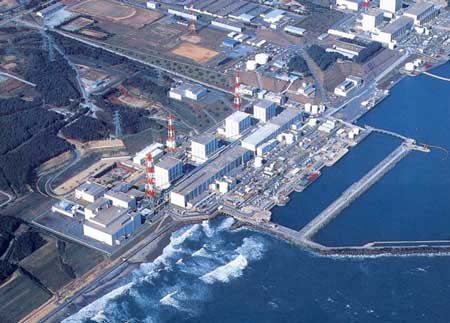
Eight years after the accident in Fukushima, preparations are underway to restart the Kashiwazaki-Kariwa nuclear power plant operated by Tepco. But residents fear a second disaster. Kiyo Dörrer reports from Kashiwazaki.
Decades ago, nuclear power was supposed to be the perfect solution for Japan’s thirst for energy and for its rural economies. And in the sleepy town of Kashiwazaki, in the prefecture next to Fukushima, the solution was supposed to be the Kashiwazaki-Kariwa nuclear power plant, run by the power company Tepco — the company responsible for the 2011 Fukushima accident.
When in full operation, the Kashiwazaki-Kariwa power plant is the biggest in the world, capable of servicing 16 million households. But all of its seven reactors have been idle since the nuclear accident at Fukushima Daiichi. This is Tepco’s only remaining nuclear power plant apart from the tsunami-stricken plants in Fukushima, in the neighboring prefecture.
Tepco has been repeatedly criticized for its negligence and has been ordered to pay compensation to the residents. The cleanup of the Fukushima power plant has been causing major headaches, while the reasons for the accident have yet to be clarified even eight years later.
But amid the controversy, in 2017 Japan’s nuclear regulation authority gave the go-ahead to launch the lengthy process toward a restart of two of Tepco’s reactors, which are located about 250 km (155 miles) east of the Fukushima plants, on the coast of the Sea of Japan. The reactors No. 6 and No. 7 at the Kashiwazaki-Kariwa power plant, which are being prepared for a restart, are both the same type as those that melted down in Fukushima.
This time everything is going to be different, the deputy head of the Kashiwazaki-Kariwa plant, Toshimitsu Tamai, assures visitors on a tour of the facility. To banish fears of a second Fukushima, Tepco has built a 15-meter (49-foot) wall that is supposed to be able to withstand the highest tsunamis imaginable………..
Majority of residents against the nuclear reactors
But the local residents aren’t all buying Tepco’s story. Hopes of an economic boost ring hollow in the almost deserted shopping streets; the once bustling town center is now full of shuttered storefronts. Like many other country towns, Kashiwazaki has fallen victim to economic problems caused by the aging population and a growing rural exodus — trends no nuclear power plant can change.
According to the exit polls held in last year’s governor’s race, over 60 percent of residents of Niigata Prefecture, in which Kashiwazaki lies, are against the restart of the nuclear power plant. Locals have been alarmed by multiple mishaps during the preparations. In December 2018, the cables connecting reactor No. 7 with emergency backup power caused a fire for unknown reasons. And as recently as February 28, radioactive water leaked out of the core inside one of the idle reactors.
“To be honest, we just keep thinking: not again! They take one step forward and three steps back,” says Tsutomu Oribe, who runs a sushi restaurant in central Kashiwazaki. “We’ve all learned too well what could happen.”
“I don’t think that anybody should entrust Tepco with restarting a nuclear power plant if the company doesn’t even know what happened in Fukushima,” says Kazuyuki Takemoto, a retired local councilor and veteran anti-nuclear activist.https://www.dw.com/en/japans-tepco-fights-for-return-to-nuclear-power-after-fukushima/a-47836968
March 12, 2019
Posted by Christina Macpherson |
Japan, politics |
Leave a comment




 nuclear-news